Passeriformes / Corvidae / Pyrrhocorax
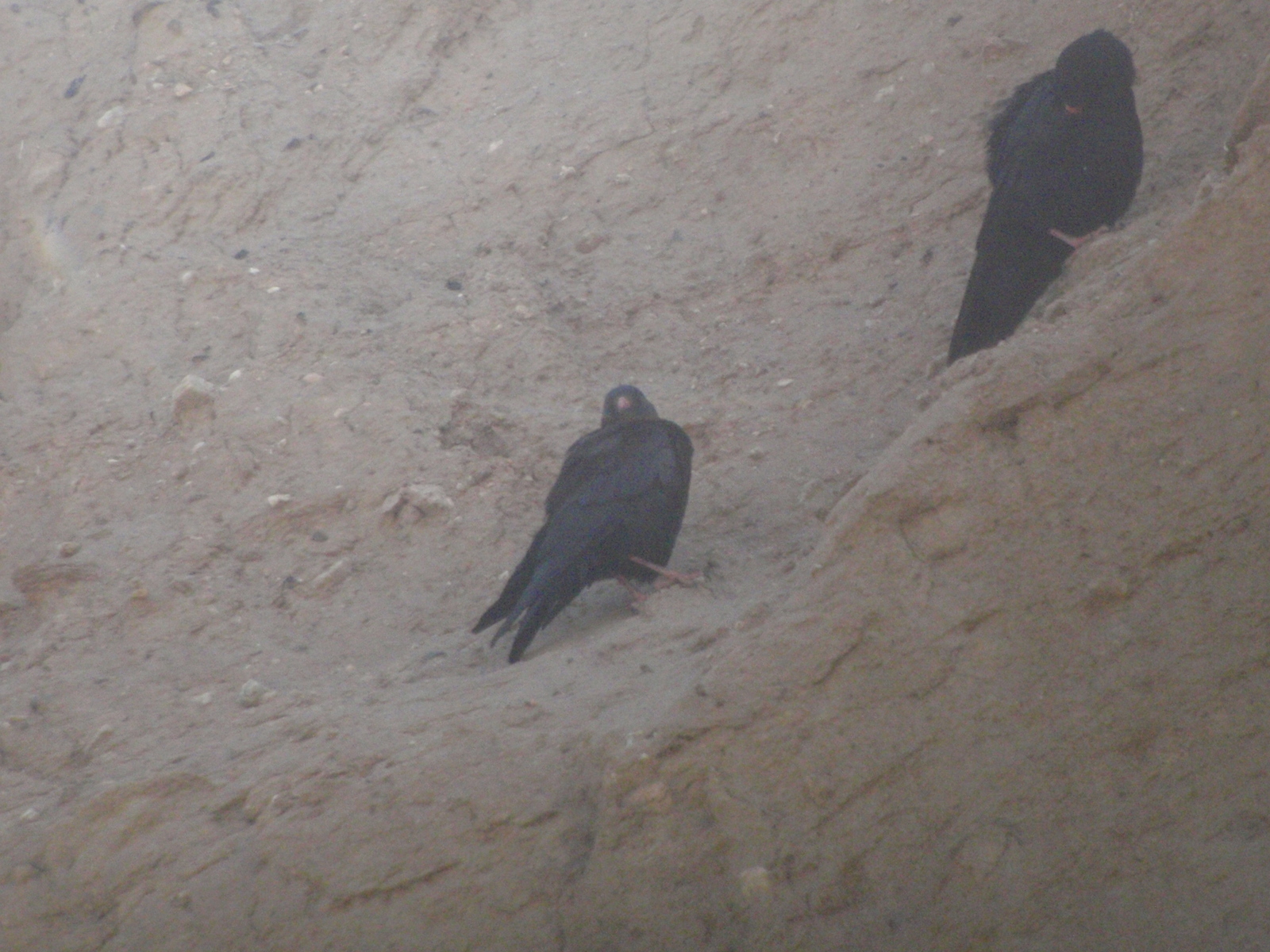
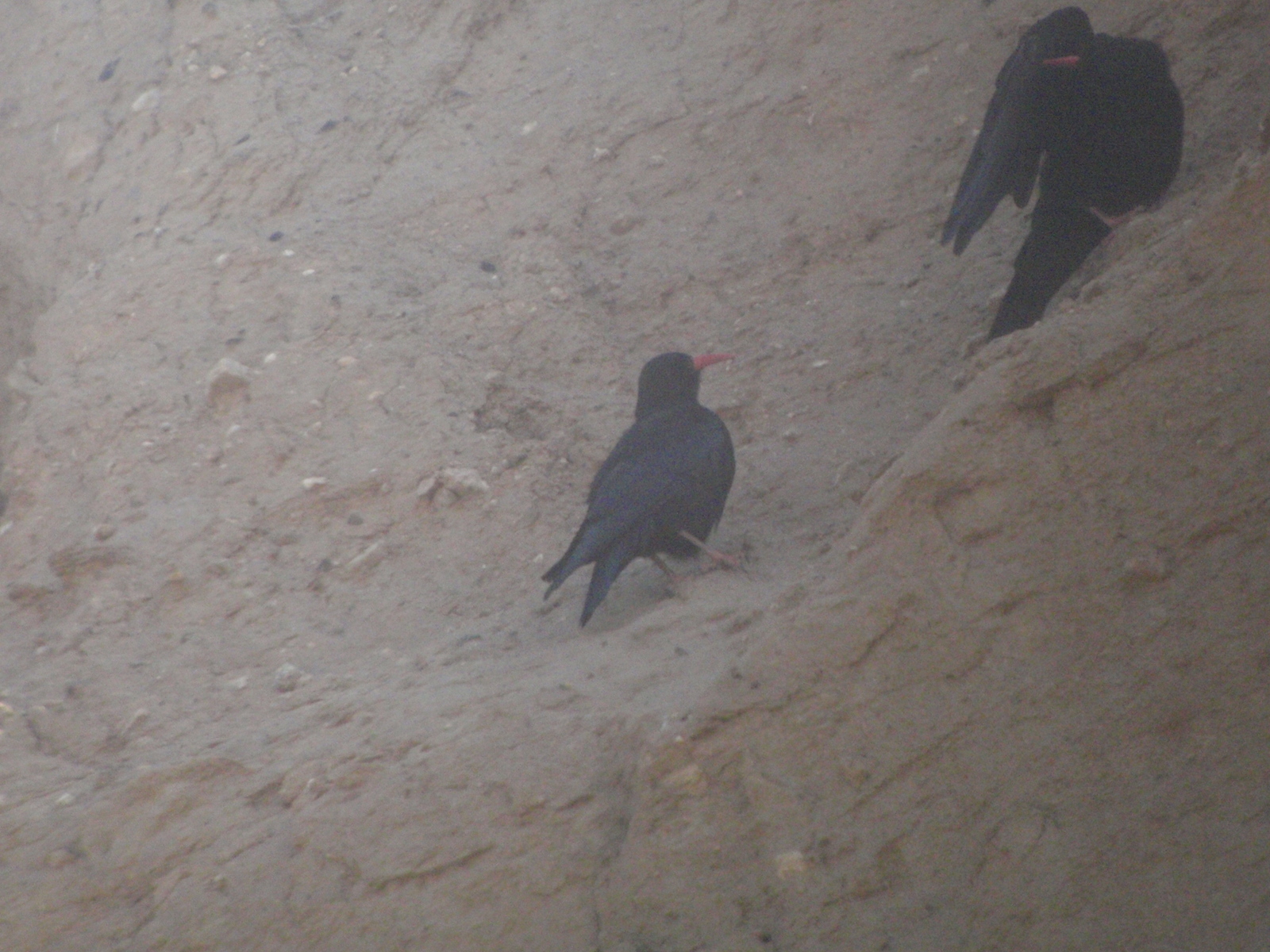
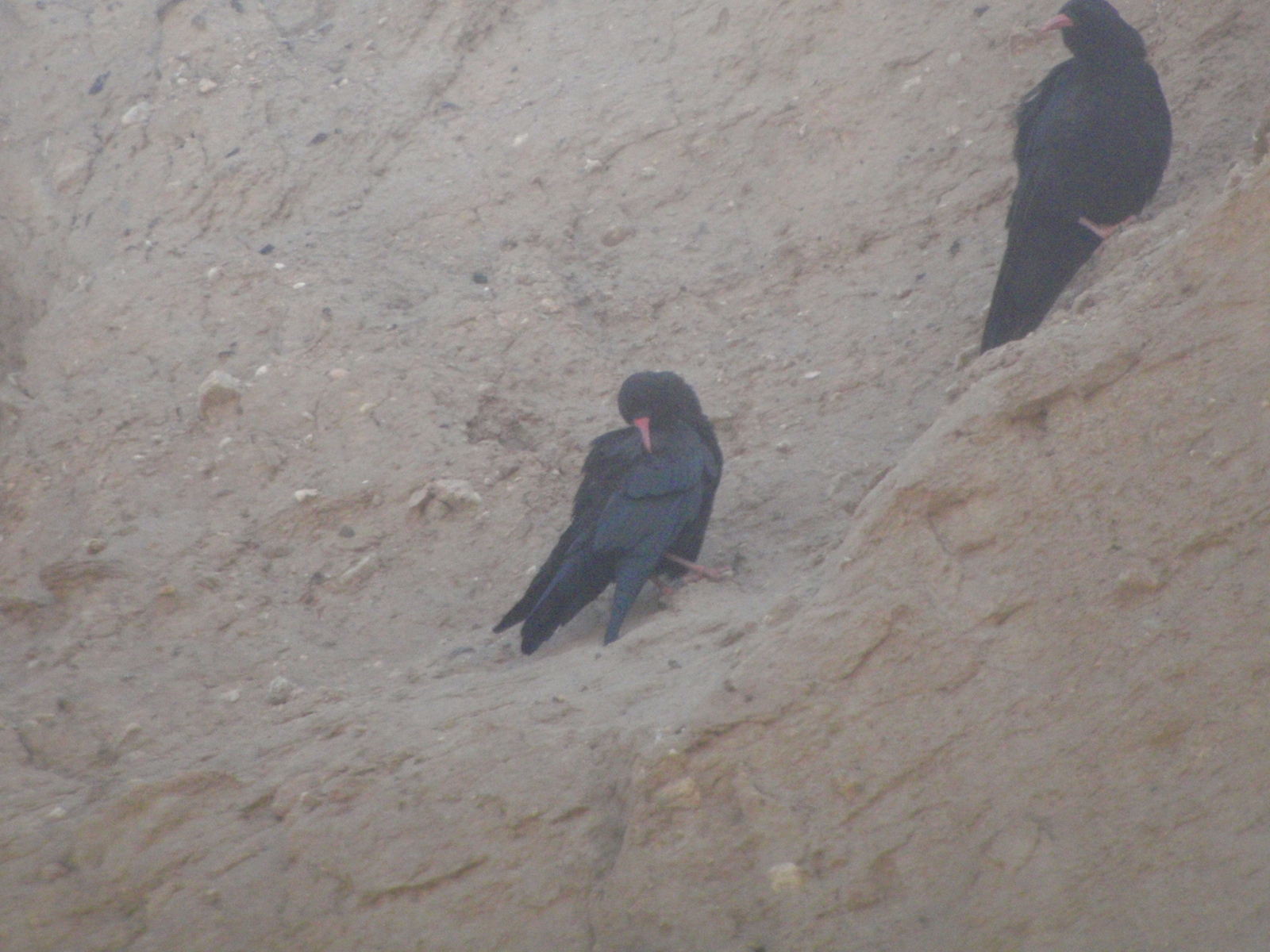
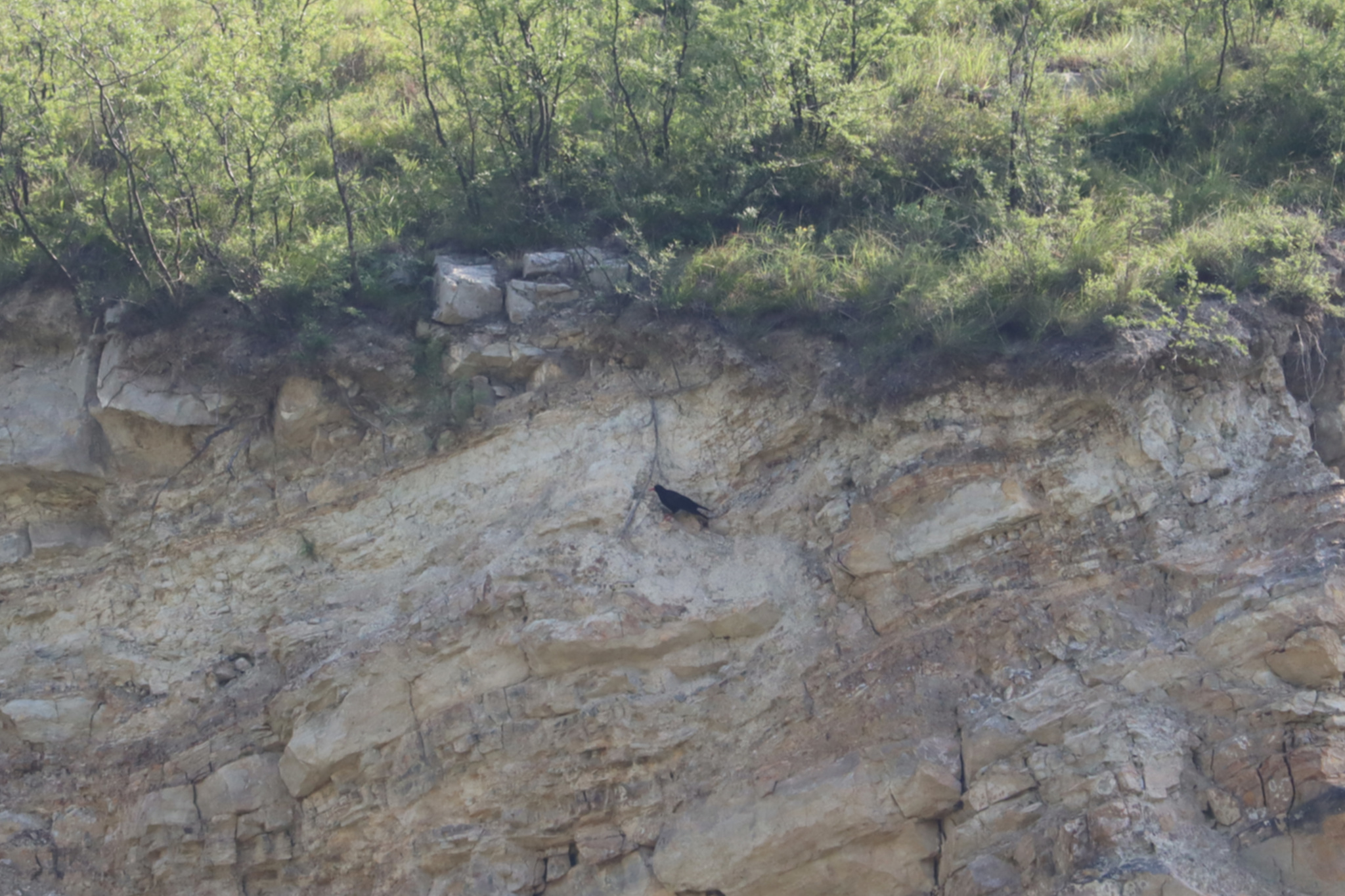
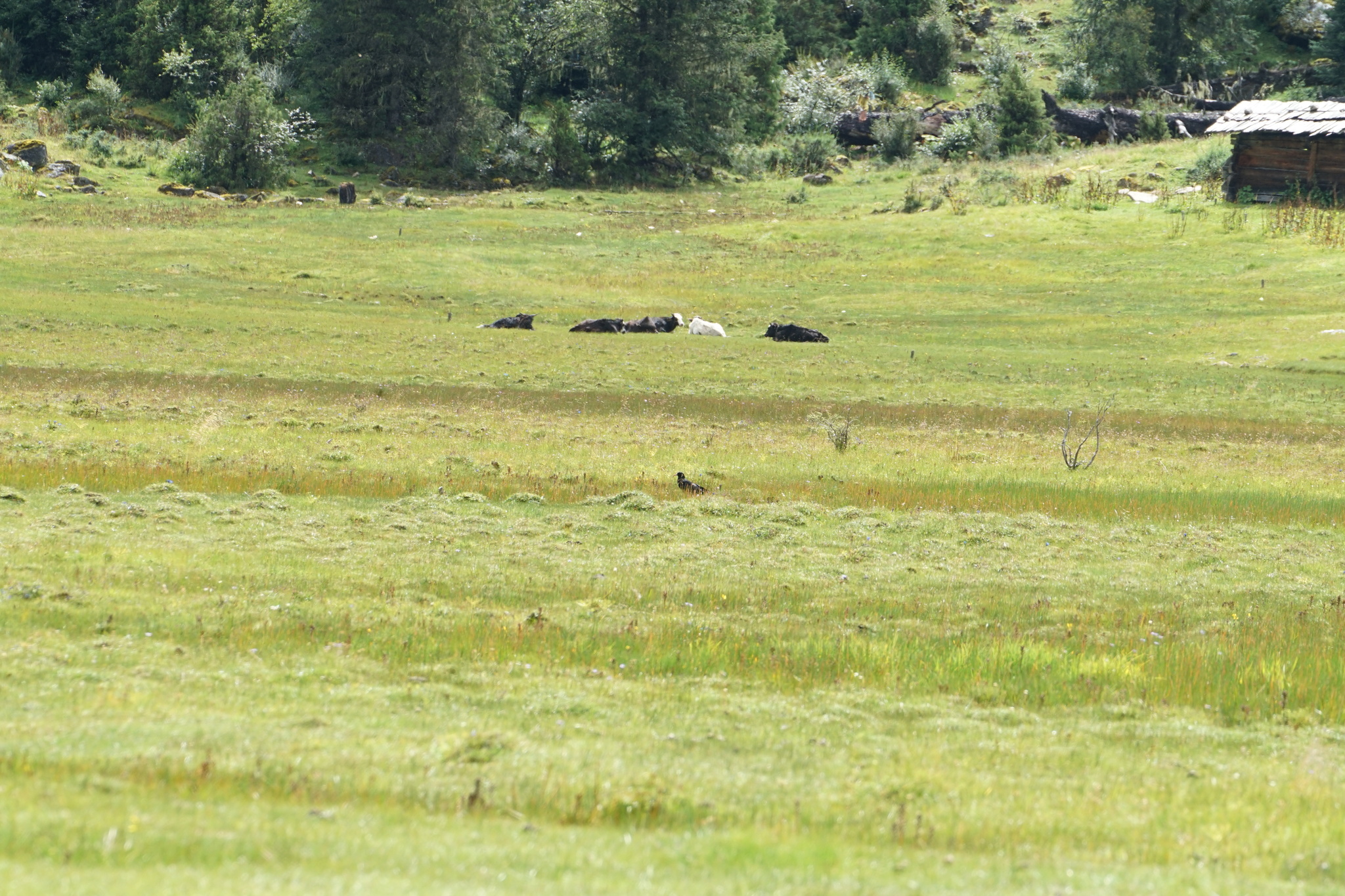
Red-billed Chough
Pyrrhocorax pyrrhocorax · 红嘴山鸦
Introduction
A member of the crow family and one of two species in the genus Pyrrhocorax. It breeds on mountains and coastal cliffs from western Ireland and Britain east through southern Europe, North Africa, the Middle East, Central Asia, India, and China. Distinctive traits include a buoyant acrobatic flight with widely spread primaries and fidelity to breeding sites such as caves or cliff crevices. Globally evaluated as Least Concern, though categorized as Vulnerable in Europe due to population decline and fragmentation.
Description
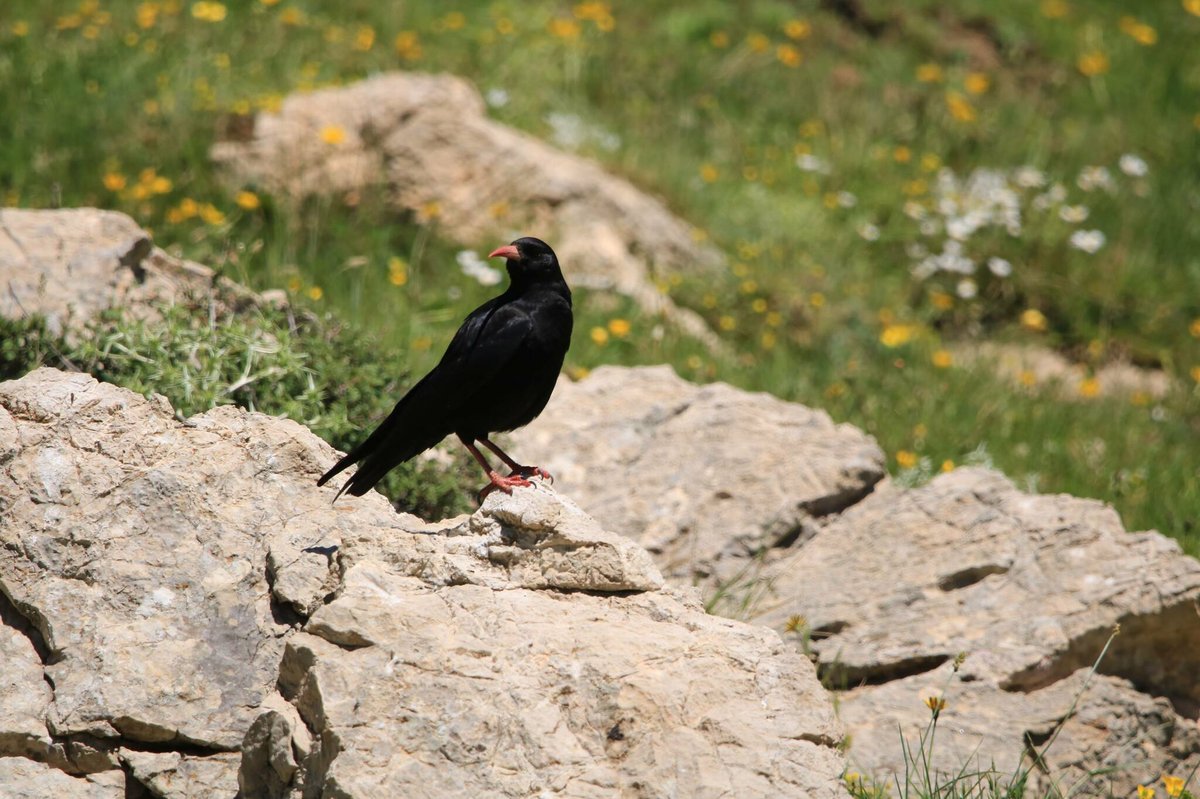
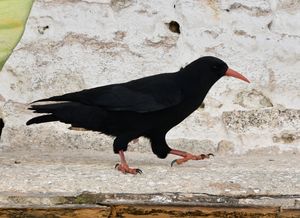
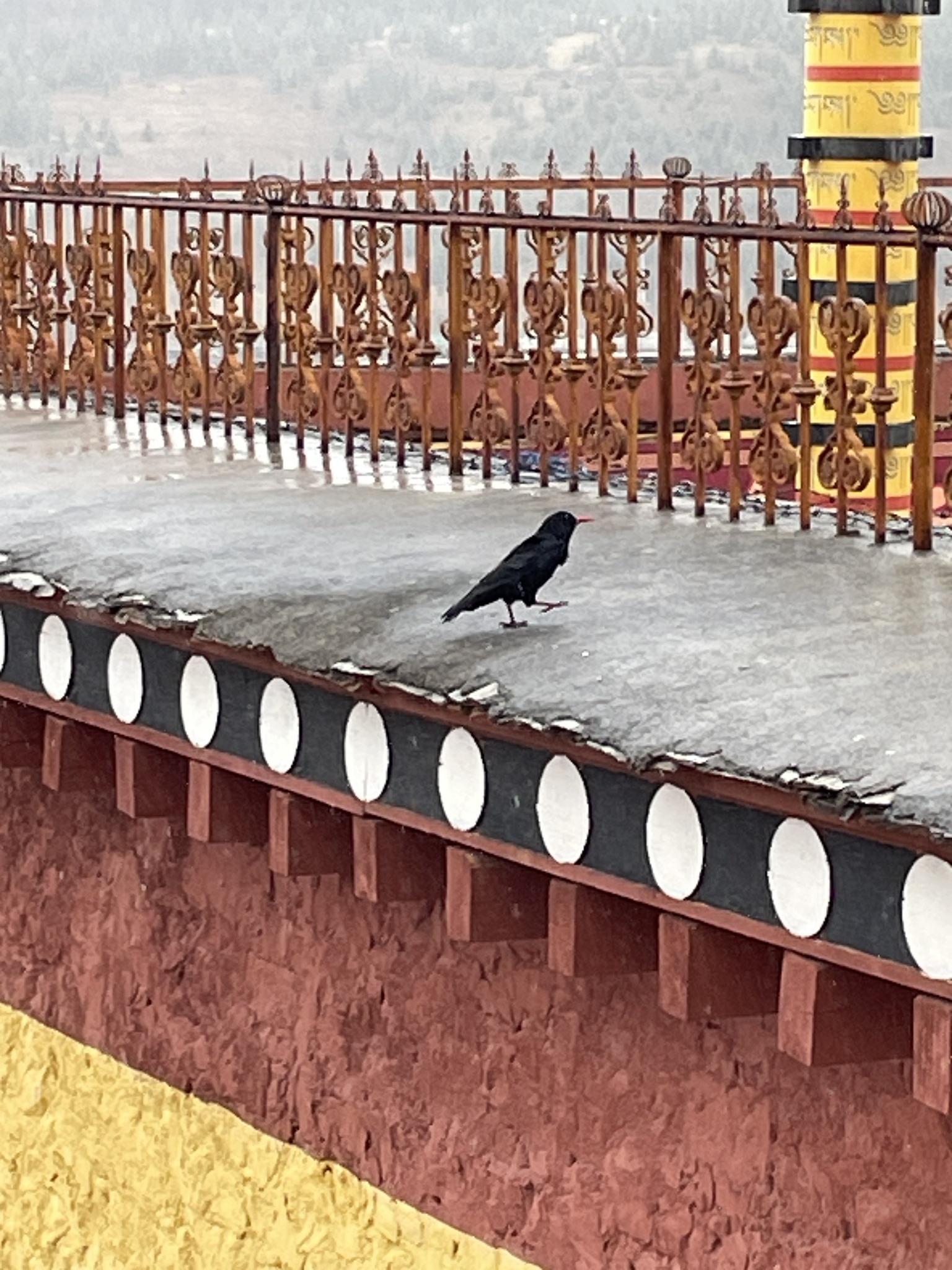
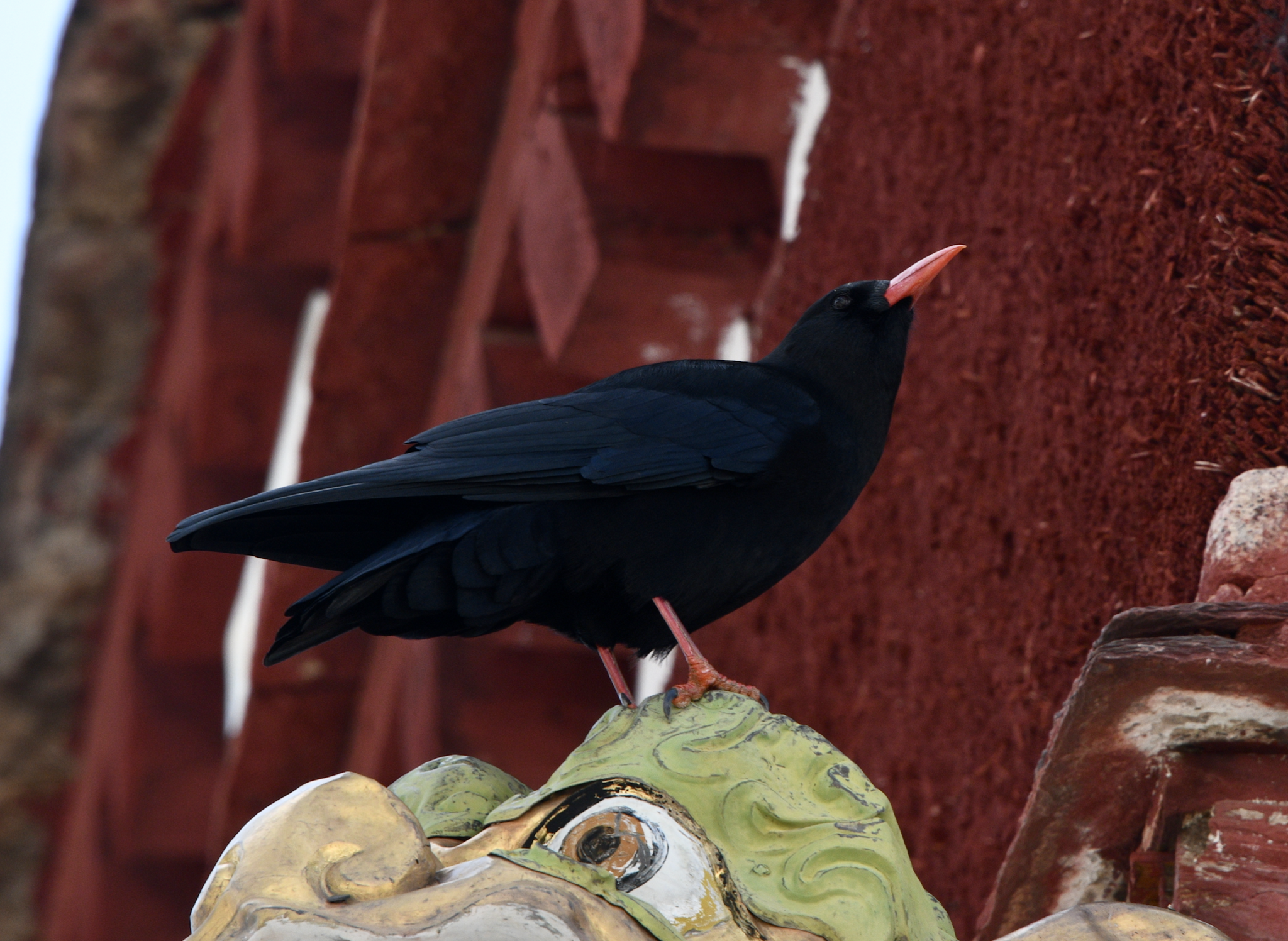
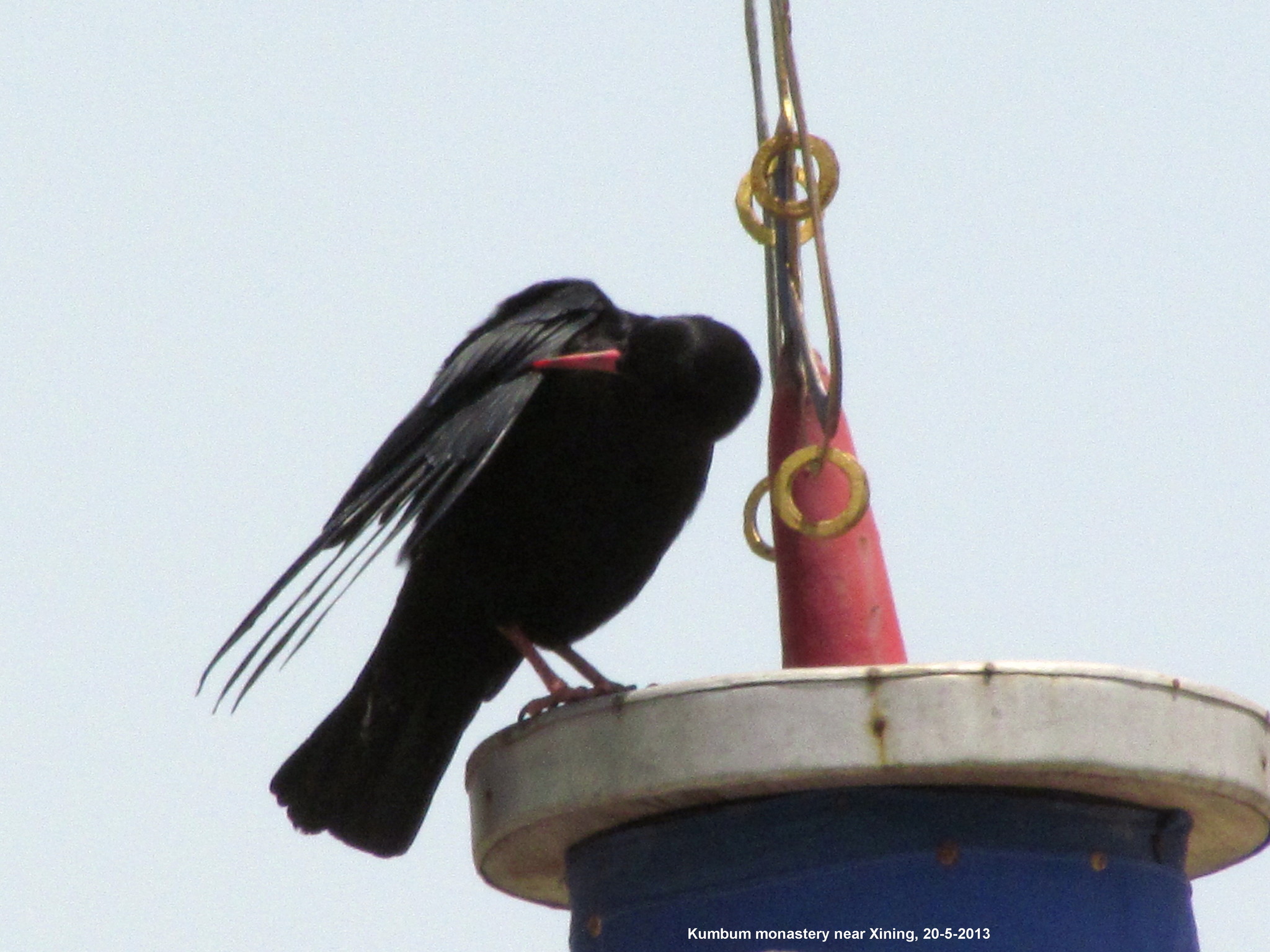
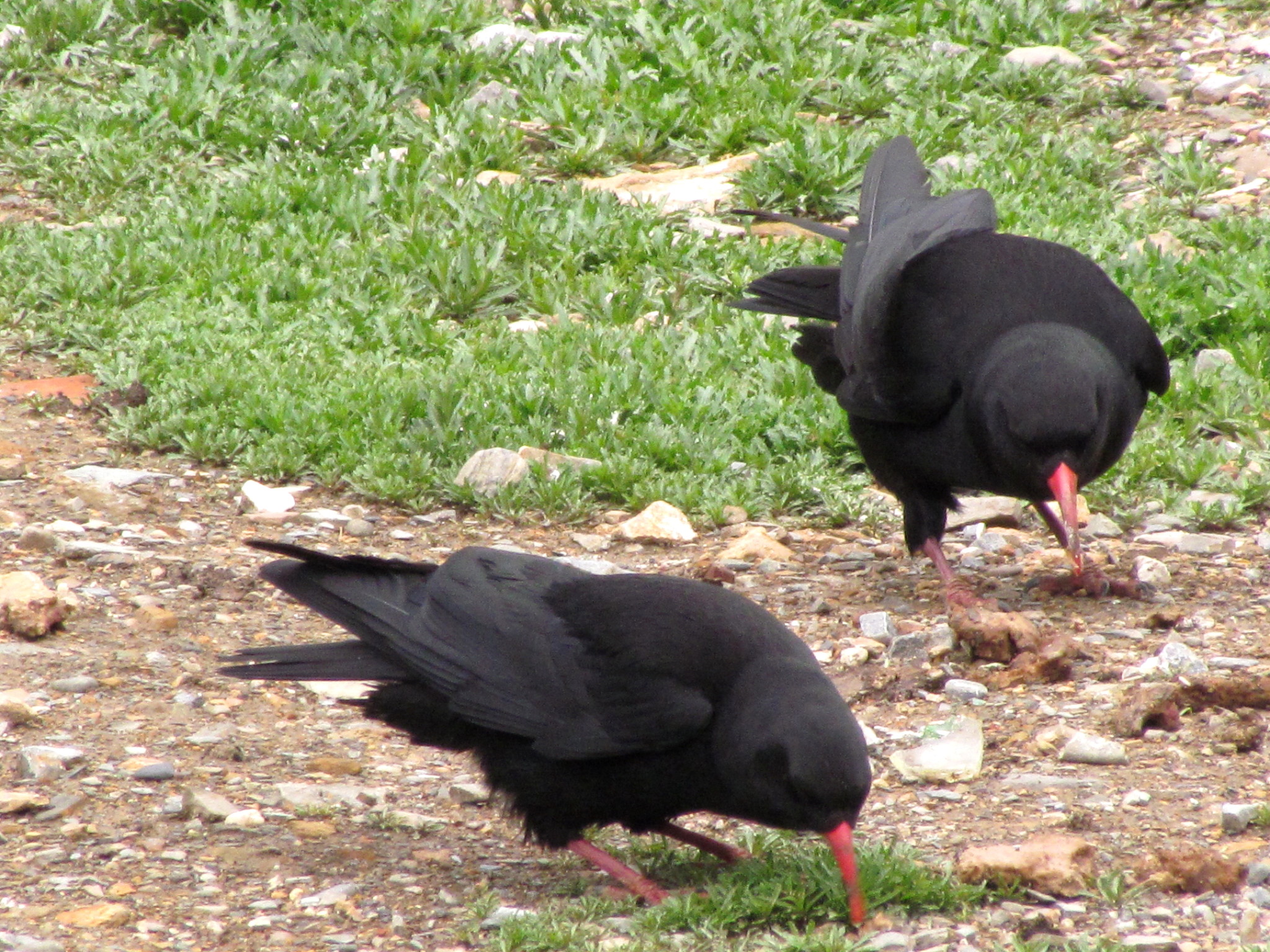
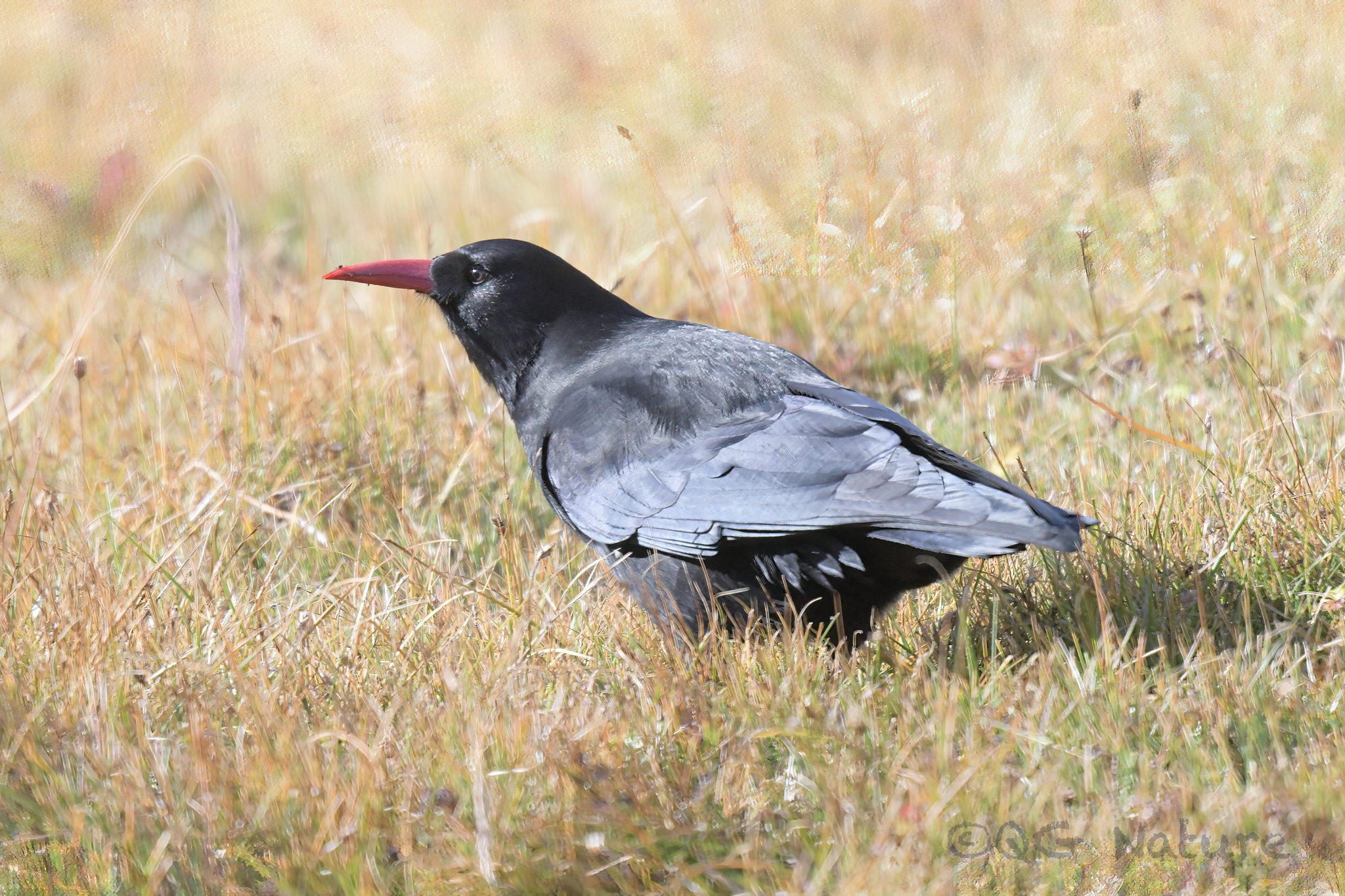
The nominate subspecies is 39–40 cm (15–16 inches) in length, with a 73–90 cm (29–35 inches) wingspan, and weighs an average of 310 g (10.9 oz). Plumage is velvet-black with a green gloss on the body. It features a long curved red bill and red legs. Sexes are similar, though adults can be sexed by tarsus length and bill width. Juveniles have an orange bill, pink legs, and less glossy plumage until their first autumn. Subspecies vary in size and gloss; for example, P. p. himalayanus is the largest with blue or purple-blue glossed feathers, while P. p. barbarus has a greener gloss and the longest bill.
Identification
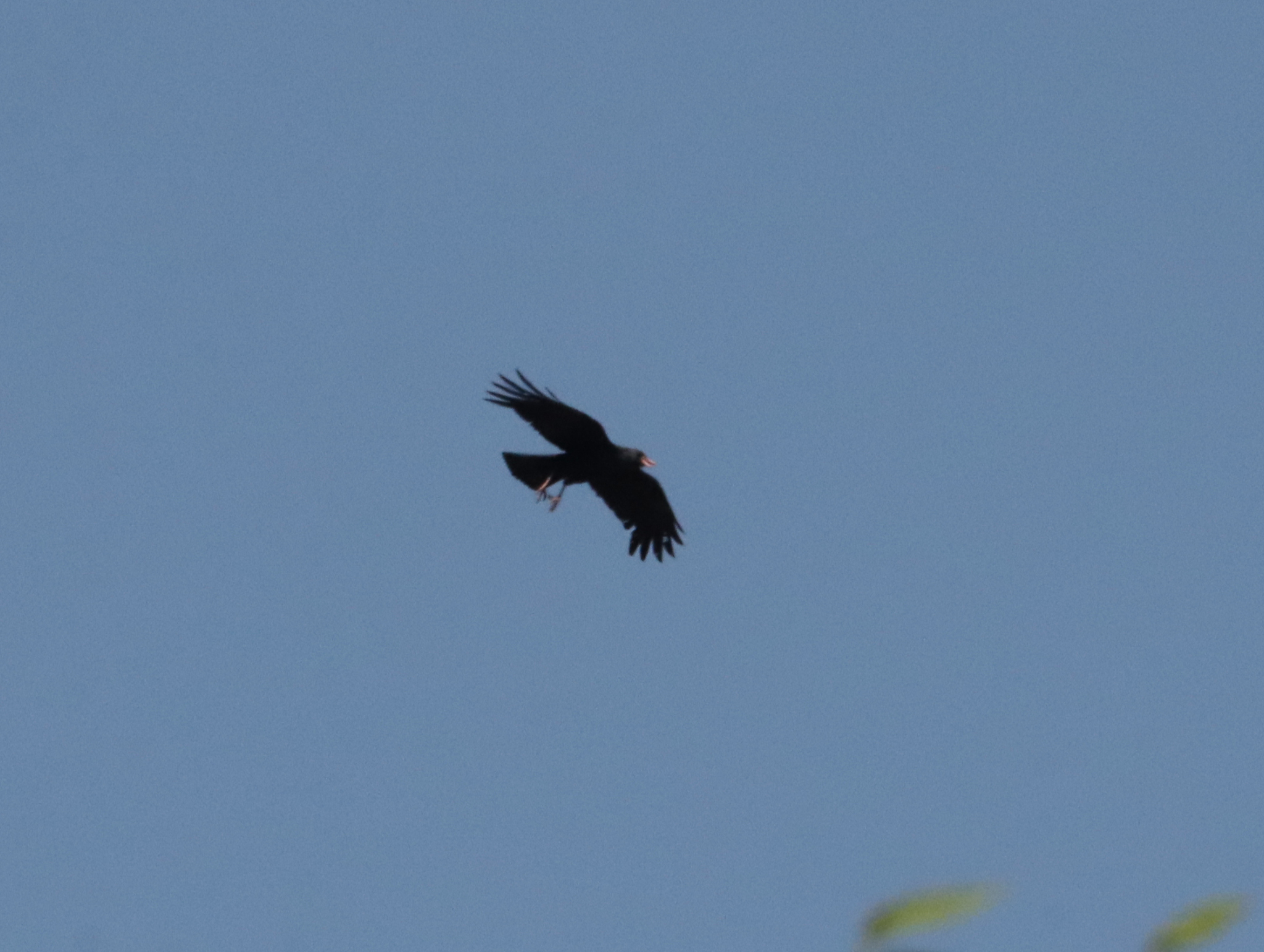
Unlikely to be confused with other species. Distinguished from the jackdaw by larger size, glossy black plumage (versus unglossed grey), and a louder, clearer ringing chee-ow call. Distinguished from the Alpine chough by its long curved red bill (versus short yellow bill) and more rectangular wings with a square-ended tail. Flight is buoyant and acrobatic with widely spread primaries.
Distribution & Habitat
Breeds in Ireland, western Great Britain, Isle of Man, Brittany, the Alps, La Palma (Canary Islands), southern Europe, Mediterranean basin, northern Arabia, Iraq, Iran, Afghanistan, Central Asia, India, China, and two populations in the Ethiopian Highlands. A non-migratory resident. Habitat includes high mountains (2,000–3,000 m generally, up to 7,950 m on Mount Everest) and, in the British Isles and Brittany, coastal sea cliffs with adjacent short grazed grassland or machair.
Behavior & Ecology
Pairs for life with strong site fidelity. Breeds from three years of age, usually raising one brood annually. The bulky nest, made of heather or furze stems and lined with wool or hair, is built in caves, cliff fissures, old buildings, or artificial sites like quarries. Lays 3–5 spotted eggs; female incubates for 17–18 days. Chicks fledge 31–41 days after hatching. Feeds mainly on invertebrates (especially ants) taken from short grazed grassland using its bill to pick or dig. Also consumes vegetable matter like fallen grain. Forms large flocks in winter in the Himalayas. Hides food caches under pebbles.
Conservation
Globally evaluated as Least Concern by the IUCN, with an estimated range of ten million square kilometers and a large population. However, it is categorized as Vulnerable in Europe due to range fragmentation and decline from loss of traditional pastoral farming, persecution, and disturbance. European breeding population is estimated at 12,265–17,370 pairs. Reintroduction projects have occurred in South East England (Kent) and Jersey to restore locally extinct populations.
Culture
Associated with Cornwall, appearing on the Cornish coat of arms. Legend states King Arthur’s soul migrated into a chough, making killing the bird unlucky. In English heraldry, it symbolizes Saint Thomas Becket, appearing on his attributed arms and those of Canterbury. Formerly associated with fire-raising in folklore. It is the animal symbol of La Palma and has been depicted on postage stamps of several countries.
Source: Wikipedia · CC BY-SA 3.0
Taxonomy
- Order
- Passeriformes
- Family
- Corvidae
- Genus
- Pyrrhocorax
Subspecies (8)
-
Pyrrhocorax pyrrhocorax baileyi
highlands of Ethiopia
Data Sources
Species description from Wikipedia, licensed under CC BY-SA 3.0.
Bird images and sounds sourced from GBIF, contributed by citizen scientists worldwide under Creative Commons licenses.
Taxonomy data from AviList 2025.