Red-billed Chough
Pyrrhocorax pyrrhocorax
红嘴山鸦
Introduction
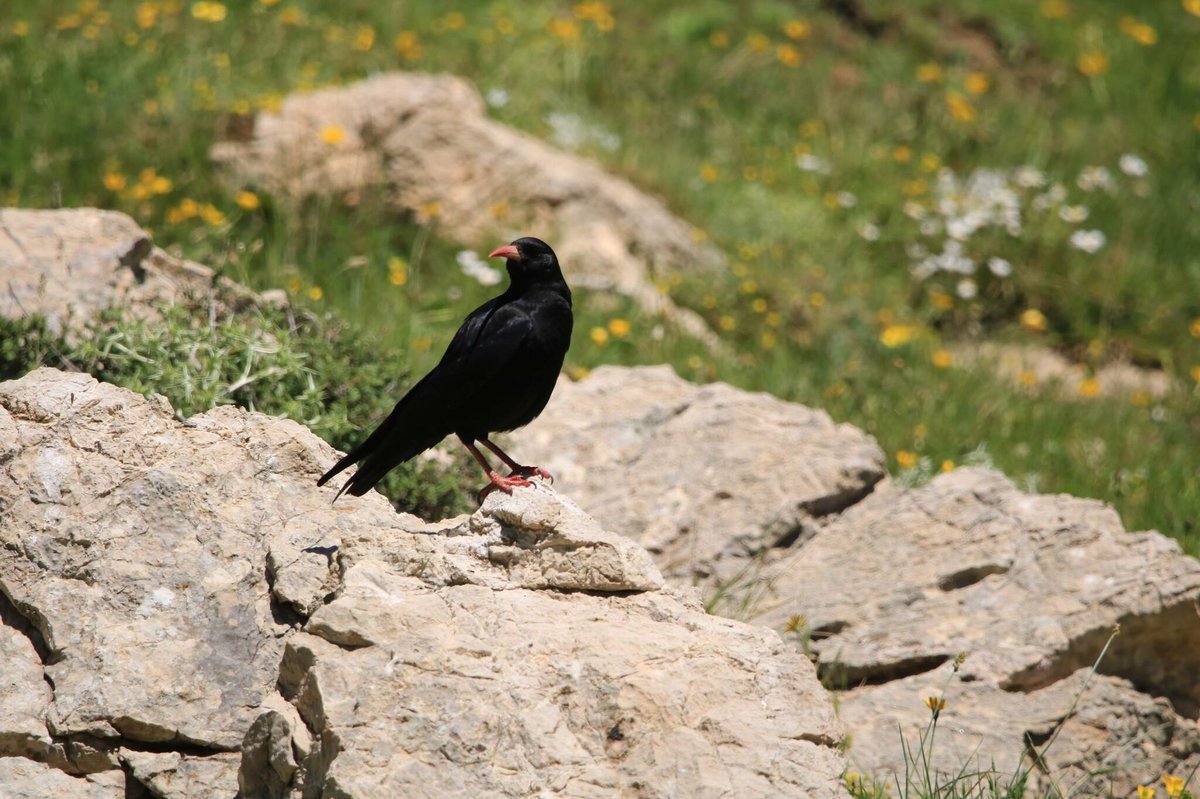
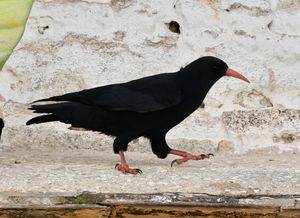
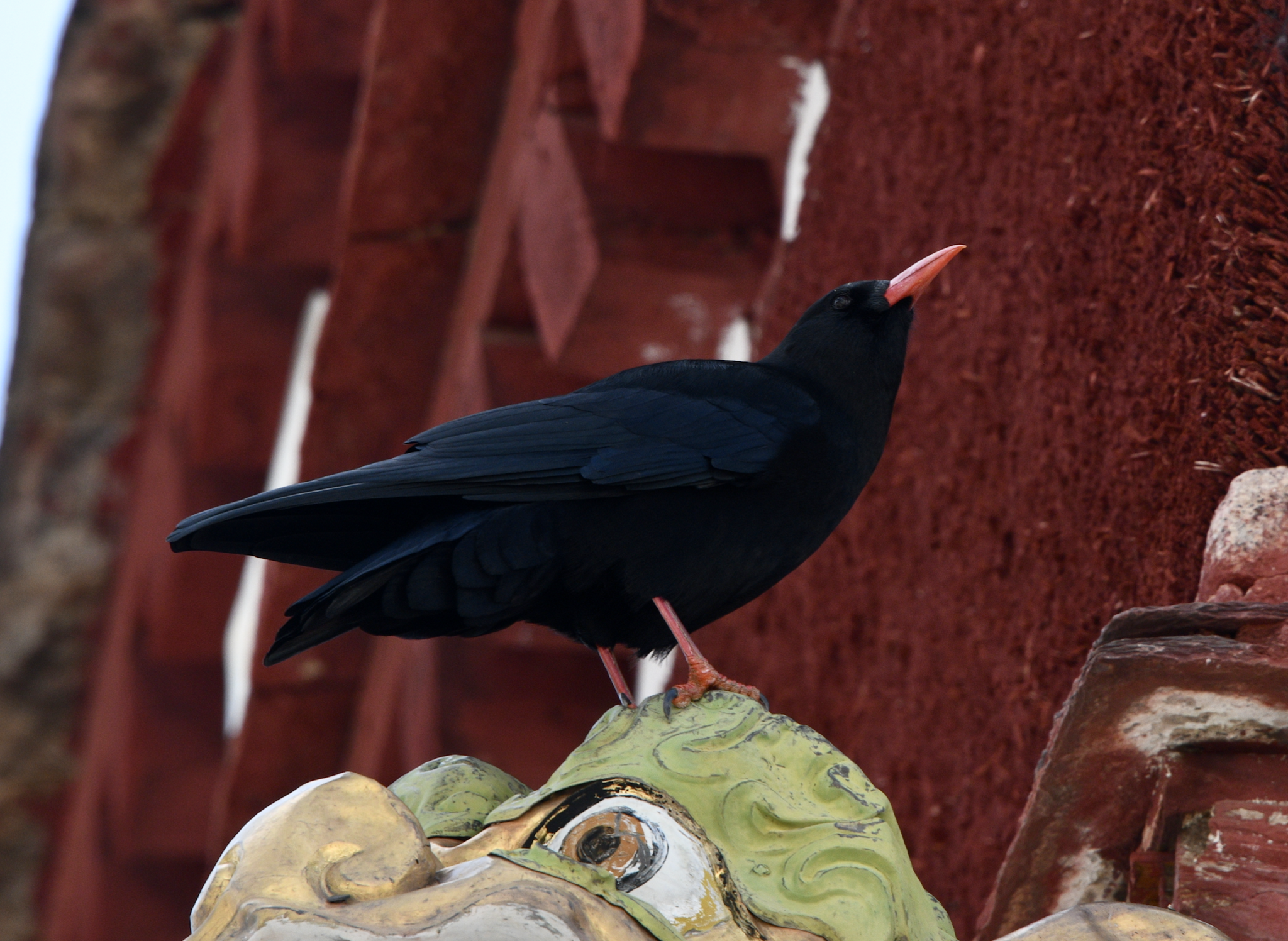
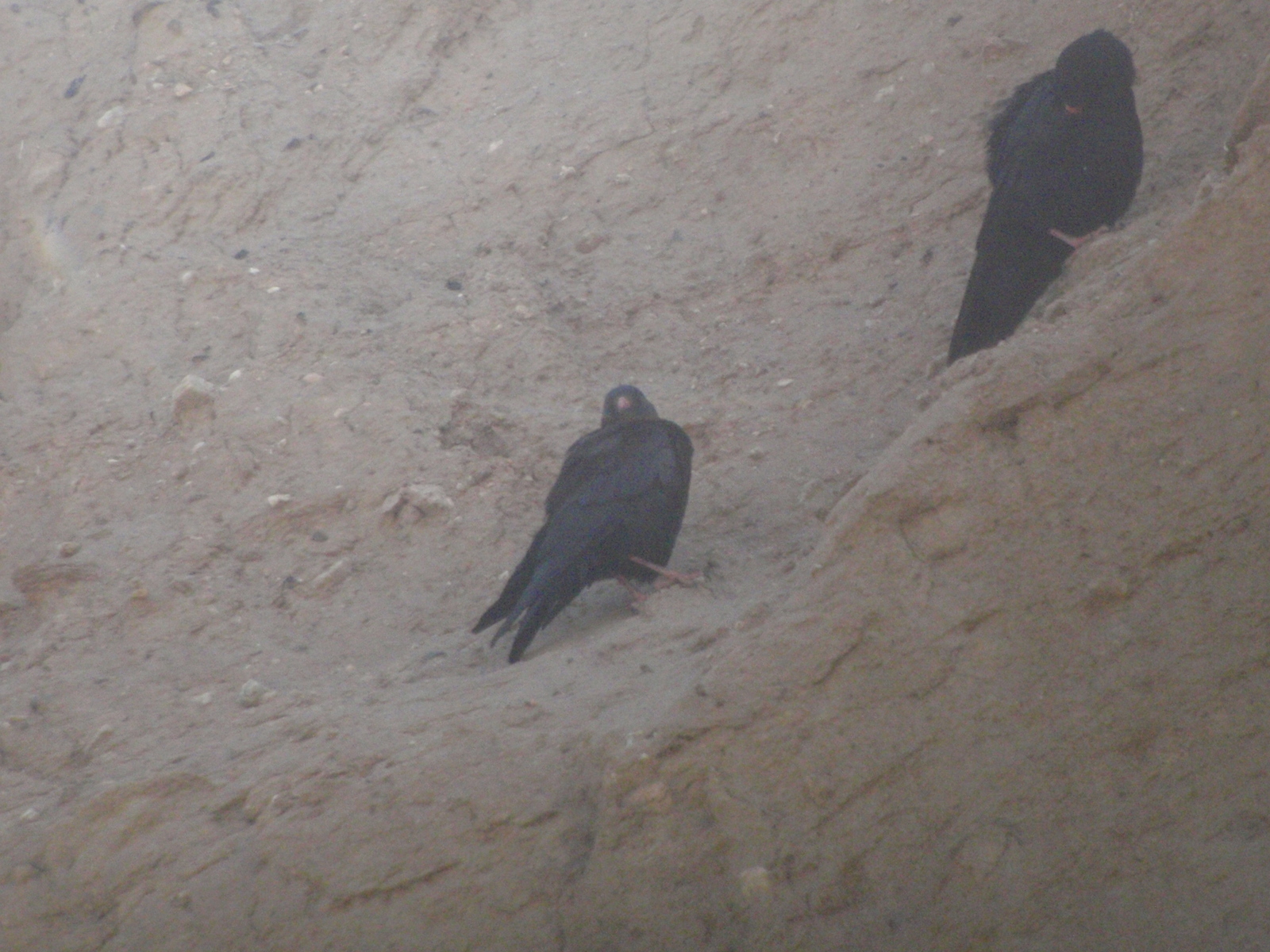
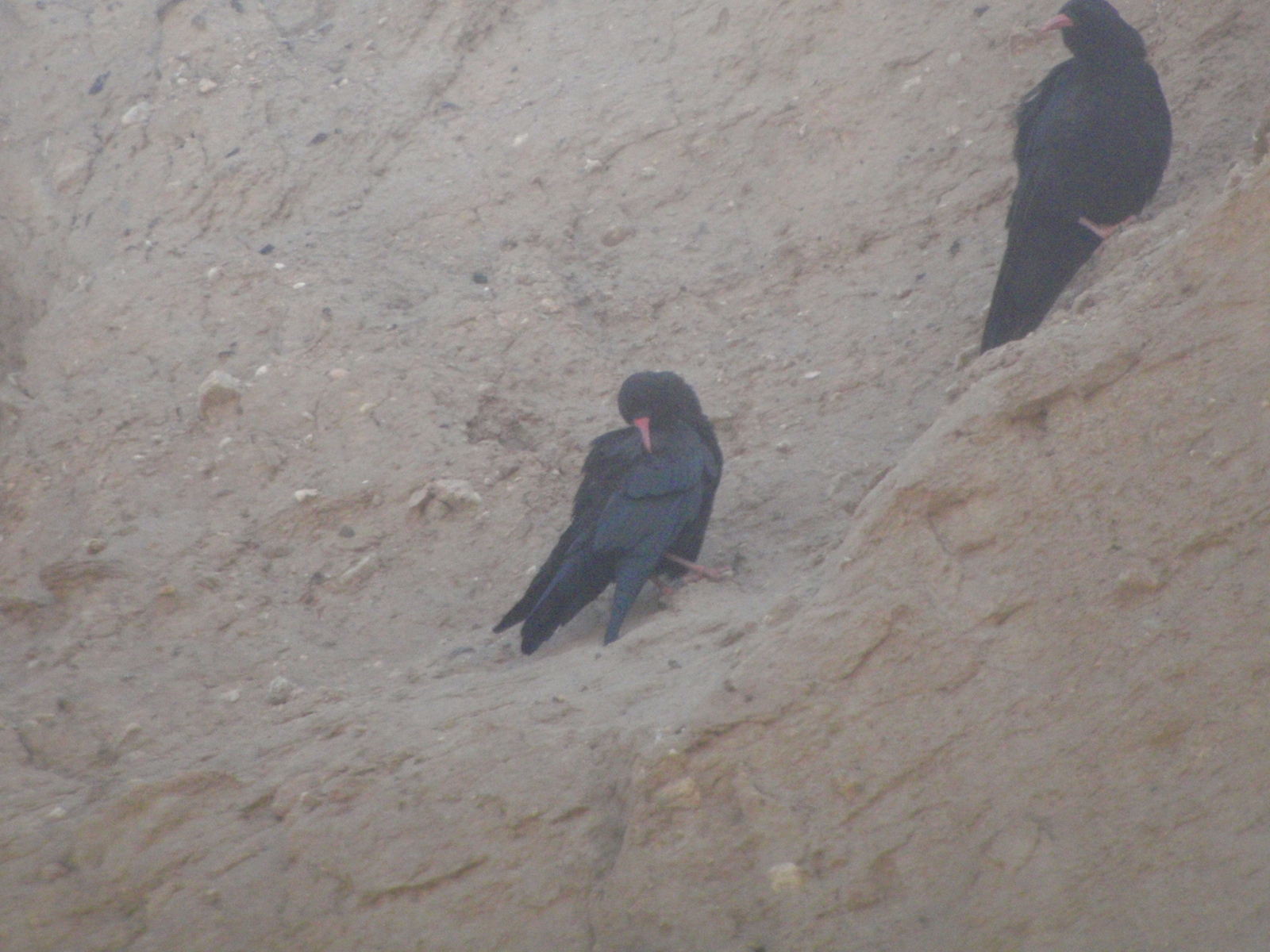
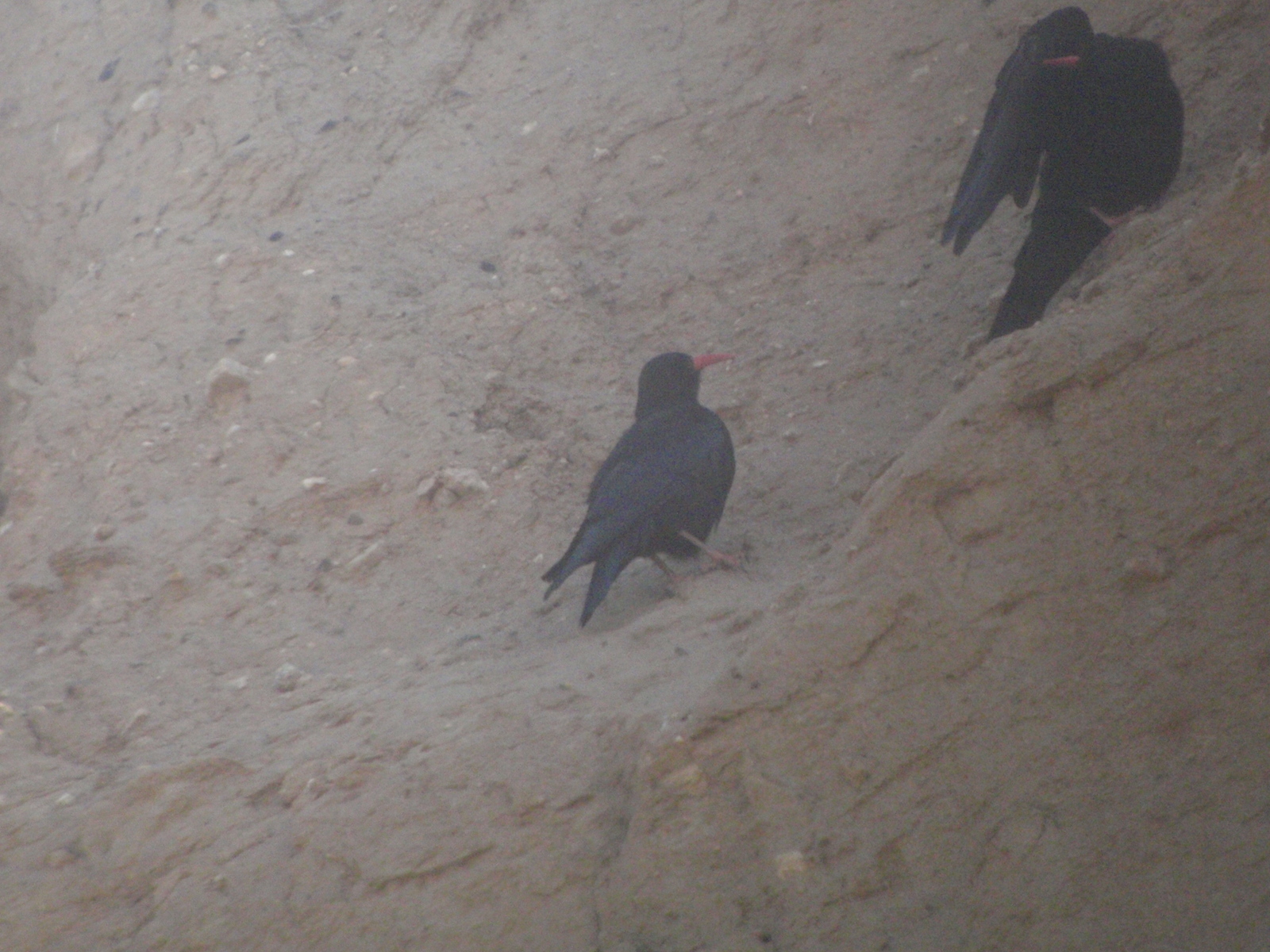
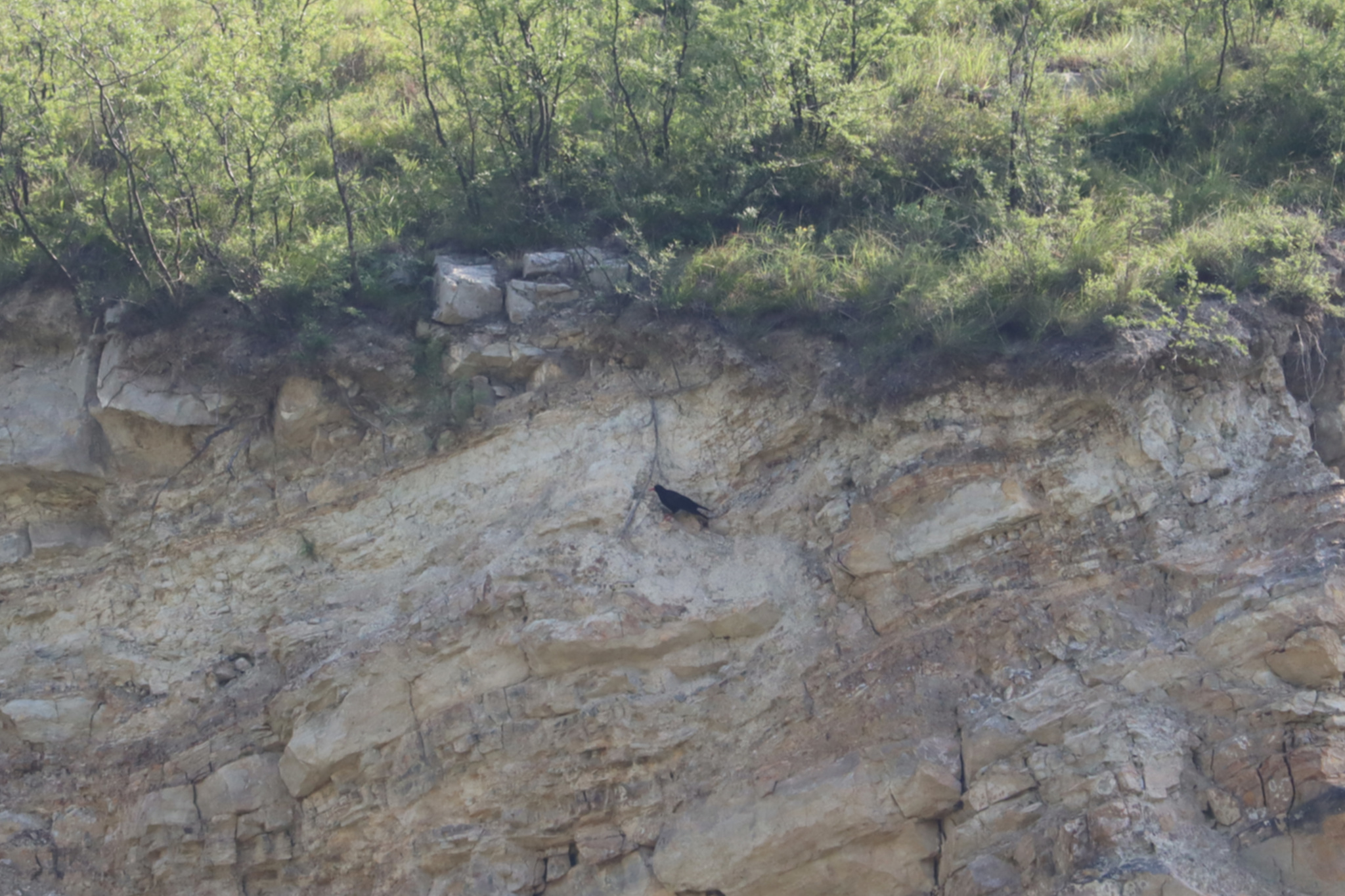
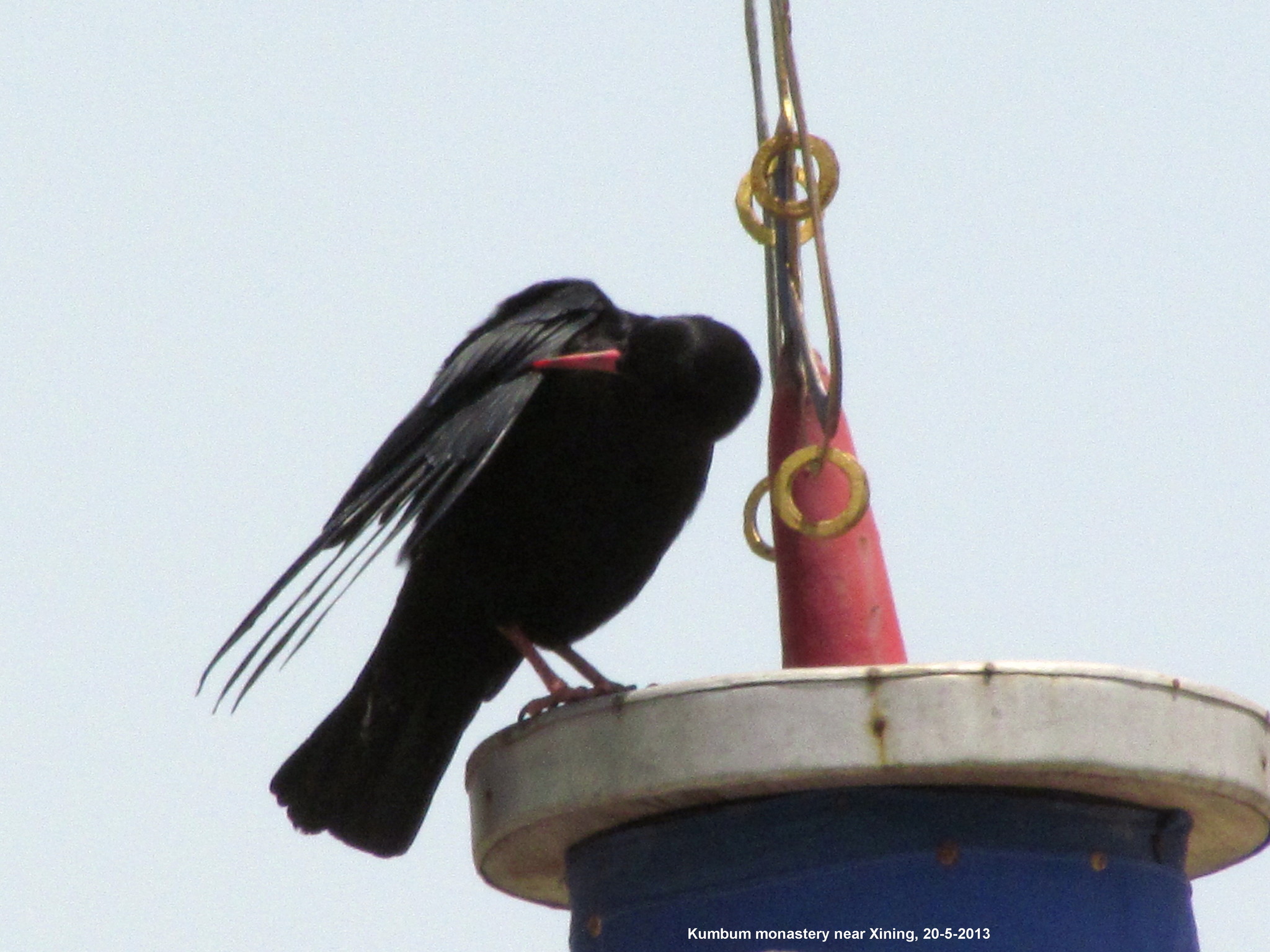
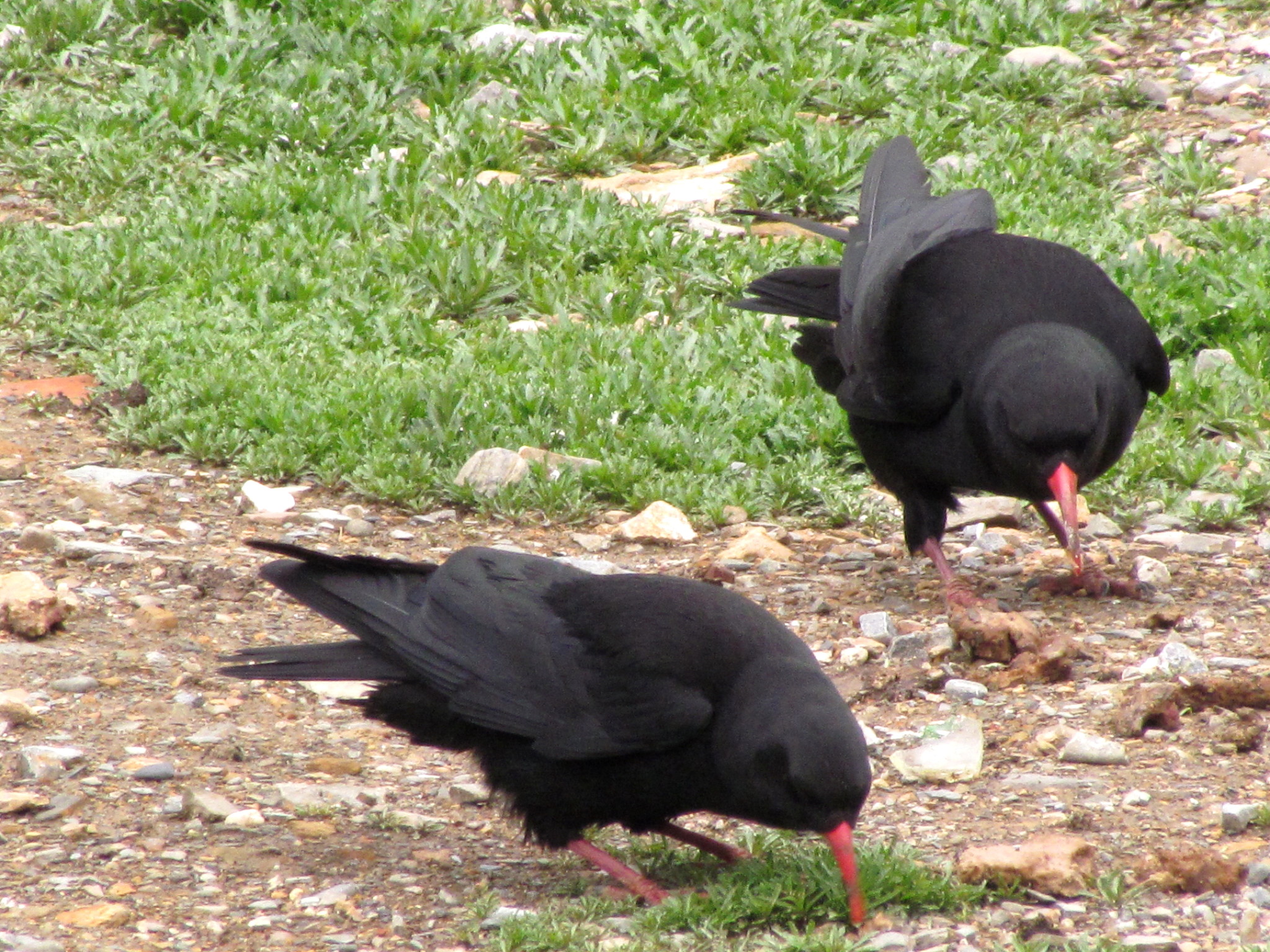
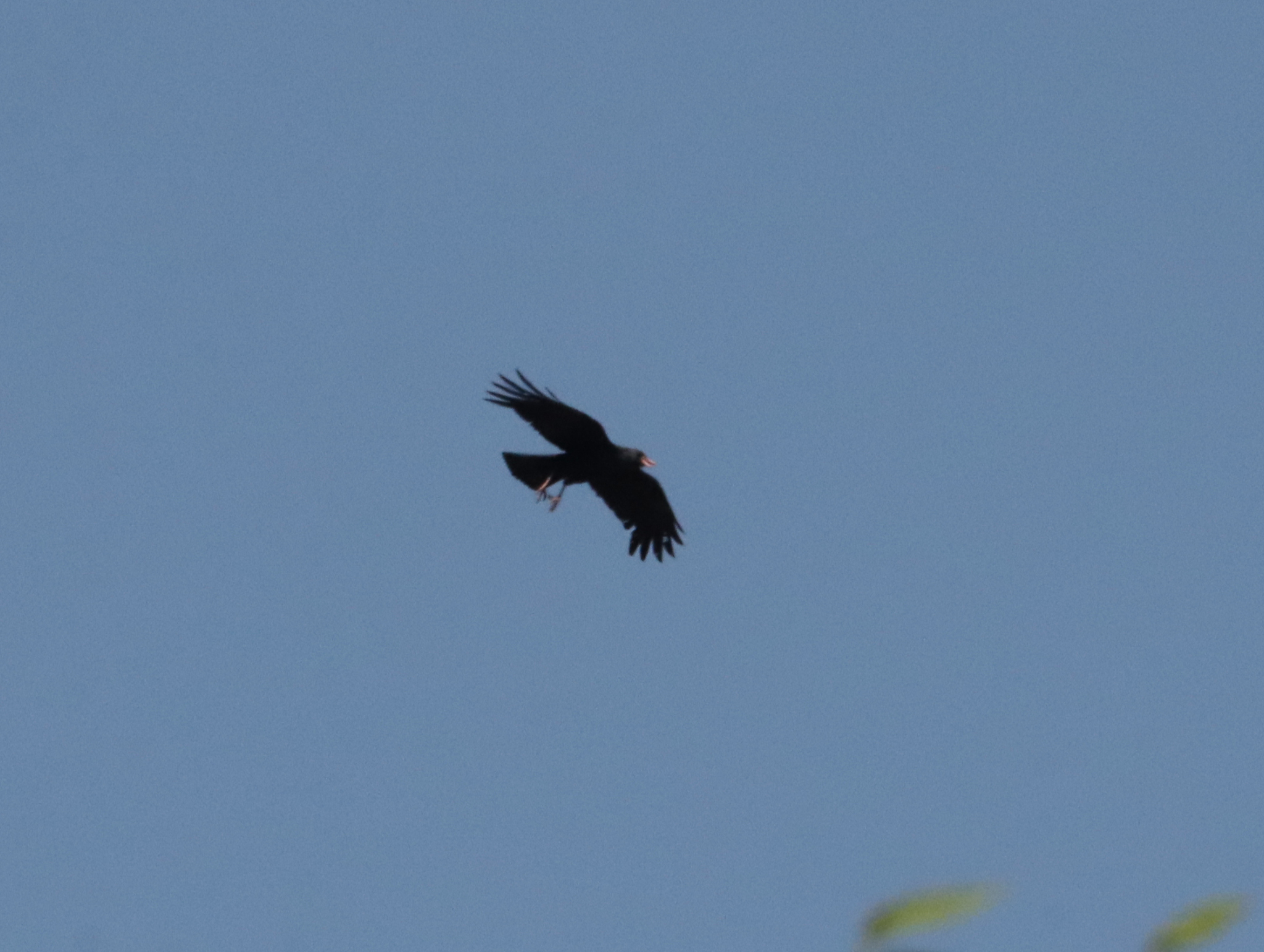
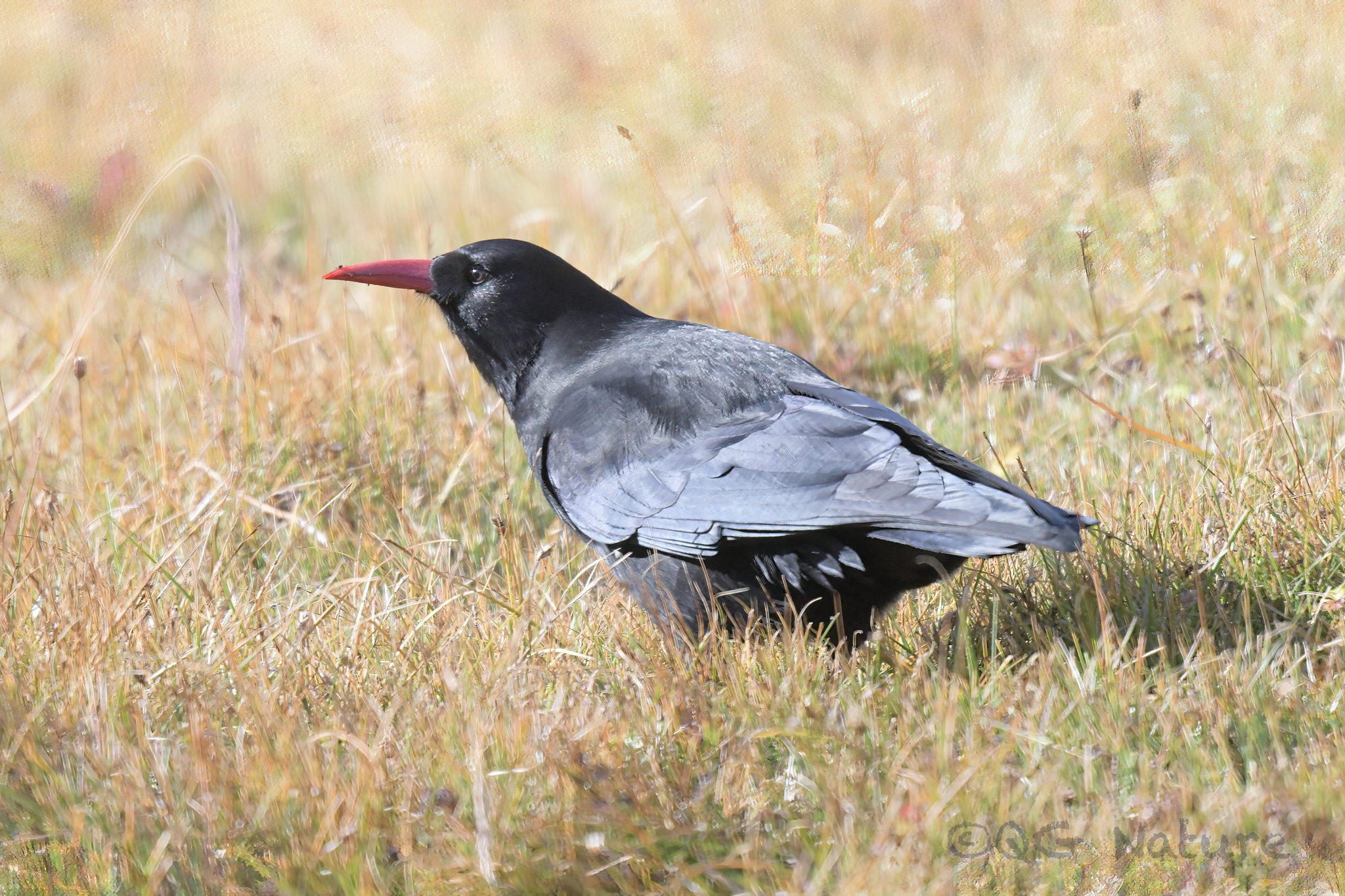
A member of the crow family (Corvidae) with glossy black plumage showing green iridescence. The long curved red bill and red legs distinguish it from other corvids. Inhabits mountainous terrain and coastal cliffs, breeding in caves, crevices, and fissures in cliff faces. Performs buoyant, acrobatic flight with widely spread wingtips. The vocalization is a loud, ringing 'chee-ow' call. Forms strong pair bonds and demonstrates philopatry to breeding sites. In agricultural areas, forages in flocks on short grazed grassland, using the specialized curved bill to probe for invertebrates. Conservation status: has declined in parts of its range due to agricultural changes.
Description
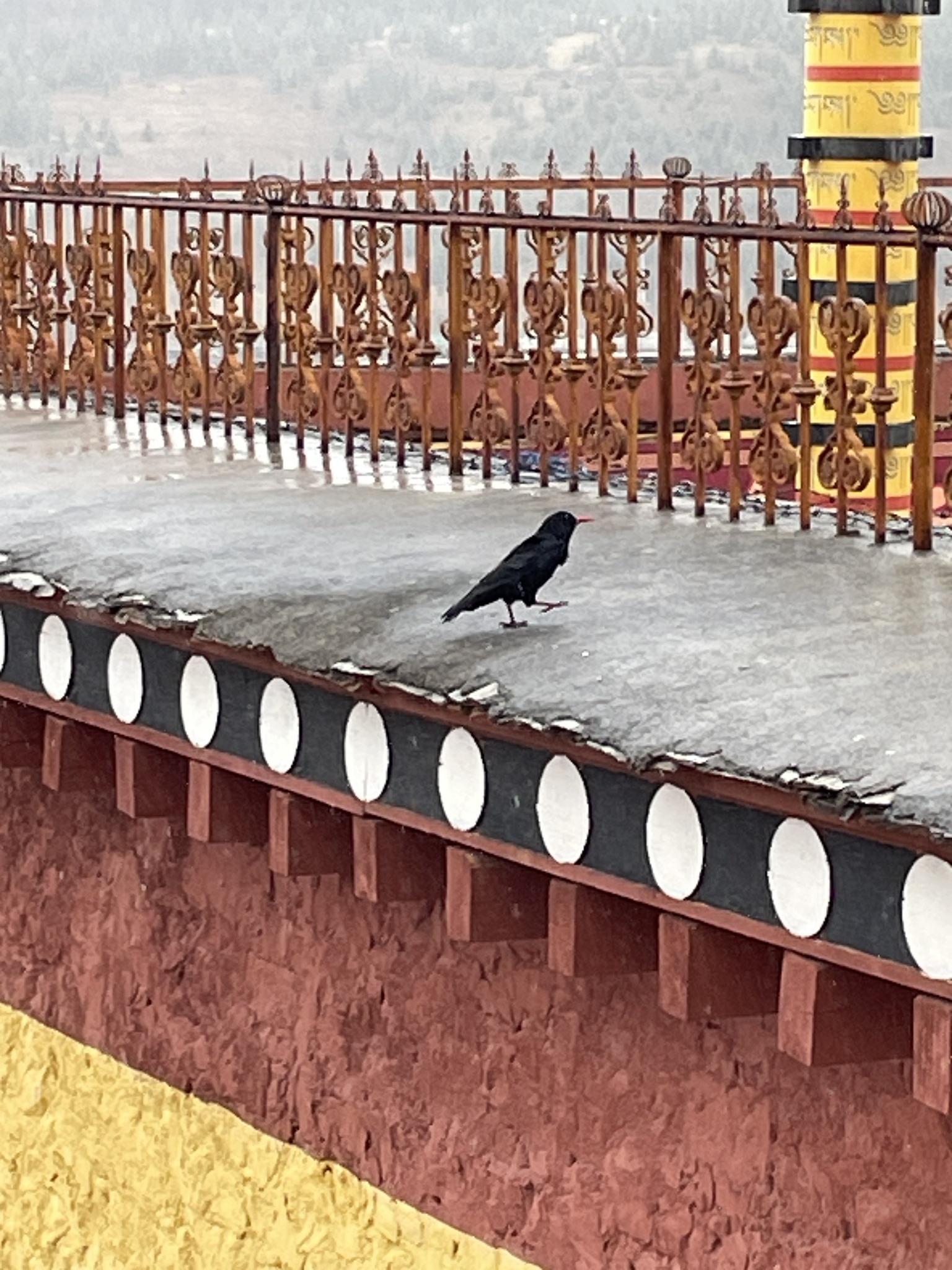
A medium-sized corvid measuring 39-40 centimetres in length with a wingspan of 73-90 centimetres and an average weight of 310 grams. The plumage is velvet-black overall, showing green gloss on the body. The most diagnostic feature is the long, downward-curved red bill, accompanied by red legs and feet. The sexes appear identical in the field, though careful measurements can distinguish them. Juveniles differ noticeably, having an orange-yellow bill and pink legs that gradually change to red through their first autumn; their plumage is also less glossy than adults. The overall impression is one of elegant darkness relieved only by the vivid red of the bill and legs.
Identification
Unlikely to be confused with any other European bird once seen well. The jackdaw shares its range but is considerably smaller with unglossed grey plumage and a much shorter, straight black bill. The Alpine chough, the only other member of its genus, has a distinctive short yellow bill and different proportions. In flight, the Alpine shows less rectangular wings and a longer, less square-ended tail. The vocalization is another key identification feature: the loud, ringing 'chee-ow' call is clearer and louder than the similar jackdaw call, and utterly different from the Alpine chough's rippling 'preep' and whistled 'sweeeooo' notes. Geographic variation exists, with smaller subspecies giving higher-pitched calls as predicted by body size.
Distribution & Habitat
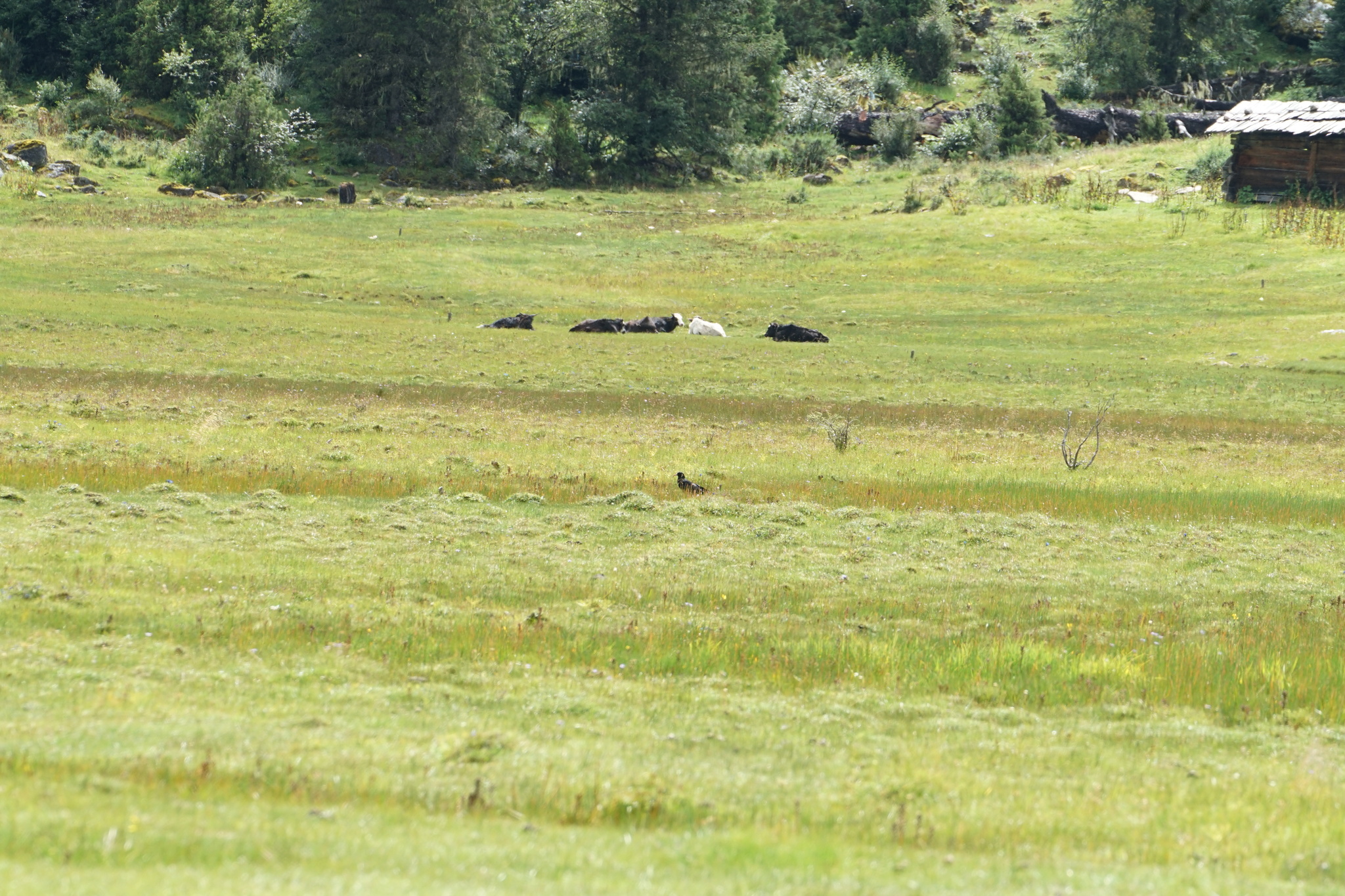
Breeds across a vast range from the western coasts of Ireland and Britain east through southern Europe and the Mediterranean basin to Central Asia, India and China, with isolated populations in Ethiopia and the Canary Islands. Eight subspecies occupy different portions of this range, varying slightly in size and plumage tone. The nominate subspecies is restricted to Ireland, the Isle of Man, western Wales, southwest Scotland and Cornwall, though a small population has recolonised Cornwall since 2001. This is a non-migratory resident throughout its range. Habitat consists primarily of high mountains, occurring between 2,000-2,500 metres in North Africa and mainly 2,400-3,000 metres in the Himalayas, where it reaches 6,000 metres in summer and has been recorded at 7,950 metres on Mount Everest. In western Europe, it also breeds on coastal sea cliffs adjacent to short grazed grassland.
Behavior & Ecology
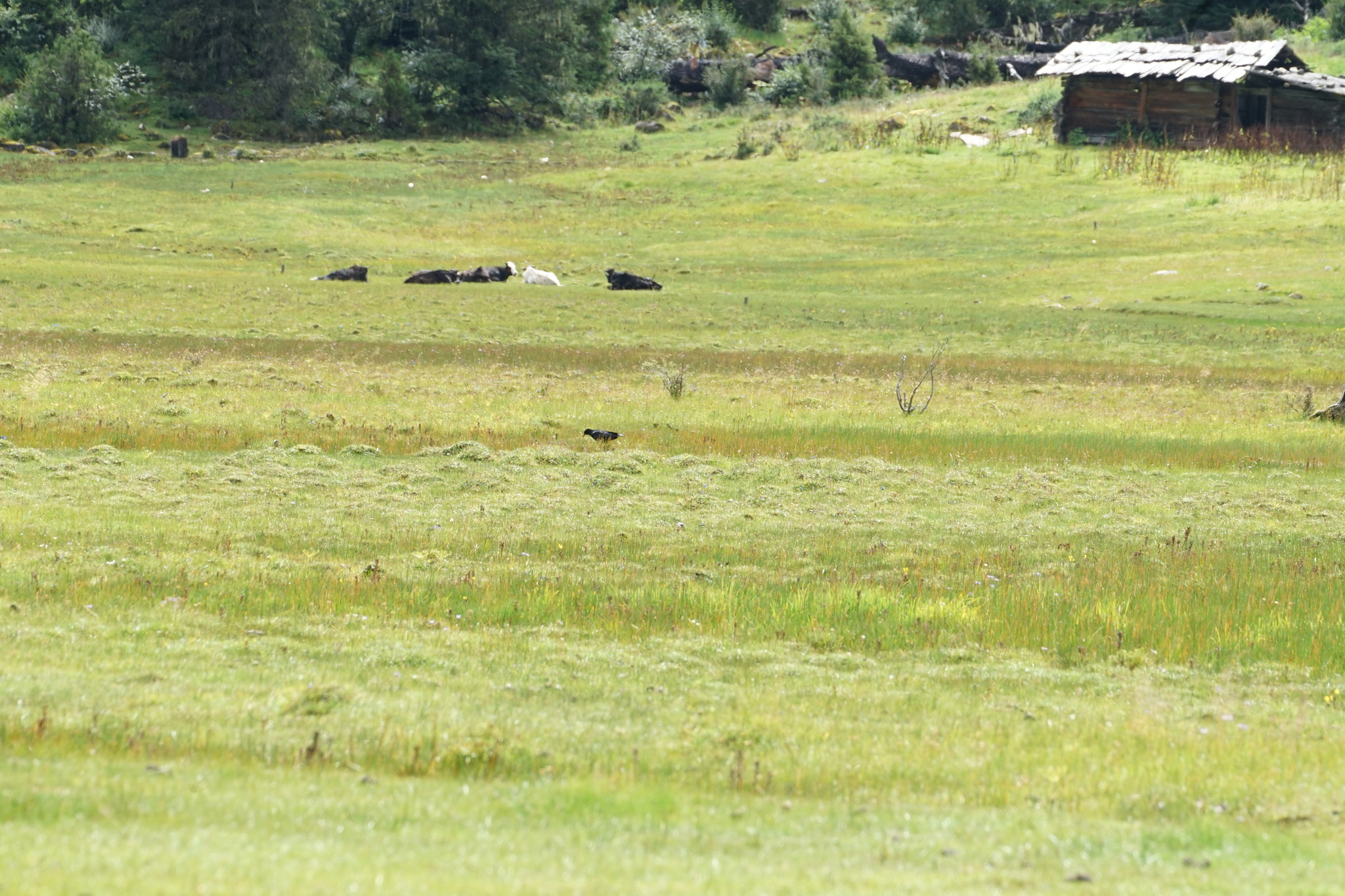
Feeds primarily on invertebrates including ants, dung beetles, flies and their larvae, using the long curved bill to pick prey from the surface or dig 2-3 centimetres into thin soils. The diet may include vegetable matter such as Gagea bulbs and occasionally barley crops. Preferred feeding habitat is short grassland maintained by grazing animals. In the Himalayas, large flocks form in winter. Breeding begins at three years of age, with strong mate and site fidelity once pairs form. The bulky nest of roots and stems, lined with wool or hair, is built in cliff crevices, caves, quarries or buildings. Clutches of three to five eggs are incubated for 17-18 days, with chicks fledging after 31-41 days. Juvenile survival is about 43% in the first year, while adults have approximately 80% annual survival. Lifespans of seven years are typical, though ages of 17 years have been recorded. Predators include peregrine falcons, golden eagles and eagle-owls, though birds nesting near lesser kestrel colonies benefit from the falcon's protective vigilance.
Conservation
Classified as Least Concern globally due to its extensive range of ten million square kilometres and large population, with an estimated 86,000-210,000 individuals in Europe. However, European populations have declined and fragmented due to changes in traditional pastoral farming, persecution and disturbance at breeding sites. The European breeding population of 12,265-17,370 pairs has resulted in a 'vulnerable' continental assessment. Spain holds the largest populations, while other areas have fragmented and isolated groups. Positive developments include the natural recolonisation of Cornwall since 2001 and a successful reintroduction project in Kent, where the first wild chick since the 1800s fledged in 2024. A reintroduction program in Jersey began in 2010, with captive-bred birds released and monitored.
Culture
The species holds deep cultural significance, particularly in Cornwall where it appears on the local coat of arms and is central to legends about King Arthur, whose soul is said to inhabit a chough. According to Cornish tradition, the red colouring of the bill and legs derives from the blood of Arthur's last battle, making it unlucky to kill this bird. In English heraldry dating from the 14th century, three Cornish choughs appear in the attributed arms of Saint Thomas Becket, though he died before heraldry began; these arms appear in churches dedicated to him and in the arms of Canterbury. Greek mythology considered the 'sea-crow' sacred to the Titan Cronus and linked it to Calypso's island. The bird was historically associated with fire-raising, supposedly stealing lighted matches to set buildings ablaze. It features on postage stamps from several countries and serves as the animal symbol of La Palma in the Canary Islands.
Source: Wikipedia · CC BY-SA 3.0
Taxonomy
- Order
- Passeriformes
- Family
- Corvidae
- Genus
- Pyrrhocorax
- eBird Code
- rebcho1
Subspecies (8)
-
Pyrrhocorax pyrrhocorax baileyi
highlands of Ethiopia
-
Pyrrhocorax pyrrhocorax barbarus
La Palma (Canary Islands) and northwestern Africa (Morocco to Algeria)
-
Pyrrhocorax pyrrhocorax brachypus
central and northern China to Manchuria and Mongolia
-
Pyrrhocorax pyrrhocorax centralis
central Asia (Tien Shan, Pamir, and Altai mountains)
-
Pyrrhocorax pyrrhocorax docilis
Crete and southeastern Europe to northern Arabia, northern Iraq, Iran, and Afghanistan
-
Pyrrhocorax pyrrhocorax erythroramphos
Alps, Pyrenees, Iberian Peninsula, and Mediterranean islands
-
Pyrrhocorax pyrrhocorax himalayanus
Himalayas and northern India to western China
-
Pyrrhocorax pyrrhocorax pyrrhocorax
locally in England, Wales, Isle of Man, Inner Hebrides, and Ireland
Data Sources
Species description from Wikipedia, licensed under CC BY-SA 3.0.
Bird images and sounds sourced from GBIF, contributed by citizen scientists worldwide under Creative Commons licenses.
Taxonomy data from AviList 2025.