Passeriformes / Corvidae / Pyrrhocorax
Alpine Chough
Pyrrhocorax graculus · 黄嘴山鸦
Introduction
A member of the crow family (Corvidae) and one of two species in the genus Pyrrhocorax. It breeds in high mountains from Spain through southern Europe, North Africa, Central Asia, and Nepal, potentially nesting at higher altitudes than any other bird species. Distinctive traits include adaptations to thin atmosphere for oxygen uptake and water conservation in eggs, and a diet shifting from invertebrates in summer to fruit in winter. The species is evaluated as Least Concern by the IUCN.
Description
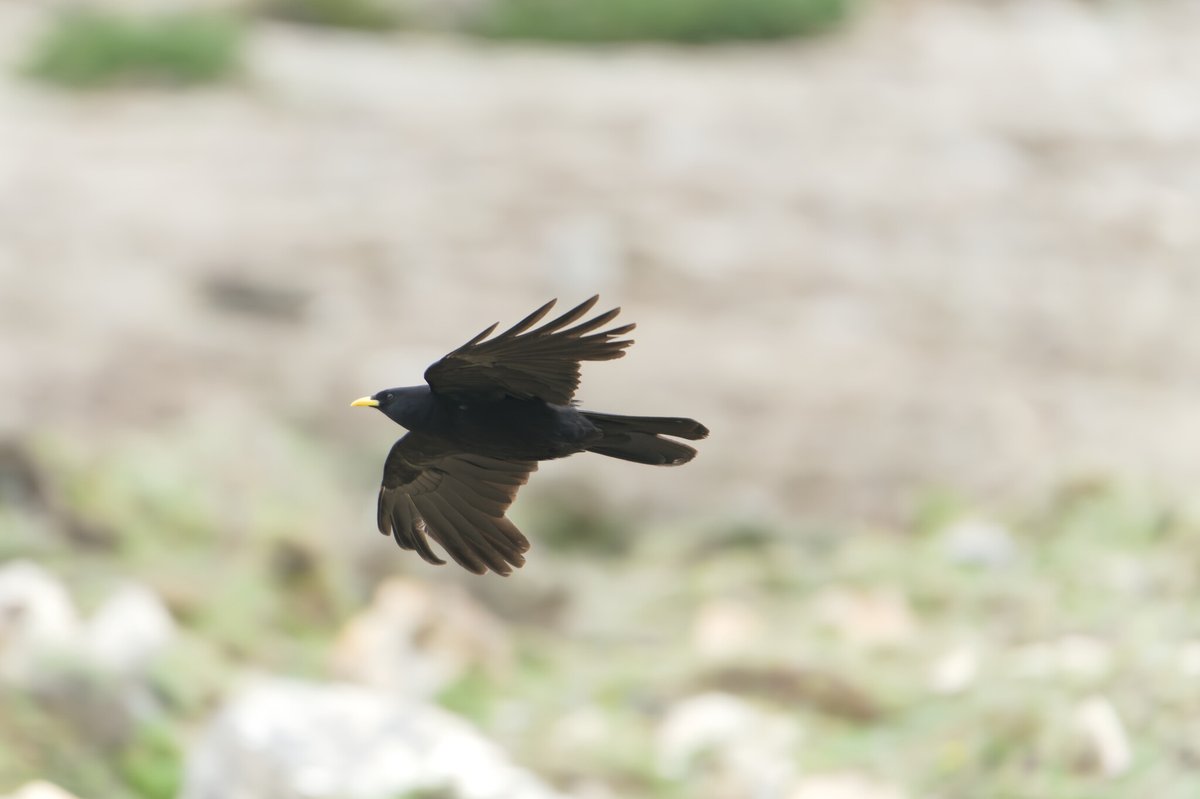
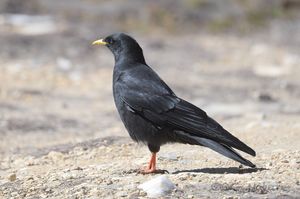
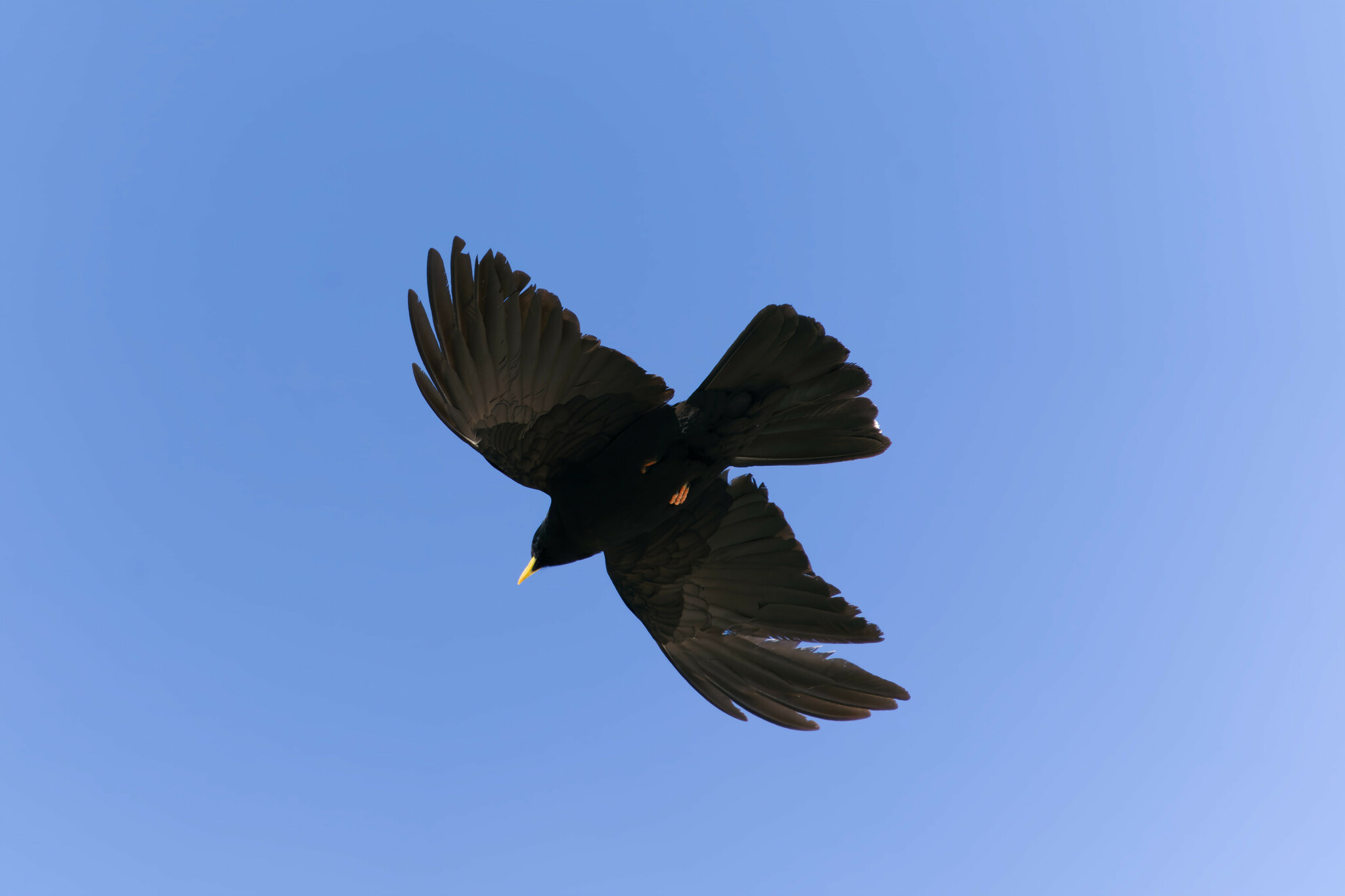
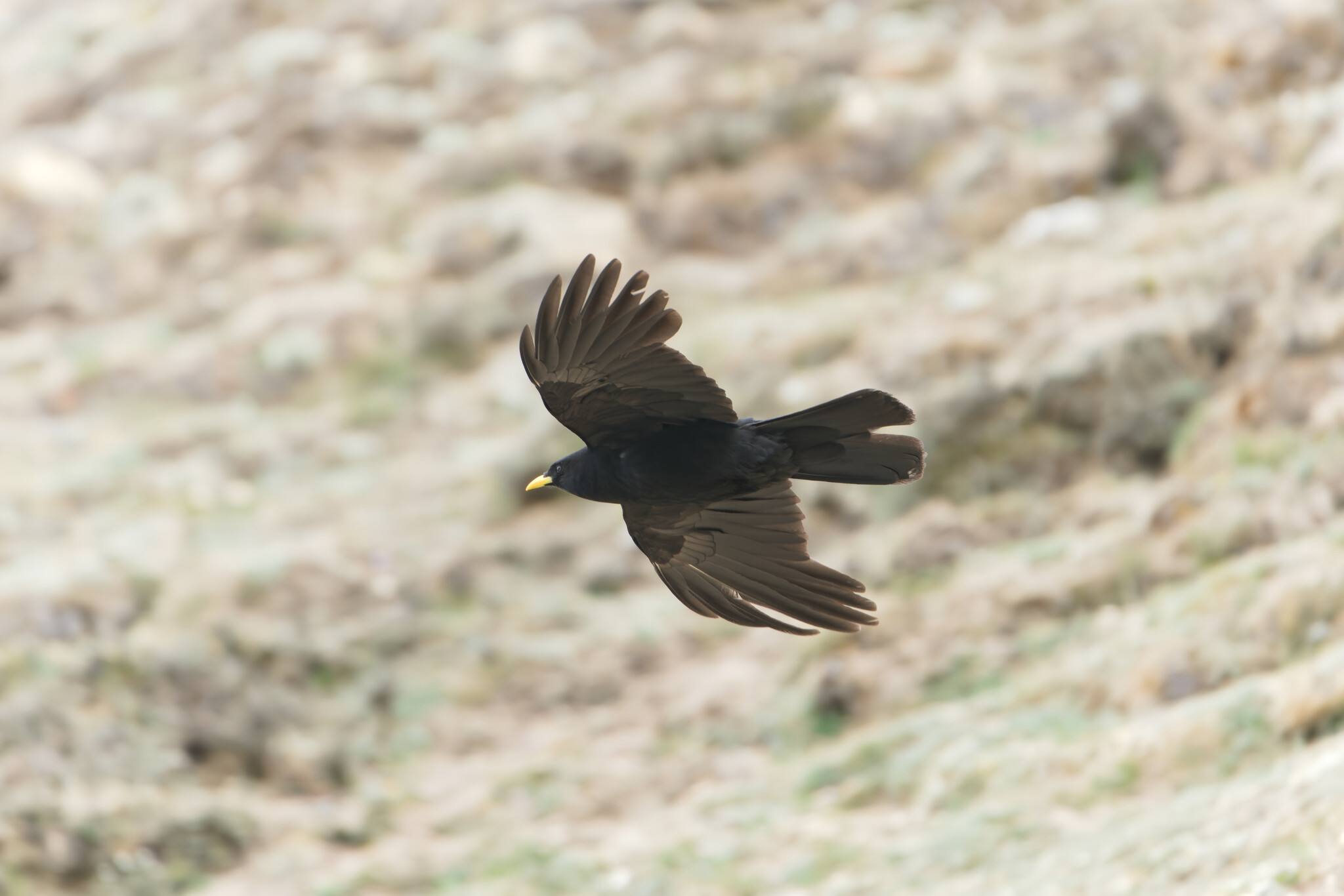
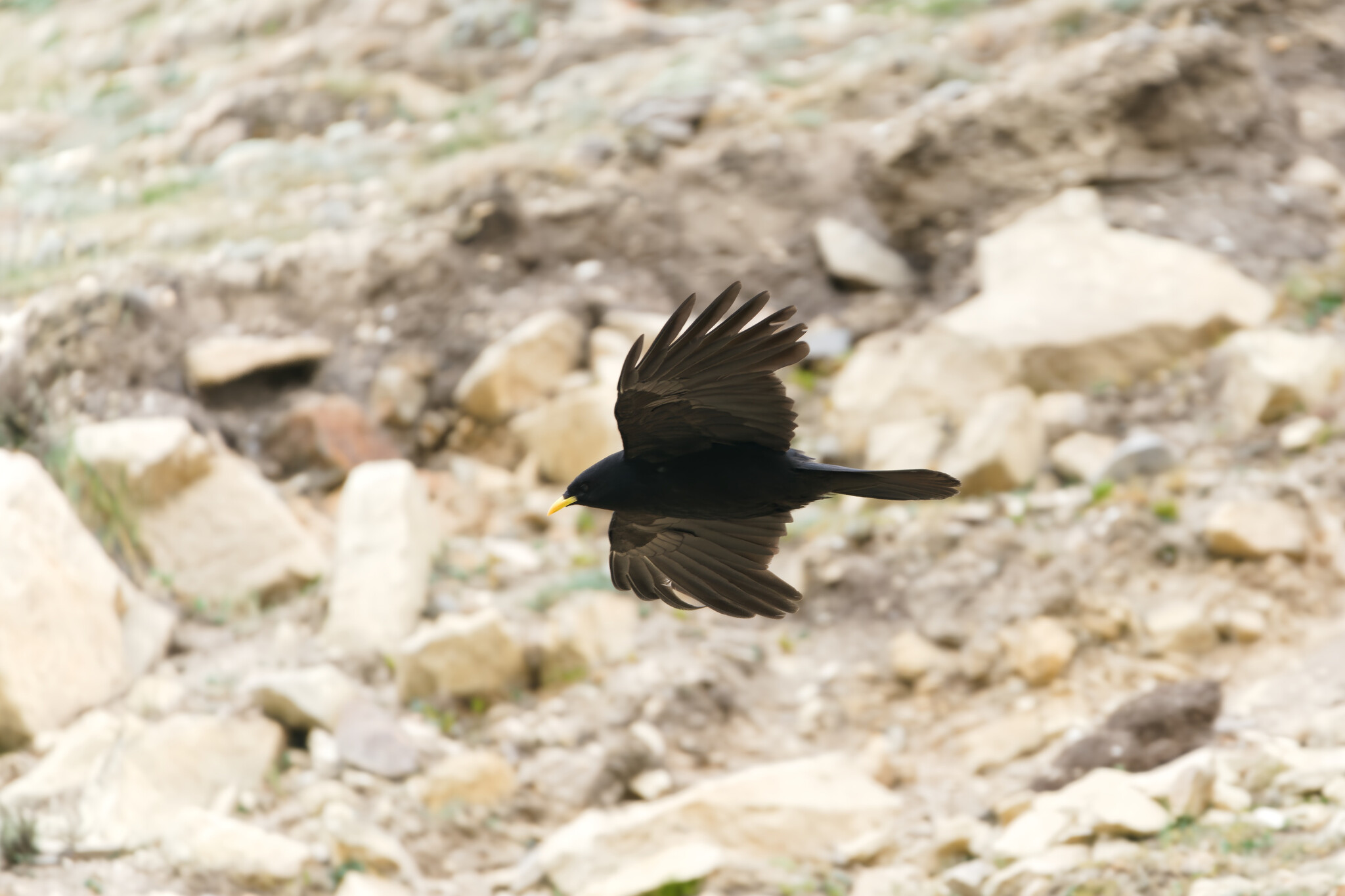
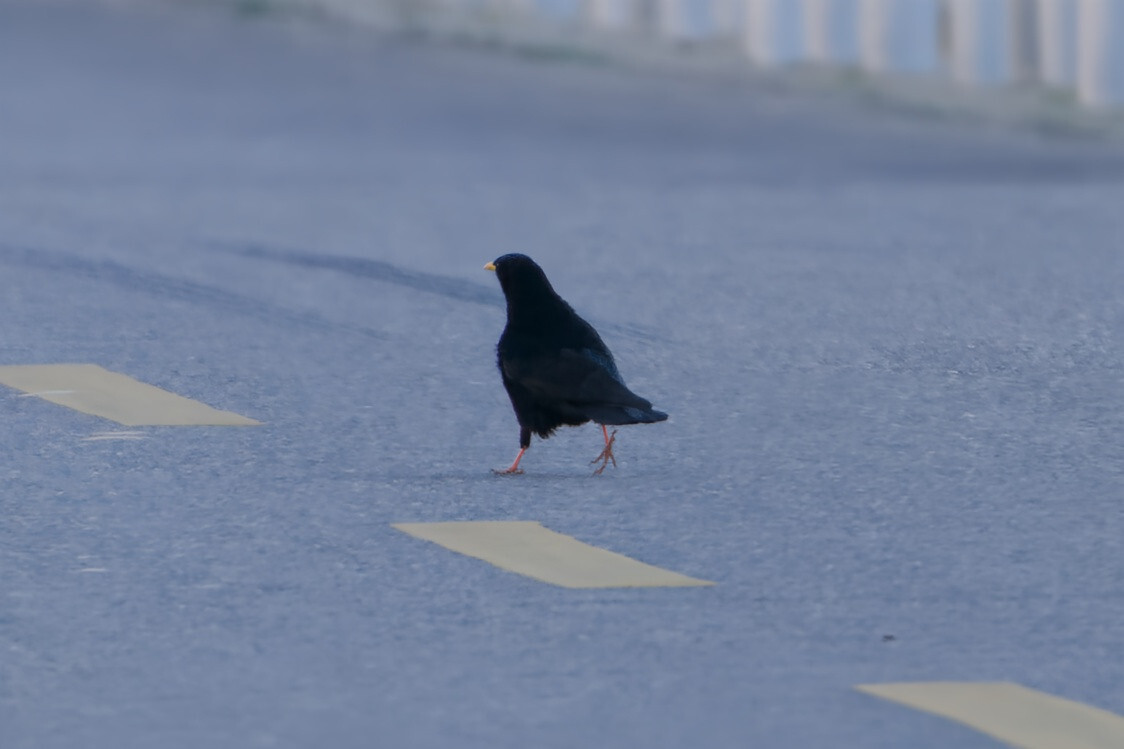
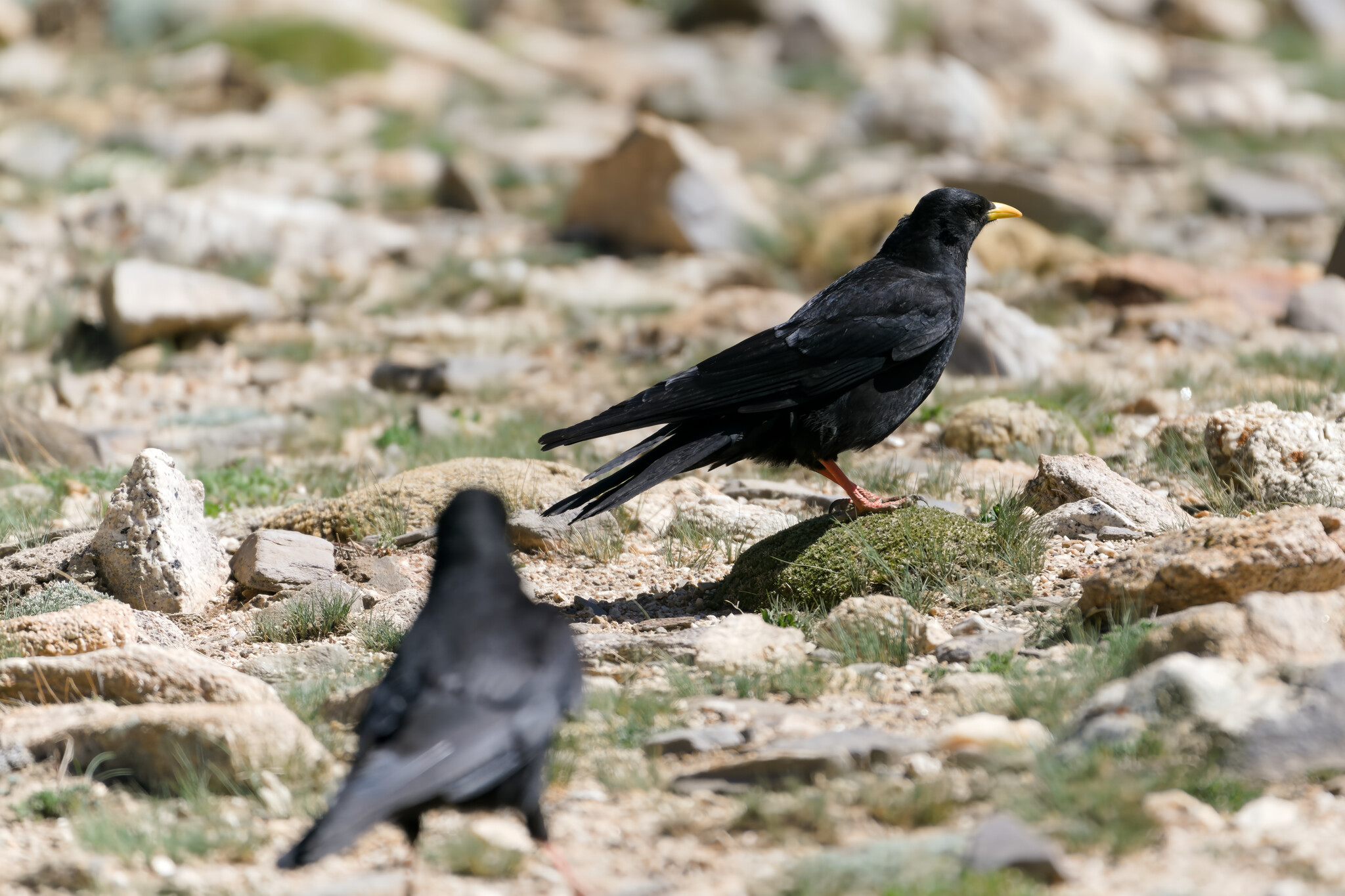
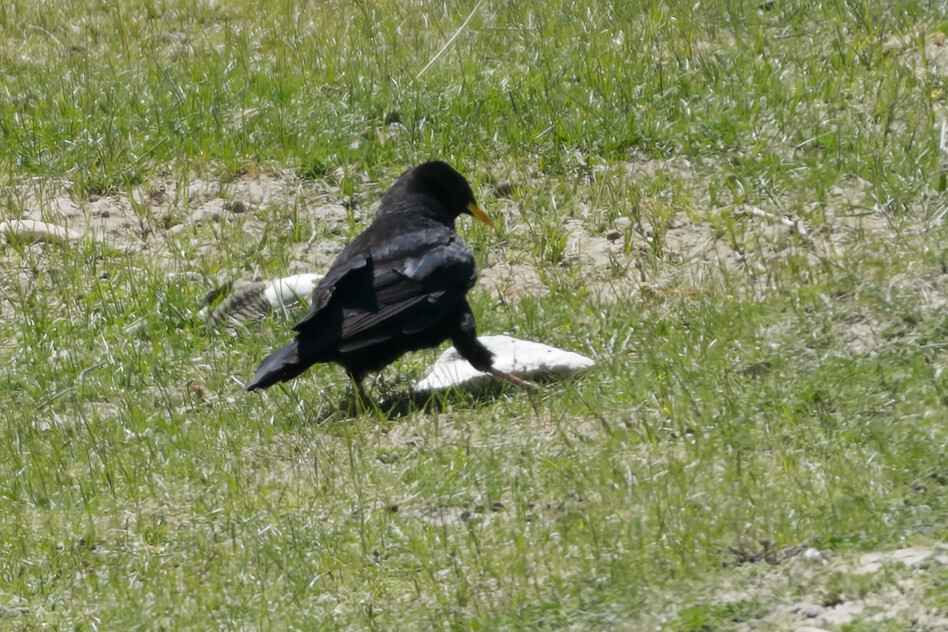
Adults have glossy black plumage, a short yellow bill, dark brown irises, and red legs. Length is 37–39 cm with a 12–14 cm tail and 75–85 cm wingspan. It has a proportionally longer tail and shorter wings compared to the red-billed chough. Sexes are identical, though males average slightly larger. Juveniles are duller with a dull yellow bill and brownish legs. The subspecies P. g. digitatus averages slightly larger with stronger feet. Weight ranges from 188–252 g for the nominate subspecies and 191–244 g for P. g. digitatus.
Identification
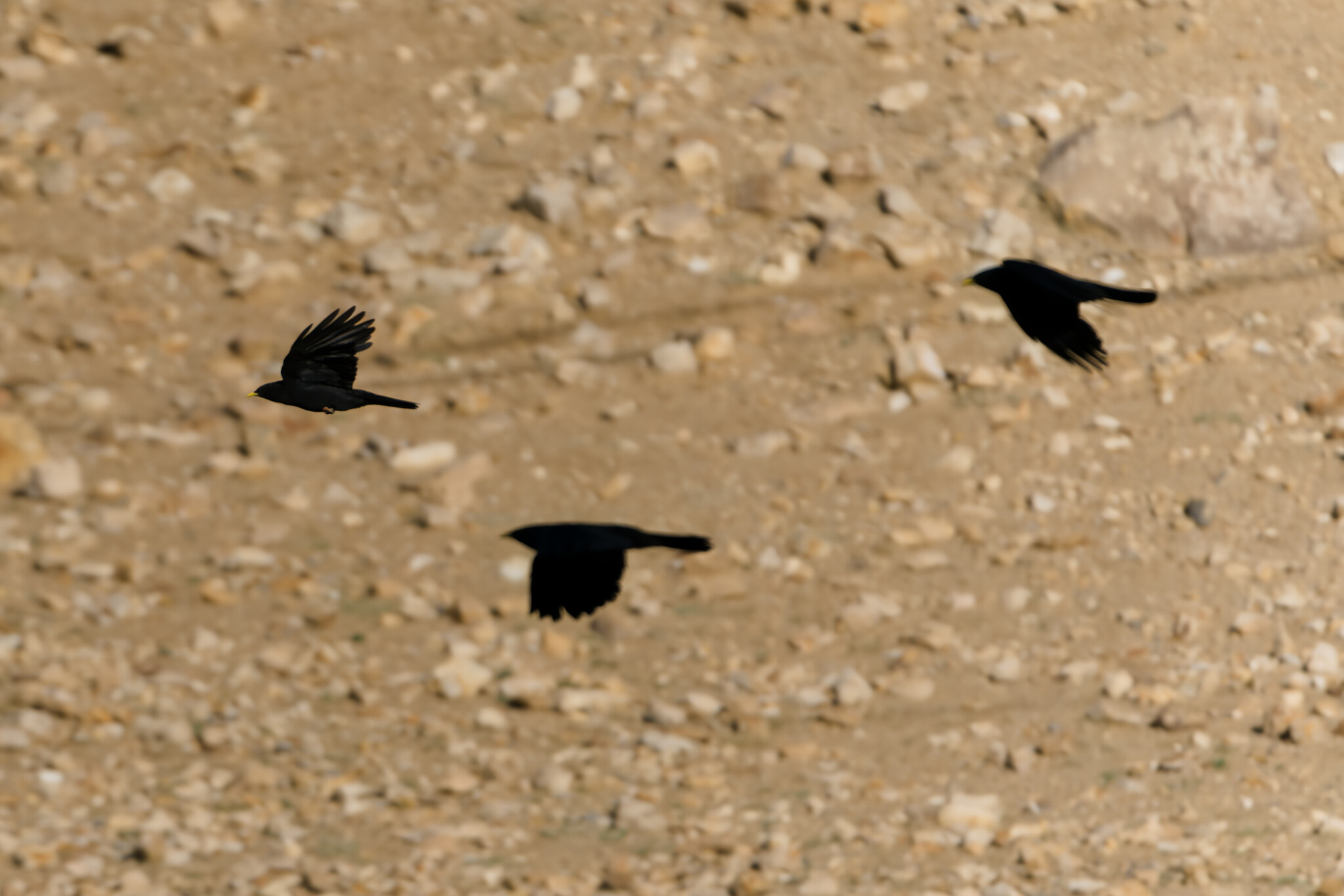
Unlikely to be confused with other species. Distinguished from the jackdaw by larger size, glossy black rather than unglossed grey plumage, and different calls. Distinguished from the red-billed chough by its short yellow bill (versus long red bill), less rectangular wings, and longer, less square-ended tail. Flight is swift and acrobatic with loose, deep wing beats, fanning the tail and folding wings. Vocalizations include a rippling preep, whistled sweeeooo, rolling churr alarm call, and quiet warbles, distinct from typical crow-like sounds.
Distribution & Habitat
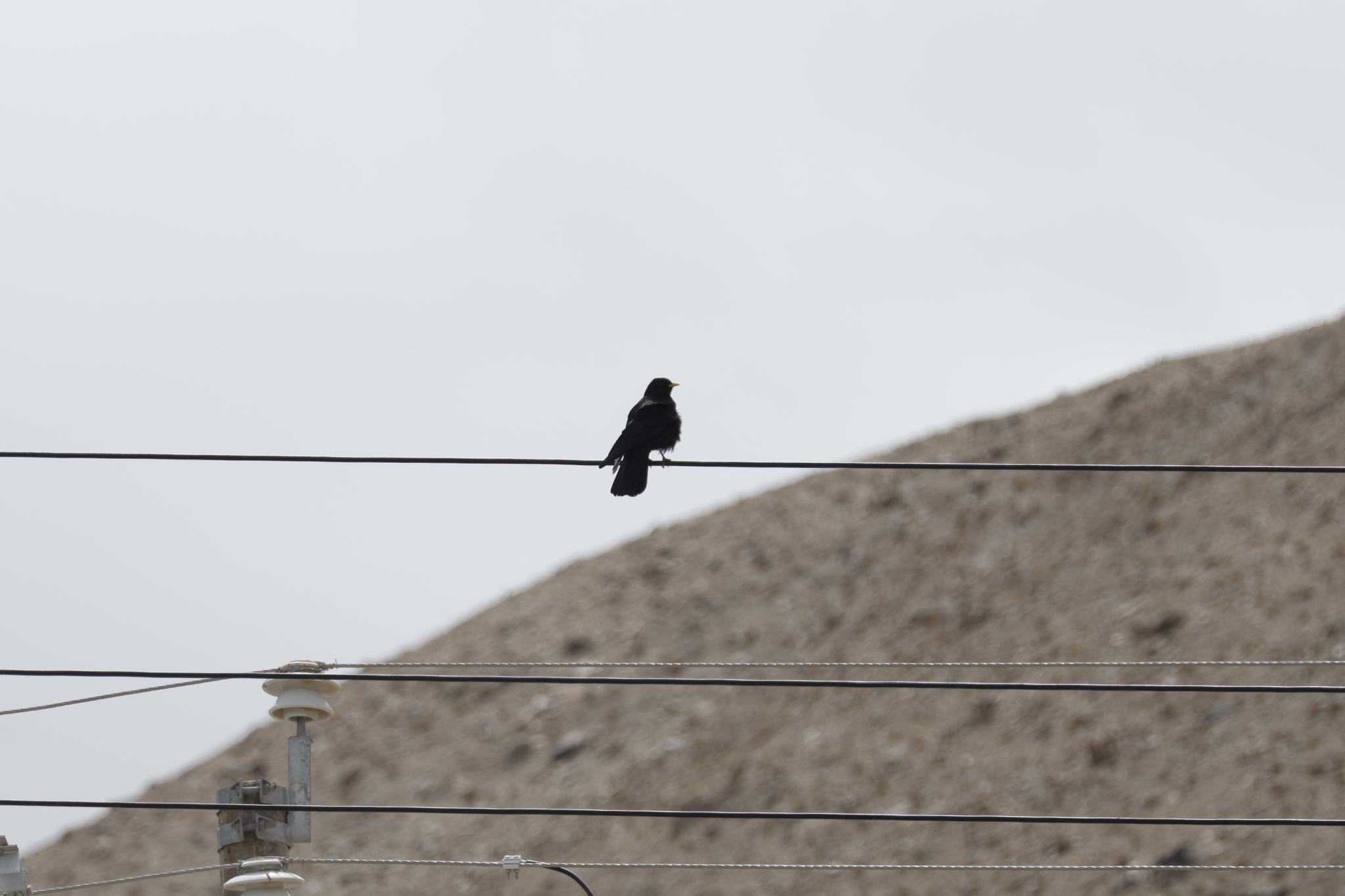
Breeds in mountains from Spain eastwards through southern Europe, the Alps, Central Asia, and the Himalayas to western China, with populations in Morocco, Corsica, and Crete. A non-migratory resident, though some wanderers reach Czechoslovakia, Gibraltar, Hungary, and Cyprus. Breeding altitude ranges from 1,260–2,880 m in Europe, 2,880–3,900 m in Morocco, and 3,500–5,000 m in the Himalayas, with nests recorded up to 6,500 m. Observed following mountaineers on Mount Everest at 8,200 m. Habitats include alpine meadows, scree slopes, and cliff faces, often congregating near human settlements in winter.
Behavior & Ecology
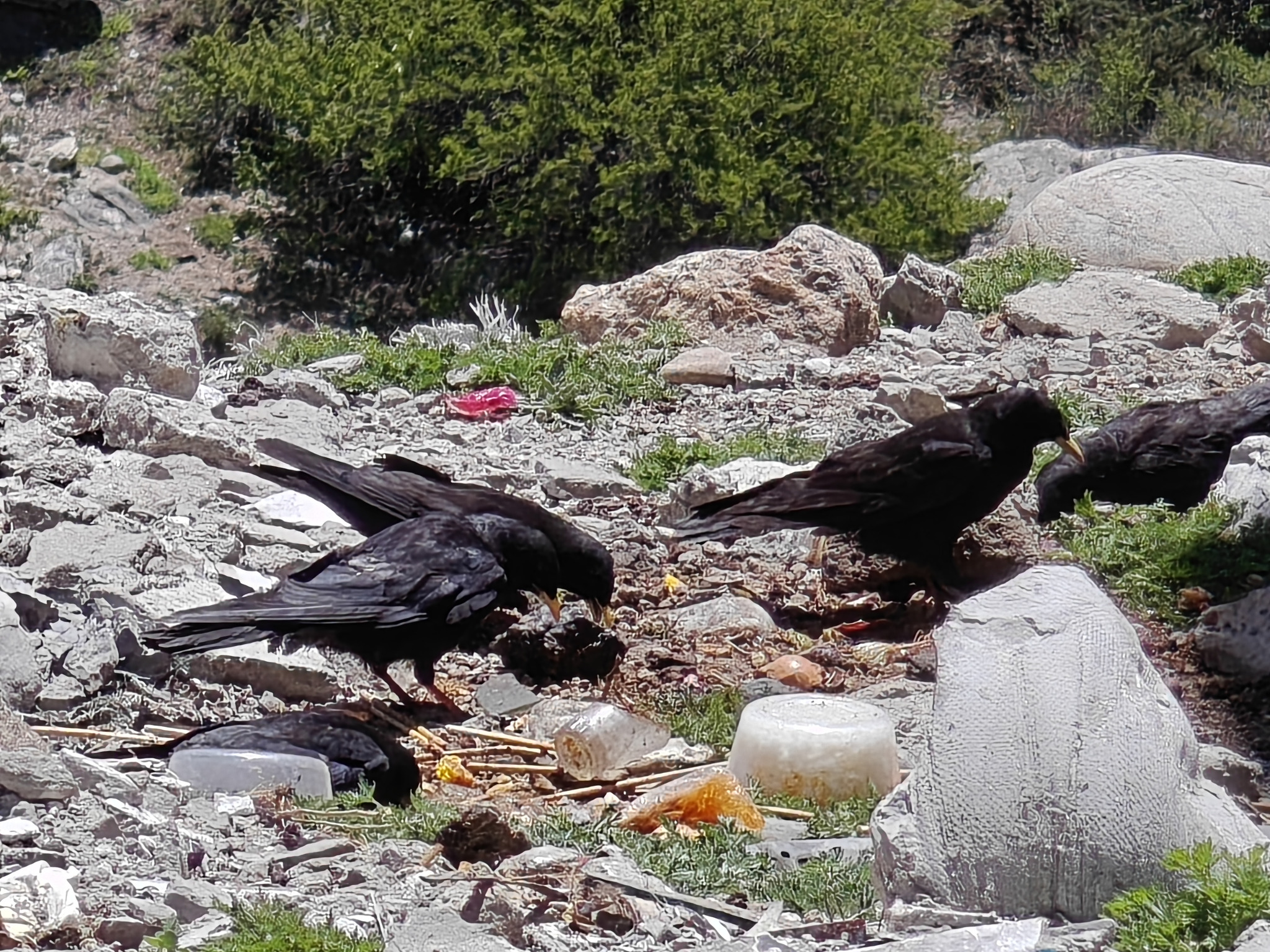
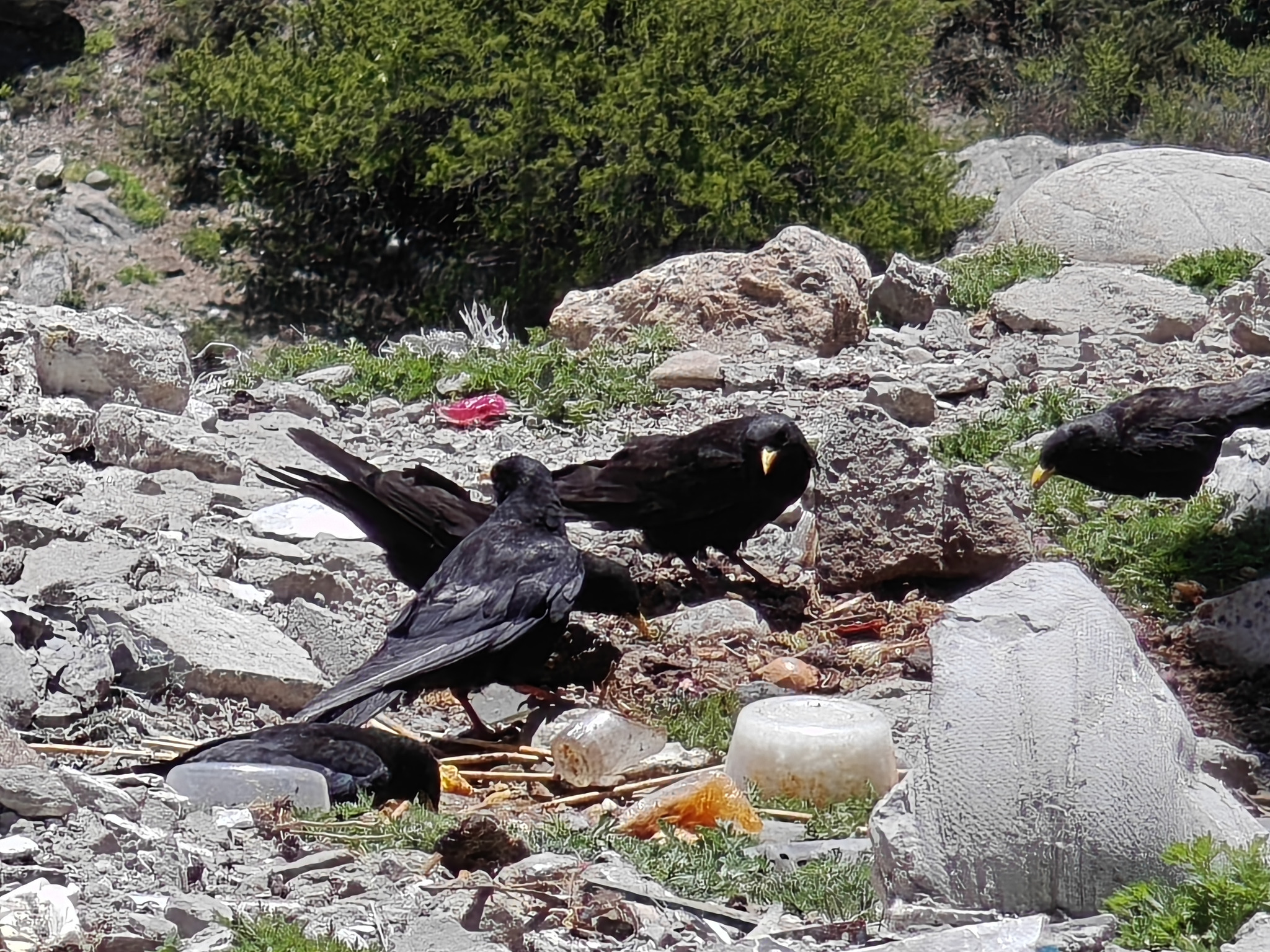
Socially monogamous with high partner fidelity. Nests in cavities, fissures, or abandoned buildings using roots, sticks, and plant stems lined with grass or hair. Clutch size is 3–5 eggs, incubated by the female for 14–21 days; chicks fledge after 29–31 days. Feeds mainly on invertebrates (beetles, snails, grasshoppers) in summer and fruit (berries, rose hips, crops) in winter. Forages in groups, hiding food in cracks. Winter flocks are larger and may supplement diet with tourist-provided food. Predators include peregrine falcons, golden eagles, and Eurasian eagle-owls.
Conservation
Evaluated as Least Concern by the IUCN with an estimated global population of 260,000 to 620,000 individuals in Europe. While widespread, local declines occur due to loss of open grasslands from ceased grazing, intensive farming, ski resort construction, pesticides, and heavy metals. Populations are stable where traditional pastoral agriculture persists. Climate change poses a long-term threat by shifting Alpine habitat to higher, restricted altitudes. Local extinctions have occurred in areas like the Polish Tatra Mountains and parts of Bulgaria.
Source: Wikipedia · CC BY-SA 3.0
Taxonomy
- Order
- Passeriformes
- Family
- Corvidae
- Genus
- Pyrrhocorax
Vocalizations
Subspecies (3)
-
Pyrrhocorax graculus digitatus
southern and southeastern Türkiye, southward to Lebanon and Mount Hermon, eastward across northern Iraq to southwestern Iran (Zagros Mountains)
Data Sources
Species description from Wikipedia, licensed under CC BY-SA 3.0.
Bird images and sounds sourced from GBIF, contributed by citizen scientists worldwide under Creative Commons licenses.
Taxonomy data from AviList 2025.