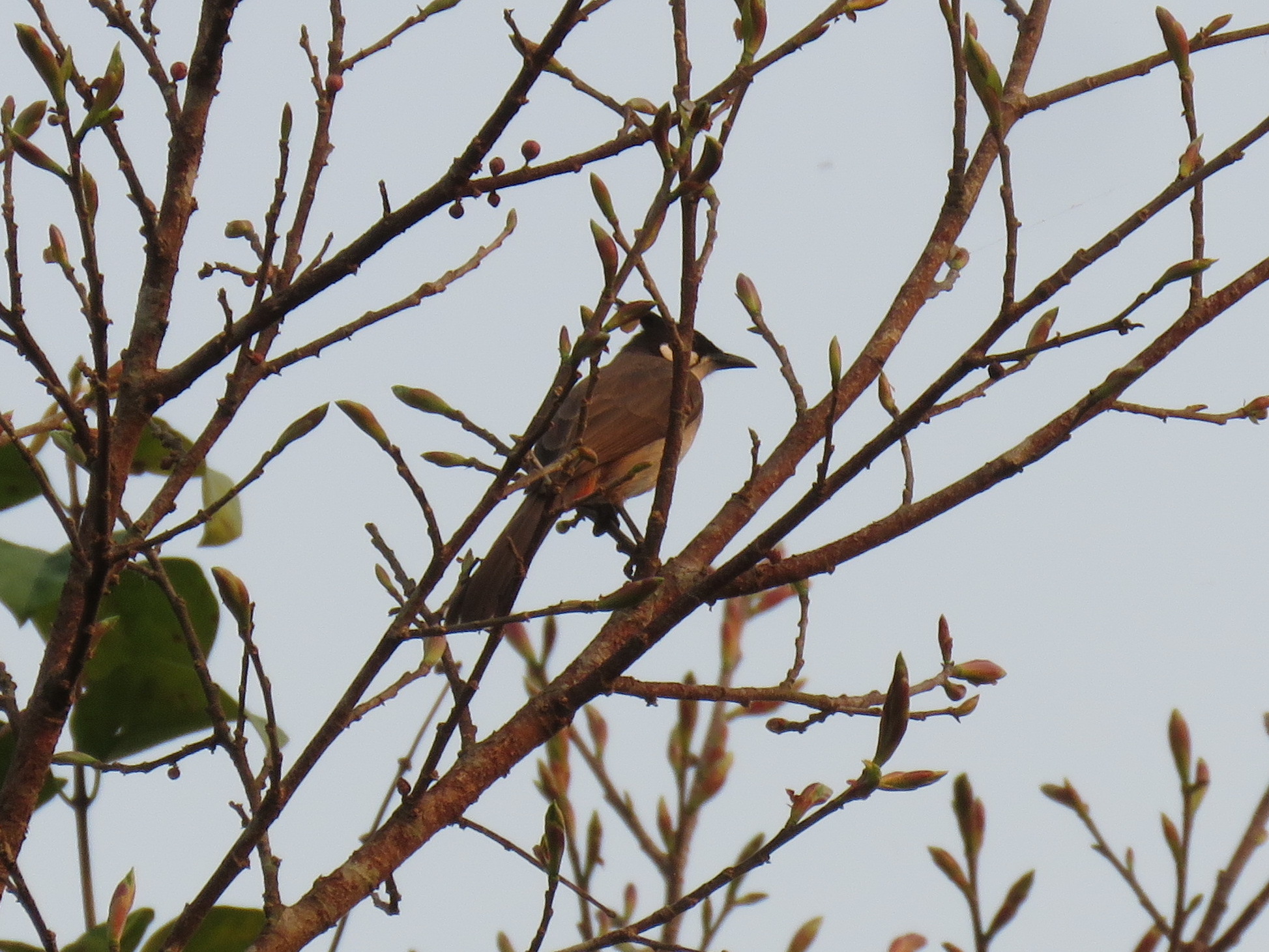
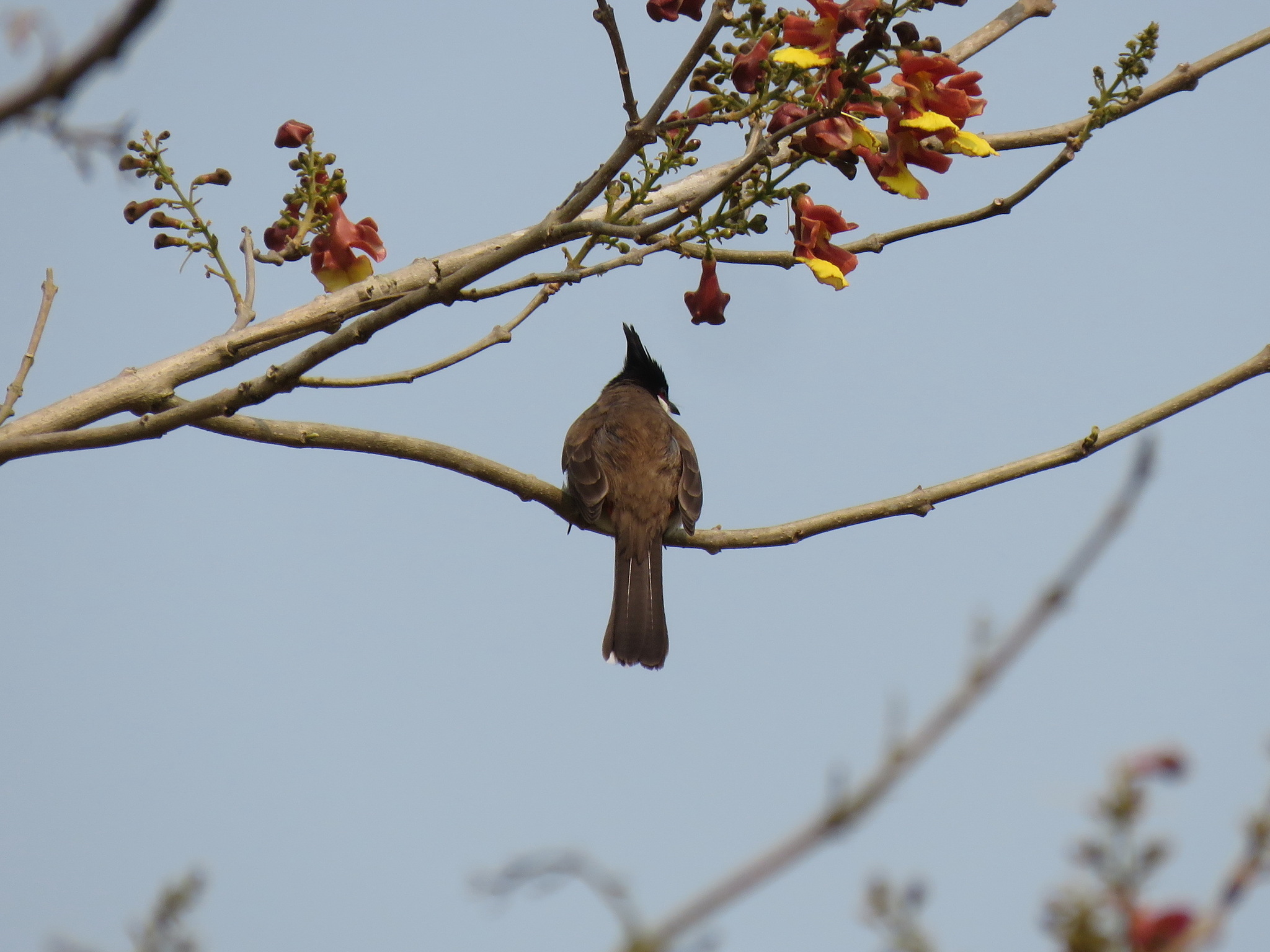
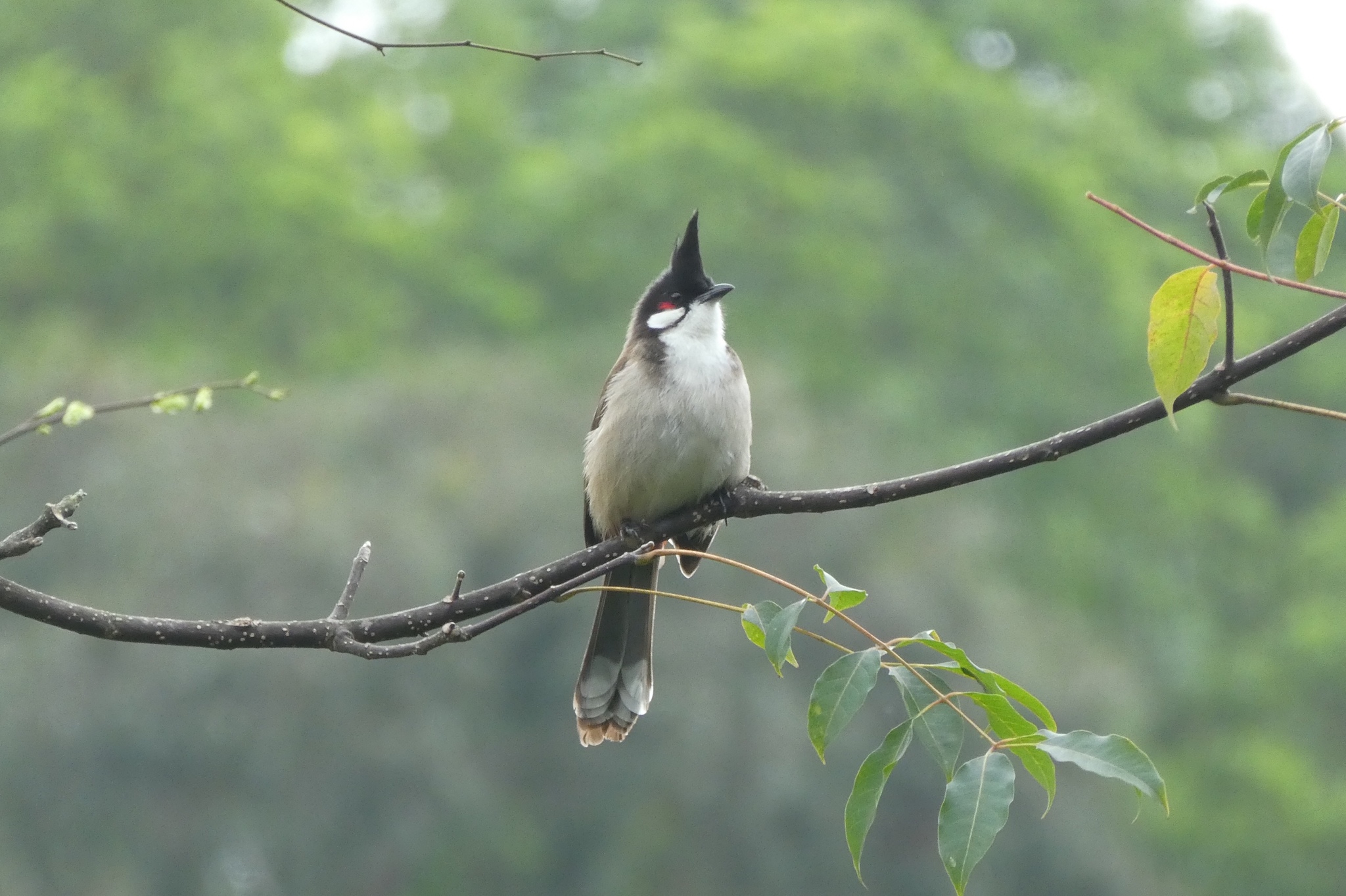
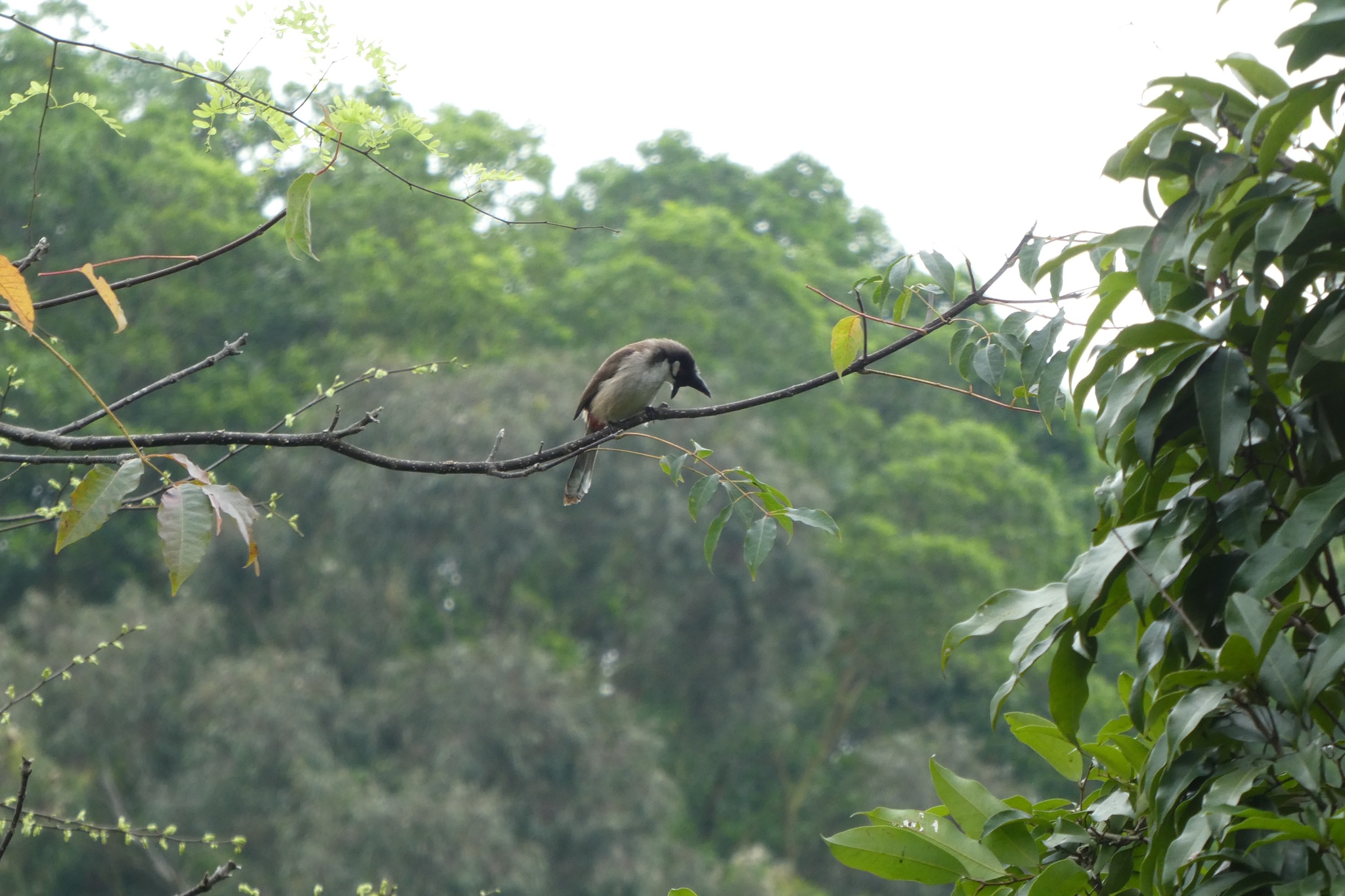
Passeriformes / Pycnonotidae / Pycnonotus
Red-whiskered Bulbul
Pycnonotus jocosus · 红耳鹎
Introduction
A passerine bird in the bulbul family, native to tropical Asia and introduced to many tropical regions worldwide. It is a resident frugivore found in hill forests and urban gardens, known for perching conspicuously on trees and emitting a loud three or four-note call.
Description
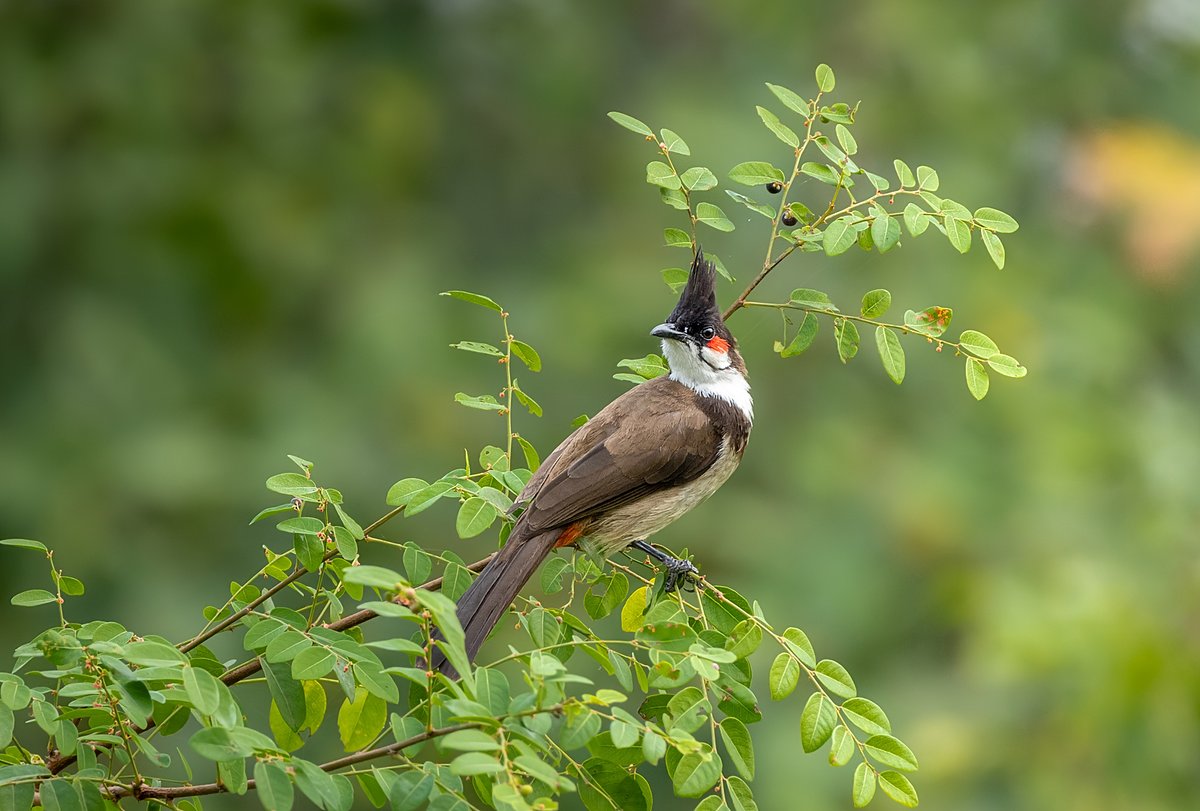
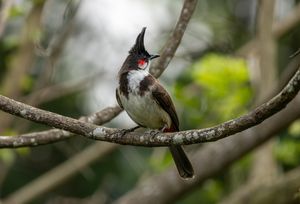
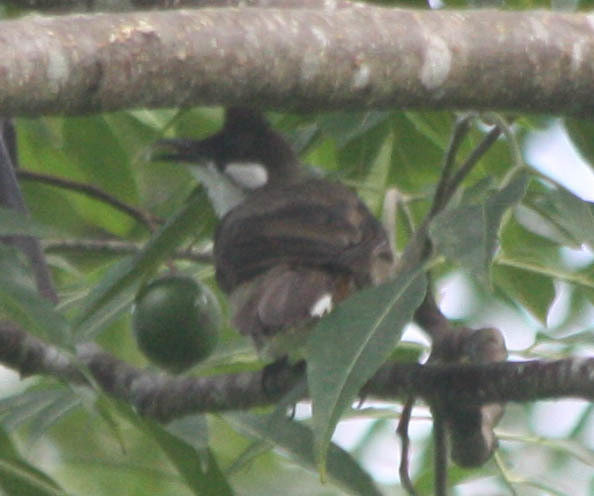
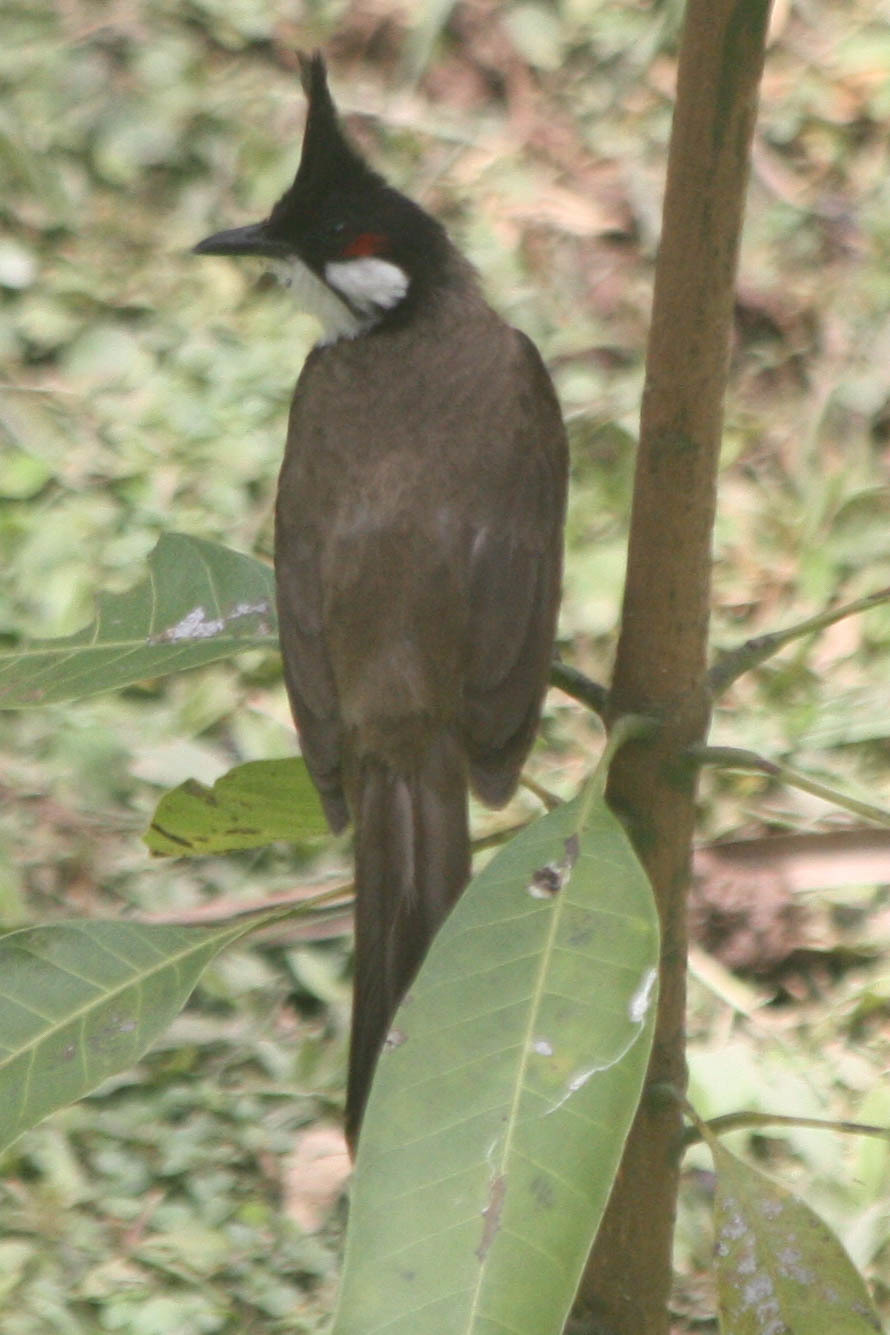
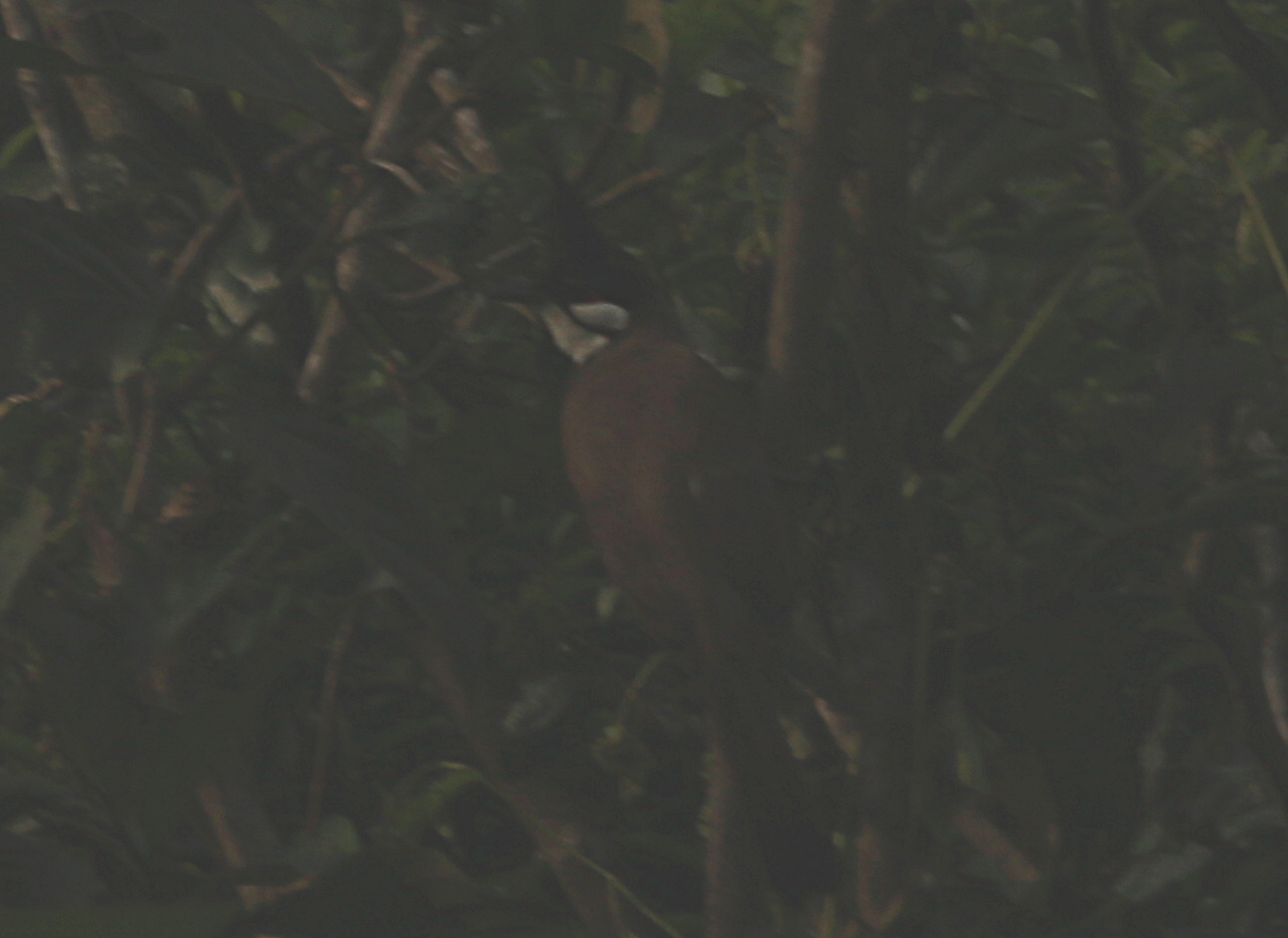
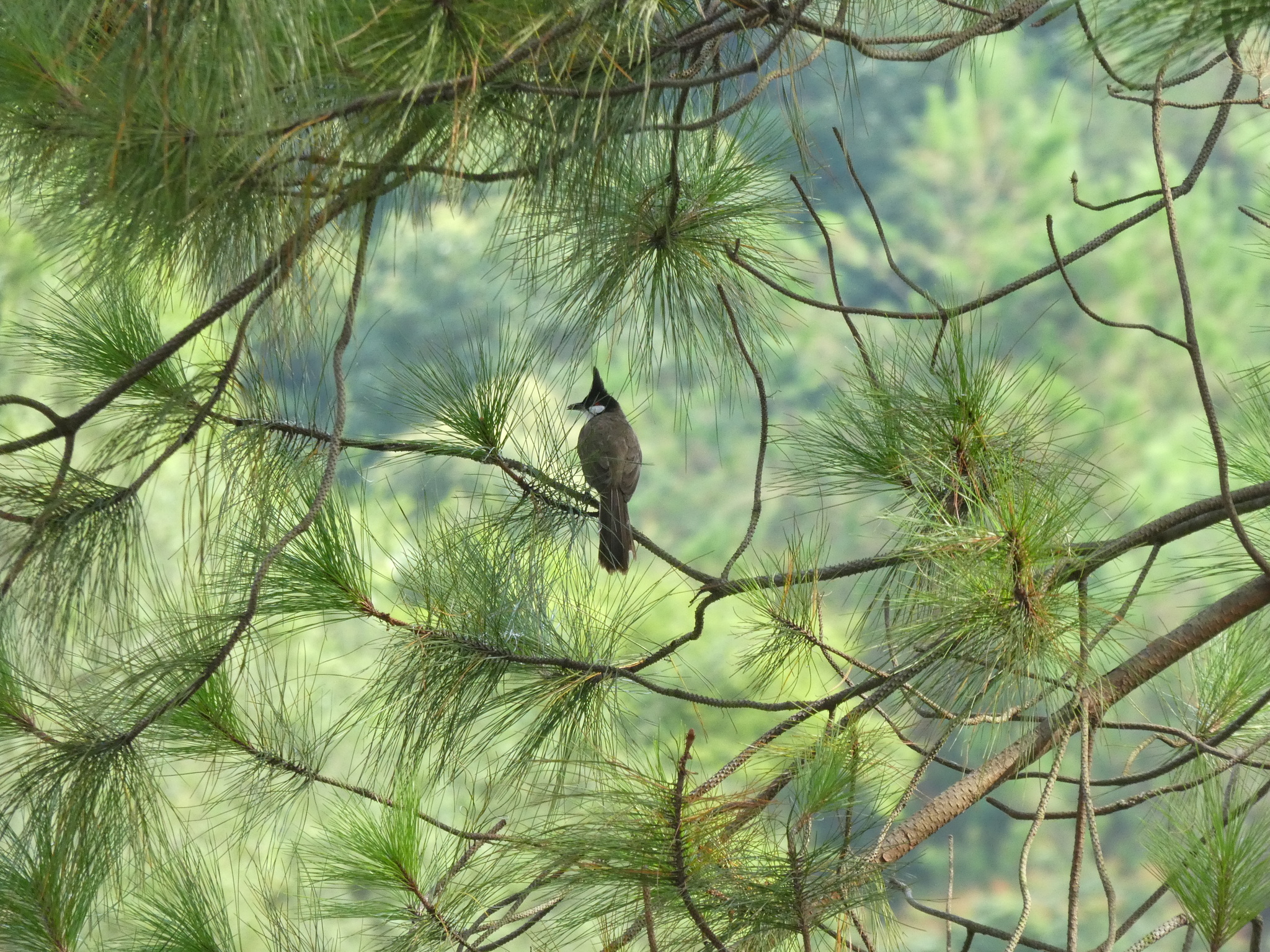
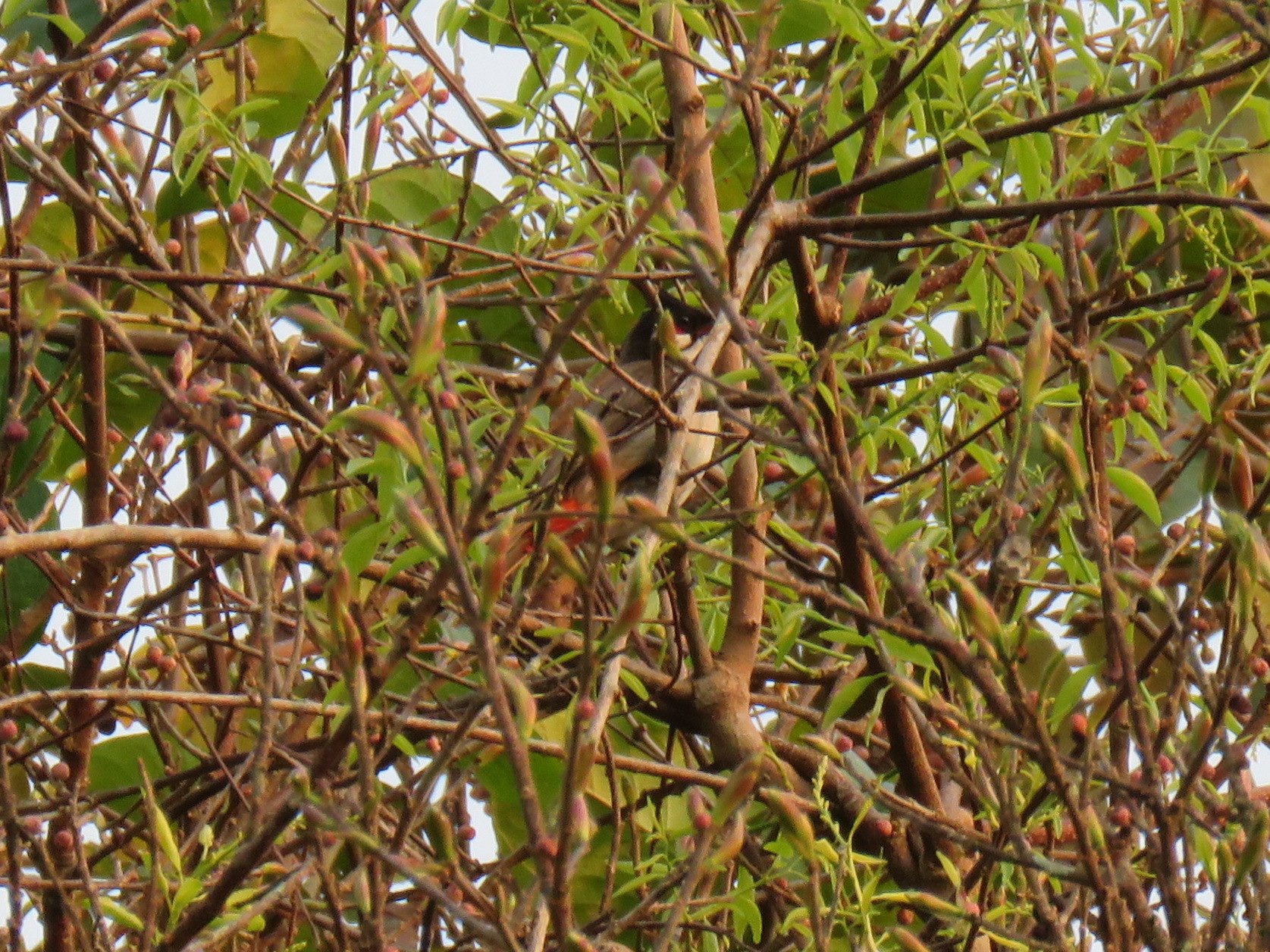
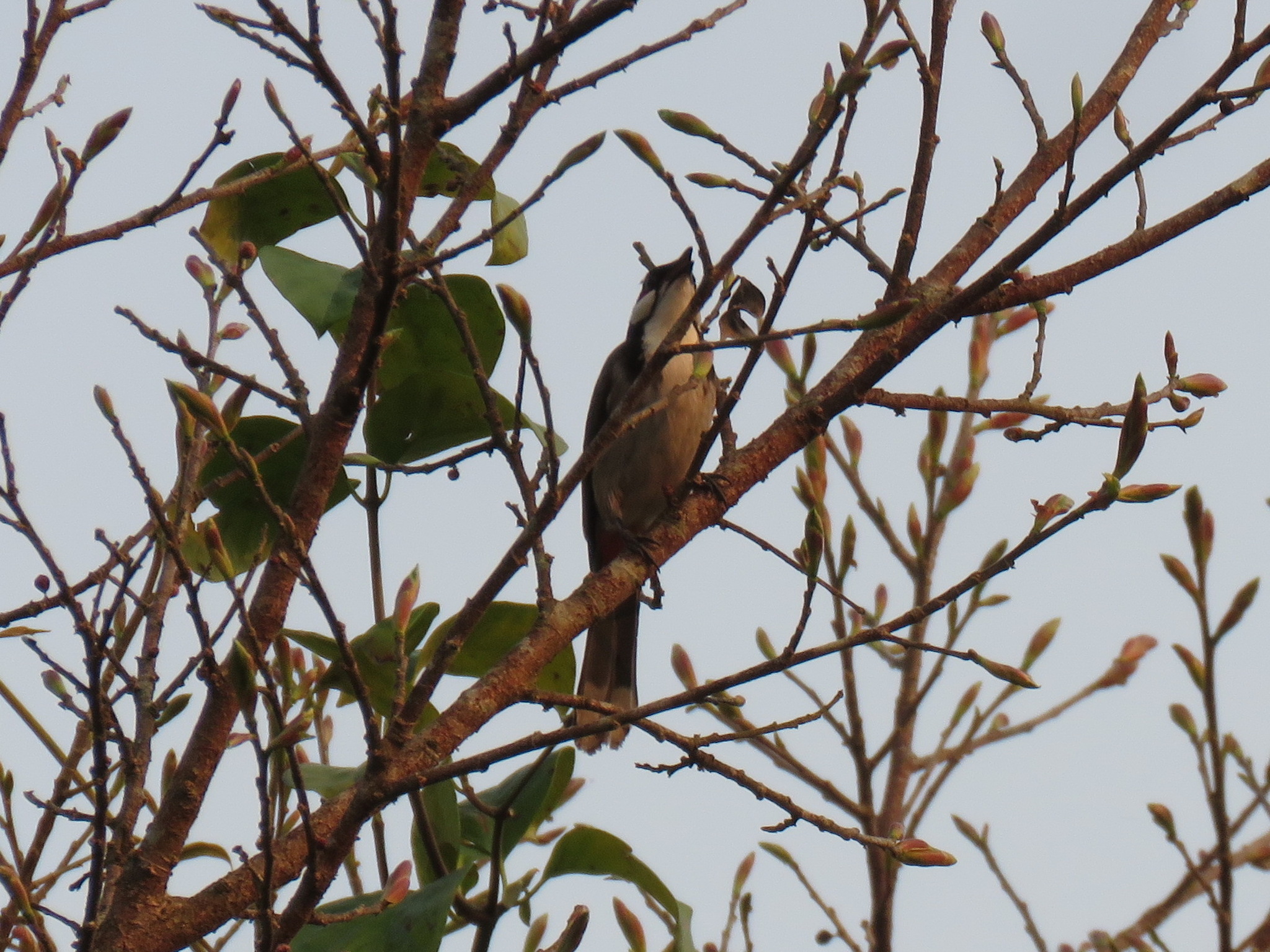
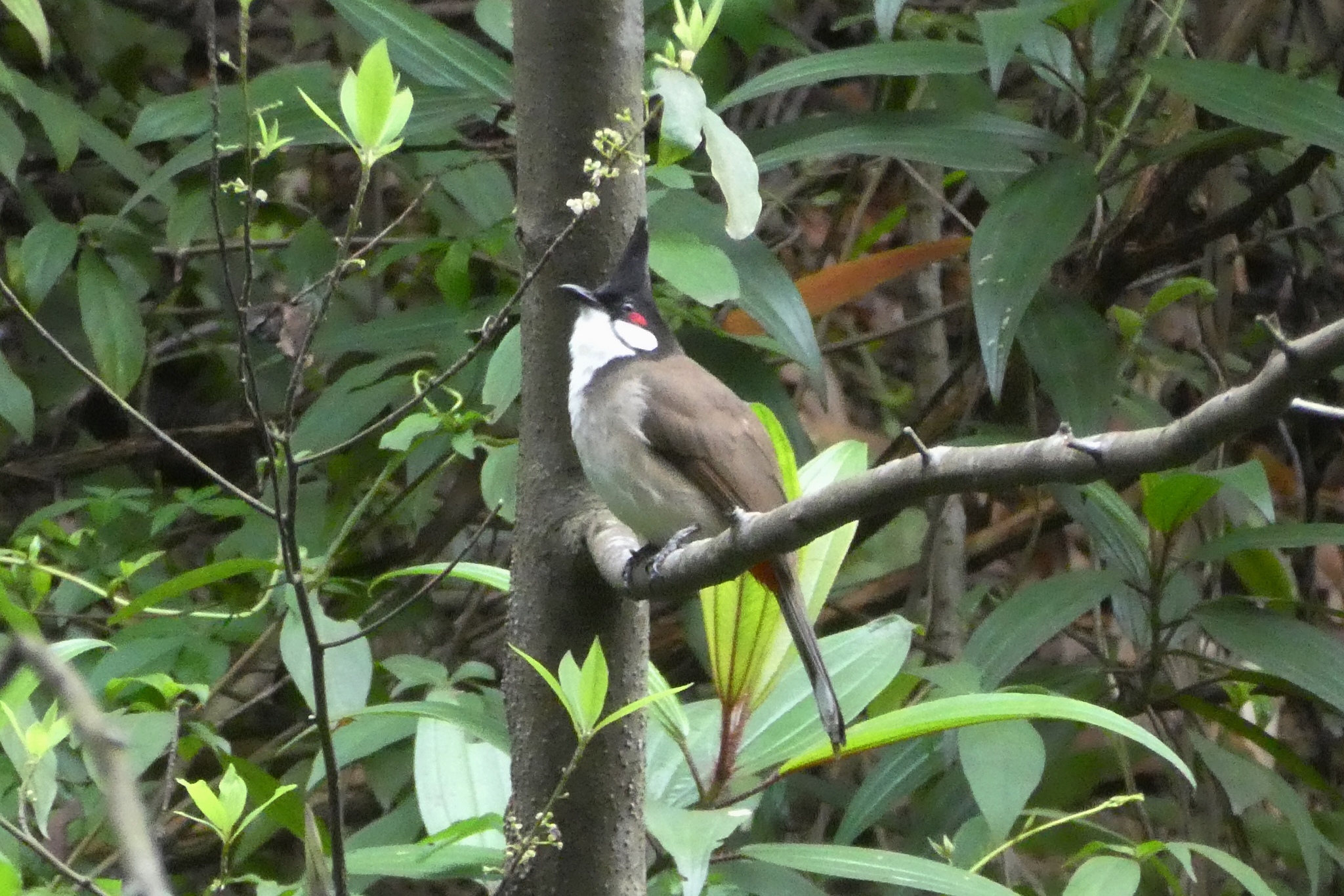
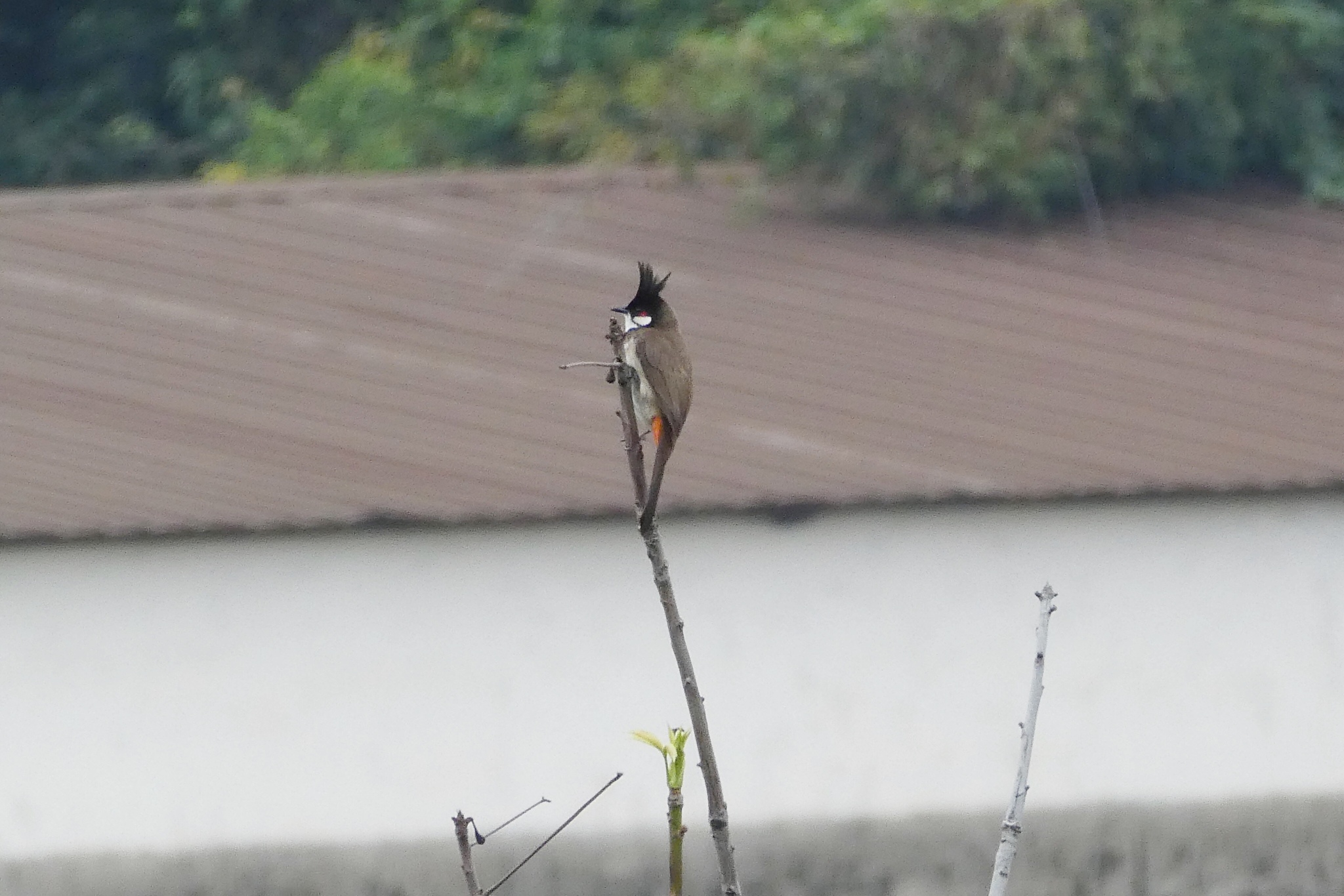
Approximately 20 cm (7.9 in) in length. Features brown upperparts, whitish underparts with buff flanks, and a dark spur at shoulder level. Distinctive markings include a tall pointed black crest, red face patch, thin black moustachial line, and red vent area. The tail is long and brown with white terminal feather tips. Juveniles lack the red eye patch and have a rufous-orange vent. Subspecies vary in crest length, bill size, breast band completeness, and tail tip coloration.
Identification
Identified by the combination of a high black crest, red cheek patch, and red vent. The loud, sharp call is transcribed as 'kink-a-joo', 'pettigrew', or 'pleased to meet you'. Often heard before being seen, but frequently perches openly on tree tops, especially in the morning.
Distribution & Habitat
Native range extends from eastern India through Nepal, Myanmar, Thailand, Indochina, southern China, Hainan Island, and the Malay Peninsula to Java and Sumatra. Nine subspecies are recognized with specific ranges including western/central India, north-western India, Andaman Islands, and south-eastern China. Introduced and established populations exist in Australia (Sydney, Melbourne, Adelaide), United States (Florida, Hawaii, Los Angeles), Mauritius, Réunion, and Mascarene Islands. Eradicated from Assumption Island between 2013 and 2015.
Behavior & Ecology
Feeds on fruits, nectar, and small insects, including toxic yellow oleander berries. In introduced ranges, it aids the dispersal of alien plant species like Lantana and Rubus alceifolius. Breeding peaks December–May in southern India and March–October in northern India. Males perform courtship displays involving head bowing, tail spreading, and wing drooping. Nests are cup-shaped structures woven from twigs, roots, and grasses, often embellished with paper or plastic, placed in bushes or small trees. Clutches contain two or three pale mauve eggs with speckles, hatching after 12 days. Both parents raise young, which are initially fed insects. Adults may feign injury to distract predators. Territories of about 3,000 m² are defended during breeding. Roosts communally in groups of over 100 birds.
Culture
Historically a popular cage bird in India due to its fearless disposition and ability to be tamed to sit on hands. Remains a popular cagebird in parts of Southeast Asia.
Source: Wikipedia · CC BY-SA 3.0
Taxonomy
- Order
- Passeriformes
- Family
- Pycnonotidae
- Genus
- Pycnonotus
Subspecies (9)
-
Pycnonotus jocosus abuensis
western India (northern Bombay to southwestern Rajasthan)
Data Sources
Species description from Wikipedia, licensed under CC BY-SA 3.0.
Bird images and sounds sourced from GBIF, contributed by citizen scientists worldwide under Creative Commons licenses.
Taxonomy data from AviList 2025.