Red-whiskered Bulbul
Pycnonotus jocosus
红耳鹎
Introduction
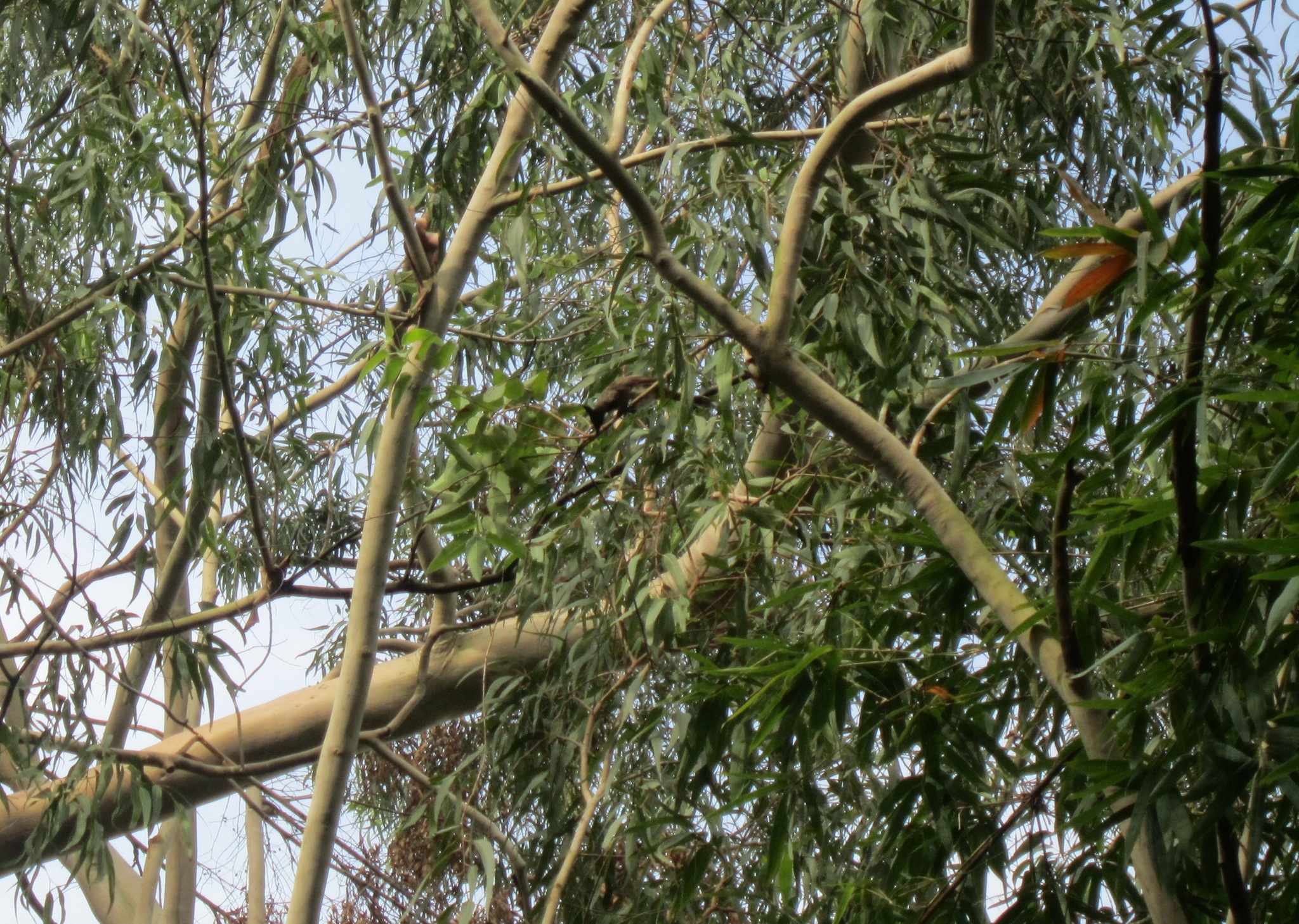
This crested passerine occurs across tropical regions of its native Asian range and in introduced populations worldwide. It thrives in lightly wooded areas, farmland edges, and suburban gardens, where fruit-bearing plants provide food sources. It has successfully colonized cities and disturbed habitats. The species forages actively through canopy layers and occasionally descends to lower bushes. It produces a characteristic sharp 'kink-a-joo' call, which serves as an identification aid even before the bird becomes visible.
Description
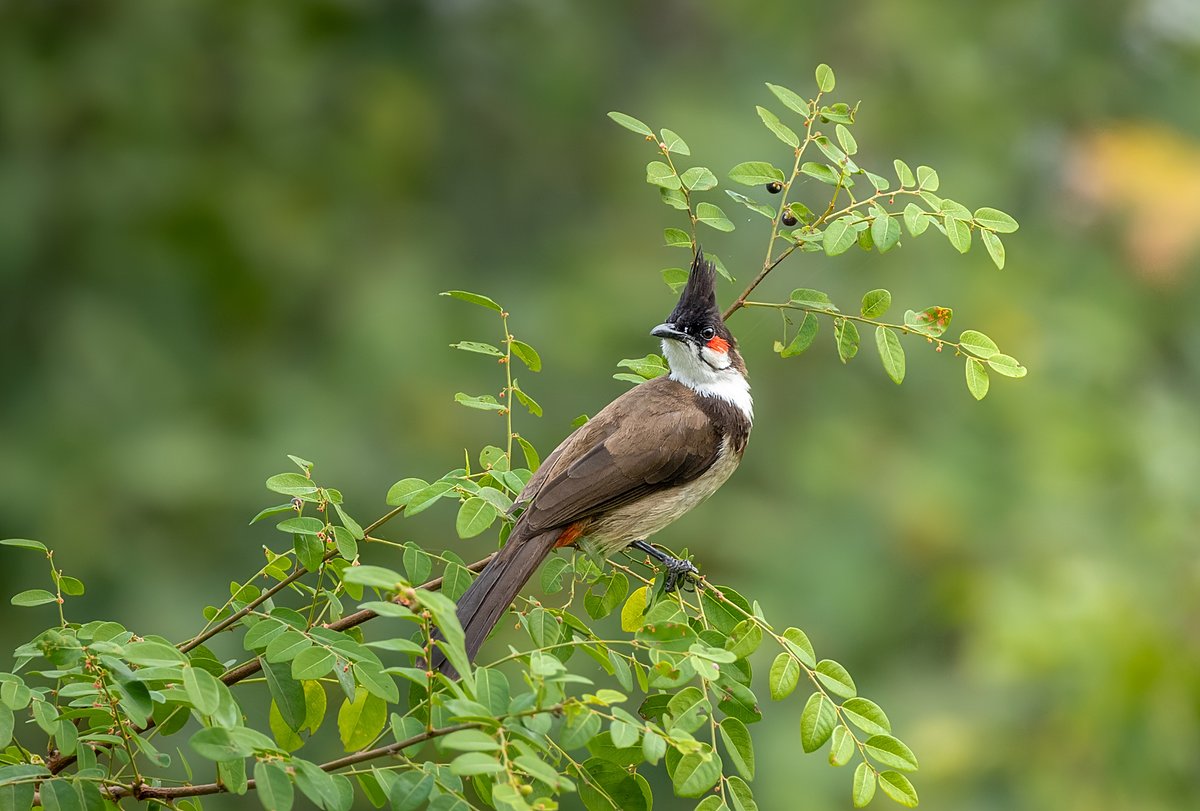
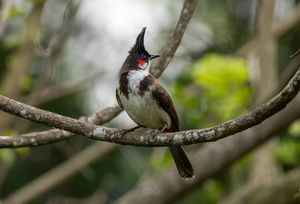
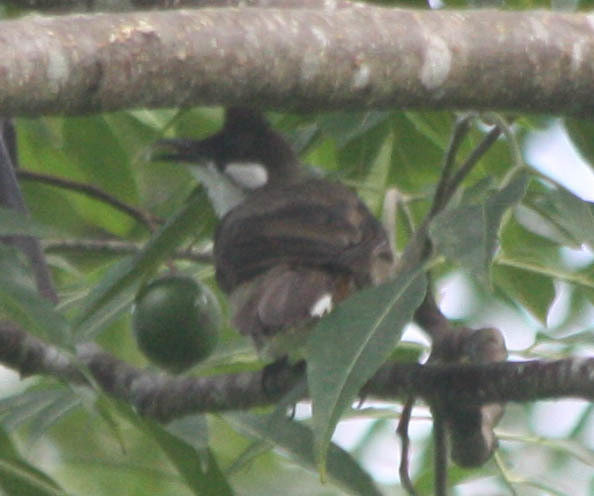
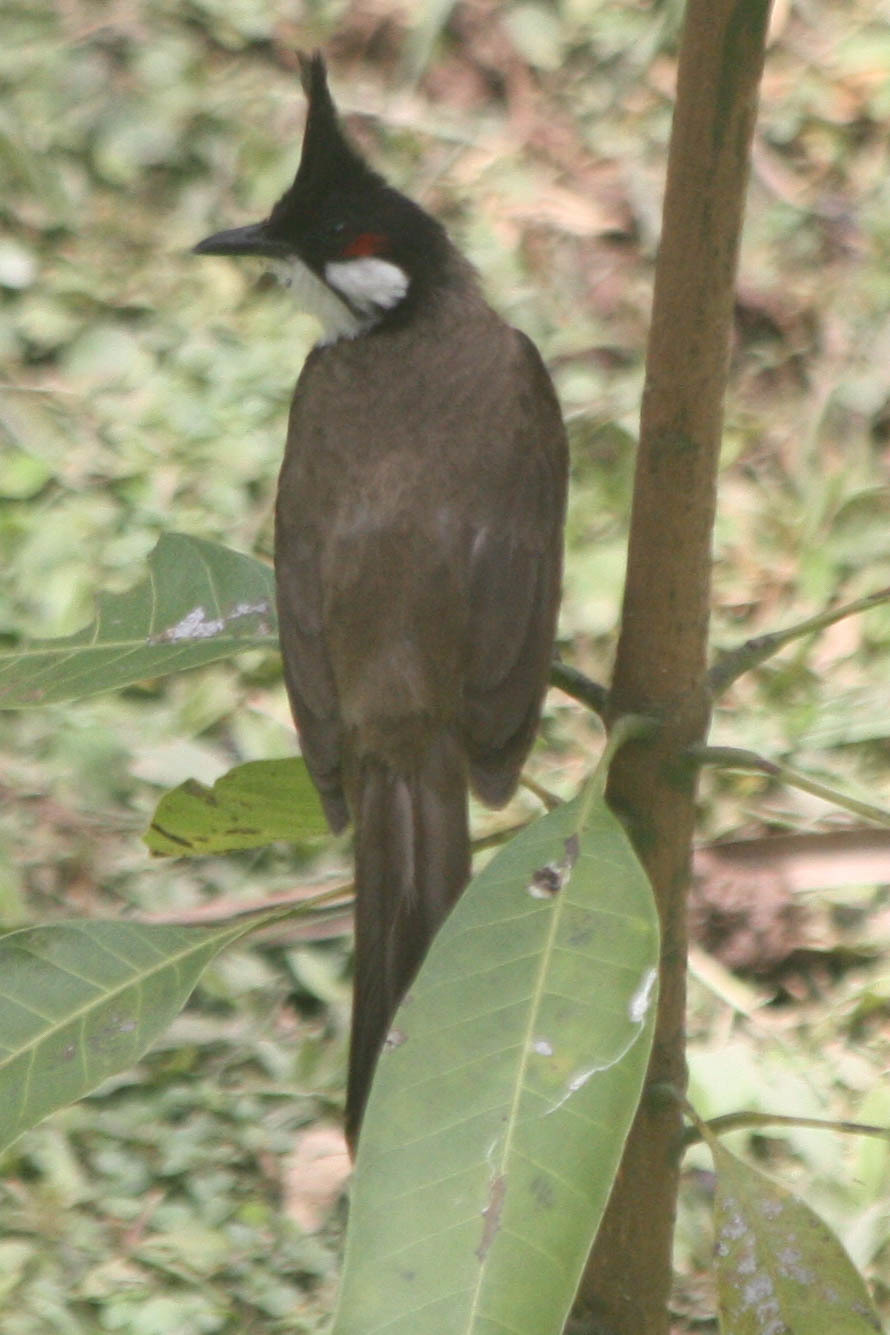
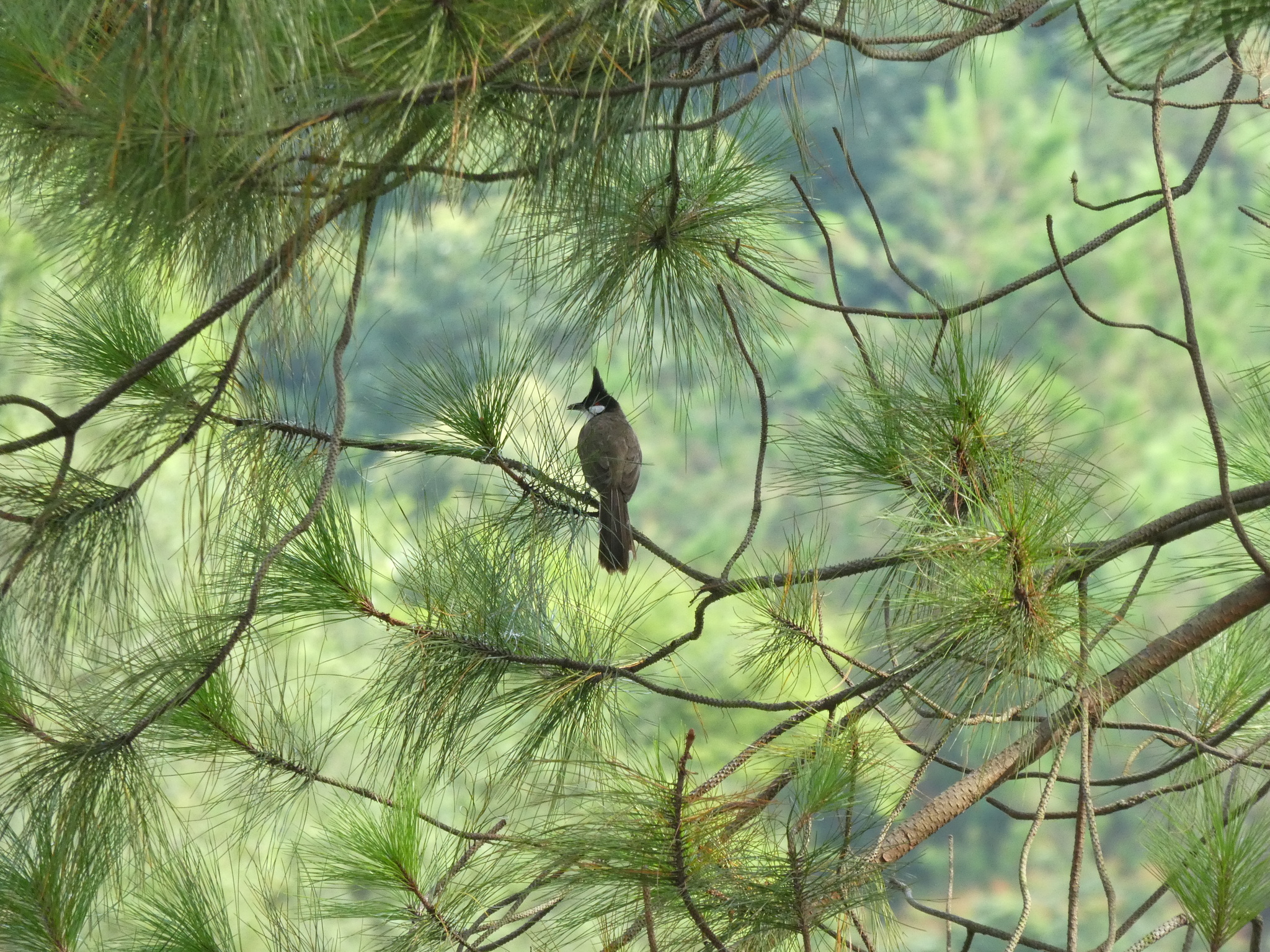
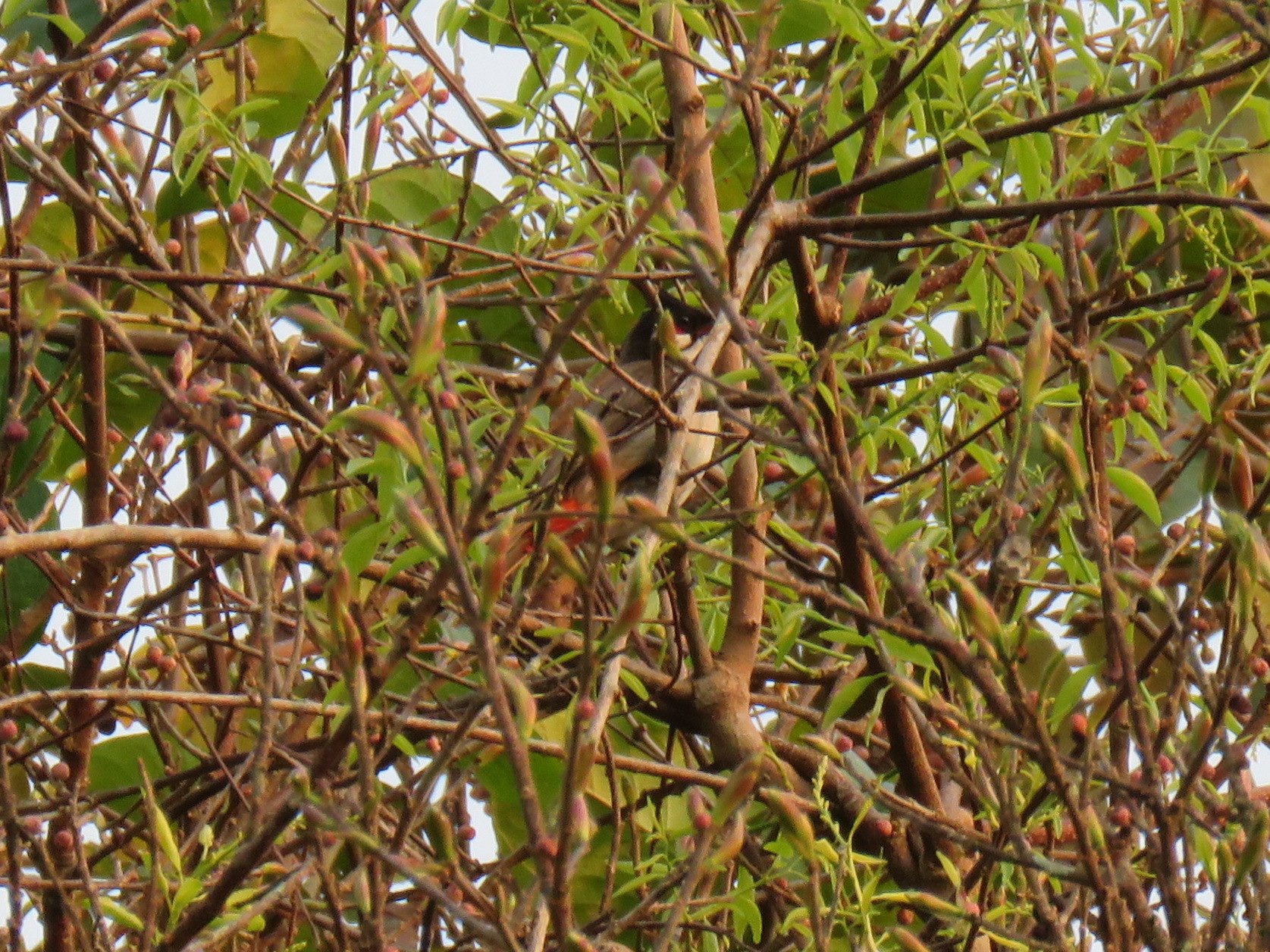
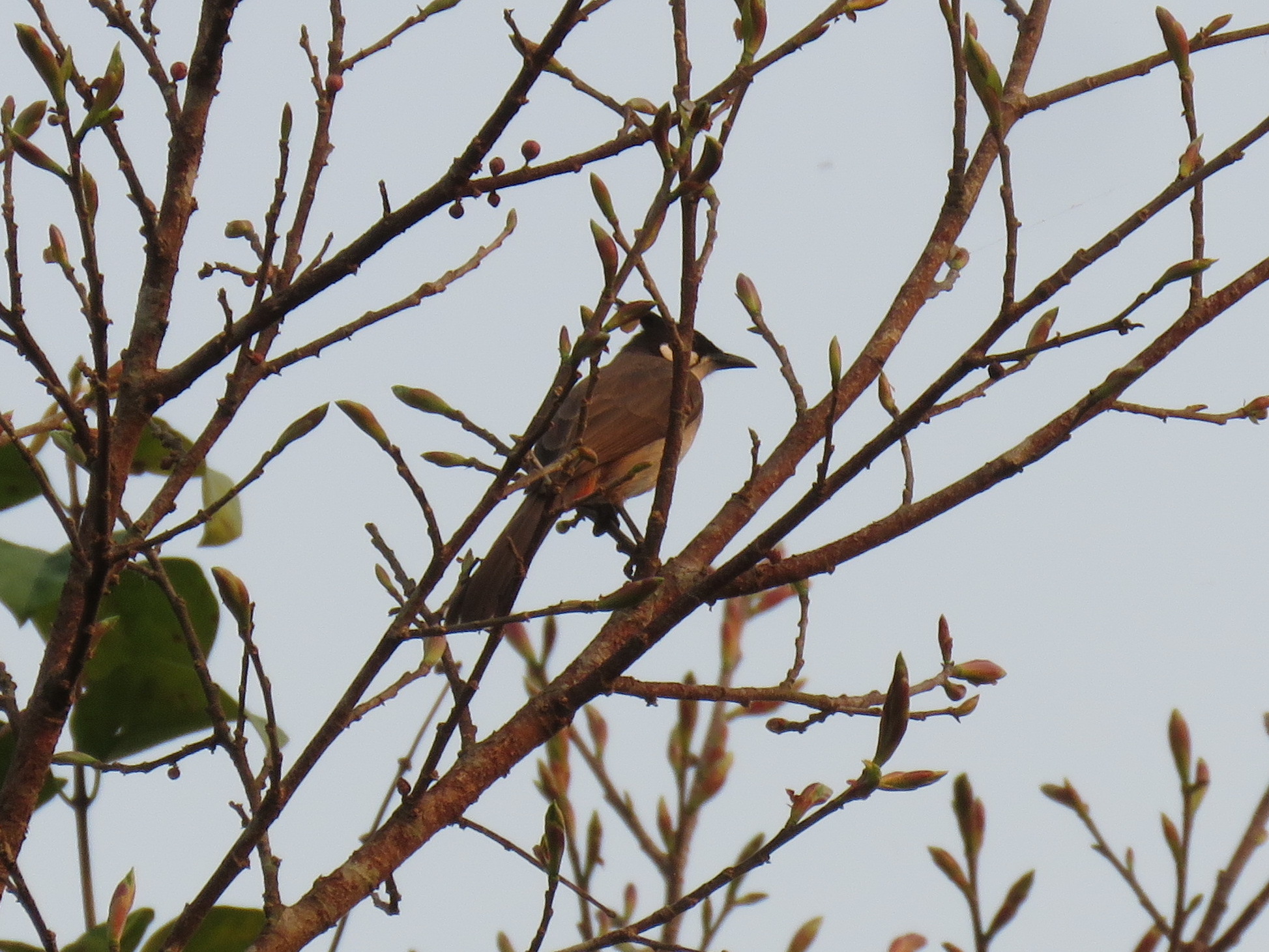
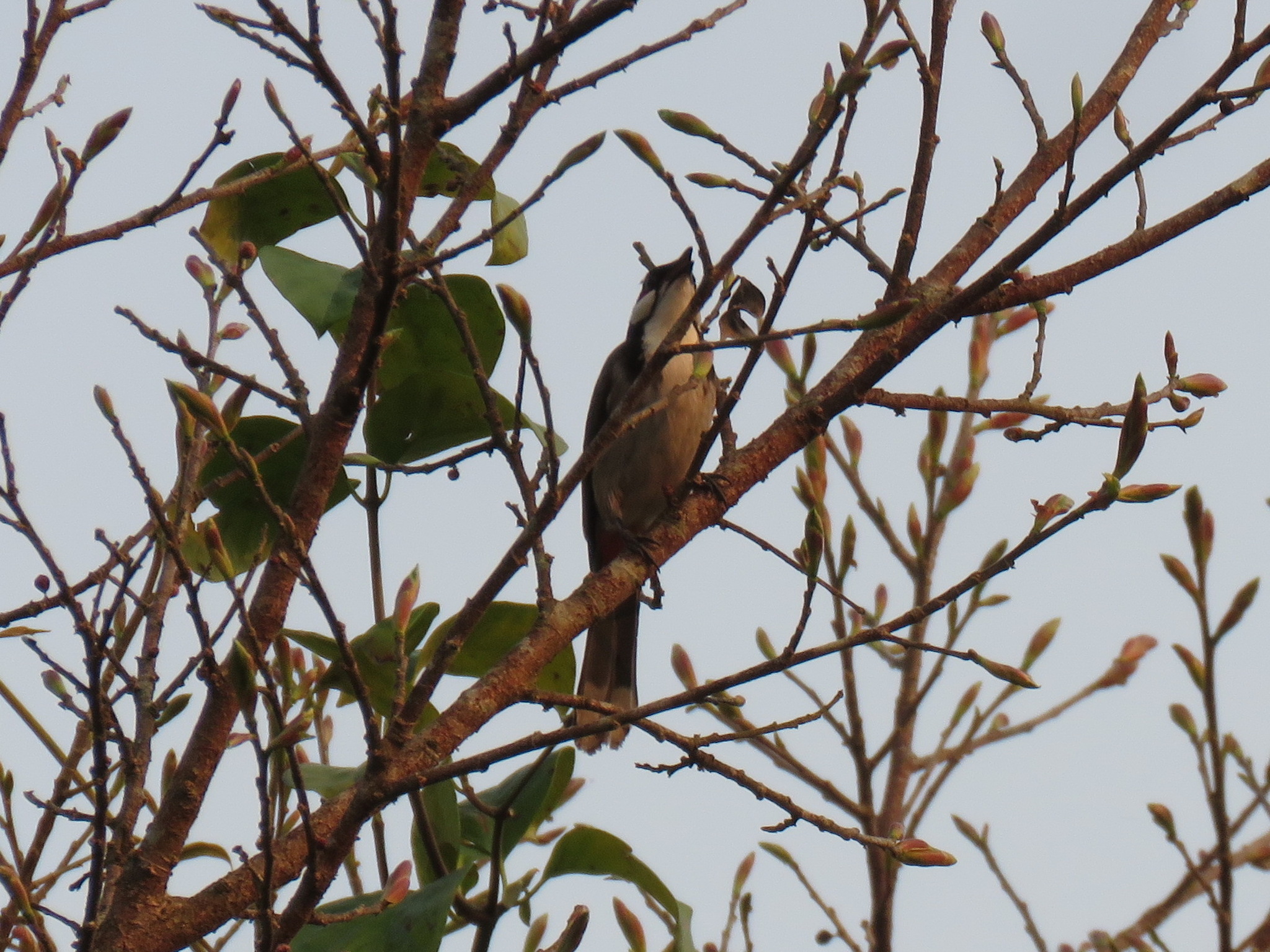
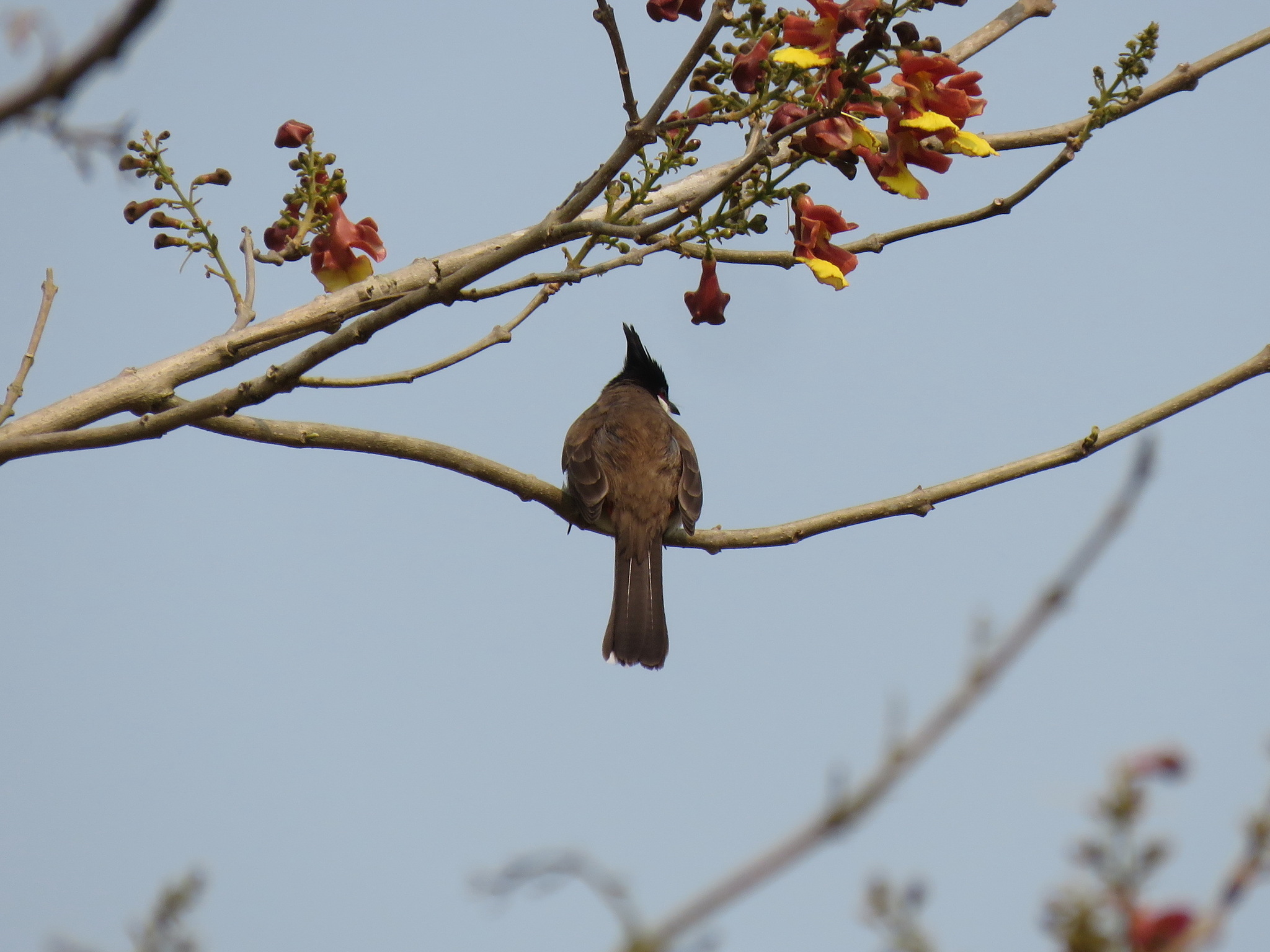
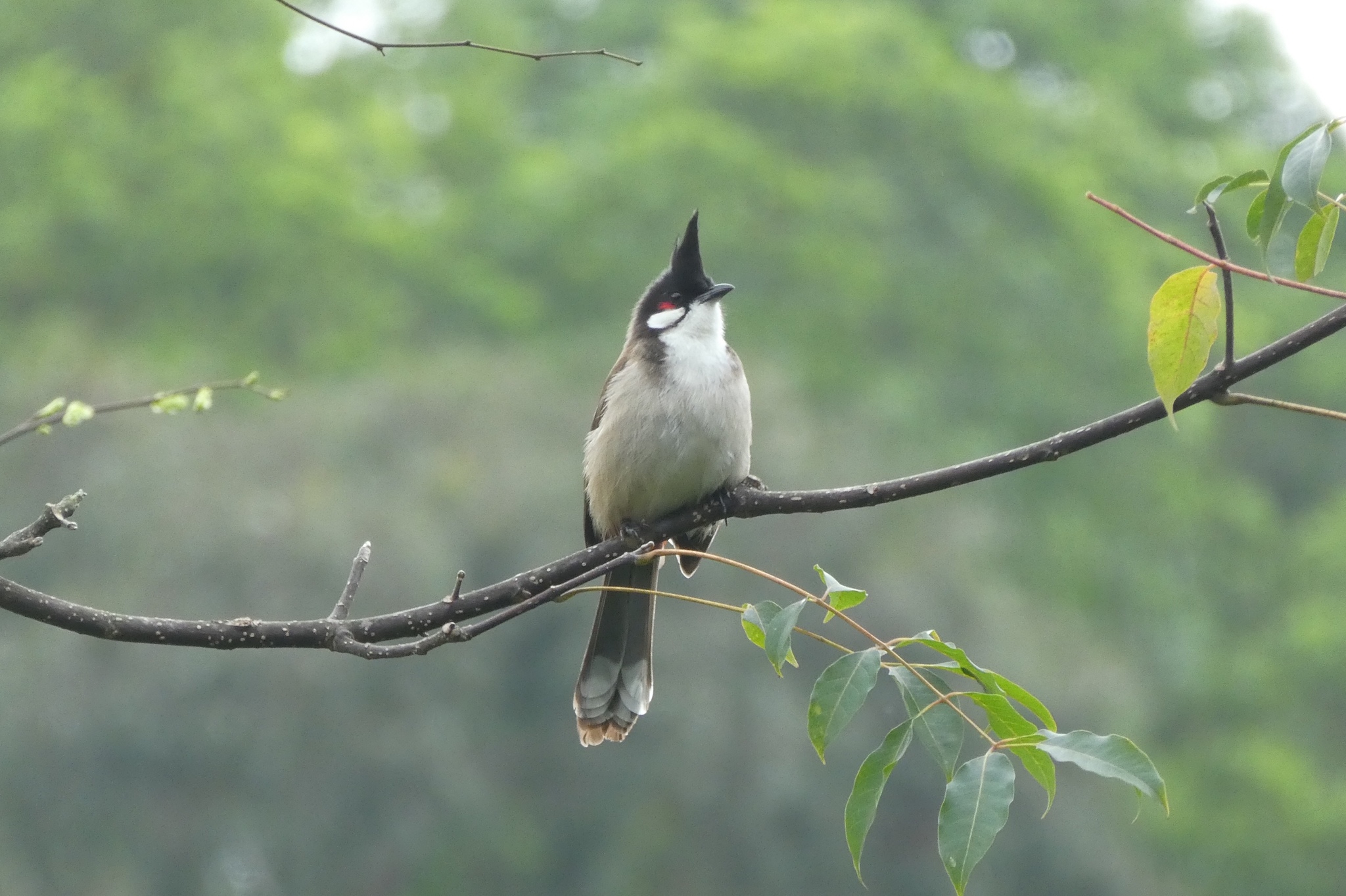
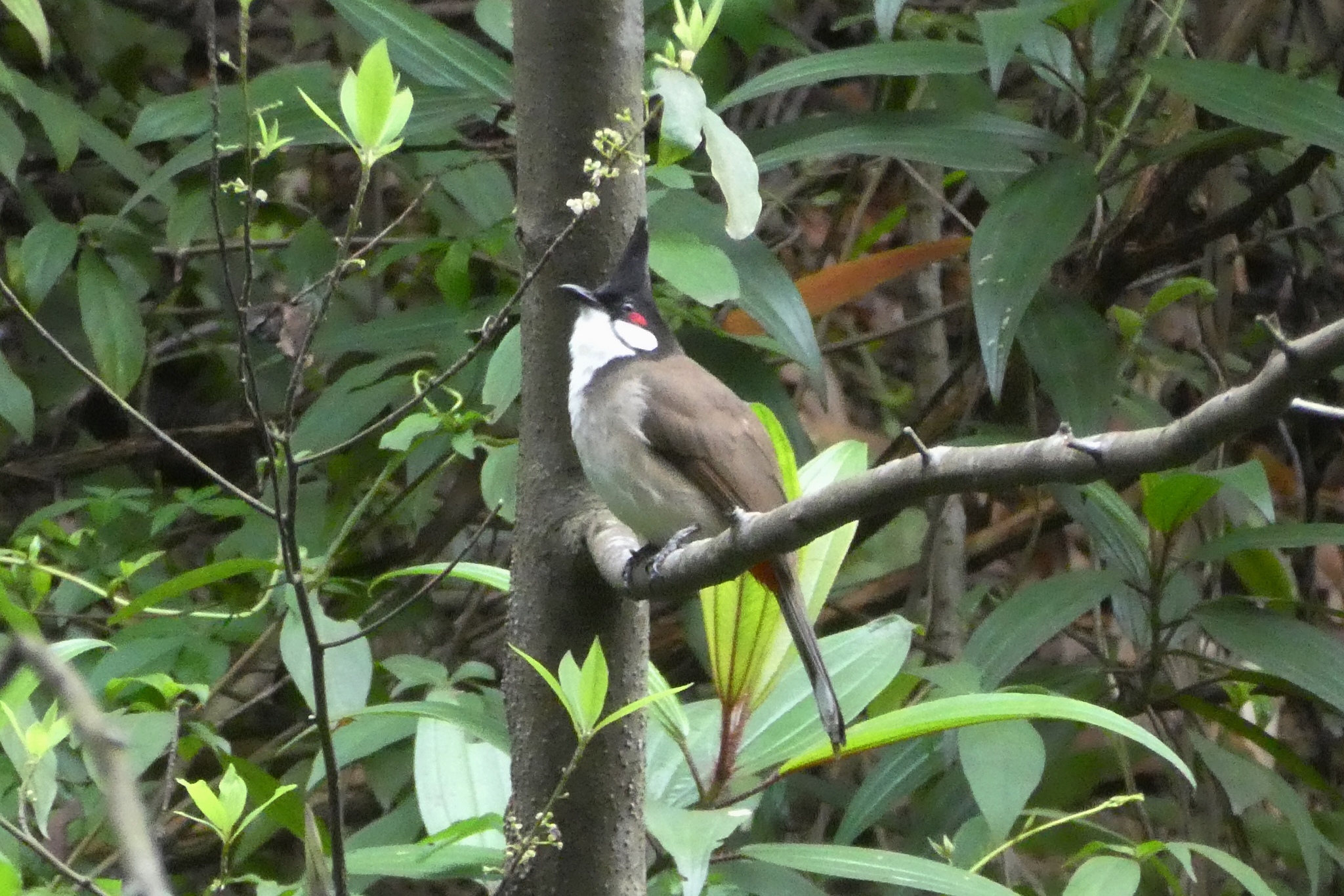
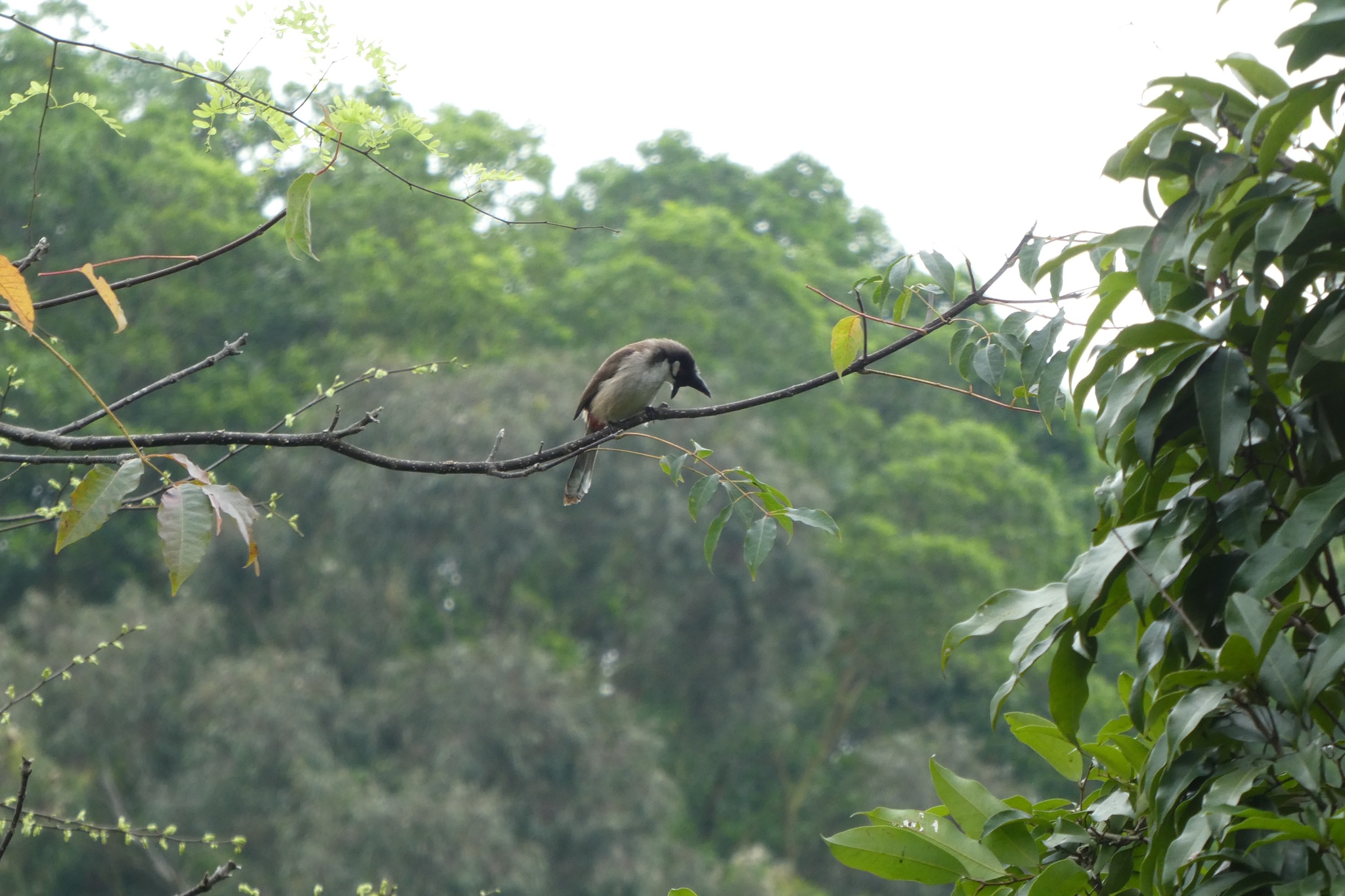
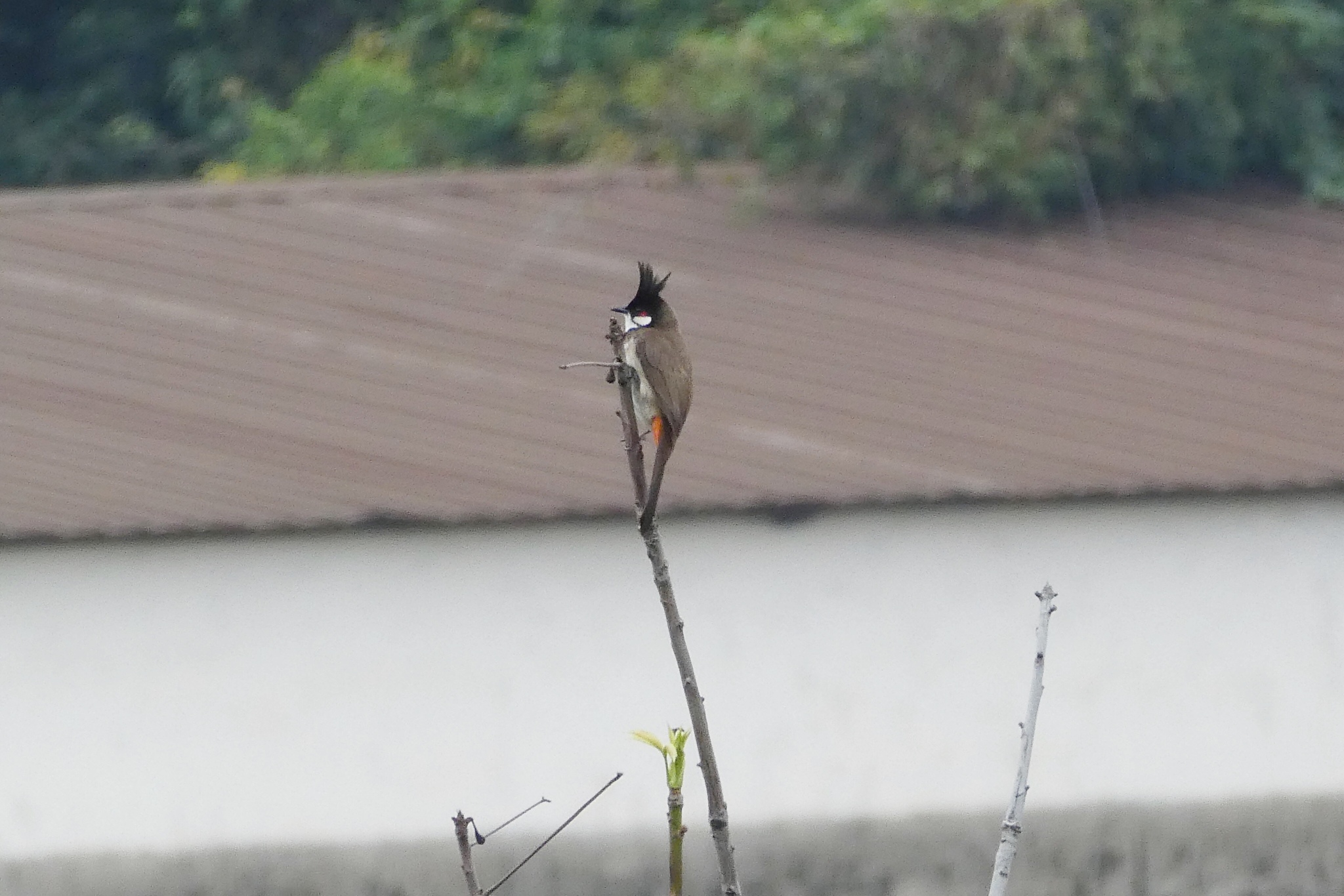
This medium-sized passerine measures approximately 20 centimetres in length with a brown upperparts plumage contrasting against whitish underparts. The underparts feature buff-colored flanks and a distinctive dark spur that extends onto the breast at shoulder level. Its most striking feature is the tall, pointed black crest that rises prominently from the head. A vivid red face patch behind the eye and a thin black moustachial line frame the face. The long brown tail displays conspicuous white terminal feather tips, while the vent area shows distinctive red coloration. Juveniles can be distinguished by their lack of the red eye patch and their rufous-orange vent area instead of red.
Identification
The combination of black crest, red face patch, and red vent makes this species relatively unmistakable within its range. The white-tipped brown tail is visible during flight and provides a helpful识别特征. The tall pointed crest distinguishes it from other bulbul species, while the red vent separates it from similar-looking brown bulbuls. The 'kink-a-joo' call, often described as a sharp three or four-note sequence, serves as an excellent auditory clue for identification, particularly in areas where this species has been introduced.
Distribution & Habitat
Native to tropical Asia, this species inhabits lightly wooded areas, open country with bushes and shrubs, and agricultural land. Its range extends across the Indian subcontinent, Southeast Asia, and southern China. Introduced populations have become established in Australia (Sydney, Melbourne, and Adelaide regions), Hawaii, Los Angeles, Mauritius, and the Mascarene Islands. In Florida, populations remain restricted to a small area and face potential extirpation. The species was deliberately eradicated from Assumption Island between 2013-2015 to protect nearby Aldabra. Introduced to Sydney in 1880, it spread across suburban areas by 1920 and continues to expand its range.
Behavior & Ecology
Vocalizations include a loud, sharp 'kink-a-joo' call and a scolding chatter song. The species feeds on fruits, nectar, and small insects, with populations in introduced areas utilizing over 24 exotic plant species for food. Breeding season varies by region: December to May in southern India and March to October in northern India. Courtship displays involve head bowing, tail spreading, and wing drooping. Nests are cup-shaped structures built on bushes, small trees, or thatched walls, constructed from twigs, roots, and grasses. Clutches typically contain two to three eggs, which incubate for approximately 12 days. Both parents participate in raising young, which initially feed on caterpillars and insects before transitioning to fruits. The species defends breeding territories of about 3,000 square metres and roosts communally in groups exceeding one hundred birds.
Conservation
The species maintains a stable population across its extensive range, both in native and introduced areas. Its adaptability to various habitats, including urban environments, has contributed to its successful establishment worldwide. While populations in Florida remain vulnerable due to their restricted distribution, introduced populations in Australia continue to expand. The species' omnivorous diet and ability to utilize both native and exotic food sources provide resilience against environmental changes. Conservation efforts focus on monitoring introduced populations to prevent unintended ecological impacts on native ecosystems.
Culture
This species has long been valued as a cagebird in parts of India and Southeast Asia, prized for its melodious calls and fearless disposition. Historical accounts describe birds being taught to sit on hands and commonly found for sale in Indian bazaars. The species continues to be popular in the cagebird trade across its range. Beyond its value as a companion bird, introduced populations play significant ecological roles as seed dispersers, particularly on islands such as Réunion and Mauritius where they aid the spread of both native and alien plant species. Seeds passing through their digestive system show enhanced germination rates, contributing to forest regeneration and plant community dynamics.
Source: Wikipedia · CC BY-SA 3.0
Taxonomy
- Order
- Passeriformes
- Family
- Pycnonotidae
- Genus
- Pycnonotus
- eBird Code
- rewbul
Subspecies (9)
-
Pycnonotus jocosus abuensis
western India (northern Bombay to southwestern Rajasthan)
-
Pycnonotus jocosus emeria
lowlands of eastern India to Myanmar and southwestern Thailand
-
Pycnonotus jocosus fuscicaudatus
western India (Tapti River to Kerala and northern Madras)
-
Pycnonotus jocosus hainanensis
northern Vietnam and southeastern China (southern Guangdong); Naozhou Island
-
Pycnonotus jocosus jocosus
southern China (Guizhou to Guangxi, eastern Guangdong, and Hong Kong); widely introduced
-
Pycnonotus jocosus monticola
eastern Himalayas from Sikkim to northern Myanmar and southwestern China (Yunnan)
-
Pycnonotus jocosus pattani
Thailand to northern Malaya and southern Indochina
-
Pycnonotus jocosus pyrrhotis
Valley of Nepal and northern India (eastern Punjab to Bihar)
-
Pycnonotus jocosus whistleri
Andaman Islands
Data Sources
Species description from Wikipedia, licensed under CC BY-SA 3.0.
Bird images and sounds sourced from GBIF, contributed by citizen scientists worldwide under Creative Commons licenses.
Taxonomy data from AviList 2025.