Passeriformes / Pycnonotidae / Pycnonotus
Red-vented Bulbul
Pycnonotus cafer · 黑喉红臀鹎
Introduction
A member of the bulbul family of passerines, this species is a resident breeder across South Asia extending east to Burma. It has been introduced and established in Argentina, Tonga, Fiji, parts of Samoa, the USA, and the Cook Islands. It is included in the list of the world's 100 worst invasive alien species.
Description
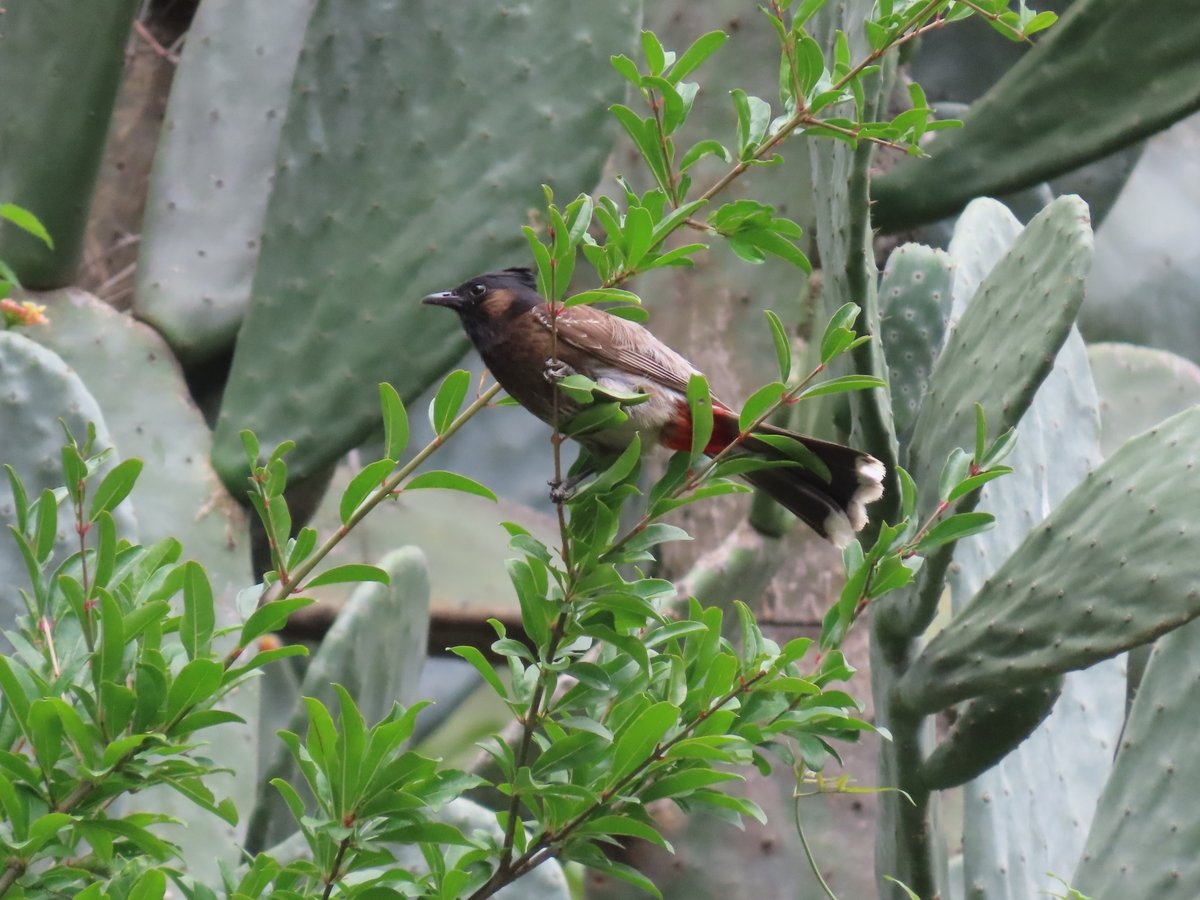
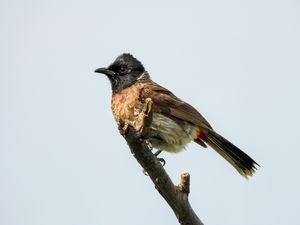
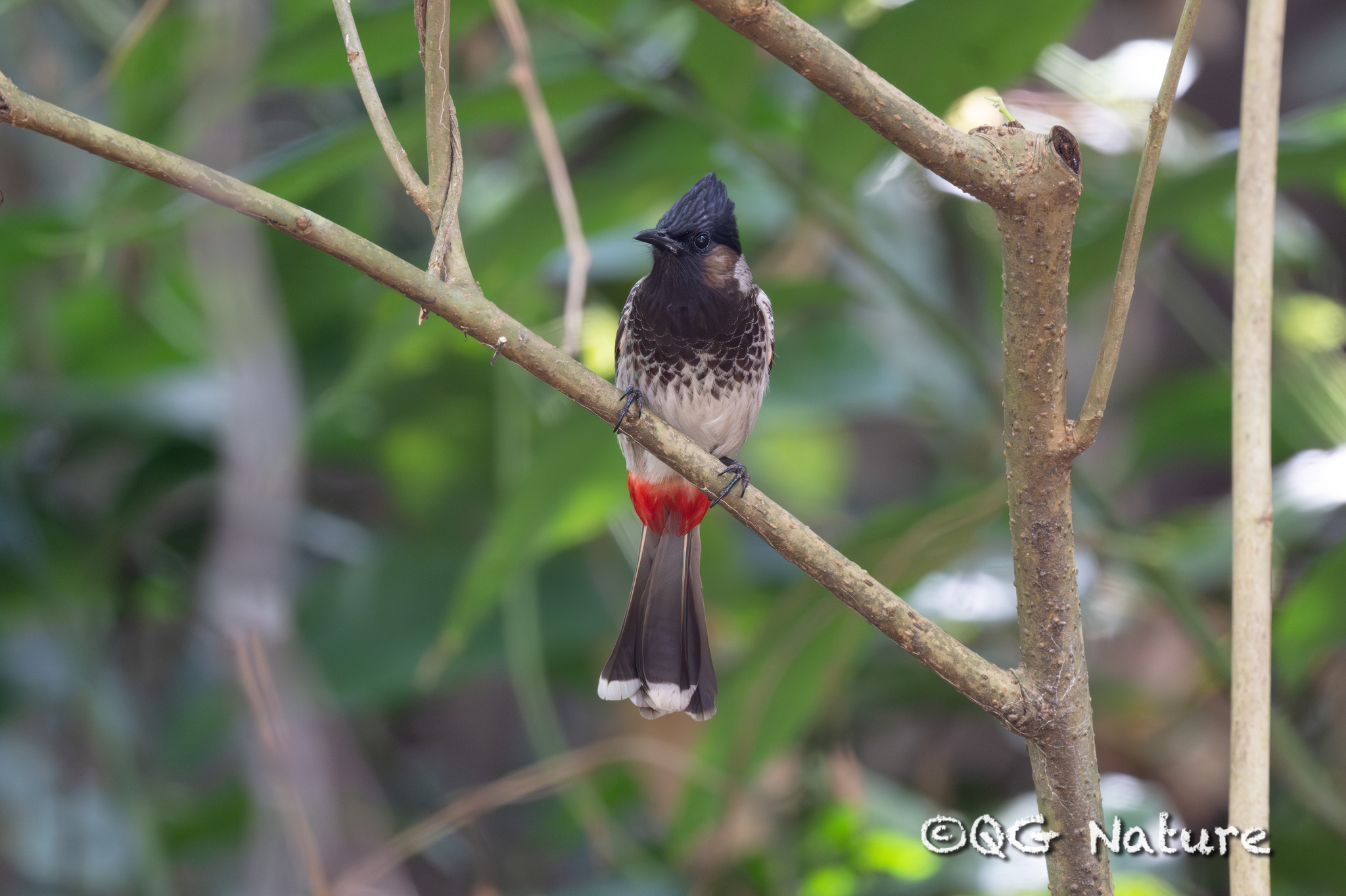
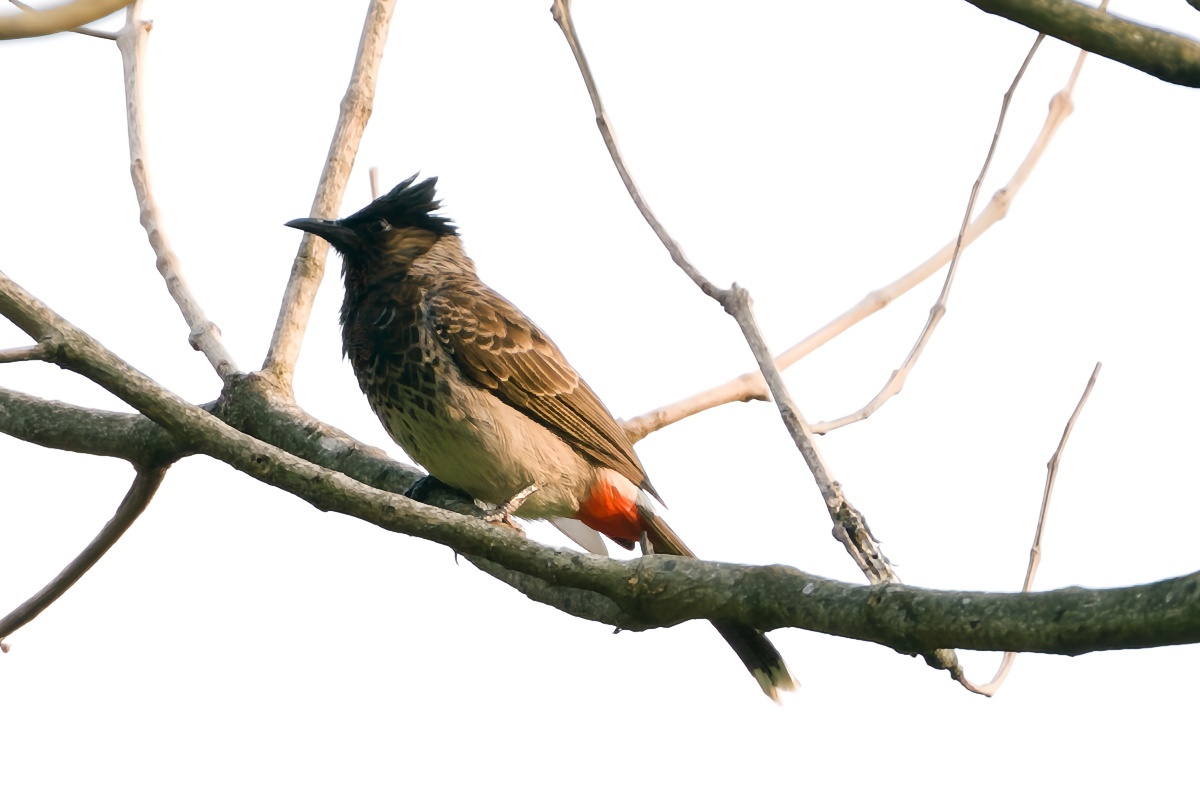
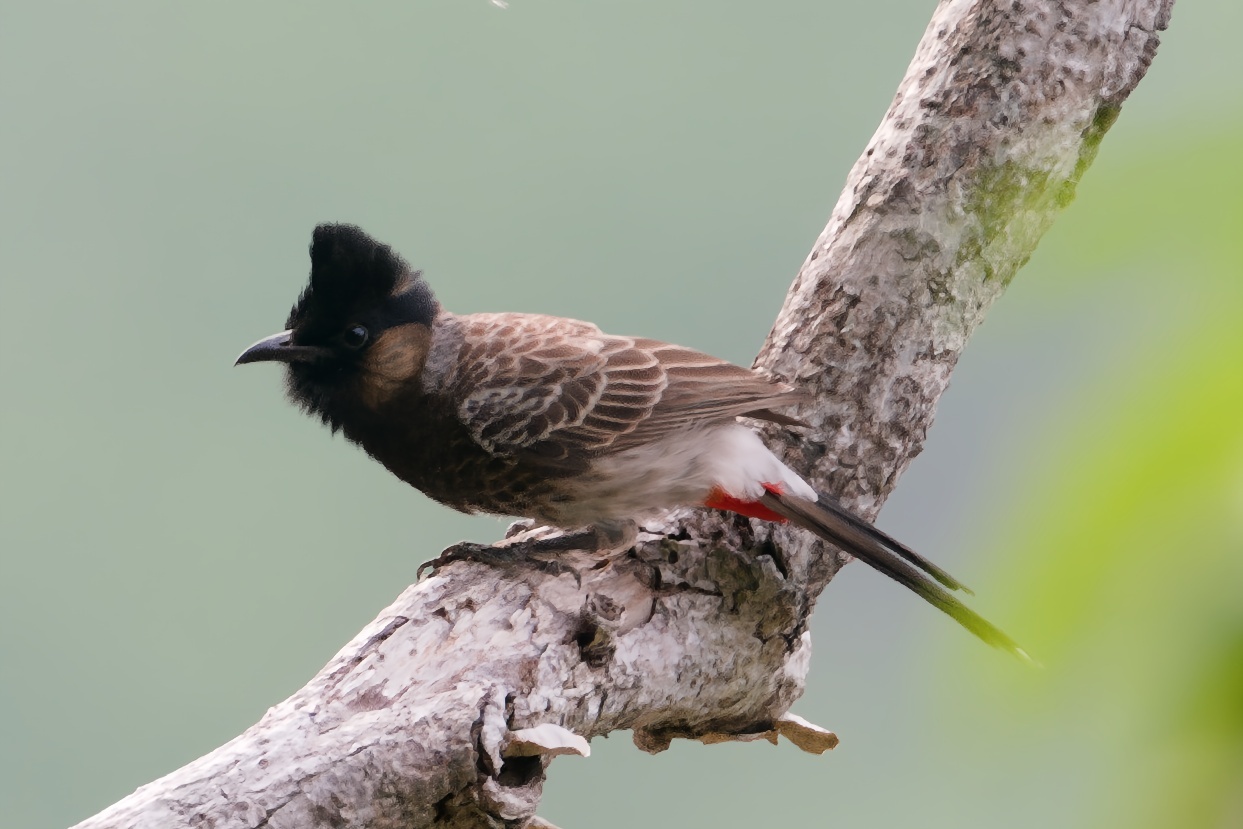
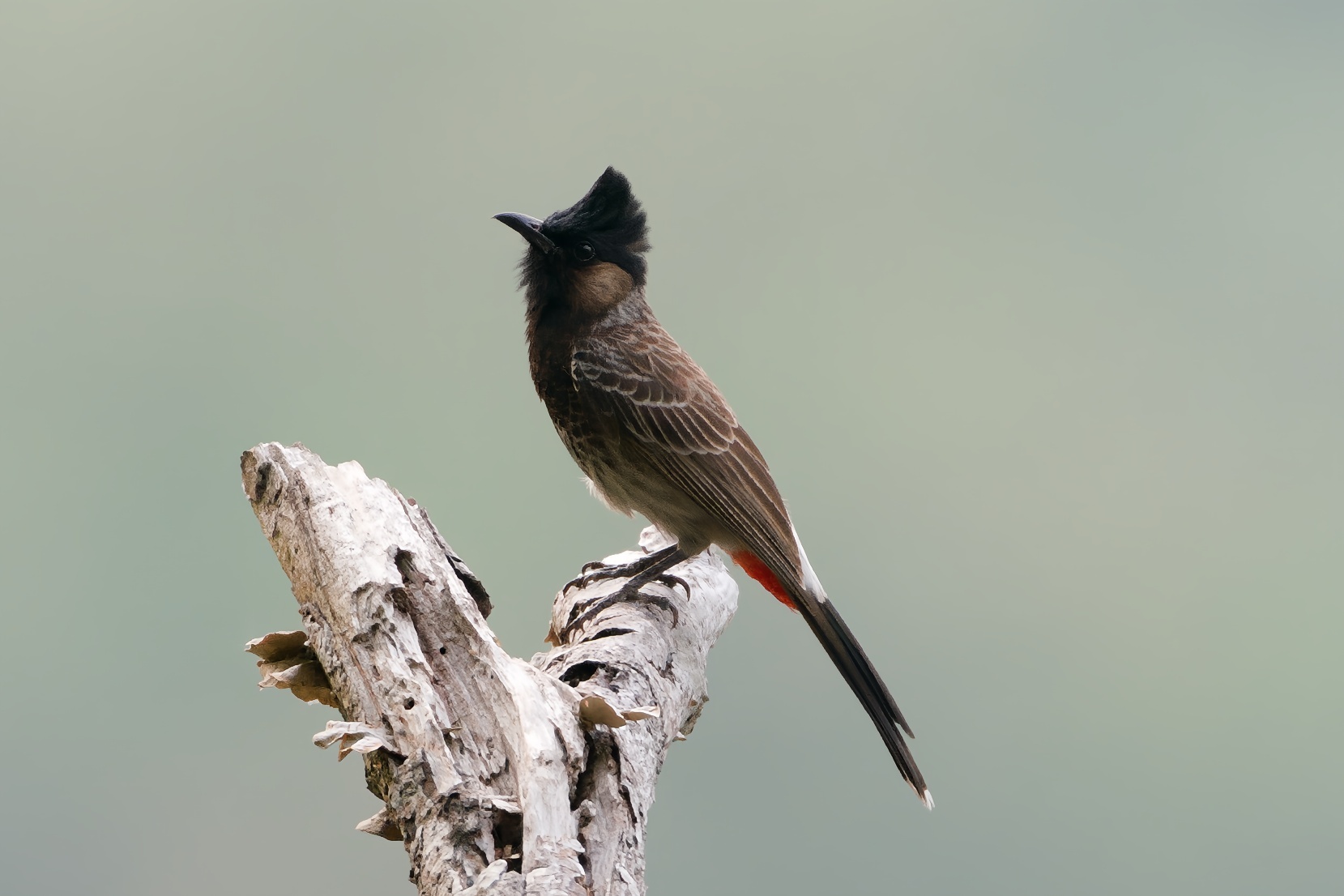
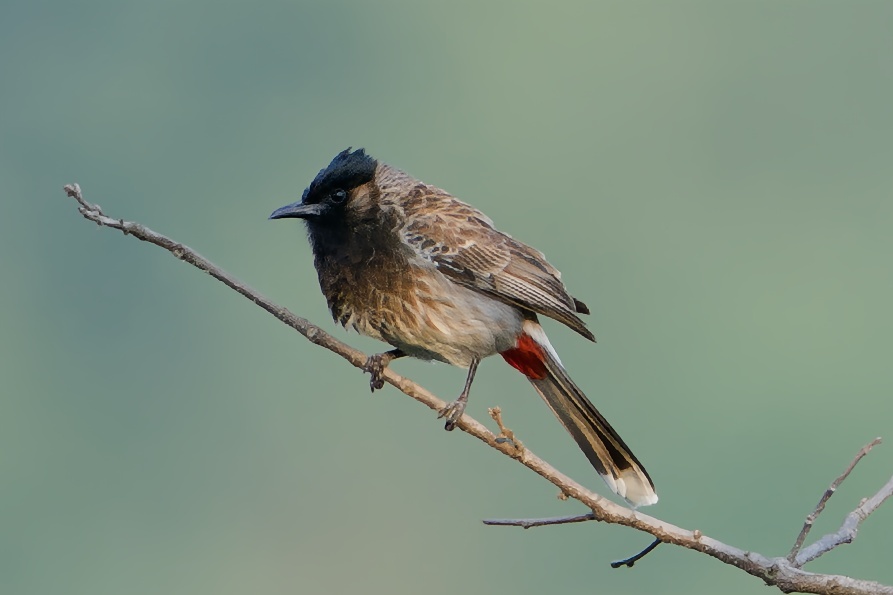
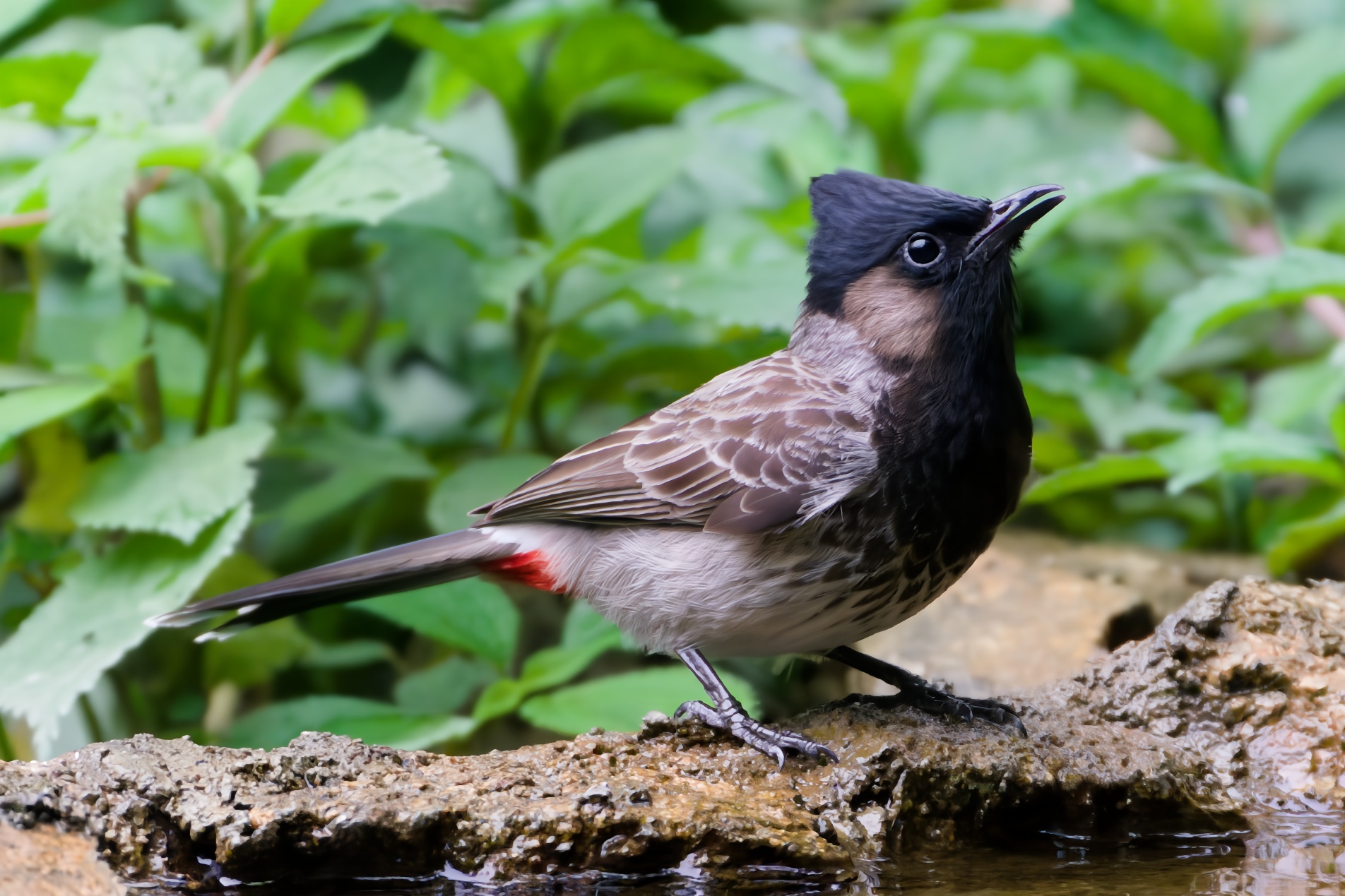
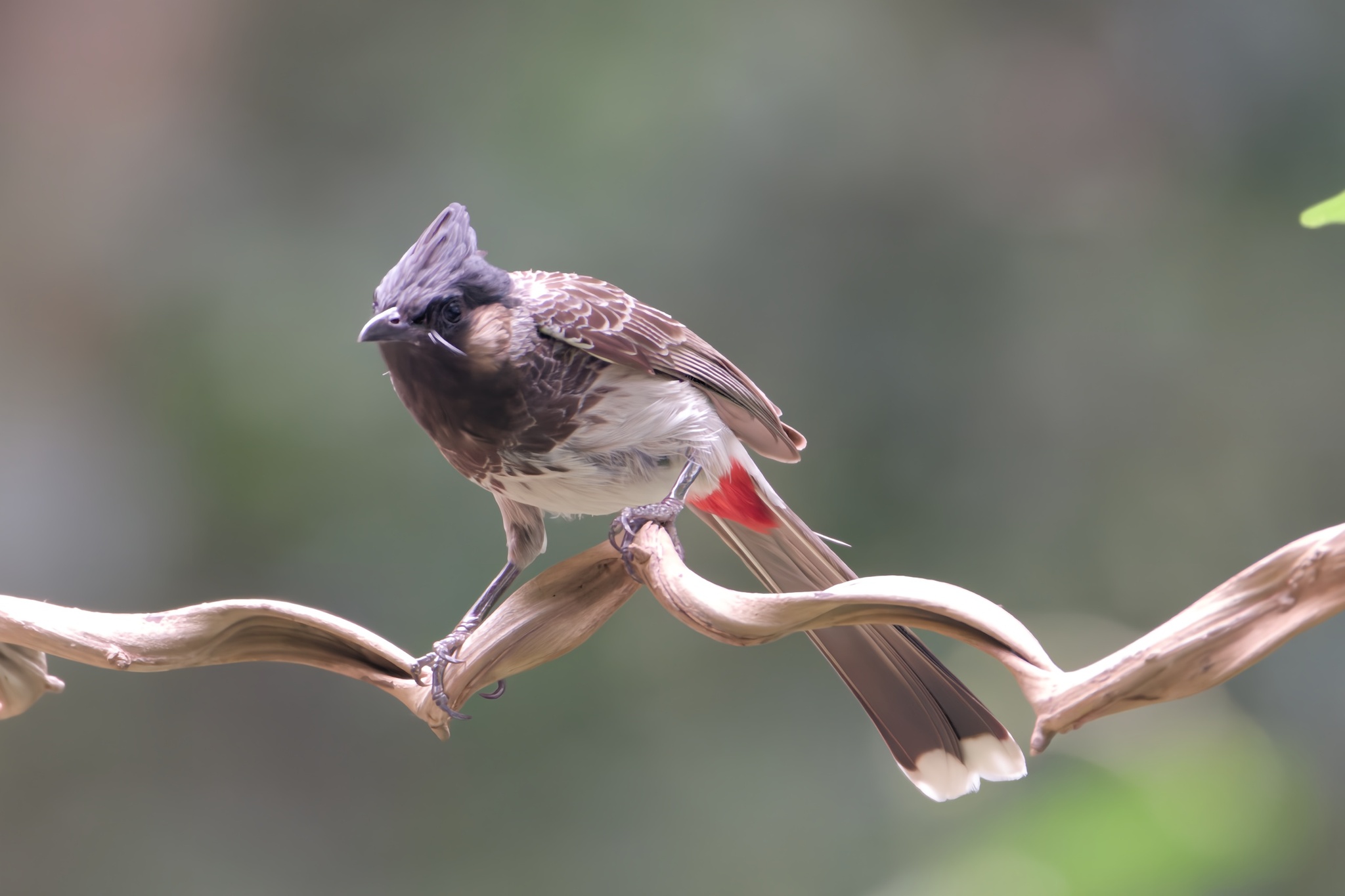
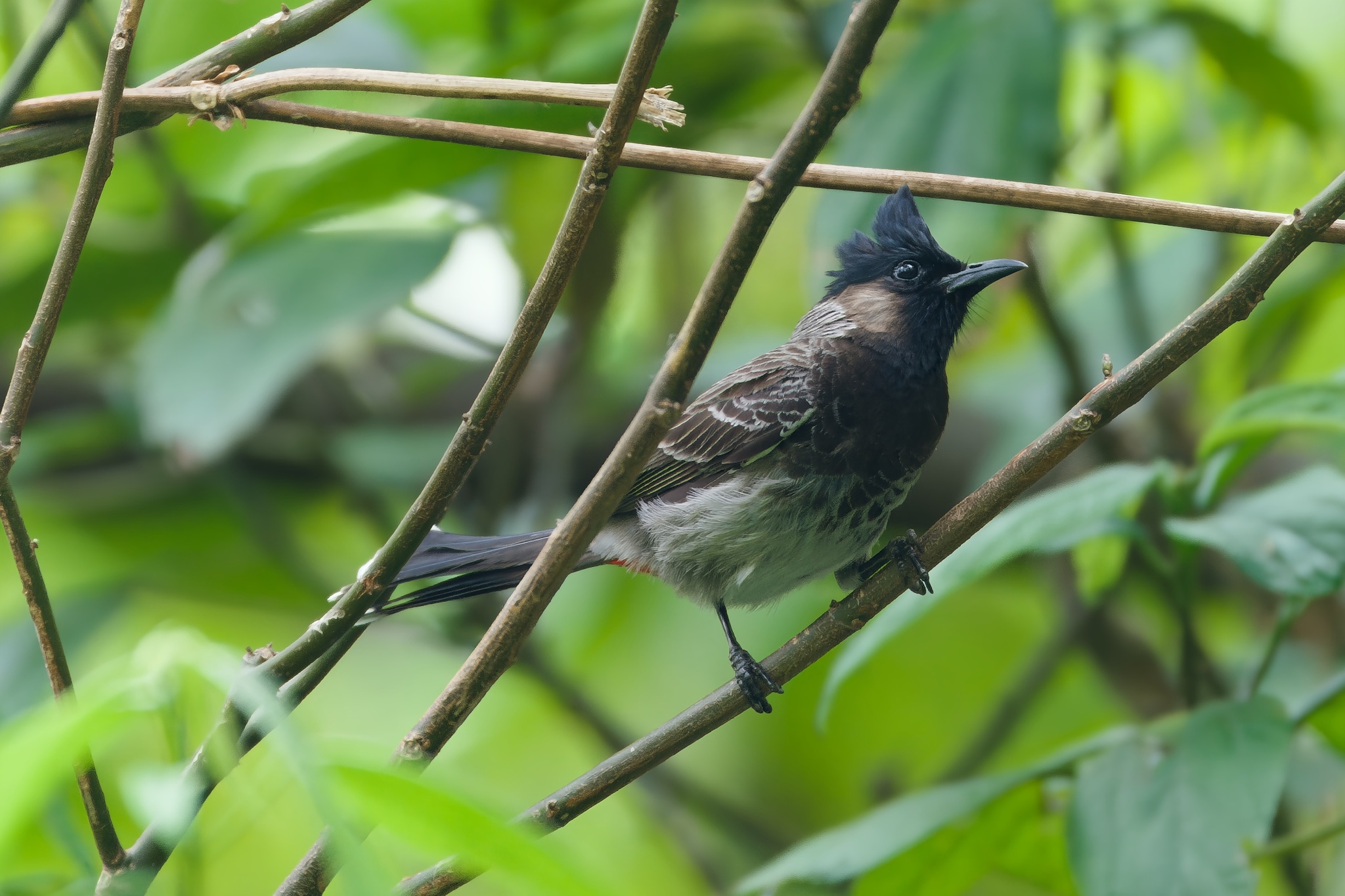
Approximately 20 cm in length with a long black tail tipped in white. The body is dark brown with a scaly pattern, while the head is darker or black. It features a short crest giving the head a squarish appearance, a white rump, and a red vent. Sexes are similar, but young birds are duller. Himalayan races have a more prominent crest and are more streaked on the underside. The race intermedius has a black hood extending to the mid-breast. The race bengalensis has a dark hood and dark streaks on the paler lower belly, lacking the scale-like pattern. The desert race humayuni has a paler brown mantle. The Sri Lankan race haemorrhousus has a dark mantle with narrow pale edges. Melanistic and leucistic individuals occur.
Identification
Easily identified by the short crest, dark brown scaly body, white rump, and red vent. The typical call is transcribed as 'ginger beer', accompanied by sharp single-note calls sounding like 'pick'. Alarm calls are usually heeded by many other bird species.
Distribution & Habitat
Native range includes South Asia to Burma, inhabiting dry scrub, open forest, plains, and cultivated lands; rarely found in mature forests. Eight subspecies are recognized: P. c. humayuni (south-eastern Pakistan, north-western and north-central India), P. c. intermedius (Kashmir, Kohat, Salt Range, western Himalayas to Kumaon), P. c. bengalensis (central and eastern Himalayas from Nepal to Assam, north-eastern India, Bangladesh), P. c. stanfordi (northern Burma, south-western China), P. c. melanchimus (south-central Burma, northern Thailand), P. c. wetmorei (eastern India), P. c. saturatus (north-eastern India), P. c. cafer (southern India), and P. c. haemorrhousus (Sri Lanka). Introduced to Fiji (1903), Tonga (1943), Samoa (by 1957), and New Caledonia. Established in Auckland in the 1950s but exterminated; sporadic reports continue. First observed breeding in the Canary Islands in 2018. An introduction to Melbourne around 1917 failed to persist after 1942.
Behavior & Ecology
Feeds on fruits, flower petals, nectar, insects, and occasionally house geckos. Also feeds on Medicago sativa leaves. Nests are built in bushes at 2–3 m height, occasionally inside houses, mud bank holes, tree cavities, residential building cavities, on floating water hyacinth mats, or inside buses. Nests are small flat cups of dry twigs and spider web, sometimes using metal wires. Breeding occurs from June to September, with occasional February breeding in Tamil Nadu. Clutch size is two or three pale-pinkish eggs with dense dark red spots at the broad end. Eggs hatch after about 14 days. Both parents feed chicks, swallowing faecal sacs initially and later dumping them elsewhere. Capable of multiple clutches per year. The pied crested cuckoo is a brood parasite. Fires, heavy rains, and predators cause fledgling mortality. Vocalizations include roosting, begging, greeting, flight, and two alarm call types. Important disperser of Carissa spinarum seeds. Hosts coccidian blood parasites (Isospora sp.) and ectoparasites like Menacanthus guldum. Incapable of synthesizing vitamin C. In Hawaii, predation on orange morphs of Danaus plexippus butterflies has increased the population of white morphs over 20 years.
Conservation
Included in the list of the world's 100 worst invasive alien species. Considered pests for damaging fruit crops and dispersing seeds of invasive plants like Lantana camara and Miconia calvescens. In New Caledonia, it pushes out native species. In New Zealand, it was the target of a successful extermination campaign in 1955, with further populations detected and exterminated in 2006; authorities offered rewards for captures in 2013.
Culture
In 19th-century India, frequently kept as cage pets and for fighting, especially in the Carnatic region. Birds were held on fingers with threads and would seize opponents' red feathers during fights. In Assam, male birds were captive for fighting as a spectator sport during the Bihu festival under Ahom rule; this practice was banned in January 2016.
Source: Wikipedia · CC BY-SA 3.0
Taxonomy
- Order
- Passeriformes
- Family
- Pycnonotidae
- Genus
- Pycnonotus
Vocalizations
Subspecies (8)
-
Pycnonotus cafer bengalensis
central and eastern Himalayas, the Gangetic Plain, and Bangladesh
Data Sources
Species description from Wikipedia, licensed under CC BY-SA 3.0.
Bird images and sounds sourced from GBIF, contributed by citizen scientists worldwide under Creative Commons licenses.
Taxonomy data from AviList 2025.