Red-vented Bulbul
Pycnonotus cafer
黑喉红臀鹎
Introduction
A member of the bulbul family (Pycnonotidae). Native range extends across South Asia to Burma. Inhabits dry scrub, open forest, plains and cultivated lands, rarely found in mature forests in its native range. Characterized by a short crest giving the head a squarish appearance and a dark brown scaly body with white rump and red vent. Classified among the world's 100 worst invasive alien species. A target of successful extermination campaigns, particularly in New Zealand where populations were eliminated in 1955 with ongoing surveillance.
Description
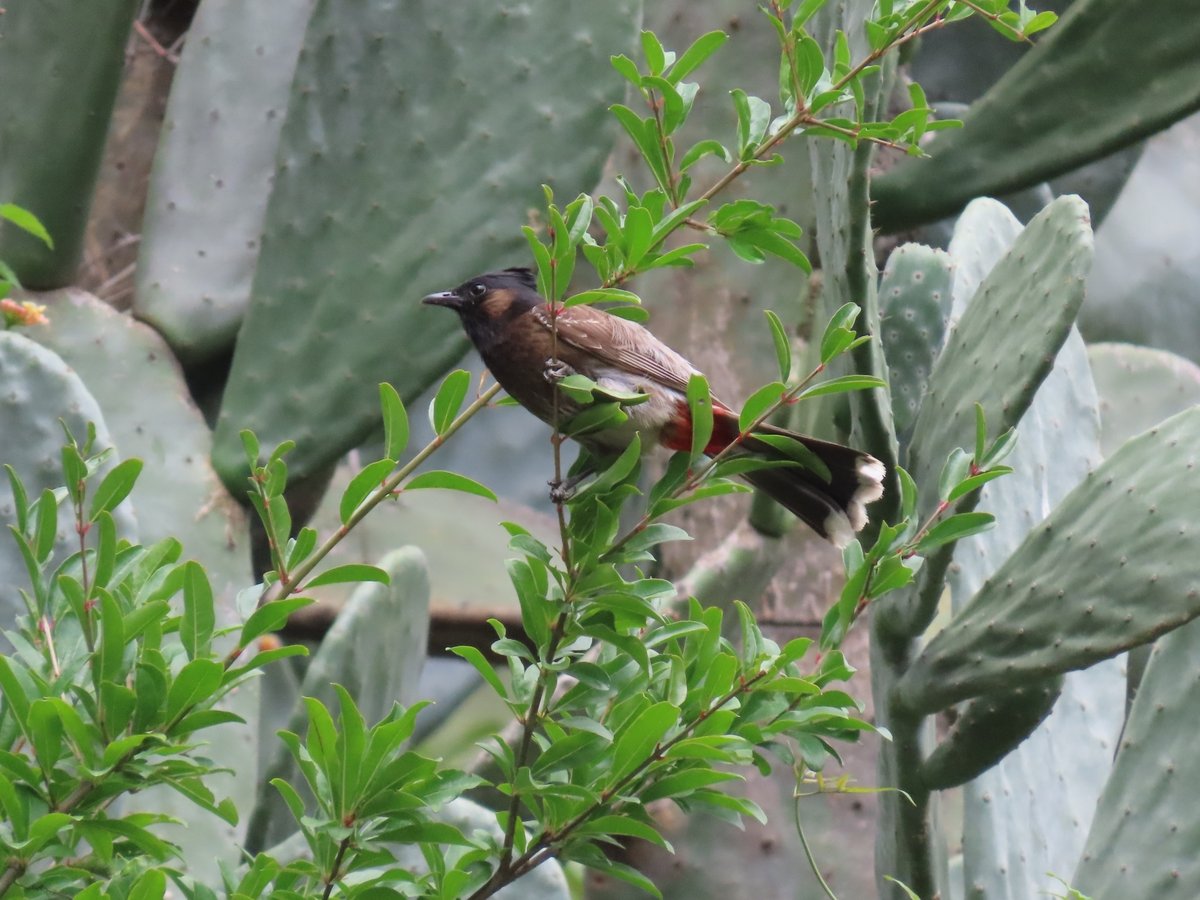
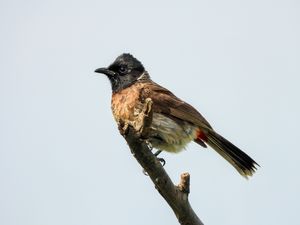
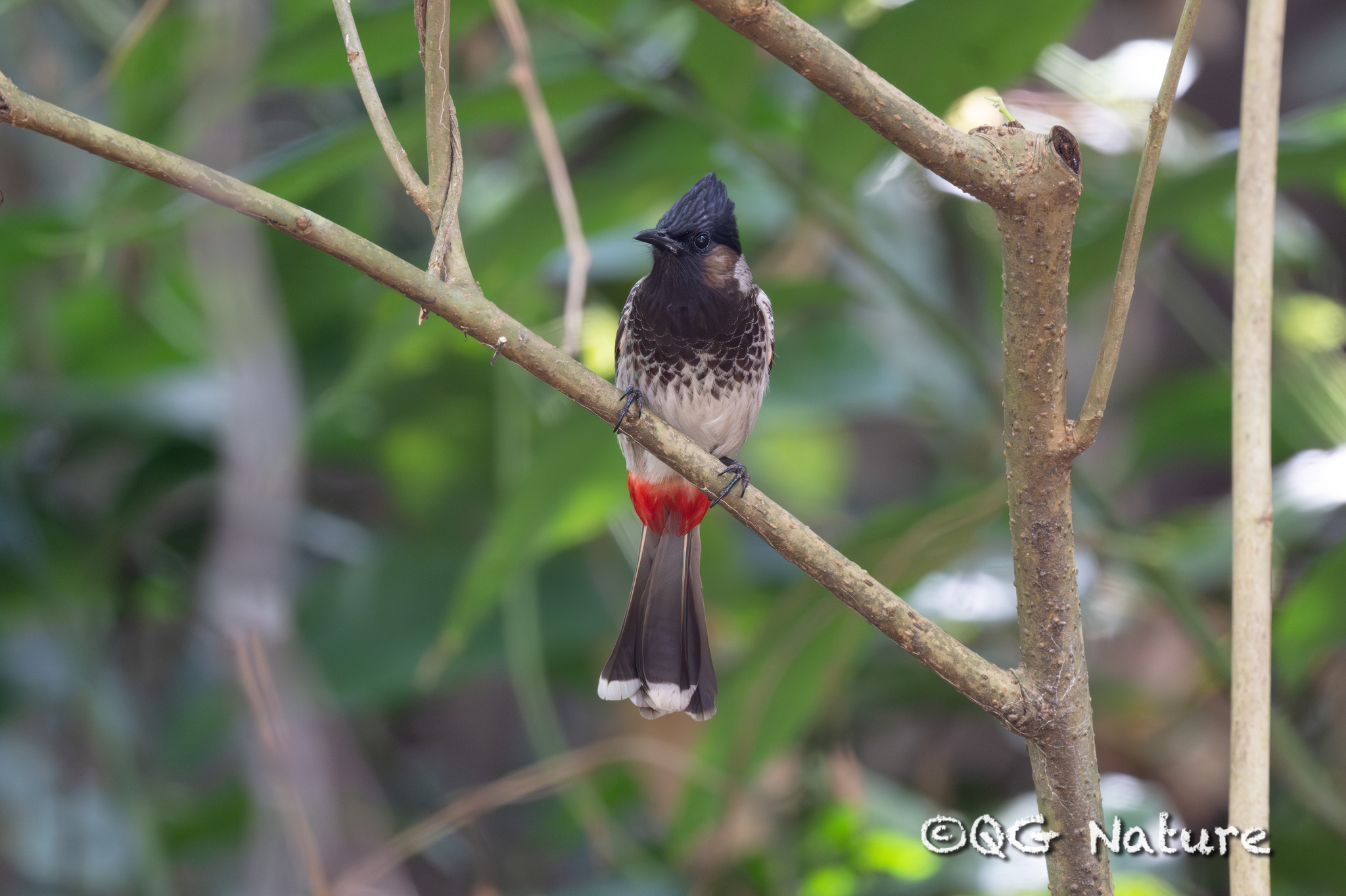
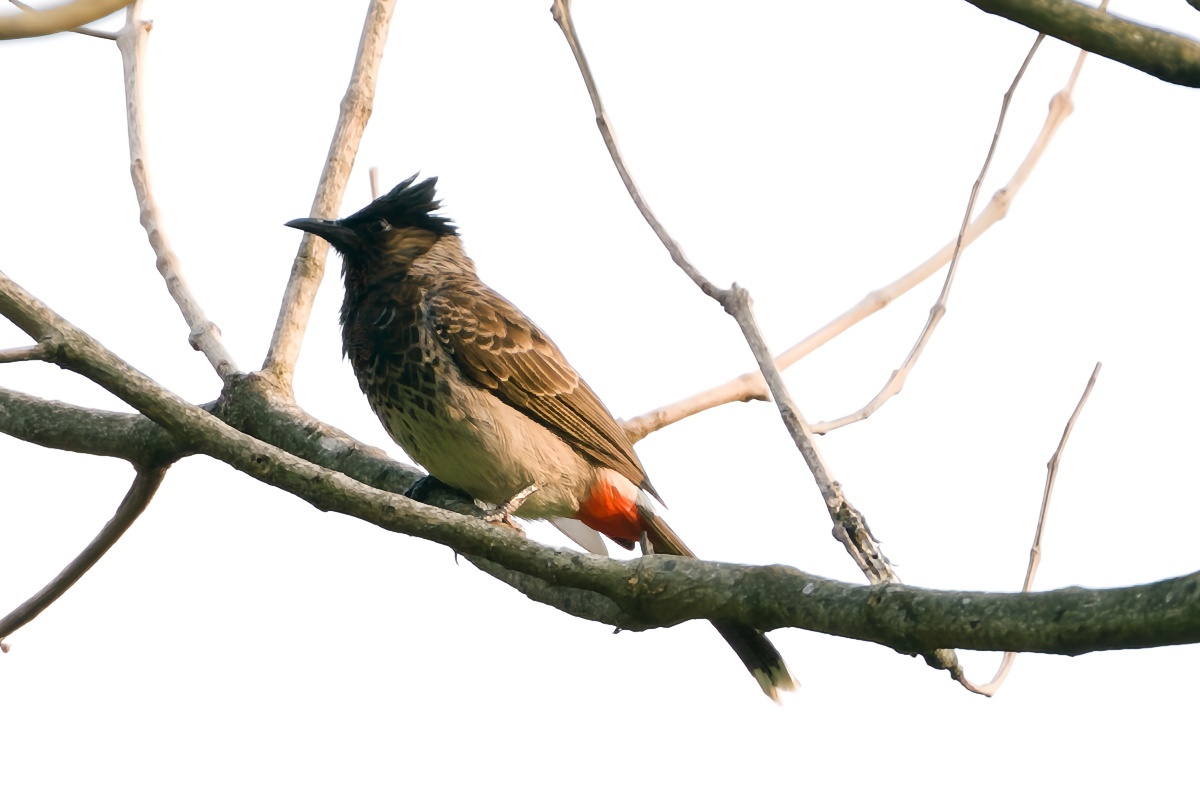
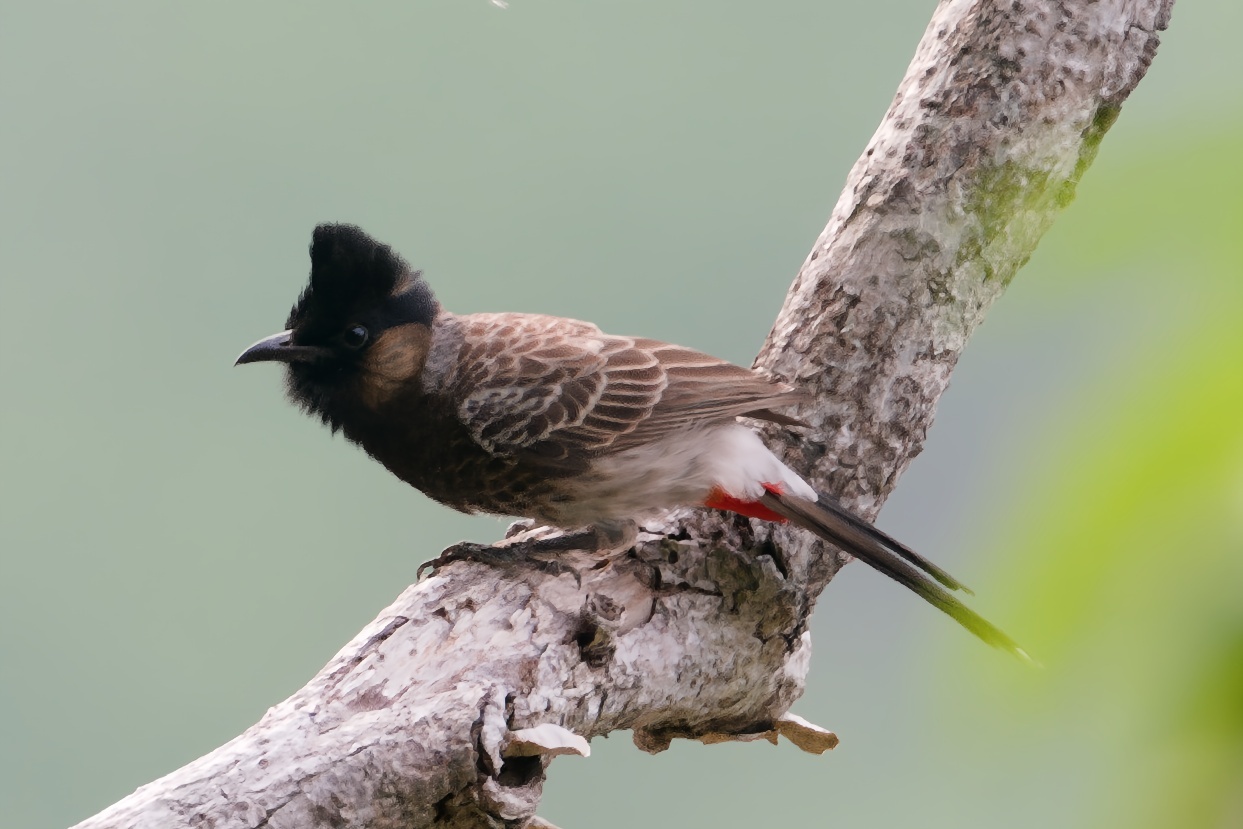
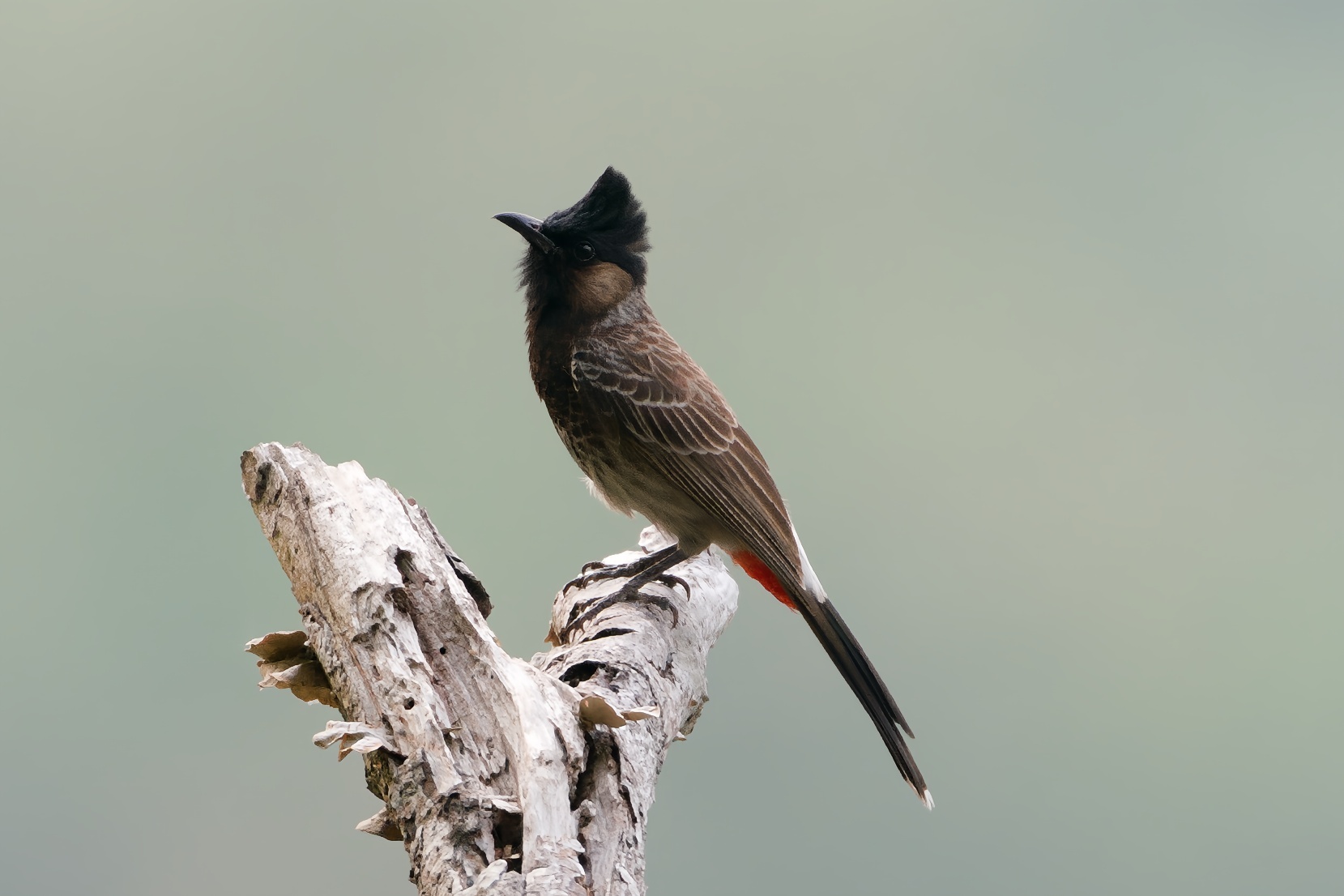
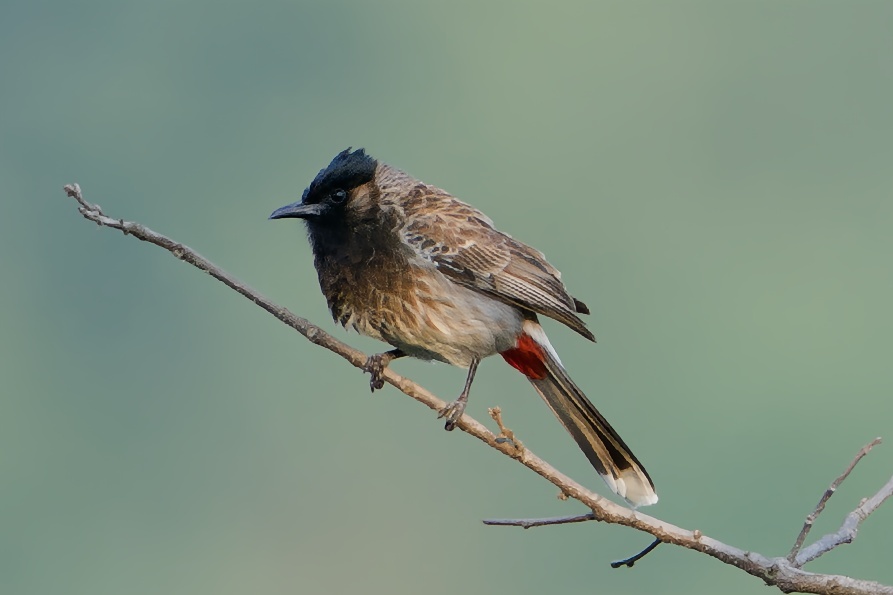
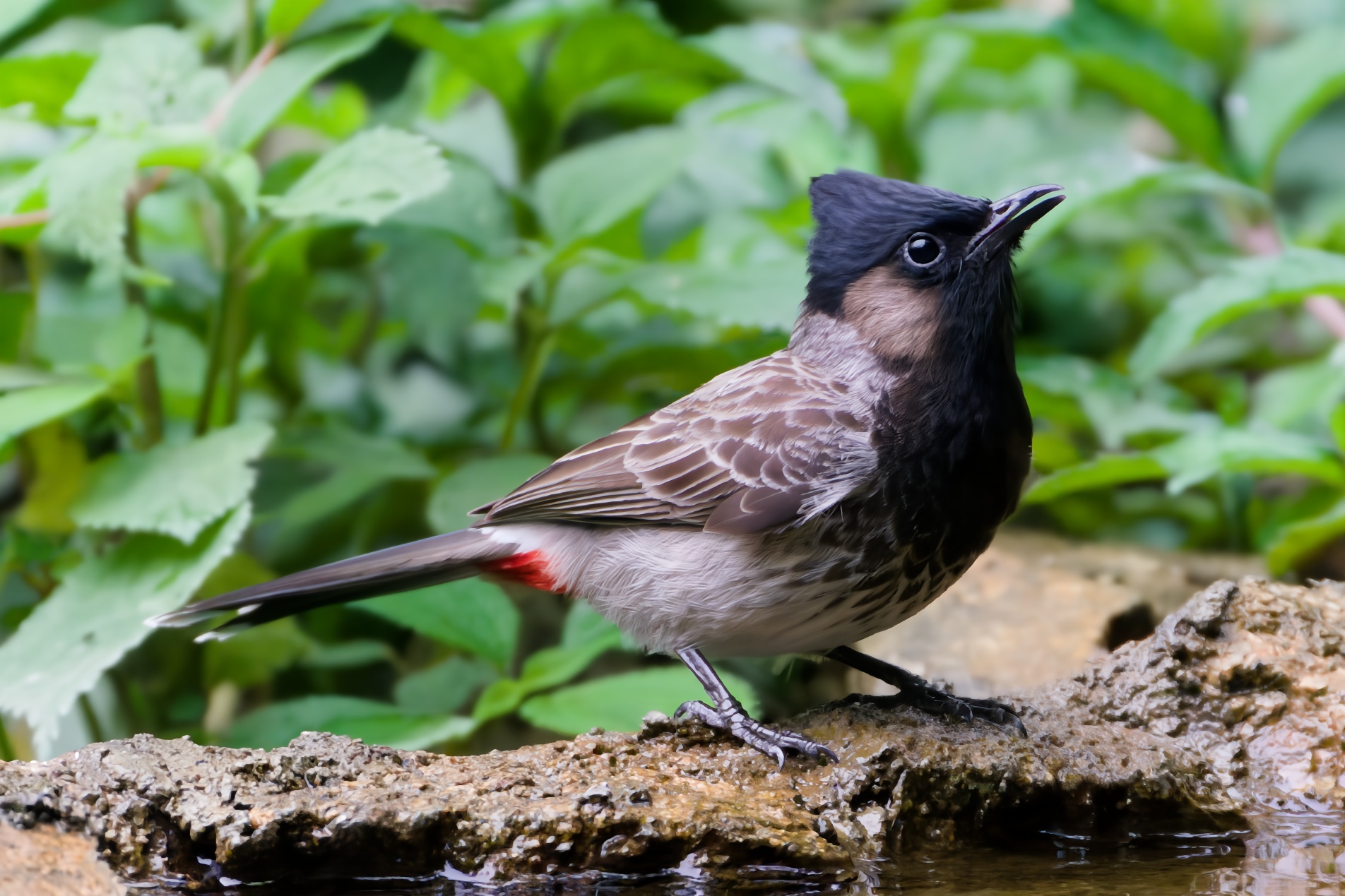
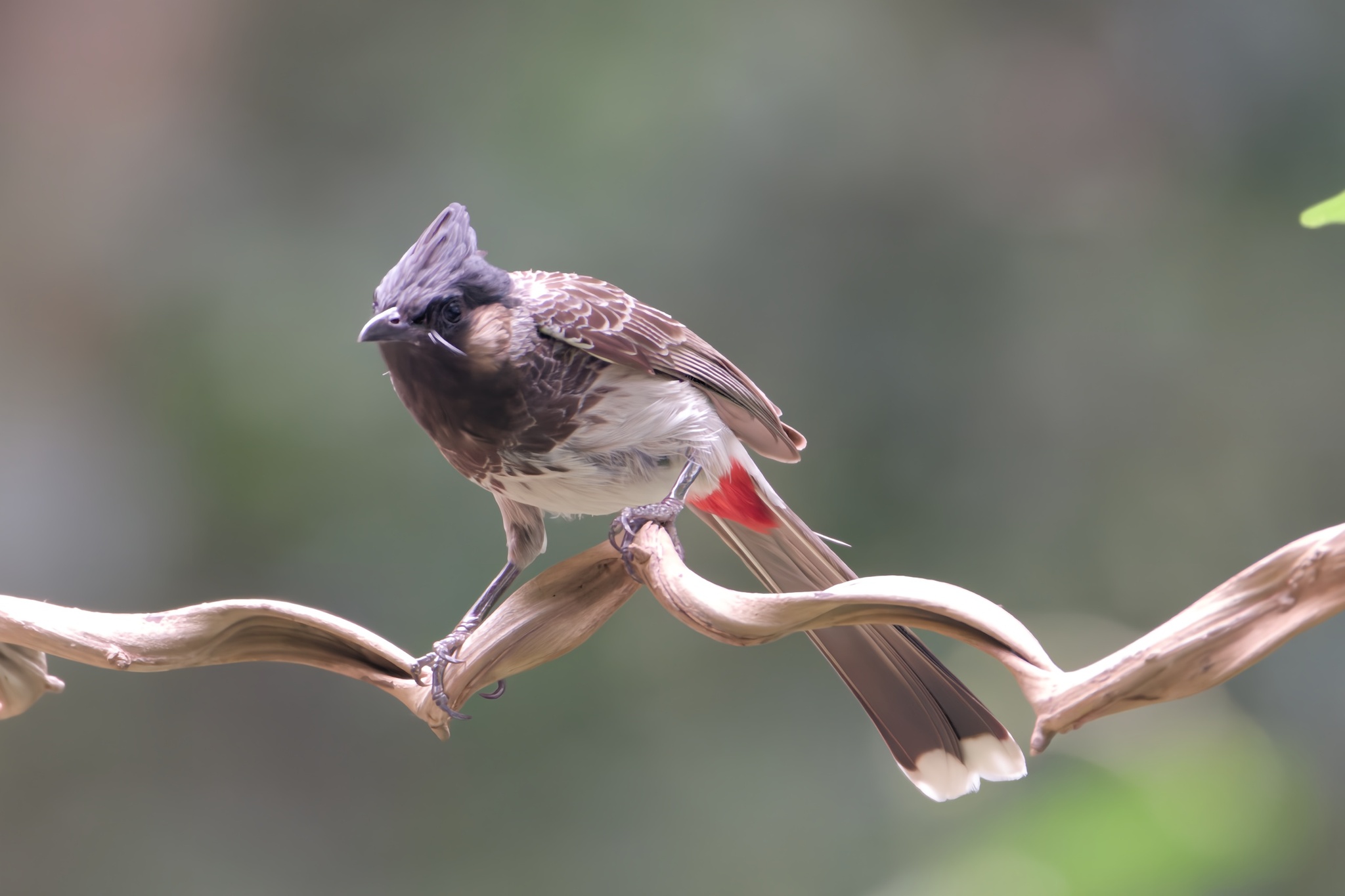
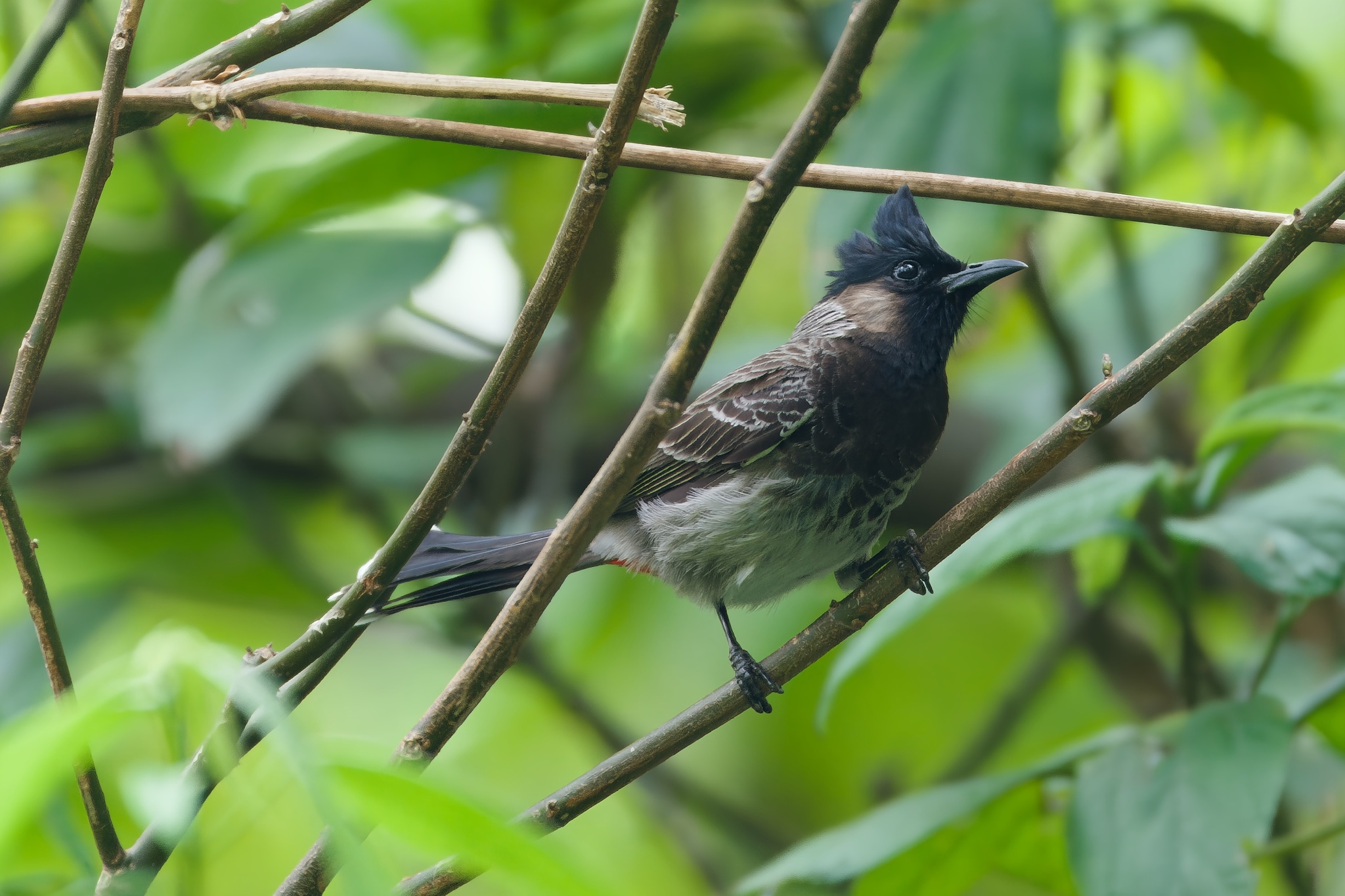
Approximately 20 cm in length with a long black tail tipped in white. The short crest gives the head a squarish appearance. The body is dark brown with a scaly pattern while the head is darker or black. The rump is white and the vent is red. Himalayan races display a more prominent crest and more prominent streaking on the underside. The race intermedius of the Western Himalayas has a black hood extending to the mid-breast. Race bengalensis has a dark hood and dark streaks on the paler lower belly instead of scale-like patterns. Sexes are similar in plumage; young birds are duller than adults.
Identification
Readily identified by the short crest producing a squarish head shape combined with the dark brown scaly body, blackish head, white rump, and red vent. The long black tail with white tips is a key characteristic. Similar to sooty-headed bulbul, which see. Himalayan populations are more heavily streaked below. Race intermedius shows extensive black on the head and breast. Race bengalensis has a dark hood with streaks rather than scales on the underparts. Race humayuni has a paler brown mantle. Natural hybridization occurs with Pycnonotus aurigaster in eastern Myanmar.
Distribution & Habitat
Native range covers South Asia extending east to Burma. Eight subspecies recognized across this range including populations in Pakistan, India, Sri Lanka, Bangladesh, Nepal, Burma, and China. Introduced to Fiji in 1903, becoming widespread; established in Tonga by 1943 and Samoa by 1957. Small populations established in Auckland, New Zealand in the 1950s were exterminated, with another population detected and eliminated in 2006. Additional populations reported in Argentina, USA, Cook Islands, and New Caledonia. First observed breeding on the Canary Islands in 2018. Prefers dry lowland habitat in introduced regions.
Behavior & Ecology
Feeds on fruits, flower petals, nectar, insects, and occasionally house geckos. Builds nests in bushes at 2-3 m height, occasionally inside buildings, holes in mud banks, or on floating water hyacinth mats. Breeding occurs primarily from June to September, though breeding in February has been observed in Tamil Nadu. Lays 2-3 pale-pinkish eggs with dense dark red spots at the broad end. Eggs hatch after approximately 14 days. Capable of multiple clutches per year. Both parents feed chicks and remove faecal sacs. Vocalizations include calls transcribed as 'ginger beer' and sharp single-note 'pick' calls. Alarm calls are heeded by many other bird species. Acts as seed disperser for plants including Carissa spinarum.
Conservation
Listed among the world's 100 worst invasive alien species. In Hawaii, has altered population dynamics of butterfly morphs by preferentially predating orange Danaus plexippus morphs, allowing white morphs to increase over 20 years. Considered a pest due to fruit crop damage and has learned to avoid repellent chemicals used to protect orchids. Disperses seeds of invasive plants including Lantana camara and Miconia calvescens. In New Caledonia, documented as pushing out native species while not affecting other introduced species. Hosts coccidian blood parasites (Isospora sp.) and ectoparasitic bird lice.
Culture
In 19th-century India, frequently kept as cage pets and for fighting, particularly in the Carnatic region. Males were held on the finger with attached thread and would fight by seizing opponent's red feathers. Tamed birds were carried through bazaars tied to fingers or small decorative perches sometimes made of precious metals or jade. In Assam, male birds were held captive for fighting as a spectator sport during Bihu festival under Ahom rule. This practice was banned in January 2016.
Source: Wikipedia · CC BY-SA 3.0
Taxonomy
- Order
- Passeriformes
- Family
- Pycnonotidae
- Genus
- Pycnonotus
- eBird Code
- revbul
Vocalizations
Subspecies (8)
-
Pycnonotus cafer bengalensis
central and eastern Himalayas, the Gangetic Plain, and Bangladesh
-
Pycnonotus cafer cafer
peninsular India
-
Pycnonotus cafer haemorrhousus
Sri Lanka
-
Pycnonotus cafer humayuni
Pakistan (Salt Range) and northwestern India
-
Pycnonotus cafer intermedius
Himalayas (western Pakistan to western Uttar Pradesh)
-
Pycnonotus cafer melanchimus
south-central Myanmar (Mandalay to Yangon)
-
Pycnonotus cafer stanfordi
northern Myanmar to far southwestern China (western Yunnan)
-
Pycnonotus cafer wetmorei
northeastern peninsular India
Data Sources
Species description from Wikipedia, licensed under CC BY-SA 3.0.
Bird images and sounds sourced from GBIF, contributed by citizen scientists worldwide under Creative Commons licenses.
Taxonomy data from AviList 2025.