Passeriformes / Hirundinidae / Ptyonoprogne
Eurasian Crag Martin
Ptyonoprogne rupestris · 岩燕
Introduction
A small passerine in the swallow family, breeding in mountains across southern Europe, northwestern Africa, and the Palearctic to China. It builds mud nests on cliff overhangs or man-made structures and feeds on insects caught in flight near rock faces. The species has a large, expanding population and is classified as Least Concern.
Description
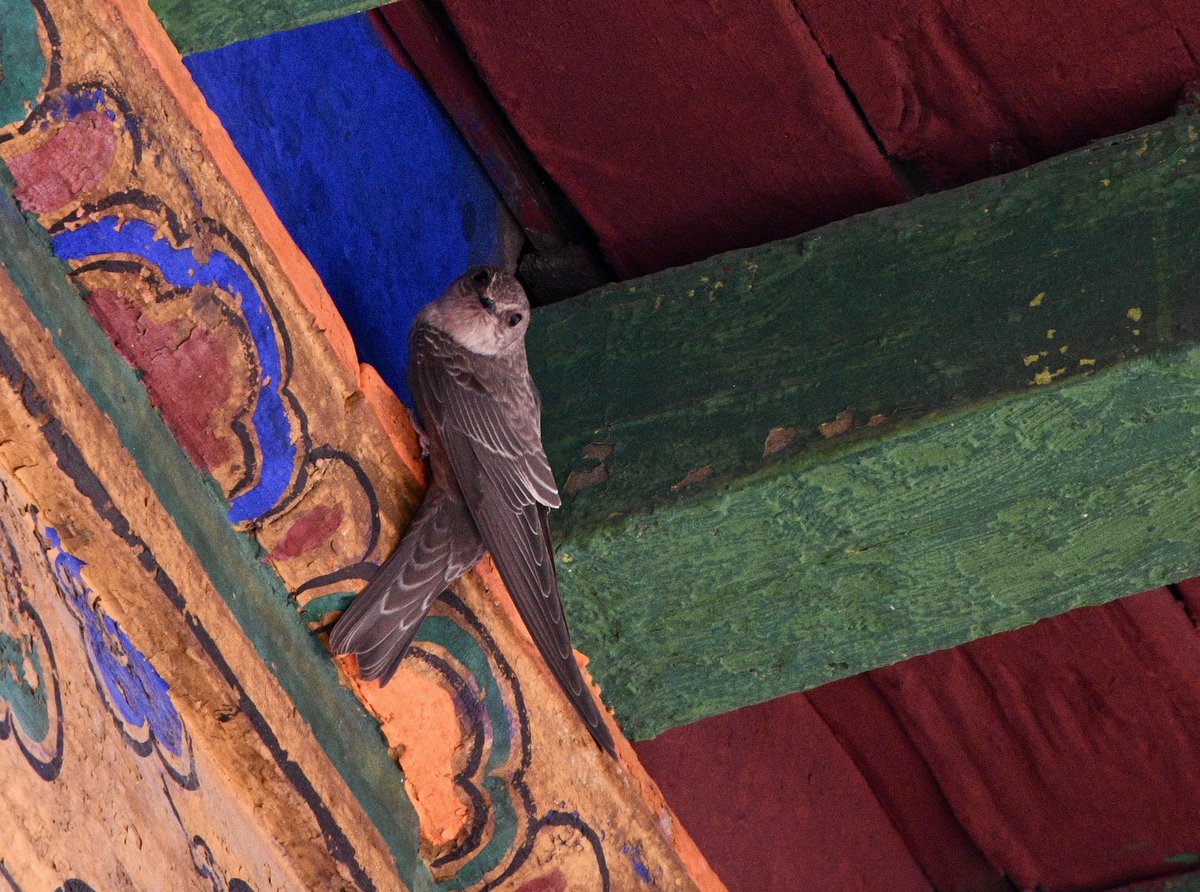
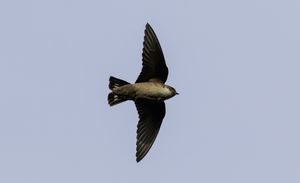
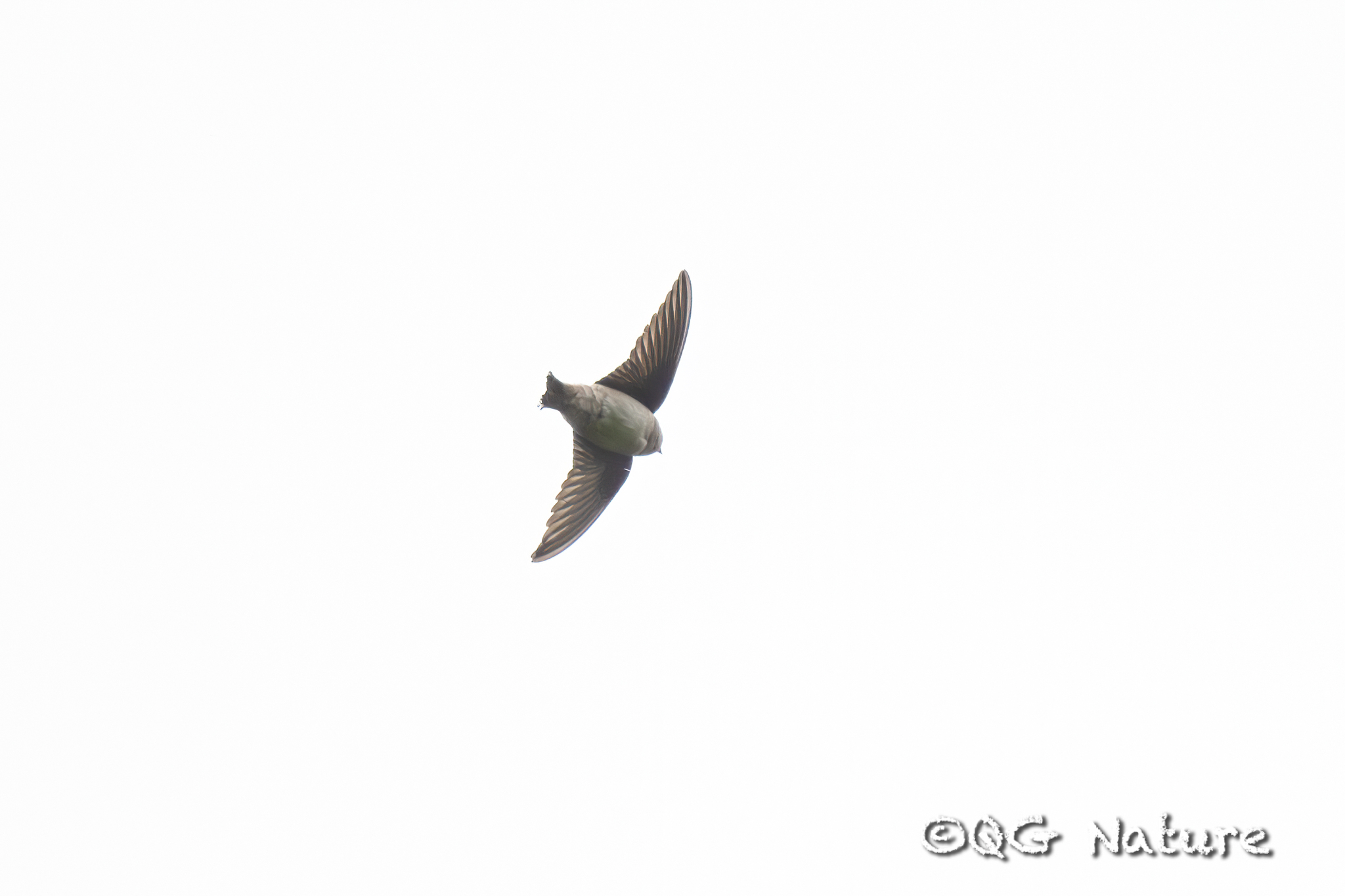
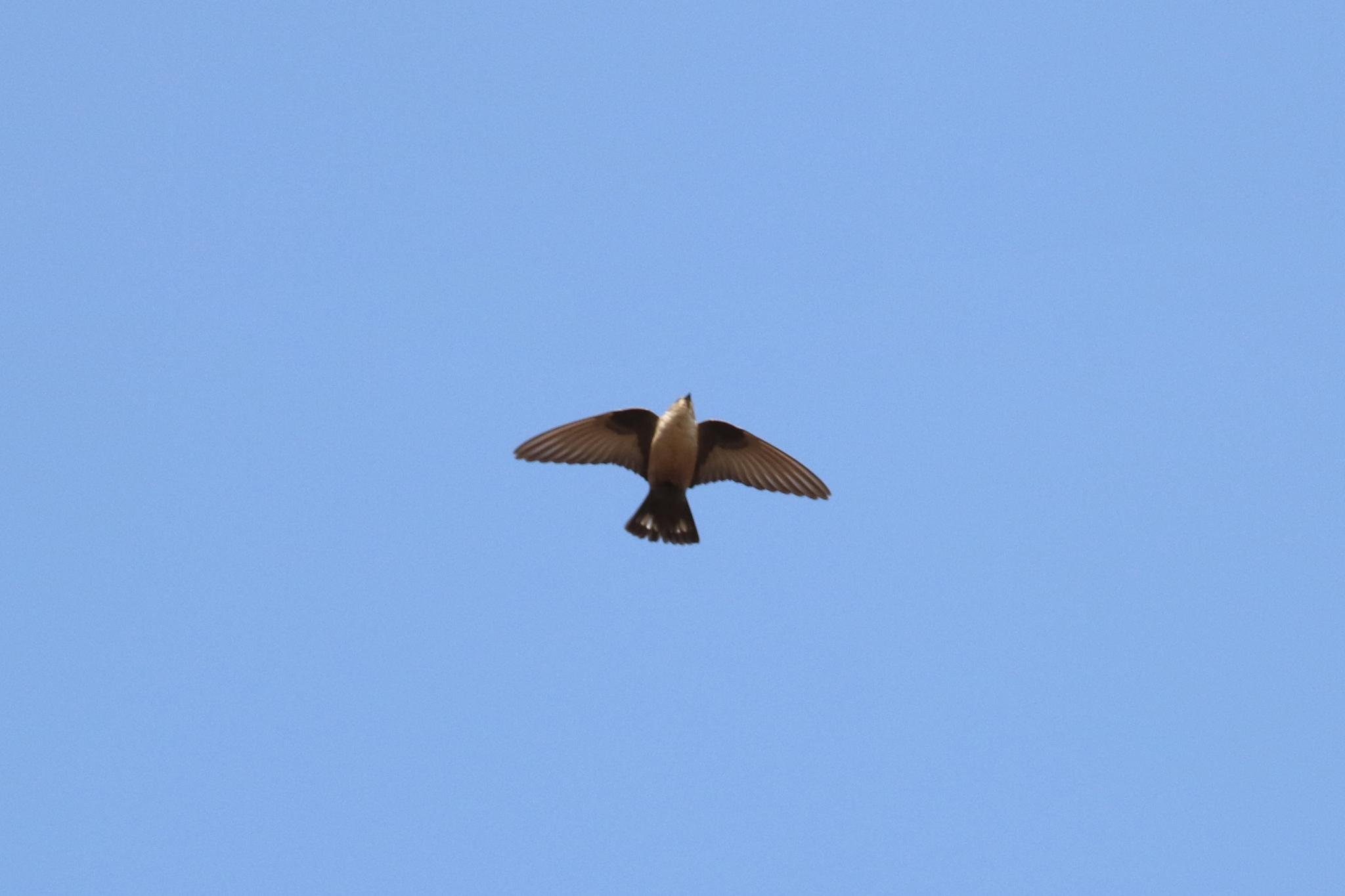
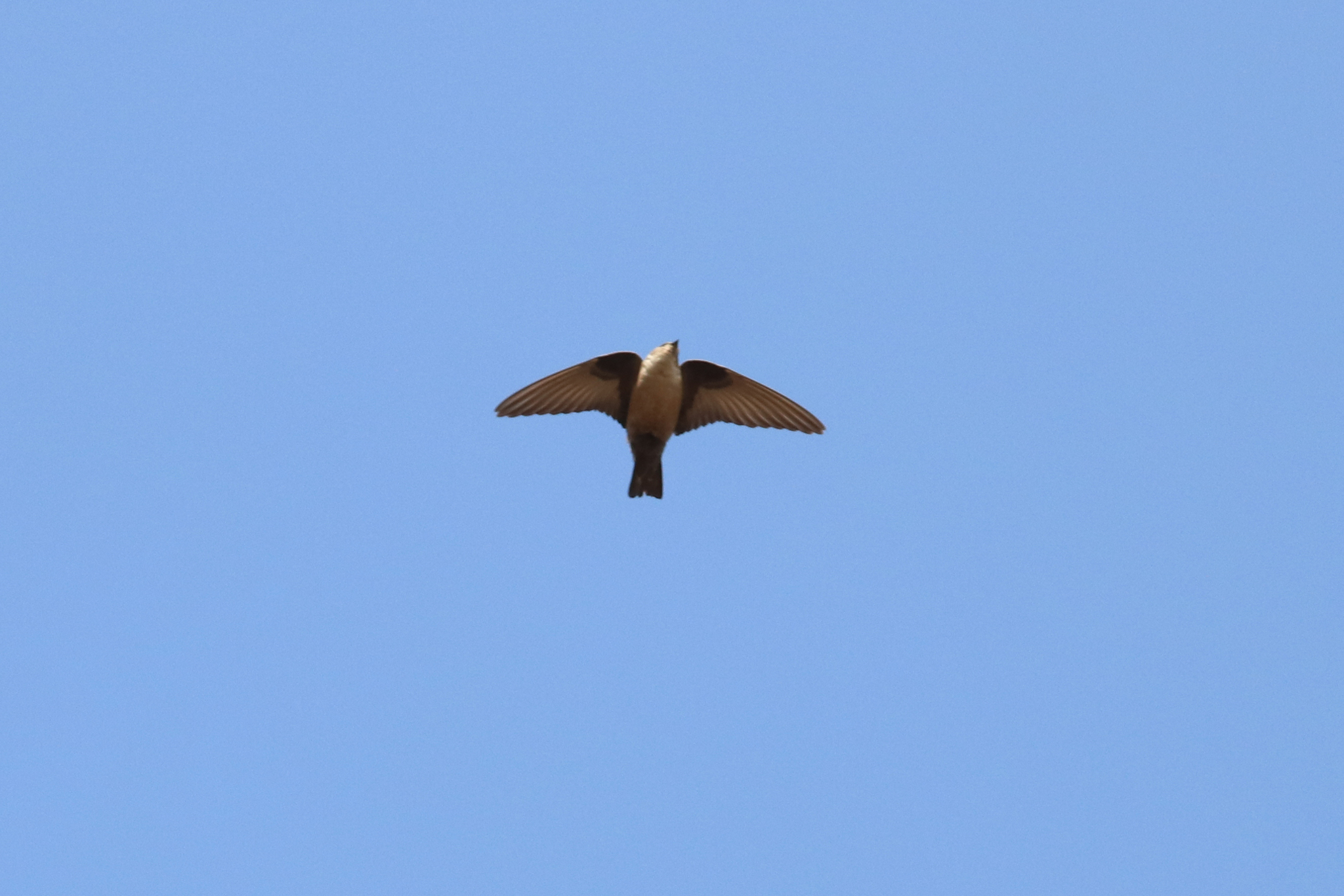
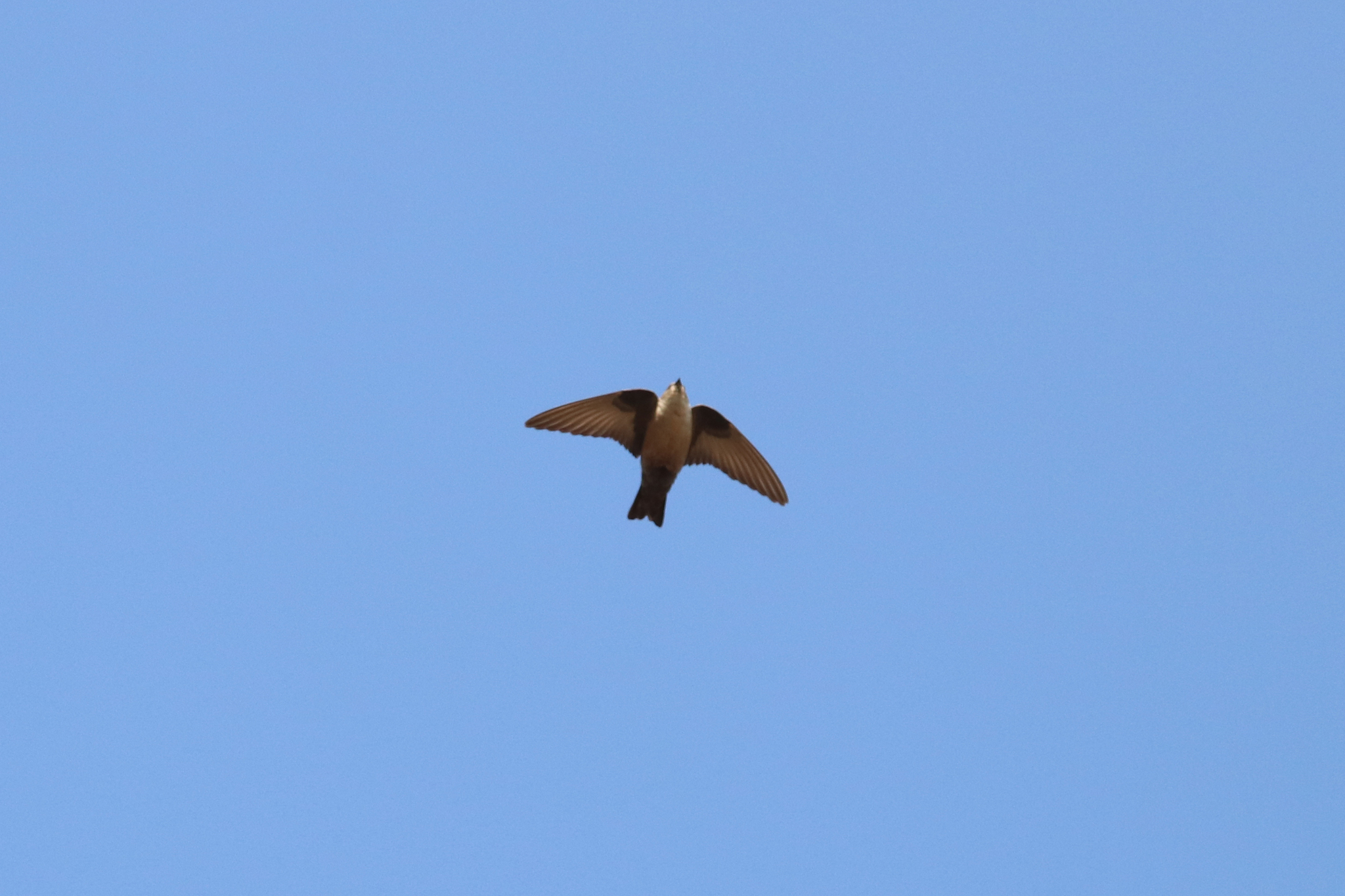
Length 13–15 cm (5.1–5.9 in), wingspan 32–34.5 cm (12.6–13.6 in), average weight 23 g (0.81 oz). Ash-brown upperparts and paler underparts with a broader body, wings, and tail than other European swallows. The short, square tail features distinctive white patches on most feathers except the central and outermost pairs. Underwing and undertail coverts are blackish; eyes brown; bill mainly black; legs brownish-pink. Sexes are alike. Juveniles have buff-brown tips to head, upperpart, and wing covert plumage.
Identification
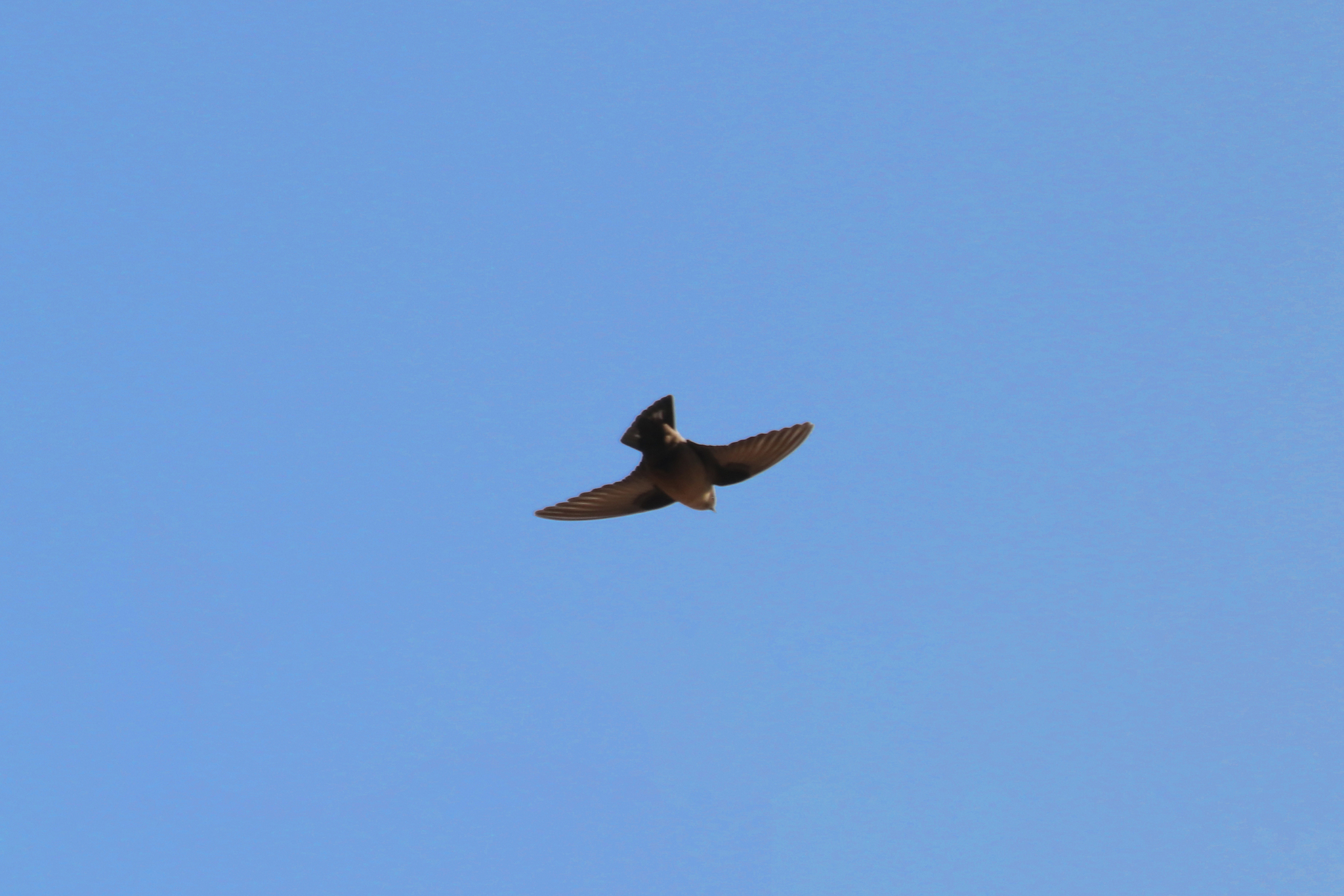
Distinguished from the sand martin by larger size, white tail patches, and lack of a brown breast band. Compared to the rock martin, it is darker, browner, and 15% larger; compared to the dusky crag martin, it is larger and paler, especially on underparts. White tail spots are significantly larger than those of related species. Flight appears relatively slow with rapid wing beats interspersed with flat-winged glides. Vocalizations include short high 'pli', 'piieh', and 'tshir' calls.
Distribution & Habitat
Breeds in mountains from Iberia and northwestern Africa through southern Europe, the Persian Gulf, and the Himalayas to southwestern and northeastern China. Breeding altitude typically 2,000–2,700 m (6,600–8,900 ft), up to 5,000 m (16,000 ft) in Central Asia. Northern populations are migratory: European birds winter in North Africa, Senegal, Ethiopia, and the Nile Valley; Asian breeders winter in southern China, the Indian subcontinent, and the Middle East. Some European birds remain north of the Mediterranean, moving to lower ground. Rare vagrant to the UK, Sweden, and The Gambia.
Behavior & Ecology
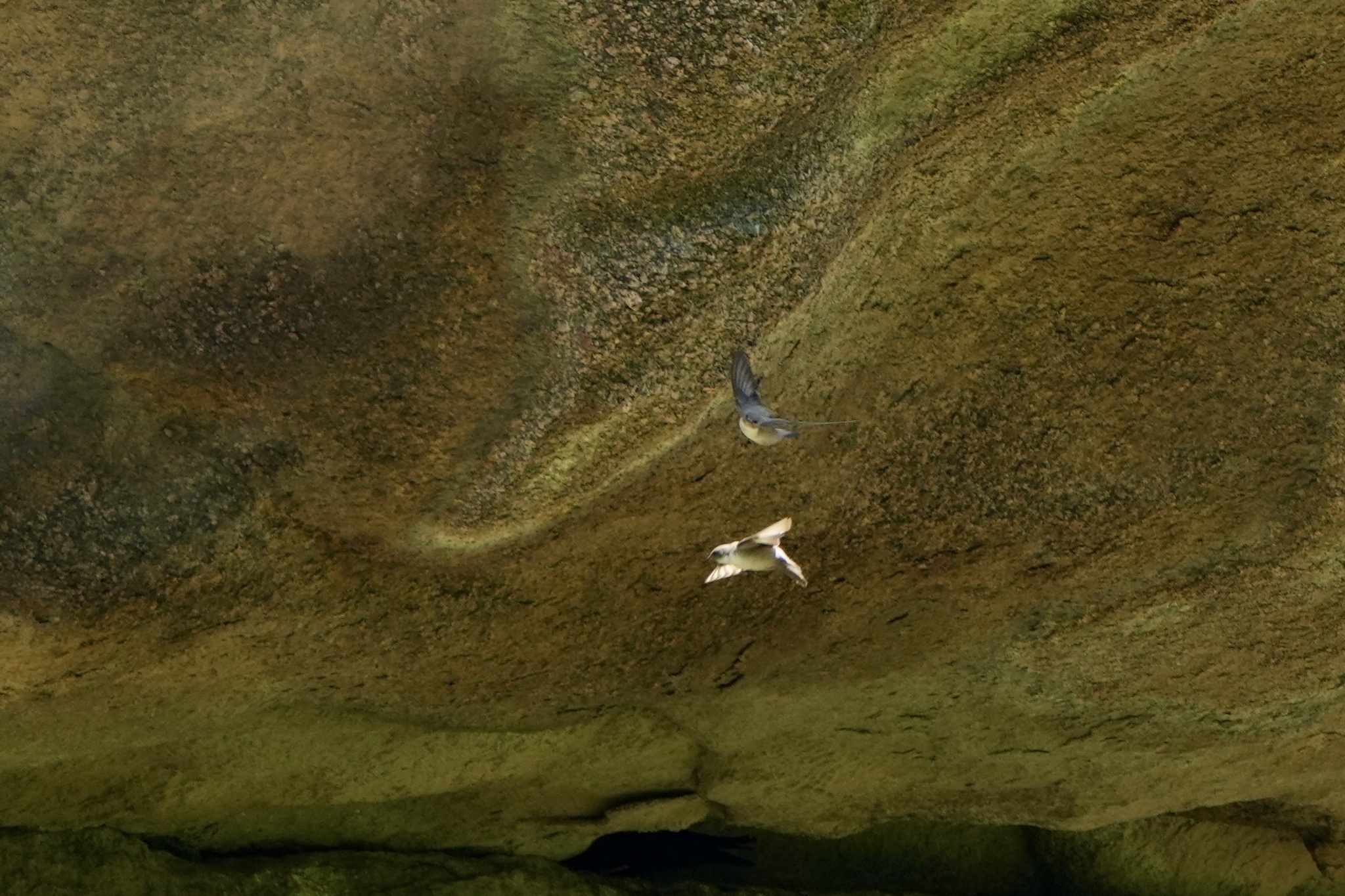
Builds open half-cup mud nests lined with feathers or dry grass under cliff overhangs, in crevices, or on man-made structures. Nests are solitary or in small colonies (<10 nests), with pairs defending territories. Clutch size is 2–5 eggs (average 3), incubated mainly by the female for 13–17 days; chicks fledge in 24–27 days. Both parents feed chicks every 2–5 minutes. Feeds on insects (flies, ants, beetles, aquatic species) caught in flight near cliff faces, streams, or meadows. Gregarious outside breeding season, forming large winter roosts with high site fidelity. Predators include peregrine falcons, kestrels, sparrowhawks, jays, ravens, and crows. Hosts blood-sucking mites and specific fly and flea parasites.
Conservation
Classified as Least Concern on the IUCN Red List. European population estimated at 360,000–1,110,000 individuals (120,000–370,000 breeding pairs); worldwide estimate 500,000–5,000,000. Population is increasing due to northward range expansion and increased use of man-made nesting sites.
Source: Wikipedia · CC BY-SA 3.0
Taxonomy
- Order
- Passeriformes
- Family
- Hirundinidae
- Genus
- Ptyonoprogne
Distribution
breeds southern Palearctic to central Asia; winters to Arabia and India
Vocalizations
Data Sources
Species description from Wikipedia, licensed under CC BY-SA 3.0.
Bird images and sounds sourced from GBIF, contributed by citizen scientists worldwide under Creative Commons licenses.
Taxonomy data from AviList 2025.