Eurasian Crag Martin
Ptyonoprogne rupestris
岩燕
Introduction
A small passerine bird in the swallow family (Hirundinidae). It breeds in mountainous regions across southern Europe, northwestern Africa, and the Palearctic from Iberia through the Himalayas to China. Its range is bounded by the 20°C July isotherm, with northern populations migratory, wintering in north Africa, the Middle East, and India. Two distinctive traits are its adaptation to nesting on cliff faces and man-made structures, and its exploitation of airflow patterns near vertical cliffs to concentrate insects. The species shows high winter roost fidelity, with the largest known roost at Gibraltar's Gorham's Cave Complex hosting up to 12,000 birds. With a large expanding range and population of 500,000-5,000,000 individuals worldwide, it is classified as Least Concern by the IUCN.
Description
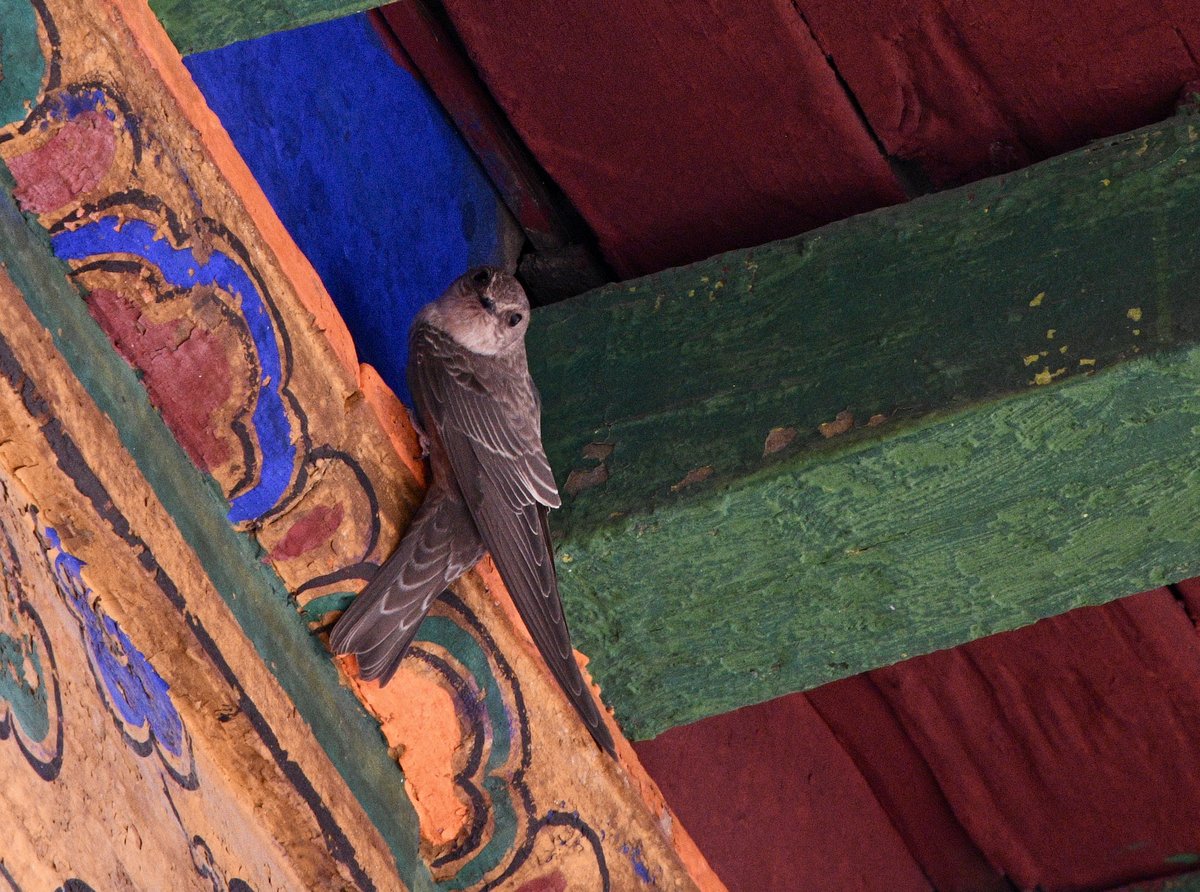
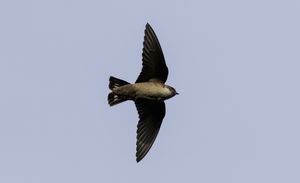
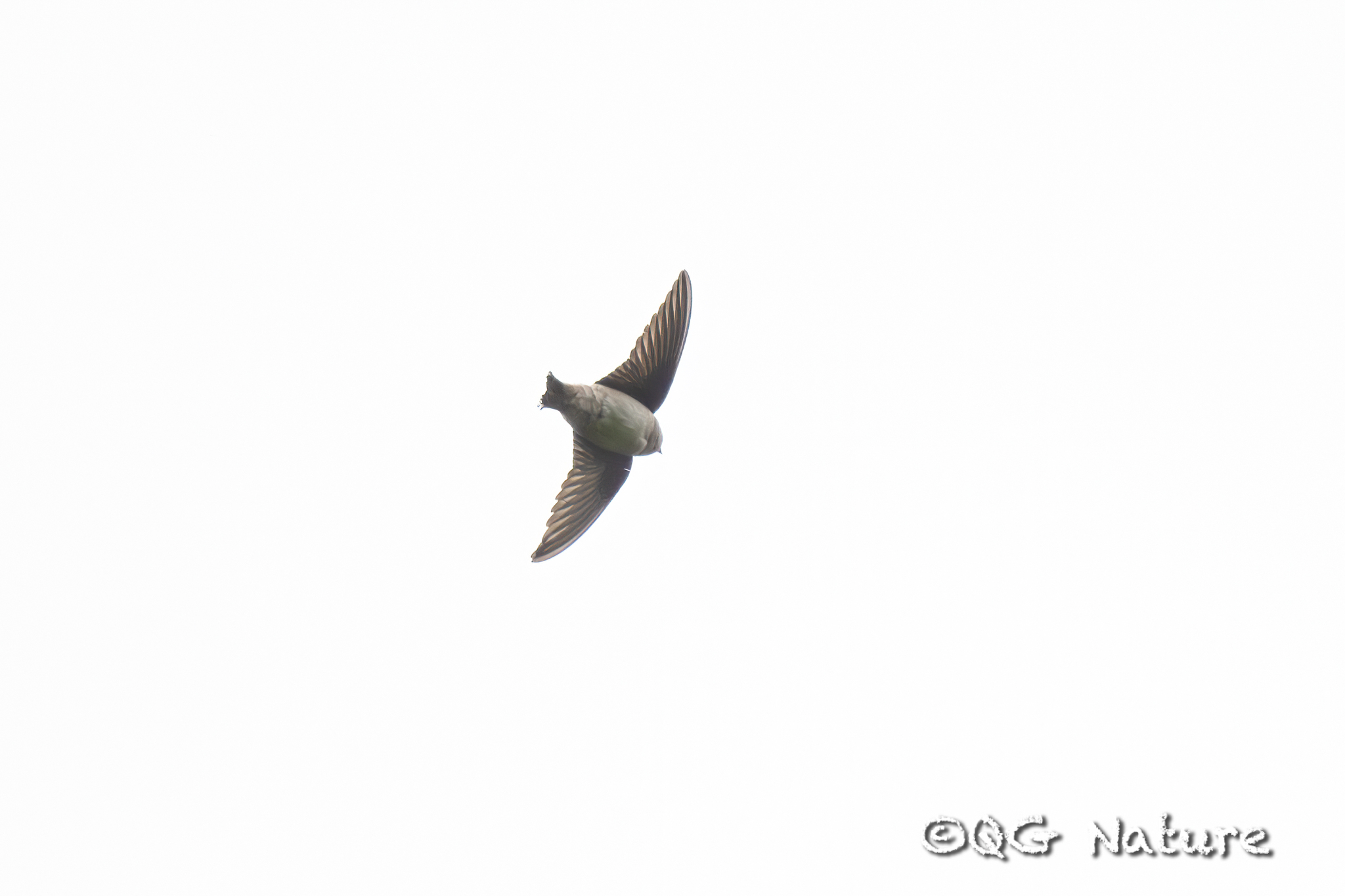
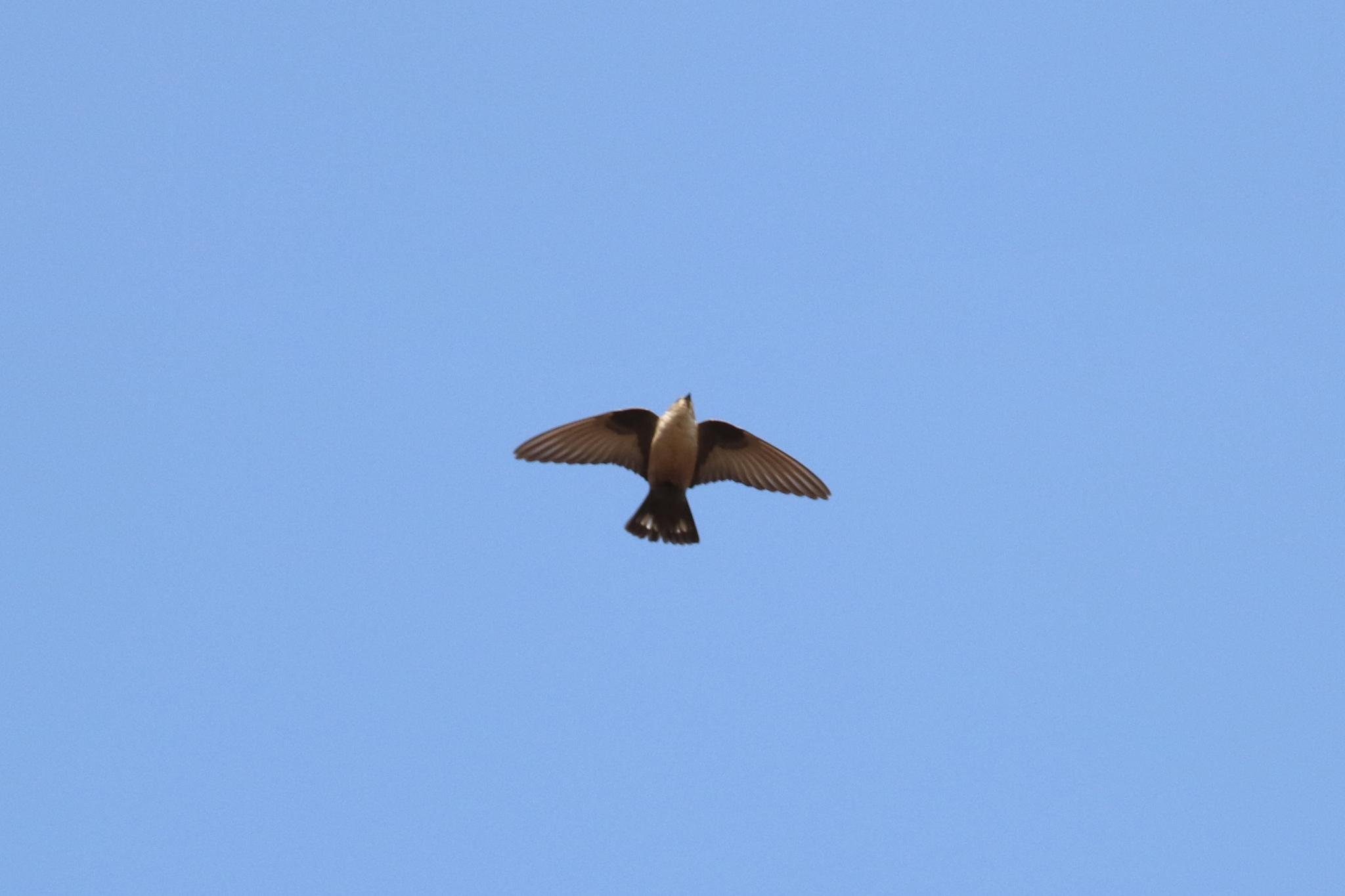
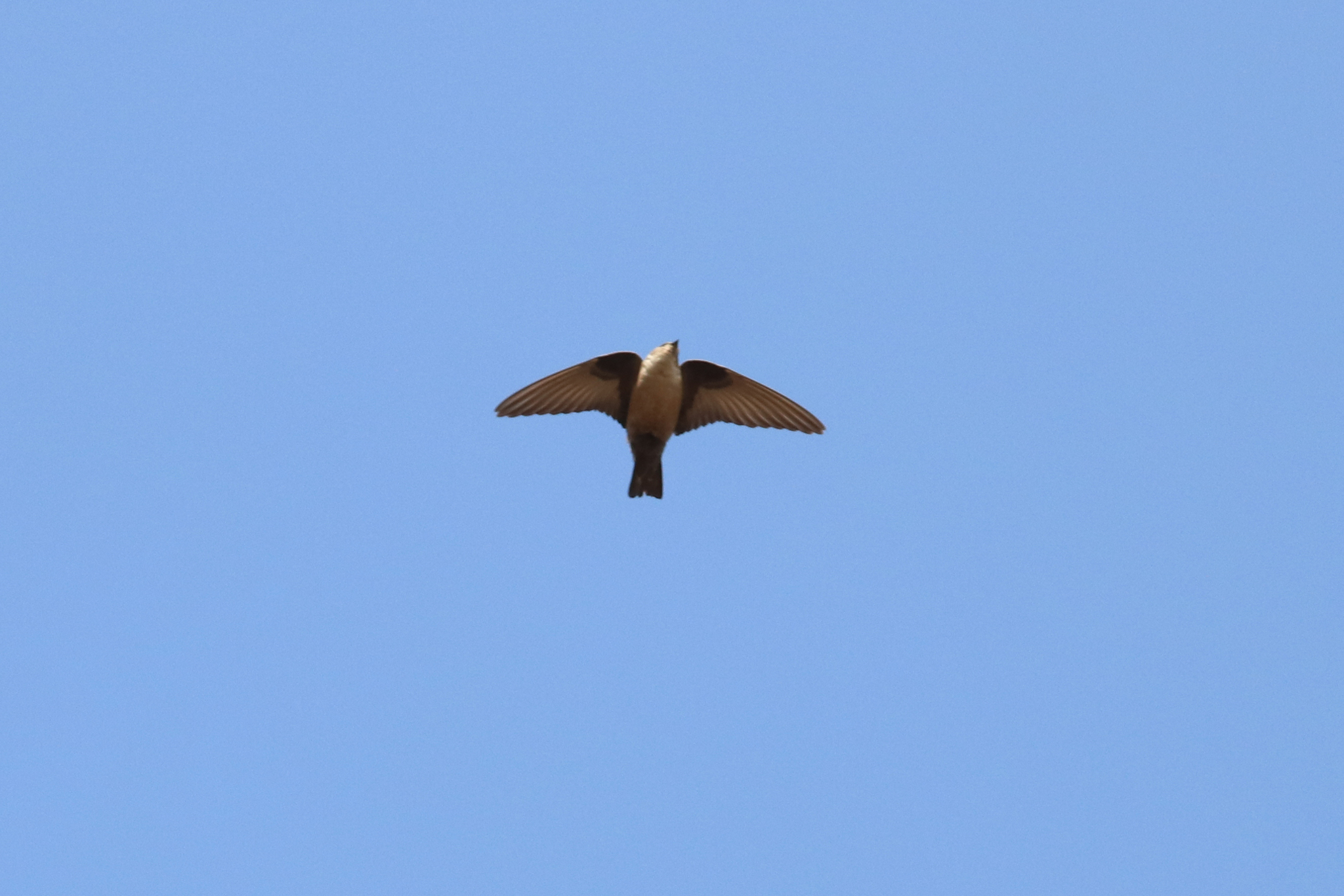
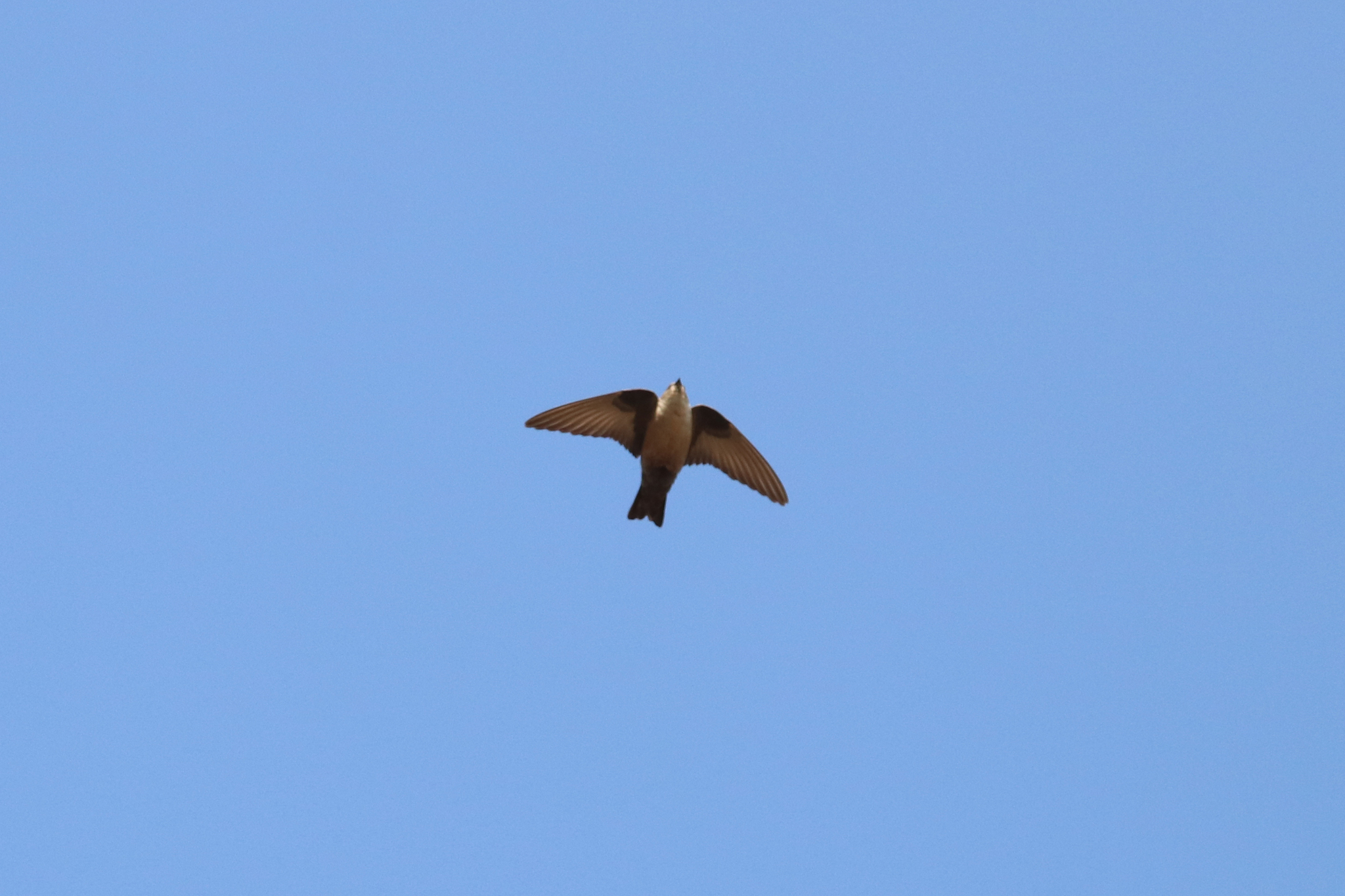
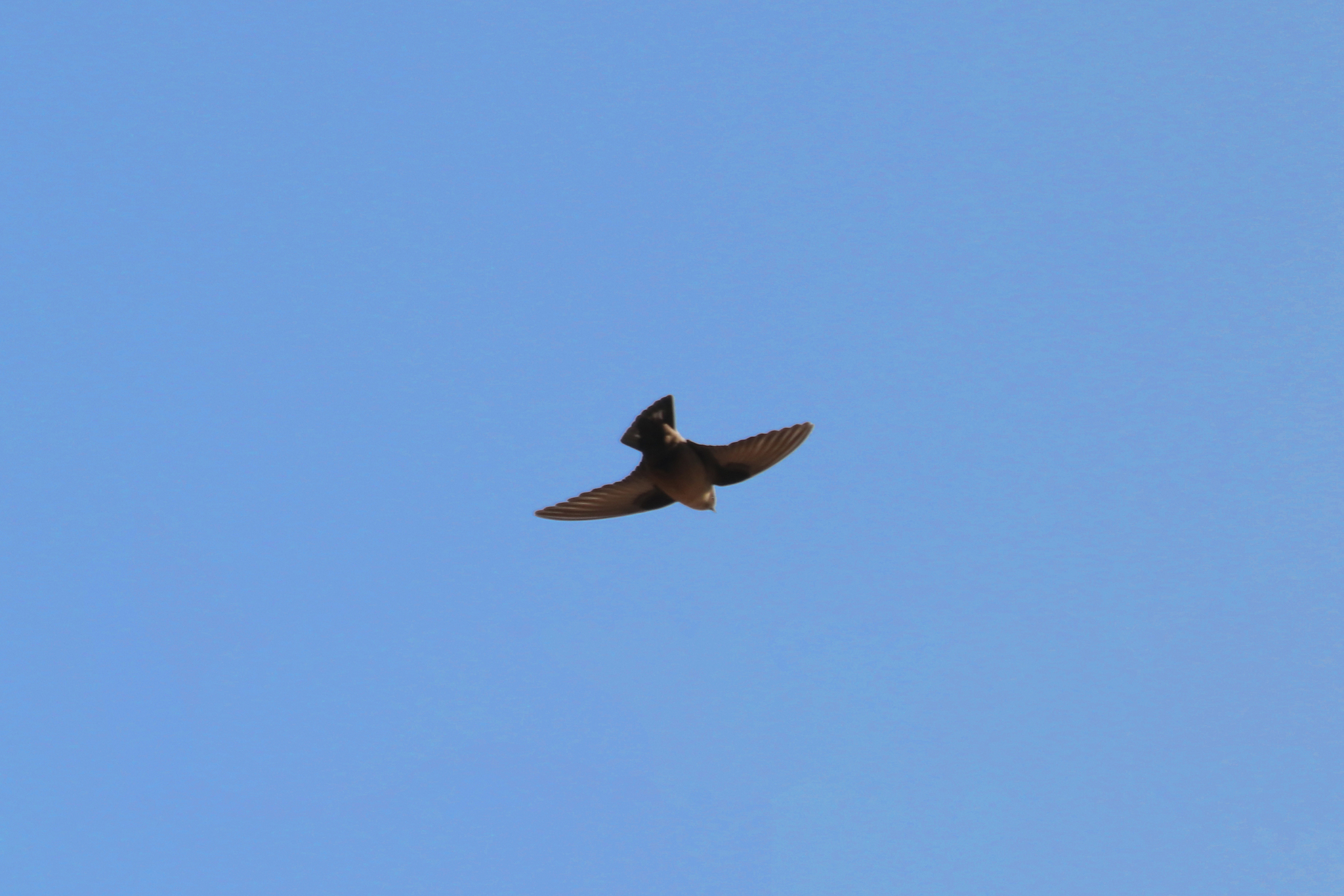
A compact swallow measuring 13-15 cm in length with a 32-34.5 cm wingspan and average weight of 23 g. It has ash-brown upperparts and paler underparts, with a broader body, wings, and tail than other European swallows. The short, square tail displays white patches on all but the central and outermost feather pairs. Underwing and undertail coverts are blackish. The small bill is mainly black, legs are brownish-pink, and eyes are brown. Sexes appear identical. Juveniles are distinguished by buff-brown tips to plumage on the head, upperparts, and wing coverts. The species has long, flexible primaries enabling agile flight near cliff faces.
Identification
Larger than the sand martin, with distinctive white tail patches and lacking a brown breast band. Overlaps in range with other Ptyonoprogne species but is darker and browner than the rock martin, and larger and paler, particularly on underparts, than the dusky crag martin. The white tail spots are significantly larger than those of both relatives. Flight appears slower than other swallows, with rapid wing beats interspersed with flat-winged glides. When spread, the tail shows prominent white spots. Vocalizations include short high pli and piieh calls resembling linnet and house martin sounds respectively.
Distribution & Habitat
Breeds from Iberia and northwestern Africa through southern Europe, the Persian Gulf and Himalayas to southwestern and northeastern China. Northern populations are migratory, with European birds wintering in north Africa, Senegal, Ethiopia, and the Nile Valley, and Asian breeders going to southern China, the Indian subcontinent, and Middle East. Some European birds remain north of the Mediterranean, moving to lower ground after breeding. A rare vagrant north of breeding areas with only 12 UK records and first Swedish record in 1996. Breeds at altitudes of 2,000-2,700 m, up to 5,000 m in Central Asia, on dry, warm, sheltered cliffs and gorges.
Behavior & Ecology
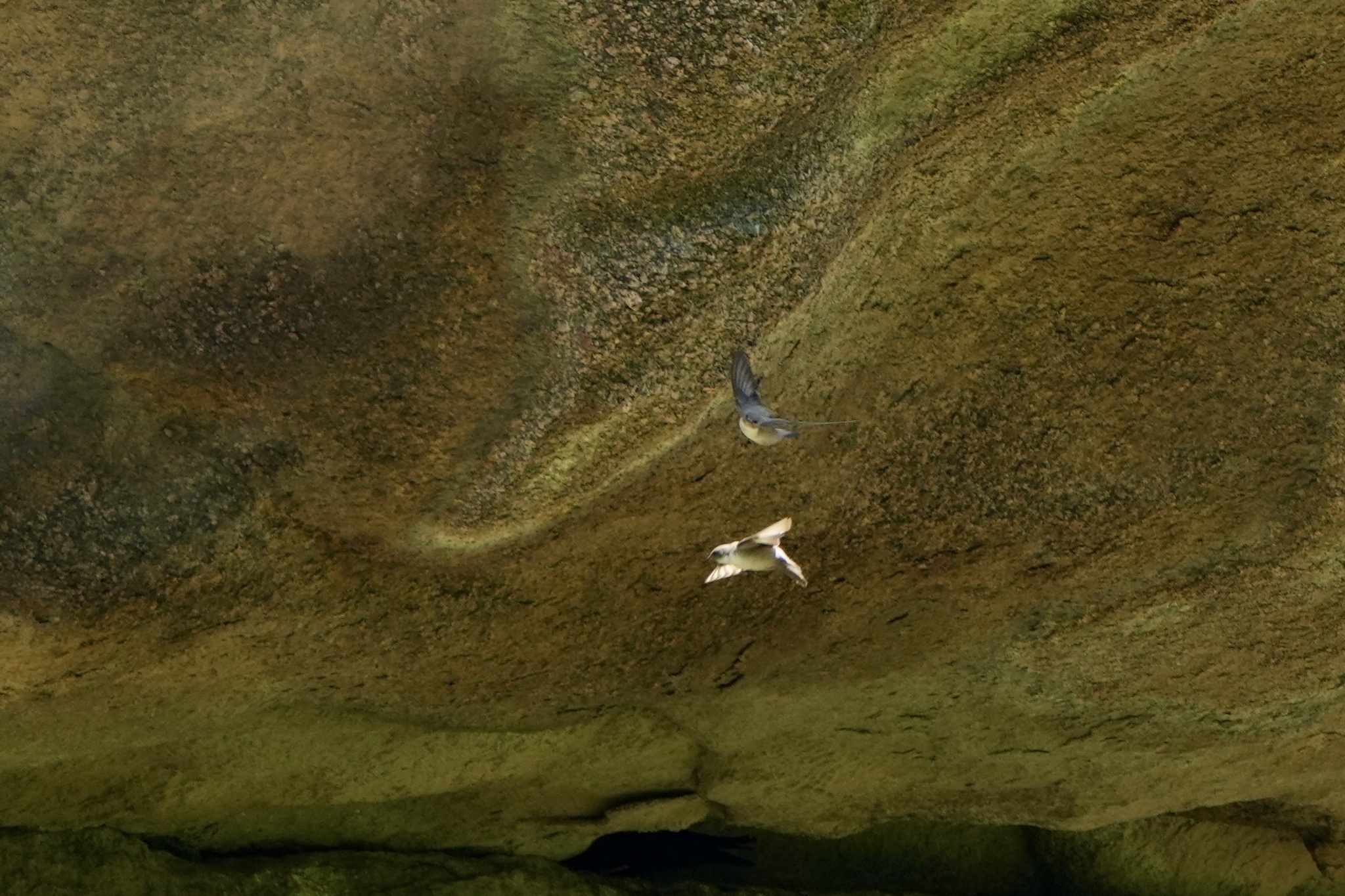
Feeds mainly on insects caught in flight, including flies, ants, beetles, aquatic species like stoneflies and caddisflies. Hunts near cliff faces, streams, and alpine meadows, exploiting standing waves in airflow that concentrate insects. Gregarious outside breeding season, forming sizeable flocks. Breeding occurs from May to August in solitary pairs or small colonies of fewer than ten nests, typically 30 m apart. Both parents build a mud half-cup nest under cliff overhangs, caves, or man-made structures, lined with feathers and dry grass. Clutch size is 2-5 eggs, incubated mainly by female for 13-17 days. Both parents feed chicks every 2-5 minutes, with fledging at 24-27 days and post-fledging care for 14-21 days.
Conservation
Classified as Least Concern on the IUCN Red List due to very large range and high numbers. European population estimated at 360,000-1,110,000 individuals (120,000-370,000 breeding pairs), representing 25-50% of a global estimate of 500,000-5,000,000. Population is increasing with northward expansion, partly attributed to increased use of man-made structures for nesting. Range expansions documented in Austria, Switzerland, former Yugoslavia, Romania, and Bulgaria. Potential threats include competition with other hirundines using artificial sites, weather impacts on insect availability, and habitat changes affecting breeding and foraging grounds.
Culture
No significant cultural significance, folklore, or mythological associations documented in available sources.
Source: Wikipedia · CC BY-SA 3.0
Taxonomy
- Order
- Passeriformes
- Family
- Hirundinidae
- Genus
- Ptyonoprogne
- eBird Code
- eurcrm1
Distribution
breeds southern Palearctic to central Asia; winters to Arabia and India
Vocalizations
Data Sources
Species description from Wikipedia, licensed under CC BY-SA 3.0.
Bird images and sounds sourced from GBIF, contributed by citizen scientists worldwide under Creative Commons licenses.
Taxonomy data from AviList 2025.