Great Barbet
Psilopogon virens
大拟啄木鸟
Introduction
The Great Barbet (Psilopogon virens) is the largest species in the family Megalaimidae. Its range extends across the Himalayan region through Nepal, Bhutan, and northeastern India to Southeast Asia, including parts of Myanmar, Thailand, and China. It inhabits forested landscapes from low foothills to 3,000 meters elevation, showing preference for well-wooded areas with mature trees but also occurring in forest edges and secondary growth. This species typically occurs singly, in pairs, or small family groups. It produces loud, far-carrying calls that function in communication and territory defense. Its diet consists primarily of fruit, supplemented by insects and occasional small prey. It nests in tree cavities. The species is listed as Least Concern, with population numbers considered stable throughout its range.
Description
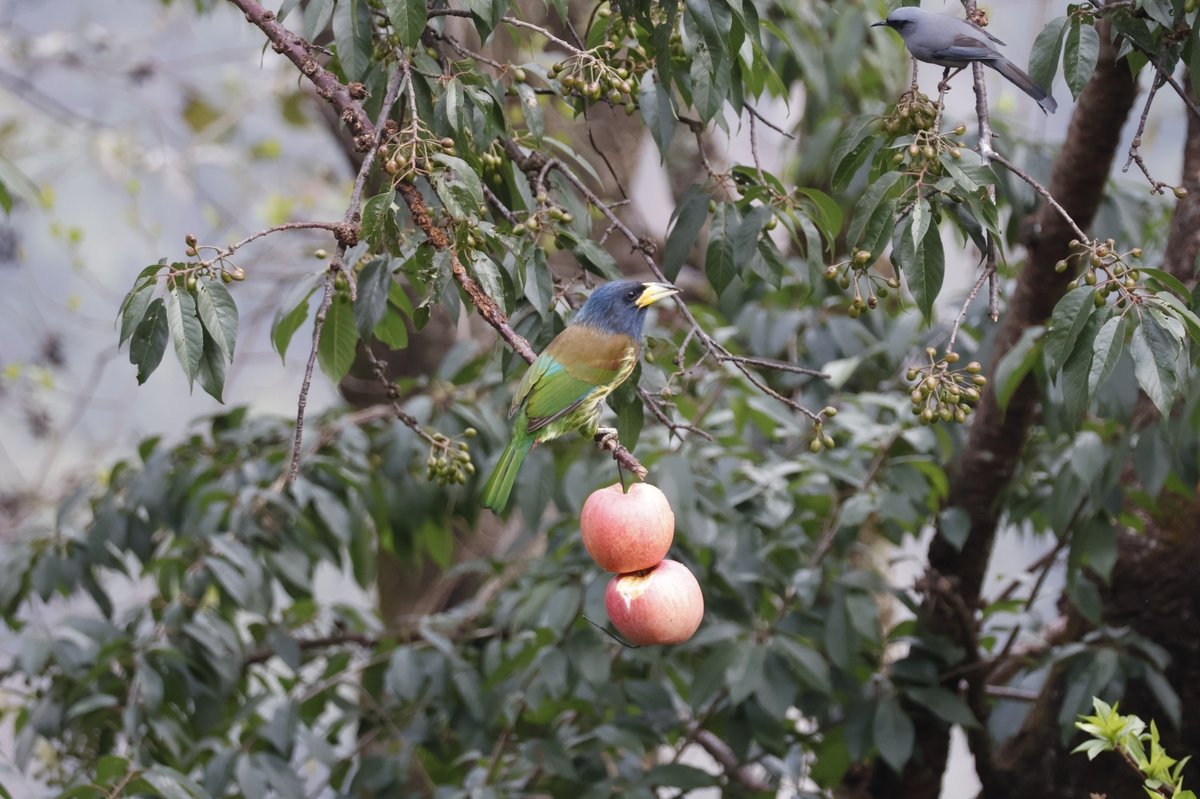
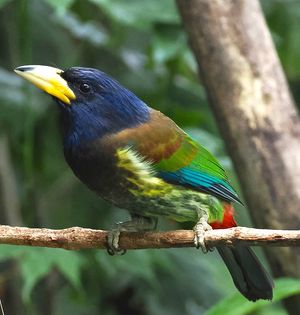
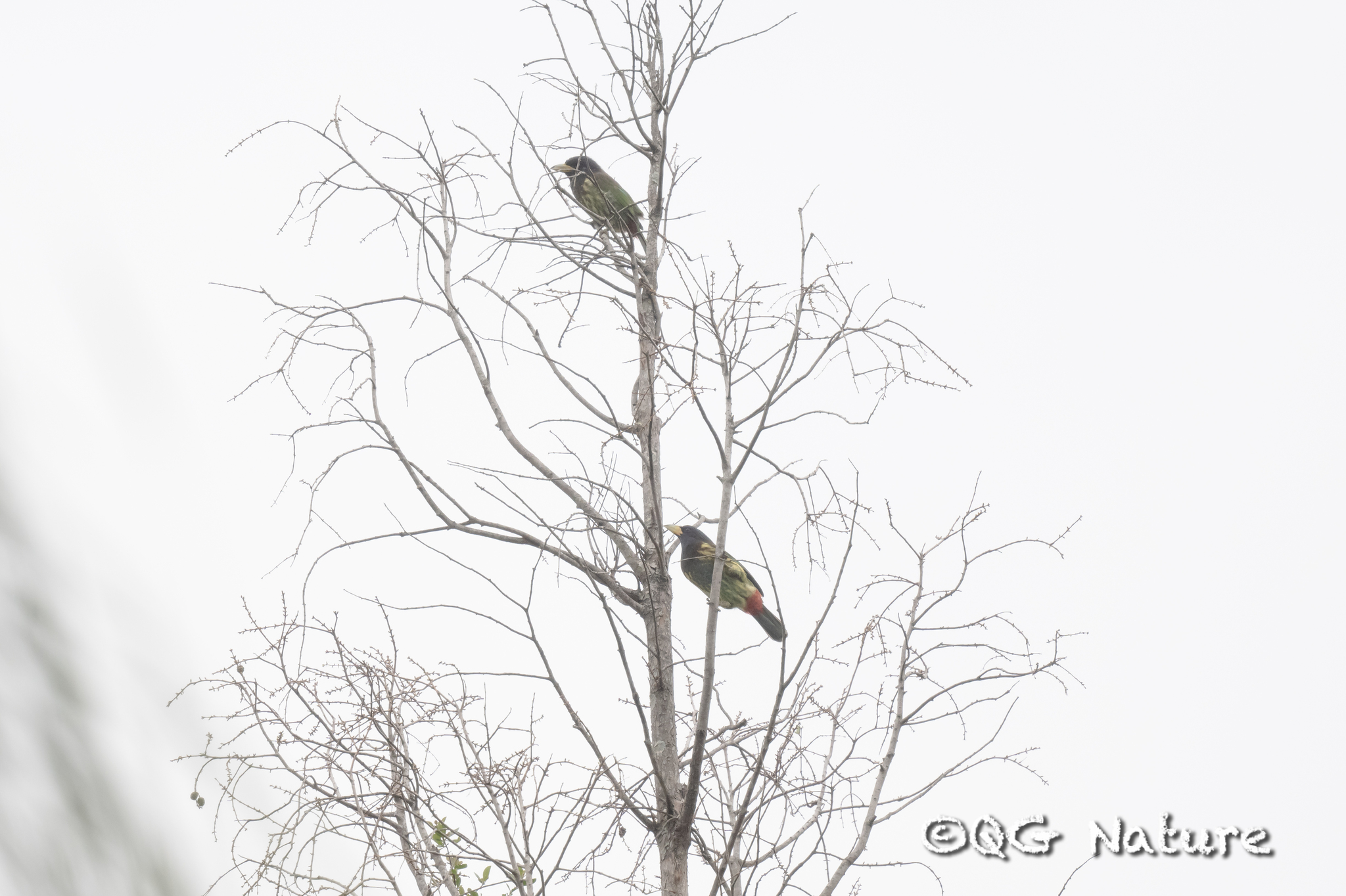
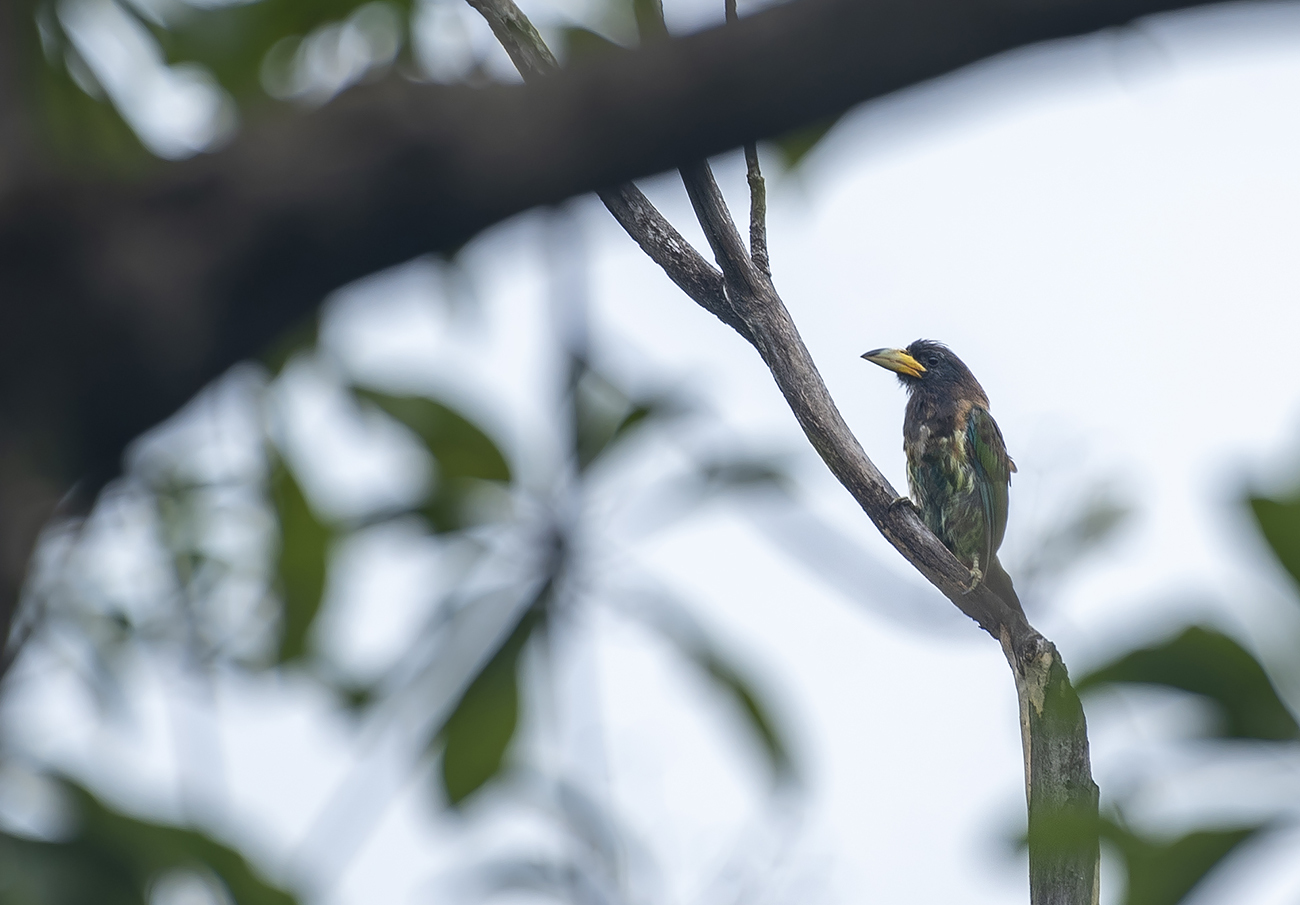
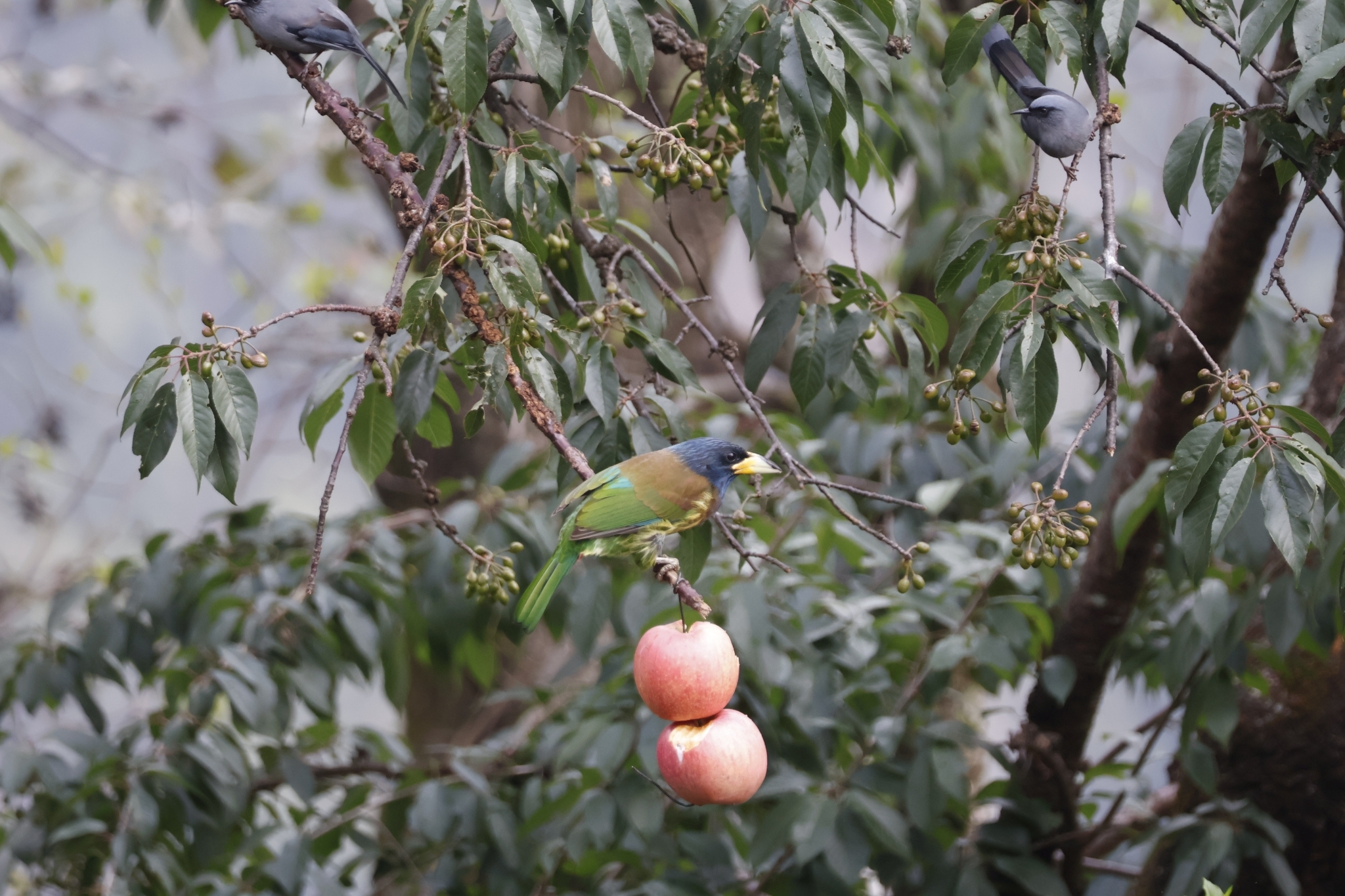
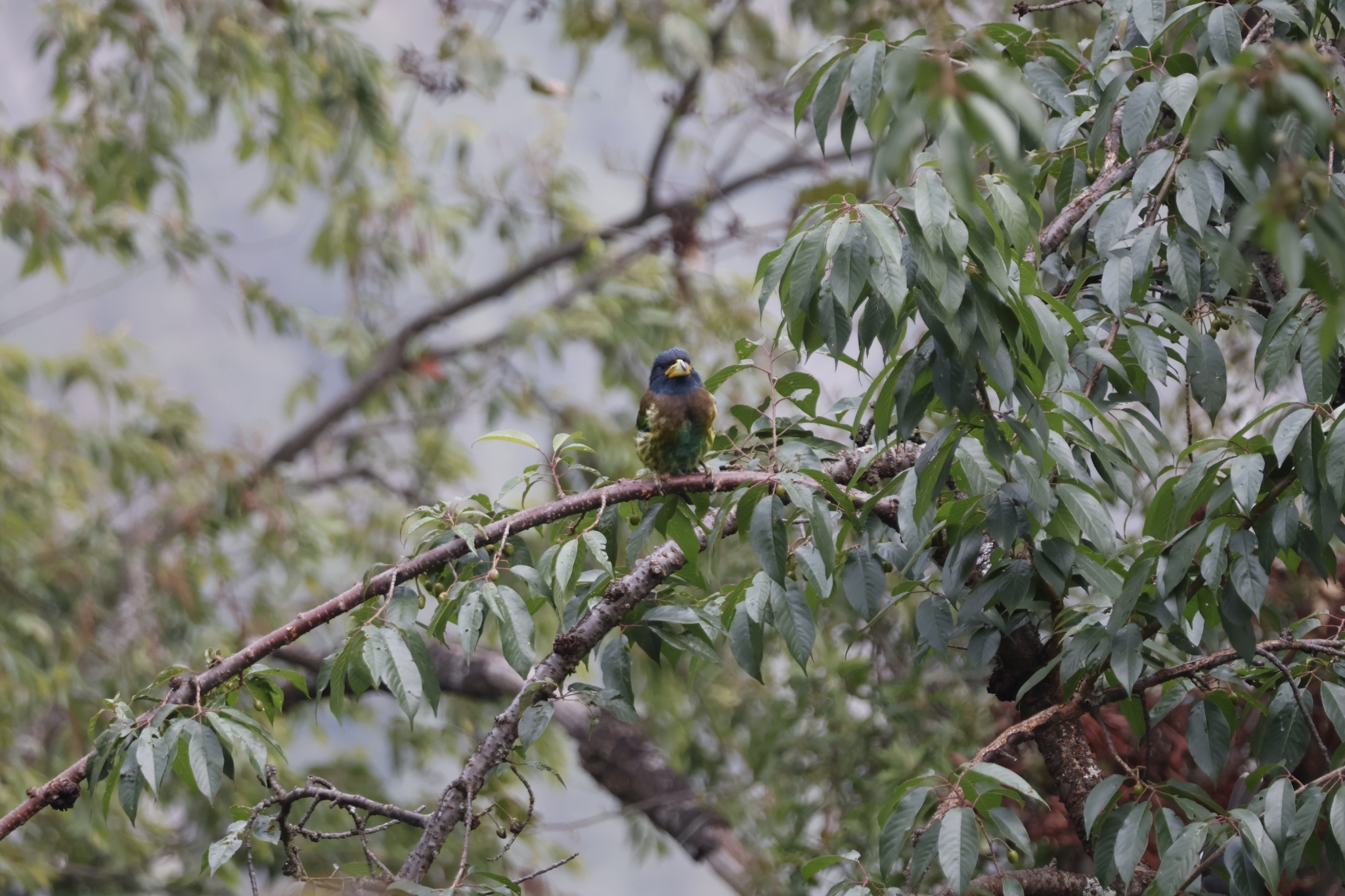
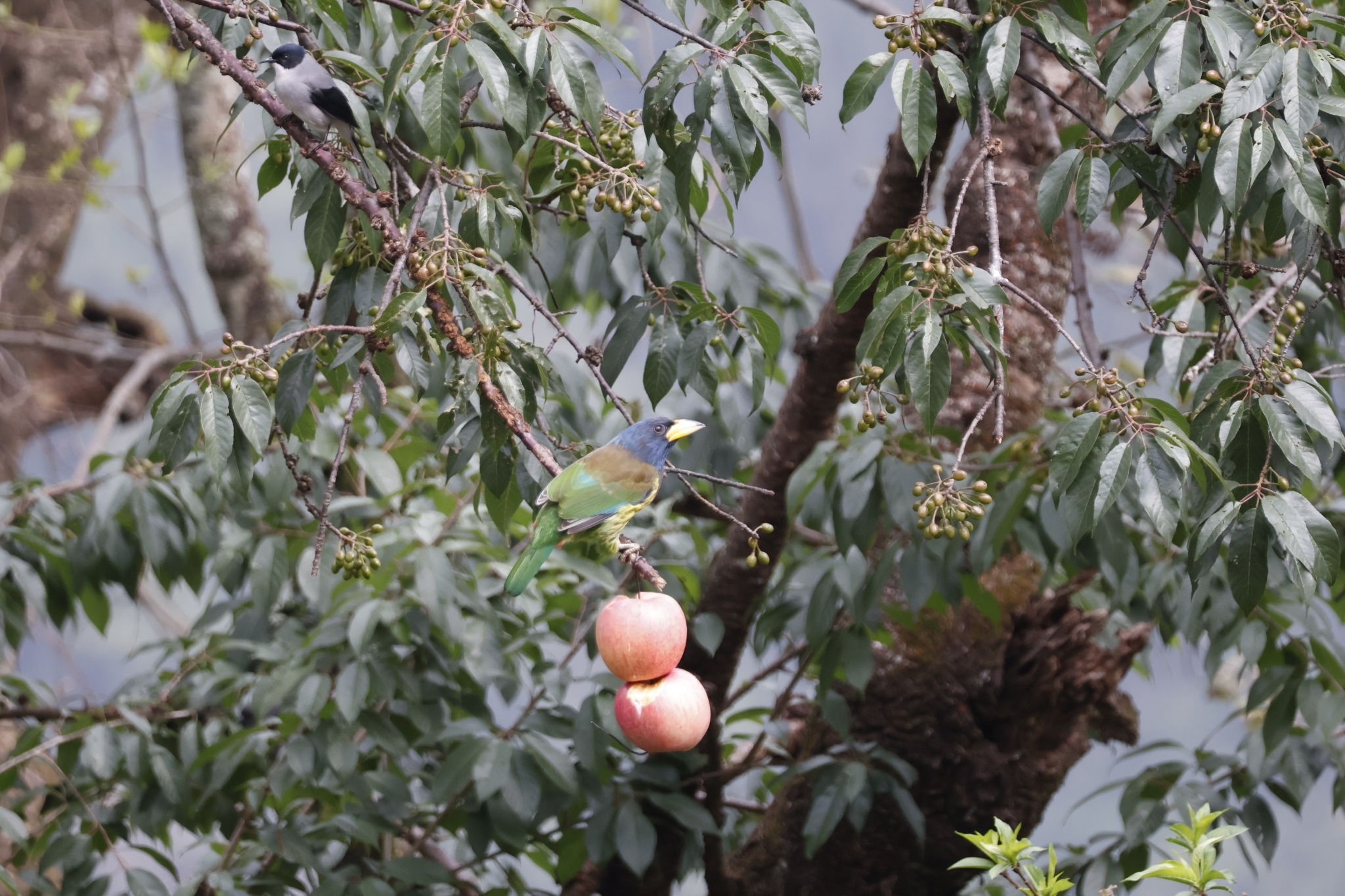
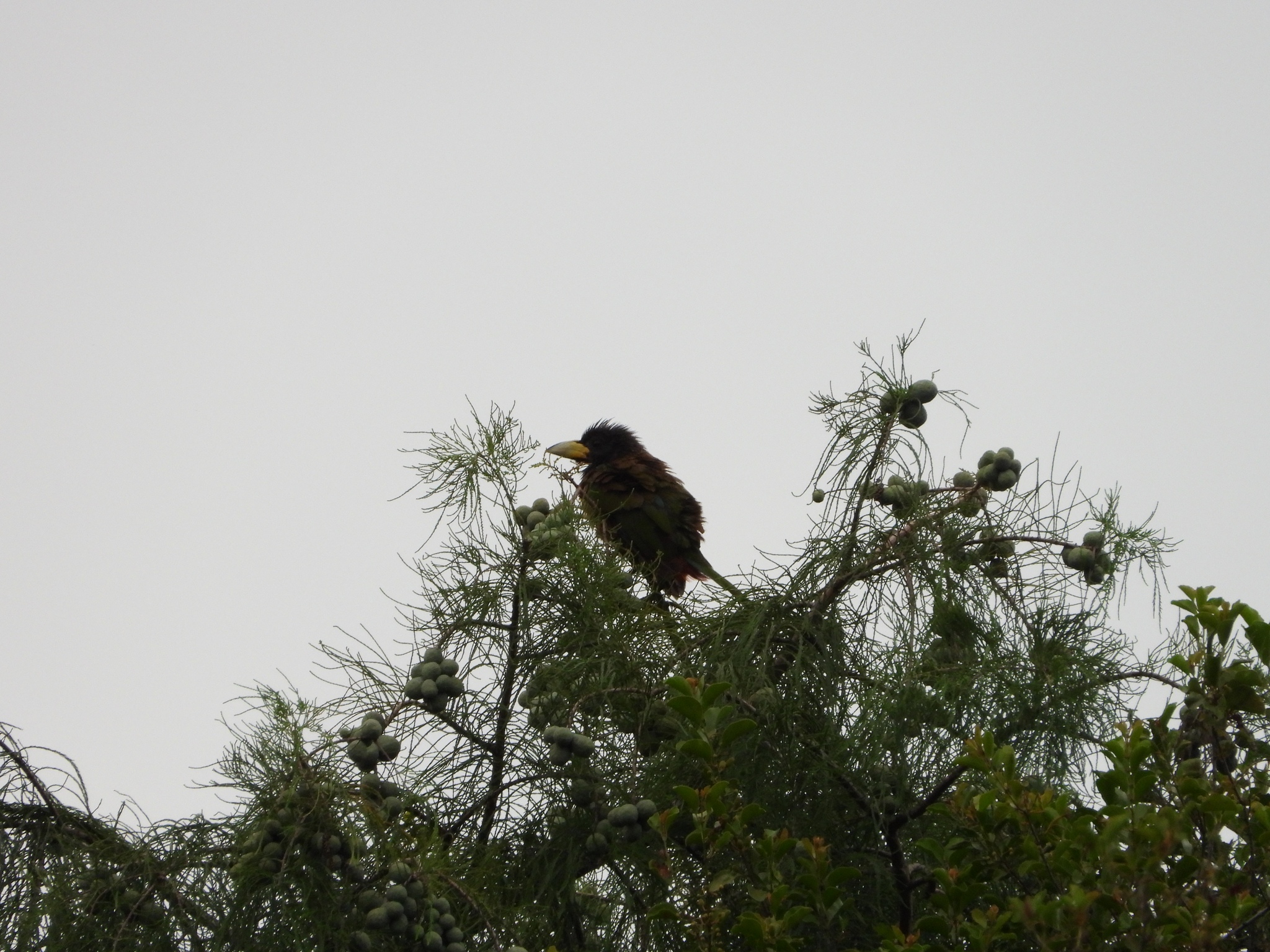
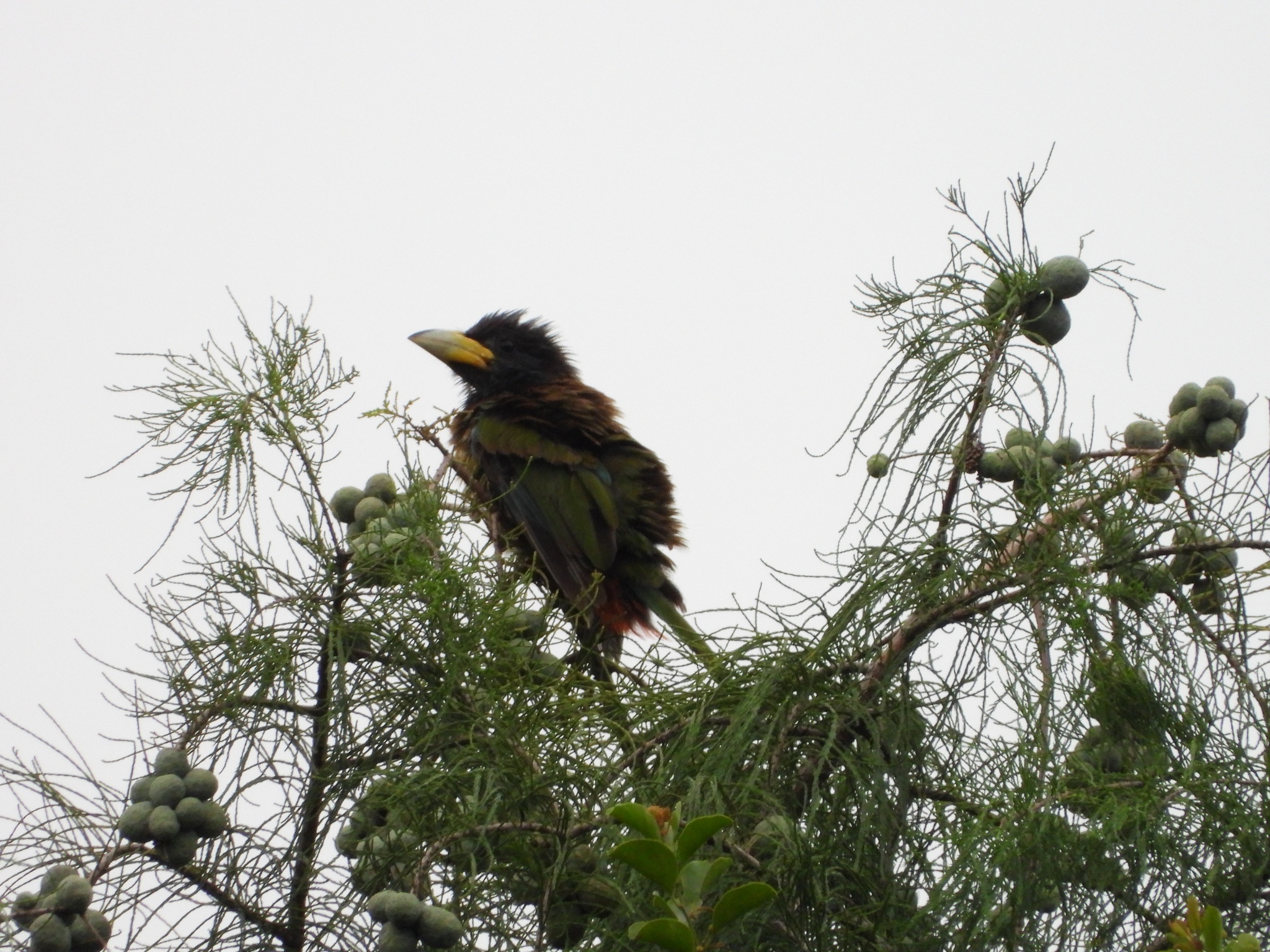
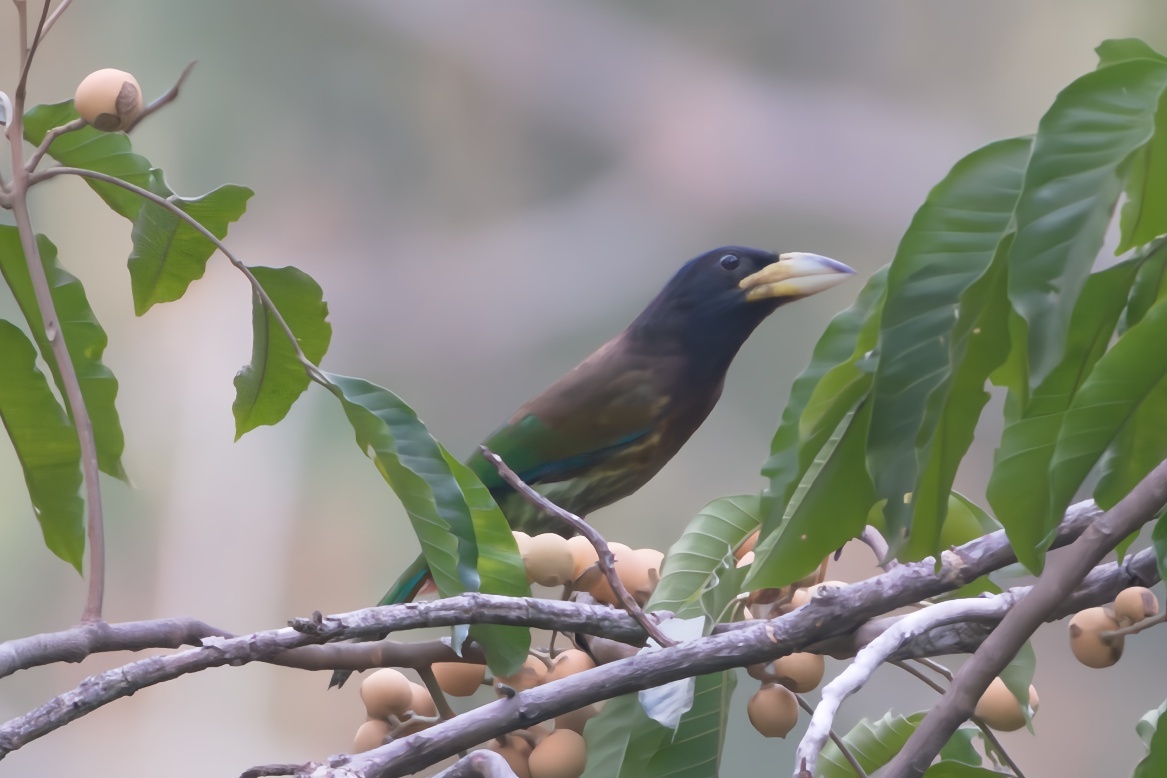
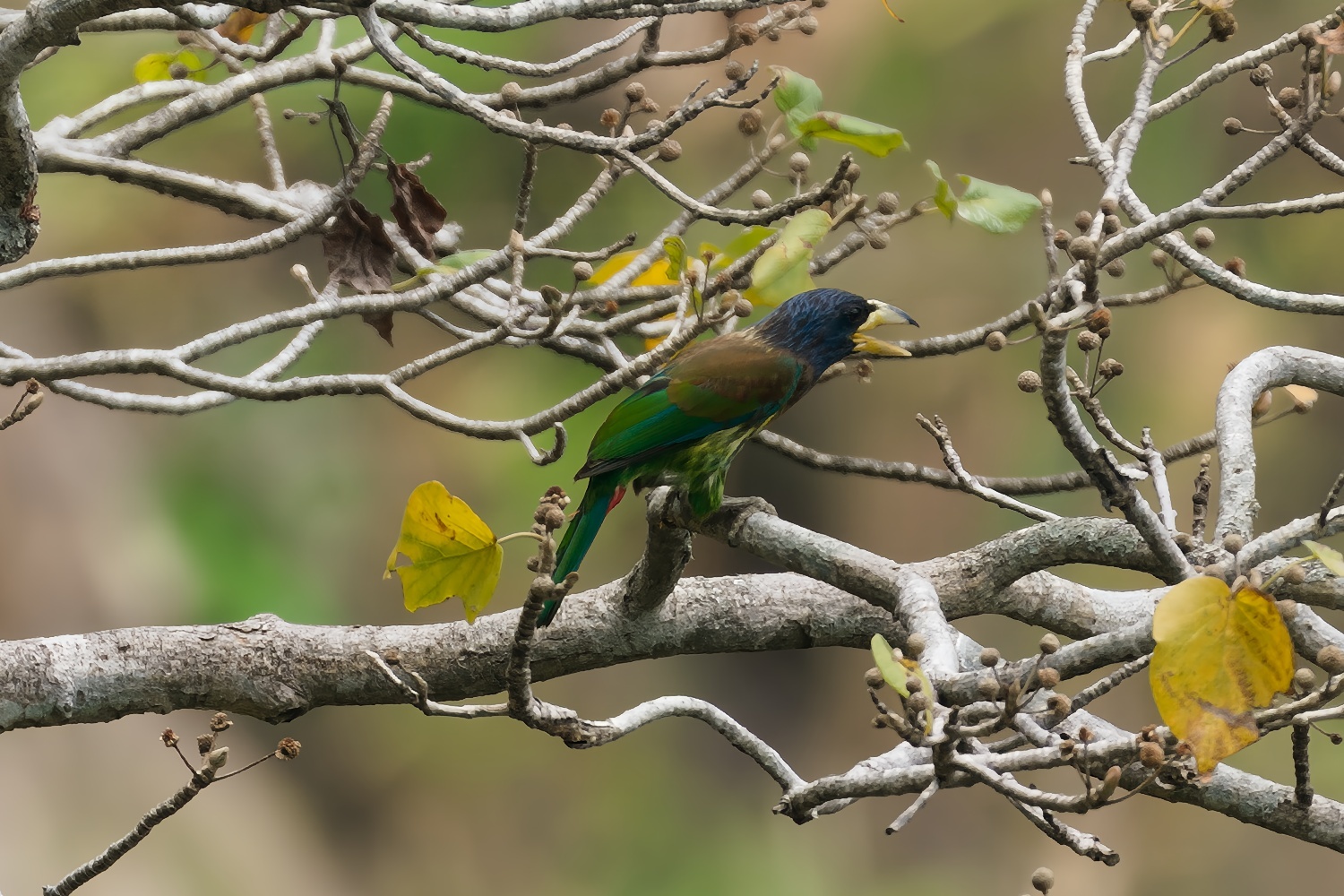
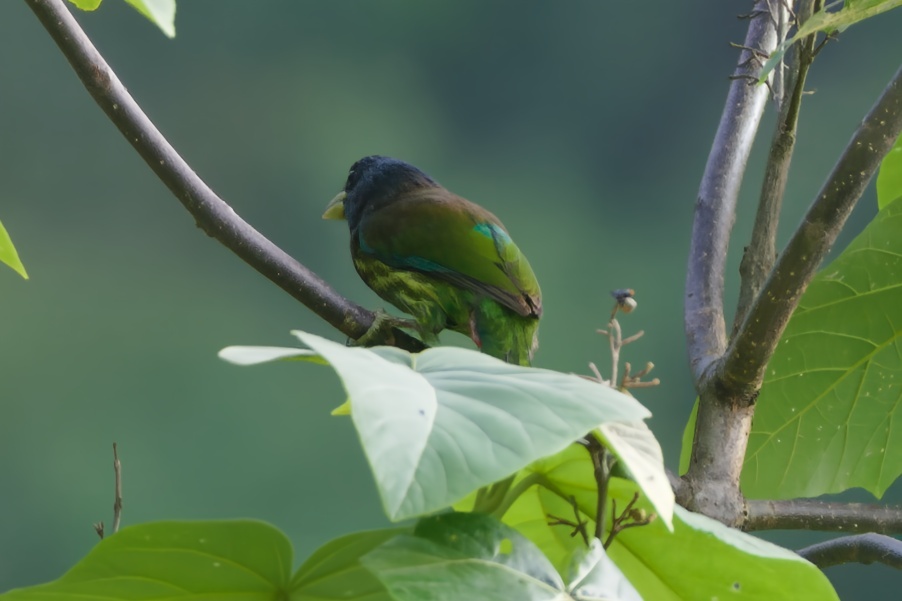
This impressive barbet stands as the largest member of its family, measuring 32-35 centimeters in length and weighing 192-295 grams. The most striking feature is its brilliant blue head, which contrasts sharply with the enormous yellow bill that dominates the face. The overall plumage presents a green coloration, intricately streaked with brown across the body and belly. A diagnostic red vent patch provides a distinctive touch of color at the rear. The combination of size, head coloration, and bill structure immediately distinguishes this species from other barbets in its range.
Identification
The massive size and blue head serve as primary identification features separating this species from all other Asian barbets. The large yellow bill eliminates confusion with smaller barbet species, while the green plumage with brown streaking and red vent patch provides additional distinguishing characteristics. No similar species within its range matches this combination of features, making identification relatively straightforward for experienced observers familiar with regional avifauna.
Distribution & Habitat
The species breeds resident across the Himalayan foothills from northern Pakistan through India, Nepal, and Bhutan, extending into Bangladesh and disjunct populations in Southeast Asia including Laos. Four recognized subspecies occupy distinct geographic zones: the nominate subspecies ranges from central Myanmar through Thailand to Vietnam and China; the western population spans northeastern Pakistan to western Nepal; the central population occupies eastern Nepal to Assam; and the eastern subspecies occurs from Assam and northern Myanmar to northern Thailand and Yunnan in China. This barbet inhabits forested environments from low foothills to 3,000 meters elevation.
Behavior & Ecology
The breeding season spans April through July, when pairs excavate nesting cavities in dead or decaying trees. Both parents share incubation and chick-rearing duties, demonstrating cooperative breeding behavior. Diet consists primarily of fruits supplemented by insects, reflecting the species' role as both a frugivore and predator of forest invertebrates. The vocal repertoire includes a loud, far-carrying territorial call described as 'kay-oh,' a harsh 'keeab' alarm note, and a repetitive 'piou-piou-piou-piou' contact call. These vocalizations serve communication purposes within pairs and territory defense against intruders.
Conservation
The species maintains a Least Concern conservation assessment on the IUCN Red List, a status held since 2004. Its wide geographic distribution across multiple countries contributes to this favorable rating. While population trends have not been precisely quantified, the species appears to maintain stable numbers across much of its extensive range. Primary concerns include ongoing habitat loss from deforestation and forest degradation, though the bird's adaptability to secondary forests and forest edges provides some resilience against these pressures.
Culture
No specific cultural traditions or folklore associations are documented for this species in available sources.
Source: Wikipedia · CC BY-SA 3.0
Taxonomy
- Order
- Piciformes
- Family
- Megalaimidae
- Genus
- Psilopogon
- eBird Code
- grebar1
Vocalizations
Subspecies (5)
-
Psilopogon virens clamator
northeastern India (northeastern Assam), northern Myanmar, southwestern China (western Yunnan), and northwestern Thailand
-
Psilopogon virens indochinensis
northern Vietnam
-
Psilopogon virens magnificus
eastern Nepal to northwestern Myanmar and south-central China
-
Psilopogon virens marshallorum
northeastern Pakistan and northwestern India to western Nepal
-
Psilopogon virens virens
central Myanmar eastward to southeastern China and northern Laos
Data Sources
Species description from Wikipedia, licensed under CC BY-SA 3.0.
Bird images and sounds sourced from GBIF, contributed by citizen scientists worldwide under Creative Commons licenses.
Taxonomy data from AviList 2025.