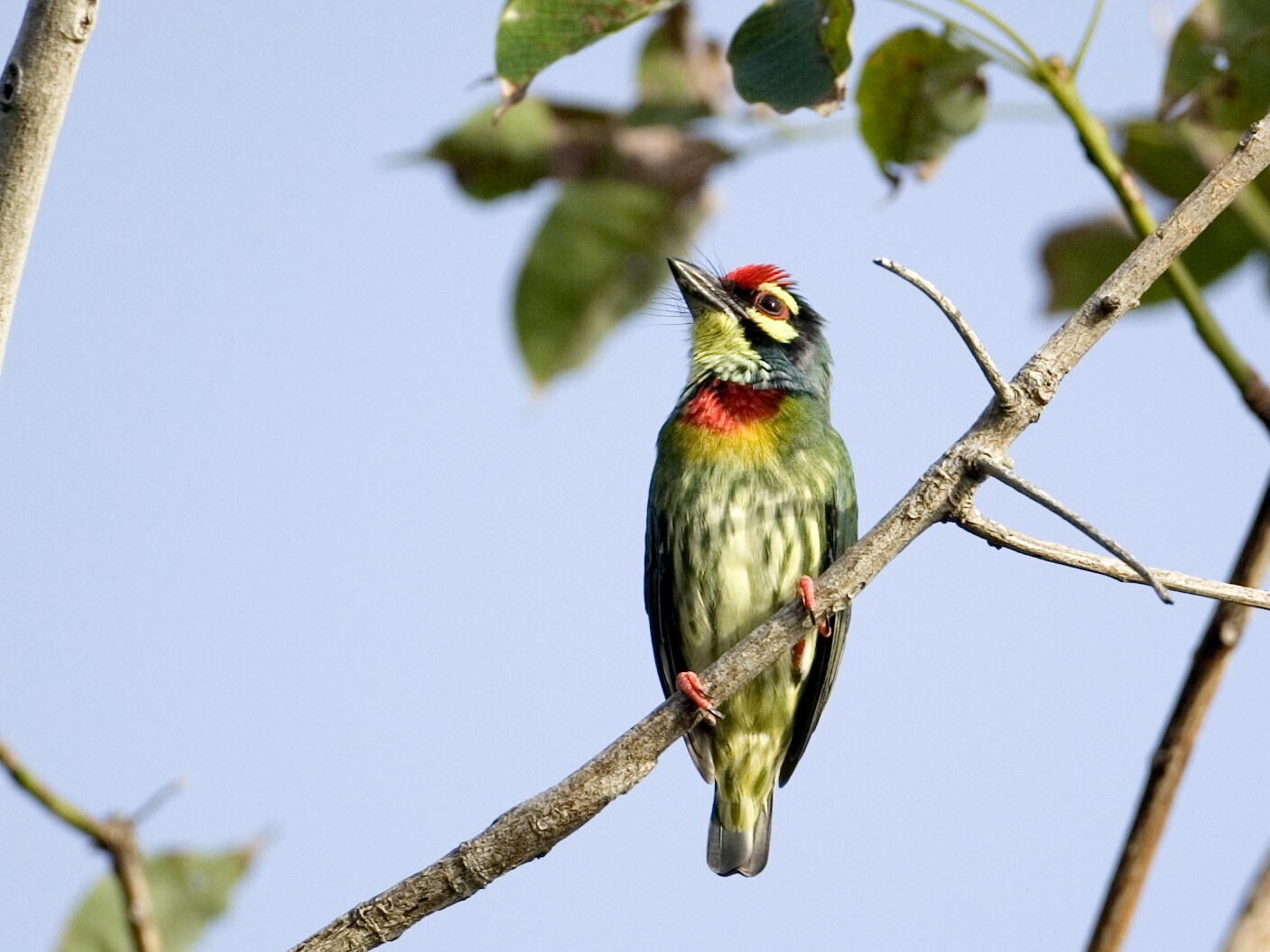
Piciformes / Megalaimidae / Psilopogon
Coppersmith Barbet
Psilopogon haemacephalus · 赤胸拟啄木鸟
Introduction
An Asian barbet resident in the Indian subcontinent and parts of Southeast Asia. It inhabits gardens, groves, and sparse woodland, requiring dead wood for nesting. Predominantly frugivorous, it also consumes insects. Known for a metronomic call resembling a coppersmith striking metal.
Description
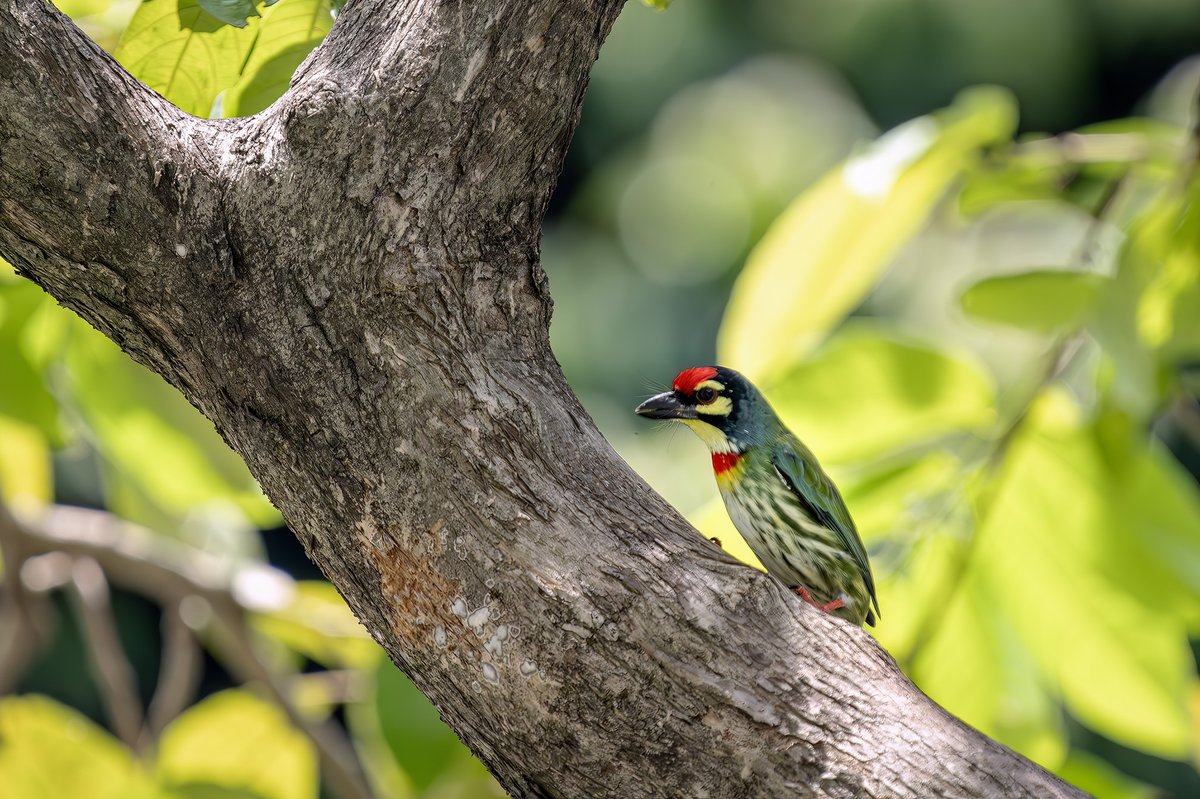
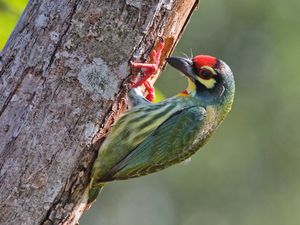
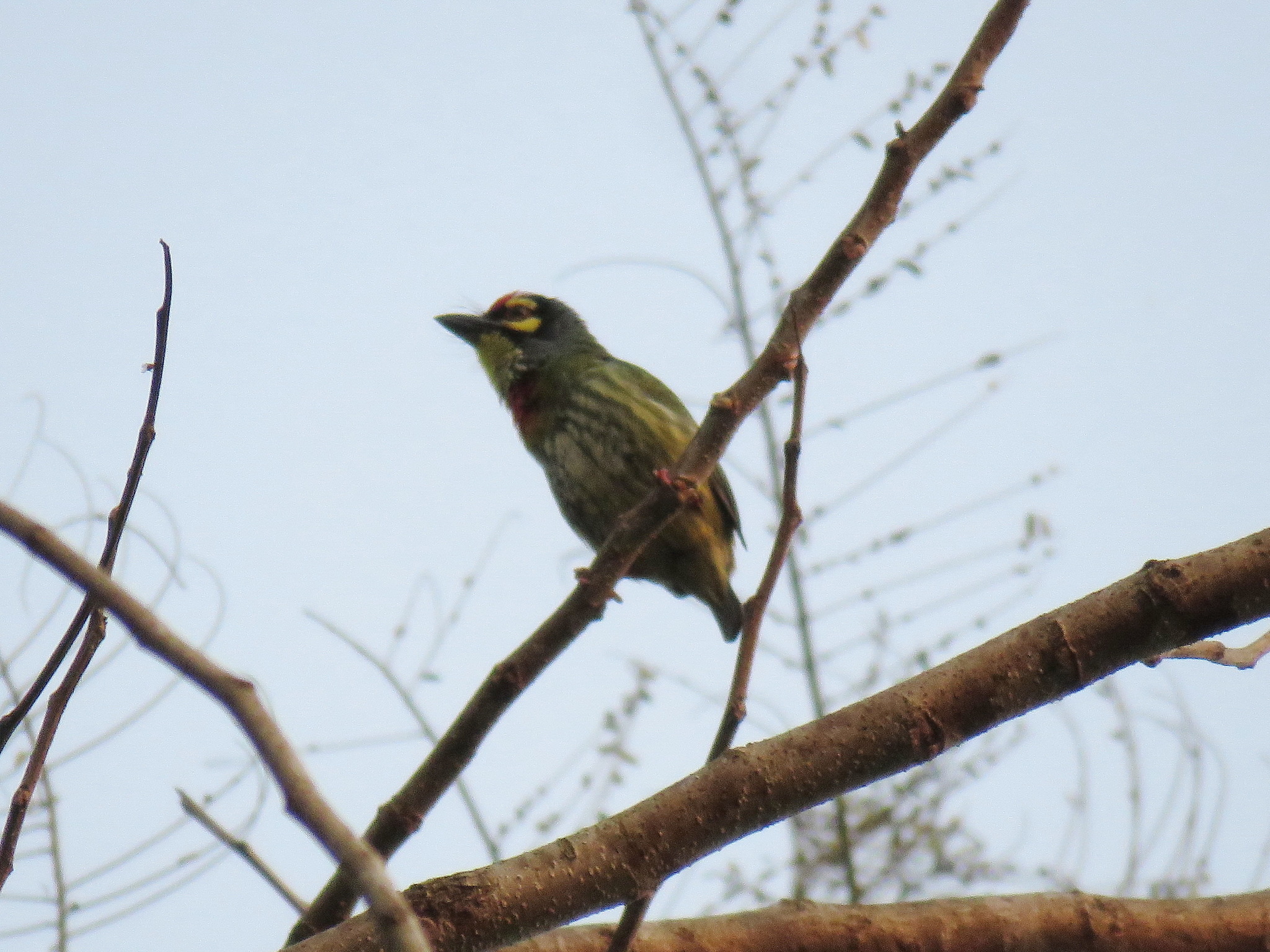
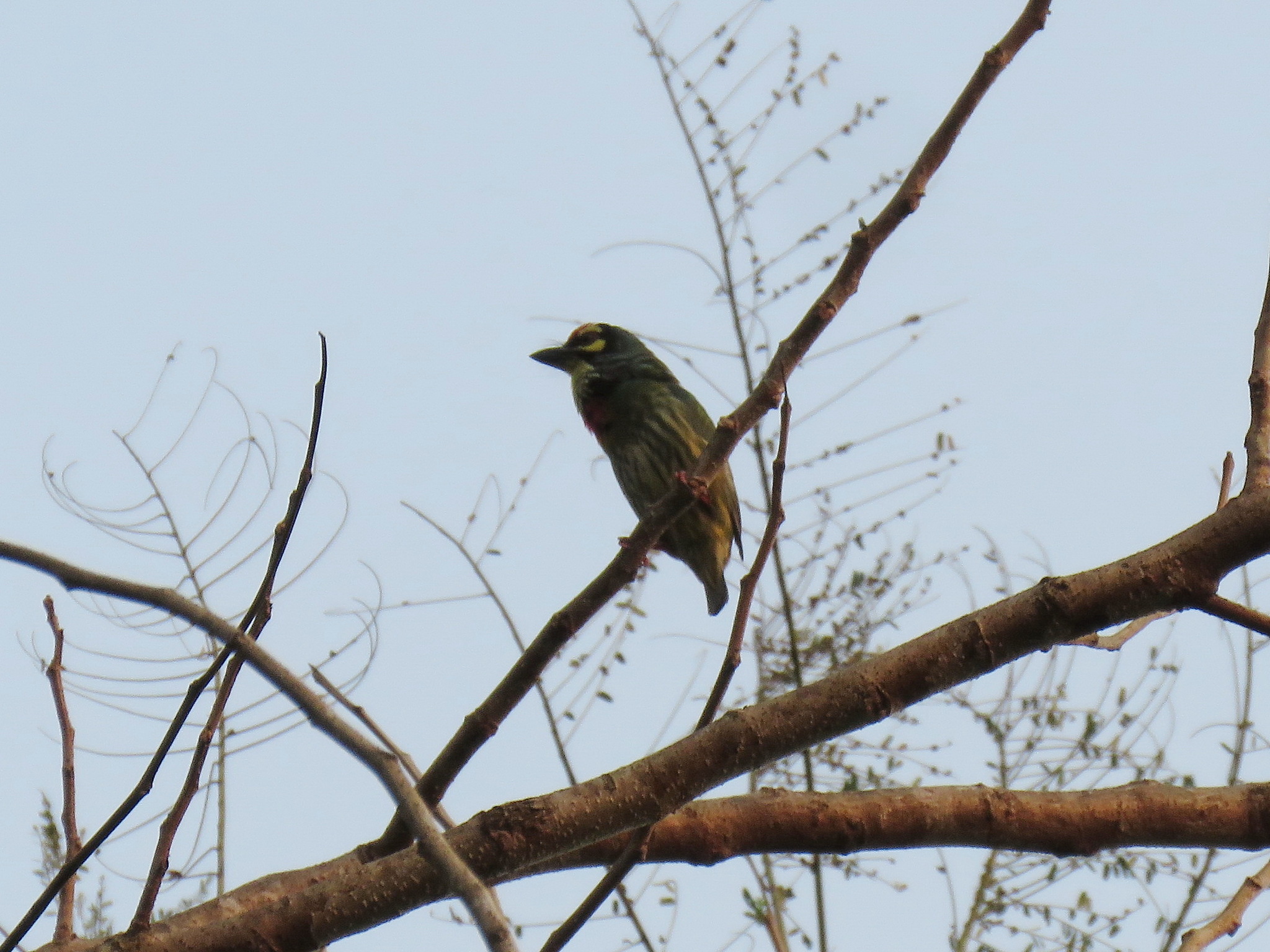
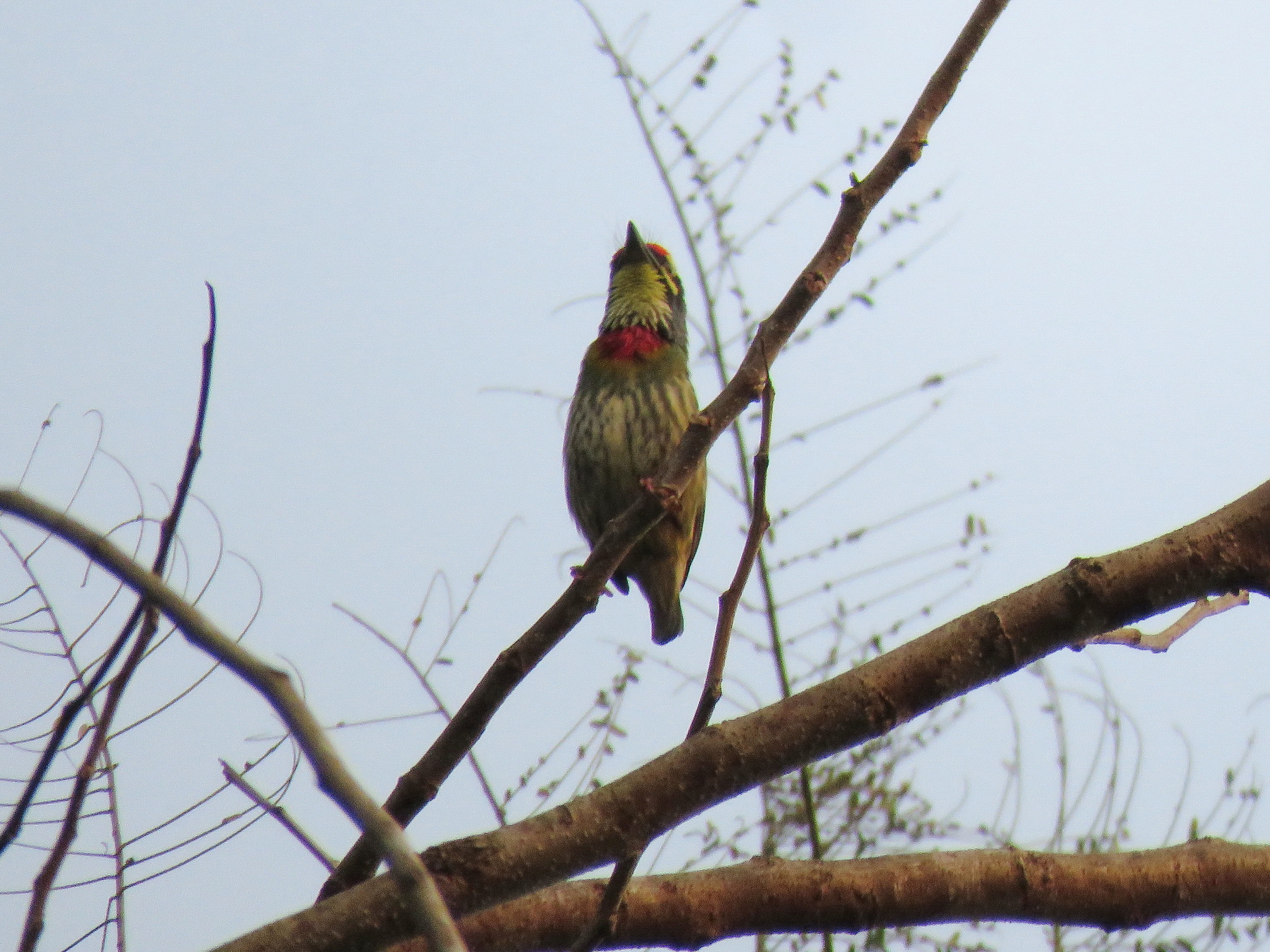
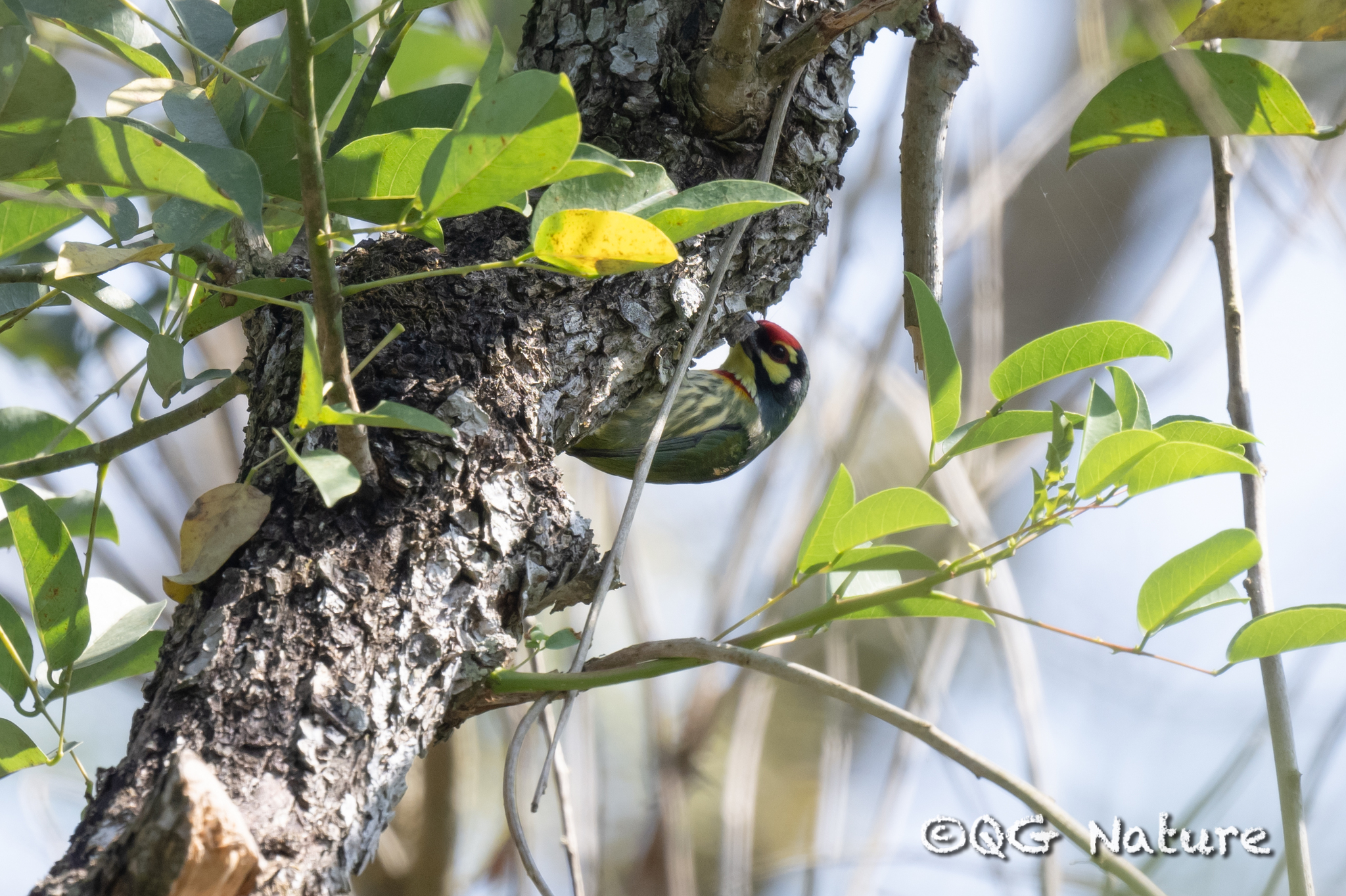
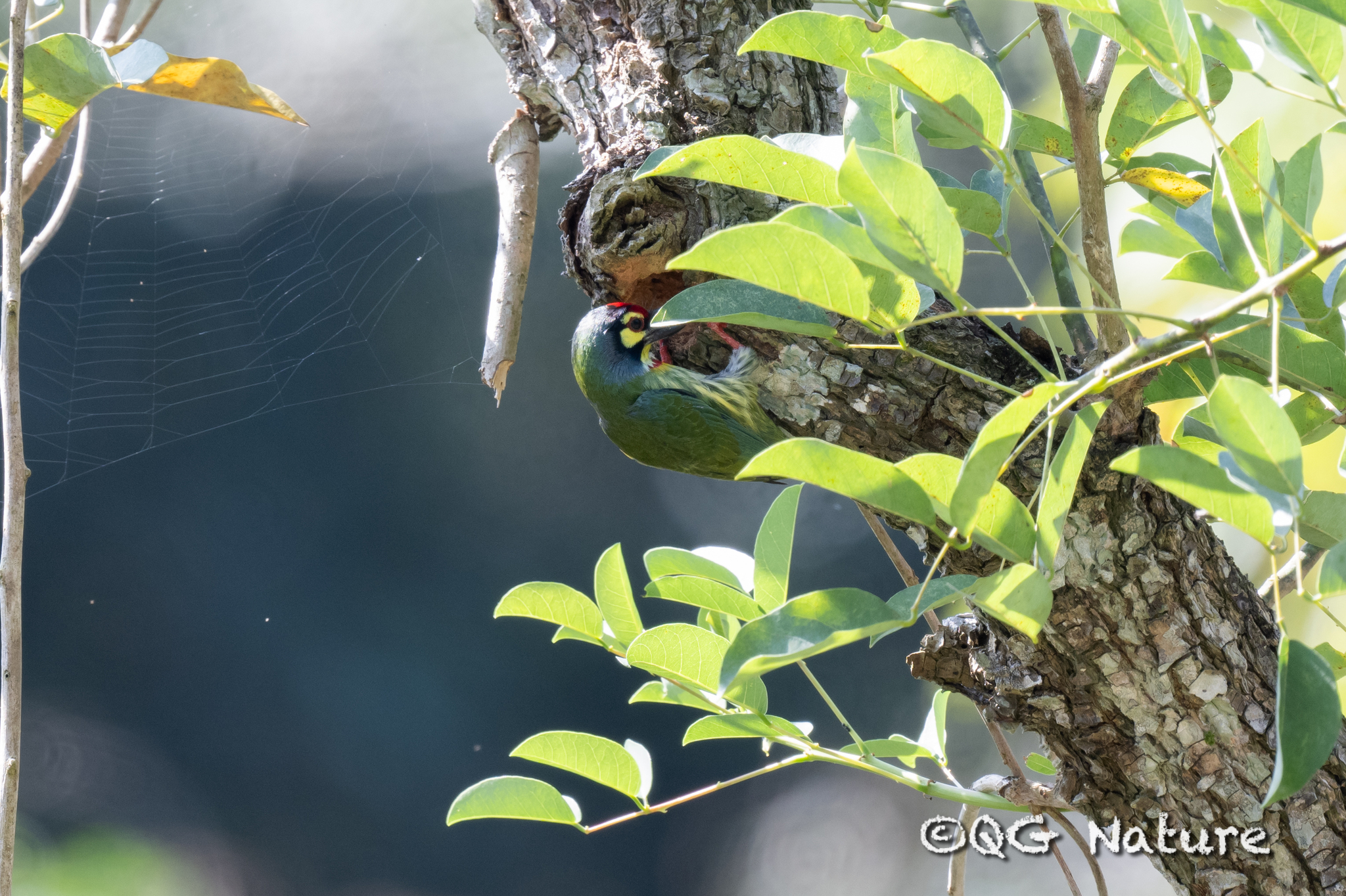
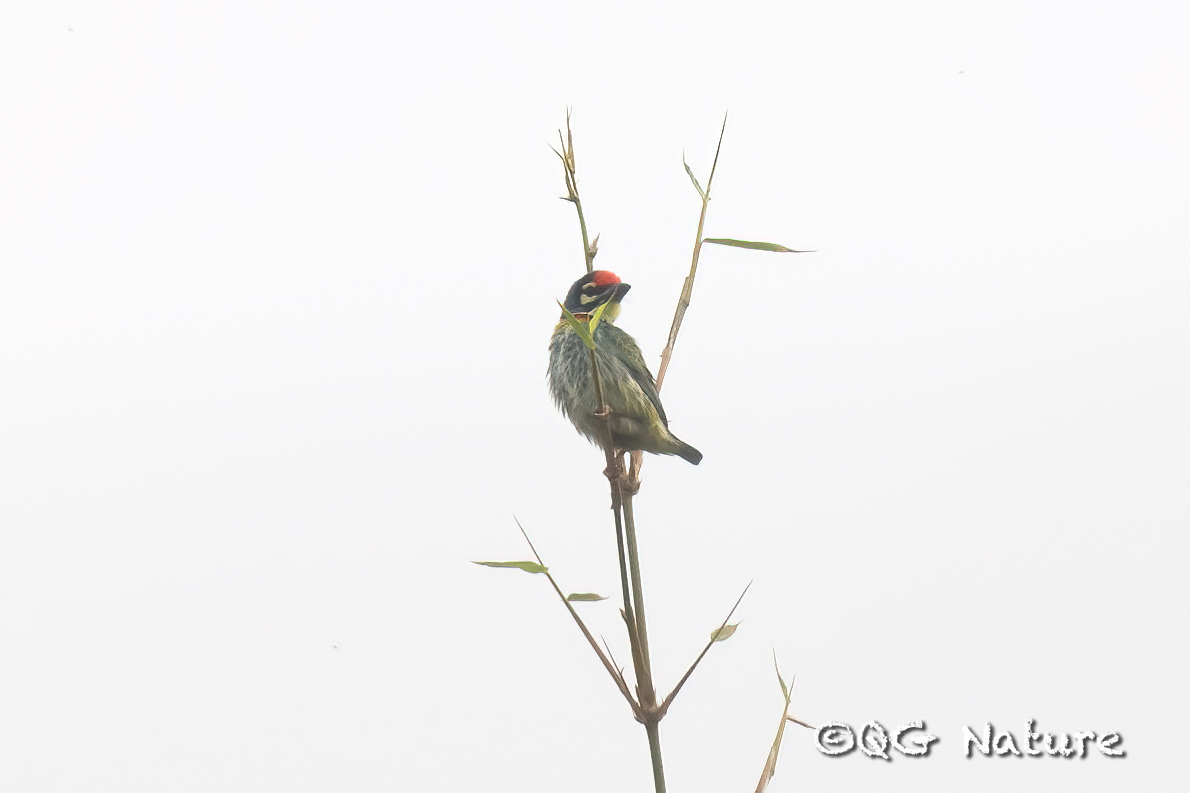
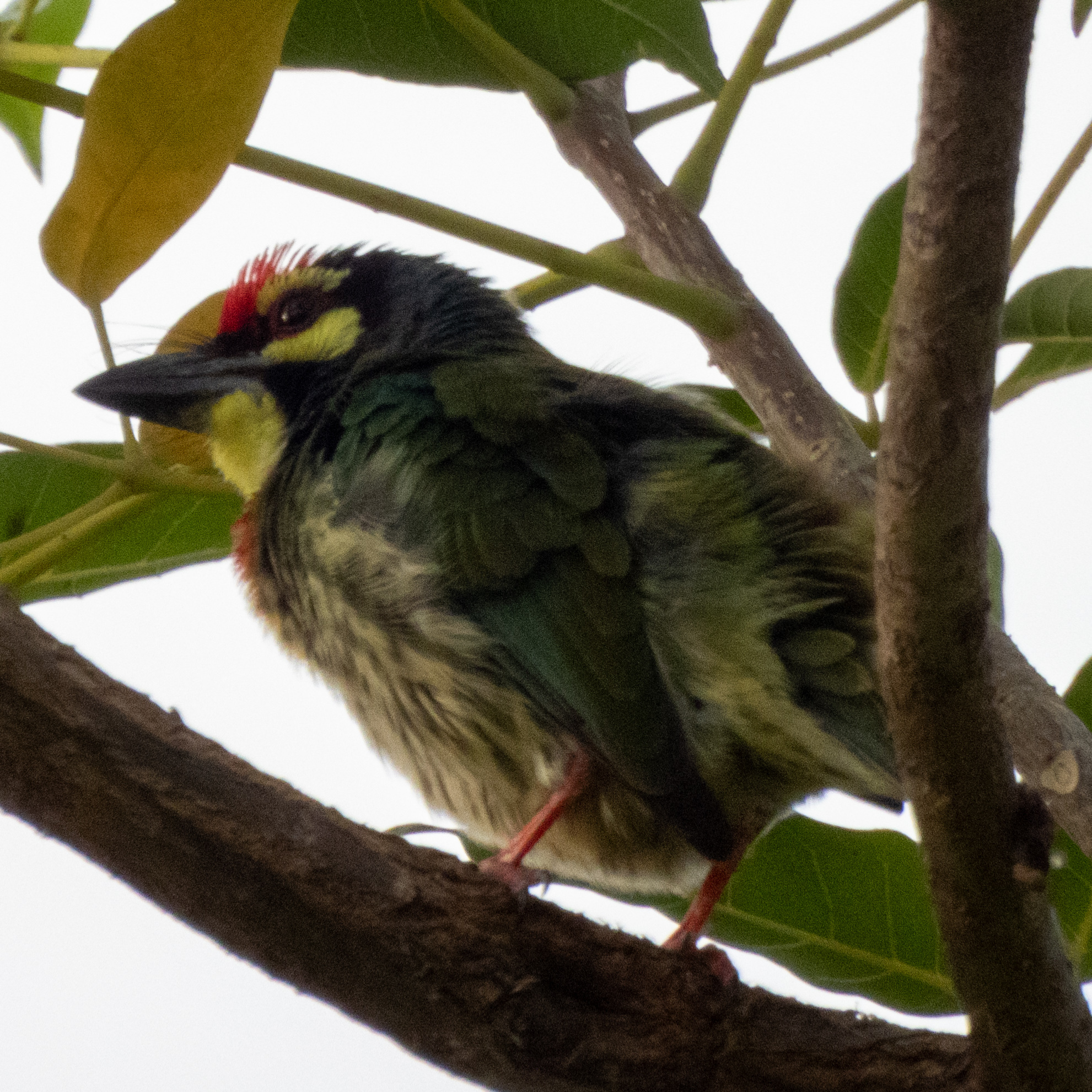
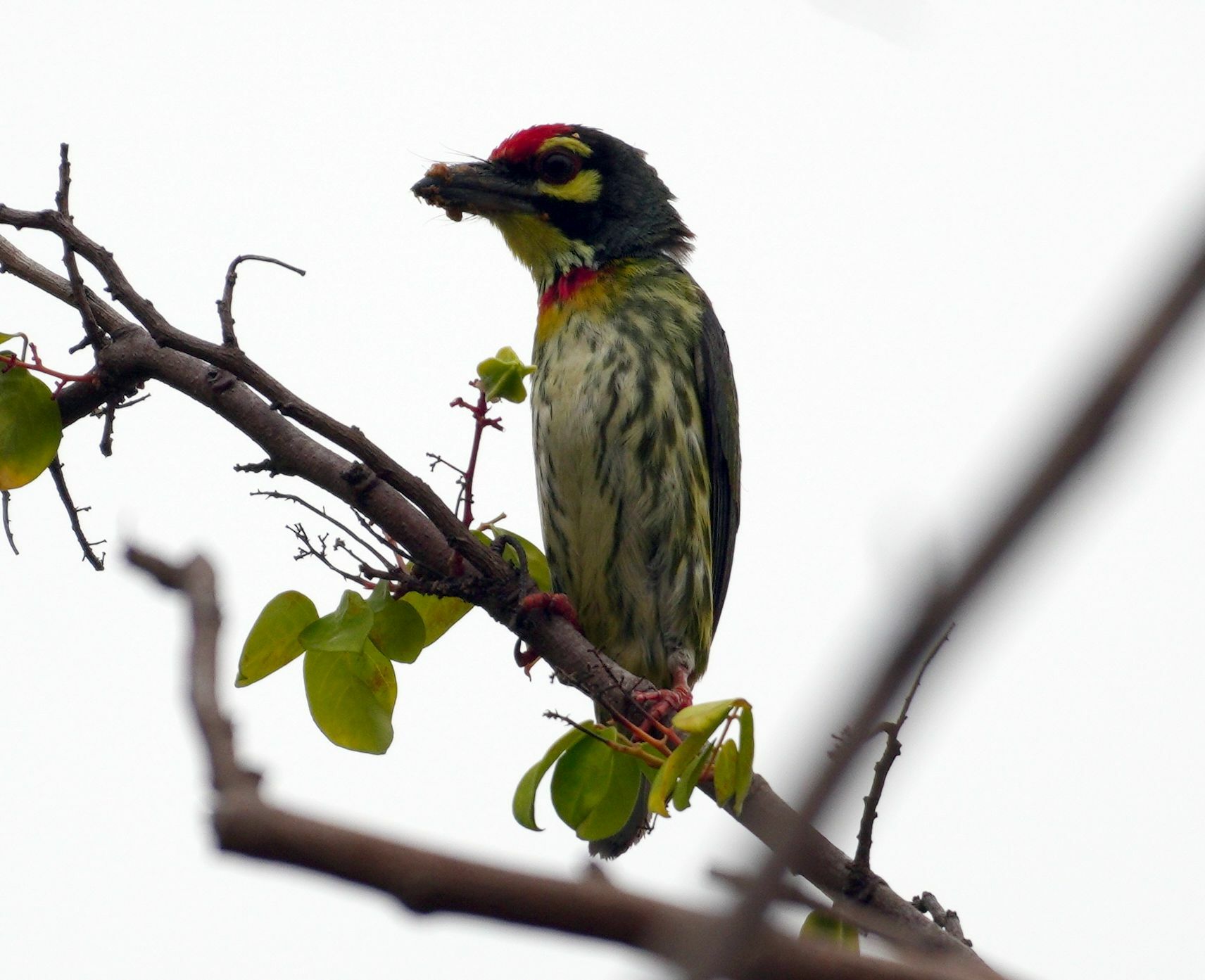
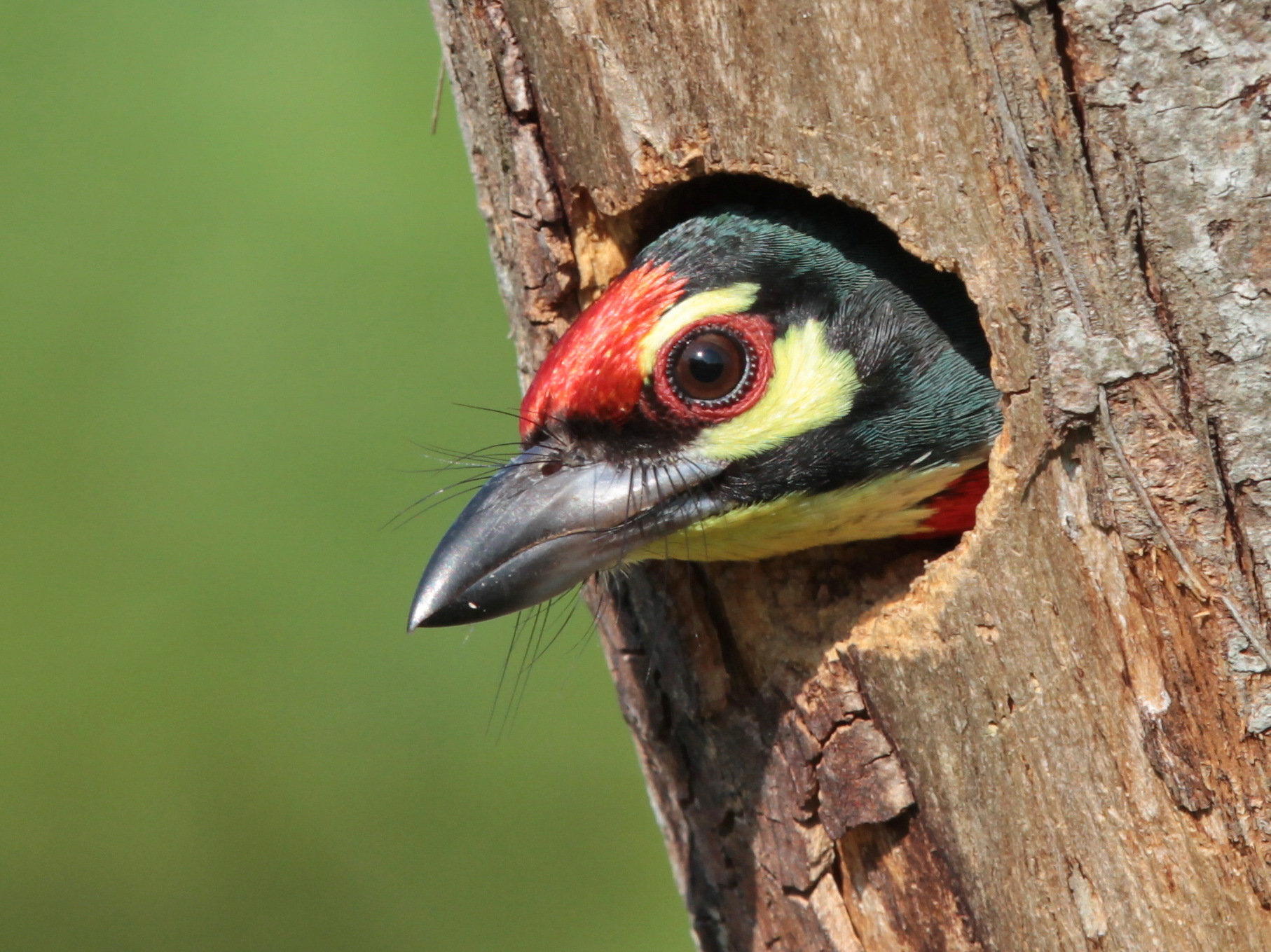
Green body with a red head, yellow cheeks, and yellow throat. Underparts are streaked in grey and black. Upper back may appear bluish due to feather wear during nesting season. Length is 15–17 cm (5.9–6.7 in) and weight is 30–52.6 g (1.06–1.86 oz).
Identification
Key marks include crimson forehead and throat, yellow cheeks, and green plumage. Flight is straight with rapid flaps. Distinctive vocalization is a loud, metallic 'tuk…tuk…tuk' repeated monotonously at 108–121 beats per minute, with up to 204 notes. The beak remains shut during calling while a throat patch inflates.
Distribution & Habitat
Resident in the Indian subcontinent and Southeast Asia. Subspecies occur in Luzon, Mindoro, northeastern Pakistan to Sri Lanka, China, Vietnam, Singapore, Java, Bali, Panay, Guimaras, Negros, Sumatra, Mindanao, Samar, Catanduanes, Biliran, Leyte, Cebu, and Tablas Island. Inhabits gardens, groves, sparse woodland, and areas with dead wood. Found below 1,200 m in Palni Hills and up to 910 m in northern Himalayan valleys. Rare in northwestern India and Assam wet forests.
Behavior & Ecology
Lives solitary or in small groups; larger parties gather in fruiting Ficus trees. Suns on bare top branches. Diet consists of banyan, peepul, wild figs, drupes, berries, flower petals, and insects caught in aerial sallies. Consumes 1.5 to 3 times its body weight in berries daily. Competes for cavities; evicted by blue-throated barbets and subject to kleptoparasitism by red-vented bulbuls. Roosts in cavities. Breeding occurs mainly February–April in India and December–September in Sri Lanka. Both sexes excavate nests in horizontal branches, incubate eggs, and raise often two broods. Female lays 3–4 eggs; incubation estimated at two weeks. Courtship includes singing, throat puffing, head bobbing, tail flicking, ritual feeding, and allopreening.
Culture
Named for its metronomic call that sounds similar to a coppersmith striking metal with a hammer.
Source: Wikipedia · CC BY-SA 3.0
Taxonomy
- Order
- Piciformes
- Family
- Megalaimidae
- Genus
- Psilopogon
Vocalizations
Subspecies (9)
-
Psilopogon haemacephalus cebuensis
Cebu (central Philippines)
Data Sources
Species description from Wikipedia, licensed under CC BY-SA 3.0.
Bird images and sounds sourced from GBIF, contributed by citizen scientists worldwide under Creative Commons licenses.
Taxonomy data from AviList 2025.