Coppersmith Barbet
Psilopogon haemacephalus
赤胸拟啄木鸟
Introduction
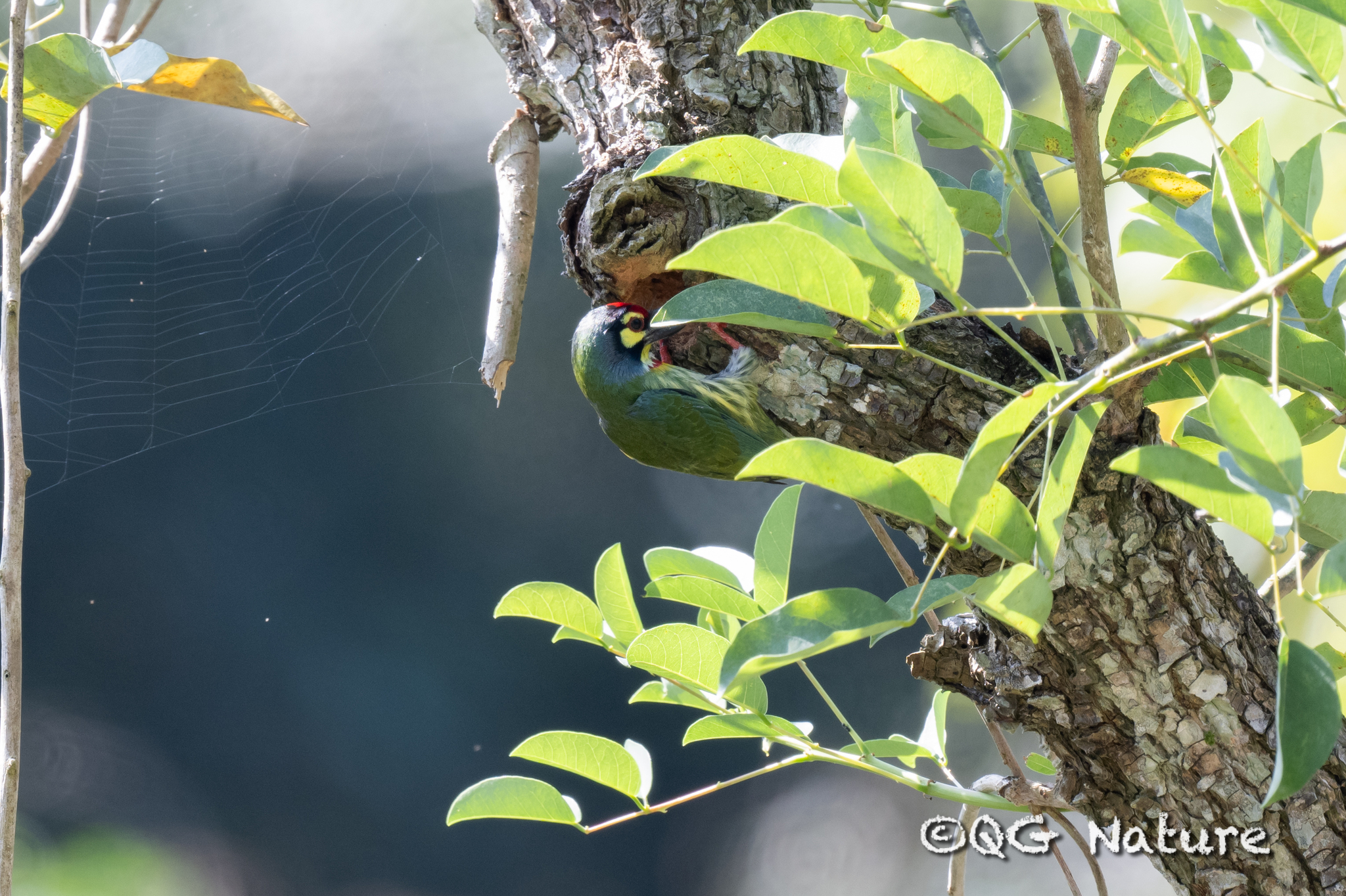
Psilopogon haemacephalus is an Asian barbet species with crimson forehead and throat. It is resident across the Indian subcontinent and parts of Southeast Asia. Its distinctive features include a metronomic, metallic call resembling a coppersmith striking metal, and its method of excavating nest holes in tree branches. It inhabits gardens, groves, and sparse woodland where dead wood suitable for nest excavation is available. Conservation status is not assessed in the source text.
Description
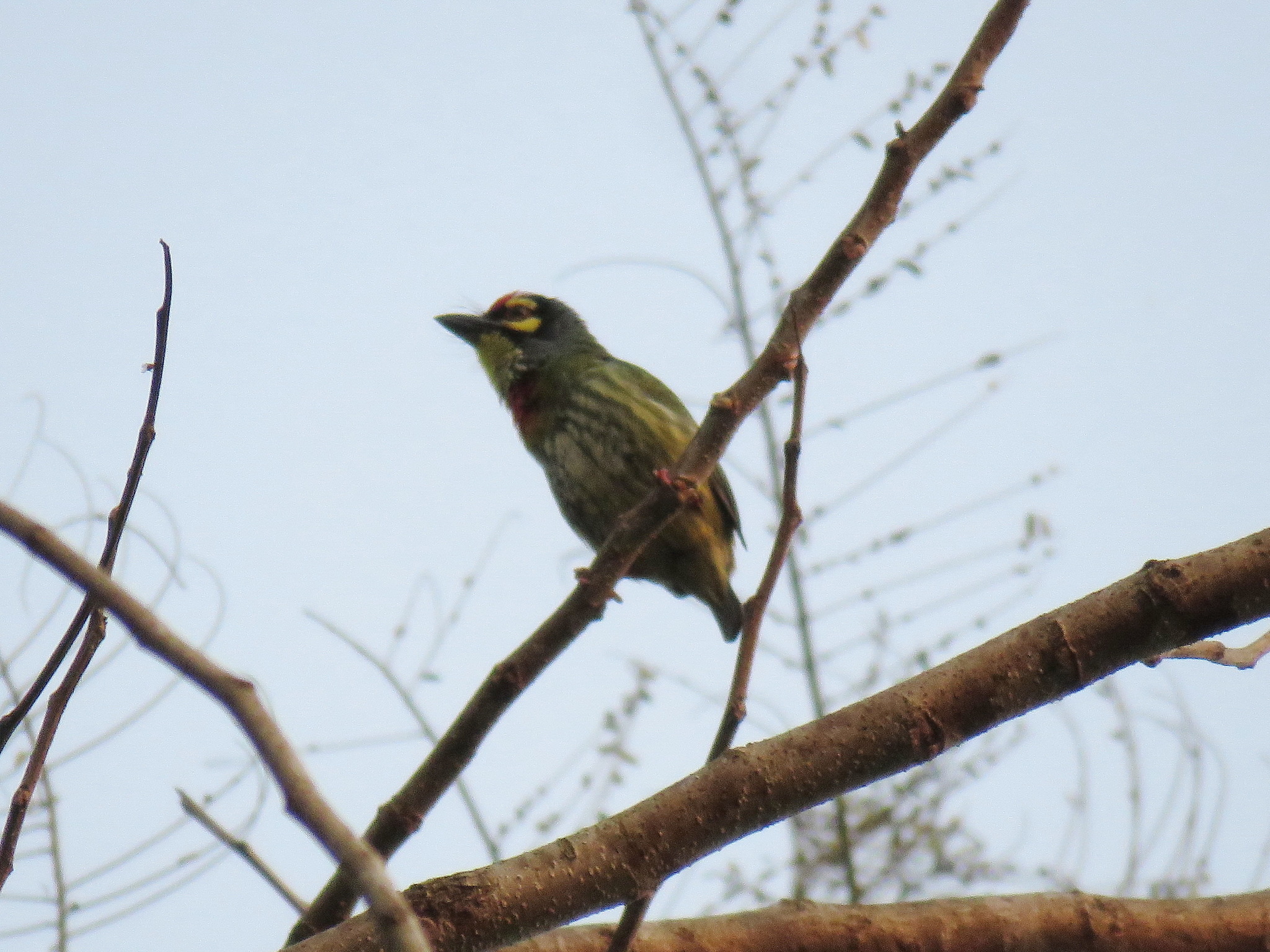
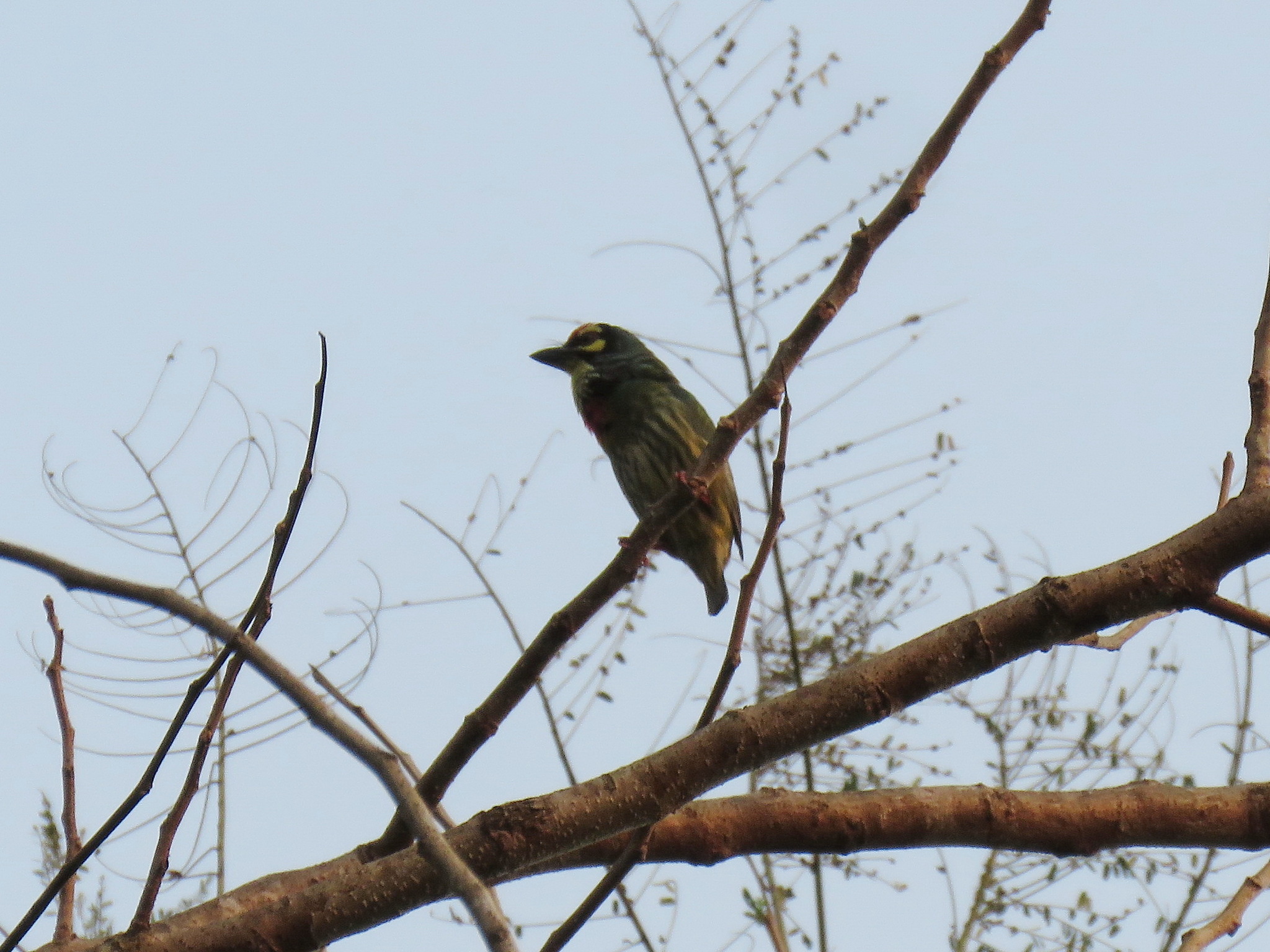
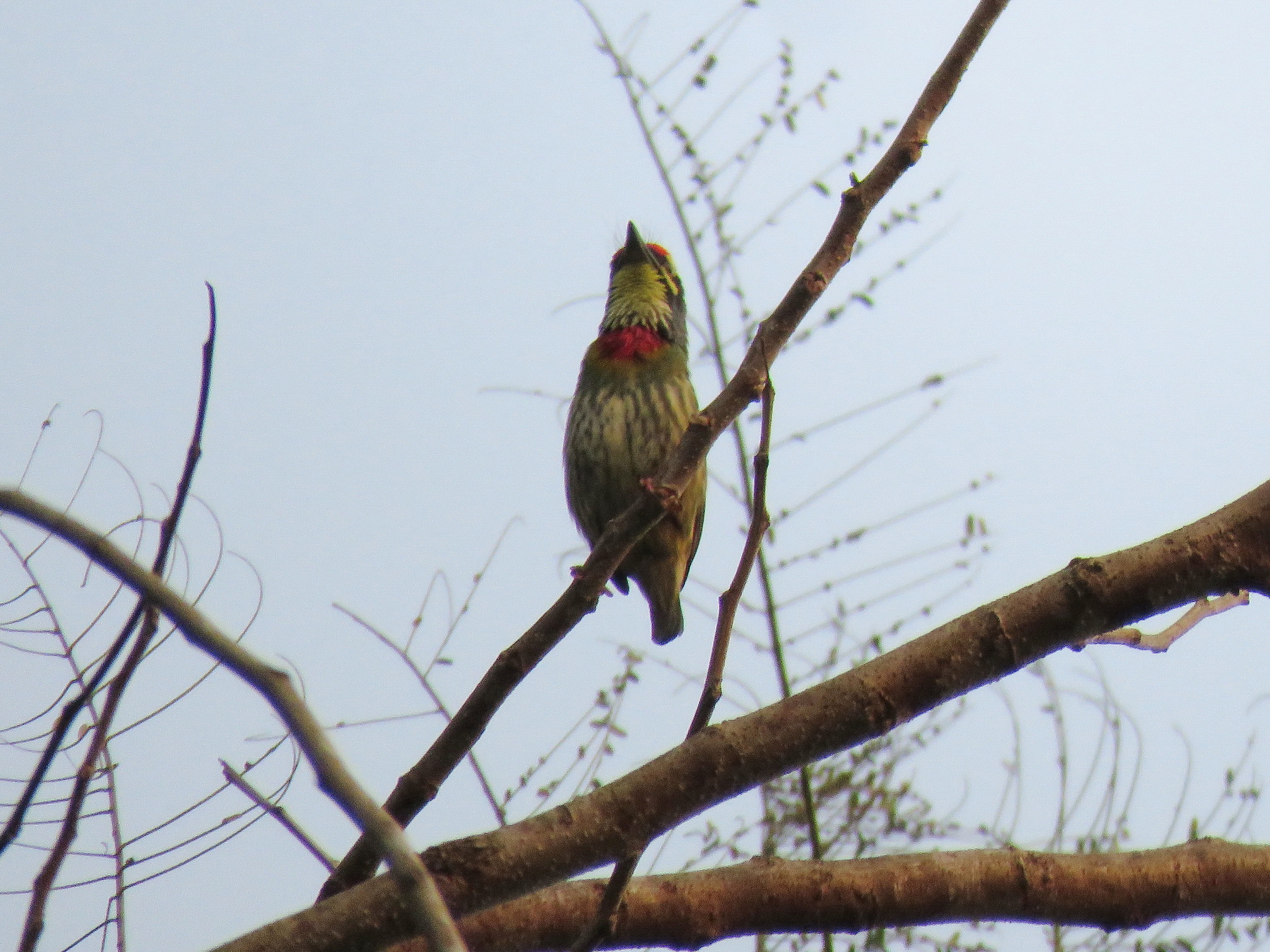
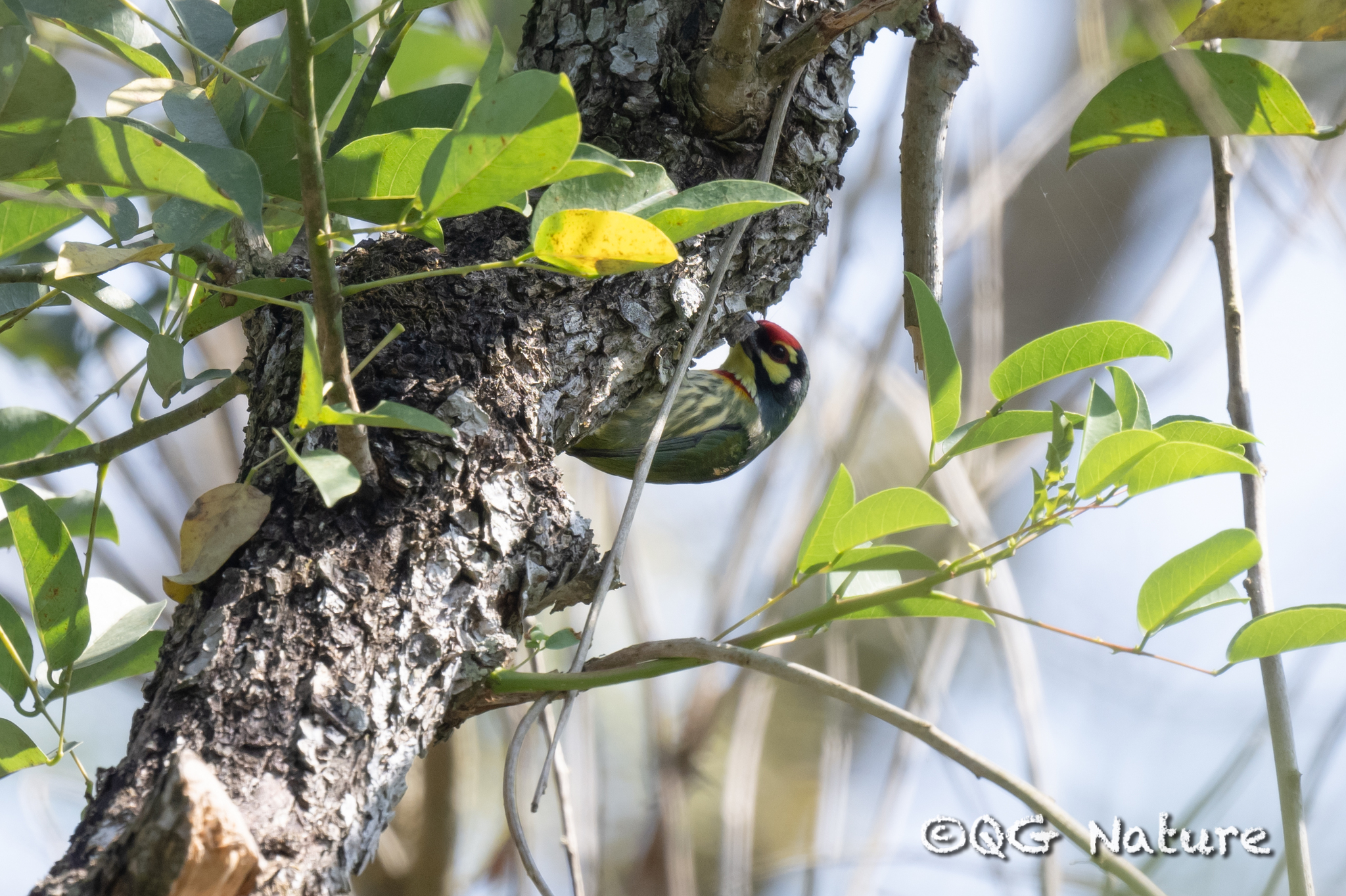
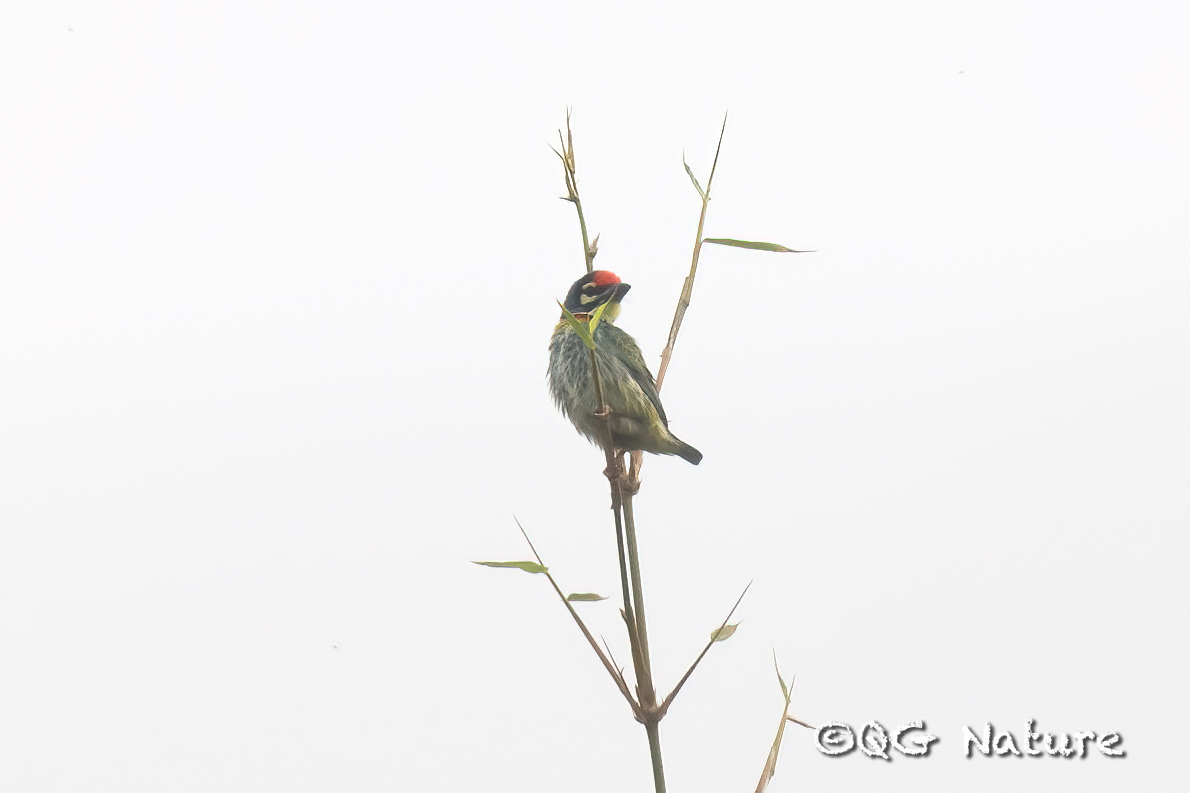
This barbet has a green body with a red head, yellow cheeks, and a yellow throat. The underparts are streaked in grey and black. During the nesting season, feather wear on the upper back can cause a bluish appearance. It measures 15–17 cm in length and weighs 30–52.6 g.
Identification
The combination of red head, yellow face patches, and streaked underparts distinguishes this species from larger barbets in overlapping ranges. In the Western Ghats, it overlaps with the Malabar barbet but can be distinguished by its smaller size and different plumage pattern. The metallic, rhythmic call is a key identifying feature.
Distribution & Habitat
This resident bird inhabits gardens, groves, and sparse woodland throughout its range. In the Palni Hills it occurs below 1,200 m elevation, and in northern India it inhabits outer Himalayan valleys up to 910 m. It is rare in northwestern Indian states and wet forests in Assam. The presence of dead wood suitable for nest excavation is an important habitat requirement.
Behavior & Ecology
The diet consists predominantly of banyan, peepul, and wild figs, drupes, berries, and flower petals, with occasional insects taken in aerial sallies. It consumes 1.5 to 3 times its body weight in berries daily. It lives solitarily or in small groups. The call is a loud metallic 'tuk' repeated 108–121 times per minute, sometimes up to 204 notes. Breeding occurs February to April in India and December to September in Sri Lanka. Both sexes excavate nest cavities and raise two broods. The female lays three or four eggs and incubation lasts about two weeks.
Conservation
No IUCN assessment or population estimates are provided. Known mortality factors include predation and collisions with urban structures such as white walls. Pesticide poisoning has been recorded as a threat.
Culture
The common name derives from the metallic call that resembles a coppersmith striking metal with a hammer. The species is also known as the crimson-breasted barbet.
Source: Wikipedia · CC BY-SA 3.0
Taxonomy
- Order
- Piciformes
- Family
- Megalaimidae
- Genus
- Psilopogon
- eBird Code
- copbar1
Vocalizations
Subspecies (9)
-
Psilopogon haemacephalus cebuensis
Cebu (central Philippines)
-
Psilopogon haemacephalus celestinoi
Samar, Leyte, Biliran, and Catanduanes (east-central Philippines)
-
Psilopogon haemacephalus delicus
Sumatra
-
Psilopogon haemacephalus haemacephalus
Luzon and Mindoro (northern Philippines)
-
Psilopogon haemacephalus homochroa
Masbate, Romblon and Tablas (west-central Philippines); possibly Palawan
-
Psilopogon haemacephalus indicus
northeastern Pakistan to southern China, southward to Sri Lanka, Singapore, and Vietnam
-
Psilopogon haemacephalus intermedius
Guimaras, Negros, Panay, Calagayan, and Pan de Azucar (central Philippines)
-
Psilopogon haemacephalus mindanensis
Mindanao (southern Philippines)
-
Psilopogon haemacephalus roseus
Java and Bali
Data Sources
Species description from Wikipedia, licensed under CC BY-SA 3.0.
Bird images and sounds sourced from GBIF, contributed by citizen scientists worldwide under Creative Commons licenses.
Taxonomy data from AviList 2025.