Piciformes / Megalaimidae / Psilopogon
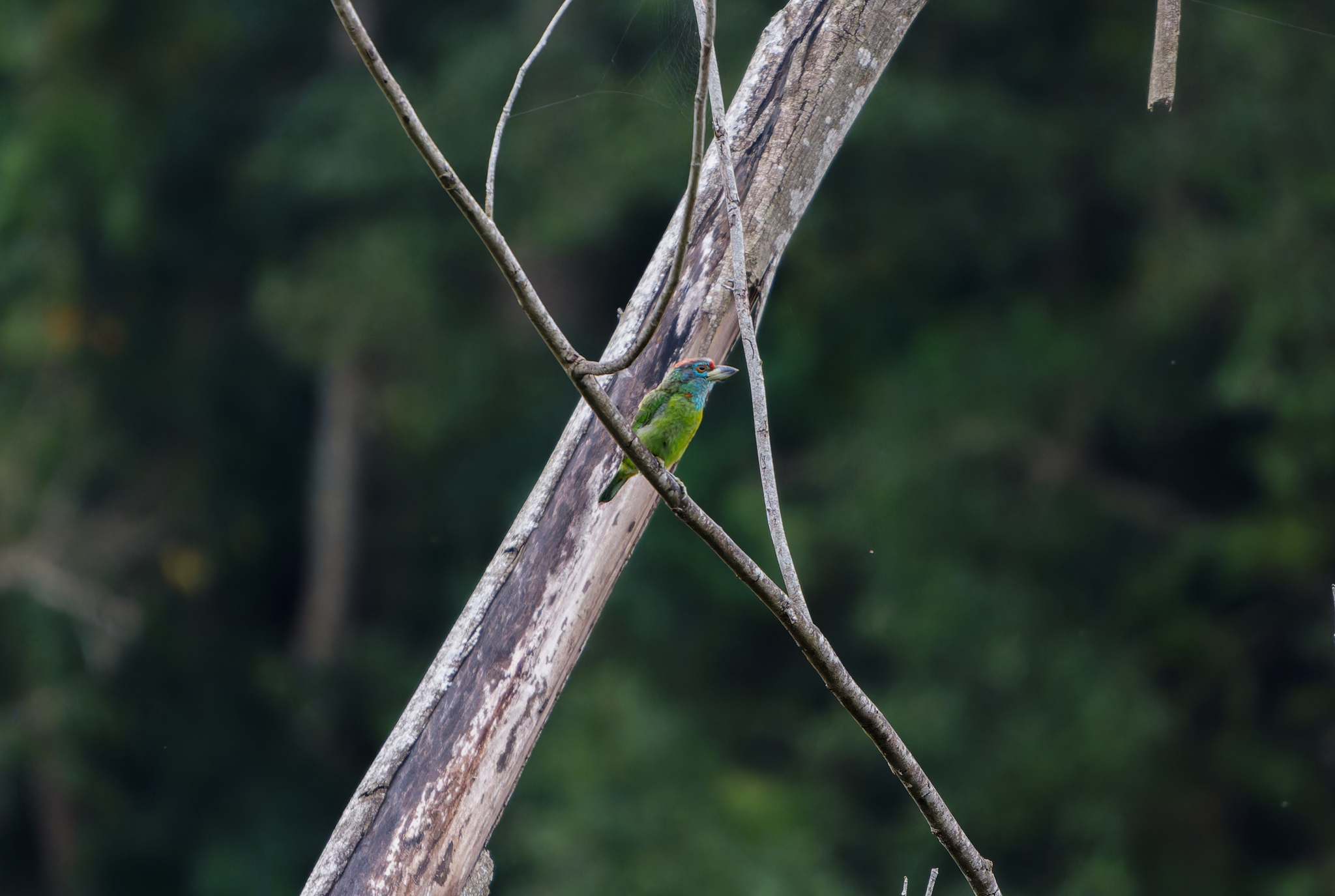
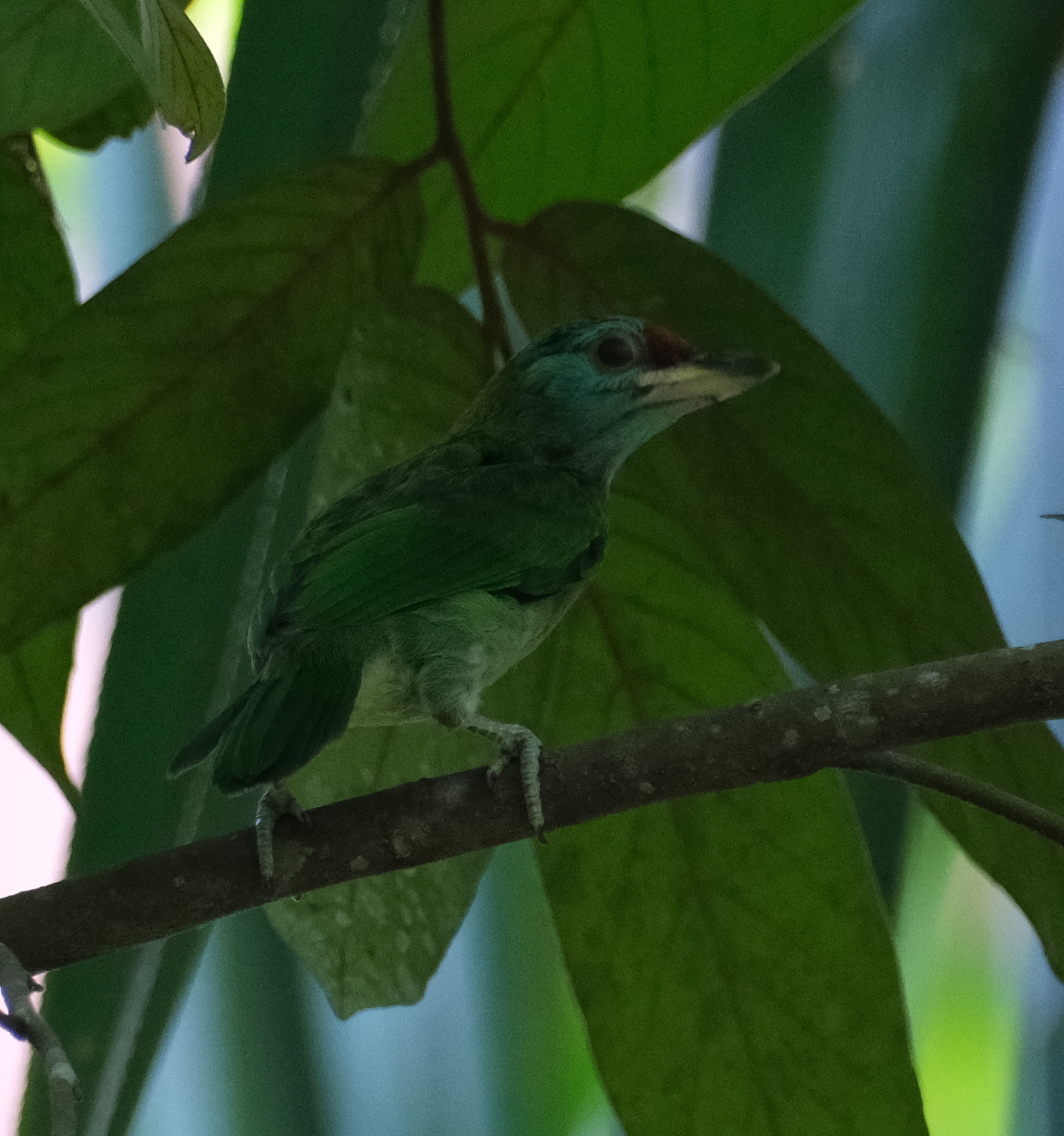
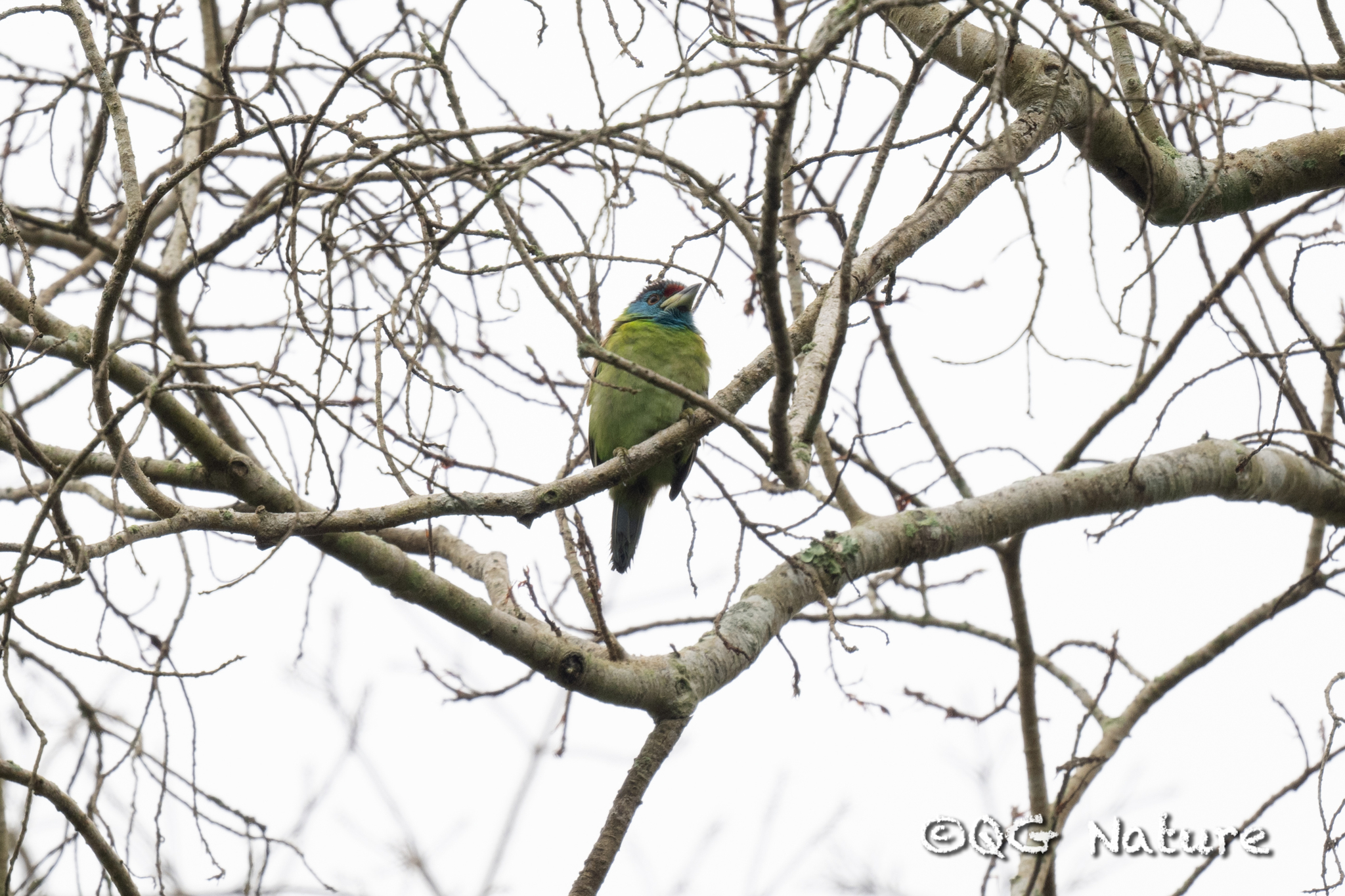
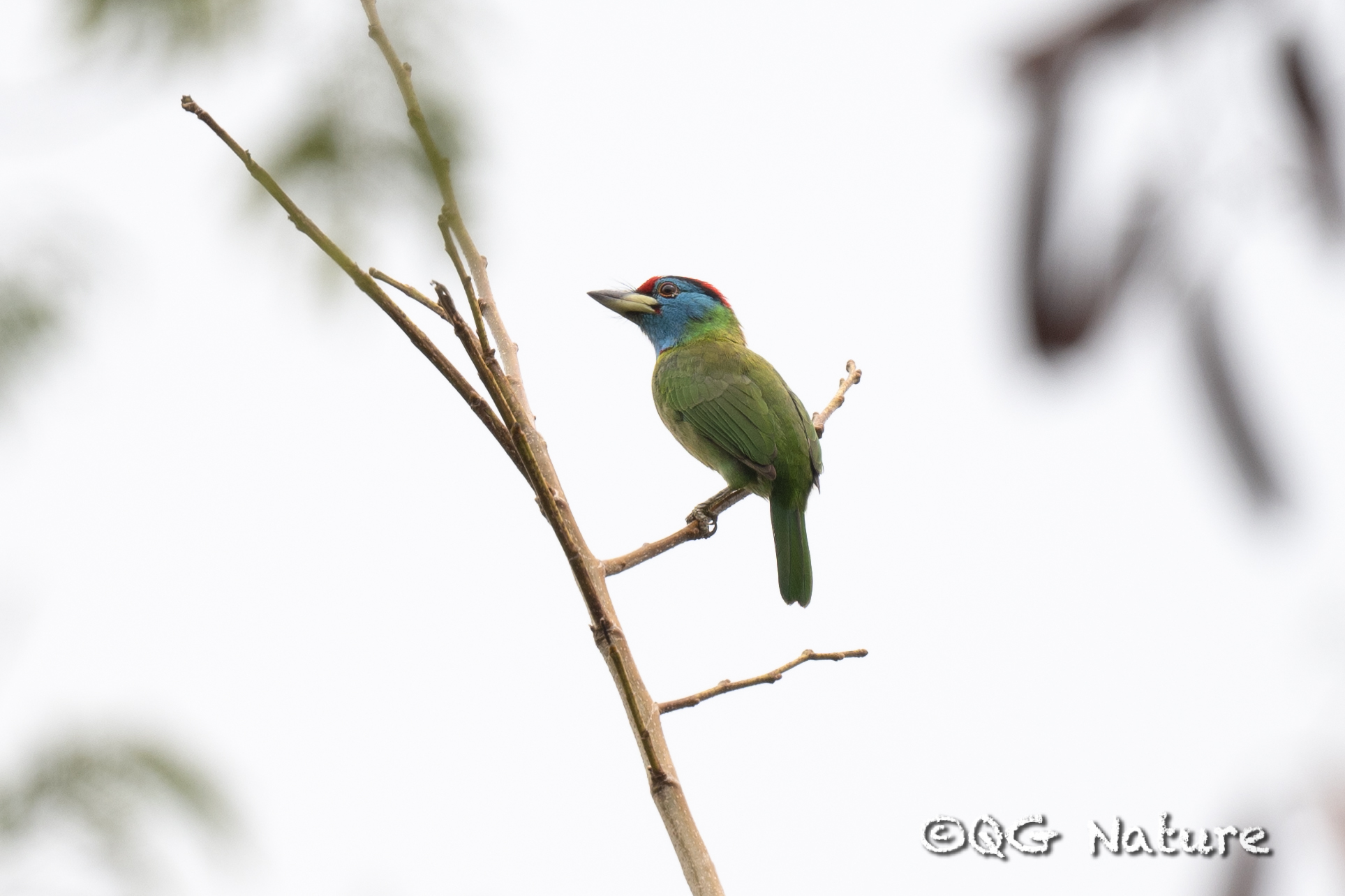
Blue-throated Barbet
Psilopogon asiaticus · 蓝喉拟啄木鸟
Introduction
A green Asian barbet native to the foothills of the Himalayas and Southeast Asia. It inhabits lowland and montane forests at elevations of 200–2,000 m (660–6,560 ft), frequenting fruiting trees. Distinctive for its loud, continual calls which aid detection despite cryptic green plumage. Classified as Least Concern on the IUCN Red List with a stable population.
Description
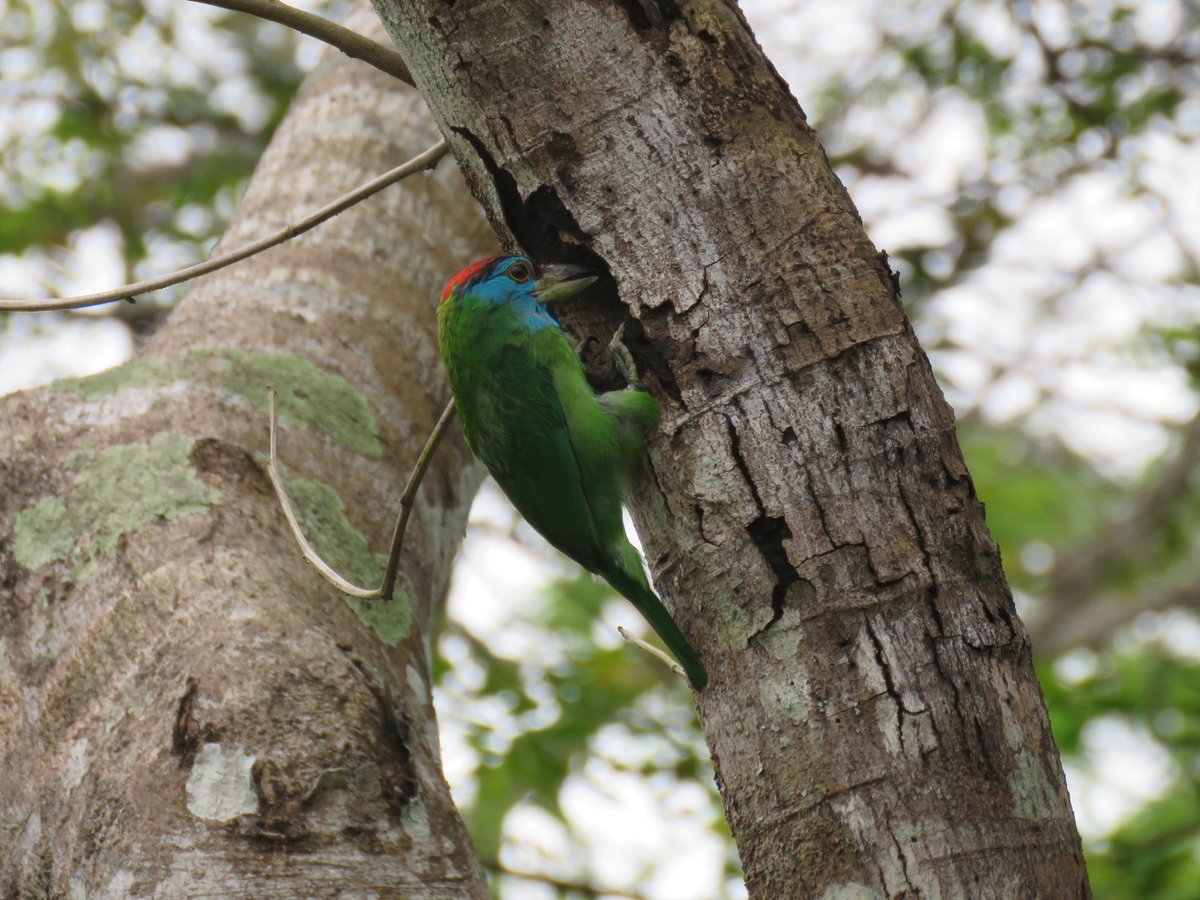
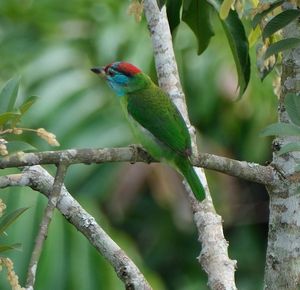
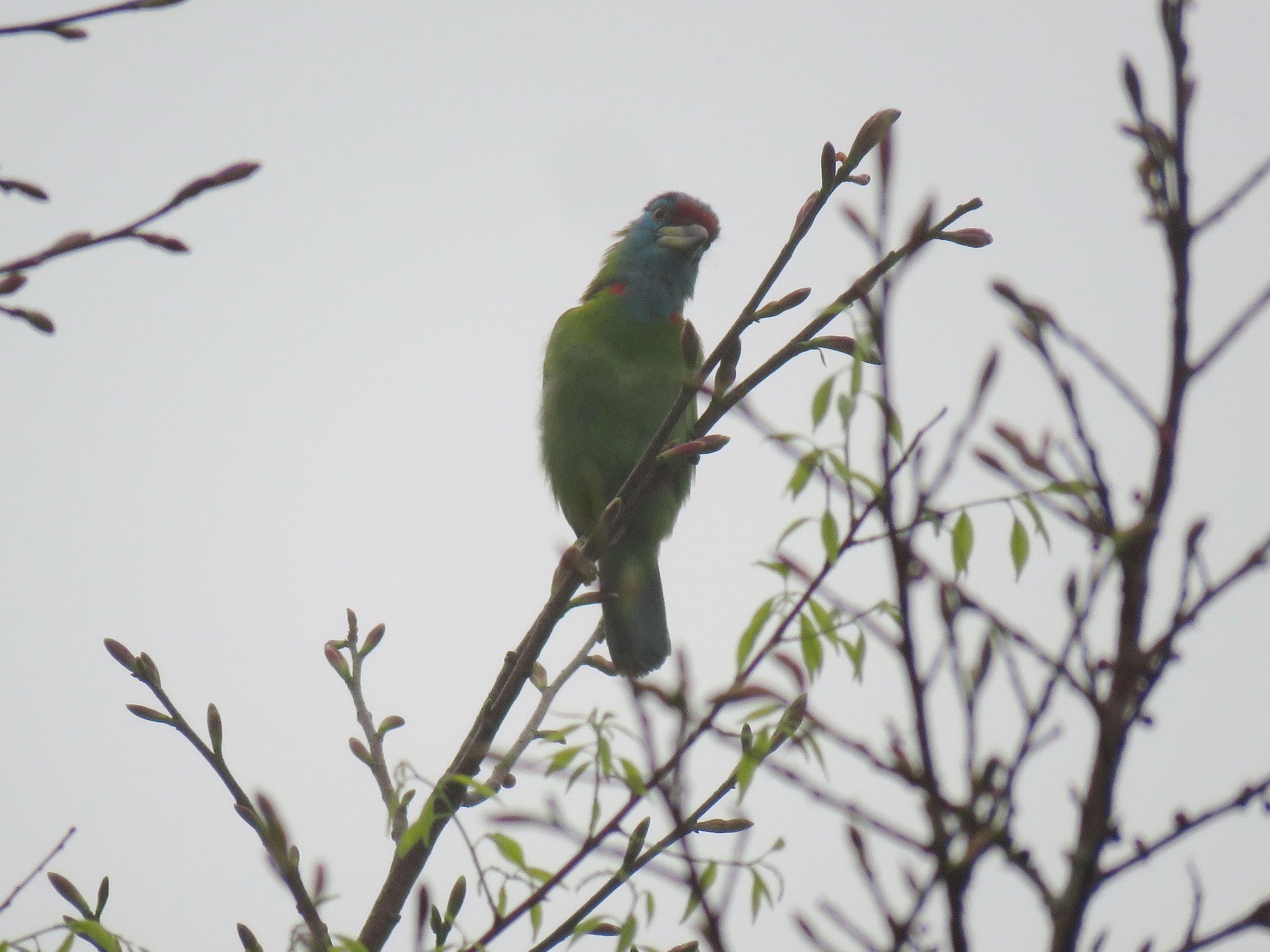
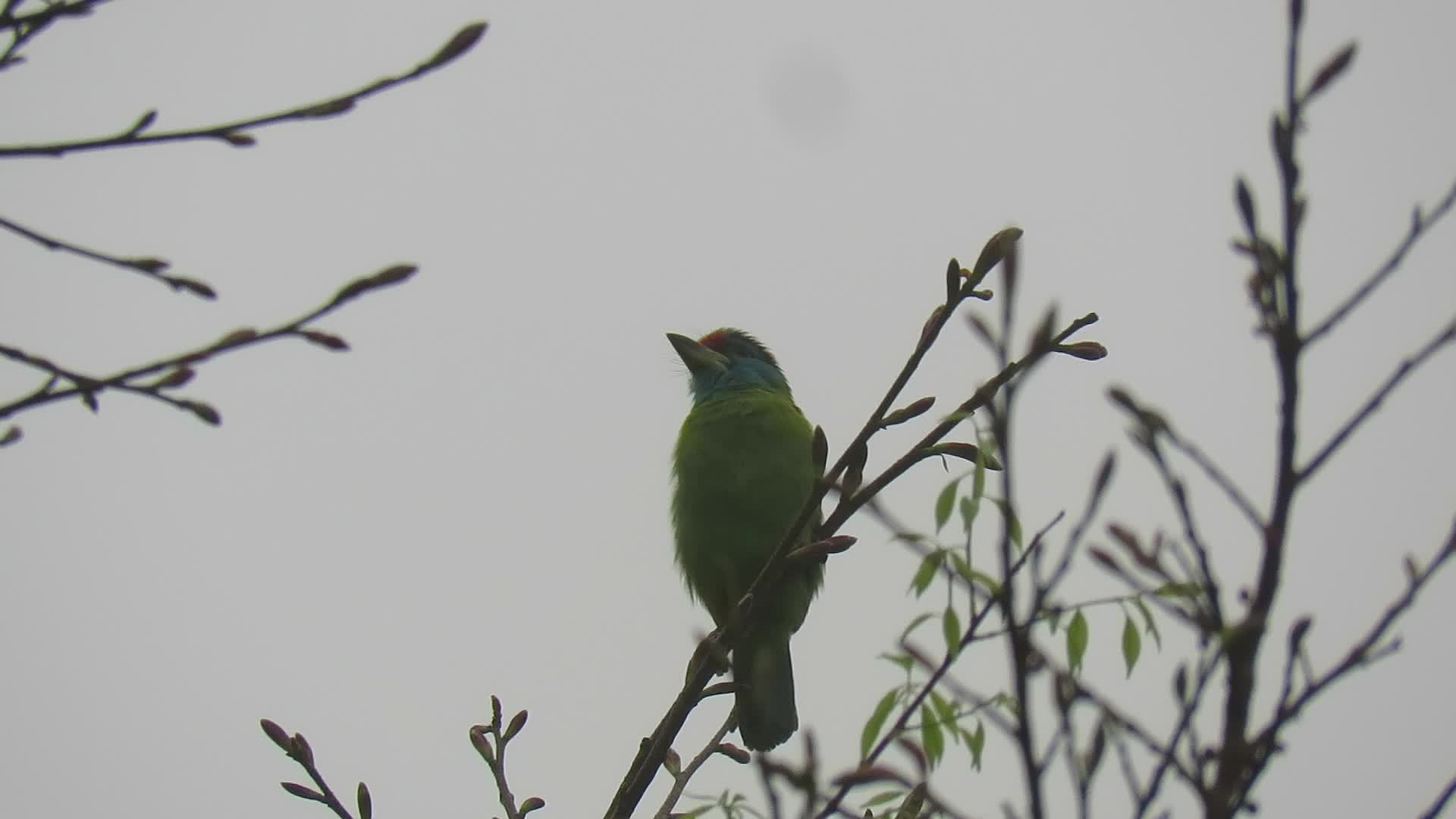
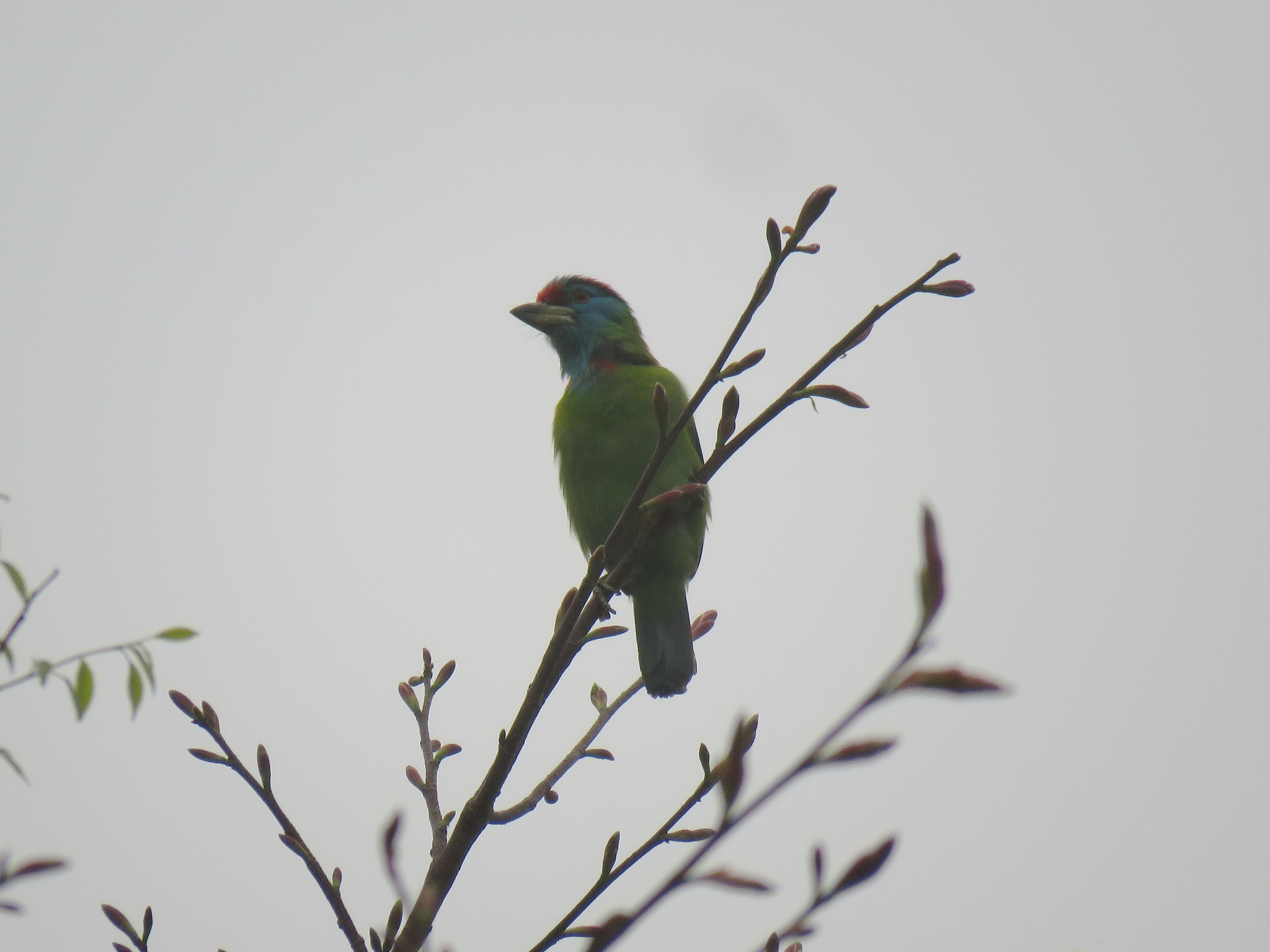
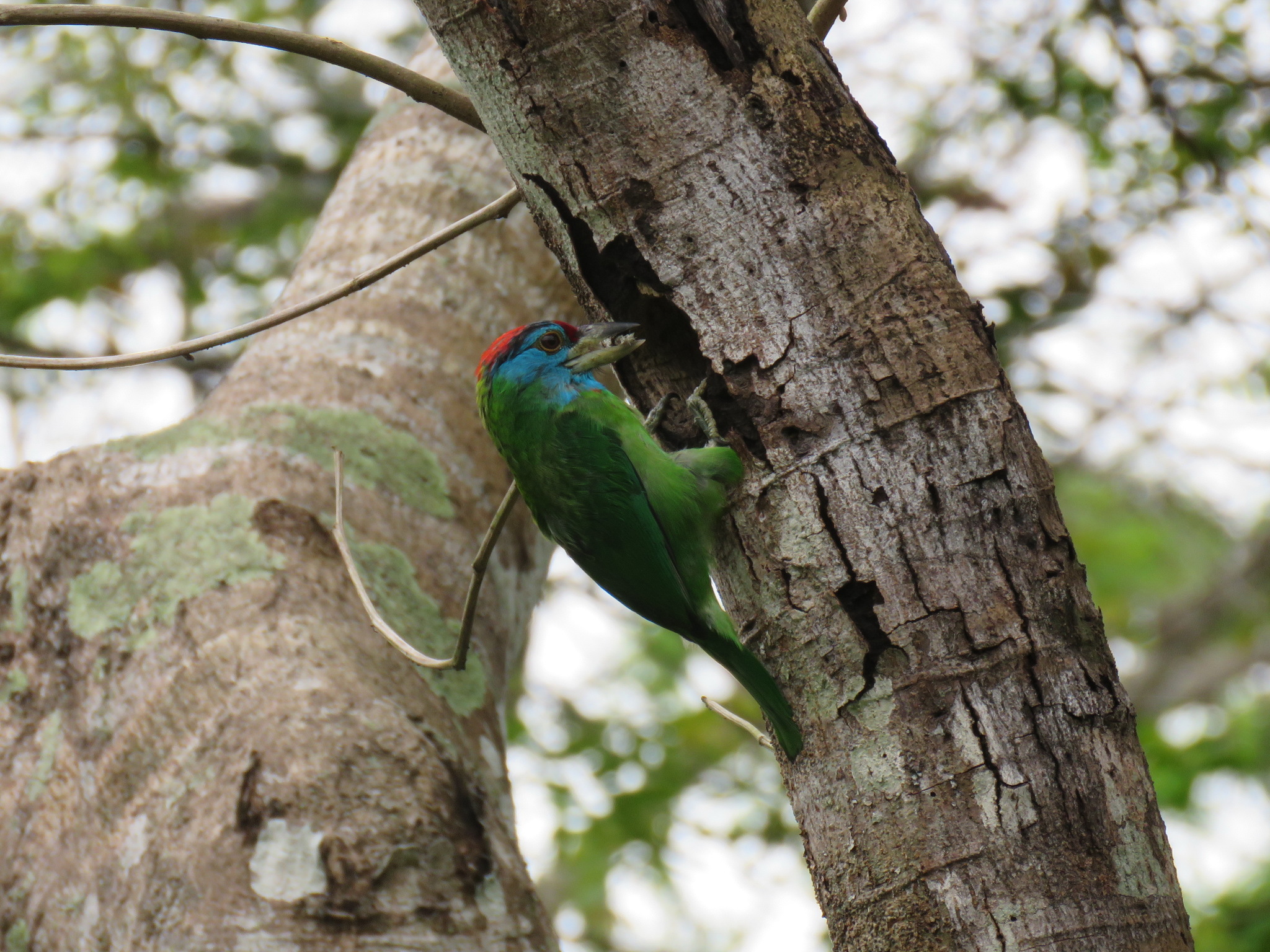
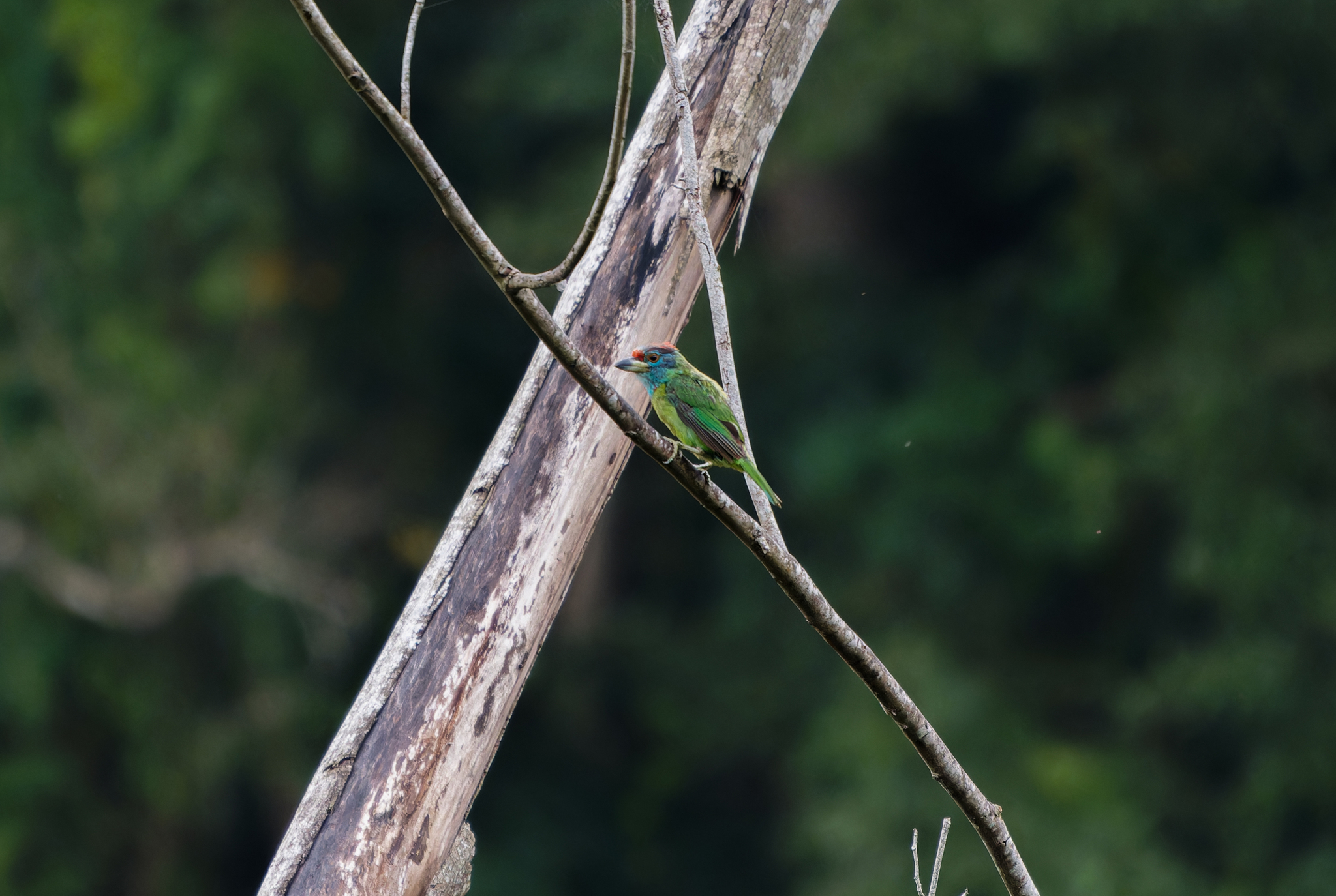
Medium-sized, stocky, arboreal bird, 19–22 cm (7.5–8.7 in) in length. Sexes are similar; females are slightly heavier (87–103 g) than males (79–100 g). Plumage is primarily green with lighter yellow-green undersides and a bluish cast on the tail underside. The head features a bright red forehead, black stripe across the crown, red rear crown, pale blue sides of face, chin, and upper neck, and red patches at the base of the blue neck areas. Iris is reddish-brown; eye-ring varies from brown to yellow. Bill is stout and conical, pale at the base with a dark upper mandible and tip. Feet are slate-gray to gray-green. Juveniles have muted colors with orange-tinged red and dusky black.
Identification
Difficult to spot visually due to green camouflage but easily located by loud, frequent calls repeated 90-105 times per minute, consisting of notes like 'took-a-rook', 'pu-ku-ruk', or 'kut-ru-uk'. Flight is noisy and undulating, characterized by rapid wing beats followed by brief pauses. Key visual marks include the red forehead, black crown stripe, and blue throat.
Distribution & Habitat
Resident breeder in the Lower Himalayas from northeastern Pakistan through northern and northeastern India, and in hill ranges of Southeast Asia. Two subspecies: P.a. asiaticus ranges from NE Pakistan to W, N Myanmar and SW Yunnan; P.a. davisoni ranges from SE Myanmar to SE Yunnan and N Indochina. Inhabits lowland and foothill tropical evergreen and deciduous forests, typically between 200–2,000 m. Adaptable to secondary forests and urban areas with fruiting trees; uncommon in oil plantations lacking fruit-bearing trees.
Behavior & Ecology
Feeds on fruits and berries, especially figs, often in the upper canopy singly or in groups. Also consumes insect larvae, crickets, mantids, large centipedes, and flying termites. Noisy, undulating flight. Calls frequently throughout the day. Breeding season is March to June. Both parents share nest building, incubation, and rearing duties. Nests are excavated holes in tree trunks or sloping branches, 3–7.5 m above ground, sometimes reusing old woodpecker nests. Female lays 3-4 matte white eggs, incubated for 14 days. Courtship displays include head bobbing, twisting, and tail wagging.
Conservation
Categorized as Least Concern on the IUCN Red List. The population is thought to be stable, and it is a common bird in northeast India.
Source: Wikipedia · CC BY-SA 3.0
Taxonomy
- Order
- Piciformes
- Family
- Megalaimidae
- Genus
- Psilopogon
Vocalizations
Subspecies (2)
-
Psilopogon asiaticus asiaticus
northeastern Pakistan to central Myanmar and southern China (western Yunnan)
Data Sources
Species description from Wikipedia, licensed under CC BY-SA 3.0.
Bird images and sounds sourced from GBIF, contributed by citizen scientists worldwide under Creative Commons licenses.
Taxonomy data from AviList 2025.