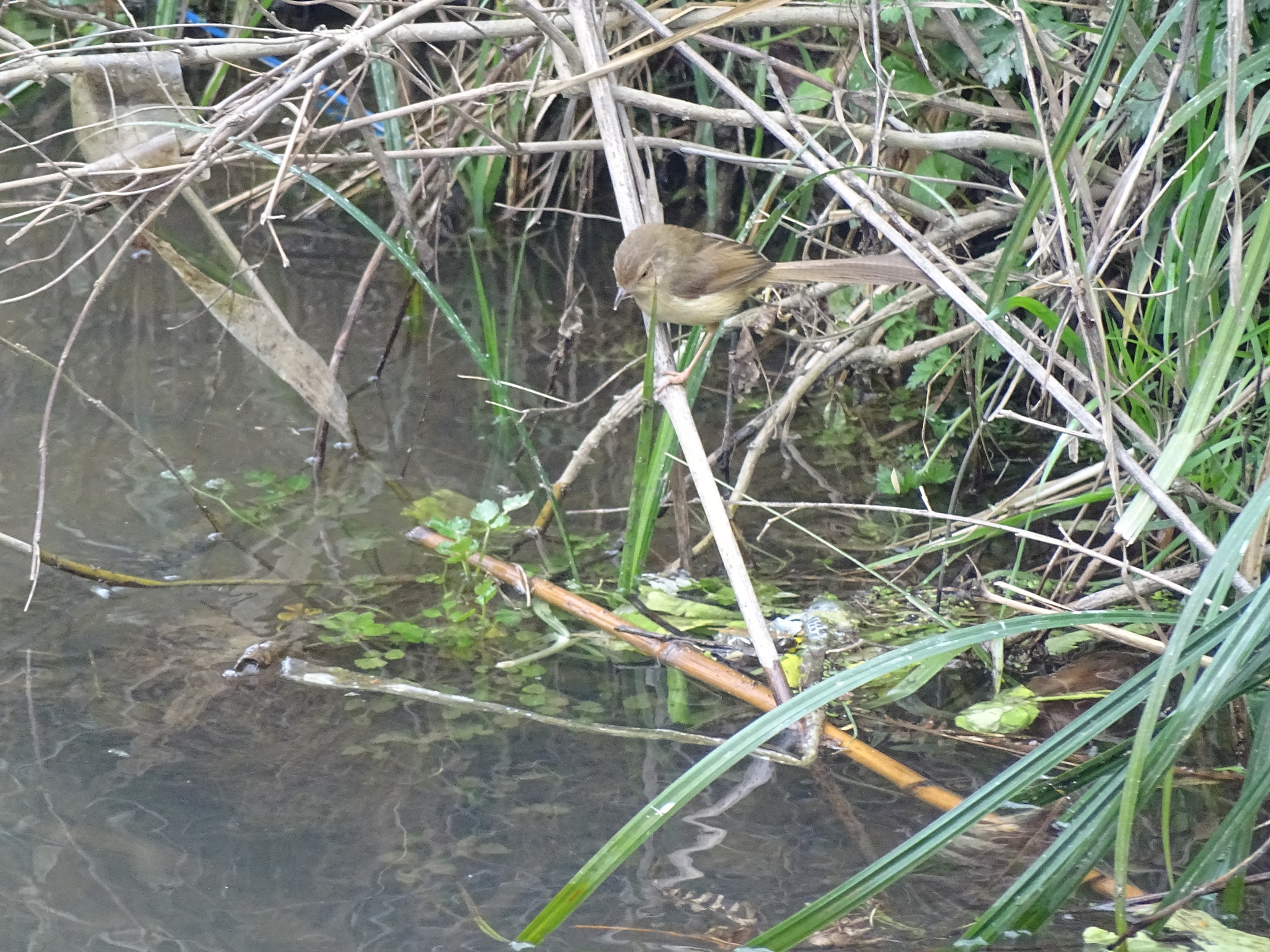
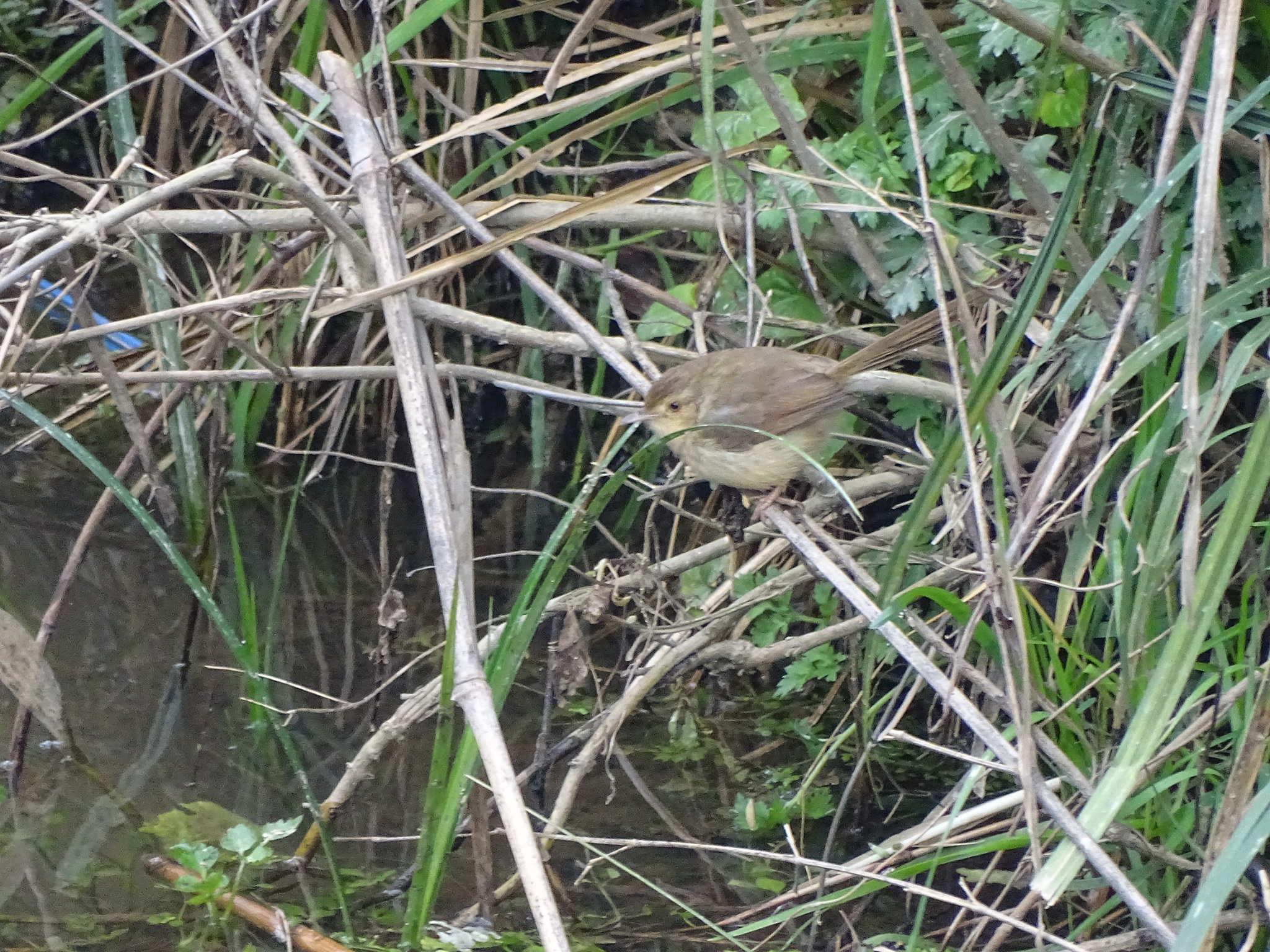
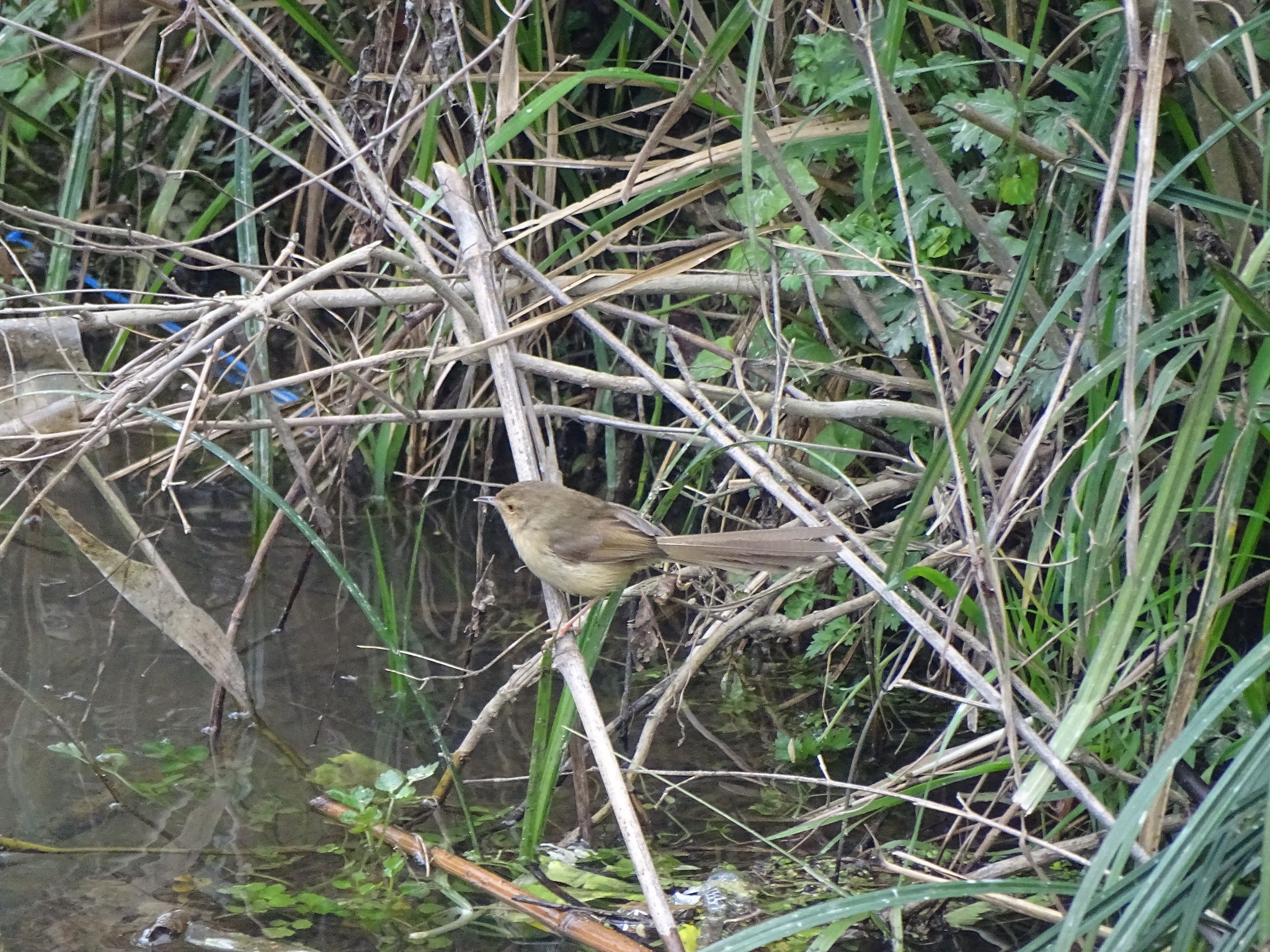
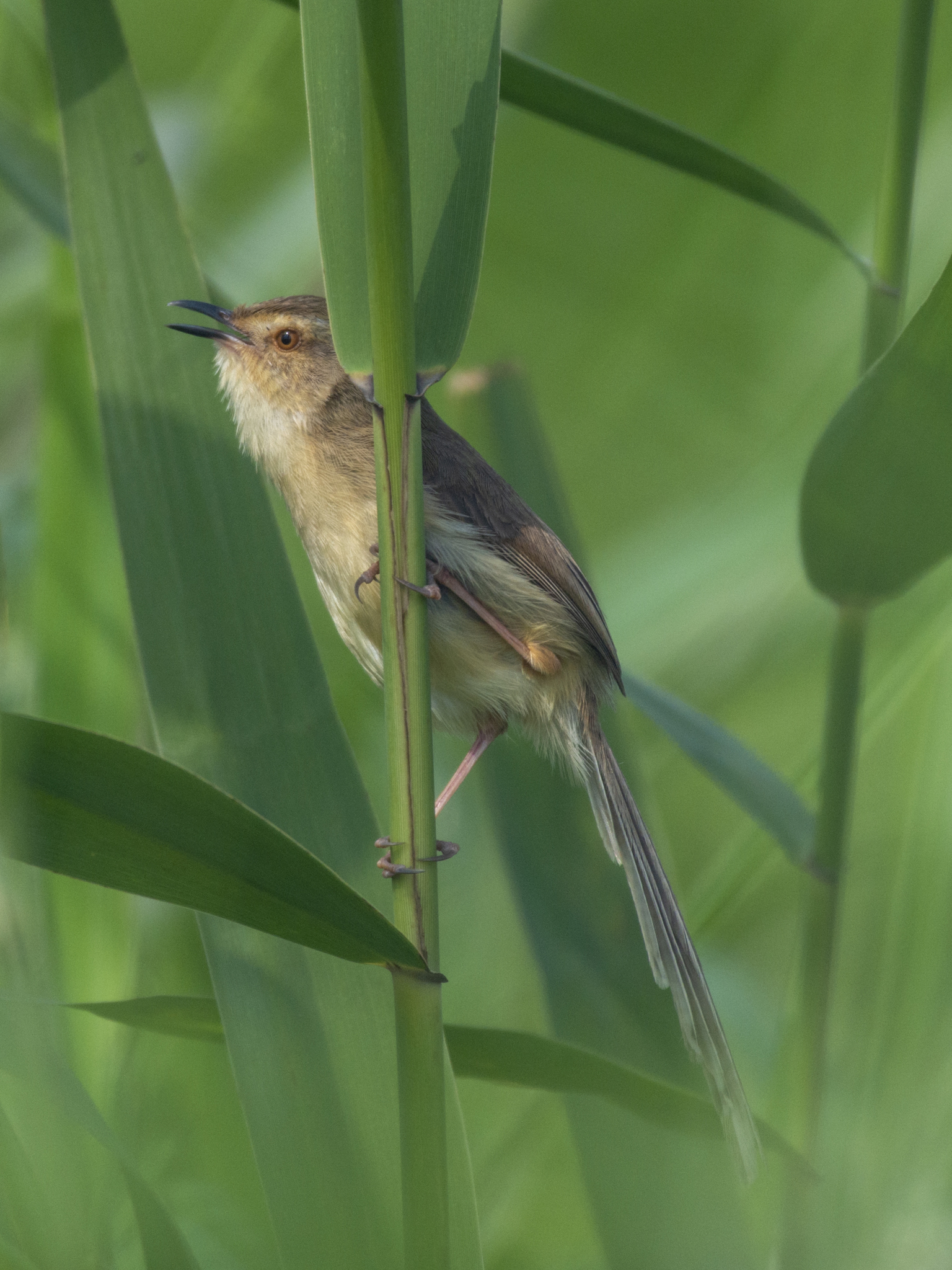
Plain Prinia
Prinia inornata
纯色山鹪莺
Introduction
The plain prinia (Prinia inornata) is a warbler species found across South and Southeast Asia. Its range extends from Pakistan and India through Nepal and Bangladesh to southern China, and southward through Thailand, Myanmar, Malaysia, and Indonesia. It inhabits grasslands, scrublands, open woodlands, gardens, and cultivated areas in lowland tropical and subtropical regions. The species is resident and maintains year-round populations throughout its range. It exhibits distinctive tail-flicking behavior while foraging and produces a repetitive song. The Sri Lankan population is phenologically distinct, maintaining breeding plumage year-round without developing the longer winter tail plumage seen in mainland populations. The species was formerly considered conspecific with the tawny-flanked prinia (Prinia subflava) of Africa but is now treated as a separate species based on systematic study.
Description
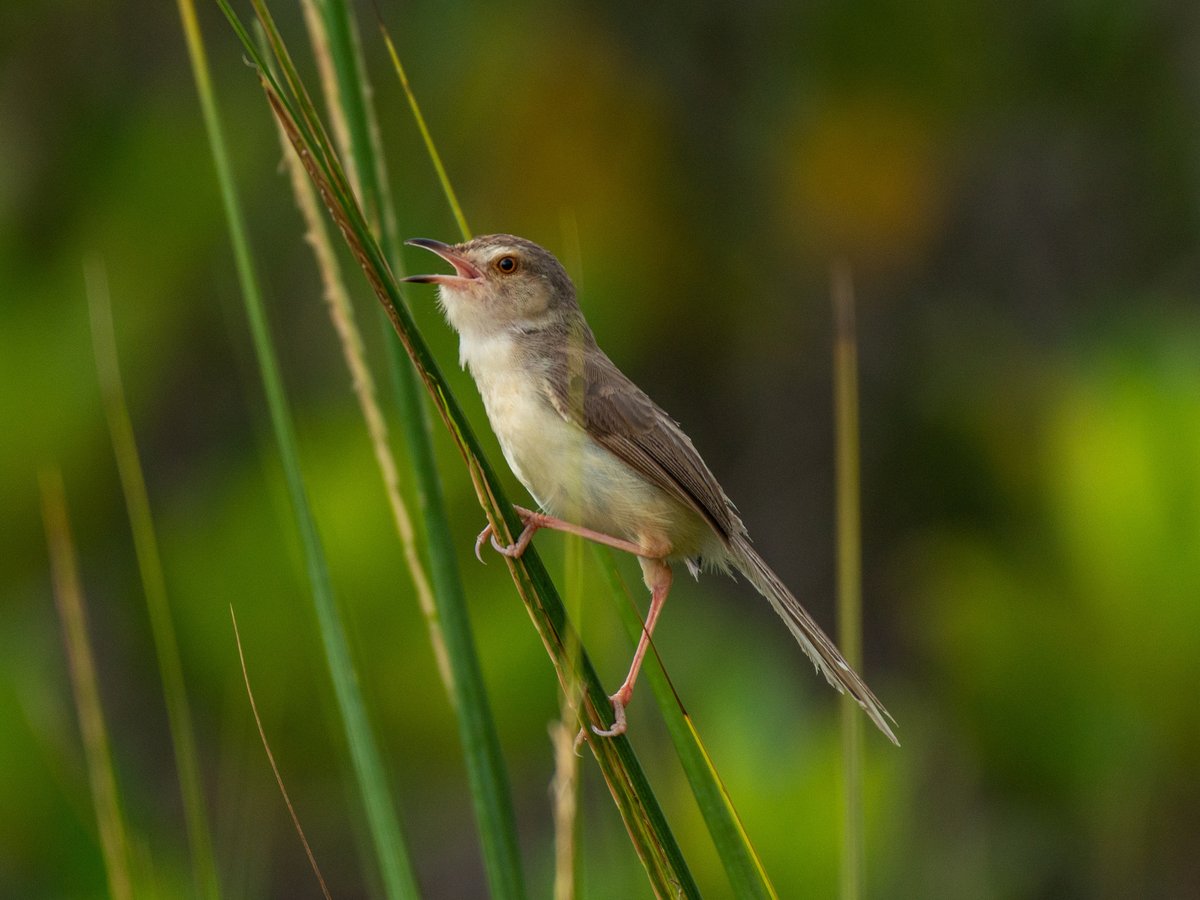
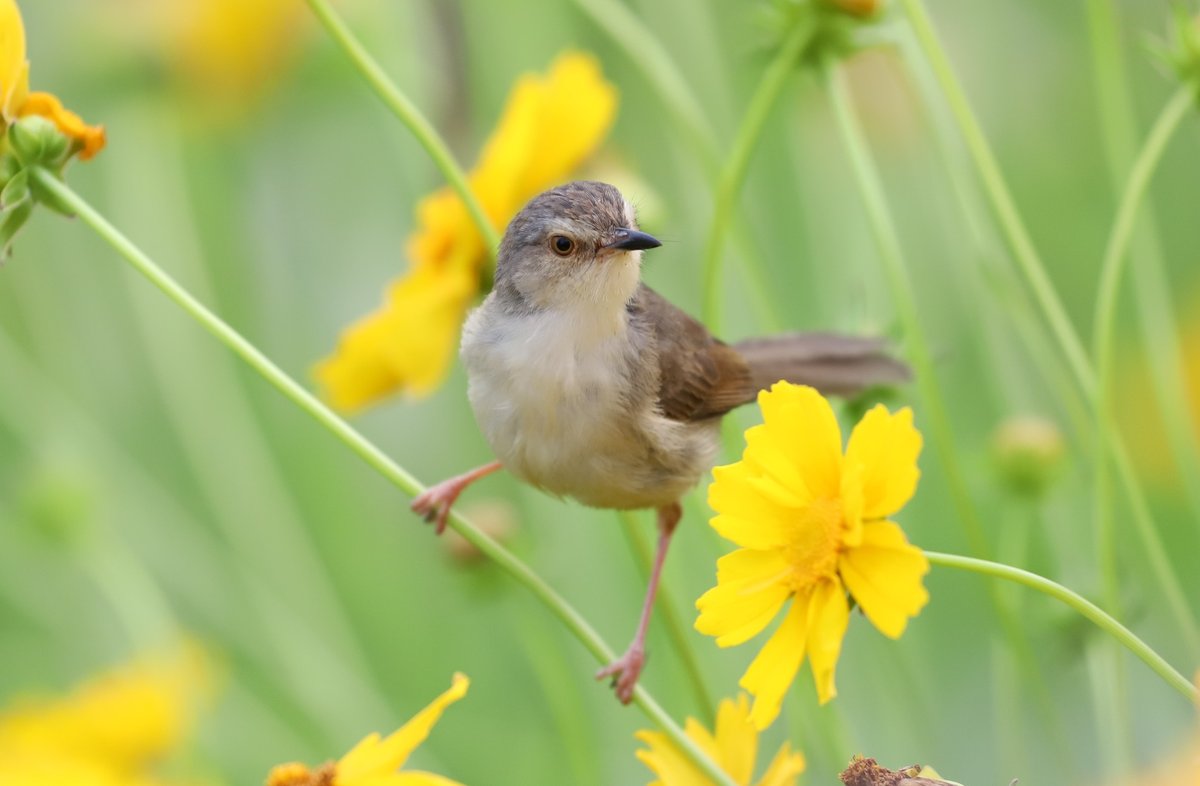
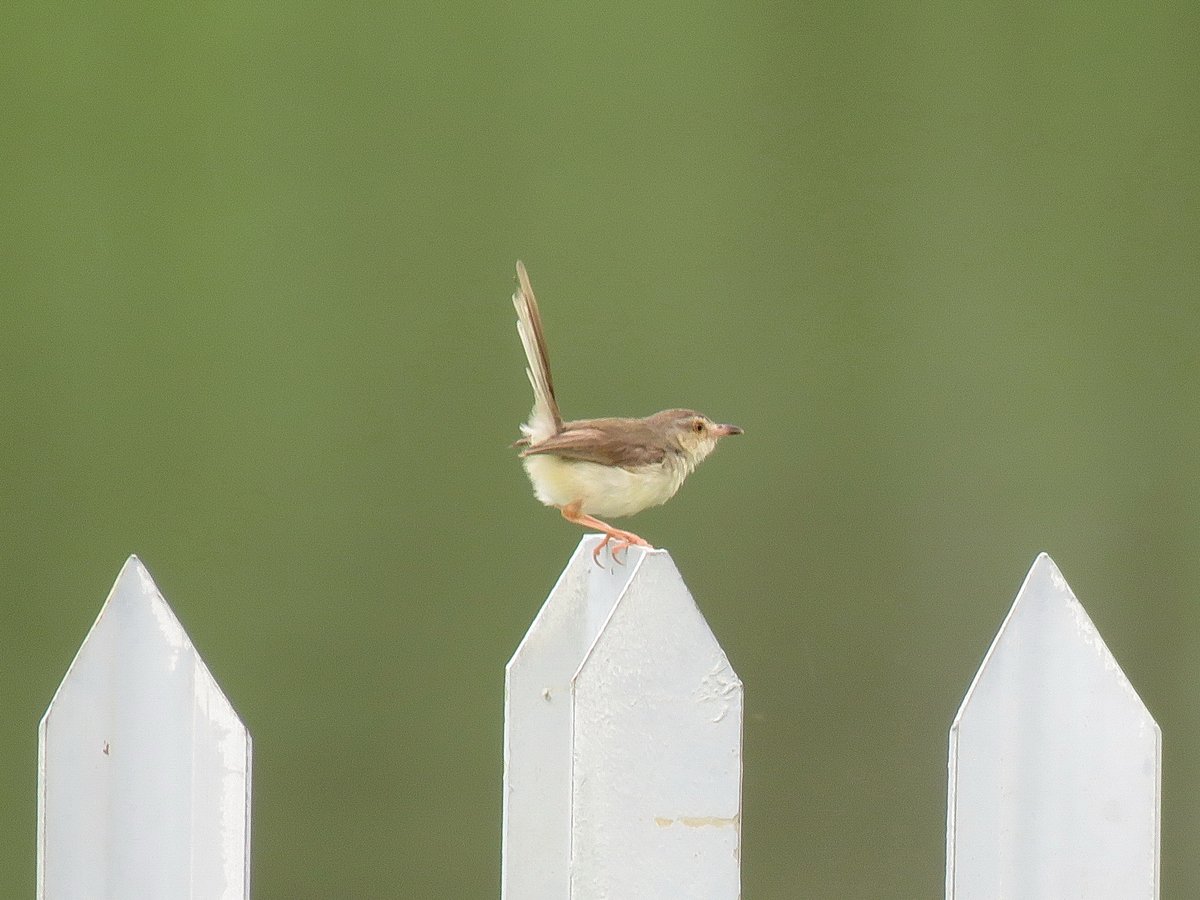
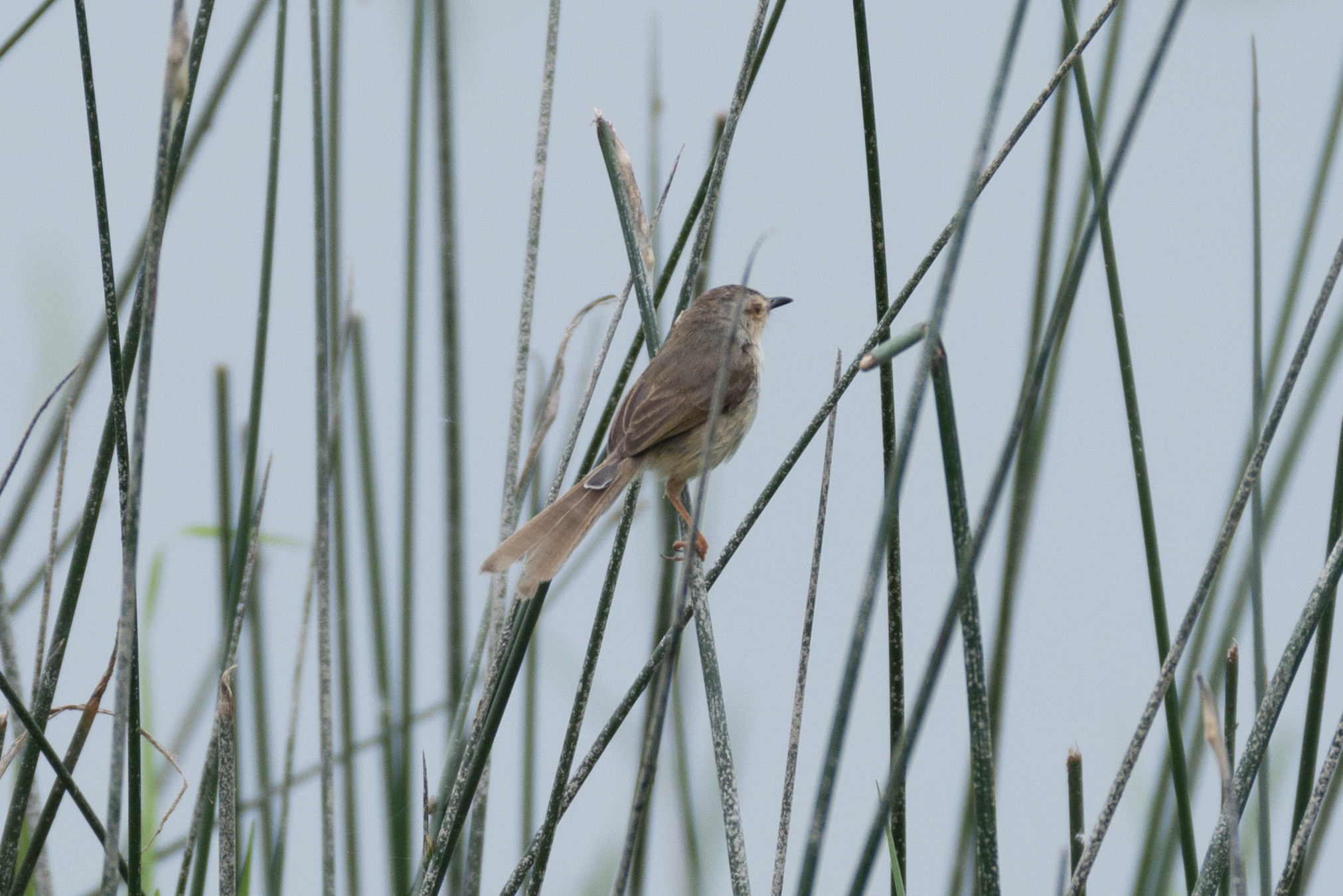
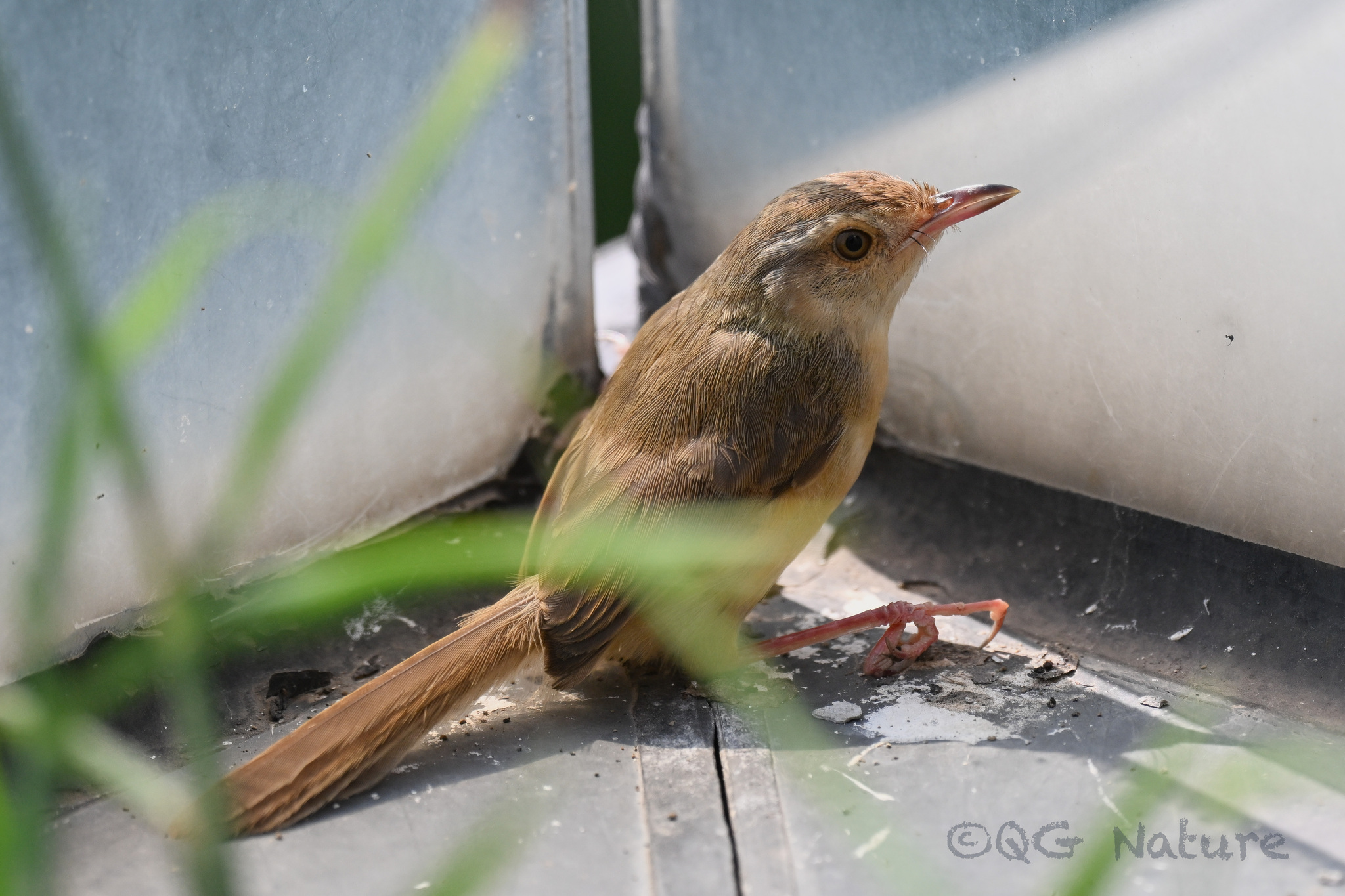
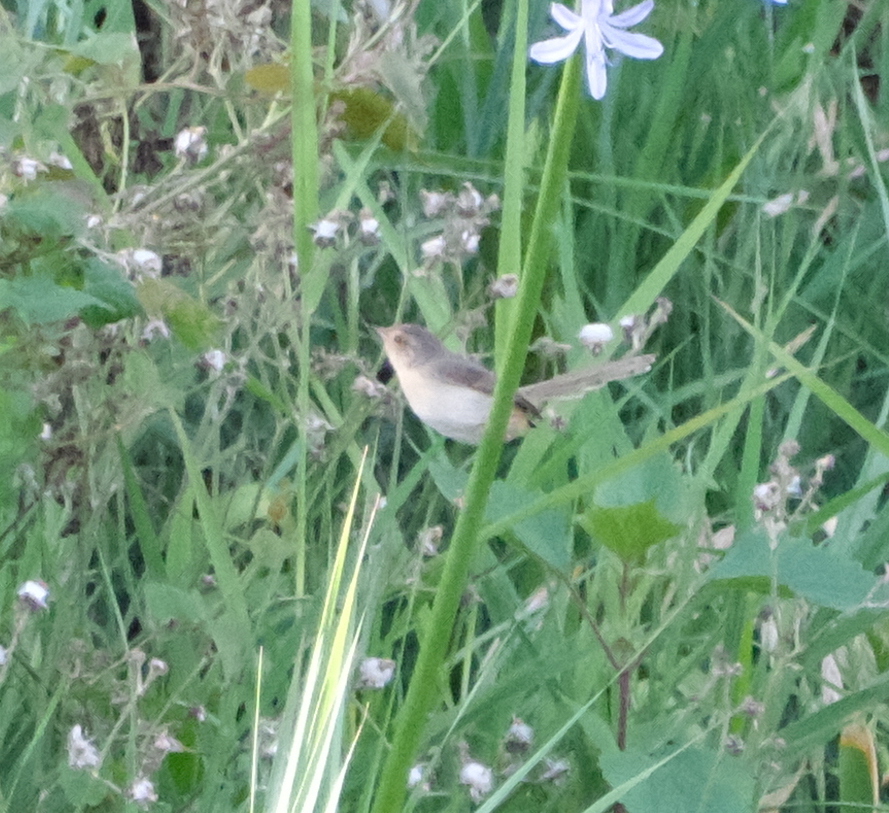
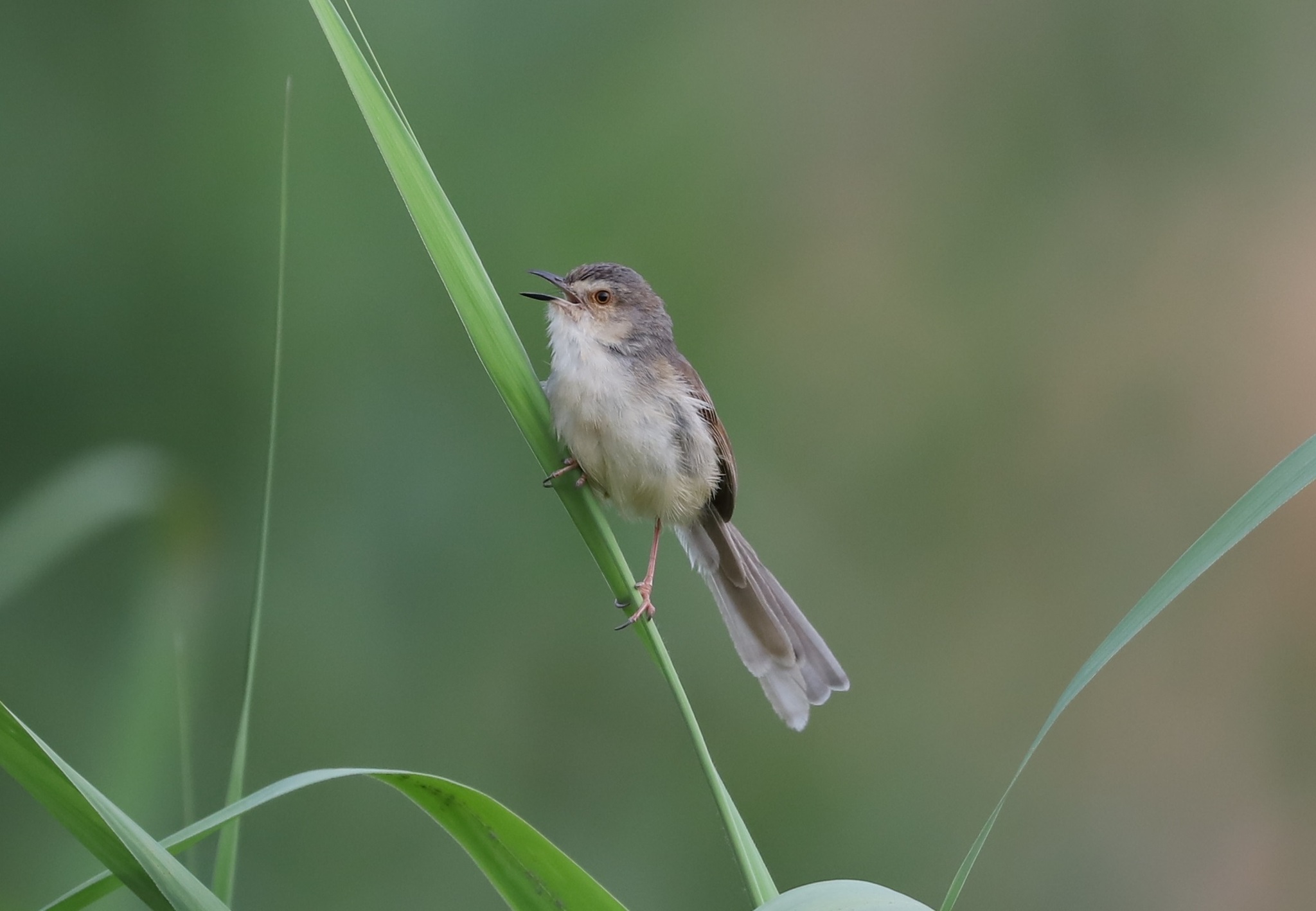
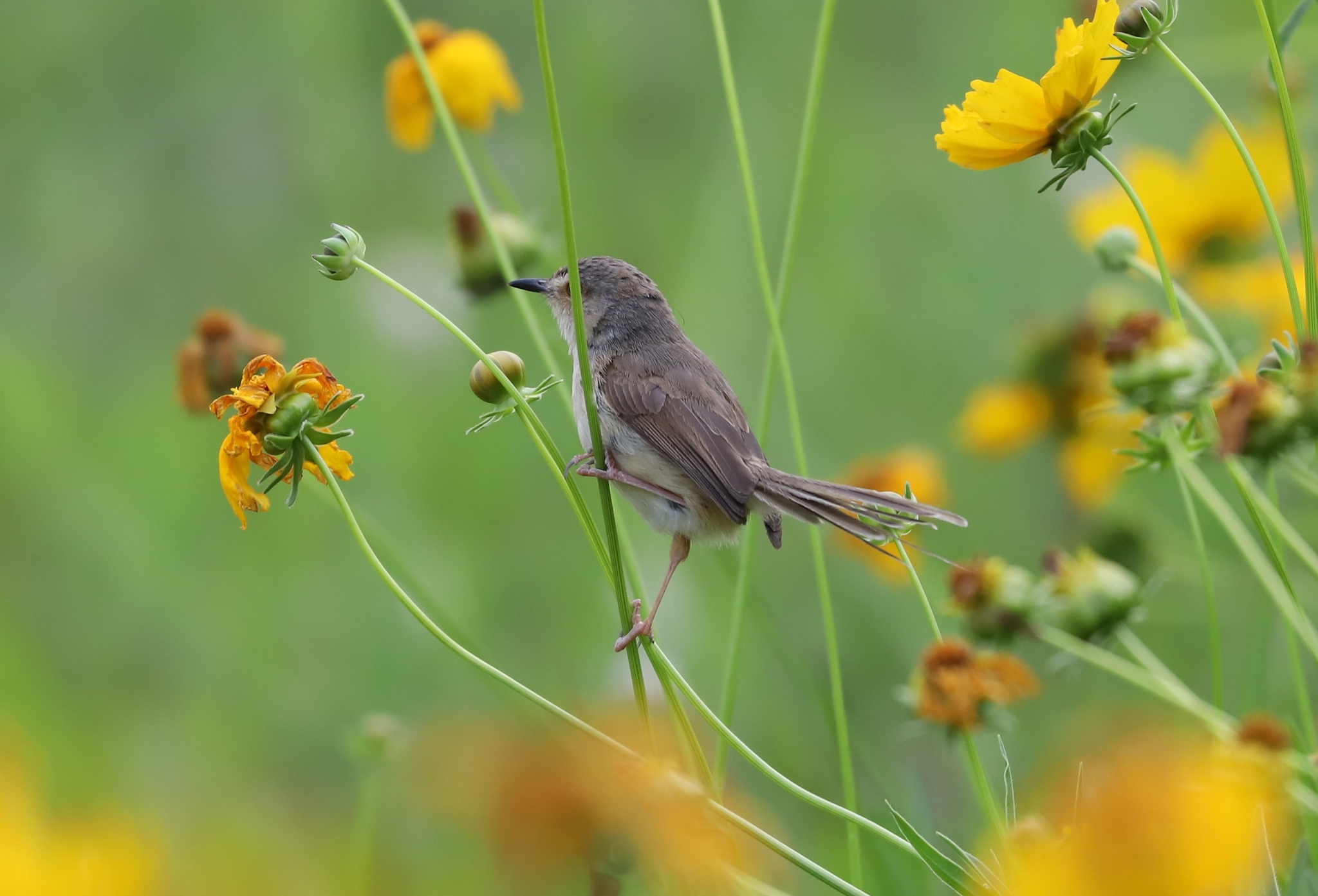
This compact warbler measures 13-14 cm in length with a characteristically long tail, short rounded wings, strong legs, and a short black bill. Adults in breeding plumage show grey-brown upperparts with a prominent white supercilium and rufous fringes on the closed wings, while the underparts appear whitish-buff. The sexes are identical. In winter, the plumage shifts to warmer brown tones above with more buff underparts, and the tail grows noticeably longer. Several geographic races exist, varying primarily in overall plumage shade. The Sri Lankan endemic race (P. i. insularis) is particularly distinctive, retaining summer plumage including the shorter tail throughout the year.
Identification
The plain prinia is most reliably distinguished from the similar tawny-flanked prinia (Prinia subafa) by geographic range, as the African species does not overlap with Asian populations. Within its range, the combination of the white supercilium, rufous wing fringes, and the distinctive habit of constantly flicking the long tail helps separate it from other small warblers. The Sri Lankan race can be distinguished by its smaller size and richer coloration.
Distribution & Habitat
This resident species breeds across a vast area from Pakistan and India through Nepal, Bangladesh, and Myanmar to southern China, and southward through Thailand, Malaysia, Vietnam, and Indonesia including Java, Bali, and Sumatra. It inhabits wet lowland grassland, open woodland, scrub, and often ventures into gardens and cultivated areas. Unlike many migratory warblers, this species remains in its territory year-round.
Behavior & Ecology
As an insectivorous bird, the plain prinia actively forages in dense vegetation, gleaning insects from leaves and stems. It builds a concealed nest within shrubs or tall grasses, where the female lays a clutch of three to six eggs. The species is typically observed alone or in pairs, though small family groups may form after breeding. Its characteristic song is a repetitive tlee-tlee-tlee delivered from an exposed perch while foraging.
Conservation
The plain prinia is currently listed as Least Concern by the IUCN, reflecting its extensive range and stable population. The species benefits from its adaptability to modified habitats including agricultural areas and gardens. No significant population declines have been documented, though localized threats could arise from habitat degradation in some regions.
Culture
No specific cultural significance or folklore is documented for this species.
Source: Wikipedia · CC BY-SA 3.0
Taxonomy
- Order
- Passeriformes
- Family
- Cisticolidae
- Genus
- Prinia
- eBird Code
- plapri1
Vocalizations
Subspecies (10)
-
Prinia inornata blanfordi
Myanmar and northern Thailand
-
Prinia inornata blythi
Java
-
Prinia inornata extensicauda
southern China to northern Laos, northern Vietnam, and Hainan
-
Prinia inornata flavirostris
Taiwan
-
Prinia inornata franklinii
southern India (southwestern Mysore, Kerala, and hills of western and southern Madras)
-
Prinia inornata fusca
Nepal to Sikkim, Bhutan, Assam, and Bangladesh
-
Prinia inornata herberti
southern Myanmar and southern Thailand to southern Laos, Cambodia, and southern Vietnam
-
Prinia inornata inornata
central and peninsular India (southward to southern Madras)
-
Prinia inornata insularis
Sri Lanka
-
Prinia inornata terricolor
eastern Baluchistan to Pakistan and northwestern India
Data Sources
Species description from Wikipedia, licensed under CC BY-SA 3.0.
Bird images and sounds sourced from GBIF, contributed by citizen scientists worldwide under Creative Commons licenses.
Taxonomy data from AviList 2025.