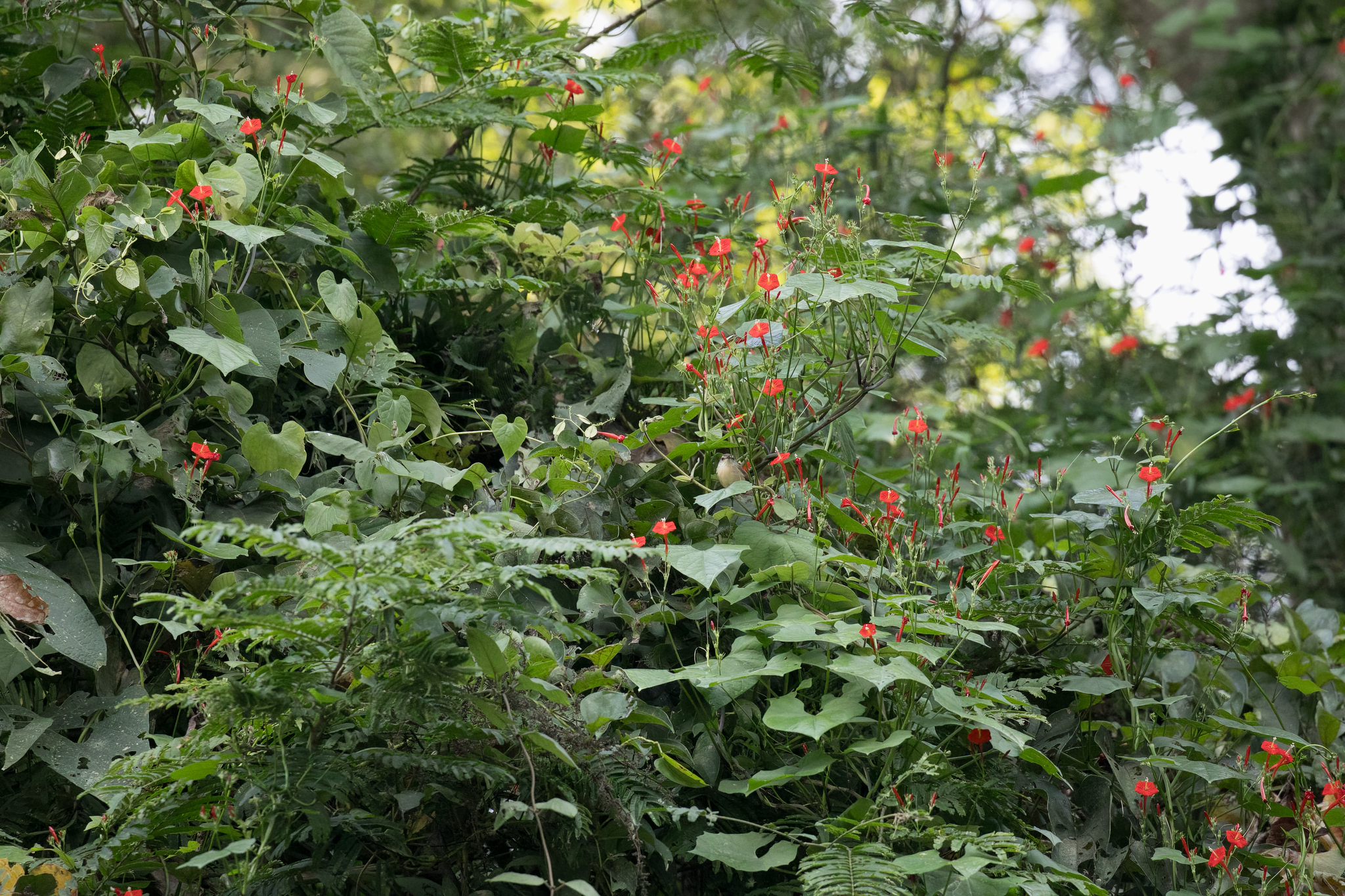
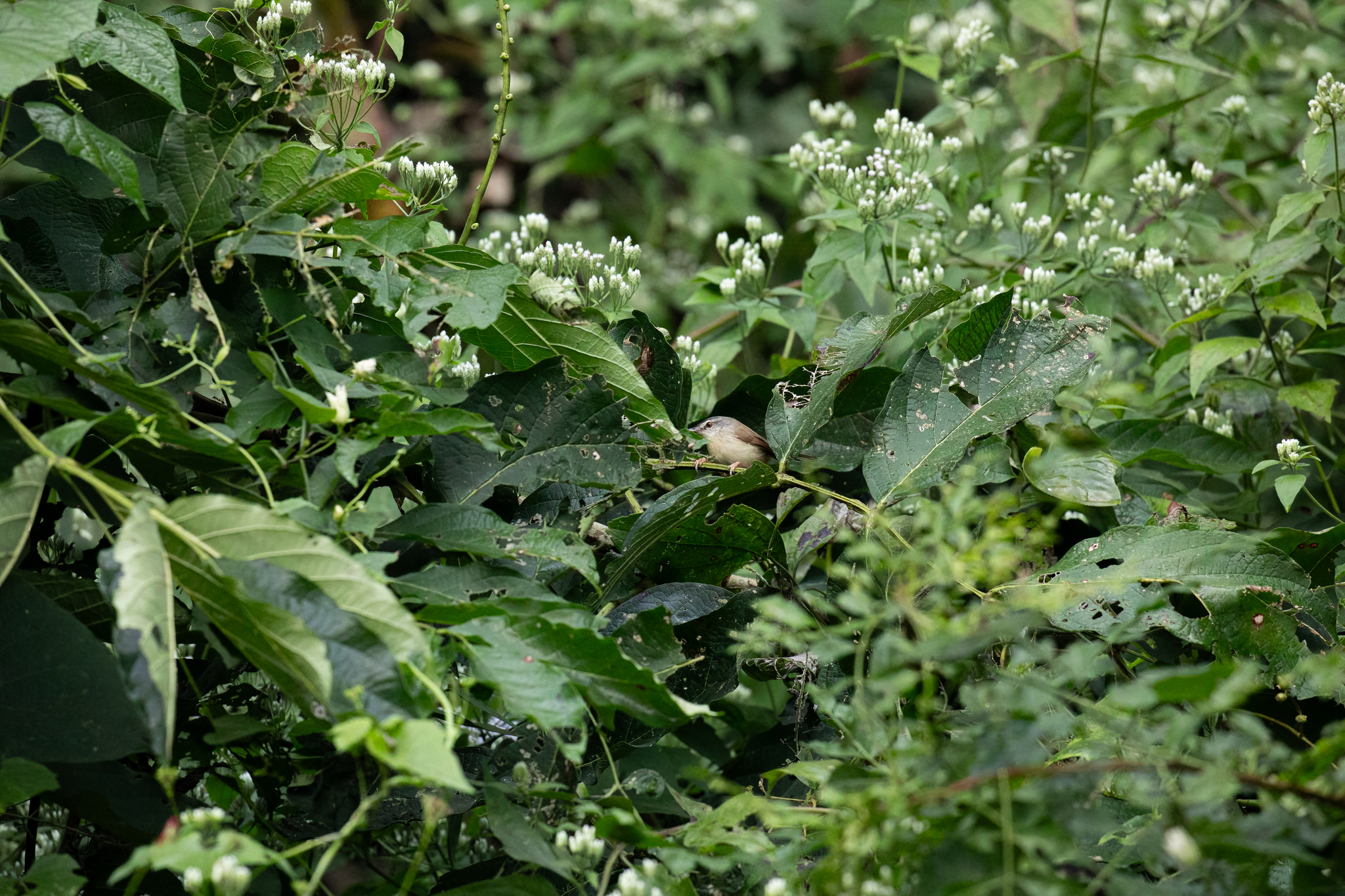
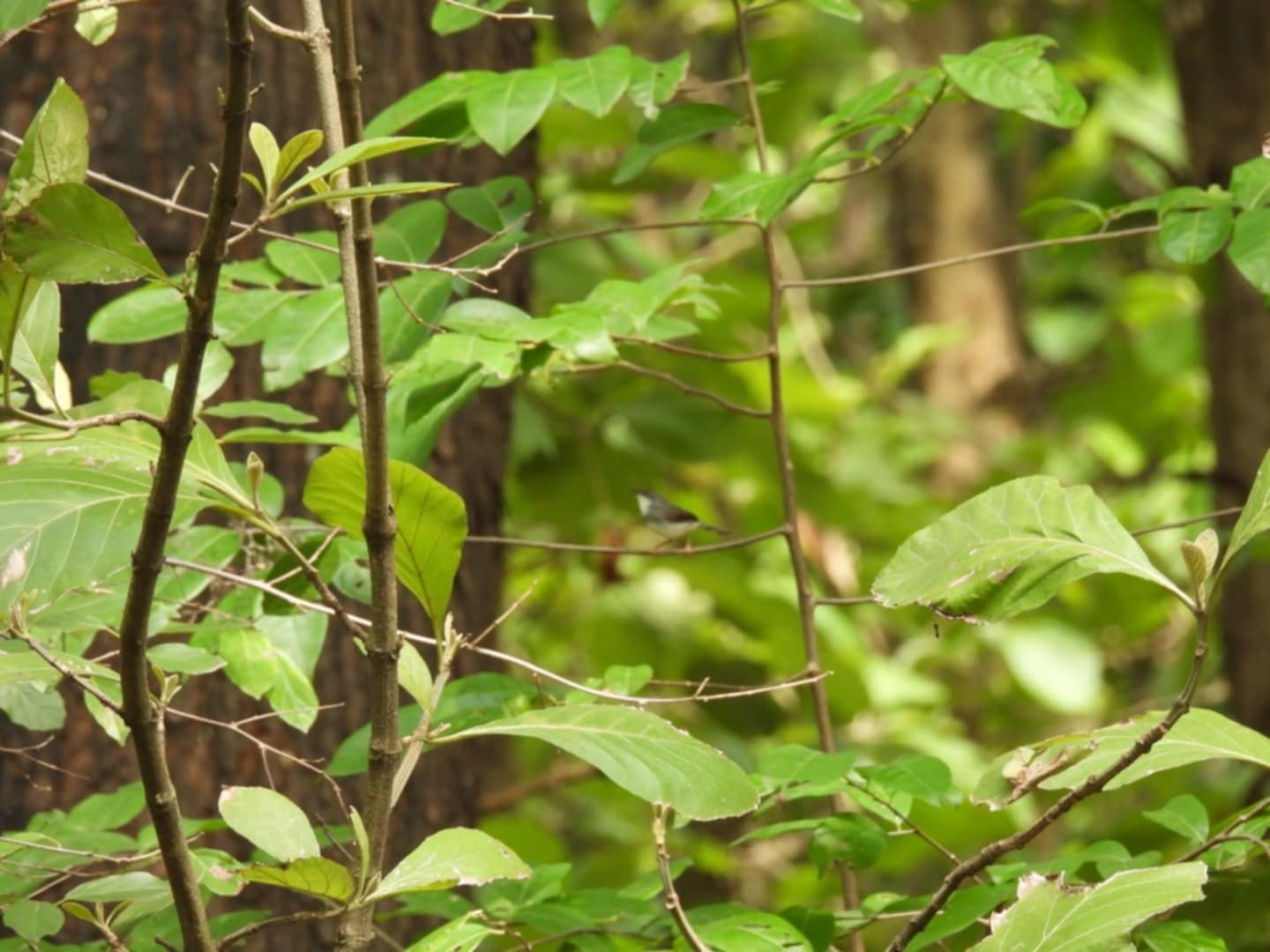
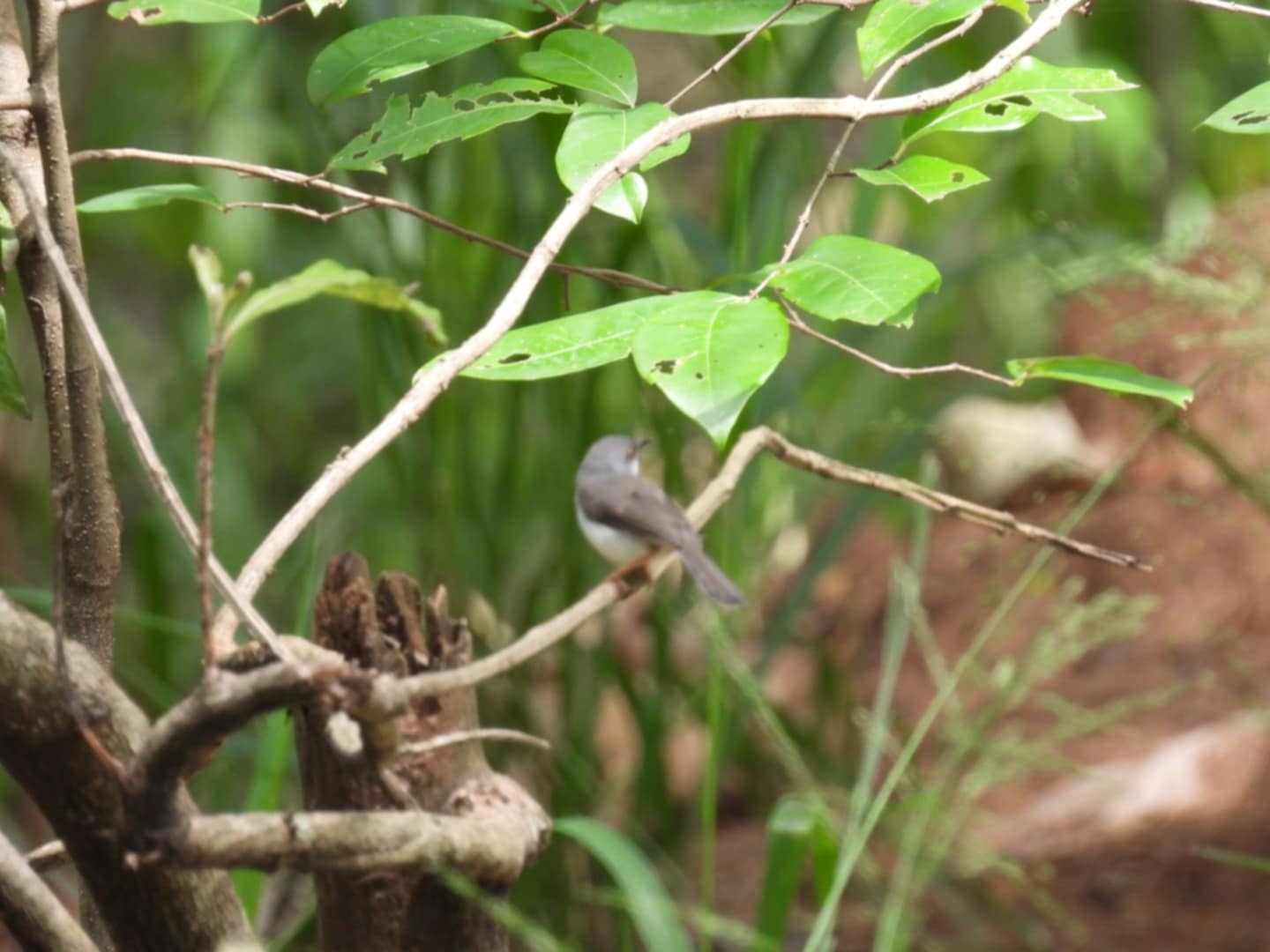
Grey-breasted Prinia
Prinia hodgsonii
灰胸山鹪莺
Introduction
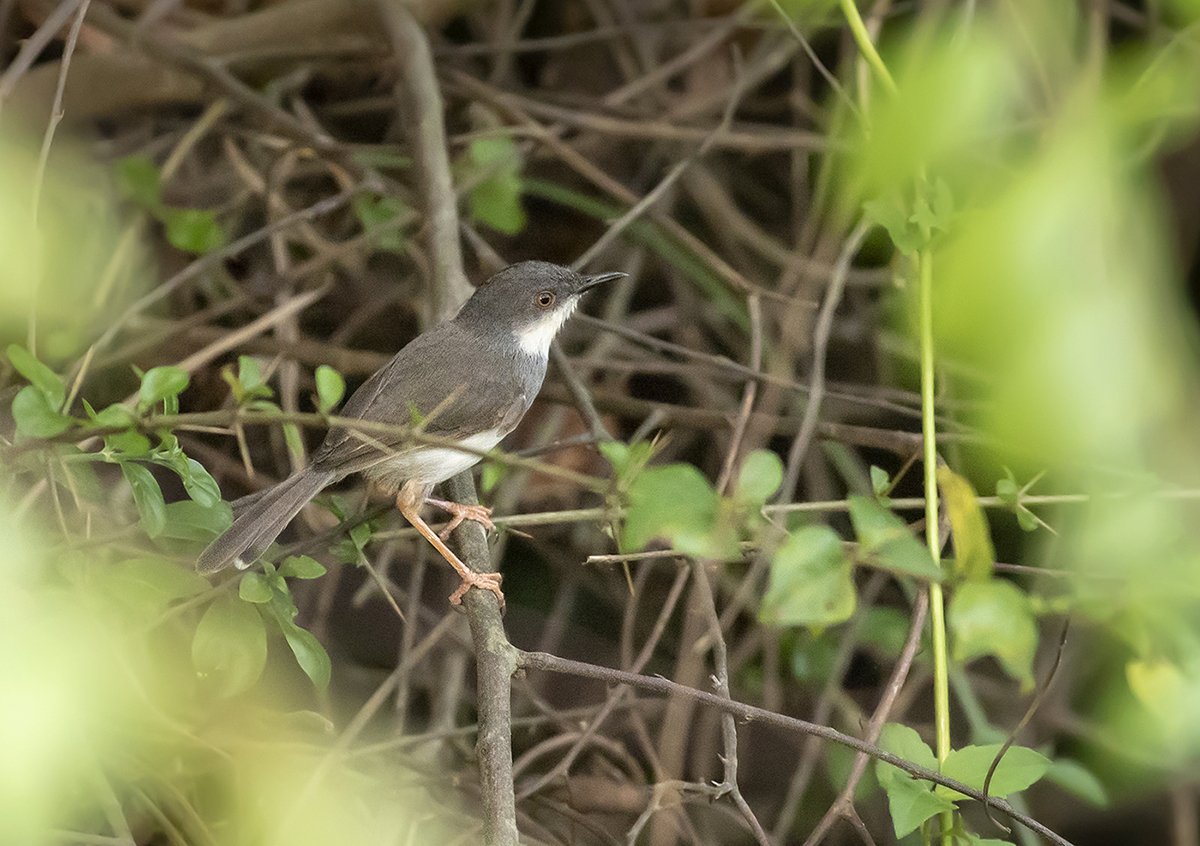
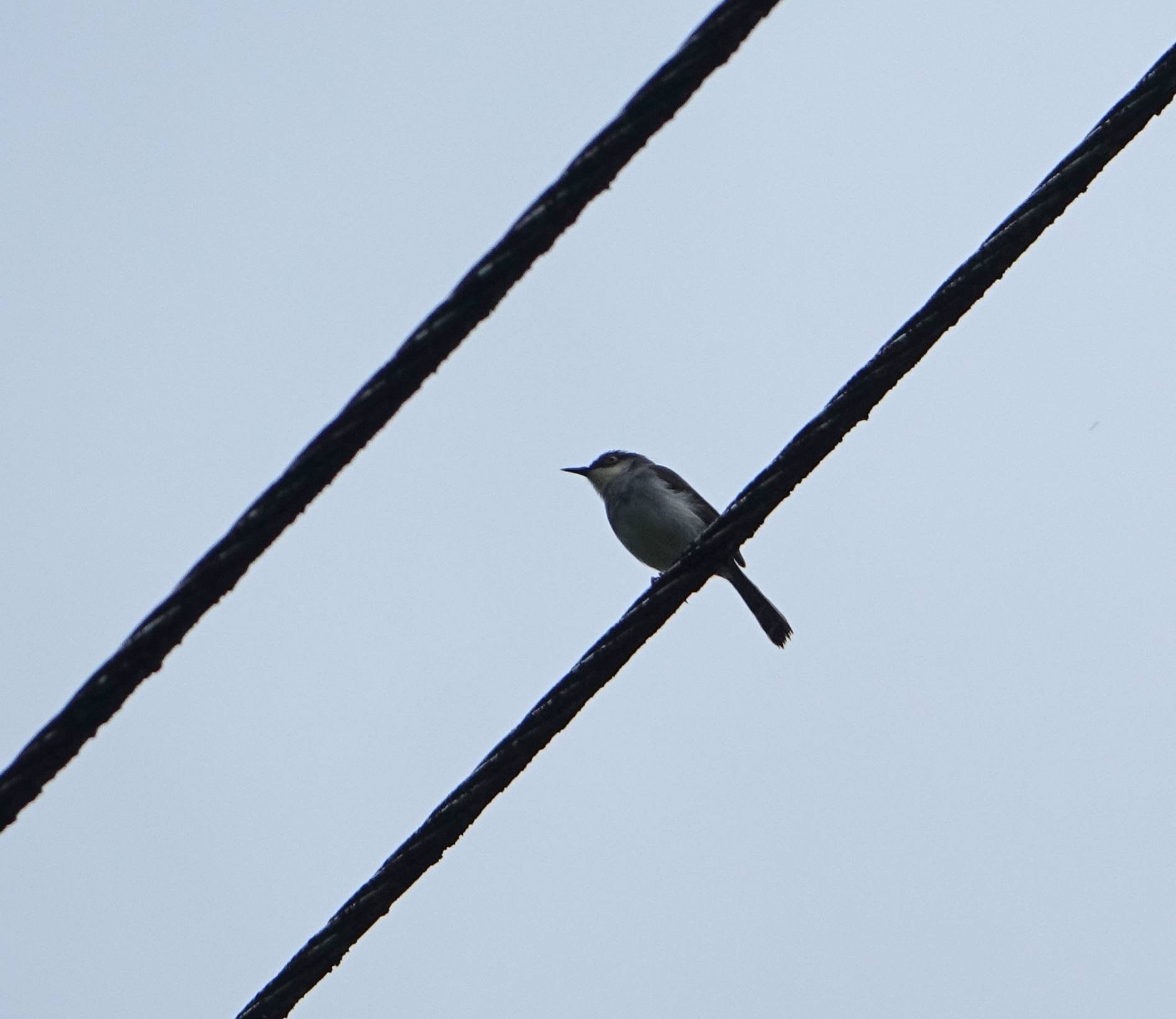
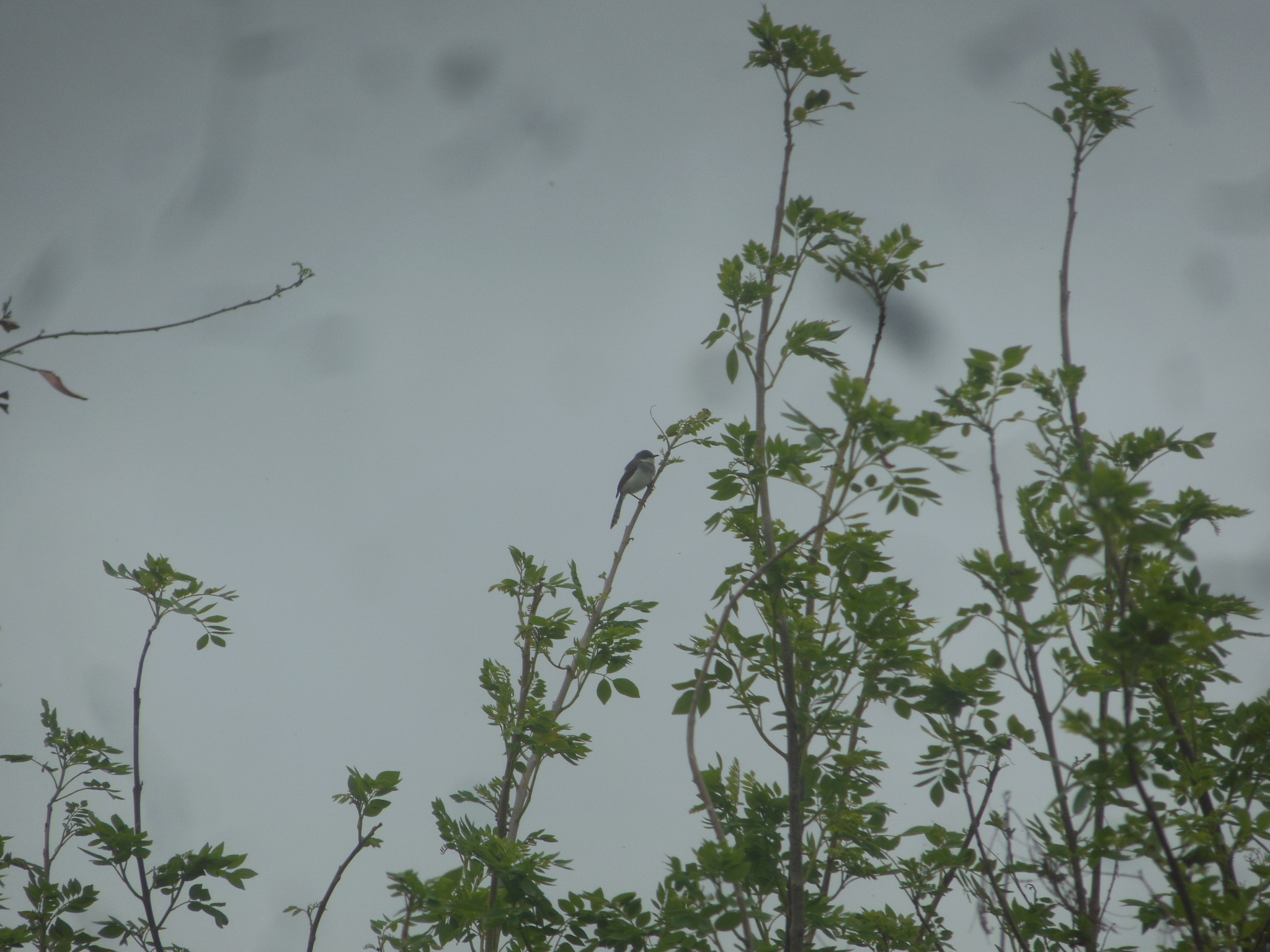
A small passerine bird in the wren-warbler family, found in warmer southern regions of the Old World. Resident breeder across the Indian subcontinent, Sri Lanka, and southeast Asia. Characterized by a smoky grey breast band contrasting with a white throat, an all-black beak, pink legs, and a graduated tail held upright. Found in scrub, forest clearings, and other open but well vegetated habitats.
Description
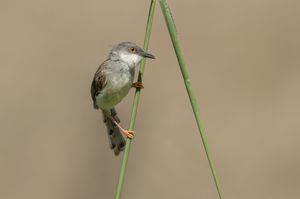
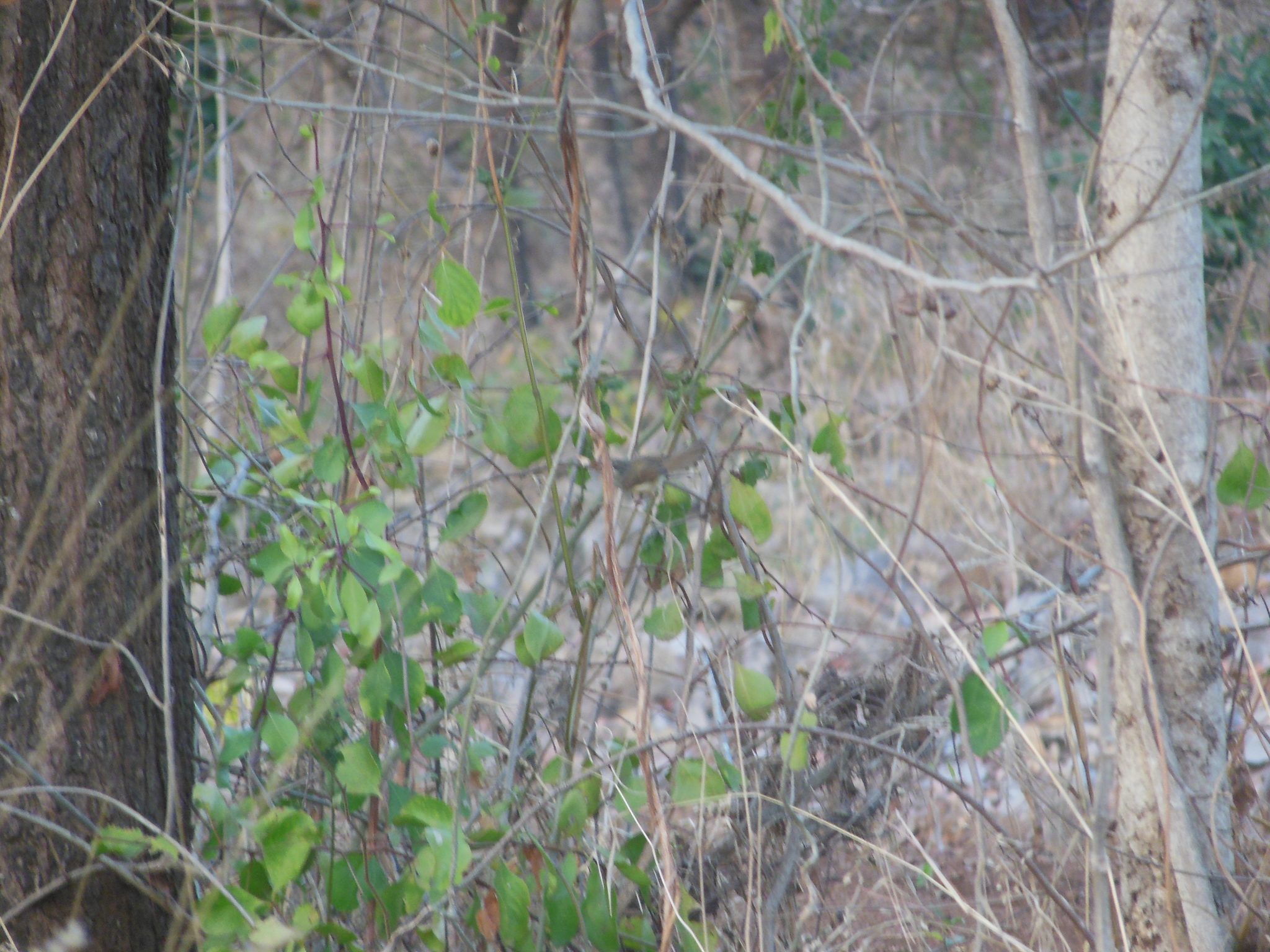
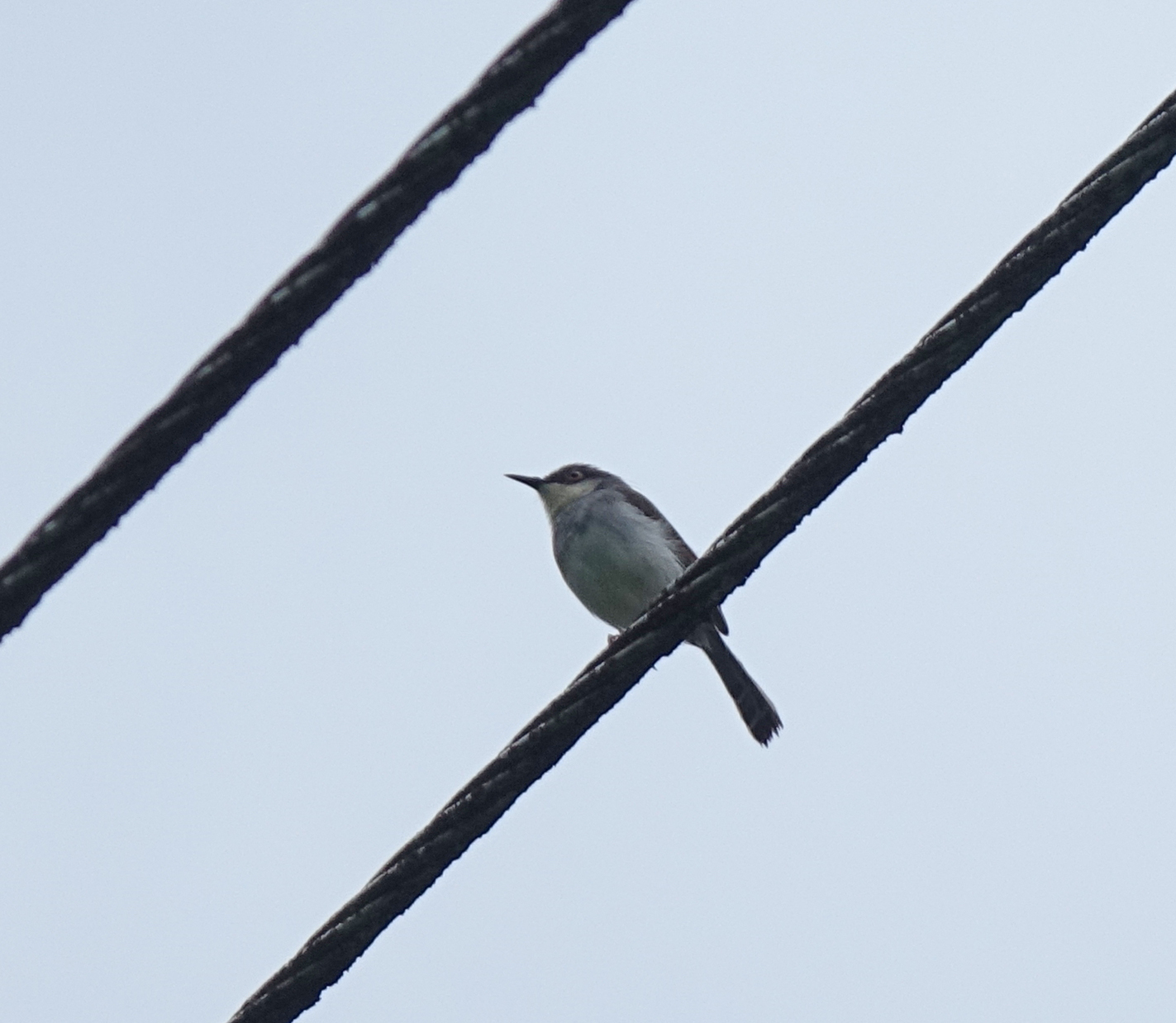
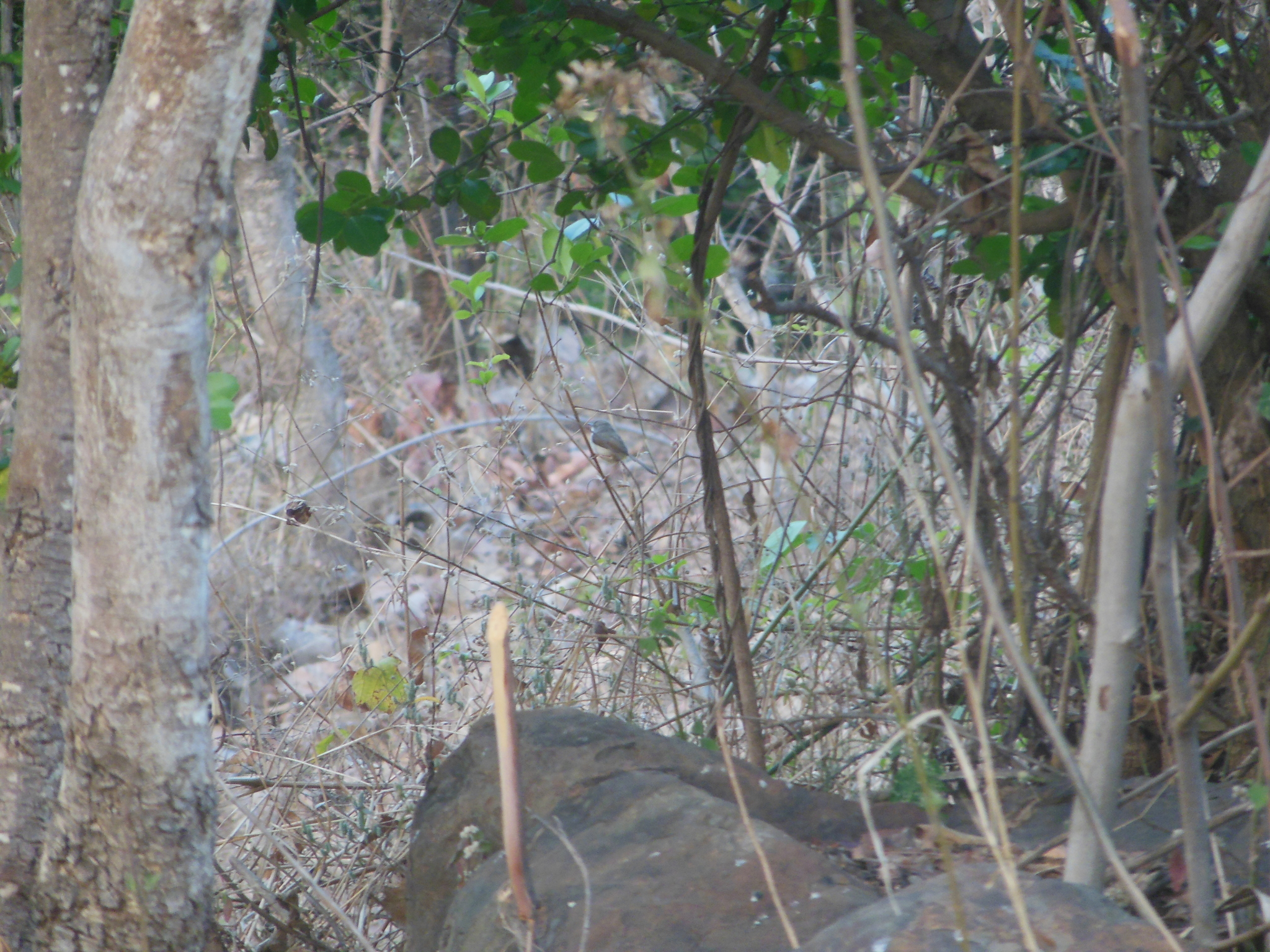
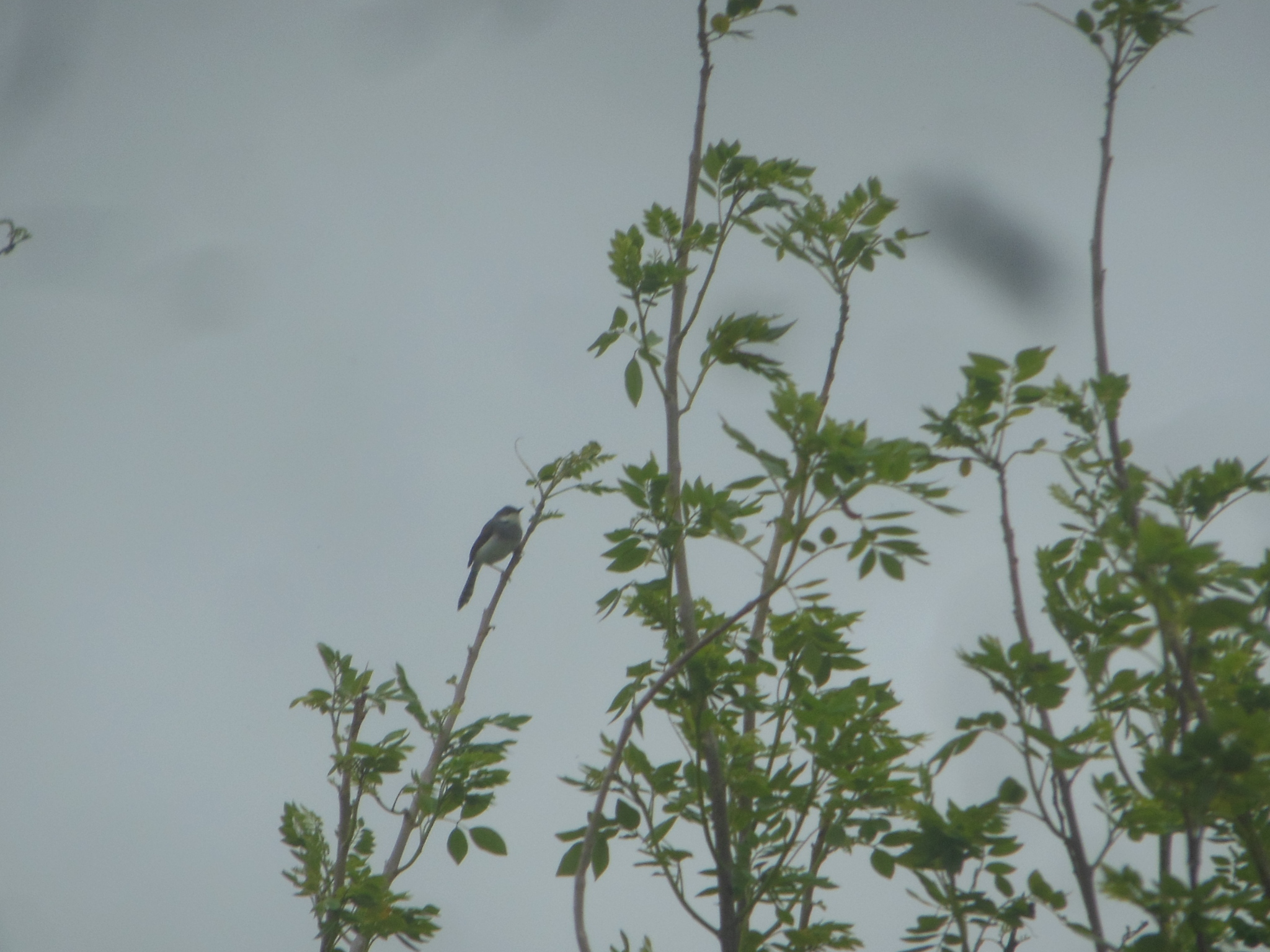
A small warbler measuring 11 to 13 centimetres in length with a longish grey tail featuring graduated feathers tipped in white. It has strong pinkish legs and a short black bill with an orange eye ring. The underparts are buff white, and during the breeding season, a grey breast band contrasts with the white throat. The upperparts are smoky grey in breeding plumage, changing to olive brown in non-breeding birds. A rufous wing panel is present, and non-breeding birds have a short indistinct white supercilium and often lack the breast band. Young birds are more rufous above with a pale lower mandible.
Identification
The most distinctive field mark is the smoky grey breast band that contrasts sharply with the white throat. The all-black bill and pink legs are also diagnostic. The tail is held upright and shows graduated white-tipped feathers. Can be confused with the rufescent prinia.
Distribution & Habitat
Found throughout the Indian subcontinent extending from Himalayan foothills to Southern India and eastern Indian states including Arunachal Pradesh, Nagaland, Manipur, Meghalaya, and Assam. Also occurs in Pakistan, Burma, Vietnam, Sri Lanka, and Yunnan province in southern China. Inhabits open woodland, scrub jungle, bushes, hedgerows, bamboo jungle, mangrove swamps, and reeds. Altitude ranges from plains up to 1000 meters for the nominate subspecies and up to 1800 meters for P.h. rufula. Undertakes slight southward migration during winter.
Behavior & Ecology
Primarily insectivorous, feeding on ants, small beetles, and caterpillars found among twigs and foliage. Also consumes nectar from Erythrina and Bombax blossoms; pollen from flowers can give the forehead an orange or yellowish tinge. Usually found in pairs or small groups, sometimes forming parties of up to twenty individuals. Characteristically jerks the tail while moving between branches. Breeding begins with the rains; the male sings from a high perch and performs aerobatic displays. Song is a squeaky series: chiwee-chiwee-chiwi-chip-chip-chip. The cup-shaped nest of grass is placed between sewn leaves, resembling a tailorbird's nest but typically closer to the ground. Clutch size is three or four eggs, varying in colour from glossy blue to pinkish white, greenish-blue, or pure white with reddish brown speckles. Both parents incubate for about ten to eleven days, and more than one brood may be raised per season.
Source: Wikipedia · CC BY-SA 3.0
Taxonomy
- Order
- Passeriformes
- Family
- Cisticolidae
- Genus
- Prinia
- eBird Code
- gybpri1
Vocalizations
Subspecies (6)
-
Prinia hodgsonii albogularis
southwestern peninsular India (Eastern Ghats to southern Mysore and Kerala)
-
Prinia hodgsonii confusa
southern China (southern Sichuan and western Yunnan) to northeastern Laos and northern Vietnam
-
Prinia hodgsonii erro
eastern Myanmar (Shan States) to Thailand and southern Indochina
-
Prinia hodgsonii hodgsonii
India to western Myanmar
-
Prinia hodgsonii pectoralis
Sri Lanka
-
Prinia hodgsonii rufula
Kashmir to Assam, southwestern China (northwestern Yunnan), and northern Myanmar
Data Sources
Species description from Wikipedia, licensed under CC BY-SA 3.0.
Bird images and sounds sourced from GBIF, contributed by citizen scientists worldwide under Creative Commons licenses.
Taxonomy data from AviList 2025.