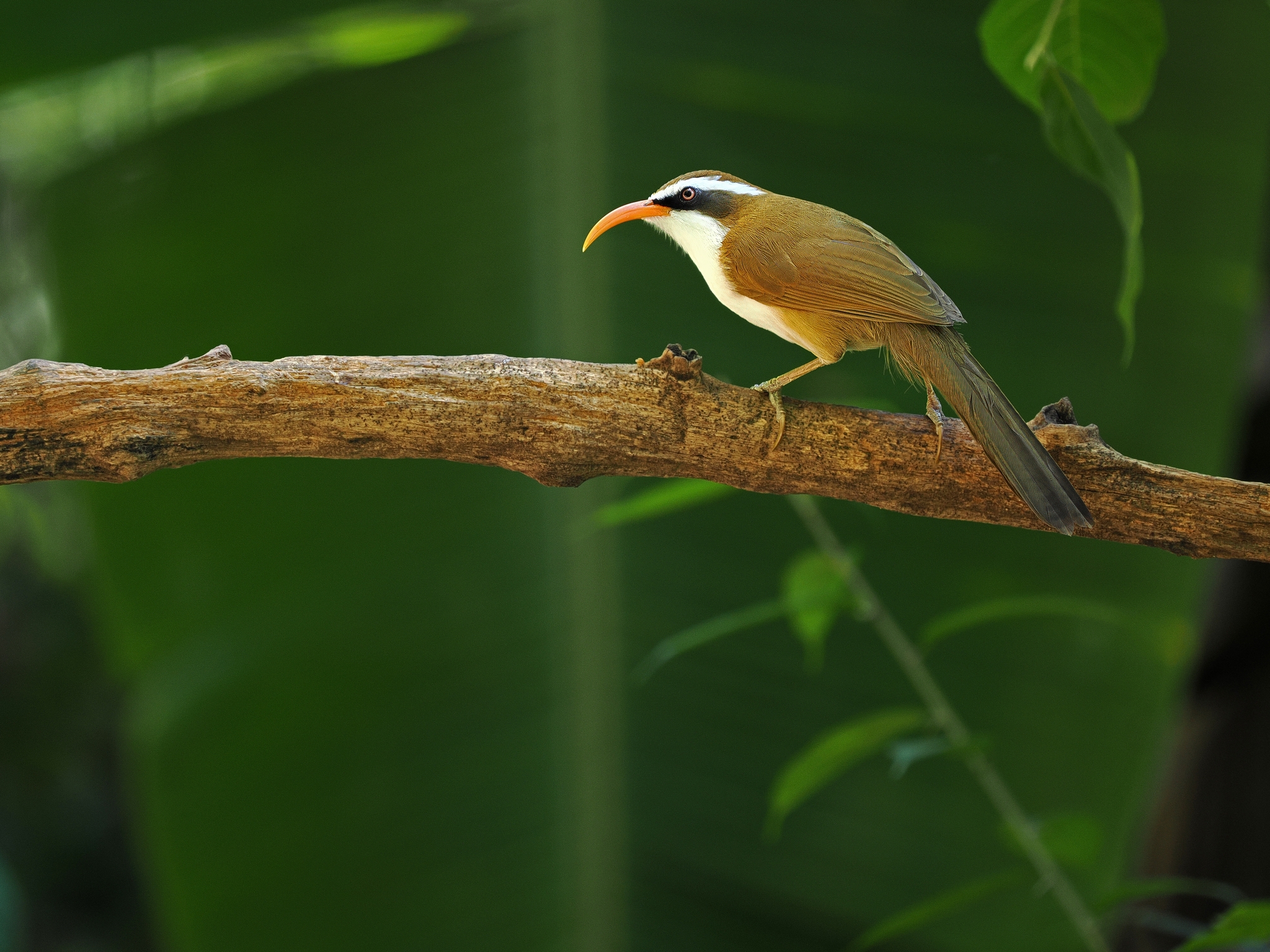
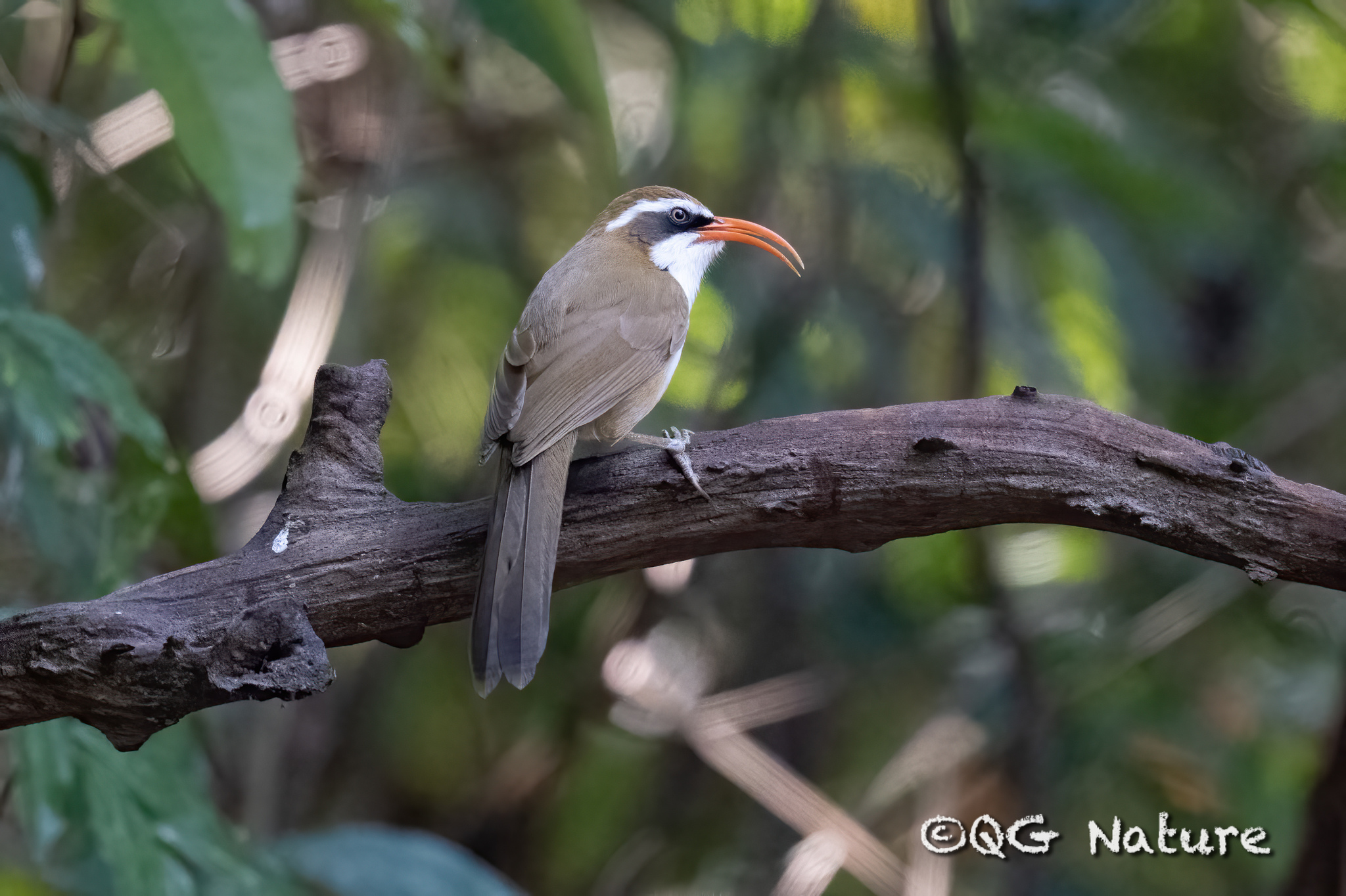
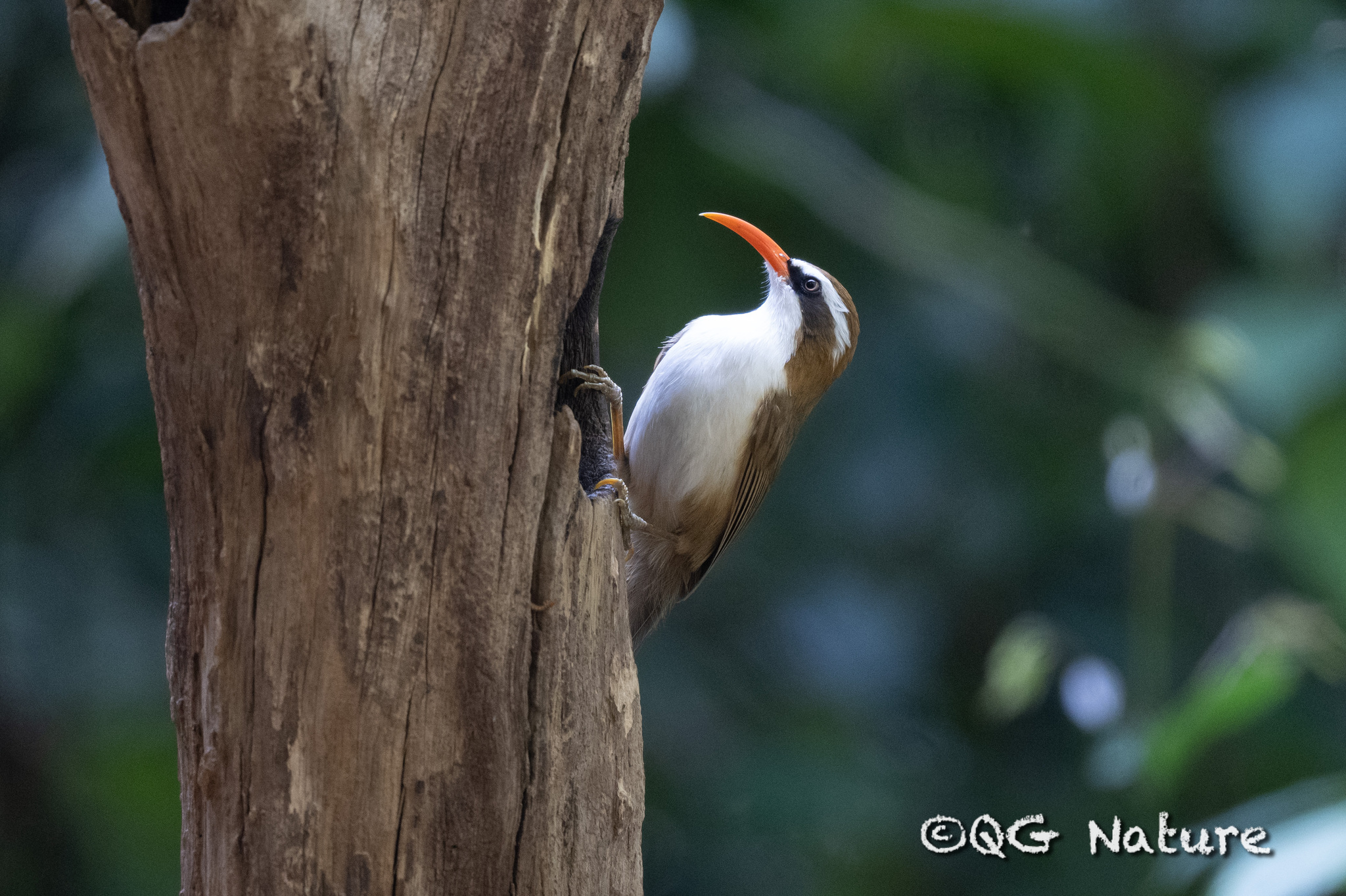
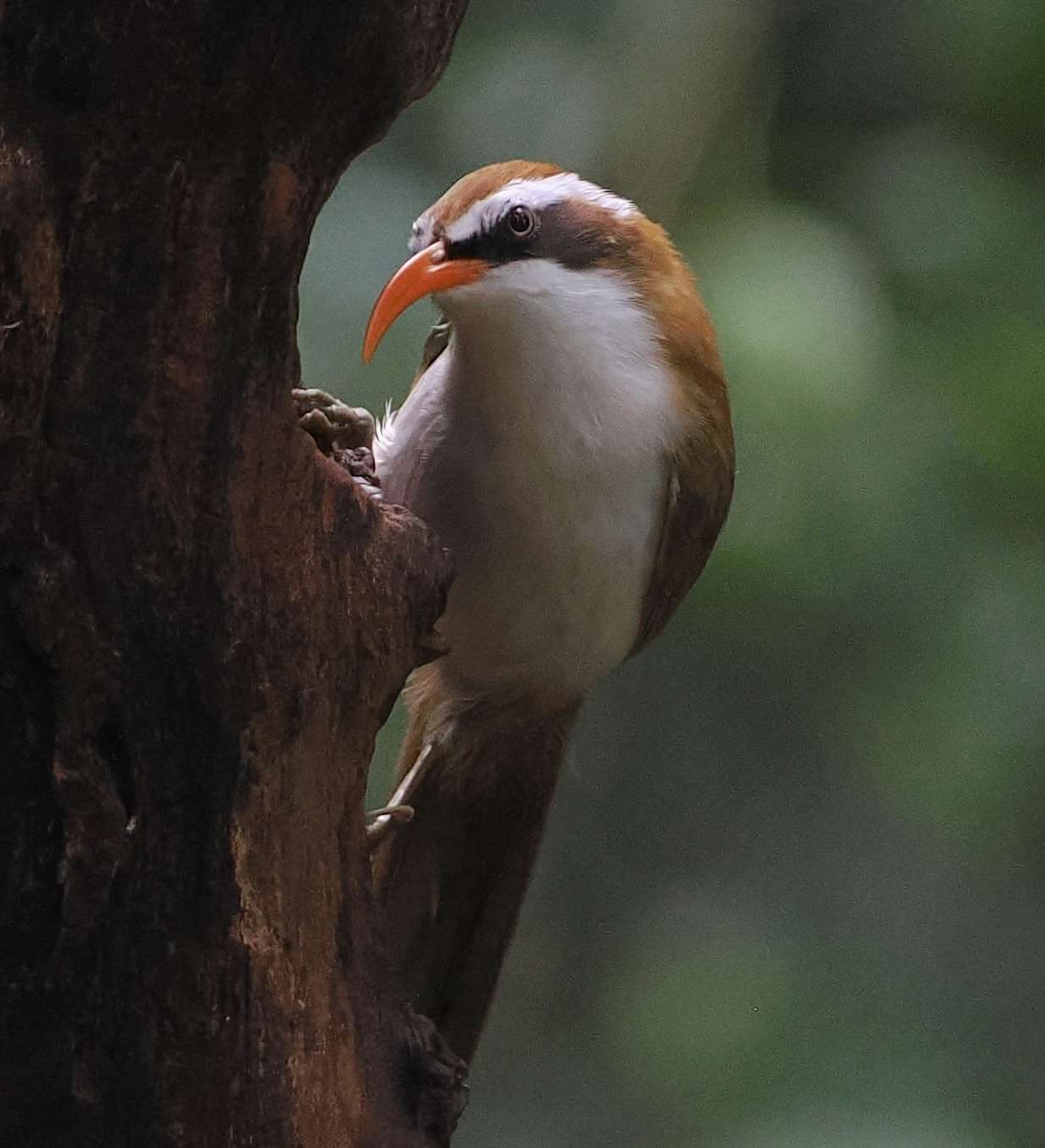
Red-billed Scimitar Babbler
Pomatorhinus ochraceiceps
棕头钩嘴鹛
Introduction
A bird in the family Timaliidae. It occurs in Northeast India, Southeast Asia, and adjacent parts of southern China. It inhabits subtropical and tropical moist lowland forest and subtropical and tropical moist montane forest between 300-2400m elevation, particularly favoring bamboo clumps and Fokienia-dominated forest. It feeds mainly on invertebrates but also takes nectar from flowers. It is a frequent participant of mixed-species bird flocks, often associating with the White-hooded Babbler. The species is characterized by a long reddish-orange decurved bill, typical of scimitar-babblers.
Description
A medium-sized babbler with a distinctive long, reddish-orange decurved bill. It has a prominent long white supercilium contrasting with brown upperparts and tail. The plumage is predominantly brown overall. Sexes are similar in appearance, showing no sexual dimorphism in coloration.
Identification
Recognizable by its long curved reddish-orange bill, which distinguishes it from other babblers in its range. The prominent white supercilium against brown plumage provides a key field mark. It is similar in appearance to other scimitar-babbler species but can be identified by bill color and facial pattern.
Distribution & Habitat
Found in Northeast India, Southeast Asia, and adjacent parts of southern China. Its habitat consists of subtropical and tropical moist lowland forest and subtropical and tropical moist montane forest, occurring at elevations between 300-2400m. It shows particular preference for bamboo clumps and Fokienia-dominated forest within this range.
Behavior & Ecology
Primarily insectivorous, feeding on invertebrates. It also consumes nectar from flowers. It is a social species that frequently joins mixed-species bird flocks and often associates with the White-hooded Babbler. It forages in the understory and mid-story of forest habitats.
Conservation
Information not available.
Culture
Information not available.
Source: Wikipedia · CC BY-SA 3.0
Taxonomy
- Order
- Passeriformes
- Family
- Timaliidae
- Genus
- Pomatorhinus
- eBird Code
- rbsbab1
Subspecies (4)
-
Pomatorhinus ochraceiceps alius
plateau of northeastern Thailand to southern Indochina
-
Pomatorhinus ochraceiceps austeni
hill forest of eastern Assam (Naga Hills to Barail Mountains and Manipur)
-
Pomatorhinus ochraceiceps ochraceiceps
Myanmar to mountains of northern Thailand, Tonkin, and northern Laos
-
Pomatorhinus ochraceiceps stenorhynchus
northeastern Assam (Mishmi Hills) to northern Myanmar
Data Sources
Species description from Wikipedia, licensed under CC BY-SA 3.0.
Bird images and sounds sourced from GBIF, contributed by citizen scientists worldwide under Creative Commons licenses.
Taxonomy data from AviList 2025.