Grey Peacock-Pheasant
Polyplectron bicalcaratum
灰孔雀雉
Introduction
A large Asian member of the order Galliformes. Inhabits lowland and hill forests across Bangladesh, Northeast India, and Southeast Asia (excluding most of Indochina and the Malayan Peninsula). Characterized by greyish-brown plumage with finely spotted green eyespots and an elongated bushy crest. Diet consists primarily of seeds, termites, fruits, and invertebrates. Evaluated as Least Concern on the IUCN Red List due to its large range, though listed on CITES Appendix II to restrict trade in wild-caught birds.
Description
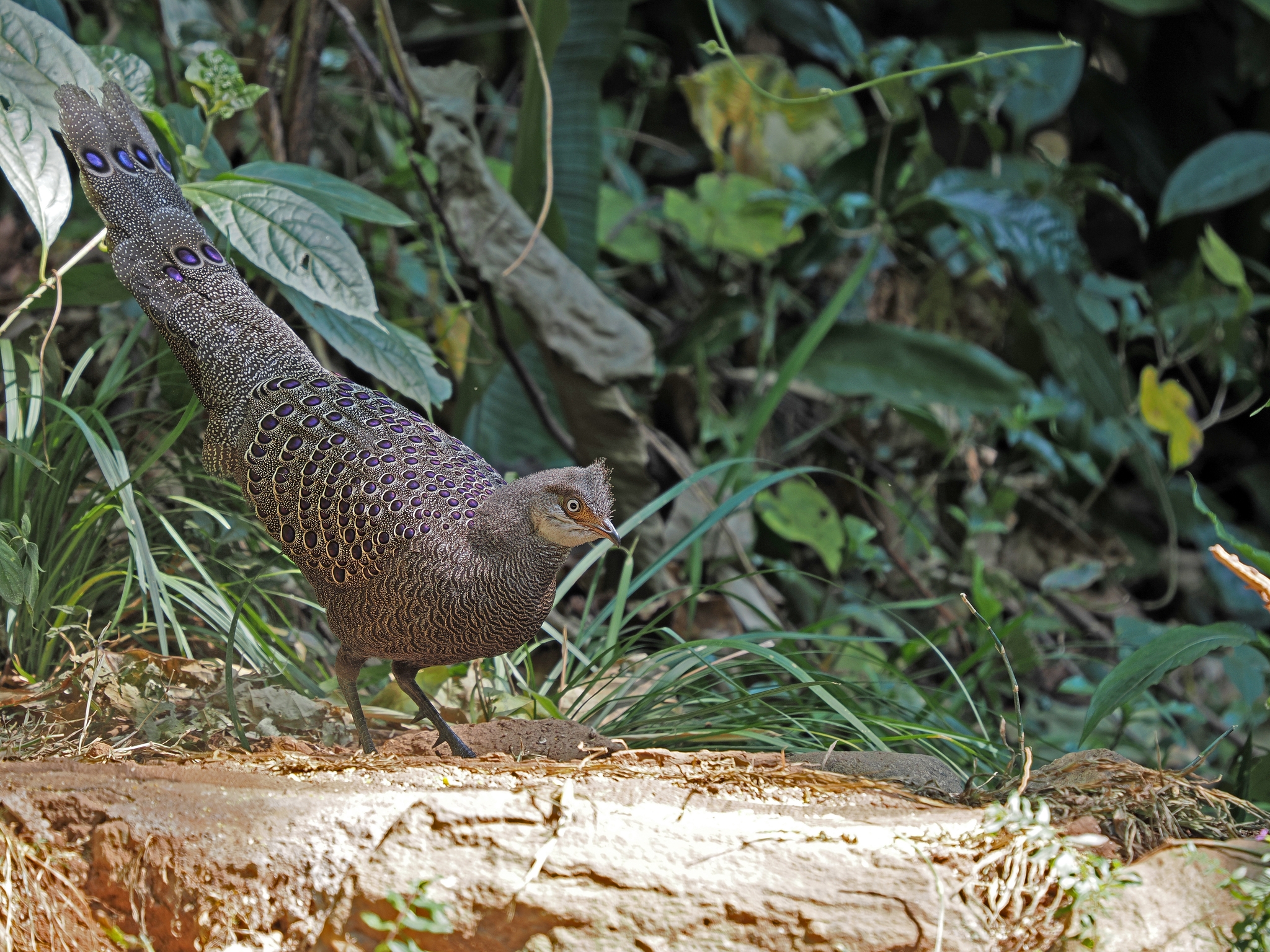
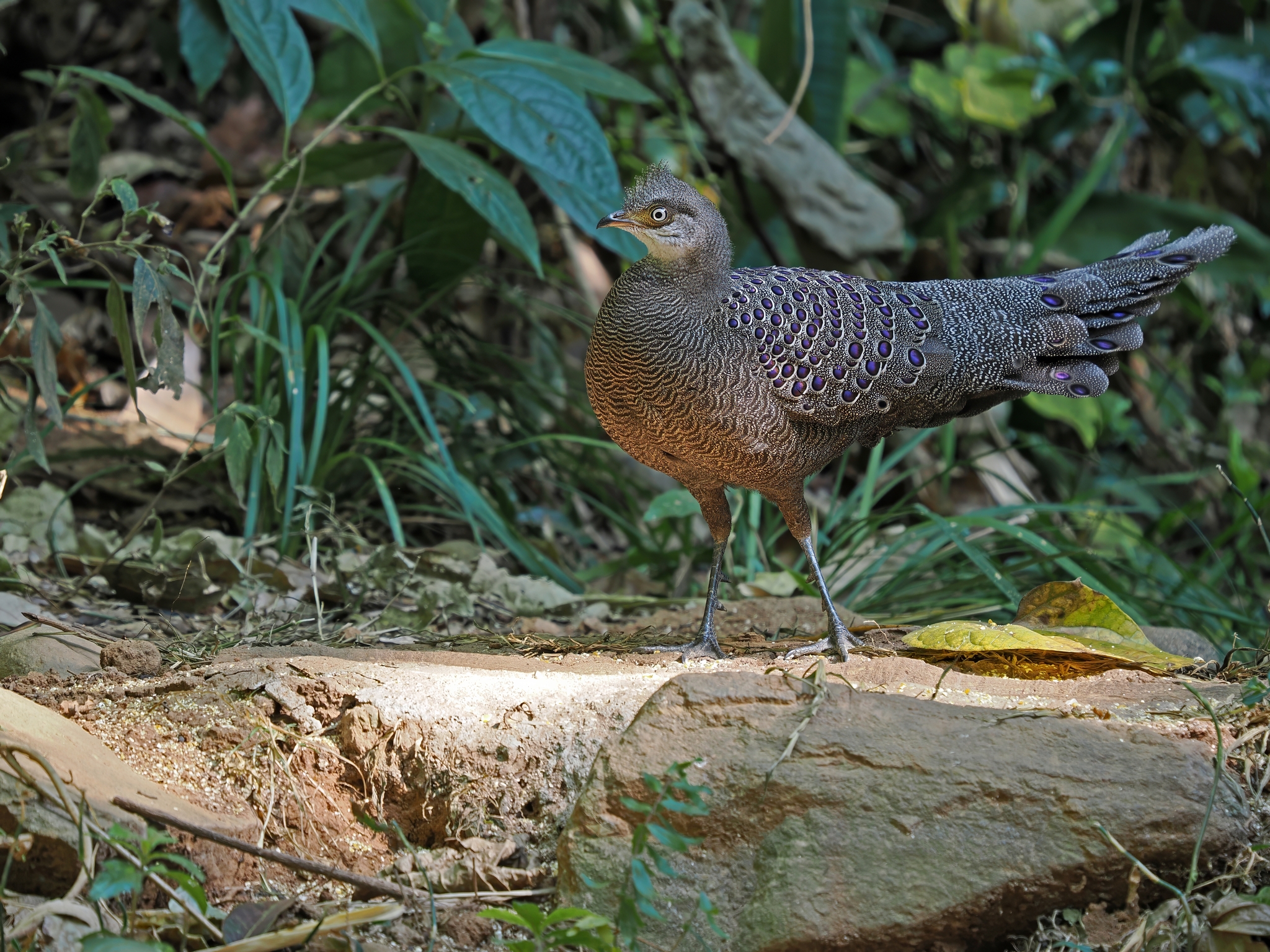
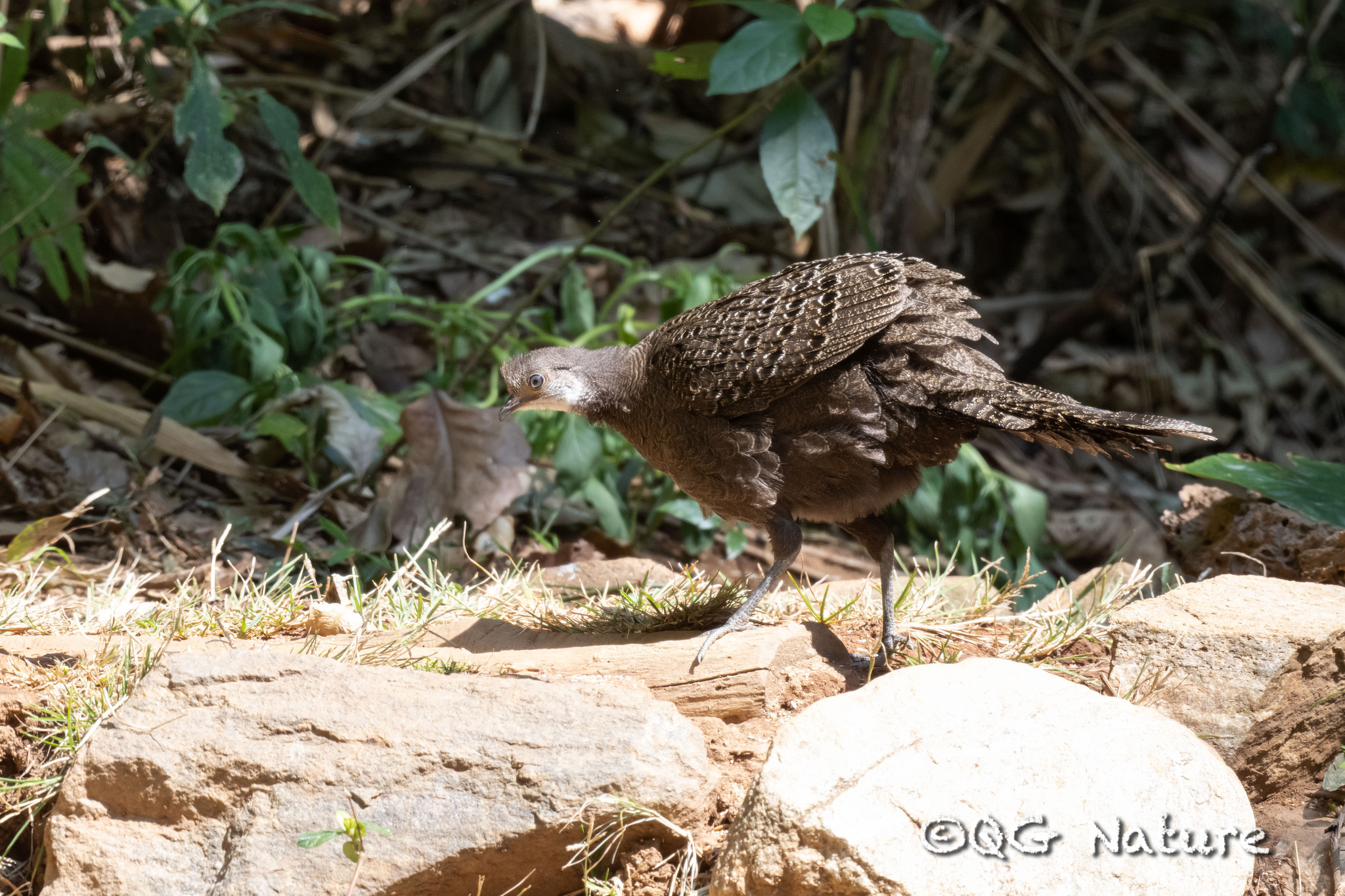
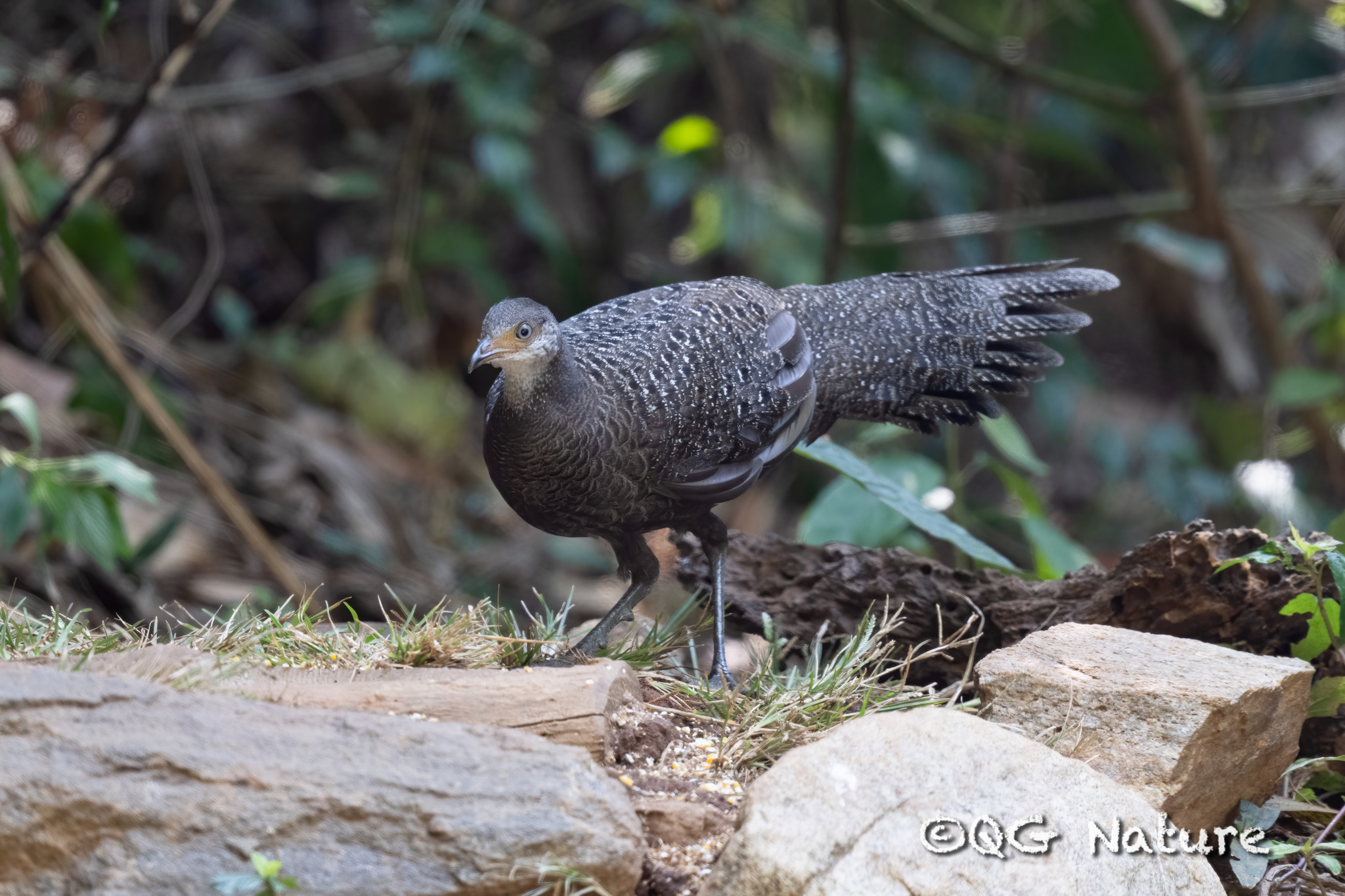
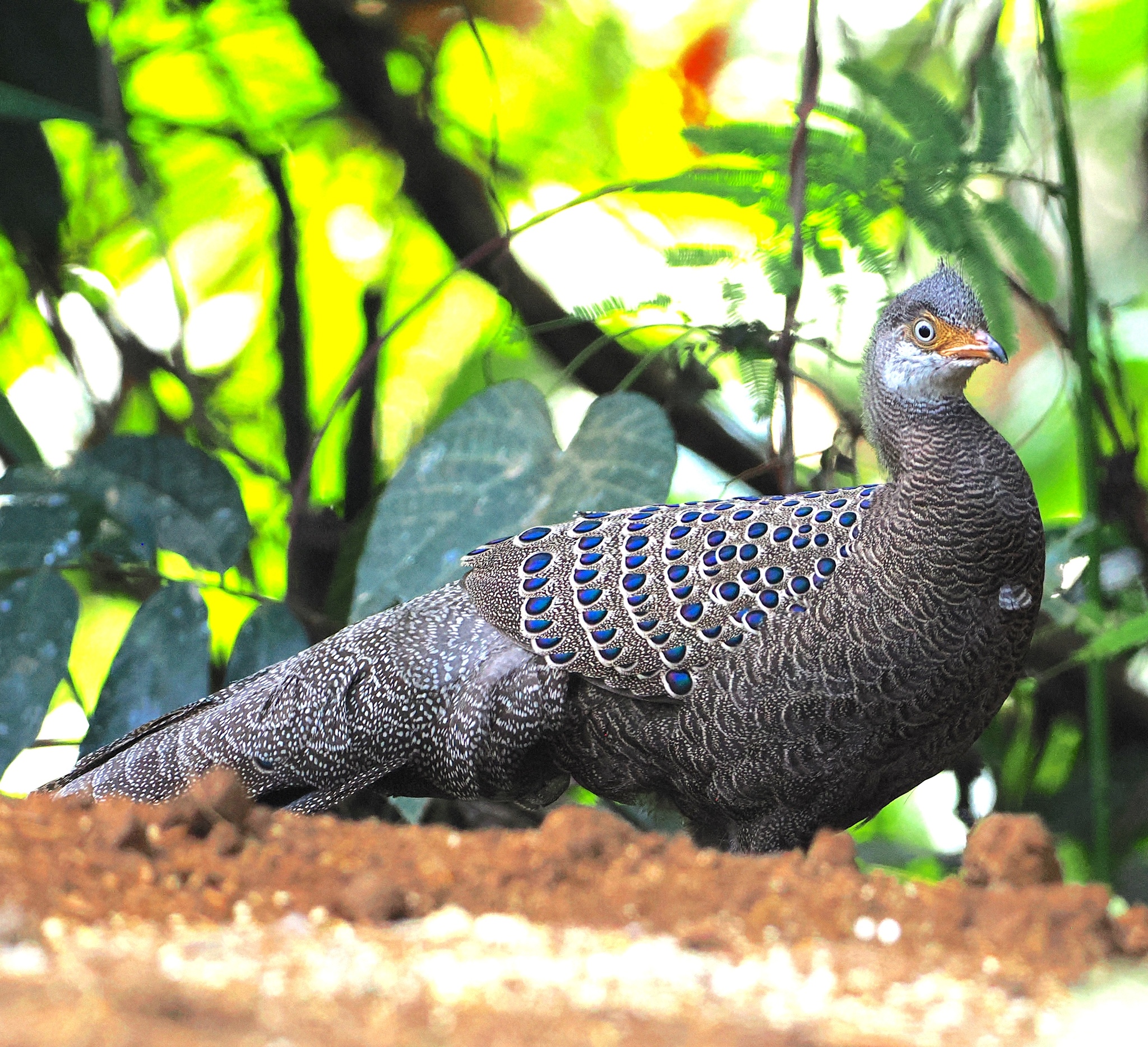
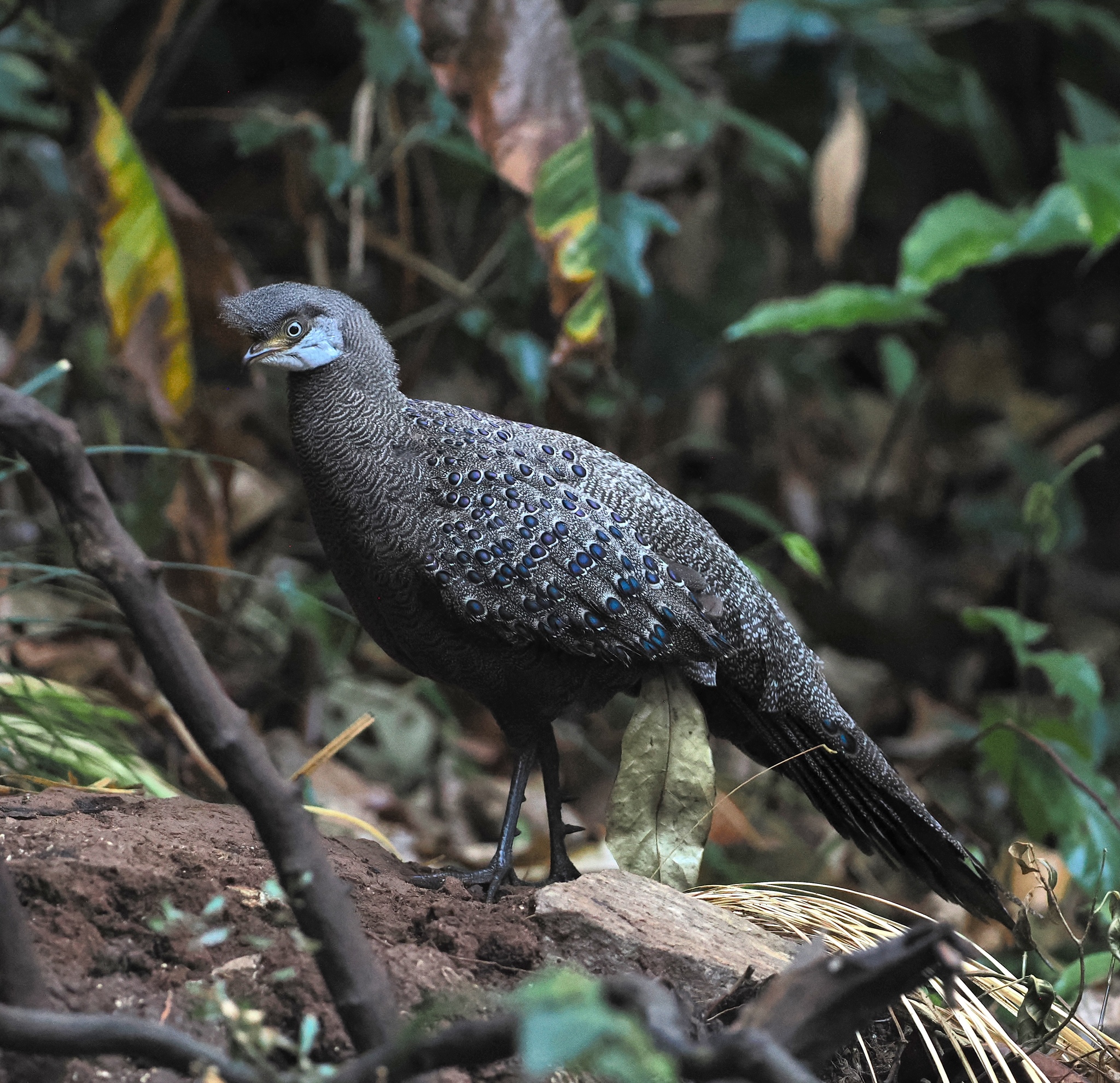
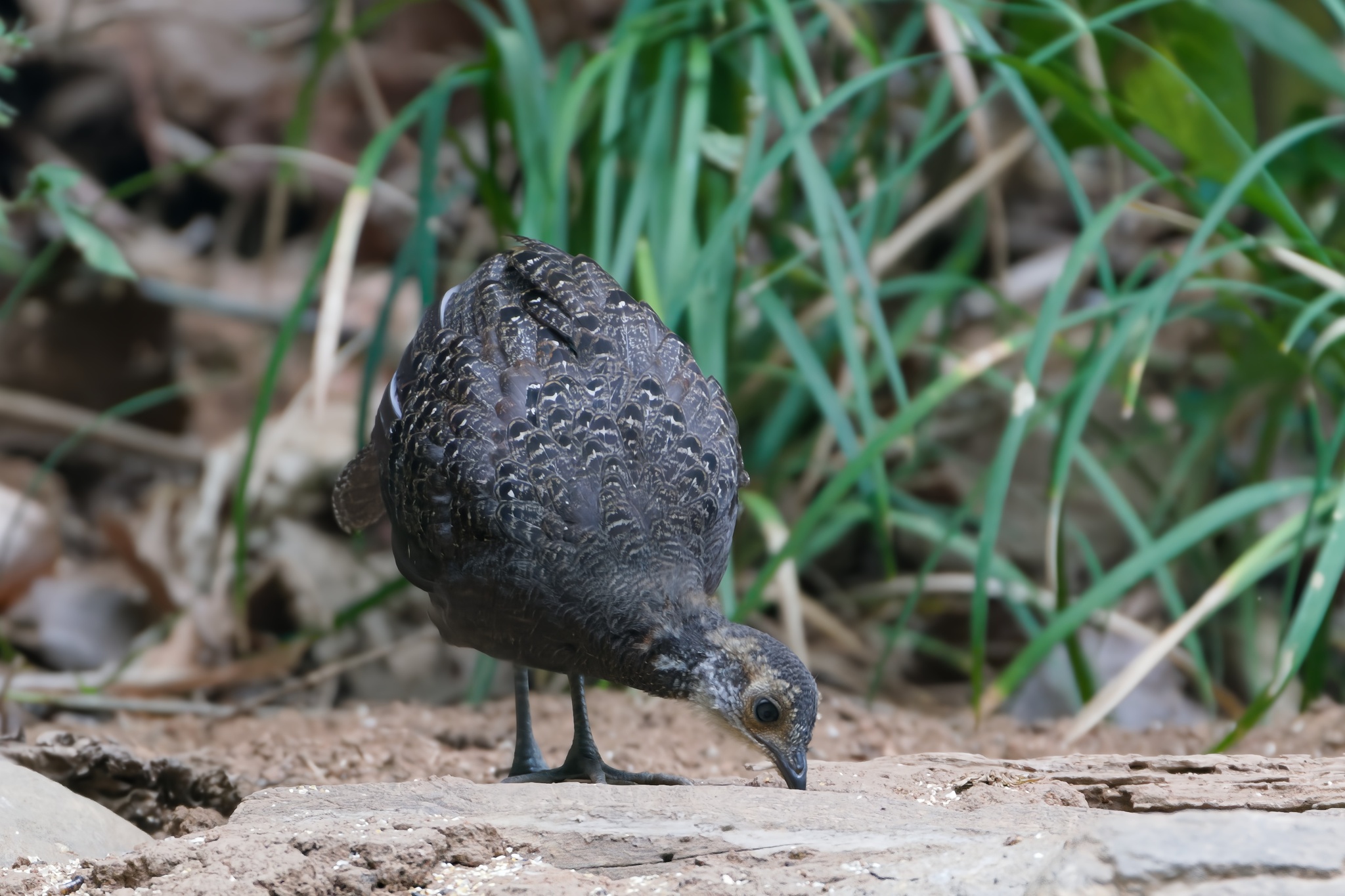
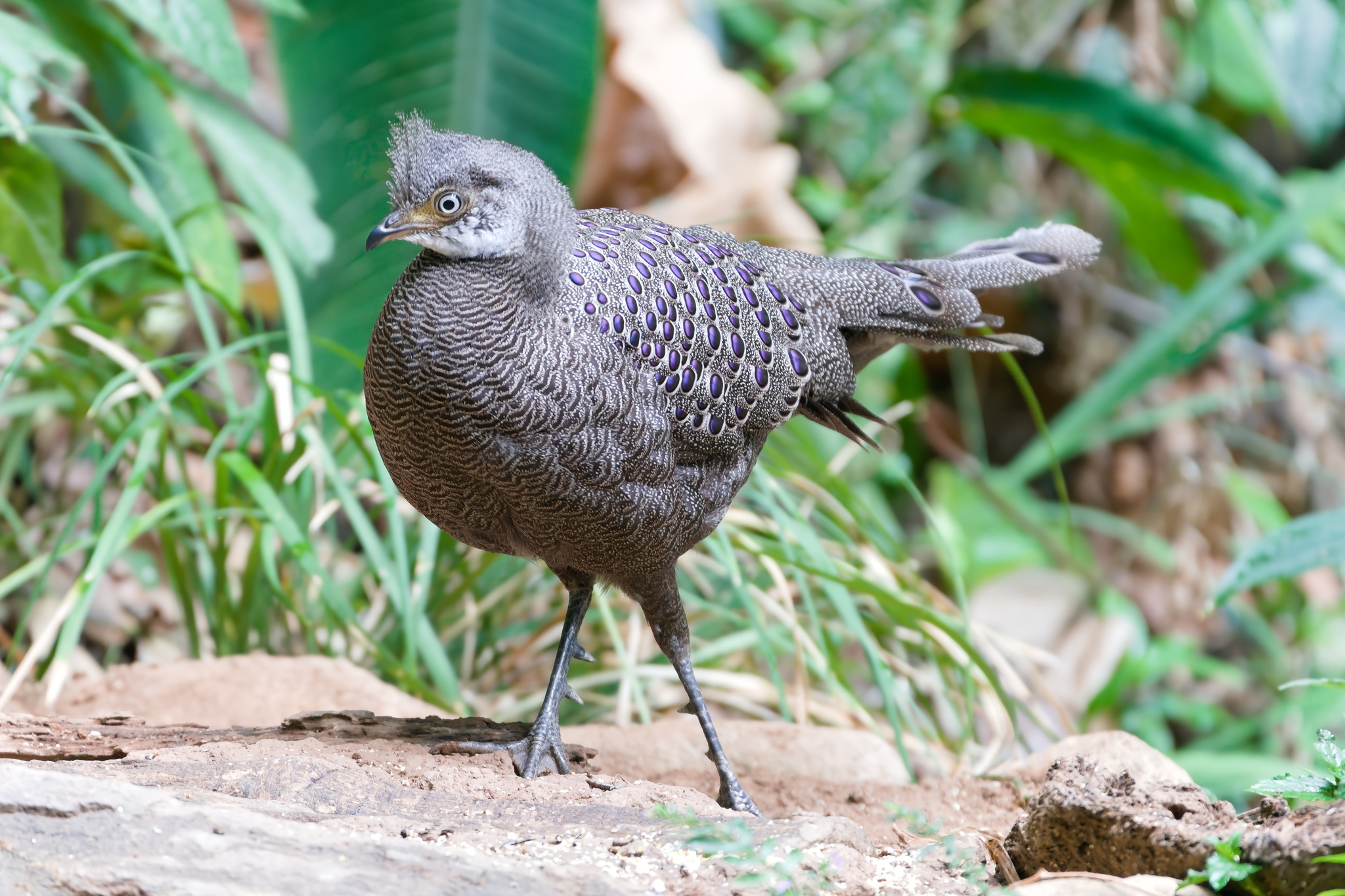
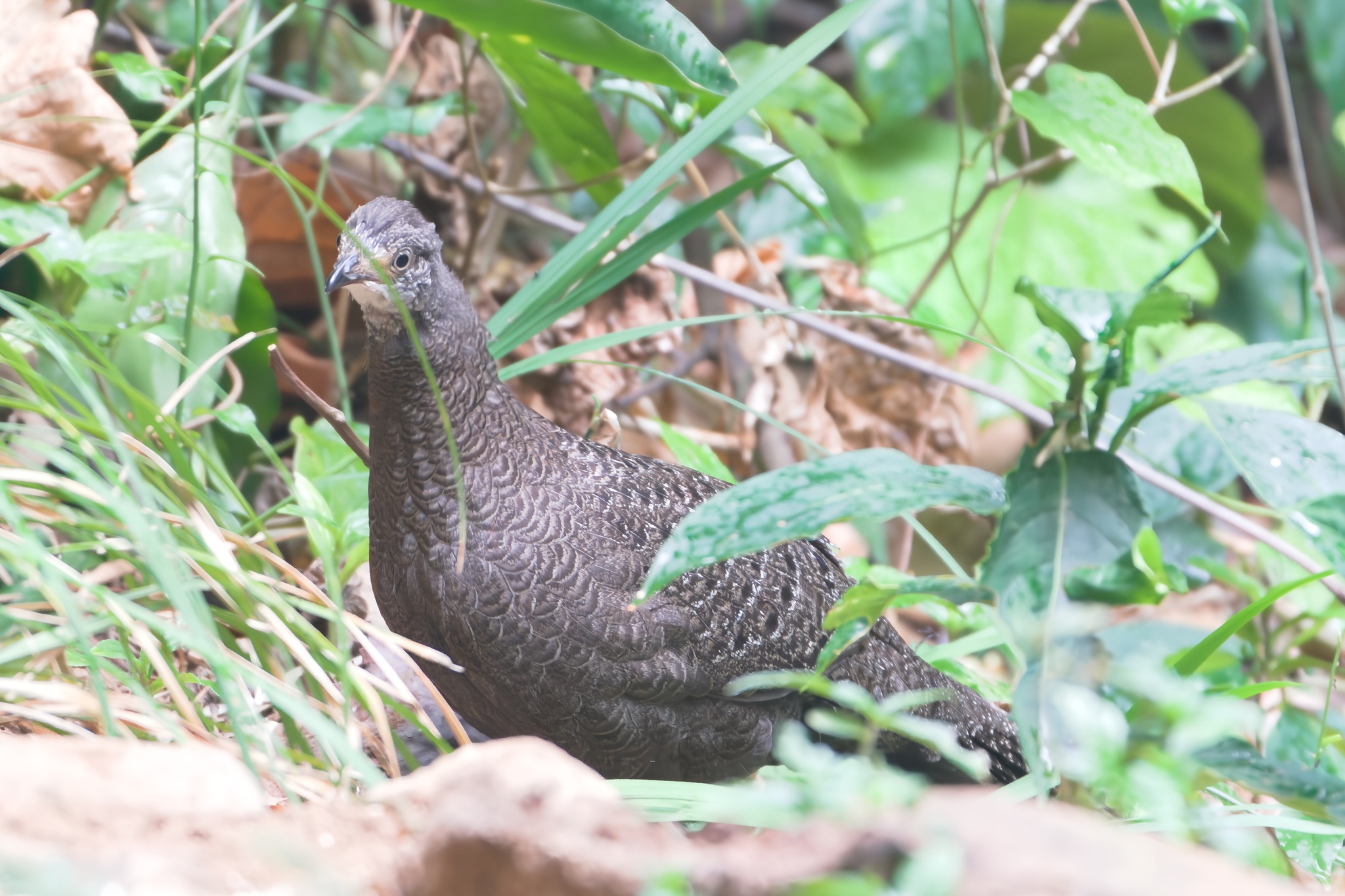
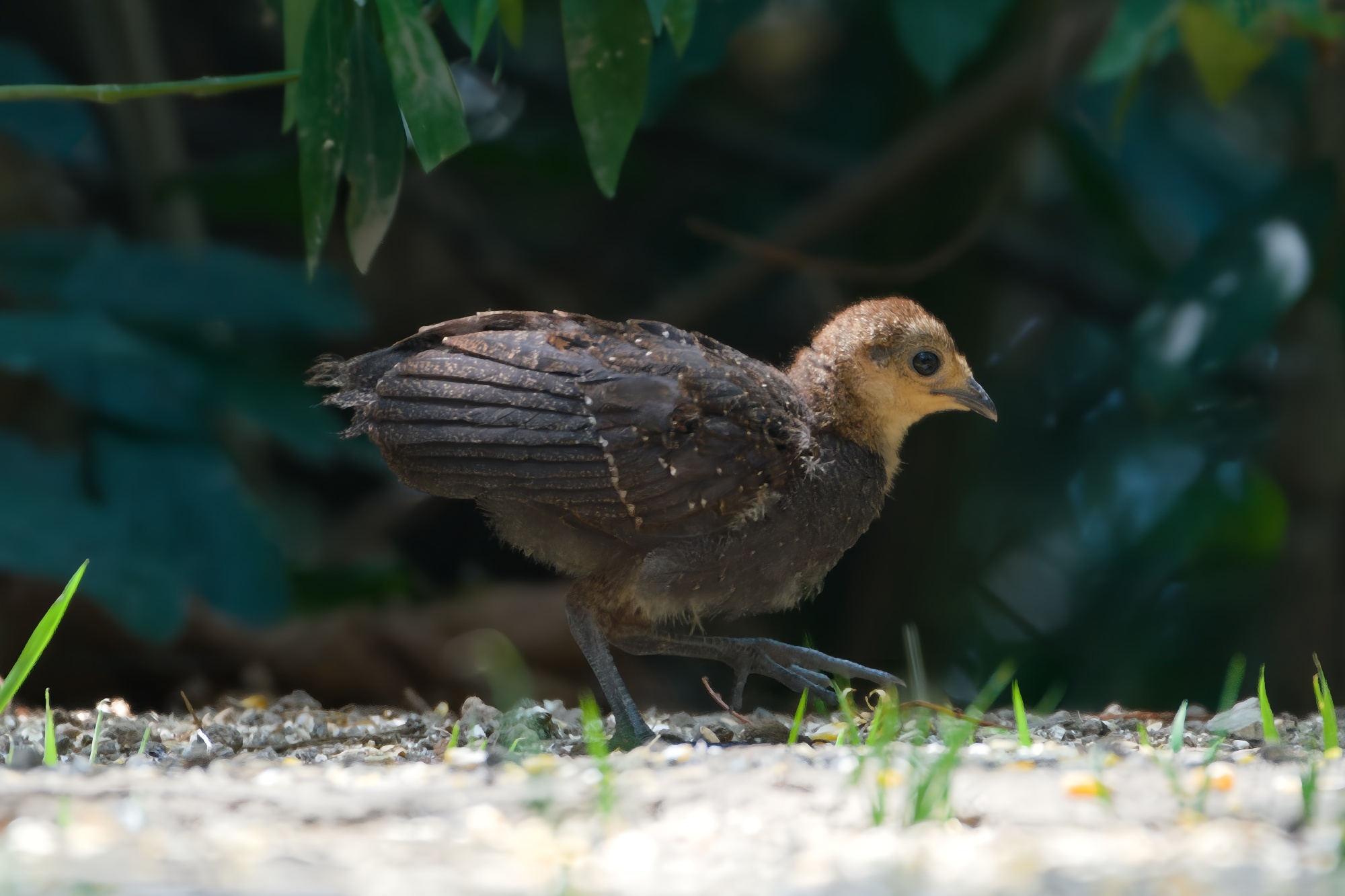
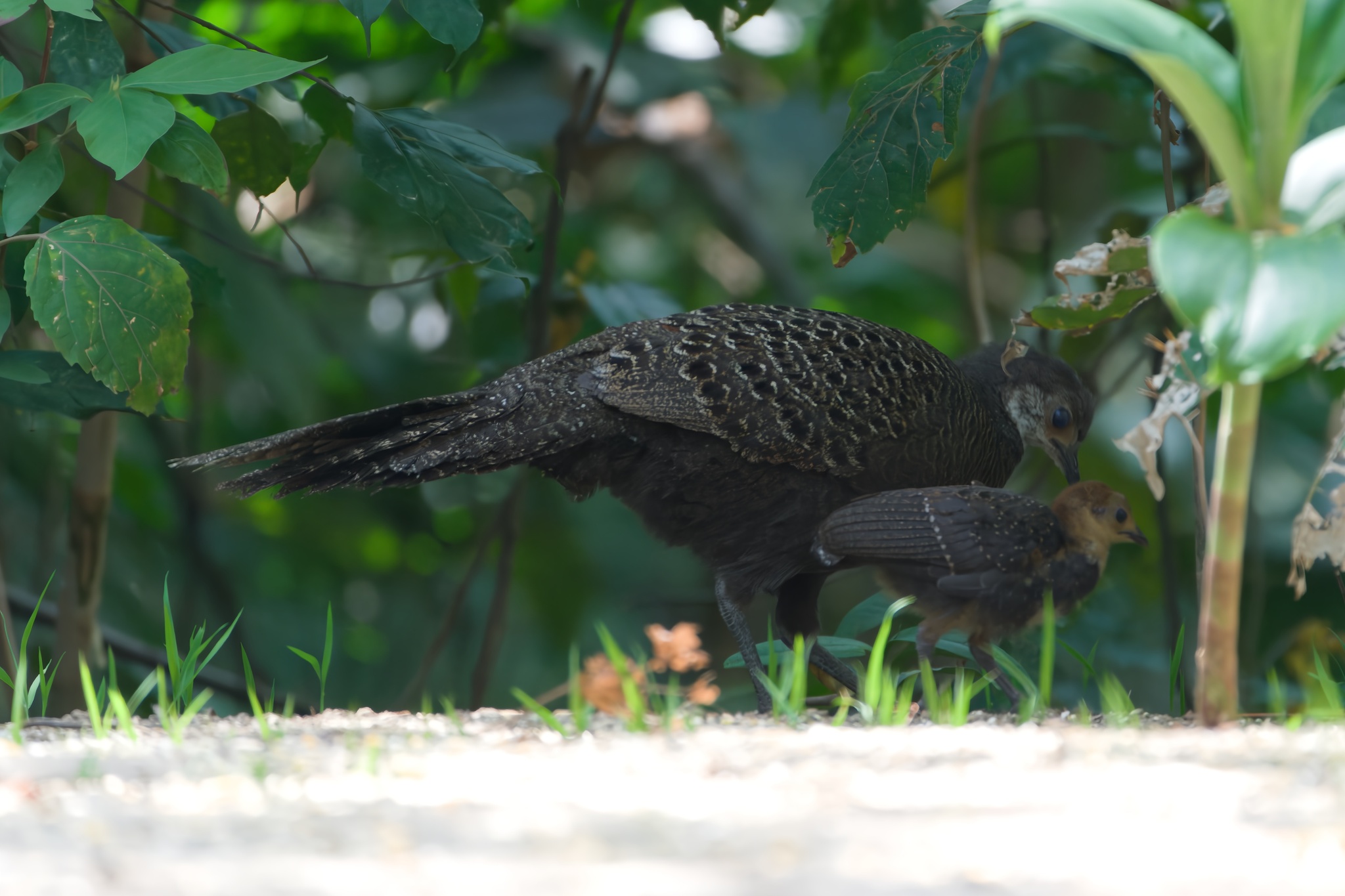
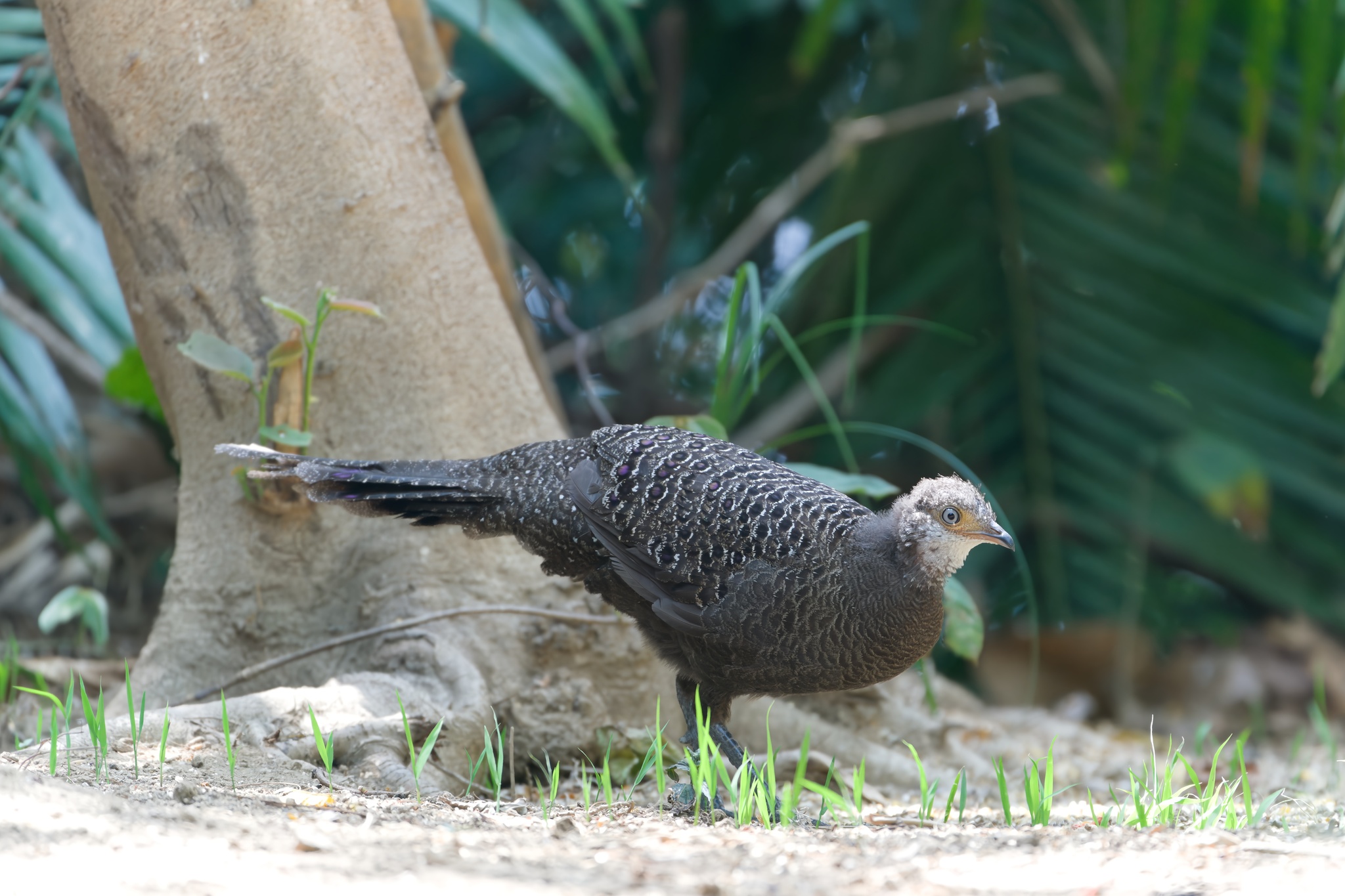
A large pheasant reaching up to 76 cm in length. Plumage is greyish-brown with finely spotted green eyespots. Features include an elongated bushy crest, bare pink or yellow facial skin, white throat, and grey iris, bill, and legs. The sexes are similar, though females are smaller, darker, and less ornamented. Juveniles resemble adult females.
Distribution & Habitat
Distributed across Bangladesh, Northeast India, and Southeast Asia, though absent from most of Indochina and the entire Malayan Peninsula. Inhabits lowland and hill forests. No migration patterns are documented for this species.
Behavior & Ecology
Diet consists mainly of seeds, termites, fruits, and invertebrates. During breeding season, the female typically lays two eggs. No additional information on social behavior or vocalizations is provided in the source material.
Conservation
Evaluated as Least Concern on the IUCN Red List of Threatened Species, being widespread throughout its large range. Listed on CITES Appendix II, which restricts international trade in wild-caught specimens to preserve wild populations.
Source: Wikipedia · CC BY-SA 3.0
Taxonomy
- Order
- Galliformes
- Family
- Phasianidae
- Genus
- Polyplectron
- eBird Code
- grypep2
Distribution
northeastern India and Bhutan eastward to far southern China, southward to the base of the Thai-Malay Peninsula, central Laos, and central Vietnam
Data Sources
Species description from Wikipedia, licensed under CC BY-SA 3.0.
Bird images and sounds sourced from GBIF, contributed by citizen scientists worldwide under Creative Commons licenses.
Taxonomy data from AviList 2025.