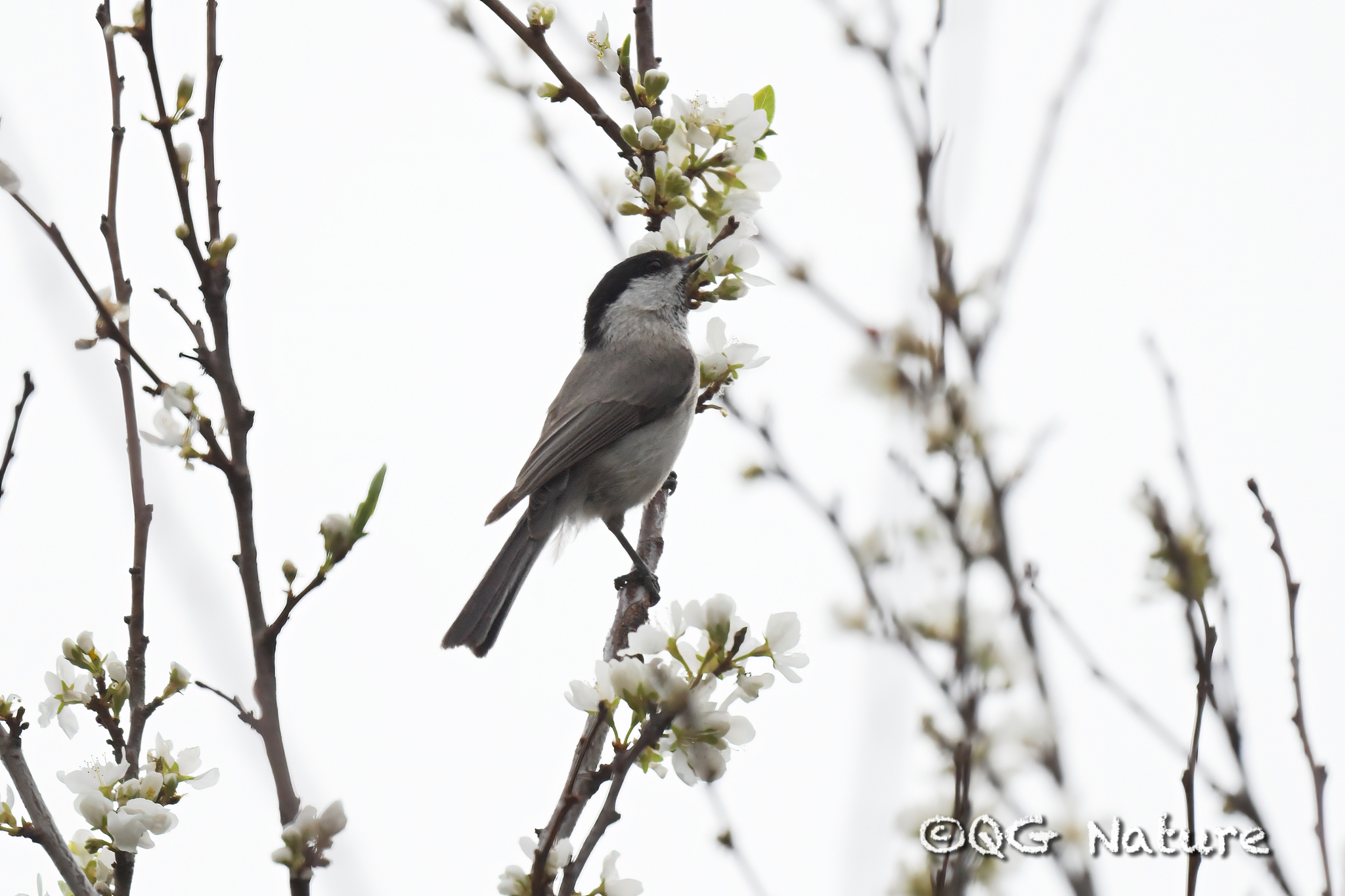
Marsh Tit
Poecile palustris
沼泽山雀
Introduction
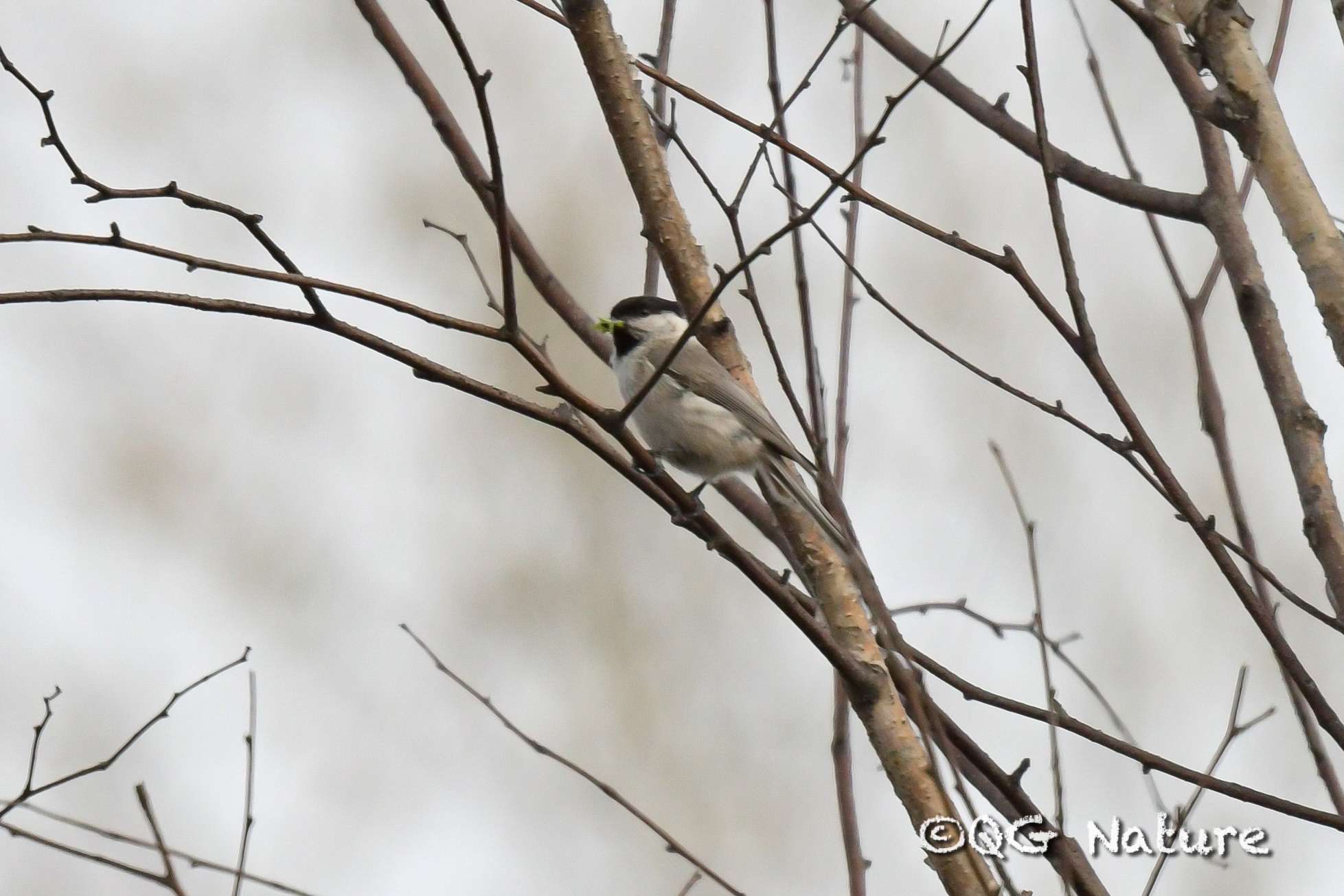
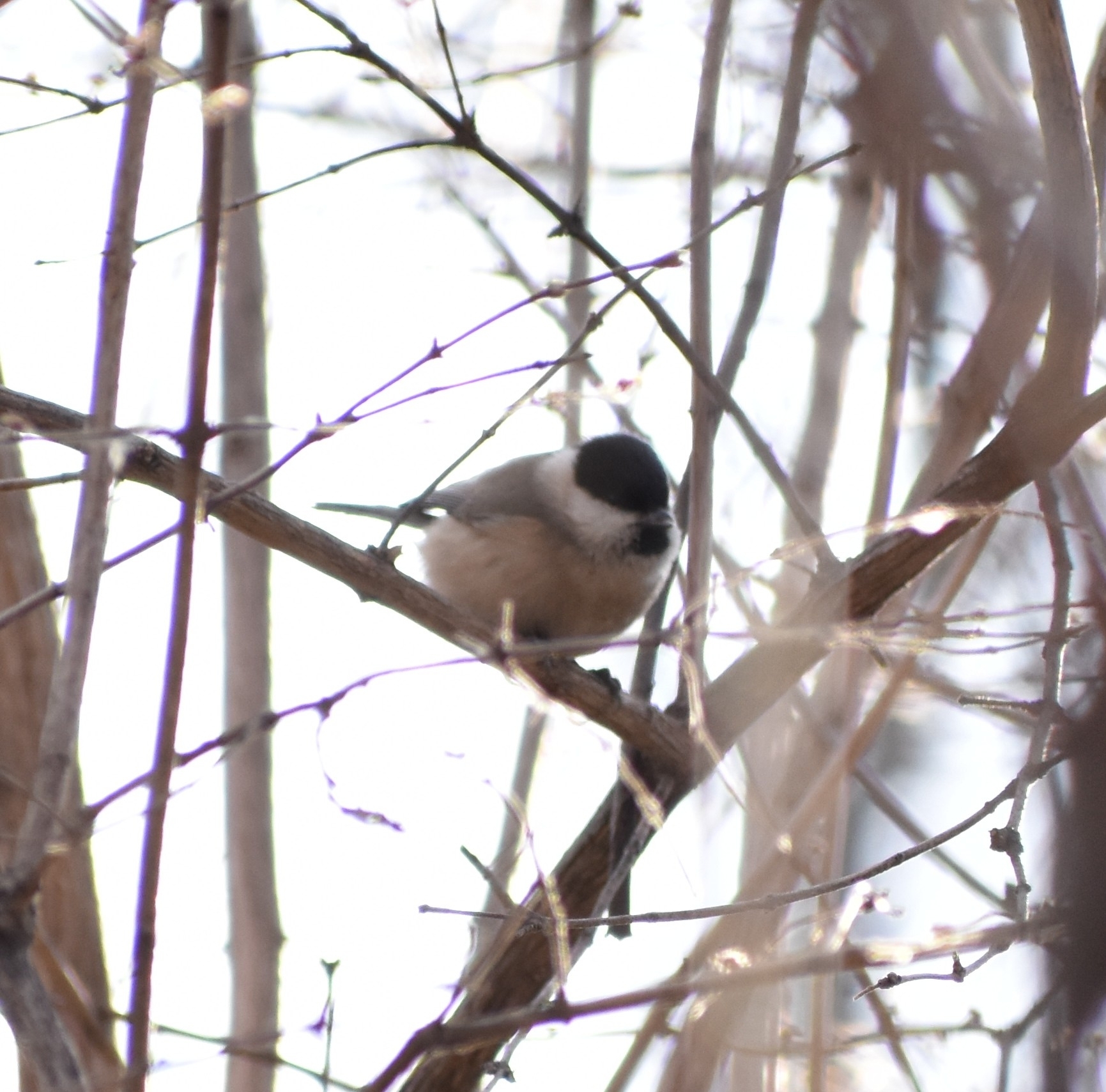
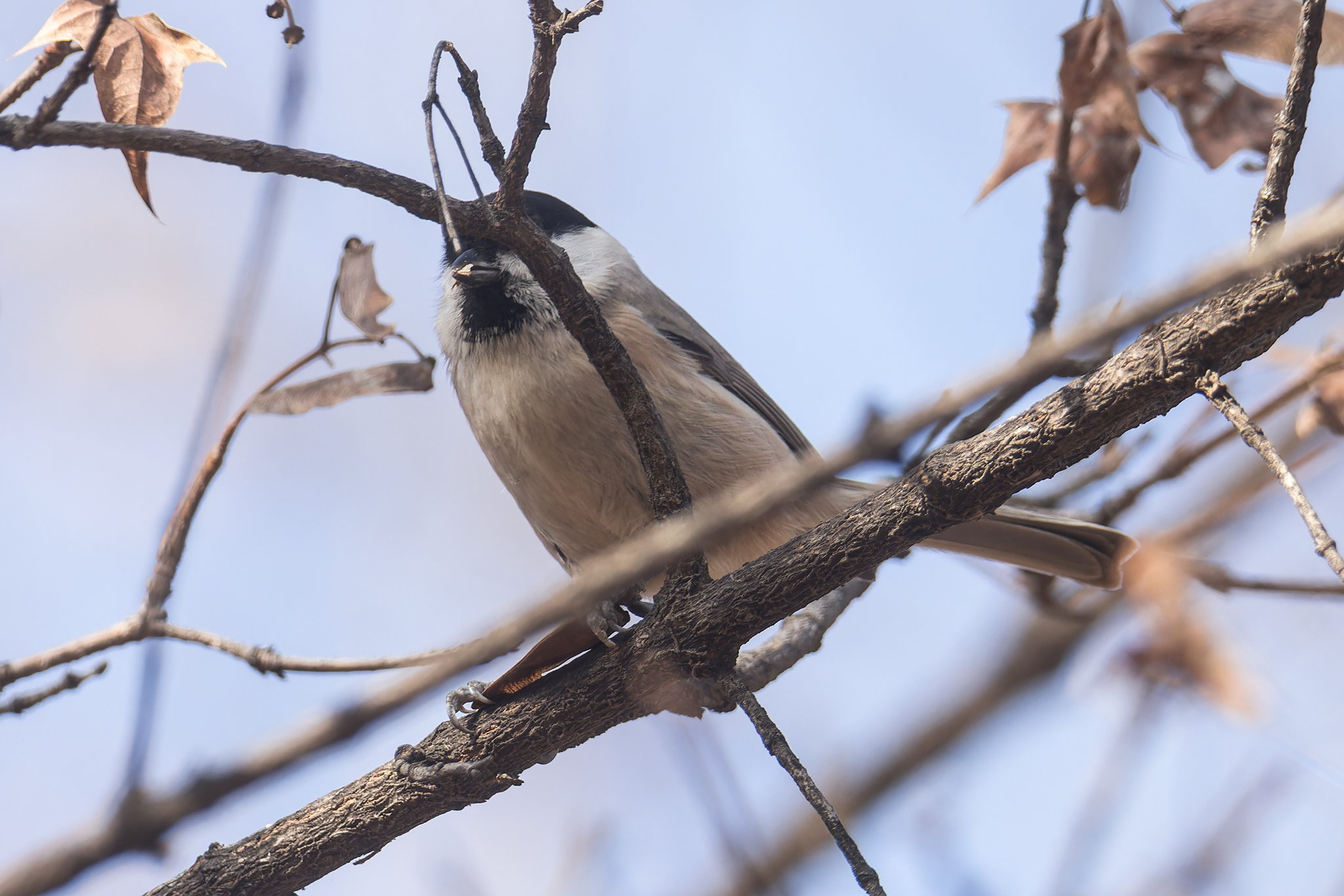
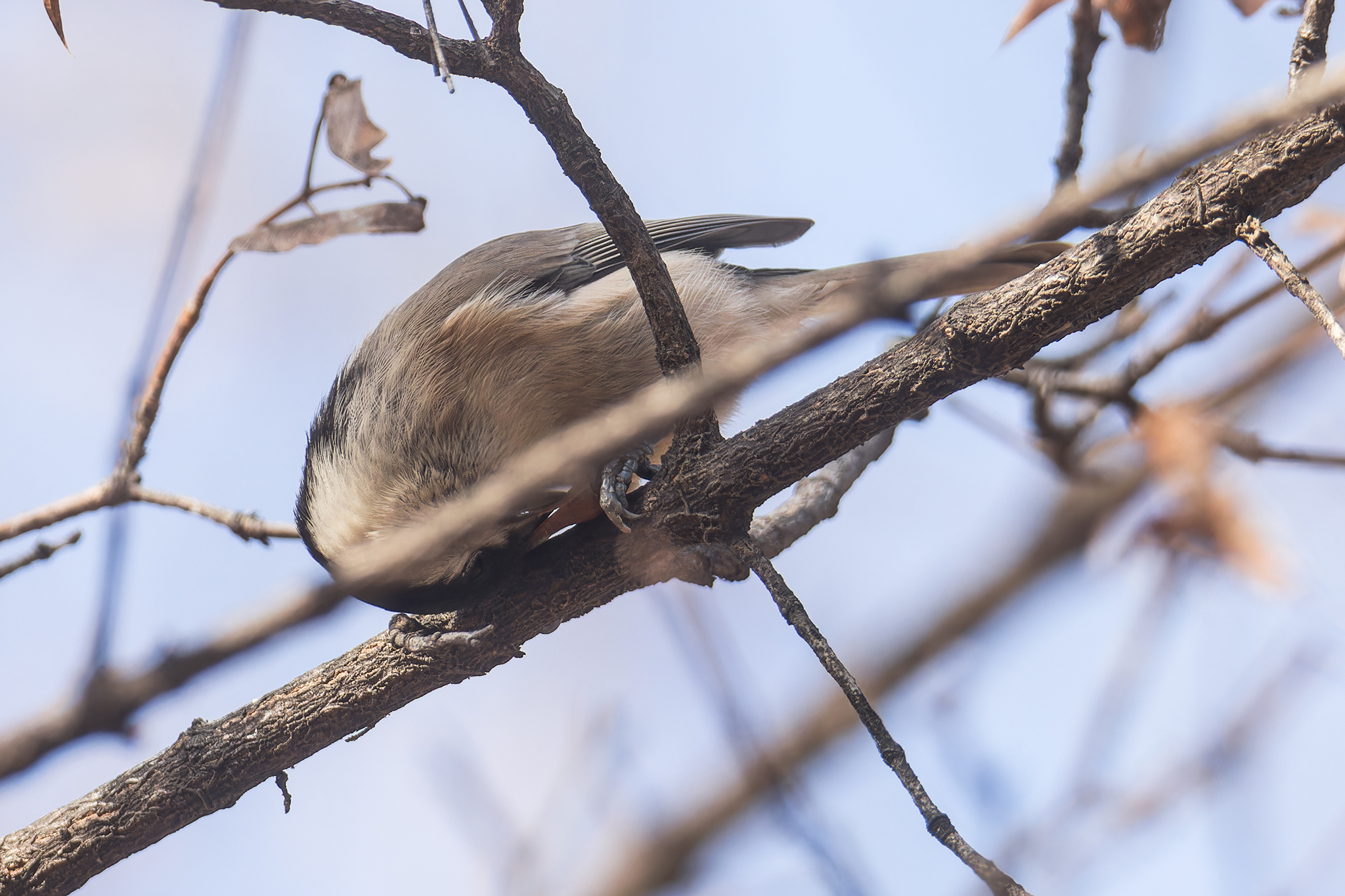
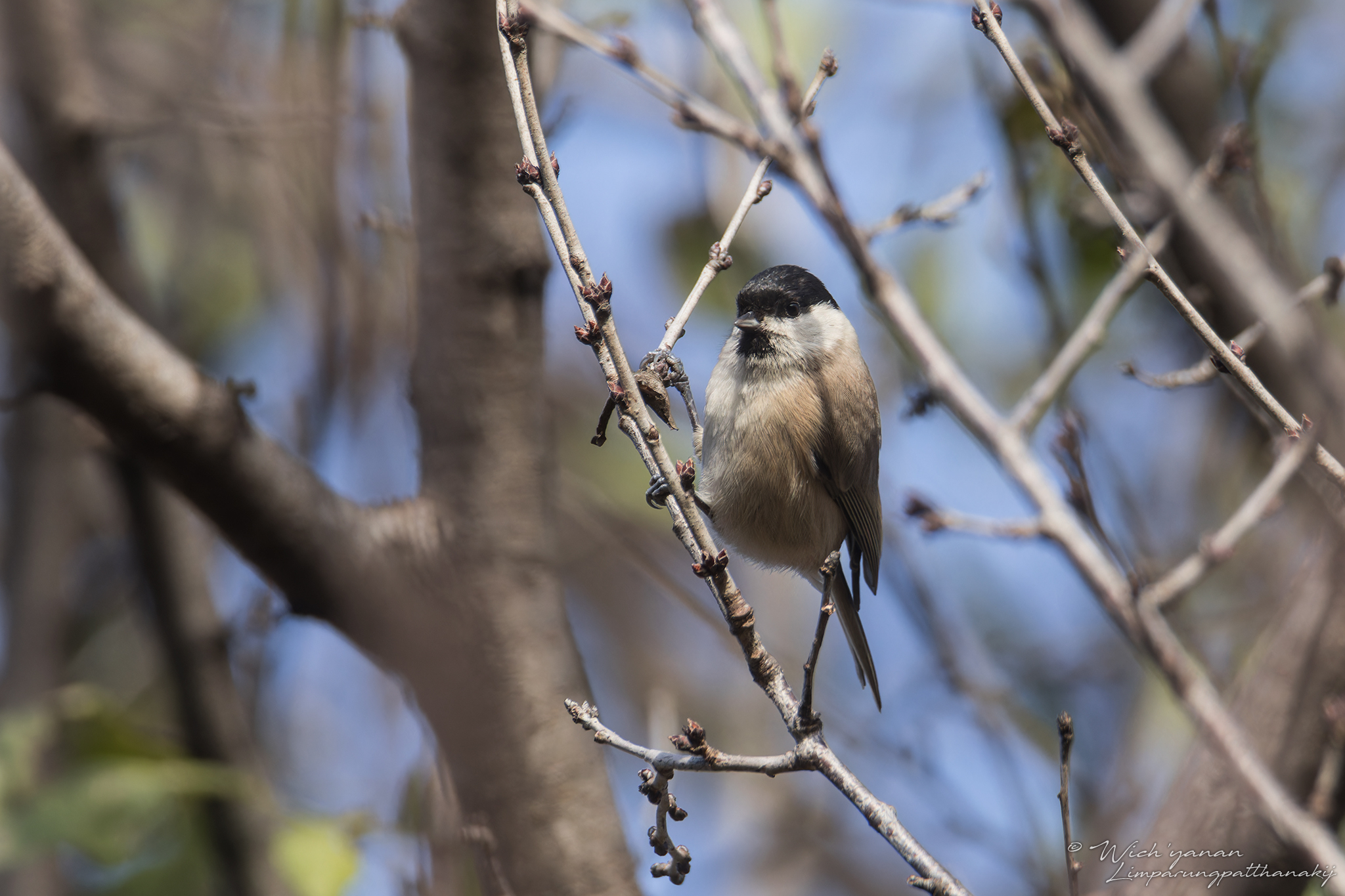
Small tit species resident in deciduous woodlands across temperate Eurasia. Inhabits dry oak and beech woodlands, parks, and gardens throughout its range. Distinguished by black cap and pale cheeks. Forages acrobatically through branches, often hanging upside down. Regular visitor to garden feeders. Conservation concern in Britain due to declining populations.
Description
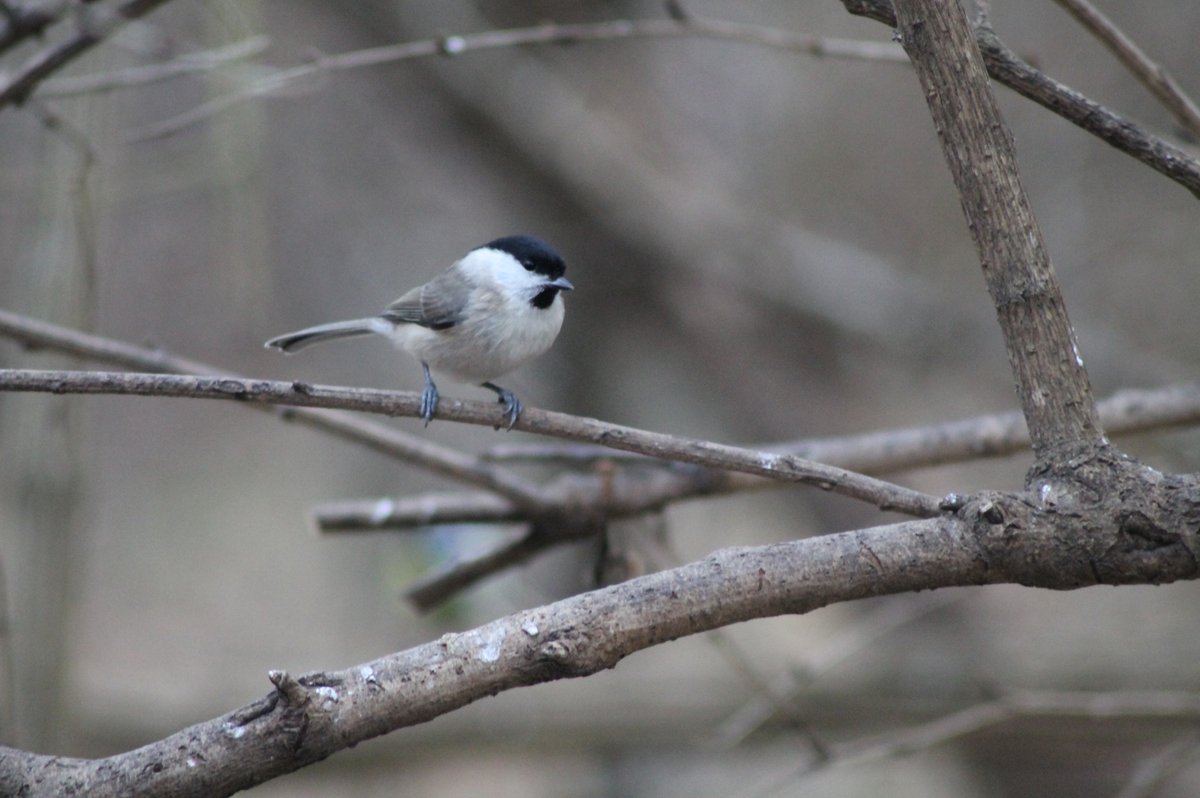
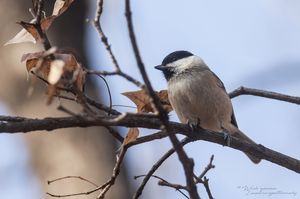
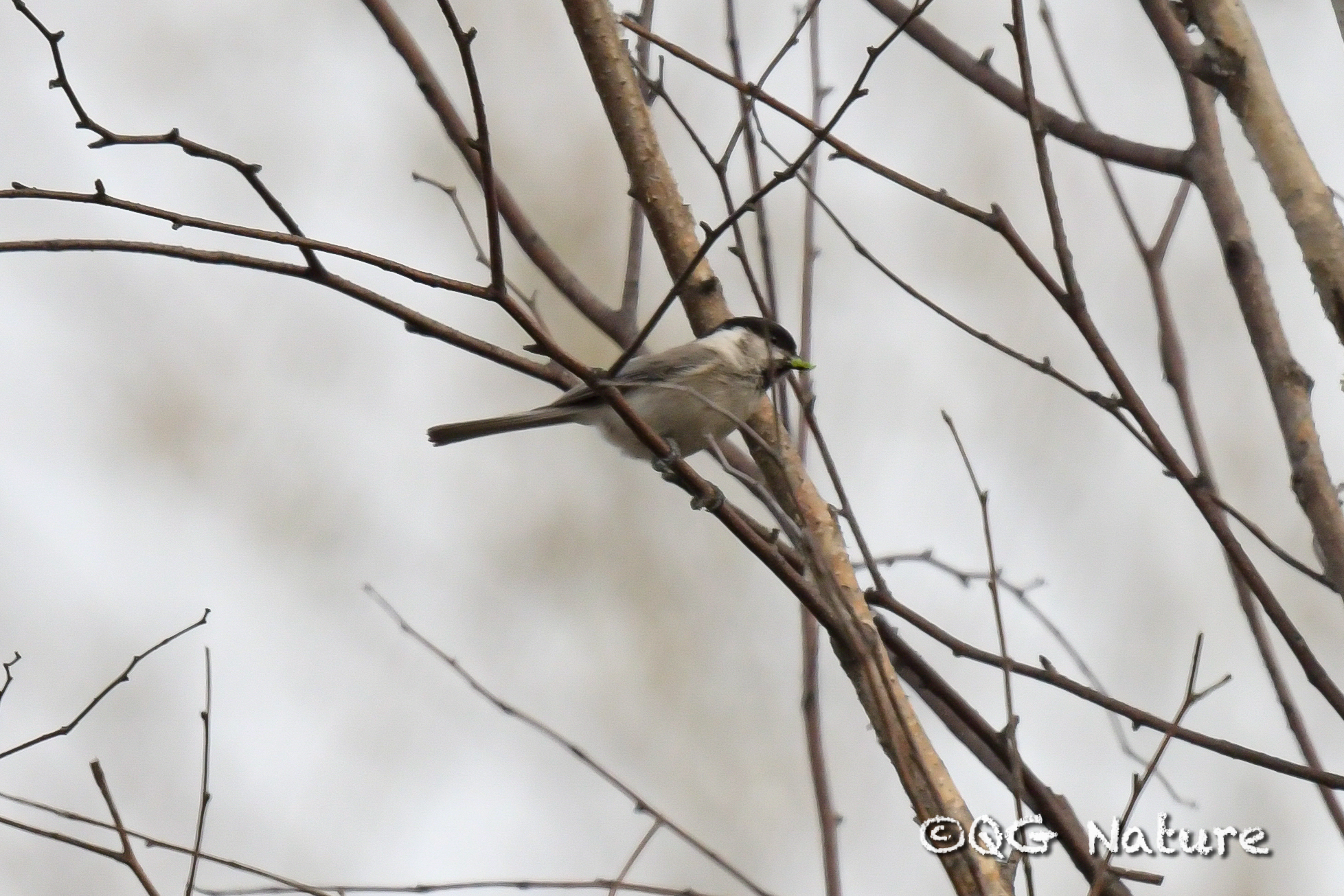
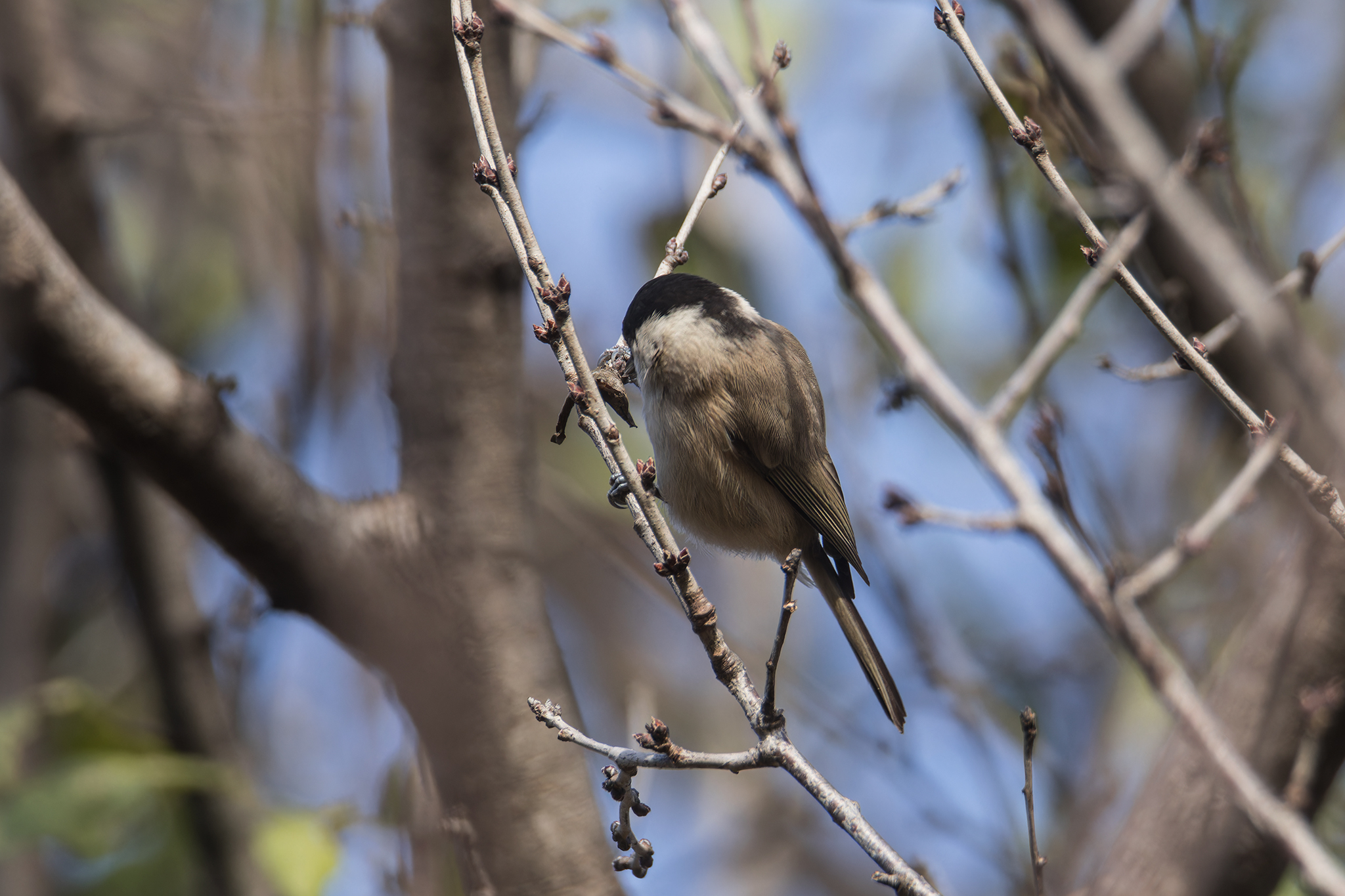
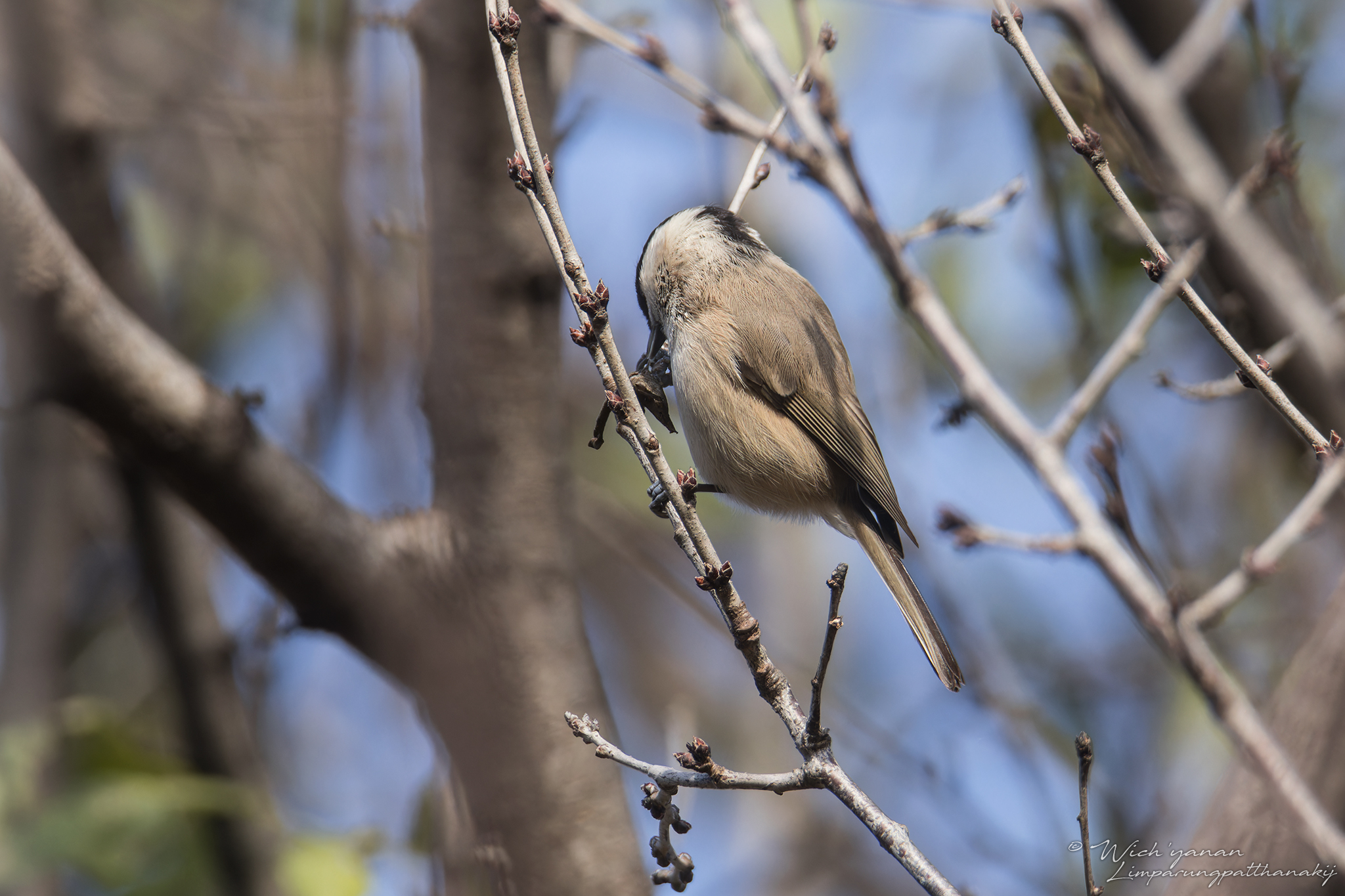
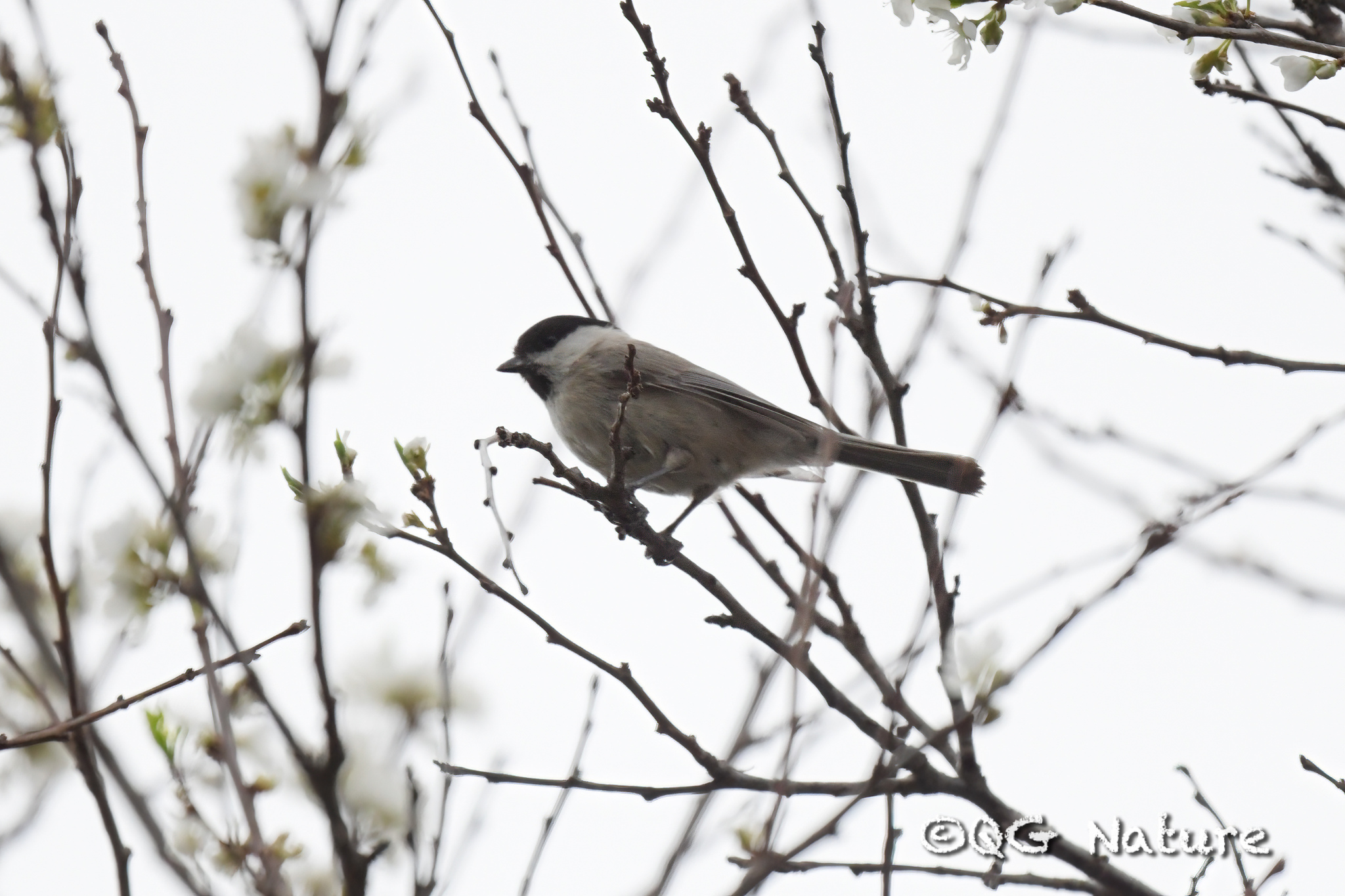
A small, compact tit with a rounded appearance and an alert posture. Adults have a glossy black cap and nape that can show a blue sheen at close range, with a relatively small black bib on the throat. The cheeks are white, blending to dusky brown on the ear coverts. The upperparts, wings and tail are greyish-brown, with the tertials showing slightly paler fringes. The underparts are off-white with a buff or brown wash strongest on the flanks and undertail coverts. The bill is black and the legs are dark grey. Sexes are similar, though juveniles have a duller black cap and bib, more greyish upperparts and paler underparts. Measures 11.5-12 cm in length with a wingspan of 19 cm and weighs around 12 g.
Identification
The principal identification challenge involves separating this species from the willow tit, with which it is virtually identical in the British Isles. The two species were not distinguished until 1897, a measure of their similarity. The most reliable differences are: no pale wing panel (willow tit has pale edges to the secondaries), a glossier black cap, a smaller black bib, and a smaller, shorter head giving a neater appearance rather than the 'bull-necked' look of the willow tit. Voice provides the most reliable separation: the explosive 'pitchou' call, given when agitated, differs from willow tit notes. When trapped for ringing, the pale cutting edge of the bill is diagnostic. Juveniles can be misleading, as some show a pale wing panel unlike adults.
Distribution & Habitat
Widespread across temperate Europe and northern Asia, from northern Spain and southeastern Scotland east through Russia to the Altai Mountains, with isolated eastern populations in northern Japan, Korea and northern China. The global population in Europe alone is estimated at 6.1-12 million birds. This is a sedentary species throughout most of its range, though northern populations make short southerly movements in winter. Most birds remain within 5 km of their breeding territories year-round. It breeds in large areas of moist broadleaved woodland, particularly oak and beech, but also uses wet alder woodland, riverside trees, parks and gardens. It requires mature trees with a well-developed shrub layer below the canopy and avoids dense canopy woodland with poor understorey. Found from lowlands up to 1,300 m altitude.
Behavior & Ecology
Omnivorous diet varies seasonally: spiders and insects dominate in spring and summer, while seeds, nuts and berries are taken in autumn and winter, with beechmast a preferred food when available. This tit caches large numbers of seeds, hiding them in leaf litter, tree stumps, and under moss and lichen, and shows remarkable spatial memory for retrieving stores. The hippocampus is proportionally larger than in the great tit, reflecting this caching habit. Vocalizations are varied and complex, with an explosive 'pitchou' call when agitated, and a well-defined song repertoire including 'schip-schip-schip', 'tu-tu-tu-tu' and sweet 'tyeu-tyeu-tyeu' phrases. Monogamous, often pairing for life. Nests in tree holes, enlarging existing hollows rather than excavating new ones, lining with moss, hair and feathers. Clutches of 5-9 speckled eggs are laid in April-May, incubated by the female for 14-16 days. Fledging takes 18-21 days, with young remaining dependent for a further week. In winter, joins mixed tit flocks but typically only one or two individuals per flock.
Conservation
Classified as Least Concern globally due to its extensive range and large population, but the species shows worrying local declines. In the United Kingdom, numbers have fallen by more than 50% since the 1970s, leading to Red List status. Research points to reduced survival rates and habitat degradation as primary causes. The species depends on structurally diverse woodland with a well-developed shrub layer, which has declined due to overgrazing by deer and changes in woodland management. Data from the RSPB/BTO Repeat Woodland Bird Survey shows that marsh tit abundance correlates strongly with shrub layer density 2-4 metres above ground. Woods with the most shrub cover supported increasing populations, while those with degraded understorey continued to decline. Conservation efforts focus on managing woodland structure and controlling deer populations to maintain suitable habitat.
Culture
The species carries the old Staffordshire vernacular name 'Saw Whetter', referring to its scolding call. The scientific name derives from the Latin palustris meaning 'marshy', reflecting its original perceived habitat association, though this proved misleading. The genus name Poecile comes from the Ancient Greek for a small spotted bird of uncertain identity. Despite its wide distribution, the species has not accumulated the rich folklore of some other European birds, though its resemblance to the willow tit and the historical difficulty in distinguishing them has become a cautionary tale in ornithology, illustrating how easily similar species can be overlooked.
Source: Wikipedia · CC BY-SA 3.0
Taxonomy
- Order
- Passeriformes
- Family
- Paridae
- Genus
- Poecile
- eBird Code
- martit2
Subspecies (10)
-
Poecile palustris brevirostris
Siberia to Mongolia, northeastern China, and Korea
-
Poecile palustris dresseri
Wales, central and southern England, and western France
-
Poecile palustris ernsti
Sakhalin
-
Poecile palustris hellmayri
southern and eastern China (Sichuan to Liaoning) and southern Korea
-
Poecile palustris hensoni
northern Japan (southern Kuril Islands and Hokkaido)
-
Poecile palustris italicus
French Alps and Italy
-
Poecile palustris jeholicus
northern Hebei (northeastern China) and northern Korea
-
Poecile palustris kabardensis
Caucasus Mountains
-
Poecile palustris palustris
British Isles, southern Scandinavia and central Europe to Pyrenees and Balkans
-
Poecile palustris stagnatilis
eastern Poland and western Russia to northern and eastern Balkans and northwestern Türkiye
Data Sources
Species description from Wikipedia, licensed under CC BY-SA 3.0.
Bird images and sounds sourced from GBIF, contributed by citizen scientists worldwide under Creative Commons licenses.
Taxonomy data from AviList 2025.