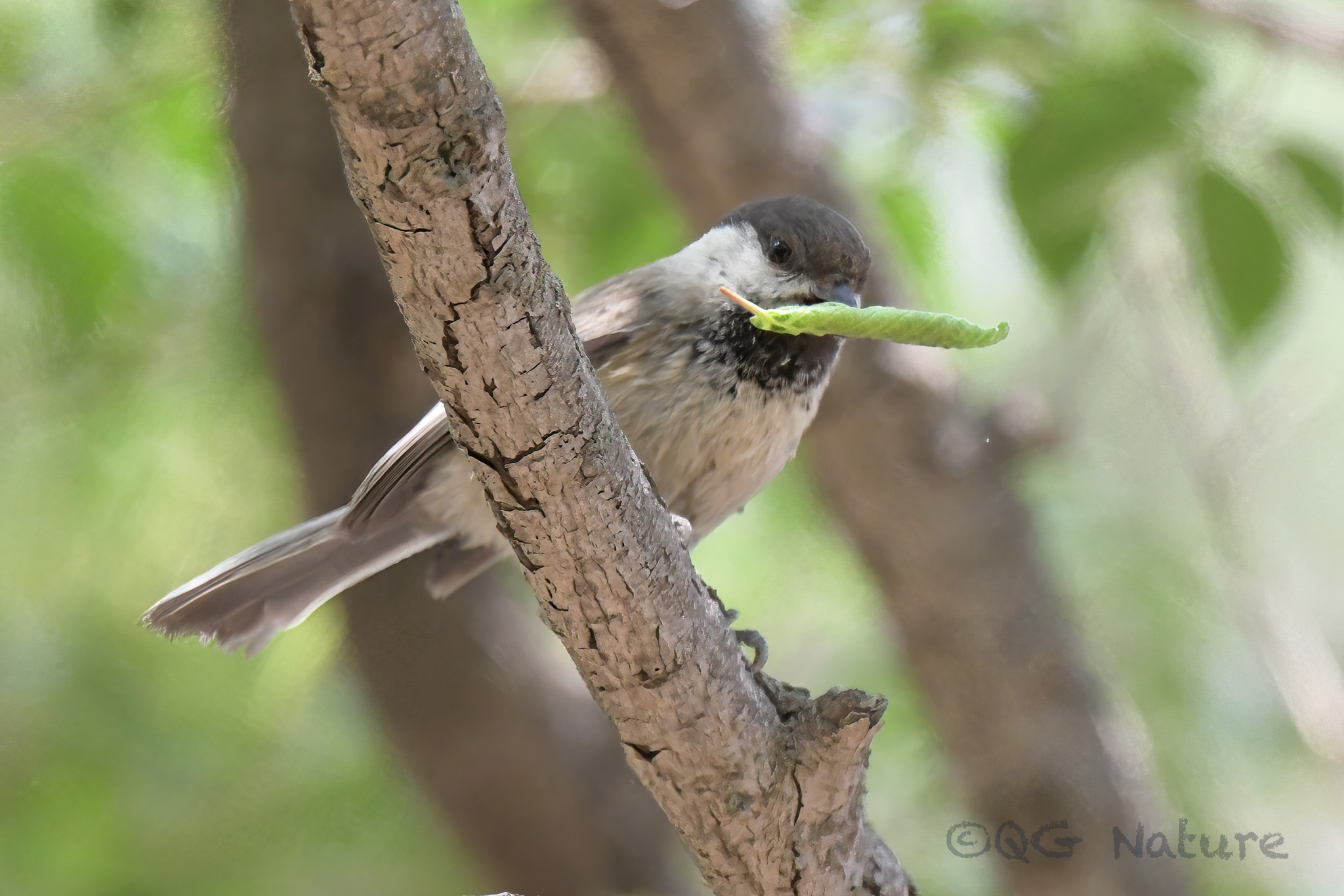
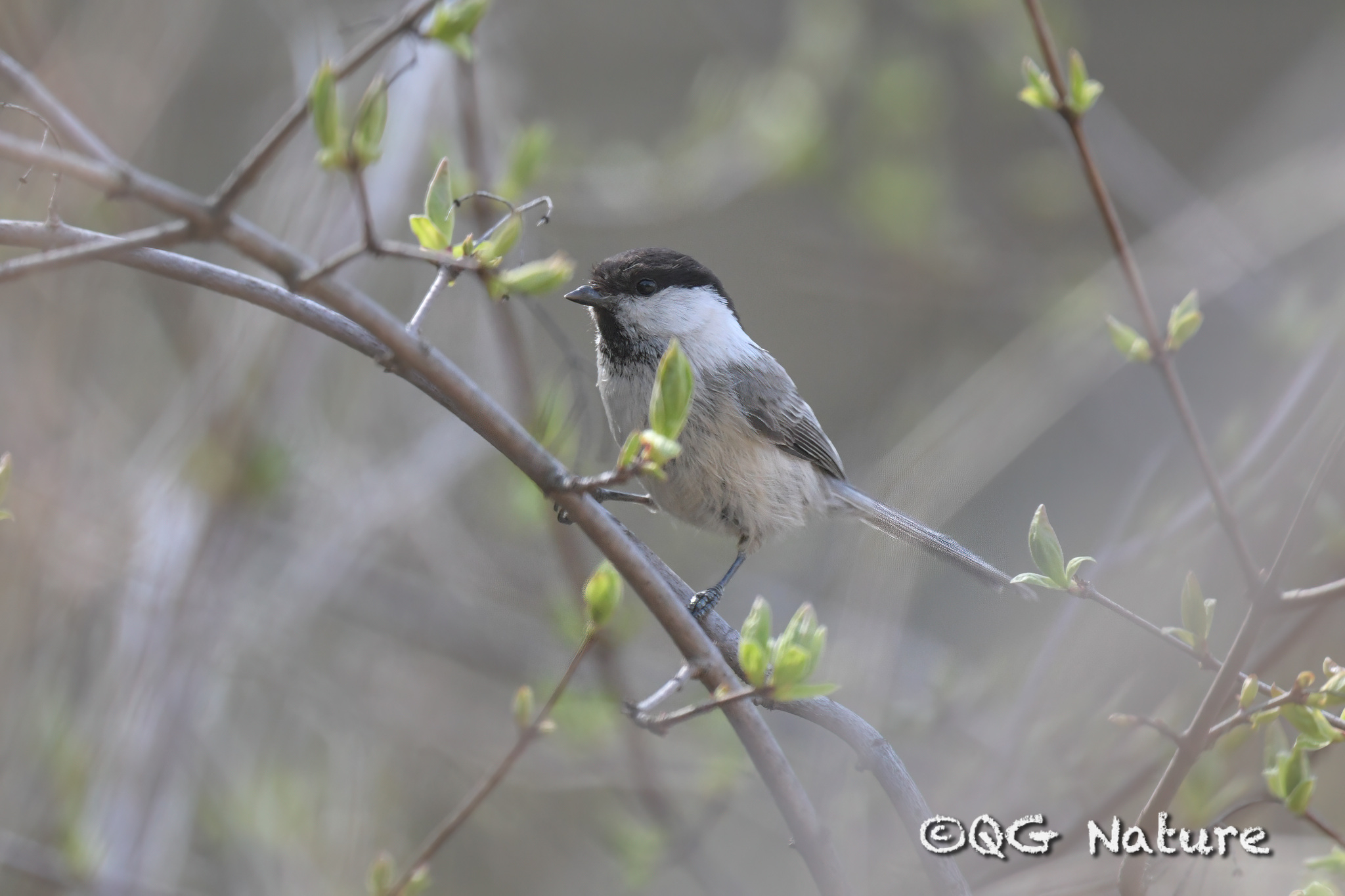
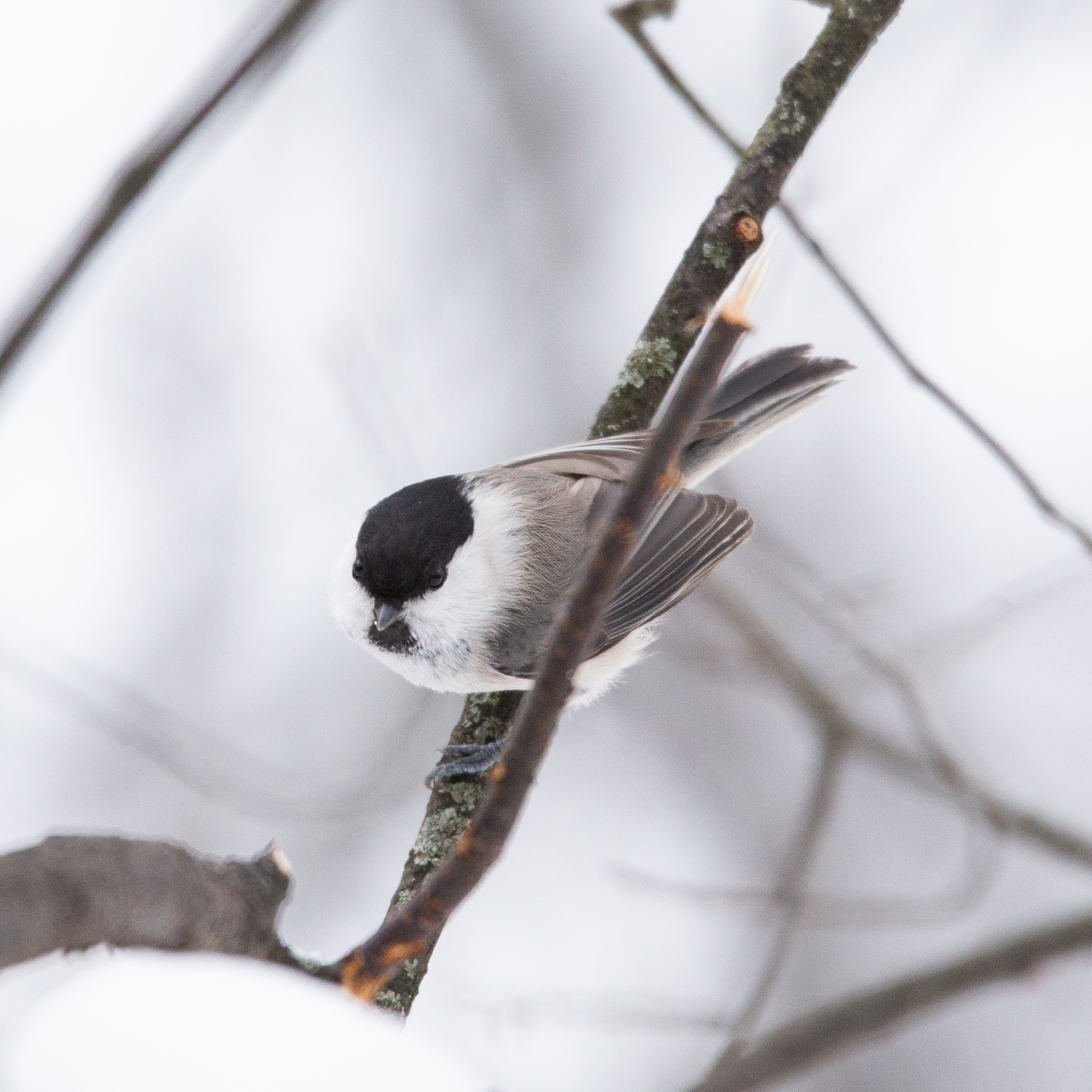
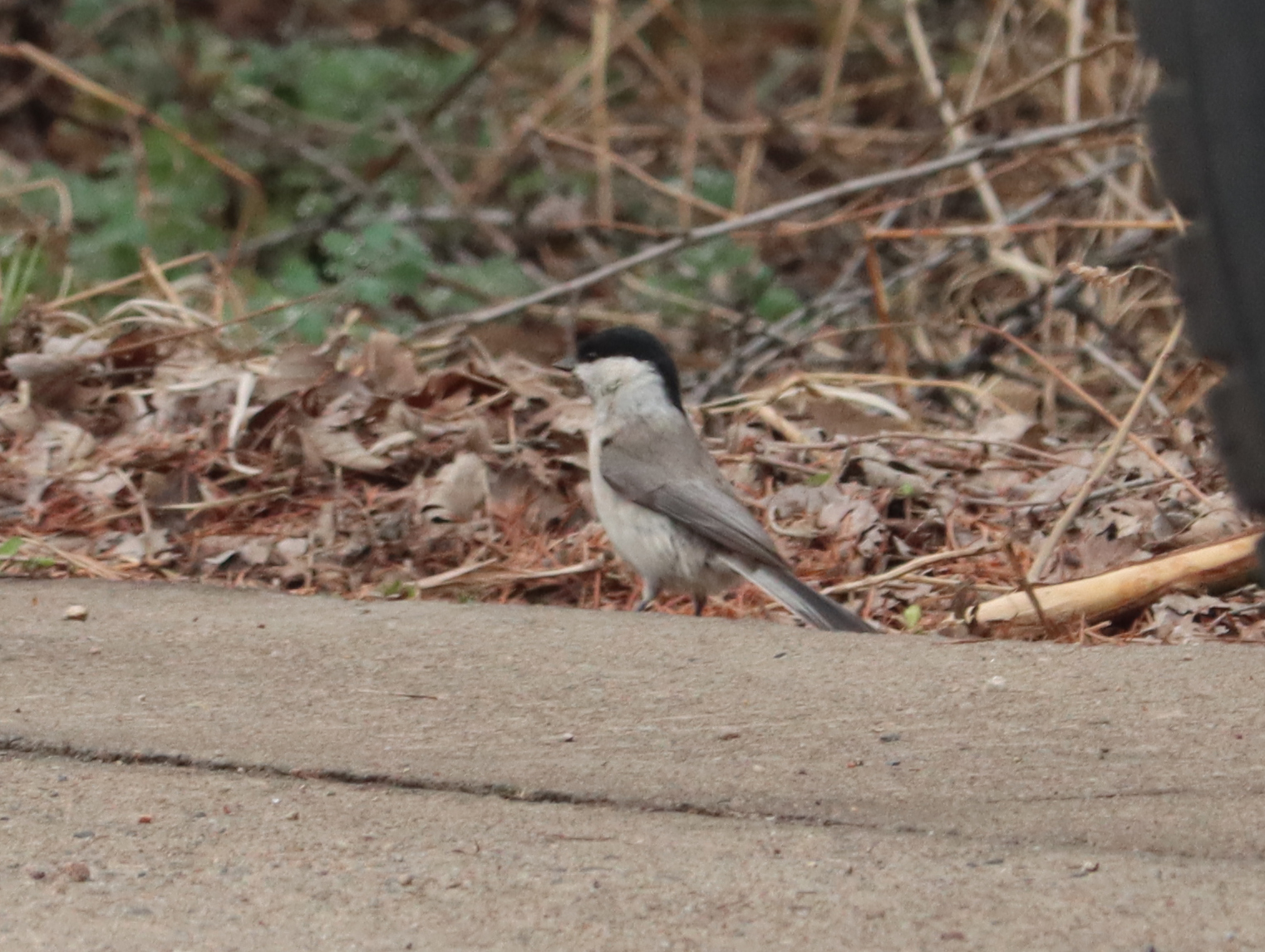
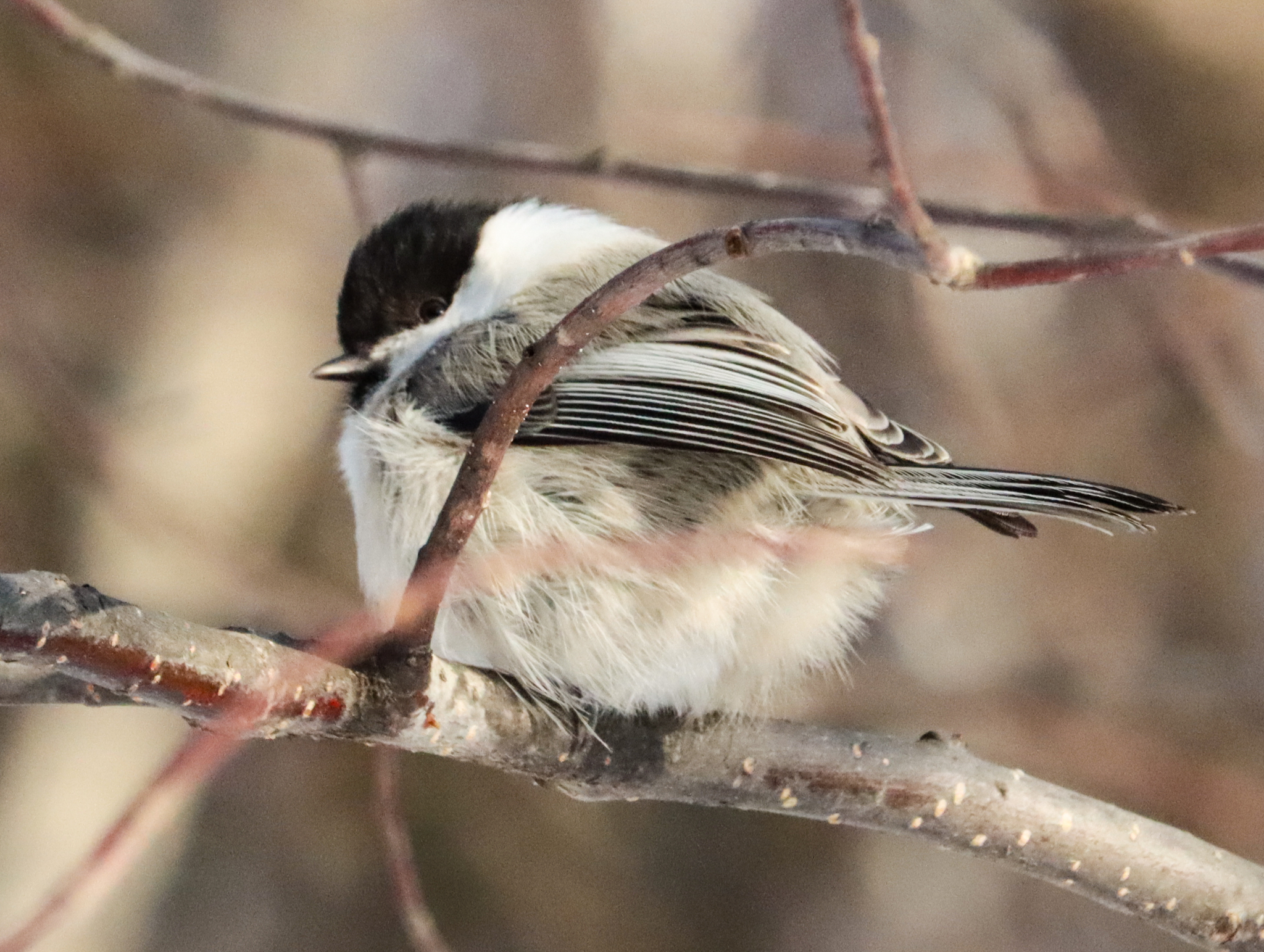
Willow Tit
Poecile montanus
褐头山雀
Introduction
A passerine bird in the tit family Paridae. It is a widespread and common resident breeder throughout temperate and subarctic Europe and across the Palearctic. This species is more of a conifer specialist than the closely related marsh tit, which explains its breeding much farther north. It is resident, and most birds do not migrate. The global population is estimated at 175 to 253 million mature individuals, and the species is classed as Least Concern by the IUCN.
Description
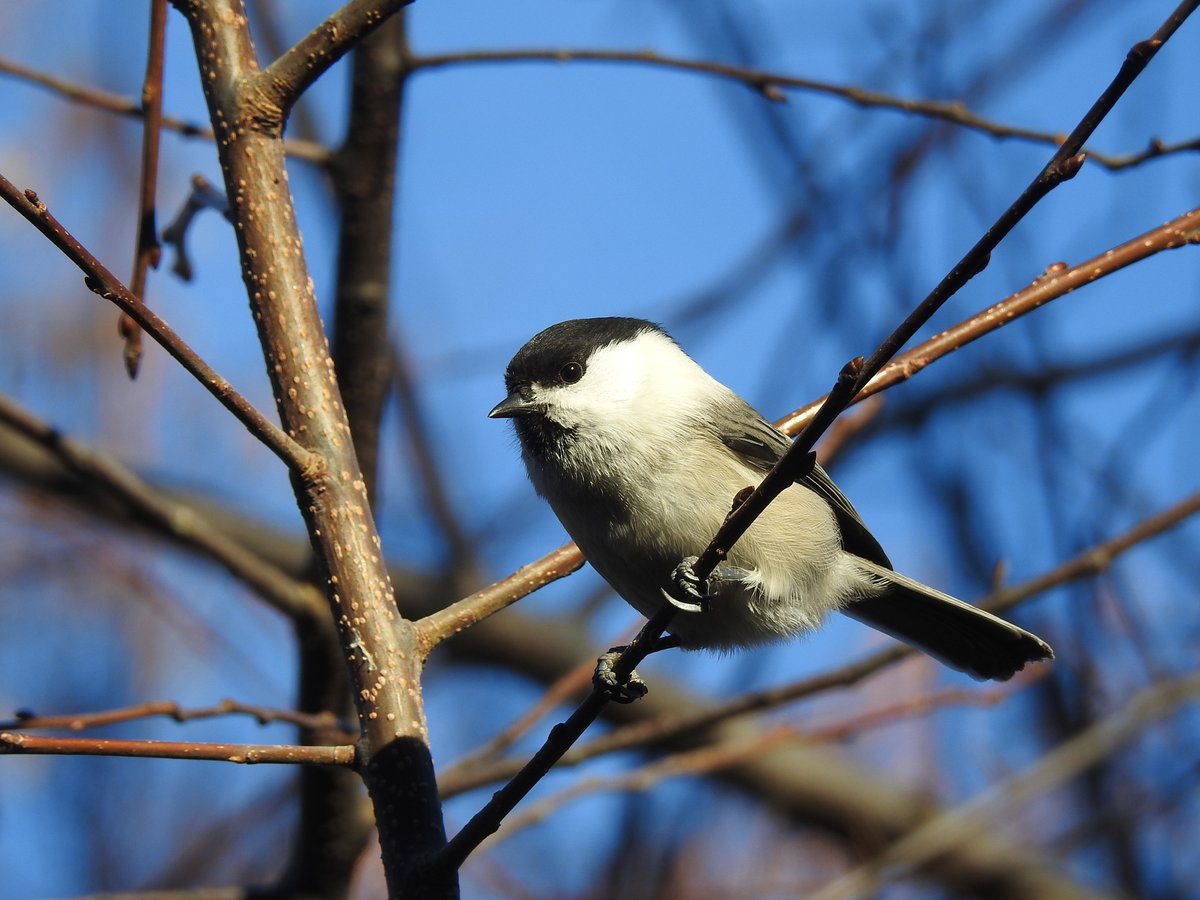
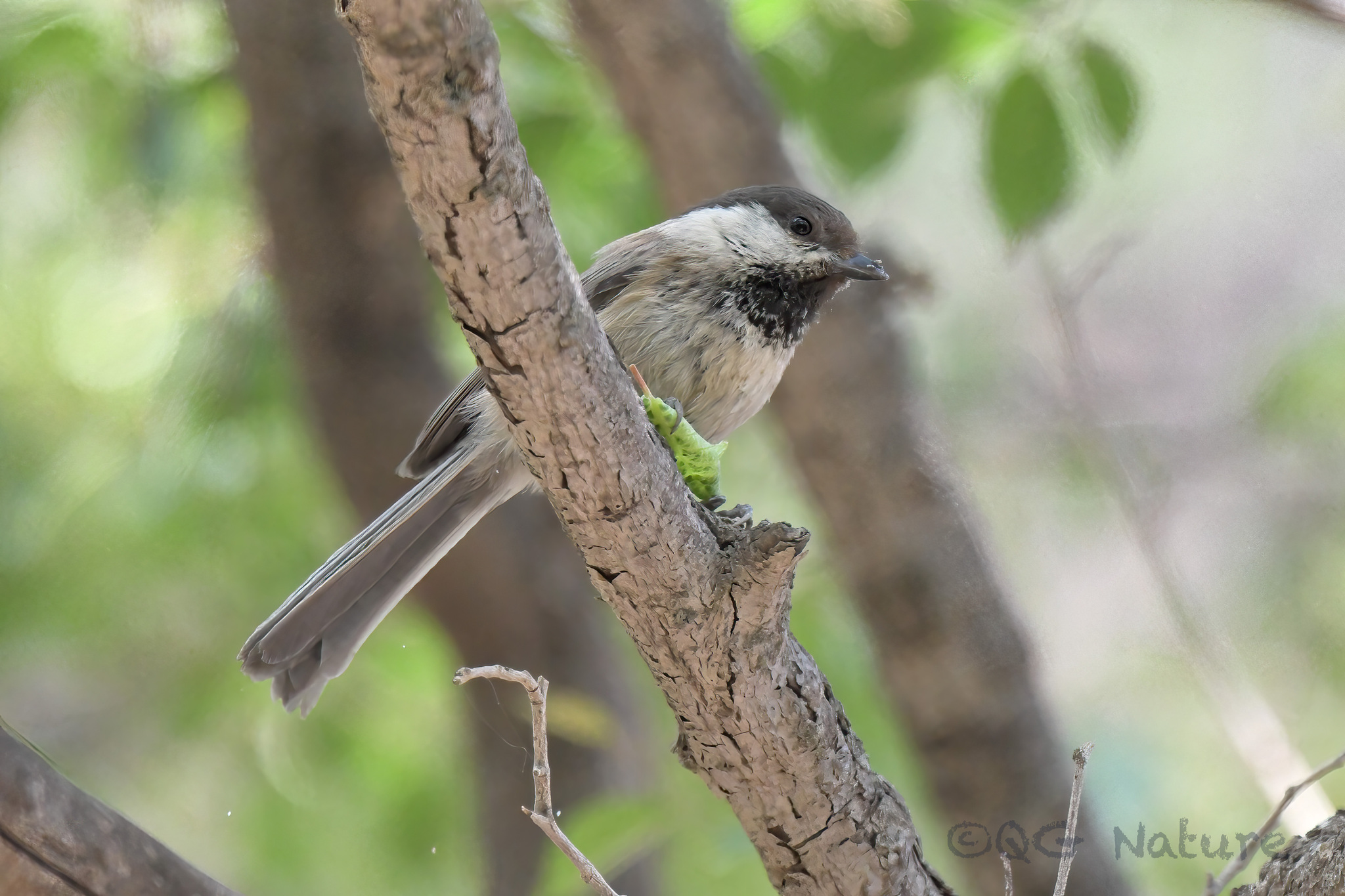
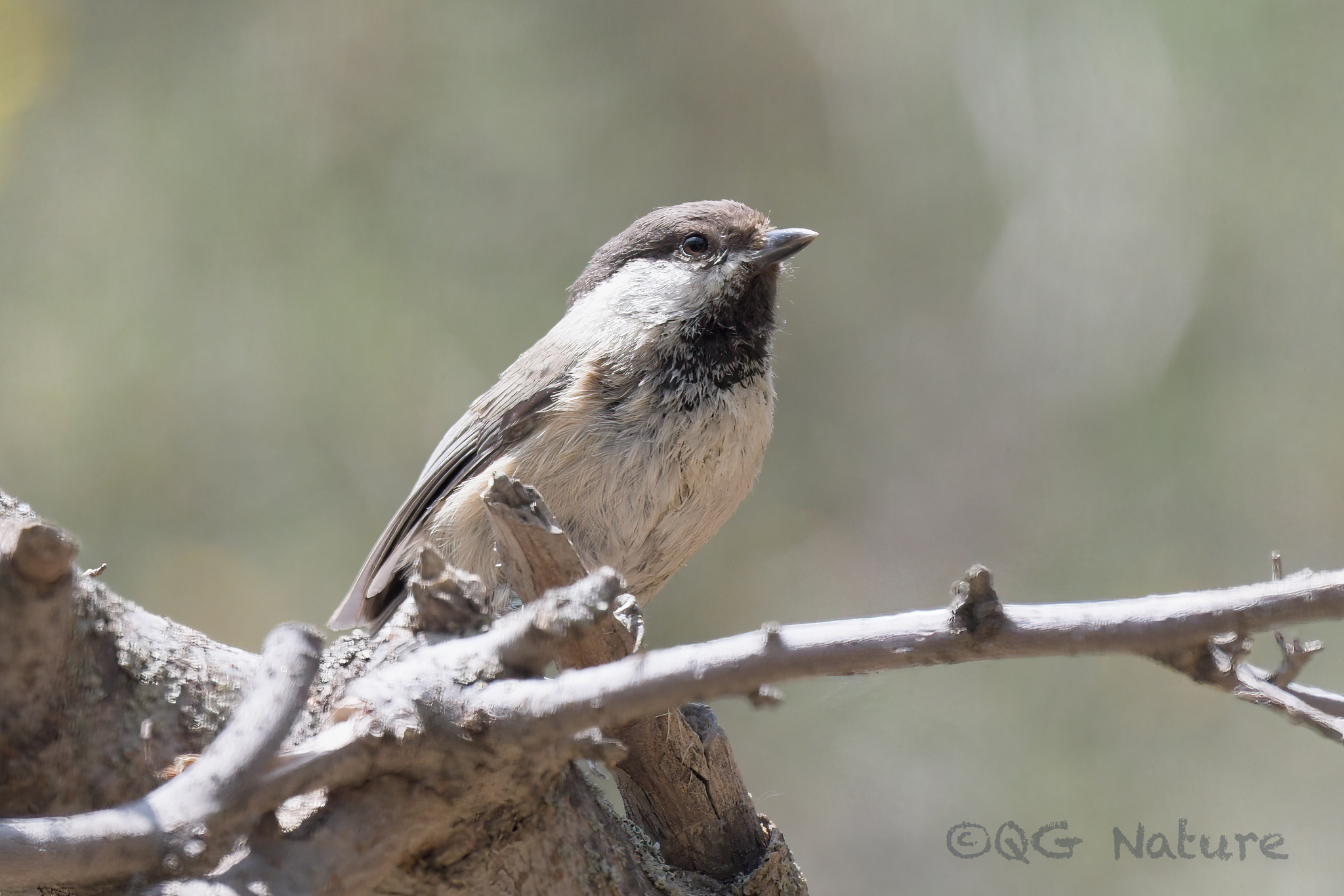
A small tit measuring 11.5 cm in length with a wingspan of 17–20.5 cm and weighing approximately 11 g. It has a large head and thin bill. The plumage features a long dull black cap that descends to the mantle, a black bib, white face sides, grey-brown back, and buff underparts. The sexes are similar in appearance. In the eastern part of its range, it is notably paler than the marsh tit, though western populations are increasingly similar in coloration.
Identification
Distinguished from the marsh tit by its sooty brown cap rather than a glossy blue-black color. The underparts are more buff, and the flanks are distinctly more rufous. A pale buff panel is visible on the closed wing, formed by the edgings to the secondaries. The crown feathers and black bib feathers are longer, though this is a less noticeable field mark. The most common call is a nasal 'zee, zee, zee', though a double note 'ipsee, ipsee' is occasionally repeated four or five times.
Distribution & Habitat
Occurs throughout temperate and subarctic Europe and across the Palearctic. It is a resident species with most birds remaining in the same area year-round. The species has 14 recognised subspecies with ranges extending from Britain and France through Scandinavia, Russia, and Siberia to Korea, Japan, and China. It inhabits coniferous and mixed woodland habitats.
Behavior & Ecology
Feeds on insects, caterpillars, and seeds, similar to other tit species. It excavates its own nesting hole in rotten stumps or decaying trees, even piercing hard bark. The nest is a cup of felted material such as fur, hair, and wood chips. Clutches typically contain six to nine eggs measuring about 15.8 mm × 12.3 mm. The female incubates alone for 13–15 days, and both parents feed the young. Nestlings fledge after 17–20 days, with only a single brood raised annually. Juvenile first-year survival is 0.58, and adult annual survival is 0.64.
Conservation
Classified as Least Concern globally due to its extremely large range and large population. However, the species has undergone a severe decline in the United Kingdom, with an 83% population reduction between 1995 and 2017 and a contraction in range. The decline is attributed to habitat loss, competition for nest holes from blue tits, and nest predation by great spotted woodpeckers, whose numbers increased fourfold over the same period.
Source: Wikipedia · CC BY-SA 3.0
Taxonomy
- Order
- Passeriformes
- Family
- Paridae
- Genus
- Poecile
- eBird Code
- wiltit1
Subspecies (14)
-
Poecile montanus affinis
north-central China (Ningxia to southern Gansu and northeastern Qinghai)
-
Poecile montanus anadyrensis
northeastern Siberia to northern coast of Sea of Okhotsk
-
Poecile montanus baicalensis
eastern Siberia to Sea of Okhotsk, Mongolia, Ussuriland, and northeastern China
-
Poecile montanus borealis
Scandinavia to Baltic States, Carpathian Mountains, and southeastern Russia
-
Poecile montanus kamtschatkensis
Kamchatka Peninsula
-
Poecile montanus kleinschmidti
Britain
-
Poecile montanus montanus
central Europe
-
Poecile montanus restrictus
Japan
-
Poecile montanus rhenanus
western Europe to western Germany and northern Switzerland
-
Poecile montanus sachalinensis
Sakhalin; vagrant to Hokkaido
-
Poecile montanus salicarius
central Europe to western Poland, southwestern Germany, and northwestern Austria
-
Poecile montanus songarus
Kazakhstan (Tien Shan Mountains)
-
Poecile montanus stoetzneri
northeastern China (southeastern Mongolia to Liaoning, Shaanxi, and Henan)
-
Poecile montanus uralensis
southeastern Russia to southern Urals, southwestern Siberia, and northern Kazakhstan
Data Sources
Species description from Wikipedia, licensed under CC BY-SA 3.0.
Bird images and sounds sourced from GBIF, contributed by citizen scientists worldwide under Creative Commons licenses.
Taxonomy data from AviList 2025.