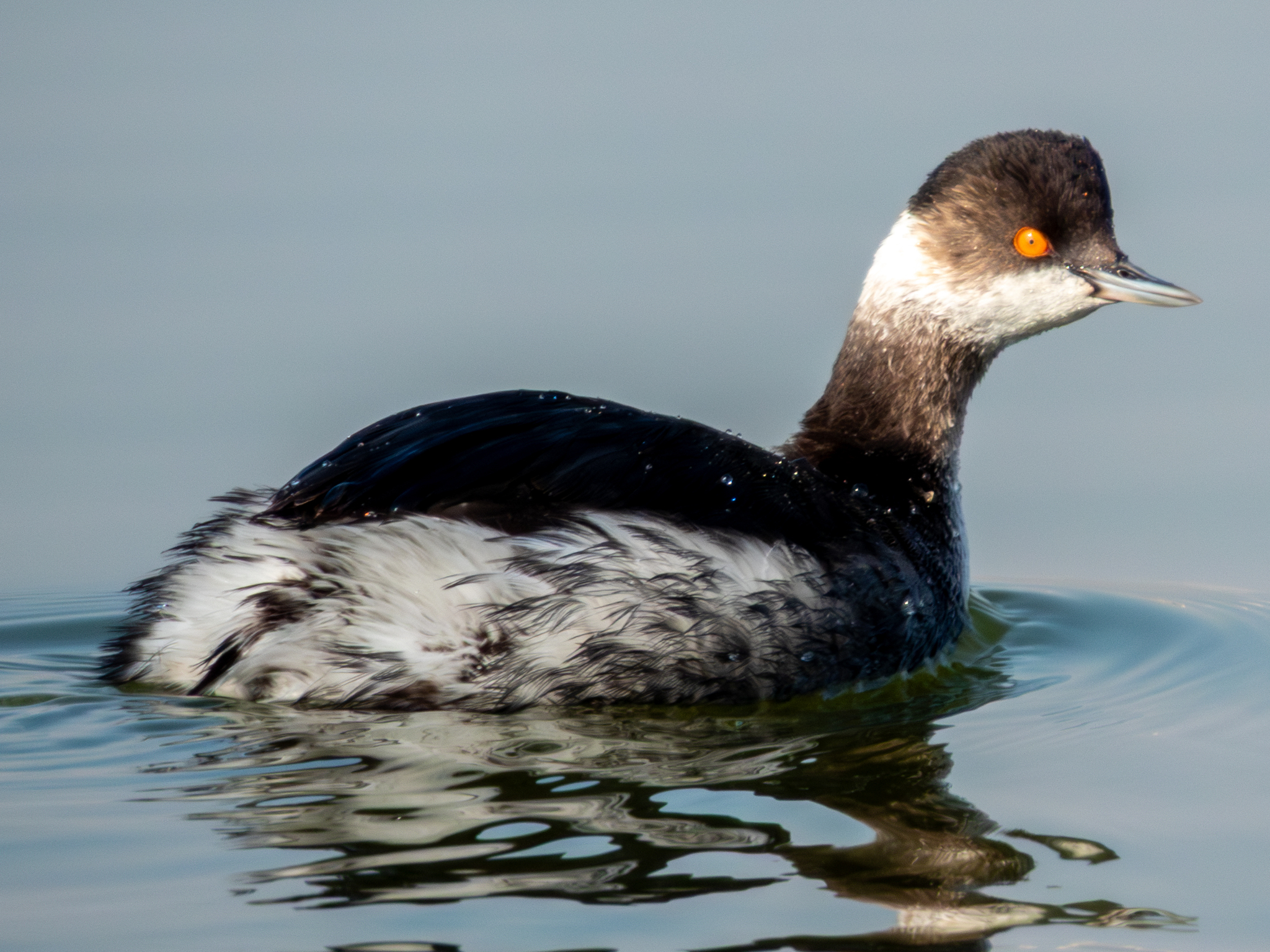
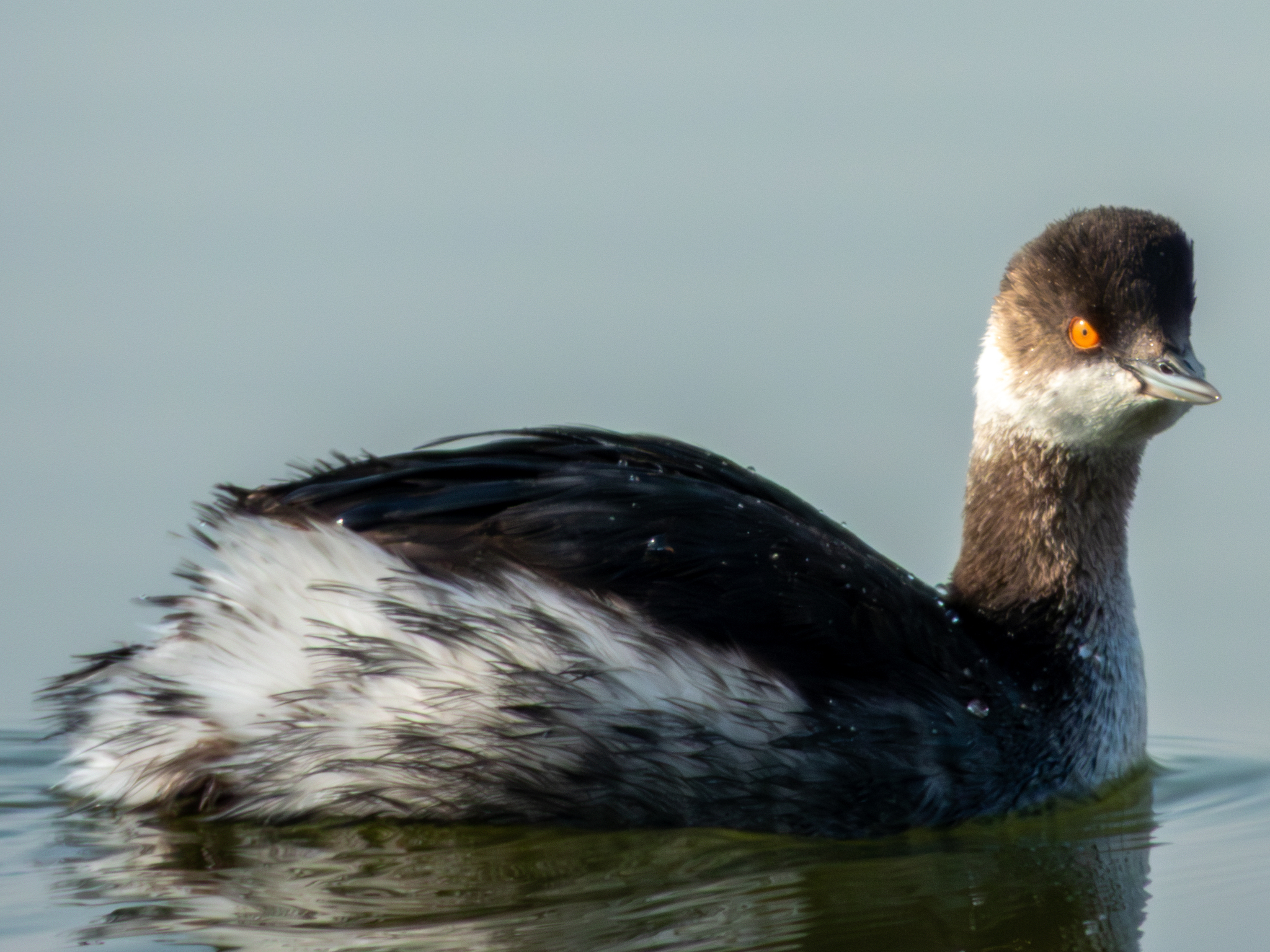
Podicipediformes / Podicipedidae / Podiceps
Black-necked Grebe
Podiceps nigricollis · 黑颈䴙䴘
Introduction
Member of the grebe family found in parts of Africa, Eurasia, and the Americas. Breeds in vegetated freshwater lakes and migrates to saline lakes for moulting. Distinctive traits include becoming flightless for at least a month during moult and traveling up to 6,000 kilometres during migration. Classified as Least Concern by the IUCN.
Description
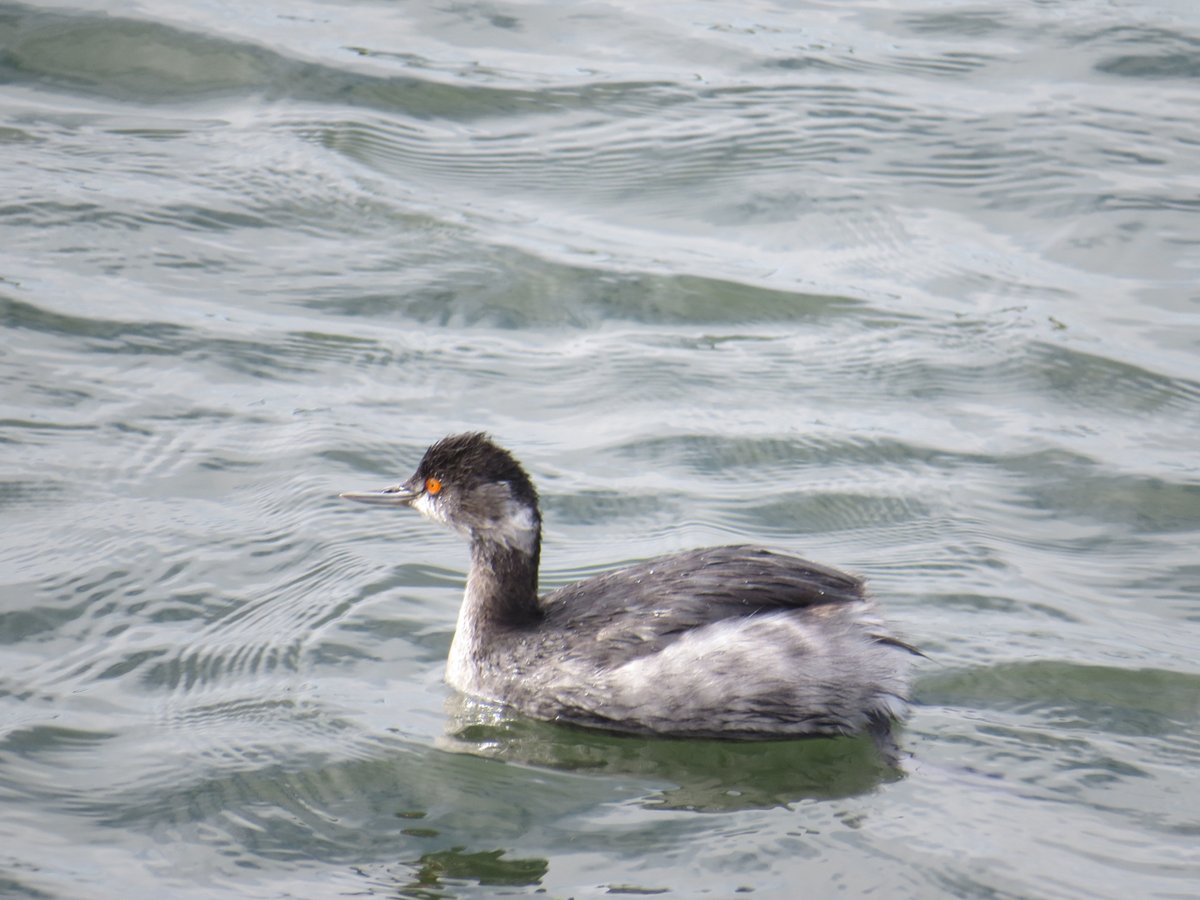
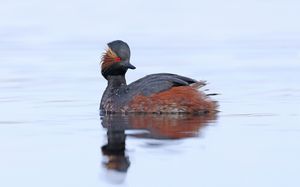
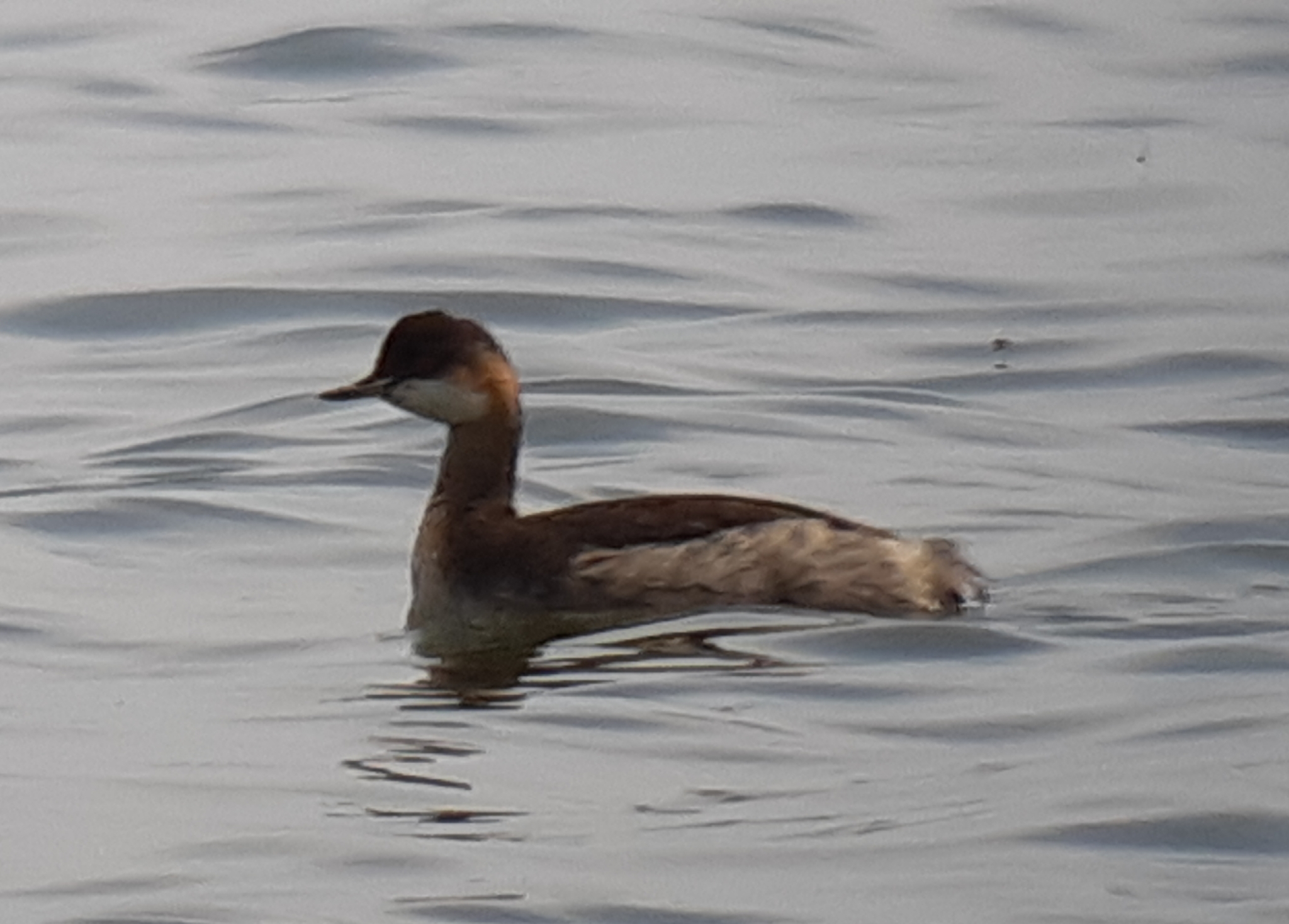
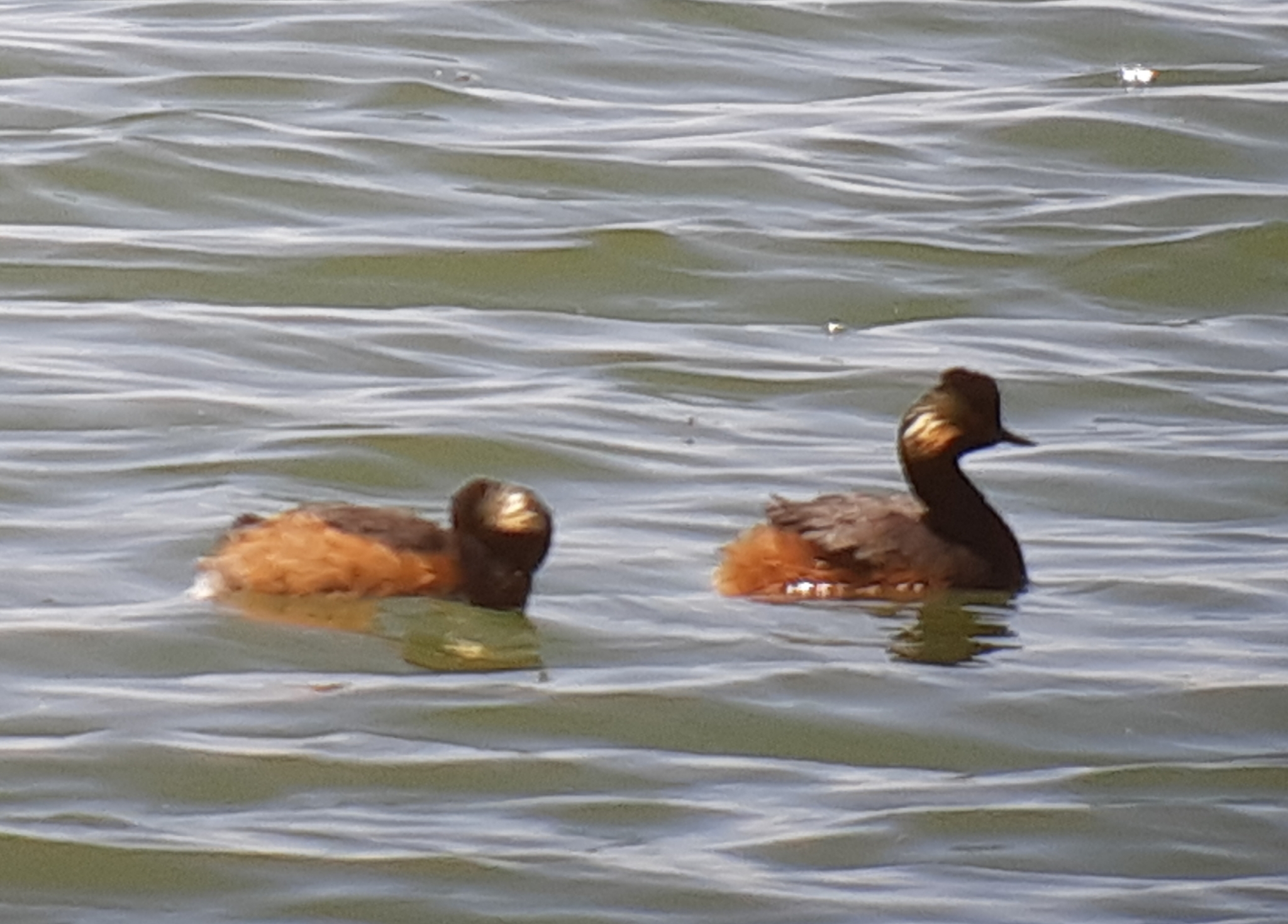
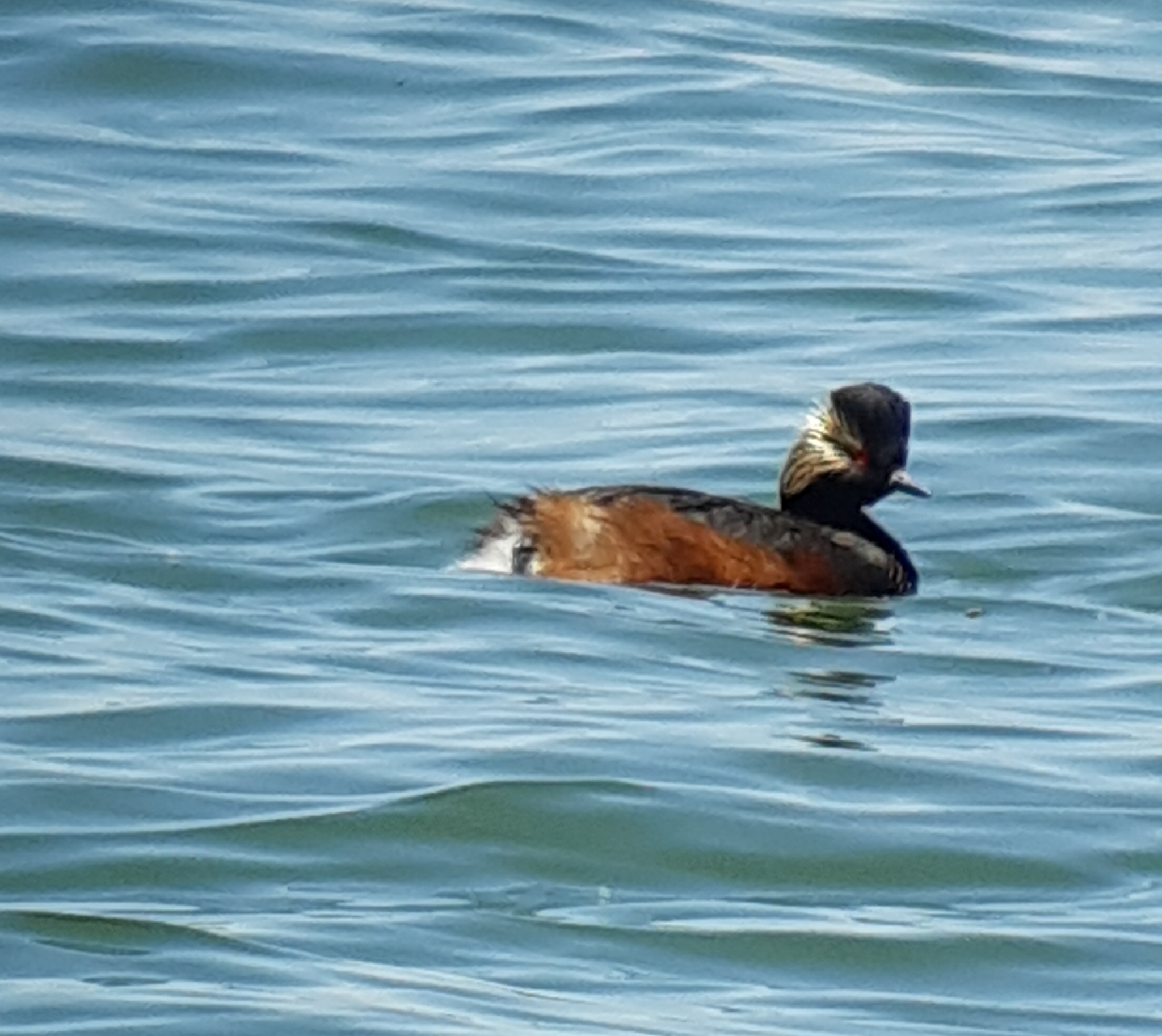
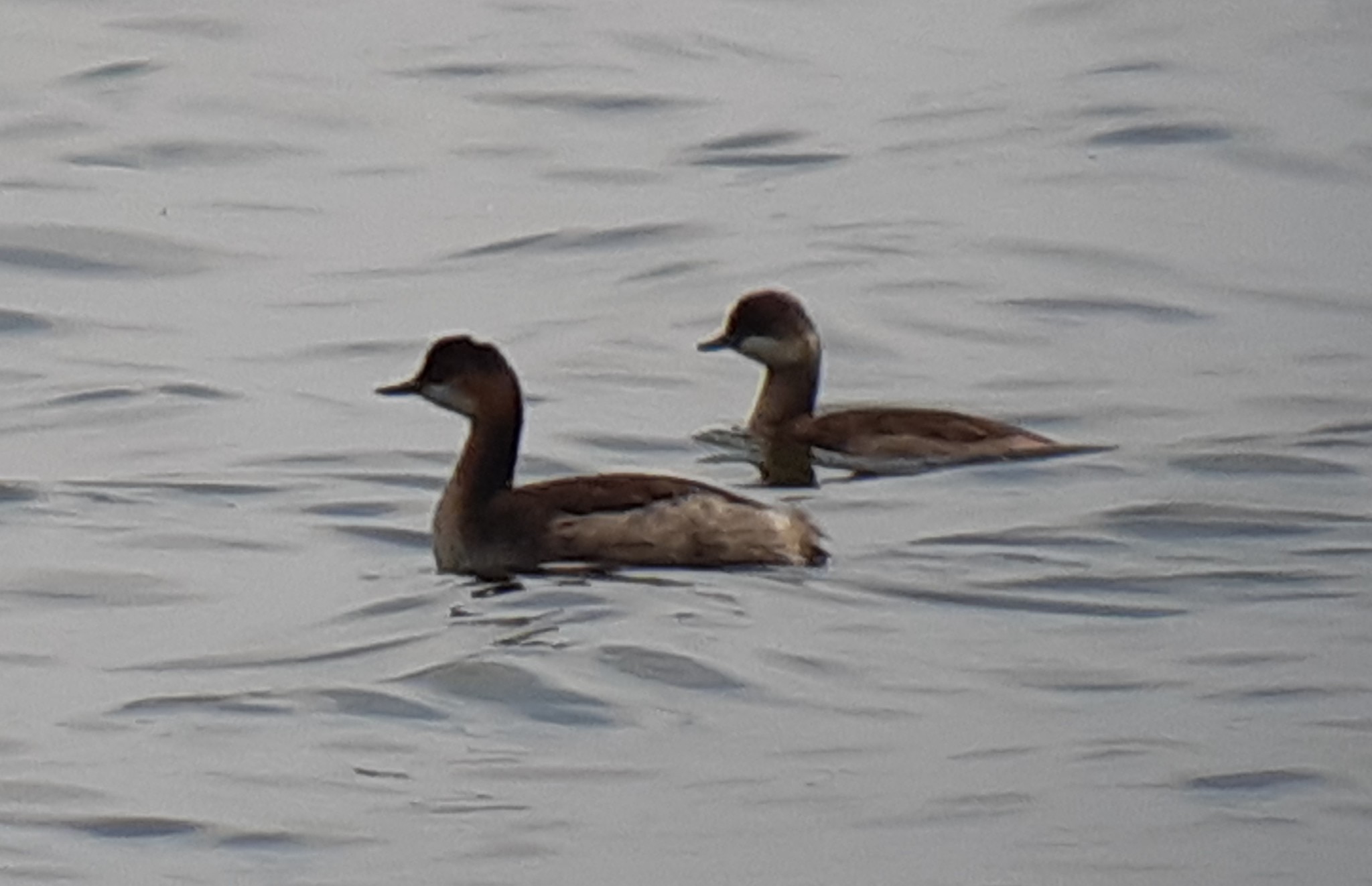
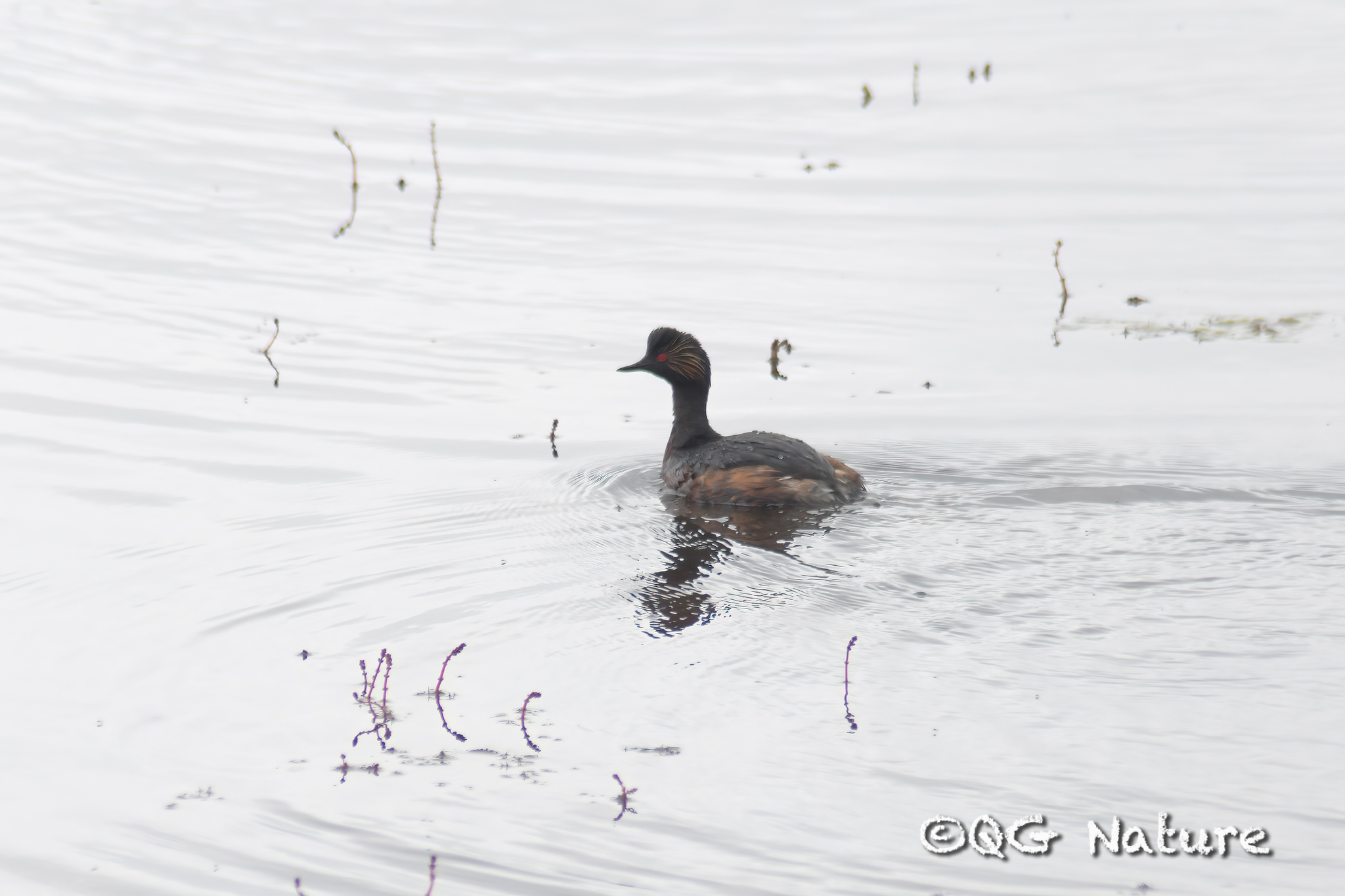
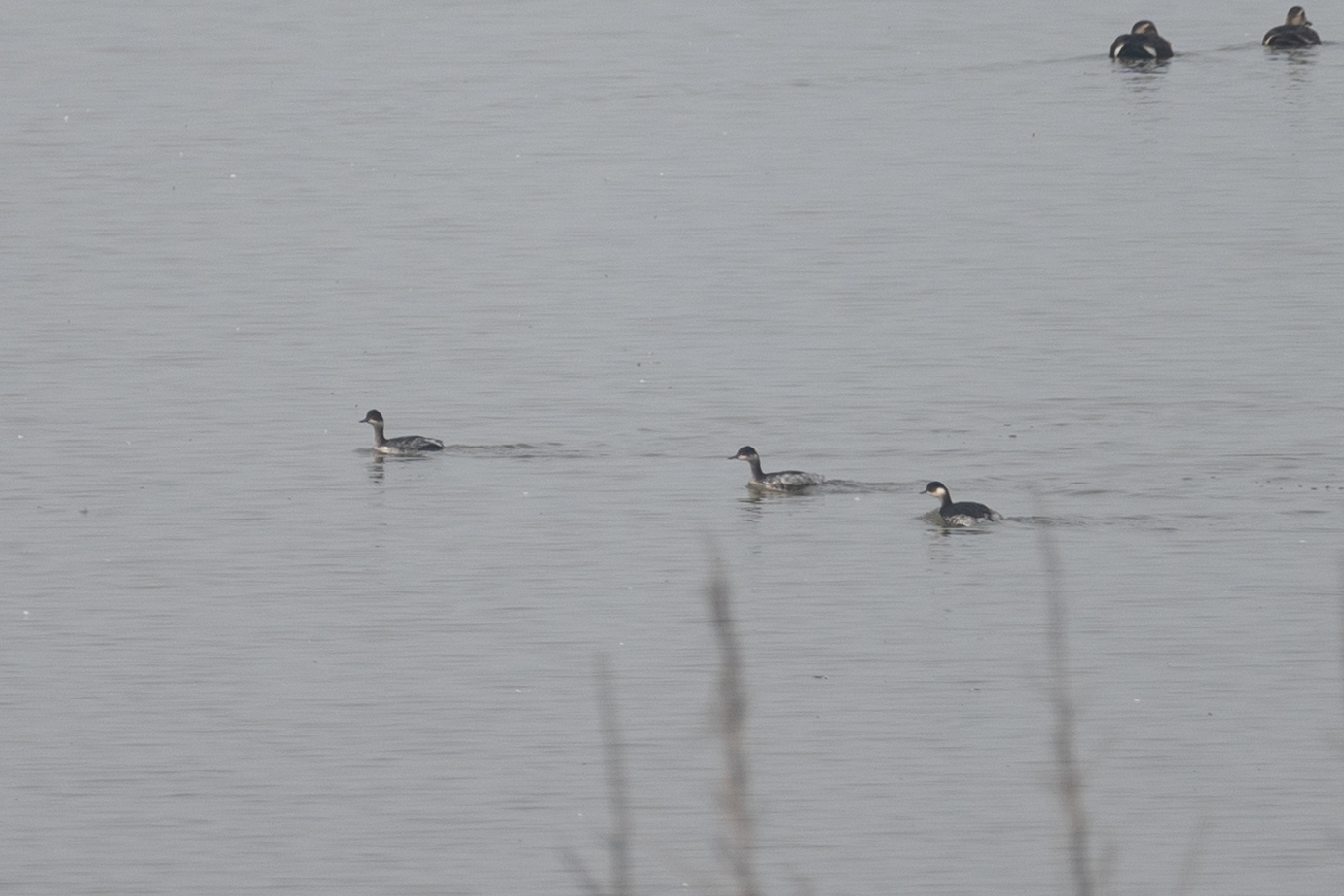
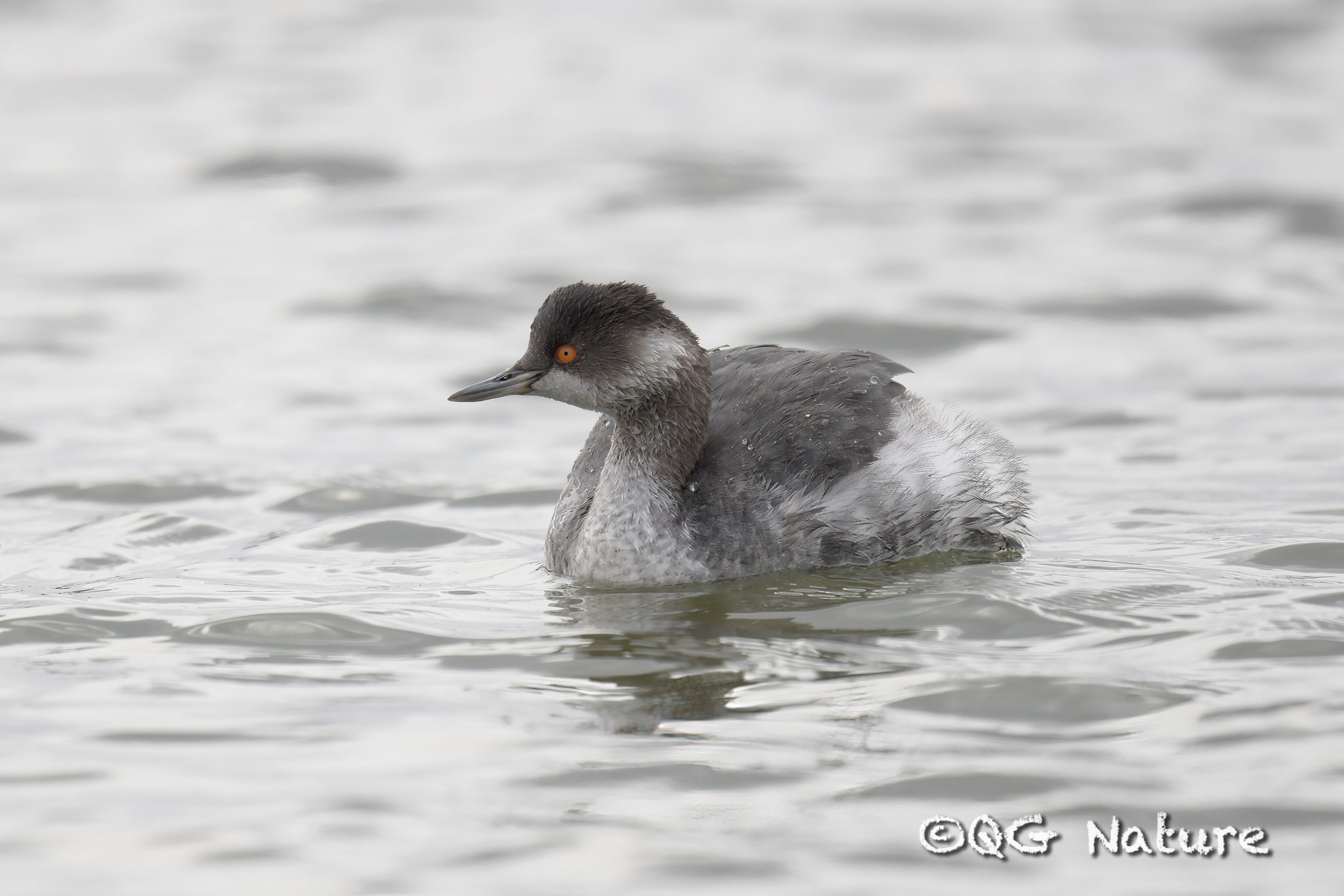
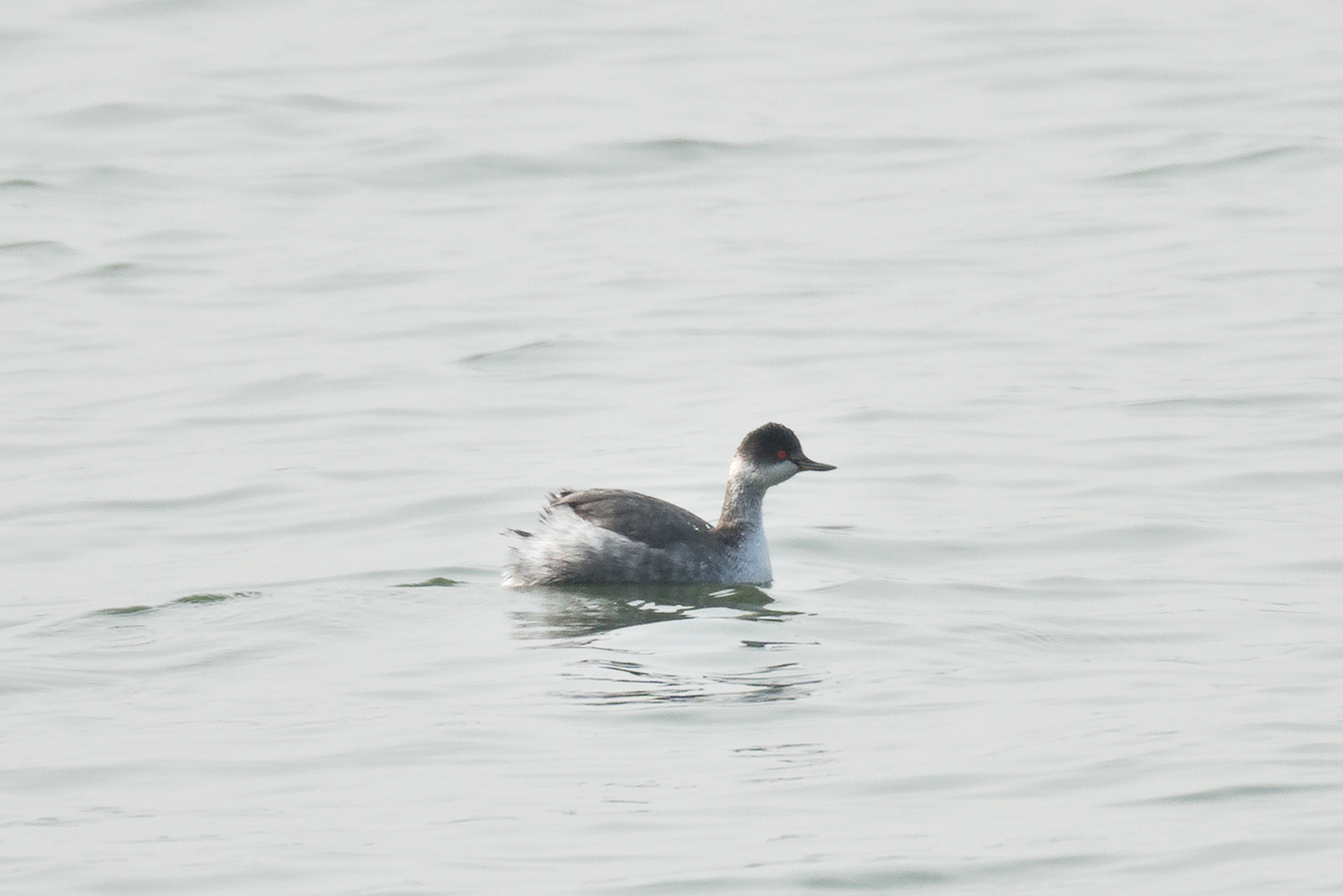
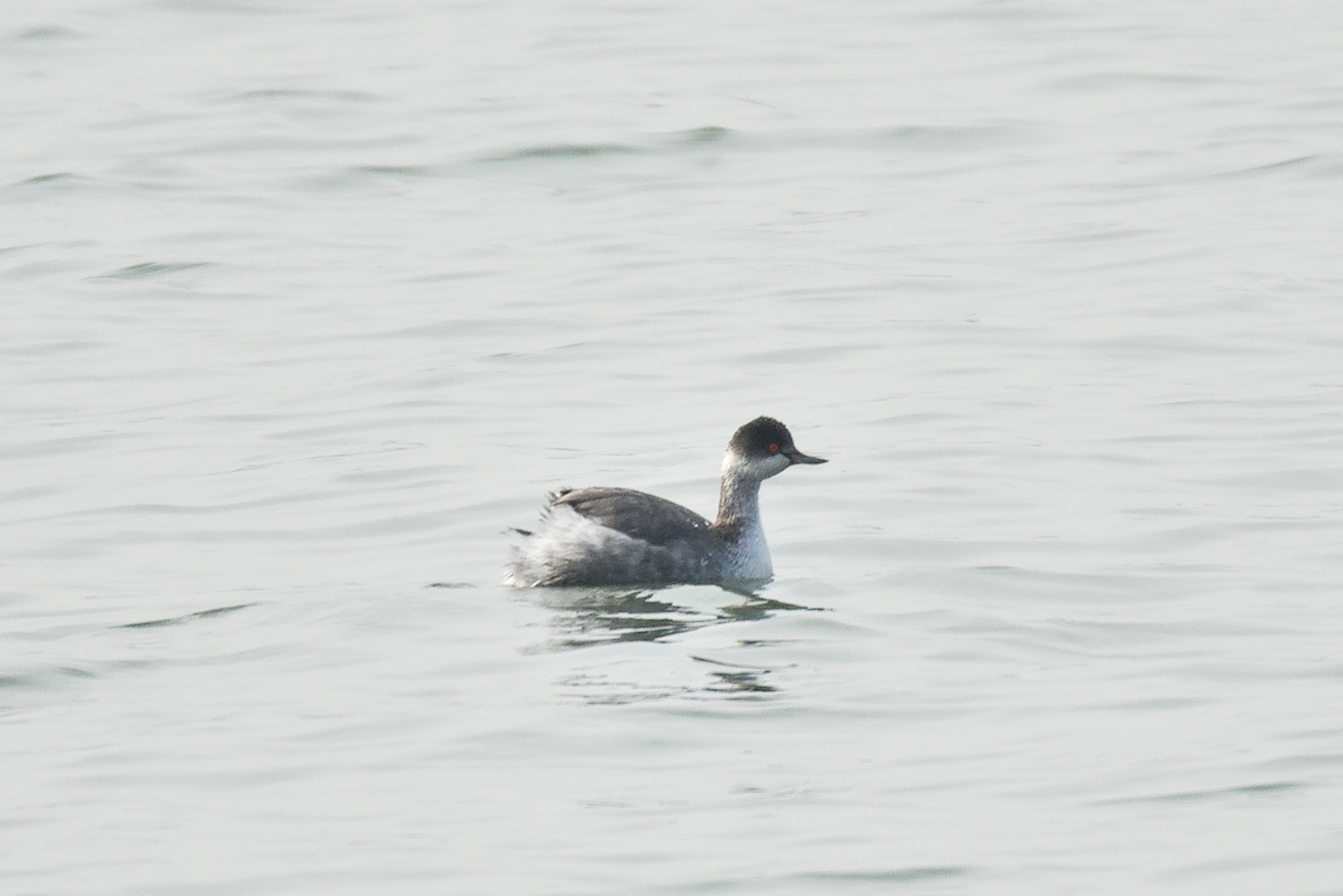
Measures 28–34 cm in length with a wingspan of 52–60 cm depending on subspecies. Weighs 215–450 g, with males averaging heavier than females. Breeding plumage features black to blackish-brown head, neck, breast, and upper parts, with an ochre-coloured fan of feathers behind the eye. Eyes are vivid bright red with a yellow inner ring and orange-yellow to pinkish-red orbital ring. Bill is thin, upturned, and black. Flanks are tawny rufous to maroon-chestnut; abdomen and underwing are white. Non-breeding plumage has greyish-black upper parts, cap, and hindneck stripe, with white ovals behind ear-coverts and whitish underparts. Juveniles have browner dark areas and buffy tinges on the head and neck.
Identification
Breeding adults identified by all-black neck and golden plumes behind the eye. Non-breeding birds show greyish-black upper parts with white ovals on the neck sides. Flight style resembles a loon: straight neck, trailing legs, and frequent wing beats. Generally avoids flight outside of migration. Silent outside breeding season; breeding calls include a high-pitched ascending 'ooeek' and a low, fast trill.
Distribution & Habitat
Breeds in temperate Europe, Asia, eastern and southern Africa, interior southwestern Canada, and the western United States. Migrates to saline lakes to moult, then winters in the south-western Palearctic, eastern Africa and Asia, southern Africa, and as far south as Guatemala in the Americas. Wintering populations in the Americas are mainly restricted to islands in the Gulf of California, the Salton Sea, and Baja California. Non-breeding habitat includes saline lakes, sheltered inshore seas, and coastal estuaries.
Behavior & Ecology
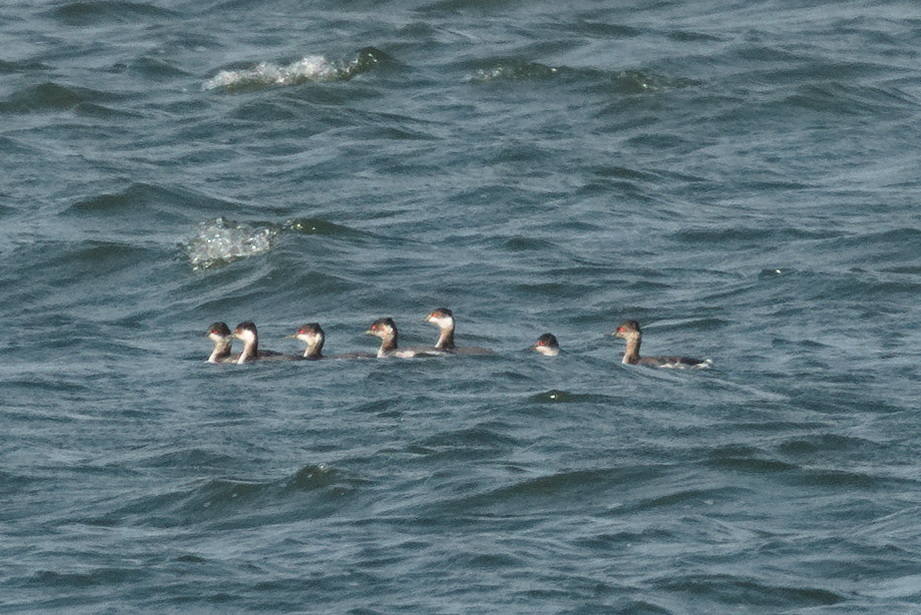
Highly gregarious, forming large colonies when breeding and flocks when not. Builds floating plant-matter nests anchored to vegetation in shallow water. Socially monogamous; courtship involves fluffed body and erect neck. Lays 3–4 chalky greenish or bluish eggs, incubated by both parents for about 21 days. Chicks ride on parents' backs for four days after hatching. Parents split chick care after 10 days; chicks fledge in about three weeks. Forages by diving (usually <30 seconds) and gleaning. Diet consists mainly of insects, crustaceans, molluscs, tadpoles, and small fish; feeds mostly on brine shrimps during moult at saline lakes.
Conservation
Classified as Least Concern by the IUCN with an estimated population of 3.9–4.2 million individuals. Population trend is uncertain. Threats include oil spills, human disturbance, collisions with power lines, and large-scale disease outbreaks such as avian cholera, botulism, erysipelas, and West Nile virus. Historically threatened by the millinery industry and egg collecting in North America; currently hunted in Gilan Province, Iran.
Culture
The name 'eared grebe' is nearly a century older than 'black-necked grebe'. The latter was adopted in 1912 to align with the scientific name and avoid confusion with the horned grebe. 'Black-necked grebe' is the official name designated by the International Ornithological Committee.
Source: Wikipedia · CC BY-SA 3.0
Taxonomy
- Order
- Podicipediformes
- Family
- Podicipedidae
- Genus
- Podiceps
Subspecies (3)
-
Podiceps nigricollis californicus
breeds southwestern Canada and western and west-central USA to central Mexico; winters to southern Mexico and east-central USA
Data Sources
Species description from Wikipedia, licensed under CC BY-SA 3.0.
Bird images and sounds sourced from GBIF, contributed by citizen scientists worldwide under Creative Commons licenses.
Taxonomy data from AviList 2025.