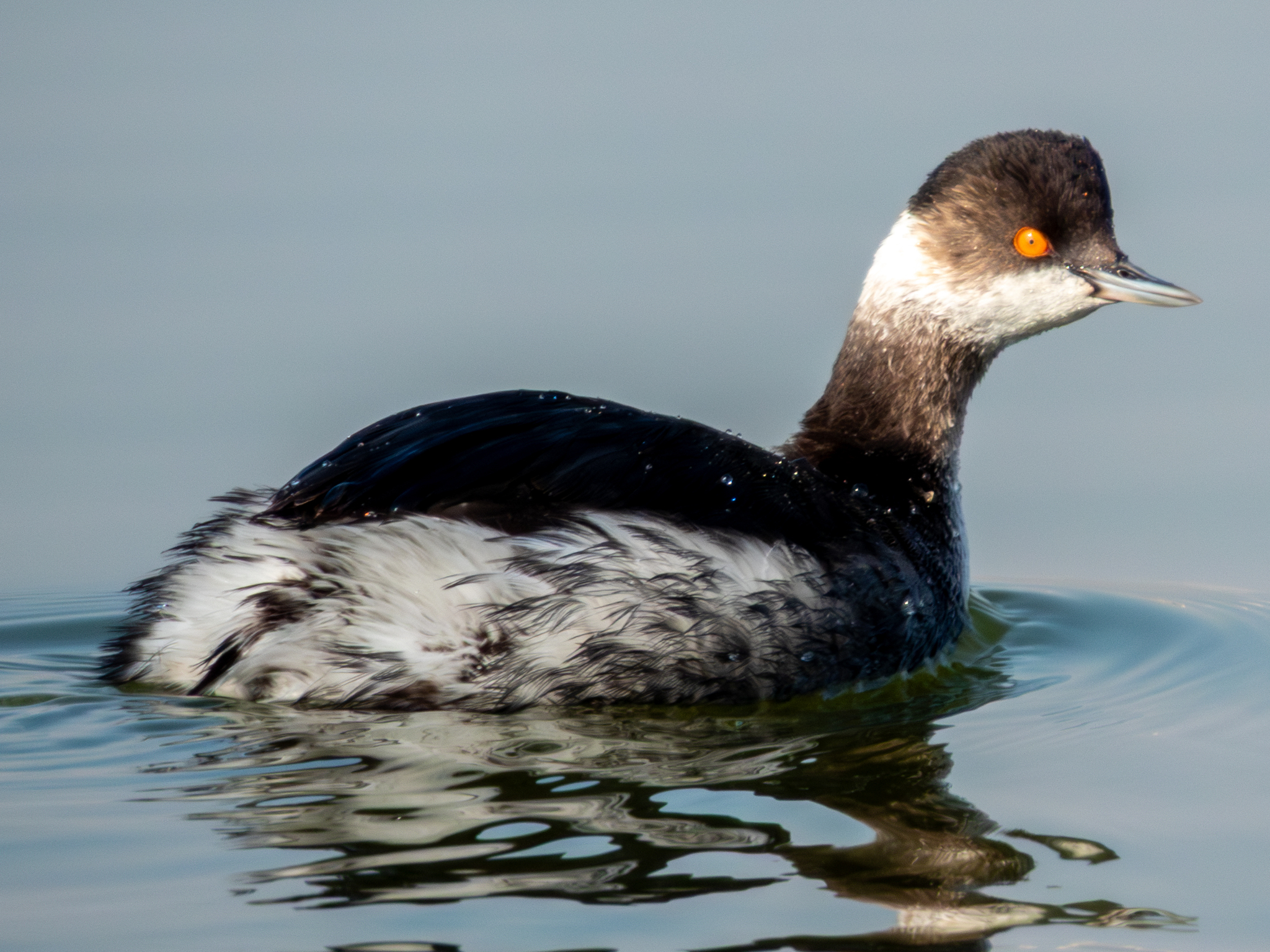
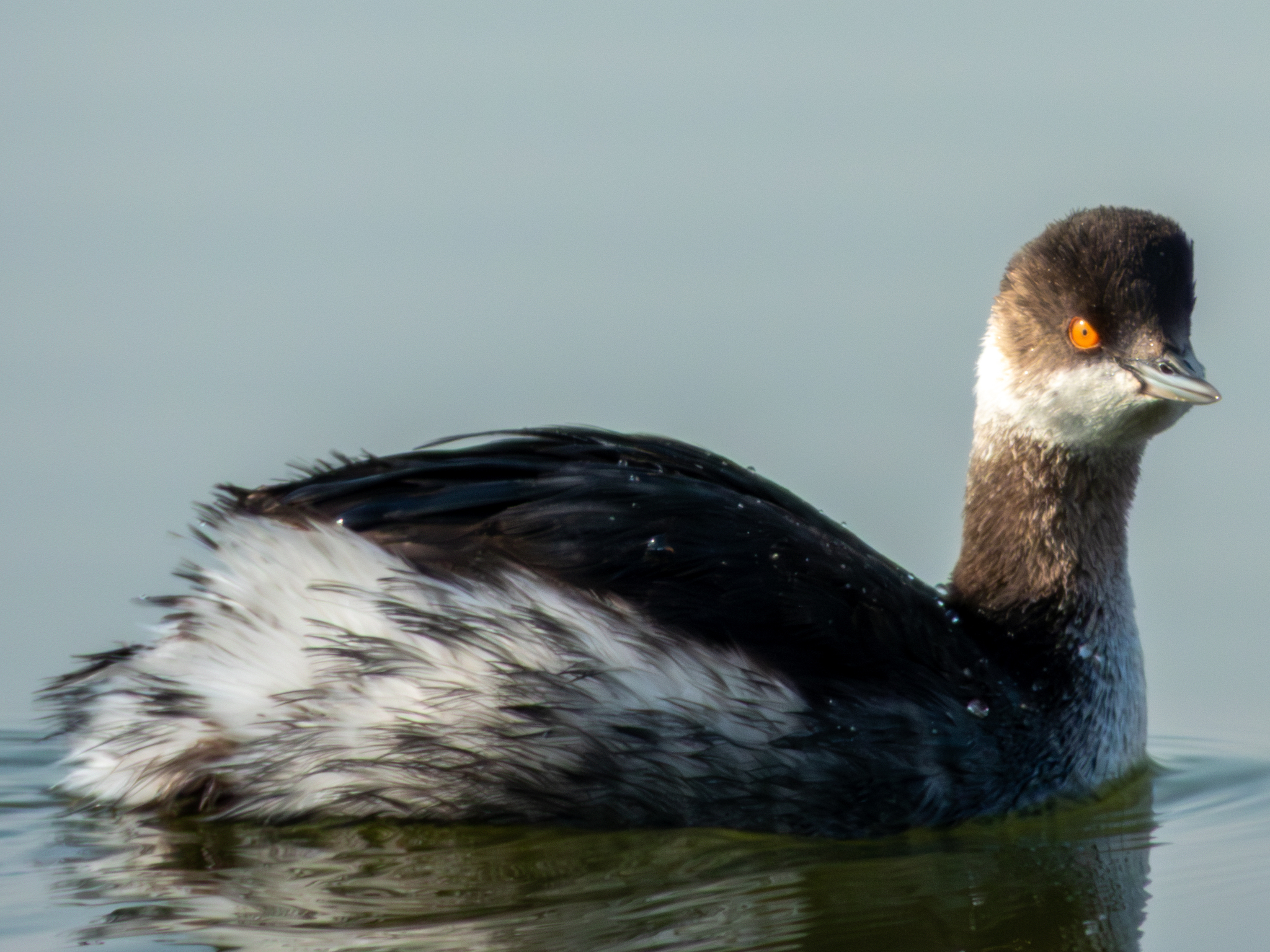
Black-necked Grebe
Podiceps nigricollis
黑颈䴙䴘
Introduction
A water bird in the grebe family. Breeds in vegetated freshwater lakes across temperate Europe, Asia, eastern and southern Africa, interior southwestern Canada, and the southwest and western United States. After breeding, migrates to saline lakes to moult before wintering in the southwestern Palearctic, eastern Africa and Asia, and southern Africa; in the Americas, winters as far south as Guatemala. Two distinctive ecological traits: migrates up to 6,000 km and becomes flightless for 35-40 days during molt, during which it can more than double its original weight. Classified as Least Concern by the IUCN as of 2016, with an estimated global population of 3.9–4.2 million individuals, likely making it the most numerous grebe species worldwide.
Description
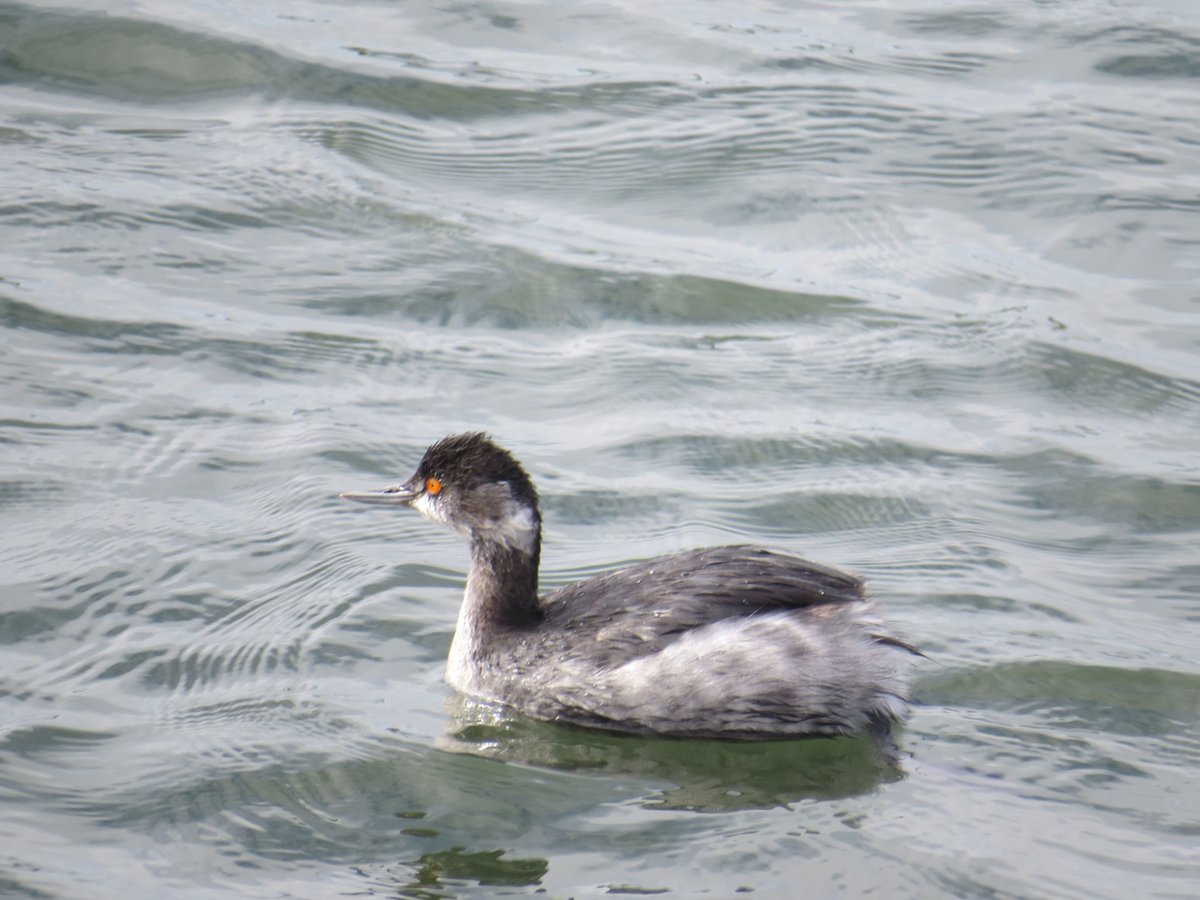
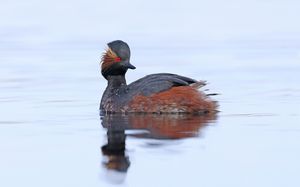
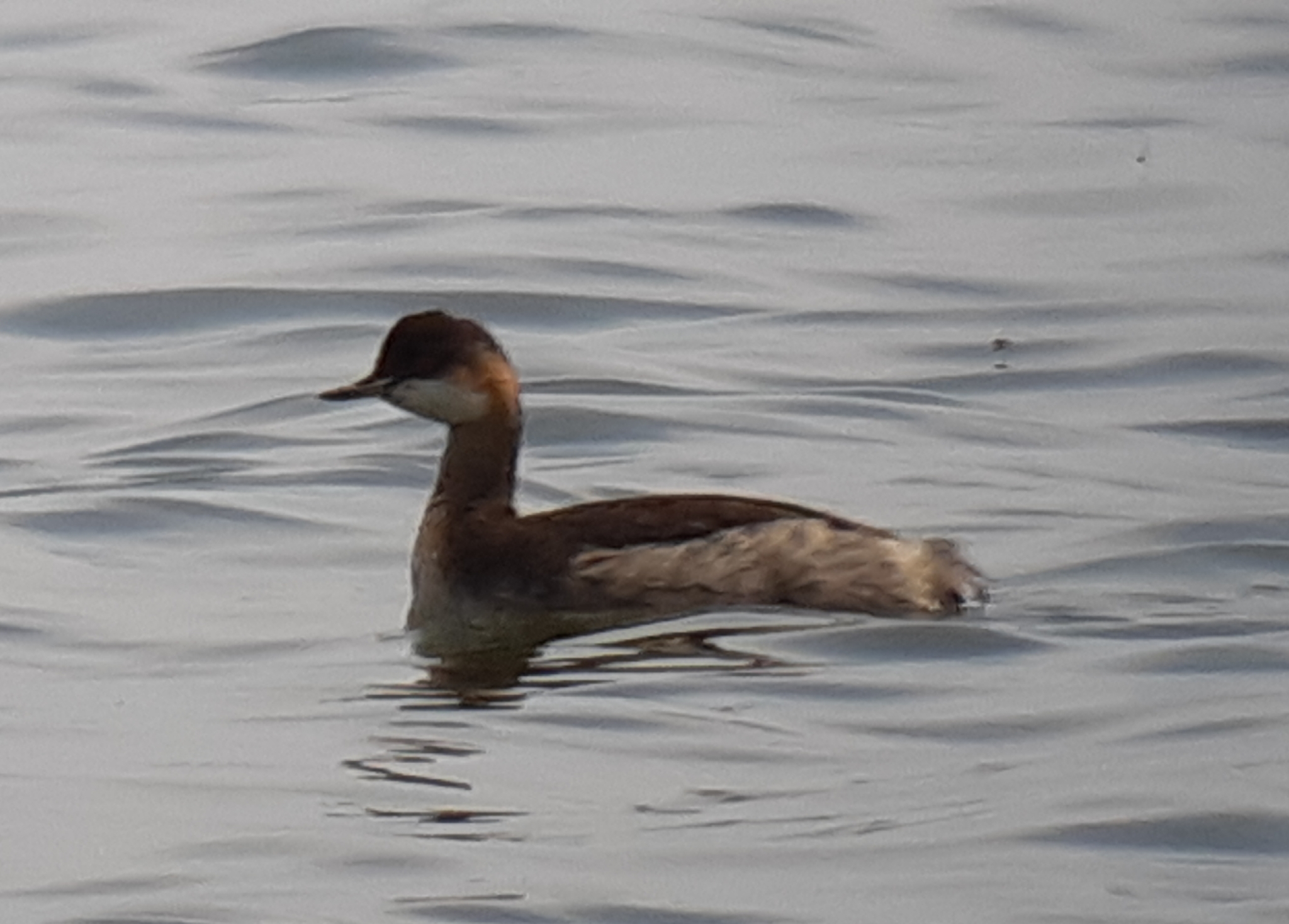
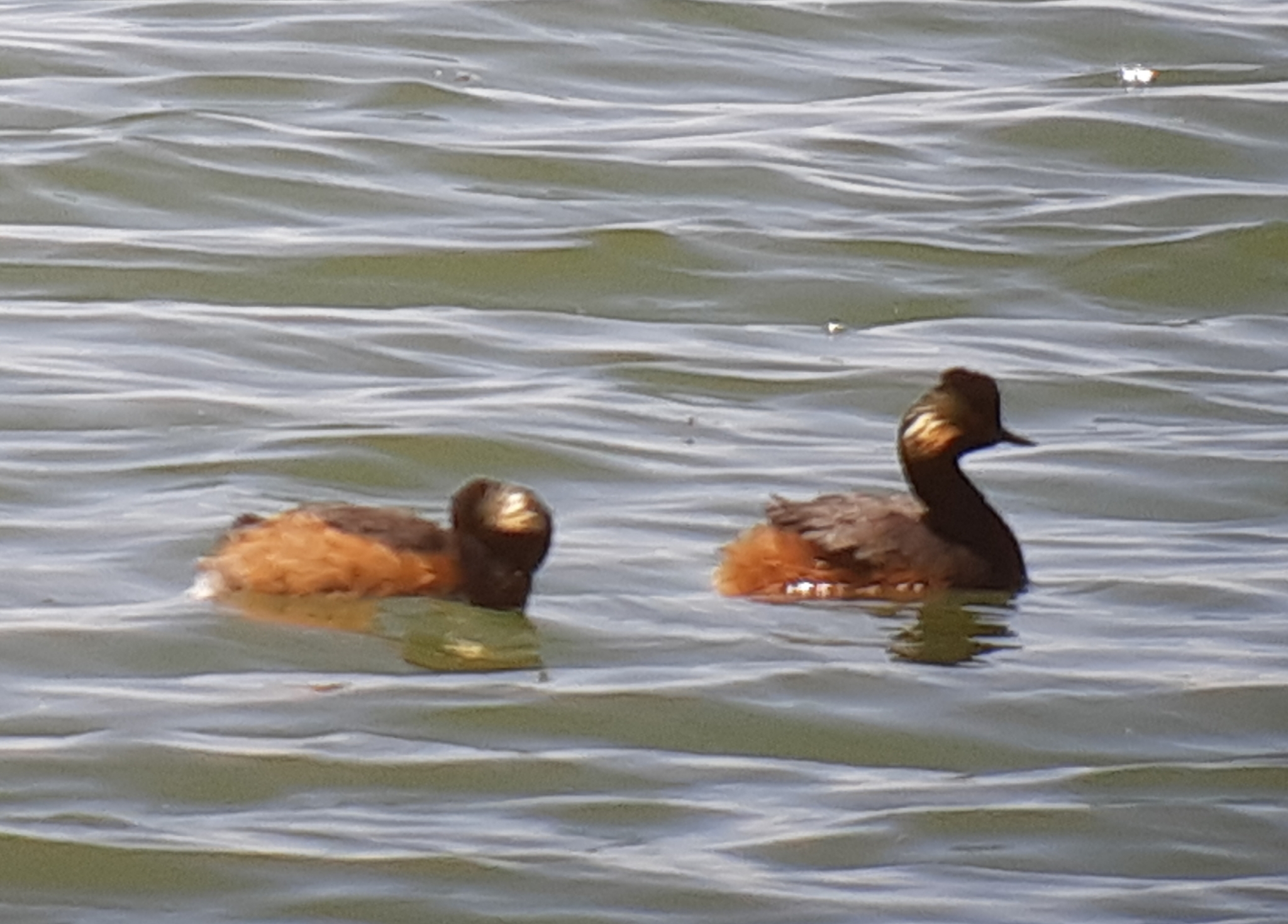
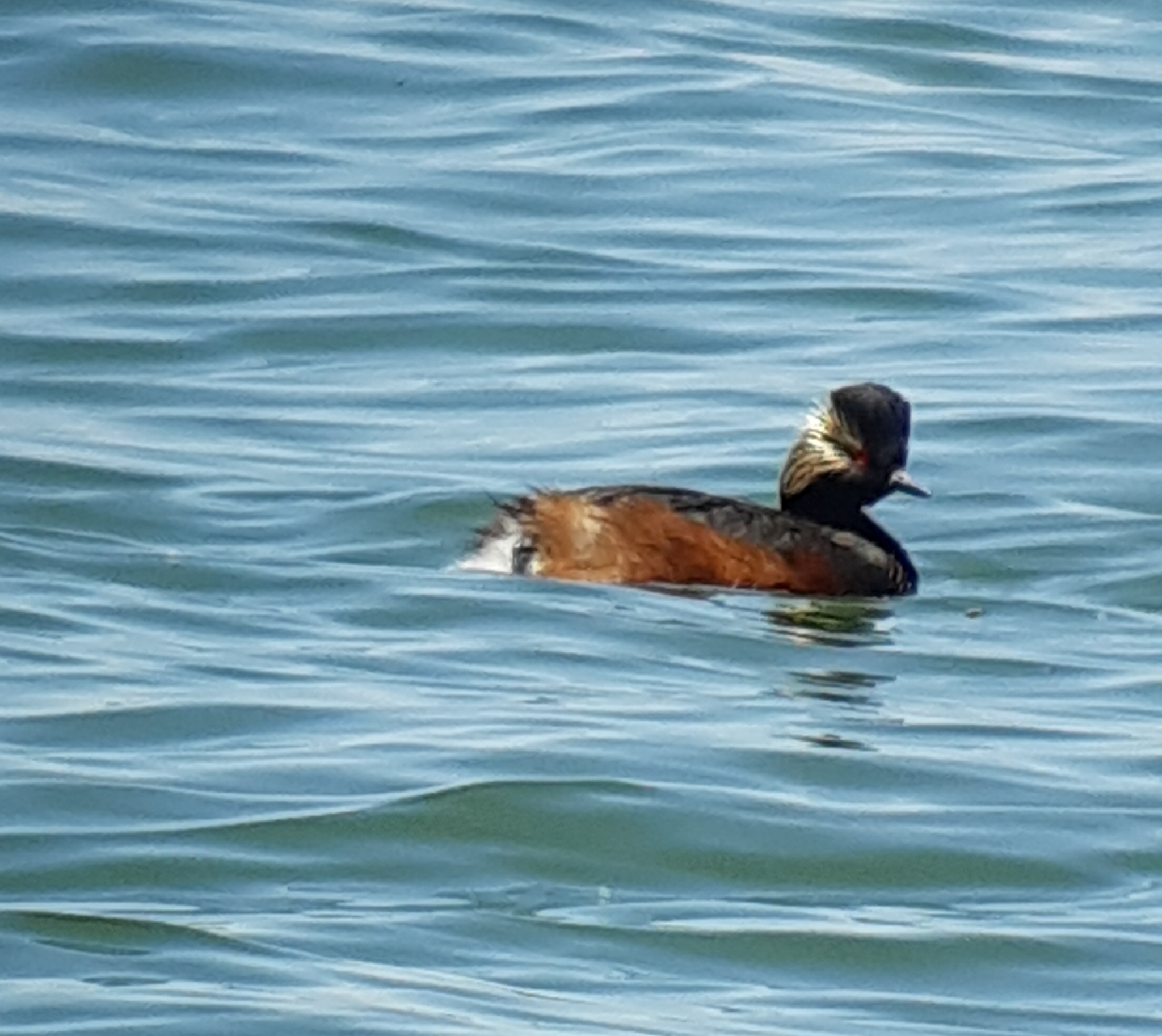
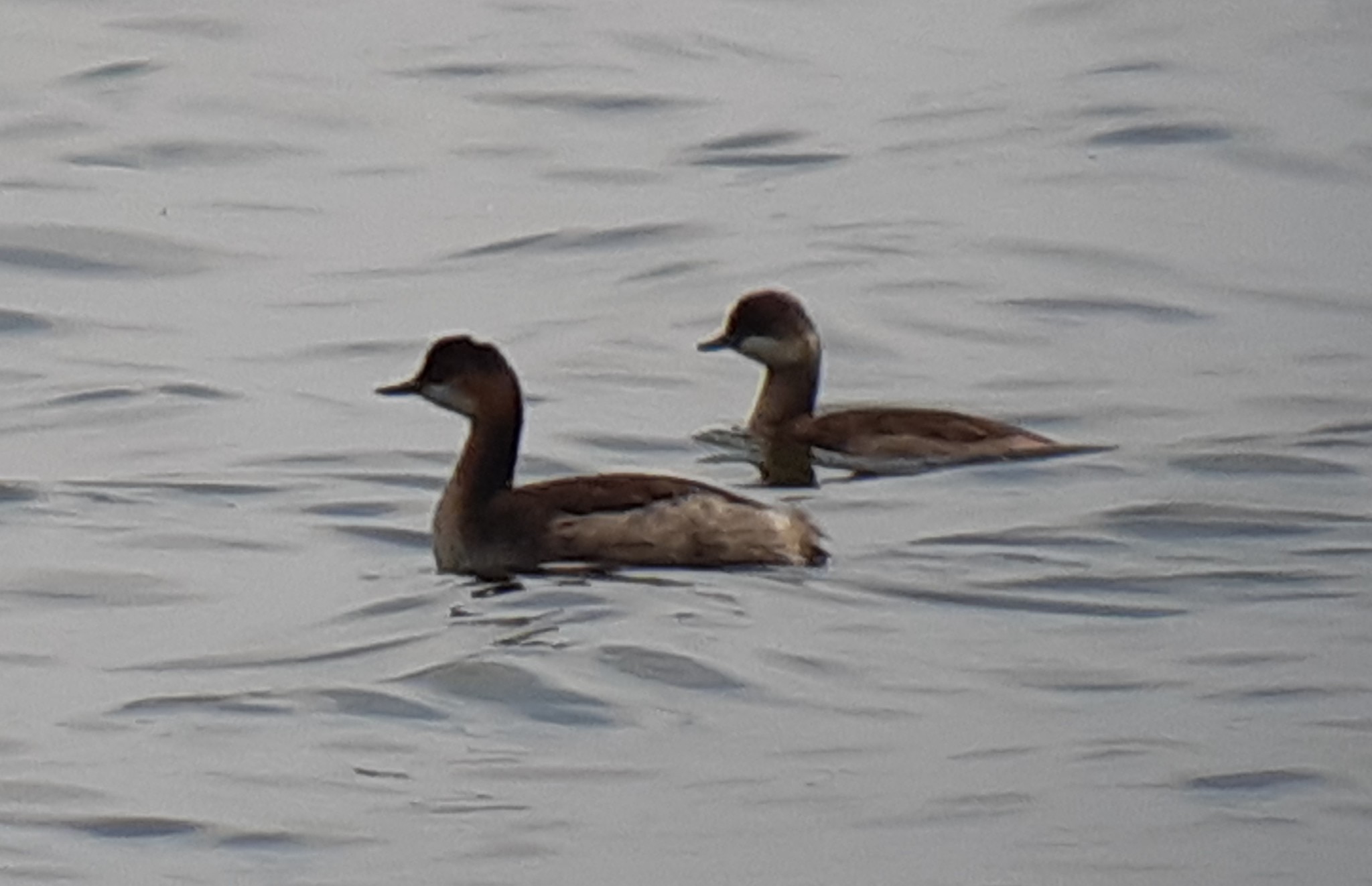
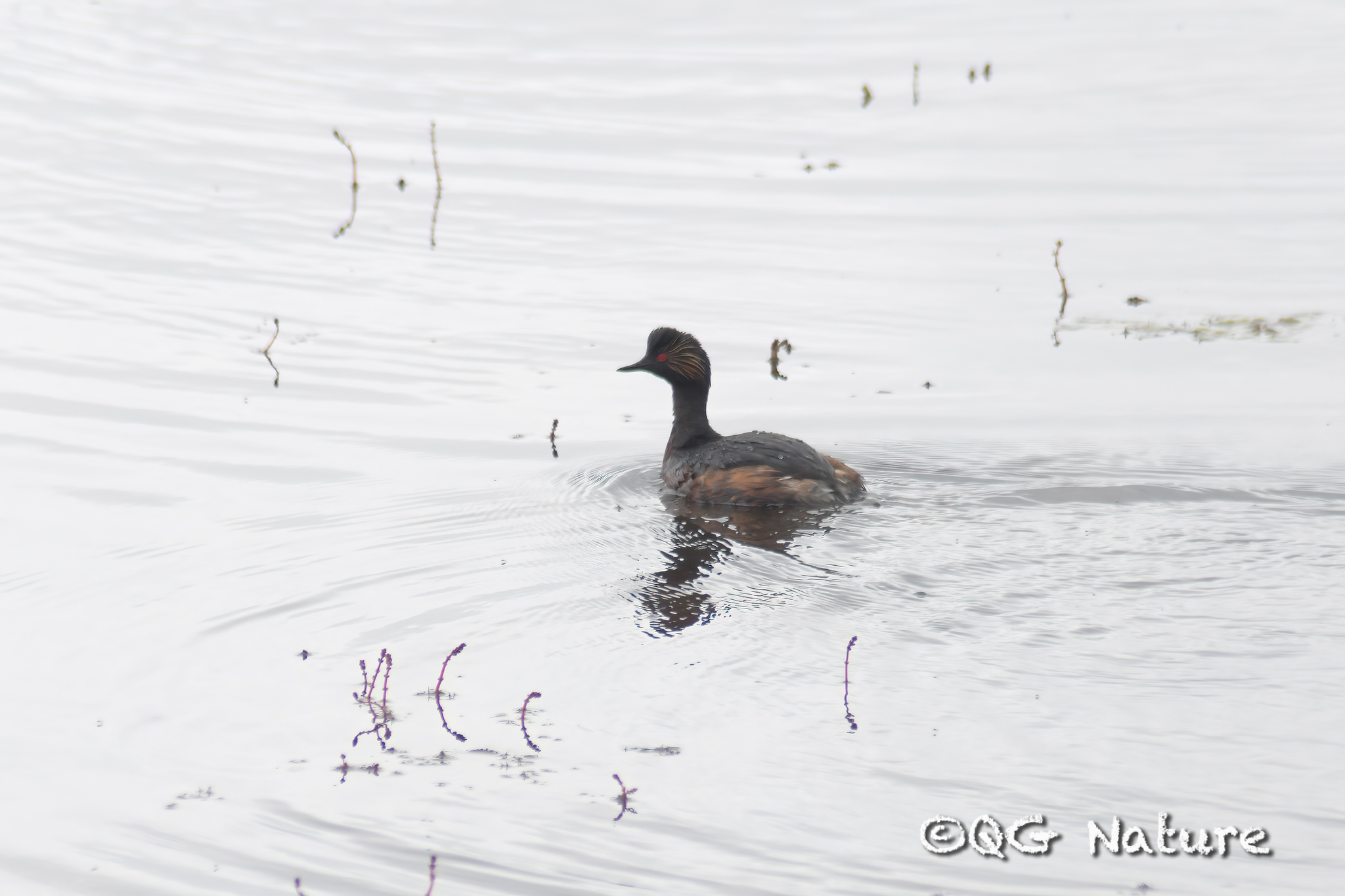
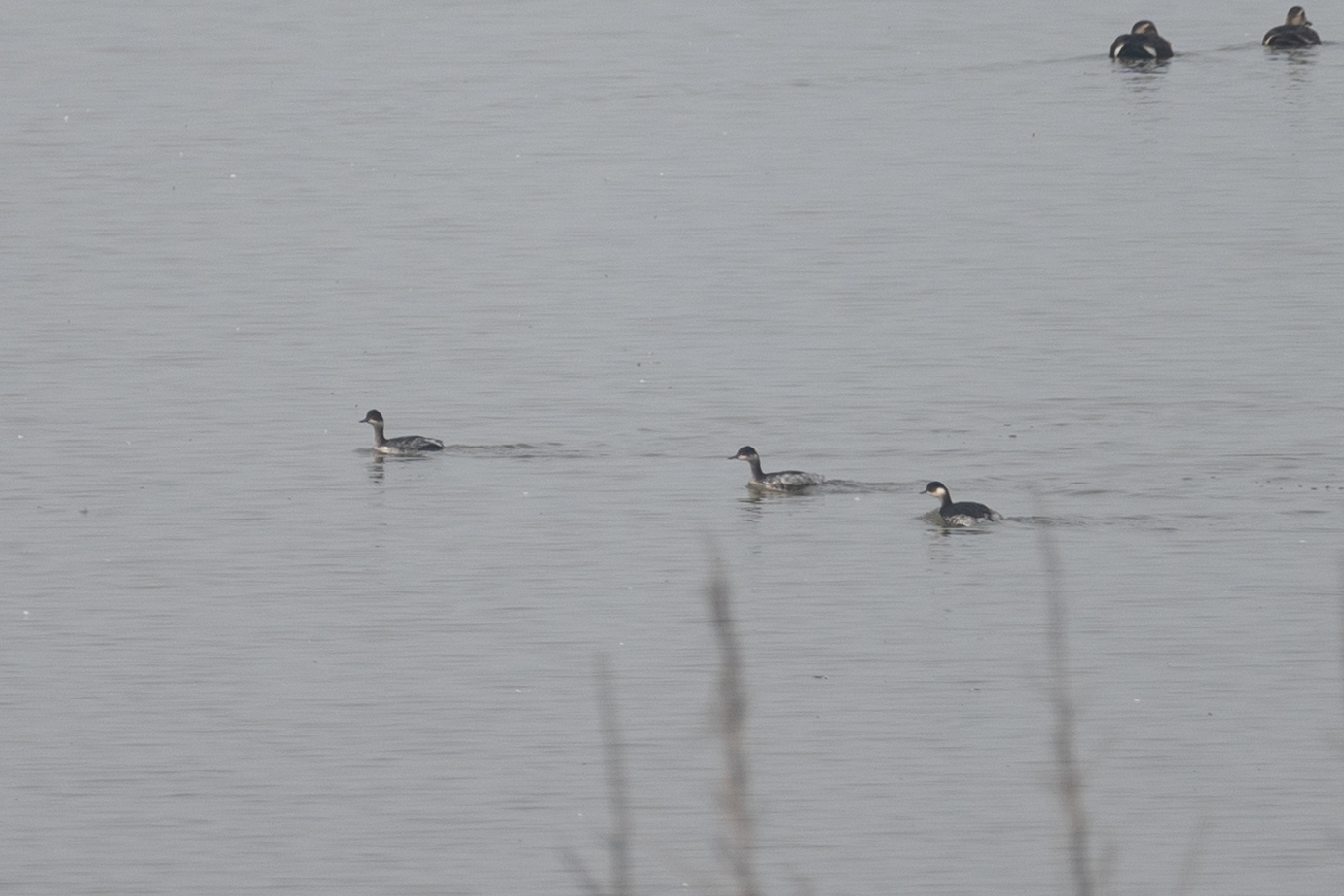
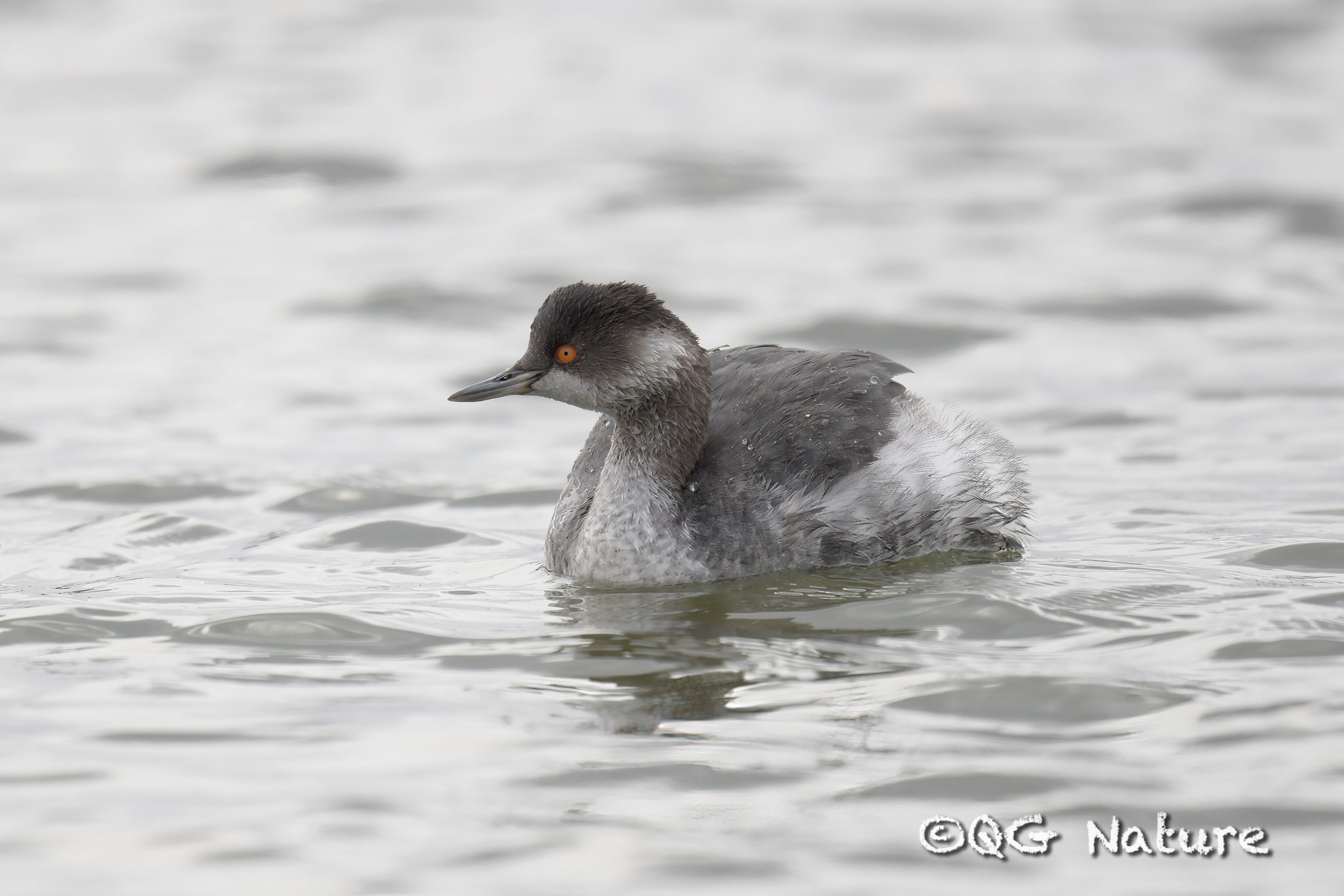
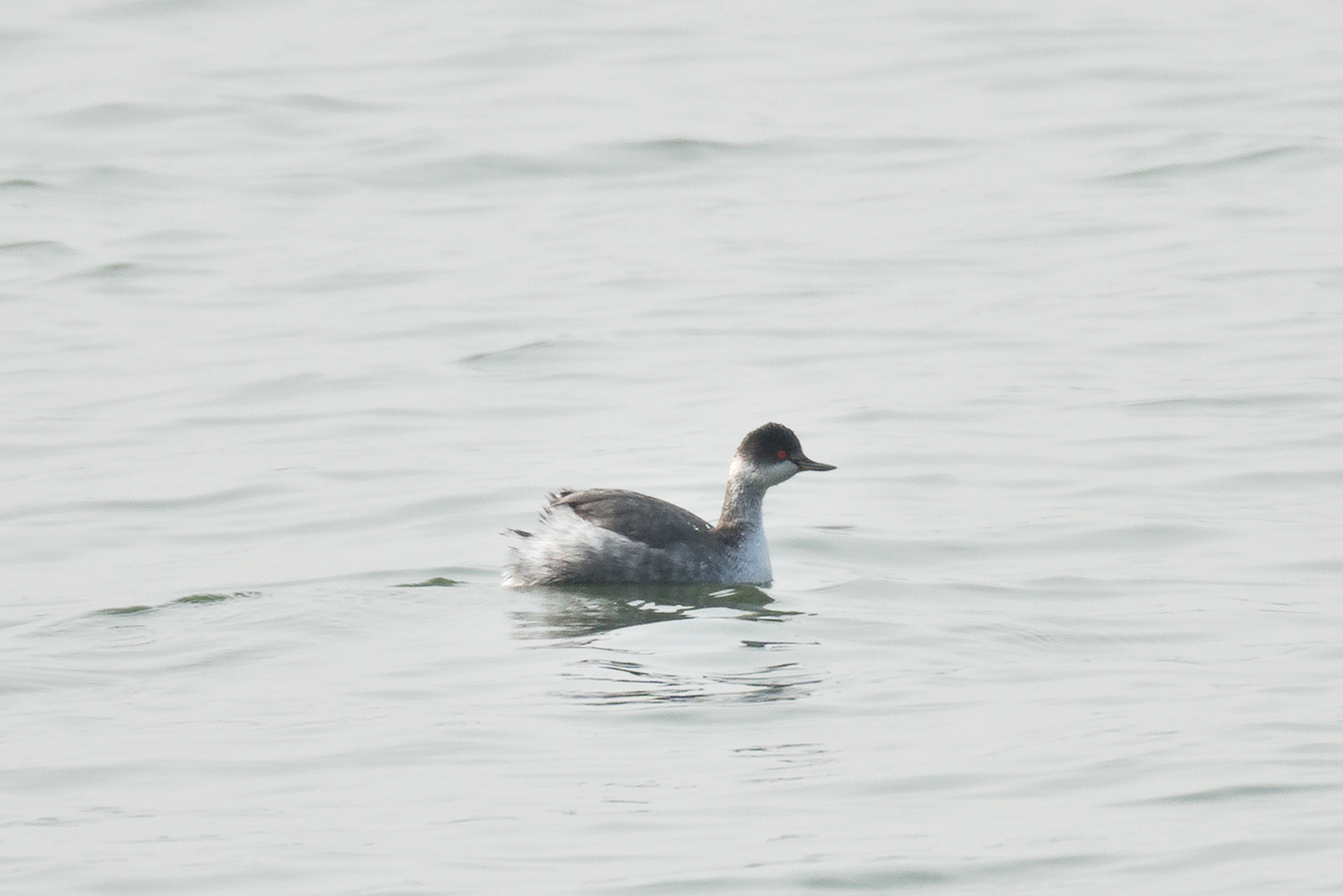
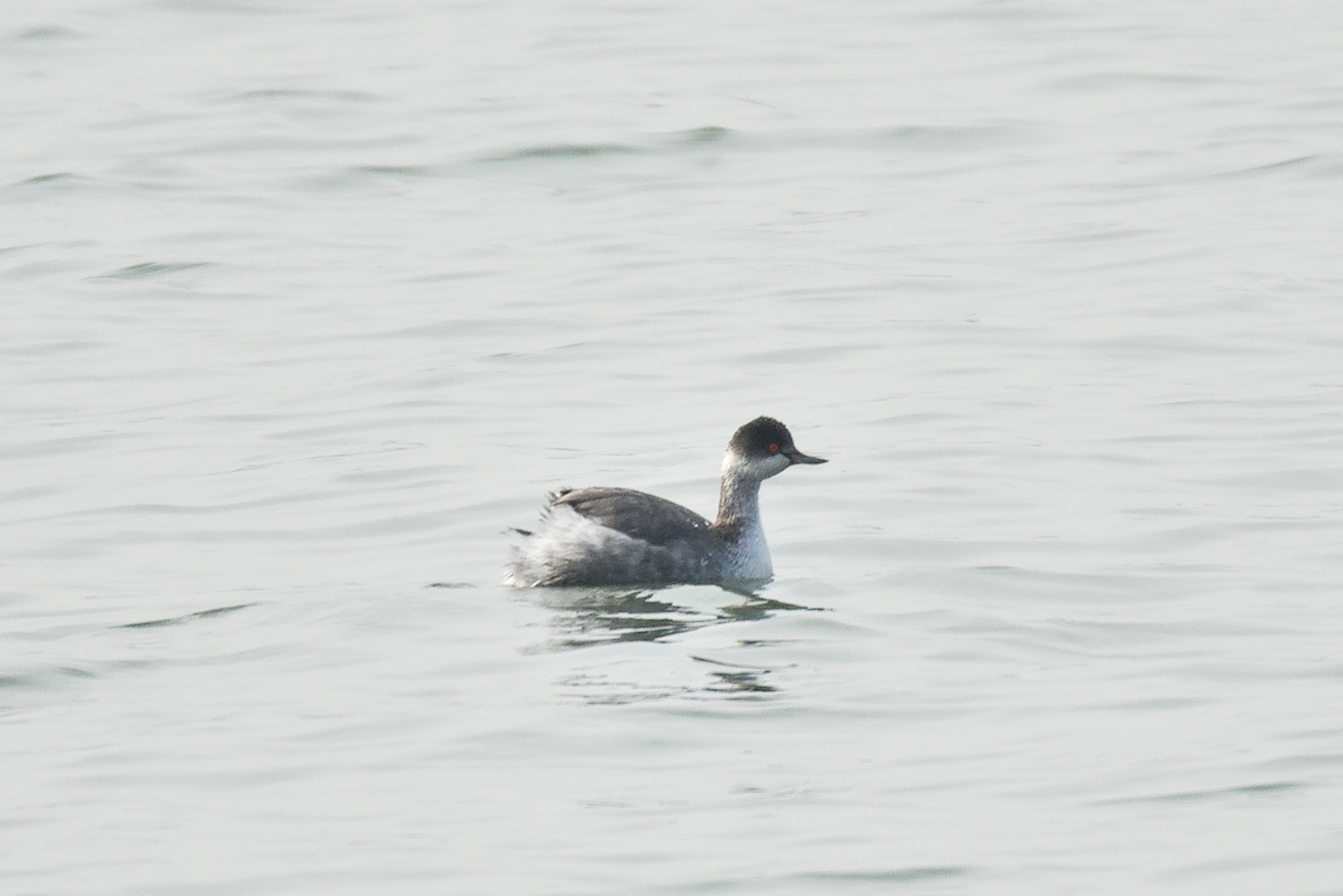
Small grebe measuring 28–34 cm in length with a wingspan of 56–60 cm in the nominate subspecies and 52–55 cm in P. n. californicus. Weight ranges from 215–450 g, with males averaging heavier. Breeding plumage features black to blackish-brown head, neck, breast, and upper parts, with a distinctive ochre-coloured fan of feathers extending behind the eye over the eye-coverts and sides of the nape. Flanks are tawny rufous to maroon-chestnut, and the abdomen is white. The eye is vivid bright red with a narrow pale yellow inner ring and orange-yellow to pinkish-red orbital ring. The bill is thin, upturned, and black. Non-breeding plumage shows greyish-black upper parts with a vertical stripe on the hindneck, and white or whitish underparts. Legs are dark greenish grey. The sexes are similar.
Identification
The ochre-coloured plume fan behind the eye is the most diagnostic feature in breeding plumage. The bright red eye with pale yellow ring is distinctive. Compared to the similar horned grebe, this species has an all-black neck rather than black-and-white patterning. The upturned bill differs from the straighter bills of other grebes. In non-breeding plumage, the vertical stripe on the back of the neck helps distinguish it from similar species. The three subspecies differ slightly: P. n. californicus has a longer bill, while P. n. gurneyi is the smallest with greyer head and upper parts.
Distribution & Habitat
Breeds across temperate Europe, Asia, eastern and southern Africa, interior southwestern Canada, and the southwest and western United States. After breeding, undertakes a molt migration to saline lakes, particularly those with abundant invertebrate prey. winters in the southwestern Palearctic, eastern Africa and Asia, and southern Africa. In the Americas, winters south to Guatemala, with significant populations at the Gulf of California, Salton Sea, and Baja California. Breeding habitat consists of vegetated areas of freshwater lakes; non-breeding habitat includes saline lakes, sheltered inshore seas, and coastal estuaries.
Behavior & Ecology
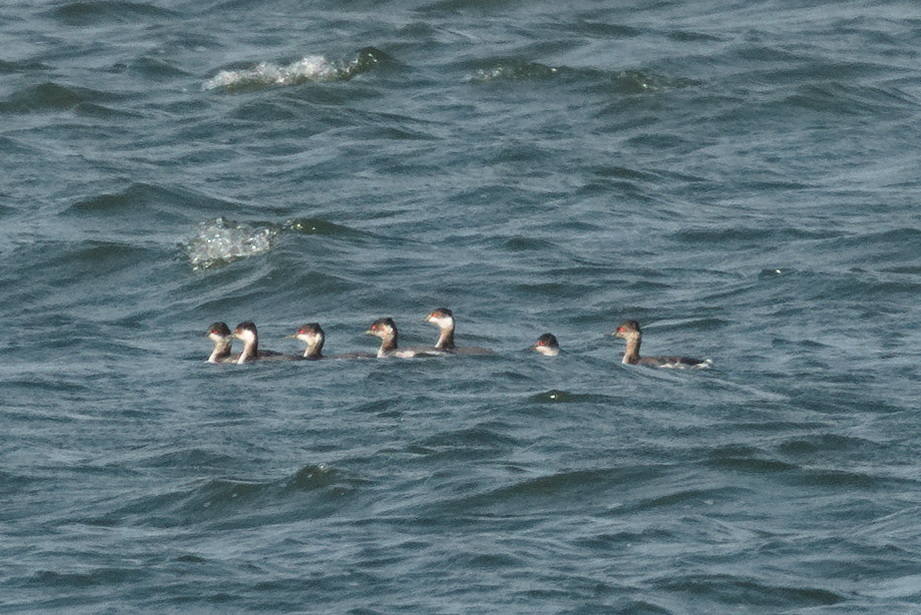
Highly gregarious, forming large colonies when breeding and large flocks when not. Builds floating cup nests anchored to vegetation in shallow open lakes, either in colonies or singly. In mixed-species colonies, often nests alongside black-headed gulls and ducks. Lays 3–4 chalky greenish or bluish eggs, with nearly 40% of nests affected by conspecific brood parasitism. Both parents incubate for about 21 days. After hatching, chicks ride on parents' backs for four days before being divided between parents after about 10 days. Forages mainly by diving, typically under 30 seconds, feeding on insects, crustaceans, molluscs, tadpoles, frogs, and fish. At hypersaline lakes during molt, feeds predominantly on brine shrimps. Gives a quiet, high-pitched 'ooeek' call during breeding; silent at other times.
Conservation
IUCN Least Concern as of 2016 due to very large population (estimated 3.9–4.2 million individuals) and extensive range (about 155 million km²). Population trend is uncertain, with some populations decreasing while others are stable or increasing. Major threats include disease outbreaks (erysipelas, avian cholera, botulism, West Nile virus), oil pollution since it winters primarily on coasts, human disturbance, and collisions with power transmission lines. Hunting occurs in Gilan Province, Iran. Large-scale die-offs have been recorded, including 150,000 birds at the Salton Sea in 1992. The 2013 West Nile virus outbreak at Great Salt Lake caused one of the largest recorded avian die-offs in US history. No threats currently indicate significant risk to the global population.
Culture
Both common names refer to breeding plumage features: the all-black neck and golden plumes on each side of the head. The name 'eared grebe' is nearly a century older than 'black-necked grebe'; the latter was first used in 1912 by Ernst Hartert to align the common name with the scientific name and avoid confusion with the horned grebe (Podiceps auritus, where auritus means 'eared'). 'Eared grebe' remains the standard name in North America. The species was first described in 1783 as Colymbus caspicus from a bird in Bandar-e Anzali, though this was later suppressed in favor of the current scientific name.
Source: Wikipedia · CC BY-SA 3.0
Taxonomy
- Order
- Podicipediformes
- Family
- Podicipedidae
- Genus
- Podiceps
- eBird Code
- eargre
Subspecies (3)
-
Podiceps nigricollis californicus
breeds southwestern Canada and western and west-central USA to central Mexico; winters to southern Mexico and east-central USA
-
Podiceps nigricollis gurneyi
patchy resident, Ethiopia to Tanzania and southern Africa
-
Podiceps nigricollis nigricollis
breeds temperate Eurasia (south of Scandinavia) from Britain and Spain eastward through Baltic states, Kazakhstan, northern and central Mongolia patchily to Russian Far East and northeastern China; winters to coasts of northern Africa, Arabian Peninsula, Black and Caspian seas, northwestern Indian subcontinent, southeastern China, Korean Peninsula, and Japan
Data Sources
Species description from Wikipedia, licensed under CC BY-SA 3.0.
Bird images and sounds sourced from GBIF, contributed by citizen scientists worldwide under Creative Commons licenses.
Taxonomy data from AviList 2025.