Charadriiformes / Charadriidae / Pluvialis
Grey Plover
Pluvialis squatarola · 灰鸻
Introduction
A large plover breeding in Arctic regions and migrating long distances to coastal areas worldwide. It is less gregarious than related species, feeding widely dispersed on beaches rather than in dense flocks. The IUCN assesses its conservation status as Vulnerable.
Description
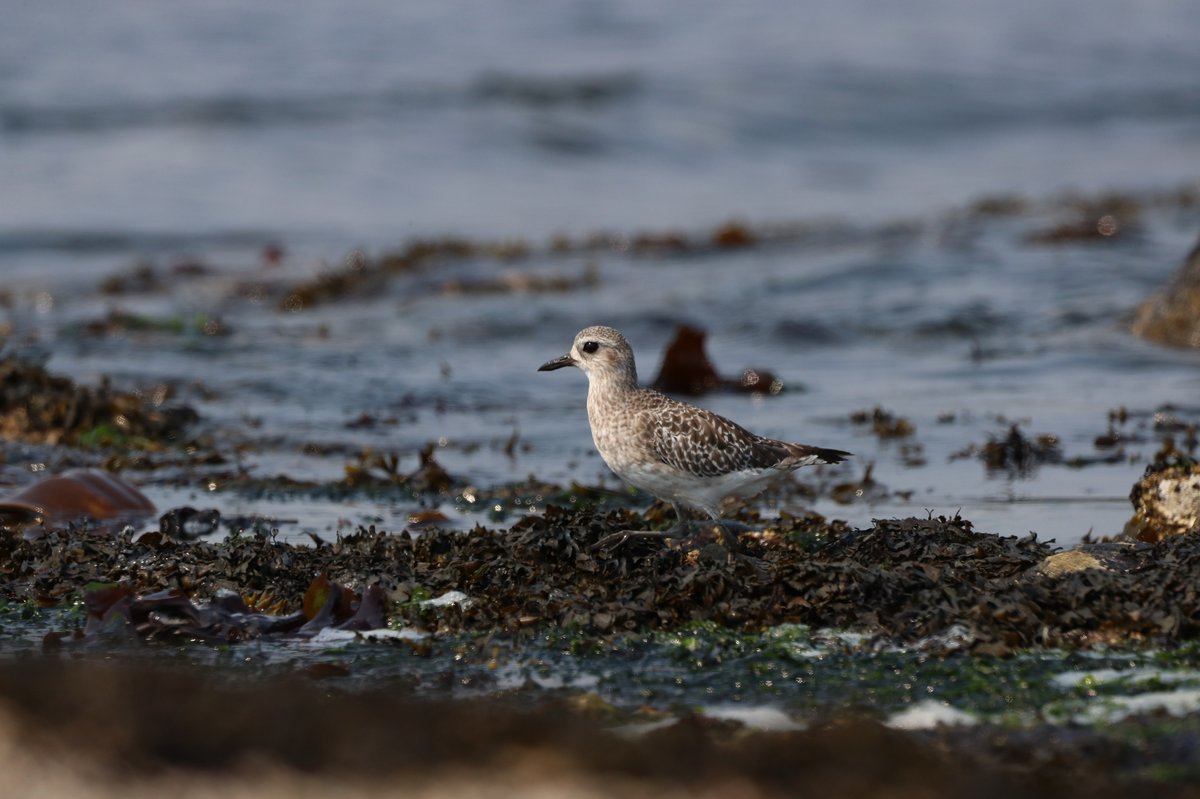
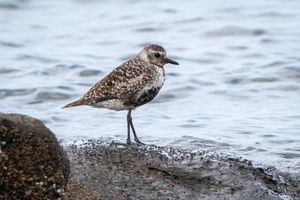
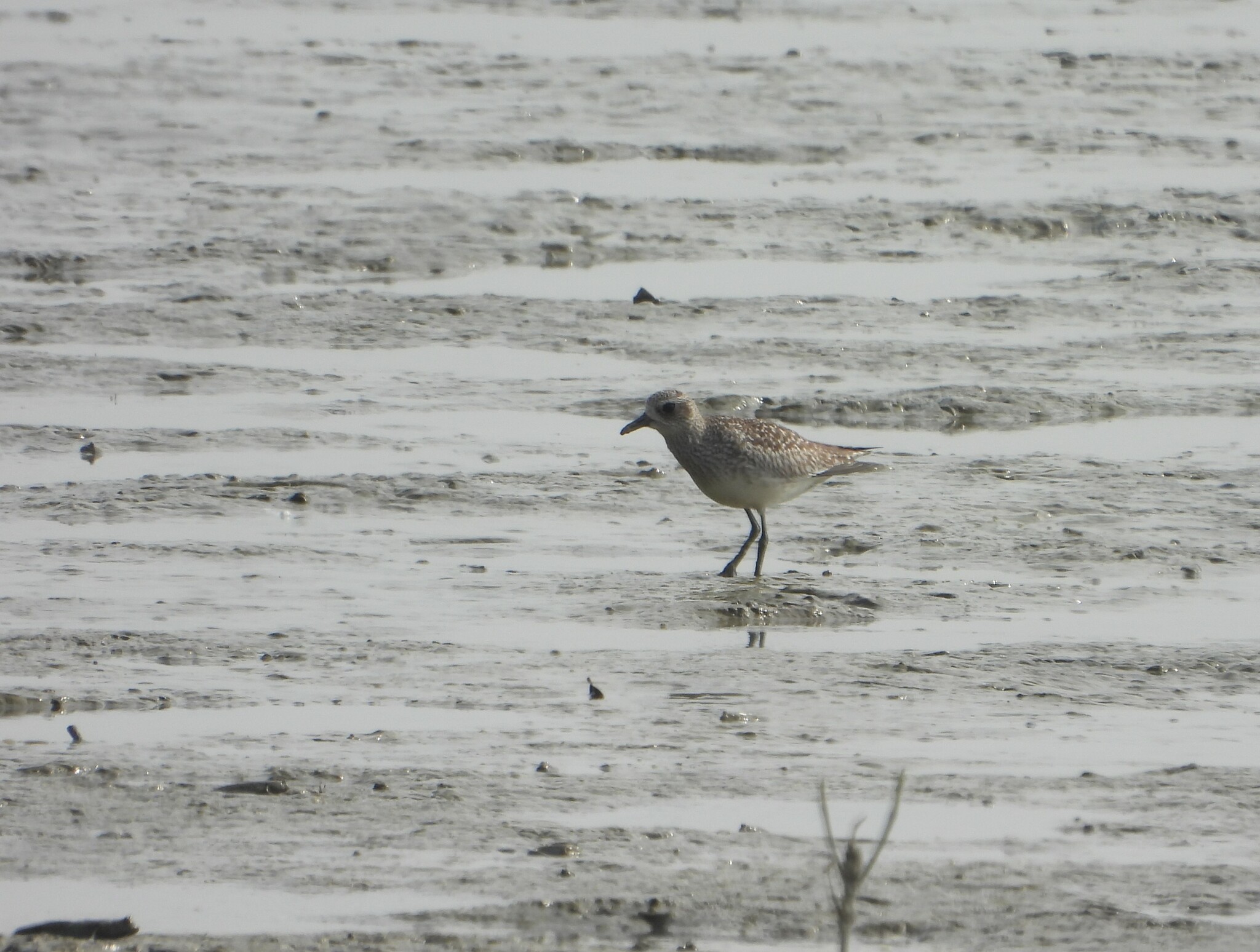
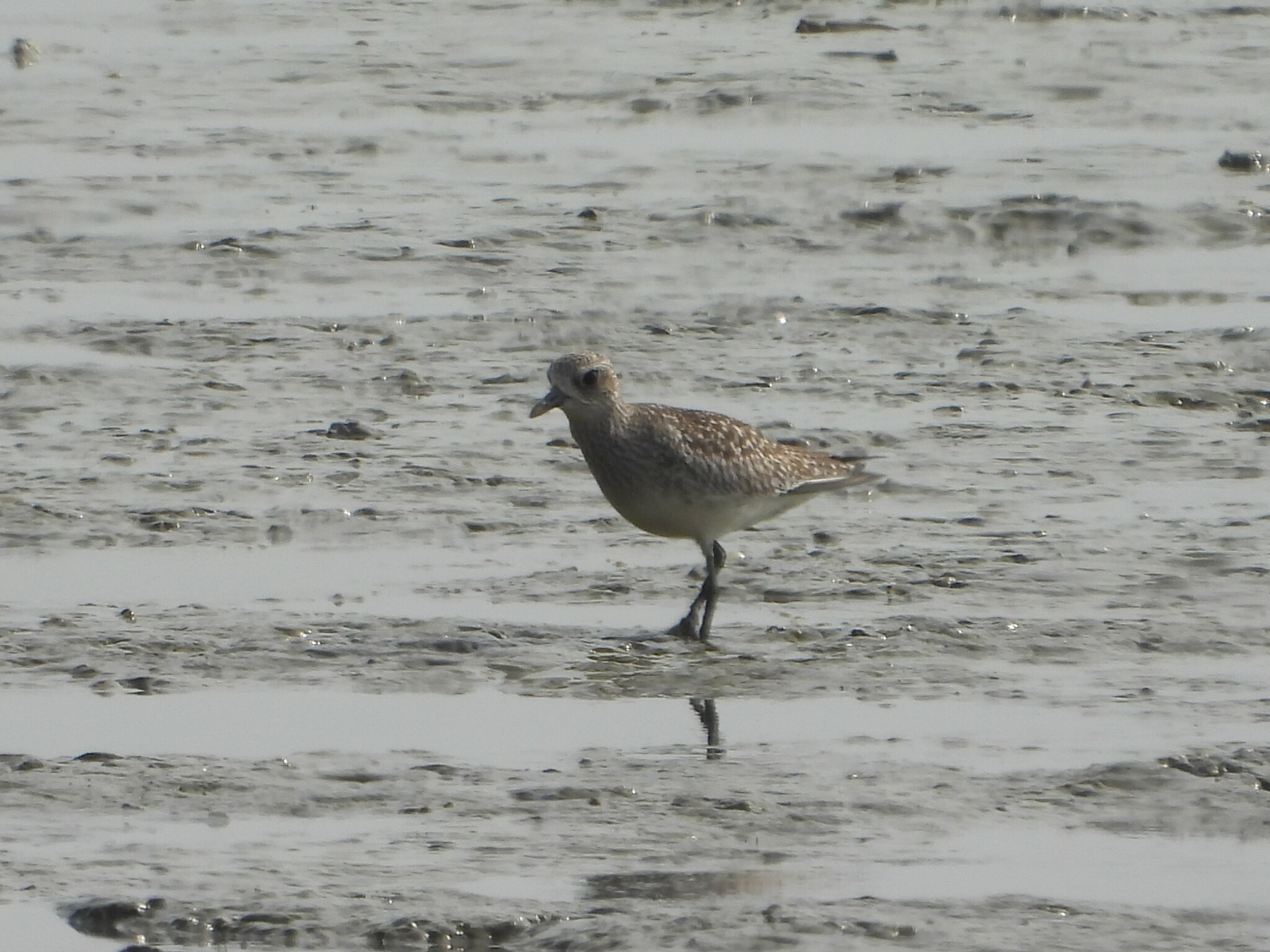
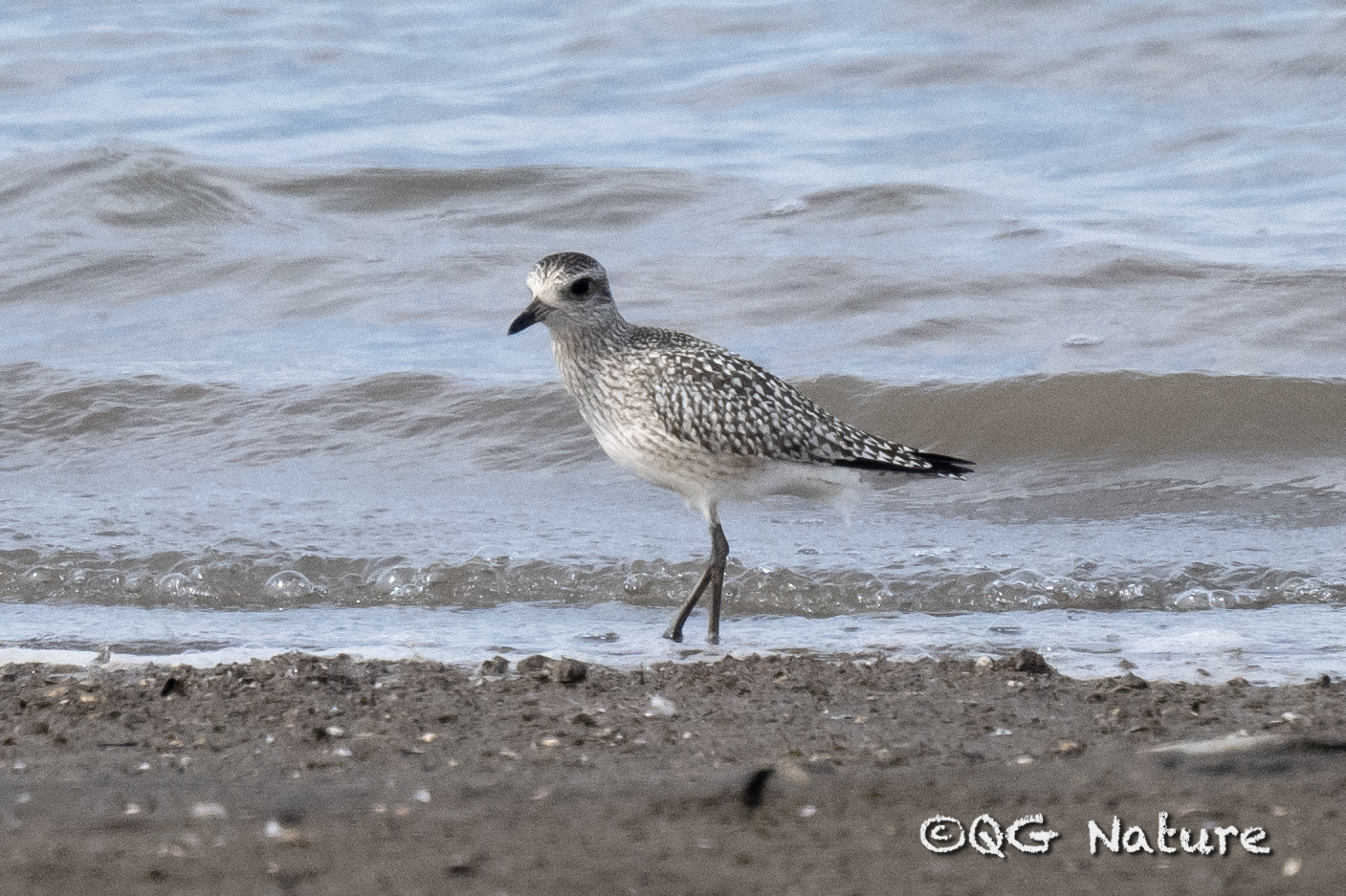
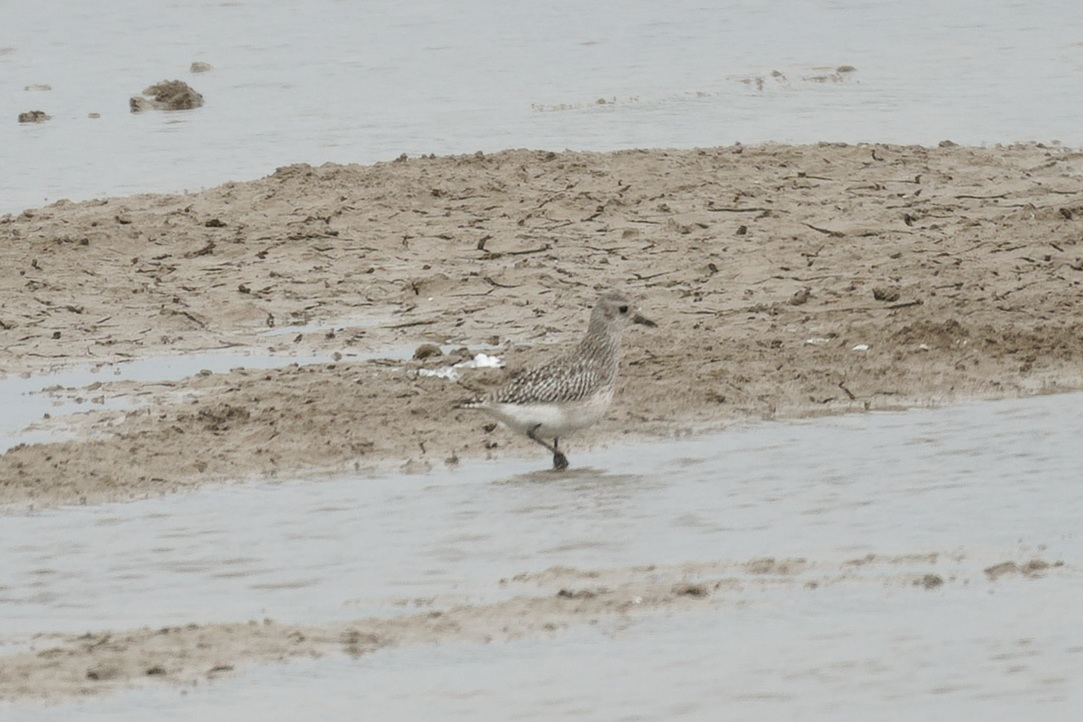
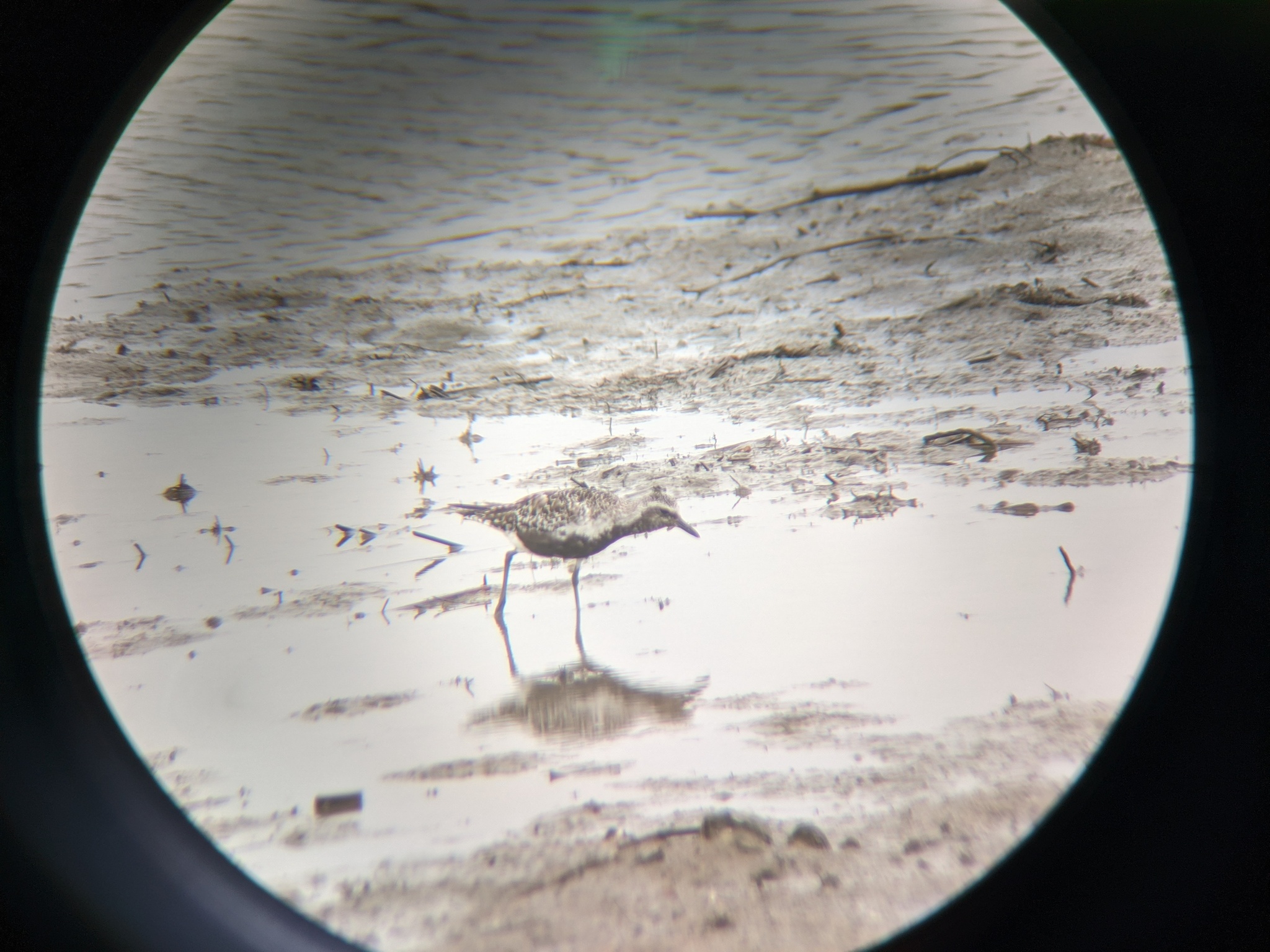
Length 27–30 cm (11–12 in), wingspan 71–83 cm (28–33 in), weight 190–280 g (6.7–9.9 oz), reaching up to 345 g (12.2 oz) before migration. Breeding adults have black-and-white spotted backs and wings, black face, neck, breast, and belly, white rump, and white tail with black barring. Bill and legs are black. Winter plumage is plain grey above with a grey-speckled breast and white belly. Juveniles resemble winter adults but have blacker back feathers with creamy white edging. In all plumages, inner flanks and axillary feathers are black. The bill is larger (24–34 mm) and heavier than in congeners.
Identification
Distinguished from other Pluvialis species in flight by black inner flanks and axillary feathers. On the ground, identified by a larger, heavier bill (24–34 mm). Winter plumage is plain grey above with a speckled breast, contrasting with the golden tones of similar species.
Distribution & Habitat
Breeds on Arctic islands and coastal tundra in Alaska, Canada, and Russia, including Wrangel Island. Migrates to coastal areas globally: in the New World from British Columbia and Massachusetts south to Argentina and Chile; in the Old World from Ireland and Norway south through Africa to South Africa, and from Japan south through Asia to Australia and New Zealand. Rare inland vagrant, occasionally stopping at large lakes like the Great Lakes.
Behavior & Ecology
Nests in shallow gravel scrapes on dry open tundra. Lays three to four eggs in early June; incubation lasts 26–27 days, and chicks fledge at 35–45 days. Young birds do not breed until two years old. Forages on beaches and tidal flats for molluscs, polychaete worms, crustaceans, and insects, usually by sight. Feeds singly or widely spaced, but forms dense flocks at high-tide roosts. Makes regular non-stop transcontinental flights during migration.
Conservation
Assessed as Vulnerable by the IUCN. Listed under the Agreement on the Conservation of African-Eurasian Migratory Waterbirds (AEWA).
Source: Wikipedia · CC BY-SA 3.0
Taxonomy
- Order
- Charadriiformes
- Family
- Charadriidae
- Genus
- Pluvialis
Subspecies (3)
-
Pluvialis squatarola cynosurae
breeds high Arctic of north-central Canada eastwards to Baffin Island; winters to coastal North and South America
Data Sources
CBR Notes: IUCN红色名录等级由LC升为VU
Species description from Wikipedia, licensed under CC BY-SA 3.0.
Bird images and sounds sourced from GBIF, contributed by citizen scientists worldwide under Creative Commons licenses.
Taxonomy data from AviList 2025.