
Grey Plover
Pluvialis squatarola
灰鸻
Introduction
The grey plover is a long-distance migrant with an almost global coastal distribution during the non-breeding season. It breeds in Arctic regions of North America and Eurasia, migrating south to coastlines worldwide, including North America, Europe, Africa, Asia, and Australia. Wintering habitats include sandy beaches, mudflats, and rocky shores. Unlike some plovers, this species feeds in a dispersed manner with individuals spaced along the shoreline. It is listed as Least Concern globally, though some regional populations face localized threats from habitat loss and disturbance.
Description
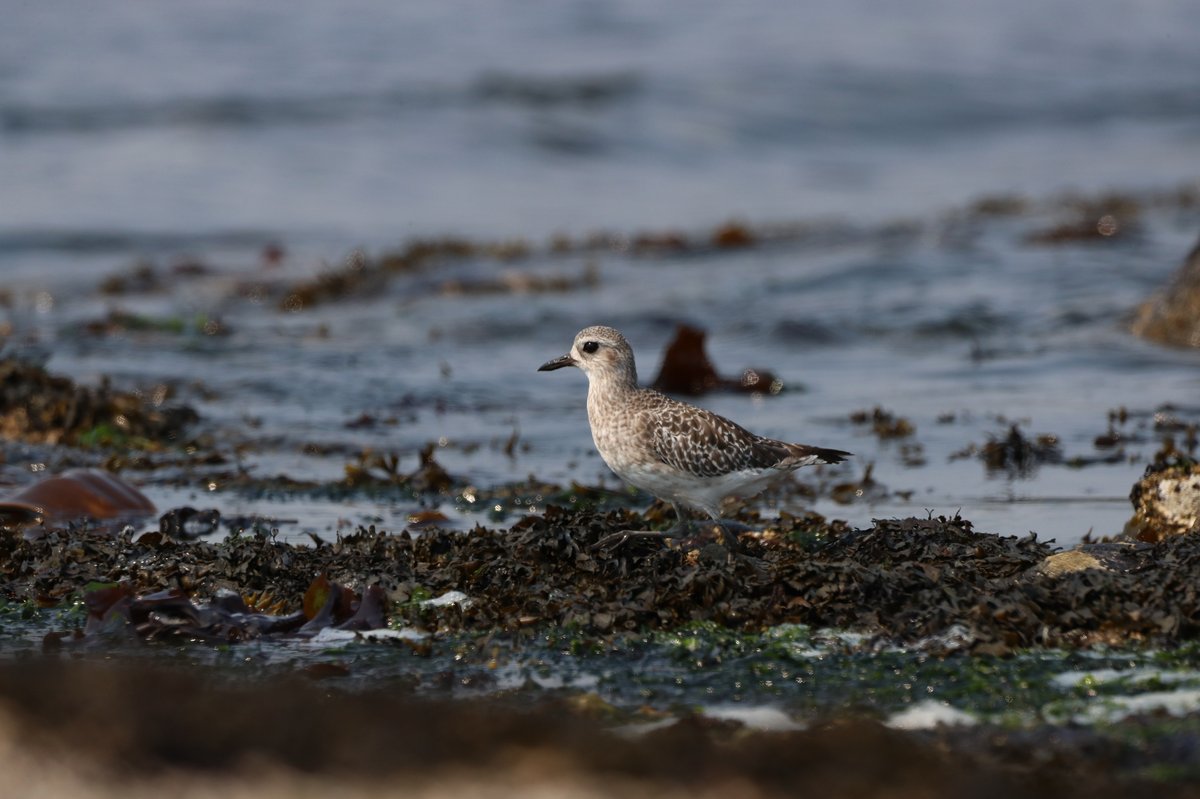
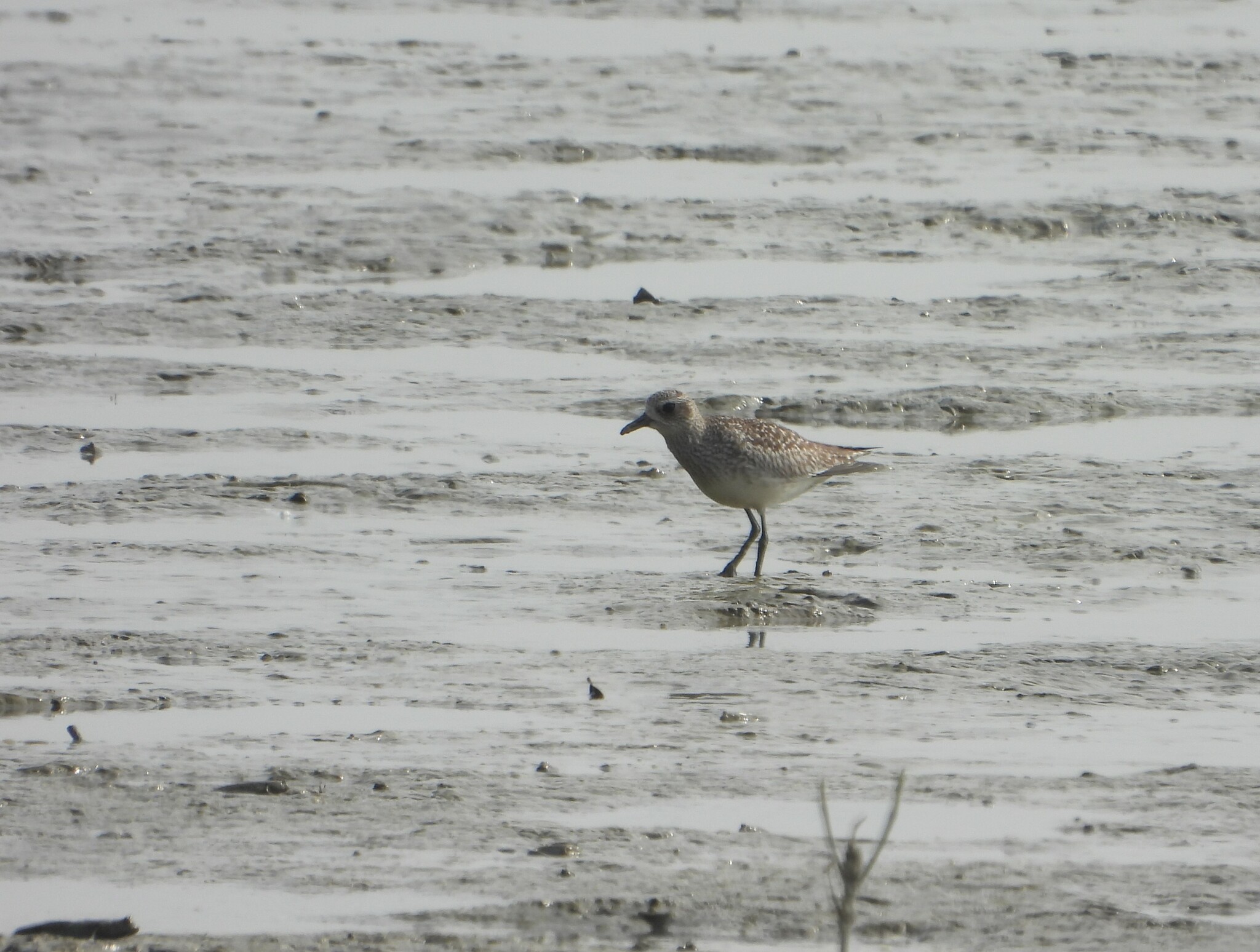
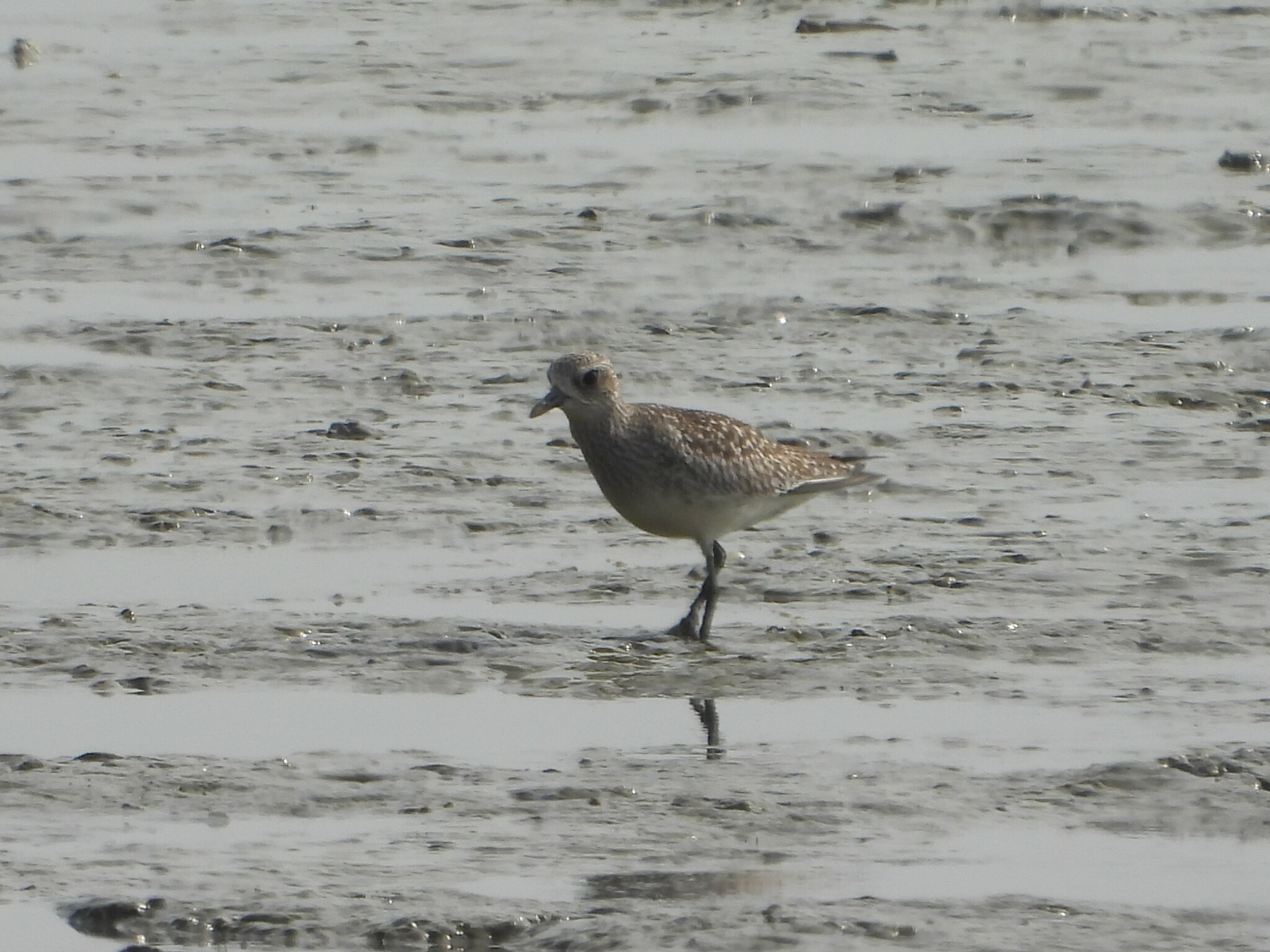
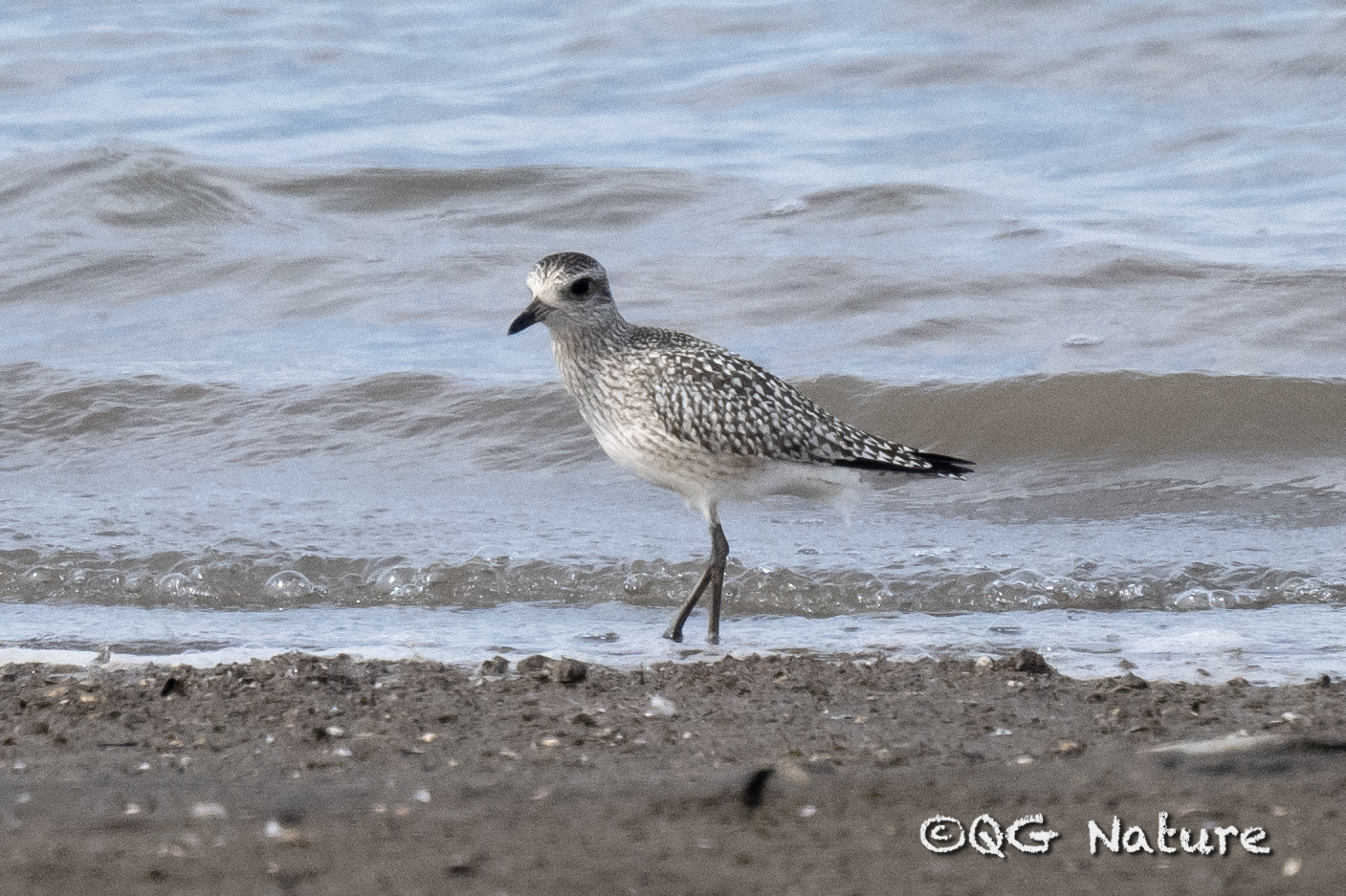
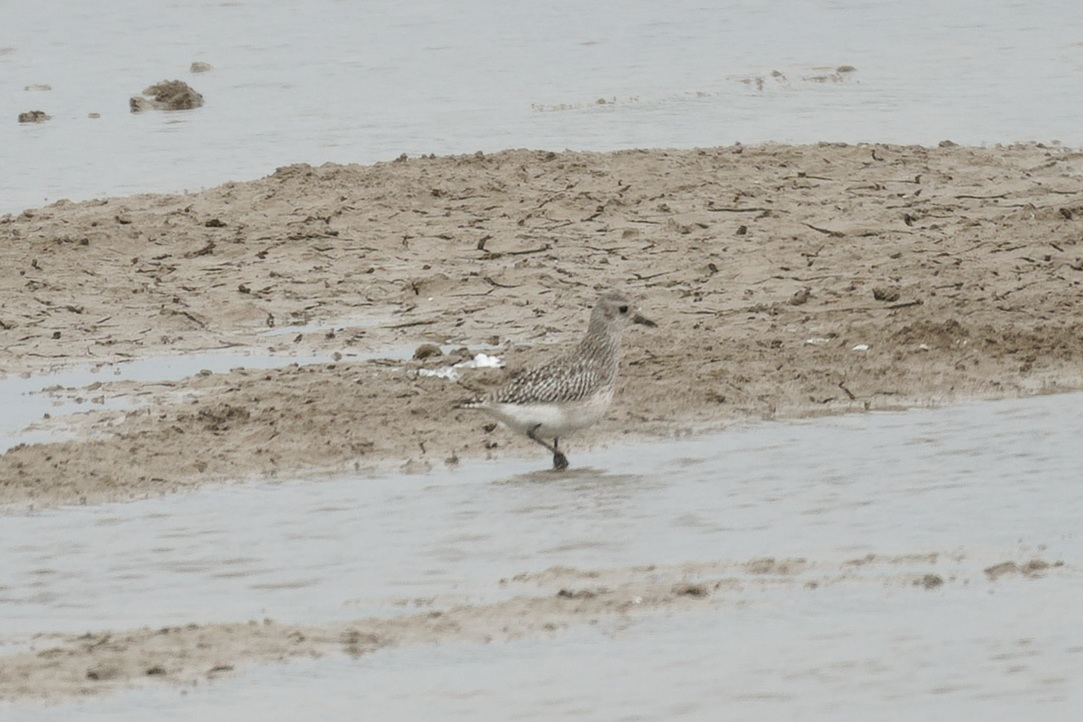
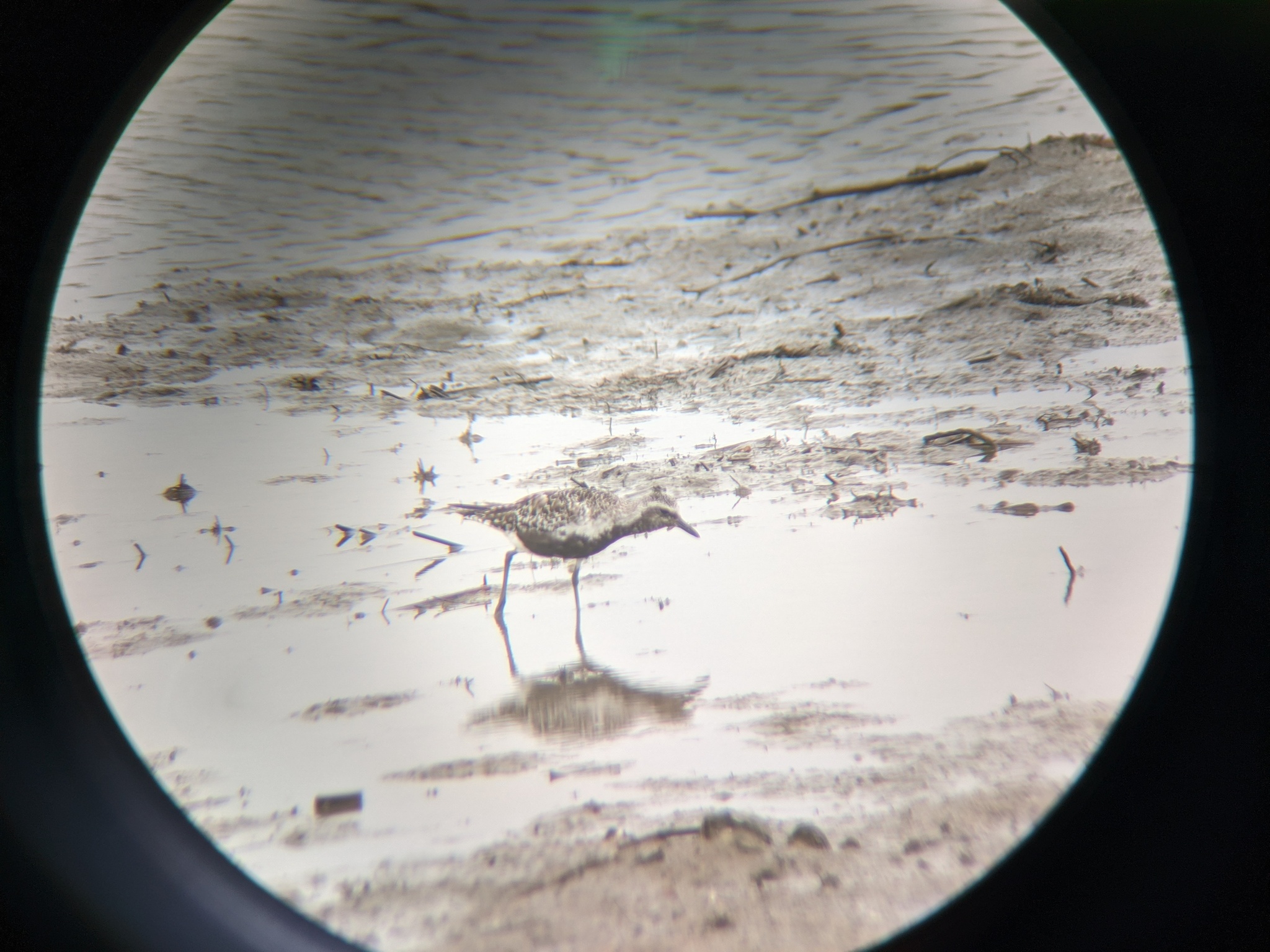
This is a large, robust plover measuring 27-30 cm in length with an impressive wingspan of 71-83 cm. Adults in breeding plumage (late April or May through August) display a striking pattern of black and white spangling on the upperparts, while the face, neck, and breast are black bordered by white. The belly is black, contrasting with a white rump, and the tail shows white barring on a black background. The bill and legs are entirely black. Winter plumage (mid-August through April) is considerably more subdued, with grey upperparts, a grey-speckled breast, and pure white belly. Juveniles resemble winter adults but have blacker back feathers with creamy-white edging. All plumages show distinctive black axillary feathers and inner flanks visible in flight. The heavy, somewhat stout bill measures 24-34 mm and helps distinguish this species from other Pluvialis plovers.
Identification
In flight, the black axillary feathers at the base of the underwing and black inner flanks are diagnostic features that readily separate this species from all other Pluvialis plovers. On the ground, its larger size and notably heavier, thicker bill (24-34 mm) distinguish it from the smaller golden plovers. The white rump and barred tail are also visible in flight. Unlike the golden plovers, which often form dense feeding flocks, this species typically feeds in a more dispersed manner with individual birds well-spaced apart. The starkly contrasting breeding plumage is unique among North American and Eurasian plovers, while the plain grey upperparts in winter help distinguish it from the similarly-sized but more intricately marked American Golden-Plover.
Distribution & Habitat
Breeding occurs across Arctic regions, including coastal areas of Alaska, northern Canada, and Russia, where birds nest on dry open tundra. The winter range is extensive and coastal worldwide: in the Americas from southwest British Columbia and Massachusetts south to Argentina and Chile; in western Europe and Africa from Ireland and Norway south to South Africa; and in the eastern Old World from southern Japan through coastal southern Asia to Australia and occasionally New Zealand. Most birds migrating to Australia are female. The species is a rare vagrant inland, occasionally appearing on the shores of large lakes such as the Great Lakes during migration. It undertakes regular non-stop transcontinental flights but rarely lands in continental interiors unless forced by severe weather.
Behavior & Ecology
Breeding begins in early June with four eggs (sometimes three) laid in a shallow gravel scrape on open tundra. Incubation lasts 26-27 days, and chicks fledge at 35-45 days. Young birds do not breed until their second year and typically remain on wintering grounds until then. Foraging occurs on beaches and tidal flats, where birds locate prey by sight, consuming small molluscs, polychaete worms, crustaceans, and insects. Unlike other Pluvialis species, this bird is less gregarious while feeding, spreading out widely across beaches with individual birds well-spaced apart. However, dense flocks form at high tide roosts. The article does not include vocalization descriptions.
Conservation
The International Union for Conservation of Nature (IUCN) assesses the grey plover as Vulnerable, indicating it faces a high risk of extinction in the wild. The species is protected under the Agreement on the Conservation of African-Eurasian Migratory Waterbirds (AEWA), which aims to conserve migratory waterbirds and their habitats across the agreement's range.
Source: Wikipedia · CC BY-SA 3.0
Taxonomy
- Order
- Charadriiformes
- Family
- Charadriidae
- Genus
- Pluvialis
- eBird Code
- bkbplo
Subspecies (3)
-
Pluvialis squatarola cynosurae
breeds high Arctic of north-central Canada eastwards to Baffin Island; winters to coastal North and South America
-
Pluvialis squatarola squatarola
breeds high Arctic coasts from northwestern Russia to Chukotskiy Peninsula and northern Alaska; winters to western and southern Europe, Africa, southern and eastern Asia, Australasia, and western Americas
-
Pluvialis squatarola tomkovichi
breeds Wrangel Island (northeastern Siberia); winters to east Asia and Australia
Data Sources
CBR Notes: IUCN红色名录等级由LC升为VU
Species description from Wikipedia, licensed under CC BY-SA 3.0.
Bird images and sounds sourced from GBIF, contributed by citizen scientists worldwide under Creative Commons licenses.
Taxonomy data from AviList 2025.