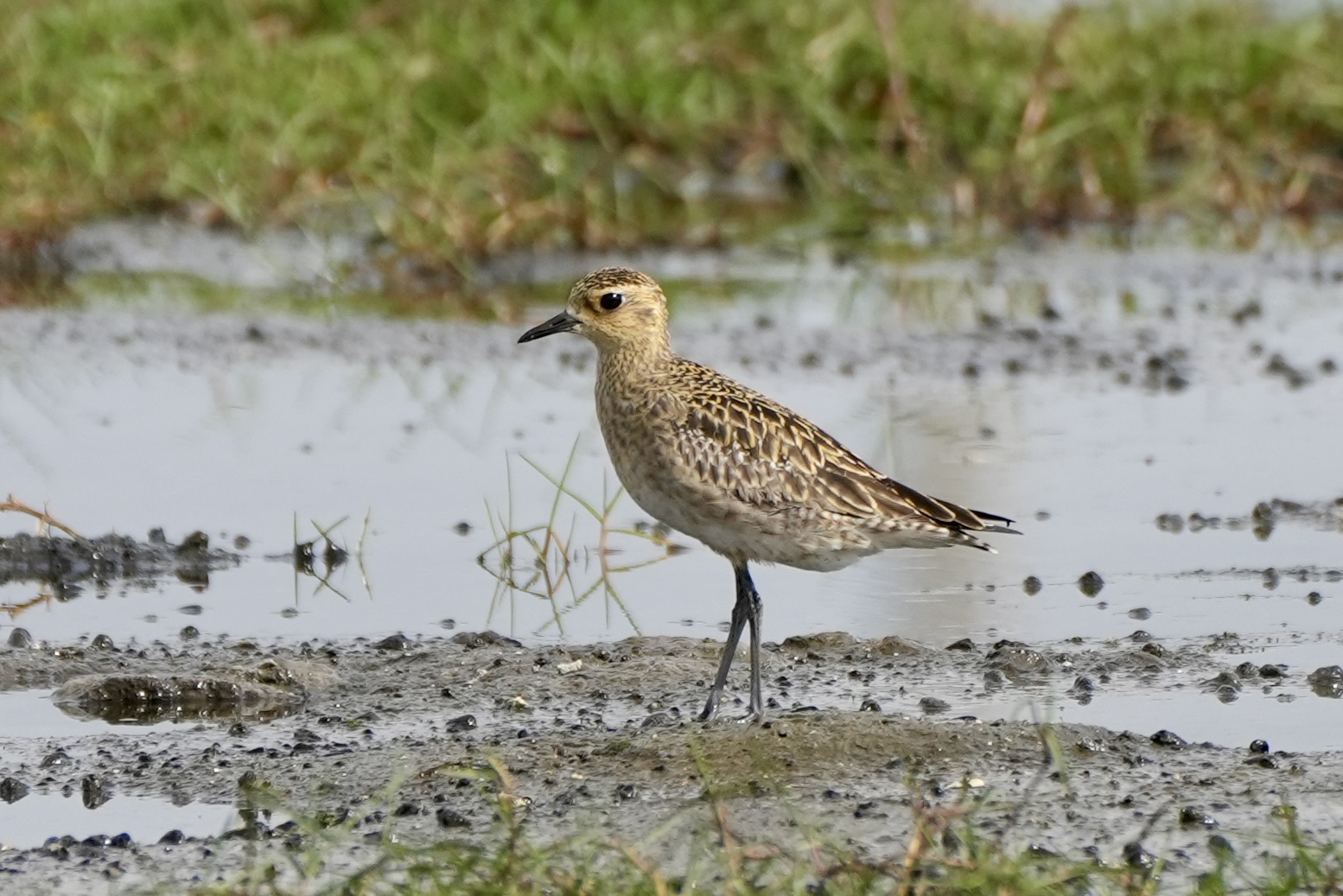
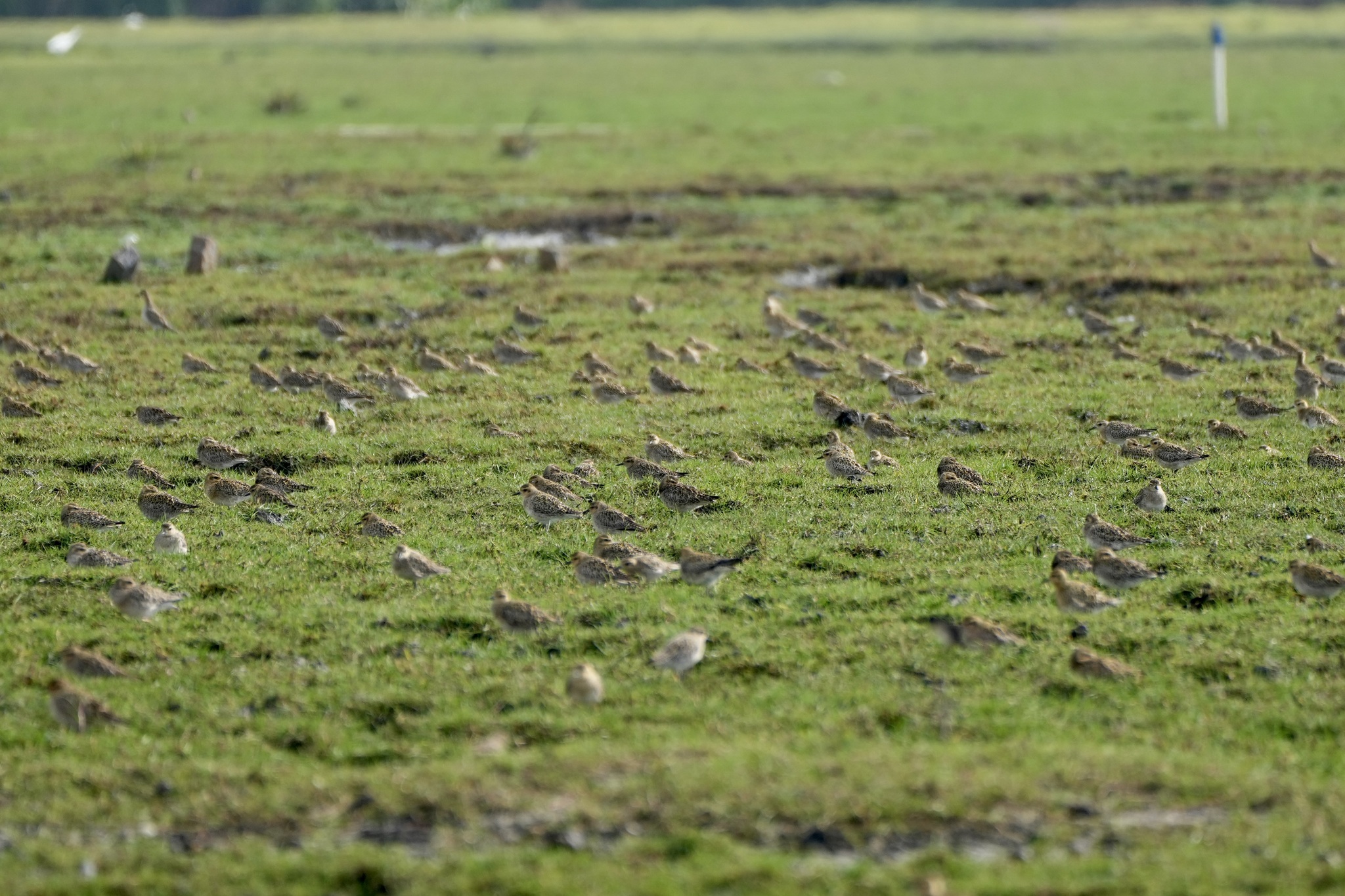
Pacific Golden Plover
Pluvialis fulva
金鸻
Introduction
This medium-sized shorebird breeds in Alaska and Siberia during the Arctic summer before migrating across the Pacific basin. In winter, it occurs throughout the Pacific including Hawaii, where it is locally known as kōlea. It inhabits tundra during breeding season and parks, gardens, and golf courses in wintering areas. The species exhibits strong site fidelity, with individuals returning to the same wintering territory annually. Some individuals have been documented living over 21 years. The species makes a nonstop migration of approximately 3,000 miles between Alaska and Hawaii in 3-4 days, flying at altitudes up to 16,000 feet.
Description
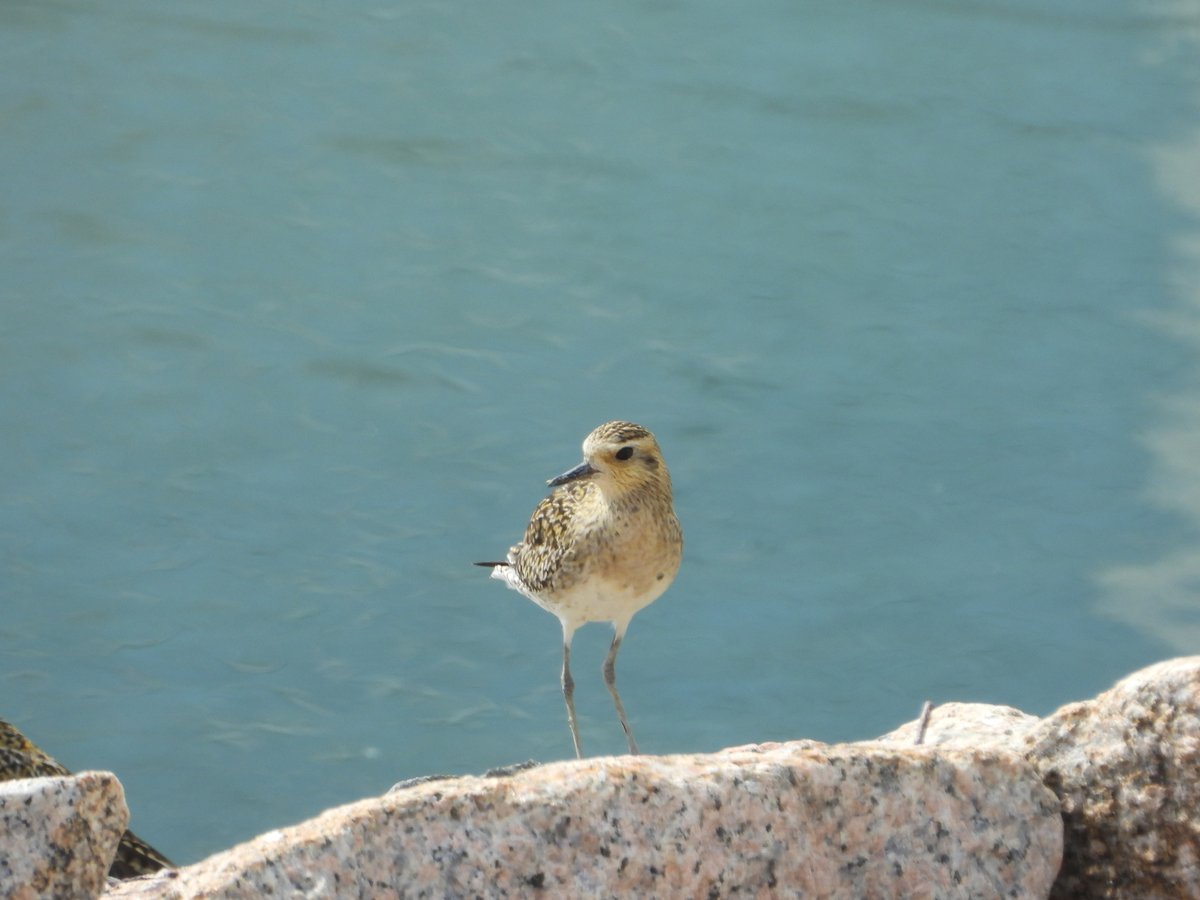
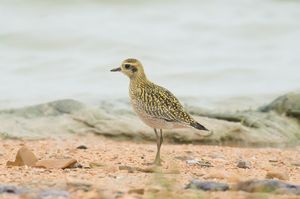
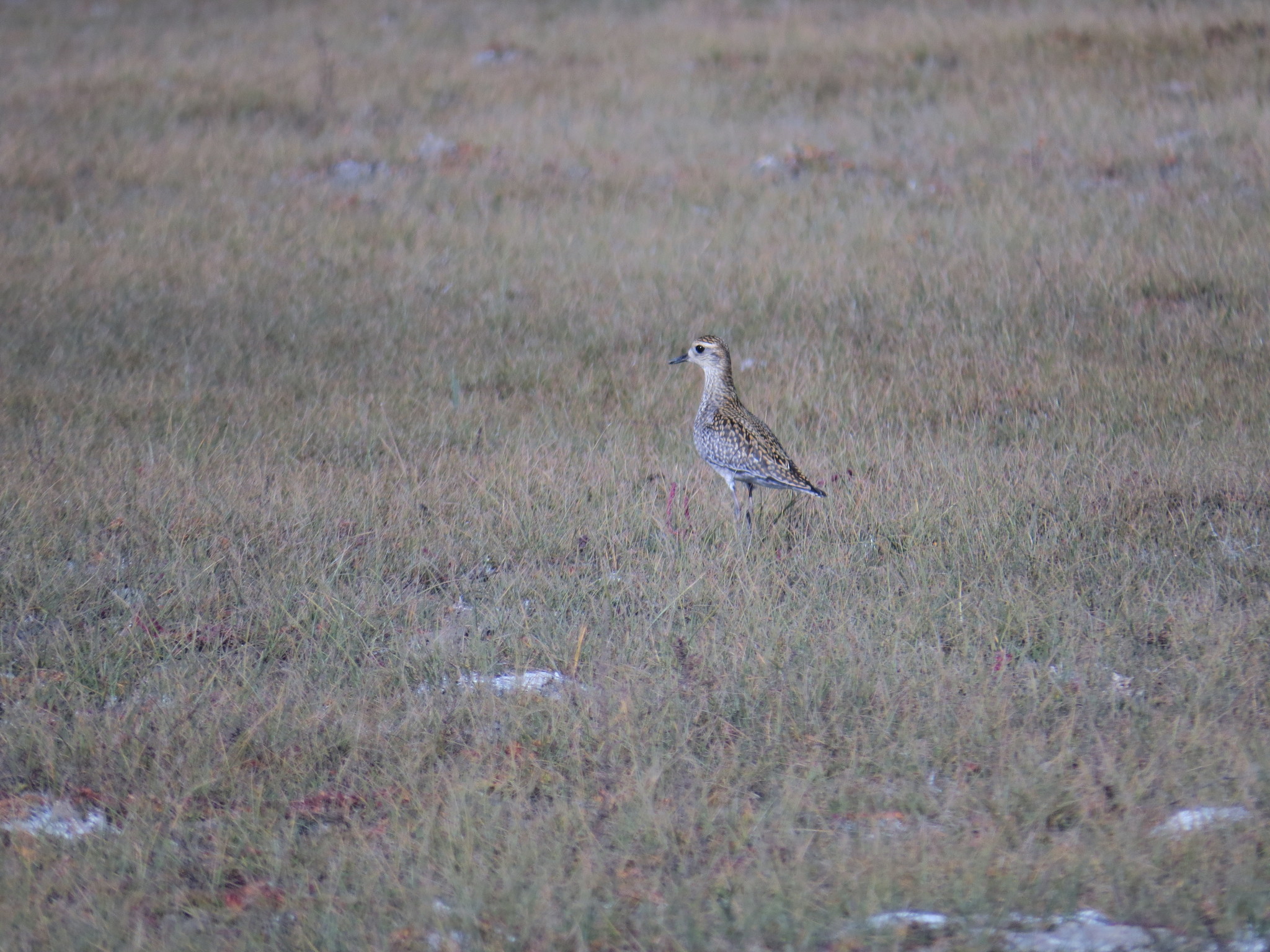
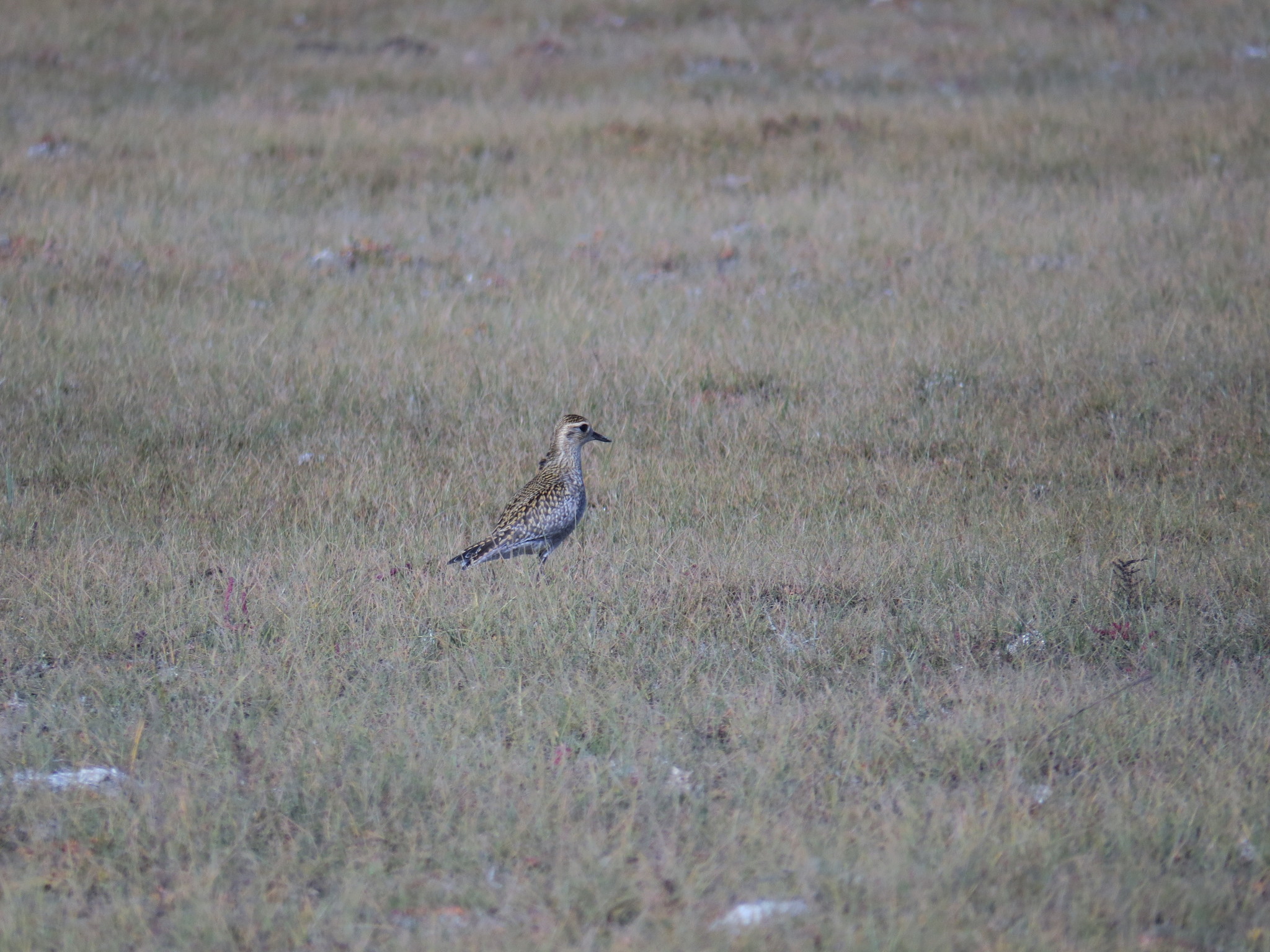
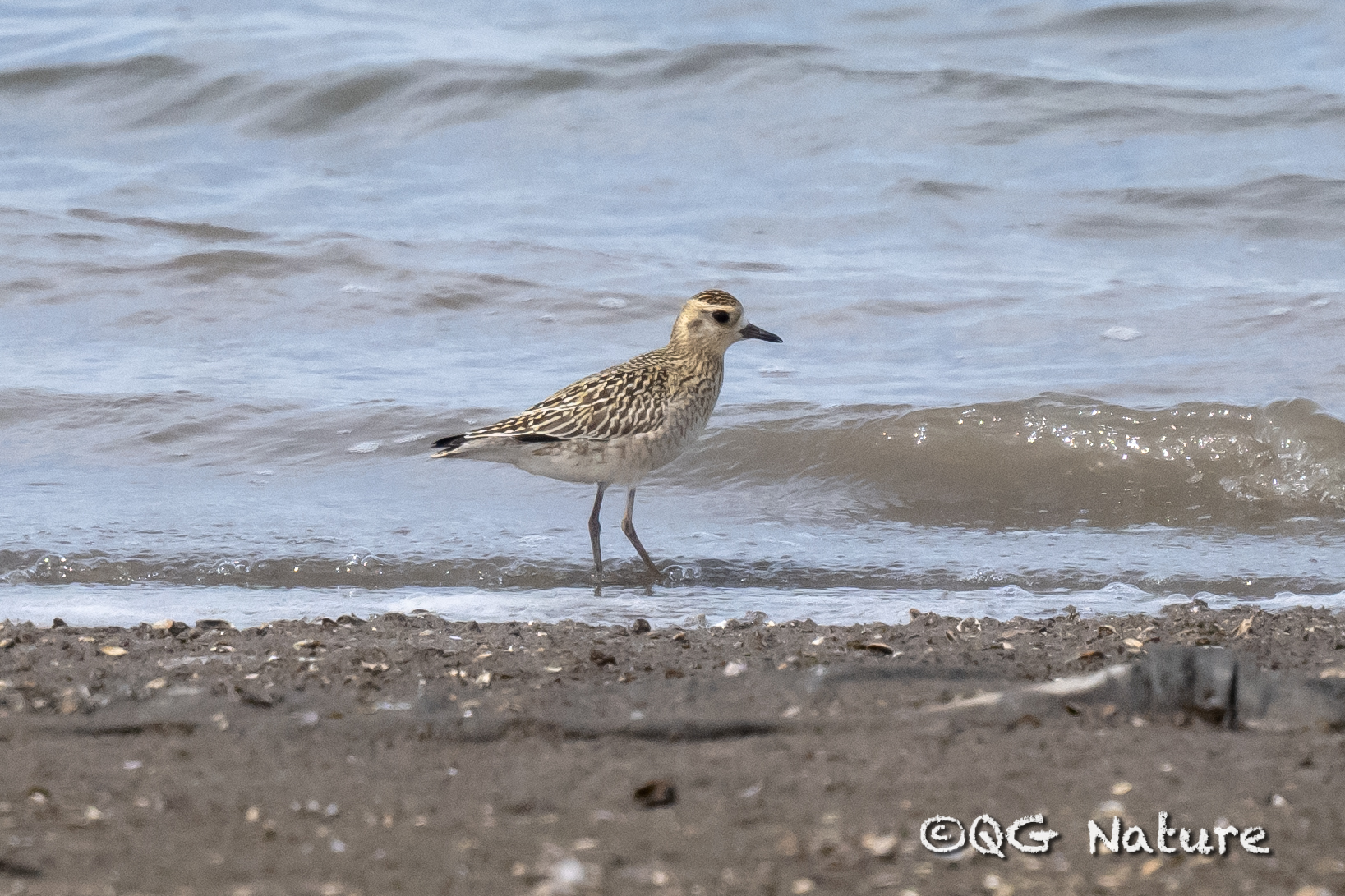
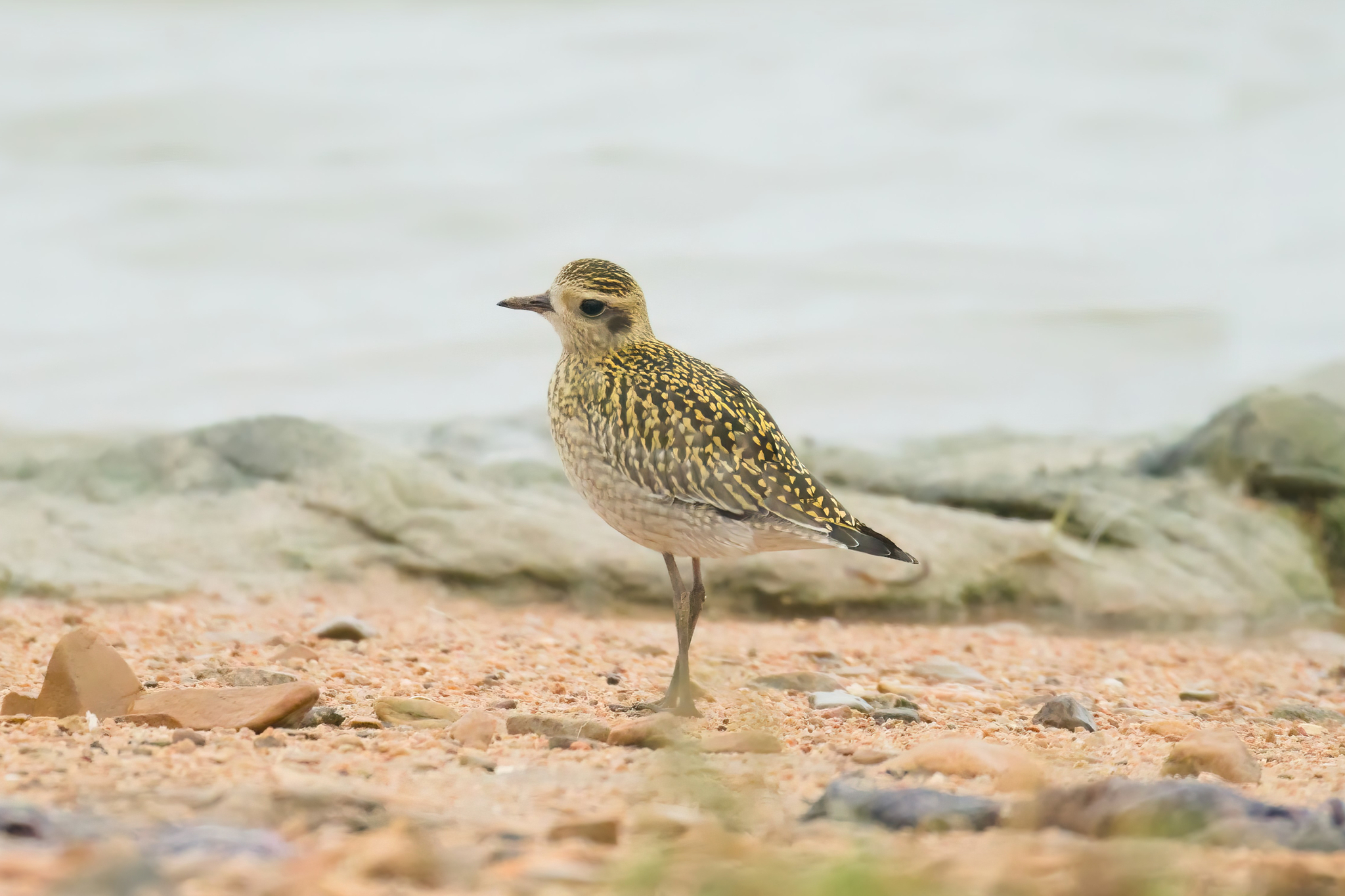
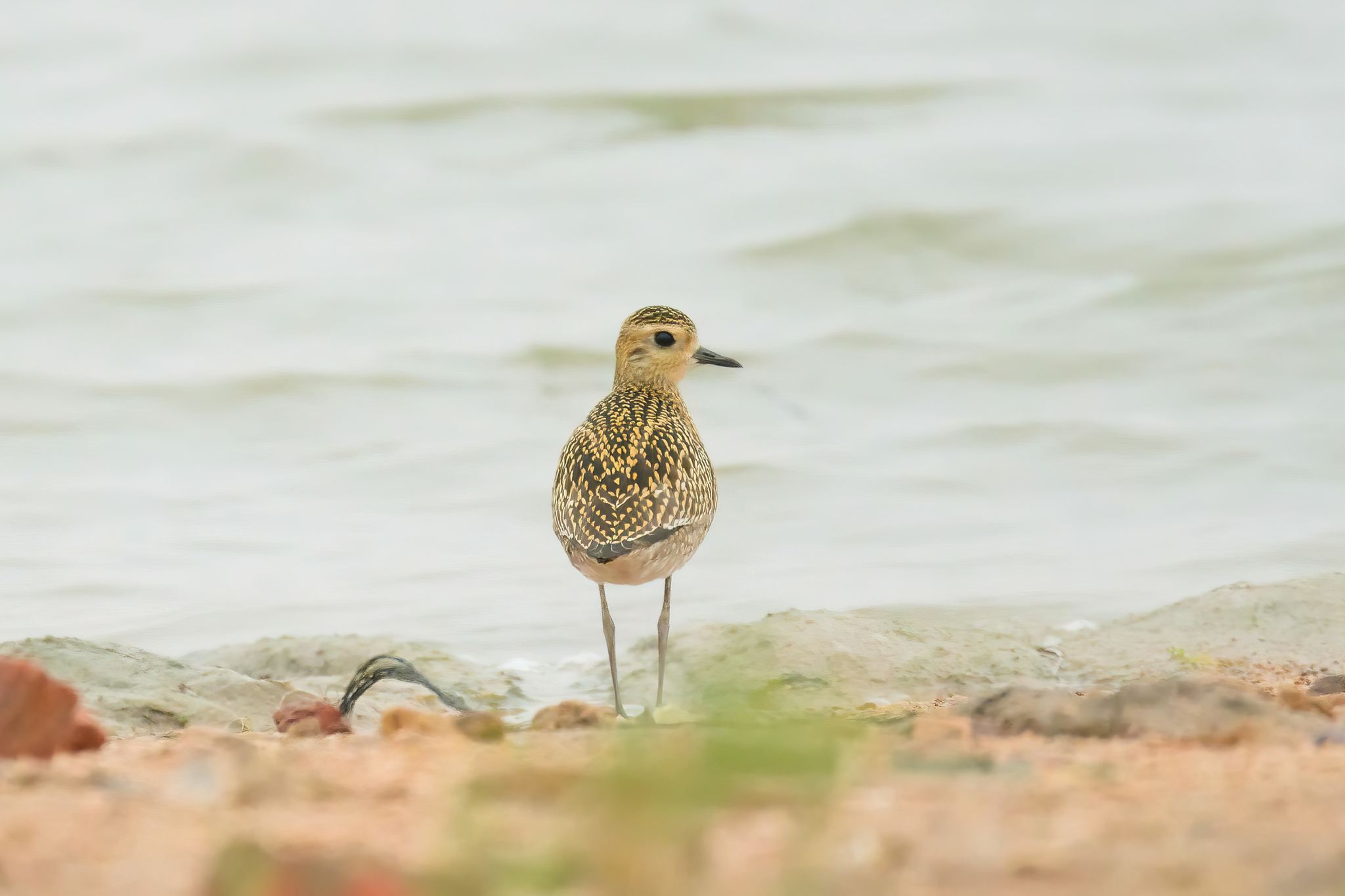
This medium-sized plover measures approximately 25 cm in length with an average wingspan of 61 cm. In breeding plumage, males are strikingly patterned with gold and black spangling on the crown, back, and wings, while the face and neck are bordered in black with a white edge, and the breast is solid black. Females show similar coloring but with a more mottled and less distinct black breast. Both sexes molt to a nonbreeding plumage by March or April, becoming more cryptic with dark brown, gray, and yellowish patterning replacing the bold black and white face and breast markings. The bill is black, and legs range from gray to black. Fat-free weight averages around 135 grams, but birds nearly double this weight to approximately 200 grams before undertaking their long migrations. Downy chicks are precocial, hatching with spotted gold and black coloration on the head and back and yellowish-white underparts.
Identification
This species closely resembles both the European golden plover and the American golden plover, but is most easily confused with the American golden plover, with which it was formerly classified as the lesser golden plover. The key distinguishing features are the Pacific species' slimmer body profile, noticeably longer legs, and typically greater amounts of gold coloring on the back. In flight, the long legs extend well beyond the tail tip, helping distinguish it from similar plovers. The nonbreeding plumage is generally more richly colored with more yellow tones compared to the American golden plover.
Distribution & Habitat
This migratory species breeds during May, June, and July across the Arctic tundra of Siberia and western Alaska. It migrates south between August and September to wintering grounds throughout Asia, Australasia, and Pacific islands, remaining there until April or May before returning north. Although primarily a shorebird, it feeds mostly inland in open areas with short vegetation, including grasslands, golf courses, and agricultural fields. A rare vagrant to western Europe, the species is most abundant in the central Pacific during winter, with Hawaii supporting particularly dense populations. Some individuals, typically first-year birds, older individuals, or those lacking sufficient fat reserves, may remain in wintering areas year-round rather than completing the migration.
Behavior & Ecology
Breeding behavior begins with males arriving first on the tundra to establish and defend territories. Both parents share duties of building ground nests lined with lichen, moss, and grasses, incubating the clutch of four buff-colored eggs, and protecting chicks from predators including foxes and avian species. Chicks leave the nest shortly after hatching to forage but return to parents for warmth and protection. After fledging at approximately 26-28 days, females depart first for migration, while juveniles remain in flocks, sometimes migrating as late as October or November. Wintering birds typically hold individual territories and feed alone, though non-territorial birds may form loose feeding groups. The diet is opportunistic, including insects, spiders, mollusks, crustaceans, small reptiles, berries, leaves, and seeds. Foraging follows a distinctive run-stop-peck pattern.
Conservation
The species is currently classified as Least Concern on the IUCN Red List. However, the global population trend is decreasing, with climate change and associated habitat alterations representing the primary threat. Arctic breeding grounds face increasing pressure from changing weather patterns, while wintering habitats in the Pacific are subject to development and modification. The species' dependence on specific sites for breeding and wintering makes it vulnerable to environmental changes at both ends of its migratory route. Conservation efforts include citizen science projects like Hawaii's Kōlea Count, which monitors populations and tracks individual birds.
Culture
In Hawaii, the Pacific golden plover, known locally as kōlea, holds a special place in local culture. The birds' remarkable site fidelity—returning to the same yard, even the same tree, year after year—has created strong connections between residents and "their" plovers. Many people name individual birds, feed them, and follow their comings and goings with deep interest, sometimes for decades. This close association has made kōlea the subject of the Hawaii Audubon Society's Kōlea Count citizen science project, which tracks population trends and migration timing. Researchers have taken advantage of the birds' predictable return to the same locations to attach and retrieve lightweight geolocator devices, advancing knowledge of their remarkable migratory feats. The species serves as an ambassador for conservation, helping Hawaii residents connect with the broader Pacific ecosystem and the birds that link distant lands through their incredible journeys.
Source: Wikipedia · CC BY-SA 3.0
Taxonomy
- Order
- Charadriiformes
- Family
- Charadriidae
- Genus
- Pluvialis
- eBird Code
- pagplo
Distribution
breeds Arctic and subarctic Russia from Yamal Peninsula eastward to Chukotskiy Peninsula and northern Kamchatka and Bering Sea coasts of western Alaska; winters to coastal Horn of Africa and Indian subcontinent eastward through Taiwan and Indonesian Archipelago throughout Australasia and Micronesia to eastern Polynesia; widely vagrant elsewhere
Vocalizations
Data Sources
Species description from Wikipedia, licensed under CC BY-SA 3.0.
Bird images and sounds sourced from GBIF, contributed by citizen scientists worldwide under Creative Commons licenses.
Taxonomy data from AviList 2025.