



Passeriformes / Corvidae / Pica
Eurasian Magpie
Pica pica · 欧亚喜鹊
Introduction
A resident breeding bird throughout the northern part of the Eurasian continent, belonging to the crow family (corvids). It is one of the most intelligent birds, with a nidopallium relative size comparable to that of chimpanzees and humans, and is one of the few species known to pass the mirror test. The species is classified as Least Concern by the IUCN.
Description
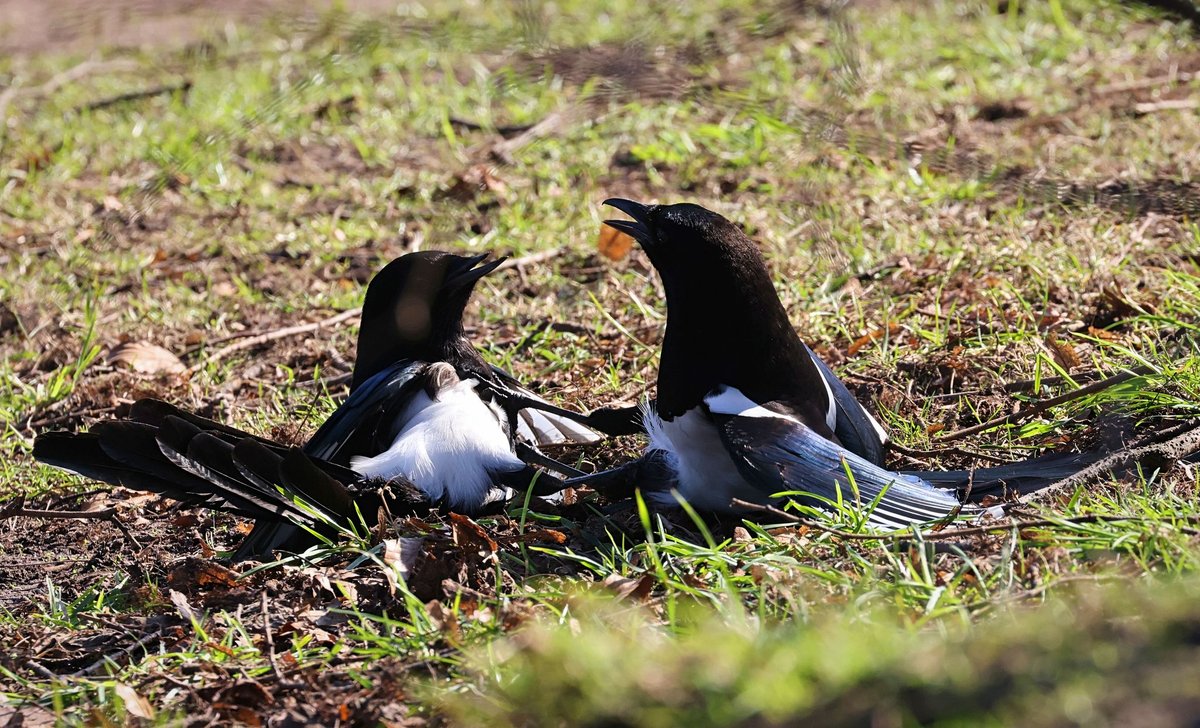
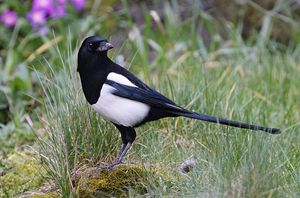
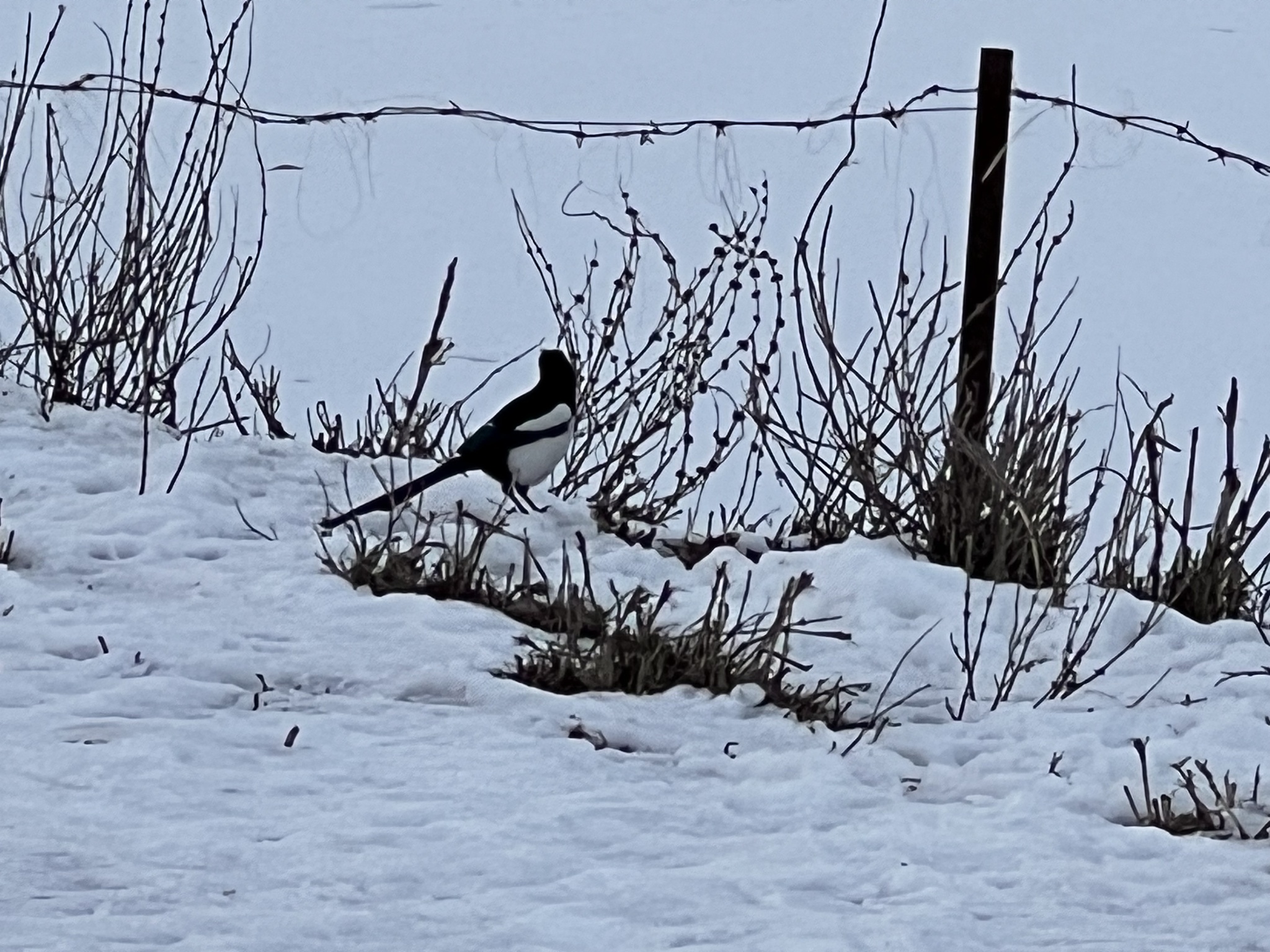
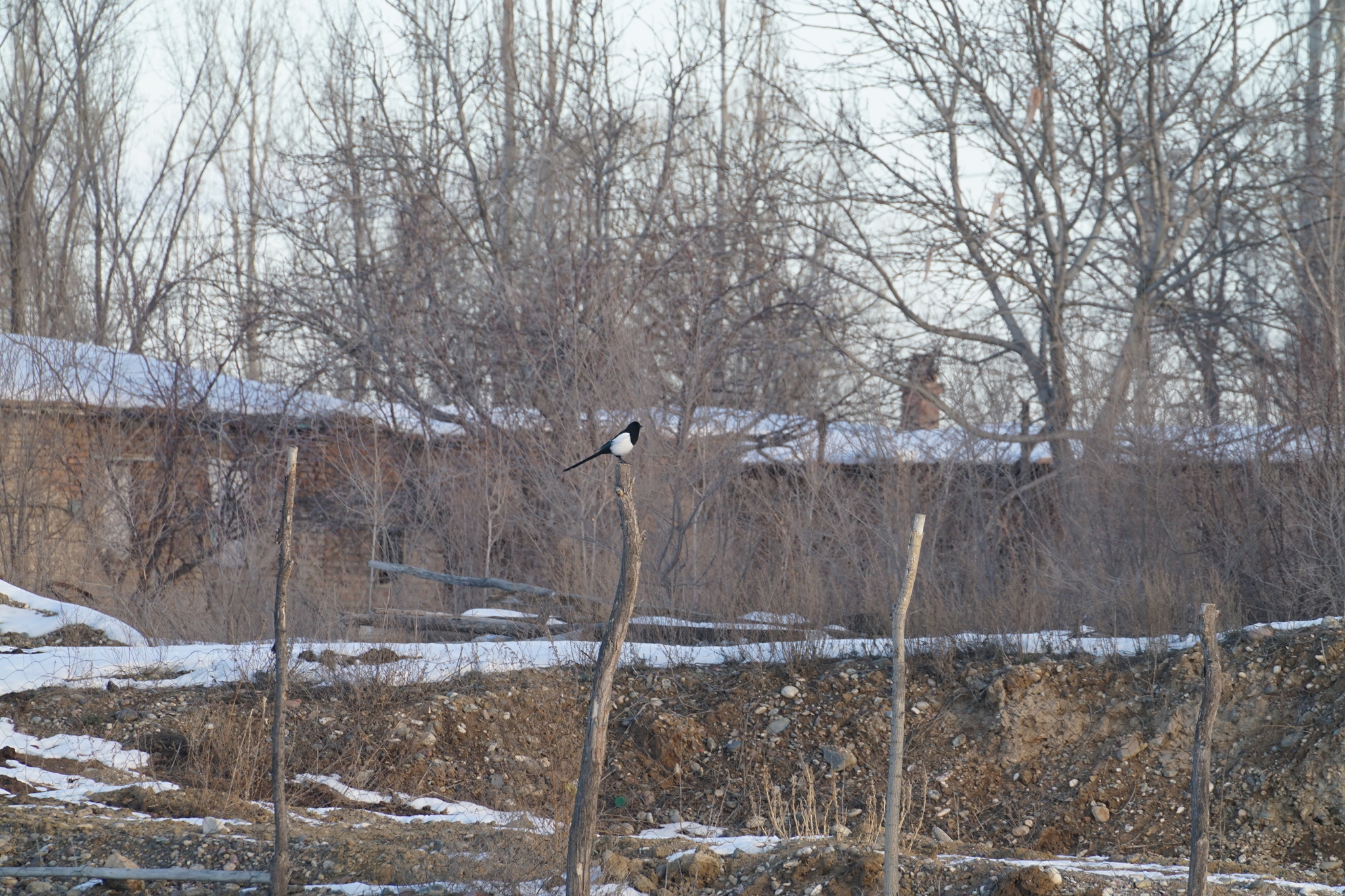
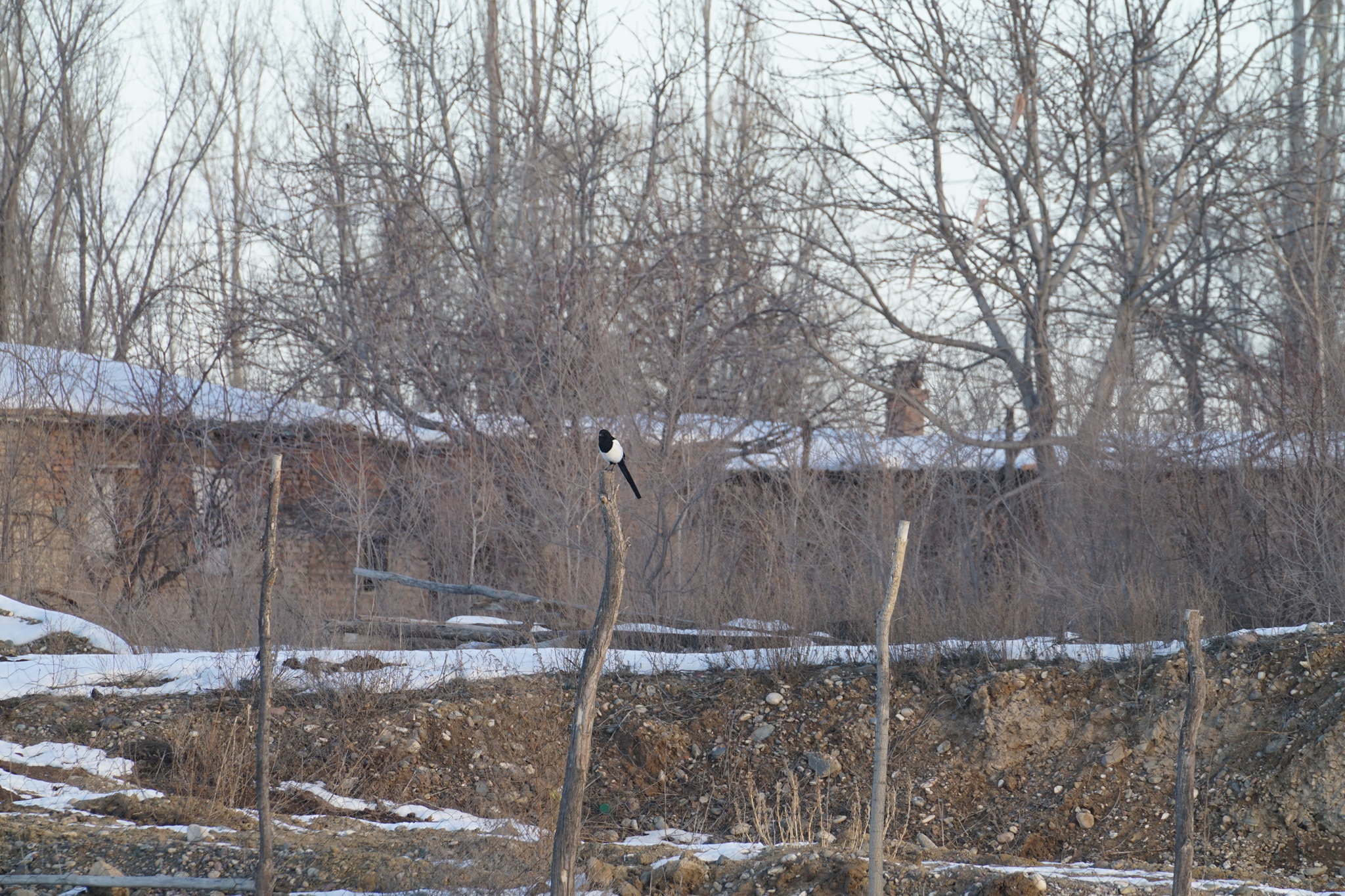
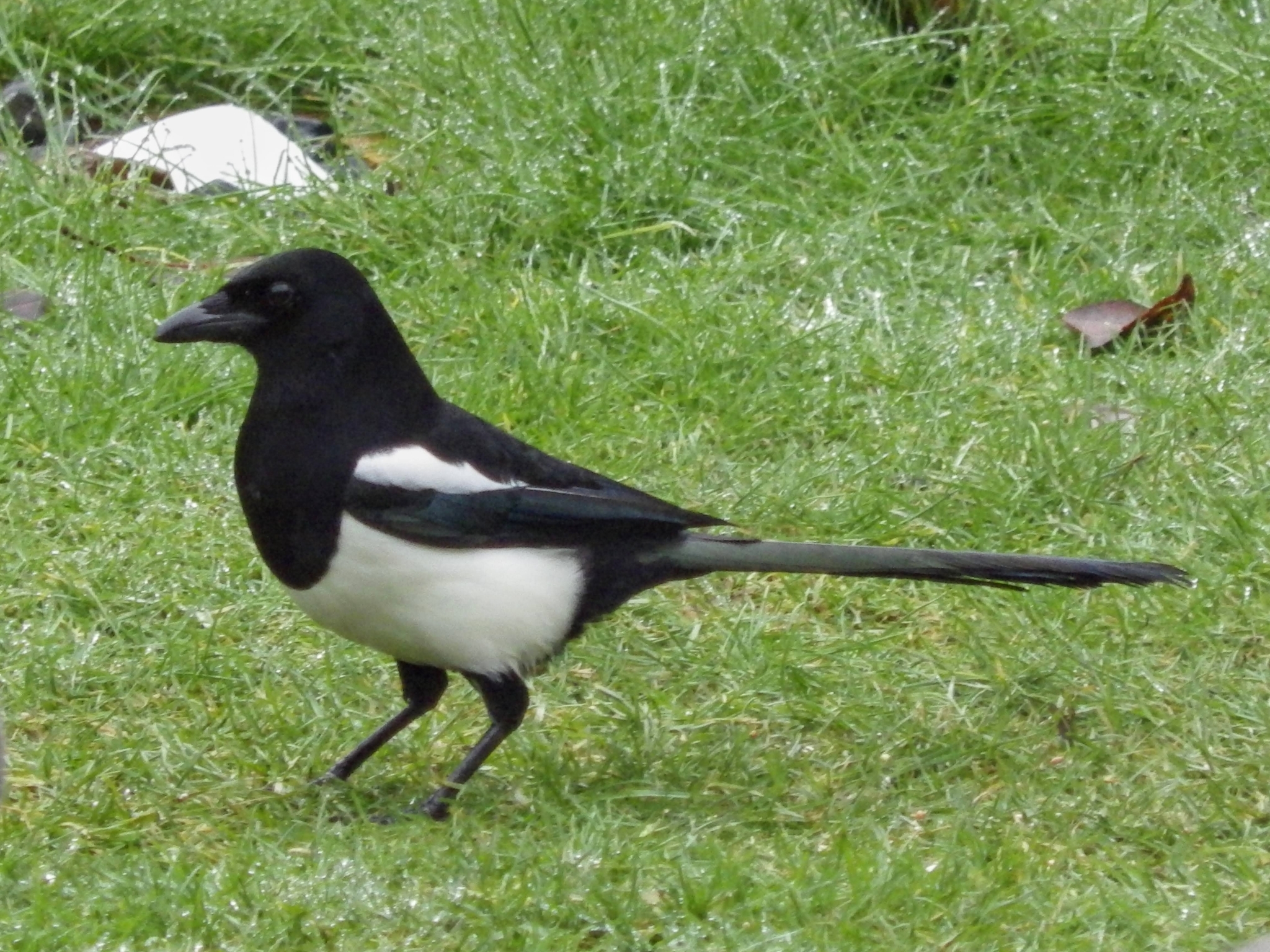
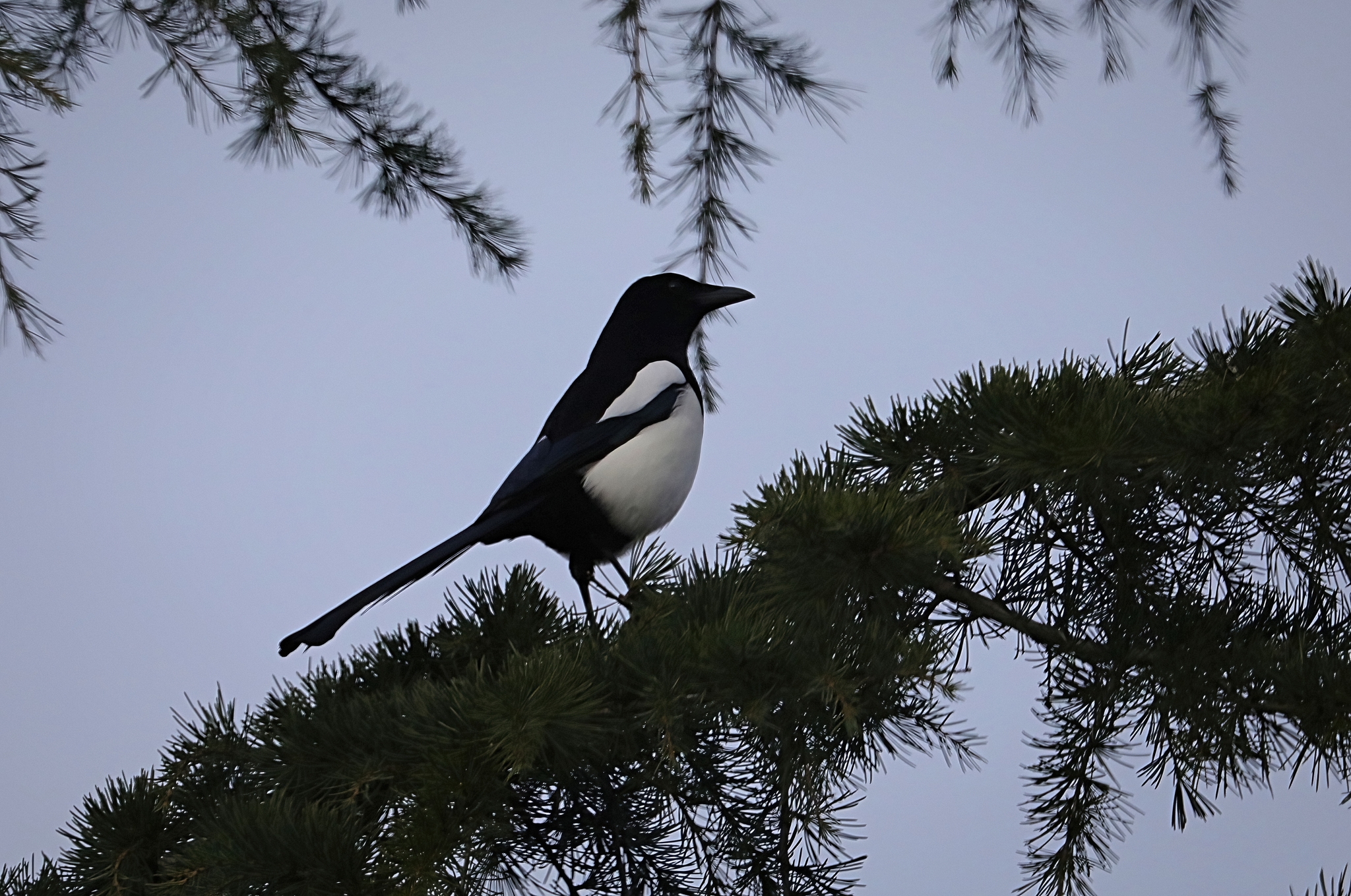
Adults of the nominate subspecies are 44–46 cm in length, with a wingspan of 52–62 cm. More than half the length is tail. The head, neck, breast, and vent are glossy black with a metallic green and violet sheen; the belly and scapulars are pure white. Wings are black glossed with green or purple, with white inner webs on primaries. The graduated tail is black, glossed with green and reddish purple. Legs and bill are black; iris is dark brown. Males weigh 210–272 g, females 182–214 g. Juveniles resemble adults but lack gloss, have a pink malar region, clear eyes, and shorter tails.
Identification
Distinctive call is a choking chatter 'chac-chac' or repetitive 'chac-chac-chac-chac'. Young also make an acute 'Uik Uik' call resembling a small dog's bark. In flight, white inner webs of primaries are conspicuous. Subspecies vary in the amount of white in plumage and color of gloss; for example, the Asian subspecies has more extensive white markings on primary feathers and a prominent white rump.
Distribution & Habitat
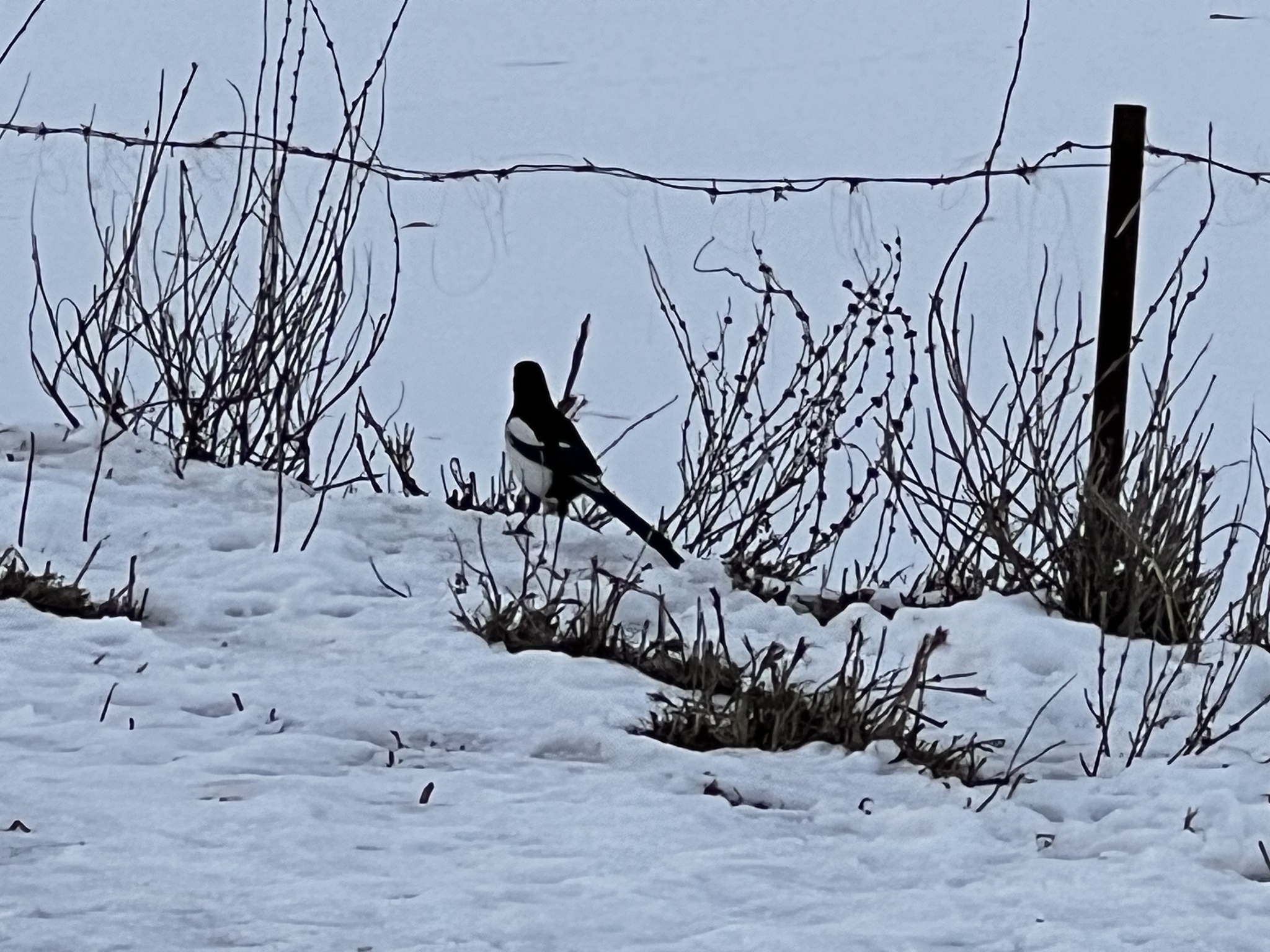
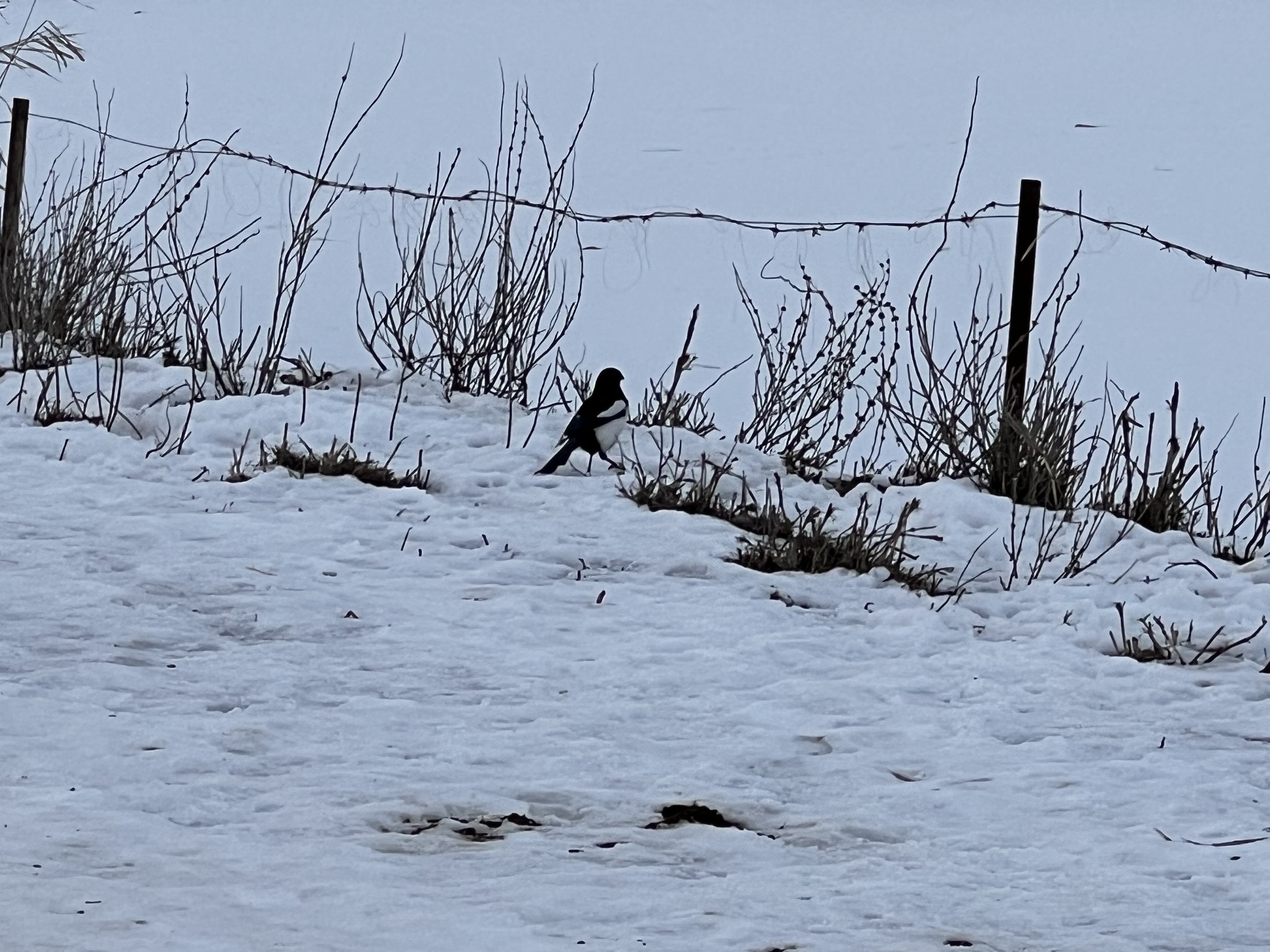
Range extends across temperate Eurasia from Portugal, Spain, and Ireland in the west to the Kamchatka Peninsula. Rare sightings occurred in Egypt in 2023. Prefers open countryside with scattered trees, suburban areas, parks, and gardens; absent from treeless areas and dense forests. In Sweden, exclusively associated with human settlements. Usually sedentary, but populations in Sweden, Finland, and Russia may move south in harsh weather.
Behavior & Ecology
Omnivorous diet includes young birds, eggs, small mammals, insects, carrion, acorns, and grain. Monogamous, often retaining pairs and territories across years. Nests are bulky structures of sticks cemented with earth and clay, lined with fine roots, and covered with a dome of prickly branches; some nests incorporate anti-bird spikes. Clutches of typically five or six pale blue-green eggs are laid in April. Female incubates for 21–22 days; chicks fledge at around 27 days. Exhibits high intelligence, including tool use, episodic memory, mirror self-recognition, and complex social strategies. Roosts in groups in winter.
Conservation
Classified as Least Concern by the International Union for Conservation of Nature. Estimated population is between 46 and 228 million individuals, with 7.5 to 19 million breeding pairs in Europe. Population trend in Europe has been stable since 1980, with no evidence of significant overall decline.
Culture
Historically demonized in European folklore as an omen of ill fortune or death. Associated with superstitions such as the rhyme 'One for Sorrow' in Britain and Ireland. Folklore in Italian, British, French, Bulgarian, Czech, German, Hungarian, Polish, Russian, Slovak, and Swedish cultures often depicts the bird as a thief attracted to shiny objects, though recent studies dispute this. In Hungary, hearing its song signifies guests arriving. In Norway, considered cunning and associated with hulder. Featured in Rossini's opera La gazza ladra and The Adventures of Tintin.
Source: Wikipedia · CC BY-SA 3.0
Taxonomy
- Order
- Passeriformes
- Family
- Corvidae
- Genus
- Pica
Subspecies (6)
-
Pica pica bactriana
western and southern Siberia (east to Lake Baikal) and central Asia, southward to the Caucasus region and eastward to Pakistan and northwestern India
Data Sources
Species description from Wikipedia, licensed under CC BY-SA 3.0.
Bird images and sounds sourced from GBIF, contributed by citizen scientists worldwide under Creative Commons licenses.
Taxonomy data from AviList 2025.