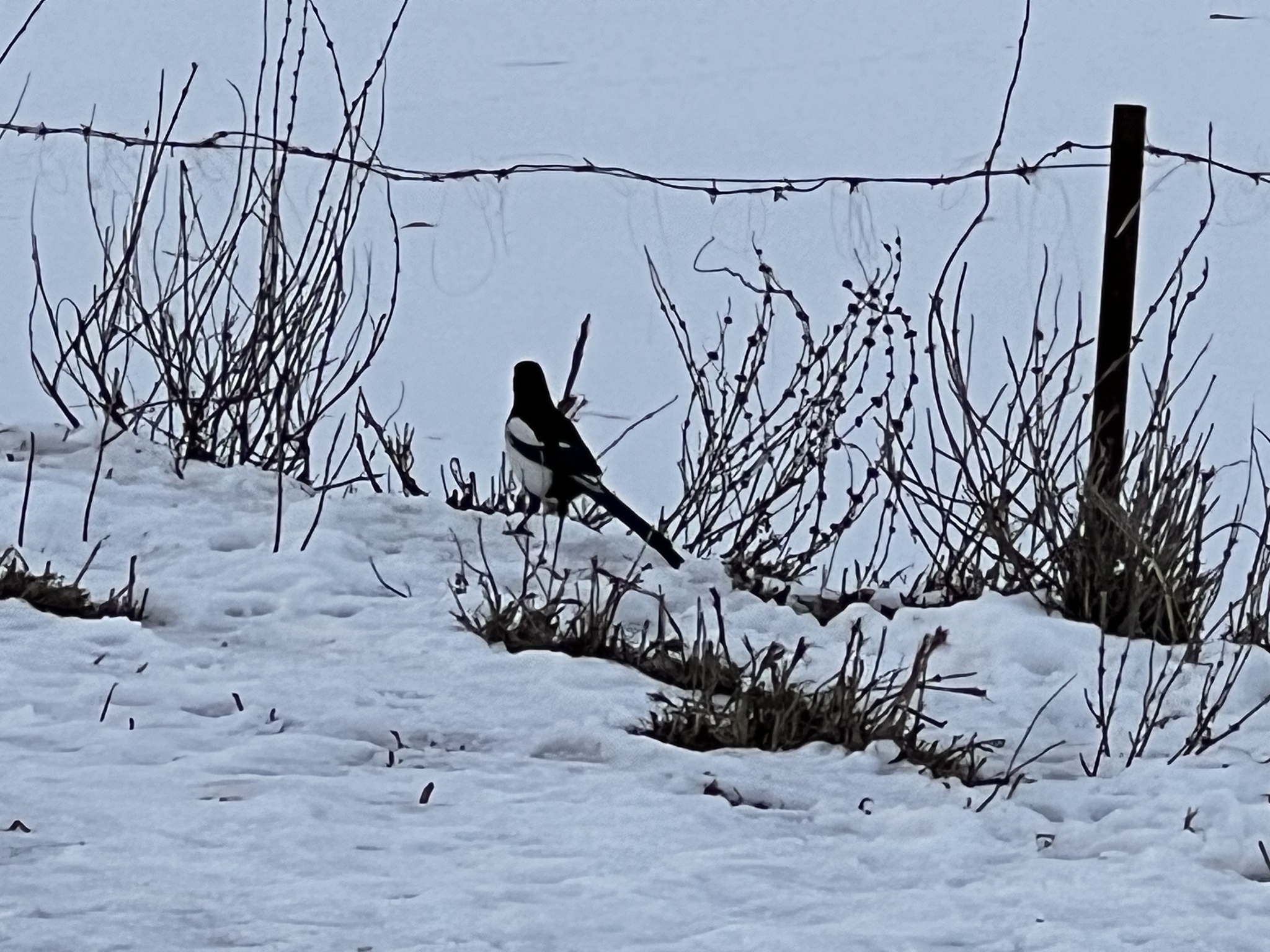
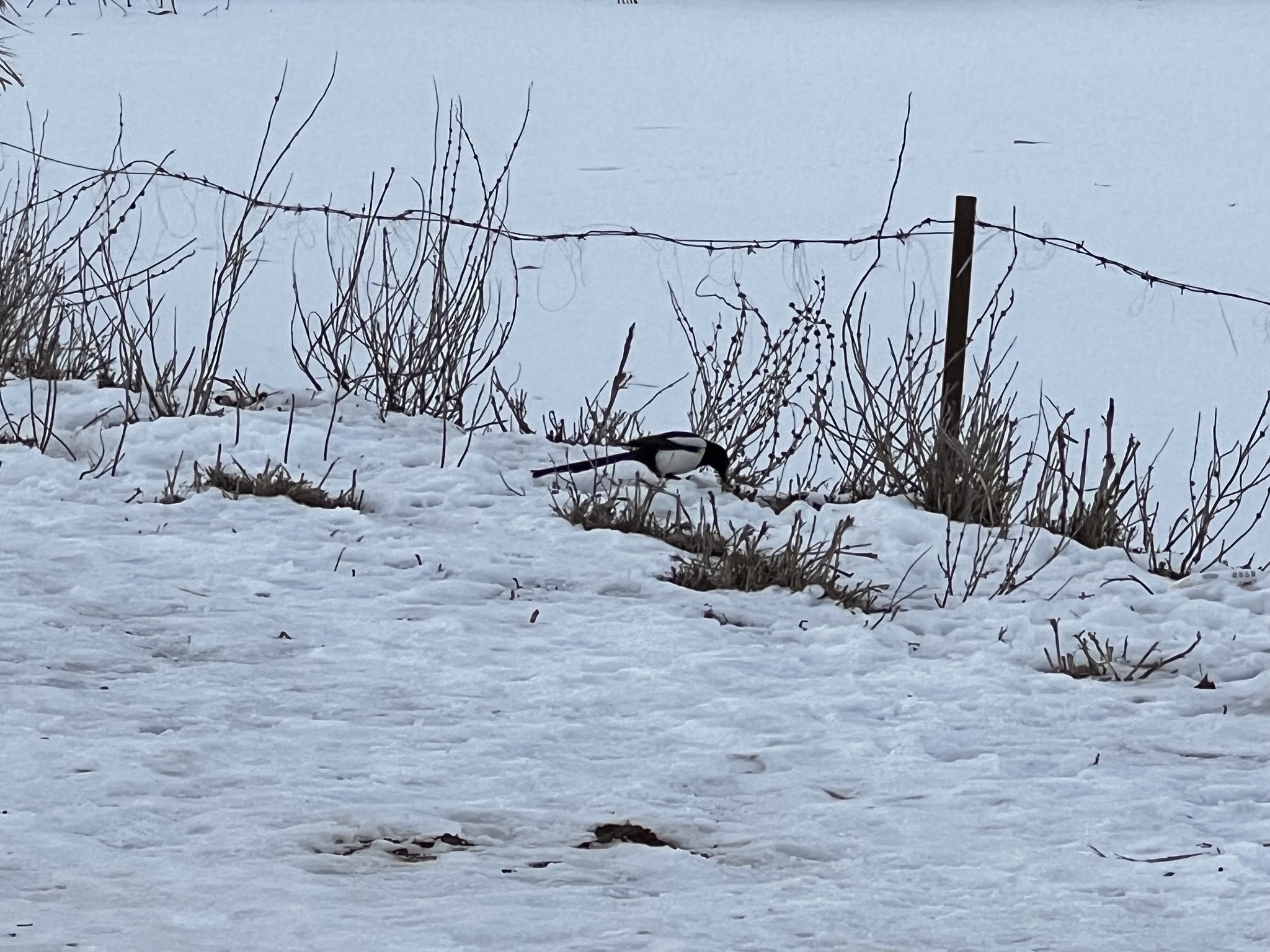
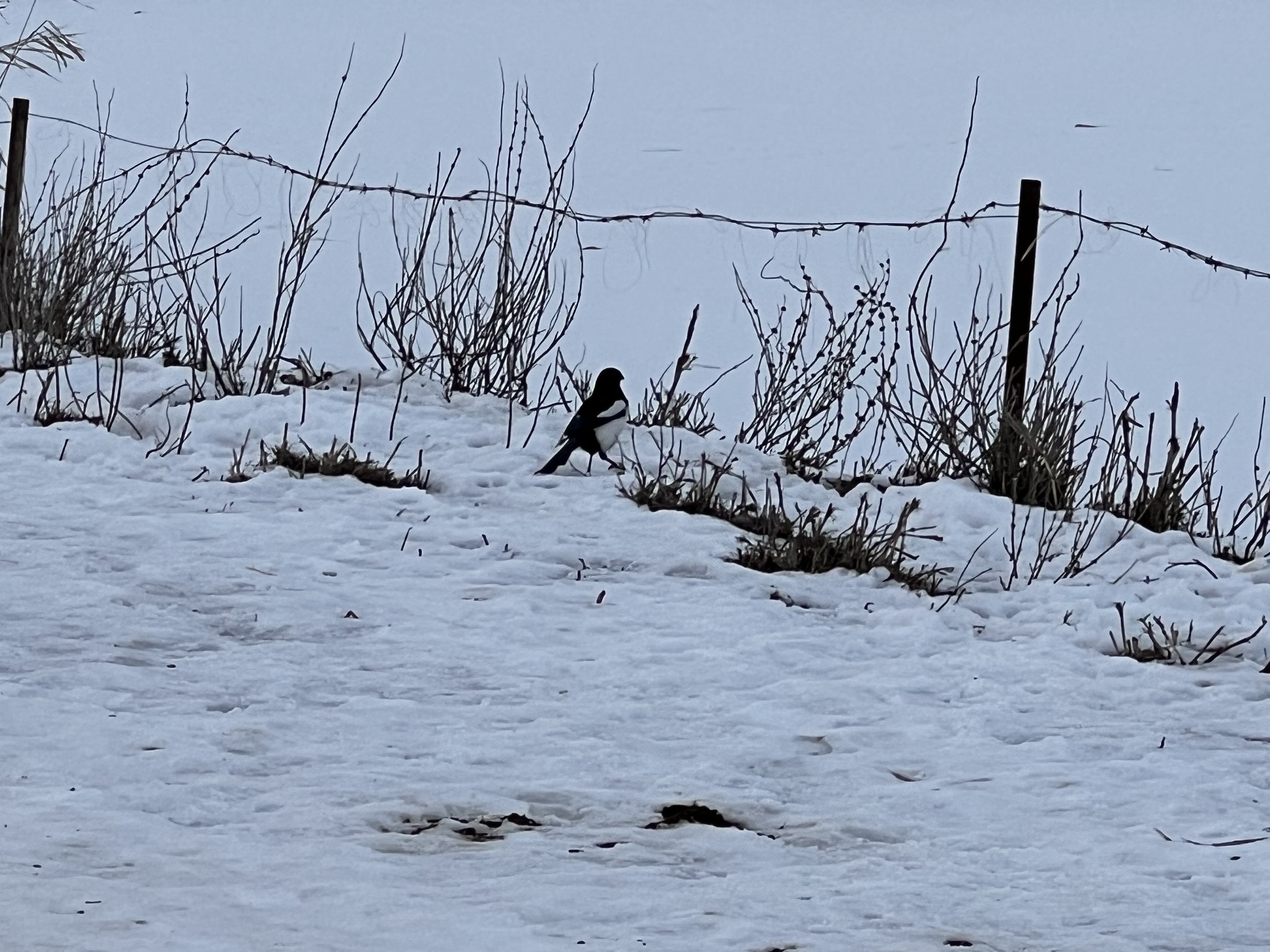
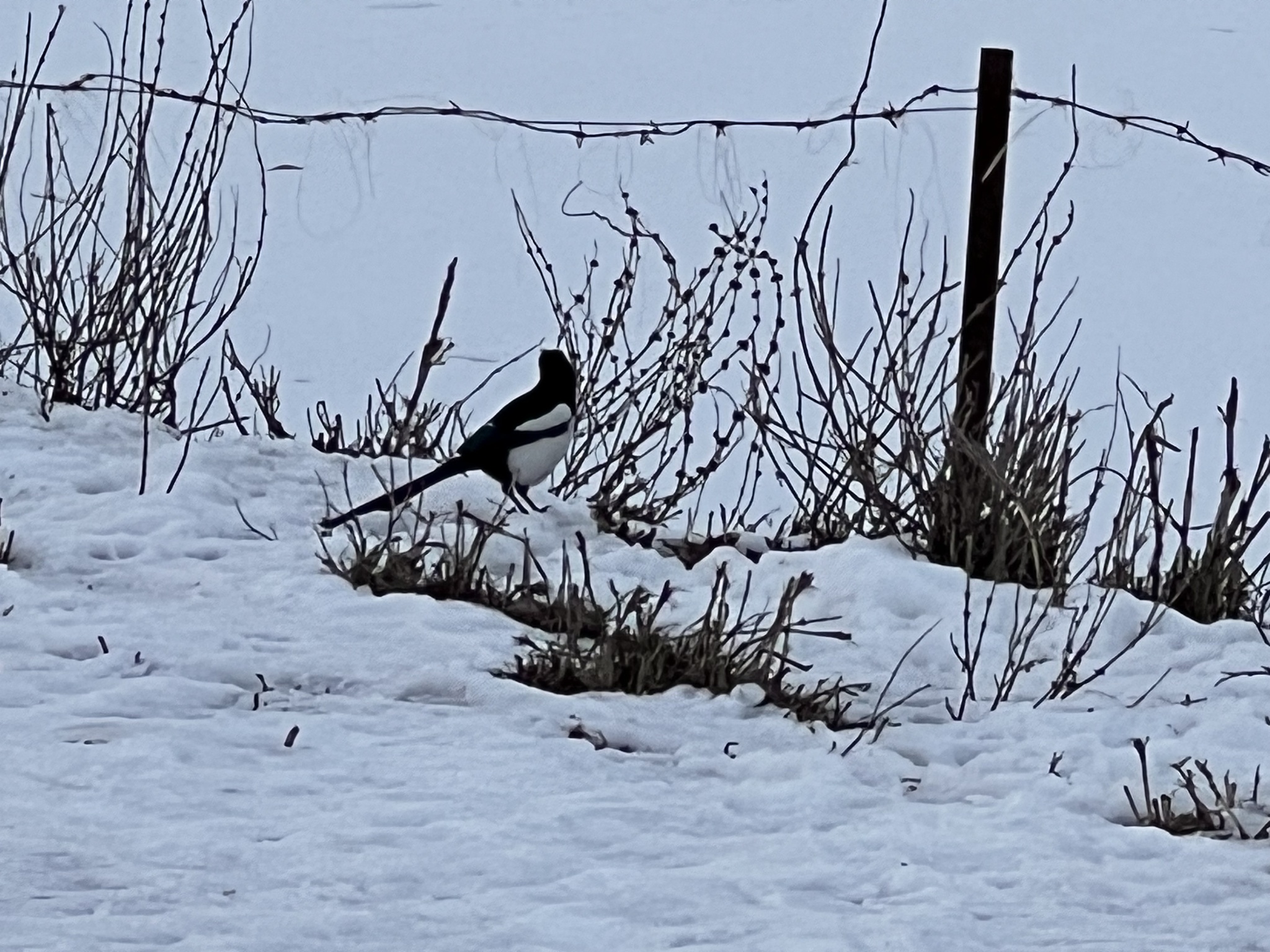
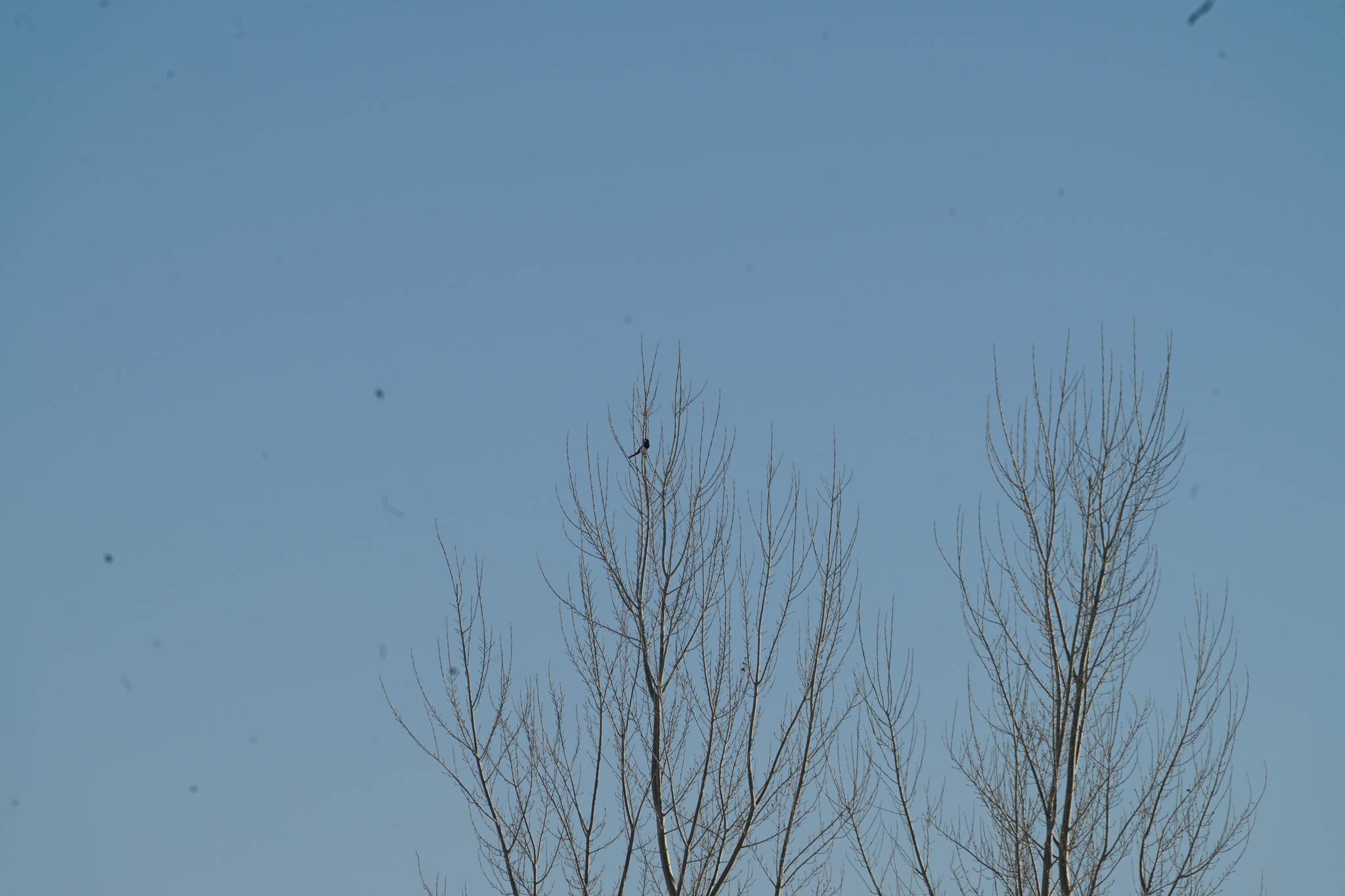
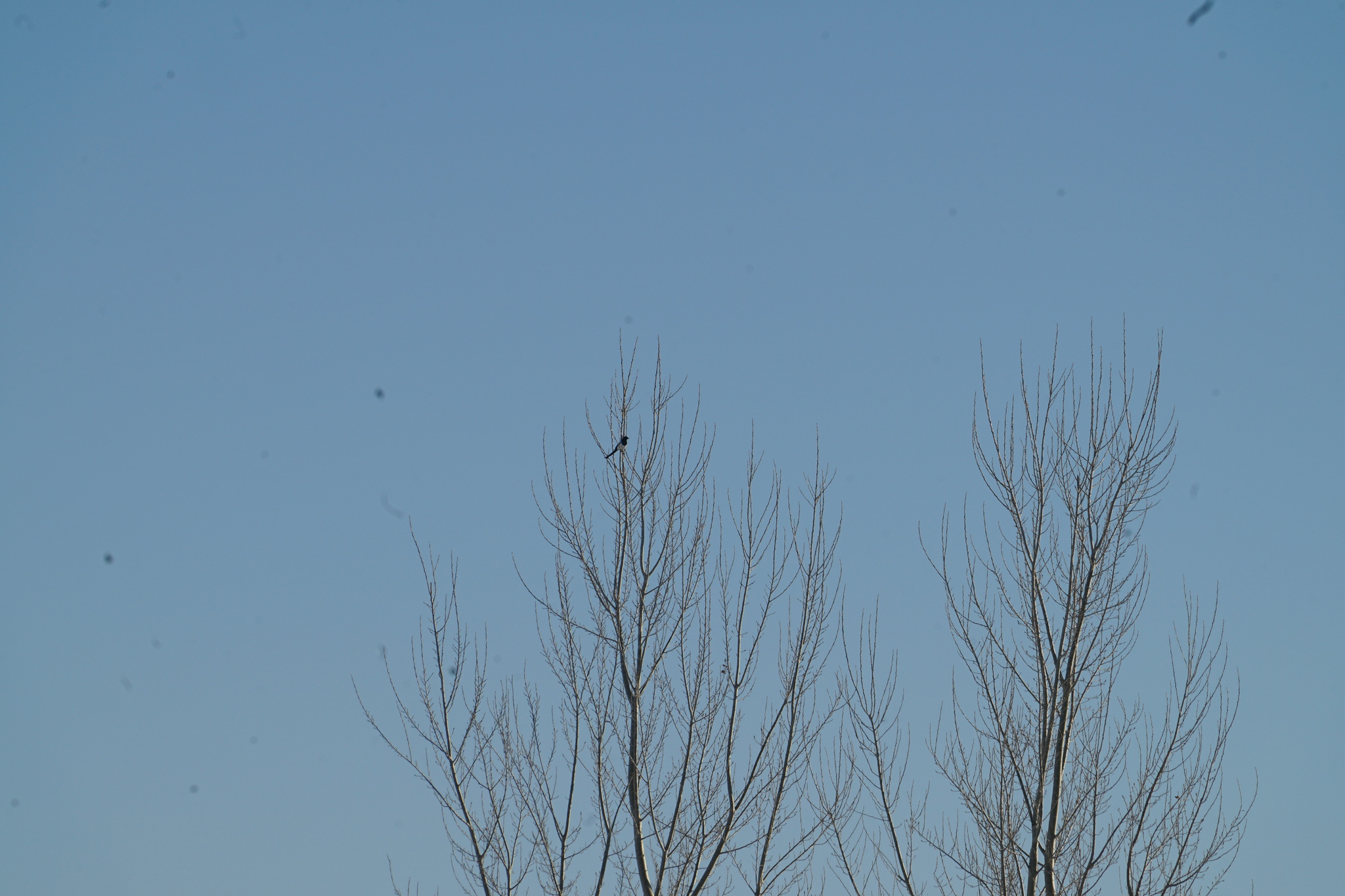
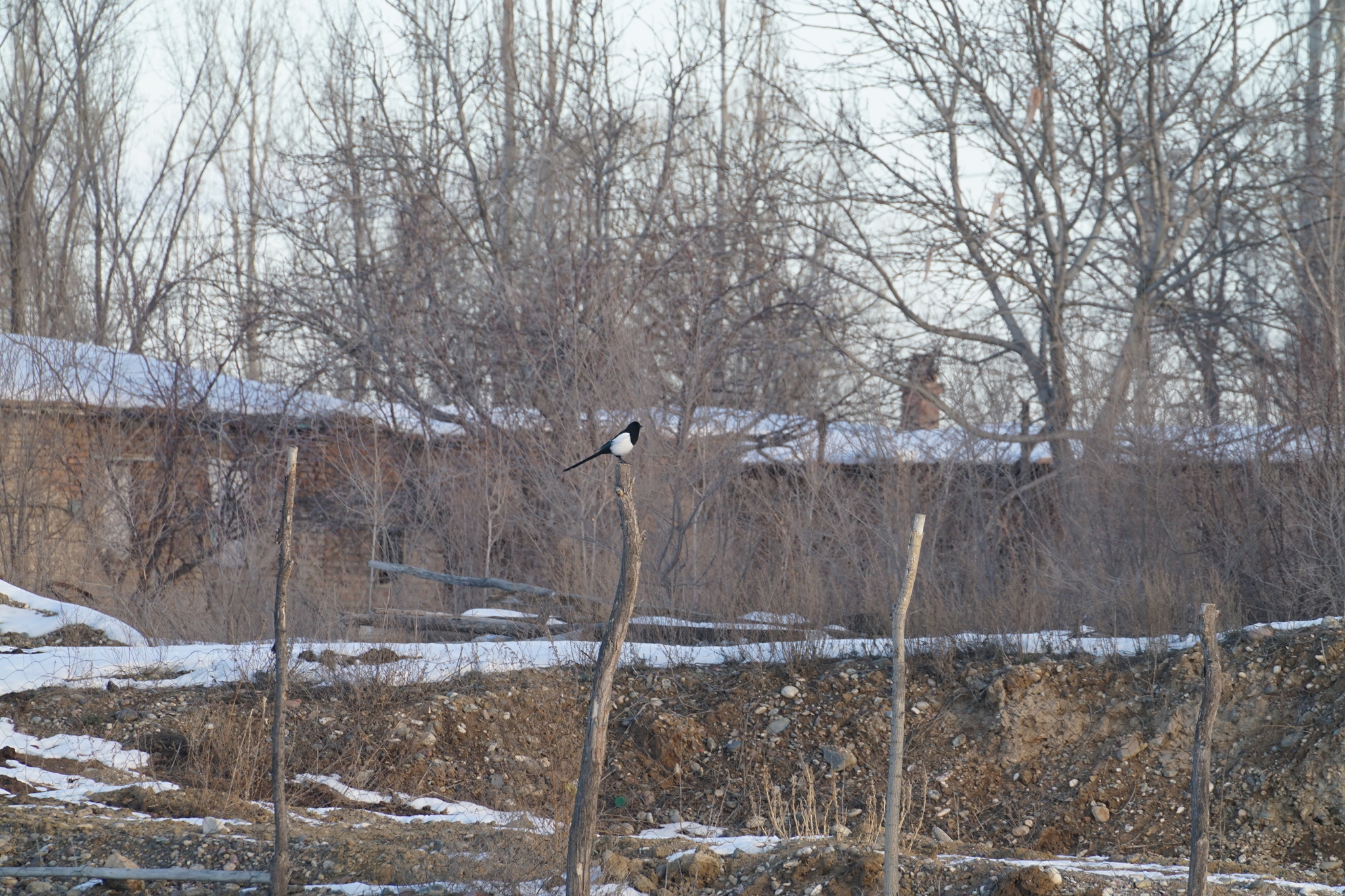
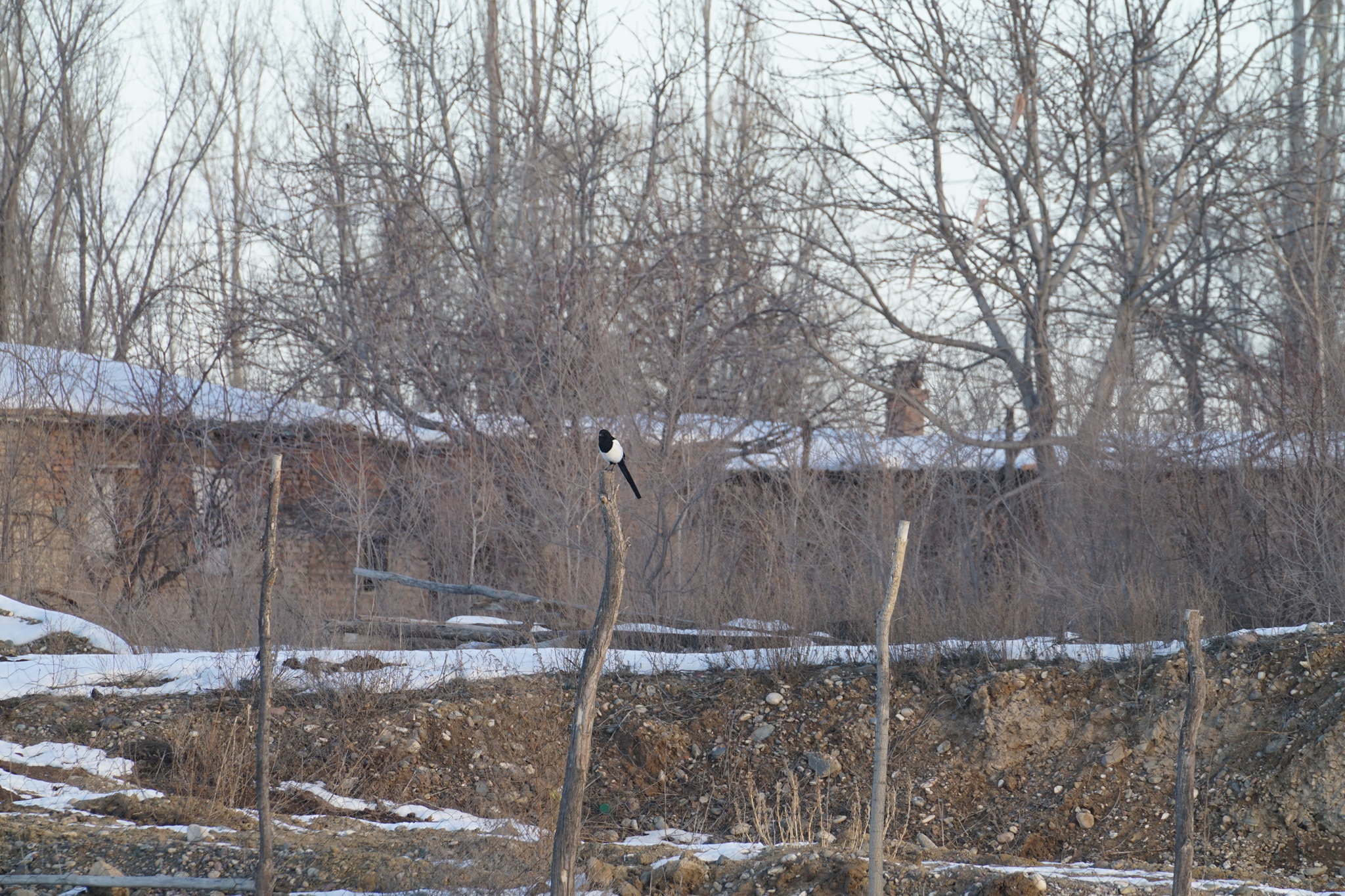


Eurasian Magpie
Pica pica
欧亚喜鹊
Introduction
The Eurasian magpie (Pica pica) is a corvid species widespread across northern Eurasia, from Portugal and Ireland west to the Kamchatka Peninsula in the Russian Far East. It occupies varied habitats including open countryside with scattered trees, suburban parks, and gardens, often near human settlements. This species is characterized by black-and-white plumage and a long, graduated tail comprising more than half its body length. Notable behaviors include complex social interactions, tool use, and mirror self-recognition.
Description
The adult male of the nominate subspecies measures 44–46 cm in length, with more than half of this being the long, graduated tail. Its wingspan ranges from 52–62 cm. The head, neck, breast, and vent are glossy black with a metallic green and violet sheen, while the belly and shoulder feathers are pure white. The wings appear black with green or purple gloss, and the primary feathers show conspicuous white inner webs when spread. The tail itself is black with green and reddish-purple sheens. Legs and bill are black, and the iris is dark brown. Females are slightly smaller and less glossy. Males of the nominate subspecies weigh 210–272 g, while females weigh 182–214 g. The young resemble adults but lack adult gloss, have pink facial skin, and a notably shorter tail.
Identification
The Eurasian magpie is unmistakable within its range due to its bold black-and-white pattern, long tail, and characteristic white wing patches visible in flight. It resembles the North American black-billed magpie so closely that the two were once considered the same species. The Iberian magpie, found only on the Iberian Peninsula, is the only other magpie species in Europe and is smaller with more brownish tones in its black plumage. Subspecies vary in size and the extent of white markings, with Asian populations showing more white on the primaries and a more prominent white rump patch.
Distribution & Habitat
This species breeds across temperate Eurasia from Portugal, Spain, and Ireland westward to the Kamchatka Peninsula. It occupies open countryside with scattered trees and is typically absent from dense forests or treeless areas. Magpies readily adapt to suburban environments, often breeding in parks, gardens, and areas close to city centers. In northern regions like Sweden, they associate closely with human settlements and rarely venture far from dwellings. While generally sedentary, populations at the northern limit of the range may move south during harsh winters.
Behavior & Ecology
Magpies are omnivorous, feeding on young birds and eggs, small mammals, insects, carrion, acorns, grain, and other vegetable matter. They are monogamous, with pairs often remaining together for multiple breeding seasons. Nests are bulky structures of sticks cemented with earth, lined with fine roots, and topped with a dome of thorny branches with a single concealed entrance, typically built in tall trees. Courtship involves the male displaying his white shoulder patches, fanning his tail, and making soft calls. Clutches of five to six eggs are laid in April; the female incubates for 21–22 days while the male feeds her. Both parents raise the single brood. Fledglings leave the nest at around 27 days but continue receiving parental care for several weeks. Winter roosting occurs in groups, sometimes alongside other species.
Conservation
The Eurasian magpie has an extremely large range with an estimated total population of 46–228 million individuals. Europe alone holds 7.5–19 million breeding pairs. The population trend in Europe has been stable since 1980, with no evidence of significant decline. Consequently, the IUCN classifies the species as Least Concern. While magpies are sometimes criticized for preying on songbird eggs and young, studies have found no evidence that they negatively impact overall songbird population numbers. The maximum recorded age is 21 years and 8 months.
Culture
Throughout European folklore, the magpie has been associated with superstition and considered an omen of ill fortune, partly due to its black coloring and chattering call. The rhyme 'One for Sorrow' records the belief that the number of magpies seen predicts the future. In various Central and Eastern European traditions, magpies are regarded as thieves and cunning birds, with some Scandinavian cultures linking them to witchcraft. Despite these negative associations, other cultures appreciate their intelligence, and they appear in literature and opera such as Rossini's 'La gazza ladra' and Hergé's 'The Castafiore Emerald.' Recent studies have questioned the belief that magpies are attracted to shiny objects.
Source: Wikipedia · CC BY-SA 3.0
Taxonomy
- Order
- Passeriformes
- Family
- Corvidae
- Genus
- Pica
- eBird Code
- eurmag1
Subspecies (6)
-
Pica pica bactriana
western and southern Siberia (east to Lake Baikal) and central Asia, southward to the Caucasus region and eastward to Pakistan and northwestern India
-
Pica pica camtschatica
northern shores of Sea of Okhotsk to Kamchatka Peninsula
-
Pica pica fennorum
northern Scandinavia and western Russia
-
Pica pica leucoptera
southern Transbaikalia to eastern Mongolia and Altai Mountains
-
Pica pica melanotos
Iberian Peninsula
-
Pica pica pica
Europe from the British Isles, France, and southern Scandinavia to eastern Europe and Türkiye
Data Sources
Species description from Wikipedia, licensed under CC BY-SA 3.0.
Bird images and sounds sourced from GBIF, contributed by citizen scientists worldwide under Creative Commons licenses.
Taxonomy data from AviList 2025.