Passeriformes / Phylloscopidae / Phylloscopus
Chinese Leaf Warbler
Phylloscopus yunnanensis · 云南柳莺
Introduction
A species of Old World warbler in the family Phylloscopidae, endemic to China. It inhabits subtropical or tropical dry forests and high-altitude shrublands.
Description
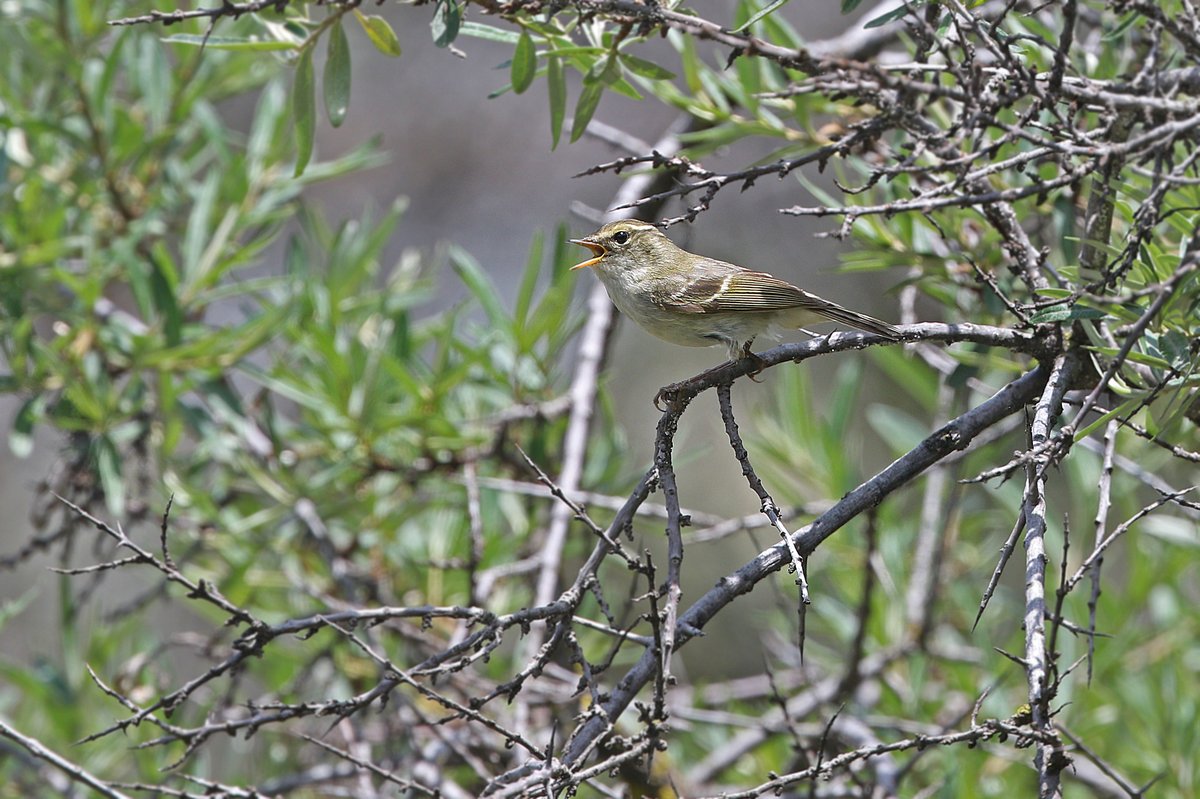
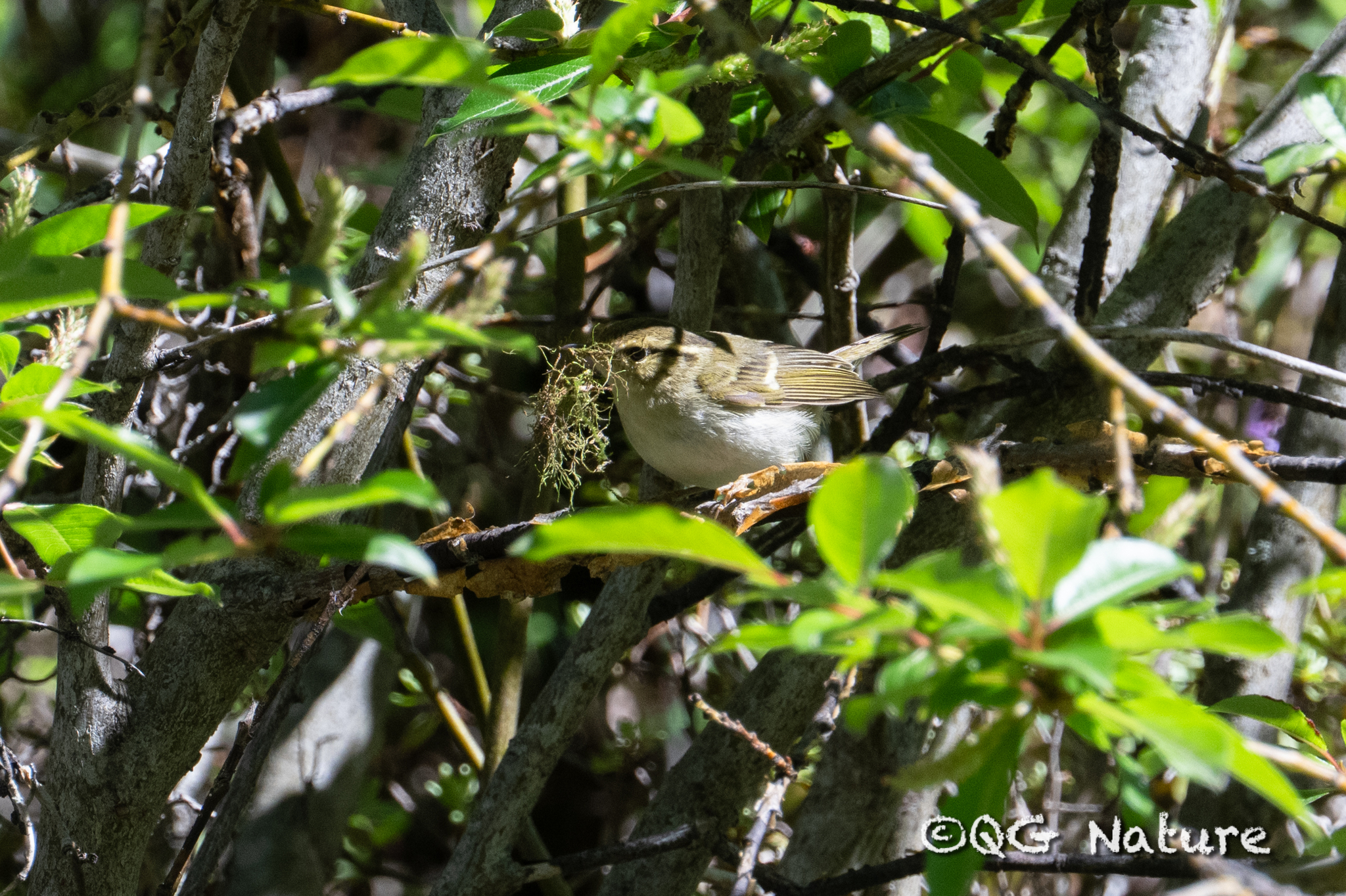
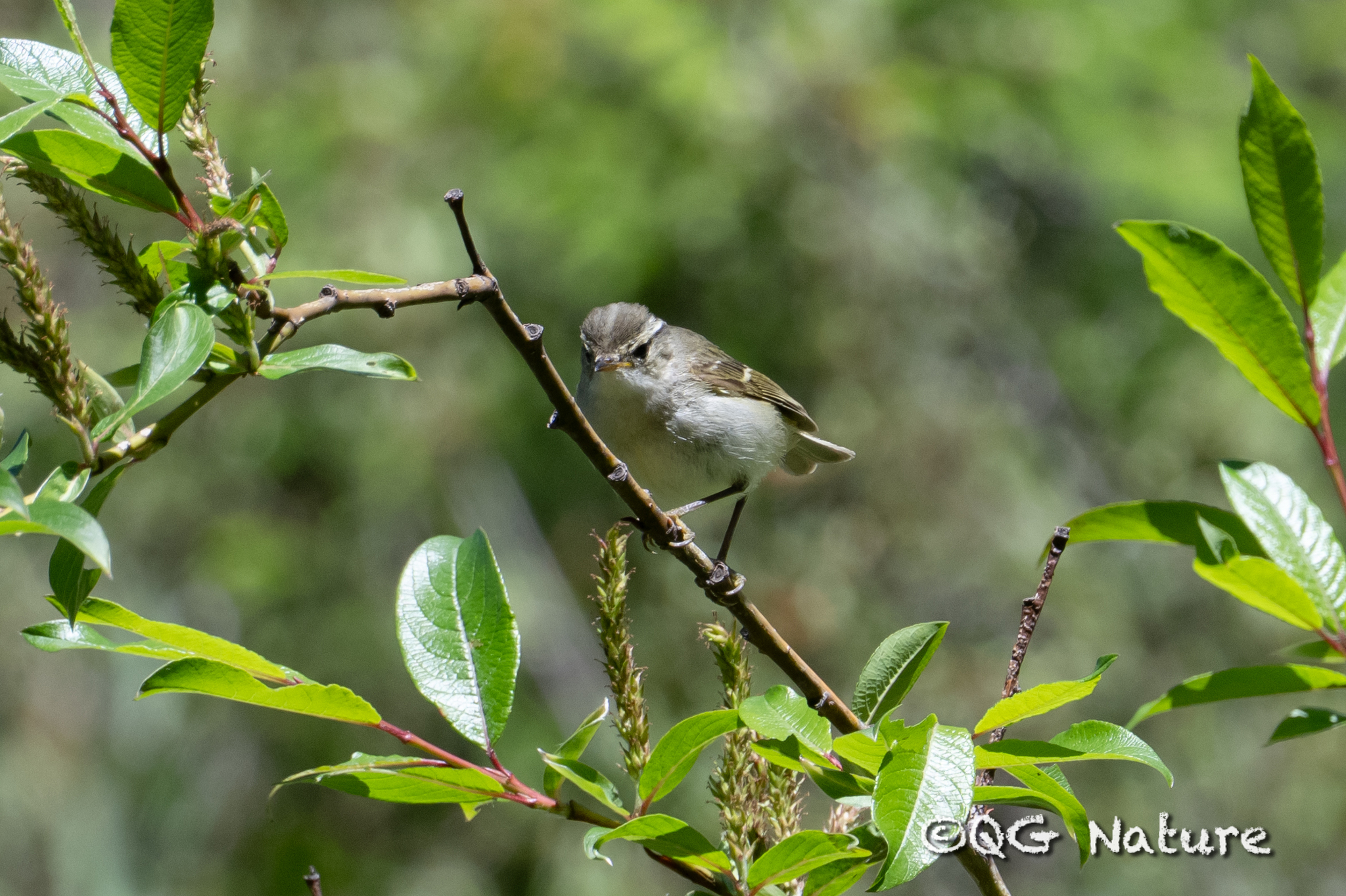
Small leaf-warbler with a total length of around 10 cm and wing length of 5–6 cm. Body is slightly elongated and compact with a short, pointed dark brown bill (around 1 cm long) that is brownish-yellow on the underside. Wings are very short and rounded; legs are slender and very dark. Claws and toes are dark brownish-grey with dusky buff undersides. Plumage is pale green to olive-green above with a yellowish-white rump. Head pattern features a well-defined pale eyebrow stripe, faint yellow median crown stripe, and dusky-olive lateral crown stripes. Tertial feathers are sepia-colored with whitish tips. Eye is surrounded by a broken eyering with a dark brown iris. Sexes are similar.
Identification
Distinguished by a unique song lasting over a minute, described as dry and monotonous 'tsiridi' repeated five times. Call note is a loud, irregular series of clear scolding whistles ('tueet' repeated five times), followed by four series of decreasing lengths, ending with a hammering 'tueet-tuee-tee' and a seven-fold 'tee'. Close-range call is a soft 'trr-trr'.
Distribution & Habitat
Found only in central and north-eastern China, common in Xin Shui, Sichuan Province. Inhabits mountainous forests, preferring spruce and fir, and favors low secondary growth. Elevational range is 200–2800 m, usually between 1000 m and 2600 m. The species is migratory, but wintering grounds are unknown.
Behavior & Ecology
Found singly or in pairs during the breeding season. Generally bold, keeping to tree canopies where it feeds on insects. Males sing from the tops of trees.
Source: Wikipedia · CC BY-SA 3.0
Taxonomy
- Order
- Passeriformes
- Family
- Phylloscopidae
- Genus
- Phylloscopus
Distribution
mountains of central China (Sichuan, Liaoning, and Shanxi)
Vocalizations
Data Sources
Species description from Wikipedia, licensed under CC BY-SA 3.0.
Bird images and sounds sourced from GBIF, contributed by citizen scientists worldwide under Creative Commons licenses.
Taxonomy data from AviList 2025.