Chinese Leaf Warbler
Phylloscopus yunnanensis
云南柳莺
Introduction
This small warbler inhabits spruce and fir forests in central and northeastern China, where it maintains territories at higher elevations during the breeding season. The species is characterized by a prolonged song lasting over a minute and a distinctive head pattern featuring a pale eyebrow stripe and crown markings. It belongs to a genus shared with several similar-looking leaf warblers, though its vocalizations distinguish it from congeners. Information on its wintering grounds remains incomplete. Conservation status not provided.
Description
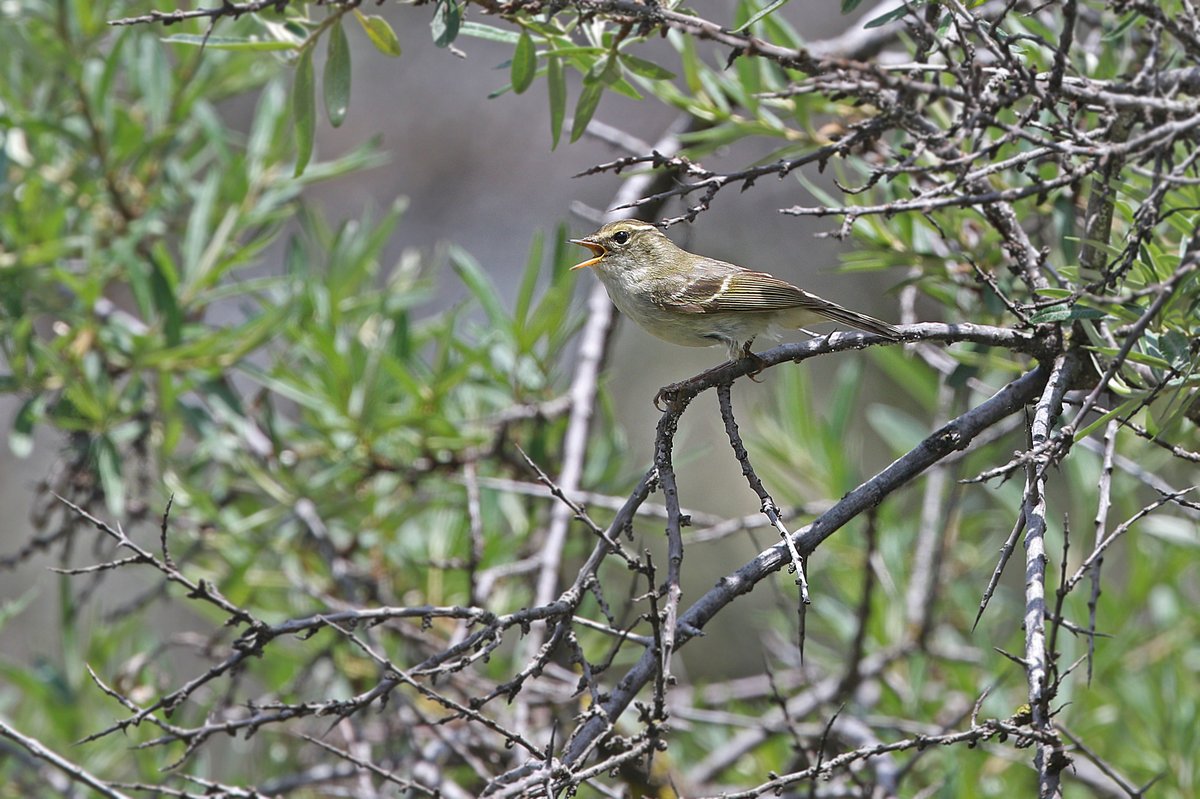
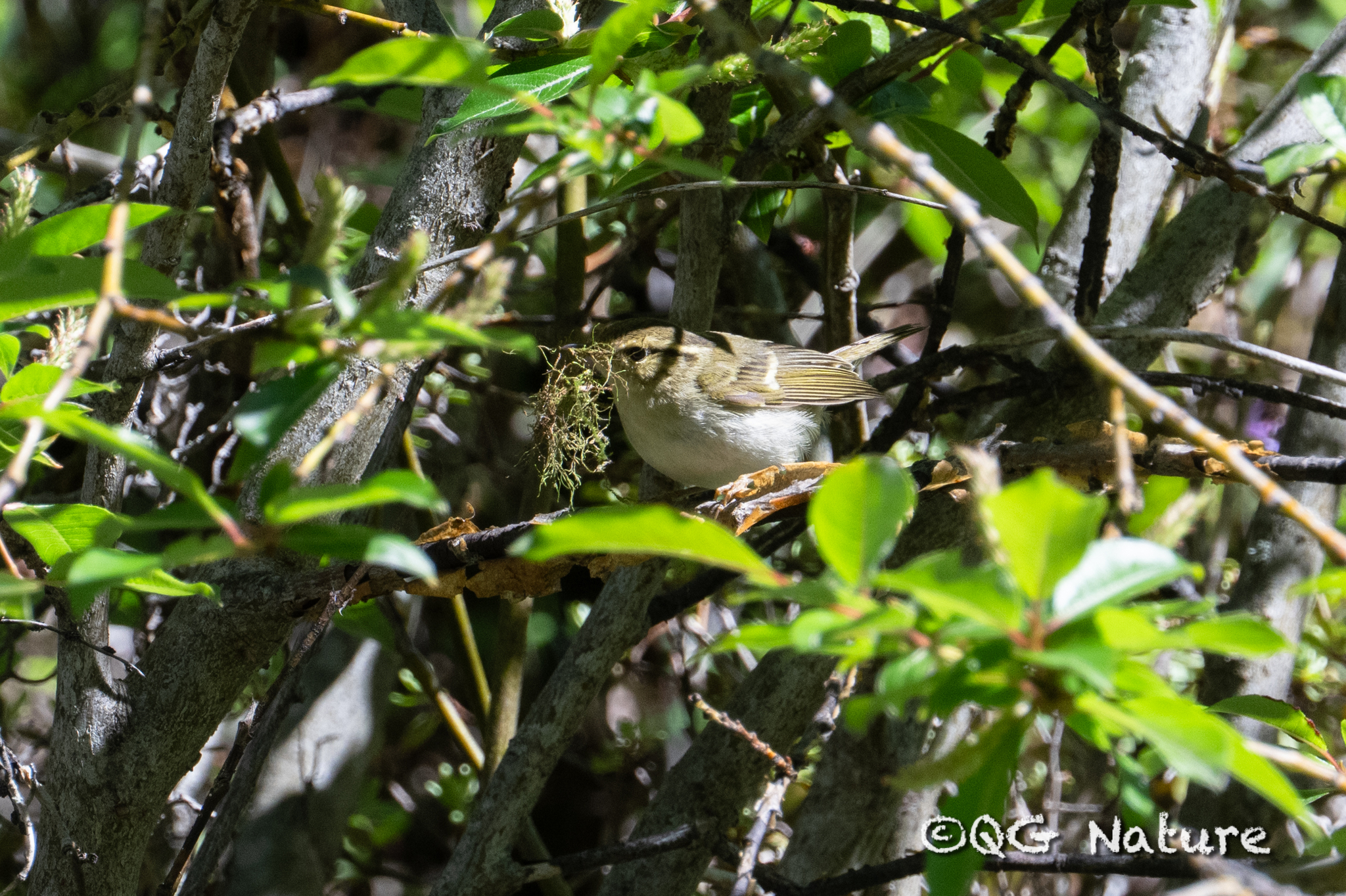
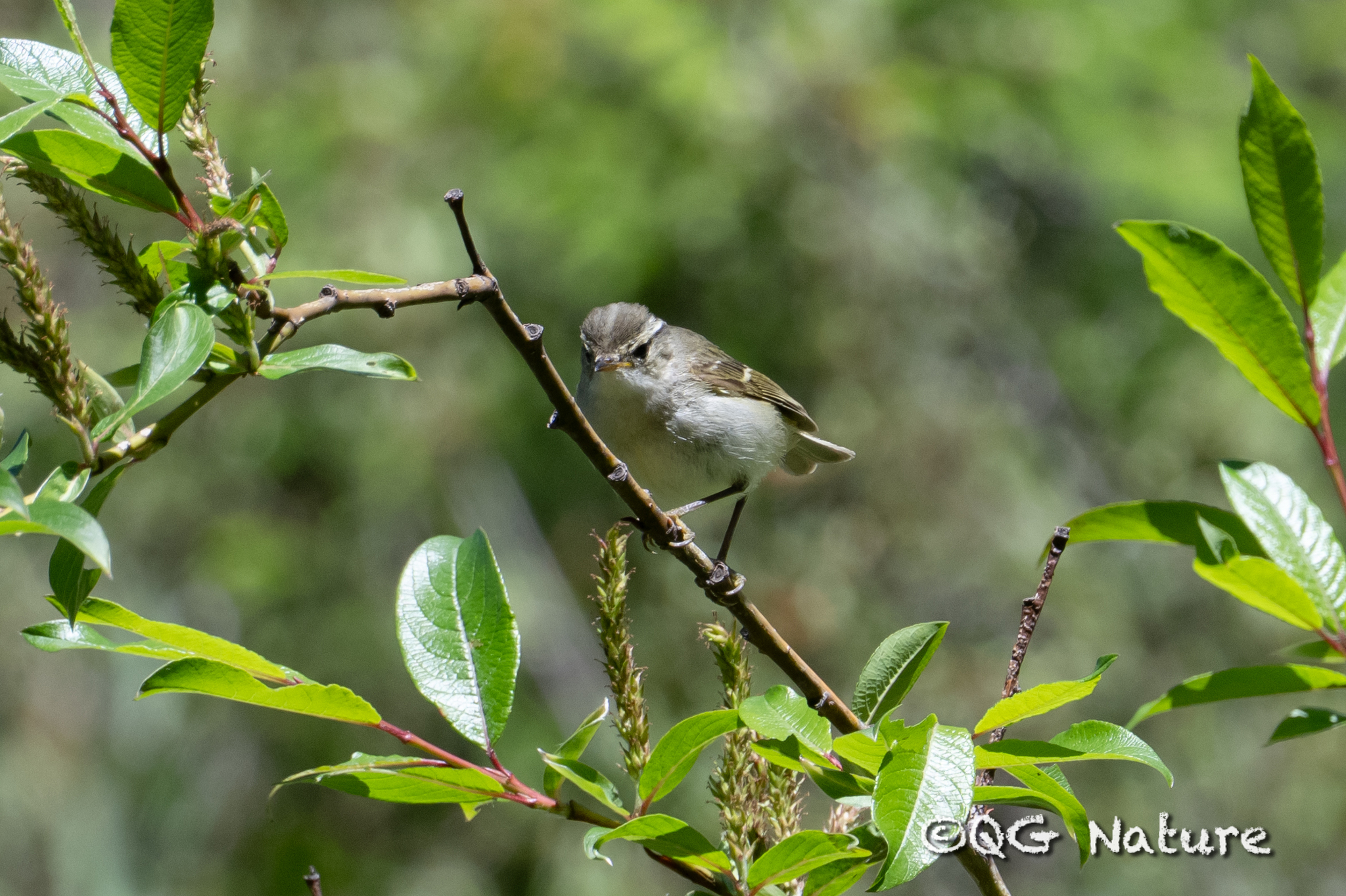
This compact leaf warbler measures approximately 10 centimeters in total length with a wing length of 5 to 6 centimeters. The body is slightly elongated with a tail that is nearly square, showing a subtle fork or notch. It has a short, pointed bill about 1 centimeter long, dark brown on top and brownish-yellow underneath. The wings are notably short and rounded, and the legs are slender and very dark. The claws and toes are dark brownish-grey with dusky buff undersides. The upperparts are pale green to olive-green, contrasting with a yellowish-white rump. The head displays a striking pattern featuring a well-defined pale eyebrow stripe, a faint yellow median crown stripe, and dusky-olive lateral crown stripes. The tertial feathers are sepia-colored with whitish tips. A broken eyering surrounds the eye, which has a dark brown iris. The sexes appear identical.
Identification
The Chinese leaf warbler can be distinguished from other Phylloscopus warblers by its unique song structure, which is notably longer and more monotonous than those of its relatives. The head pattern, particularly the combination of the pale eyebrow stripe and crown stripes, provides a useful visual cue. Its preference for spruce and fir forests at higher elevations, typically between 1000 and 2600 meters, also helps distinguish it from similar species that favor different habitats or lower elevations.
Distribution & Habitat
This species has a restricted range in central and northeastern China, where it is considered common in areas such as Xin Shui in Sichuan Province. It inhabits mountainous coniferous forests, showing a preference for spruce and fir stands, and can be found at elevations from 200 to 2800 meters, though it most commonly occurs between 1000 and 2600 meters. It favors low secondary growth within these forests. The species is migratory, but its wintering grounds remain unknown to science.
Behavior & Ecology
During the breeding season, these warblers are typically encountered singly or in pairs. They are generally bold birds that remain within the tree canopy, where they actively forage for insects among the foliage. Males frequently sing from the tops of trees, broadcasting their extended, monotonous song that can persist for over a minute. The song consists of a repeated tsiridi call delivered approximately five times. Their call note is loud and varied—an irregular series of clear scolding whistles described as tueet, repeated five times, followed by four series of decreasing length, and concluding with another five-fold note. The final phrase may feature a hammering tueet-tuee-tee with a seven-fold tee element. When at close range, they emit a soft trr-trr call.
Conservation
The conservation status of this species is not explicitly assessed in the available information. However, its restricted range to specific areas of China and its dependence on mountainous coniferous forest habitats suggest potential vulnerabilities to habitat disturbance or loss.
Culture
No specific cultural significance or folklore associated with this species is documented in the available sources.
Source: Wikipedia · CC BY-SA 3.0
Taxonomy
- Order
- Passeriformes
- Family
- Phylloscopidae
- Genus
- Phylloscopus
- eBird Code
- chilew1
Distribution
mountains of central China (Sichuan, Liaoning, and Shanxi)
Vocalizations
Data Sources
Species description from Wikipedia, licensed under CC BY-SA 3.0.
Bird images and sounds sourced from GBIF, contributed by citizen scientists worldwide under Creative Commons licenses.
Taxonomy data from AviList 2025.