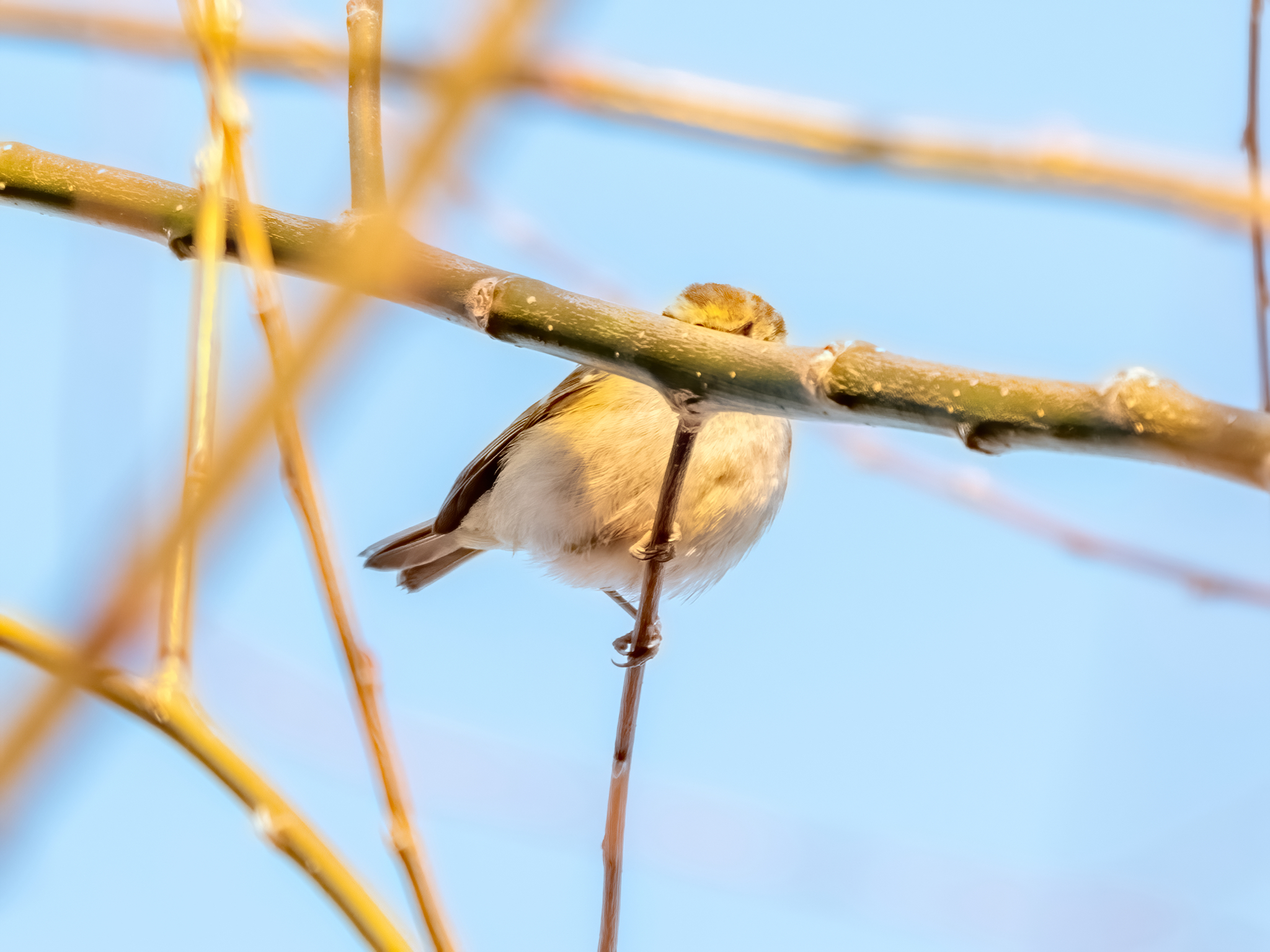
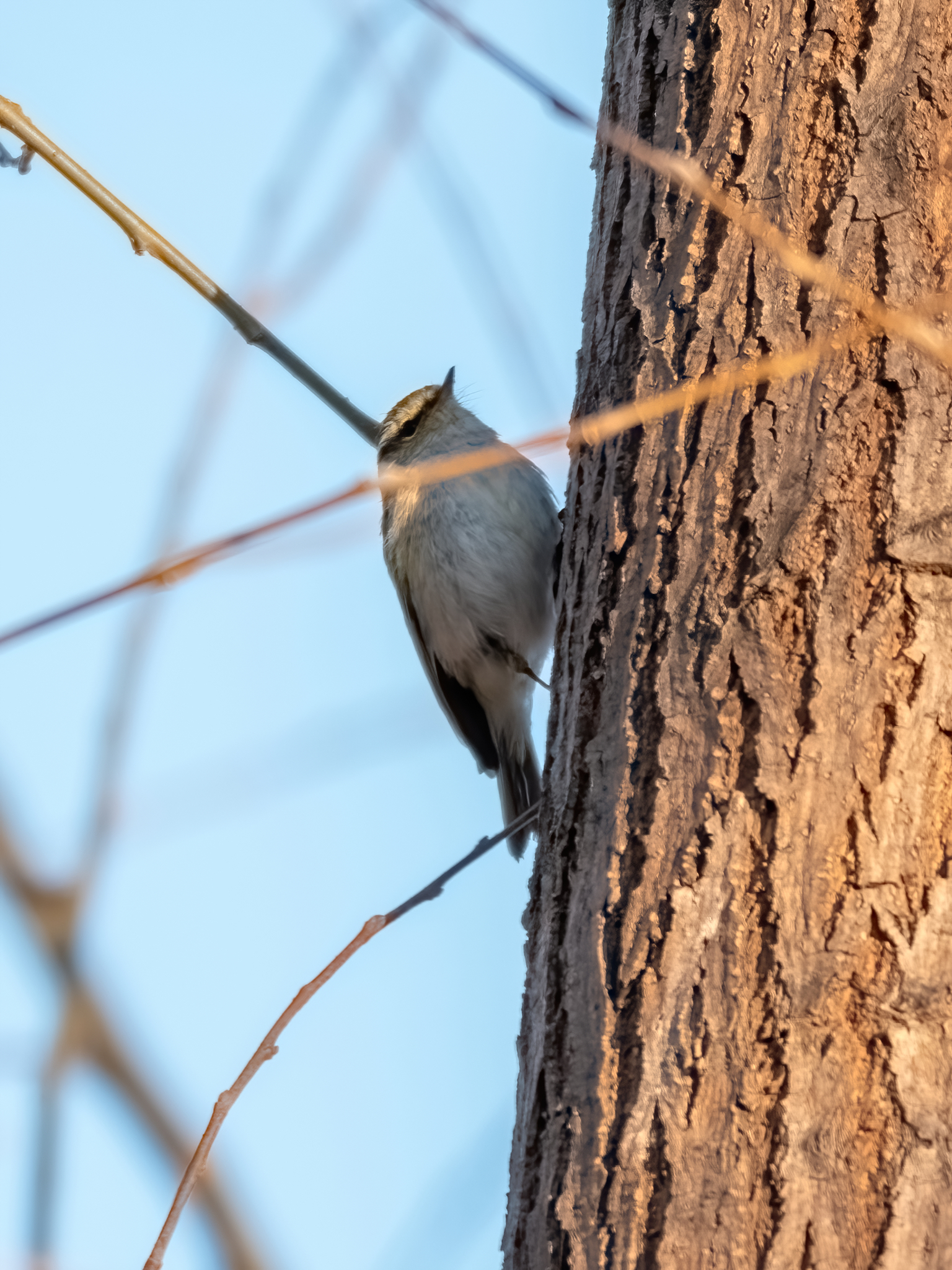
Passeriformes / Phylloscopidae / Phylloscopus
Pallas's Leaf Warbler
Phylloscopus proregulus · 黄腰柳莺
Introduction
A small leaf warbler in the family Phylloscopidae, breeding in mountain forests from southern Siberia east to northern Mongolia and northeast China. It is strongly migratory, wintering mainly in south China and adjacent areas of southeast Asia, with increasing autumn records in Europe. The species is insectivorous, often hovering while foraging, and is evaluated as Least Concern by the IUCN.
Description
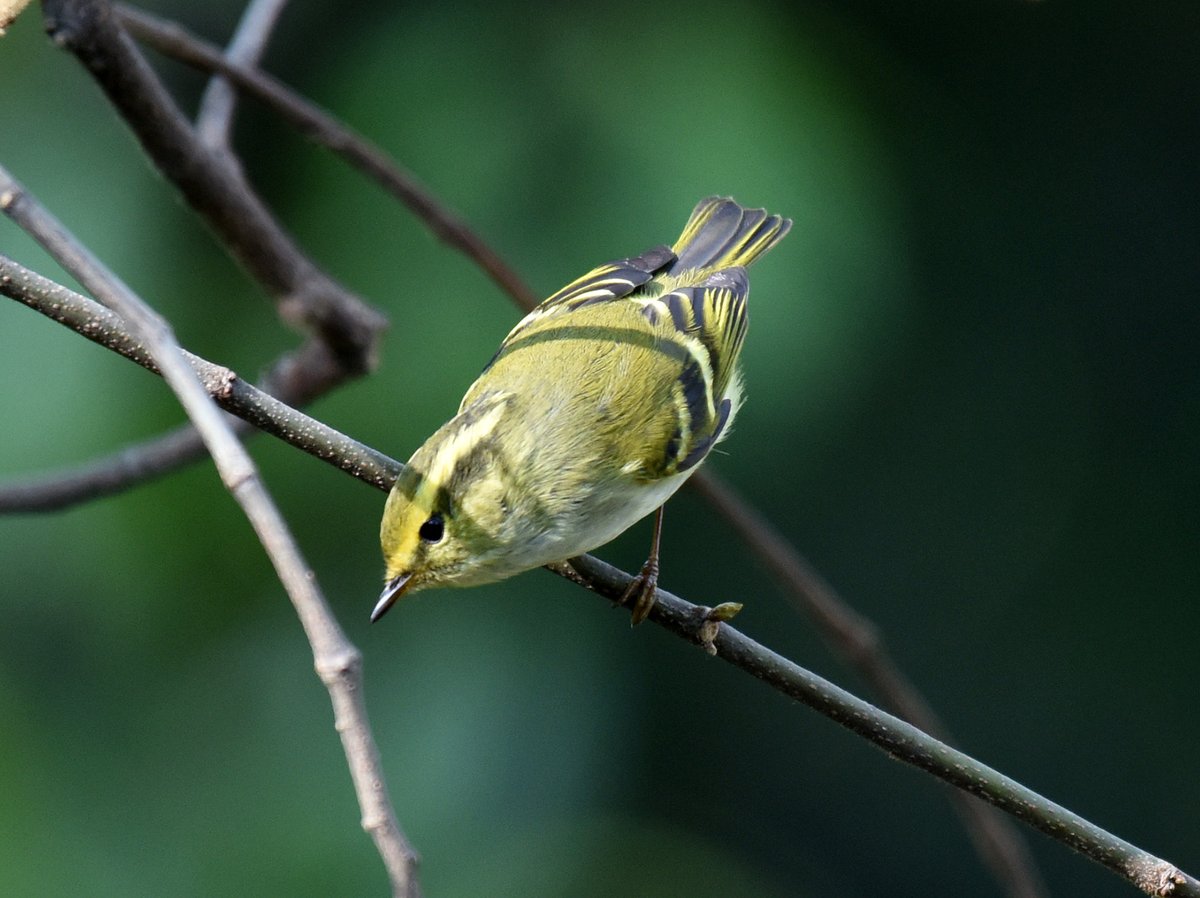
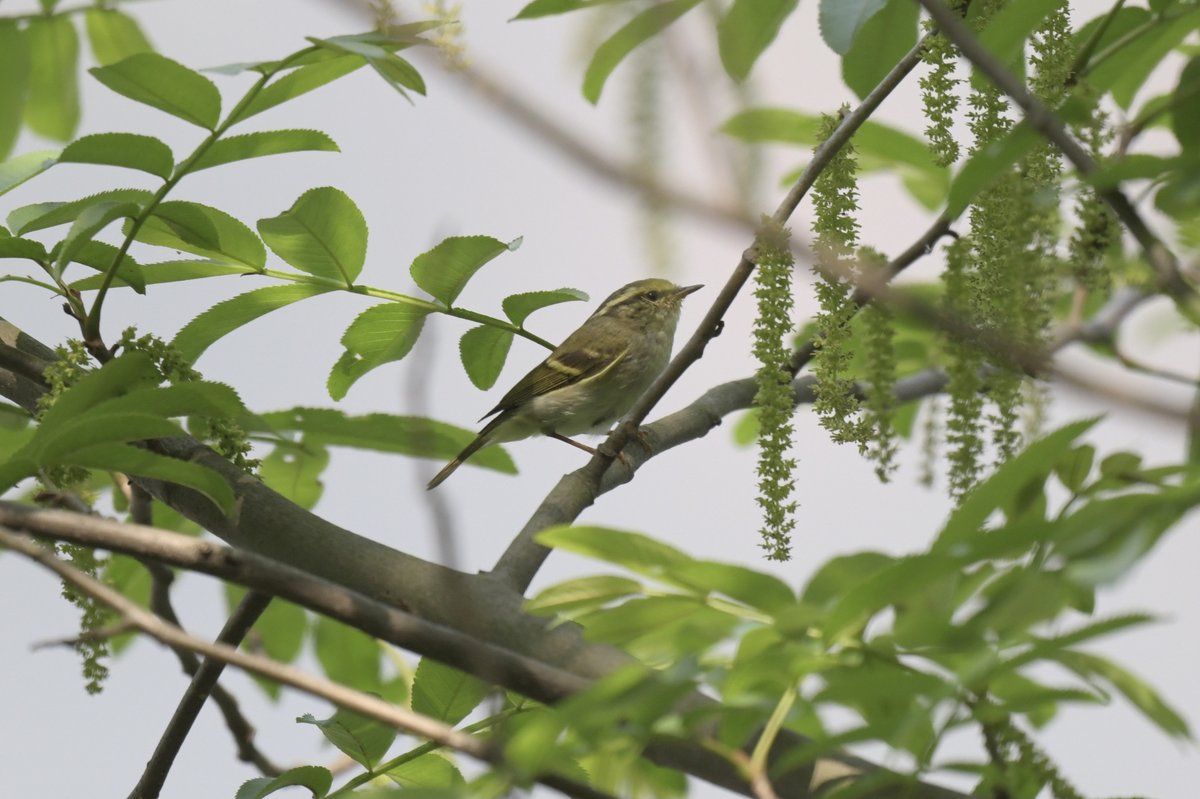
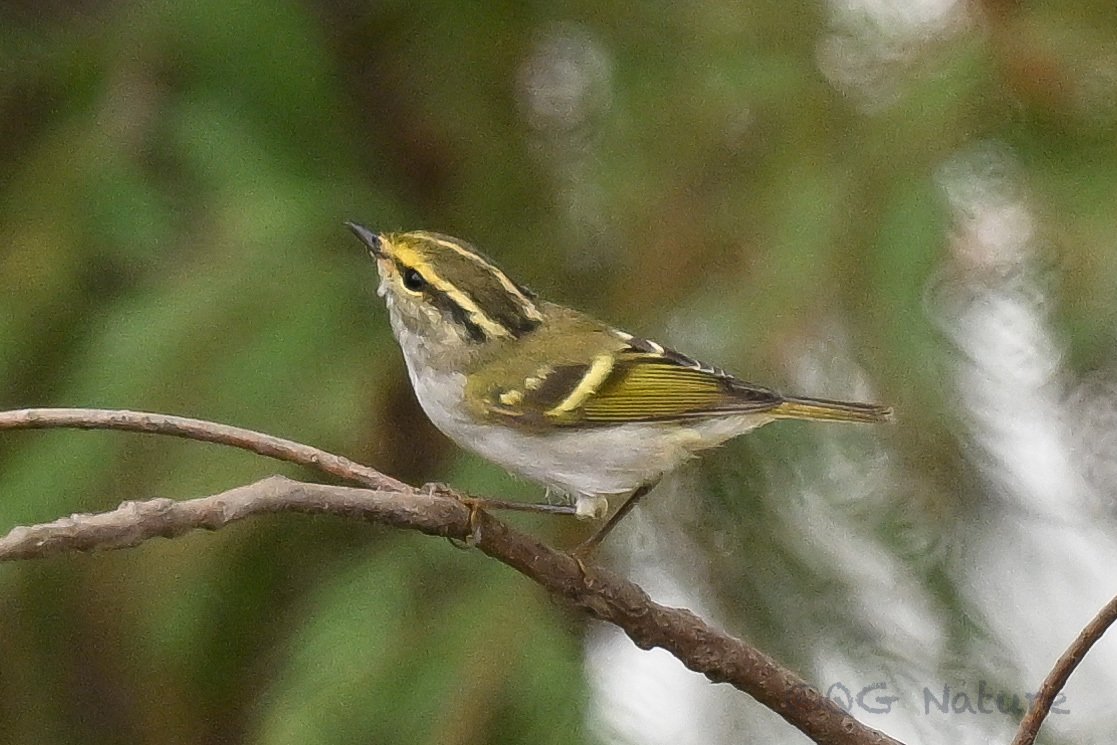
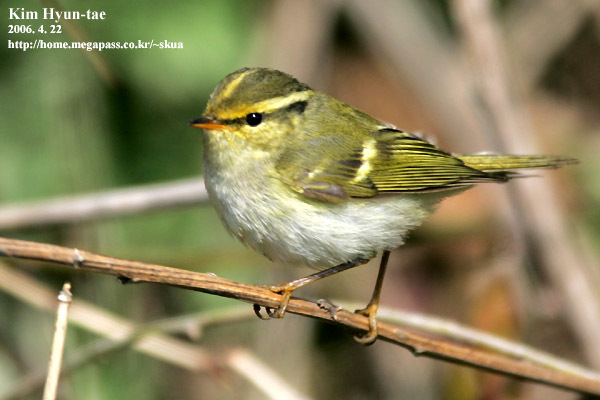
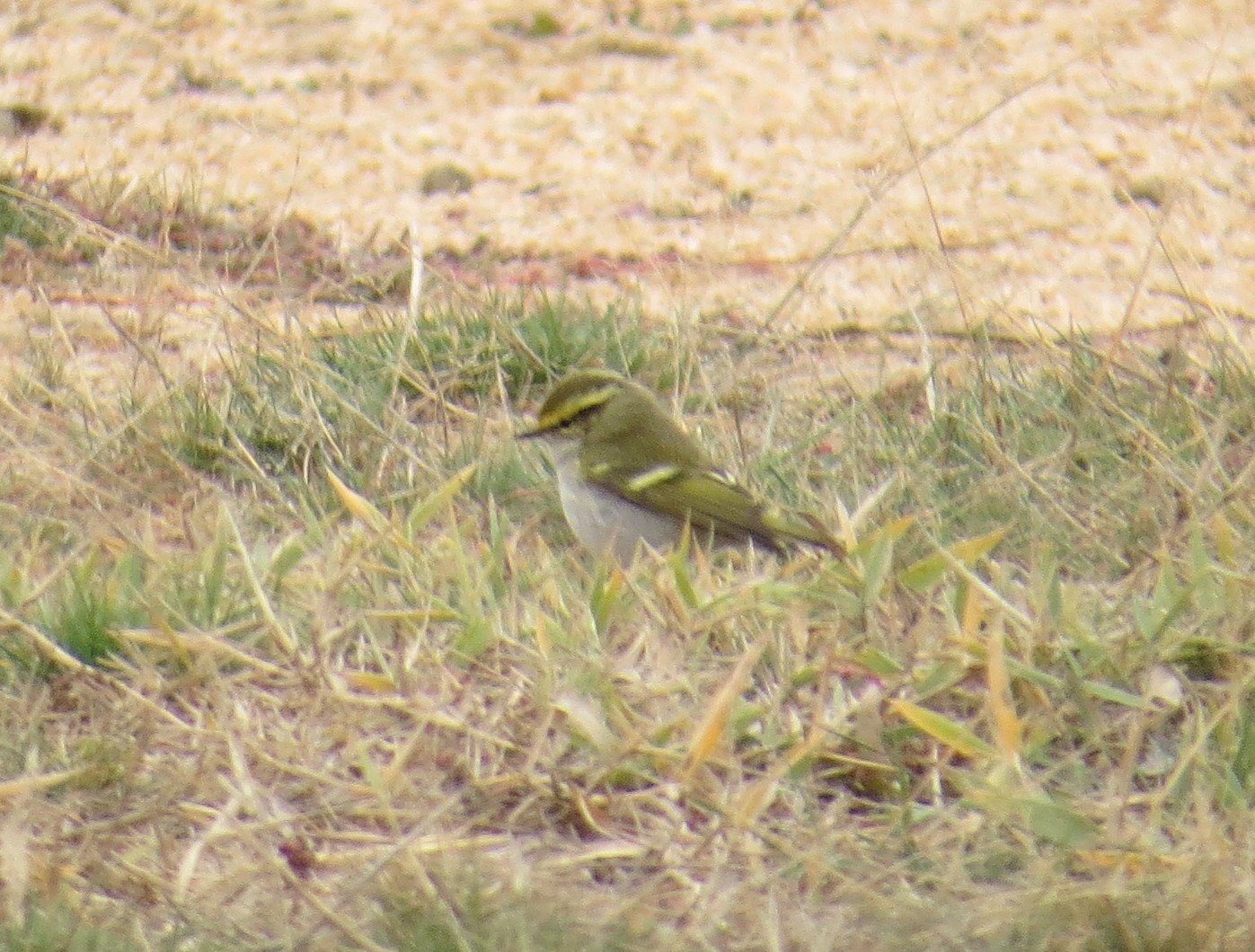
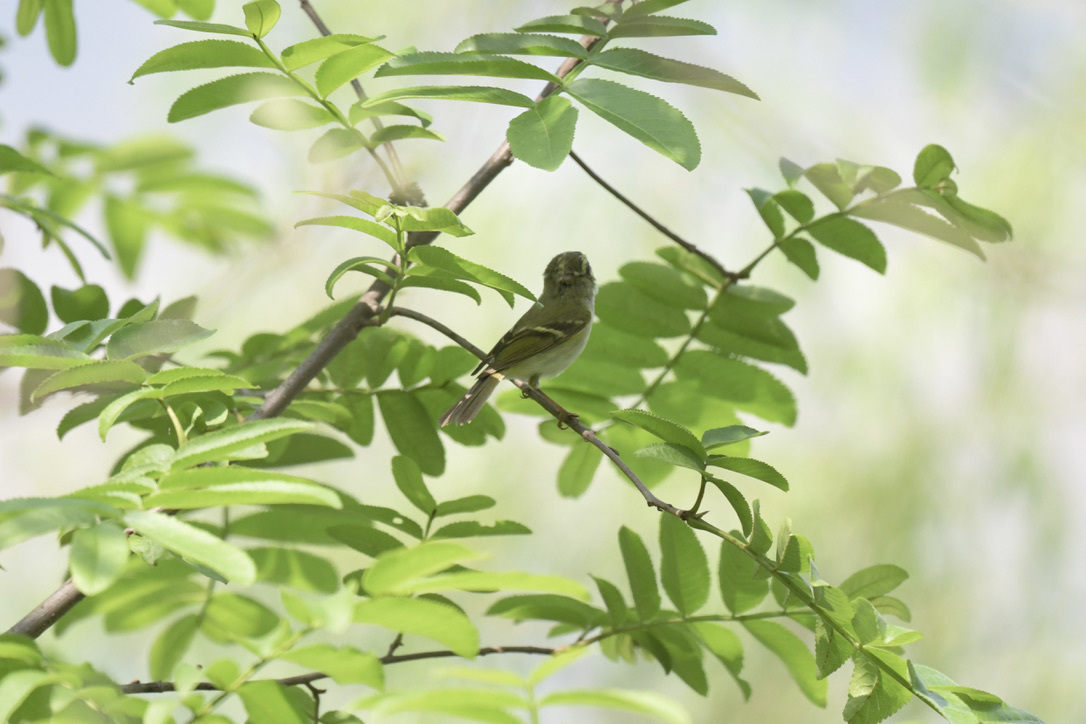
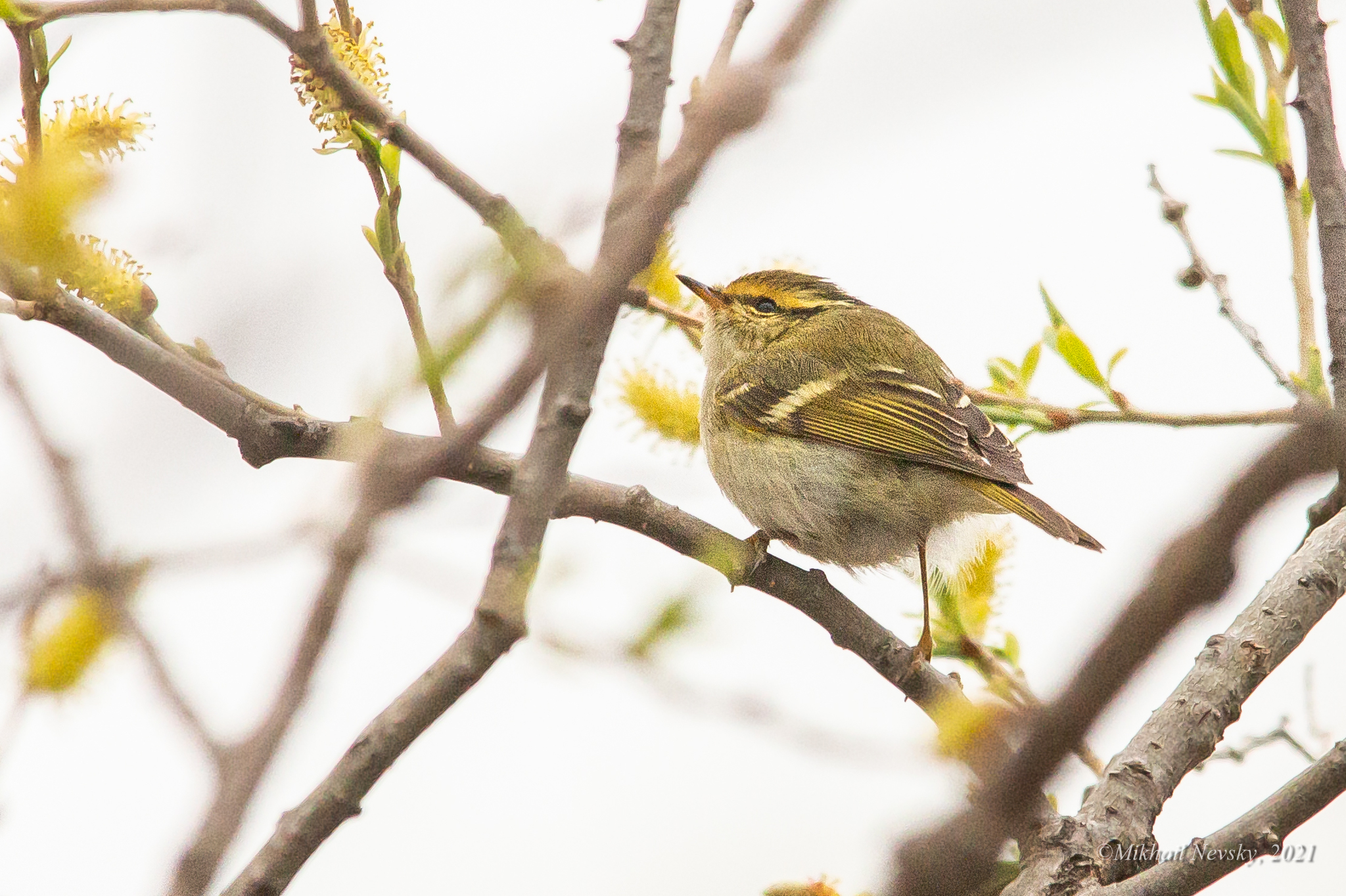
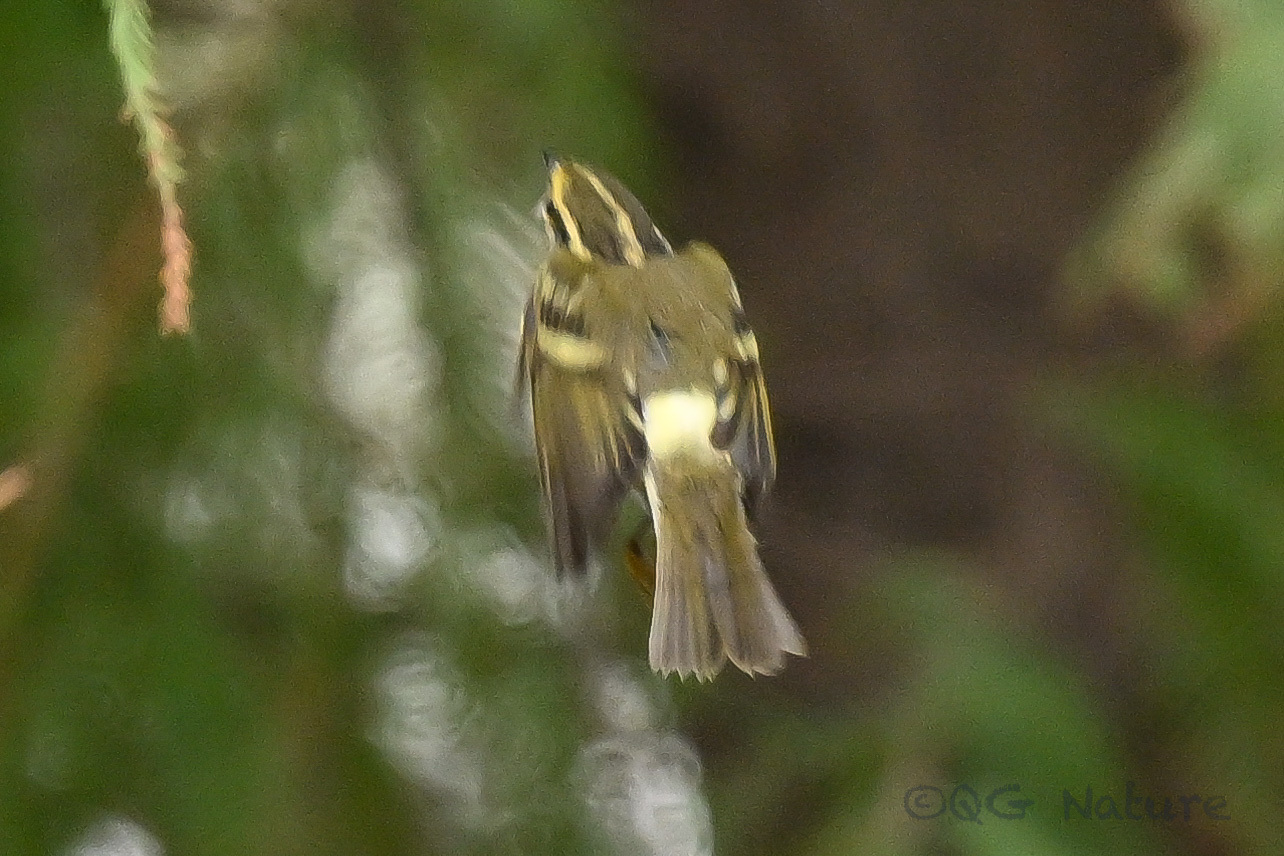
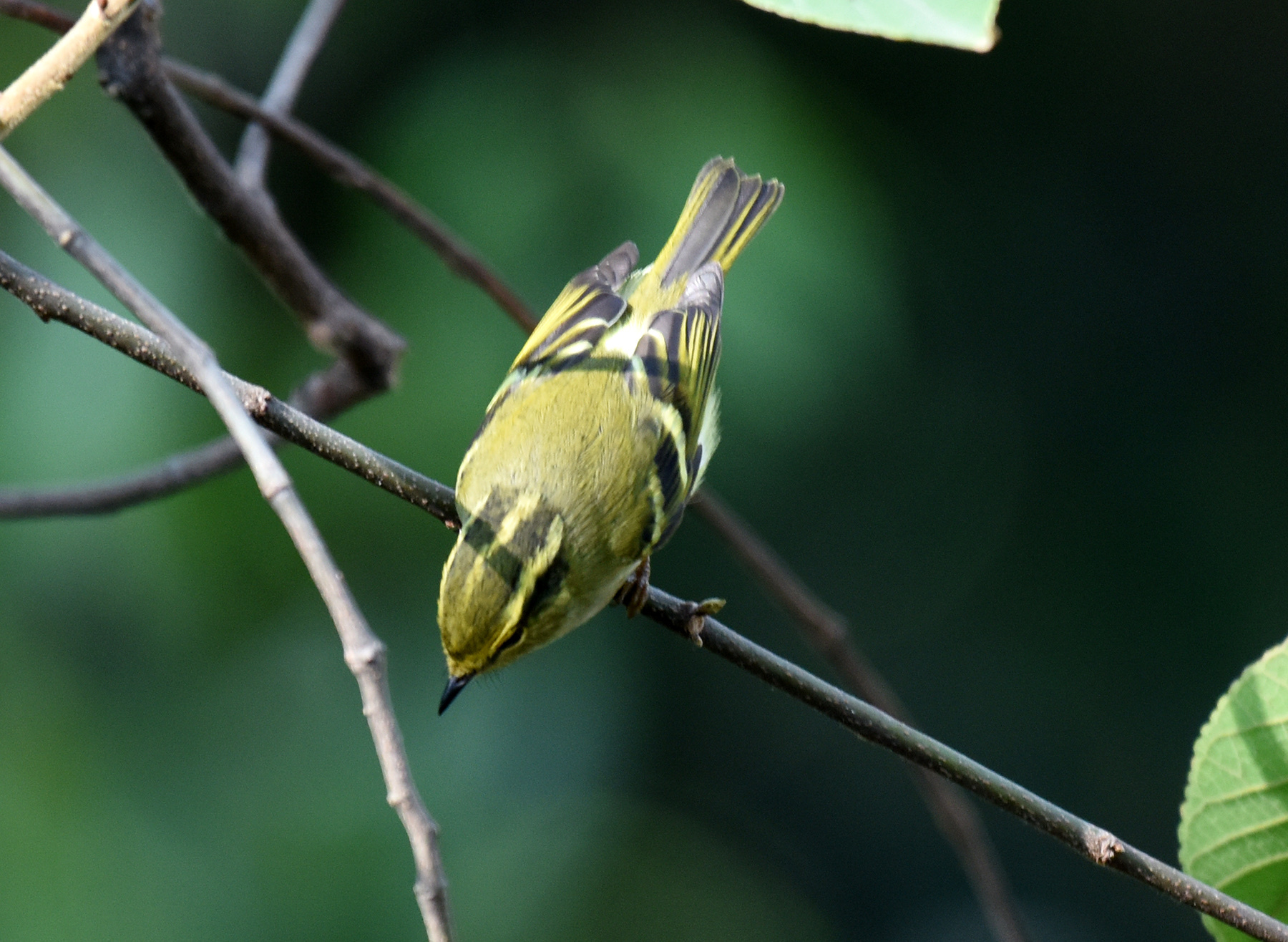
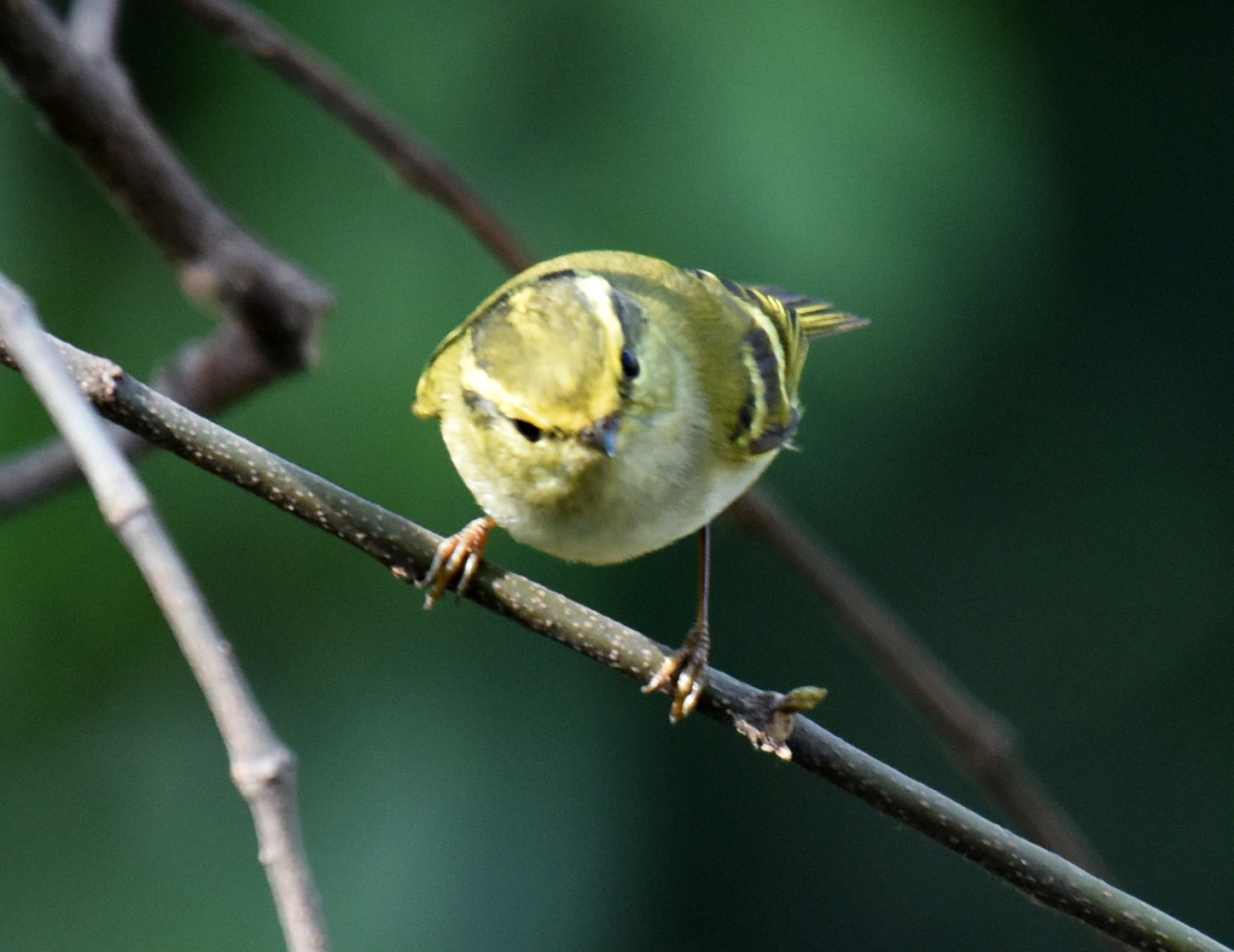
One of the smallest Palearctic warblers, measuring 9–10 cm (3.5–3.9 in) in length and weighing 4–7 grams (0.14–0.25 oz). It has a relatively large head, short tail, greenish upperparts, and white underparts. Distinctive features include a lemon-yellow rump, prominent pale yellow double wingbars, bold yellow supercilia, and a central crown stripe. The bill is blackish-brown with yellowish tinges on the cutting edges and lower mandible base; the iris is brown, and legs are brown with a green or greyish tinge. Sexes are similar, though non-breeding birds appear brighter green with broad fringes on flight feathers. Juveniles have a brown tinge to upperparts, greyish-white underparts, and duller supercilia.
Identification
Distinguished from similar Asian warblers by yellower head stripes, wingbars, and throat, as well as distinctive vocalizations. Unlike buff-barred and Brooks's leaf warblers, which are larger and duller with buff or white wingbars, this species has bright yellow markings. The ashy-throated warbler has grey head markings. Key field marks include the lemon-yellow rump (visible when low or hovering) and double yellow wingbars. The song is a strong, prolonged medley of whistles and trills lasting 2–4 seconds, while the call is a short, soft 'dju-ee'.
Distribution & Habitat
Breeds in coniferous taiga and mixed forests from the Altai Mountains east to the Sea of Okhotsk, northern Mongolia, northeast China, and possibly North Korea, at elevations up to 1,500–1,700 meters. Winters in subtropical south China, northern Thailand, and northeastern Indochina, utilizing broadleaf forests, scrub, and river valleys. Rare but annual in Japan. Increasingly regular in Europe during autumn, particularly in Britain, Sweden, Finland, and Denmark. Vagrant records exist in North Africa, western and central Asia, southeast Asia, and Alaska.
Behavior & Ecology
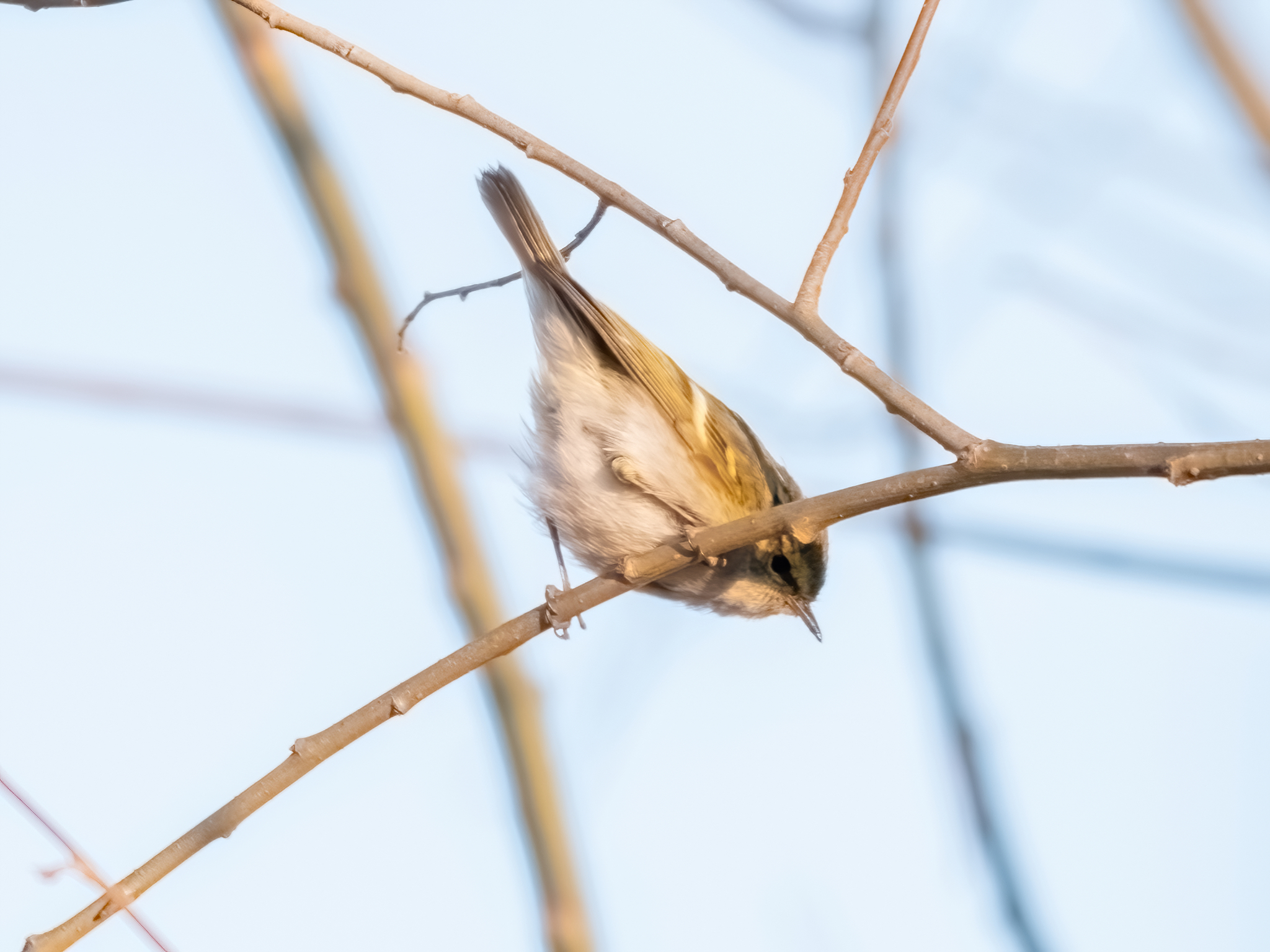
Insectivorous, feeding on adults, larvae, and pupae of small insects (flies, moths, aphids) and spiders. Forages in bushes and trees by picking items from leaves, catching prey in short flights, or hovering; often hangs upside-down. Joins mixed-species foraging flocks outside the breeding season. Nests from June to July in conifers or bushes, 0.5–10 meters above ground. The female builds a cup nest and incubates 4–6 blue-grey flecked white eggs for 12–13 days. Chicks fledge at 12–14 days, fed mainly by the female initially, then by both parents. A host to the oriental cuckoo.
Conservation
Evaluated as Least Concern by the IUCN due to a large range and stable population numbers. Breeding densities reach 35–50 pairs/km² in southeast Russia. The species does not approach thresholds for population decline criteria.
Source: Wikipedia · CC BY-SA 3.0
Taxonomy
- Order
- Passeriformes
- Family
- Phylloscopidae
- Genus
- Phylloscopus
Distribution
breeds coniferous forest and taiga of eastern Asia; winters to Indochina
Vocalizations
Data Sources
Species description from Wikipedia, licensed under CC BY-SA 3.0.
Bird images and sounds sourced from GBIF, contributed by citizen scientists worldwide under Creative Commons licenses.
Taxonomy data from AviList 2025.