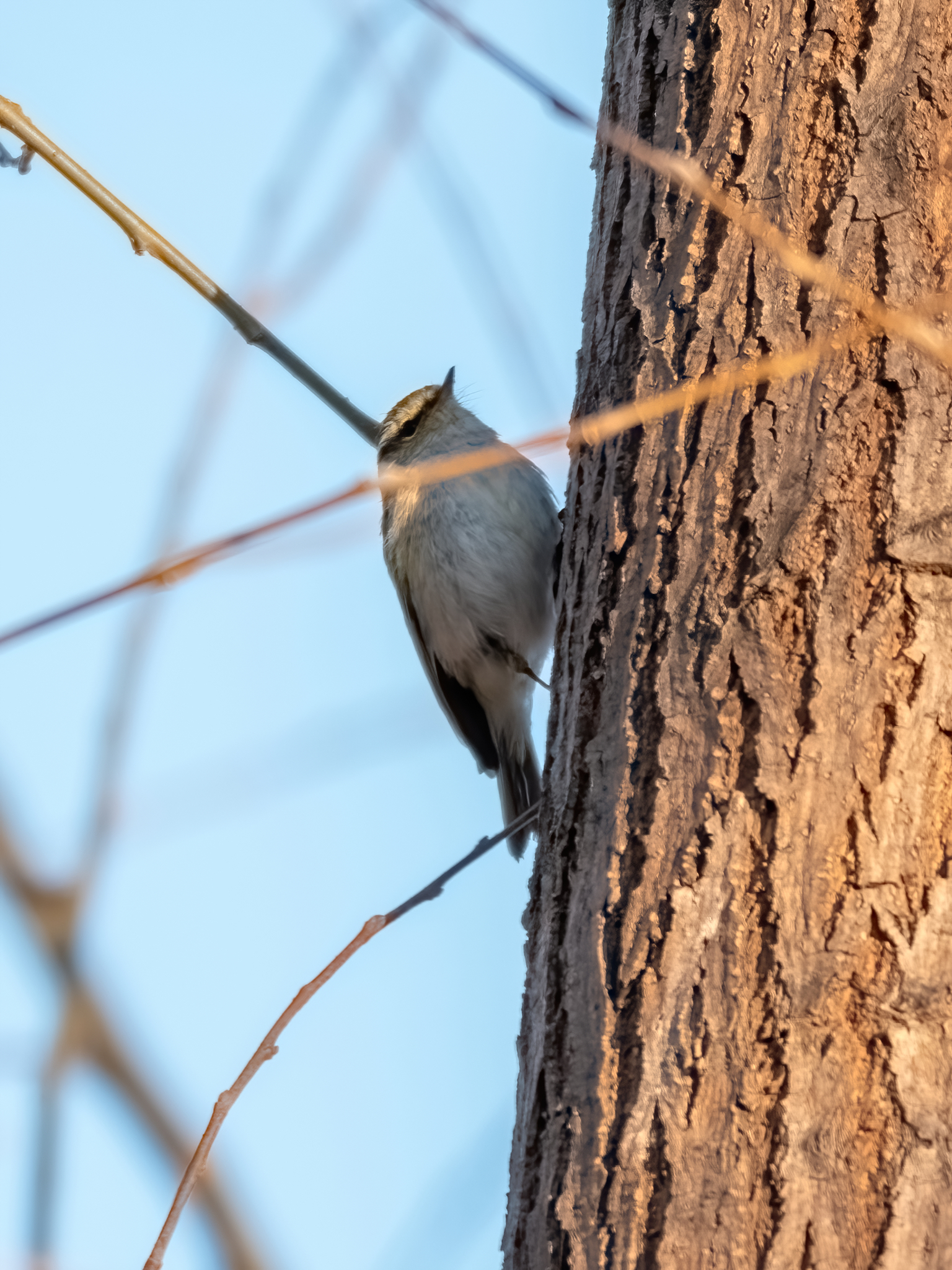
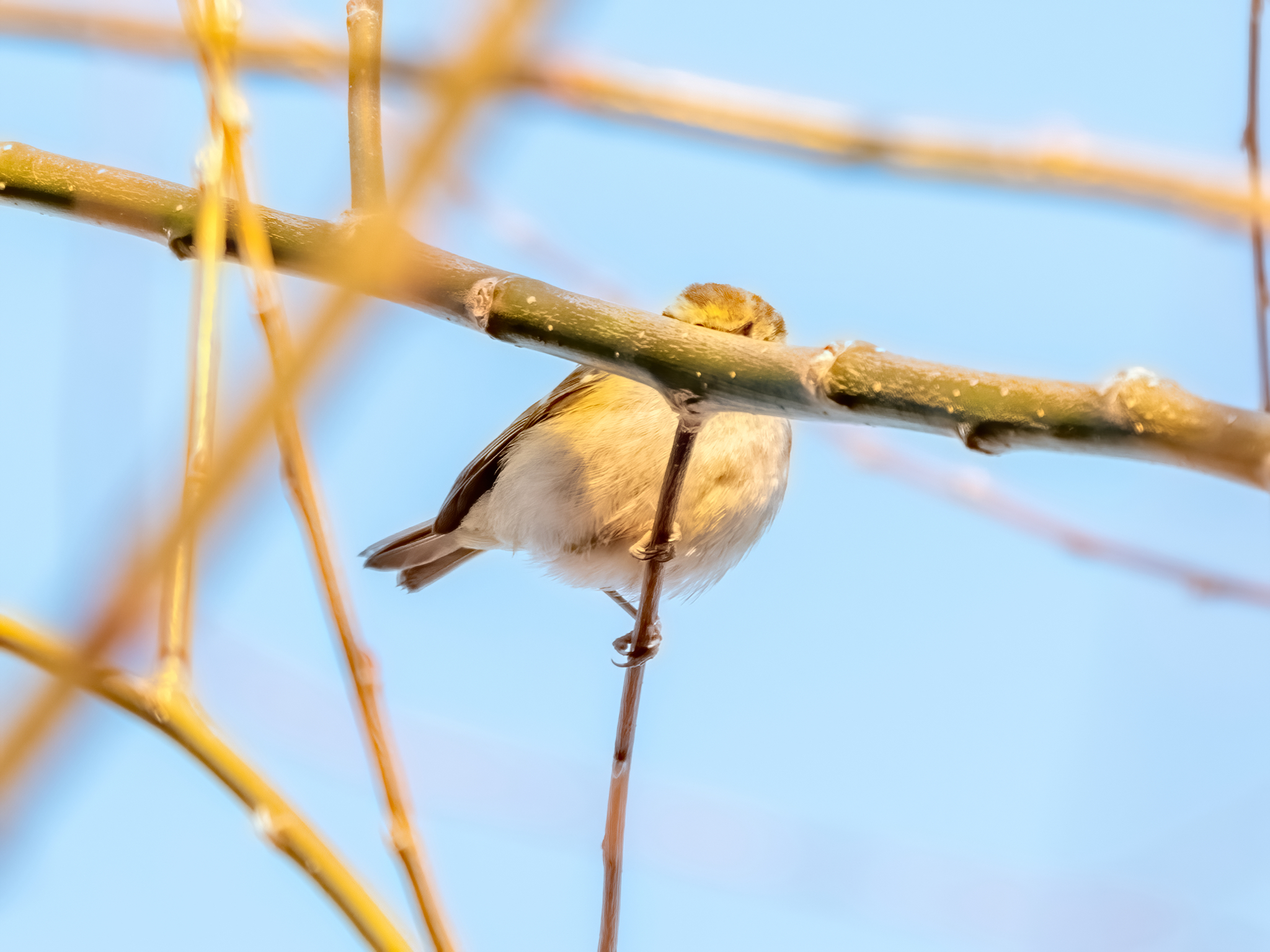
Pallas's Leaf Warbler
Phylloscopus proregulus
黄腰柳莺
Introduction
The Hume's Leaf Warbler is among the smallest Palearctic woodland birds, with a body length of 9-10 cm. It breeds in the boreal forests of southern Siberia, extending east to northern Mongolia and northeast China, where it favors coniferous and mixed forest habitats at elevations up to 1,700 meters. In autumn, it migrates to wintering grounds in subtropical south China and northern Thailand. Some individuals now overwinter in the mild oceanic climate of northwestern Europe. It forages actively among foliage, frequently hovering while searching for insects. The species is characterized by a yellow rump, yellow supercilia, and double wingbars. Its vocalizations are the most reliable feature for distinguishing it from similar Phylloscopus species. It was formerly classified in the genus Reguloides but is now placed in Phylloscopus.
Description
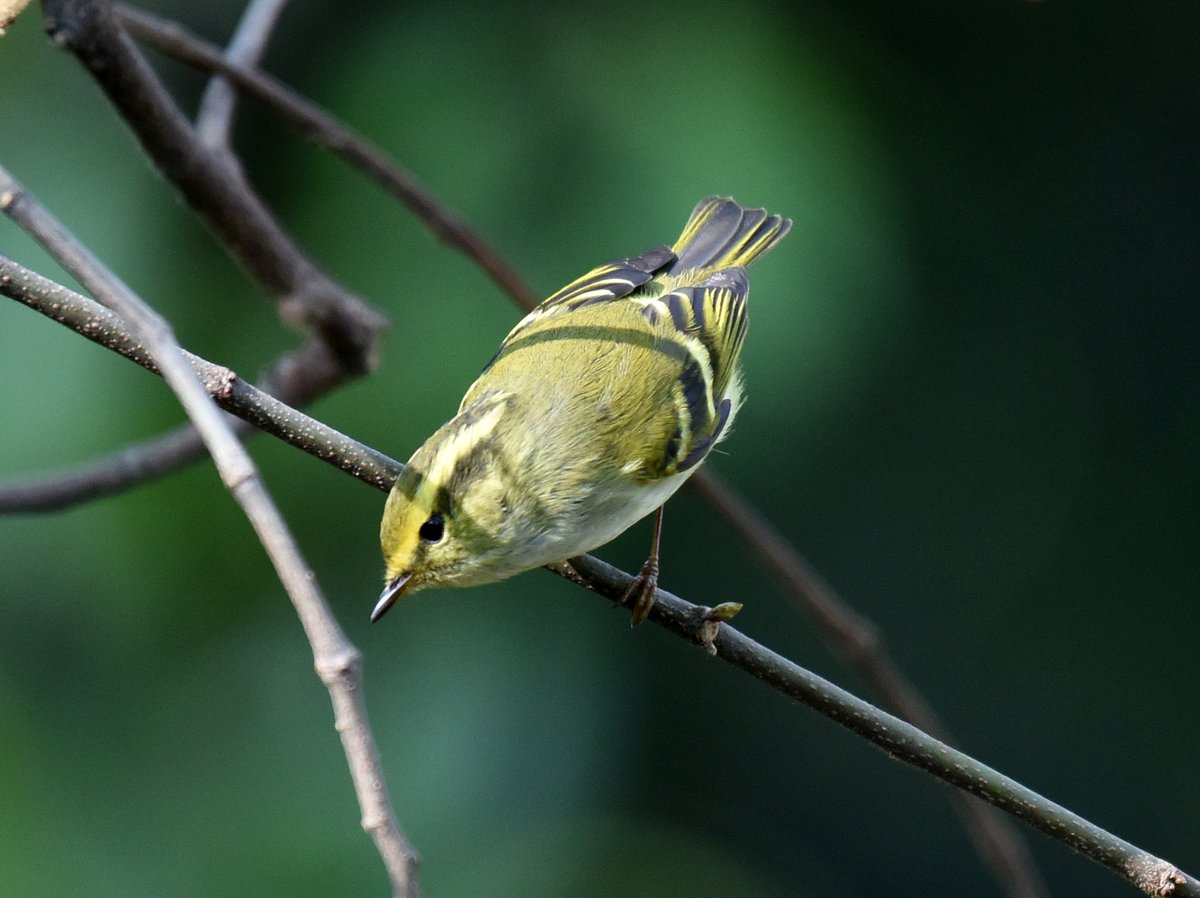
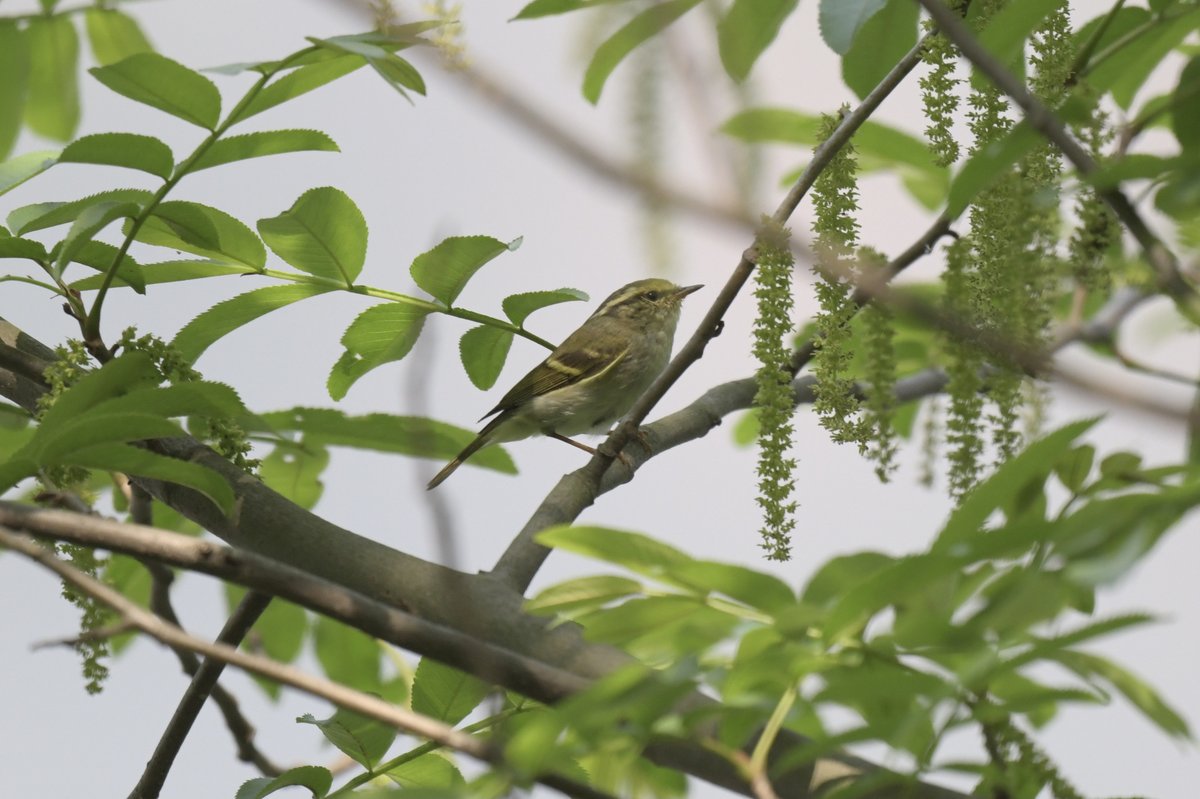
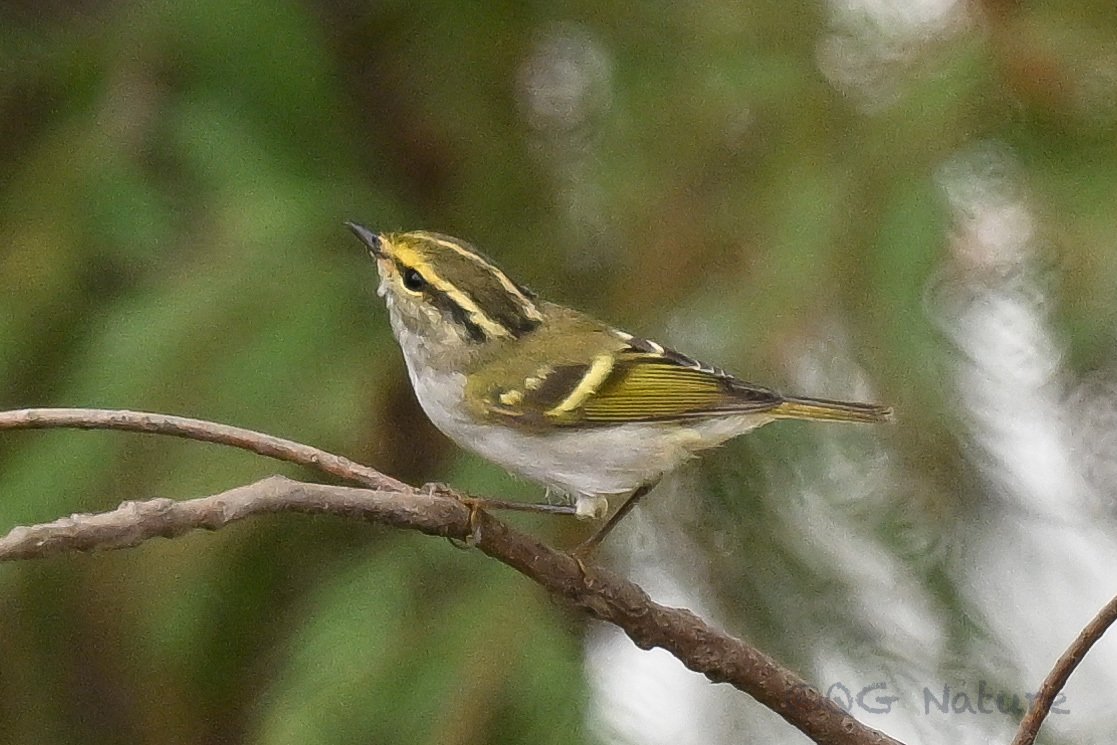
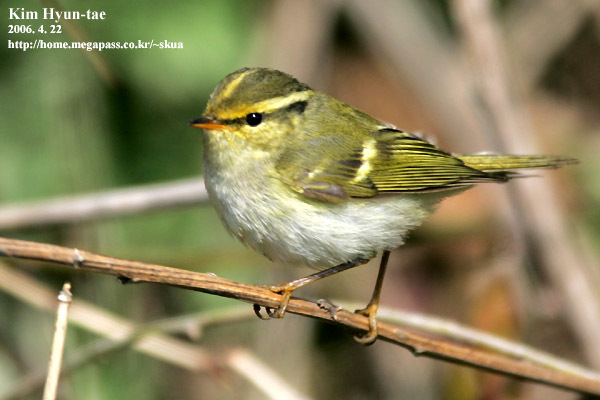
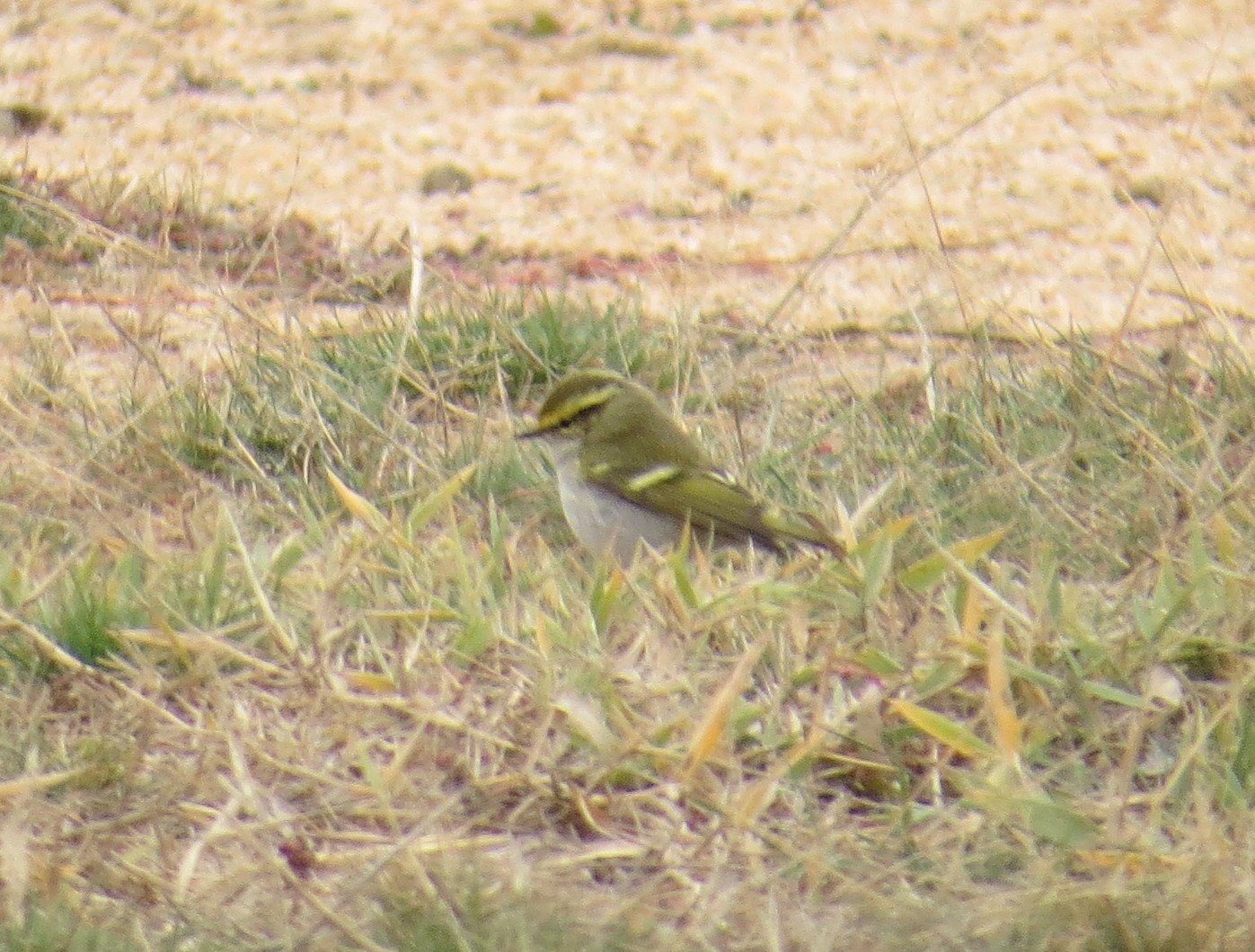
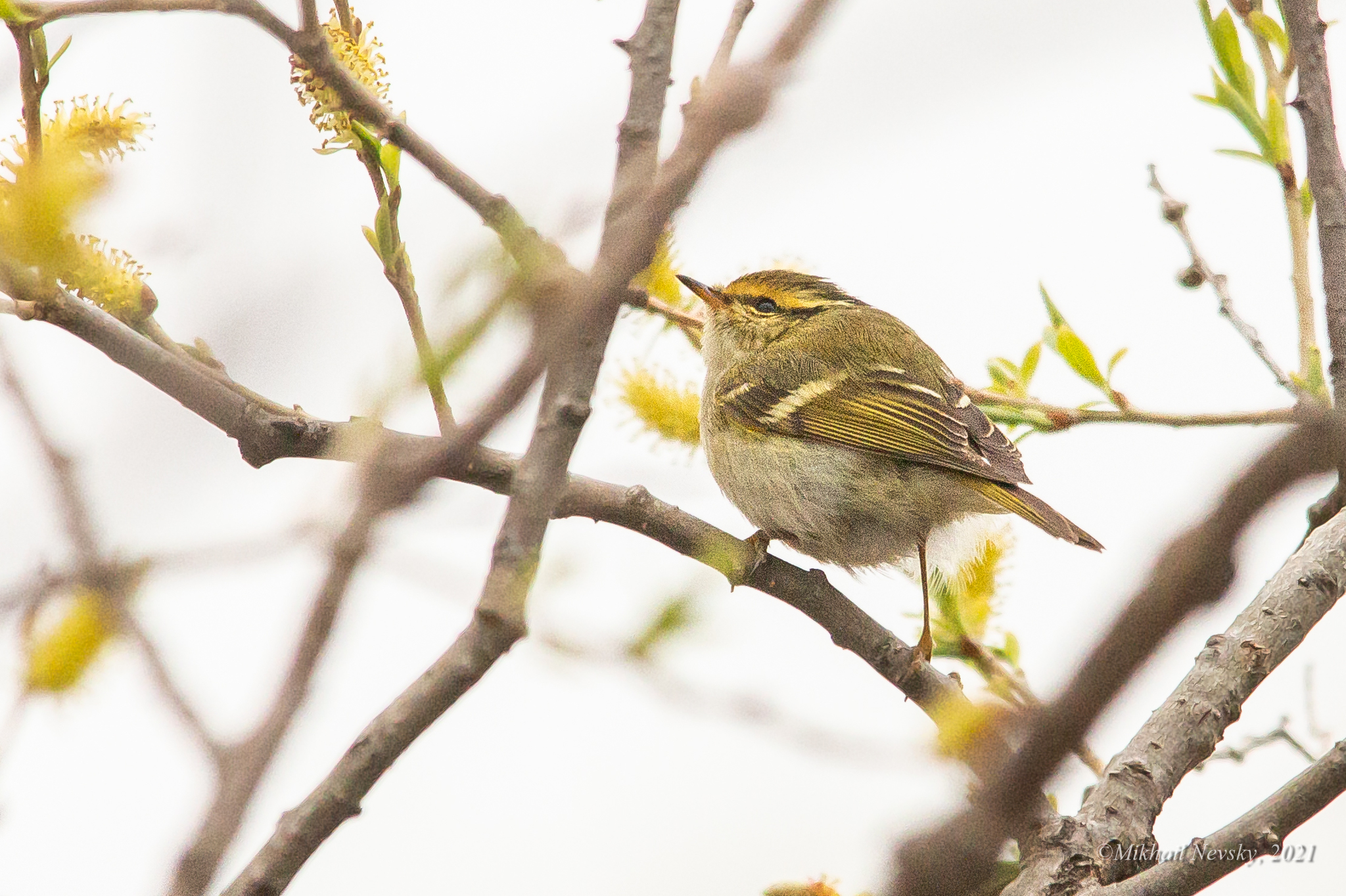
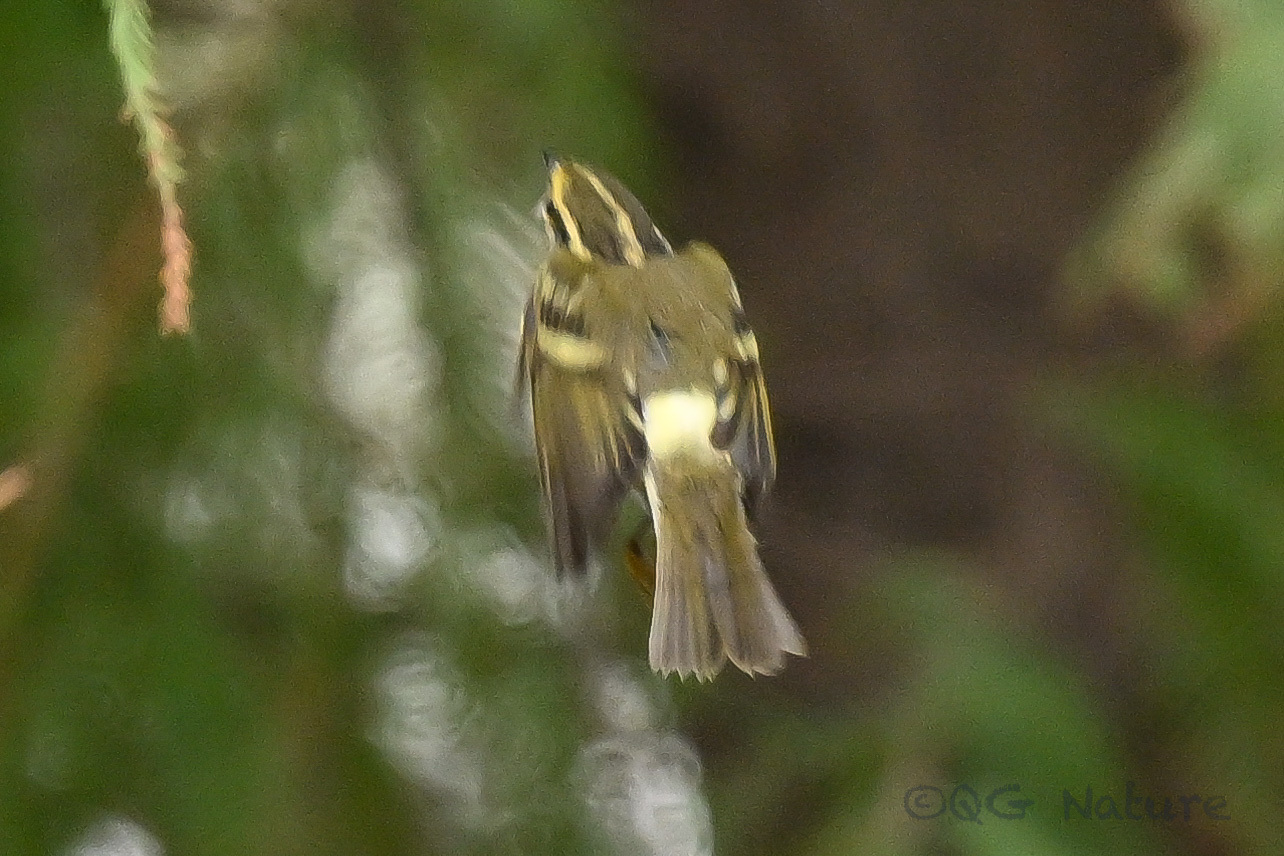
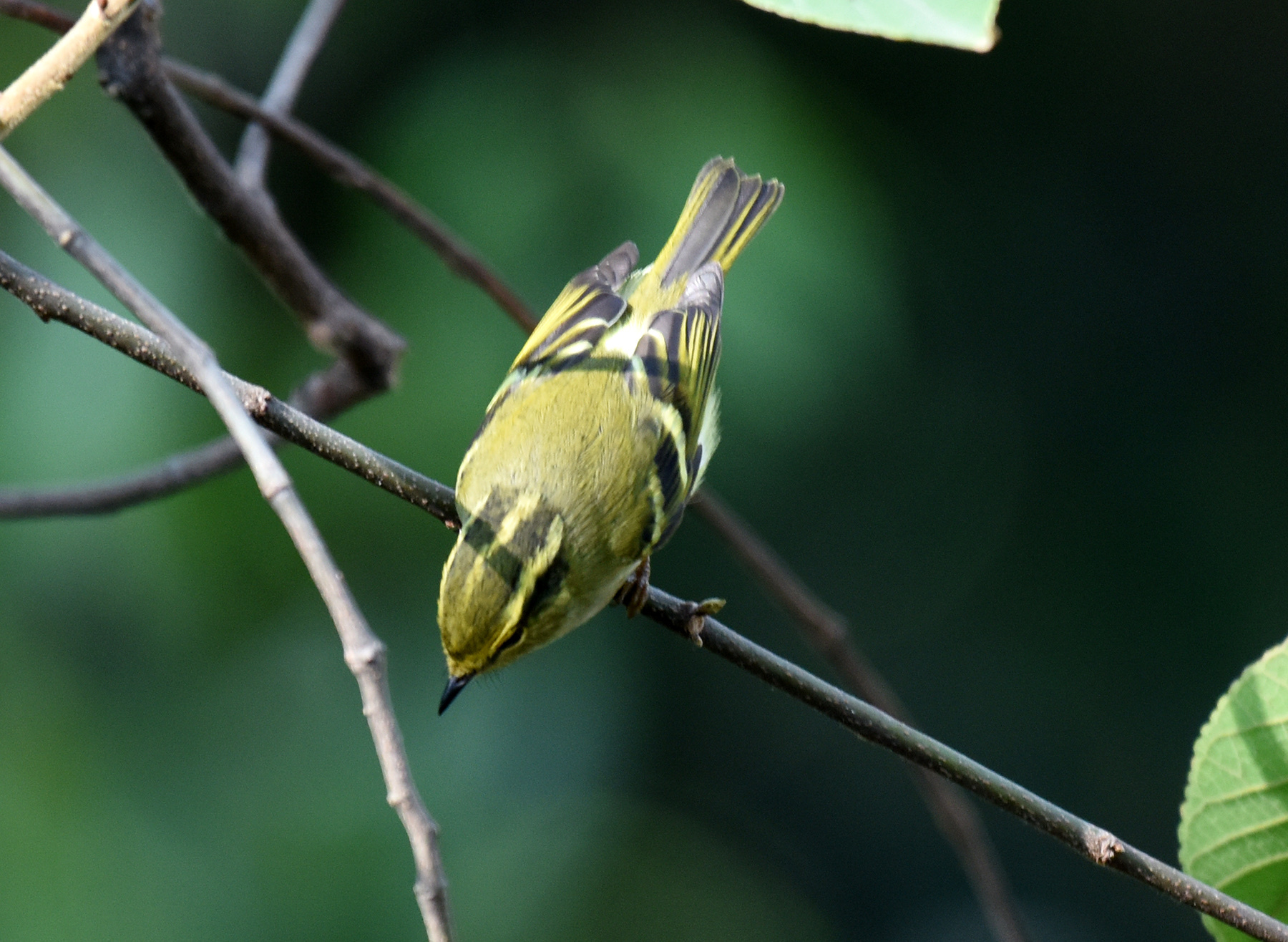
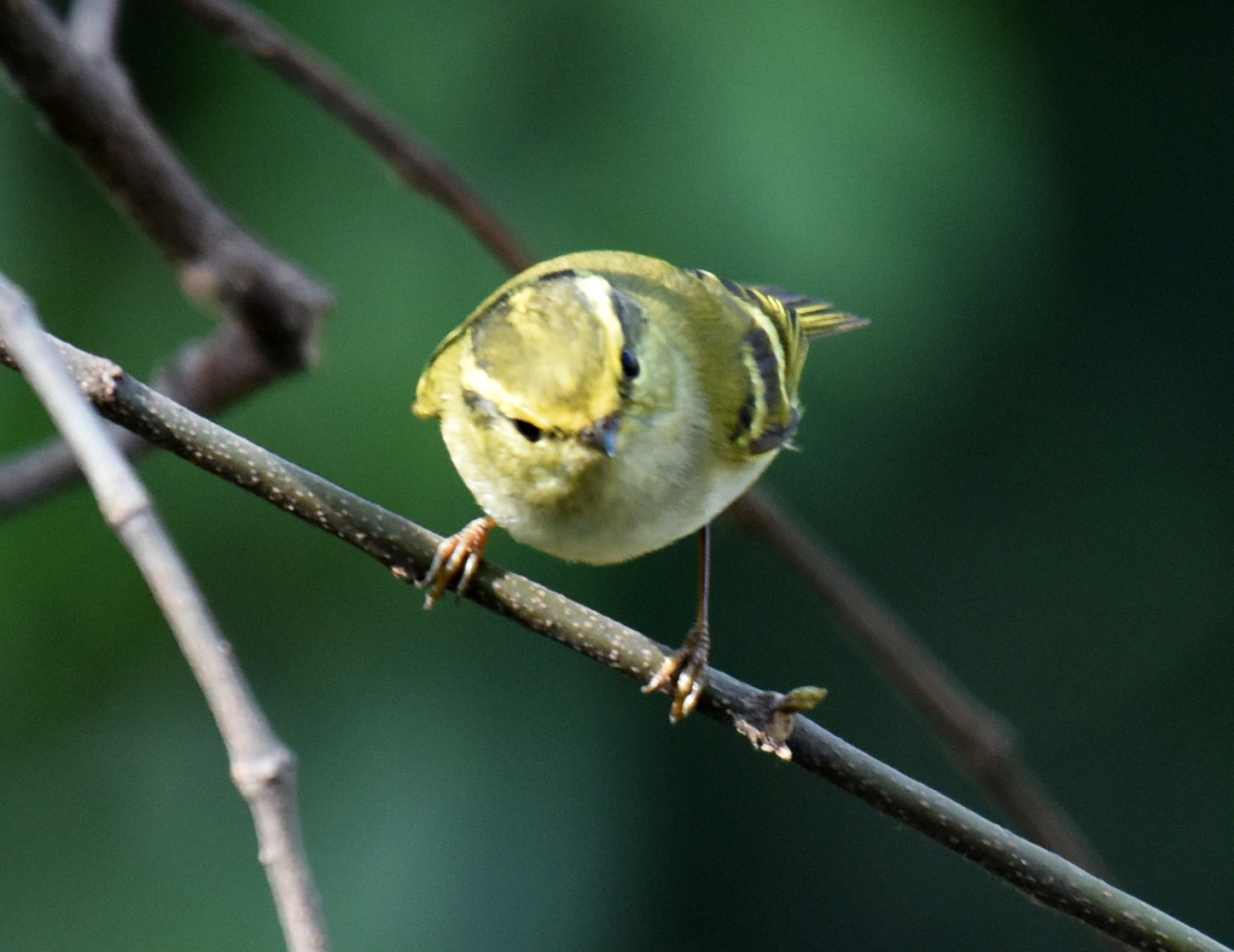
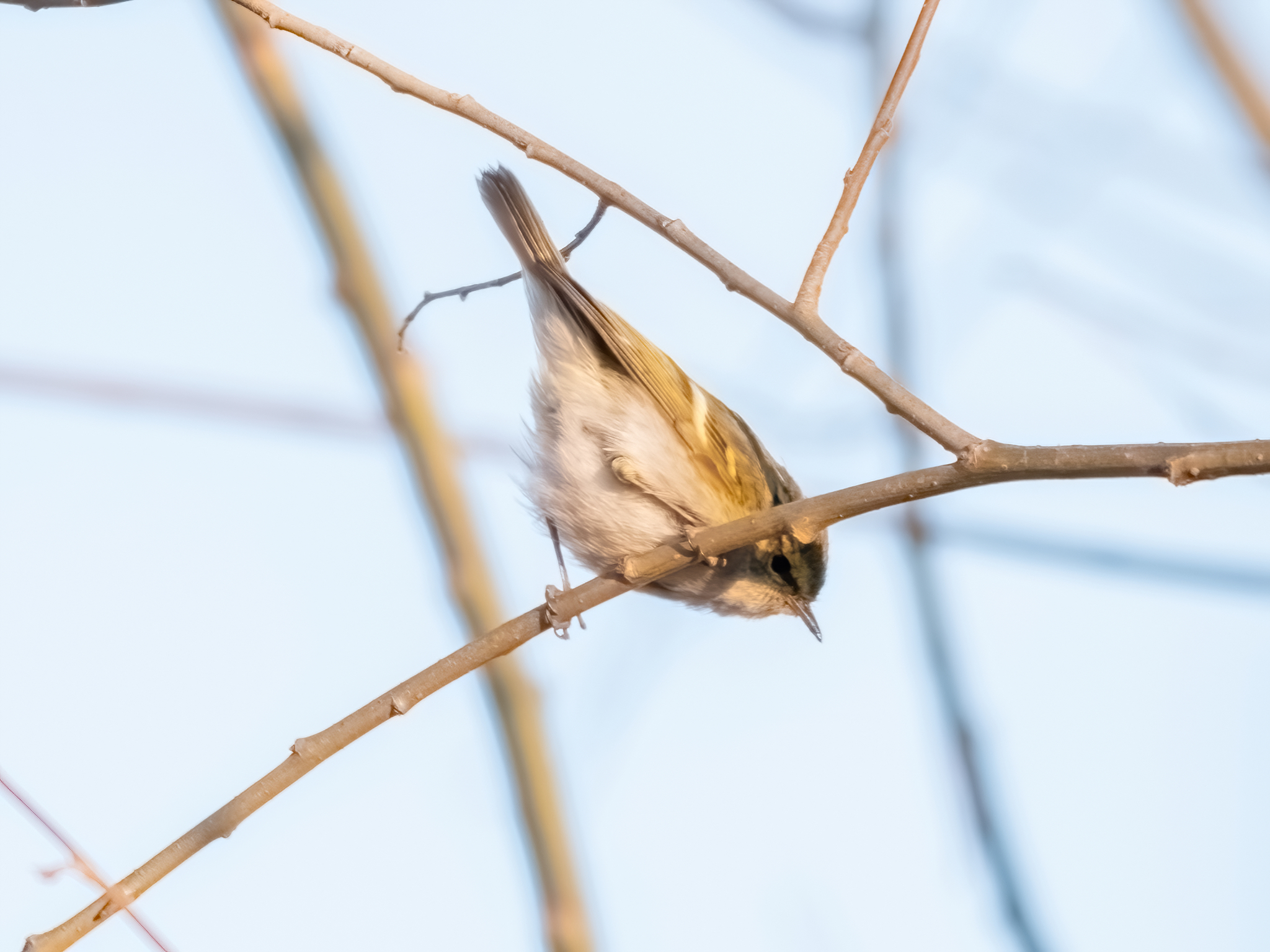
Among the smallest Palearctic warblers, this species measures just 9-10 centimeters in length and weighs a mere 4-7 grams, making it slightly smaller than a yellow-browed warbler and barely larger than a goldcrest. It possesses a proportionately large head and short tail. The upperparts are greenish, contrasting with white underparts, while the species displays its most diagnostic features: a lemon-yellow rump, bold yellow double wingbars on the wing covert feathers, prominent yellow supercilia, and a central yellow crown stripe. The bill is blackish-brown with yellowish cutting edges, the iris is brown, and the legs are brown with a green or greyish tinge. The sexes appear similar, though non-breeding birds are somewhat brighter green above with broad, bright fringes to the flight feathers. Adults undergo a complete post-breeding moult in August or September before migration.
Identification
The combination of yellow rump, double wingbars, supercilium, and crown stripe distinguishes this species from similar Asiatic warblers. It differs from its former subspecies by yellower head stripes, wingbars, and throat, plus its distinctive vocalizations. The buff-barred and Brooks's leaf warblers are larger, duller green above, less strongly marked, and possess buff or white wing bars respectively rather than yellow. The ashy-throated warbler shows grey head markings, face, and throat with pale yellow underparts. In the field, watch for the constantly active behavior, frequent hovering, and tendency to hang upside-down while foraging. The yellow rump is most visible when birds are low in vegetation or hovering, otherwise proving difficult to observe.
Distribution & Habitat
Breeds across Siberia from the Altai Mountains east to the Sea of Okhotsk, northern Mongolia, northeast China, and possibly North Korea. Its breeding habitat consists of coniferous taiga forests including fir, spruce, pine, and larch, or mixed forest with willow and alder, from sea level to 1,500-1,700 meters. The species is strongly migratory, wintering mainly in subtropical south China, northern Thailand, and northeastern Indochina, with rare annual occurrences in Japan. In recent decades, it has become a regular autumn visitor to Europe, particularly Britain, Sweden, Finland, and Denmark, where increasing numbers overwinter in the mild oceanic climate. Vagrants have been recorded in Alaska, north Africa, western and central Asia, and southeast Asia.
Behavior & Ecology
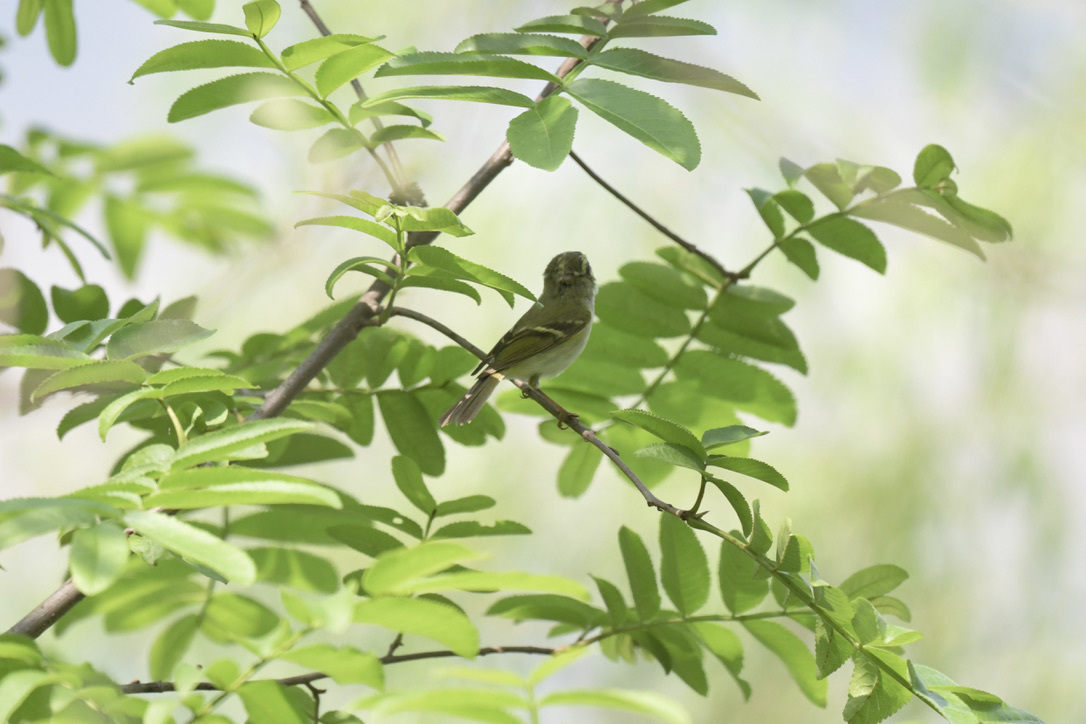
This active forager constantly moves through bushes and trees, picking insects from leaves or catching prey in short flights or while hovering. It is not wary but proves difficult to observe in thick foliage due to its unobtrusive arboreal lifestyle. The diet consists entirely of small insects including flies, moths, and aphids, plus their larvae, pupae, and spiders. Outside the breeding season, it joins mixed-species foraging flocks alongside tits, goldcrests, and other warblers. The song is delivered from a concealed perch near treetops, a strong prolonged medley of whistles and trills lasting 2-4 seconds, reminiscent of a canary. The call is a short, soft dju-ee. Breeding occurs from June to July; the female builds a cup nest in a conifer, incubates 4-6 eggs for 12-13 days, and both parents feed the fledglings for about a week after they leave the nest. It serves as a host for the oriental cuckoo.
Conservation
Classified as Least Concern by the IUCN due to its large range and presumed stable population numbers. Global population trends have not been quantified, but the species does not approach the thresholds for population decline criteria. It is widespread, common, and locally abundant throughout Russia and northeast China, with breeding densities reaching 35-50 pairs per square kilometer in southeast Russia and only slightly lower figures elsewhere in Siberia. The species is also locally common in parts of its southeast Asian wintering grounds. No significant threats have been identified, and it maintains healthy populations across its extensive range.
Culture
The species holds little documented cultural significance beyond its taxonomic history. The English name commemorates German zoologist Peter Simon Pallas, who first formally described the species after discovering it on the Ingoda River in Siberia in May 1772. The scientific name proregulus derives from Greek, meaning 'close to regulus,' referencing its resemblance to the goldcrest. While the species was once considered to comprise several subspecies, taxonomic revisions based on vocalizations and DNA analysis have resolved it as a monotypic species, with the former subspecies now recognized as separate species including the lemon-rumped warbler, Sichuan leaf warbler, Gansu leaf warbler, and Chinese leaf warbler.
Source: Wikipedia · CC BY-SA 3.0
Taxonomy
- Order
- Passeriformes
- Family
- Phylloscopidae
- Genus
- Phylloscopus
- eBird Code
- palwar5
Distribution
breeds coniferous forest and taiga of eastern Asia; winters to Indochina
Vocalizations
Data Sources
Species description from Wikipedia, licensed under CC BY-SA 3.0.
Bird images and sounds sourced from GBIF, contributed by citizen scientists worldwide under Creative Commons licenses.
Taxonomy data from AviList 2025.