Passeriformes / Phylloscopidae / Phylloscopus
Yellow-browed Warbler
Phylloscopus inornatus · 黄眉柳莺
Introduction
A leaf warbler (family Phylloscopidae) breeding in the east Palearctic. It is strongly migratory, wintering mainly in tropical South Asia and South-east Asia, with small numbers in western Europe. The species is monotypic following the split of Hume's leaf warbler. It is not considered threatened by the IUCN.
Description
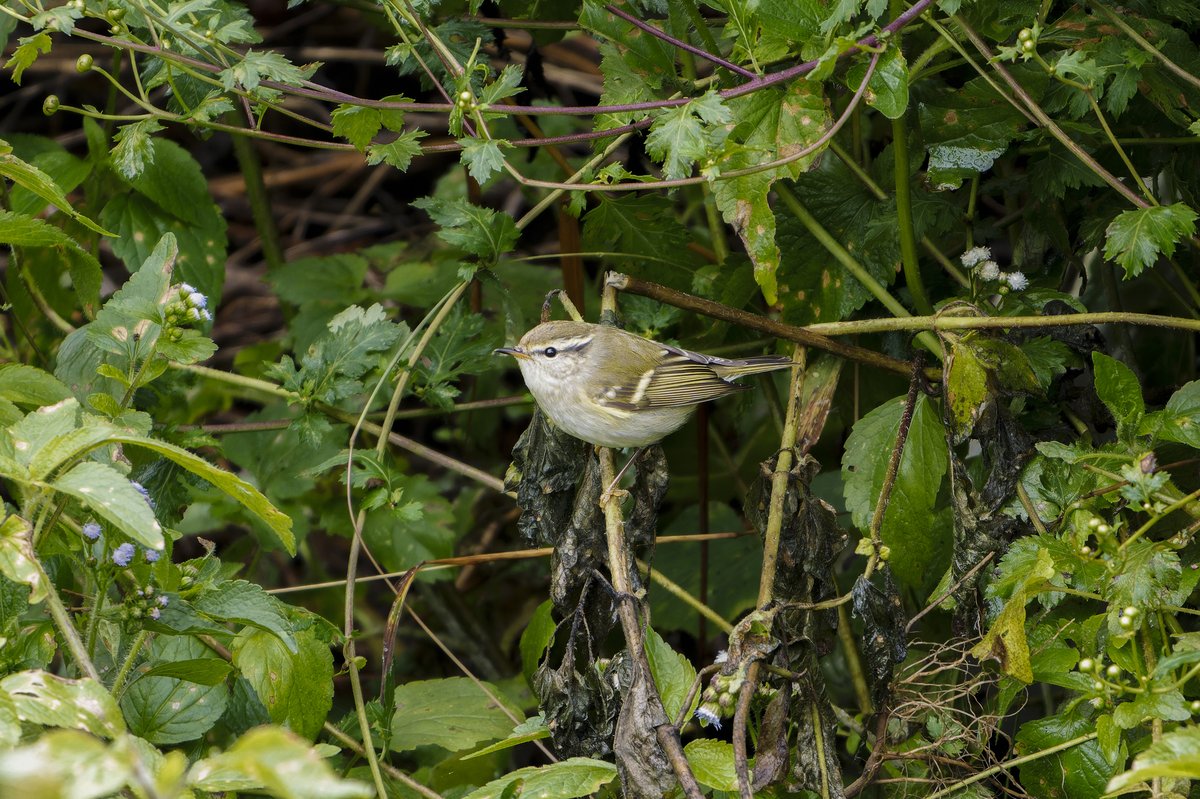
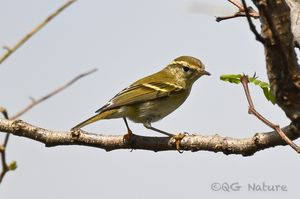
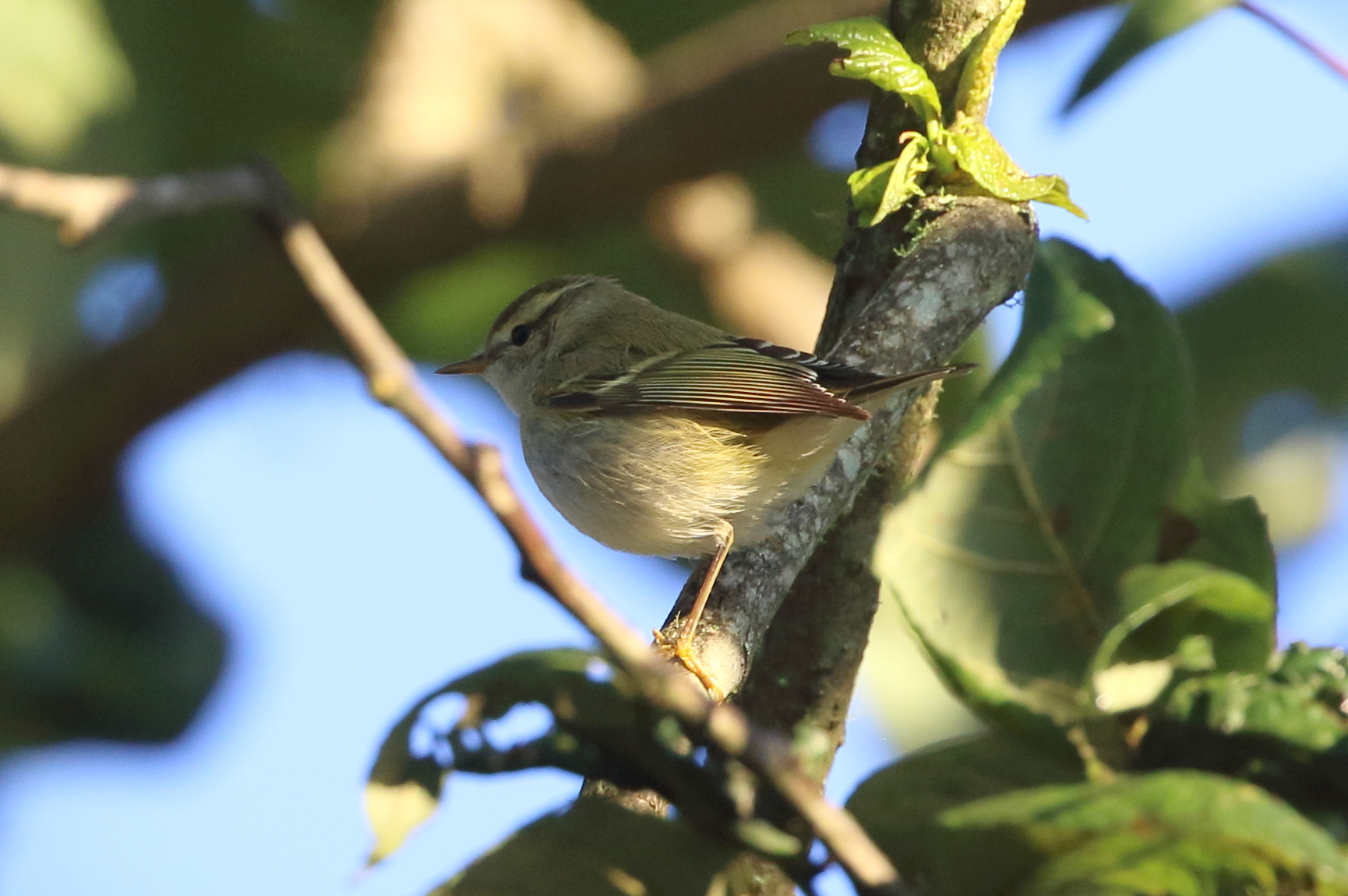
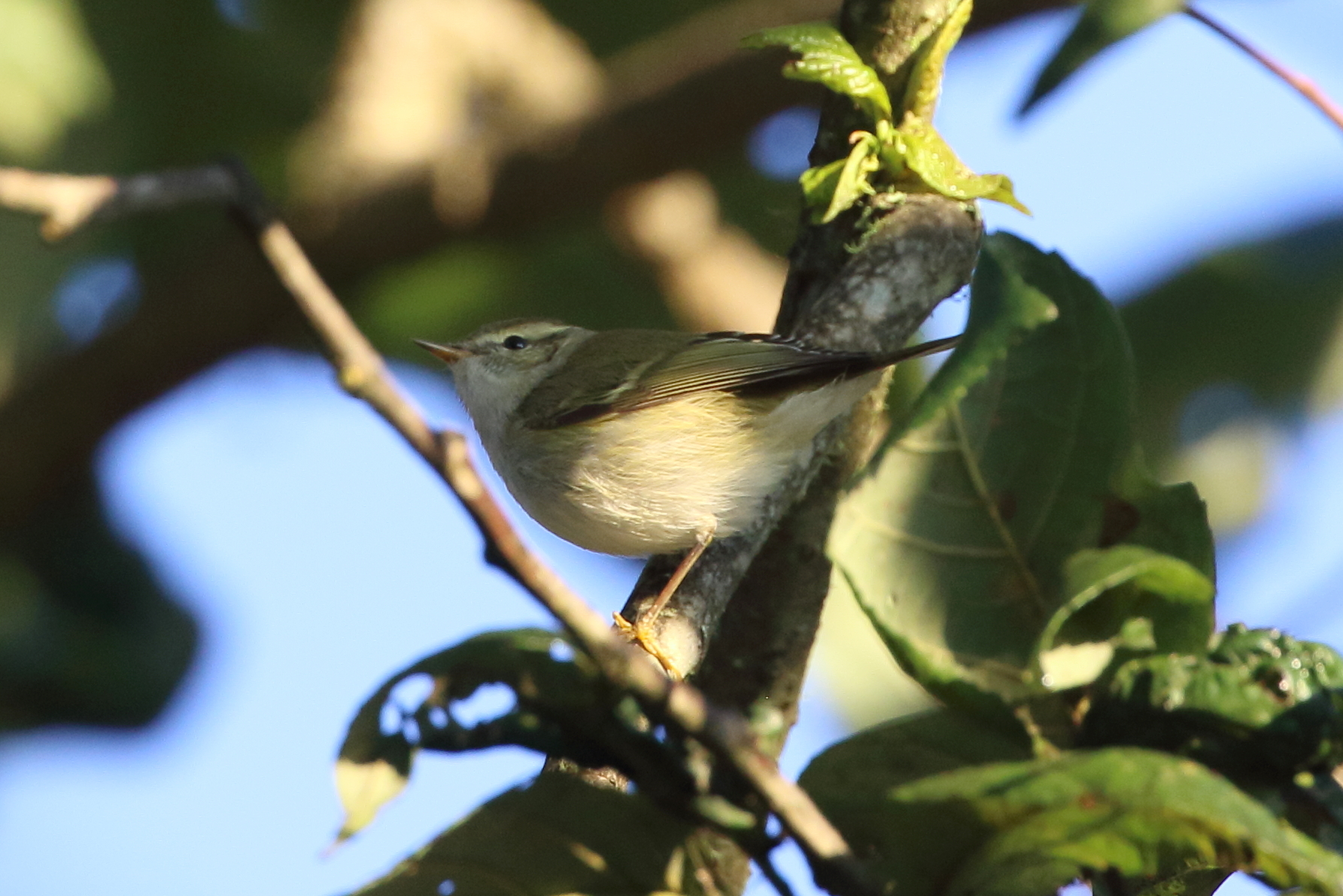
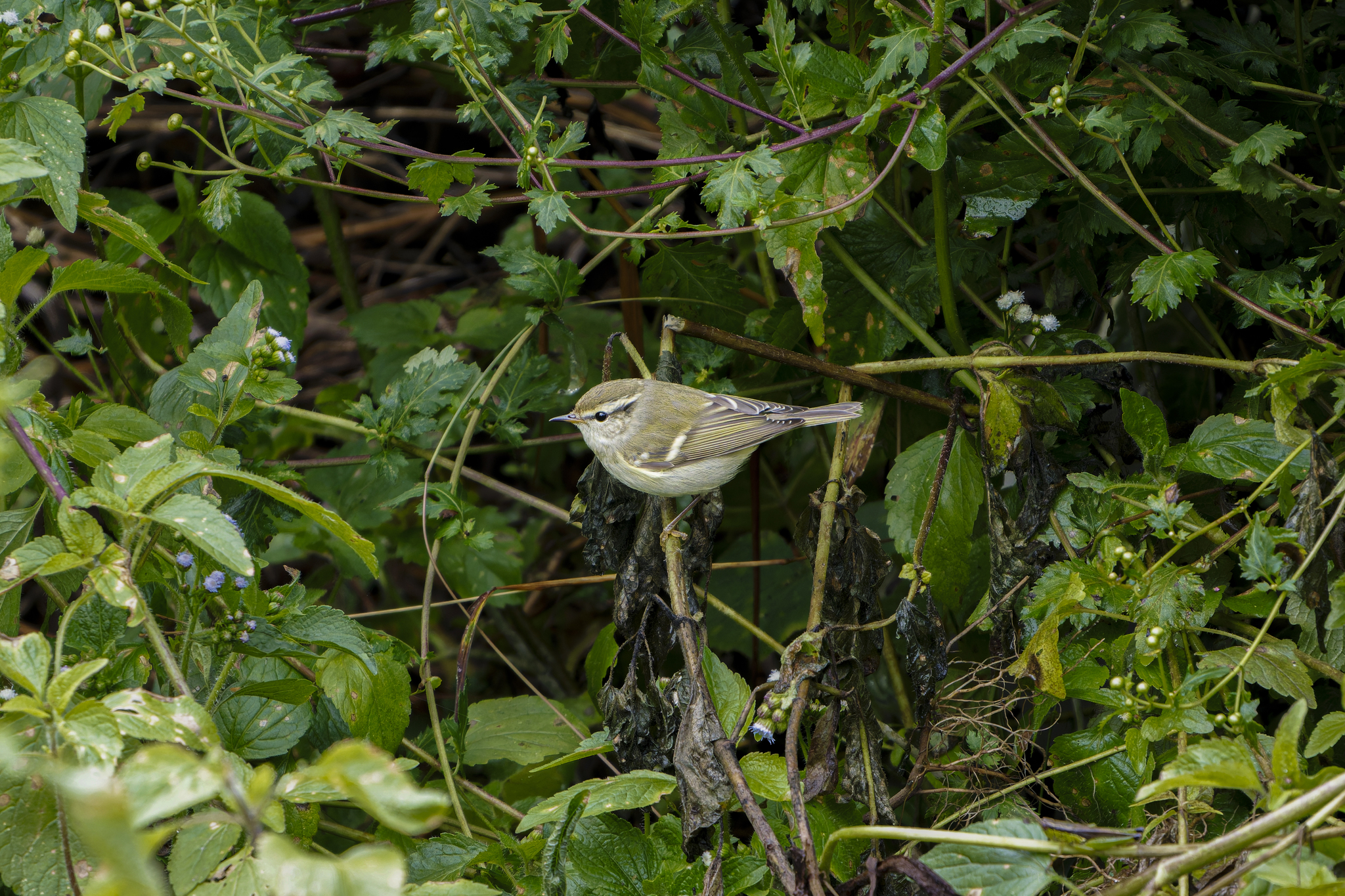
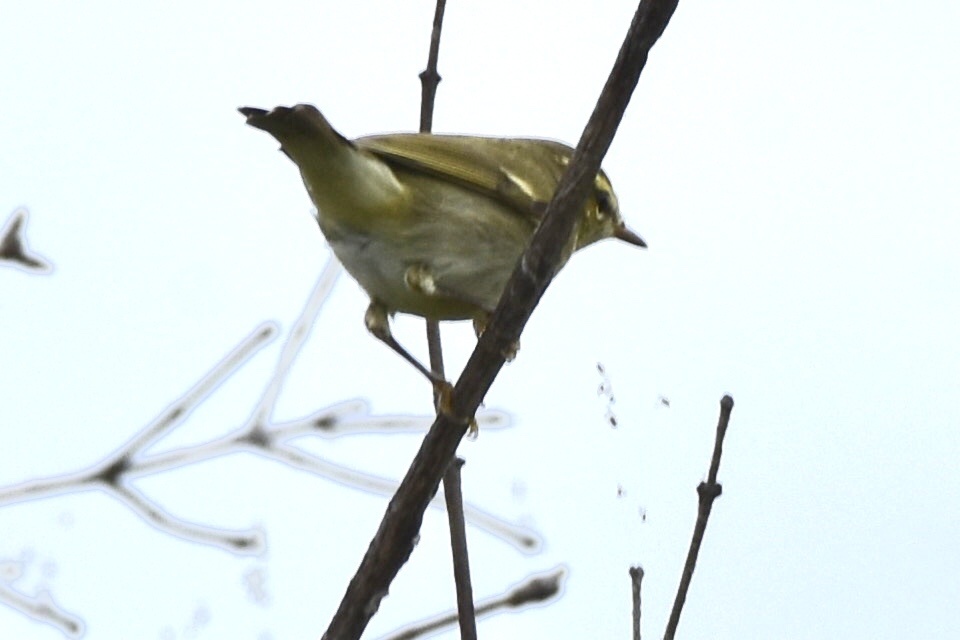
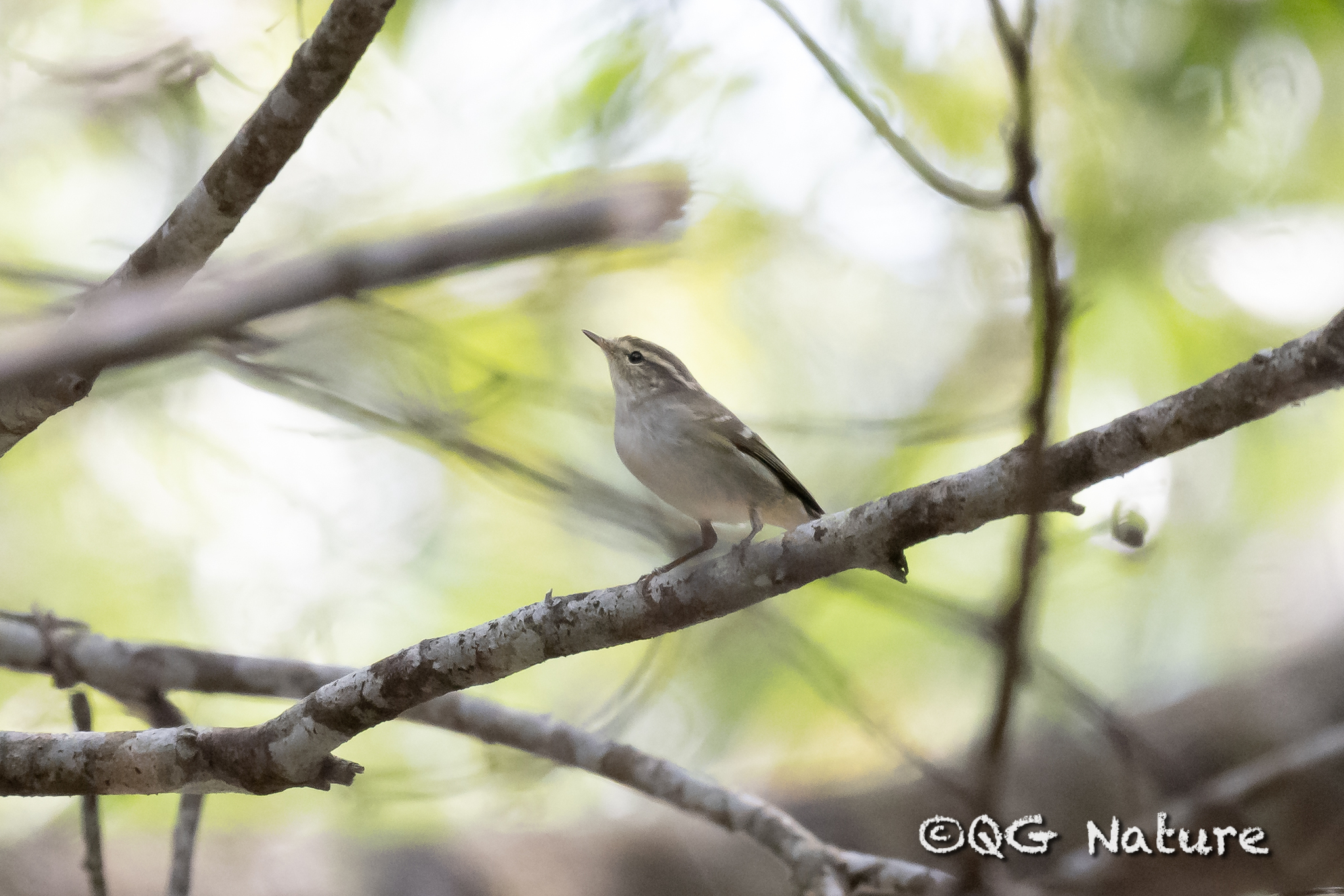
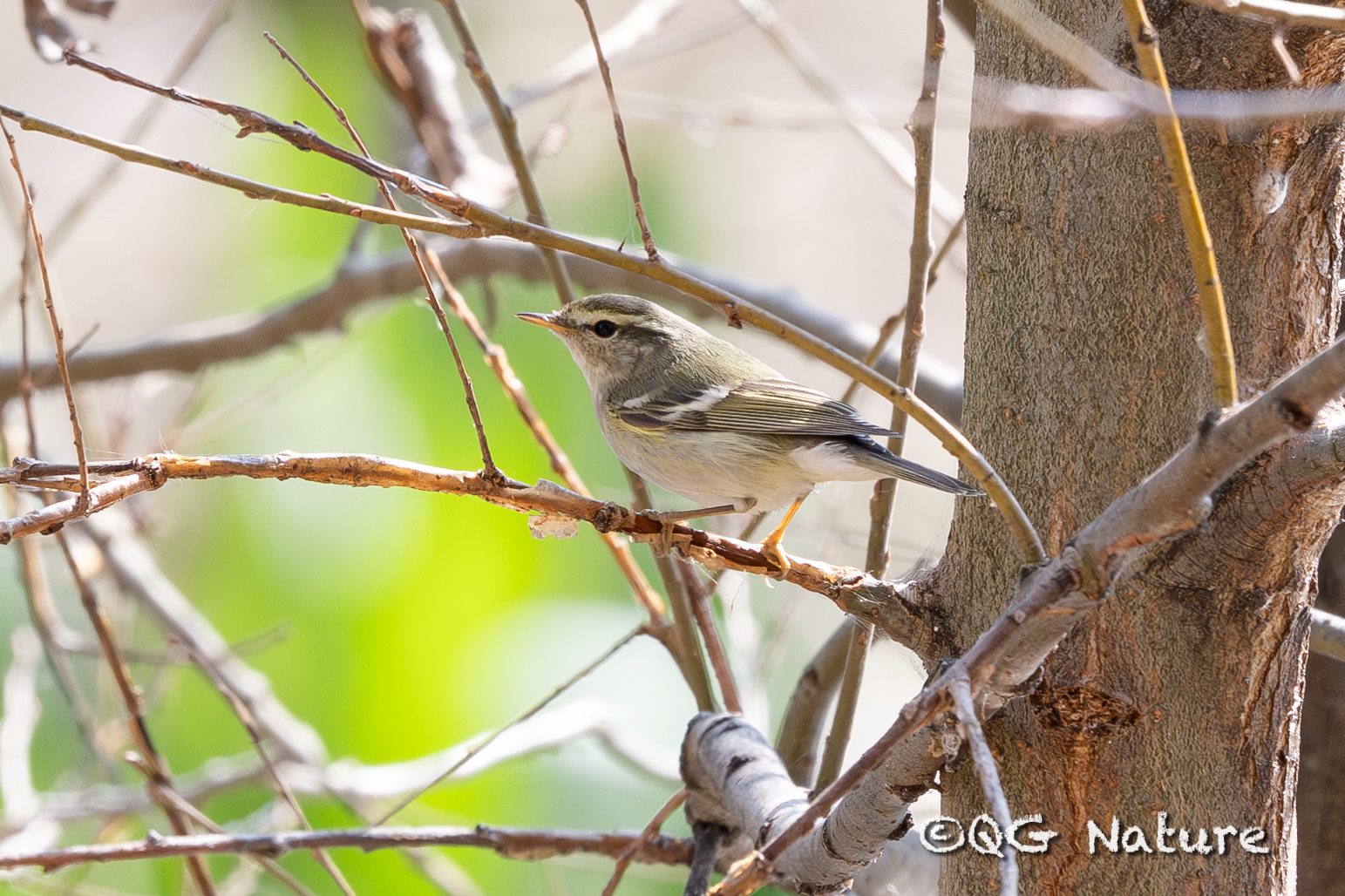
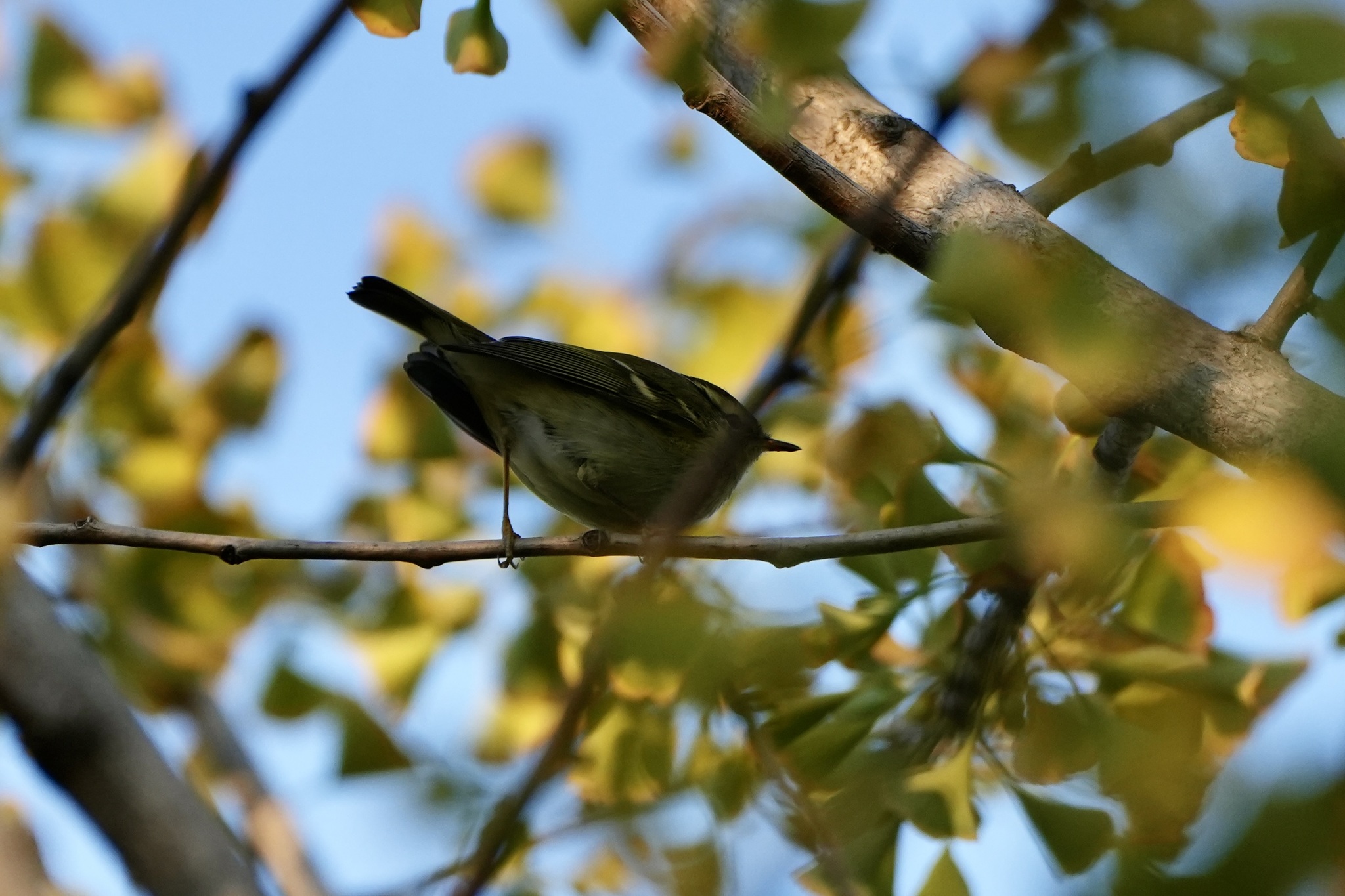
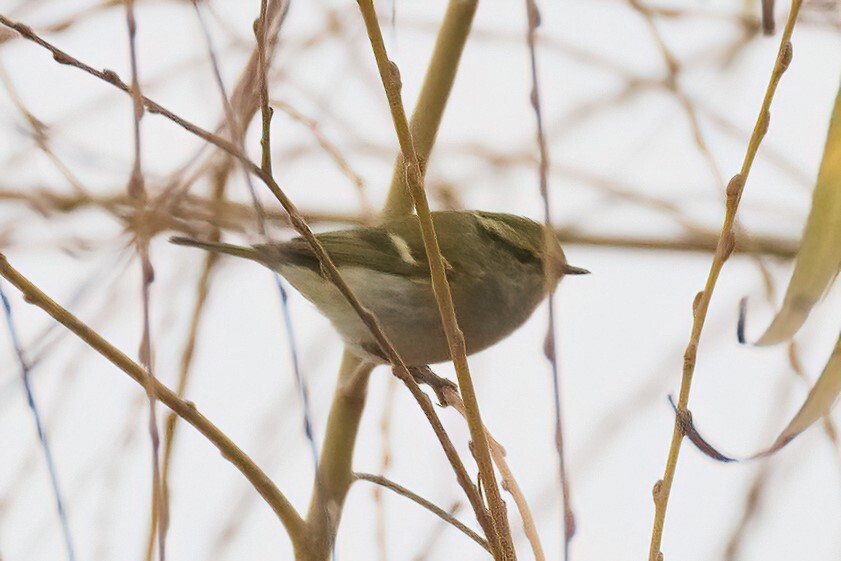
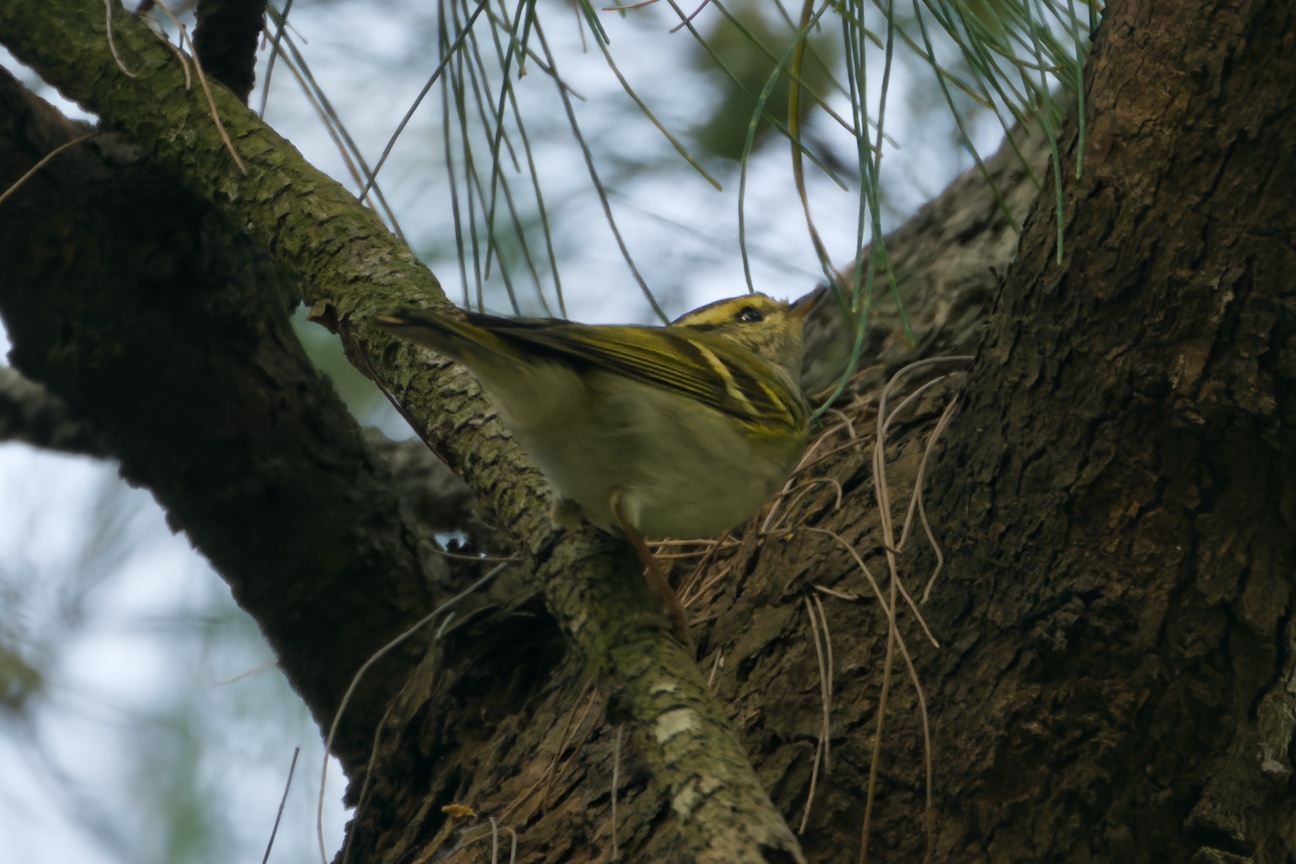
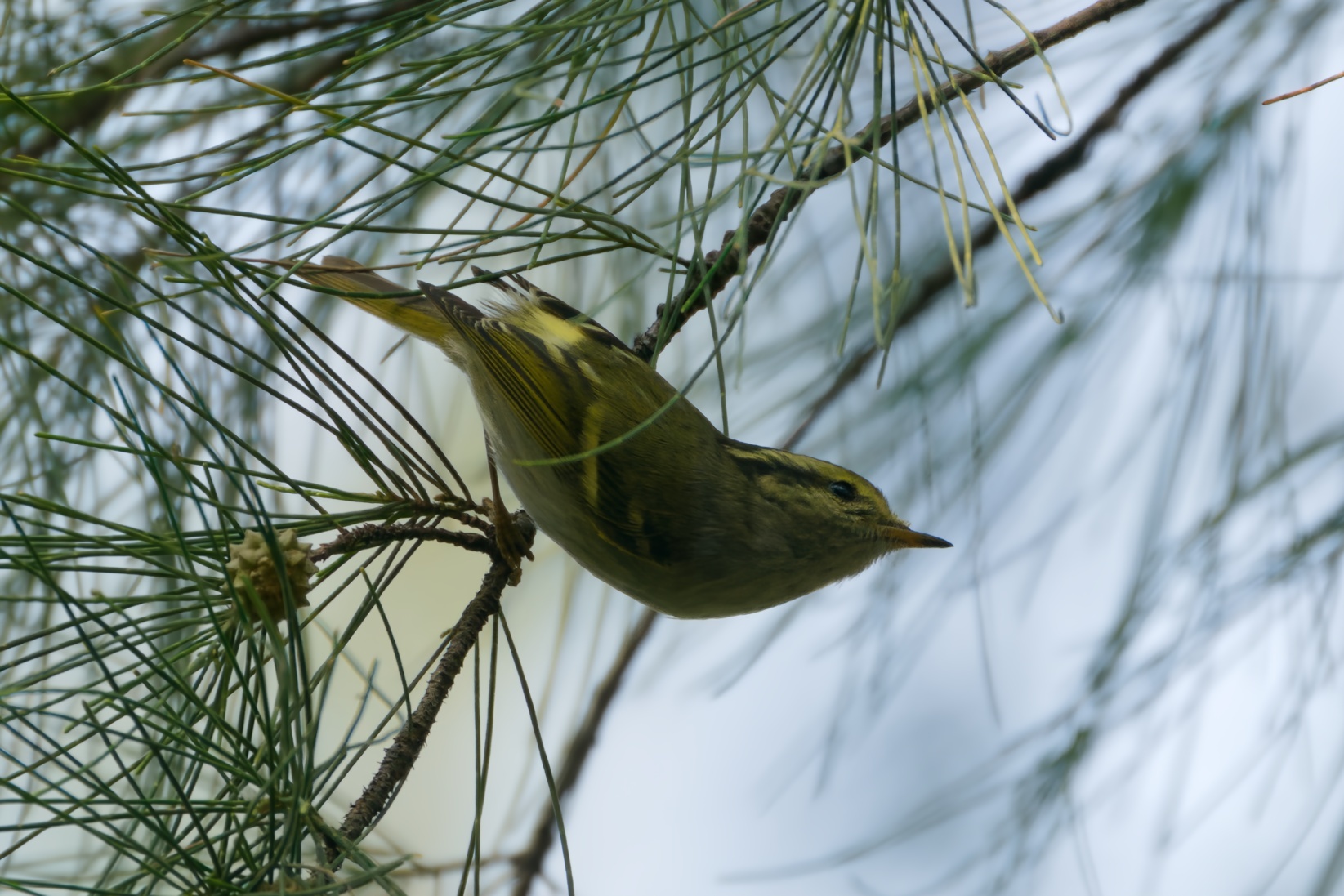
One of the smaller Old World warblers, measuring 9.5–11 cm in length and weighing 4–9 g. It has overall greenish upperparts and white underparts. Distinctive features include a long yellow supercilium, prominent double wing bars formed by yellowish-white tips to the wing covert feathers (a long bar on the greater coverts and a short bar on the median coverts), and yellow-margined tertial feathers. Some individuals show a faint paler green central crown stripe, though many do not.
Identification
Distinguished from Hume's leaf warbler by brighter colors, a distinct second wing bar, and pale legs and lower mandible; Hume's has duller colors, a faint second wing bar, and dark legs/lower mandible. Songs and calls are distinct, with this species having a piercing, often disyllabic 'tseeweest' call compared to Hume's chirping 'chwee'. Easily distinguished from Pallas's leaf warbler by the absence of a conspicuous yellow central crown stripe and rump patch.
Distribution & Habitat
Breeds from just west of the Ural Mountains eastwards to eastern Siberia, Mongolia, and Northeast China. Winters in lowland broadleaf or coniferous forests from West Bengal and Assam in northeastern India east through southern China to Taiwan, and through Bangladesh south to the Malay Peninsula. Occurs at altitudes up to 2,440 m in summer and up to 1,525 m in winter. Small numbers regularly winter in western Europe, arriving in Great Britain in late September and October after migrating 3,000–3,500 km from the Urals.
Behavior & Ecology
Insectivorous and arboreal, almost constantly in motion. The nest is built in dense vegetation, often at the base of a tree or old stump. Two to four eggs are laid, hatching after 11–14 days, with chicks fledging at 12–13 days old. The song is a high-pitched medley of whistles; the call is a strikingly loud, piercing 'tseeweest'.
Conservation
Not considered threatened by the IUCN. The European breeding population west of the Urals has increased westwards in recent decades, with 45,000–46,000 pairs recorded in 1990.
Source: Wikipedia · CC BY-SA 3.0
Taxonomy
- Order
- Passeriformes
- Family
- Phylloscopidae
- Genus
- Phylloscopus
Distribution
breeds Ural Mountains eastward to Sea of Okhotsk, Mongolia, and Manchuria (and possibly northern Korea); winters from Nepal and Bangladesh eastward to southern China, Hainan, Andaman Islands, Thailand, Malay Peninsula, and southeastern Asia
Vocalizations
Data Sources
Species description from Wikipedia, licensed under CC BY-SA 3.0.
Bird images and sounds sourced from GBIF, contributed by citizen scientists worldwide under Creative Commons licenses.
Taxonomy data from AviList 2025.