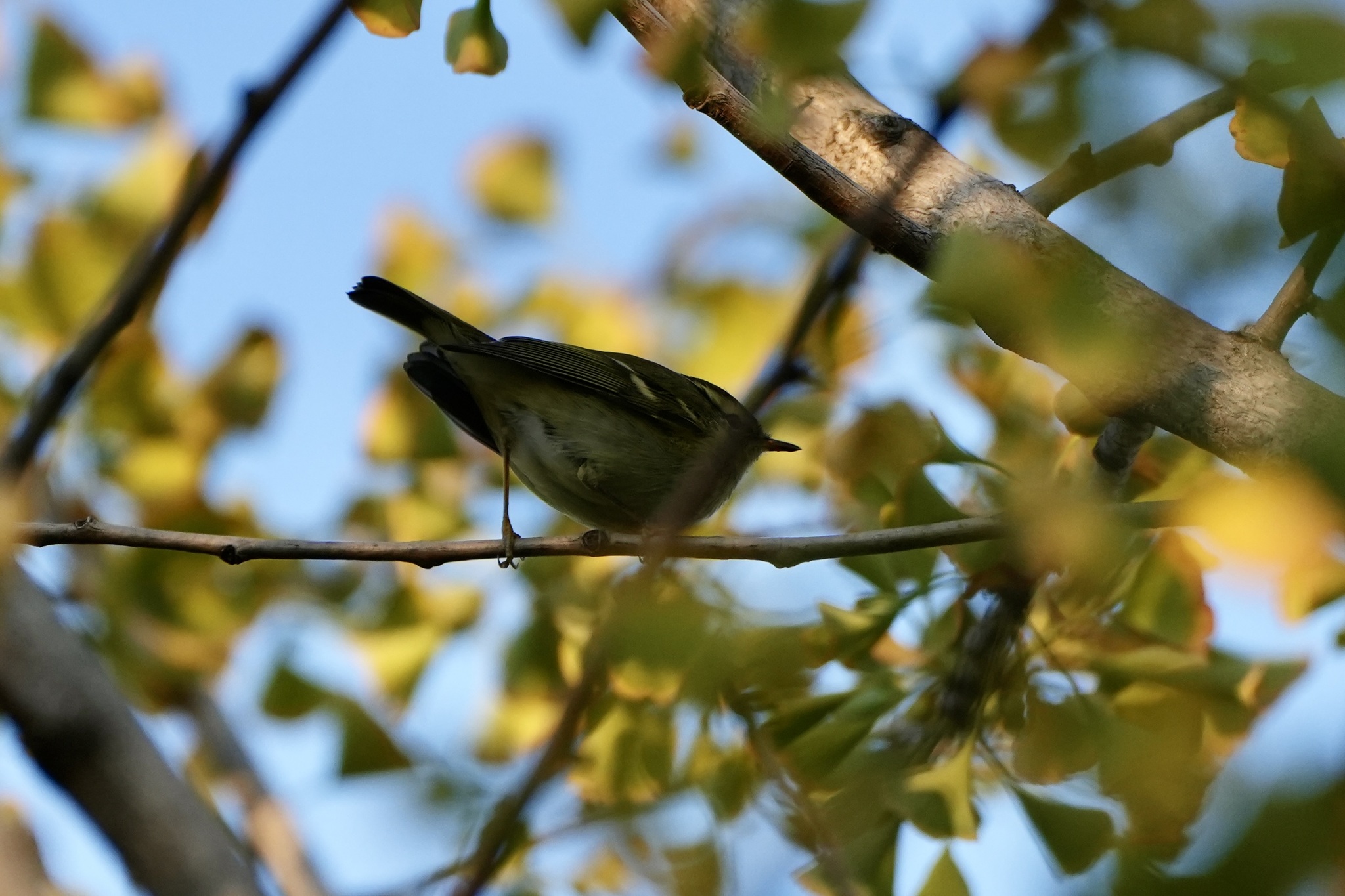
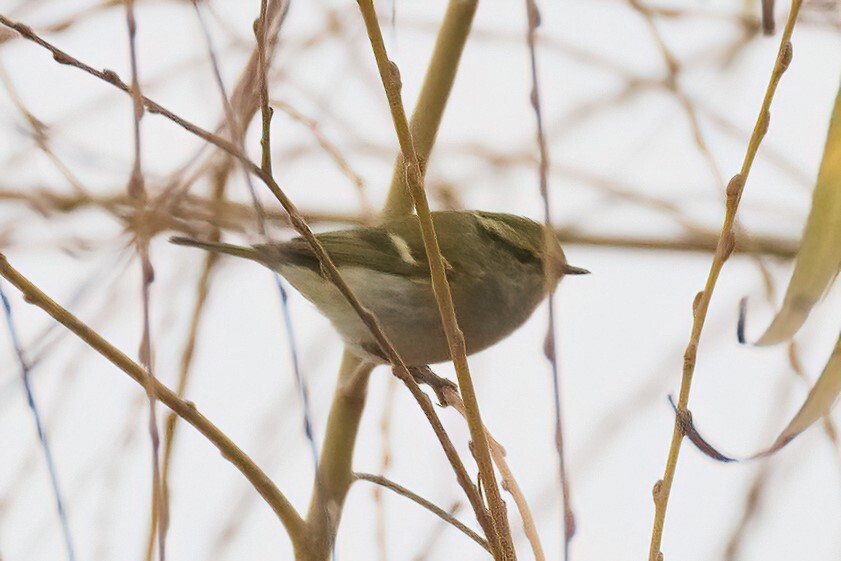
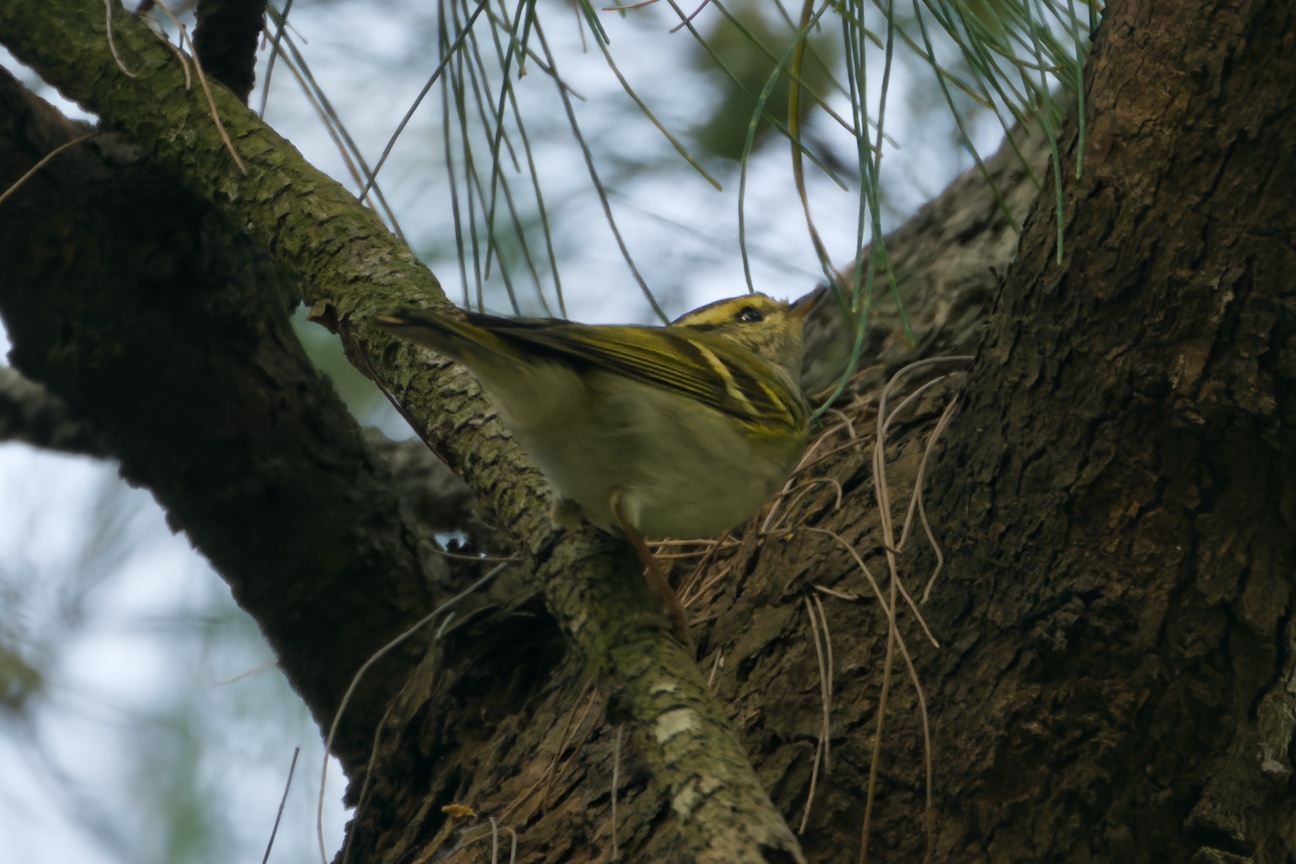
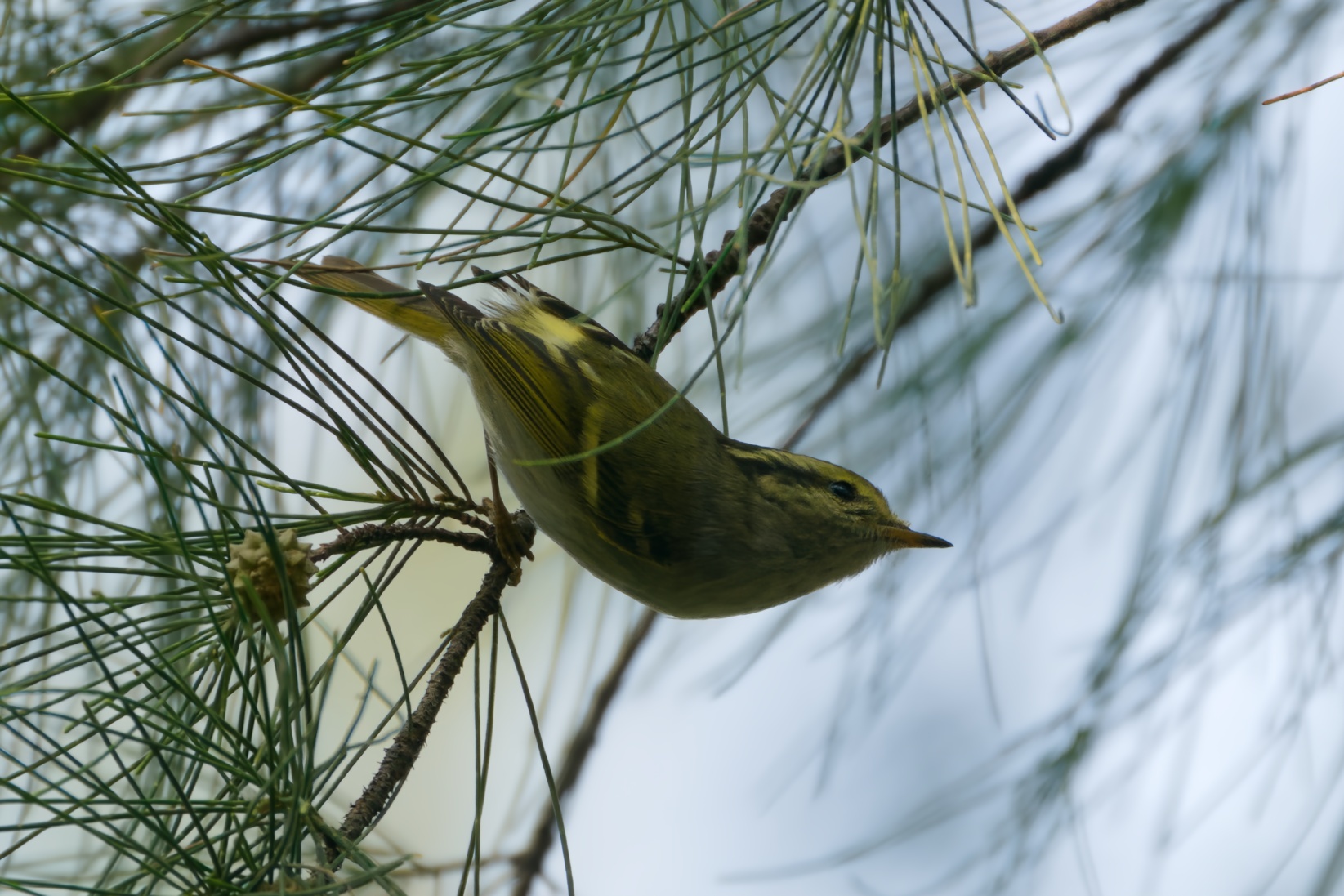
Yellow-browed Warbler
Phylloscopus inornatus
黄眉柳莺
Introduction
This leaf warbler breeds in forests from the Urals east through Siberia, Mongolia, and Northeast China. Small numbers migrate to western Europe, particularly Britain, each autumn. The species was formerly considered to comprise three subspecies, but taxonomic revisions split Hume's leaf warbler and Mandell's warbler into separate species, leaving this species monotypic. Western European populations have increased significantly in recent decades, changing from a rare vagrant to a regular winter visitor. The species is characterized by constant activity and a loud call. It inhabits a variety of forested habitats, from lowland woodlands to montane coniferous forests.
Description
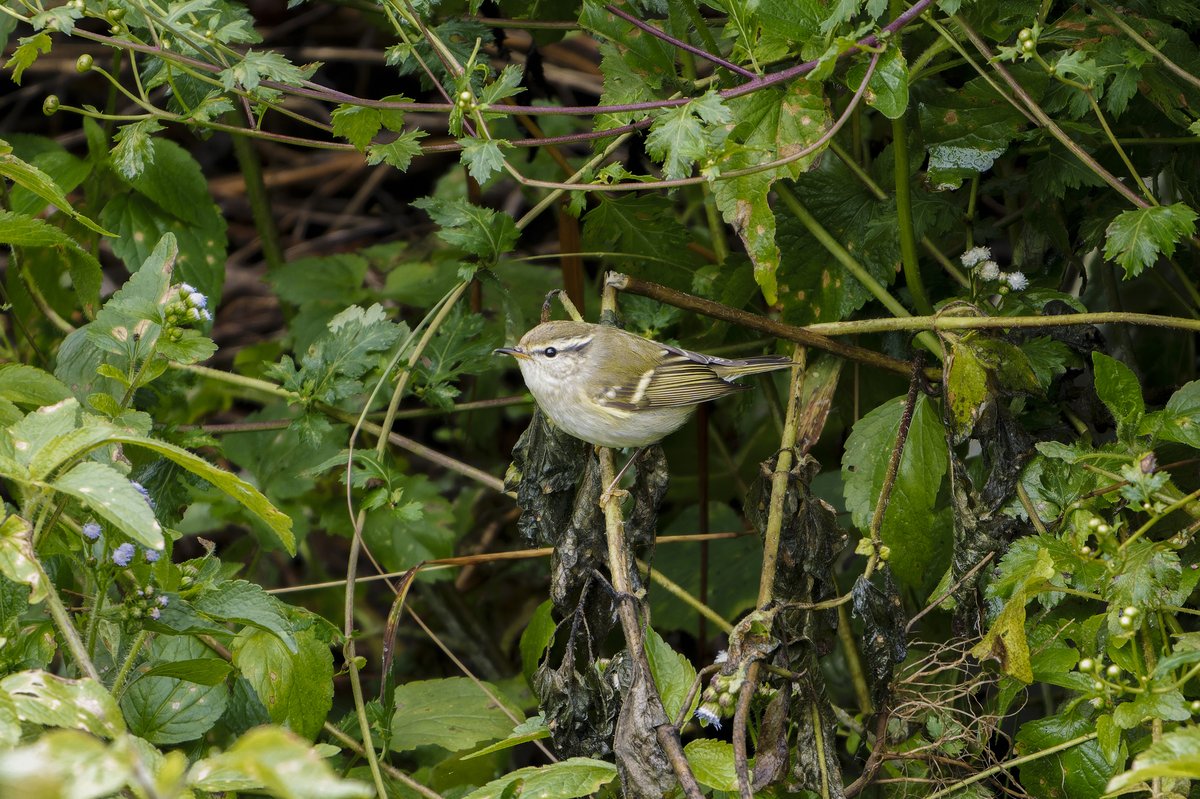
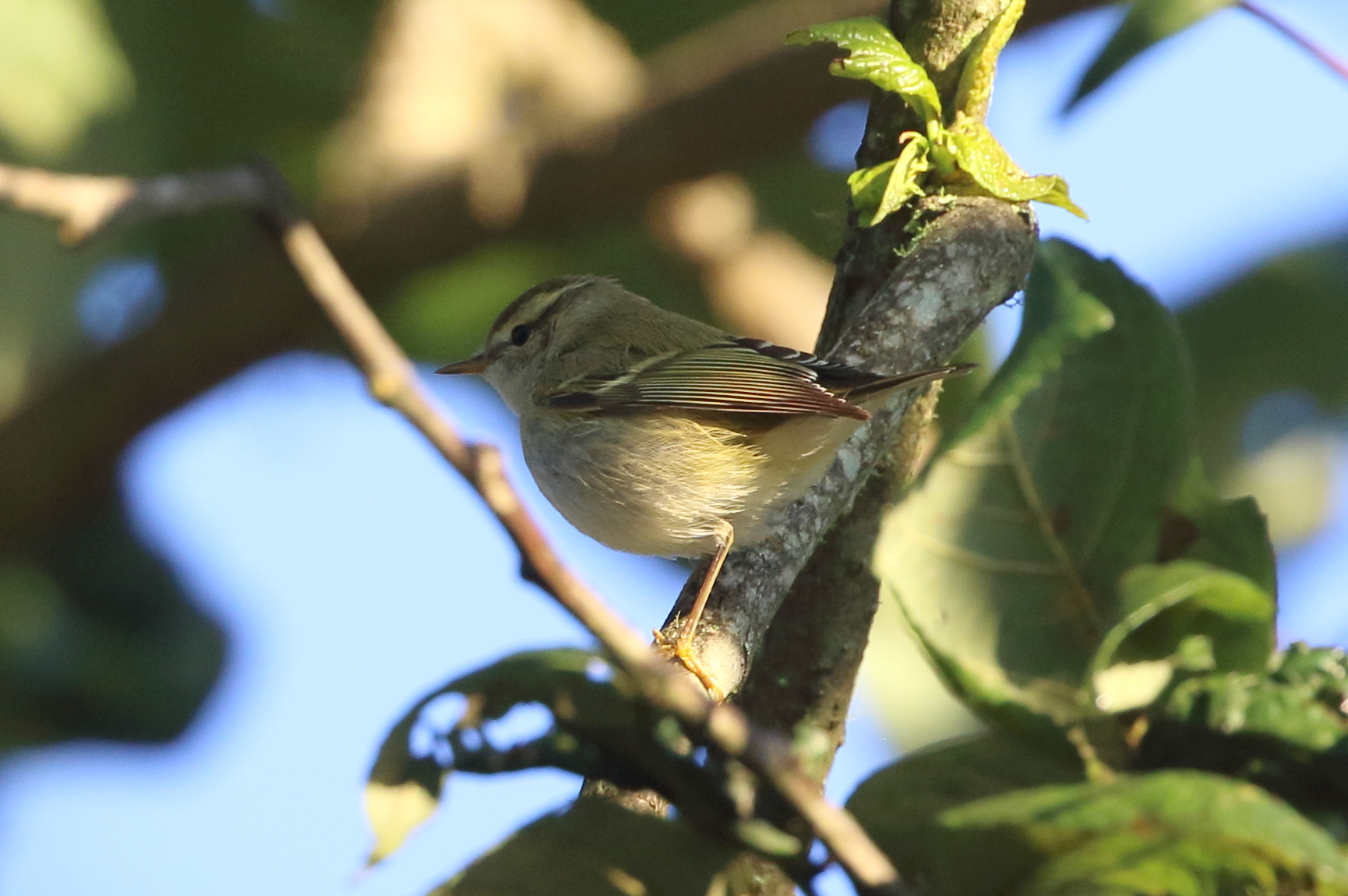
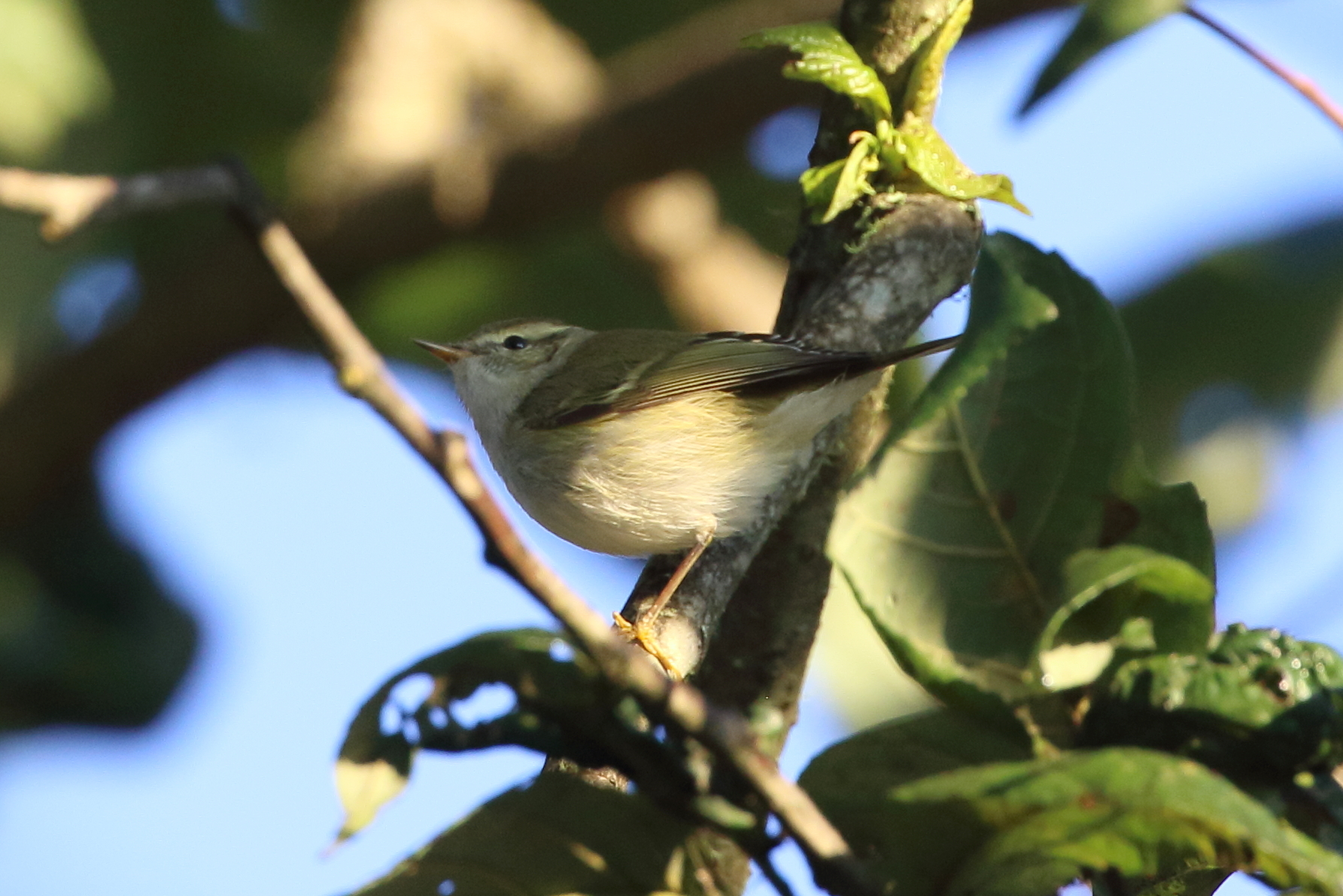
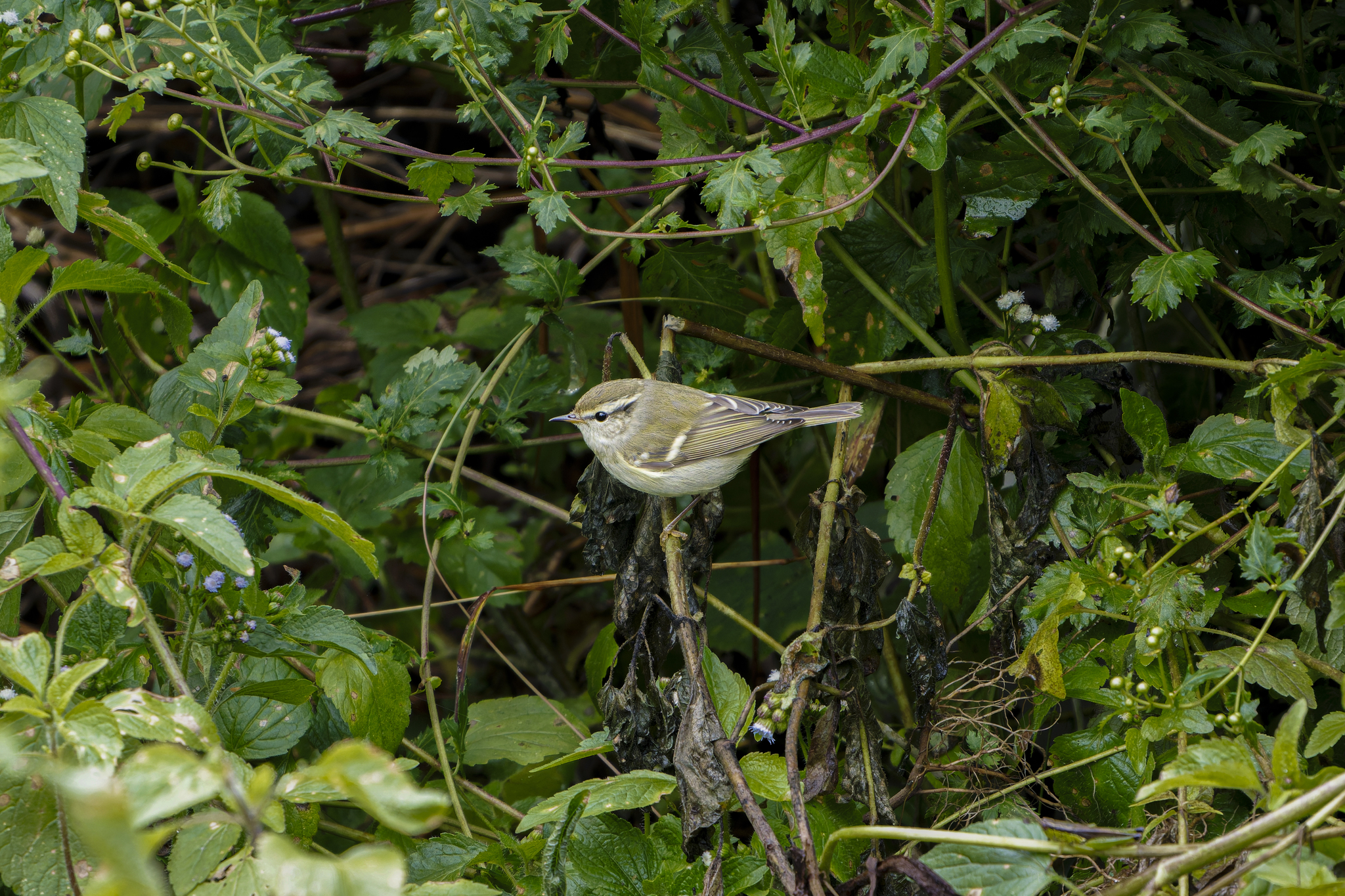
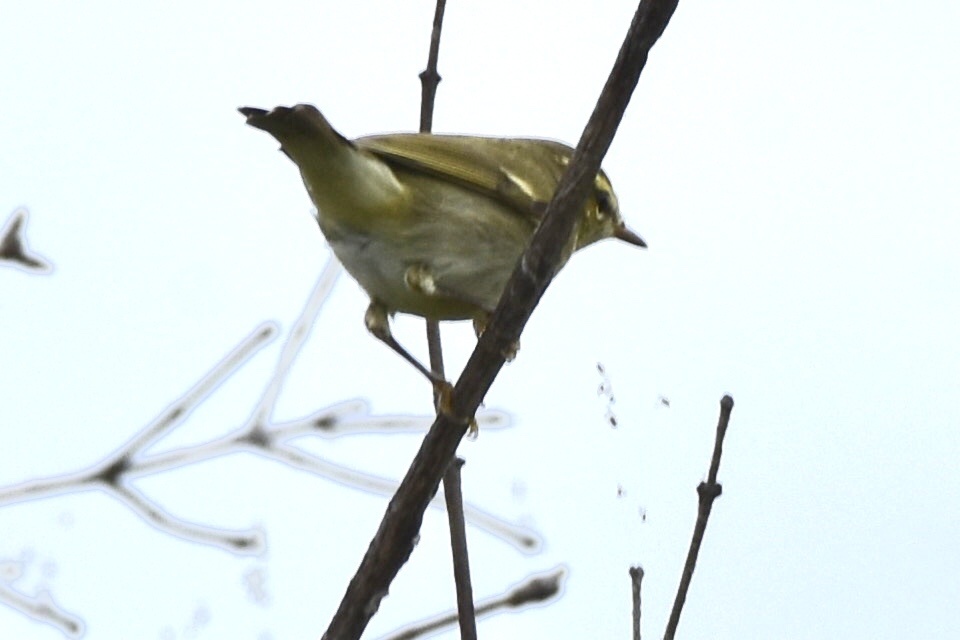
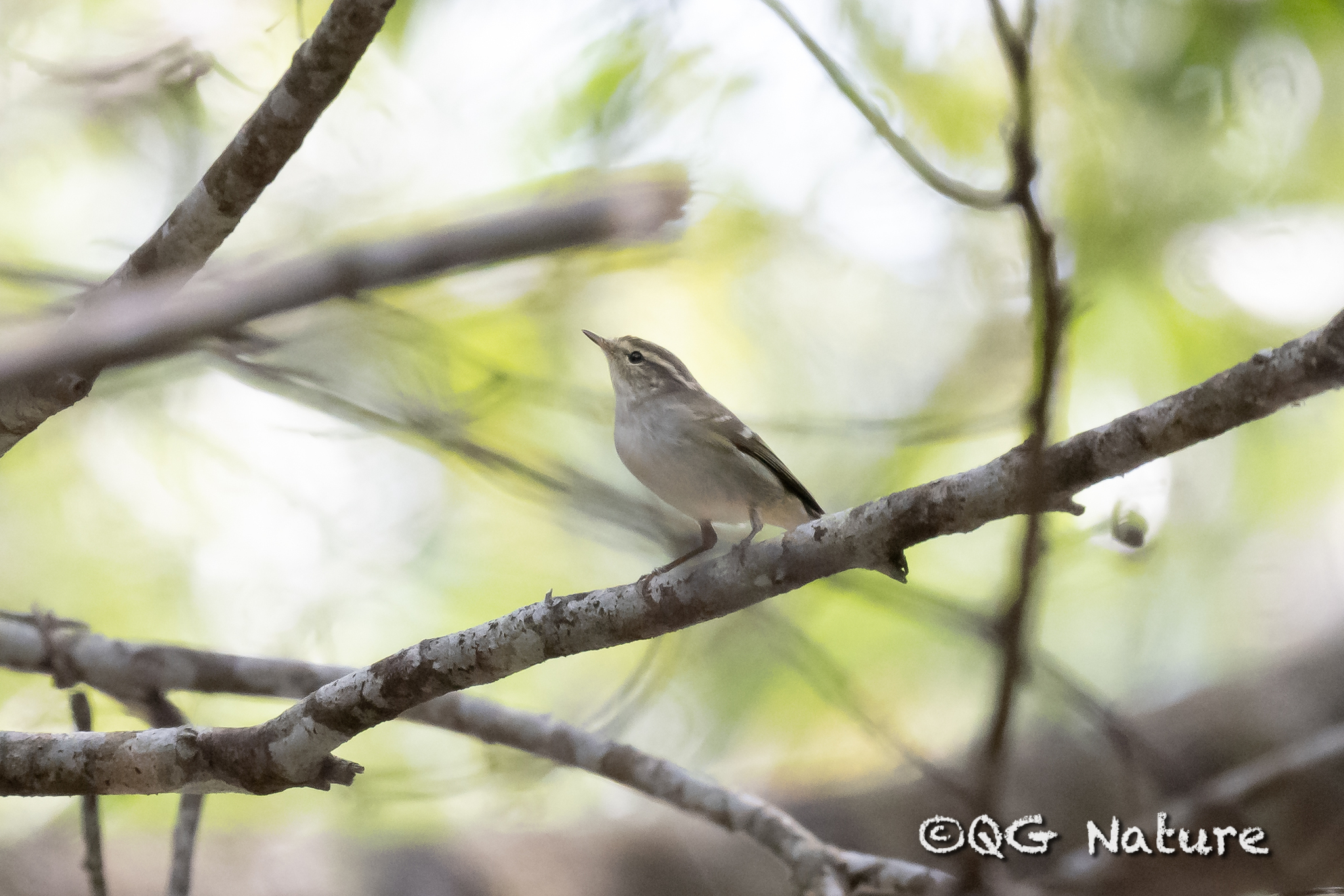
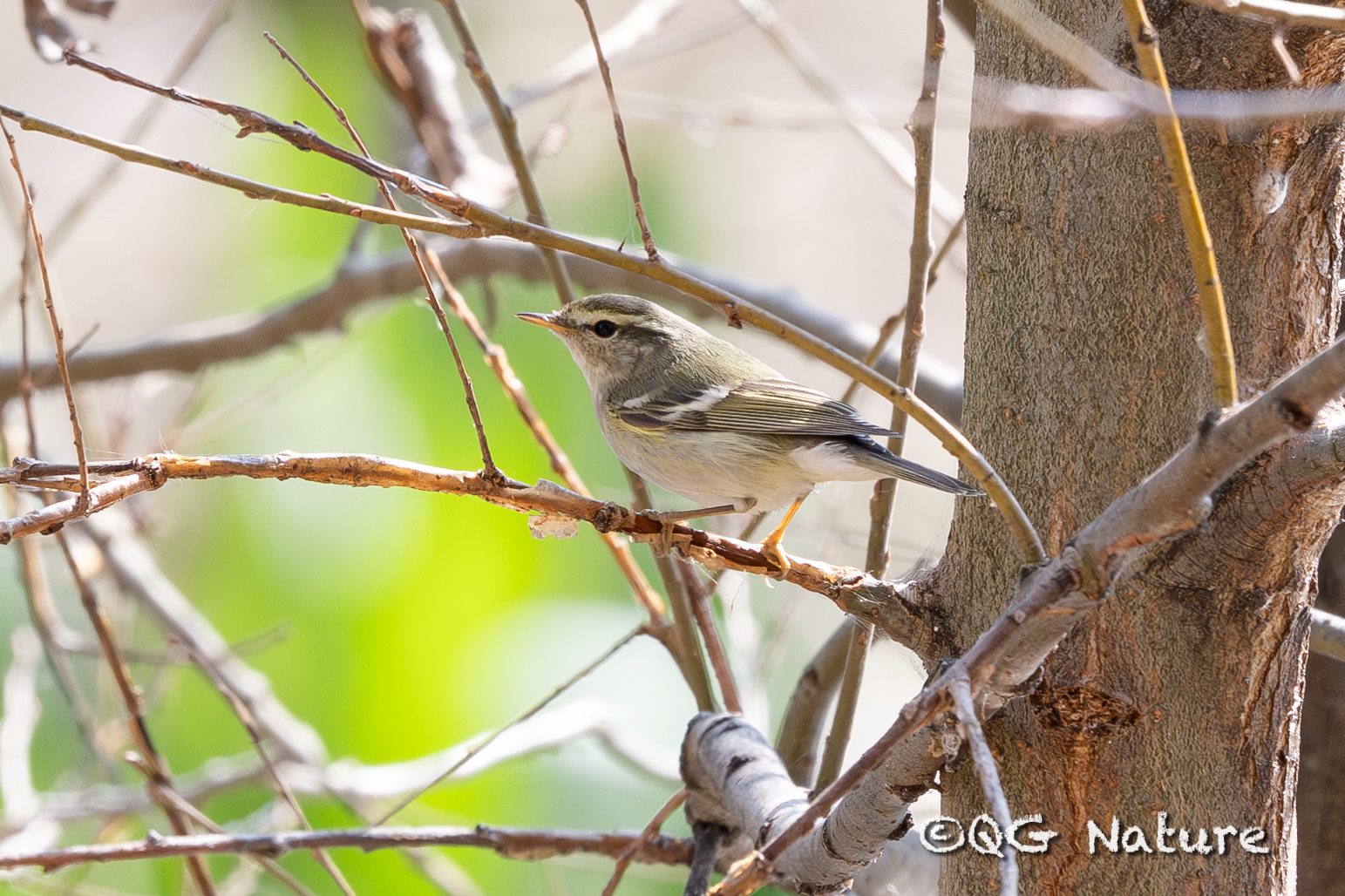
This is one of the smaller Old World warblers, measuring 9.5-11 cm in length and weighing just 4-9 g. It is distinctly smaller than a chiffchaff and slightly larger than Pallas's leaf warbler. The plumage features greenish upperparts contrasting with white underparts. The most distinctive field marks are the prominent double wing bars formed by yellowish-white tips to the wing covert feathers— a longer bar on the greater coverts and a shorter one on the median coverts. The tertial feathers have yellow margins, and a long yellow supercilium runs above the eye. Some individuals show a faint pale green central crown stripe, though this feature is absent in many birds. Despite its arboreal lifestyle, the species is not particularly shy and is almost constantly in motion.
Identification
The loud, piercing call is the best way to locate this species—a disyllabic 'tseeweest' that carries surprisingly far for such a small bird. The song is a high-pitched medley of whistles. The primary identification challenge involves distinguishing it from Hume's leaf warbler, where their ranges overlap in the western Sayan Mountains. Hume's species appears duller overall, shows a fainter second wing bar, and has dark legs and a dark lower mandible. Their vocalizations differ distinctly, with Hume's giving a more chirping 'chwee' call. Confusion with Pallas's warbler is easily avoided by noting the absence of the conspicuous yellow central crown stripe and rump patch that characterize Pallas's species.
Distribution & Habitat
The breeding range extends from just west of the Urals eastwards across Siberia to Mongolia and Northeast China. In winter, it migrates to lowland broadleaf and coniferous forests from West Bengal and Assam in northeastern India, through southern China and Taiwan, south to the Malay Peninsula. It occurs at altitudes up to 2,440 m in summer and 1,525 m in winter. The western population has expanded significantly since the 1950s, with 45,000-46,000 pairs estimated in 1990. A notable phenomenon involves birds from the western breeding range migrating only 3,000-3,500 km to reach western Europe, rather than the full 5,500-6,000 km to Southeast Asia. Several hundred reach Britain annually from late September, likely representing a regular migration pattern to exploit mild oceanic winters rather than true vagrancy.
Behavior & Ecology
Like most warblers, this species is insectivorous, gleaning small invertebrates from foliage. The nest is built in dense vegetation, typically at the base of a tree or old stump. The female lays two to four eggs, occasionally more, which hatch after 11-14 days of incubation. The chicks fledge when 12-13 days old. The species is arboreal and almost constantly active, flitting through tree canopy in search of food. It is not particularly shy, though its preference for tree foliage makes sustained observation challenging.
Conservation
The IUCN Red List categorizes this species as Least Concern. It is considered common and abundant across most of its extensive range, with no significant population declines reported. The western European breeding population has actually increased and expanded westward in recent decades. While specific population numbers for the entire range are not available, the species is not currently considered threatened by habitat loss or other major conservation concerns.
Culture
The taxonomic history of this species has influenced its naming conventions. Before the species split, some authors used the names yellow-browed willow warbler and inornate warbler. The specific name 'inornatus' is Latin for 'plain', referring to the relatively subdued plumage compared to some more colorful relatives.
Source: Wikipedia · CC BY-SA 3.0
Taxonomy
- Order
- Passeriformes
- Family
- Phylloscopidae
- Genus
- Phylloscopus
- eBird Code
- yebwar3
Distribution
breeds Ural Mountains eastward to Sea of Okhotsk, Mongolia, and Manchuria (and possibly northern Korea); winters from Nepal and Bangladesh eastward to southern China, Hainan, Andaman Islands, Thailand, Malay Peninsula, and southeastern Asia
Vocalizations
Data Sources
Species description from Wikipedia, licensed under CC BY-SA 3.0.
Bird images and sounds sourced from GBIF, contributed by citizen scientists worldwide under Creative Commons licenses.
Taxonomy data from AviList 2025.