Passeriformes / Muscicapidae / Phoenicurus
Common Redstart
Phoenicurus phoenicurus · 欧亚红尾鸲
Introduction
A small passerine in the genus Phoenicurus, formerly classified in the thrush family but now placed in the Old World flycatcher family (Muscicapidae). It is a summer visitor across most of Europe and western Asia to Lake Baikal, and northwest Africa, wintering in central Africa and Arabia. Distinctive traits include an orange-red tail that is frequently quivered and chat-like behavior. Two subspecies are accepted: P. p. phoenicurus and P. p. samamisicus.
Description
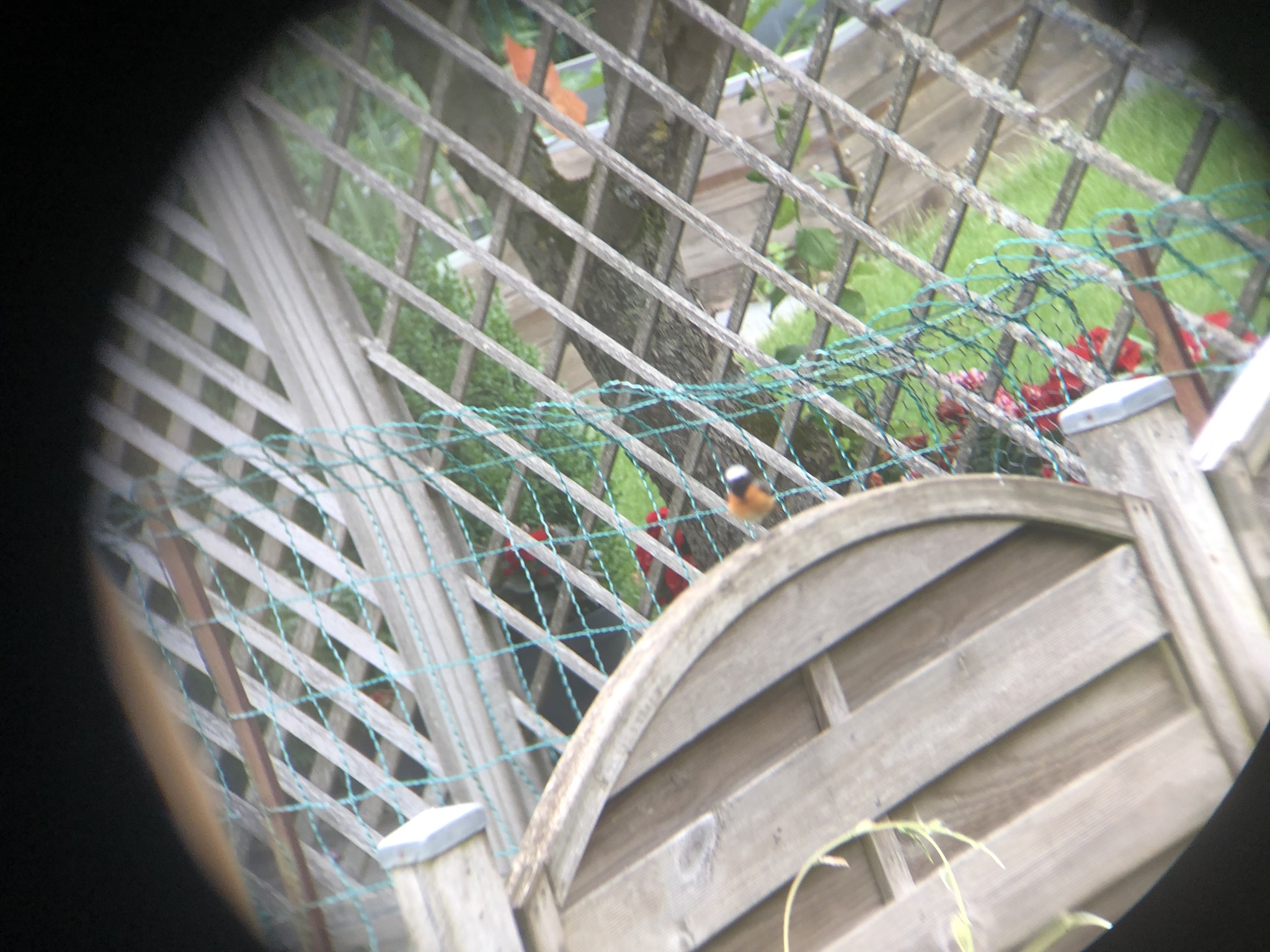
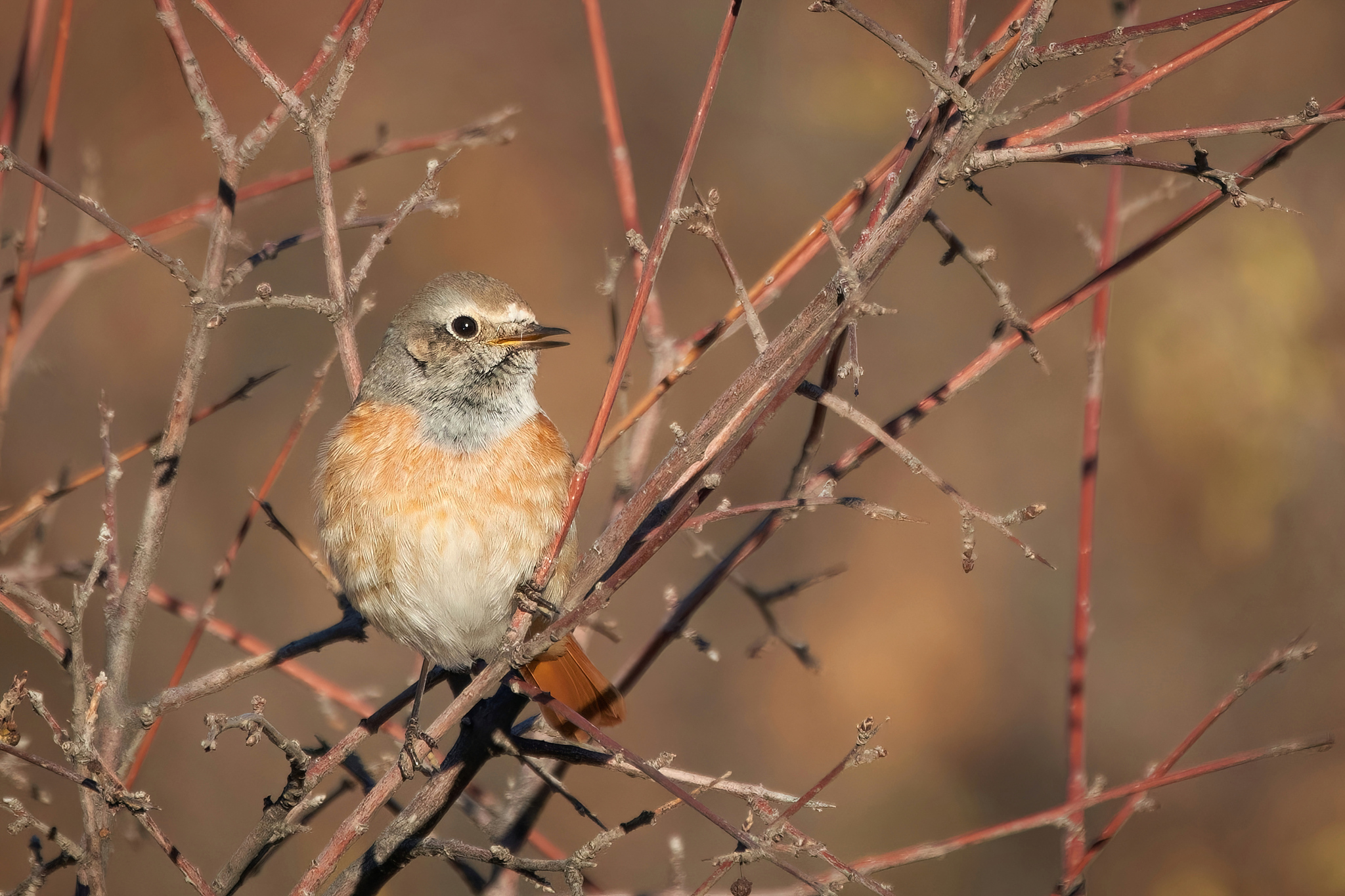
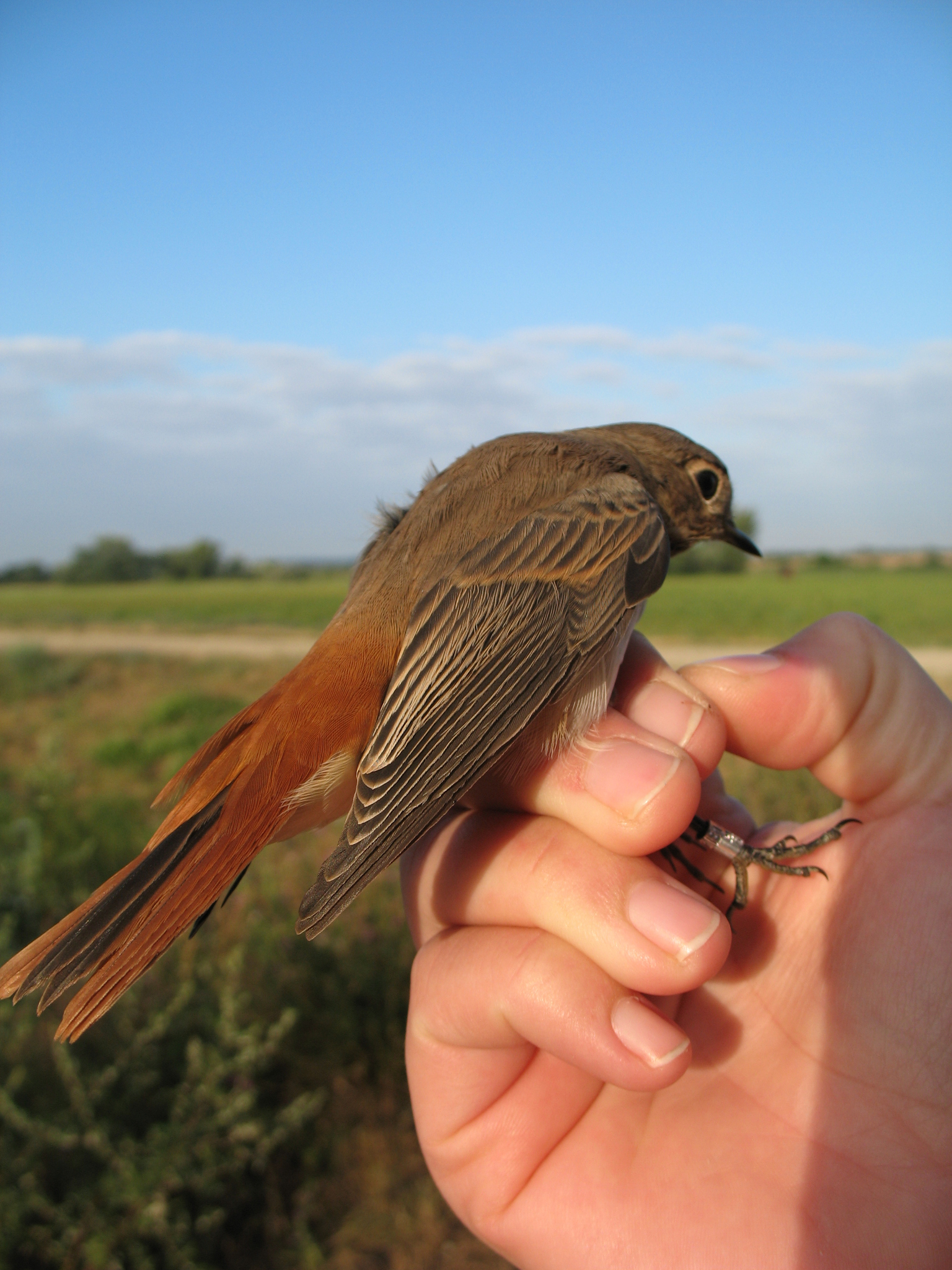
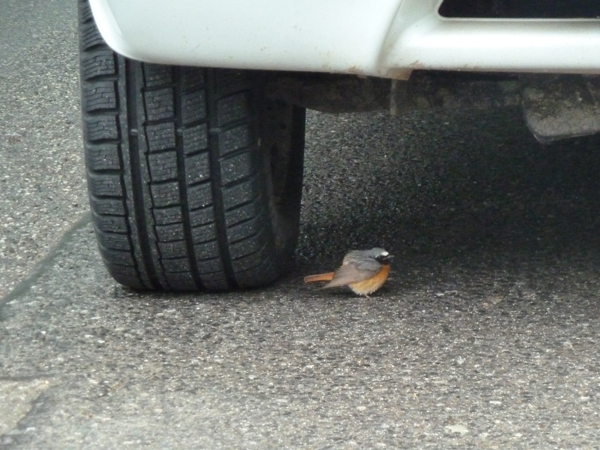
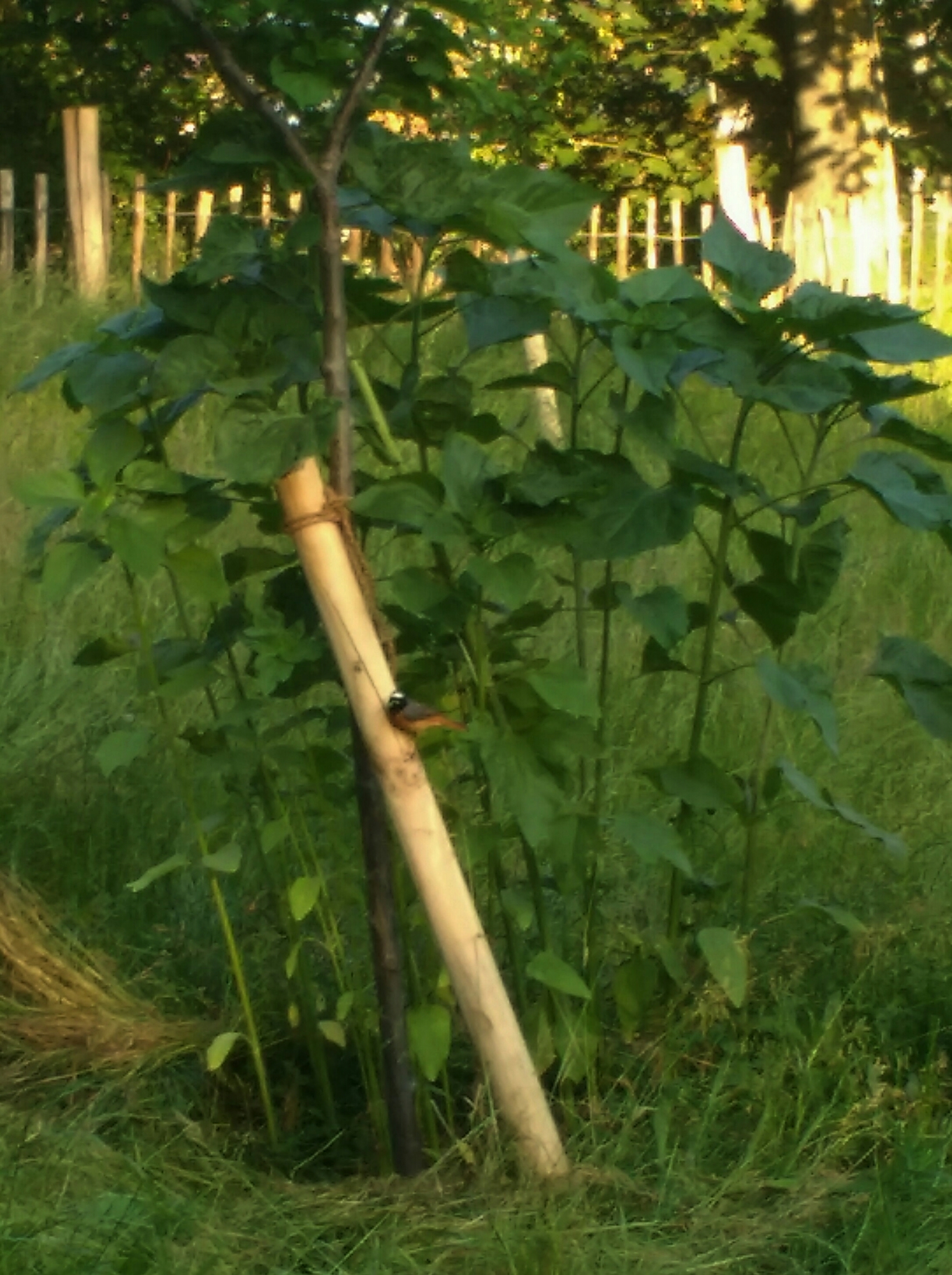
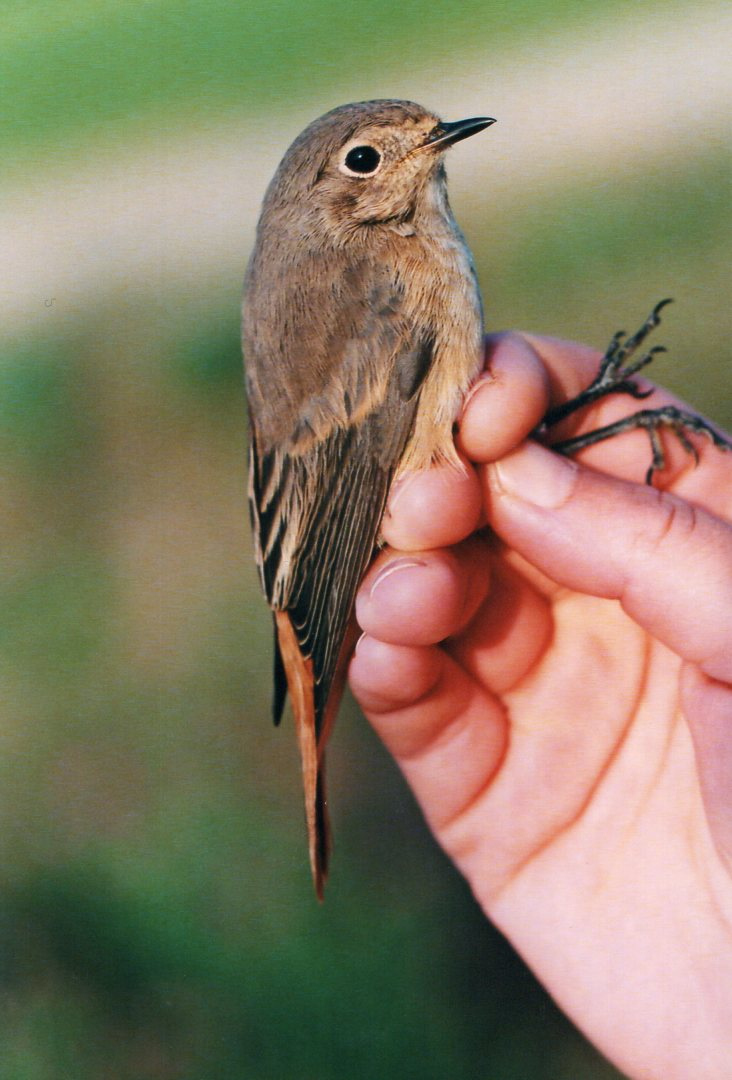
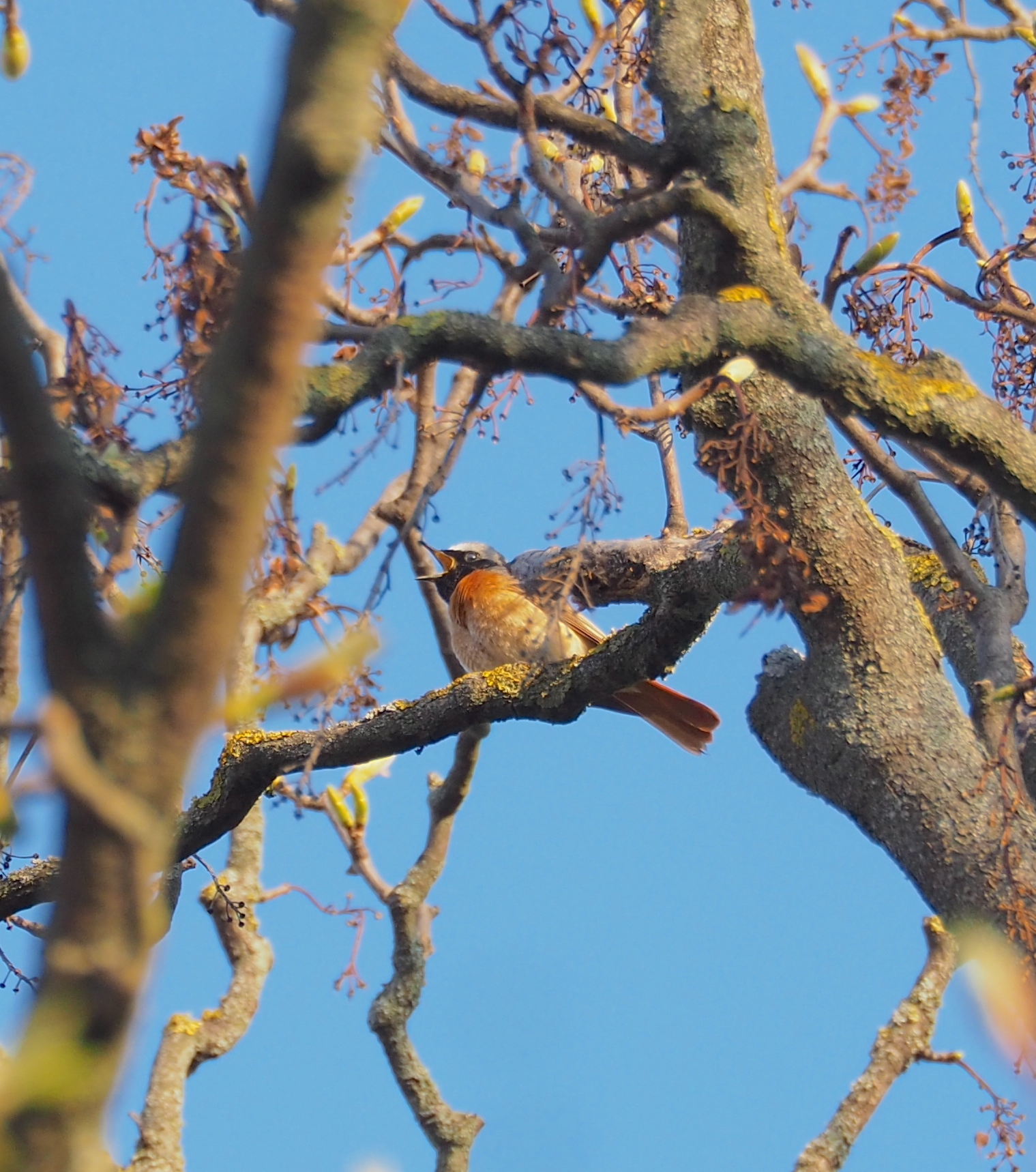
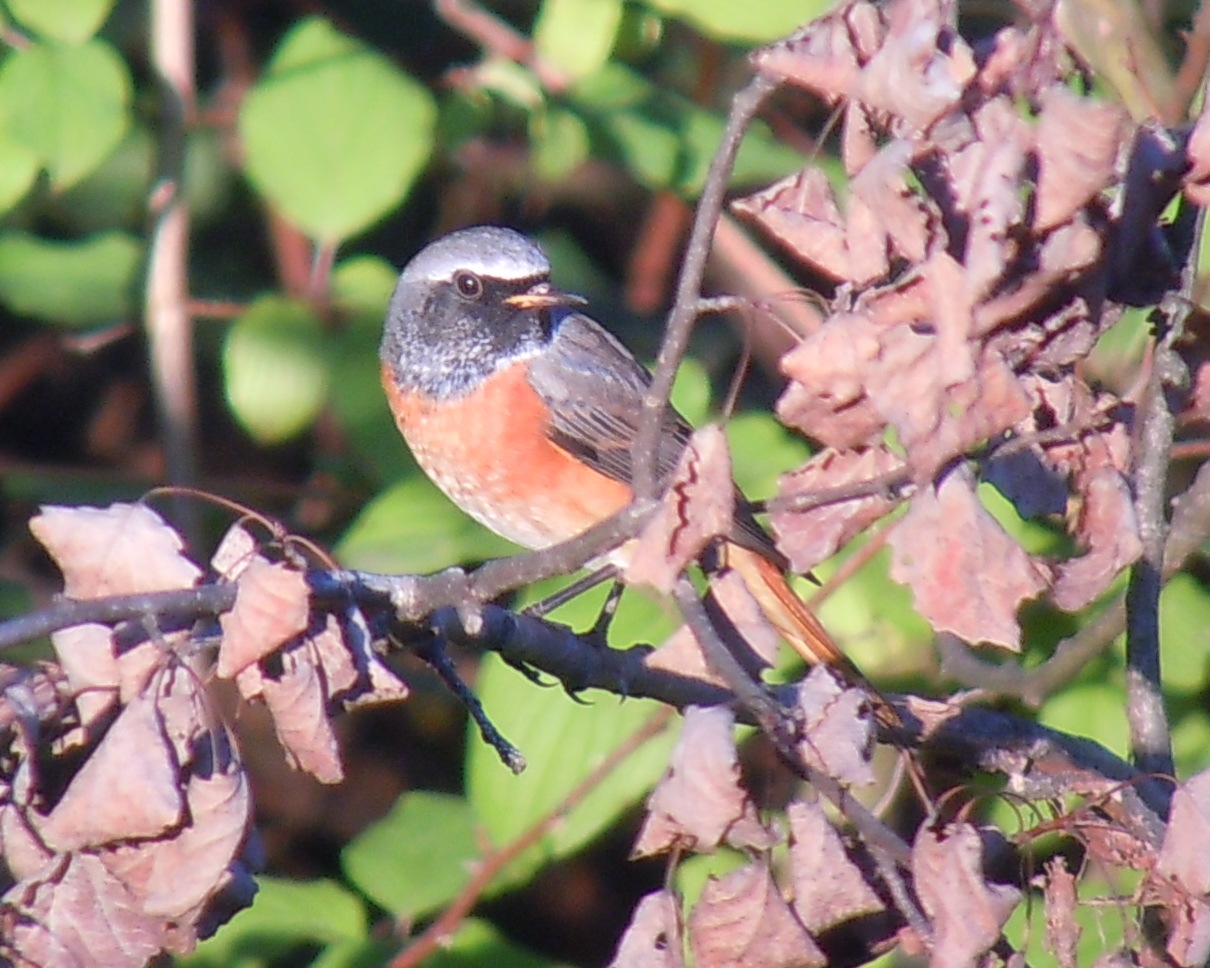
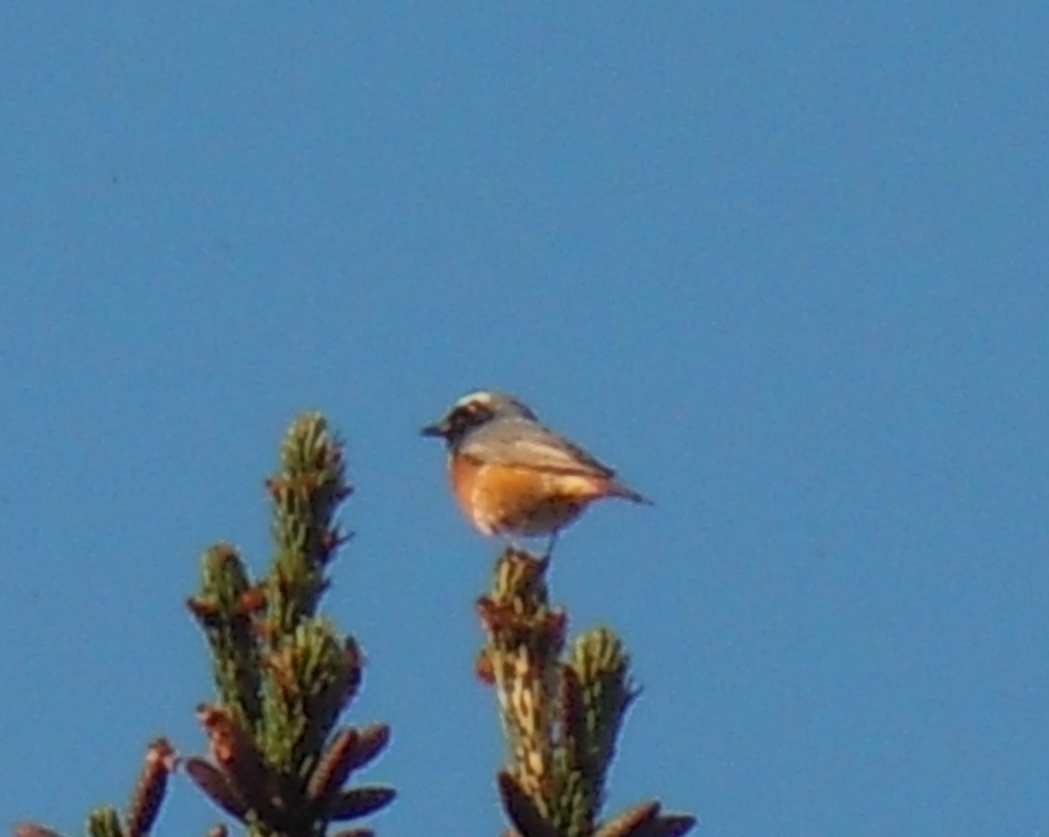
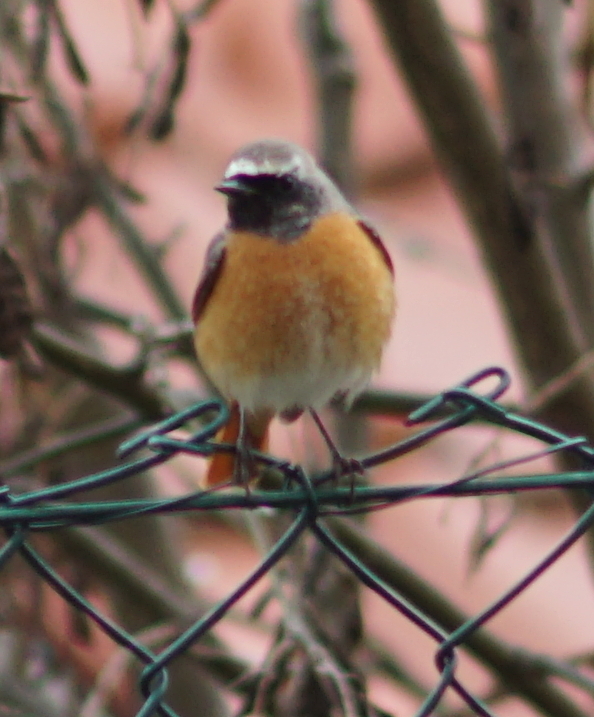
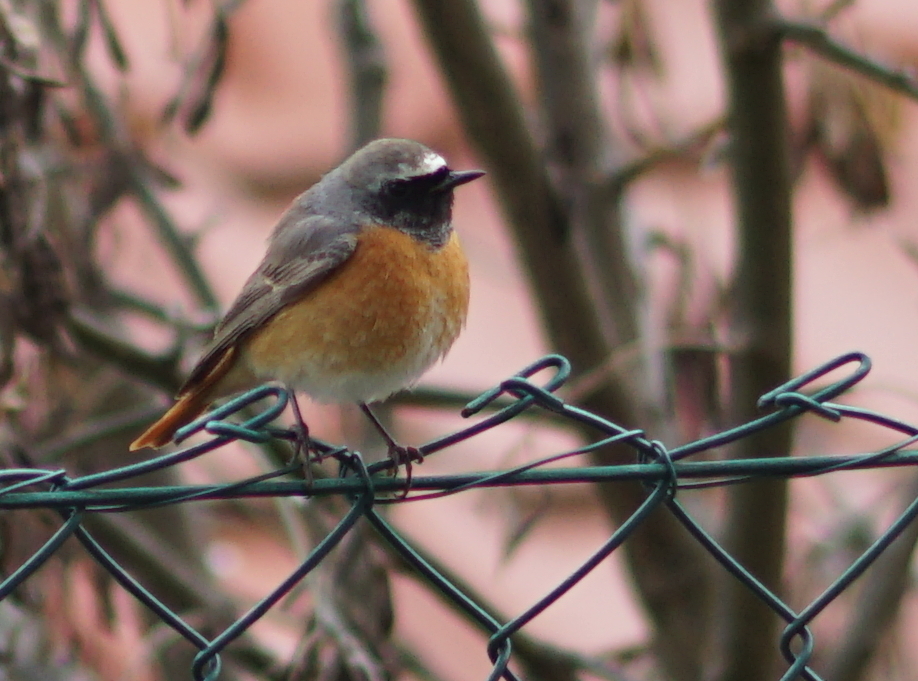
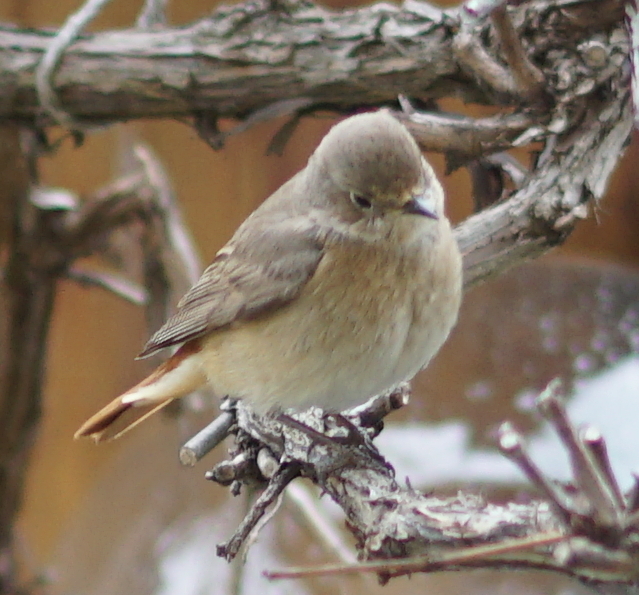
Length 13–14.5 cm; weight 11–23 g. Slightly slimmer than the European Robin. The tail is orange-red, with the two central feathers dark brown and the rest bright orange-red. Summer males have a slate-grey head and upperparts, white forehead, black face sides and throat, and orange-chestnut rump, flanks, underwing coverts, and axillaries. The belly shades from orange on the flanks to almost white. Wings are grey-brown in nominate males, while P. p. samamisicus males have white outer webs on remiges forming a pale wing-patch. Bill and legs are black. Autumn males appear washed-out due to pale feather fringes. Females are grey-brown above and buff-white or light orange below, often with a whitish throat, though some show a dark bib. Some females of P. p. samamisicus show a light wing-patch.
Identification
Distinguished by the frequently quivered orange-red tail; among common European birds, only the black redstart has a similarly colored tail. Adult males of subspecies P. p. samamisicus show a conspicuous pale to whitish wing-patch, which is less conspicuous or absent in nominate males and females. Contact calls vary geographically: a rising 'huid' in Central Europe, a monosyllabic 'heed' in southern Italy and the range of P. p. samamisicus, and combined variants in Siberia. The male's song consists of soft melancholy strophes lasting 1–2 seconds, divided into an introduction, repetitive part, and variable third part.
Distribution & Habitat
Breeds throughout most of Europe and western Asia east to Lake Baikal, and in northwest Africa (Morocco). Winters in central Africa and Arabia, south of the Sahara but north of the Equator, from Senegal east to Yemen. Subspecies P. p. phoenicurus occurs across Europe into Siberia. Subspecies P. p. samamisicus ranges from the Crimean Peninsula and Greece through Turkey, the Caucasus, the Middle East, and into Central Asia. In Britain, it occurs primarily in upland areas; in Ireland, it is a very rare breeder, mostly in County Wicklow.
Behavior & Ecology
Prefers open mature birch, oak, or conifer woodland with high horizontal visibility, low shrub understorey, and old trees with holes. Also inhabits orchards, villages, parks, and old gardens. Nests in cavities such as natural tree holes or nestboxes. Arrives in breeding grounds in early to mid-April. Lays five or six light blue eggs in May, with a second brood in midsummer in the south. Departs for Africa between mid-August and early October. Feeds mainly on winged insects via aerial sallies like a flycatcher. Sometimes parasitized by common cuckoos; redstart chicks may benefit from the thermoregulation provided by the larger cuckoo chick.
Source: Wikipedia · CC BY-SA 3.0
Taxonomy
- Order
- Passeriformes
- Family
- Muscicapidae
- Genus
- Phoenicurus
Subspecies (2)
-
Phoenicurus phoenicurus phoenicurus
breeds Europe and North Africa to central Asia; winters to tropical Africa
Data Sources
Species description from Wikipedia, licensed under CC BY-SA 3.0.
Bird images and sounds sourced from GBIF, contributed by citizen scientists worldwide under Creative Commons licenses.
Taxonomy data from AviList 2025.