Suliformes / Phalacrocoracidae / Phalacrocorax
Great Cormorant
Phalacrocorax carbo · 普通鸬鹚
Introduction
A widespread member of the cormorant family of seabirds, breeding in much of the Old World, Australasia, and the Atlantic coast of North America. It feeds at sea in inshore waters, estuaries, and on freshwater lakes and rivers. Northern populations migrate south to escape freezing waters.
Description
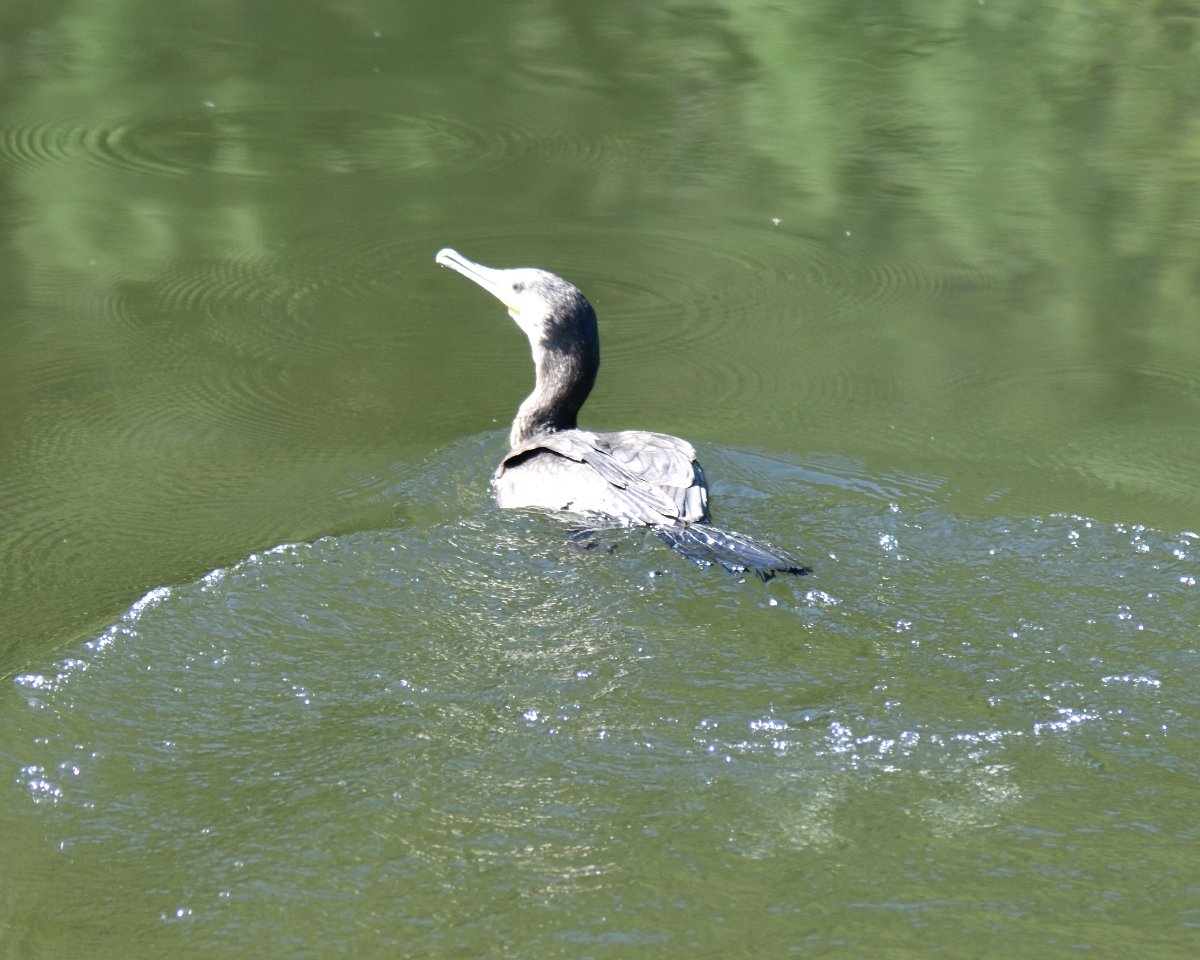
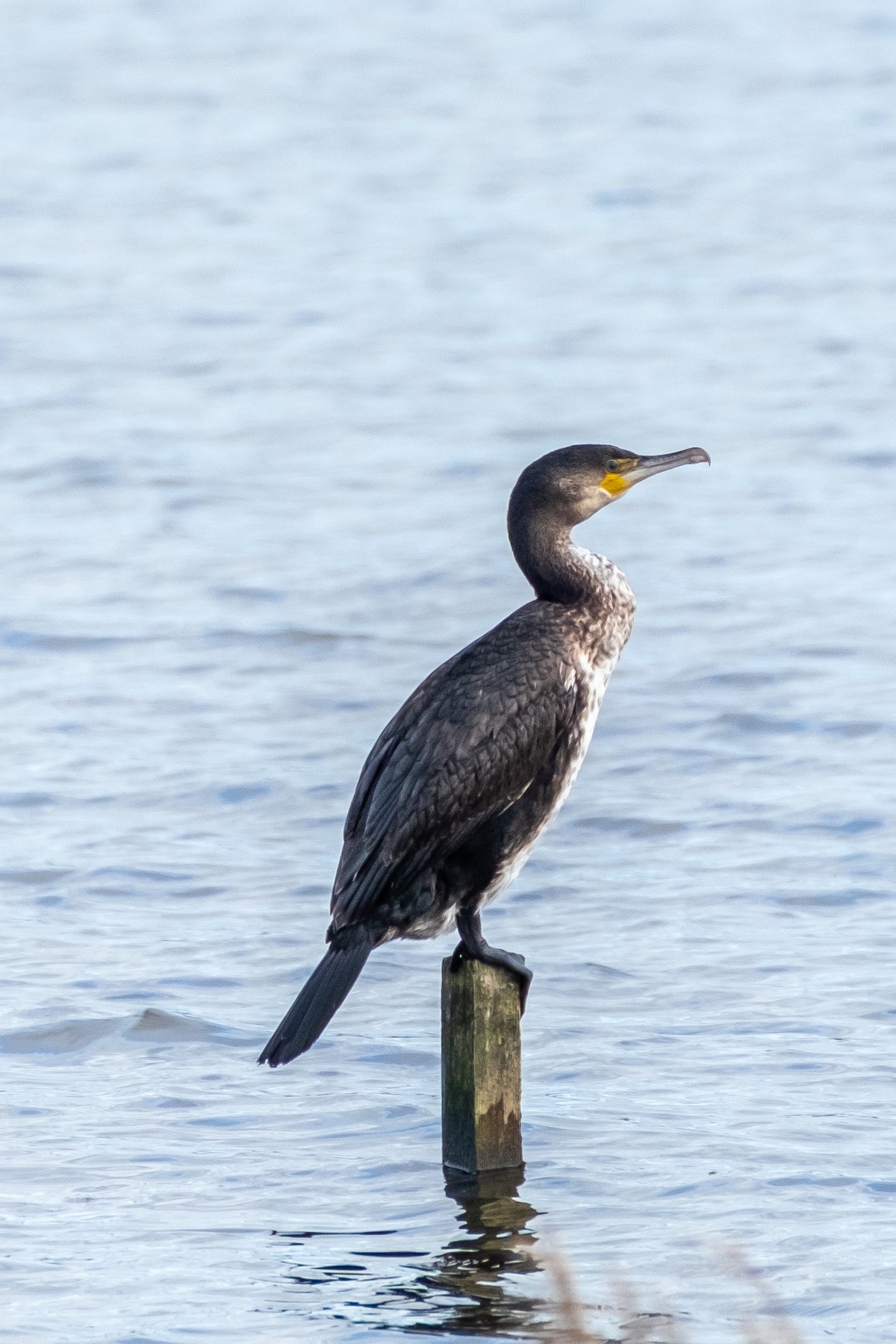
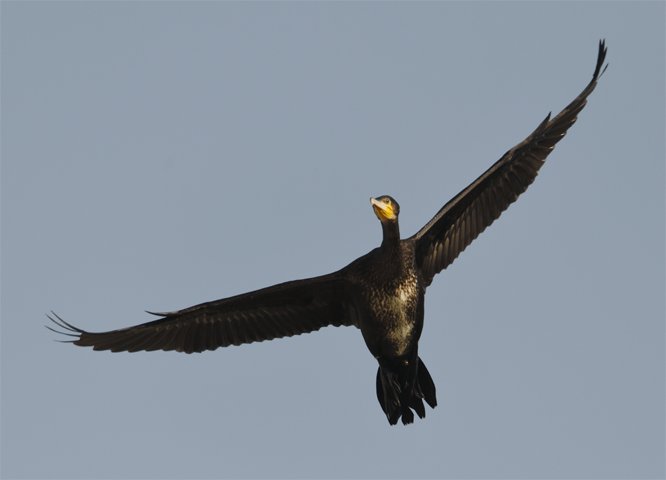
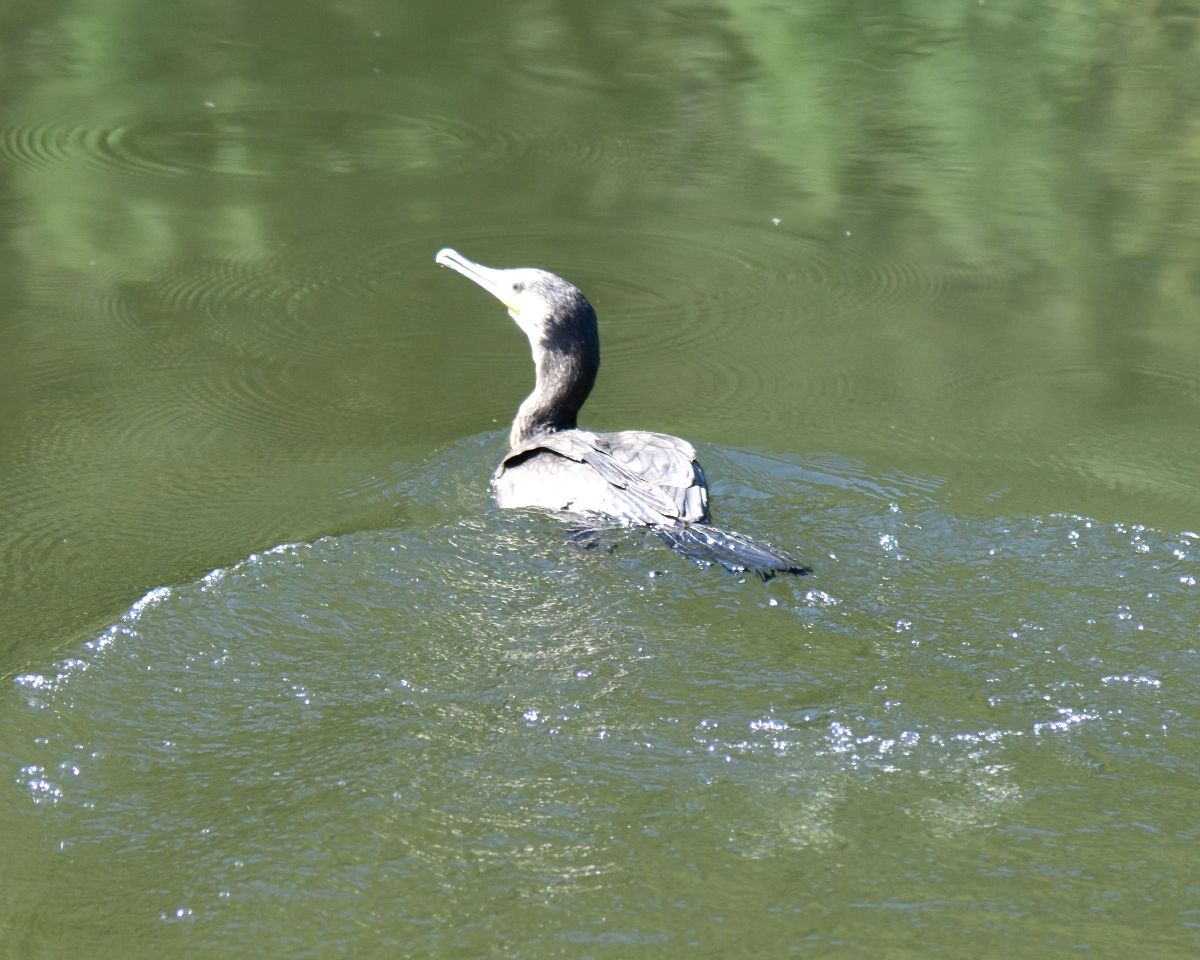
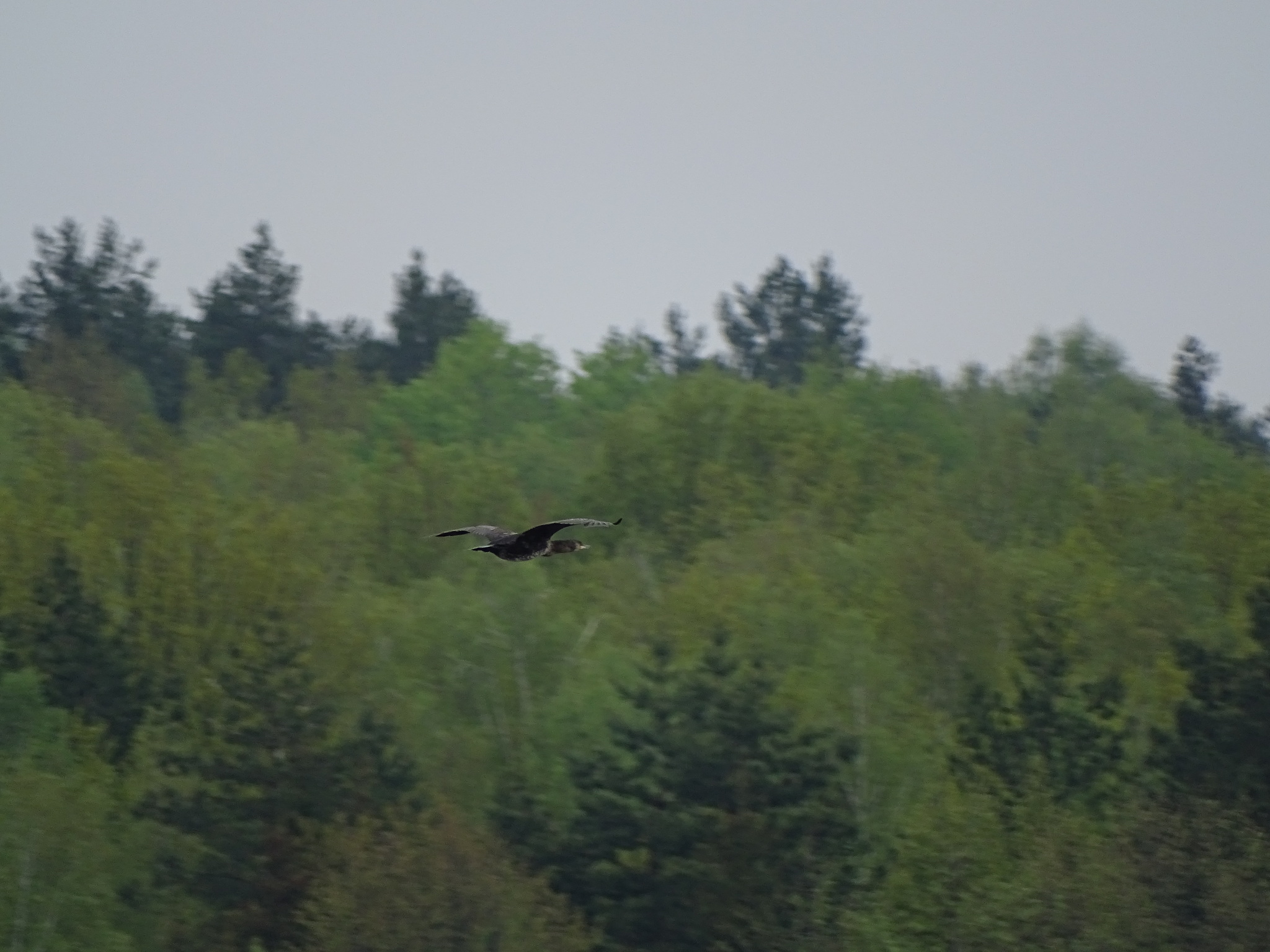
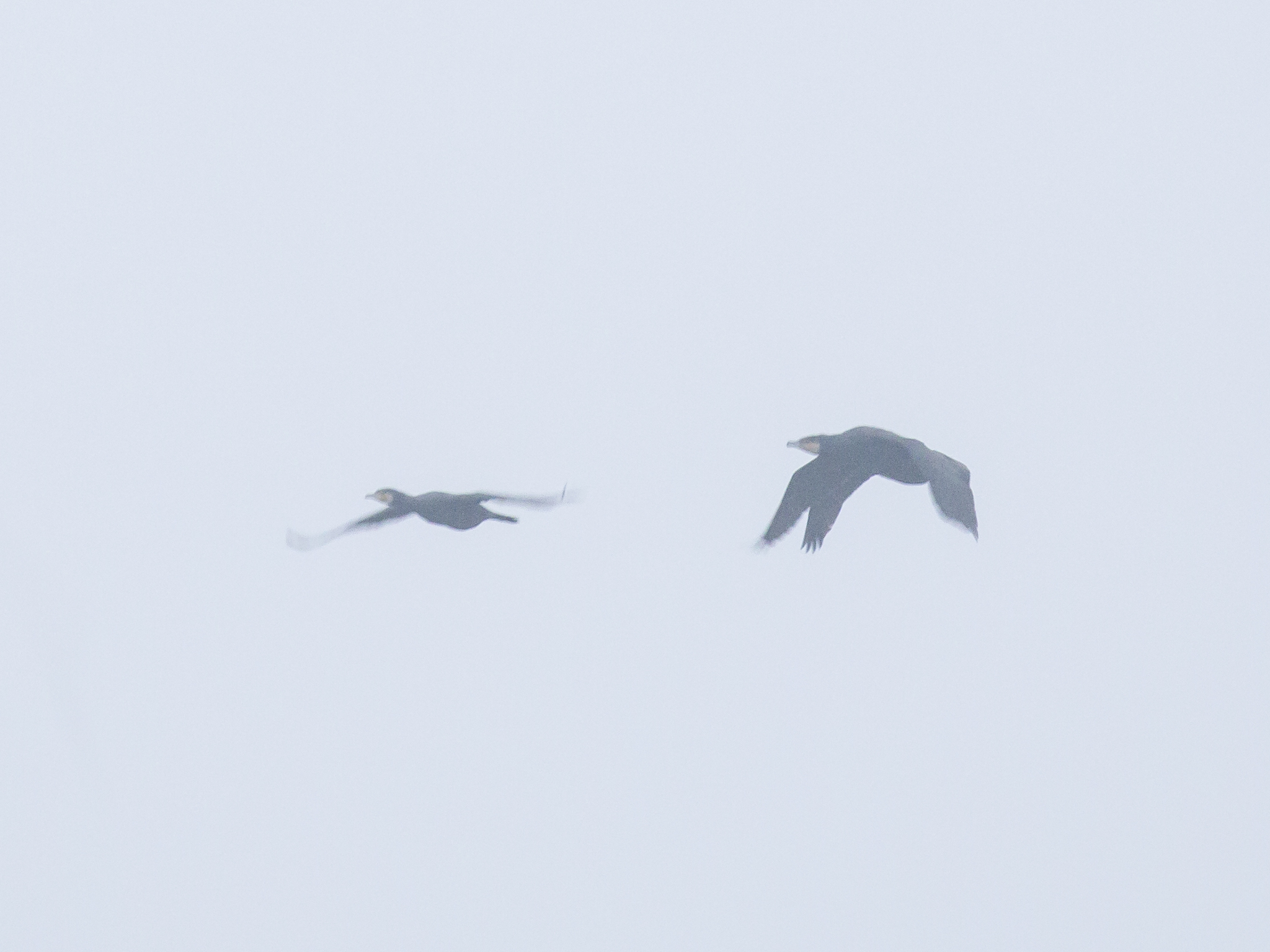
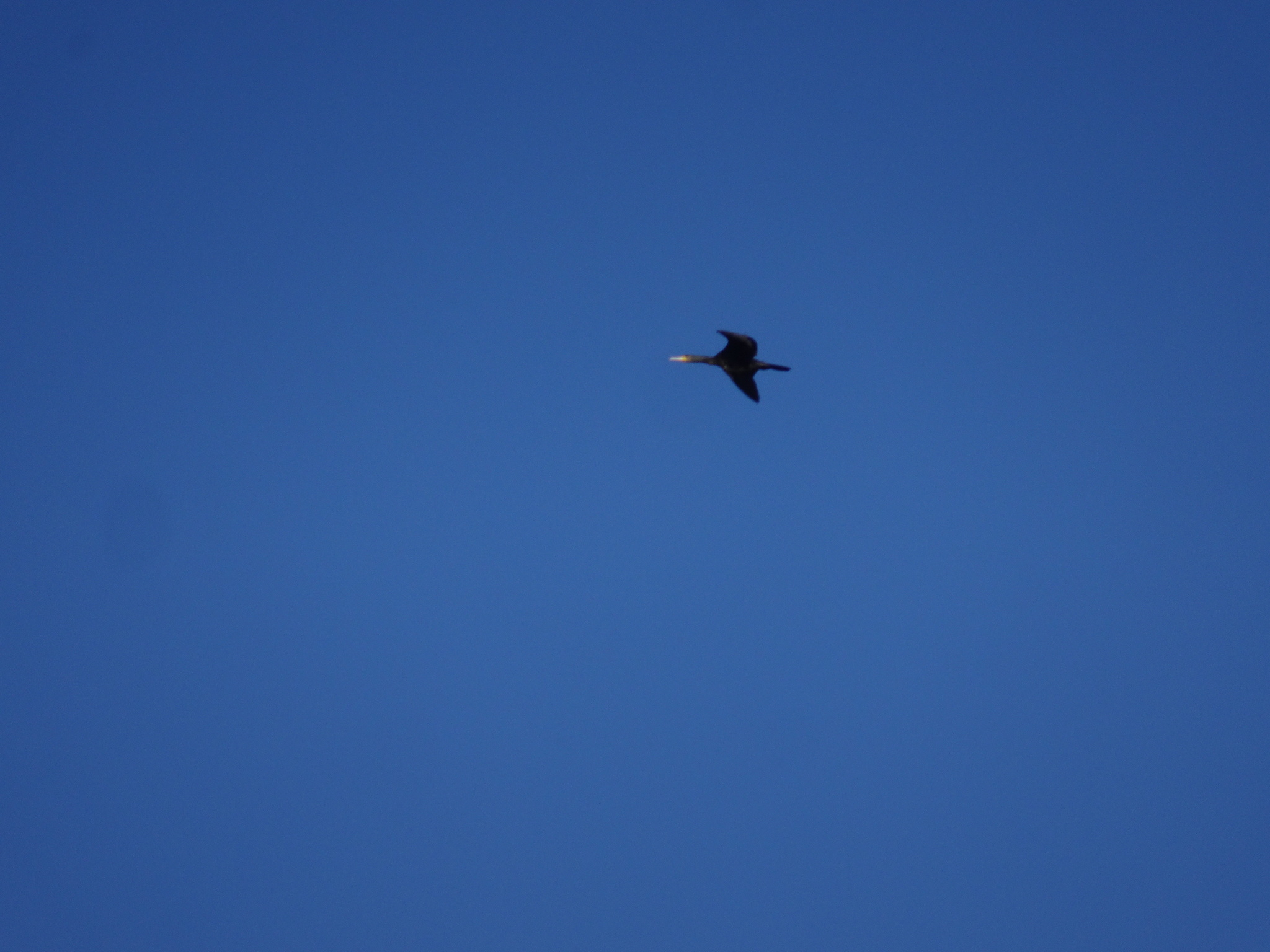
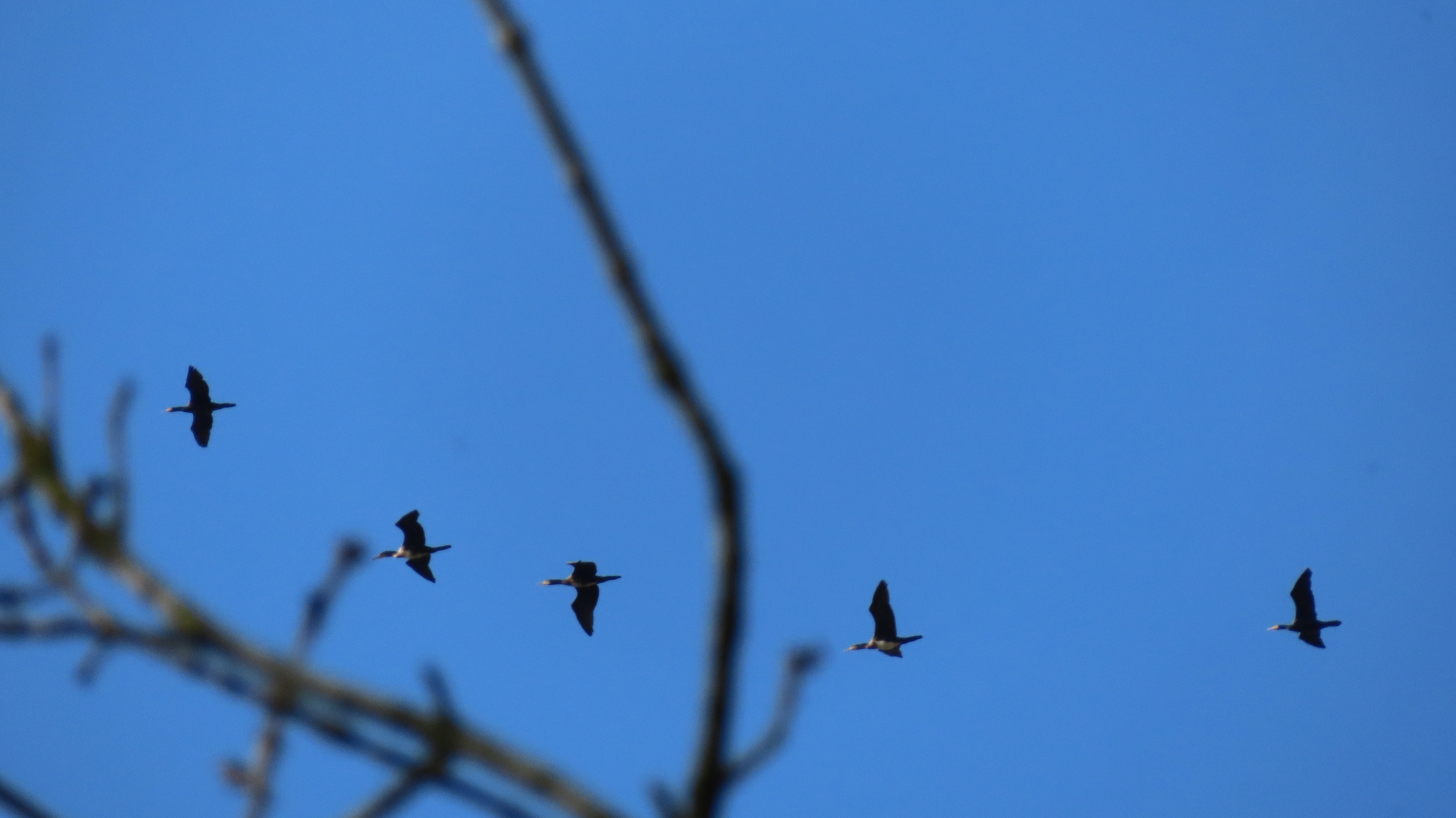
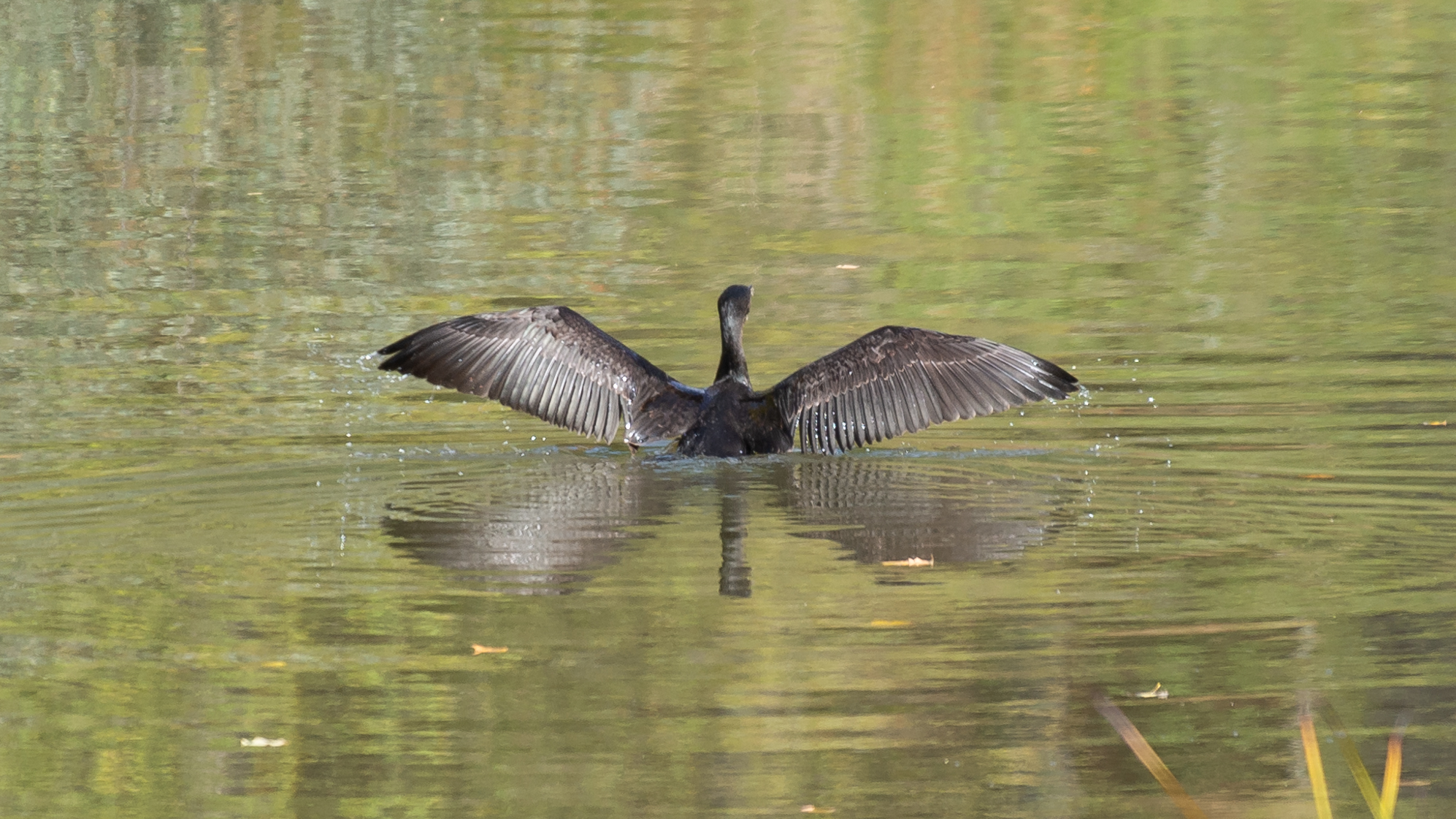
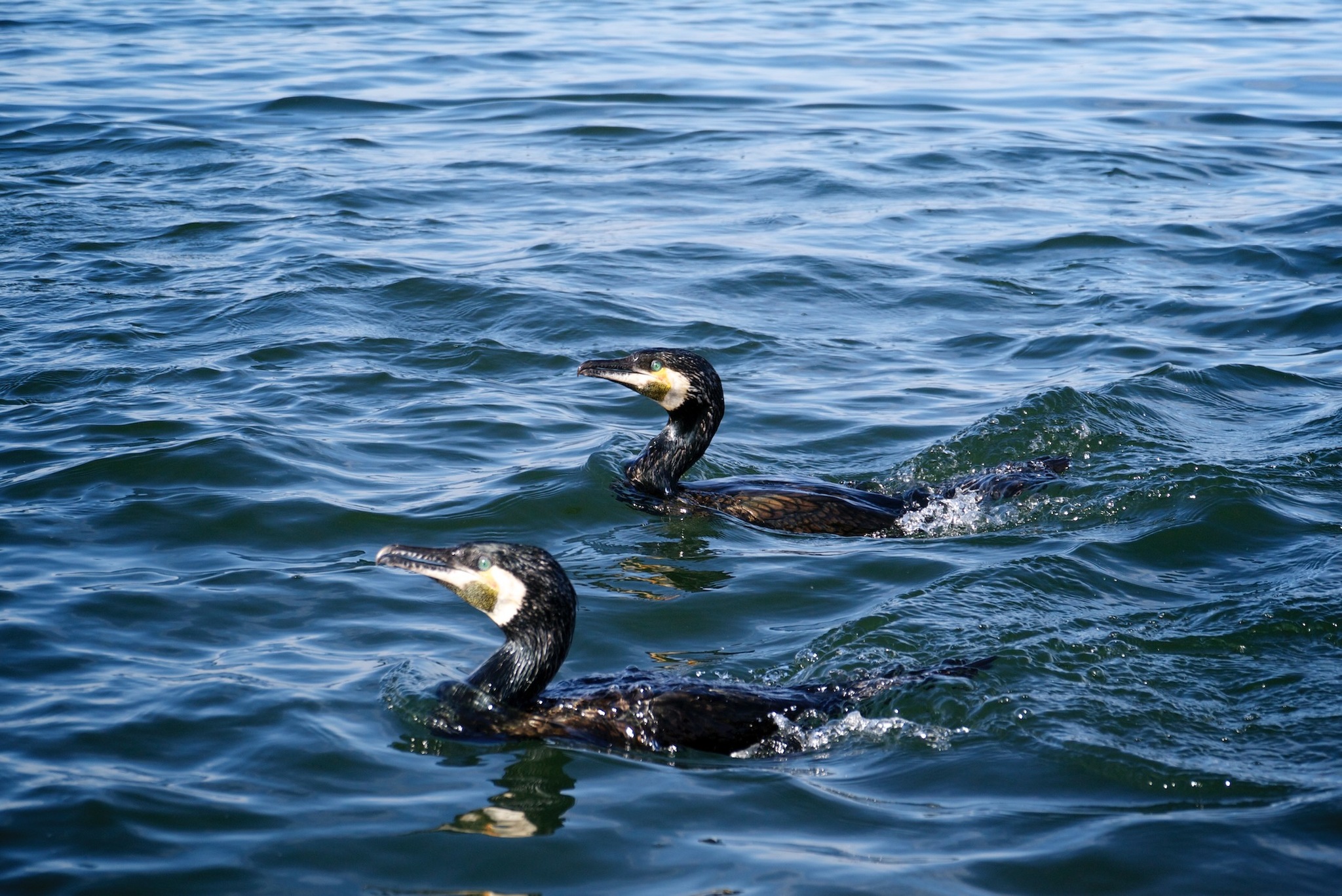
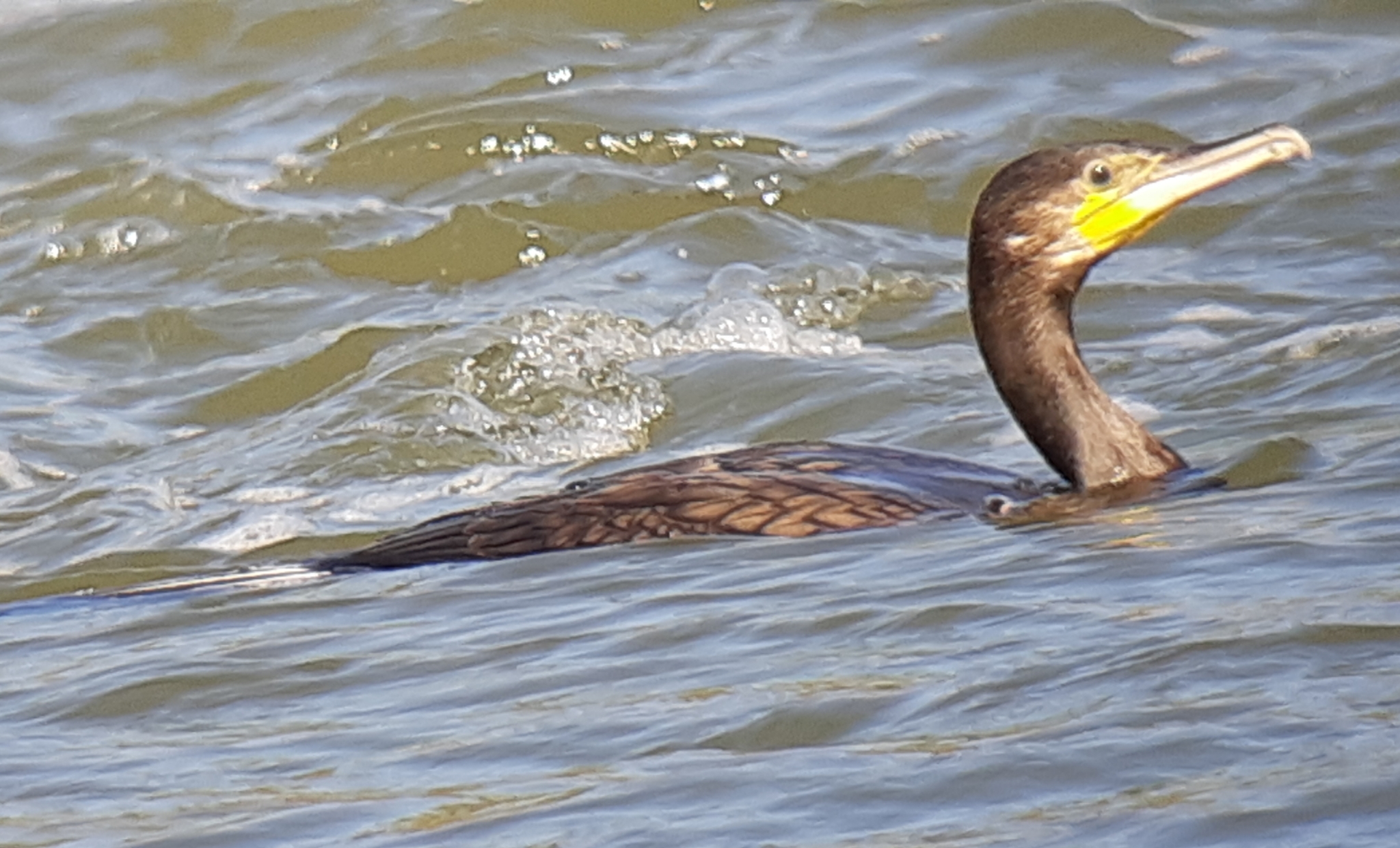
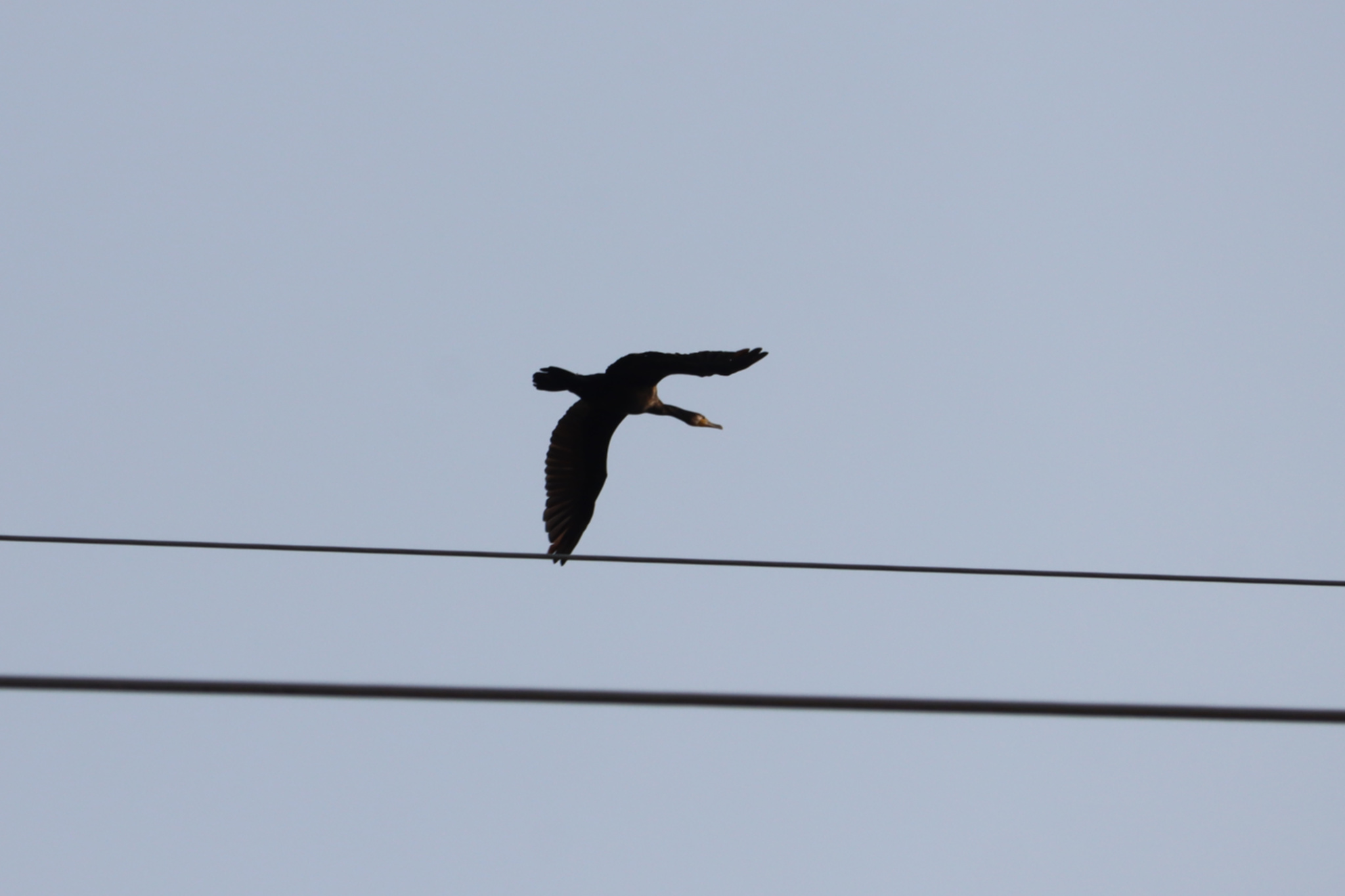
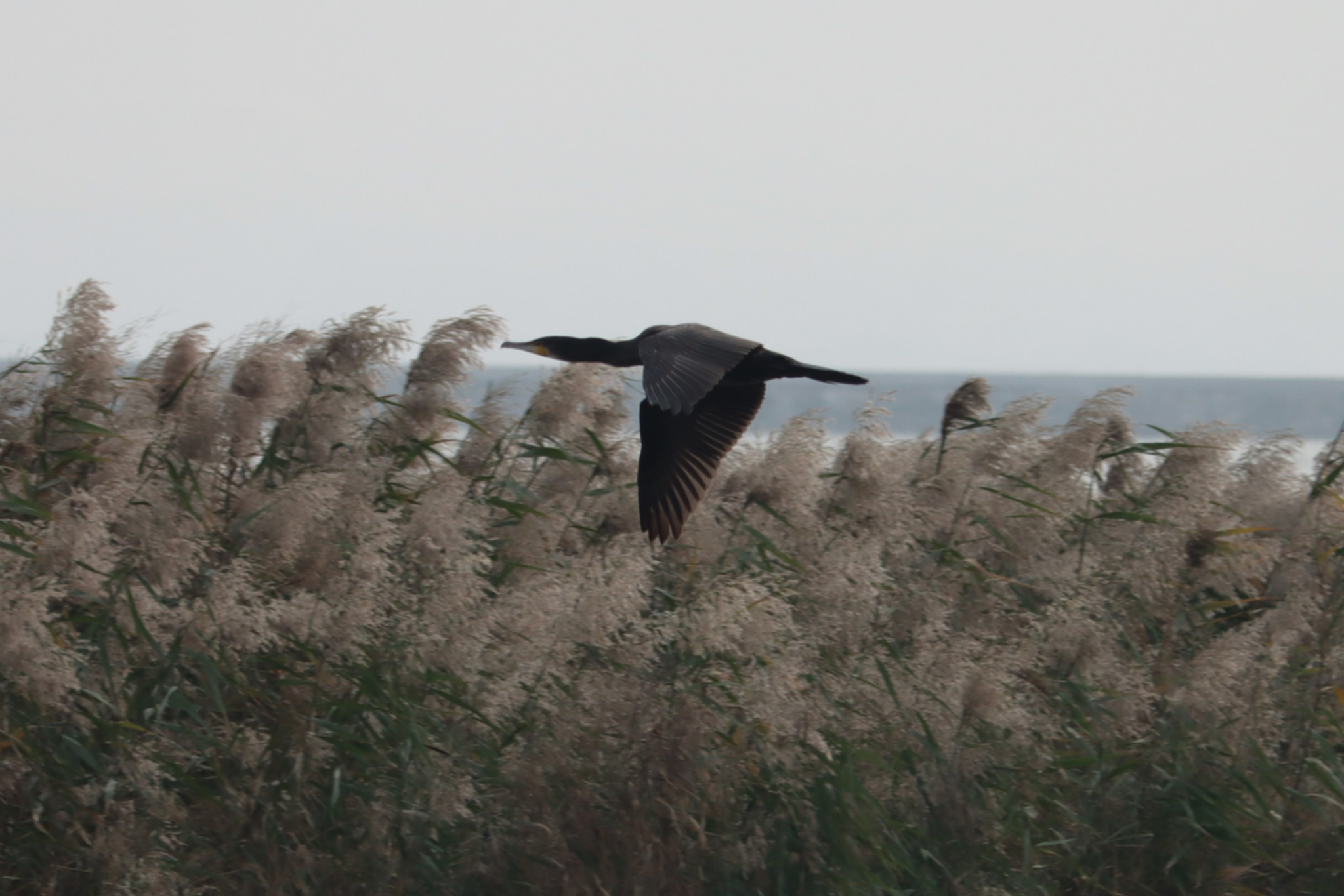
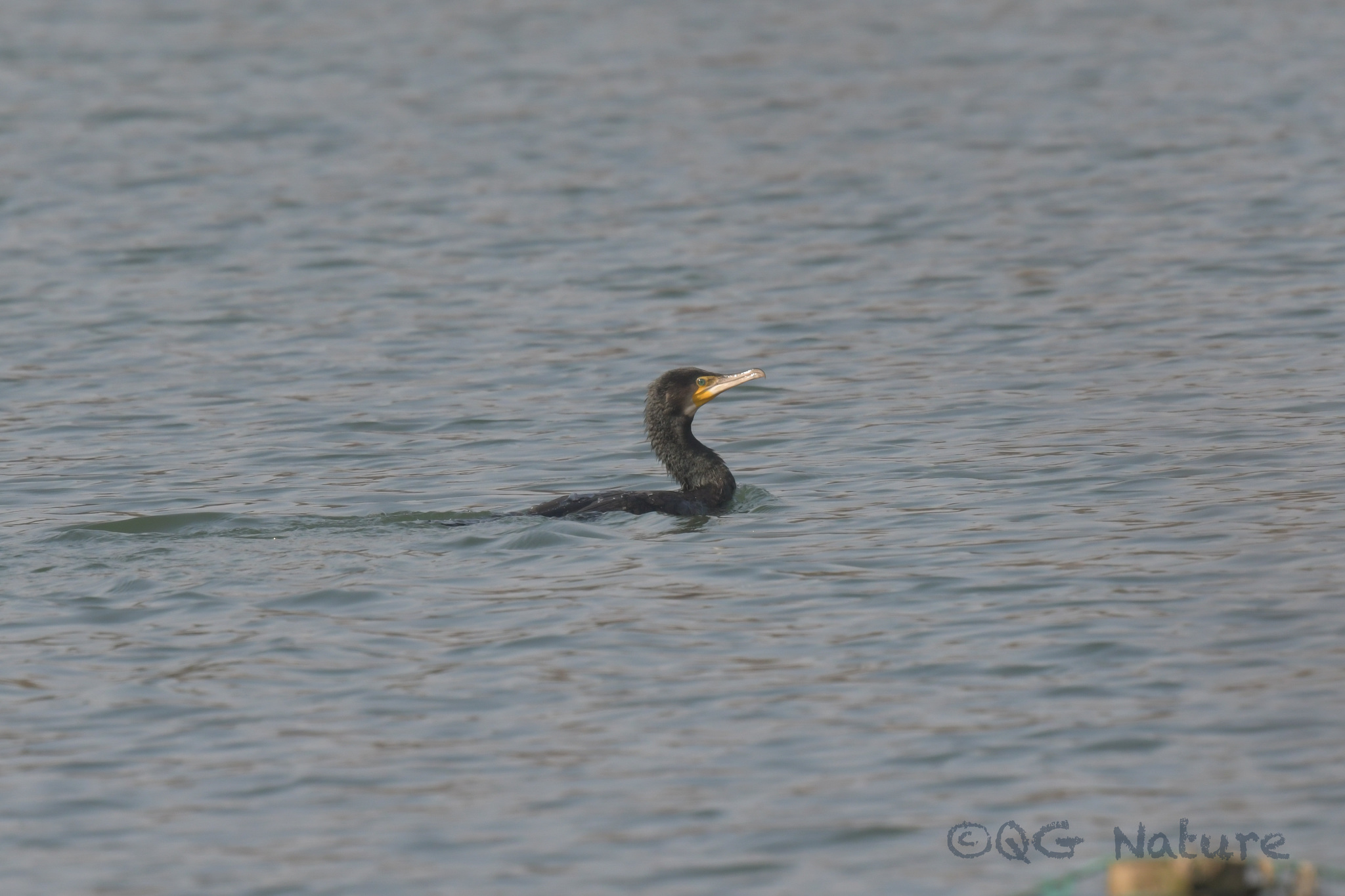
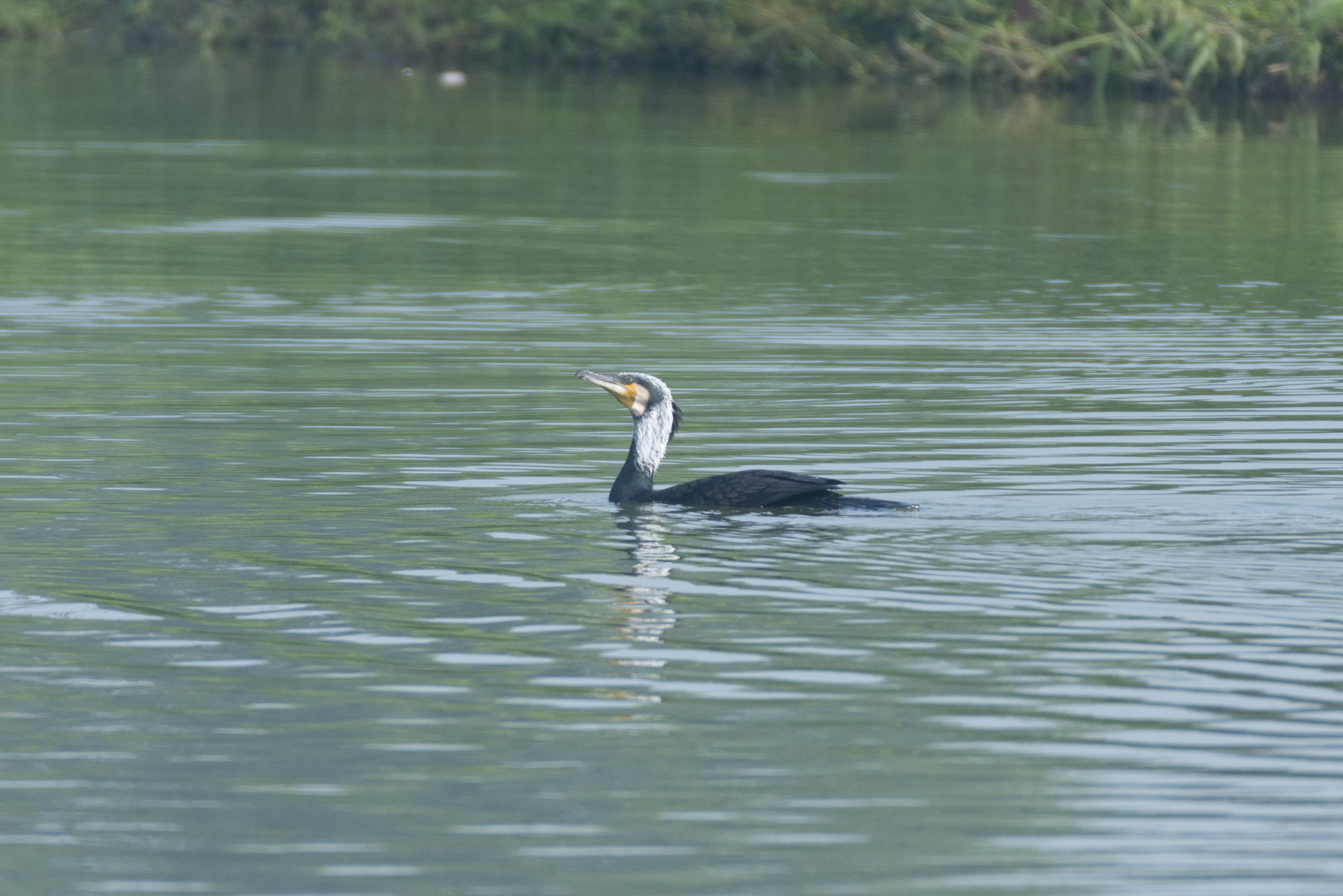
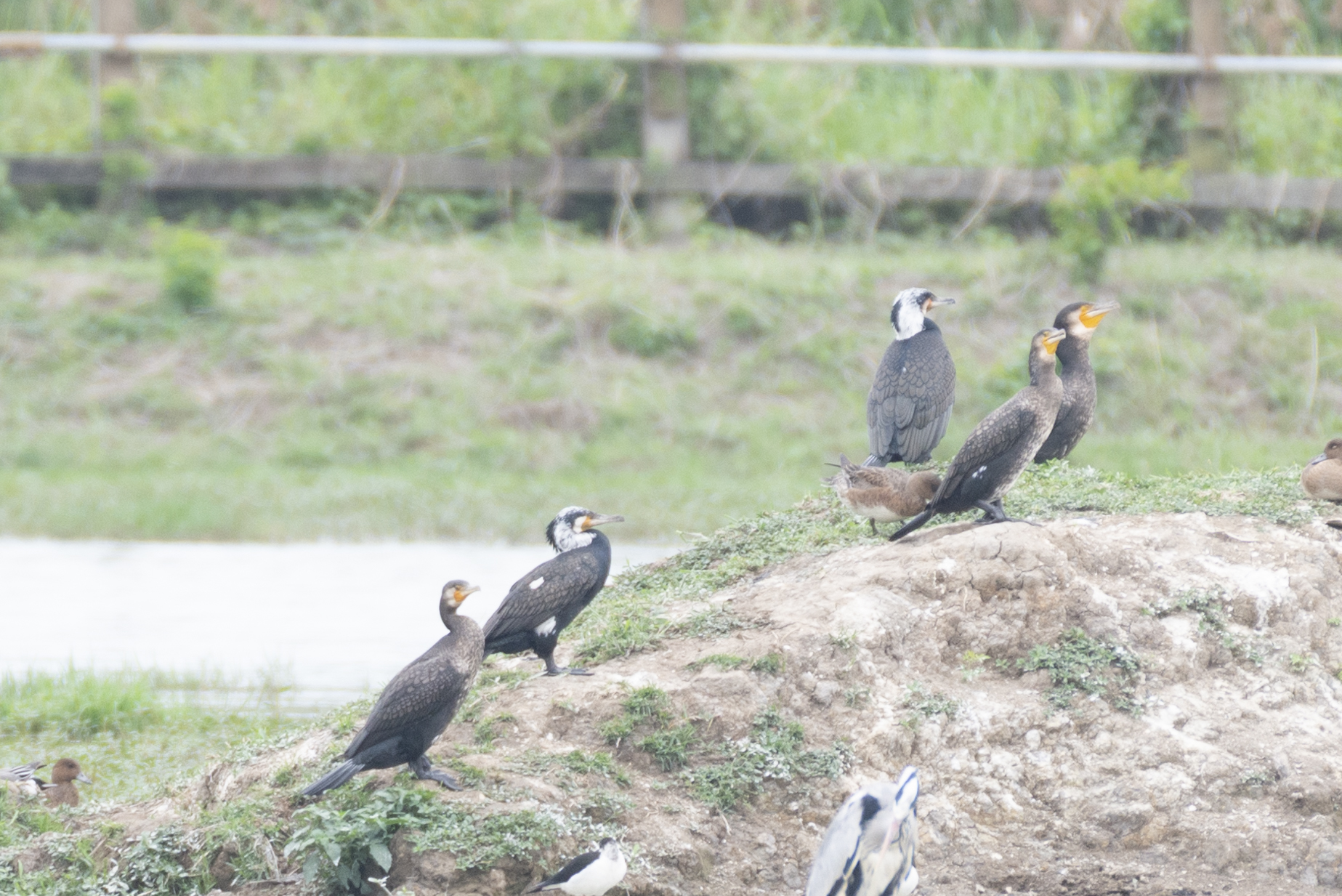
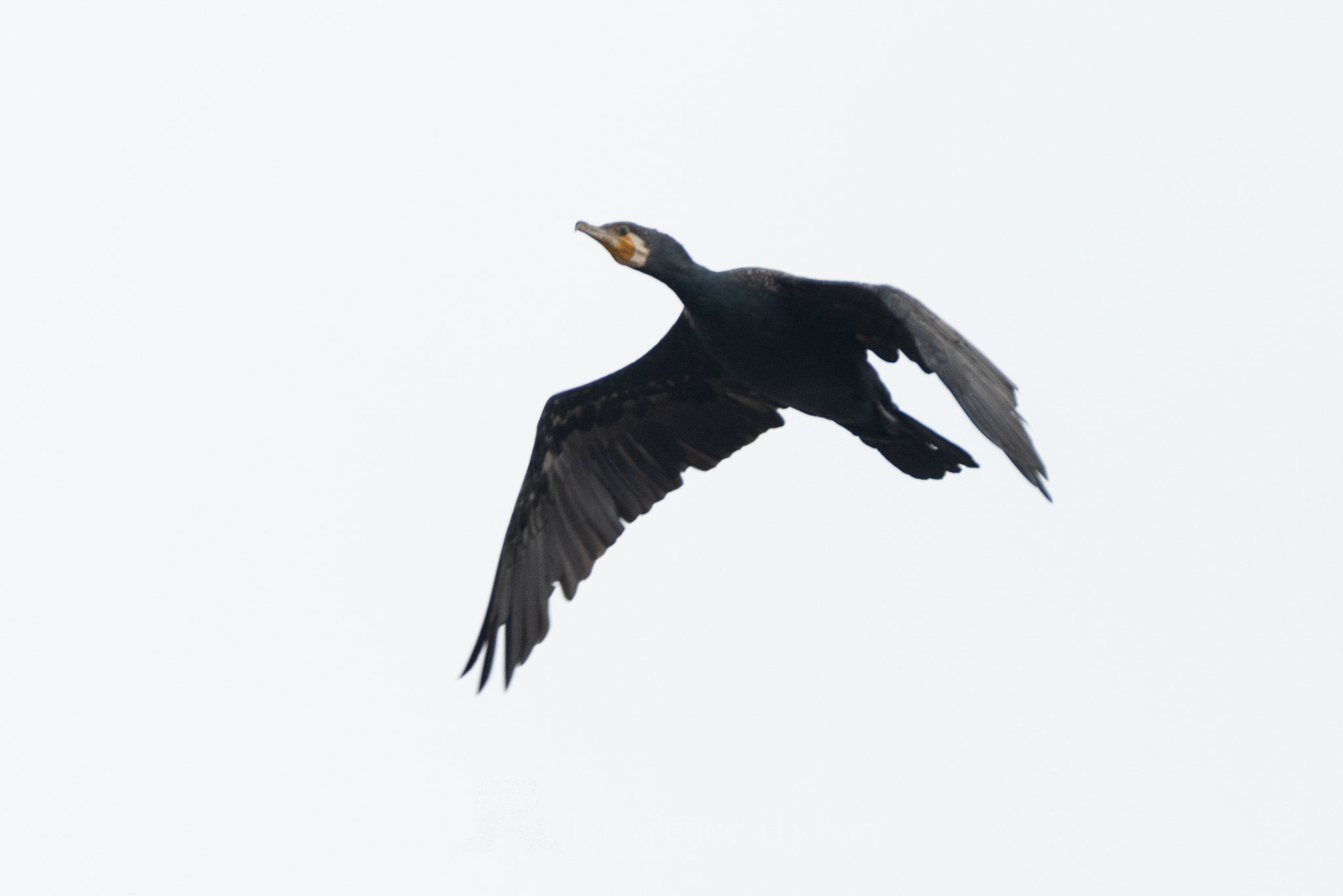
Length varies from 70 to 102 cm and wingspan from 121 to 160 cm. Weight ranges from 1.5 kg to 5.3 kg, with males typically larger than females. Plumage is largely black with bronze to greenish iridescence on wings and tail, and purple iridescence on the body. Adults have deep sea-green eyes; juveniles have duller dark grey eyes. The bill is stout, strongly hooked, dark grey at the tip grading to paler at the base, with a yellow or red patch of bare gular skin. Legs are short, stout, and dark grey; feet are fully webbed. Breeding adults display white filoplume patches on thighs, head, and upper neck. African subspecies have more extensive white plumage on the foreneck and breast. Winter plumage is uniformly black and less glossy. Juveniles have pale to whitish underparts, reaching adult plumage at 3–4 years.
Identification
Distinguished from the European shag by larger size, heavier build, thicker bill, lack of a crest, and purple (not green) body plumage tinge. Differs from the double-crested cormorant by larger size, bulkier build, less yellow on throat and bill, and presence of white thigh patches in breeding plumage. Both similar species have 12 tail feathers, whereas this species has 14. Subspecies identification relies on gular skin patch shape: acute angle in nominate race, obtuse angle in continental subspecies.
Distribution & Habitat
Breeds in much of the Old World, Australasia, and the Atlantic coast of North America. Subspecies P. c. carbo occurs in Atlantic waters, northwestern European coasts, Faroe Islands, Iceland, Greenland, and northeastern North America. Subspecies P. c. sinensis occurs across mainland Europe, Palearctic to Siberia, and southeastern Asia. Subspecies P. c. novaehollandiae is found in Australian and New Zealand waters. Northern birds migrate south to unfrozen coasts and freshwater; warmer area populations disperse locally. Rarely crosses large bodies of water like the North Sea.
Behavior & Ecology
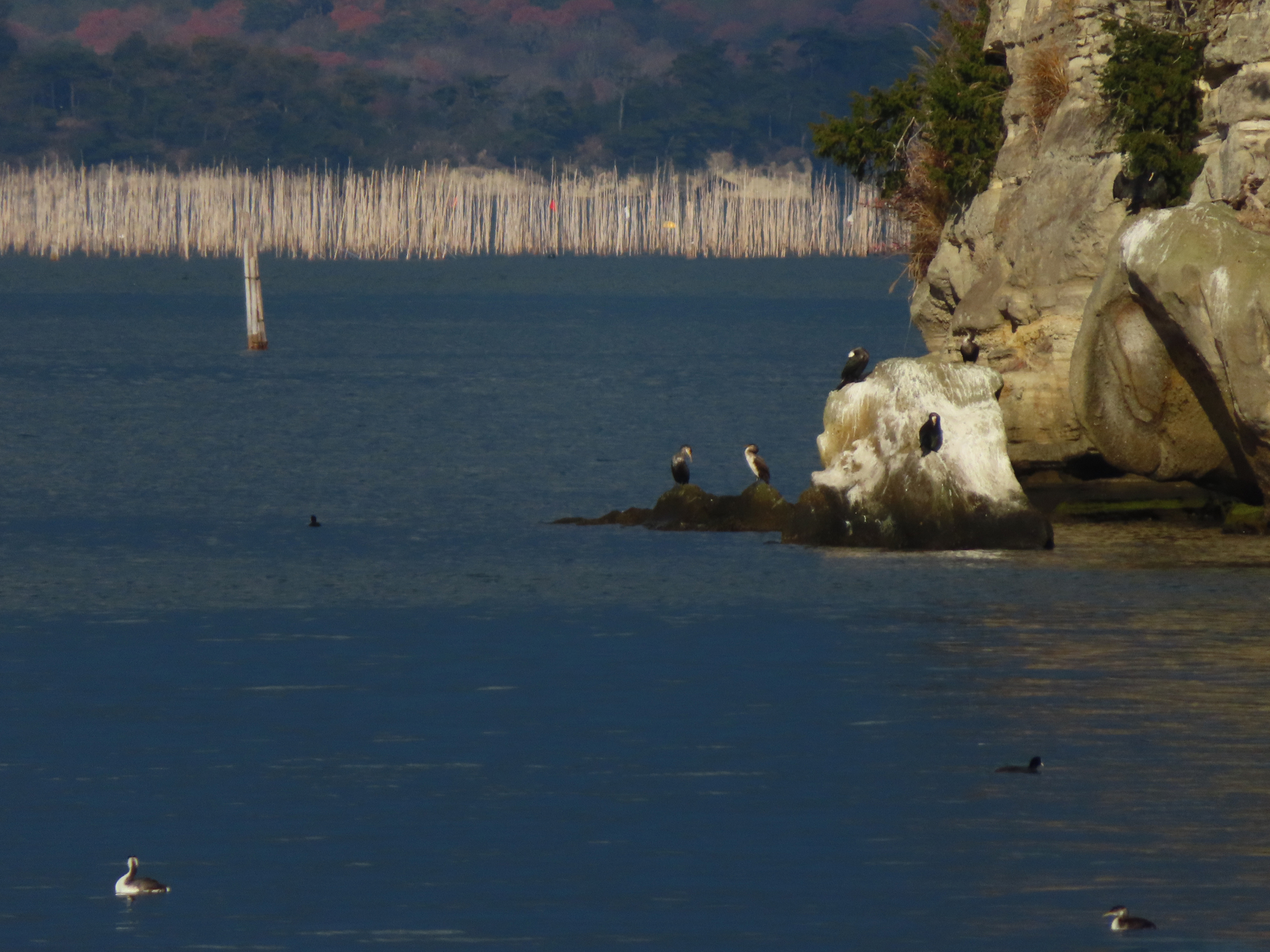
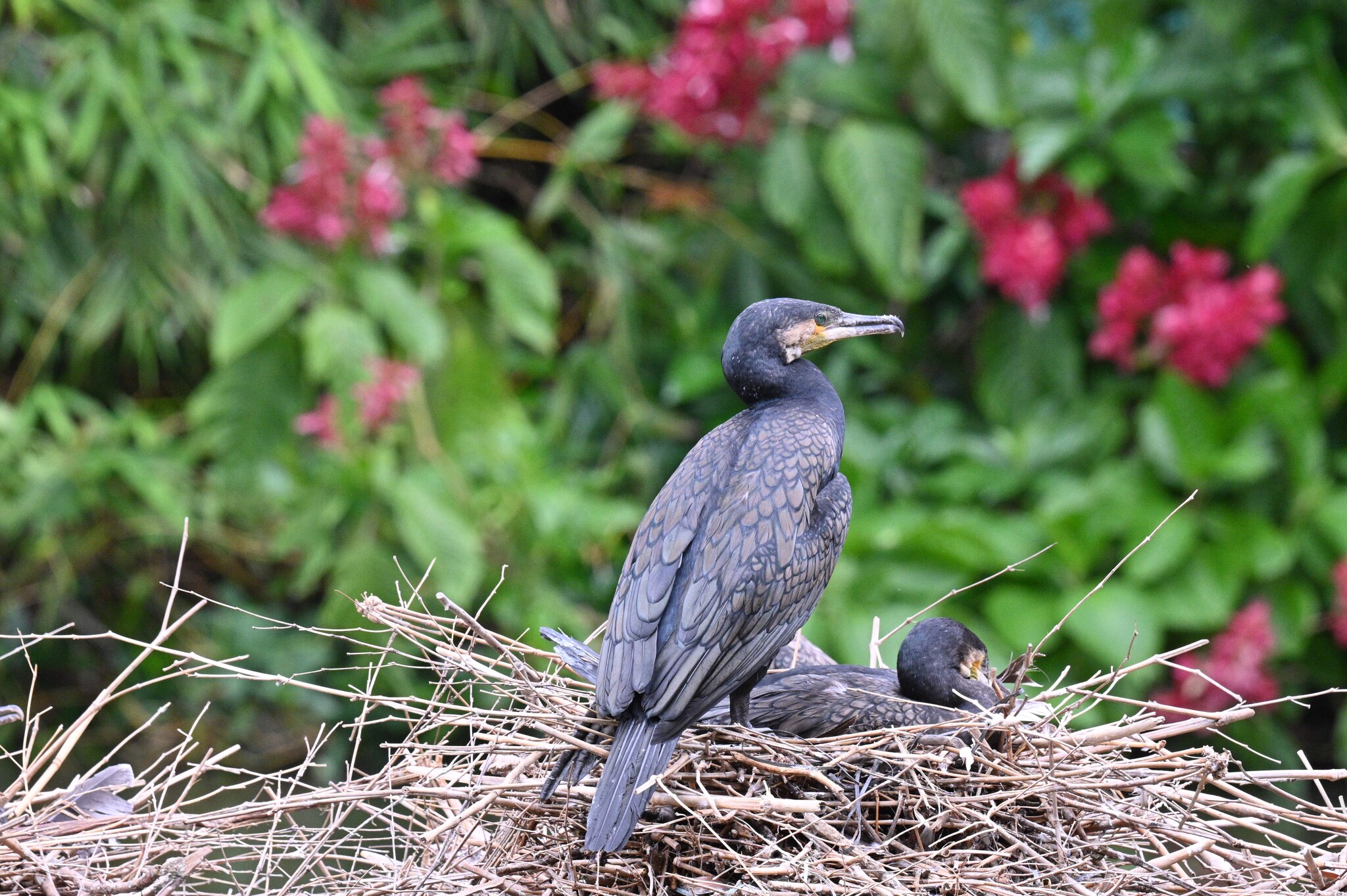
Nests in colonies near wetlands, rivers, and sheltered inshore waters, often reusing sites. Nests are stick structures built in trees, on cliff ledges, or on predator-free rocky islands. Clutch size is three to five pale blue or green eggs, incubated for 28–31 days. Feeds on fish caught by foot-propelled diving to depths up to 9.5 meters for 1–3 minutes. About 60% of dives target the benthic zone. Hearing is adapted for underwater detection, reducing sensitivity in air. Mostly silent except for guttural noises at breeding colonies.
Conservation
Vulnerable to highly pathogenic avian influenza outbreaks, with mass mortality recorded in Baltic Sea colonies. Historically hunted nearly to extinction due to competition with fisheries; numbers increased due to conservation efforts. Current European population is estimated at about 1.2 million birds based on winter counts. In the UK, licenses are issued to cull specified numbers to reduce predation on fish farms.
Culture
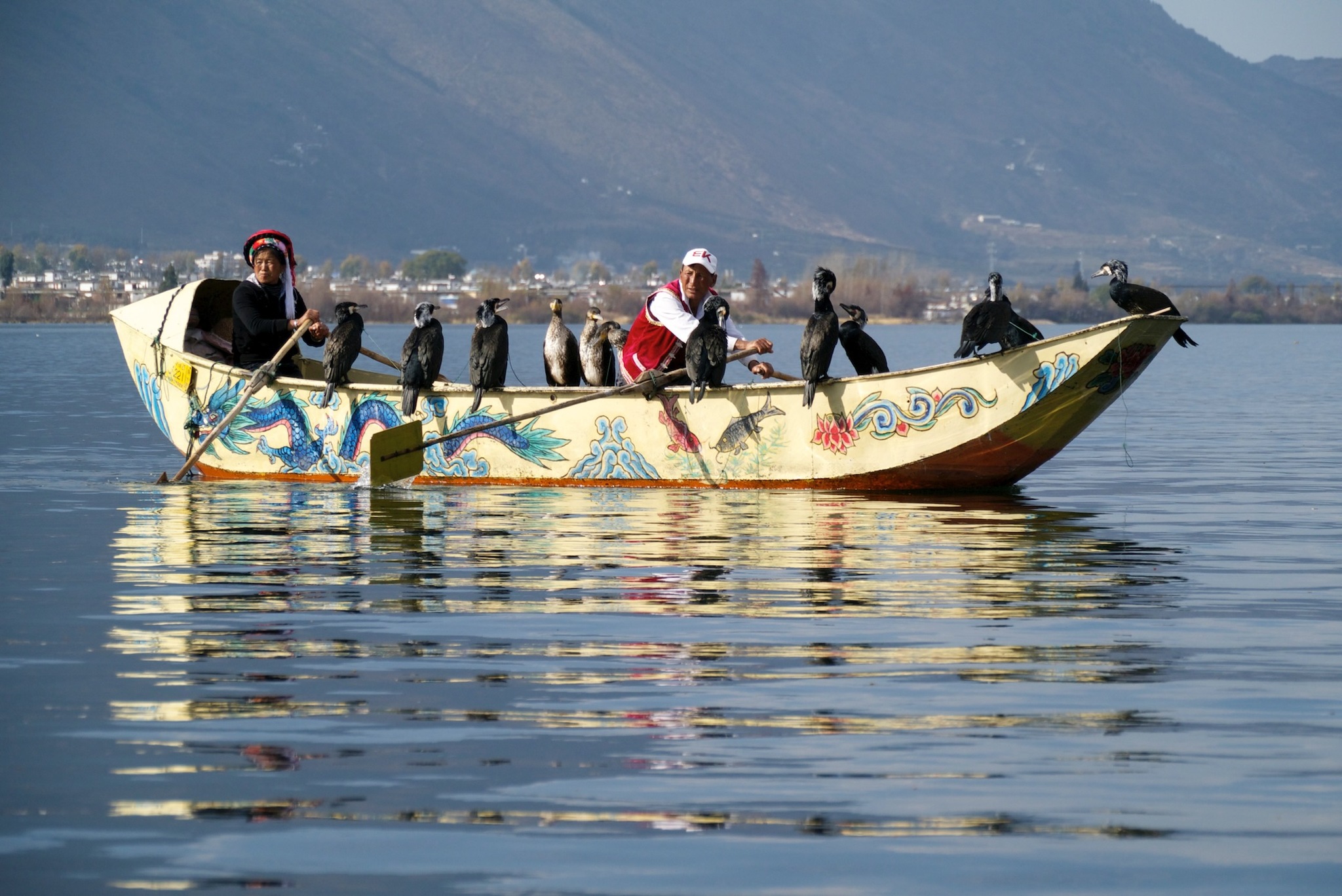
Cormorant fishing is practiced in China, Japan, and elsewhere, where fishermen use tethered birds to catch fish. In Norway, it is a traditional game bird, with approximately 10,000 shot annually for food. In North Norway, it is traditionally seen as semi-sacred, and gathering near a village is considered good luck. Legend holds that people who die at sea spend eternity on the island Utrøst and visit homes in the shape of cormorants.
Source: Wikipedia · CC BY-SA 3.0
Taxonomy
- Order
- Suliformes
- Family
- Phalacrocoracidae
- Genus
- Phalacrocorax
Subspecies (6)
-
Phalacrocorax carbo carbo
breeds coastal North Atlantic of western Greenland and western Europe, and eastern Canada to Maine (northeastern USA); winters southward on coasts to Iberian Peninsula and Delaware
Data Sources
Species description from Wikipedia, licensed under CC BY-SA 3.0.
Bird images and sounds sourced from GBIF, contributed by citizen scientists worldwide under Creative Commons licenses.
Taxonomy data from AviList 2025.