Accipitriformes / Accipitridae / Pernis
Crested Honey Buzzard
Pernis ptilorhynchus · 凤头蜂鹰
Introduction
A fairly large bird of prey in the family Accipitridae, larger than the European honey buzzard. It is sexually dimorphic and comprises six subspecies. The species specializes in a diet of bee and wasp larvae, possessing specific morphological adaptations for extracting grubs from combs and resisting stings. It migrates to Siberia and Japan for summer breeding and winters in Southeast Asia and the Indian subcontinent, where it also resides year-round. Habitat includes well-forested areas with open spaces from sea level to 1,800 m. IUCN status is Least Concern.
Description
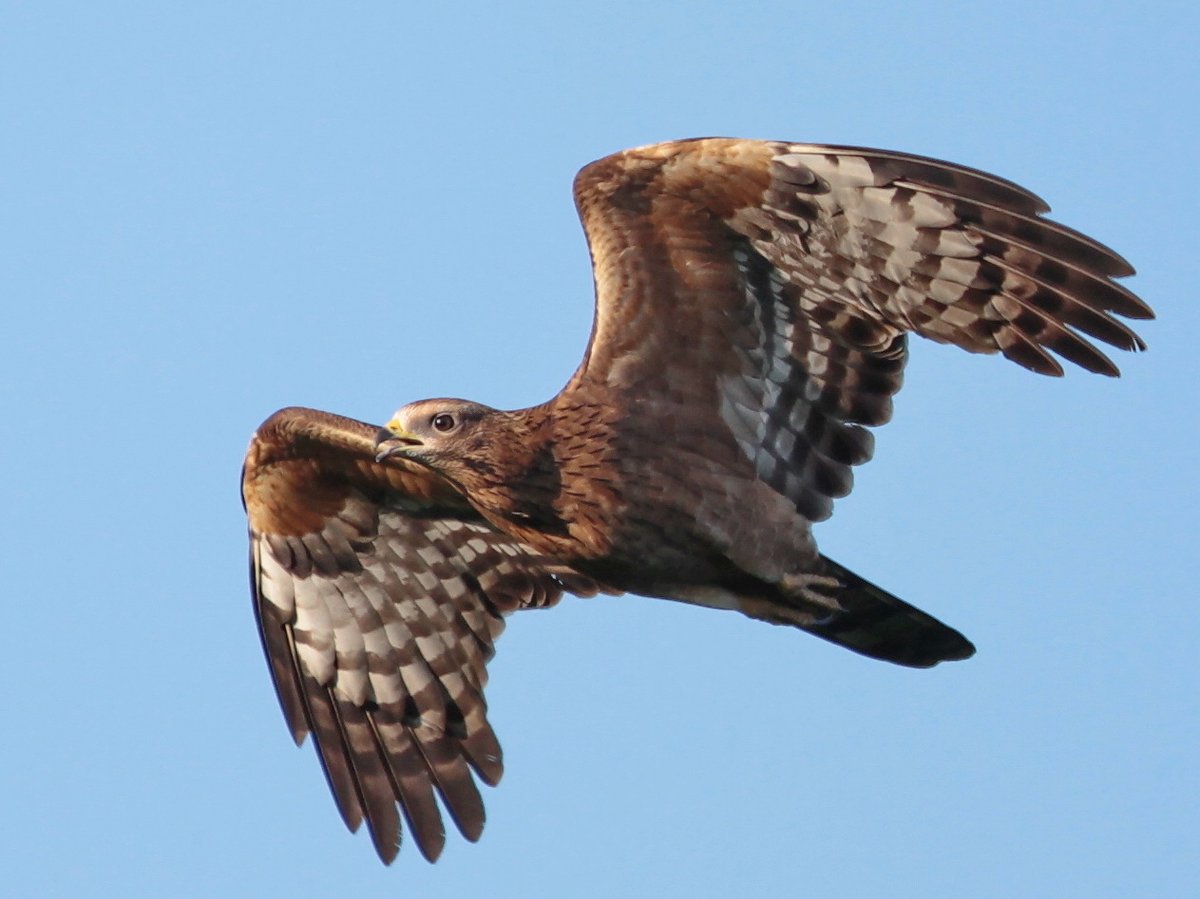
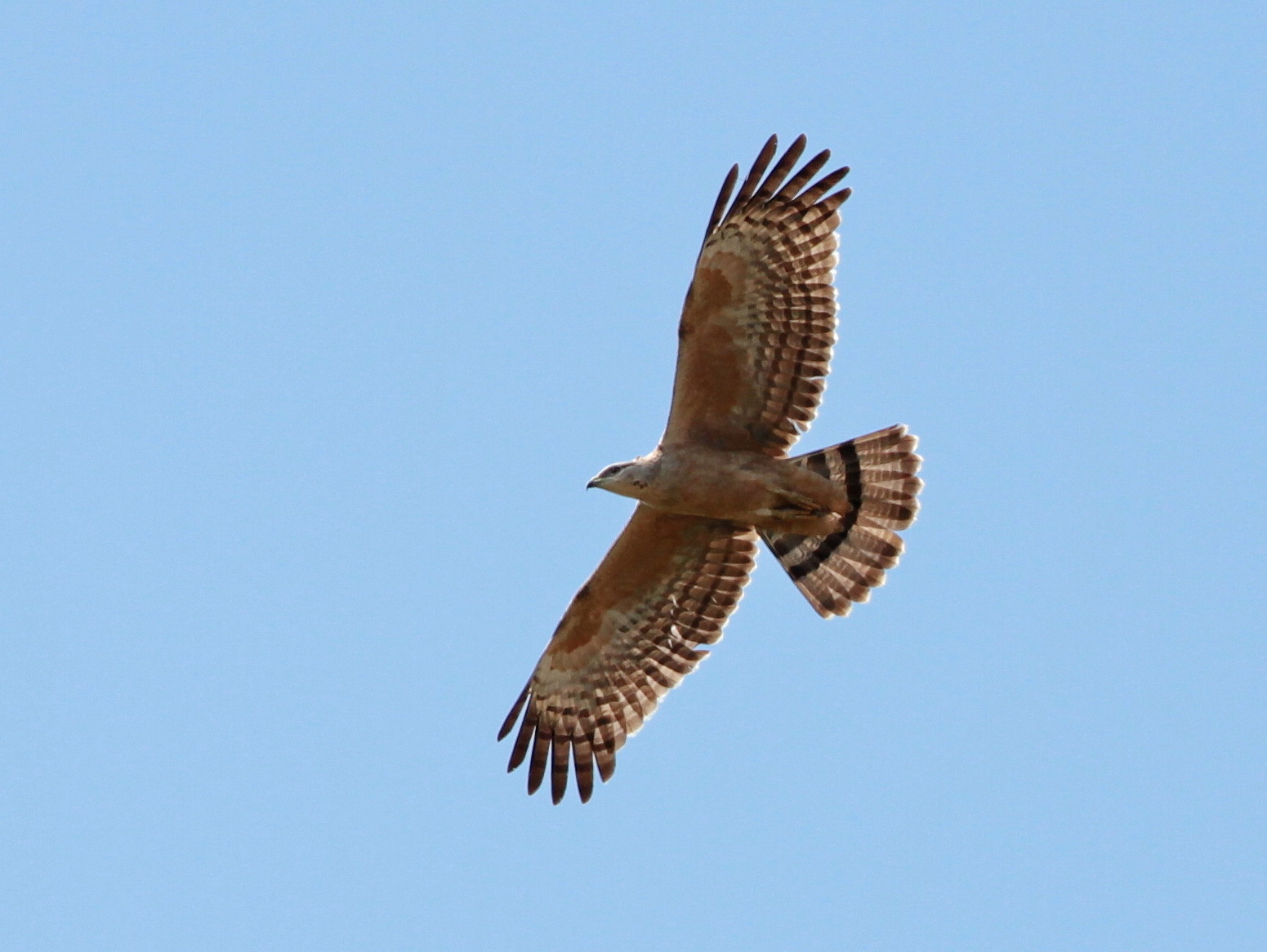
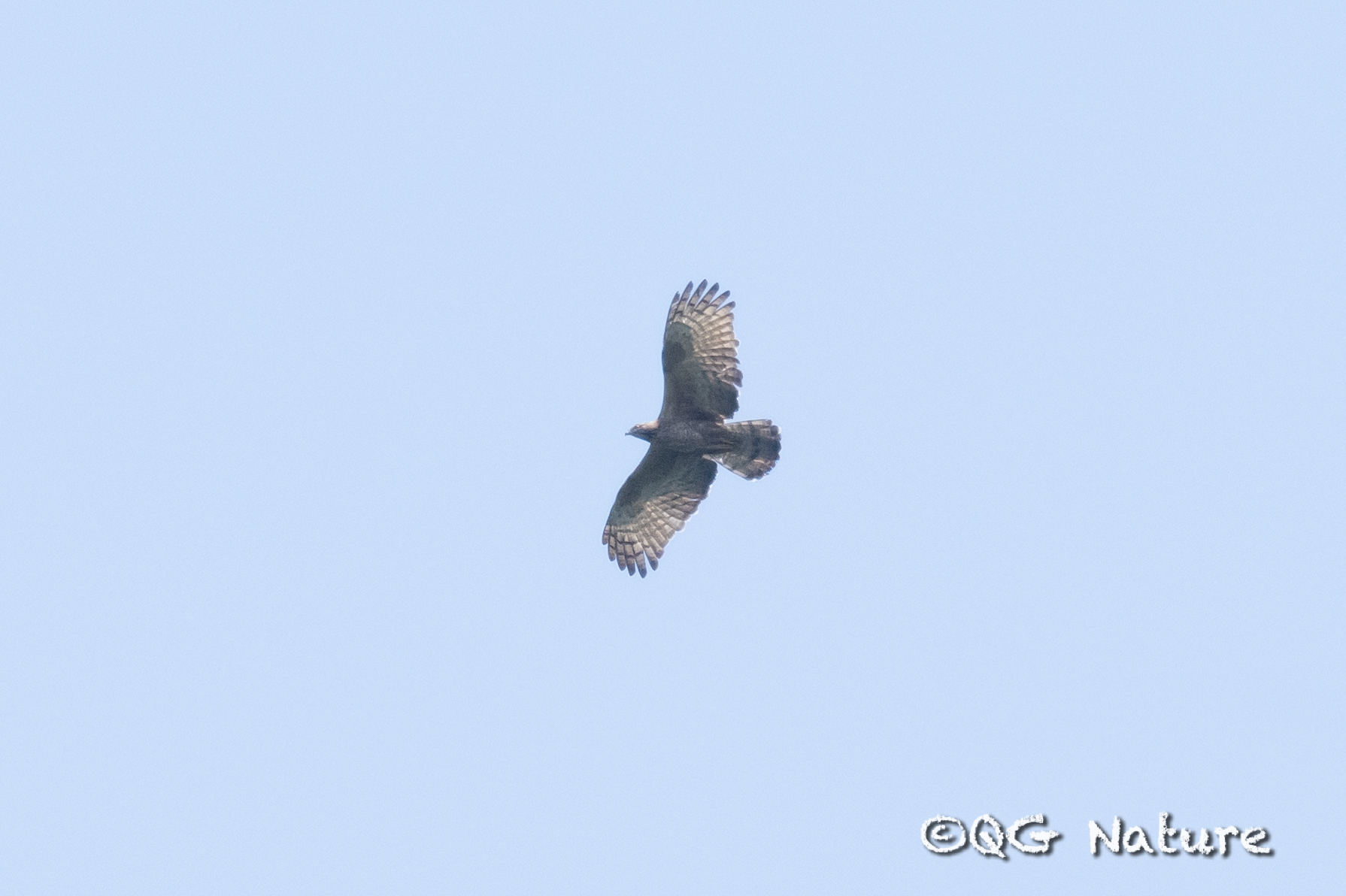
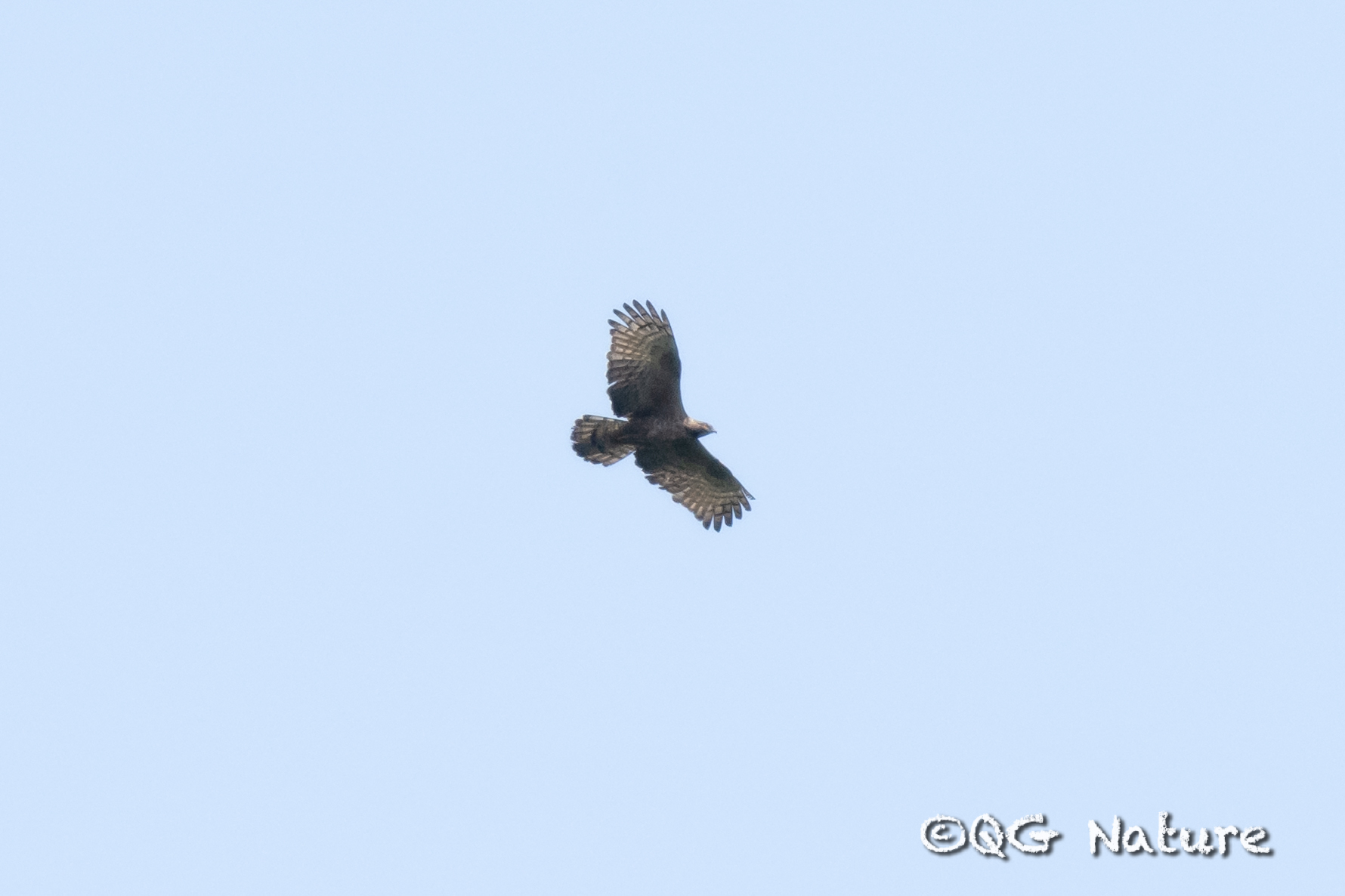
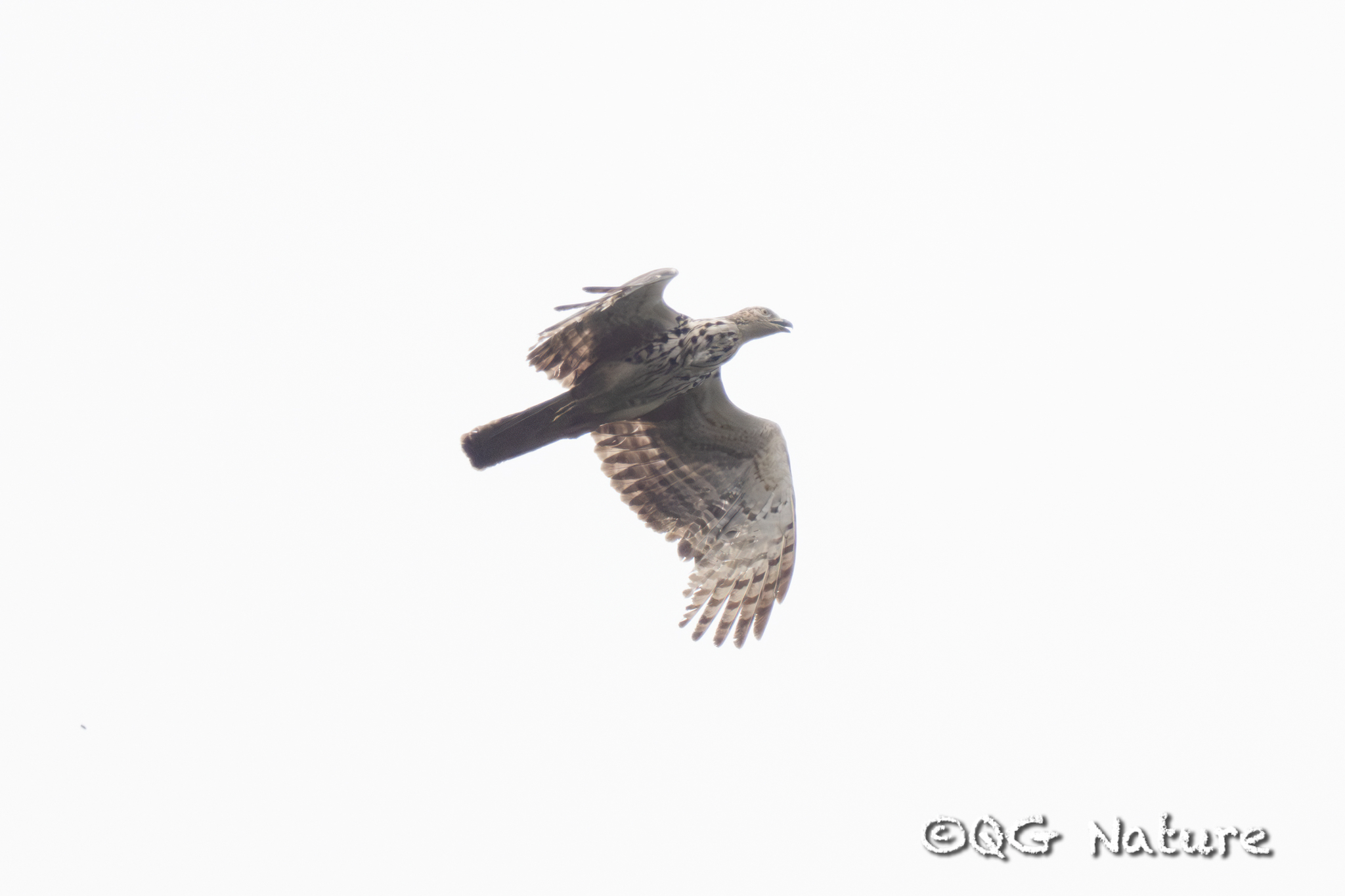
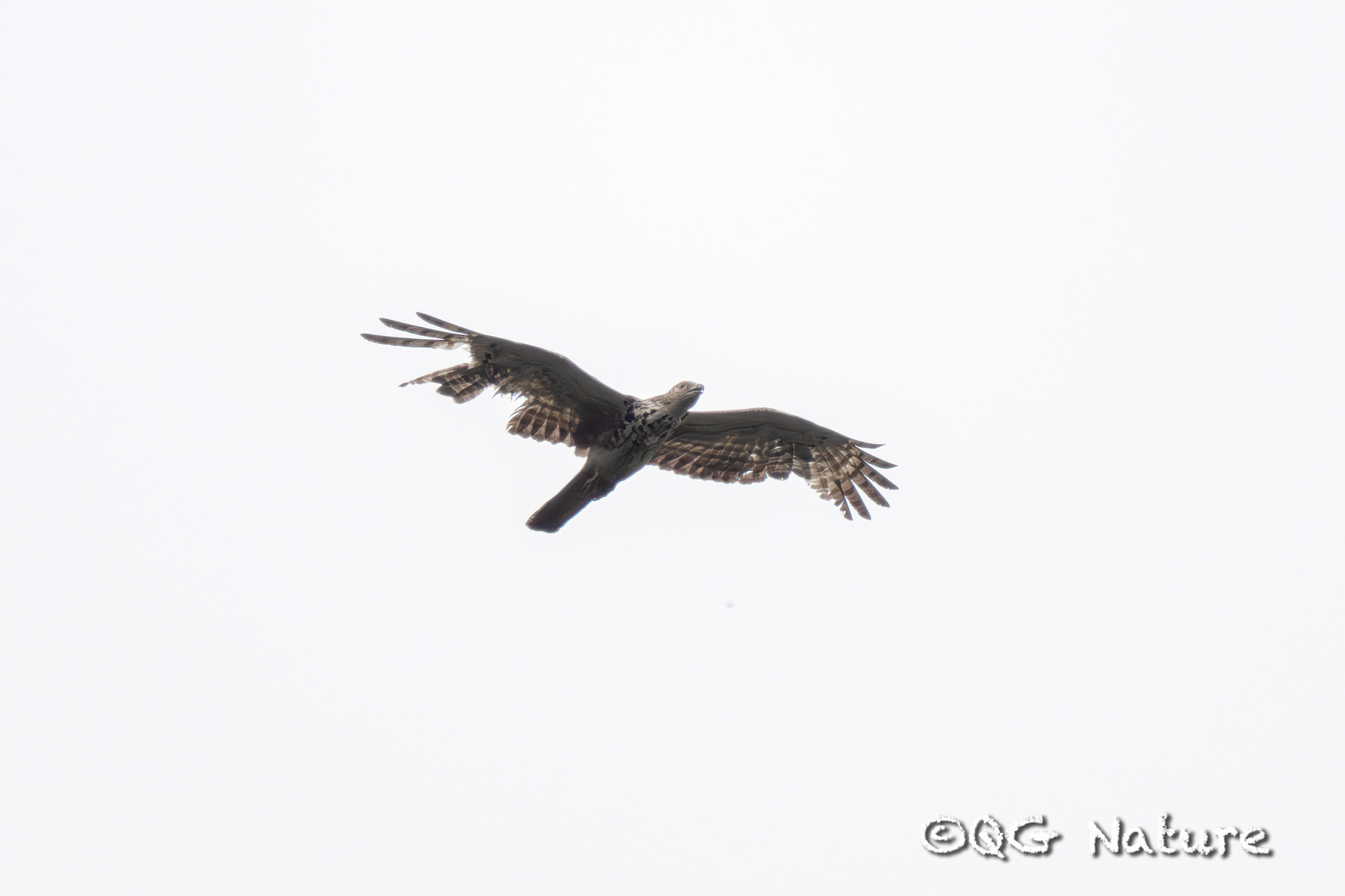
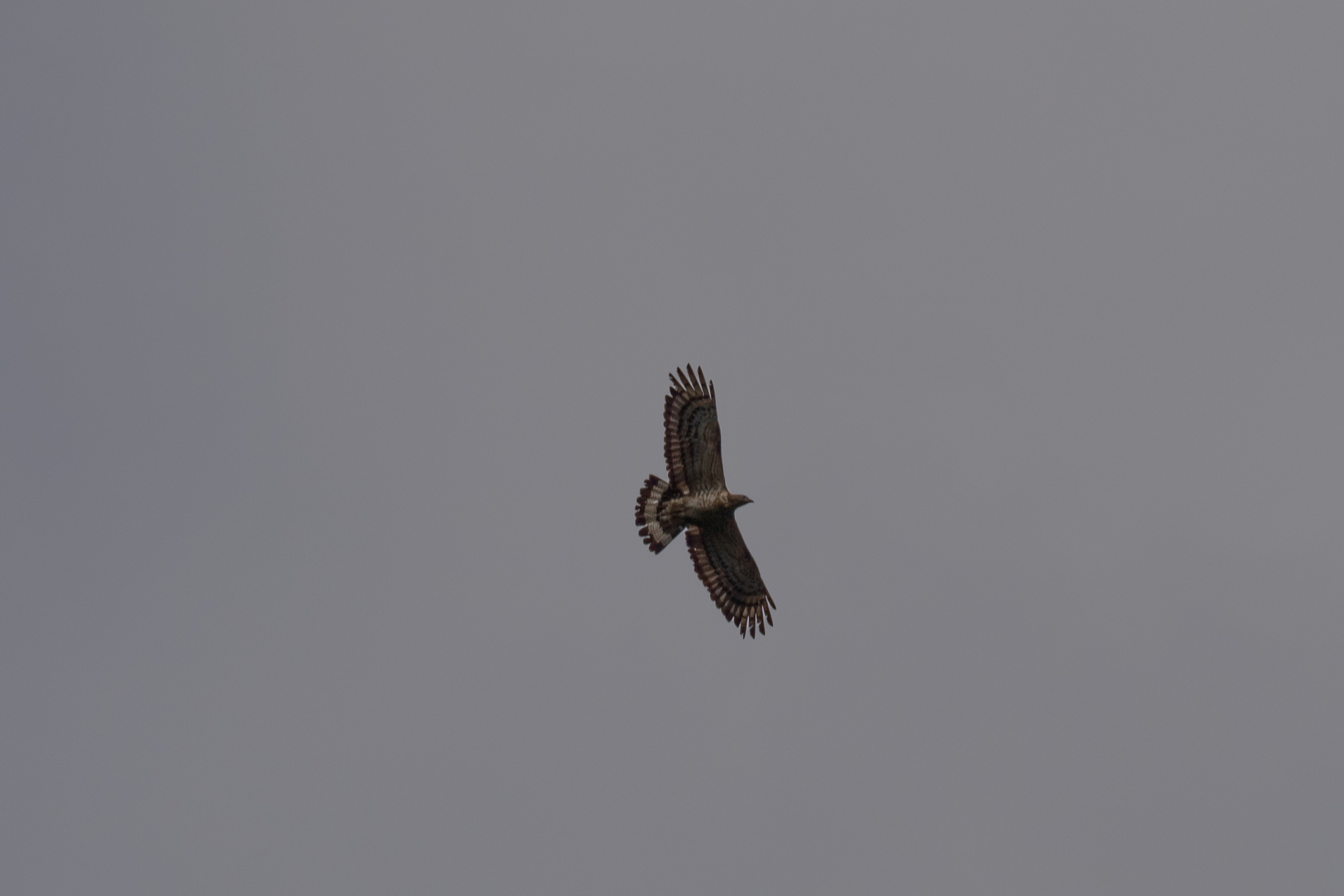
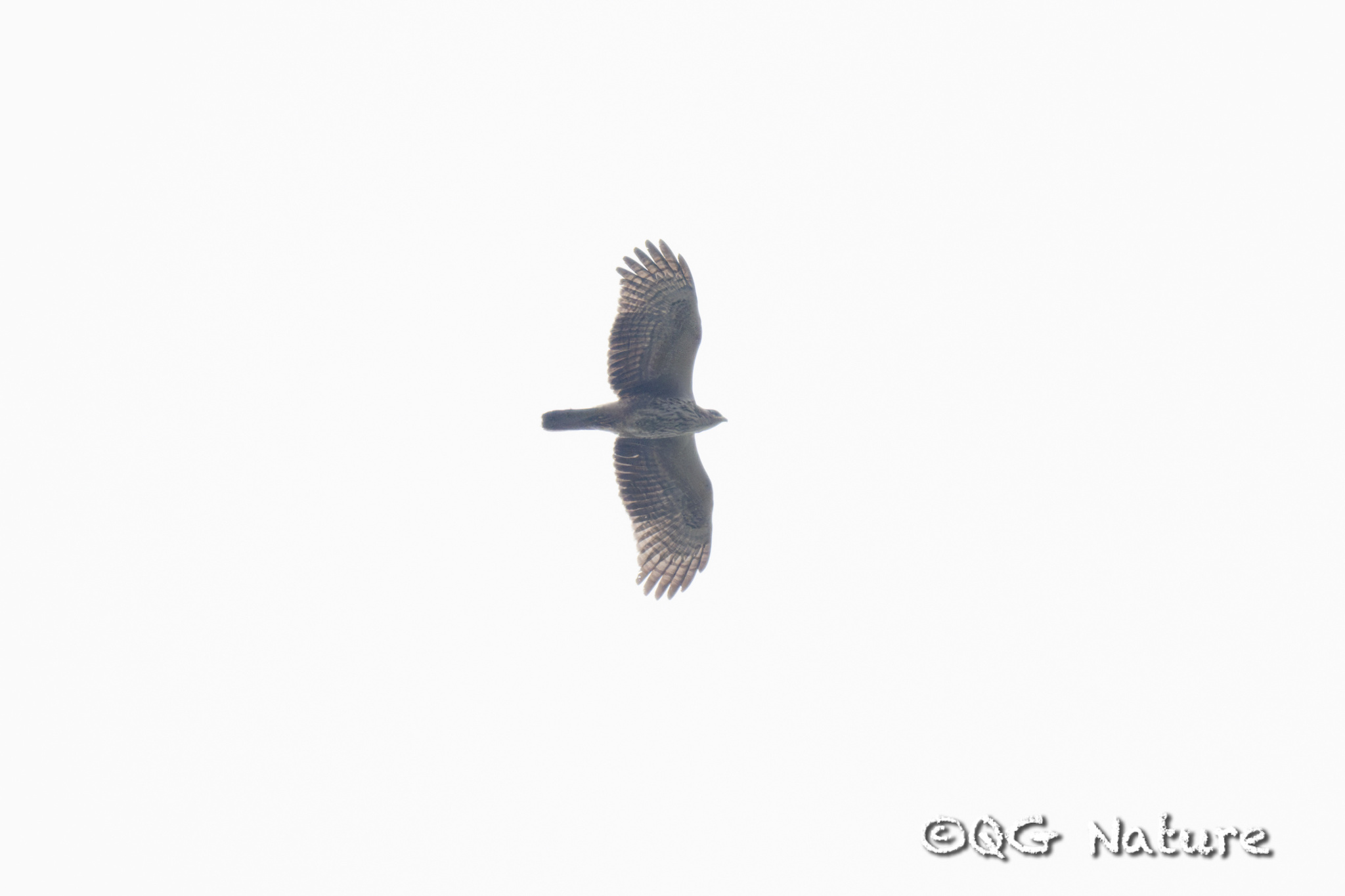
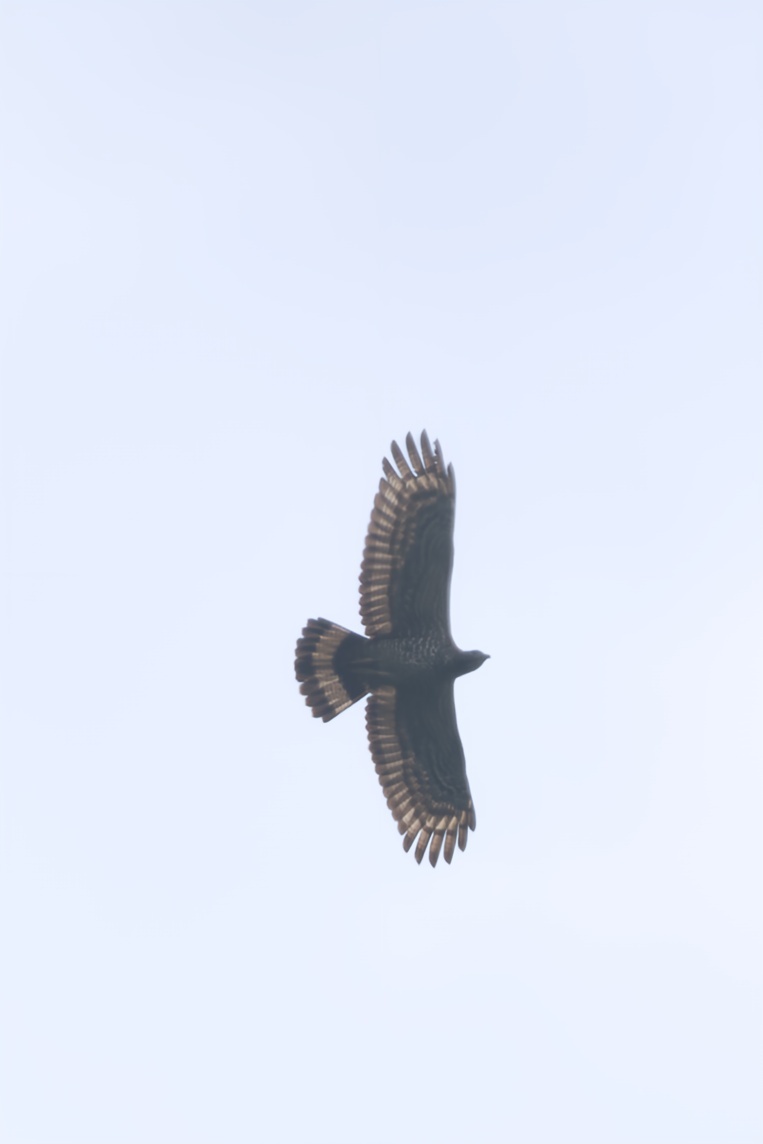
Size is 57–60 cm (22–24 in). The head lacks a strong superciliary ridge, appearing small and pigeon-like with a long neck and short crest. Plumage is brown above, paler below, with a dark throat stripe. Males have a blue-grey head, brown iris, two black tail bands, and three black underwing bands. Females are slightly larger and darker, with a brown head, yellow iris, three black tail bands, and four narrower black underwing bands. Juveniles show extensive black primary tips, narrower underwing bands, a yellow cere, and dark iris. Coloration and tail patterns are highly variable.
Identification
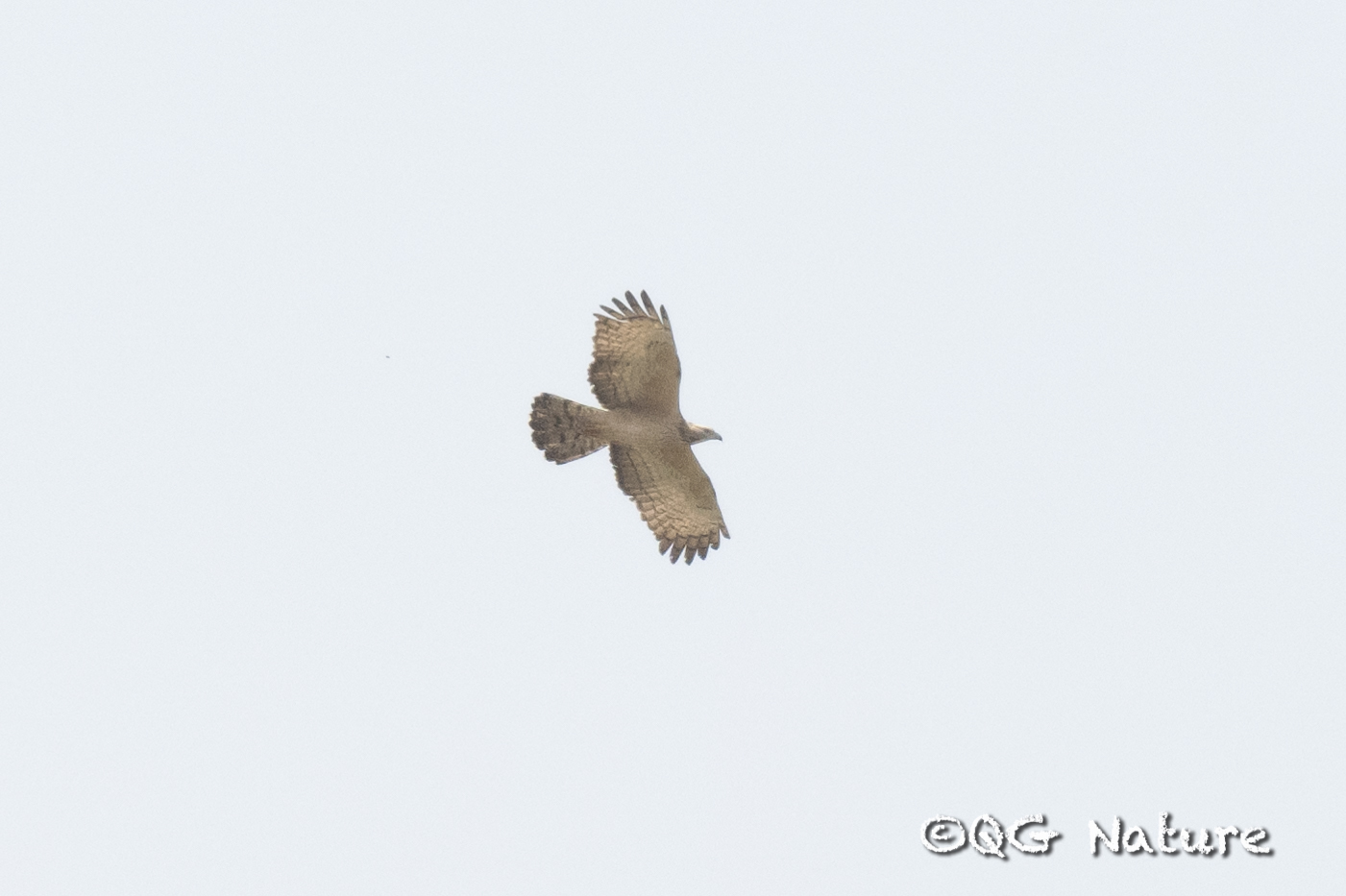
Distinguished from the short-toed snake-eagle by a slimmer head and longer neck. Flight features deep elastic beats, high upstrokes, and gliding on flat or slightly arched wings held at right angles to the body. Wings are long, broad, and rounded at six-fingered tips. Tail is broad, medium-length, and rounded. Wing span is 2.4 times total length in Palearctic subspecies, but 2.0–2.2 in Indo-Malayan subspecies. Often seen soaring singly or in pairs, or perched on tree tops. Vocalizations are rare, occasionally a single high-pitched screaming whistle.
Distribution & Habitat
Summer migrant to Siberia, Korea, and Japan; winters in tropical Southeast Asia and the Indian subcontinent. Leaves Siberia in late August, returns in May; present in Japan April–May to mid-September. Migratory populations fly nonstop over the East China Sea (700 km). Resident in parts of South and Southeast Asia. Recorded once on Shemya Island, Alaska. Prefers well-forested lowland and hilly areas with open glades, sometimes near villages. Altitude range is sea level to 1,500 m, occasionally up to 1,800 m; exceeds 3,000 m during migration.
Behavior & Ecology
Specialist feeder on larvae, pupae, and combs of social bees and wasps; also eats cicadas, small birds, reptiles, and frogs. Digs up underground wasp nests in summer breeding grounds using talons; attacks arboreal nests in wintering regions. Adaptations include an elongated head, groove in the tongue for extracting grubs, and dense, short, stiff feathers on the head and neck that protect against stings. Breeding occurs in woodland; displays include wing clapping and roller-coasting flight. Nest is a stick platform 40–80 cm across, lined with leaves, placed 6–28 m high. Female lays two variable-colored eggs. Incubation lasts 4–5 weeks; chicks fledge in 5–6 weeks and become independent after 58 weeks. Both sexes share rearing duties.
Conservation
IUCN status is Least Concern. Population estimates range from 100,000 to 1,000,000. Climate change may reduce wind support for migration over the East China Sea, potentially causing loss of this migratory pathway by the late 21st century. The species is adapting to anthropogenic habitats, colonizing irrigated forest plantations in Pakistan and wintering in Arabia. Illegal trade via social media in Indonesia accounts for approximately 1% of raptors offered for sale.
Culture
In Java, Indonesia, local people believe the bird transfers attacks from angry giant honey bees to humans as an escape strategy when raiding nests. Studies conducted between 2003 and 2019 found no evidence for this behavior, attributing human-bee conflicts to habitat decline instead.
Source: Wikipedia · CC BY-SA 3.0
Taxonomy
- Order
- Accipitriformes
- Family
- Accipitridae
- Genus
- Pernis
Vocalizations
Subspecies (6)
-
Pernis ptilorhynchus orientalis
southern Siberia to Manchuria and Japan; winters to Greater Sundas and coastal western Australia (regularly Perth, rarely elsewhere)
Data Sources
Species description from Wikipedia, licensed under CC BY-SA 3.0.
Bird images and sounds sourced from GBIF, contributed by citizen scientists worldwide under Creative Commons licenses.
Taxonomy data from AviList 2025.