Coal Tit
Periparus ater
煤山雀
Introduction
Small forest-dwelling tit in the Palearctic. Range extends from Britain and Scandinavia east to Japan, and south to North Africa. Inhabits coniferous plantations, mixed woodlands, and mature deciduous stands in temperate and subtropical zones. Shows adaptability across its range with numerous recognized subspecies. Forms mixed flocks with other tit species during winter. Visits garden feeders in colder months. Forages acrobatically through canopy and understorey.
Description
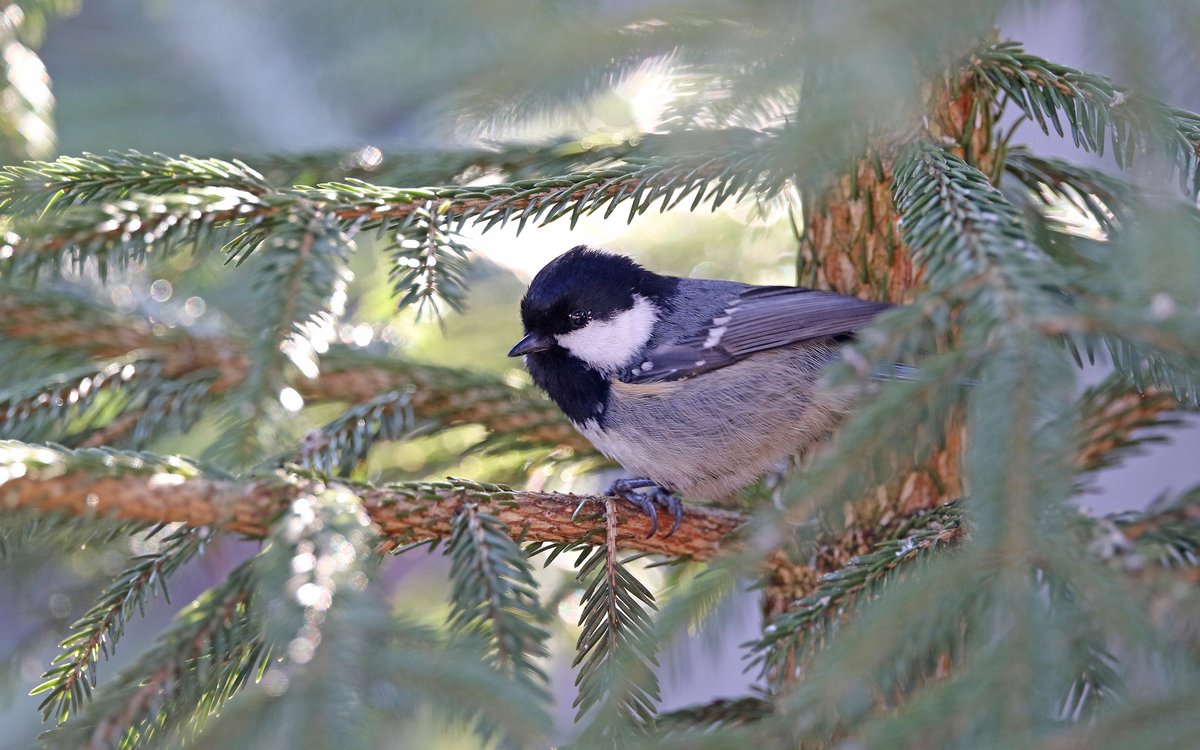
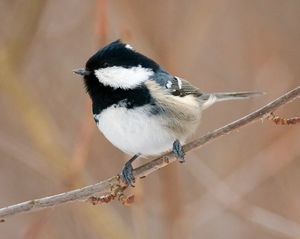
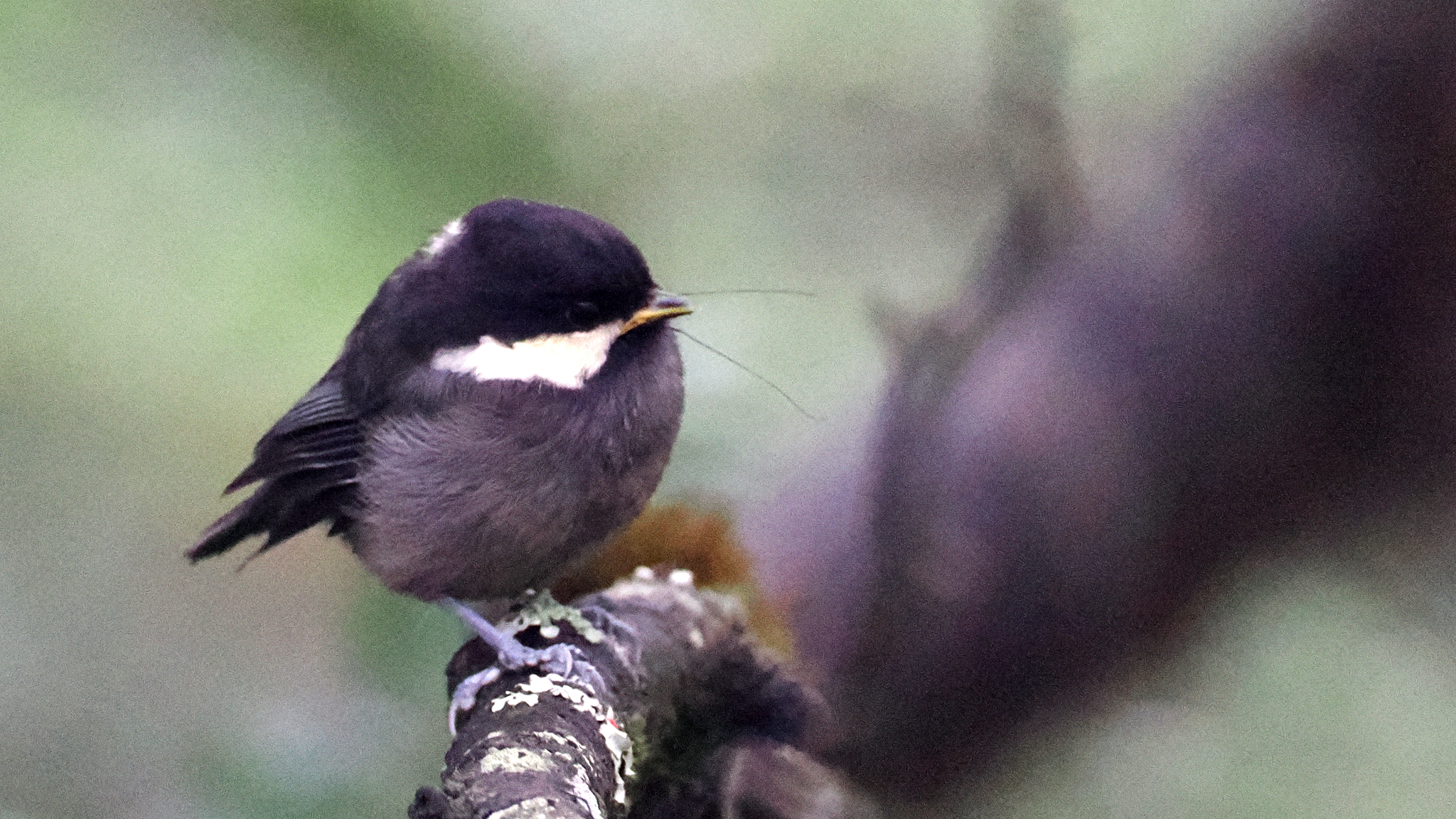
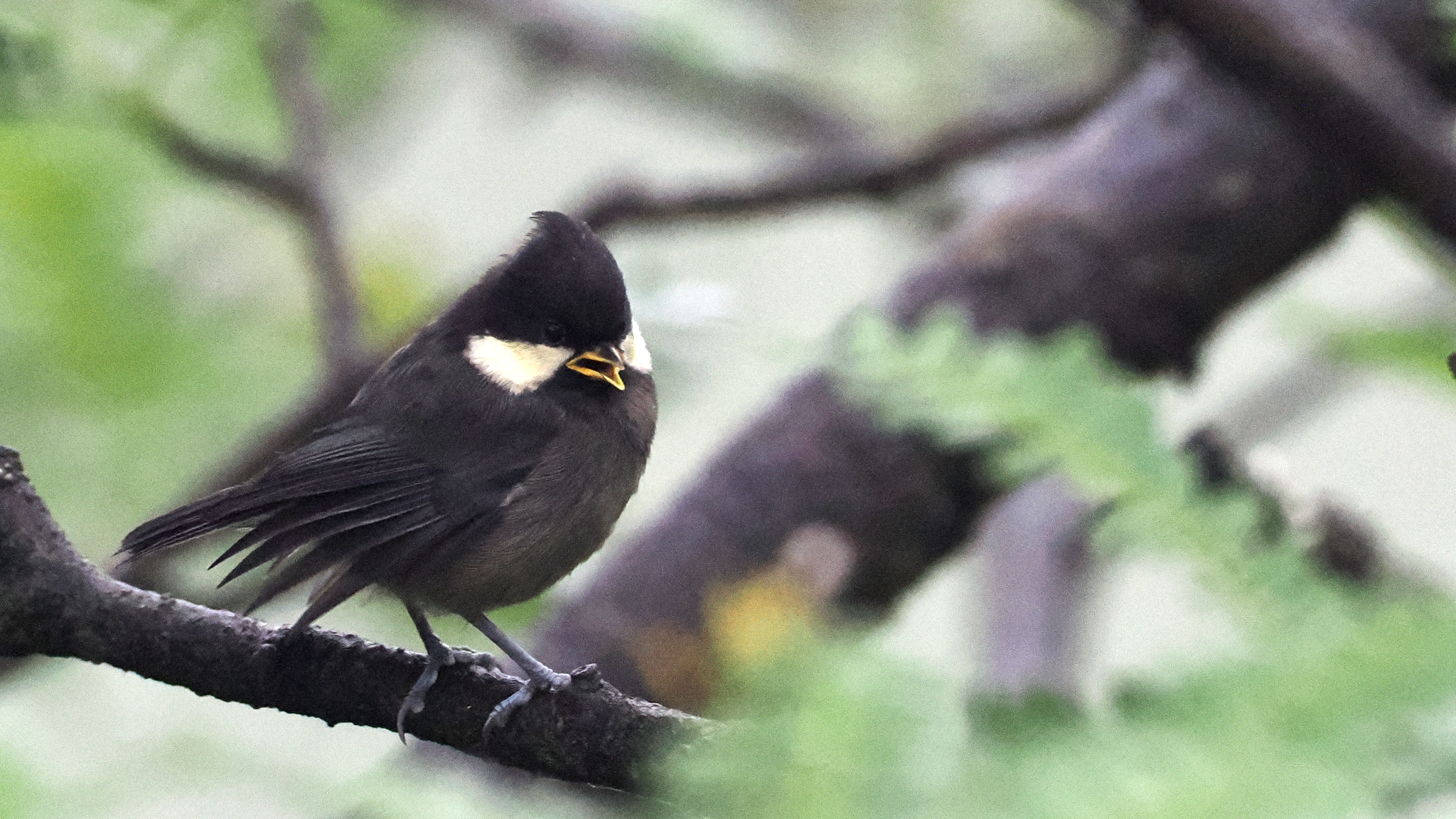
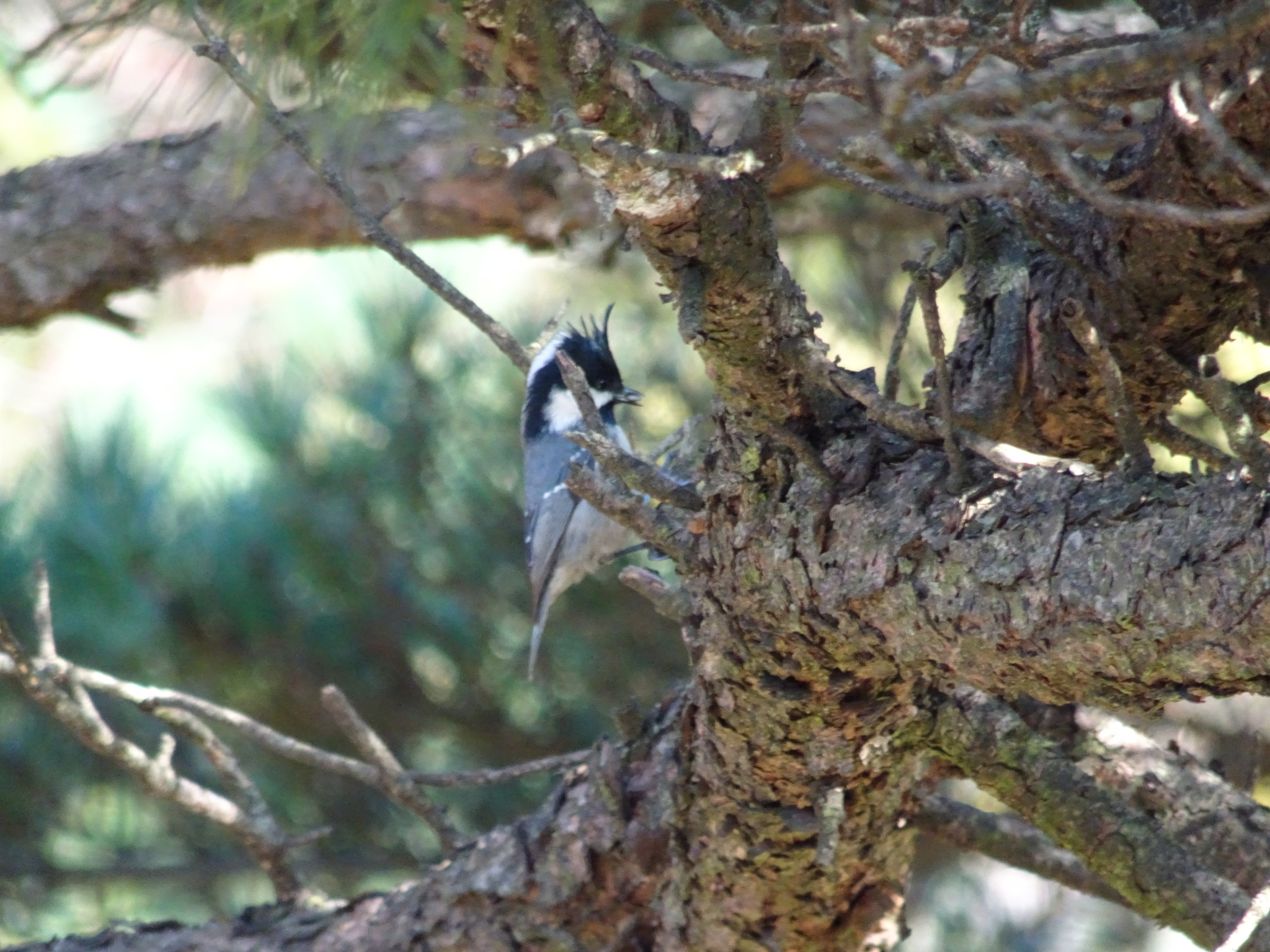
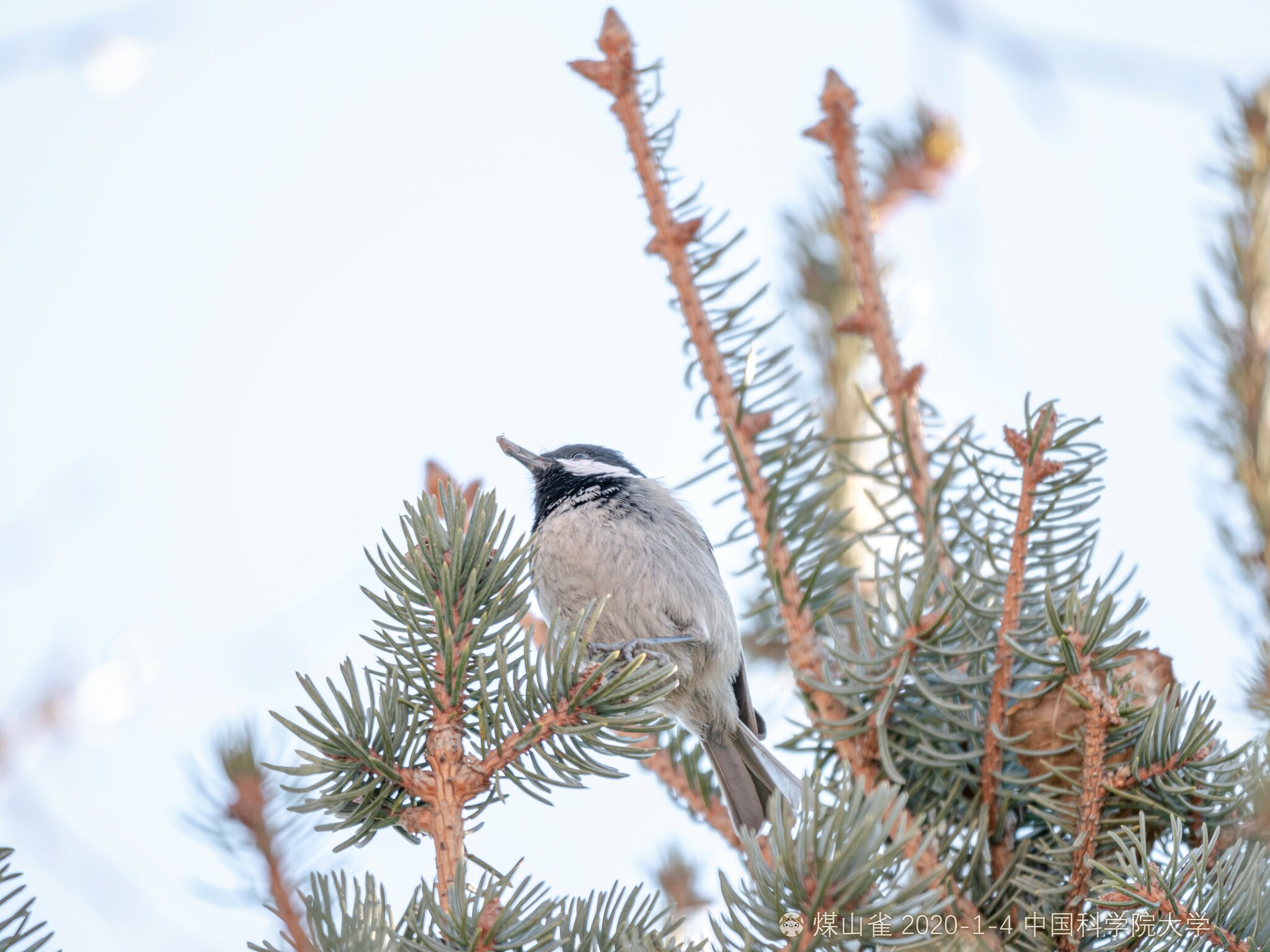
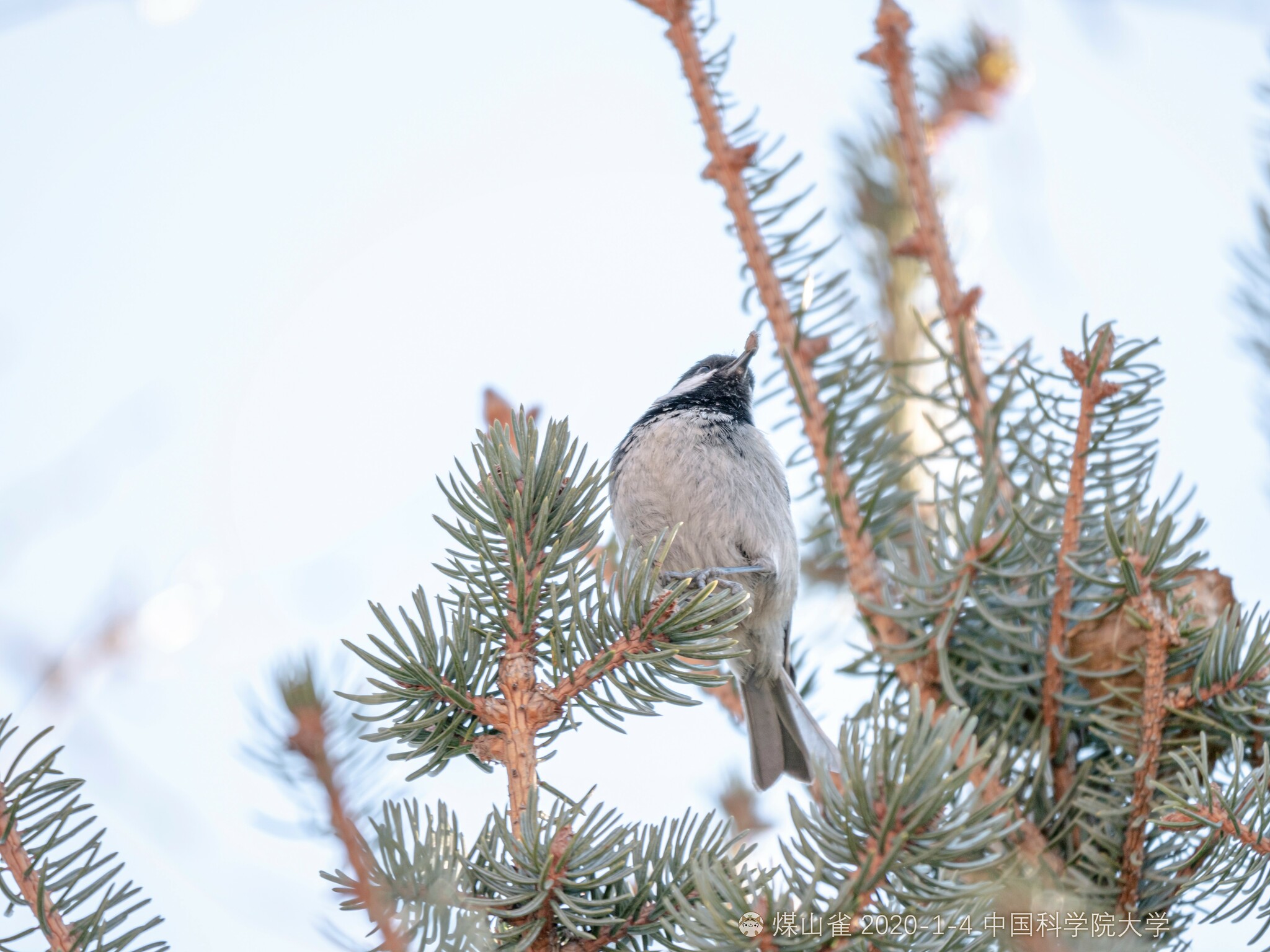
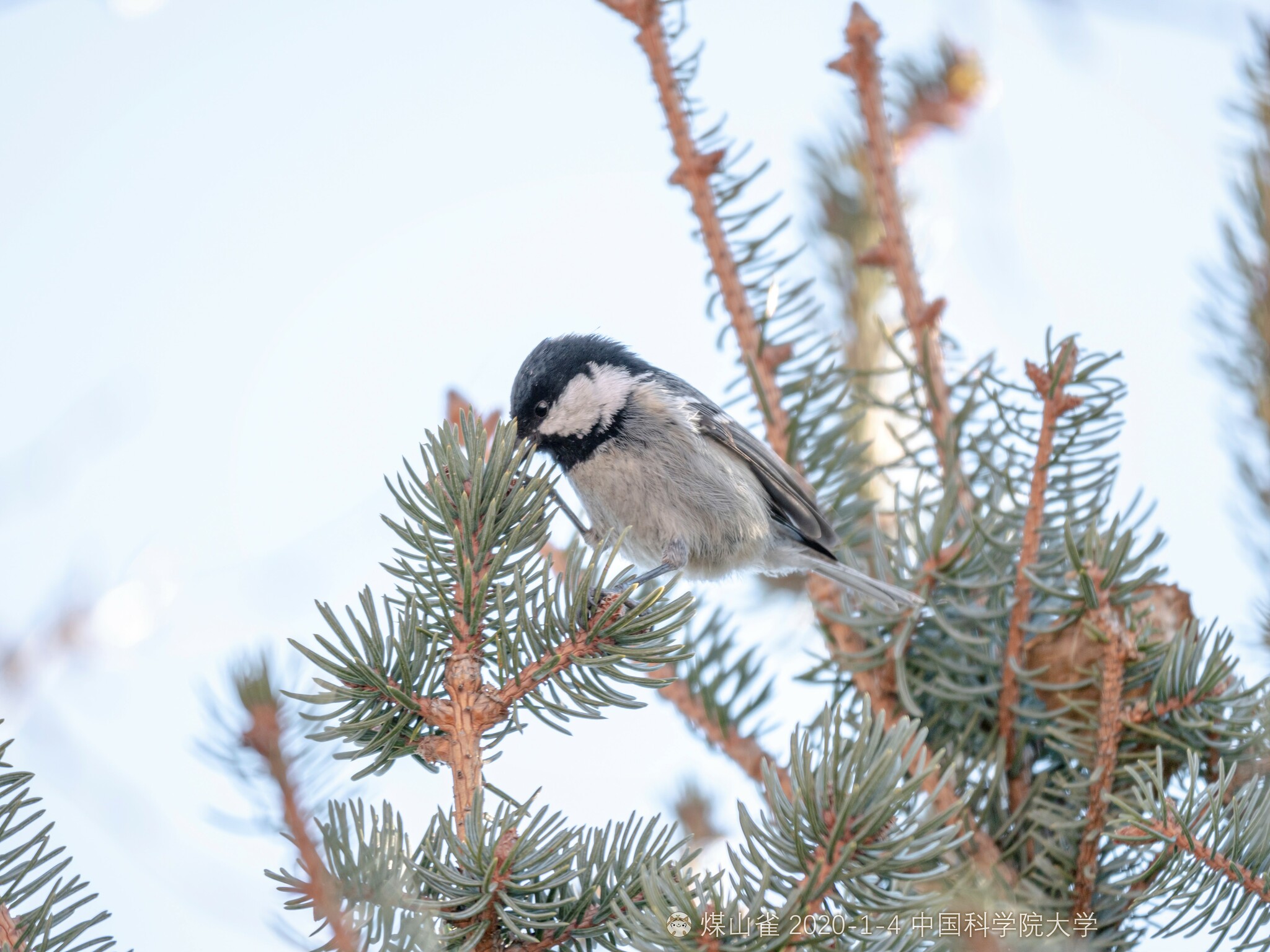
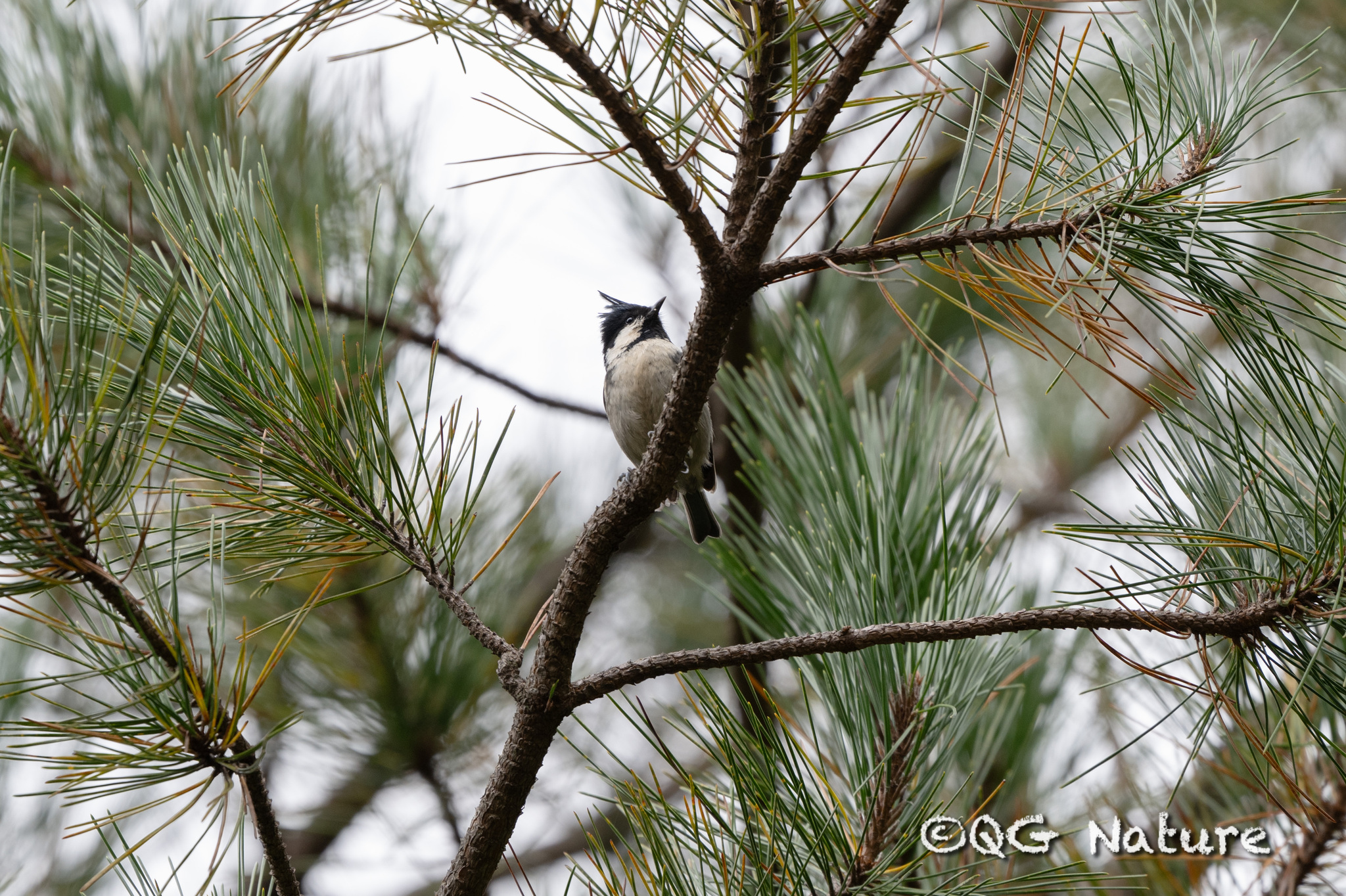
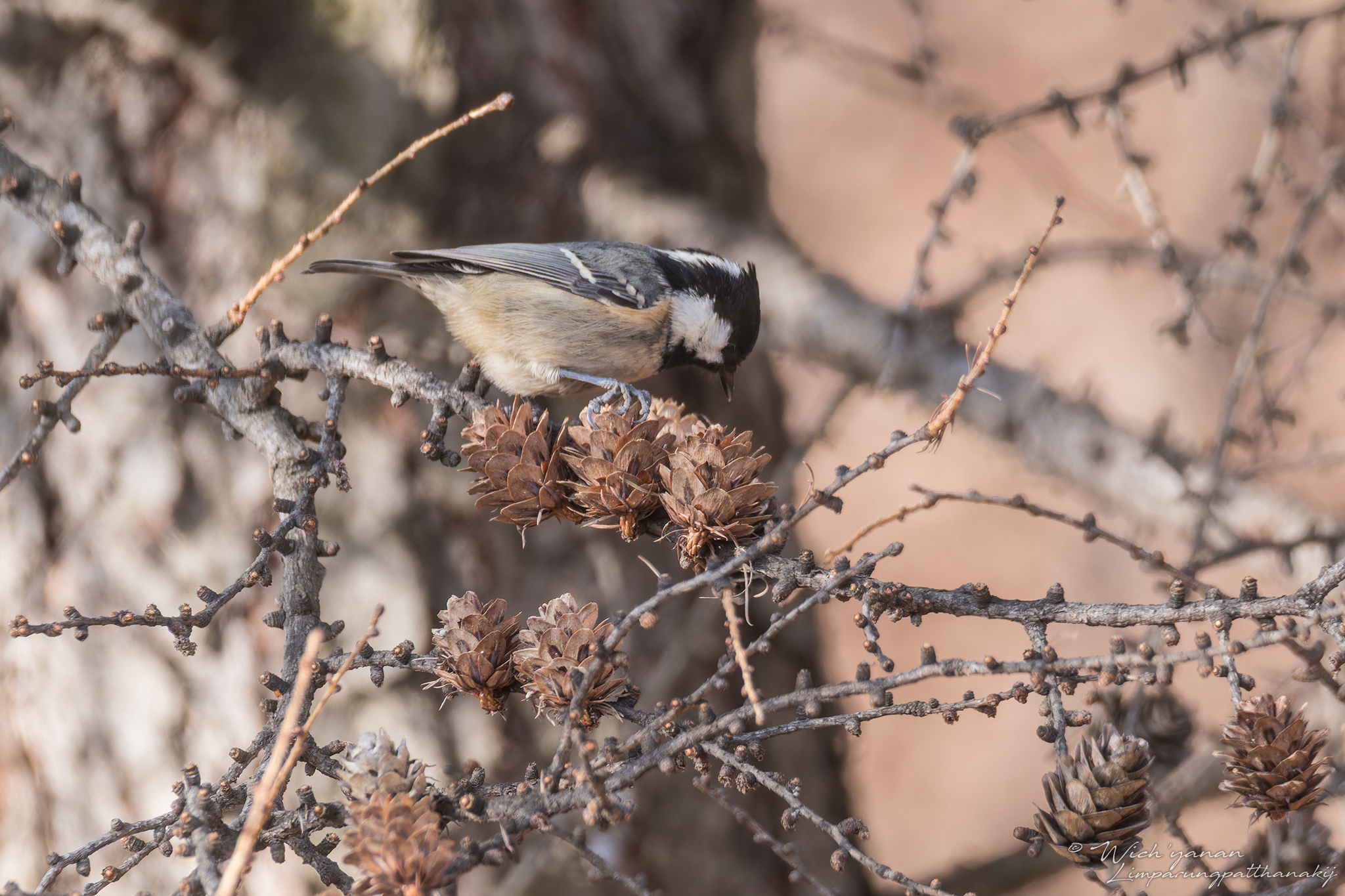
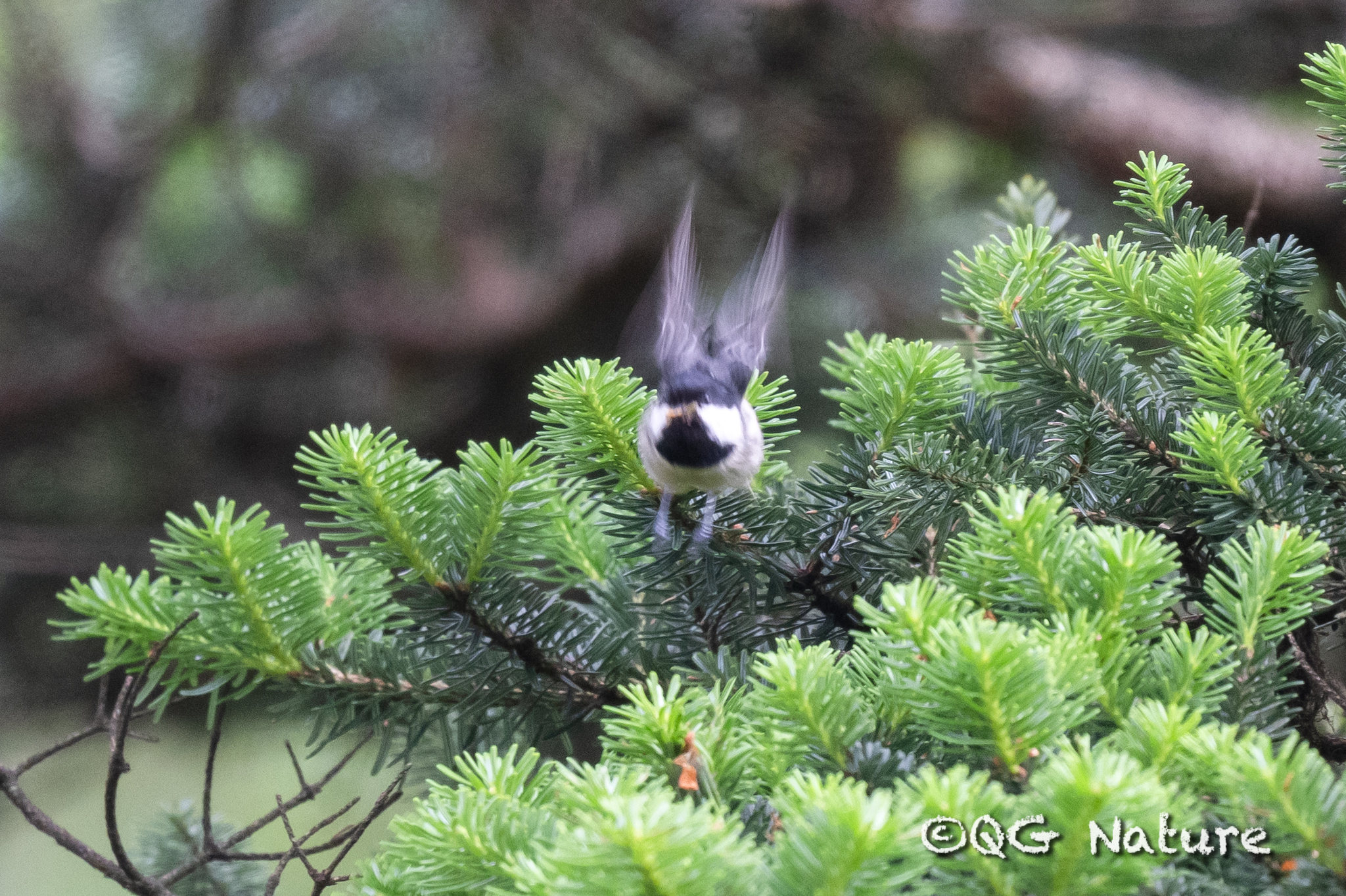
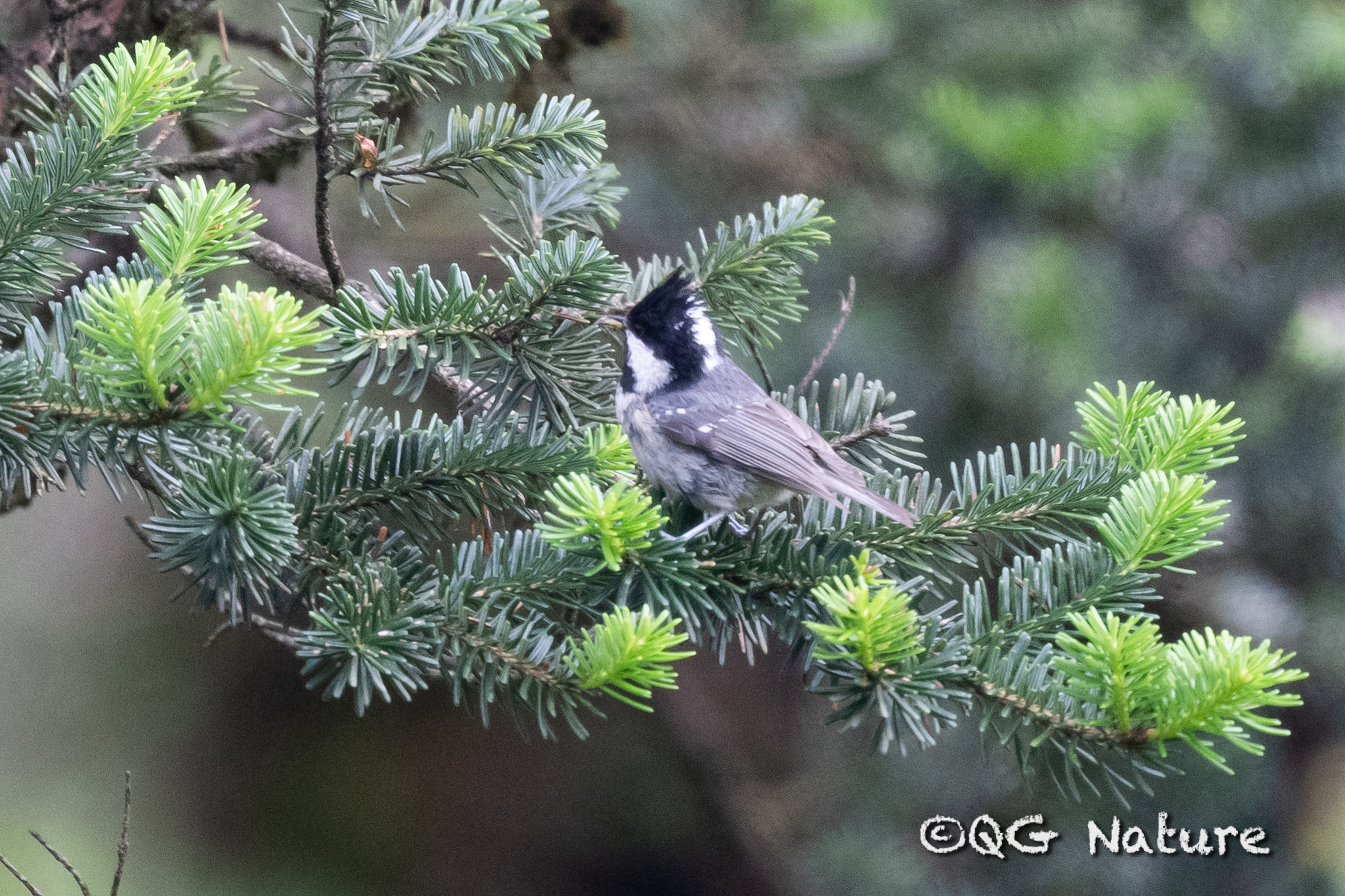
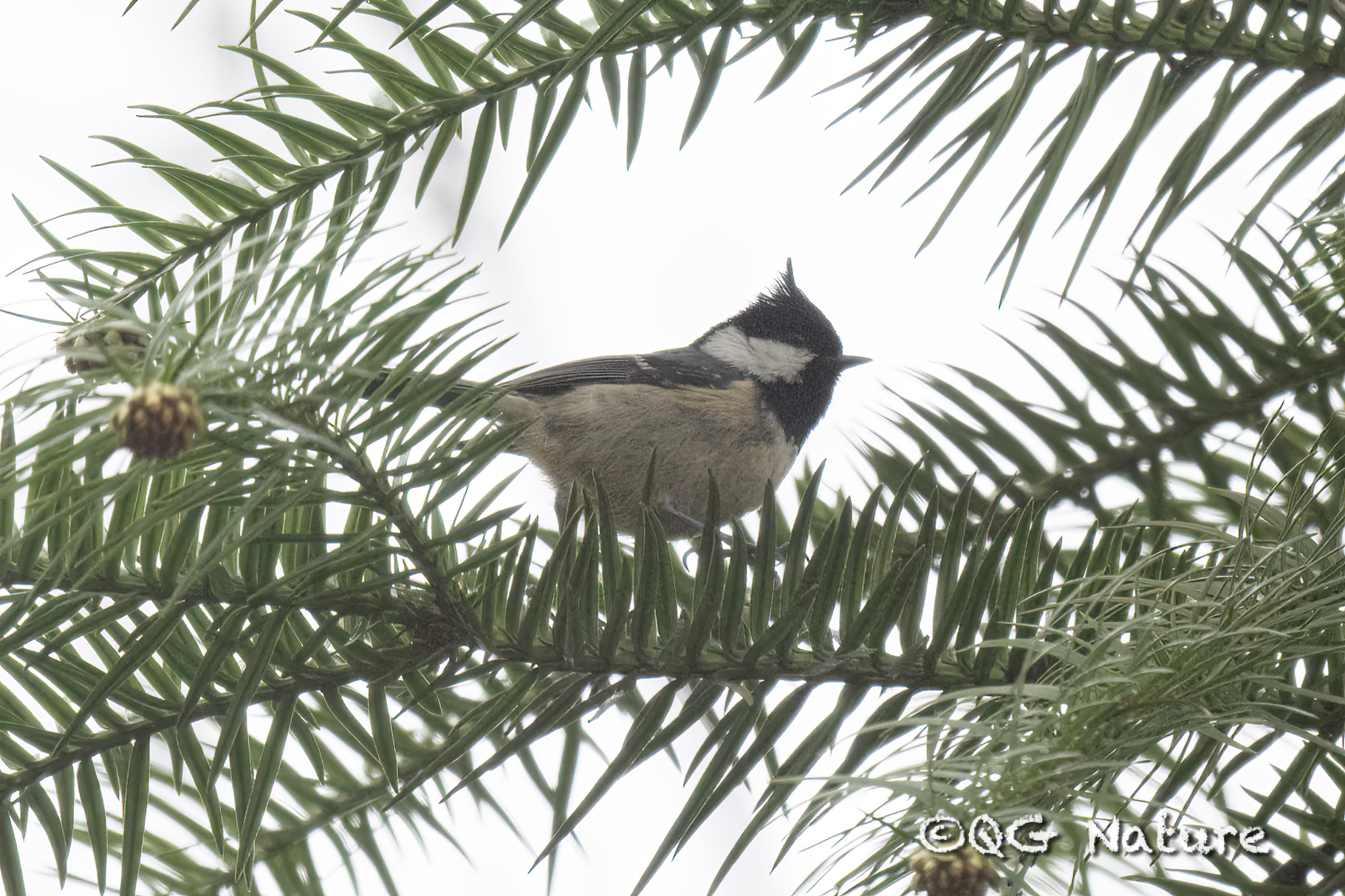
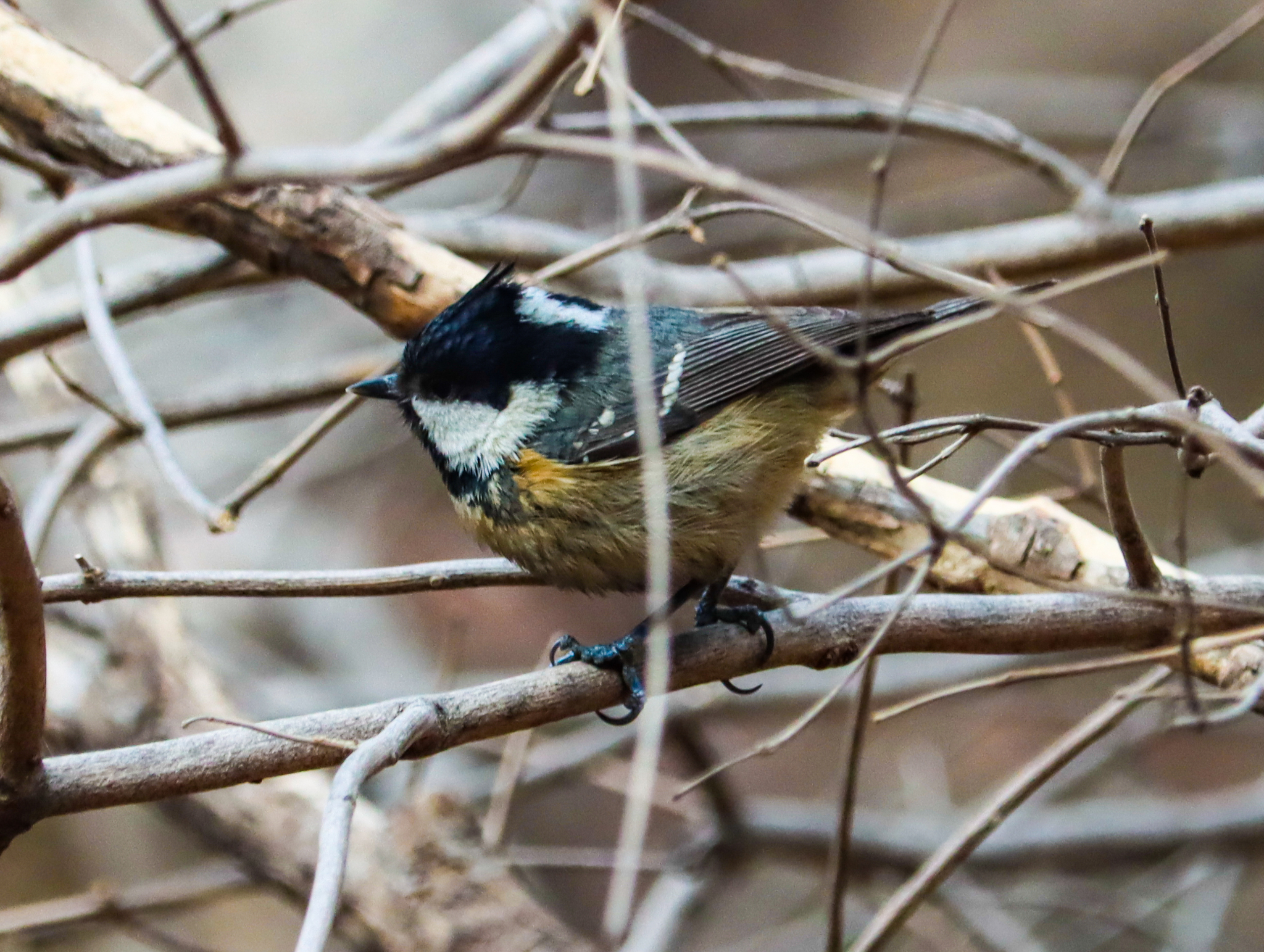
This diminutive tit measures 10–11.5 cm in length, making it one of the smaller members of its family. Its most distinctive feature is the large white nape patch that contrasts dramatically with its glossy blue-black head, throat and neck. The face shows off-white sides that may appear greyish or yellowish depending on the subspecies. Two prominent white wingbars are created by the white tips of the wing coverts. The underparts are whitish, transitioning to buff or rufous on the flanks. The black bill, lead-coloured legs and dark brown eyes complete the adult plumage. Juveniles are noticeably duller, lacking the adult's glossy black head and showing yellowish tinges to the white cheek and nape areas.
Identification
The striking white nape patch against the black head provides the best identification feature, along with two white wingbars. Unlike the great tit, it lacks the black ventral stripe. The blue tit shows blue rather than black plumage on the head. Crested tits, where ranges overlap, possess a distinctive crest and lack the white nape marking. British subspecies show olive-toned upperparts while Irish birds display yellow-tinged cheeks and breast. North African birds have yellow underparts, and Cypriot individuals show buff tones throughout.
Distribution & Habitat
The species occupies an extensive range across the Palearctic, breeding from Britain and Ireland through continental Europe and Scandinavia eastwards to Japan, Korea and eastern Siberia. Its southern limits extend through the Mediterranean region, including North Africa, the Middle East and the Himalayas. Throughout most of this vast area it is a permanent resident, making only short-distance movements in response to severe winter weather. Siberian populations are more regularly migratory, occasionally appearing as vagrants far outside their normal range. The species shows a strong association with coniferous and mixed woodland, though it occupies various forest types from lowland deciduous stands to high-altitude mountain forests reaching 3,800 metres in the Himalayas.
Behavior & Ecology
Active and restless, this tit forages acrobatically through the canopy and along branches, frequently adopting a vertical posture on tree trunks similar to treecreepers. Its diet centres on seeds from conifer cones, beechmast and insects, with garden visits for sunflower seeds becoming common in winter. The species maintains contact within flocks through constant 'dee' and 'see-see' calls, while the strident, rapid 'if-he, if-he, if-he' song echoes through forests from January to June. In winter, it joins mixed tit flocks, with subordinate birds facing exclusion from feeding sites, particularly in early morning. Breeding occurs in May, with seven to eleven red-spotted white eggs laid in concealed nest sites ranging from tree holes to old nests.
Conservation
With an extremely large range covering the entire Palearctic and a population numbering in the millions, this abundant tit holds a secure conservation status as a species of Least Concern according to the IUCN. Its adaptability to various forest habitats, including coniferous plantations, has helped maintain stable populations across most of its extensive range. The species readily uses nest boxes, which has supported breeding success in managed woodlands. While facing general threats common to woodland birds such as habitat fragmentation and pesticide use, no significant population declines have been documented across its broad range.
Source: Wikipedia · CC BY-SA 3.0
Taxonomy
- Order
- Passeriformes
- Family
- Paridae
- Genus
- Periparus
- eBird Code
- coatit2
Subspecies (21)
-
Periparus ater aemodius
eastern Himalayas; northeastern Myanmar and Tibet?
-
Periparus ater ater
continental Europe to Siberia, Mongolia, Sakhalin, and northeastern China
-
Periparus ater atlas
northern Morocco
-
Periparus ater britannicus
Britain and northeastern Ireland
-
Periparus ater cypriotes
Cyprus
-
Periparus ater derjugini
mountains of northeastern Türkiye, western Georgia, and Black Sea coast of Russia
-
Periparus ater eckodedicatus
southwestern to central China (Gansu southward to Yunnan and eastward to Shaanxi and Jiangxi; perhaps also Qinghai, southeastern Xizang, and far northeastern Himalayas?)
-
Periparus ater hibernicus
Ireland (except far northeastern, in County Down)
-
Periparus ater insularis
southern Kuril Islands, Japan, and Jeju Islands (Korea)
-
Periparus ater kuatunensis
montane forest of southeastern China (Anhui, Fujian, and Zhejiang)
-
Periparus ater ledouci
northern Africa (northern Tunisia and northern Algeria)
-
Periparus ater martensi
Kali Gandaki area (central Nepal)
-
Periparus ater melanolophus
coniferous forest of eastern Afghanistan to western Nepal
-
Periparus ater michalowskii
Caucasus and Transcaucasia
-
Periparus ater moltchanovi
Crimean Peninsula
-
Periparus ater pekinensis
northeastern China (southern Liaoning to Shaanxi and Shantung Peninsula)
-
Periparus ater phaeonotus
southeastern Azerbaijan, northern Iran, and southwestern Turkmenistan; status in southwestern Iran (Zagros Mountains) unclear, perhaps only a rare nonbreeding visitor
-
Periparus ater ptilosus
montane forest of Taiwan
-
Periparus ater rufipectus
Kazakhstan (Tien Shan Mountains) to northwestern China (Xinjiang)
-
Periparus ater sardus
Corsica and Sardinia
-
Periparus ater vieirae
Iberian Peninsula
Data Sources
Species description from Wikipedia, licensed under CC BY-SA 3.0.
Bird images and sounds sourced from GBIF, contributed by citizen scientists worldwide under Creative Commons licenses.
Taxonomy data from AviList 2025.