Passeriformes / Campephagidae / Pericrocotus
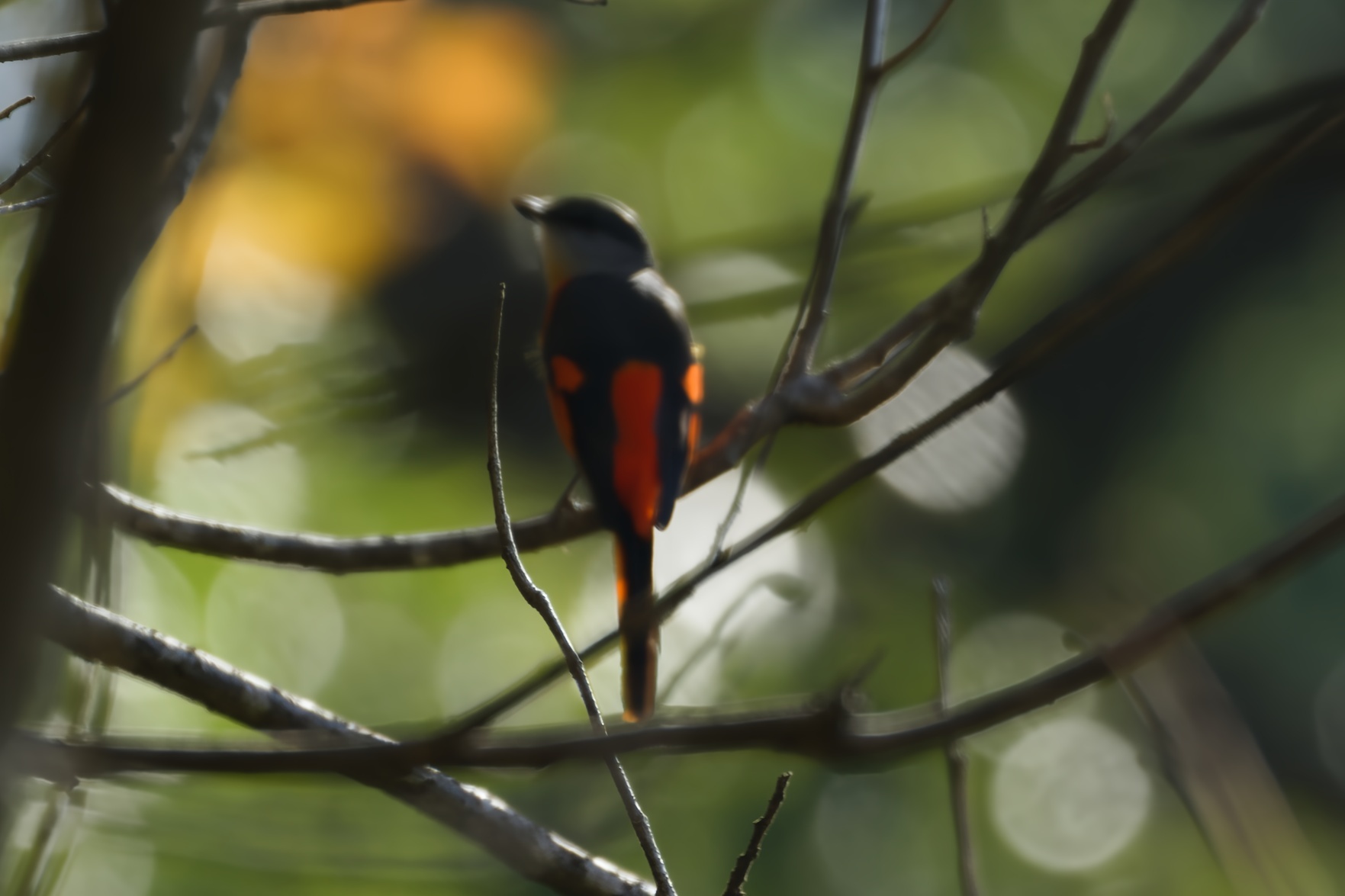
Grey-chinned Minivet
Pericrocotus solaris · 灰喉山椒鸟
Introduction
A species in the family Campephagidae found from the Himalayas to China, Taiwan, and Southeast Asia. It inhabits forests at elevations of 1,000–2,000 m (3,300–6,600 ft). The IUCN assesses it as a least-concern species.
Description
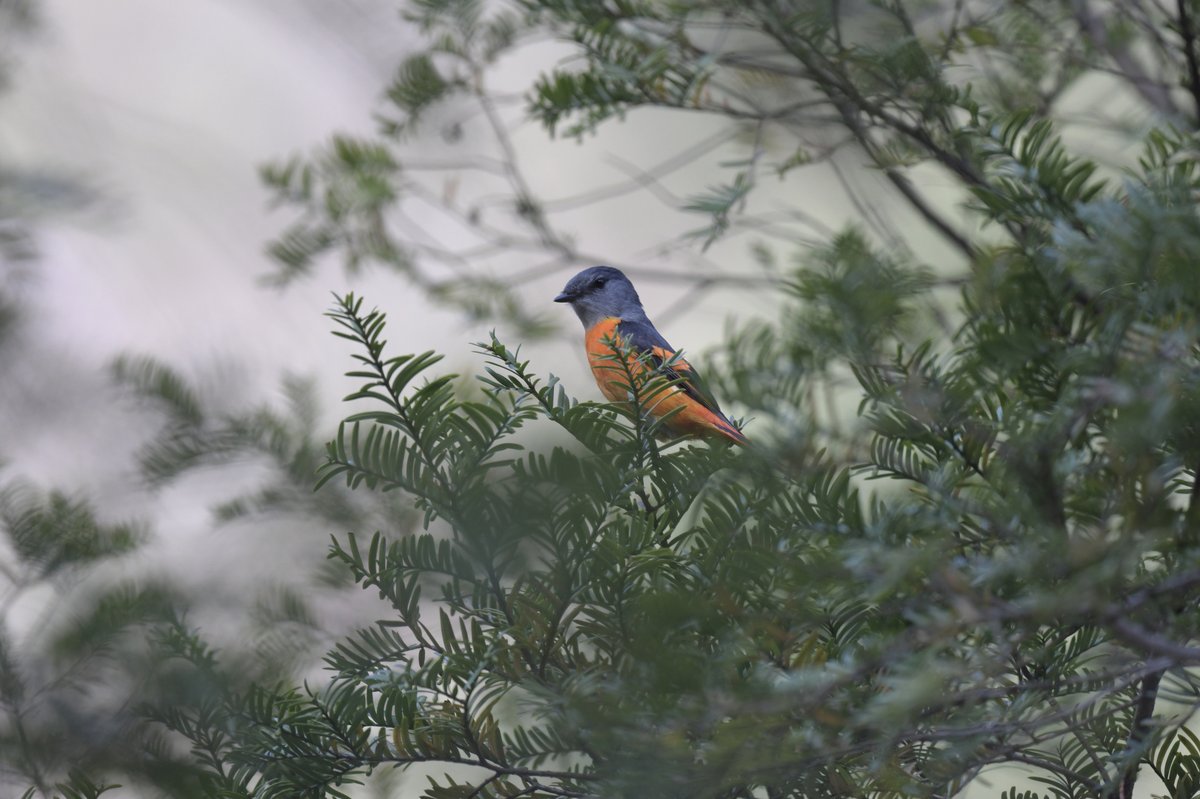
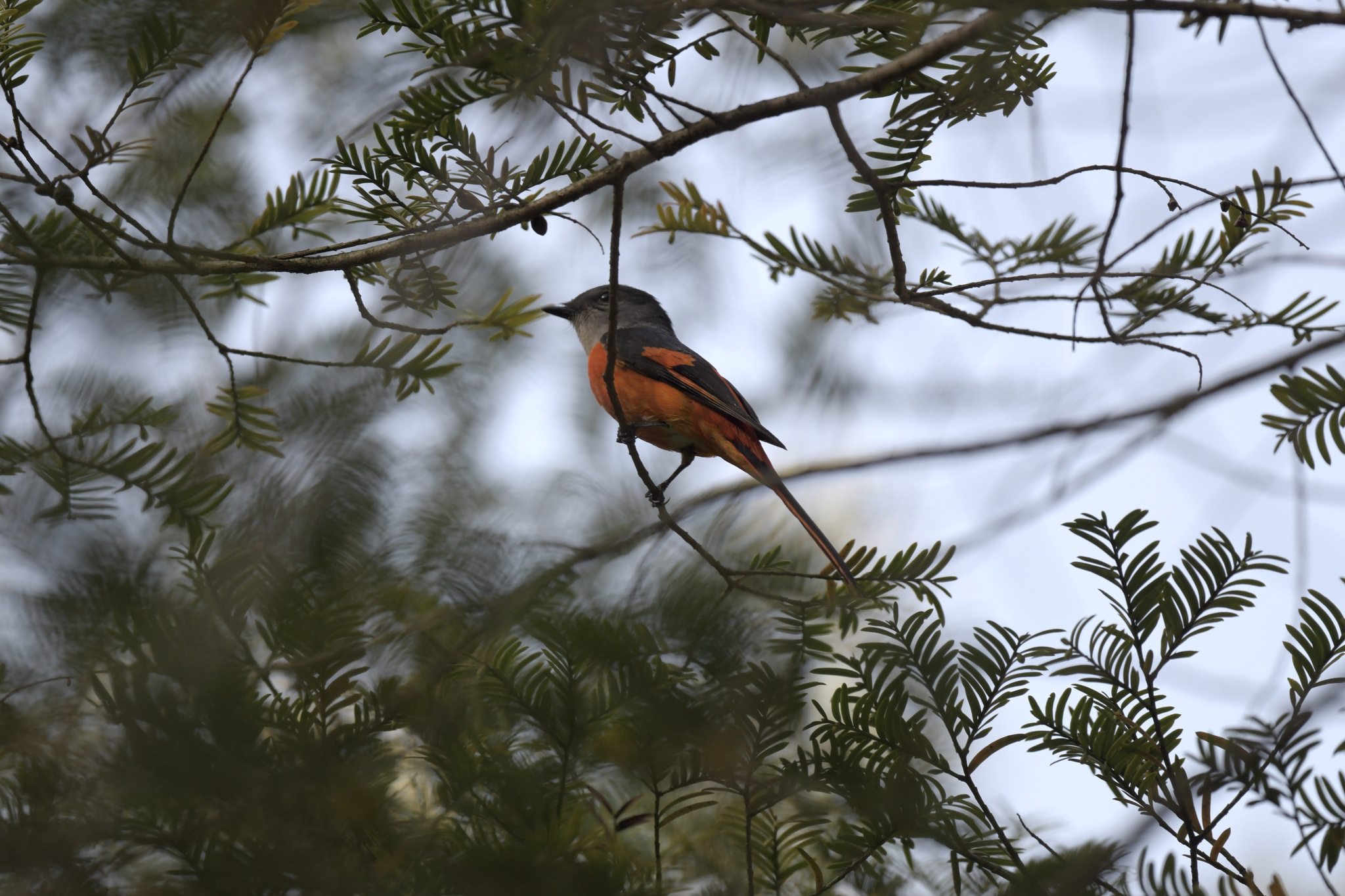
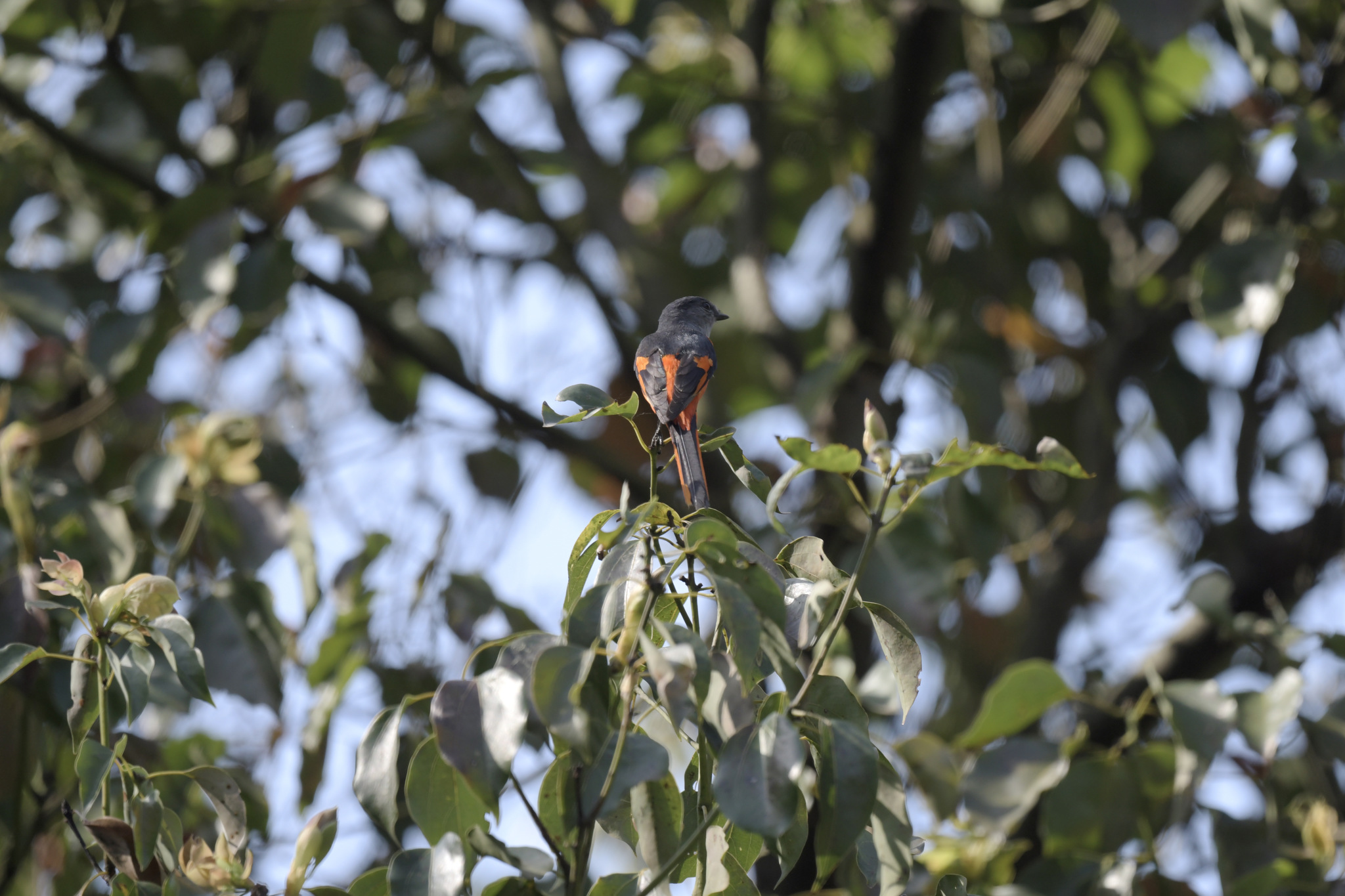
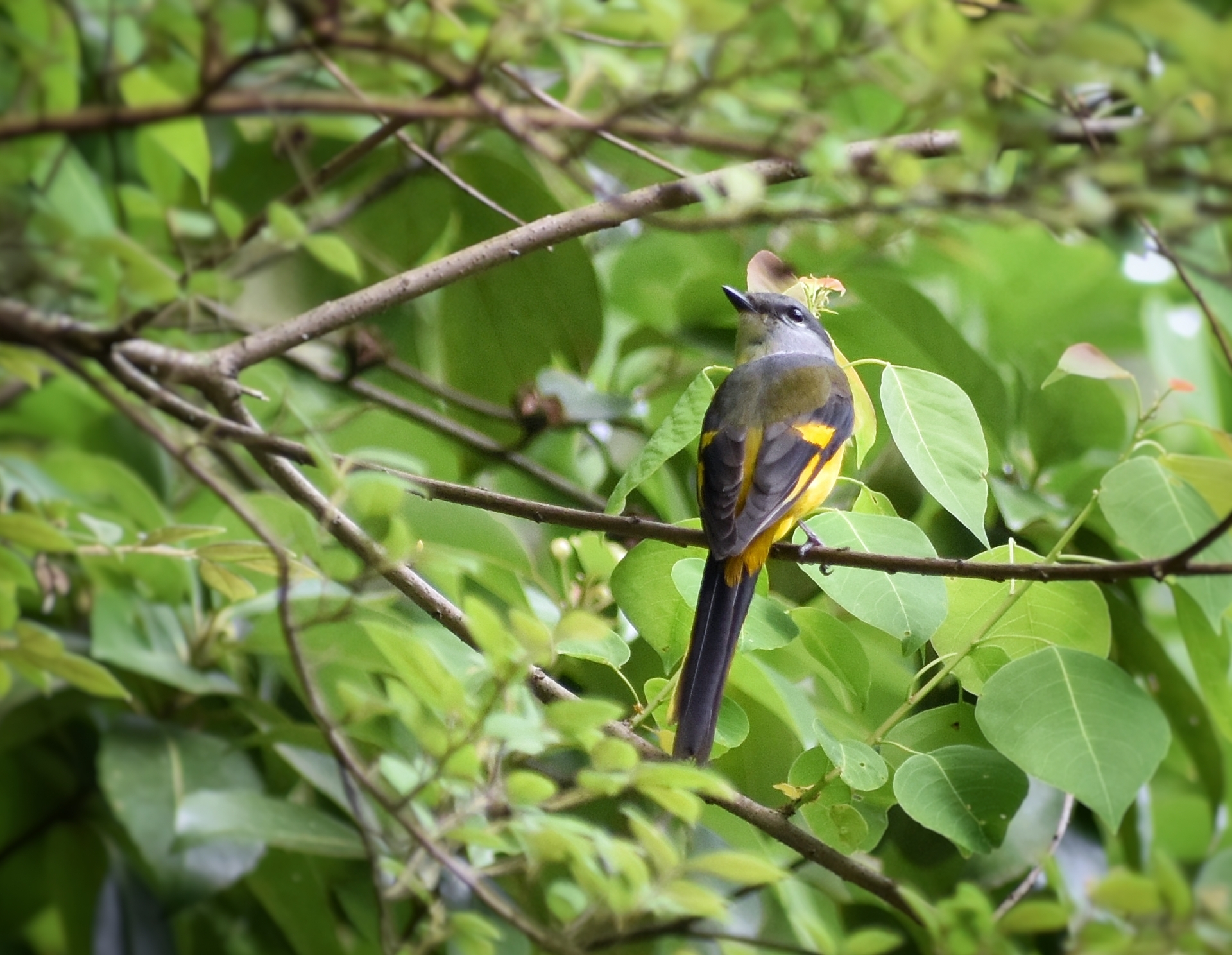
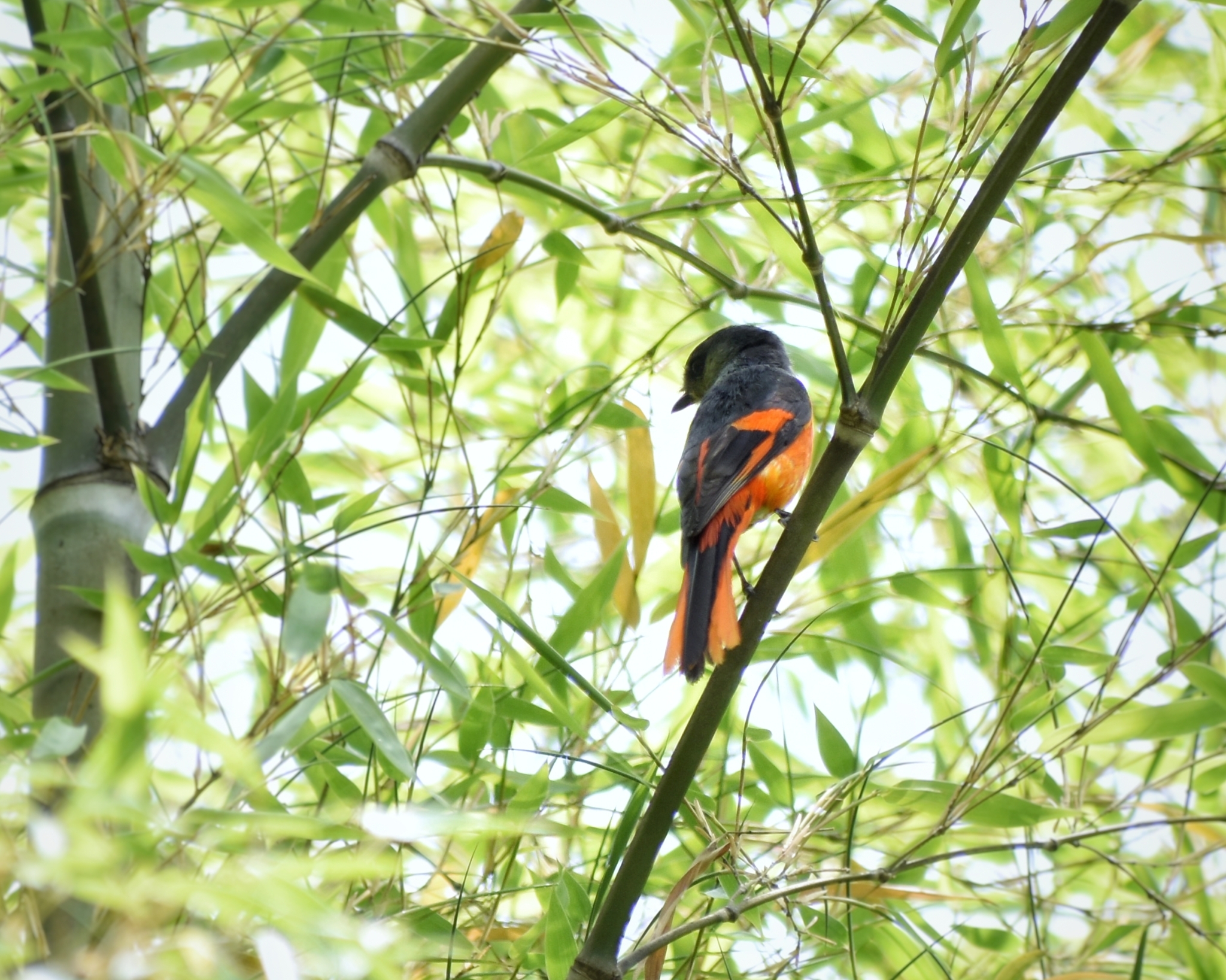
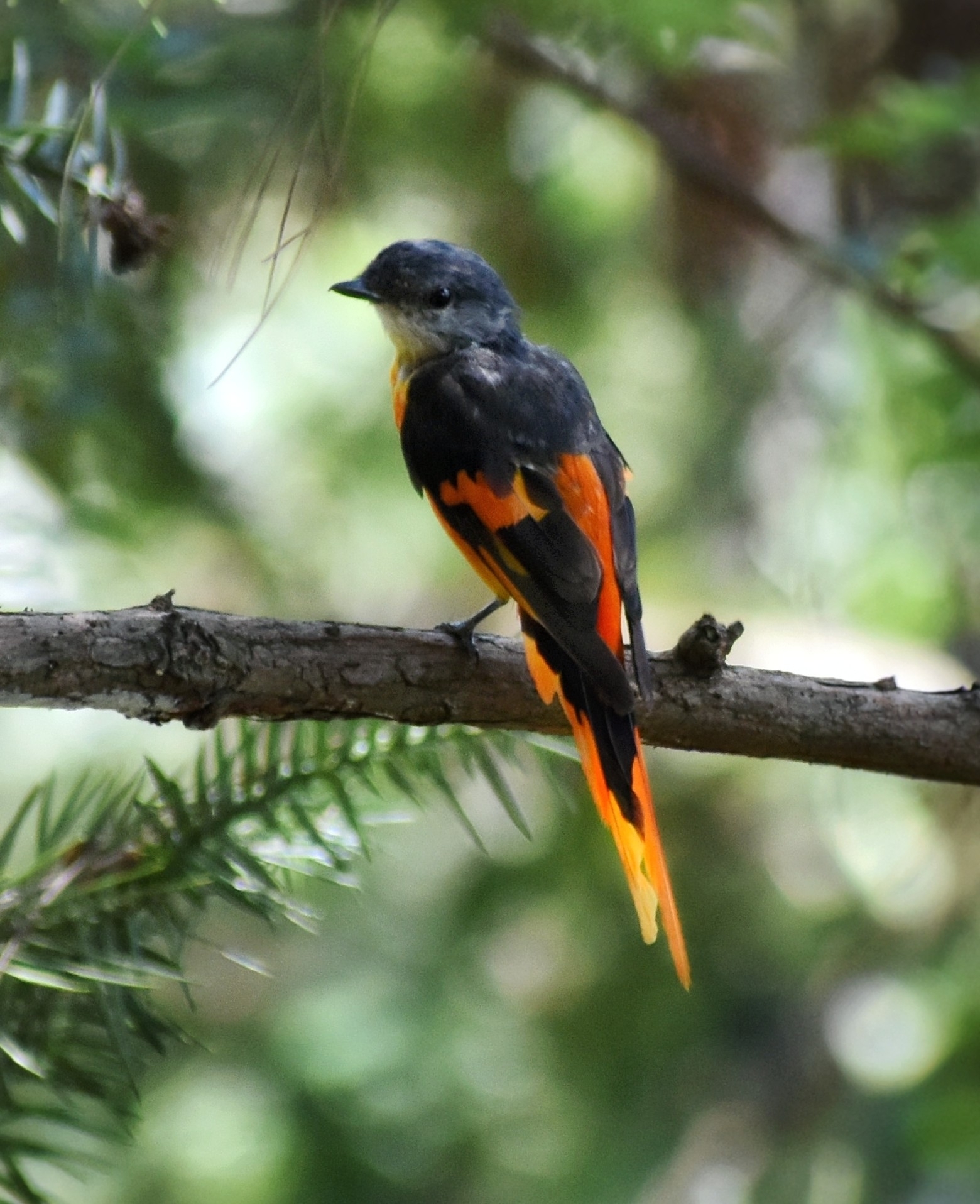
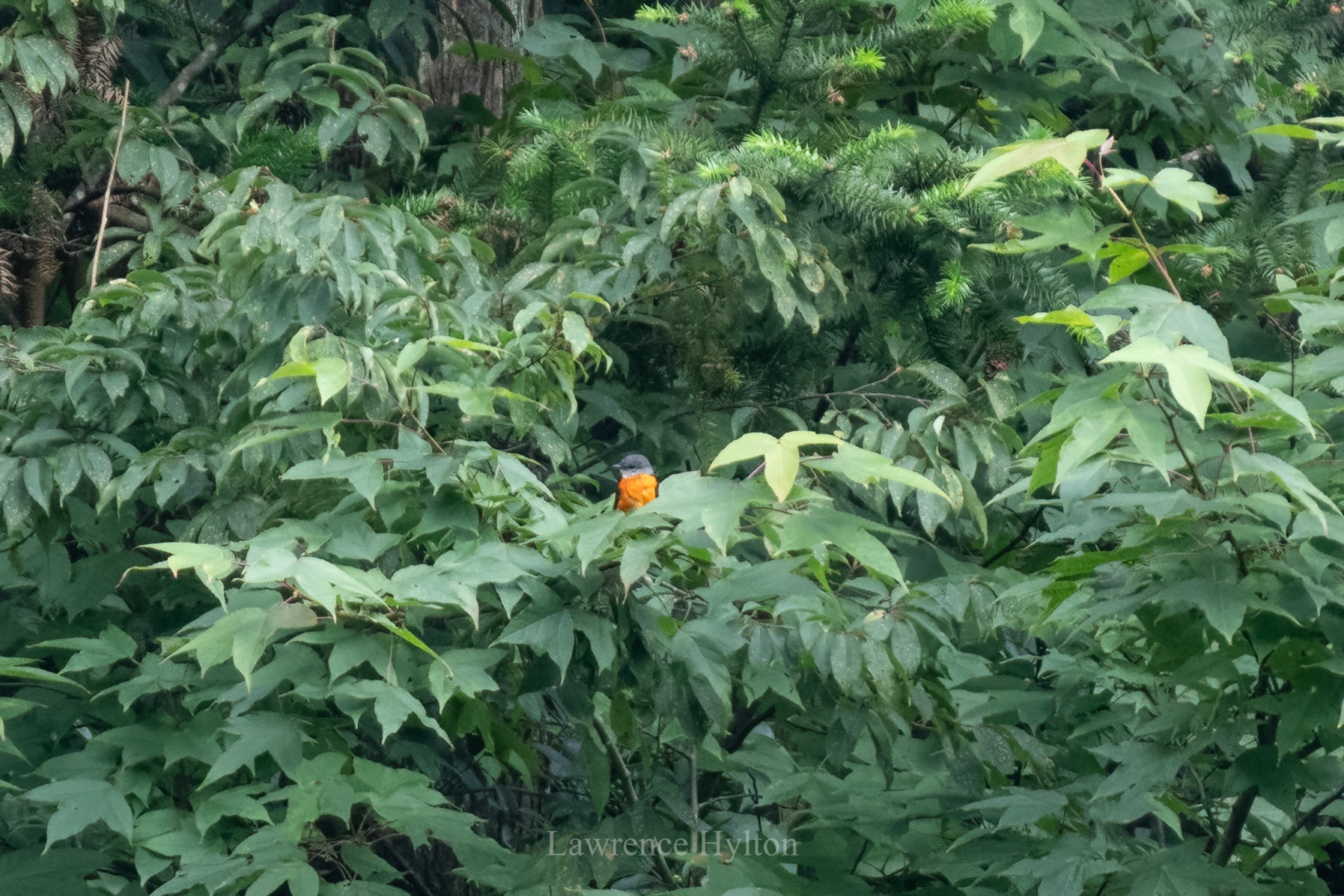
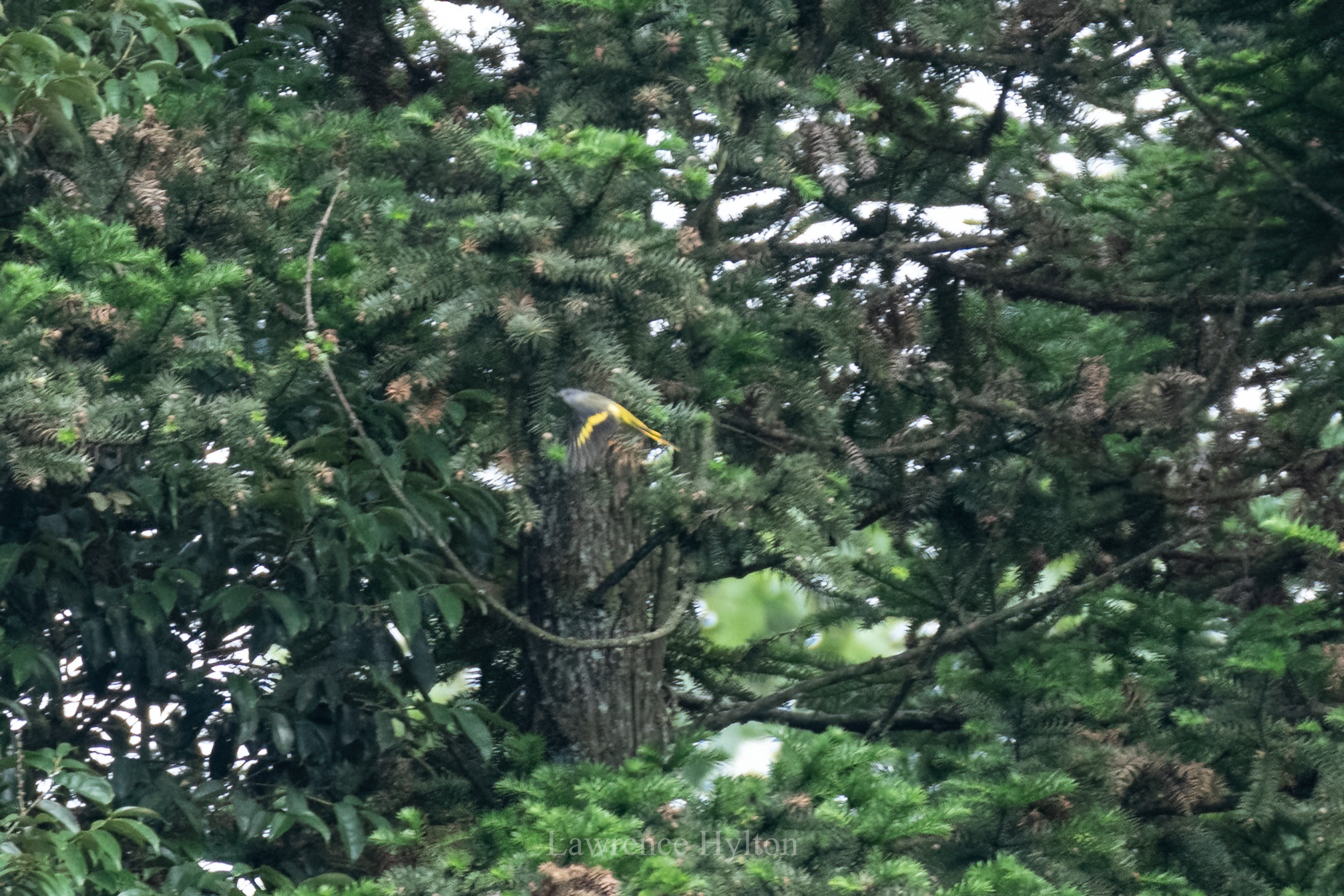
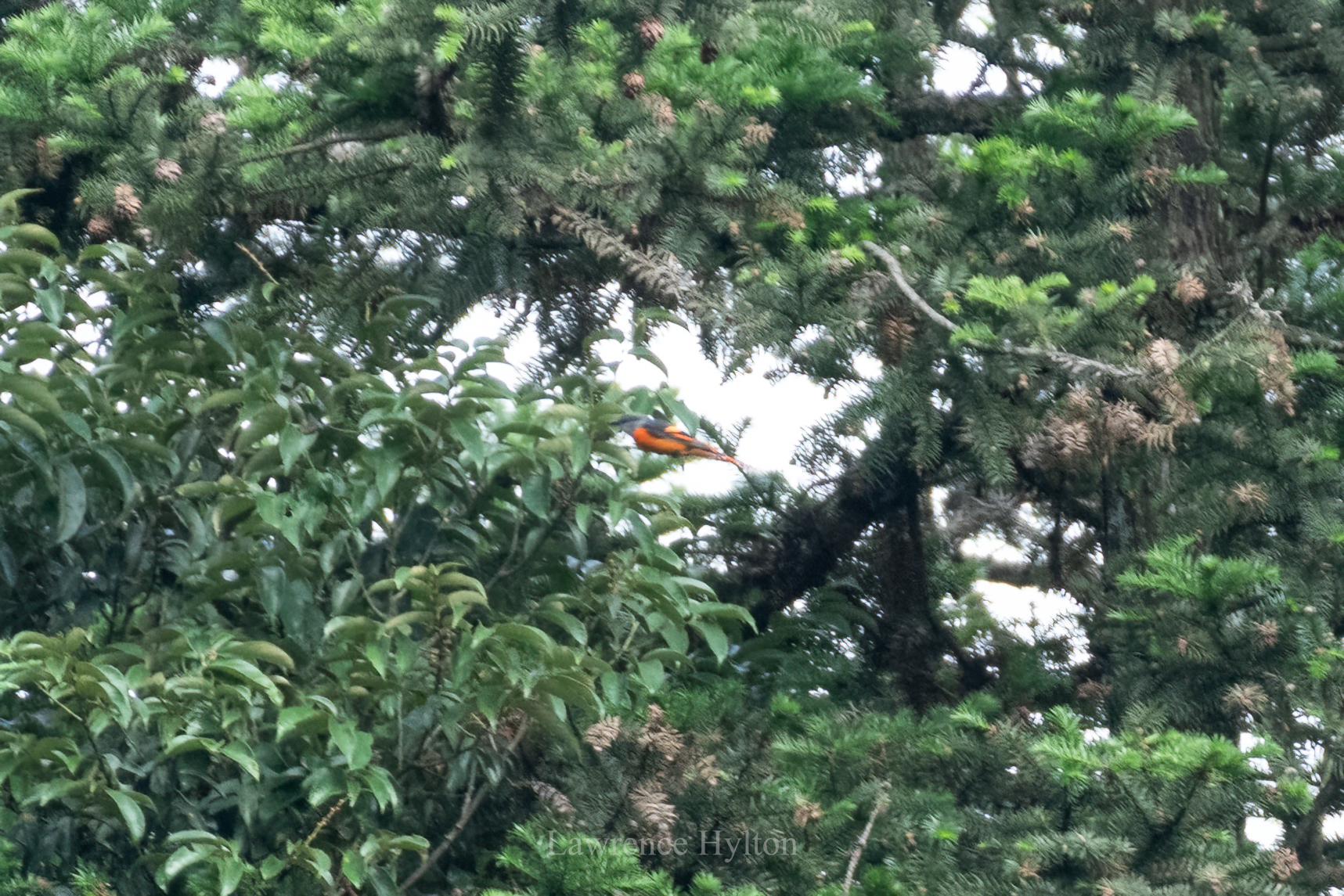
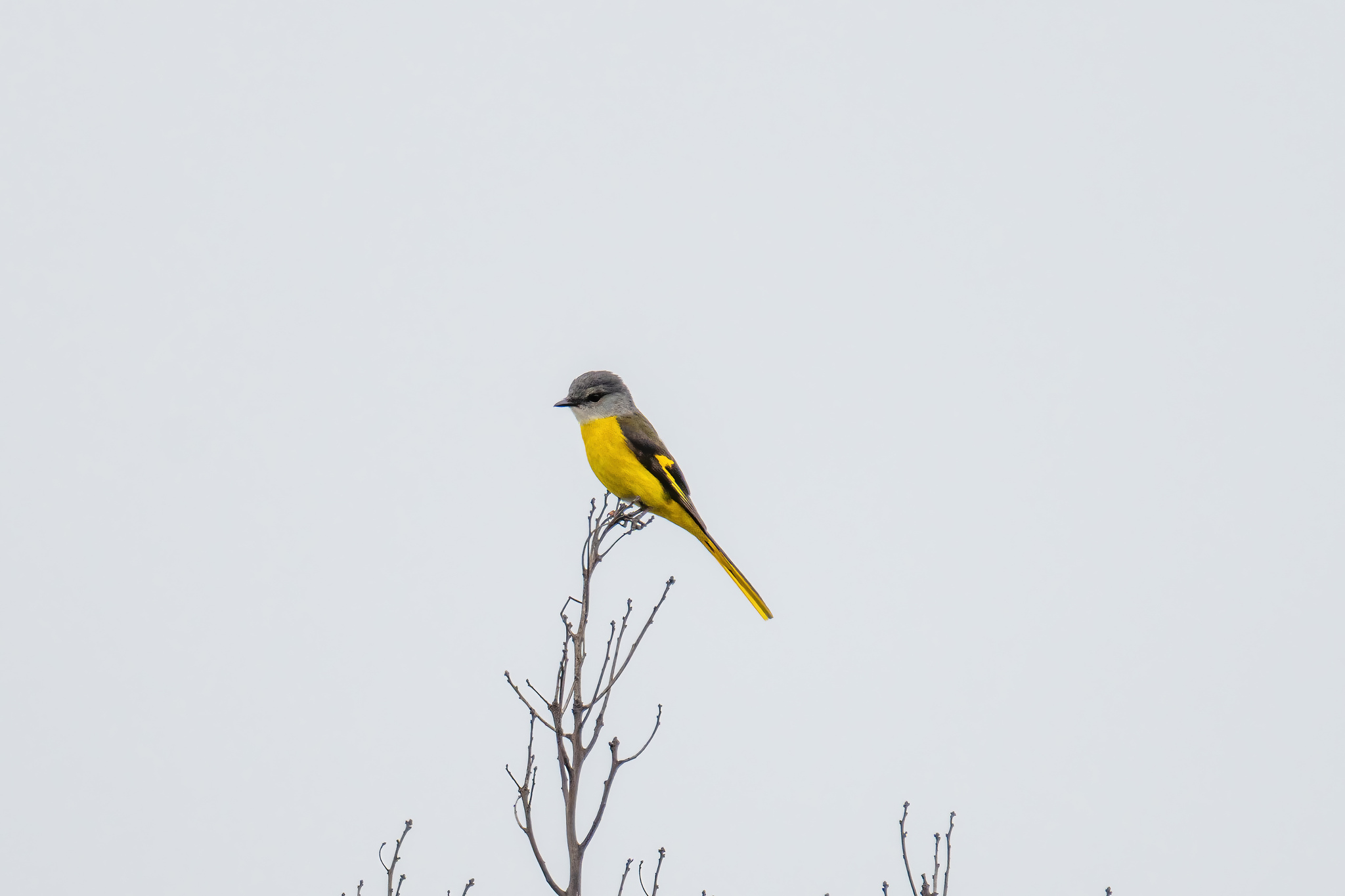
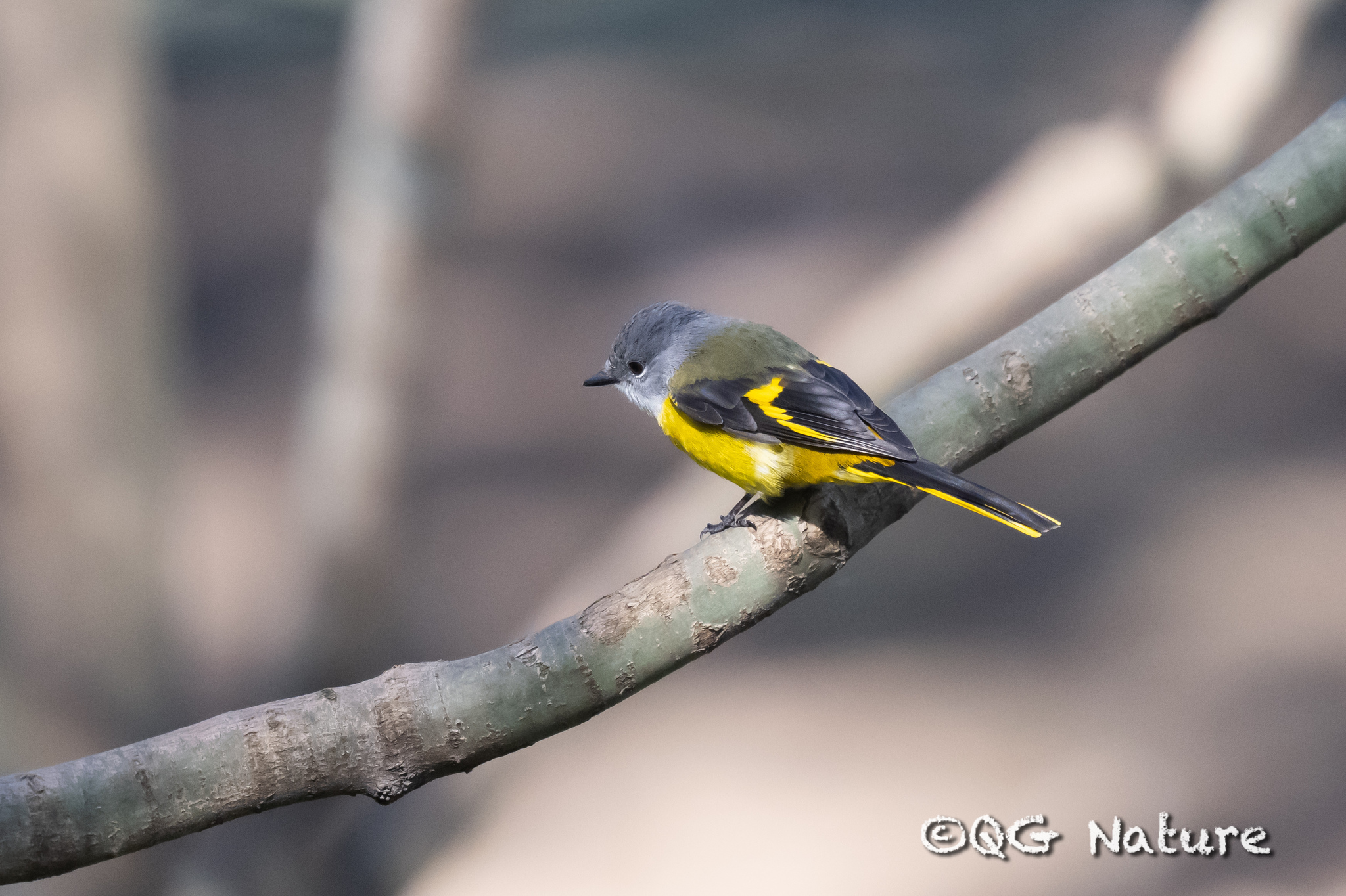
Length is 17–19 cm (6.7–7.5 in) and weight is 11–17 g (0.39–0.60 oz). Sexually dimorphic. The adult male has a dark grey head and mantle, pale grey chin, orange-yellow throat, and blackish wings. Underparts, lower back, and tips of greater coverts are orange. In the female, these parts are bright yellow. Eyes, beak, and legs are black. Immature birds resemble the female but have yellow-olive bars on the back.
Identification
Key marks include the male's dark grey head with pale grey chin and orange underparts, contrasting with the female's bright yellow underparts. Immatures show yellow-olive bars on the back.
Distribution & Habitat
Ranges from the eastern foothills of the Himalayas through northeastern India, southern China, mainland Southeast Asia to Sumatra and Borneo. Eight subspecies are recognized across regions including Myanmar, Thailand, China, Taiwan, Laos, Vietnam, Cambodia, Malaysia, Sumatra, and Borneo. Habitat includes montane broadleaf, coniferous, elfin, and secondary forests, as well as forest edges and gardens with trees, typically at 1,000–2,000 m (3,300–6,600 ft), though recorded down to 150 m (490 ft) in Taiwan.
Behavior & Ecology
Forms small parties of fewer than 15 individuals or large flocks when not breeding; sometimes joins mixed-species foraging flocks. Forages for invertebrates in the canopy, occasionally descending to tree ferns or sallying in the air. Vocalizations include a twittering call while feeding, and contact calls such as high-pitched sri-sisi and chirit-chirit. Breeding occurs from January to April. Courtship involves the male presenting a flower to the female. Both sexes construct a steep cup nest of bryophytes covered with felt and camouflaged with lichens on a tree branch or fork. The female shapes the nest using her breast. Both parents raise the brood, sometimes aided by subadults. Moulting occurs from June to October.
Conservation
Assessed as a least-concern species by the IUCN due to a large range and stable population.
Source: Wikipedia · CC BY-SA 3.0
Taxonomy
- Order
- Passeriformes
- Family
- Campephagidae
- Genus
- Pericrocotus
Vocalizations
Subspecies (8)
-
Pericrocotus solaris cinereigula
mountains of northern Borneo
Data Sources
Species description from Wikipedia, licensed under CC BY-SA 3.0.
Bird images and sounds sourced from GBIF, contributed by citizen scientists worldwide under Creative Commons licenses.
Taxonomy data from AviList 2025.