

Grey-chinned Minivet
Pericrocotus solaris
灰喉山椒鸟
Introduction
A forest-dwelling minivet of montane South and Southeast Asia, ranging from the eastern Himalayas through China and Taiwan to the Indonesian archipelago. Inhabits intact forest canopies at higher elevations; tolerates secondary growth and forest edges. Exhibits pronounced sexual dimorphism: males orange and dark grey, females yellow and grey. Forages actively in mixed-species flocks, moving through the canopy in search of insects; communicates with sharp, high-pitched contact calls.
Description
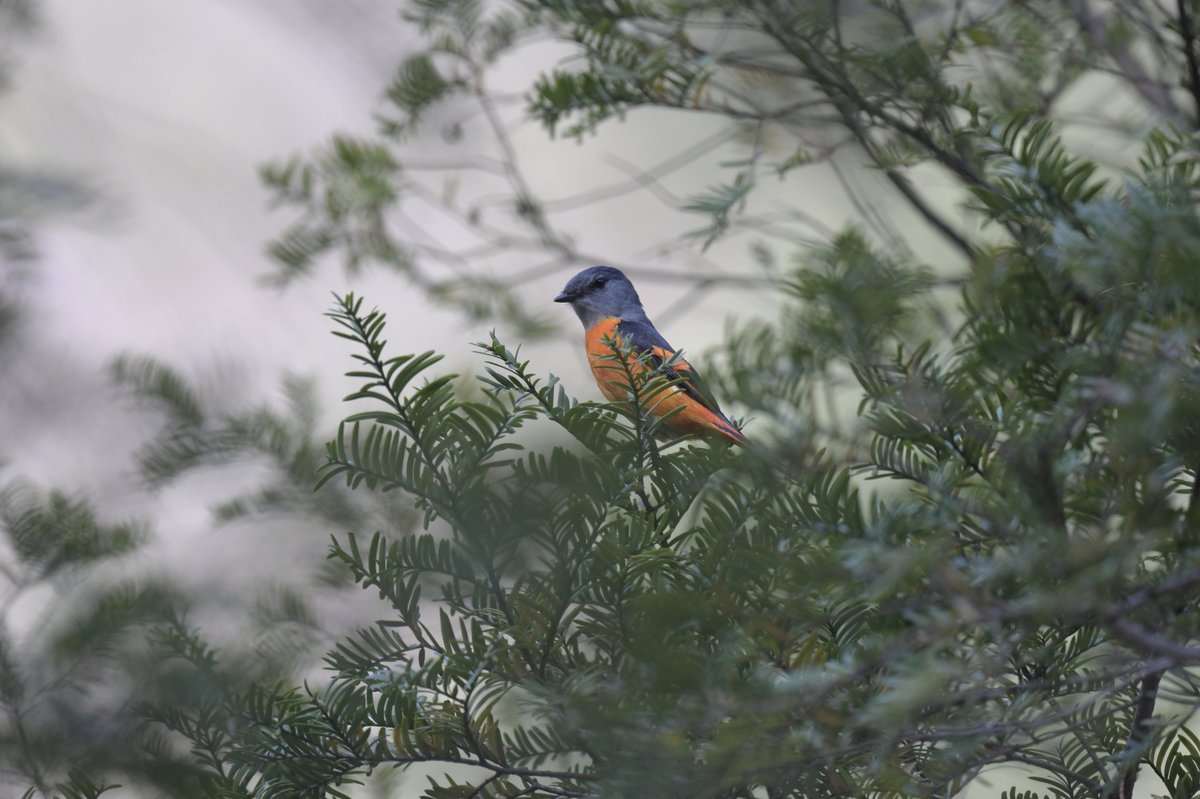
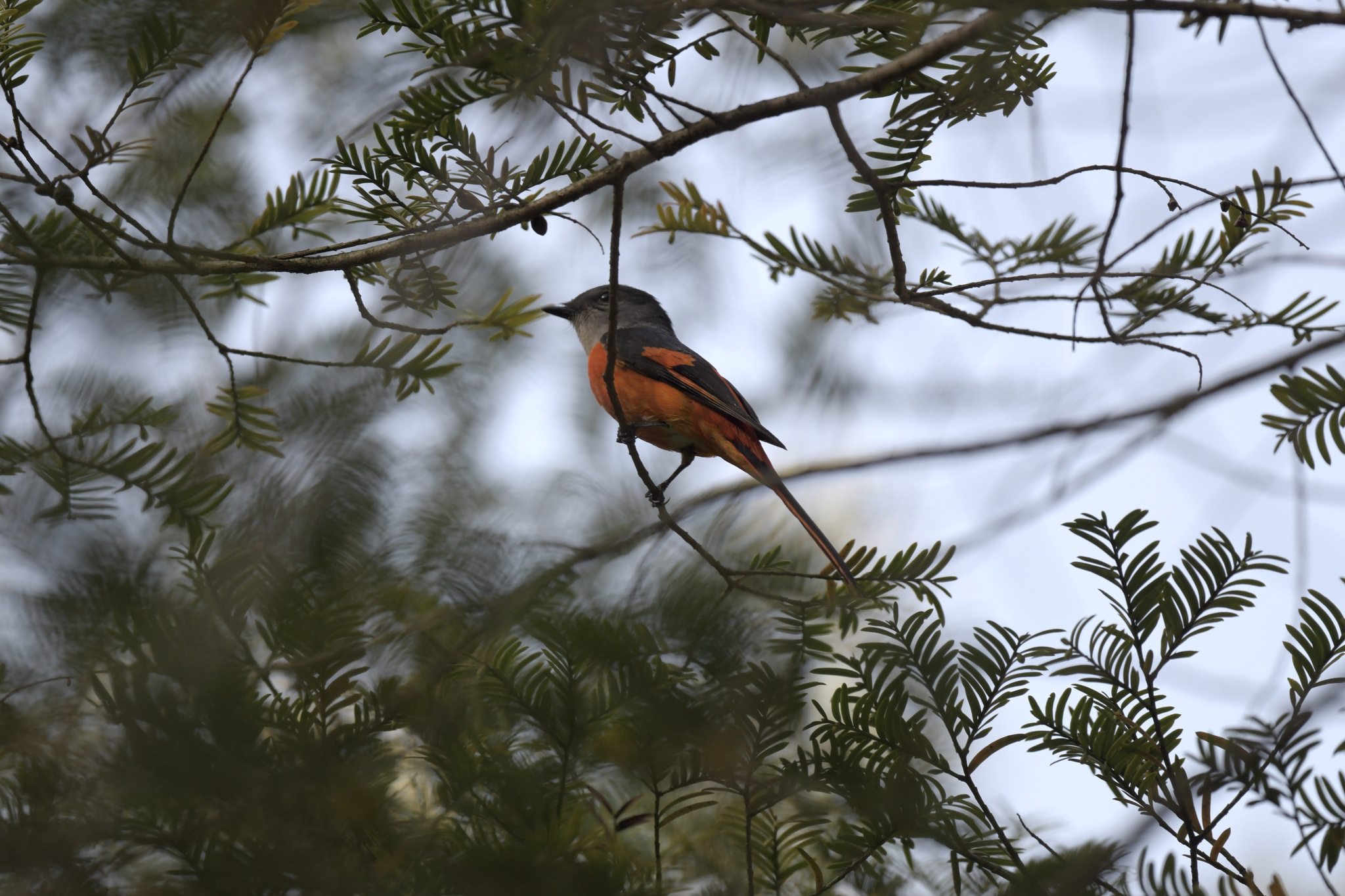
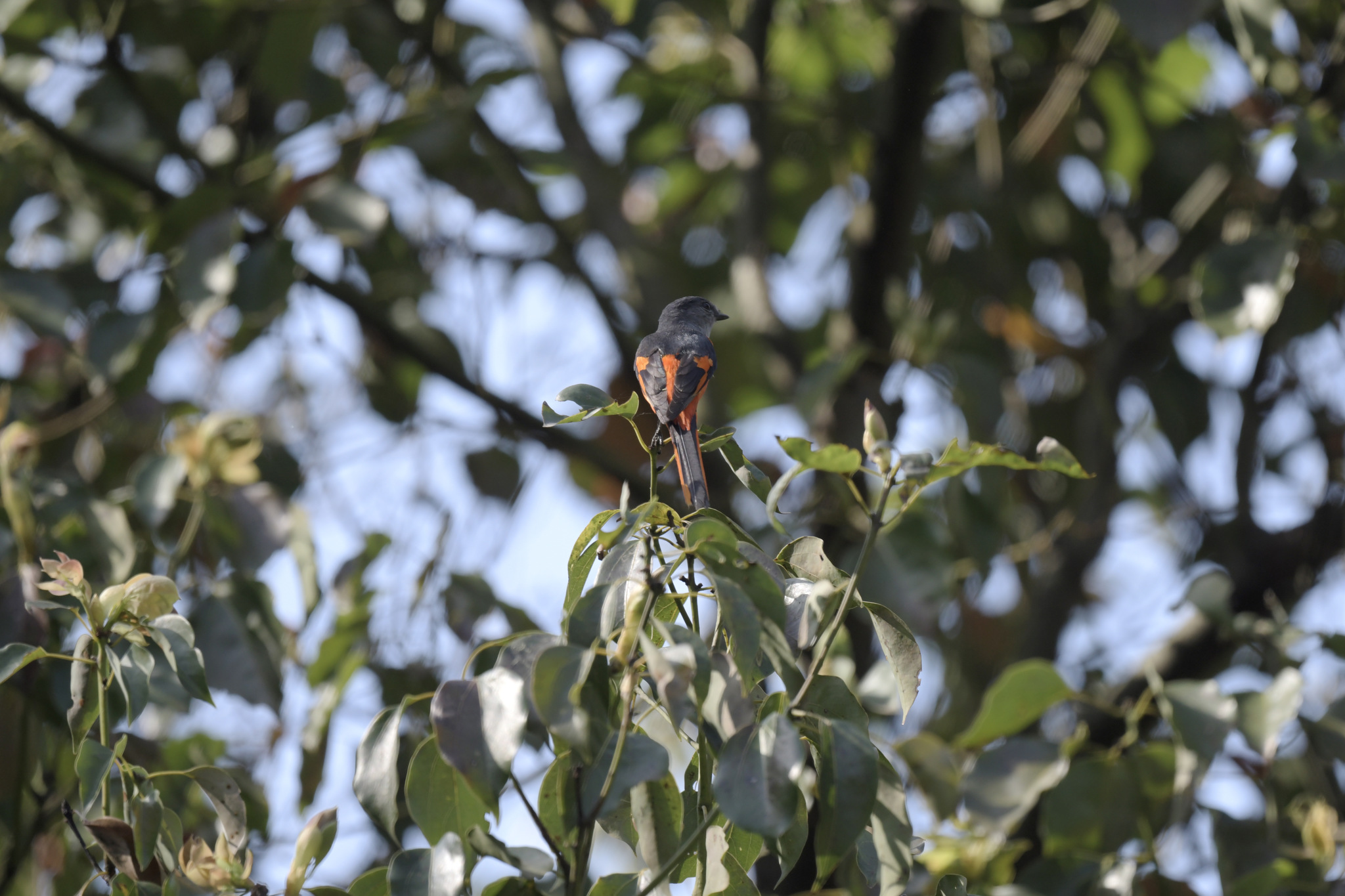
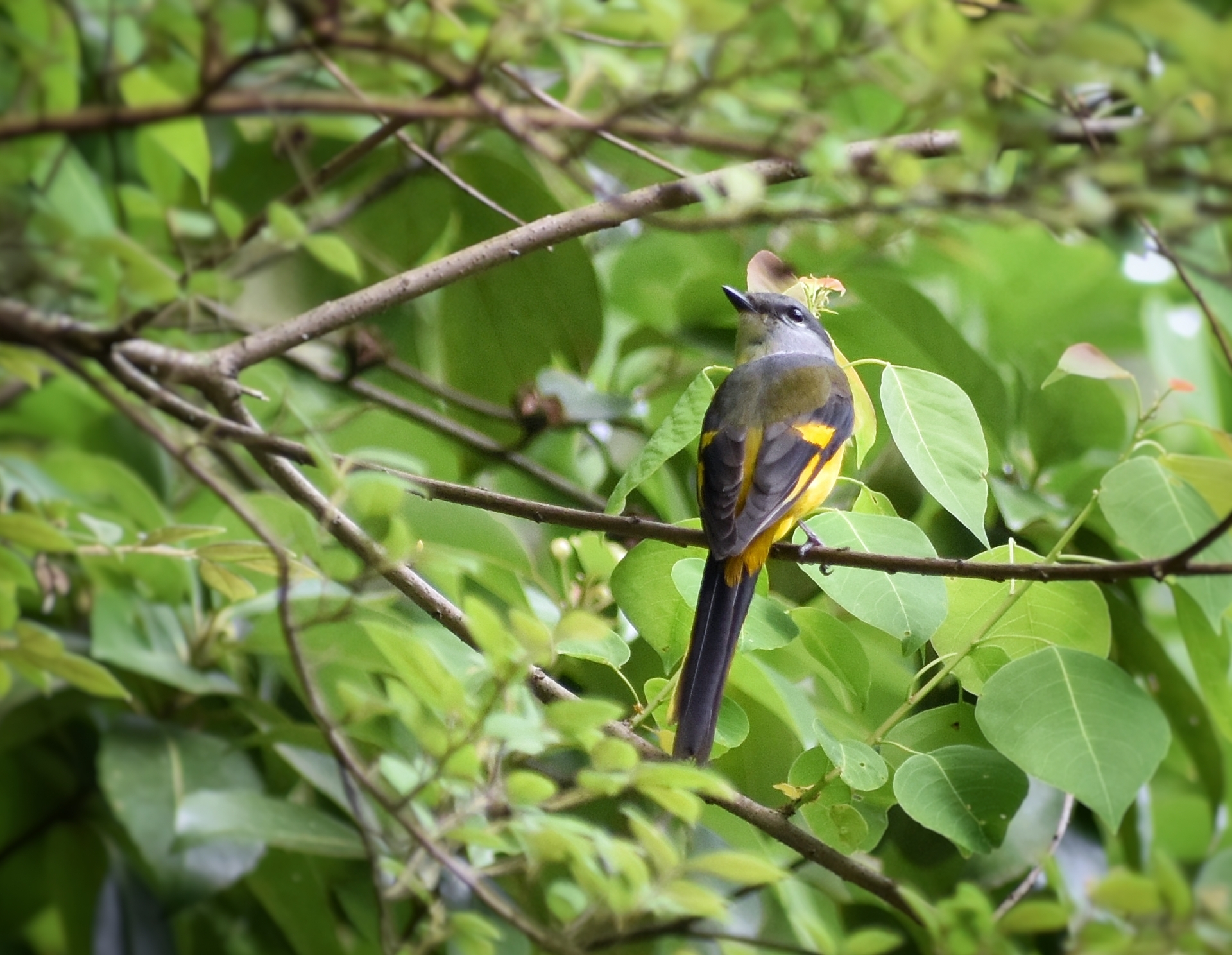
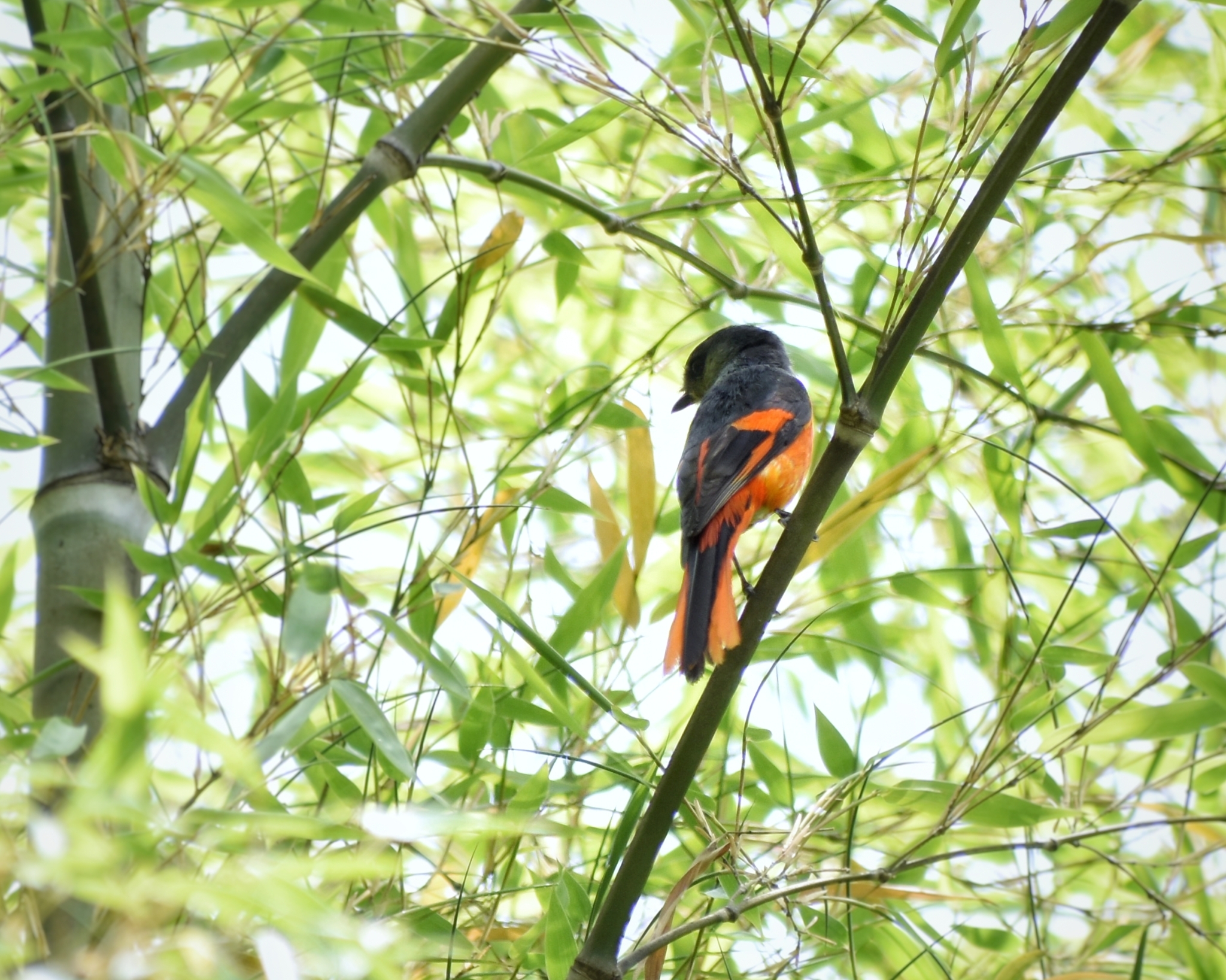
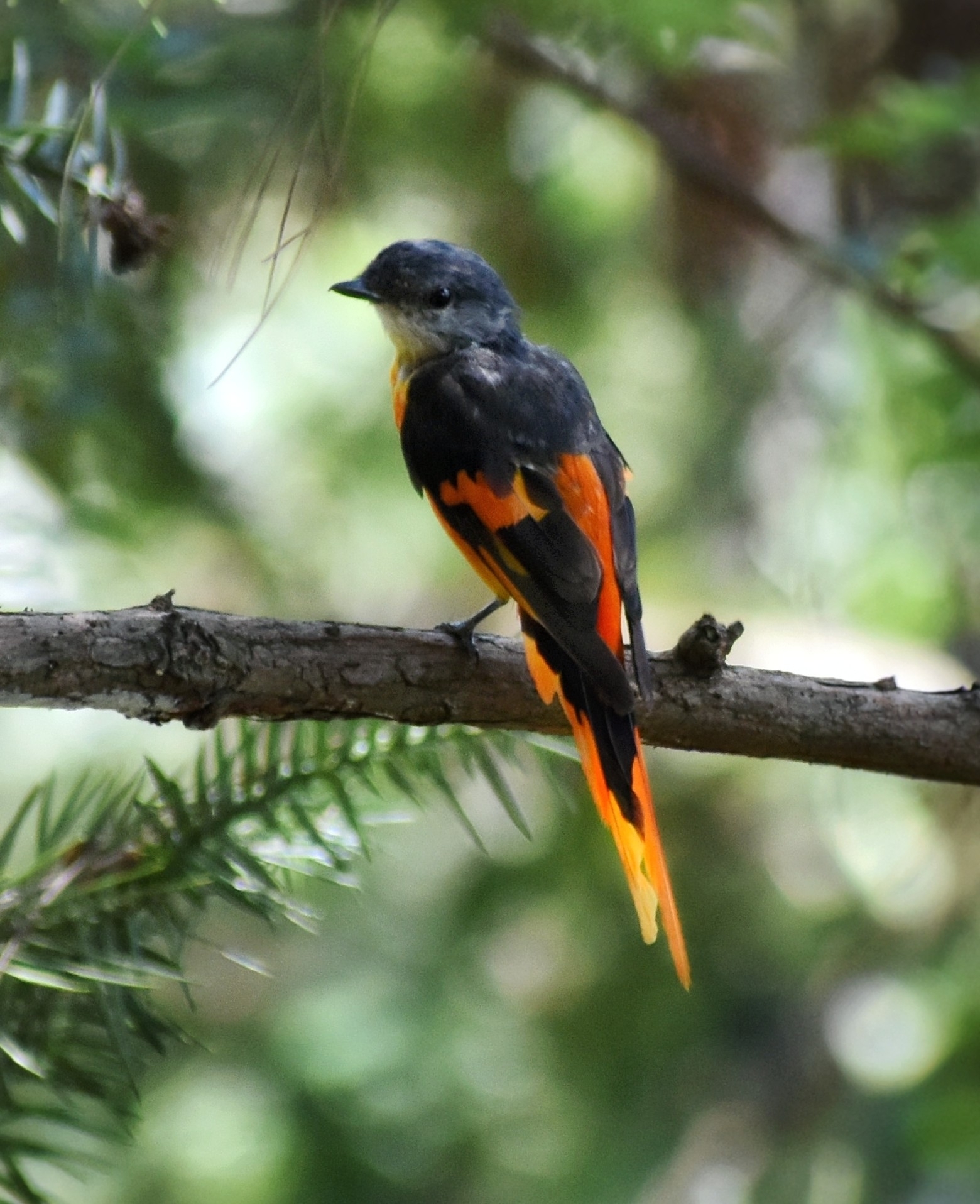
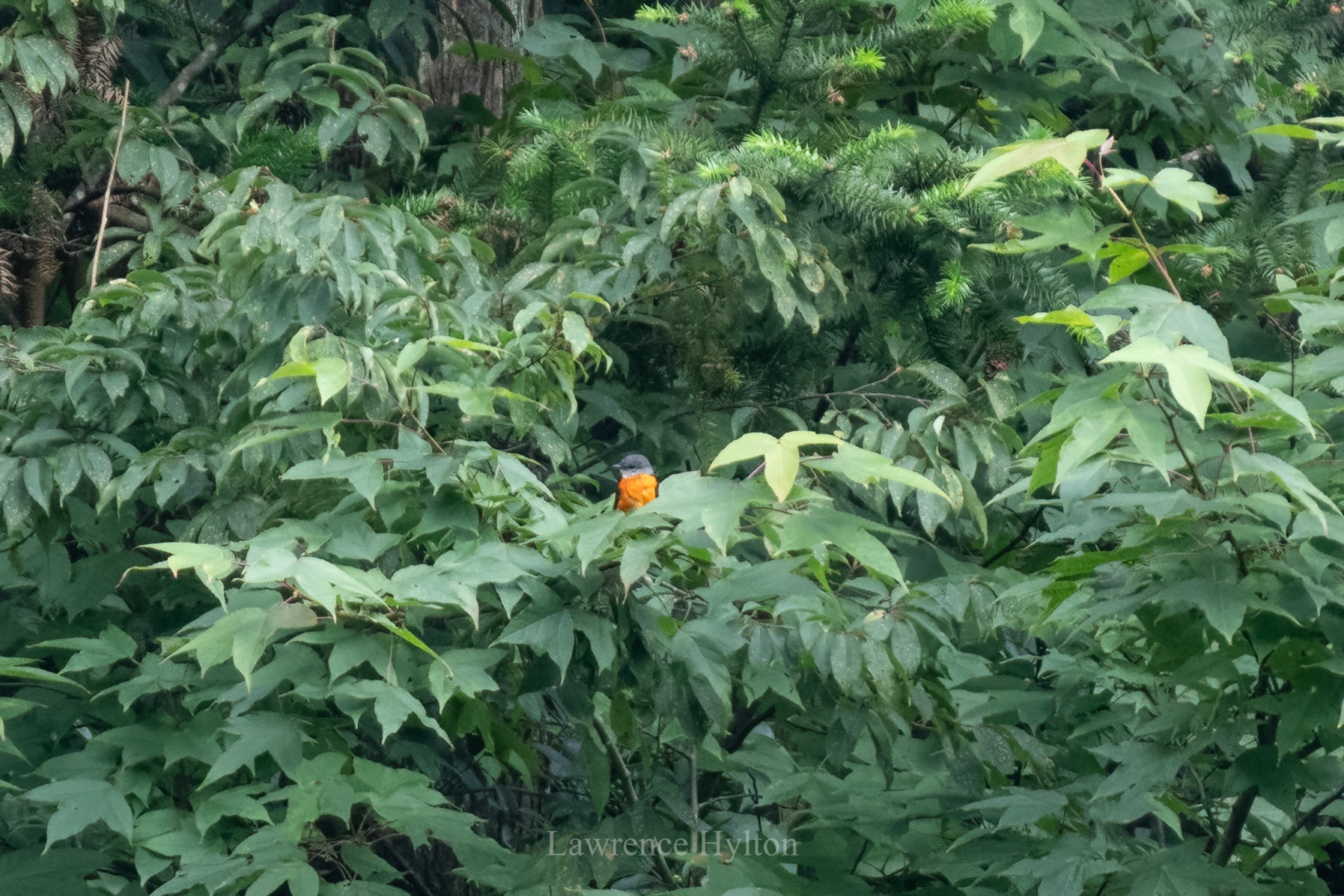
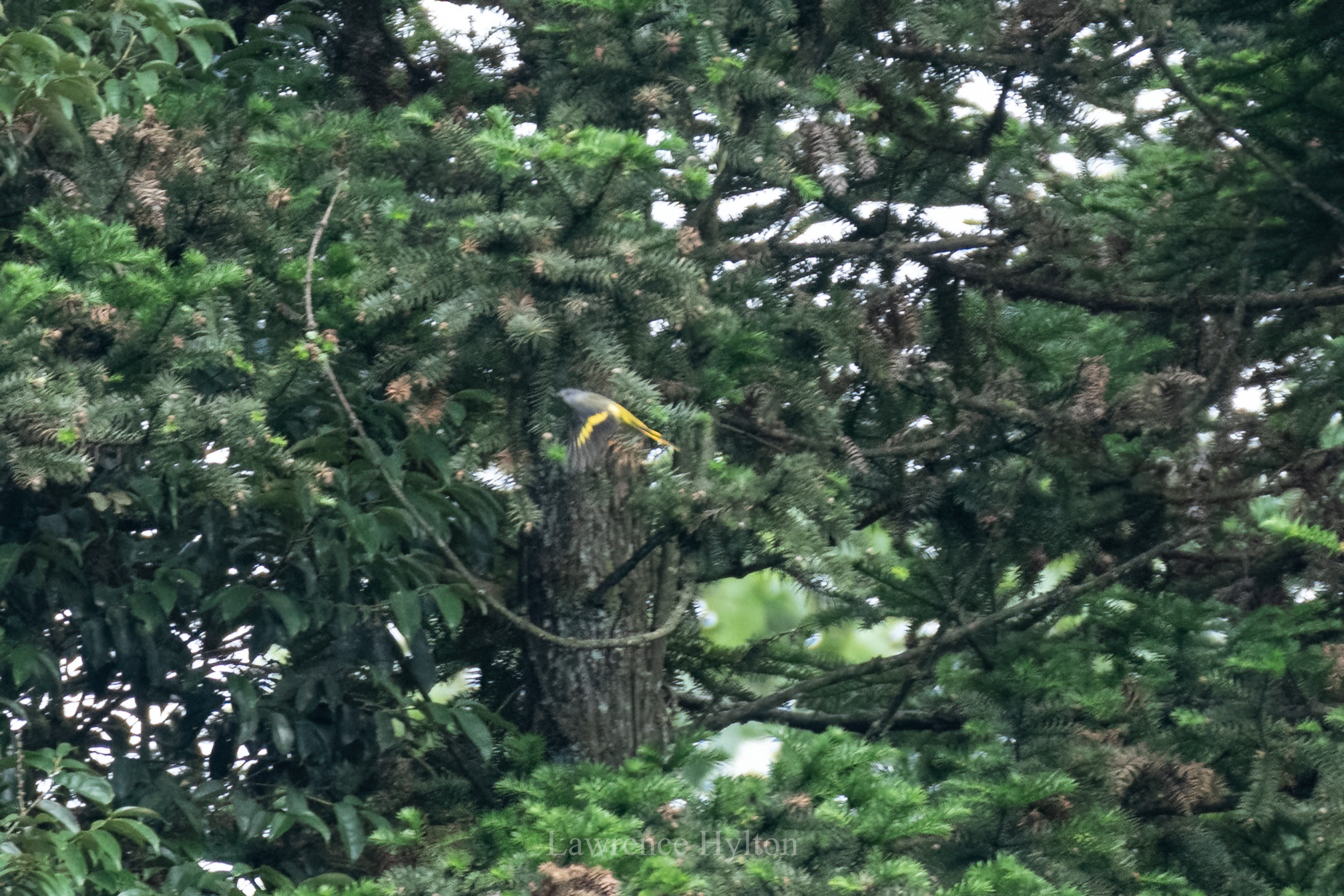
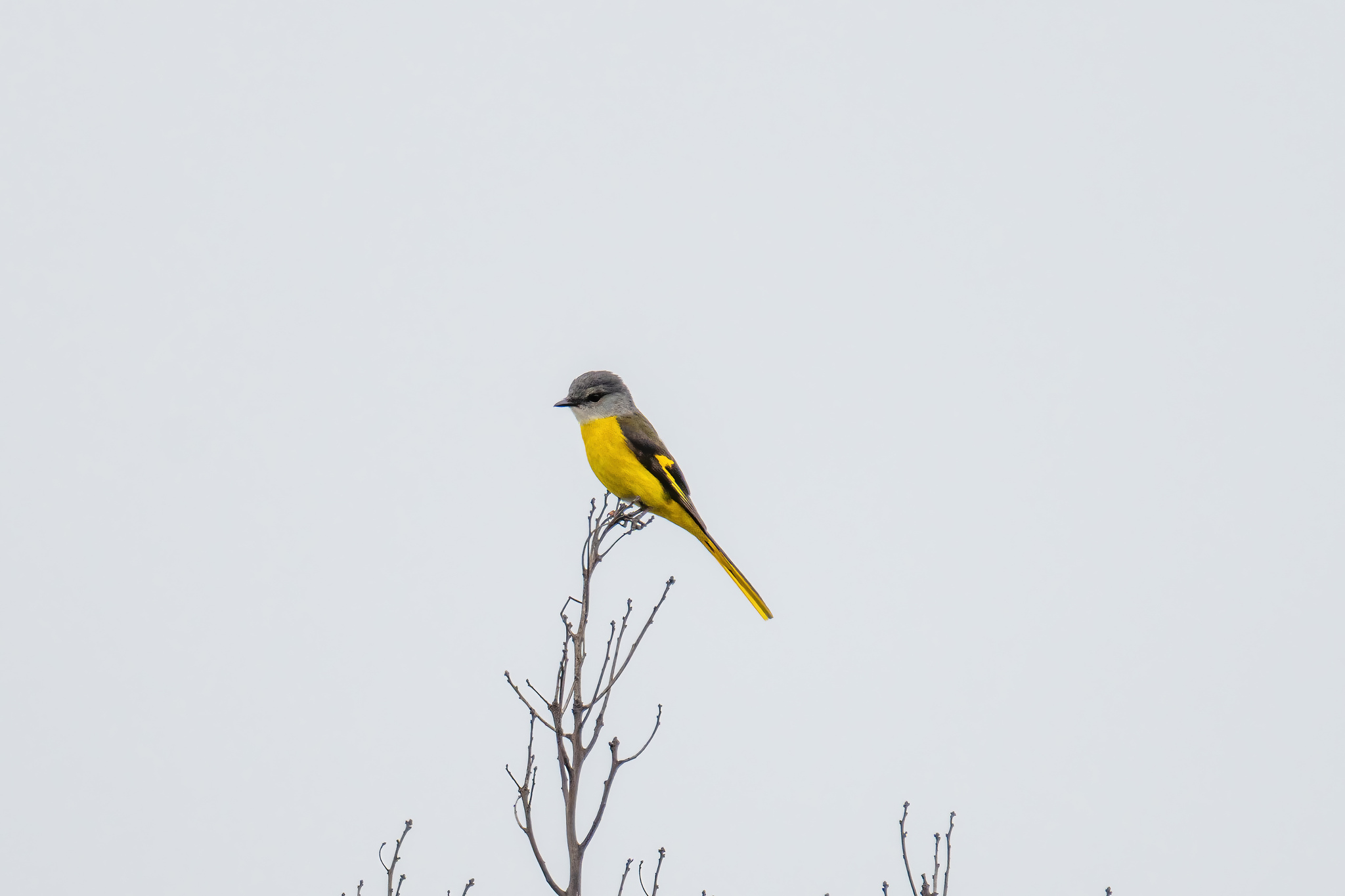
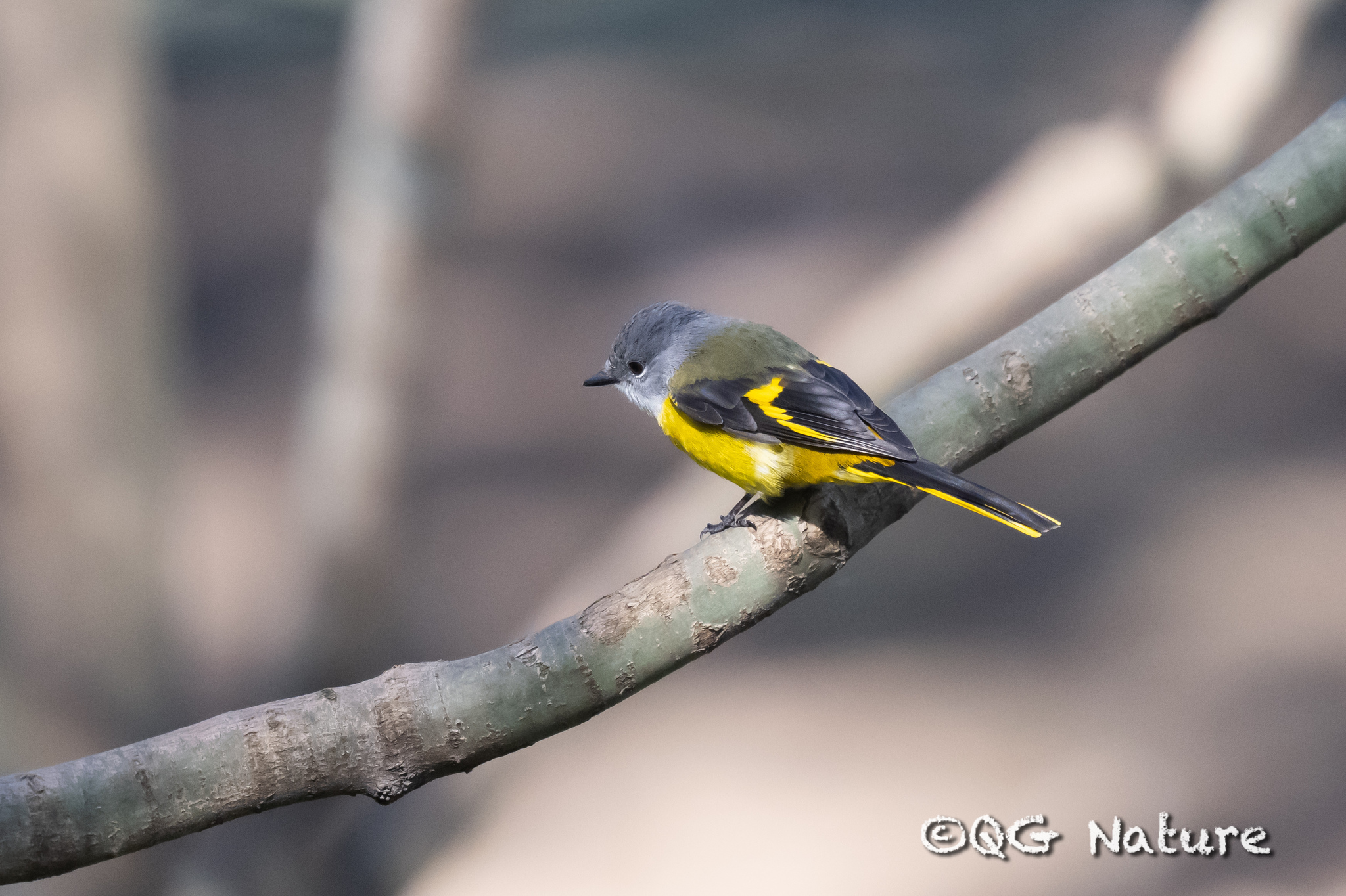
A small, slender minivet measuring 17–19 cm in length and weighing 11–17 g. The species exhibits marked sexual dimorphism. Adult males have a dark grey head and mantle, pale grey chin, orange-yellow throat, and blackish wings. The underparts, lower back, and tips of the greater coverts are orange. Adult females share the same pattern but display bright yellow where males show orange. The eyes, beak, and legs are black. Immature birds resemble females but have distinctive yellow-olive bars on their backs.
Identification
The combination of orange underparts (males) or bright yellow (females) with a grey chin distinguishes this species from other minivets in its range. Males can be separated from the similar long-tailed minivet by their grey rather than black heads and the orange rather than red underparts. Females are distinguished by the bright yellow underparts and the grey chin patch. The species' high-pitched contact calls, described as sri-sisi and chirit-chirit, are useful auditory cues for identification in the field.
Distribution & Habitat
Found from the eastern foothills of the Himalayas through northeastern India, southern China, mainland Southeast Asia to Sumatra and Borneo. Eight subspecies are recognized across this range, with some taxonomic debate regarding those on Borneo and Sumatra. The species inhabits montane forest at elevations of 1,000–2,000 m, though in Taiwan it descends to 150 m. It occupies the canopy of broadleaf and coniferous forests, elfin forest, secondary growth, forest edges, and gardens with trees. All minivet species are thought to have radiated in mainland Asia before dispersing to the Indonesian archipelago.
Behavior & Ecology
This highly social species forms small parties of fewer than 15 individuals outside the breeding season, as well as larger flocks of dozens of birds. It frequently joins mixed-species foraging flocks while searching for invertebrates in the forest canopy, occasionally descending to tree ferns or sallying aerially. While feeding, it gives a twittering call, with contact calls described as a high-pitched sri-sisi and chirit-chirit. Breeding occurs from February to April, with courtship involving the male presenting a flower to the female. Both sexes construct a steep cup-shaped nest of bryophytes, camouflaged with lichens, and raise the young together, sometimes with subadult helpers. Moulting takes place from June to October.
Conservation
Classified as Least Concern by the IUCN due to its large range and stable population. The species is not currently facing significant conservation threats, though it depends on intact montane forest habitat. Its adaptability to secondary forest and forest edges provides some resilience against habitat disturbance. No specific conservation measures are in place for this species.
Culture
This minivet holds no significant cultural or folklore associations documented in available sources. It is primarily of interest to birdwatchers and ornithologists studying the ecology of Asian forest birds.
Source: Wikipedia · CC BY-SA 3.0
Taxonomy
- Order
- Passeriformes
- Family
- Campephagidae
- Genus
- Pericrocotus
- eBird Code
- gycmin1
Vocalizations
Subspecies (8)
-
Pericrocotus solaris cinereigula
mountains of northern Borneo
-
Pericrocotus solaris deignani
southern Vietnam (Langbian Plateau)
-
Pericrocotus solaris griseogularis
southeastern China to northern Indochina and Taiwan
-
Pericrocotus solaris montanus
mountains of Malaya and western Sumatra
-
Pericrocotus solaris montpellieri
southwestern China (northwestern and central Yunnan)
-
Pericrocotus solaris nassovicus
mountains of southeastern Thailand and western Cambodia
-
Pericrocotus solaris rubrolimbatus
southern Myanmar and northern Thailand
-
Pericrocotus solaris solaris
eastern Himalayas (Nepal to northwestern Myanmar)
Data Sources
Species description from Wikipedia, licensed under CC BY-SA 3.0.
Bird images and sounds sourced from GBIF, contributed by citizen scientists worldwide under Creative Commons licenses.
Taxonomy data from AviList 2025.