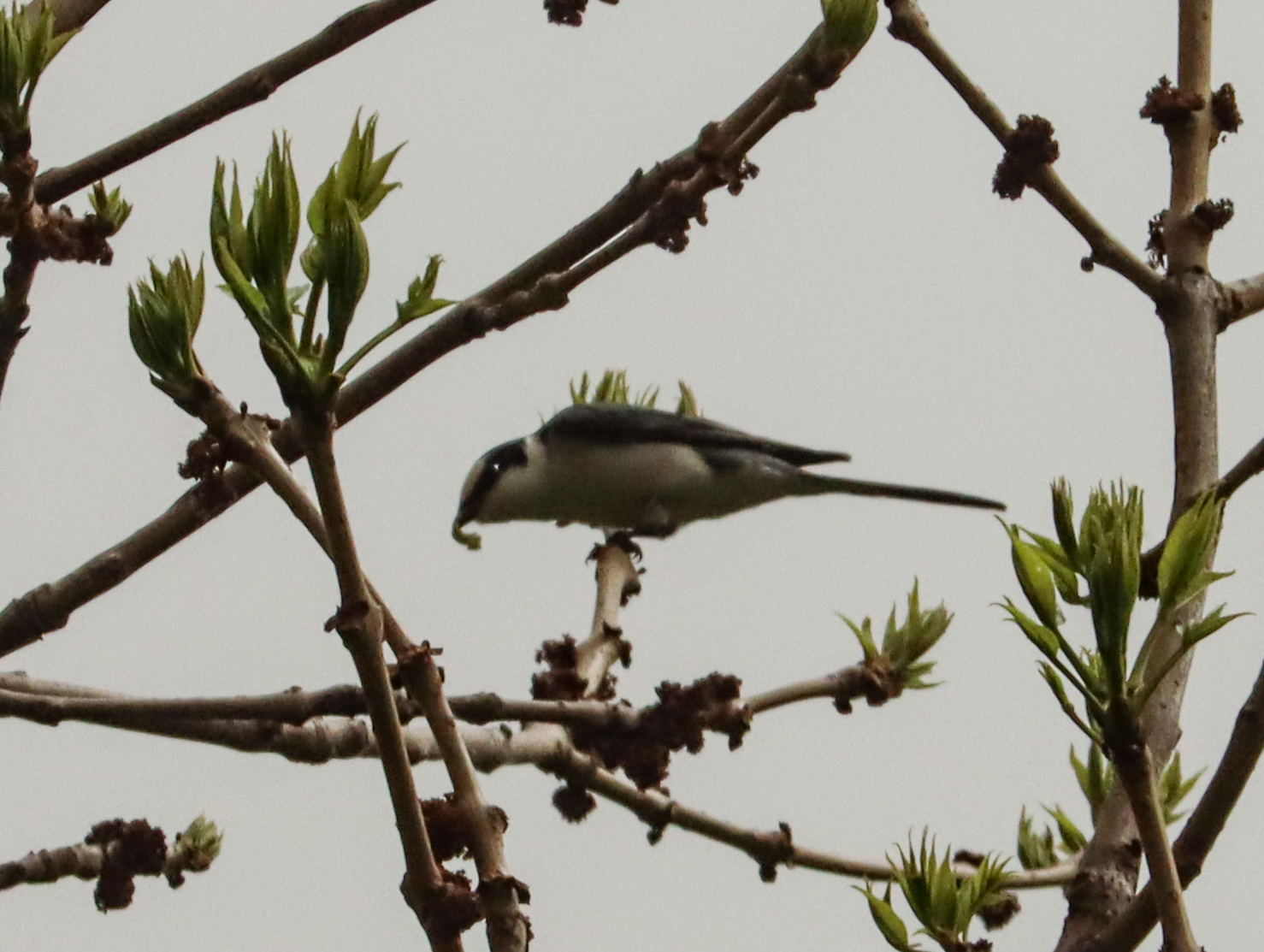
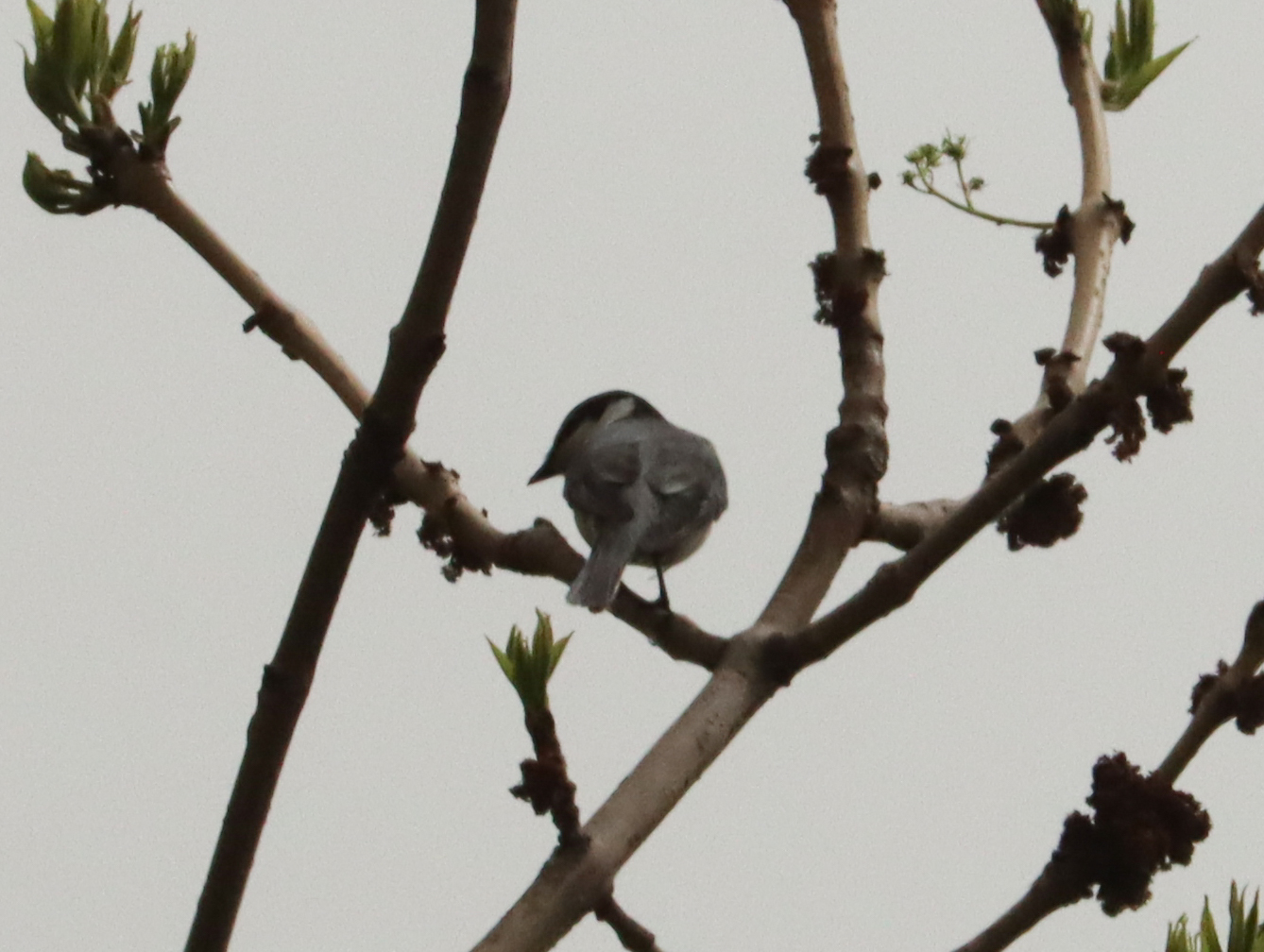
Passeriformes / Campephagidae / Pericrocotus
Ashy Minivet
Pericrocotus divaricatus · 灰山椒鸟
Introduction
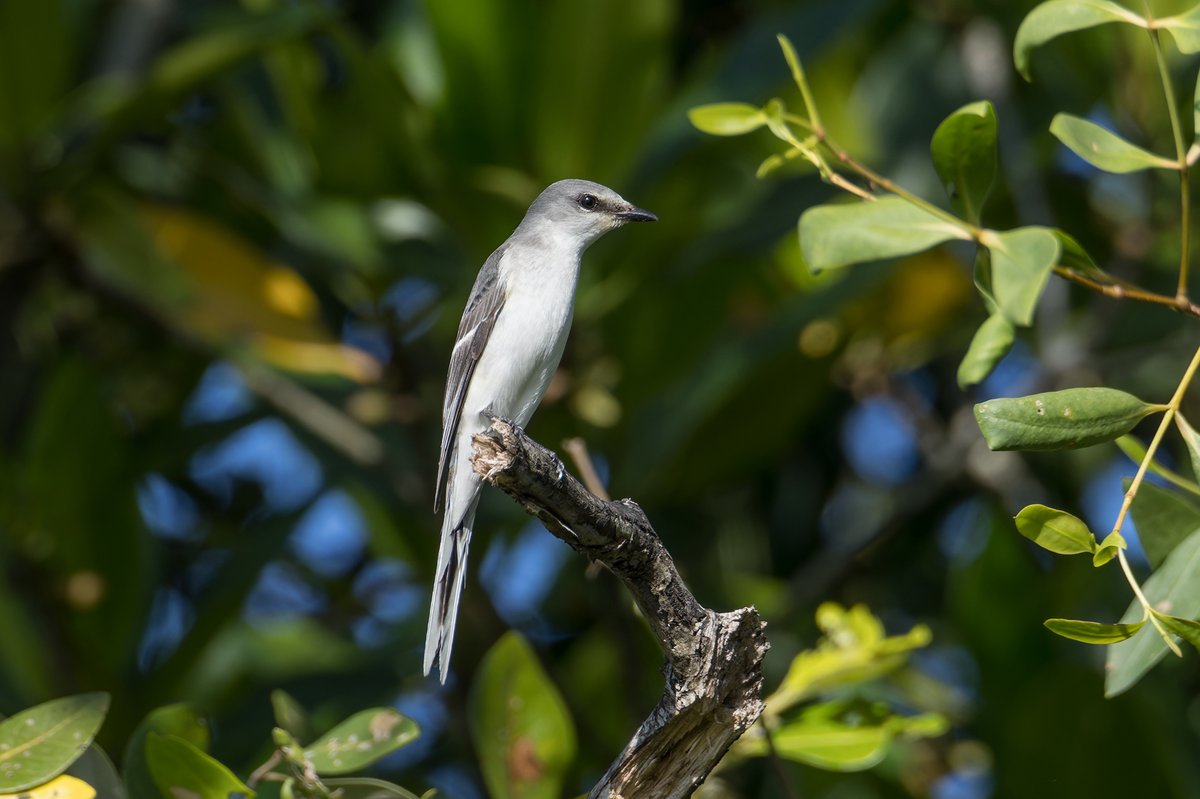
A passerine bird in the cuckooshrike family Campephagidae, native to eastern Asia. Unlike most congeners with yellow, orange, or red plumage, this species displays only greys, whites, and blacks. It is the longest-distance migrant among minivets and one of the few passerines that moult their primaries twice a year. The IUCN assesses it as Least Concern.
Description
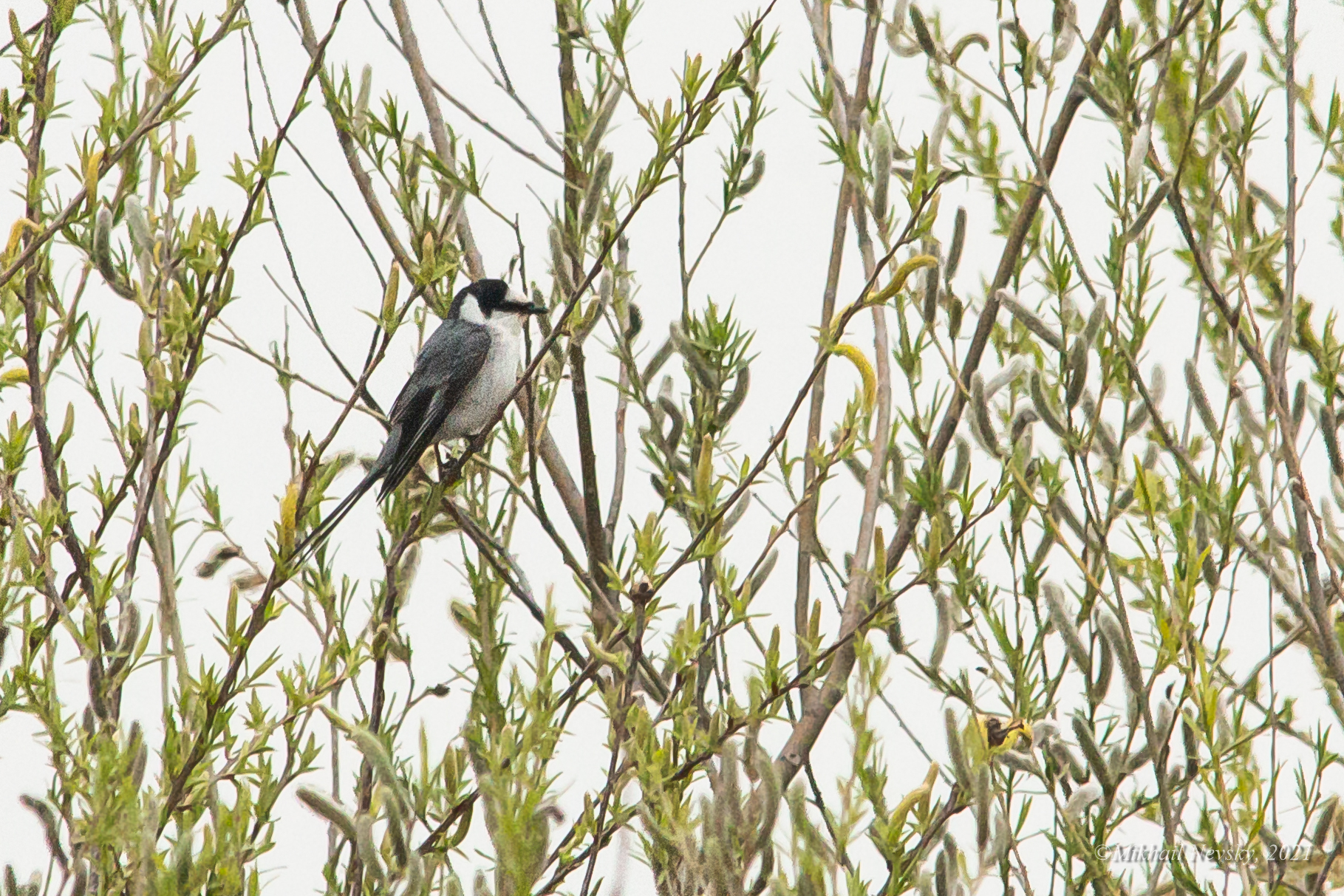
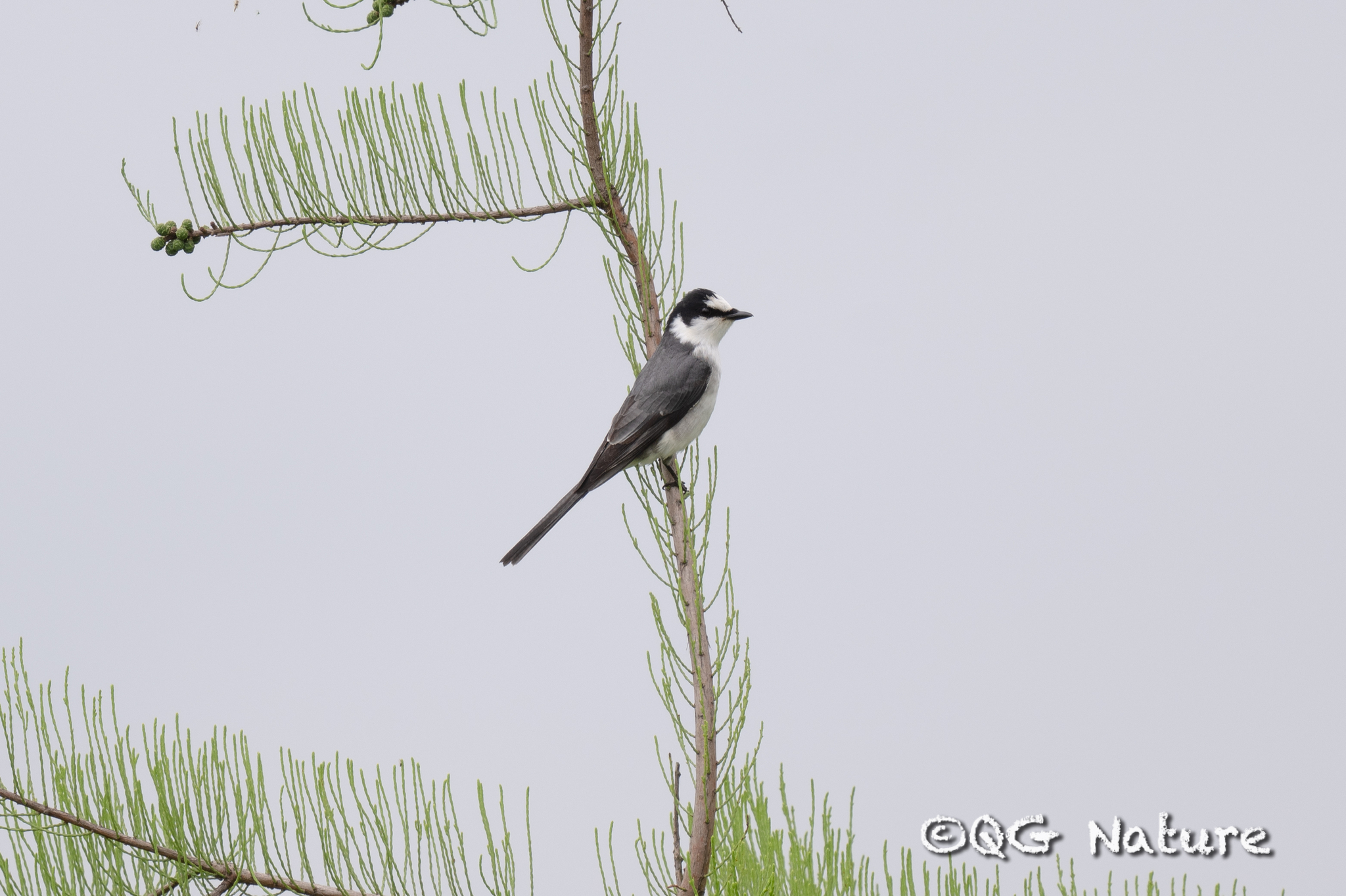
Length 18.5–20 cm. Male is grey above and whitish below, with a black cap, white forehead, black nape, and a white band across the flight-feathers. Outer tail feathers are white. Bill and feet are black. Female has a grey cap with a black band between the bill and eye and a narrow white band above it.
Identification
Male is distinctive with a white face and black nape. Females can be confused with the female brown-rumped minivet but differ in moult pattern from closely related species. Call is a high-pitched, metallic trill.
Distribution & Habitat
Breeds in south-east Siberia, north-east China, Korea, and Japan. Birds in the Ryūkyū Islands are often considered a separate species. Long-distance migrant wintering in South and South-east Asia, including Sumatra, Borneo, Philippines, and Sri Lanka. First recorded in northern Sri Lanka in January 2026. Rare in South Asia; first noted on the Indian mainland in 1965, though reported from the Andaman Islands in 1897. Inhabits forests and open areas with scattered trees.
Behavior & Ecology
Forages in the tree canopy for insects, often joining mixed-species foraging flocks. Migrant birds frequently form large flocks. Lays four to seven eggs, incubated for 17 to 18 days.
Conservation
Assessed as Least Concern by the IUCN. Populations on Amami Island increased from 1985 to 2001.
Source: Wikipedia · CC BY-SA 3.0
Taxonomy
- Order
- Passeriformes
- Family
- Campephagidae
- Genus
- Pericrocotus
Distribution
northeastern Asia; winters to Philippines and Indonesia
Vocalizations
Data Sources
Species description from Wikipedia, licensed under CC BY-SA 3.0.
Bird images and sounds sourced from GBIF, contributed by citizen scientists worldwide under Creative Commons licenses.
Taxonomy data from AviList 2025.