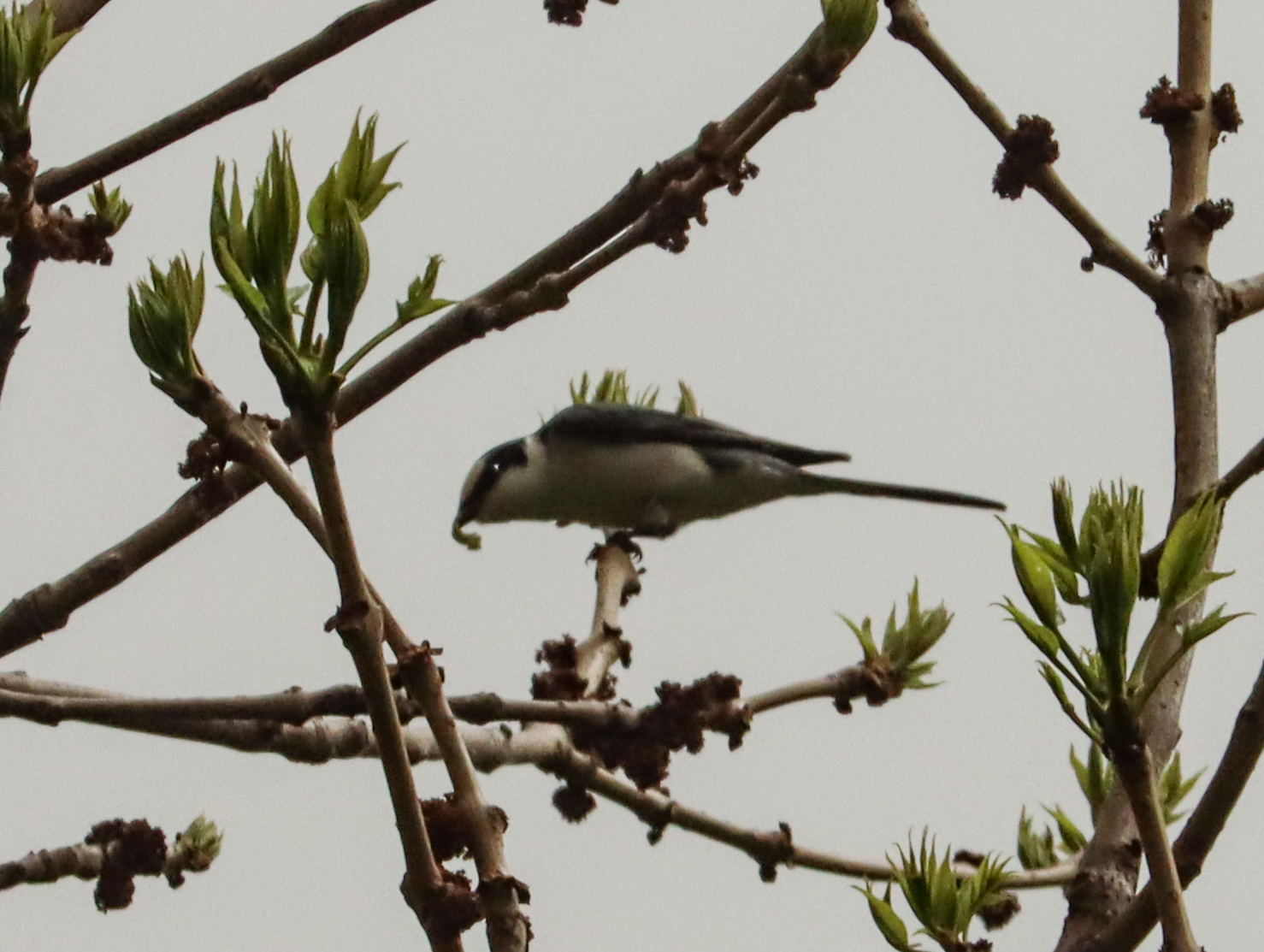
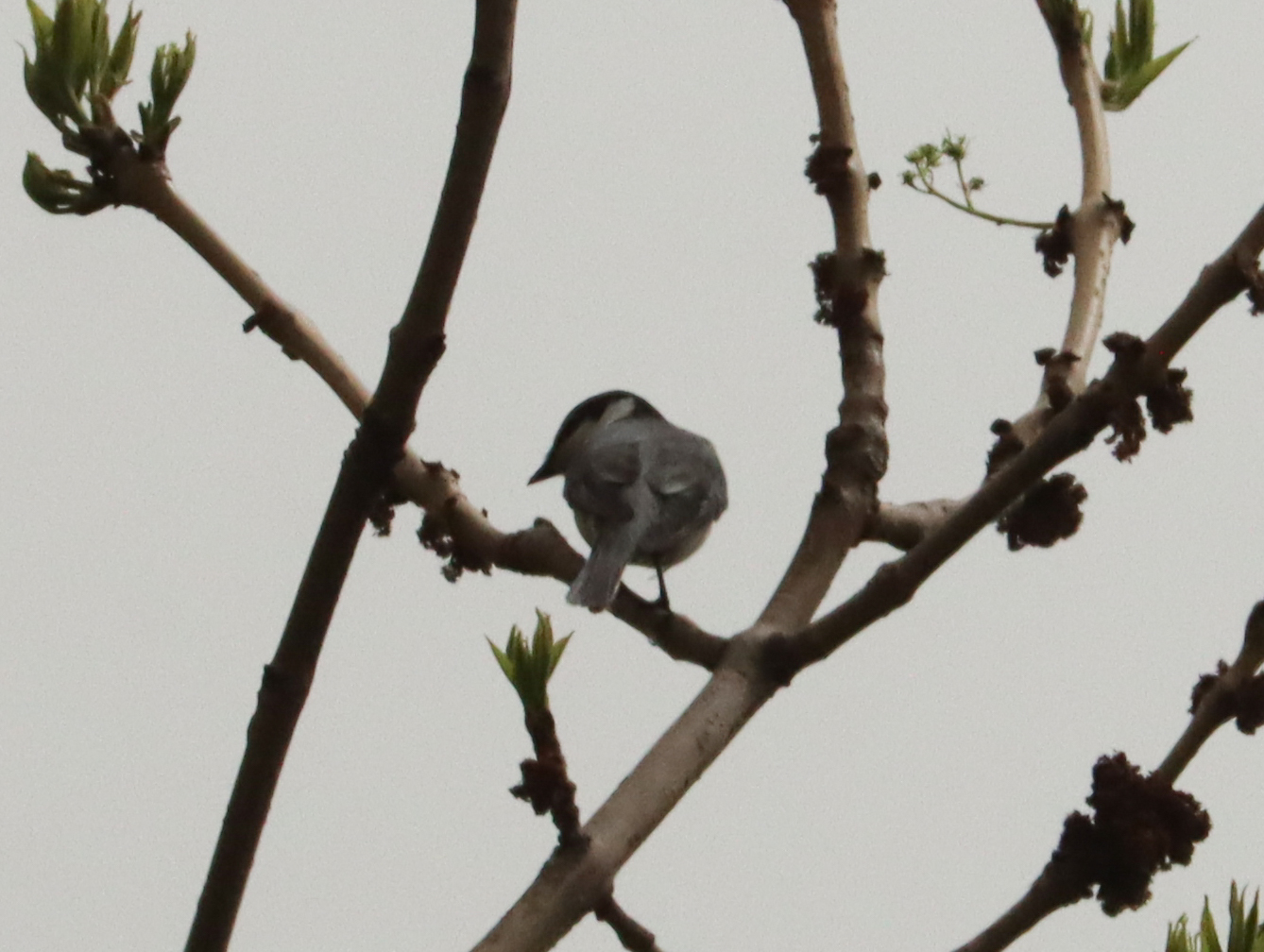
Ashy Minivet
Pericrocotus divaricatus
灰山椒鸟
Introduction
This medium-sized passerine inhabits forests and woodland edges of eastern Asia, belonging to the cuckooshrike family. The species joins mixed-species foraging flocks in the tree canopy, where it actively hunts insects. It breeds in northeast Asia and winters in South and Southeast Asia.
Description
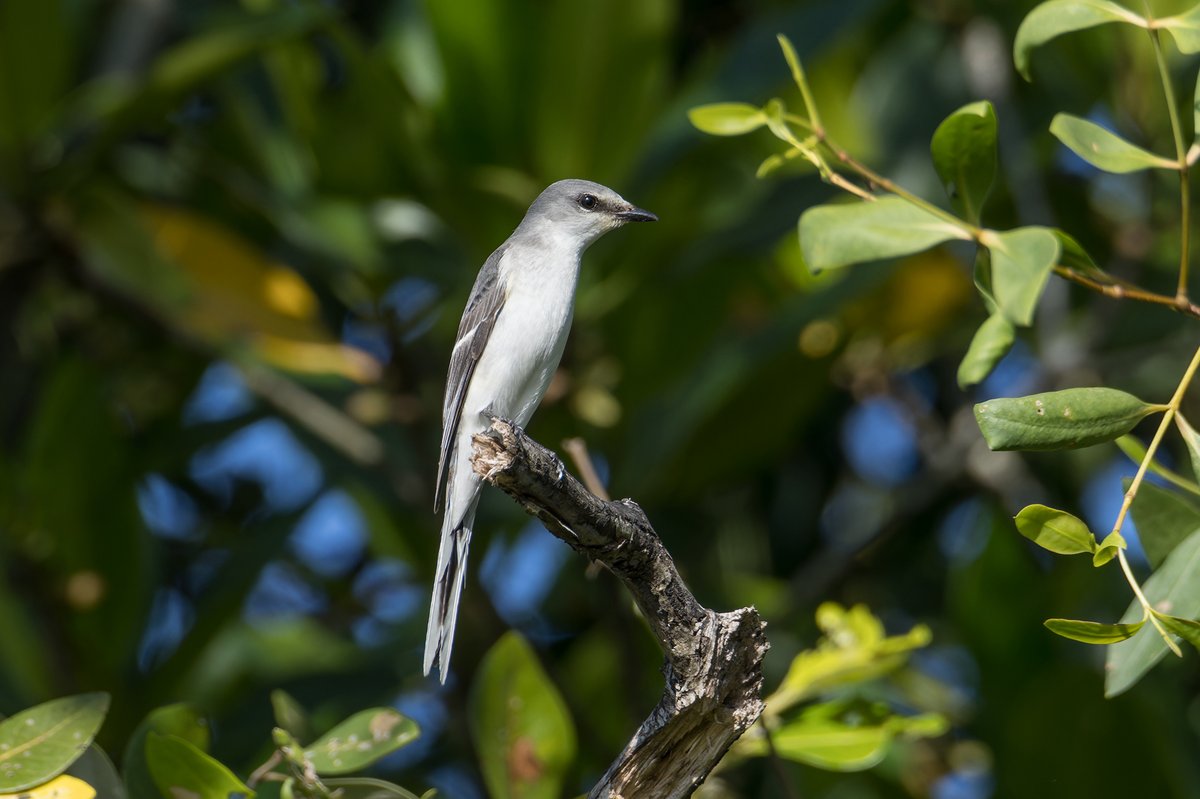
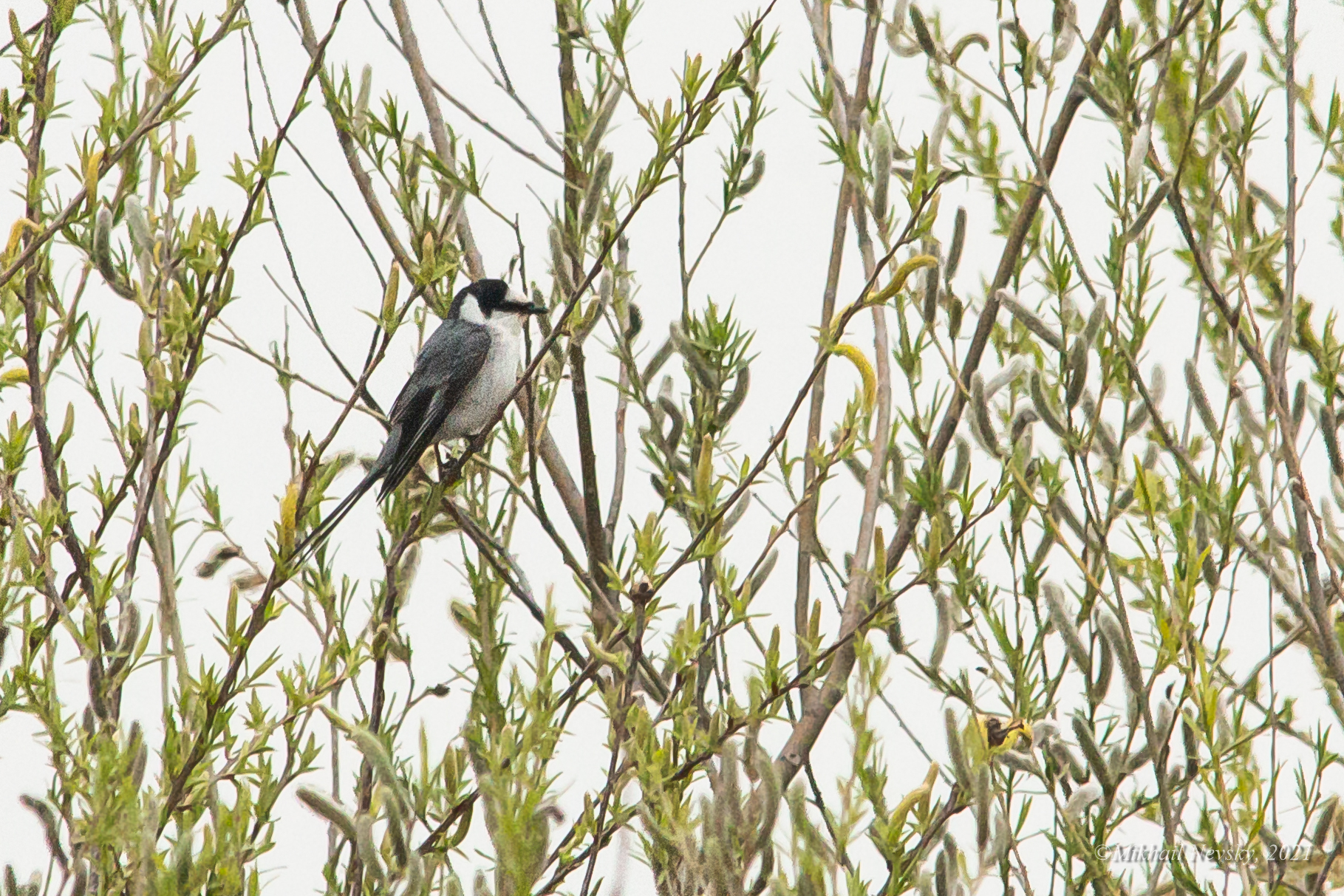
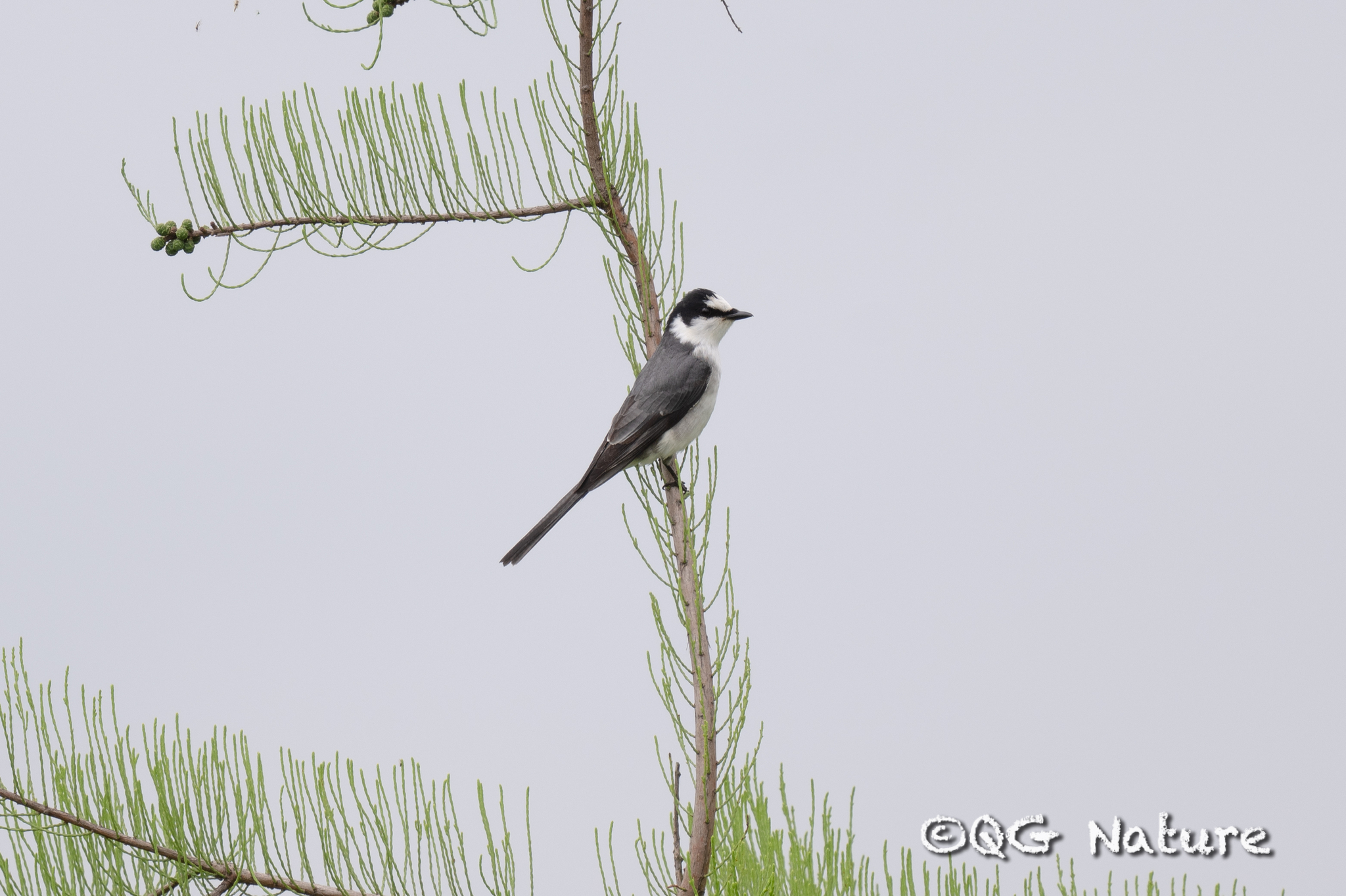
This compact bird measures 18.5-20 centimeters in length. The male exhibits gray upperparts and whitish underparts, complemented by a black cap, white forehead, and a distinctive white band across the flight-feathers. The outer tail feathers are conspicuously white, while the bill and feet are black. The female presents a more subdued appearance with a gray cap marked by a black band between the bill and eye, and a narrow white band above it. Both sexes share the species' characteristic high-pitched, metallic trill call.
Identification
The male's combination of white face and black nape makes it unmistakable in the field. Females present more identification challenges and can be confused with female brown-rumped minivets, requiring careful attention to the facial marking patterns. The white outer tail feathers and wing bands provide useful identification clues when observing birds in flight or during active foraging.
Distribution & Habitat
The breeding range extends across south-east Siberia, north-east China, Korea, and Japan. A distinct population in the Ryūkyū Islands is considered a separate species, the Ryukyu minivet. This species undertakes long-distance migration, wintering throughout South and Southeast Asia including Sumatra, Borneo, the Philippines, and Sri Lanka. It occupies both forested areas and more open landscapes with scattered trees, foraging primarily in the tree canopy.
Behavior & Ecology
Insects form the staple diet, with birds actively foraging in the upper canopy layers. They frequently associate with other minivet species and participate in mixed-species foraging flocks, particularly during the non-breeding season. Migrant birds gather in sizeable flocks. The breeding season produces clutches of four to seven eggs, incubated for approximately 17-18 days.
Conservation
The species holds a conservation status of Least Concern, with populations considered stable across much of its range. An exception was noted on Amami Island, where populations increased between 1985 and 2001. Within the South Asian region, the species remains rare, though records have become more regular in recent decades.
Culture
The species holds particular interest among South Asian birdwatchers due to its rarity in the region. First documented on the Indian mainland in 1965, though earlier reports from the Andaman Islands date to 1897, its gradual expansion into new areas has been documented by ornithologists. This historical pattern of discovery continues to attract attention from regional birding communities.
Source: Wikipedia · CC BY-SA 3.0
Taxonomy
- Order
- Passeriformes
- Family
- Campephagidae
- Genus
- Pericrocotus
- eBird Code
- ashmin1
Distribution
northeastern Asia; winters to Philippines and Indonesia
Vocalizations
Data Sources
Species description from Wikipedia, licensed under CC BY-SA 3.0.
Bird images and sounds sourced from GBIF, contributed by citizen scientists worldwide under Creative Commons licenses.
Taxonomy data from AviList 2025.