Passeriformes / Pellorneidae / Pellorneum
Puff-throated Babbler
Pellorneum ruficeps · 棕头幽鹛
Introduction
A passerine bird belonging to the genus Pellorneum. Found throughout Asia, particularly in the Himalayas and forested regions. Inhabits scrub, bamboo thickets, and moist forest primarily in hilly areas. Forages in small groups on the forest floor by turning over leaf litter to find insect prey. Known for its loud and distinctive calls, including a morning song, contact calls, and alarm calls. Remains low in undergrowth, making it difficult to observe despite its vocal nature. Serves as the type species for the genus Pellorneum.
Description
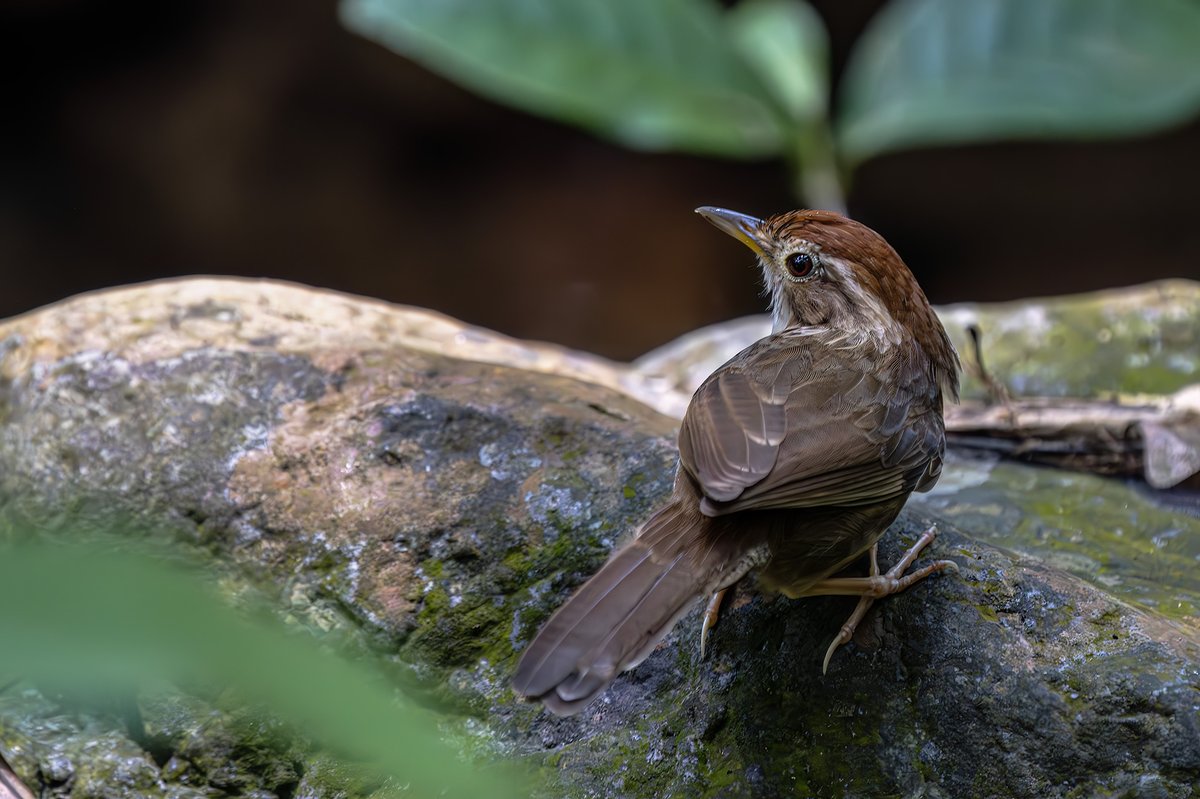
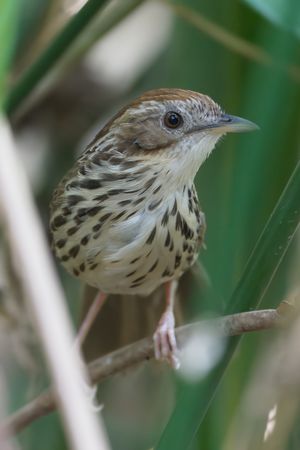
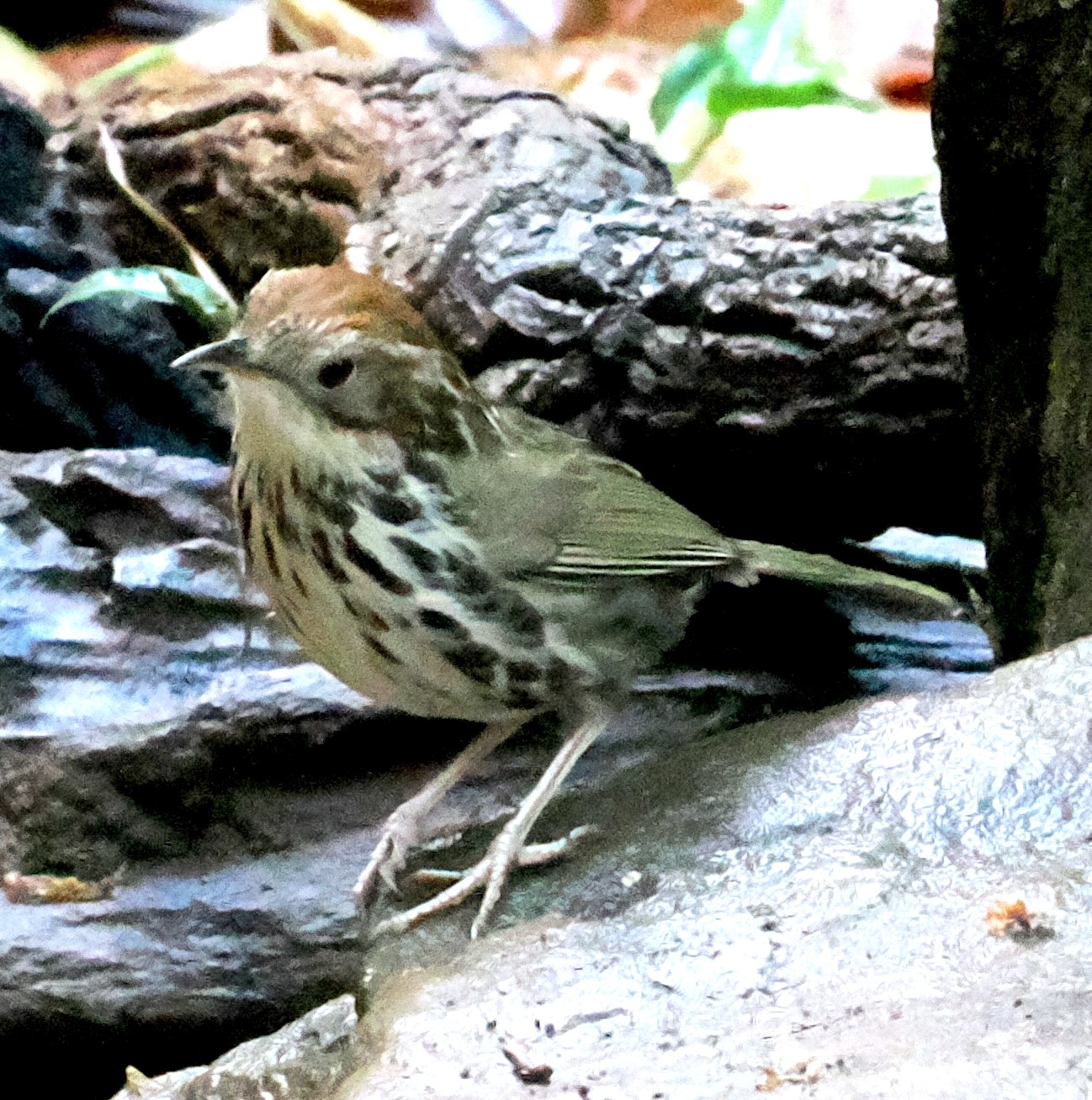
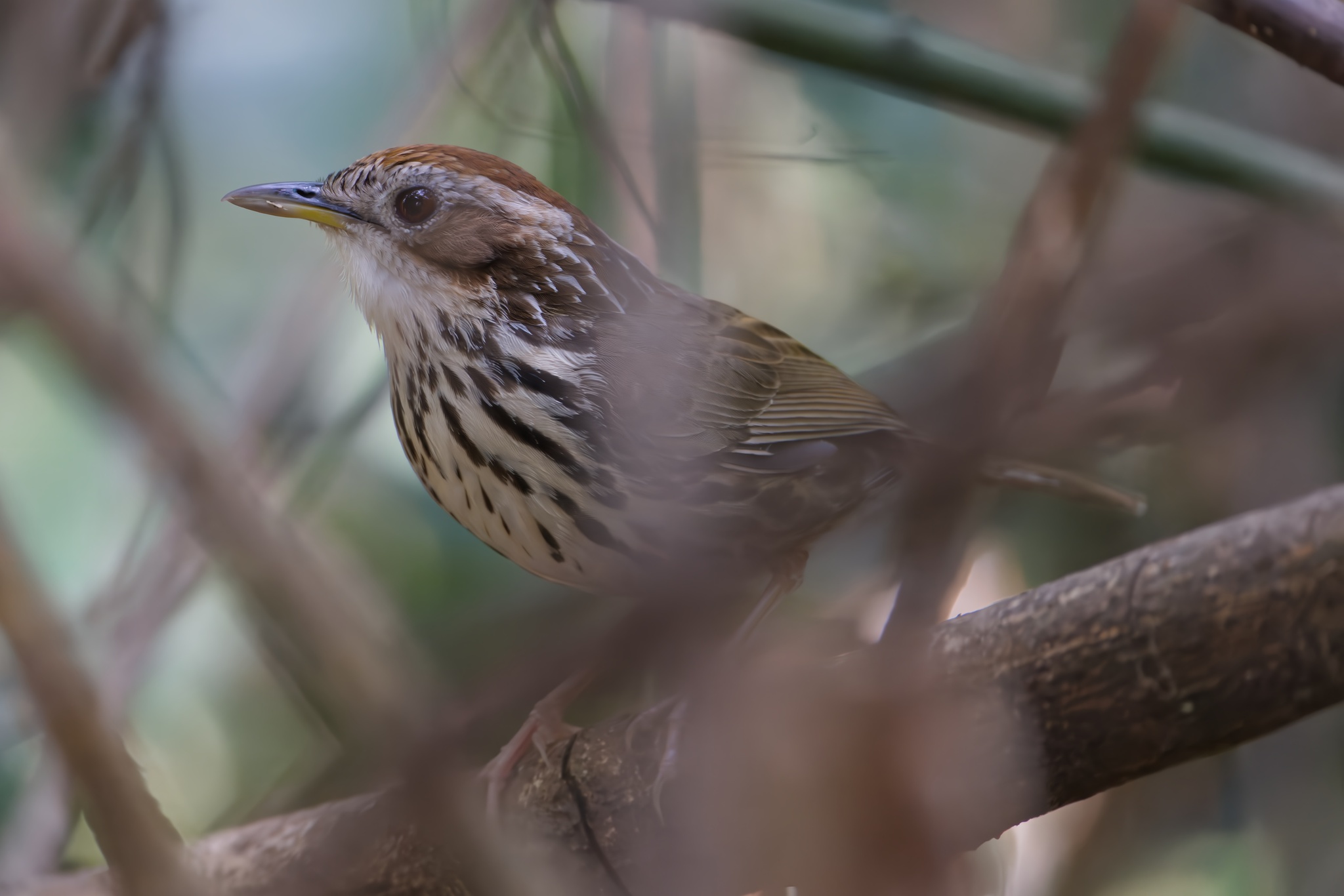
Brown upperparts with white underparts heavily streaked with brown on the breast and belly. Features a chestnut crown, long buff supercilium, and dusky cheeks. The white throat can be puffed out, giving rise to the common name. Possesses strong legs adapted for ground foraging. Subspecies vary in plumage: some show streaks on the mantle while others, particularly in Peninsular India, lack these streaks. Often moves through undergrowth in a manner reminiscent of a song thrush.
Identification
Difficult to observe due to its preference for dense undergrowth. The combination of brown upperparts, streaked white underparts, chestnut crown, and buff supercilium aids identification. The puffed white throat is a distinctive feature when visible. subspecies variations in streaking (particularly on the mantle and back) can help distinguish populations. The weak, fluttering flight and ground-dwelling habits are characteristic.
Distribution & Habitat
Widespread resident breeder throughout the Himalayas and forested regions of Asia. Not migratory, though possesses short rounded wings and weak flight. Inhabits scrub and bamboo thickets in hilly regions. Nearly thirty subspecies have been described across its range, including populations in peninsular India, the Eastern and Western Ghats, Himalayas, and extending east through Burma and Southeast Asia.
Behavior & Ecology
Forages on the forest floor in small groups, turning over leaf litter to locate insects. Vocalizes frequently with a series of whistling notes ascending in scale; calls have been transcribed as he'll beat you, pret-ty-sweet. Breeding occurs mainly during the rainy season. Builds a dome-shaped nest of leaves and twigs on the ground at the base of a bush, with the entrance typically pointing downhill on slopes. Clutch size ranges from 2 to 5 eggs, with northern populations tending toward larger clutches. Fledging occurs 12-13 days after hatching. Parents move rodent-like through undergrowth when attending the nest.
Source: Wikipedia · CC BY-SA 3.0
Taxonomy
- Order
- Passeriformes
- Family
- Pellorneidae
- Genus
- Pellorneum
Vocalizations
Subspecies (28)
-
Pellorneum ruficeps acrum
central plains of Thailand and northern Malay Peninsula
Data Sources
Species description from Wikipedia, licensed under CC BY-SA 3.0.
Bird images and sounds sourced from GBIF, contributed by citizen scientists worldwide under Creative Commons licenses.
Taxonomy data from AviList 2025.