


Pelecaniformes / Pelecanidae / Pelecanus
Dalmatian Pelican
Pelecanus crispus · 卷羽鹈鹕
Introduction
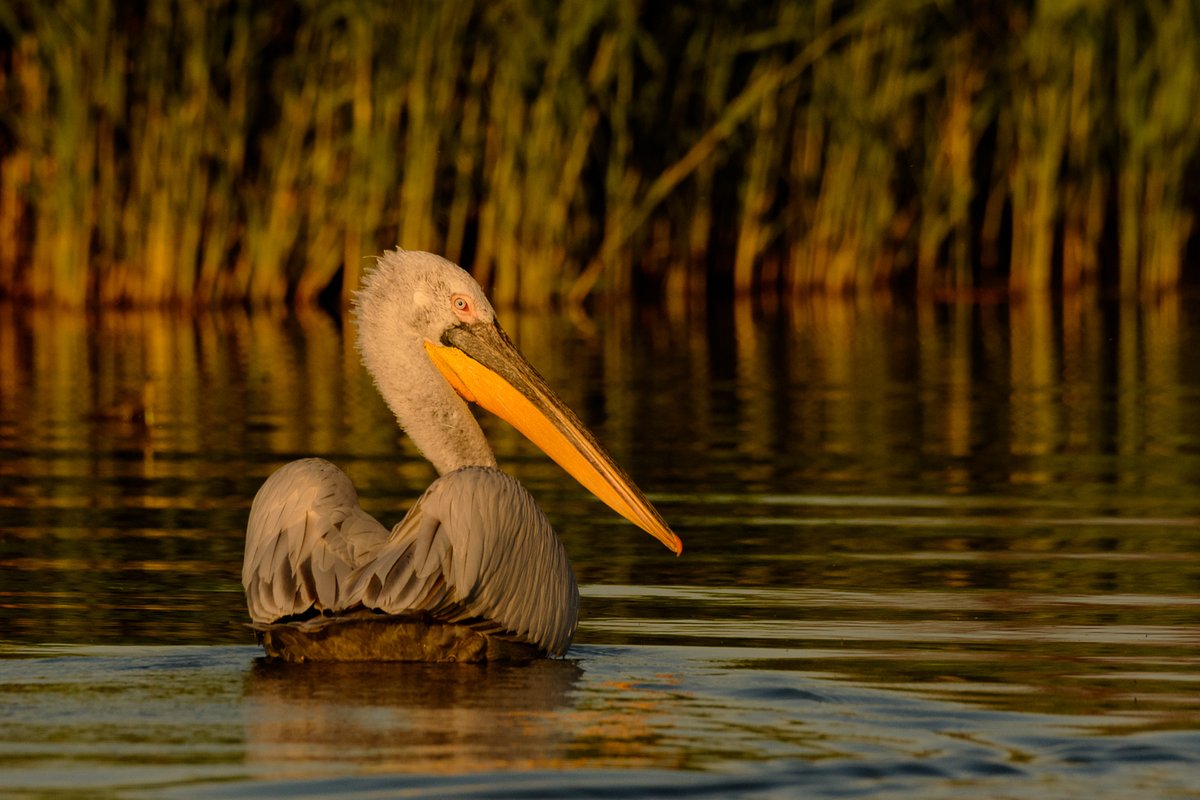
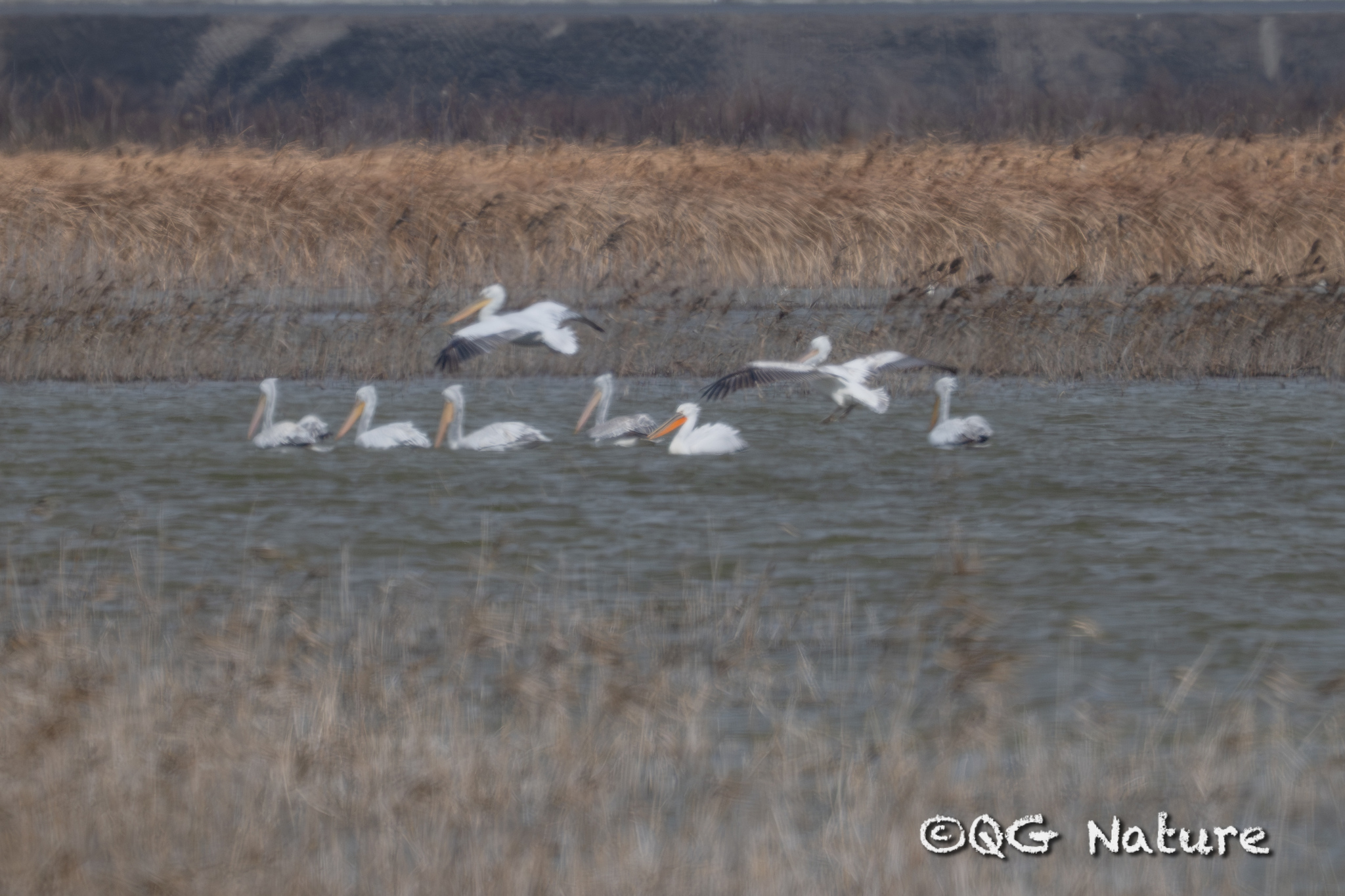
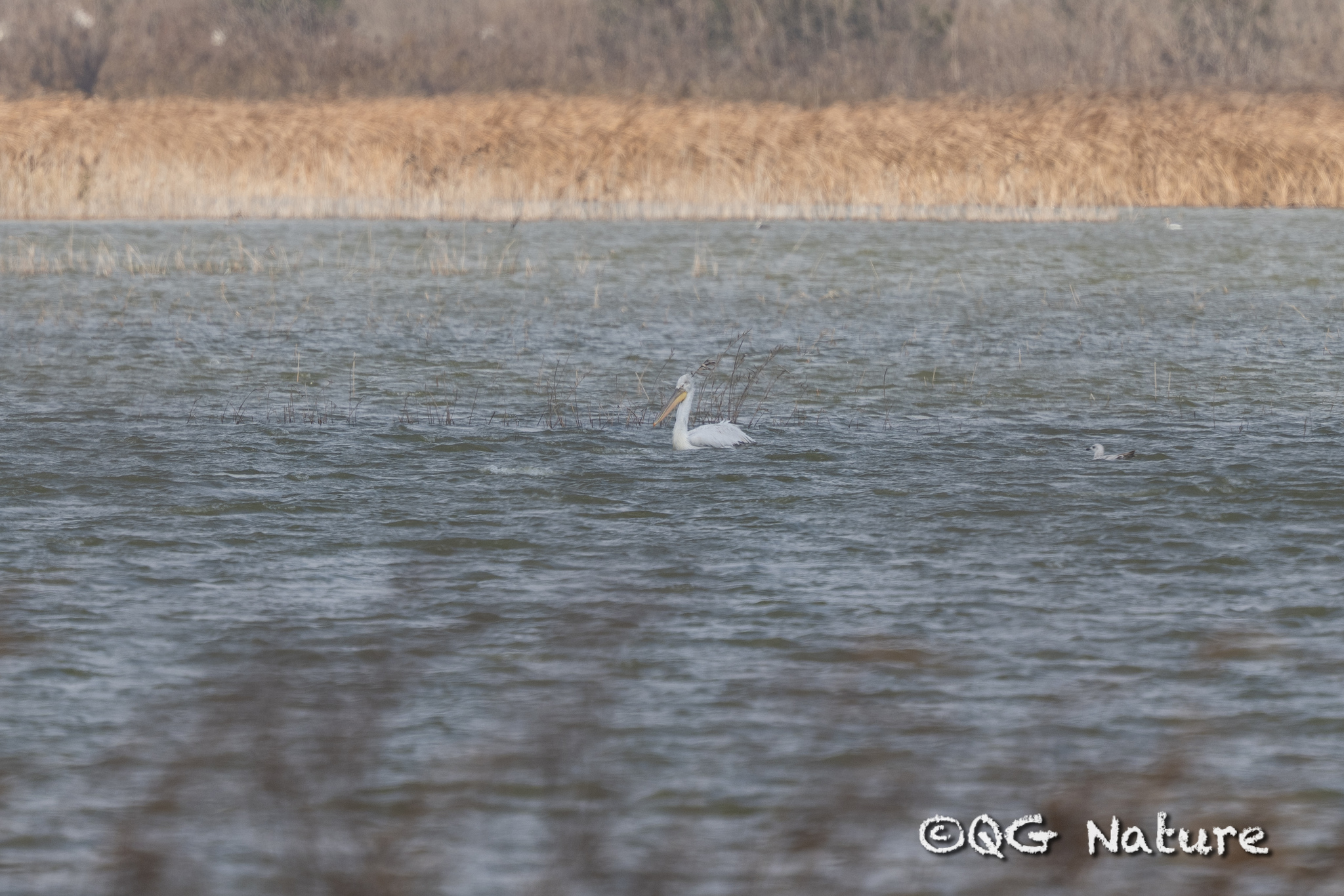
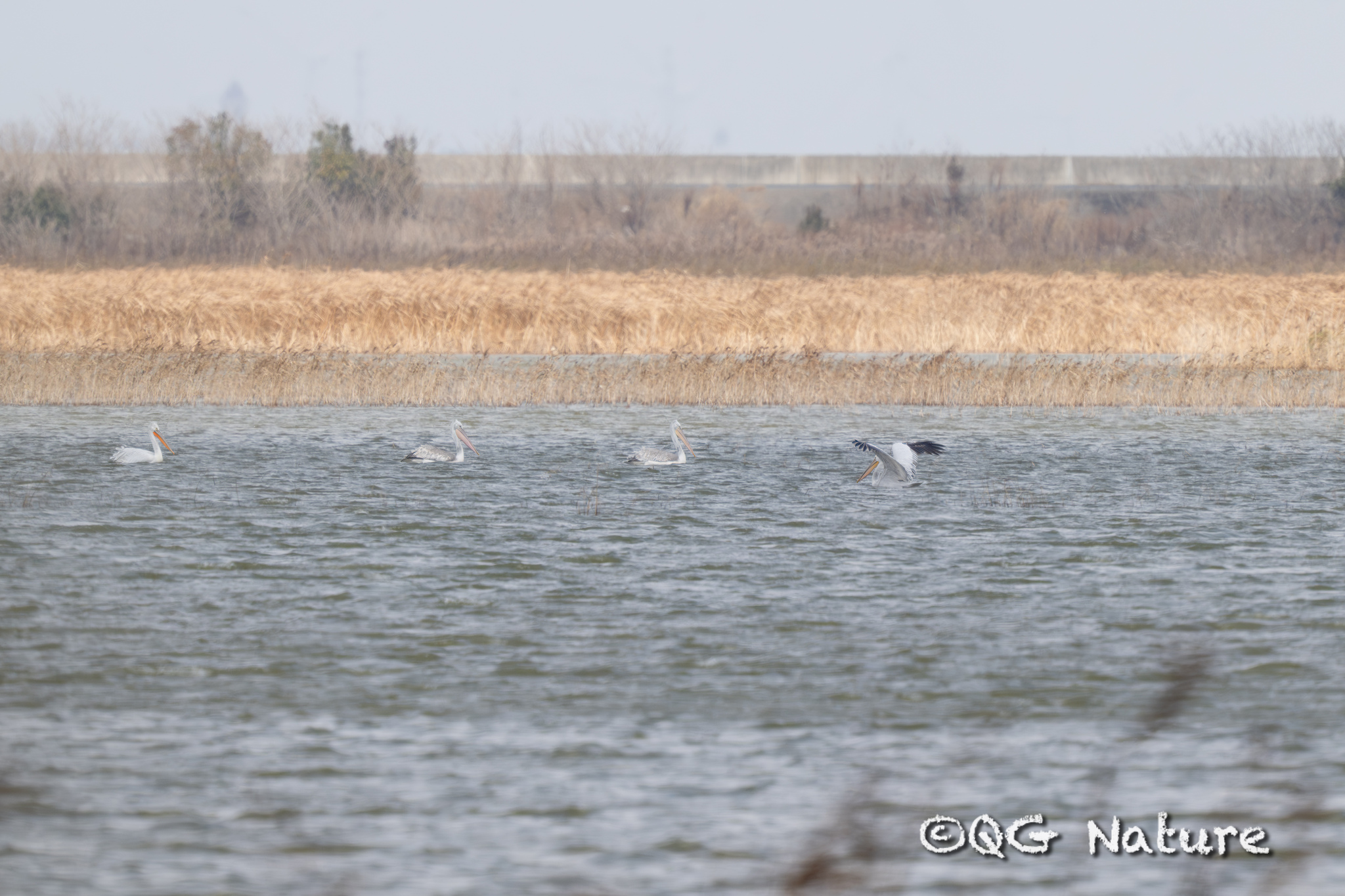
Largest member of the pelican family and among the heaviest flying birds, with a wingspan of 2.7–3.2 m. Range spans Central Eurasia from the eastern Mediterranean to the Taiwan Strait, and from the Persian Gulf to Siberia. Inhabits swamps, shallow lakes, and large open wetlands. Distinctive for curly nape feathers, grey legs, and silvery-white plumage; less social than other pelicans, often nesting in small groups or alone. Short-to-medium-distance migrant.
Description
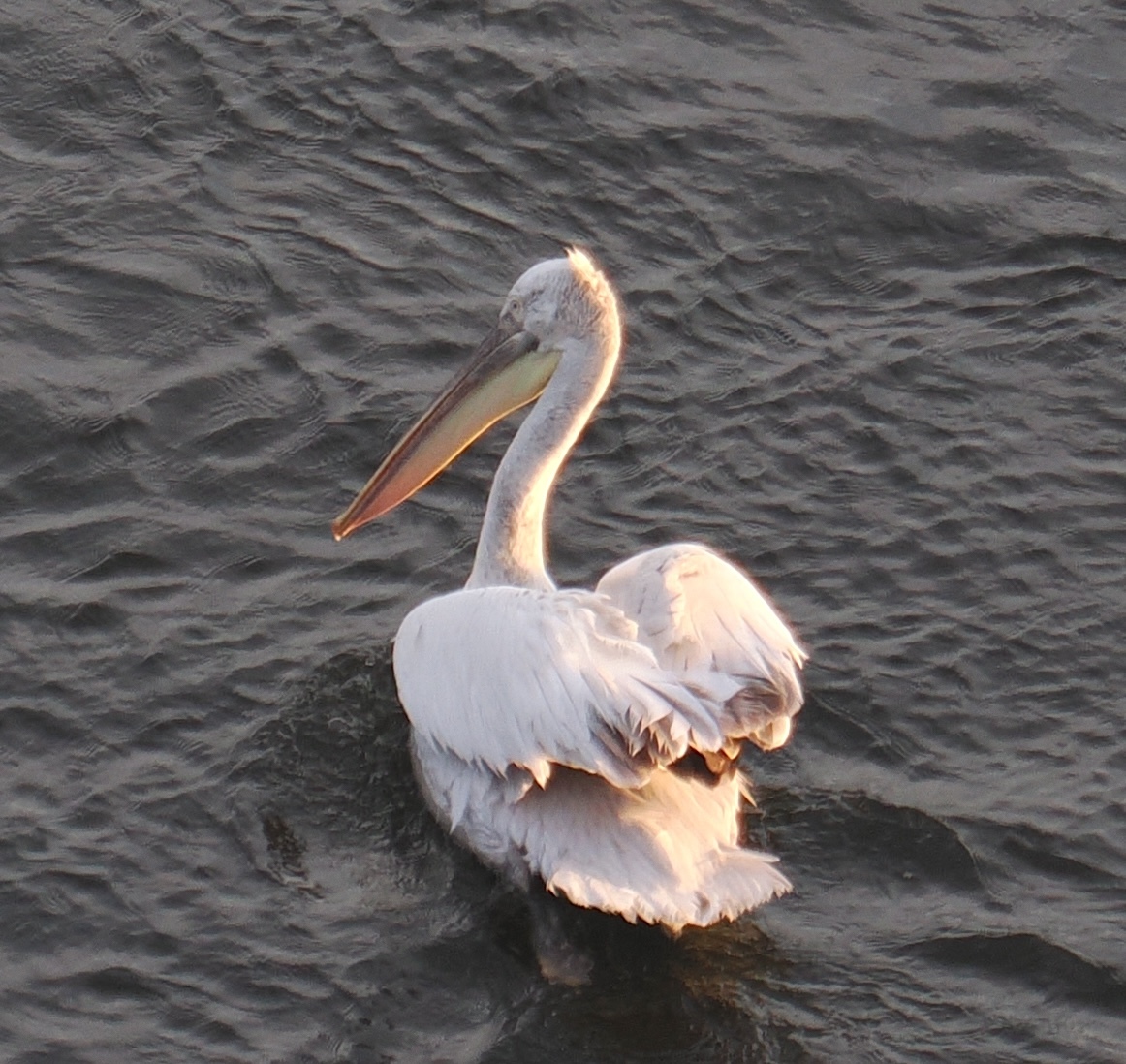
Body length 1.6–1.8 m; wingspan 2.7–3.2 m; average weight about 11 kg. Bill measures 37–45 cm, second longest among bird species. Plumage is silvery-white, appearing greyer or creamier in winter. Distinguished by a shaggy crest of curly feathers on the nape and back of the head. Legs are dark grey. During breeding season, the gular pouch turns vivid orange-red; otherwise yellow or grey. Upper mandible is greyish with a slight orange tip. Juveniles are greyer and duller with less distinctive crests.
Identification
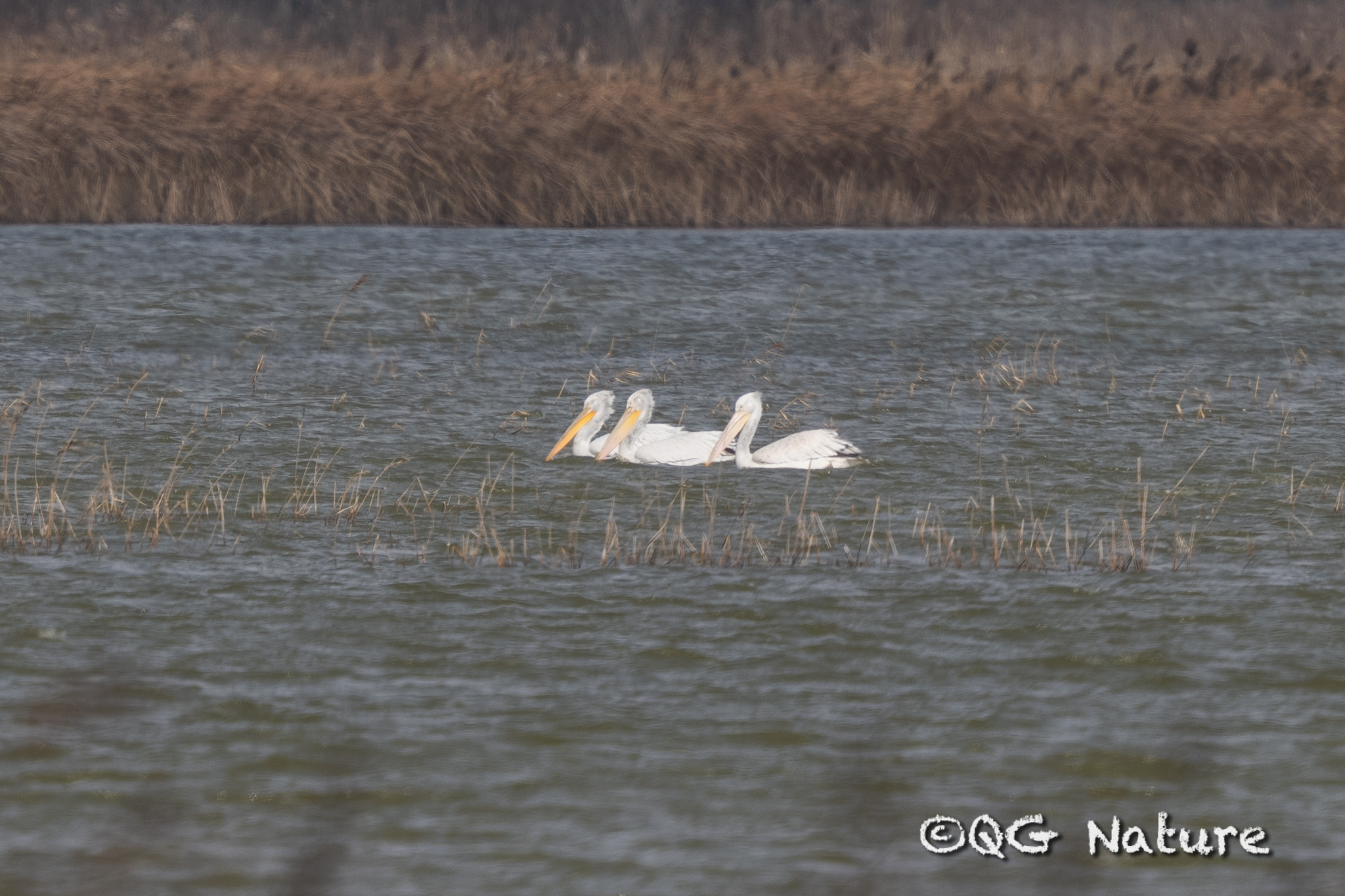
Recognized by enormous bill, curly nape crest, and dark grey legs (distinguishing it from pink-legged relatives). Wings appear solid grey in flight with black primary tips. Soars with neck pulled back in an 'S' shape. Similar to the great white pelican but has a fully feathered head, shorter webbing, silkier plumage, and lacks the smooth-headed appearance. In winter, plumage becomes drabber, increasing similarity to the great white pelican.
Distribution & Habitat
Breeds across the Palearctic from southeastern Europe to Russia, India, and China. Current strongholds include Russia (largest population), Greece, Albania, Romania, Bulgaria, and Mongolia. Migrates to ice-free inland waters; European populations are often dispersive, while Asian populations migrate to the Middle East, Indian subcontinent, and east coast of China. Historically ranged further north in Europe during warmer Holocene periods.
Behavior & Ecology
Diet consists mainly of fish (e.g., carp, perch, pike), consuming 1.2–1.5 kg daily. Forages alone, in pairs, or in loose cooperative groups using shallow-water surface capture; may scavenge dead fish. Breeding begins March/April; nests are crude heaps of vegetation on islands or dense mats. Clutch size 1–6 eggs (usually two). Incubation lasts 30–34 days; chicks fledge at ~85 days. Less social than other pelicans. Vocalizations include deep grunts, hisses, or barks during mating season.
Conservation
Global population estimated at 10,000–20,000 individuals (3,000–5,000 breeding pairs). Critically endangered in Mongolia (<130 individuals) due to poaching for bill pouches. Threats include habitat loss, wetland drainage, electrocution on power lines, disturbance from tourism, and conflict with fisheries. Conservation measures include artificial nesting platforms, floating rafts, power line marking/removal, and monitoring via the International Waterbird Census. Protected under AEWA.
Culture
In Mongolia, pelican bill pouches are highly valued items, historically traded for equivalents of ten horses and thirty sheep. Local residents in Caspian regions have engaged in community conservation by hand-feeding birds during extreme cold events.
Source: Wikipedia · CC BY-SA 3.0
Taxonomy
- Order
- Pelecaniformes
- Family
- Pelecanidae
- Genus
- Pelecanus
Distribution
breeds southern Eurasia; winters to India
Data Sources
Species description from Wikipedia, licensed under CC BY-SA 3.0.
Bird images and sounds sourced from GBIF, contributed by citizen scientists worldwide under Creative Commons licenses.
Taxonomy data from AviList 2025.