



Dalmatian Pelican
Pelecanus crispus
卷羽鹈鹕
Introduction
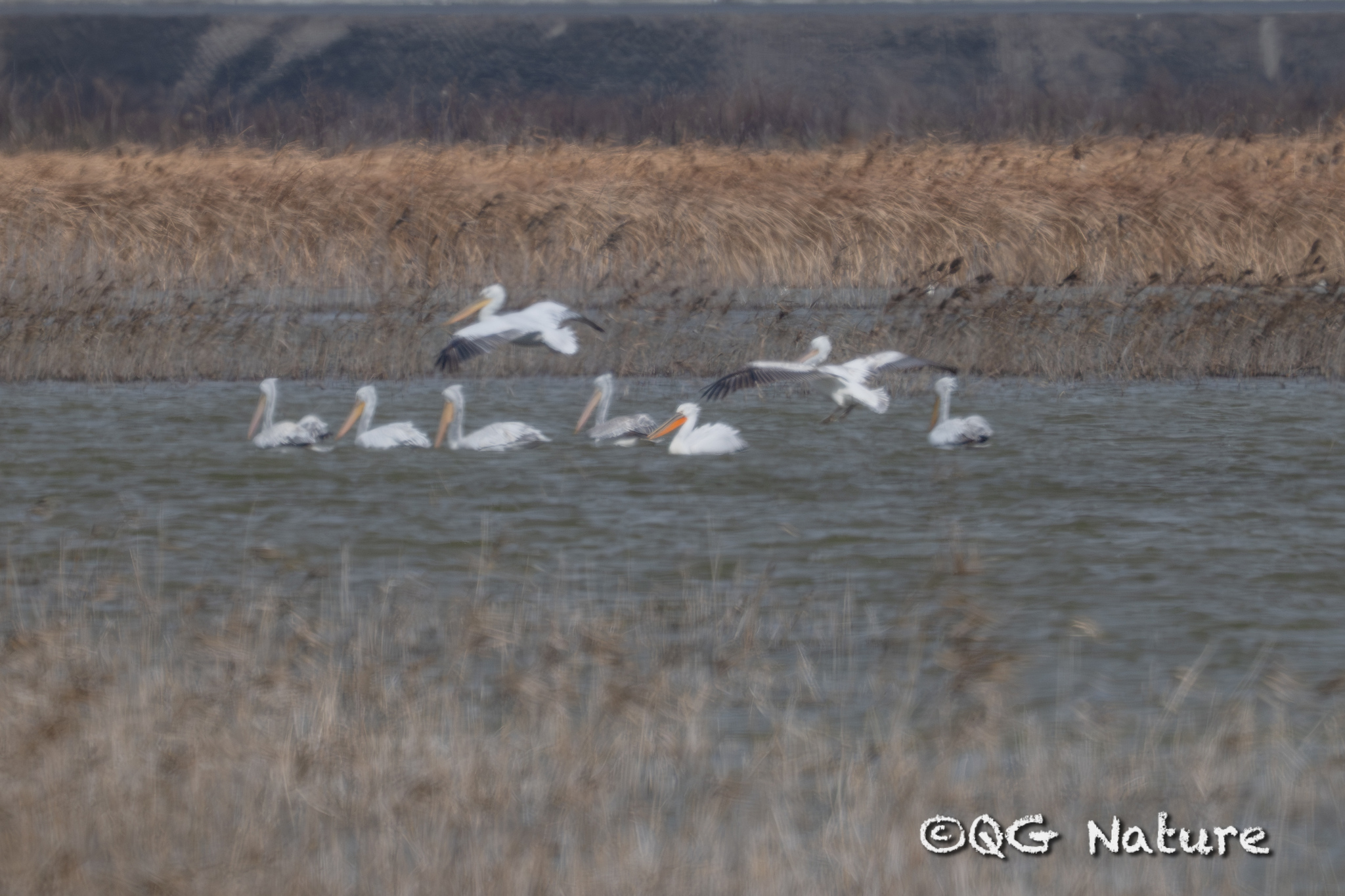
Dalmatian pelican is the largest member of the pelican family and among the heaviest flying birds. Wingspan ranges from 2.7 to 3.2 metres. Inhabits wetlands across Central Eurasia. The species experienced severe population declines throughout the 20th century. Conservation efforts have included installation of artificial nesting platforms and floating rafts, particularly at Lake Prespa and the Danube Delta. They travel in synchronised flocks and require powerful wingbeats for takeoff.
Description
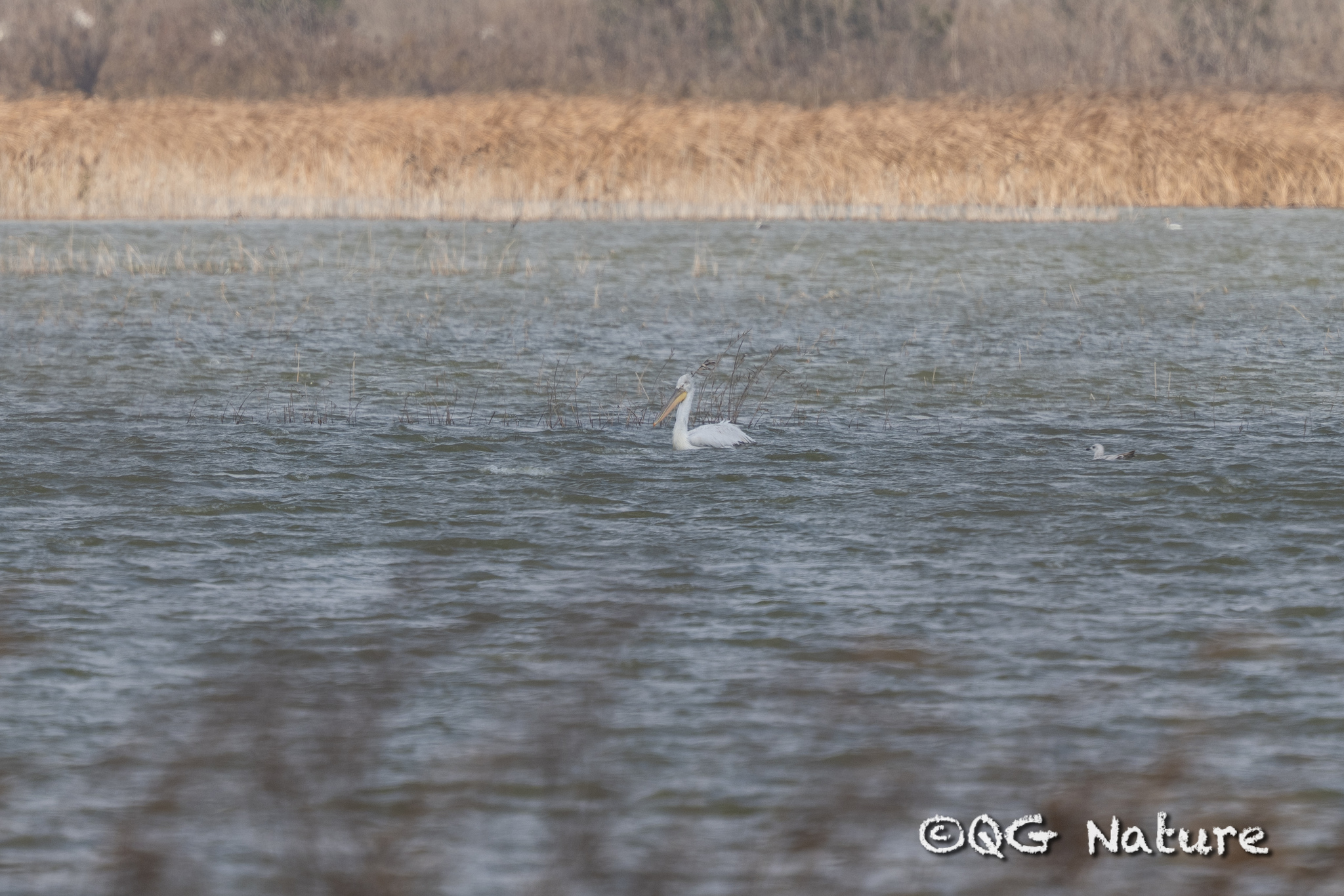
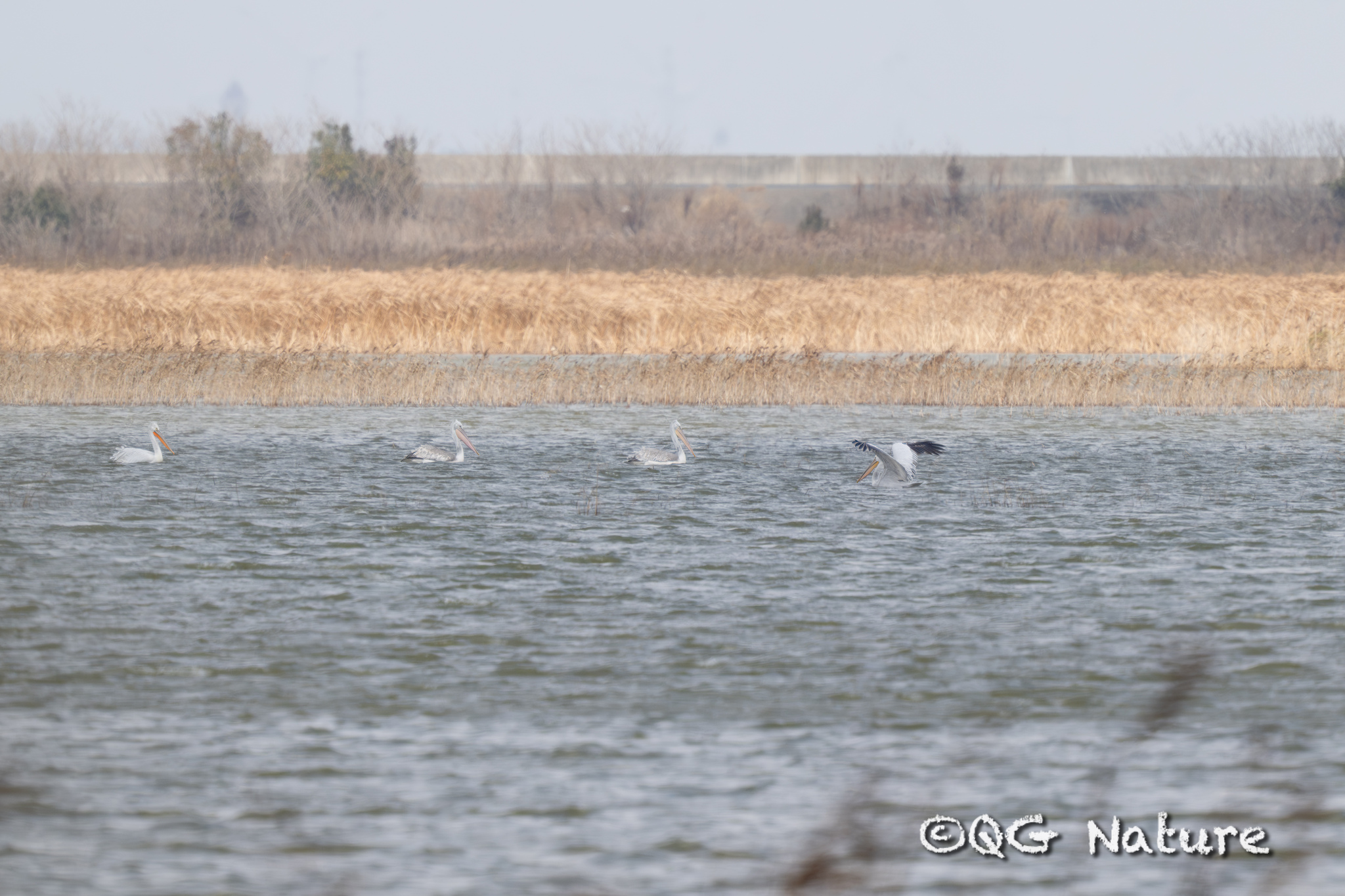
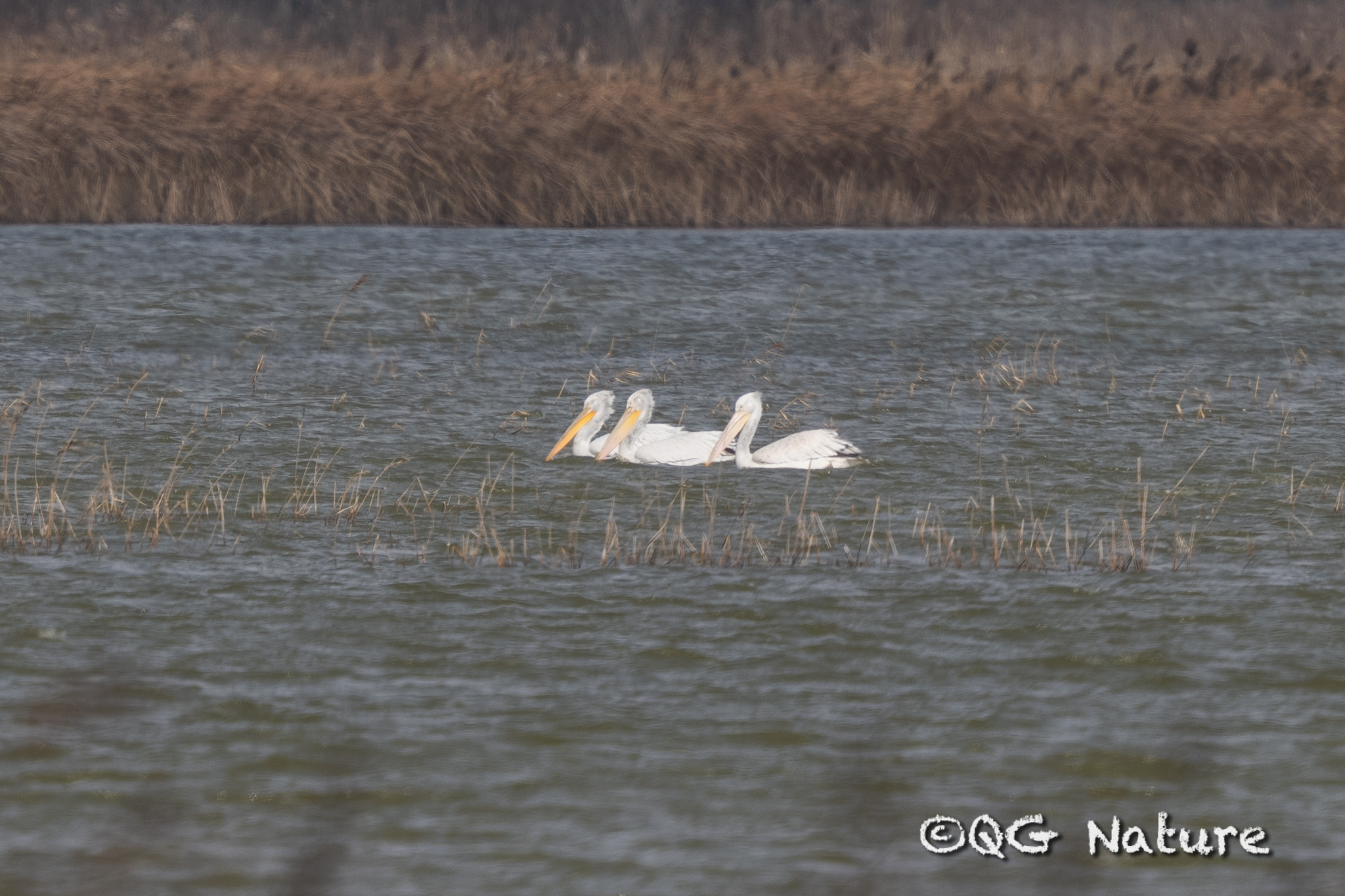
This is the largest pelican species and among the heaviest flying birds worldwide, measuring 1.6-1.8 metres in body length with a wingspan of 2.7-3.2 metres and averaging 11 kilograms in weight. The most striking feature is the enormous bill, measuring 37-45 cm long and including a large pouch used for catching fish—this is the second longest bill of any bird species, surpassed only by the Australian pelican. During breeding season, the pouch displays a vivid orange-red colour, contrasting with the subdued yellow or grey tones seen throughout the rest of the year. The upper mandible remains greyish with a possible orange tip. The plumage is silvery-white, appearing more grey or creamy in winter. A distinguishing characteristic is the shaggy crest of curly feathers on the nape and back of the head, giving an unkempt appearance. The legs are dark grey, and the wings appear solid grey in flight. Juveniles are greyer and duller with less distinctive crests, gradually acquiring adult plumage as they mature.
Identification
The curly nape feathers provide the most reliable field mark, distinguishing this species from other pelicans. Dark grey legs separate it from related species that have pinkish legs. The silvery-white plumage and solid grey appearance of the wings in flight are also characteristic features. However, adults become notably drabber in winter plumage, at which point they closely resemble the great white pelican, creating identification challenges. The combination of size, curly crest, and grey legs remains the best identification suite for birdwatchers. Males are larger than females, though this difference may be difficult to assess in the field without direct comparison.
Distribution & Habitat
The species ranges across much of Central Eurasia, from the eastern Mediterranean in the west to the Taiwan Strait in the east, and from the Persian Gulf in the south to Siberia in the north. It inhabits large open wetlands including lakes, rivers, deltas, estuaries, and floodplains. Unlike the great white pelican, it nests at various elevations and is highly philopatric, returning to traditional breeding sites unless they become unsuitable. It is a partial migrant: European populations are largely dispersive or make short-distance movements to the Mediterranean, while Asian populations undertake longer migrations to the Middle East, Indian subcontinent, Sri Lanka, Nepal, and coastal China including Hong Kong. Key populations breed at Small Prespa Lake (Greece-Albania), the Danube Delta, and across Russia, which now hosts the largest breeding population.
Behavior & Ecology
These pelicans are notably less social than other pelican species, nesting in relatively small groups or sometimes alone, though small colonies of 250+ pairs historically occurred. They breed on islands or dense reedbeds, constructing crude piles of vegetation approximately 1 metre deep. The diet consists almost entirely of fish, mostly small to medium-sized species swallowed whole, with daily consumption typically 1.2-1.5 kg. They forage alone, in pairs, or occasionally in trios, swimming upright and seizing prey just beneath the surface in shallow waters up to 8 metres deep. They feed primarily at dawn and dusk. During breeding, they rarely forage beyond 1 km from the nest. Breeding commences in March or April, with clutches of one to six eggs (usually two). Incubation lasts 30-34 days, and chicks fledge at around 85 days. They are generally quiet but produce deep, guttural grunts, hisses, and barking sounds during the breeding season.
Conservation
The species suffered dramatic declines during the 20th century due to habitat loss from wetland drainage, land conversion, disturbance, and poaching. The global population is estimated at 10,000-20,000 individuals with roughly 3,000-5,000 breeding pairs. Russia now holds the largest breeding population (70% worldwide), while the species is critically endangered in Mongolia with fewer than 130 individuals remaining due to targeted poaching for the bill trade. Threats include electrocution from power lines, conflict with fisheries leading to shooting, and human disturbance at breeding sites. Conservation measures have proven successful: removing power lines, constructing artificial nesting platforms and floating rafts in Greece, Bulgaria, Romania, and Turkey, and implementing community feeding programs during extreme weather events have reversed local declines. The species is protected under AEWA and monitored through International Waterbird Census coordinated by Wetlands International.
Culture
No significant cultural or folklore information was provided in the source article.
Source: Wikipedia · CC BY-SA 3.0
Taxonomy
- Order
- Pelecaniformes
- Family
- Pelecanidae
- Genus
- Pelecanus
- eBird Code
- dalpel1
Distribution
breeds southern Eurasia; winters to India
Data Sources
Species description from Wikipedia, licensed under CC BY-SA 3.0.
Bird images and sounds sourced from GBIF, contributed by citizen scientists worldwide under Creative Commons licenses.
Taxonomy data from AviList 2025.