Galliformes / Phasianidae / Pavo
Green Peafowl
Pavo muticus · 绿孔雀
Introduction
A large peafowl species native to the tropical forests of Southeast Asia and Southern China. It inhabits primary and secondary forests, bamboo thickets, grasslands, and savannas, often near water. The species is listed as Endangered on the IUCN Red List due to habitat loss, hunting, and the pet trade.
Description
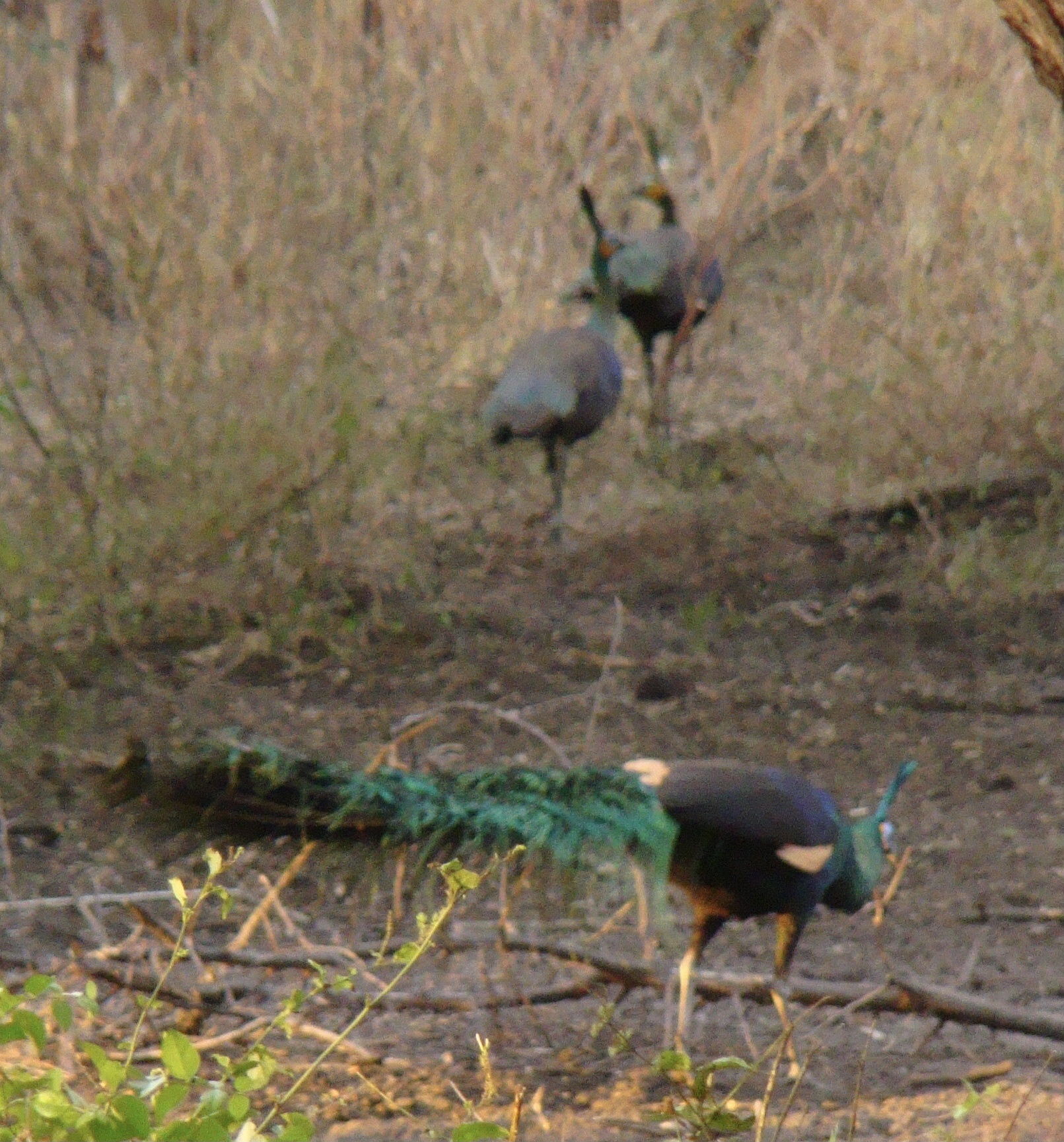
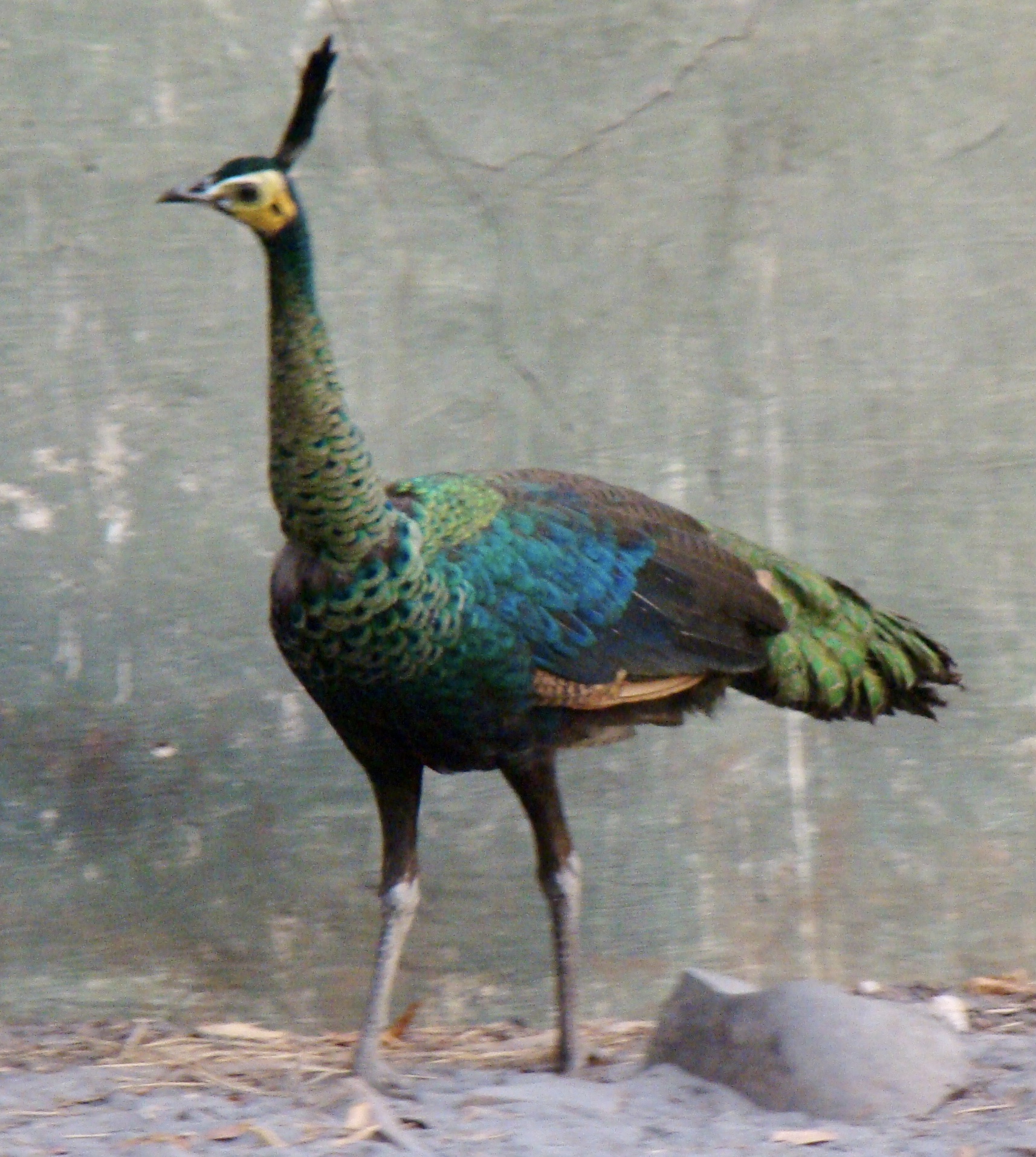
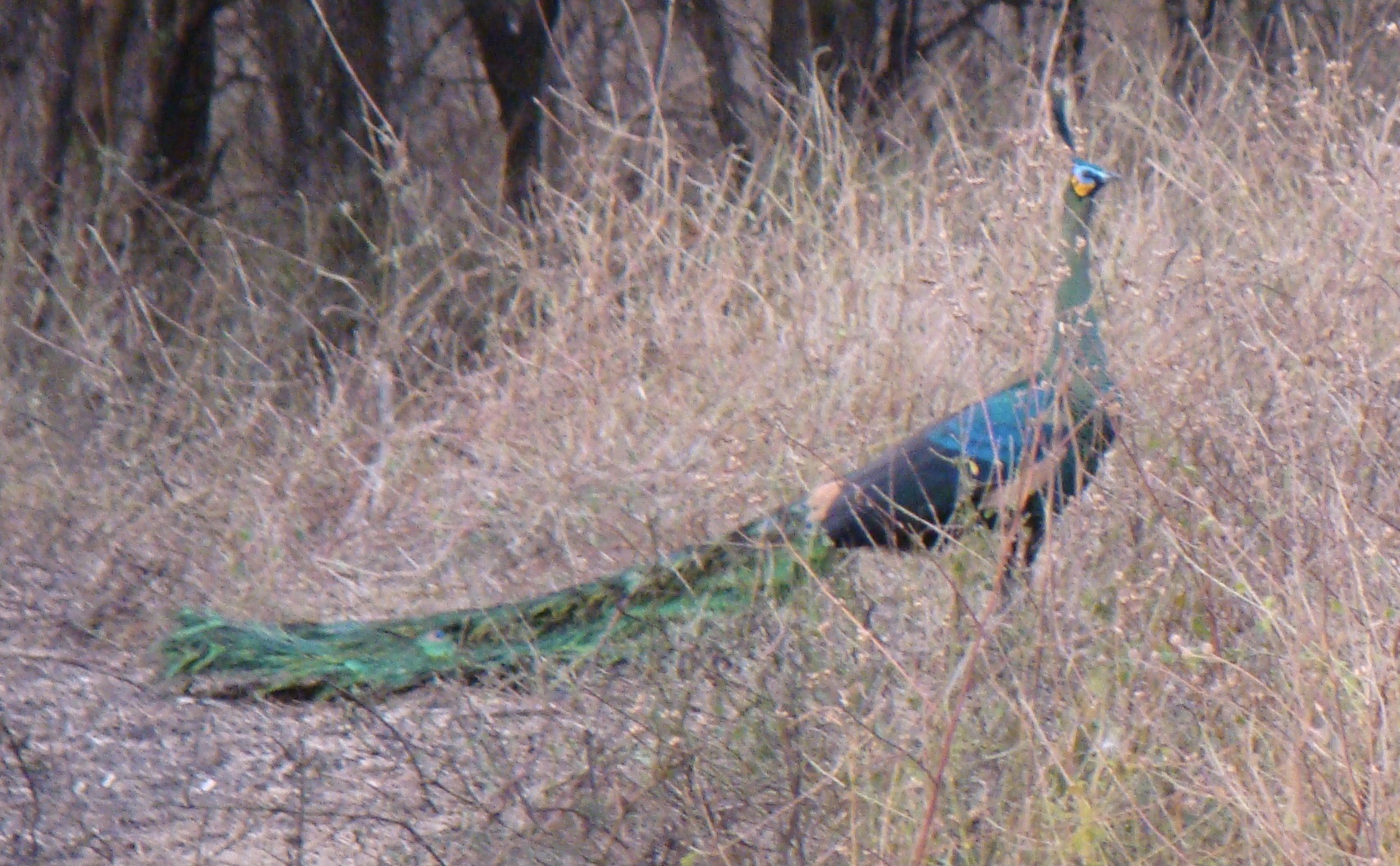
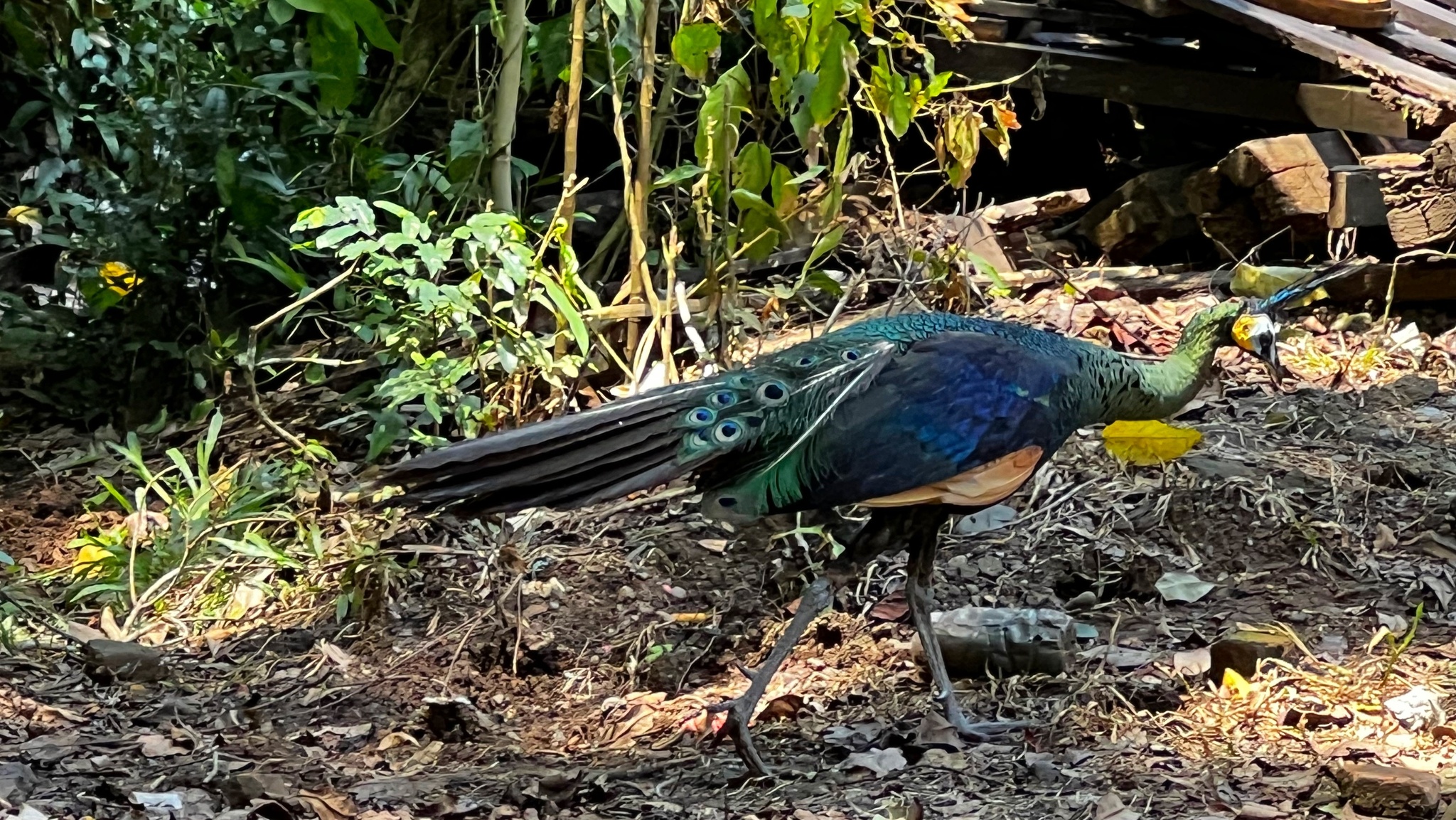
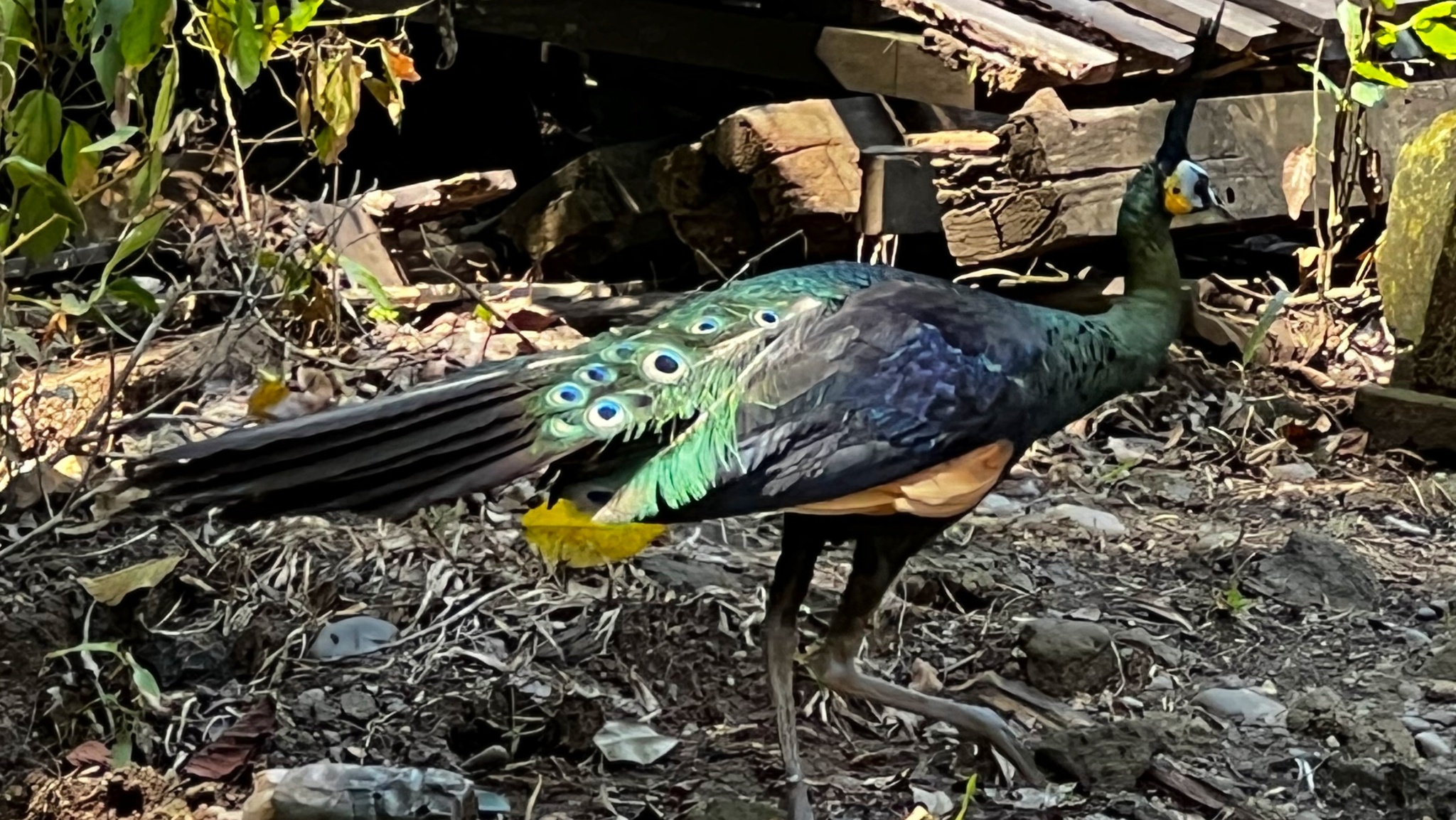
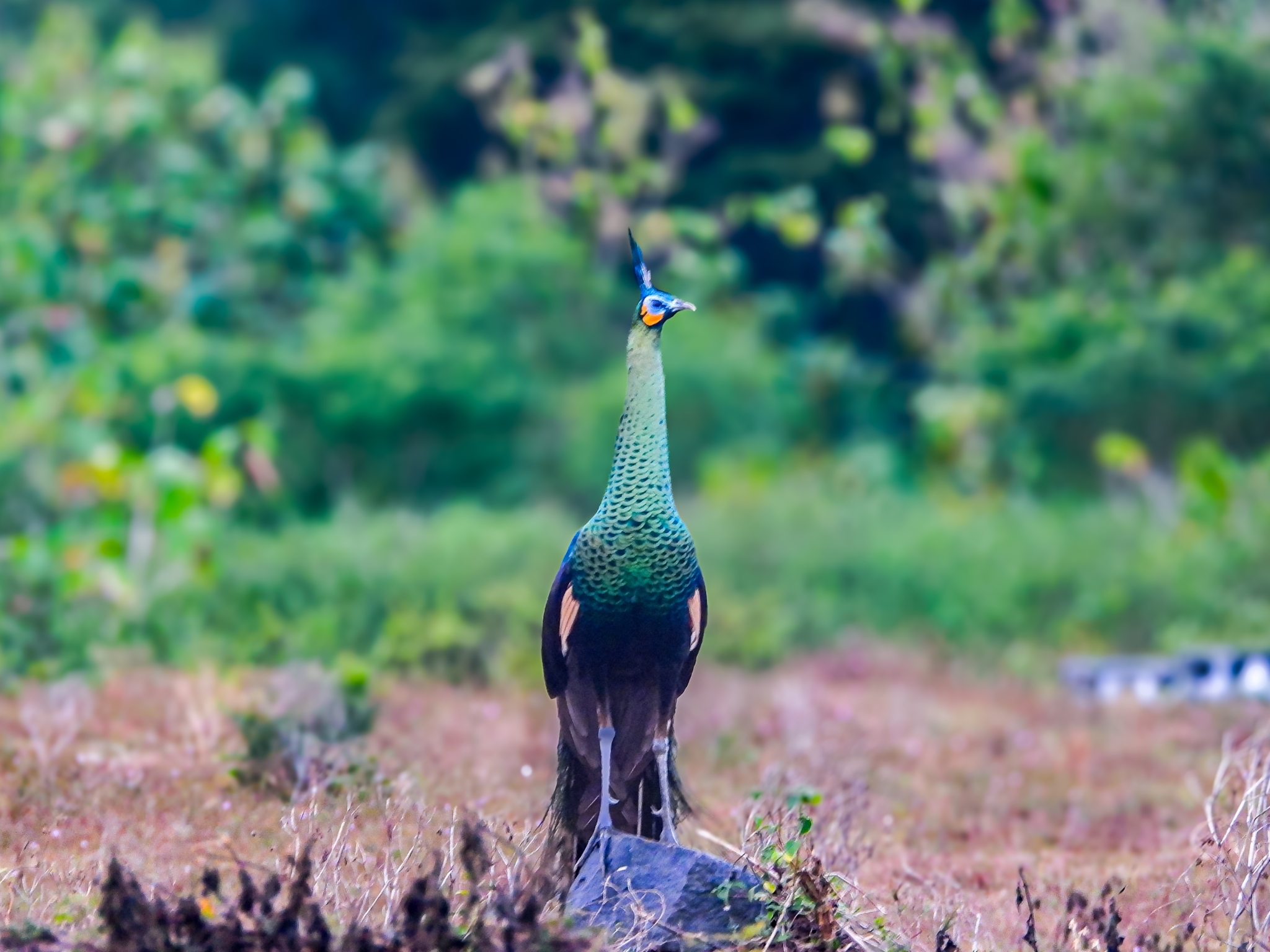
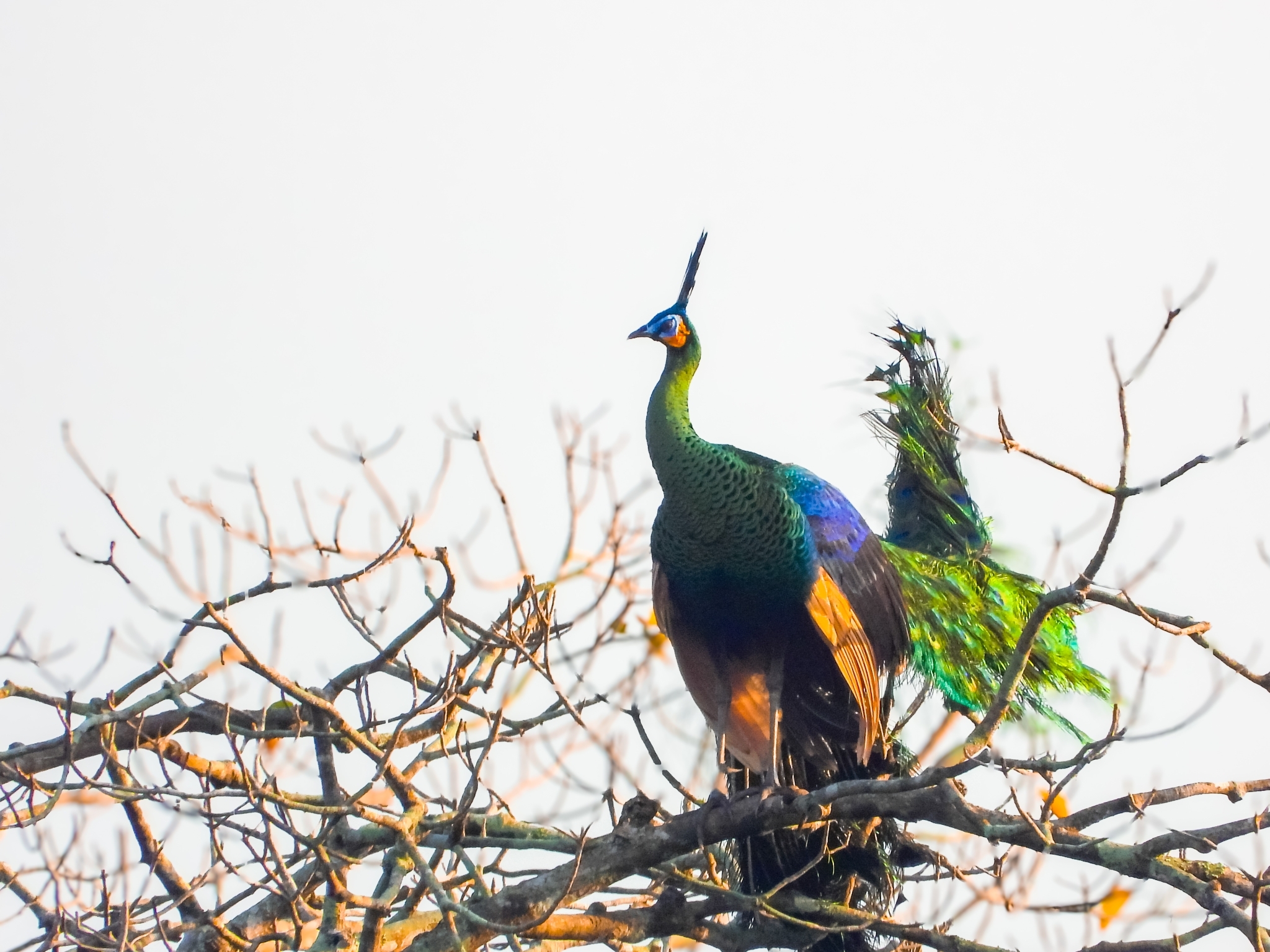
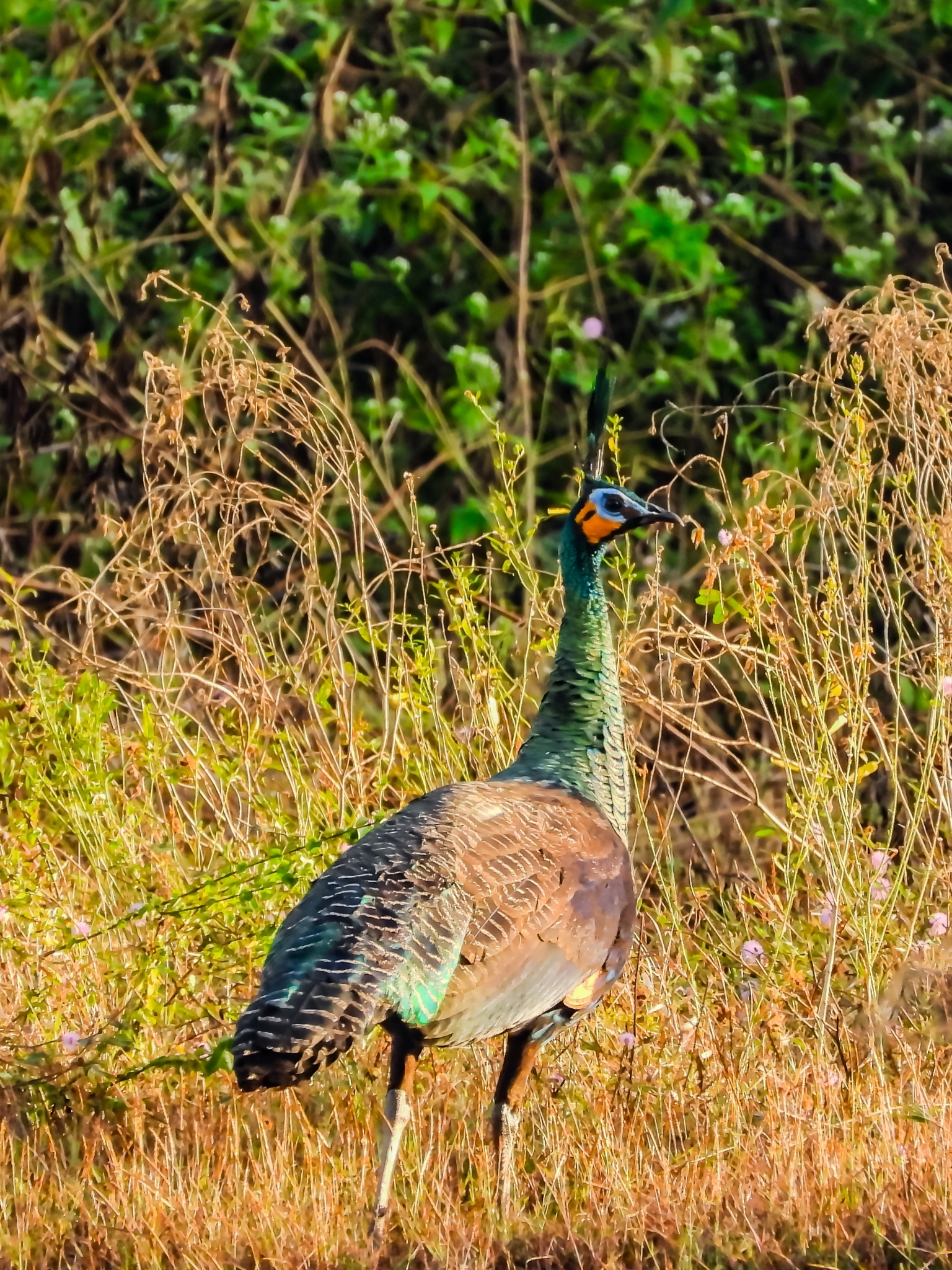
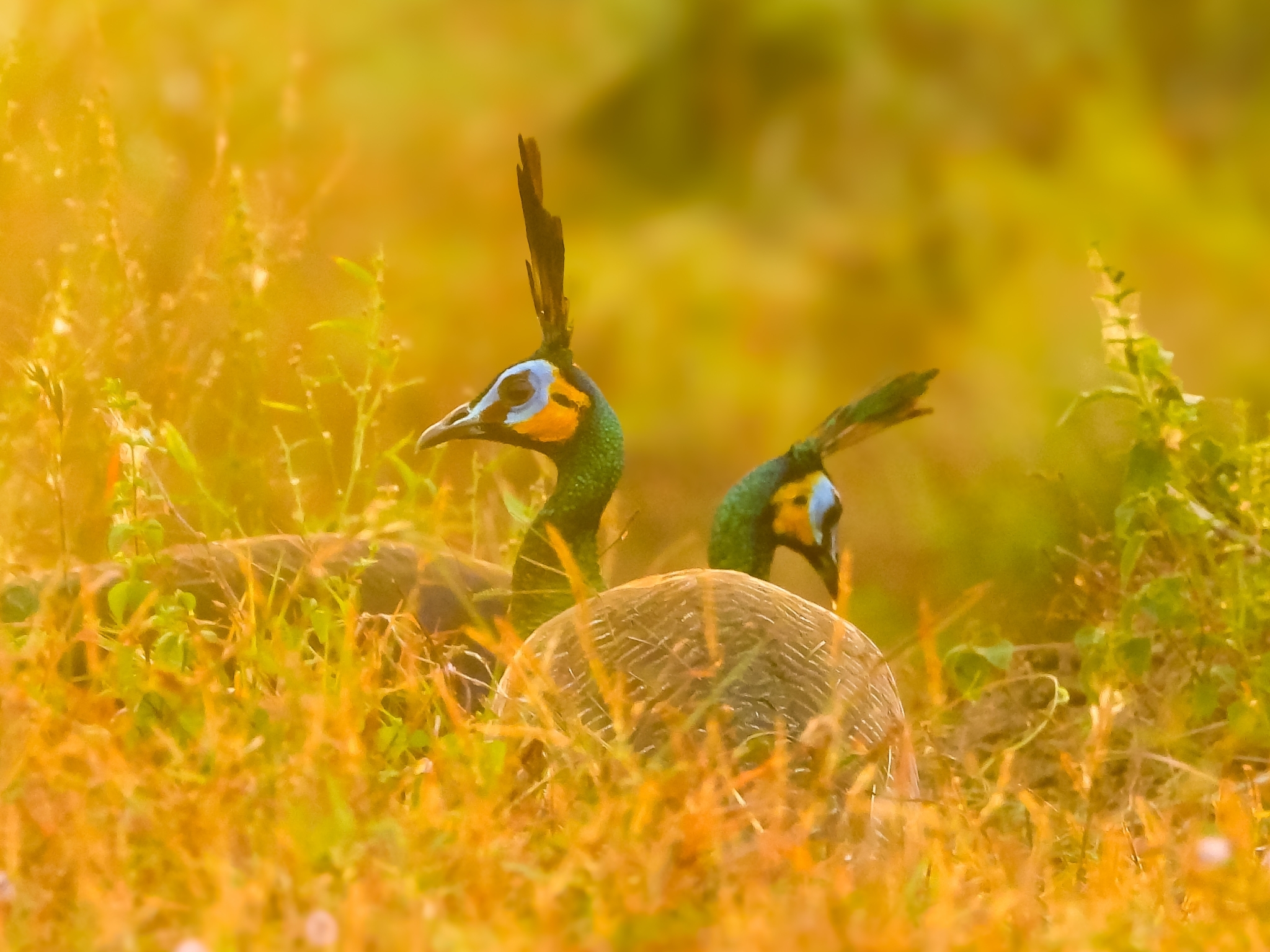
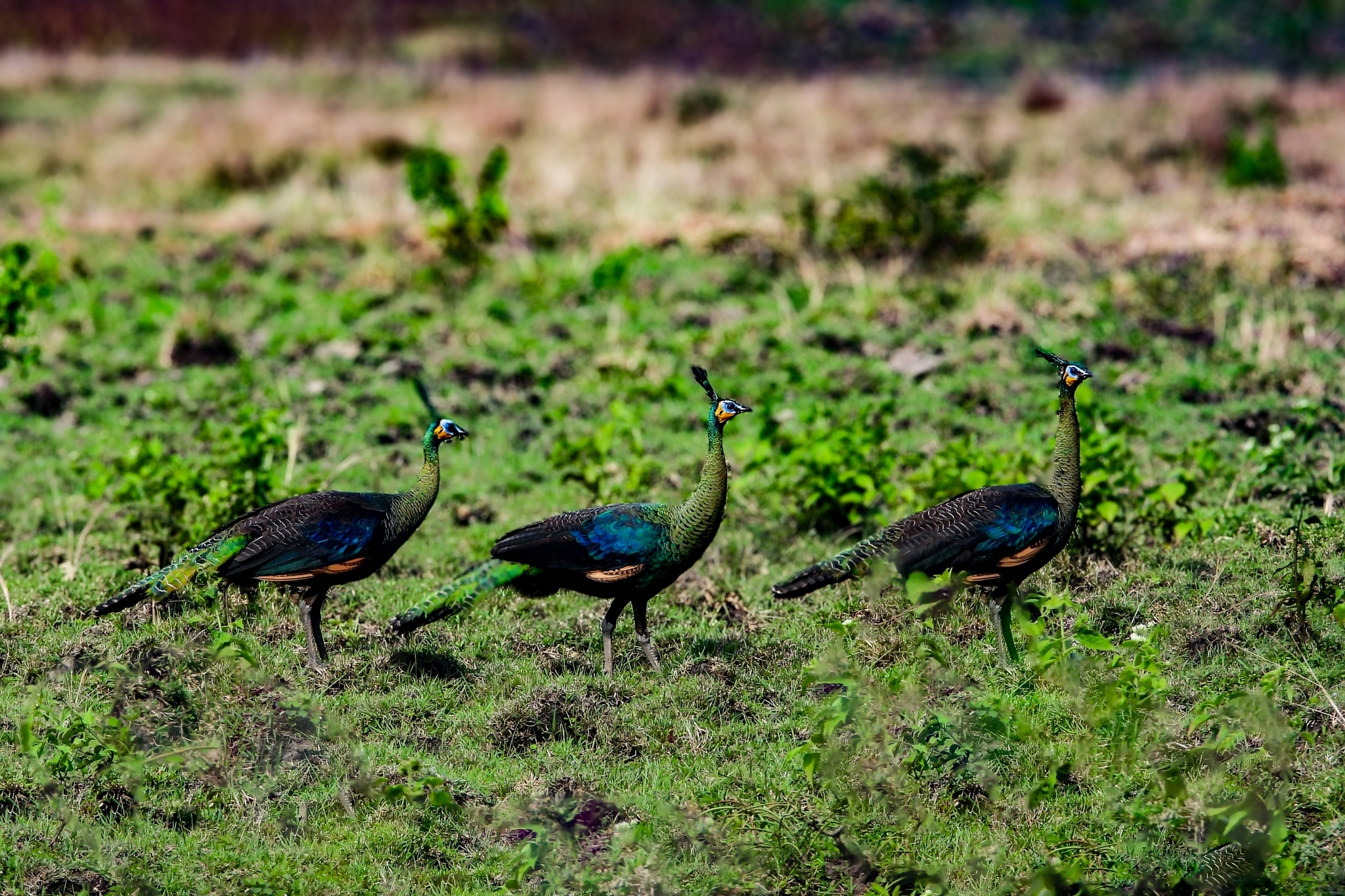
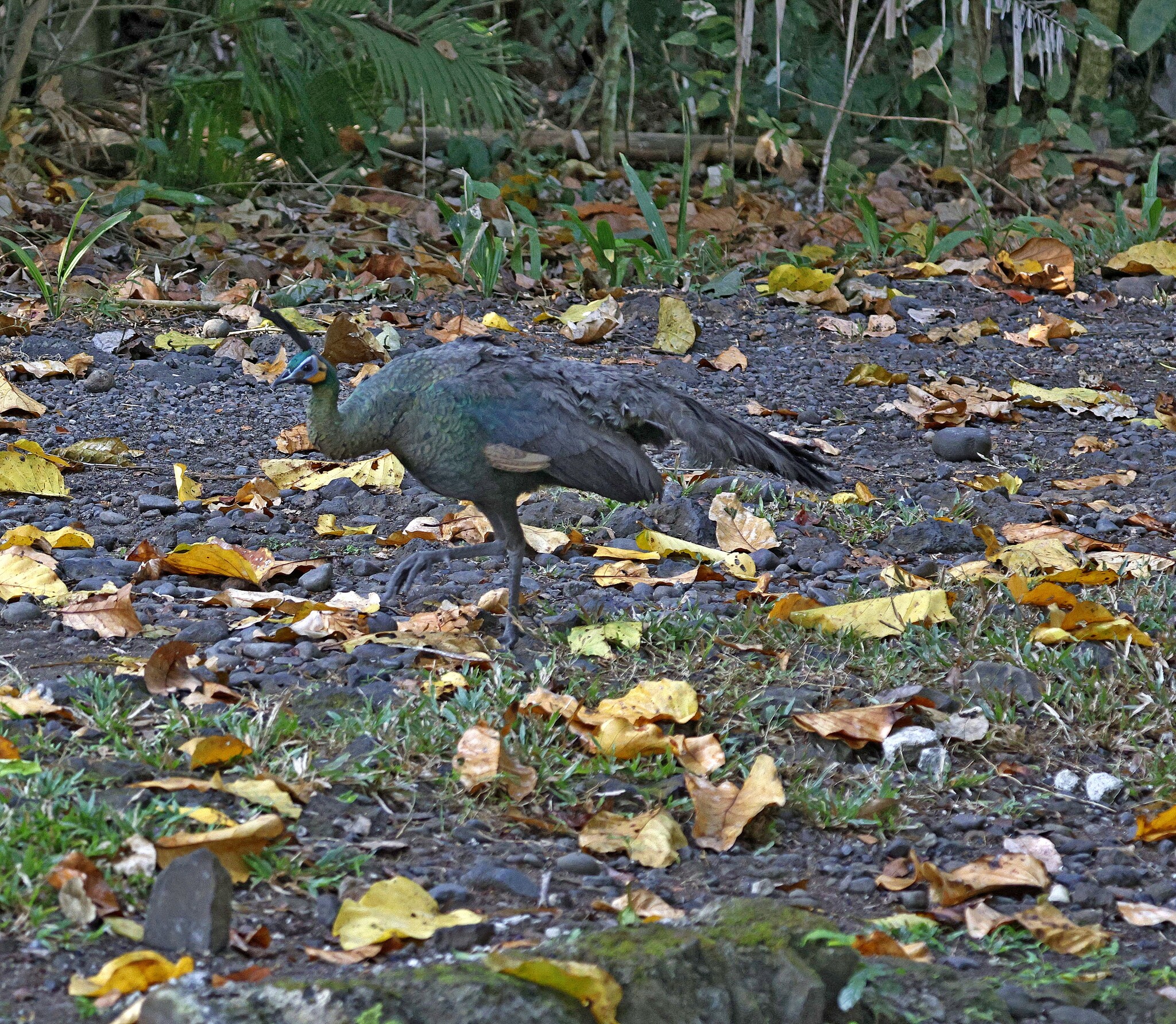
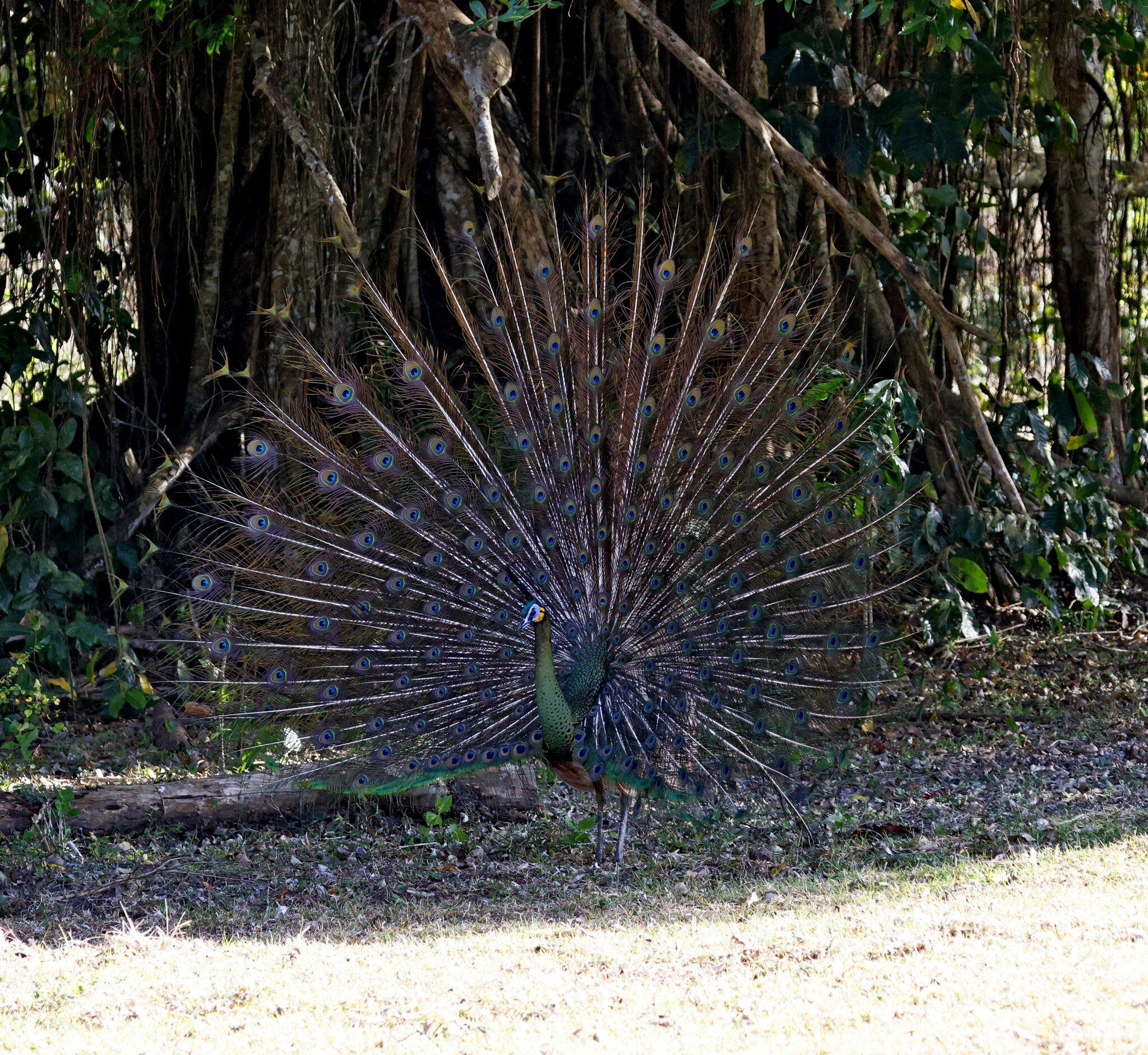
Males measure 1.8–3 m in total length, including a train of 1.4–1.6 m adorned with eyespots; females are 1–1.1 m long with short green coverts. Wingspan averages 1.2 m, reaching 1.6 m in large males. Both sexes have iridescent green neck and breast feathers resembling scales, long legs, and crest feathers. Males have blue scapular and wing coverts forming a triangular shoulder patch, while females lack this triangle and have copper-fringed neck scales. Facial skin is double-striped whitish-blue with a yellow-orange crescent beside the ear. Primaries are pale vermilion or buff.
Identification
Distinguished by iridescent green plumage and loud vocalizations: males call 'ki-wao' at dawn and dusk, while females emit a loud 'AOw-aa'. In flight, they display a true flapping style without gliding, showing pale vermilion or buff primaries against dark body plumage. Sexes are difficult to distinguish outside breeding season when males moult their trains, though females have browner facial triangles and barred backs.
Distribution & Habitat
Formerly widespread from Southern China (Yunnan), India, Bangladesh, Myanmar, Laos, Thailand, Vietnam, Cambodia, Peninsular Malaysia, to Java. Current isolated populations survive in Cambodia, Vietnam, and protected areas in Java (Ujung Kulon and Baluran National Parks) and Thailand (Huai Kha Khaeng). Habitat includes tropical and subtropical forests, bamboo, grasslands, and savannas, with a strong preference for proximity to water.
Behavior & Ecology
Nests on the ground with clutches of three to six eggs. Family units roost in trees at heights of 10–15 m. Males are solitary and territorial, potentially forming harems, though monogamy has been observed in captivity. They forage on or near the ground in tall grasses and sedges. Vocalizations include the male's 'ki-wao' and the female's 'AOw-aa'.
Conservation
Listed as Endangered on the IUCN Red List since 2009 and on CITES Appendix II. The wild population was estimated at 5,000–10,000 individuals around 1995, with a significant population of ~745 in Keo Seima Wildlife Sanctuary, Cambodia (2020). Major threats include deforestation, agriculture, poaching, the pet trade, and hybridization with introduced Indian peafowl. Conservation efforts include protection in national parks and a landmark 2020 lawsuit in China that suspended a hydropower project to protect habitat.
Culture
National bird of Myanmar and former coat of arms of the Konbaung dynasty, symbolizing the Sun. The peacock motif appeared on royal thrones, costumes, and currency. Its fighting stance was adopted by anti-colonial activists and the National League for Democracy. In ancient China, it represented nine virtues; Ming Dynasty third-ranked officials wore peacock patches, and Qing Dynasty officials wore peacock feathers denoting rank.
Source: Wikipedia · CC BY-SA 3.0
Taxonomy
- Order
- Galliformes
- Family
- Phasianidae
- Genus
- Pavo
Subspecies (3)
-
Pavo muticus imperator
Myanmar (except northwestern) to Thailand, southern Yunnan (southwestern China), Cambodia, southern Laos, and southern Vietnam
Data Sources
Species description from Wikipedia, licensed under CC BY-SA 3.0.
Bird images and sounds sourced from GBIF, contributed by citizen scientists worldwide under Creative Commons licenses.
Taxonomy data from AviList 2025.