Green Peafowl
Pavo muticus
绿孔雀
Introduction
Large pheasant species (Pavo muticus) in the family Phasianidae. Native to the tropical forests of Southeast Asia and Southern China, ranging from Yunnan Province through Myanmar, Laos, Thailand, Vietnam, Cambodia, Peninsular Malaysia, and Java. Inhabits primary and secondary tropical and subtropical forests, both evergreen and deciduous, as well as bamboo stands, grasslands, savannas, scrub, and farmland edges near water sources. Notable for its iridescent scale-like green neck and breast feathers resembling Chinese dragon scales, and its ability to sustain energy-intensive flight despite large size. Classified as Endangered on the IUCN Red List since 2009 due to severe population declines from widespread deforestation, agricultural expansion, habitat fragmentation, hunting for meat, and demand from the pet trade and feather collectors.
Description
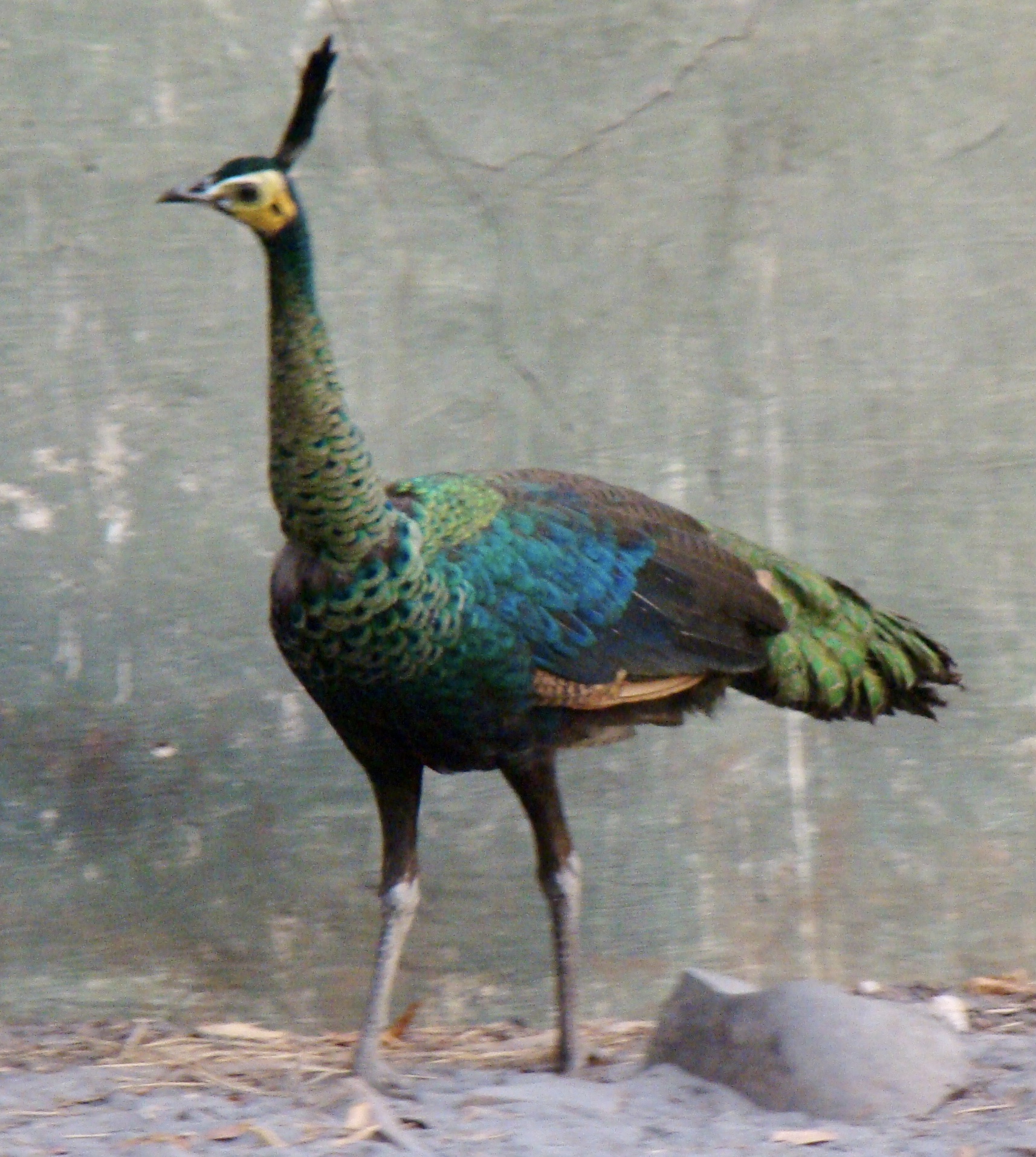
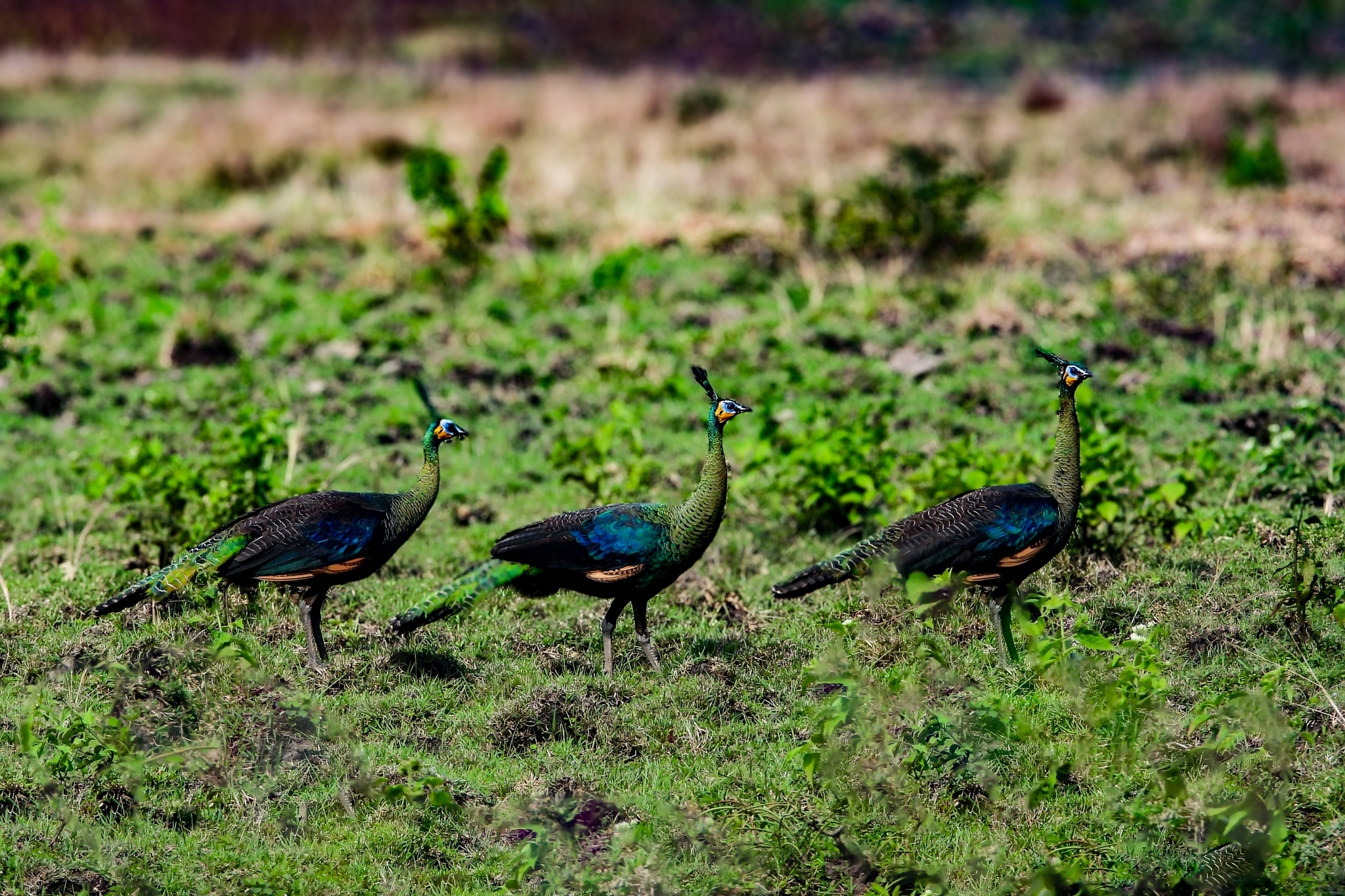
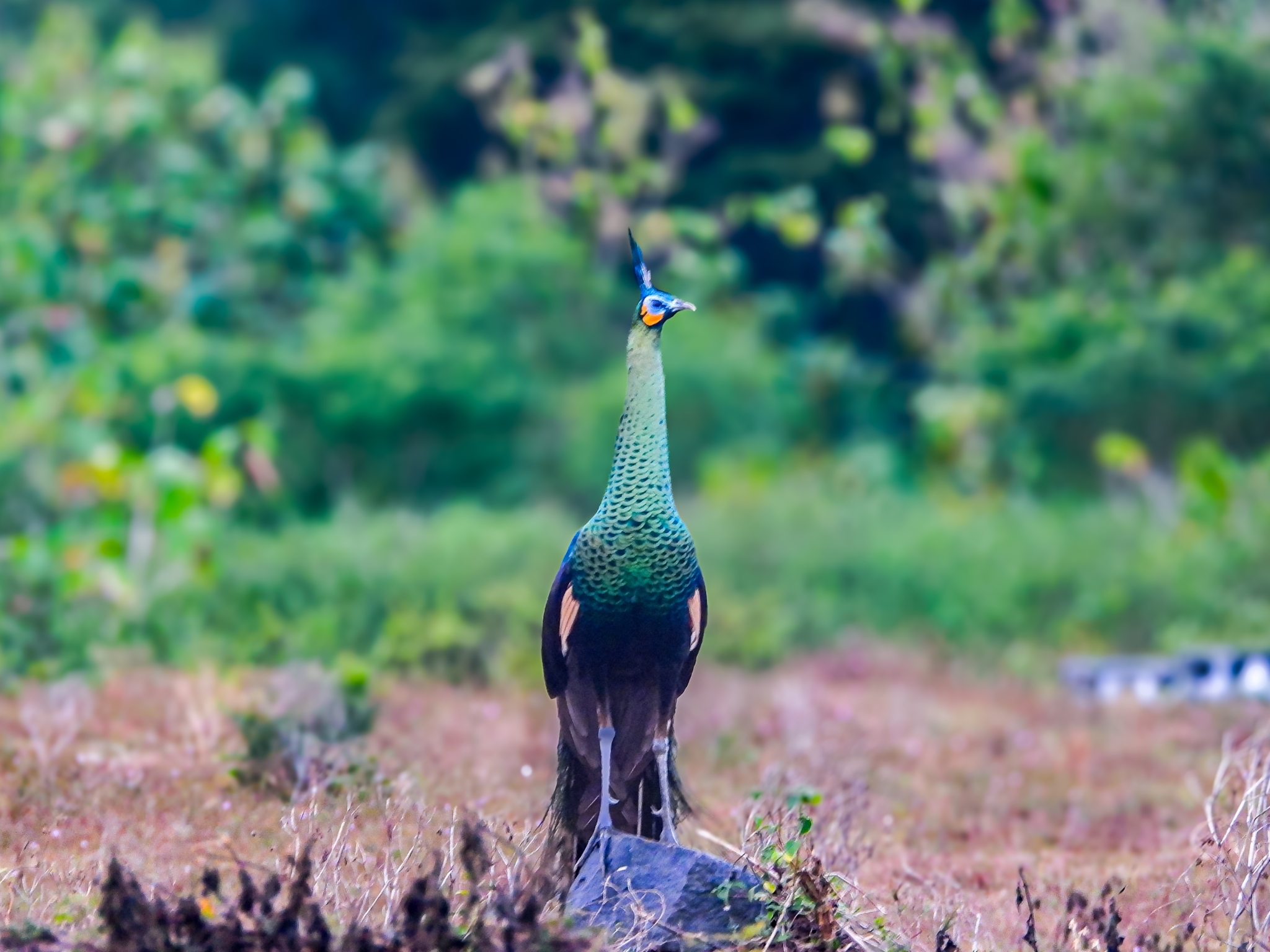
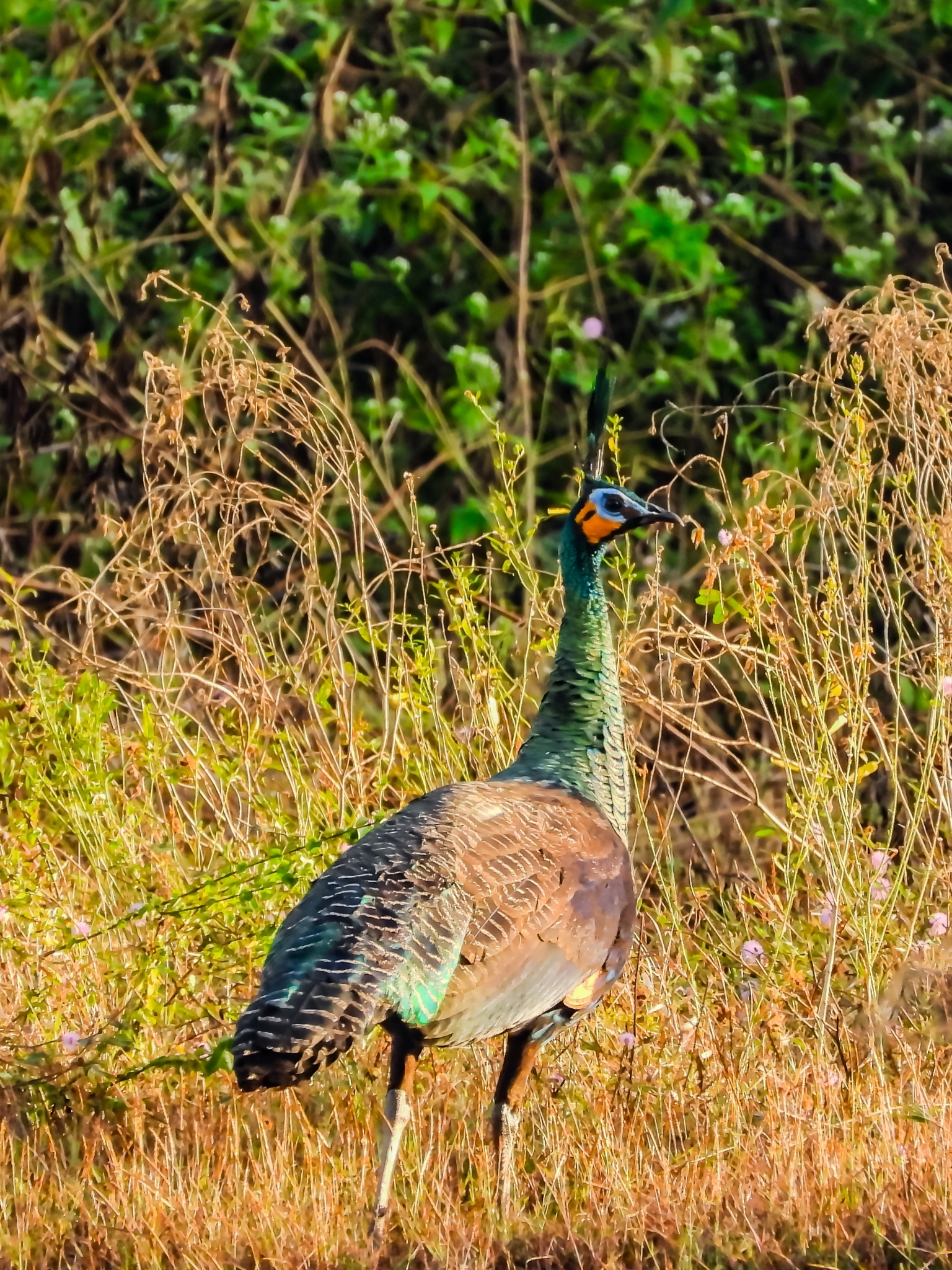
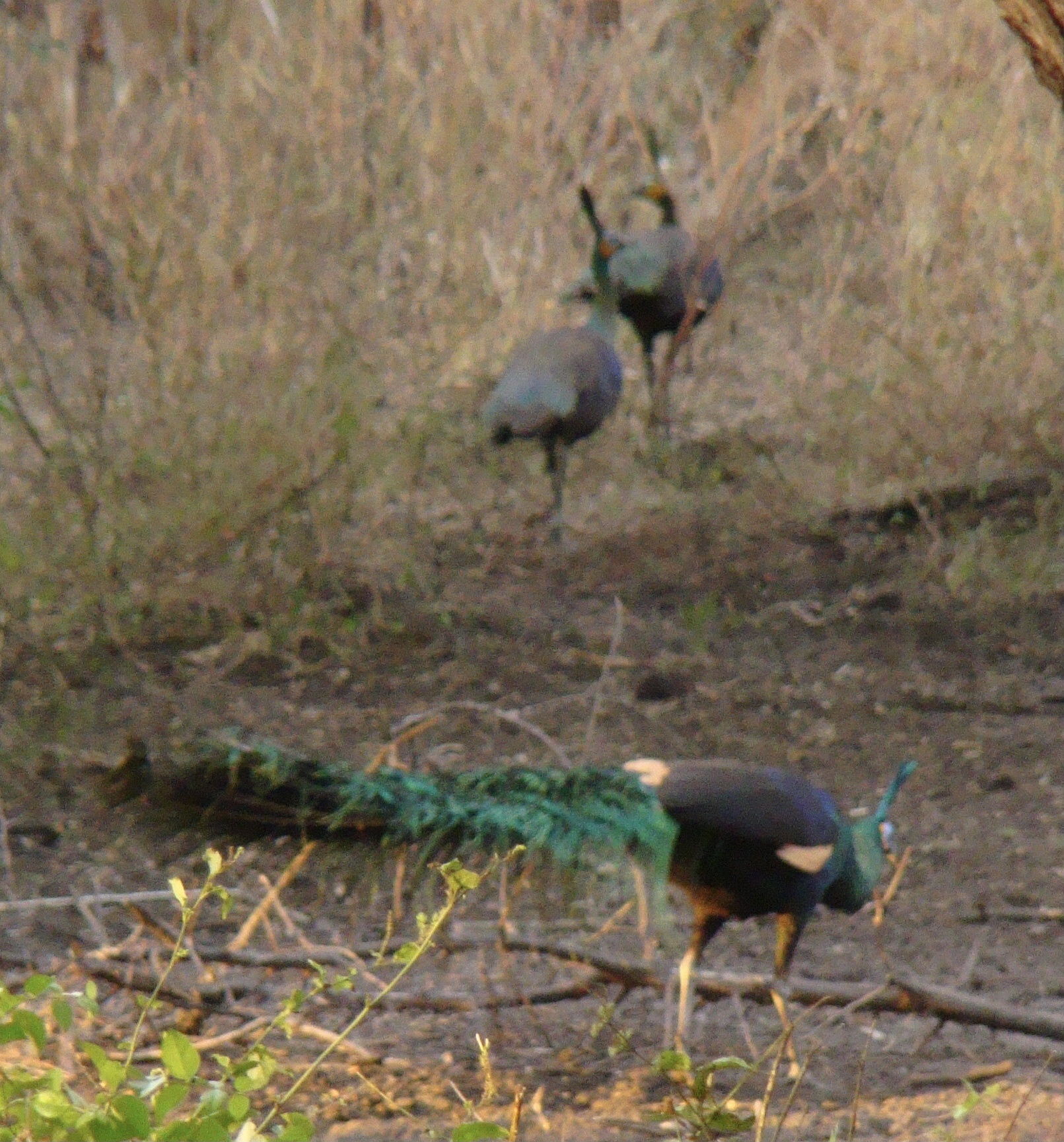
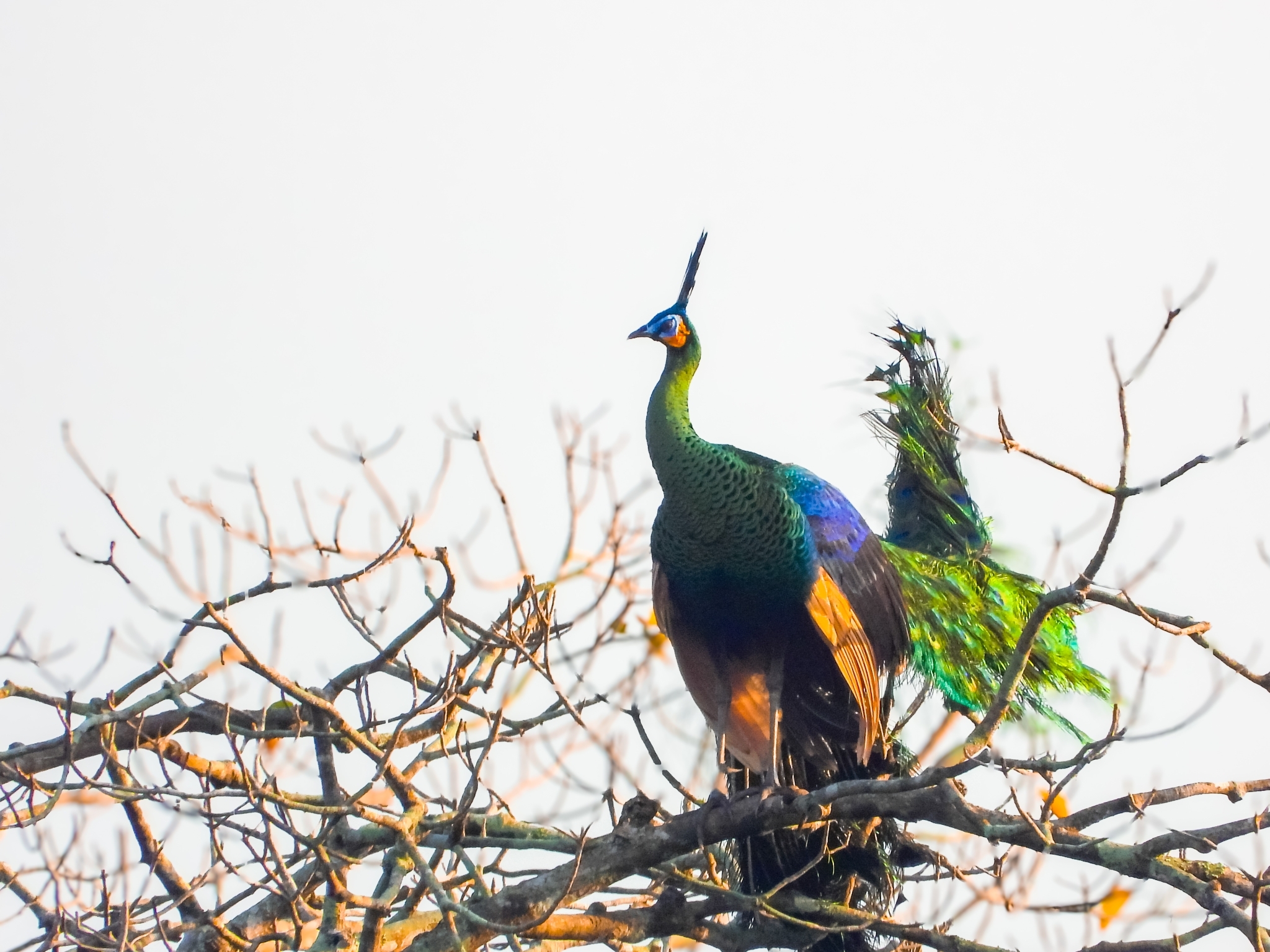
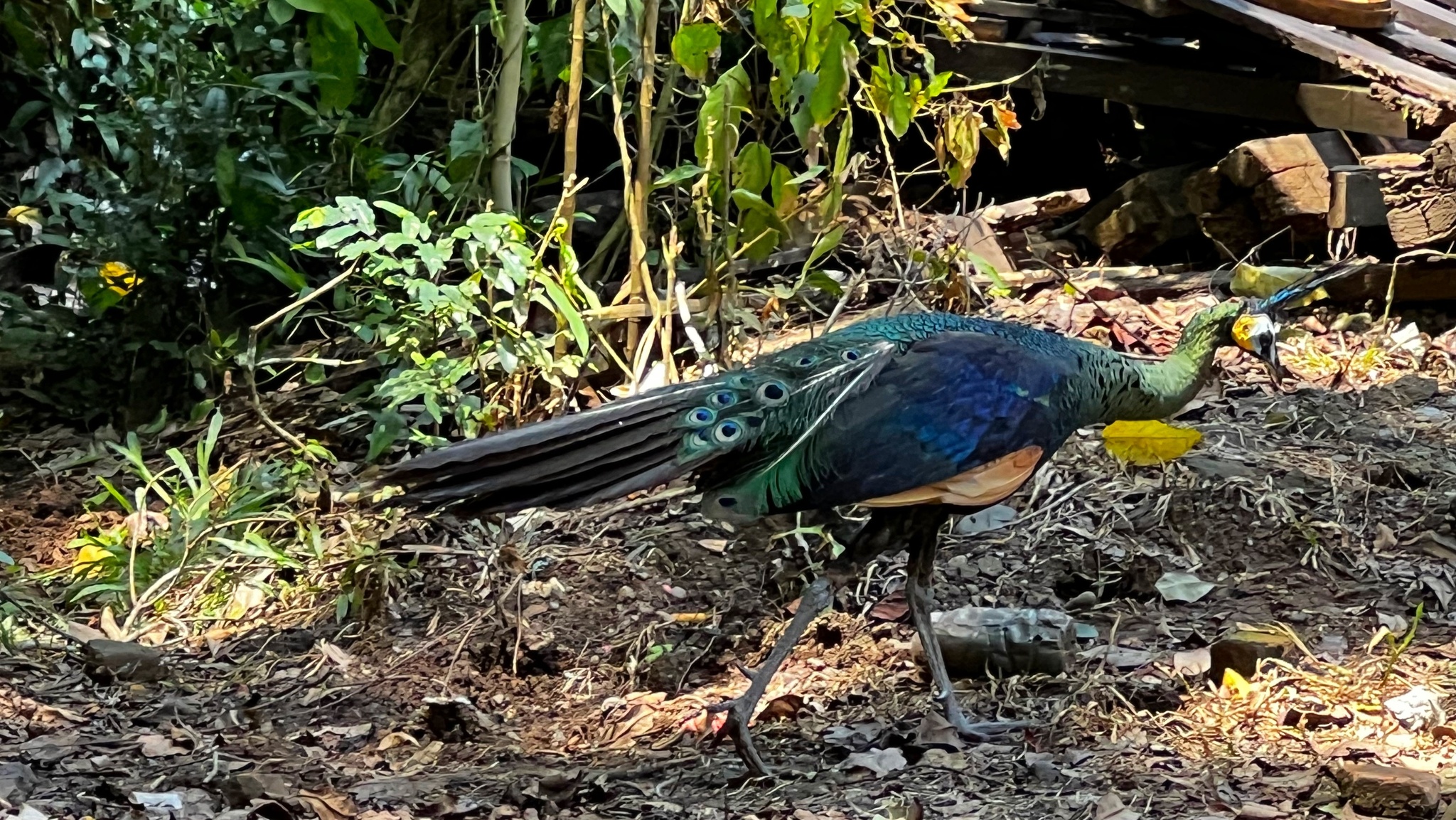
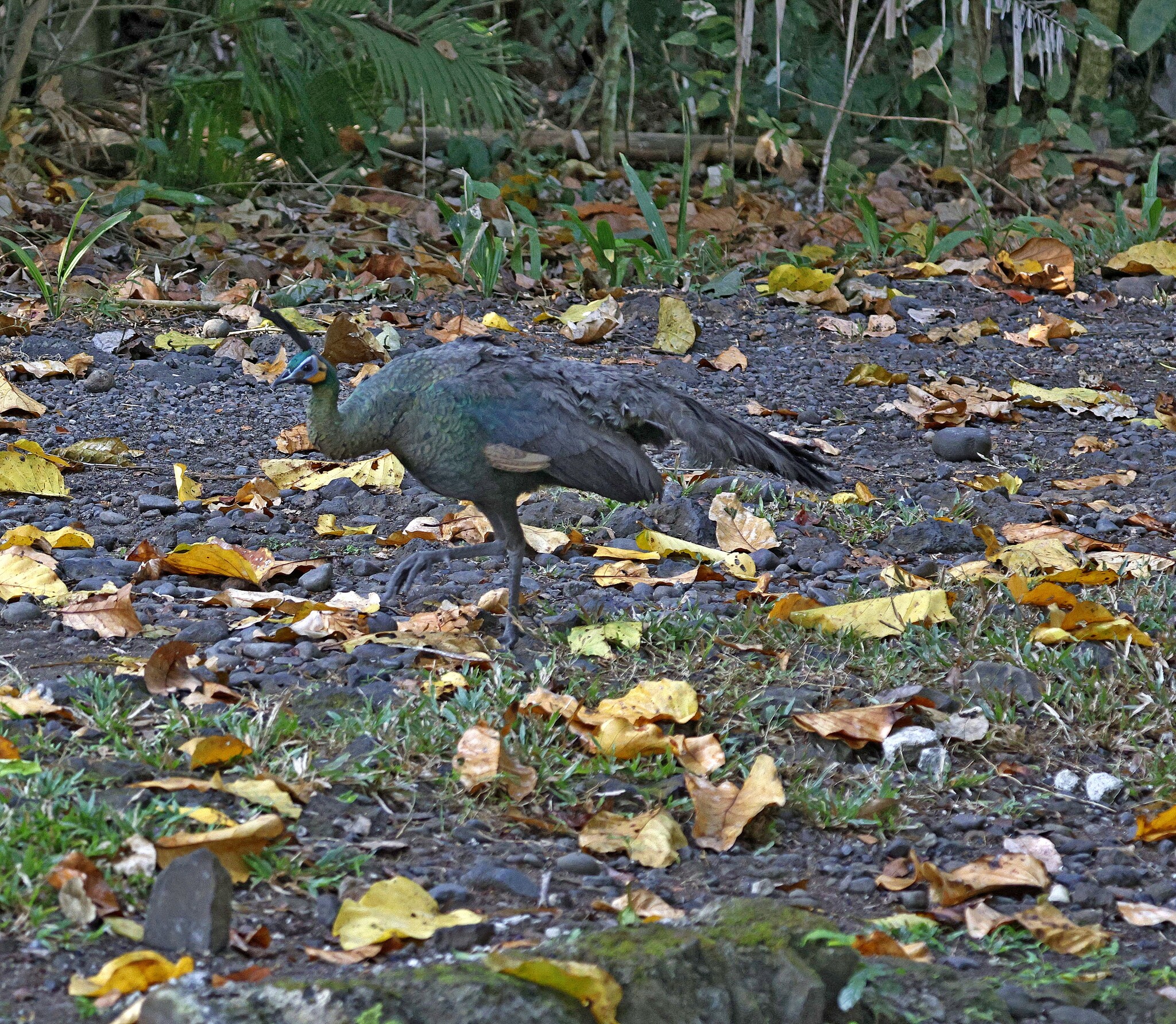
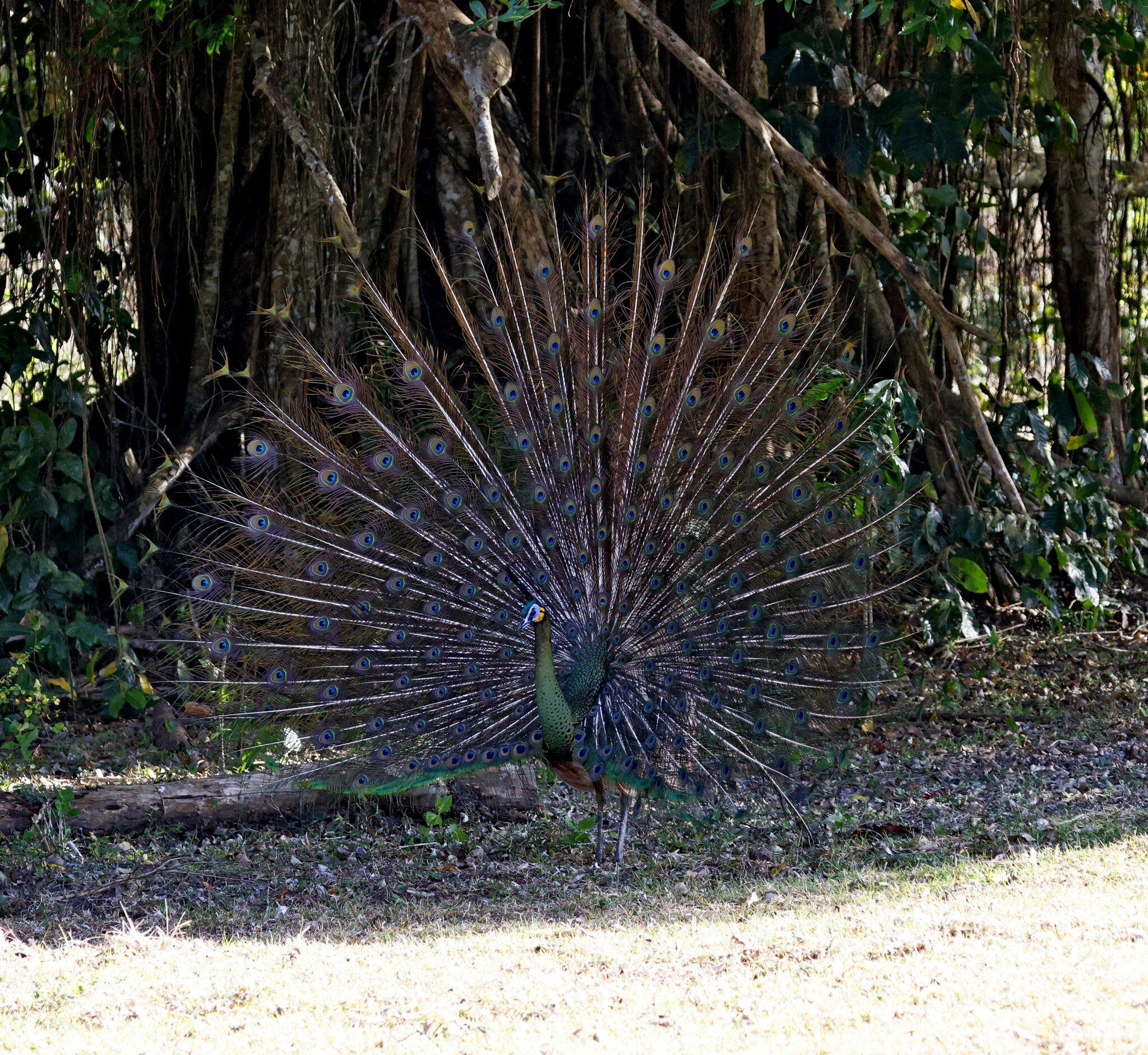
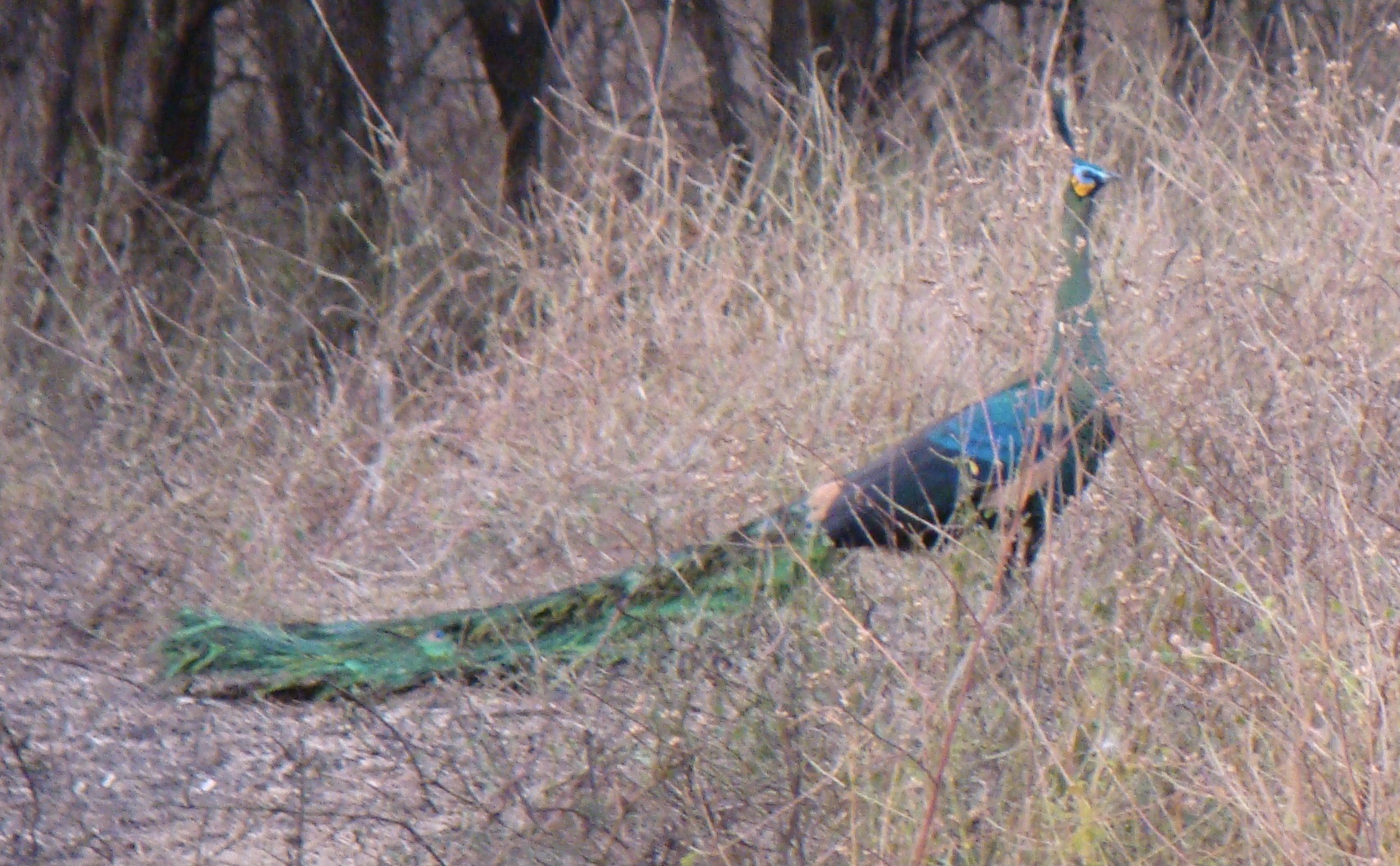
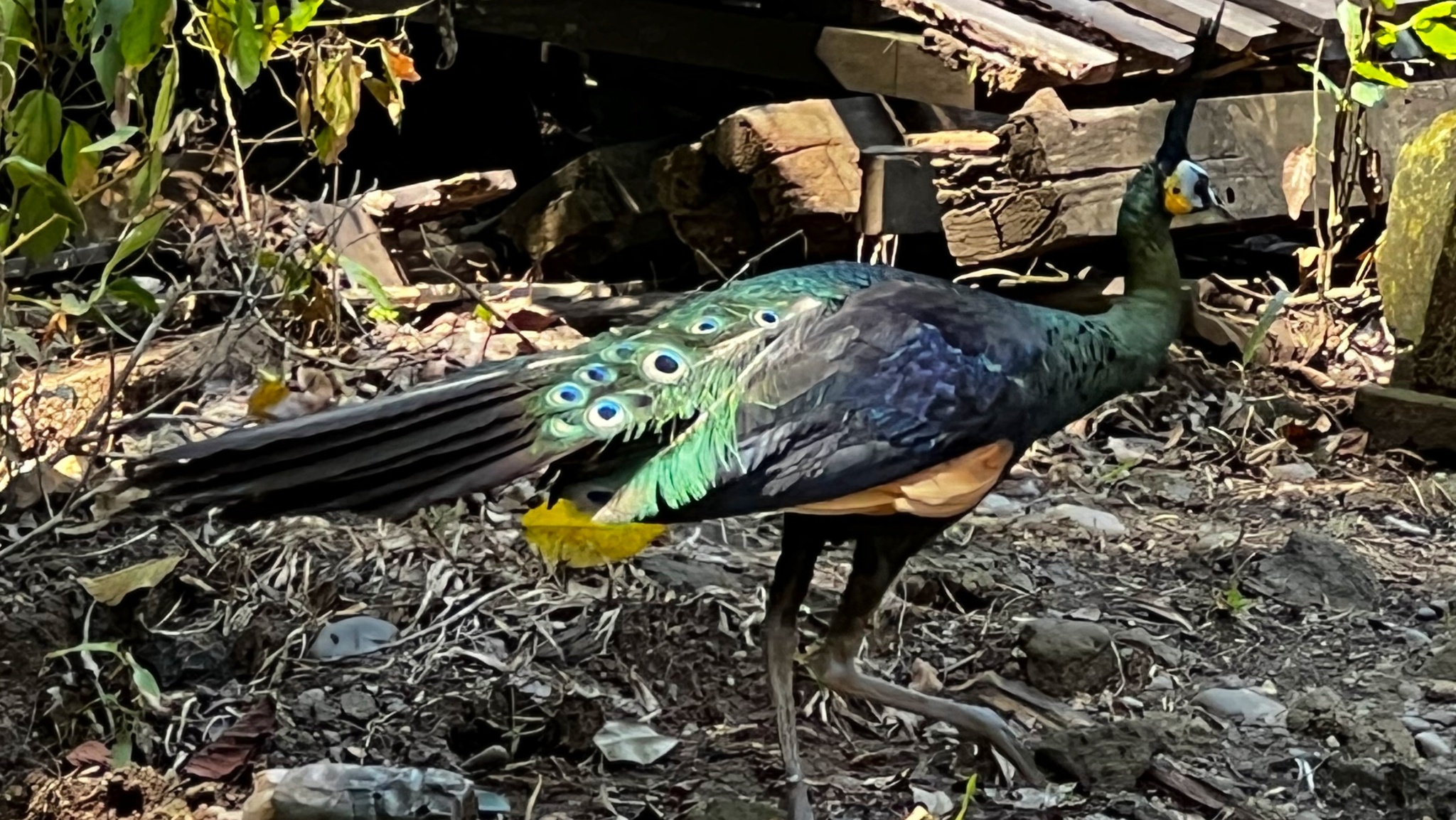
A very large bird with substantial sexual dimorphism in size. Males measure 1.8-3m total length including the train, which alone spans 1.4-1.6m; females are approximately half the male's length at 1-1.1m. Wingspan averages 1.2m and can reach 1.6m in large males. The species possesses long upper-tail covert feathers extending up to 2m in males, adorned with iridescent eyespots; female coverts are green and shorter, merely covering the tail. Both sexes display highly iridescent green neck and breast feathers with a scale-like appearance. Males have blue scapular, median, and greater wing coverts with green lesser coverts forming a triangular shoulder patch; secondaries are black. Females have blue lesser coverts, lack the shoulder triangle, and display copper-fringed neck scales with more barring on the back and primaries. Both possess prominent crest feathers and show pale vermilion or buff primaries visible in flight.
Identification
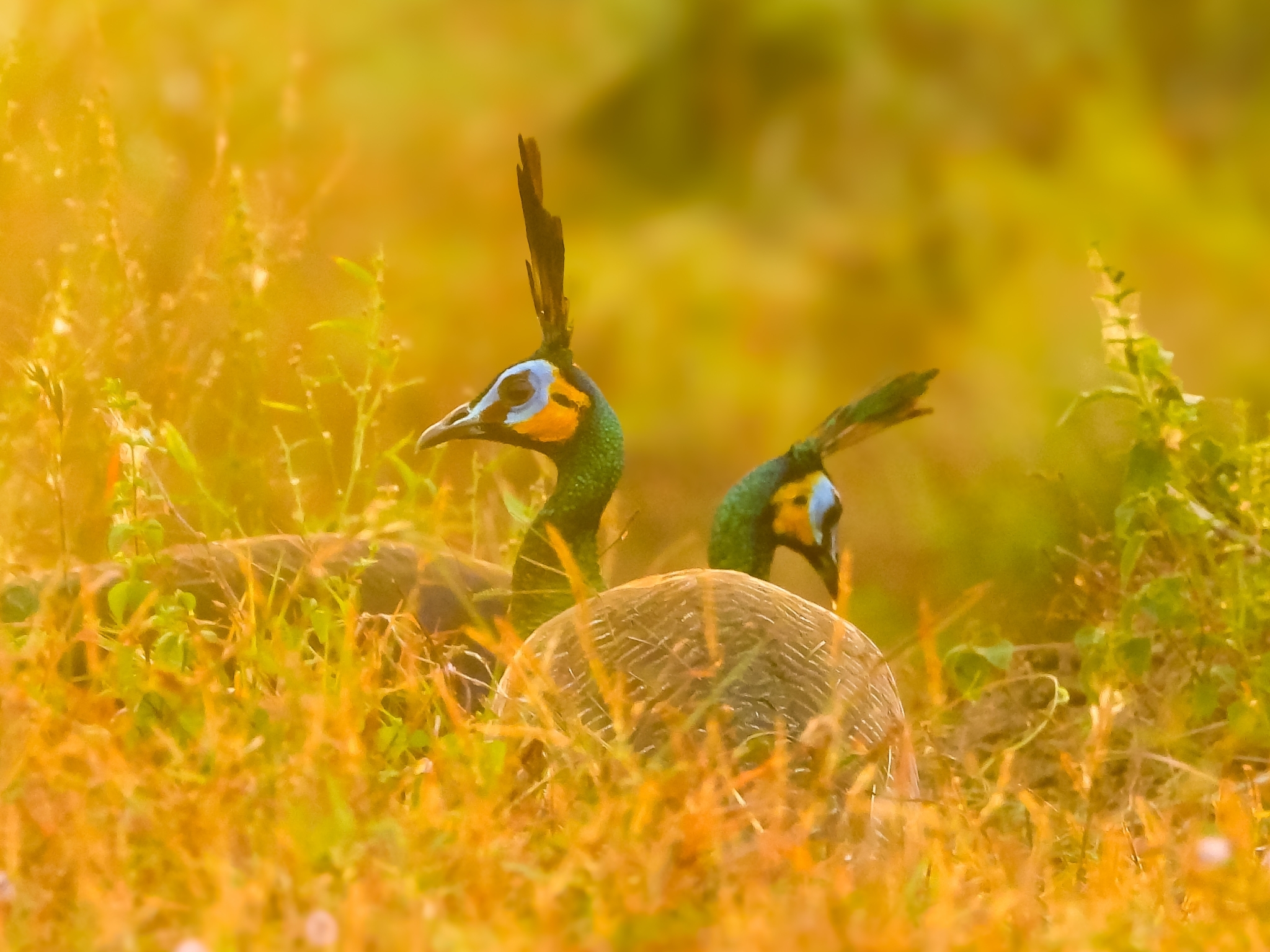
Larger and more slender than the Indian peafowl, with distinctive scale-like iridescent green feathers on the neck and breast. The yellow-orange crescent marking beside the ear and the double-striped whitish-blue facial skin are diagnostic. Males show a green and blue triangular pattern on the closed wing at the shoulder, absent in females. The dark triangle below the eye is bluish-green in males and brown in females. Outside breeding season, when males have molted their trains, close observation is needed to distinguish sexes. The peculiar flapping flight with visible pale primaries distinguishes this species in flight.
Distribution & Habitat
Formerly widespread across Southeast Asia from southern China (Yunnan) through eastern and northeastern India, Bangladesh, Myanmar, Laos, Thailand, Vietnam, Cambodia, Peninsular Malaysia, and Java. Current populations are severely fragmented and isolated. Cambodia's Keo Seima Wildlife Sanctuary holds approximately 745 individuals as of 2020. In Java, populations persist only in protected areas including Ujung Kulon National Park and Baluran National Park. Habitat includes primary and secondary tropical forests, evergreen and deciduous woodlands, bamboo stands, grasslands, savannas, and scrub. Proximity to water is an important habitat requirement; in Vietnam, preferred habitat is dry deciduous forest close to water sources away from human disturbance.
Behavior & Ecology
Forest-dwelling ground-nester that lays clutches of 3-6 eggs. Social structure is complex: solitary territorial males may form harems, though some researchers suggest observed harems consist of juvenile birds and that the species may be monogamous. Males vocalize at roost sites at dawn and dusk with a loud repeated 'ki-wao' call; females emit a loud 'AOw-aa' call emphasizing the first syllable. Family units roost in trees at heights of 10-15m. Spends considerable time on or near the ground in tall grasses and sedges. Capable of sustained but energy-intensive flight, with a distinctive flapping pattern lacking the gliding associated with many bird species.
Conservation
Classified as Endangered on the IUCN Red List due to rapid population declines from habitat loss, hunting, and hybridization threats. Global wild population estimated at 5,000-10,000 individuals as of 1995, with continuing declines. Primary threats include deforestation, agricultural expansion, habitat fragmentation, poaching for meat, pet trade demand, and feather collection. Hybridization with introduced Indian peafowl poses a risk as fertile hybrids can backcross and become nearly indistinguishable from pure green peafowl. Listed on CITES Appendix II. Last strongholds occur in protected areas including Huai Kha Khaeng Wildlife Sanctuary (Thailand), Cat Tien National Park (Vietnam), and Baluran and Ujung Kulon National Parks (Java). The 2020 Yunnan Green Peafowl lawsuit in China established a precedent for preventive public-interest wildlife conservation.
Culture
National bird of Myanmar, where the green peafowl was the coat of arms of the Konbaung dynasty and primary motif of the Peacock Throne. The peacock symbolized the Sun, from which Burmese monarchs claimed descent. During British colonial rule, the peacock appeared on the governor's flag and naval ensign. The fighting stance of the peacock was adopted by anti-colonial activists and later by the National League for Democracy. In ancient China, the peacock represented nine virtues (Jiude): loyalty, trustworthiness, respectfulness, firmness, gentleness, harmony, steadfastness, integrity, and filiality. From the Ming Dynasty, third-ranked civil servants wore embroidered peacock patches (buzi) on their uniforms. During the Qing Dynasty, peacock feathers (Huayi) decorated official hats, with three feathers reserved for the highest-ranking officials.
Source: Wikipedia · CC BY-SA 3.0
Taxonomy
- Order
- Galliformes
- Family
- Phasianidae
- Genus
- Pavo
- eBird Code
- grepea1
Subspecies (3)
-
Pavo muticus imperator
Myanmar (except northwestern) to Thailand, southern Yunnan (southwestern China), Cambodia, southern Laos, and southern Vietnam
-
Pavo muticus muticus
locally in Java; formerly Malayan Peninsula, where extirpated and reintroduction efforts failed
-
Pavo muticus spicifer
locally in northwestern Myanmar; at least formerly northeastern India and southeastern Bangladesh, no recent documented records
Data Sources
Species description from Wikipedia, licensed under CC BY-SA 3.0.
Bird images and sounds sourced from GBIF, contributed by citizen scientists worldwide under Creative Commons licenses.
Taxonomy data from AviList 2025.