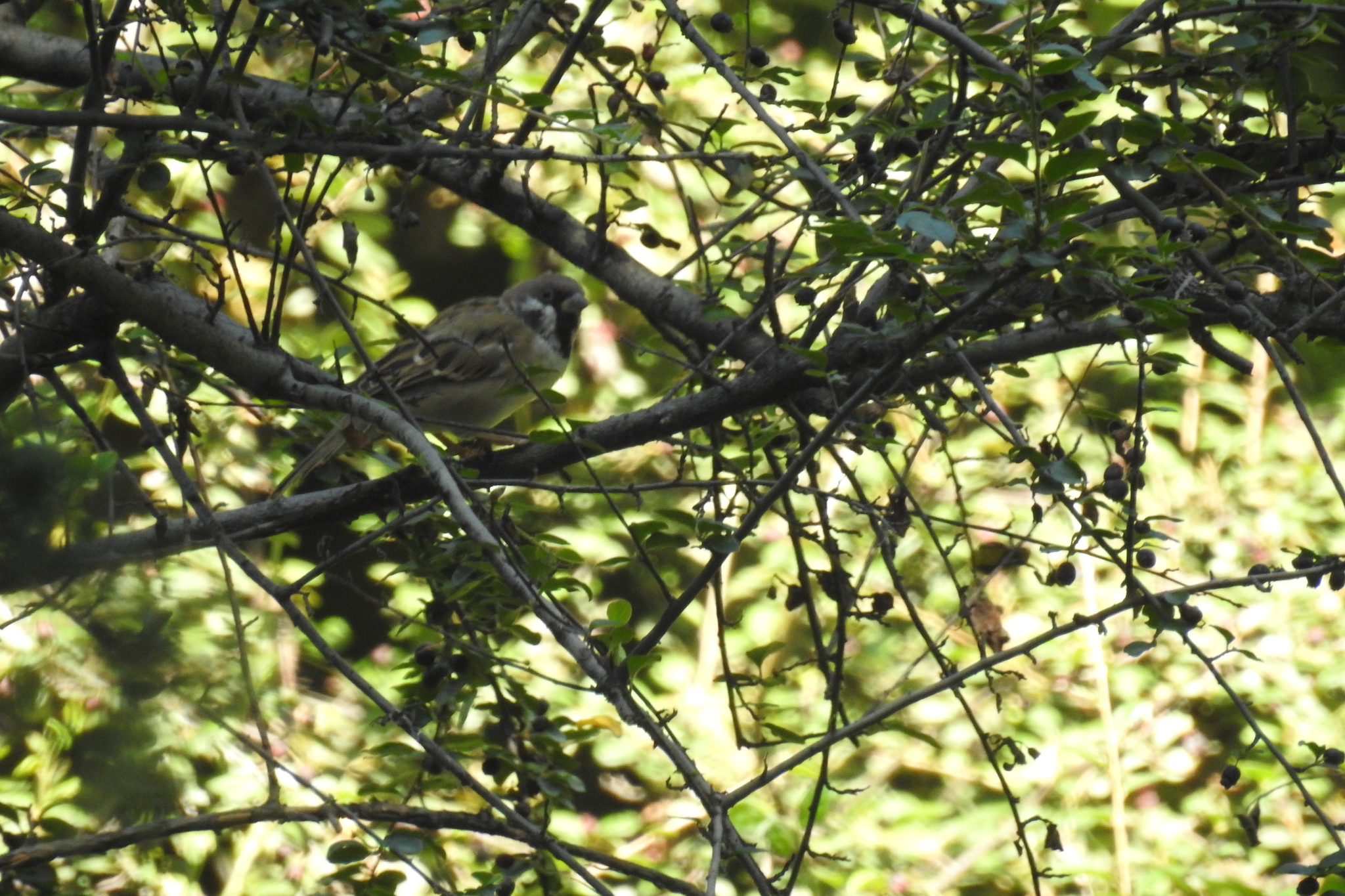
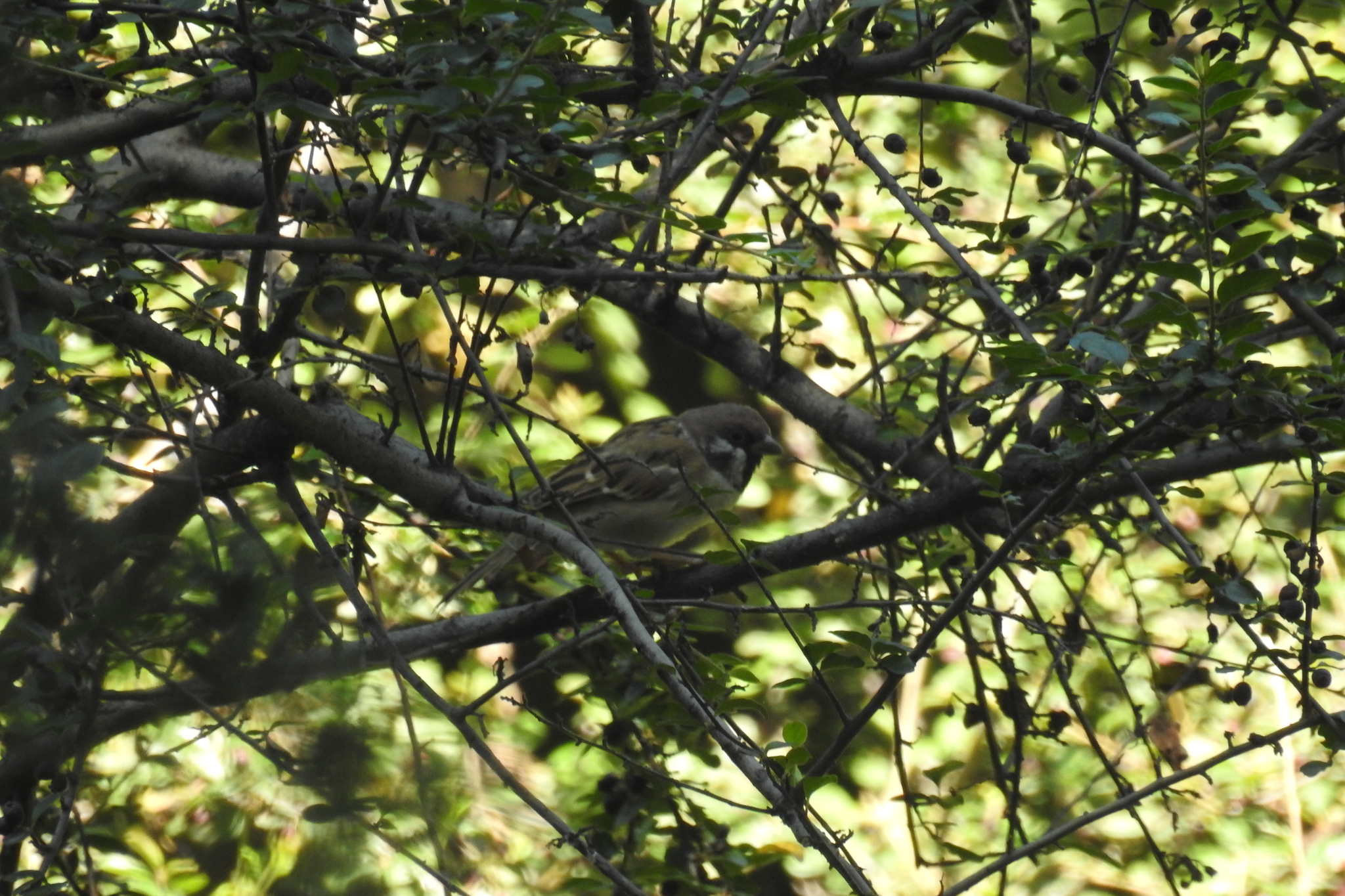

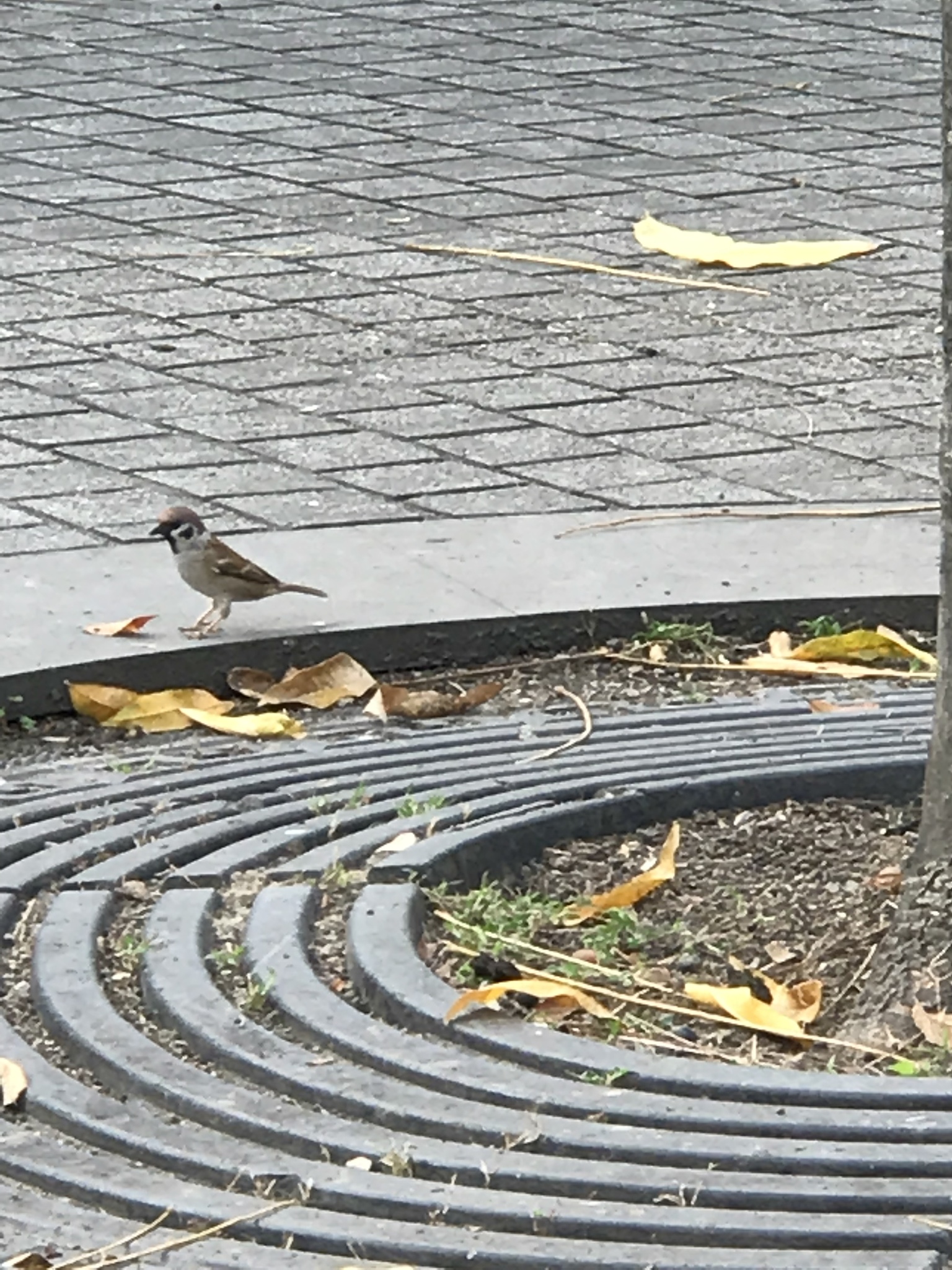
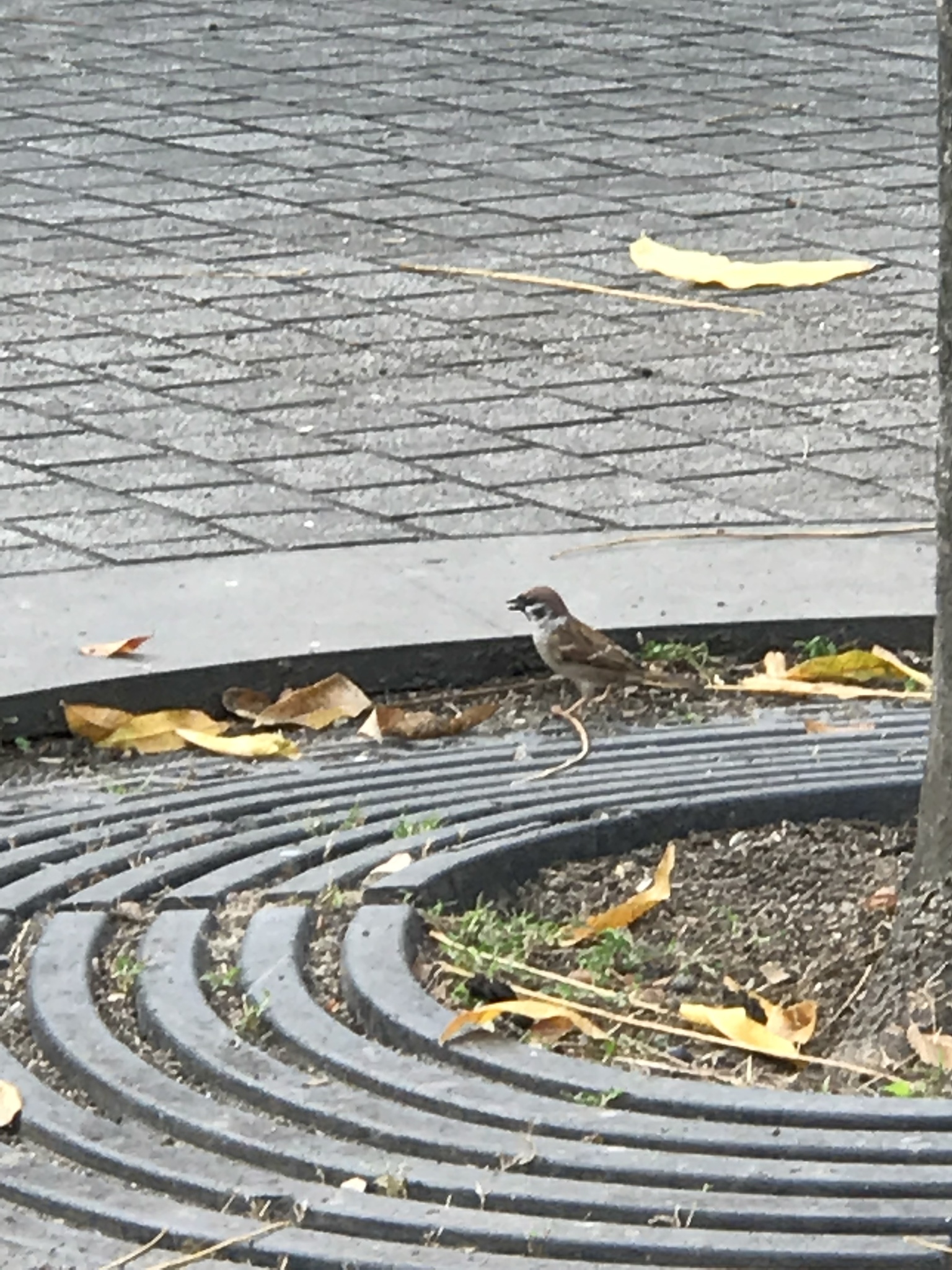
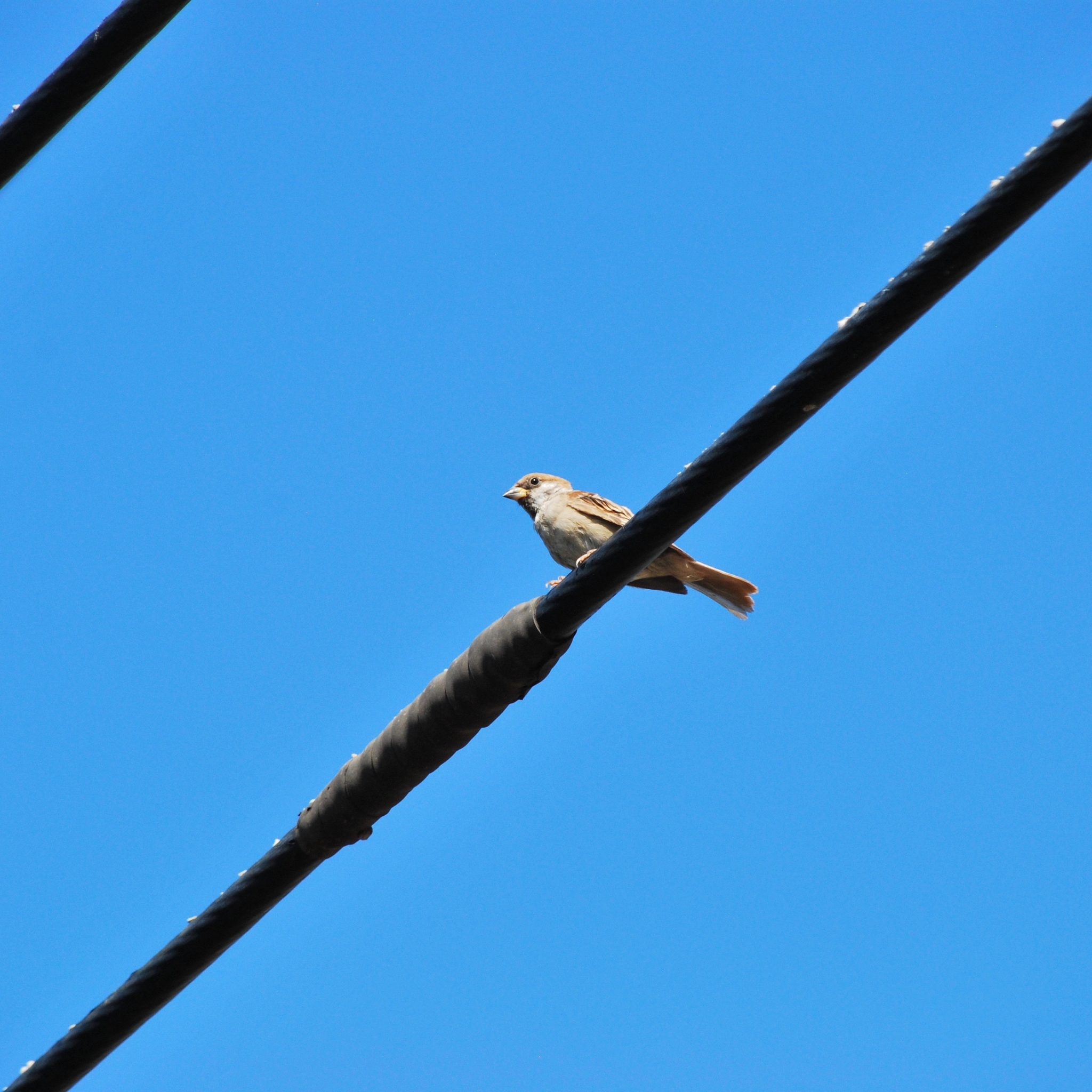
Passeriformes / Passeridae / Passer
Eurasian Tree Sparrow
Passer montanus · 麻雀
Introduction
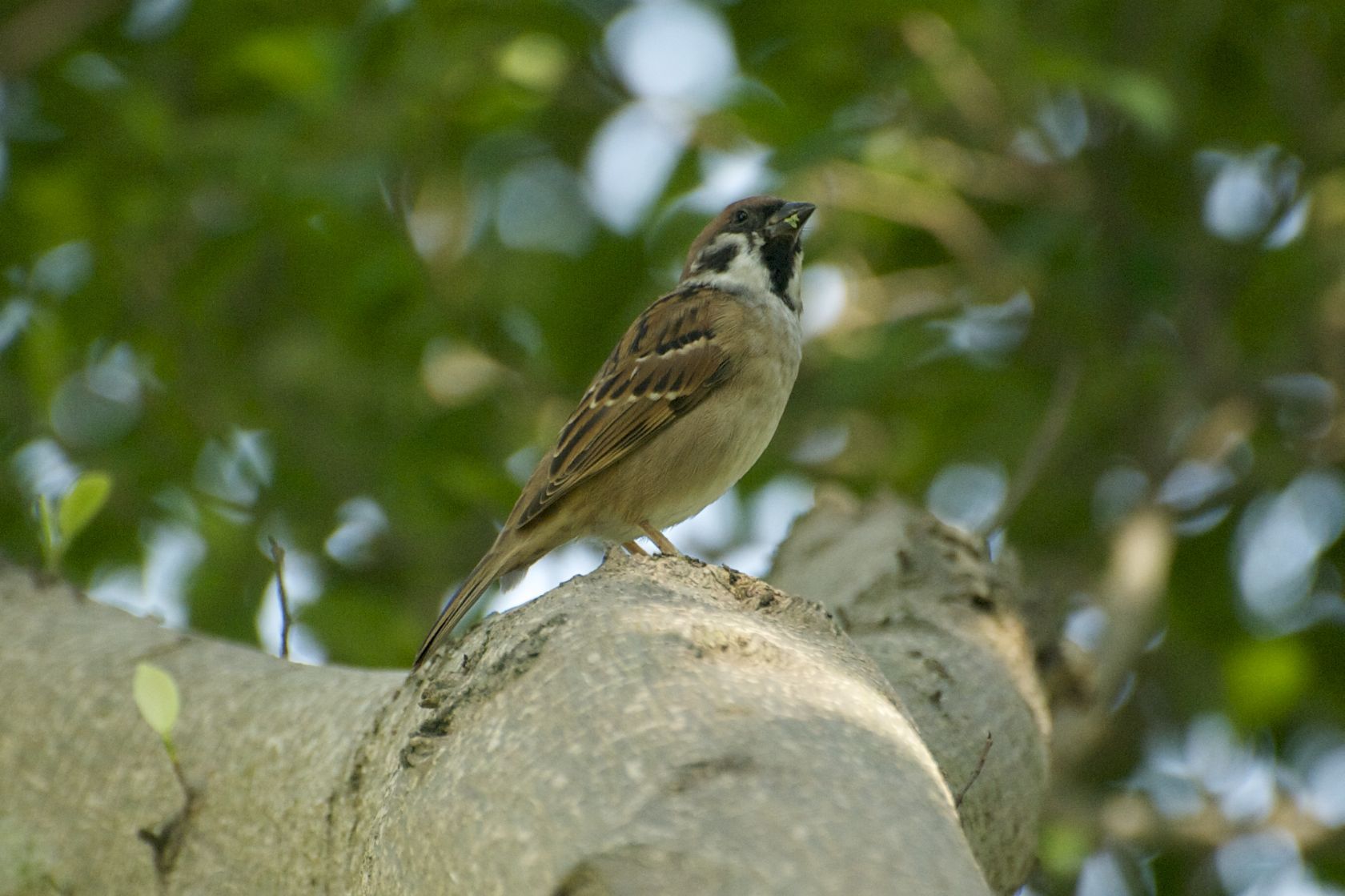
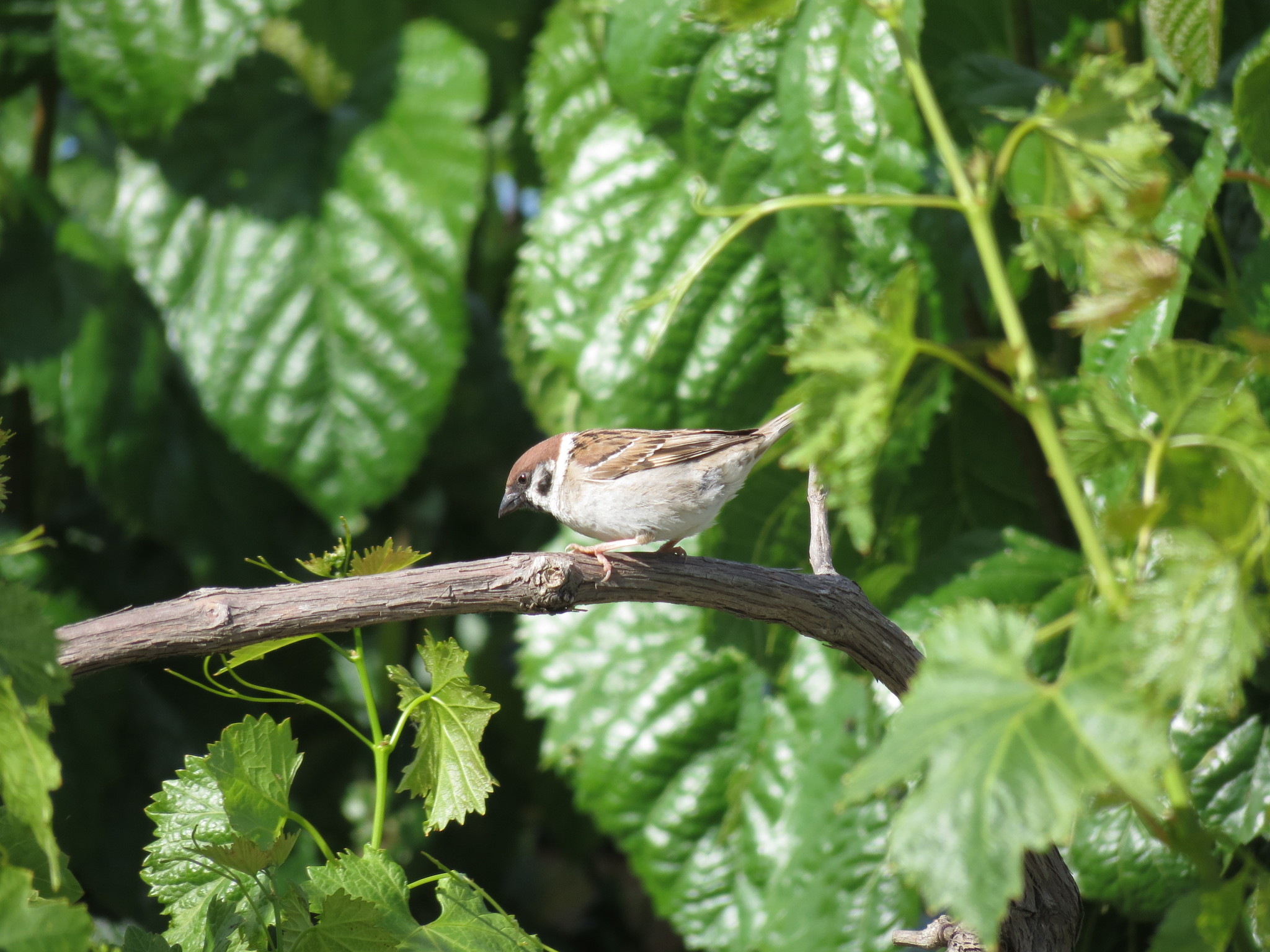
A passerine bird in the sparrow family, this species breeds across temperate Eurasia and Southeast Asia, with introduced populations in North America and Australia. It features a rich chestnut crown and nape with black patches on pure white cheeks. The sexes have similar plumage. In Europe, it inhabits lightly wooded open countryside, while in eastern Asia, it is common in towns and cities. It builds untidy nests in cavities or disused nests of larger birds. The typical clutch consists of five or six eggs. Conservation status is Least Concern globally, despite significant declines in Western Europe.
Description
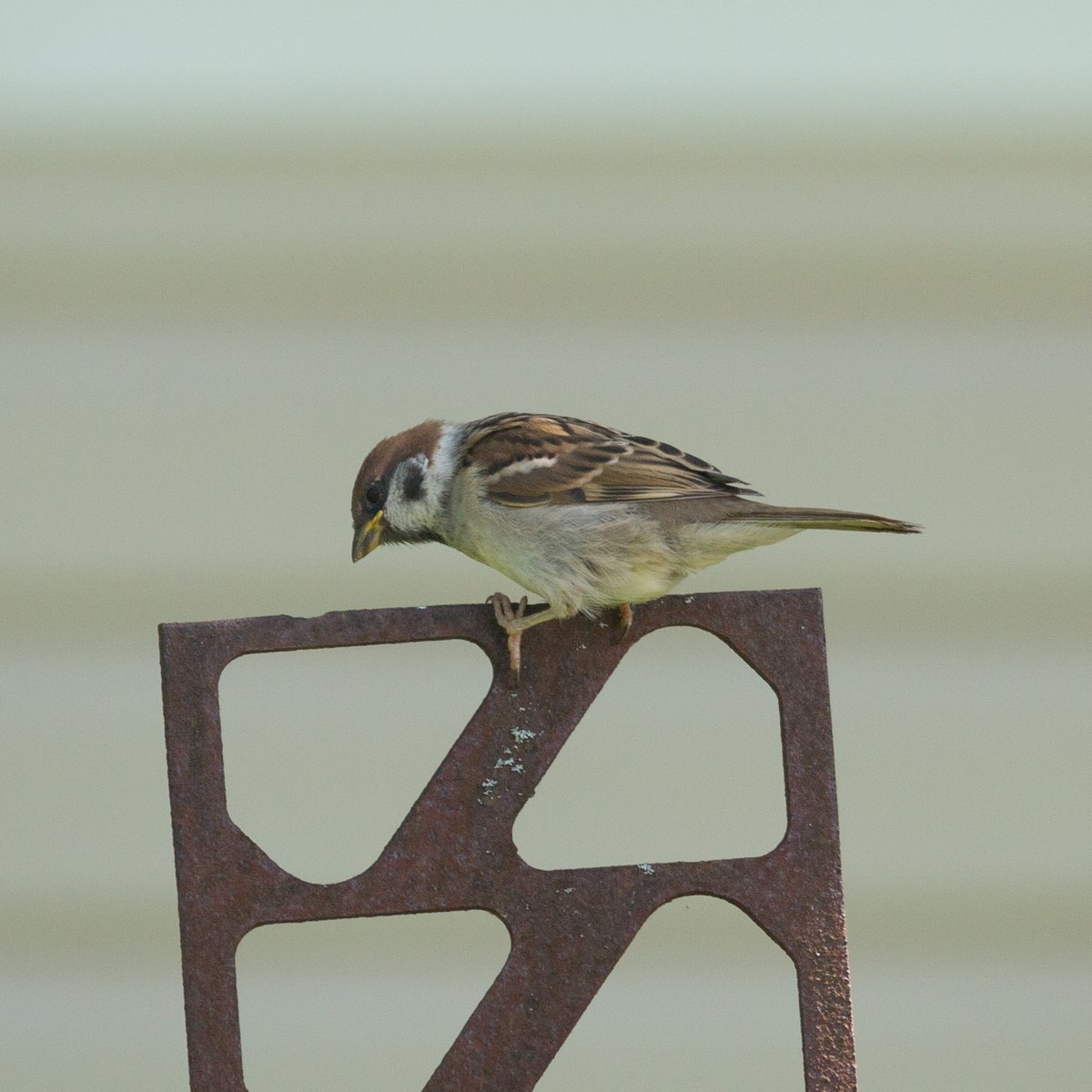
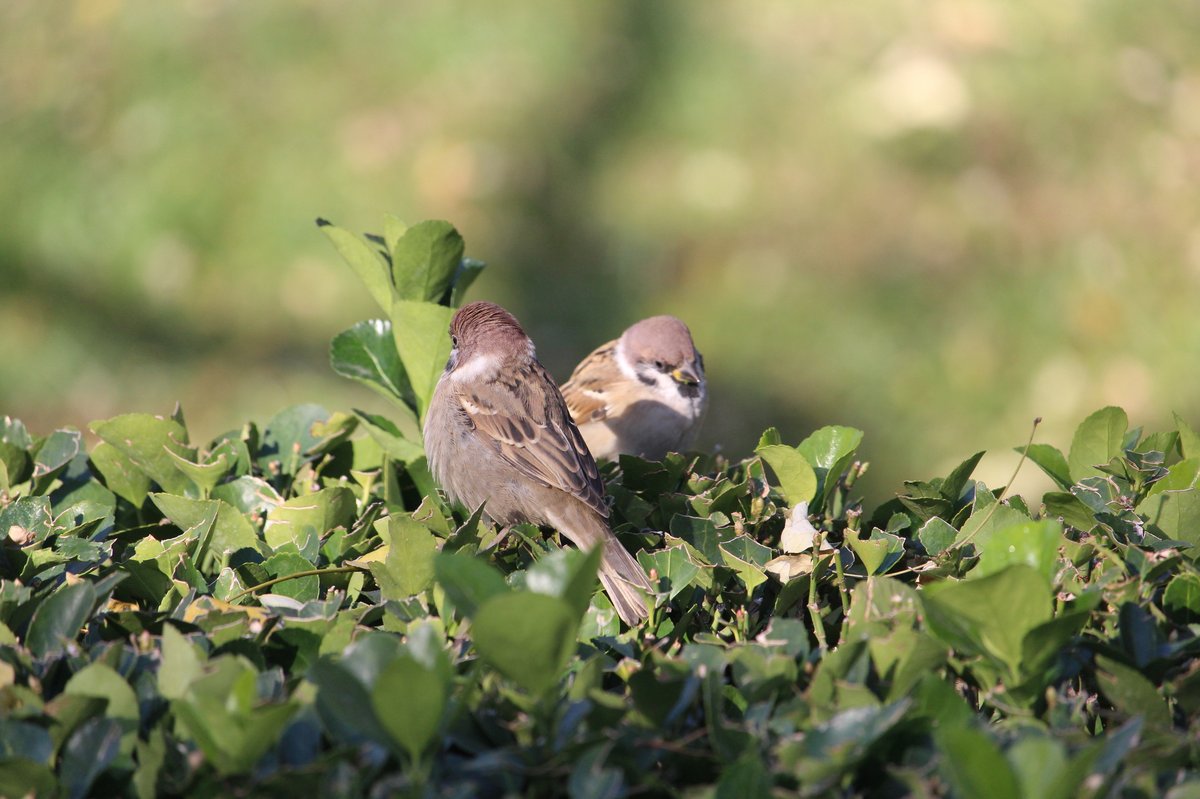
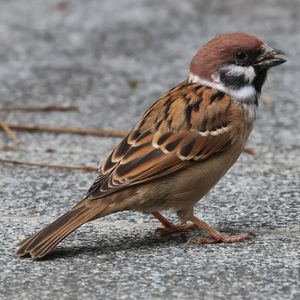
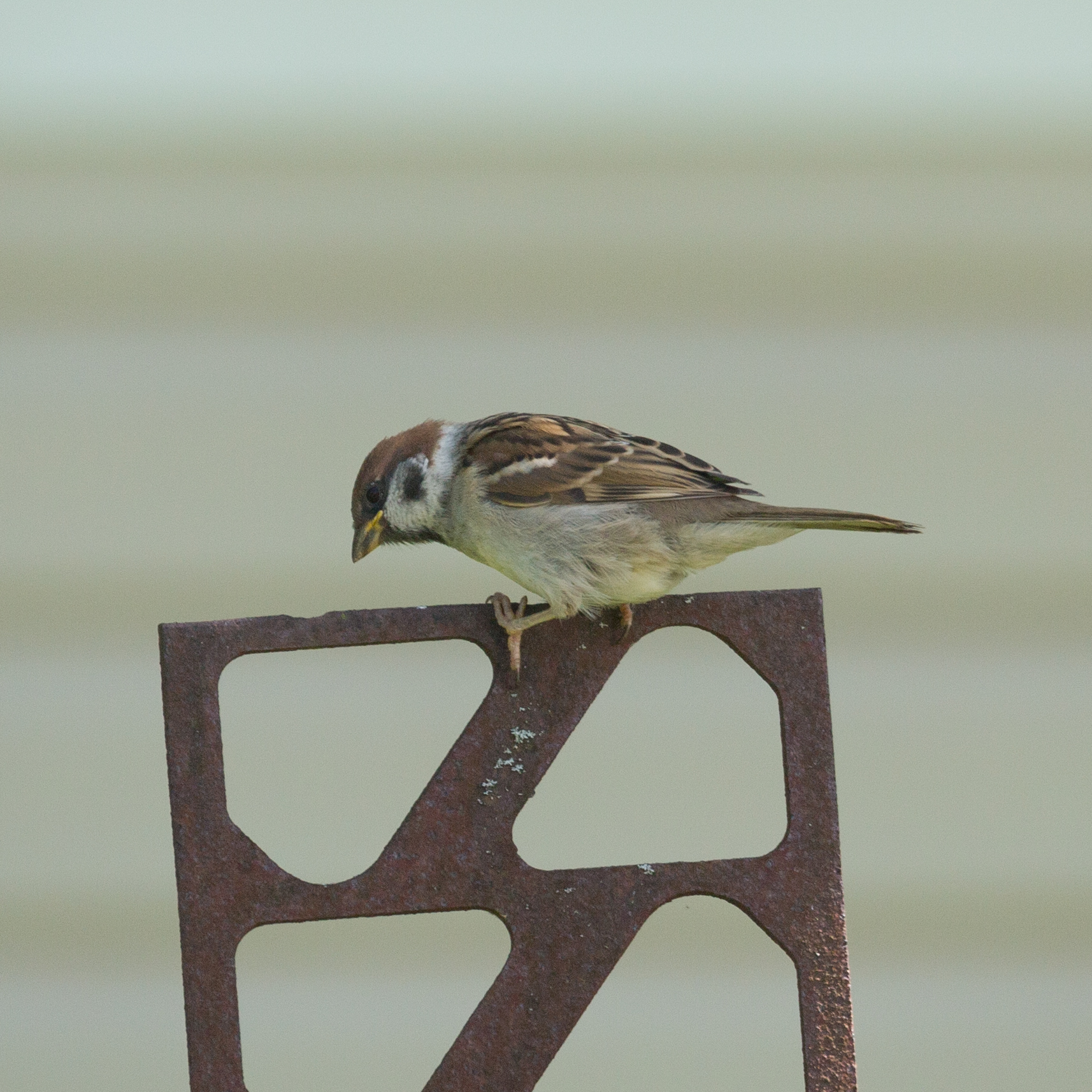
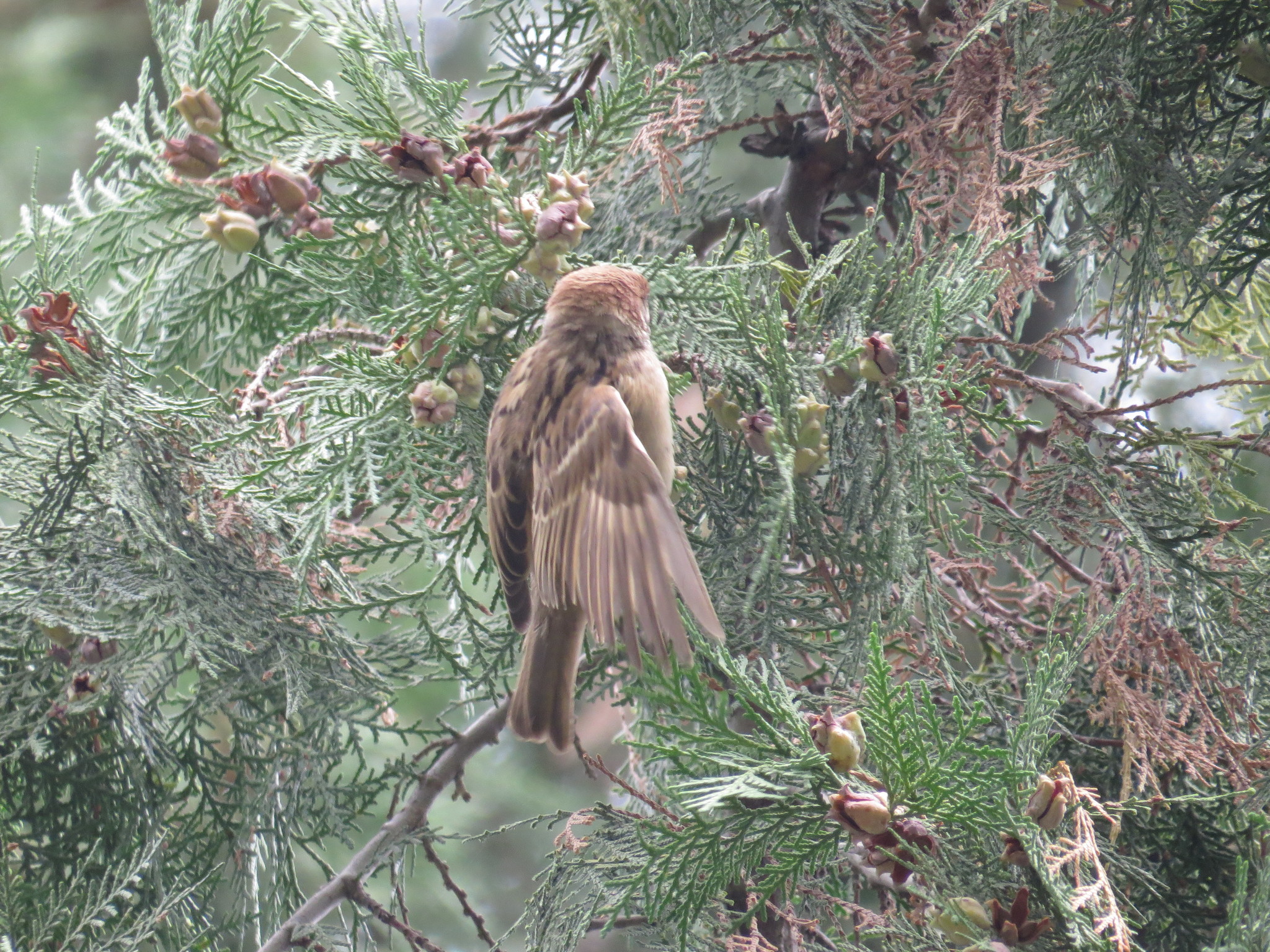
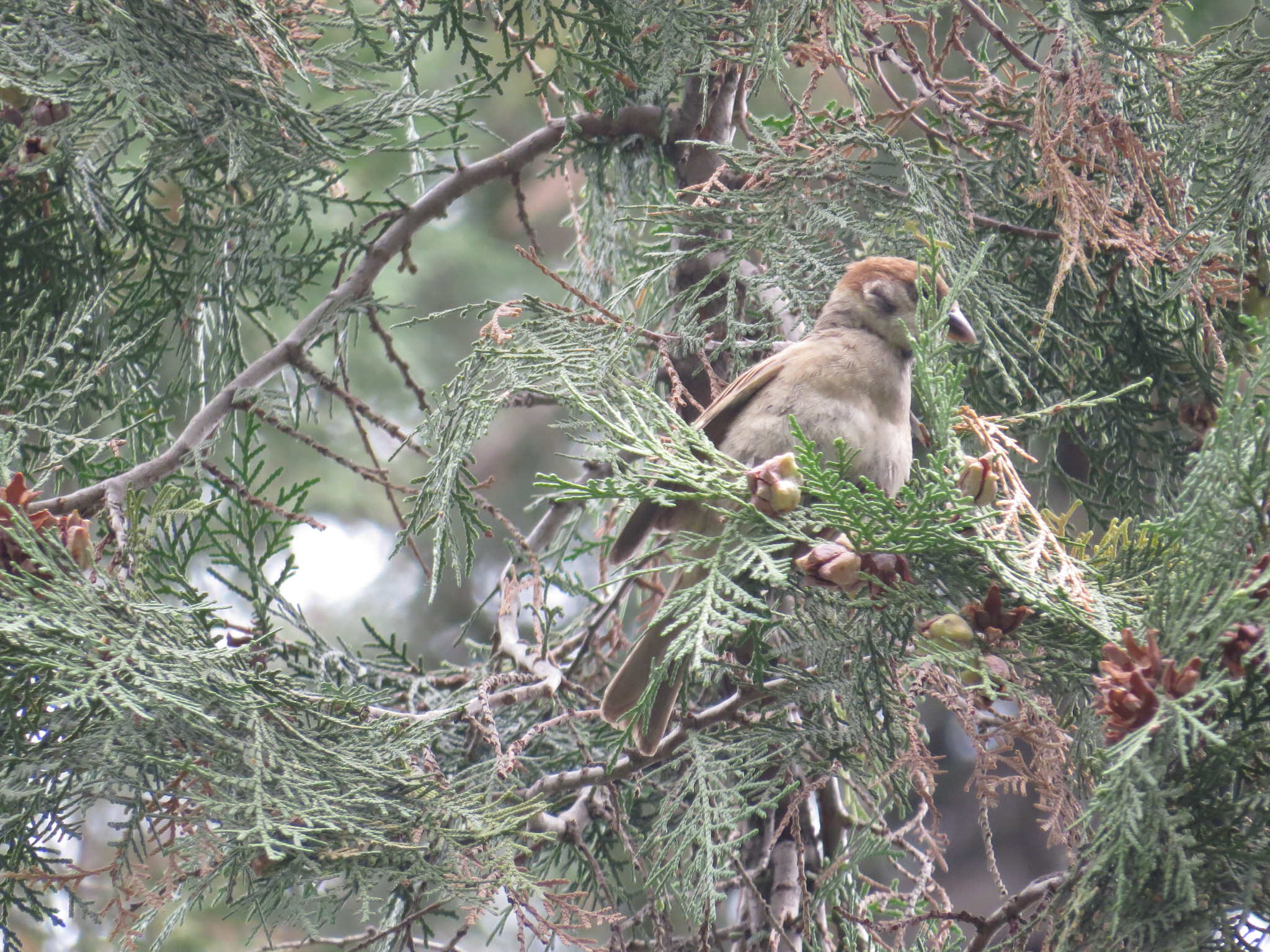
This sparrow measures 12.5–14 cm (5–5.5 in) in length, with a wingspan of about 21 cm (8.3 in) and a weight of 24 g (0.85 oz), making it roughly 10% smaller than the house sparrow. Adults display a rich chestnut crown and nape, contrasted by kidney-shaped black ear patches on pure white cheeks. The chin, throat, and area between the bill and throat are black. Upperparts are light brown, streaked with black, while brown wings feature two distinct narrow white bars. Legs are pale brown, and the bill is lead-blue in summer, turning almost black in winter. There are no plumage differences between the sexes. Juveniles resemble adults but have duller colors. Both adults and juveniles undergo a slow, complete moult in autumn.
Identification
The contrasting face pattern, featuring a chestnut crown and black cheek patches on white, makes this species easily identifiable in all plumages. It is distinguished from the male house sparrow by its smaller size and brown, rather than grey, crown. Unlike many sparrows, there is no sexual dimorphism. In flight, the silhouette is compact with short square tails. Vocalizations include an excited series of tschip calls from unpaired or courting males, monosyllabic chirps for social interaction, and a harsh teck flight call. Introduced populations in the US show fewer shared syllable types compared to European birds.
Distribution & Habitat
The natural breeding range covers most of temperate Europe and Asia south of latitude 68°N, extending through Southeast Asia to Java and Bali. It is sedentary over most of its range, though northern populations migrate south. Introduced populations exist in Sardinia, eastern Indonesia, the Philippines, Micronesia, and a limited area around St. Louis, USA, descended from birds released in 1870. In Australia, it is present in Melbourne and parts of Victoria and New South Wales. Habitat preferences vary regionally: rural countryside and wetlands in Europe, urban areas in eastern Asia, and parks or rural woods in North America where it competes with house sparrows.
Behavior & Ecology
Diet consists mainly of seeds and grains, including weed seeds and spilled grain, supplemented by invertebrates like insects and spiders during the breeding season. Nests are built in natural cavities, building holes, or disused nests of magpies and storks, lined with feathers. The typical clutch is five or six white to pale grey eggs, incubated by both parents for 12–13 days. Chicks fledge after 15–18 days. Two or three broods may be raised annually. Socially, they form flocks with linear dominance hierarchies in winter. Vocalizations include tschip calls and a harsh teck flight call.
Conservation
Evaluated as Least Concern by the IUCN, with a global population estimated at 190–310 million individuals. However, significant declines have occurred in Western Europe, particularly Great Britain (95% decline between 1970 and 1998) and Ireland. Causes include agricultural intensification, increased herbicide use, loss of winter stubble fields, and reduced insect availability for nestlings. In China, the species was extirpated during the Four Pests campaign but later recovered through imports. It is considered a pest in Australia due to crop damage.
Culture
In China, the species was targeted in the 1958 Four Pests campaign, leading to ecological imbalance and famine. It is widely celebrated in Oriental art, often depicted perched on plants or flying in flocks, appearing on postage stamps from various countries. The bird inspired Suzume Odori, a traditional Japanese dance from Sendai. In the Philippines, it is known as mayang simbahan and is the most common bird in cities, often confused with the black-headed munia. Historically, mass killing campaigns were conducted in several European countries in the 19th century.
Source: Wikipedia · CC BY-SA 3.0
Taxonomy
- Order
- Passeriformes
- Family
- Passeridae
- Genus
- Passer
Subspecies (9)
-
Passer montanus dilutus
Transcaspia to western Pakistan, Gobi Desert, and western China (Xinjiang)
Data Sources
Species description from Wikipedia, licensed under CC BY-SA 3.0.
Bird images and sounds sourced from GBIF, contributed by citizen scientists worldwide under Creative Commons licenses.
Taxonomy data from AviList 2025.