
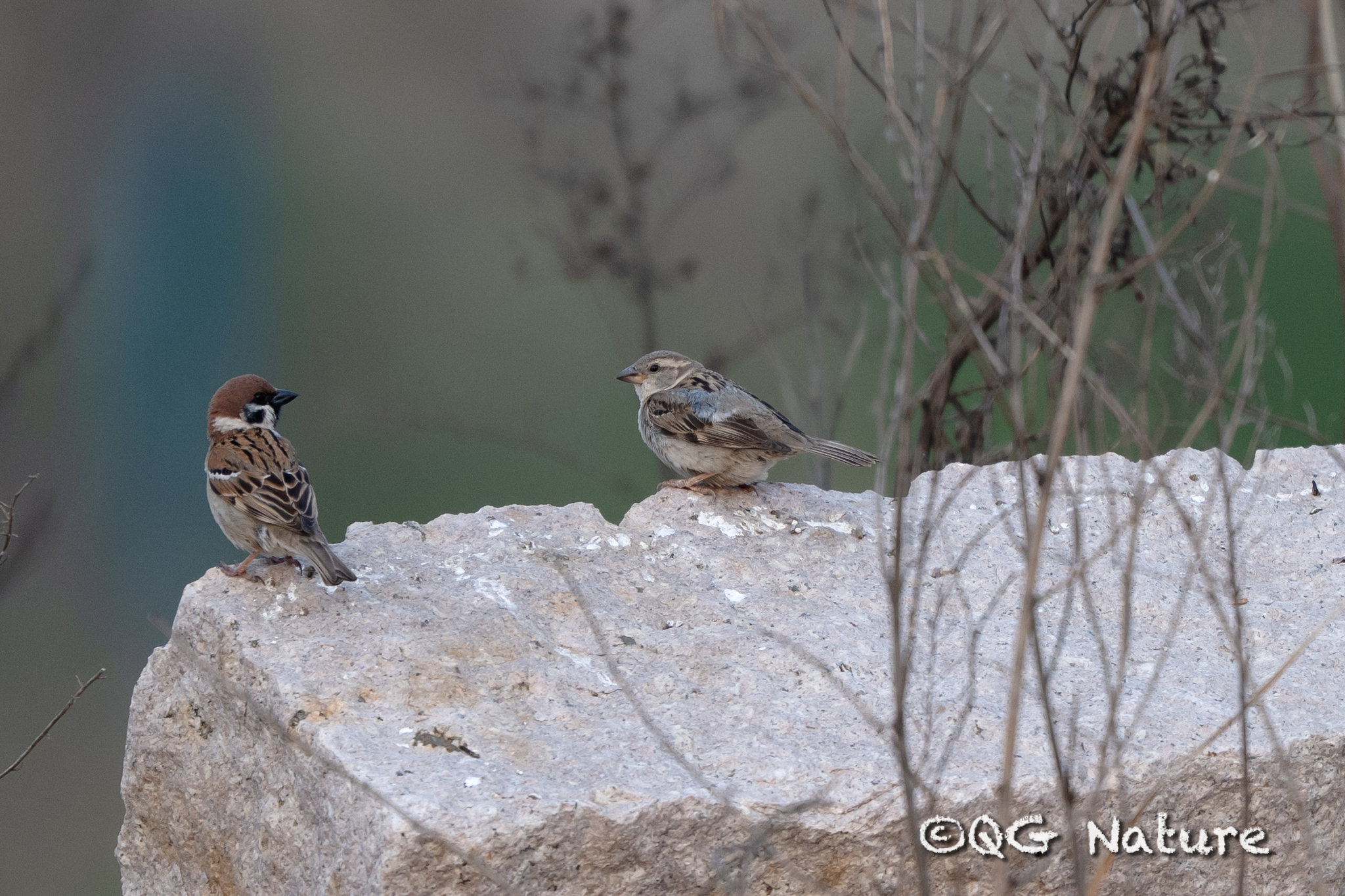


Passeriformes / Passeridae / Passer
House Sparrow
Passer domesticus · 家麻雀
Introduction
A small bird of the sparrow family Passeridae, native to most of Europe, the Mediterranean Basin, and a large part of Asia. It has been intentionally or accidentally introduced to many regions, including parts of Australasia, Africa, and the Americas, making it the most widely distributed wild bird. Strongly associated with human habitation, it typically avoids extensive woodlands, grasslands, polar regions, and hot, dry deserts far from human development. Listed as least concern on the IUCN Red List.
Description
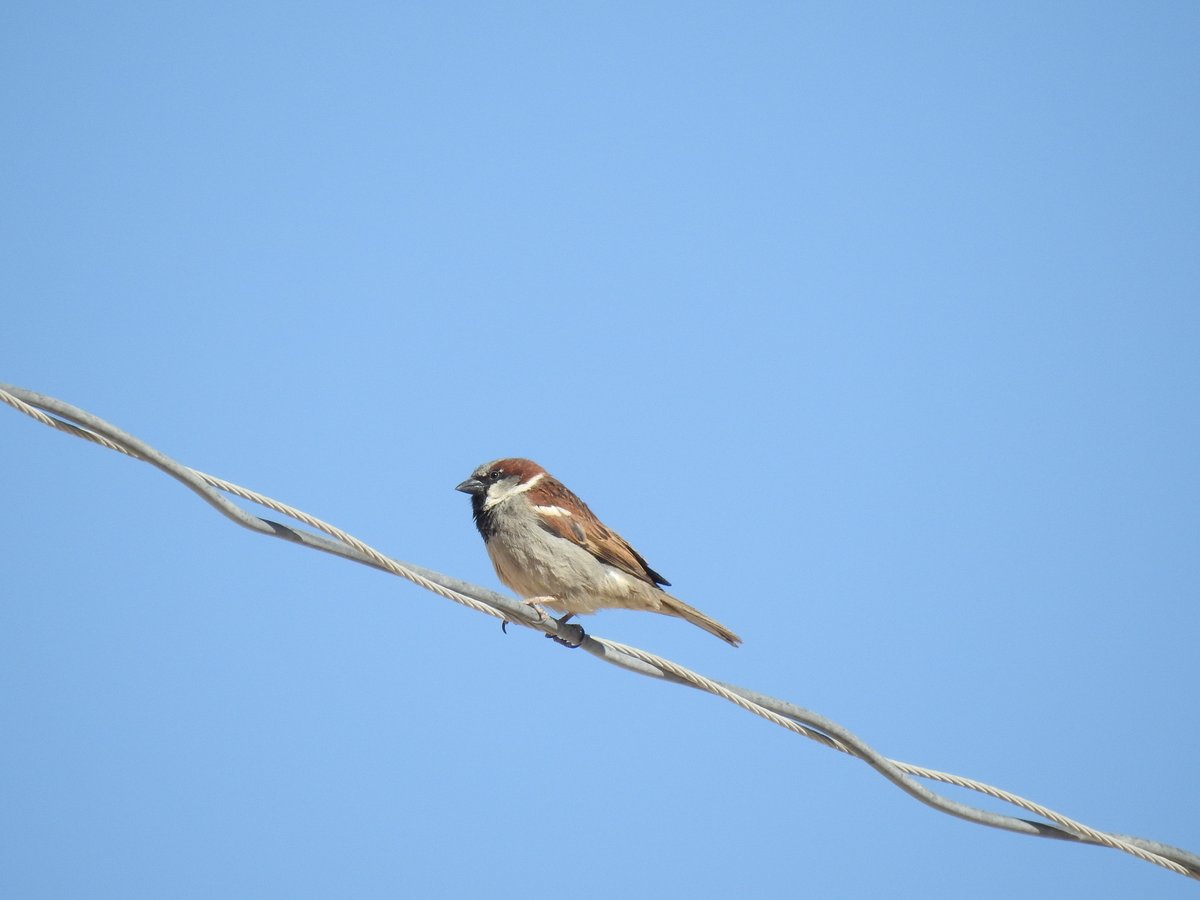
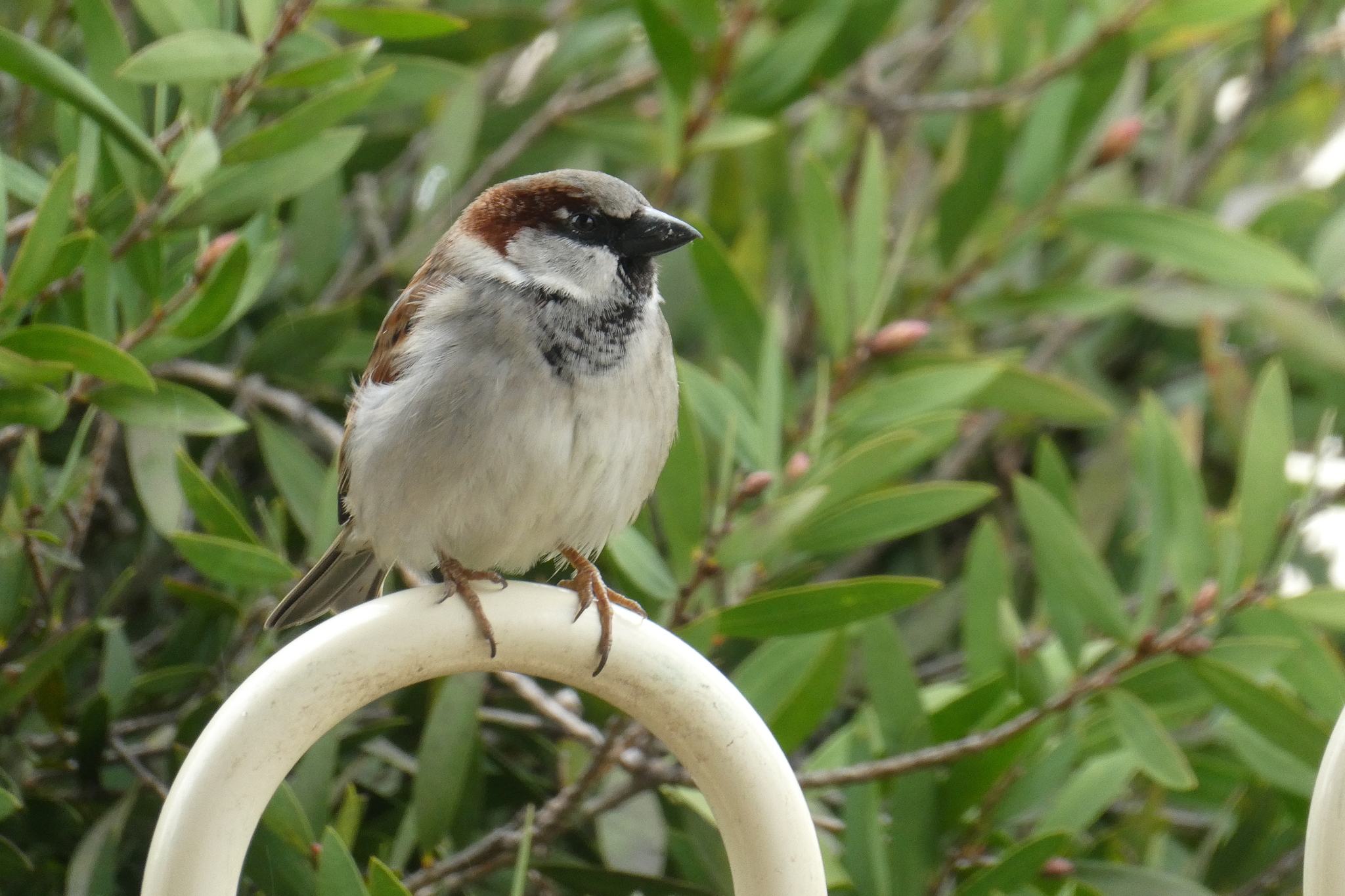
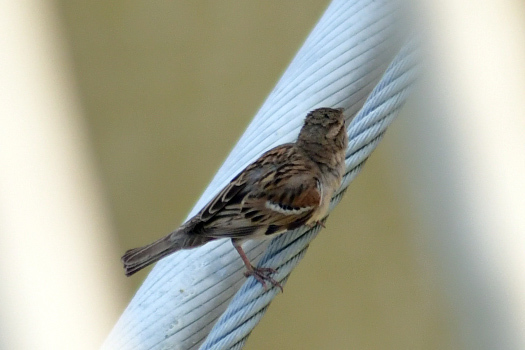
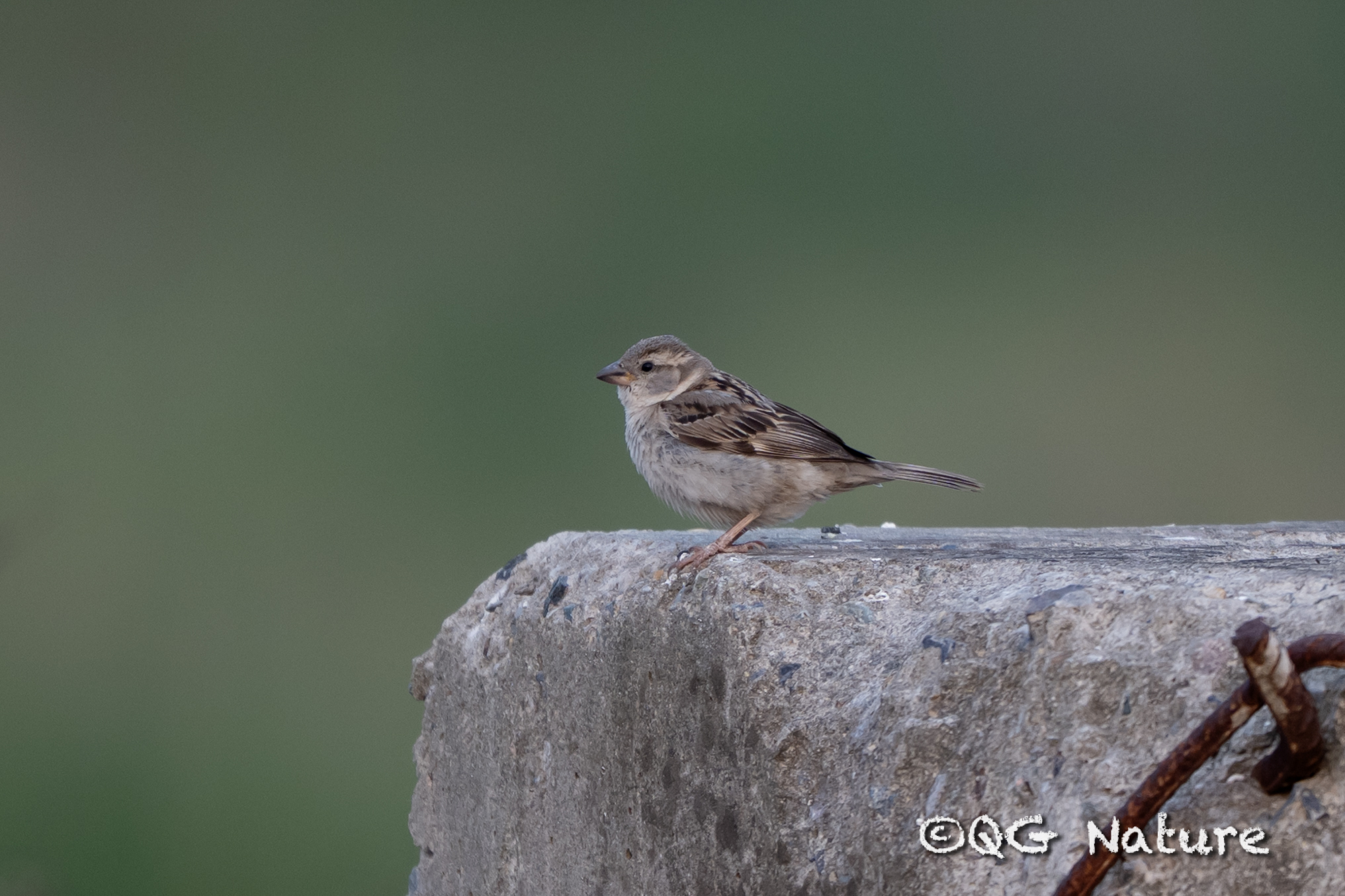
Typically about 16 cm (6.3 in) long, ranging from 14 to 18 cm (5.5 to 7.1 in), with a wingspan of 19–25 cm (7.5–9.8 in). Mass ranges from 24 to 39.5 g (0.85 to 1.39 oz). It is a compact bird with a full chest, large rounded head, stout conical bill, and short tail. Sexes exhibit strong dimorphism: males have a dark grey crown, chestnut brown flanks on the head, black markings around the bill, throat, and lores, white stripes and spots behind the eyes, a reddish-brown back with black streaks, and grey underparts. Females are mostly buffish above and below with darker streaks on the mantle and a distinct pale supercilium, lacking black markings or a grey crown. Juveniles resemble females but are deeper brown below and paler above, with broader buff feather edges and scruffier plumage.
Identification
Males are distinguished by bold black, white, and brown head markings and a grey crown. Females are plain brown with a pale supercilium and lack the male's black bib and grey crown. Can be confused with other Passer species; the Eurasian tree sparrow is smaller and slenderer with a chestnut crown and black cheek patches. Male Spanish and Italian sparrows have chestnut crowns. The Sind sparrow is smaller with less black on the male's throat.
Distribution & Habitat
Native to most of Europe, the Mediterranean Basin, and a large part of Asia. Introduced to most of North America, Central America, southern South America, southern Africa, parts of West Africa, Australia, New Zealand, and various islands. It is the most widely distributed wild bird. Closely associated with human habitation in urban and rural settings, avoiding dense forests and tundra. Some Central Asian subspecies are migratory, breeding away from humans in open country.
Behavior & Ecology
Gregarious and social, often forming flocks and roosting communally. Feeds mostly on the ground on seeds of cereals and weeds, but is an opportunistic omnivore eating insects, larvae, berries, and human food scraps. Young are fed mostly insects. Breeding is monogamous but extra-pair copulations occur. Nests are usually domed structures built in cavities, eaves, or tree hollows, sometimes usurping other birds' nests. Clutches usually comprise four or five eggs, incubated for 11–14 days. Vocalizations include a short chirping call (chirrup) and a nasal alarm call (quer).
Conservation
Listed as least concern on the IUCN Red List with a global population estimated up to nearly 1.4 billion individuals. However, populations have declined significantly in many parts of the world, particularly in Western Europe and North America. In Great Britain, numbers have declined by 68% overall since the early 1970s. In the Netherlands, the population dropped by half since the 1980s, leading to endangered status there. Declines are attributed to factors such as insufficient insect food for nestlings due to pesticide use and monoculture, loss of nesting sites in urban areas, and disease.
Source: Wikipedia · CC BY-SA 3.0
Taxonomy
- Order
- Passeriformes
- Family
- Passeridae
- Genus
- Passer
Subspecies (12)
-
Passer domesticus bactrianus
Transcaspia to Kazakhstan, Afghanistan, and northwestern Pakistan
Data Sources
Species description from Wikipedia, licensed under CC BY-SA 3.0.
Bird images and sounds sourced from GBIF, contributed by citizen scientists worldwide under Creative Commons licenses.
Taxonomy data from AviList 2025.