
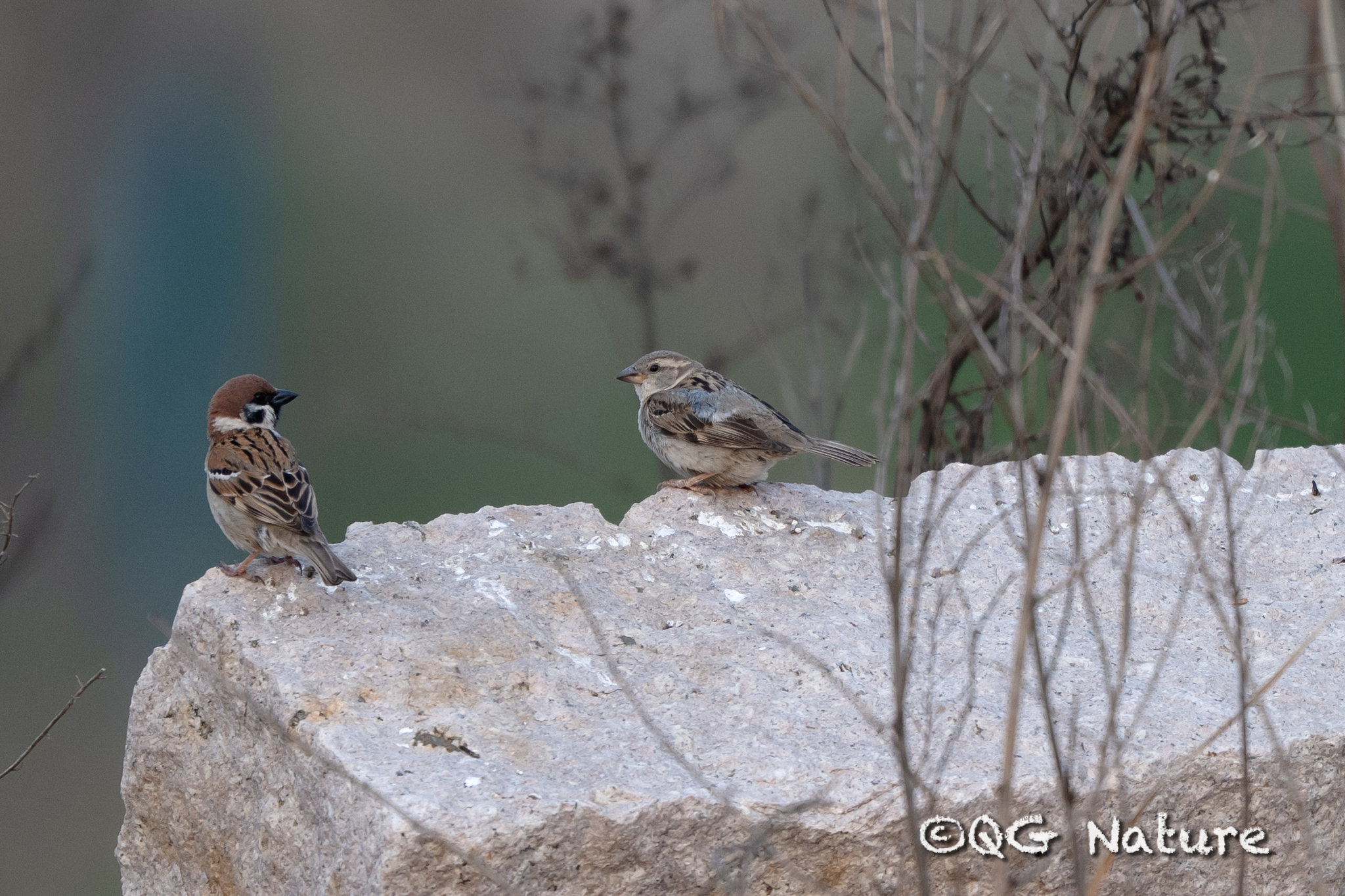


House Sparrow
Passer domesticus
家麻雀
Introduction
A bird of the sparrow family Passeridae, with about 25 species in the genus Passer. Native to most of Europe, the Mediterranean Basin, and much of Asia. Deliberate or accidental introductions have extended its range to parts of Australasia, Africa, and the Americas, making it the most widely distributed wild bird on Earth. Strongly associated with human habitation, it occupies urban and rural settings while typically avoiding extensive woodlands, grasslands, polar regions, and hot, dry deserts far from human development. An opportunistic, omnivorous feeder consuming seeds, insects, and human food scraps. Conservation status is least concern on the IUCN Red List, though populations have declined in some regions.
Description
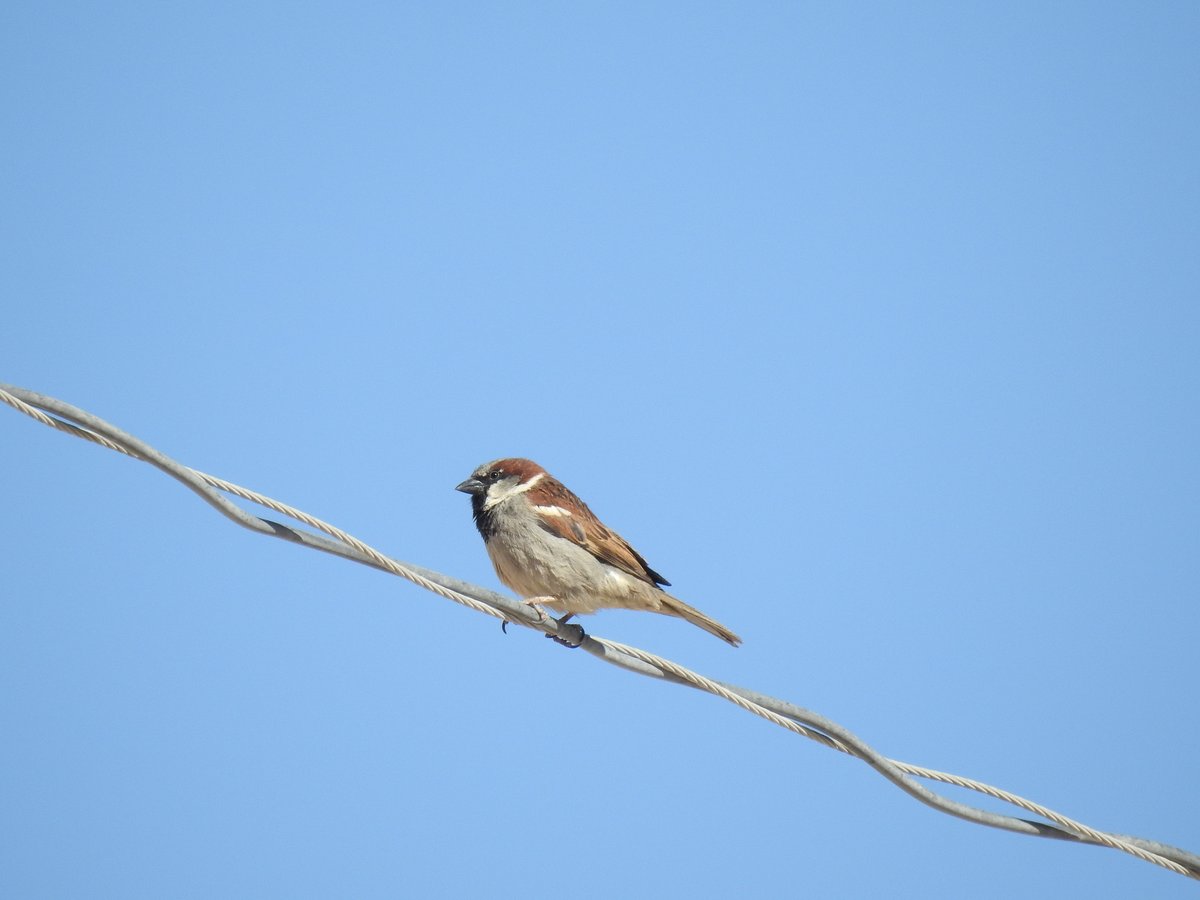
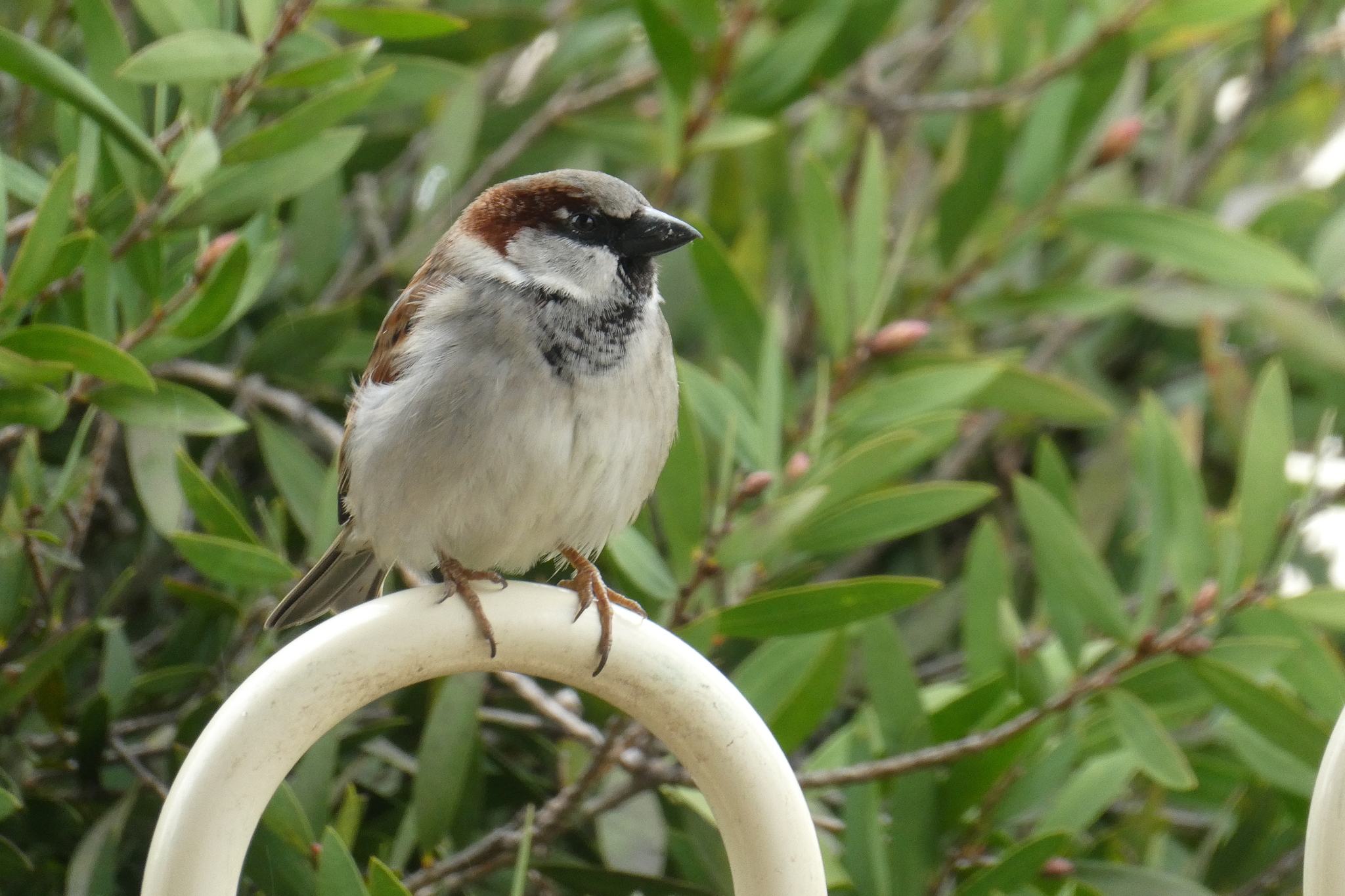
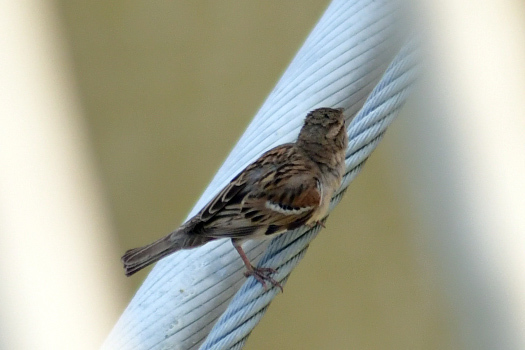
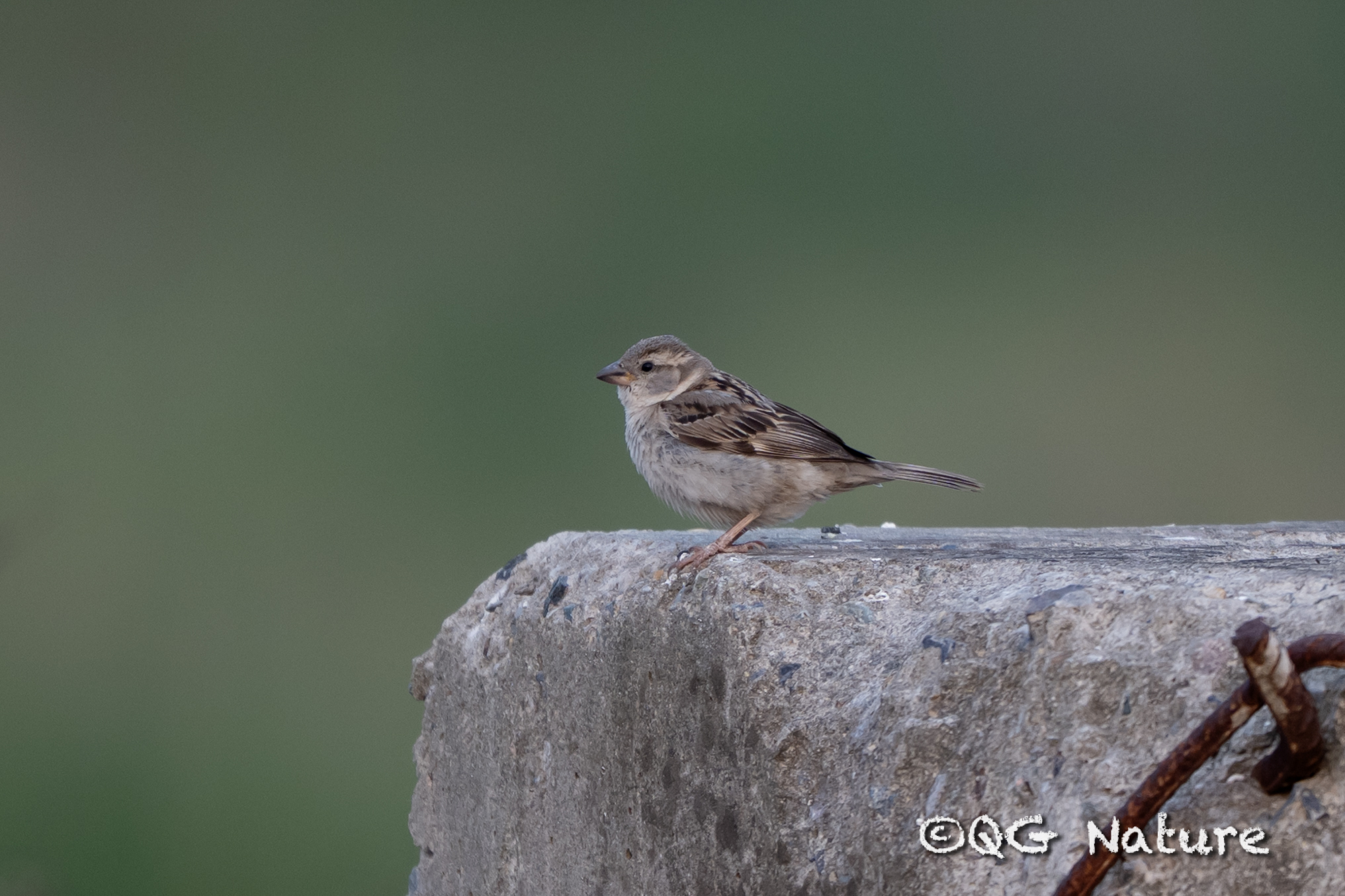
A compact bird with a full chest and large, rounded head, typically 16 cm long (range 14-18 cm). Mass ranges from 24 to 39.5 g, with males generally larger. The stout, conical bill measures 1.1-1.5 cm; the short tail is 5.2-6.5 cm. Wing chord is 6.7-8.9 cm, tarsus 1.6-2.5 cm, and wingspan 19-25 cm. Plumage consists of various shades of grey and brown. Females are mostly buffish above and below. Males display a dark grey crown, chestnut-brown flanks, black markings around the bill and throat (the 'bib'), grey underparts, a warm brown upper back with black streaks, and white stripes on the head. The dark grey bill becomes black during breeding season.
Identification
Often confused with other seed-eating Passer species, particularly in urban areas. Females are light brown and nearly indistinguishable from Spanish and Italian sparrow females. The Eurasian tree sparrow is smaller and slenderer with a chestnut crown and distinctive black cheek patches. Male Spanish and Italian sparrows are distinguished by their chestnut crowns. The Sind sparrow is notably smaller with less black on the male's throat and a distinct pale supercilium on the female. Vocalizations are short, frequent chirps (transcribed as chirrup or tschilp), used as contact calls and by males proclaiming nest ownership during breeding season.
Distribution & Habitat
Originally spread from the Middle East along with agriculture to most of Eurasia and parts of North Africa. Since the mid-19th century, deliberate introductions and natural dispersal have established populations across most of North and South America, southern Africa, Australia, New Zealand, and islands worldwide. Reached Iceland around 1990. Closely associated with human habitation, including urban centres, farms, and buildings. Tolerates varied climates but prefers drier conditions. Absent from dense forests and tundra. Reaches highest densities in urban centres and wheat-growing regions such as the Midwestern United States.
Behavior & Ecology
Omnivorous and opportunistic, feeding on seeds of cereals and weeds, insects, larvae, caterpillars, and human food scraps. Gregarious throughout the year, forming flocks and roosting communally. Nests are built in cavities, building eaves, tree hollows, and cliff crevices, often grouped together. Monogamous, typically mating for life, though extra-pair copulations occur. Males establish nest sites through calling and displays. Clutches typically contain 4-5 eggs; 2-7 clutches are laid annually depending on latitude. Eggs are white, bluish-white, or greenish-white, spotted with brown or grey, measuring 20-22 mm by 14-16 mm. Incubation lasts 11-14 days. Young fledge after 11-23 days. Vocalizations include chirping contact calls, a repetitive 'song' during breeding, and aggressive trills.
Conservation
IUCN Red List status is least concern due to extremely large range and population (up to nearly 1.4 billion individuals, second most abundant wild bird). However, populations have declined significantly in many areas, particularly Western Europe and Great Britain (68% decline since early 1970s, with 90% losses in some regions). The RSPB lists UK status as red. Causes include insufficient insect food for nestlings, shortage of nesting sites from modern building designs, pesticide use, monoculture farming, predation, and electromagnetic radiation. The subspecies P. d. bactrianus is least associated with humans and may be evolutionarily closer to non-commensal ancestral populations.
Culture
Associated with Aphrodite, goddess of love, in ancient Greek tradition due to perceived lustfulness—an allusion maintained by later writers including Chaucer and Shakespeare. Jesus referenced sparrows in the Gospel of Matthew as examples of divine providence, inspiring later references in Shakespeare and the hymn 'His Eye Is on the Sparrow'. The bird symbolizes commonness, vulgarity, and fertility. Historically consumed as food, including sparrow pie thought to have aphrodisiac properties. Frequently persecuted as an agricultural pest, with control attempts dating back centuries. Declared state bird of Delhi in 2012. World Sparrow Day has been celebrated on March 20 since 2010 to raise awareness of threats to populations.
Source: Wikipedia · CC BY-SA 3.0
Taxonomy
- Order
- Passeriformes
- Family
- Passeridae
- Genus
- Passer
- eBird Code
- houspa
Subspecies (12)
-
Passer domesticus bactrianus
Transcaspia to Kazakhstan, Afghanistan, and northwestern Pakistan
-
Passer domesticus balearoibericus
Mediterranean Spain, Balearic Islands, France, and Balkans to Türkiye
-
Passer domesticus biblicus
Cyprus and Levant to Türkiye, northern Saudi Arabia, Iraq, and western Iran
-
Passer domesticus domesticus
Europe eastward to Mongolia, south-central Siberia (mouth of the Amur River), and northeastern China, also locally also eastward in Sakhalin and Kamchatka; the species, probably mostly this subspecies, also is widely introduced around the world, including in sub-Saharan Africa, Australia, New Zealand, North America, South America, and elsewhere, primarily in populated areas
-
Passer domesticus hufufae
northeastern Arabia (southward to northern Oman)
-
Passer domesticus hyrcanus
northern Iran (southward to Elburz Mountains) and adjacent Turkmenistan
-
Passer domesticus indicus
southern Israel and most of the Arabian Peninsula eastward to southern Iran, India, Sri Lanka, and southeastern Asia eastward to Laos; also introduced in South Africa
-
Passer domesticus niloticus
northeastern Africa (Suez Canal region to northern Sudan)
-
Passer domesticus parkini
Himalayas (Pakistan to southwestern Tibet, Nepal, and Sikkim)
-
Passer domesticus persicus
central Iran to southwestern Afghanistan and far western Pakistan
-
Passer domesticus rufidorsalis
Nile Valley of the Sudan
-
Passer domesticus tingitanus
northwestern Africa (Morocco to Tunisia, Algeria, and northeastern Libya)
Data Sources
Species description from Wikipedia, licensed under CC BY-SA 3.0.
Bird images and sounds sourced from GBIF, contributed by citizen scientists worldwide under Creative Commons licenses.
Taxonomy data from AviList 2025.