
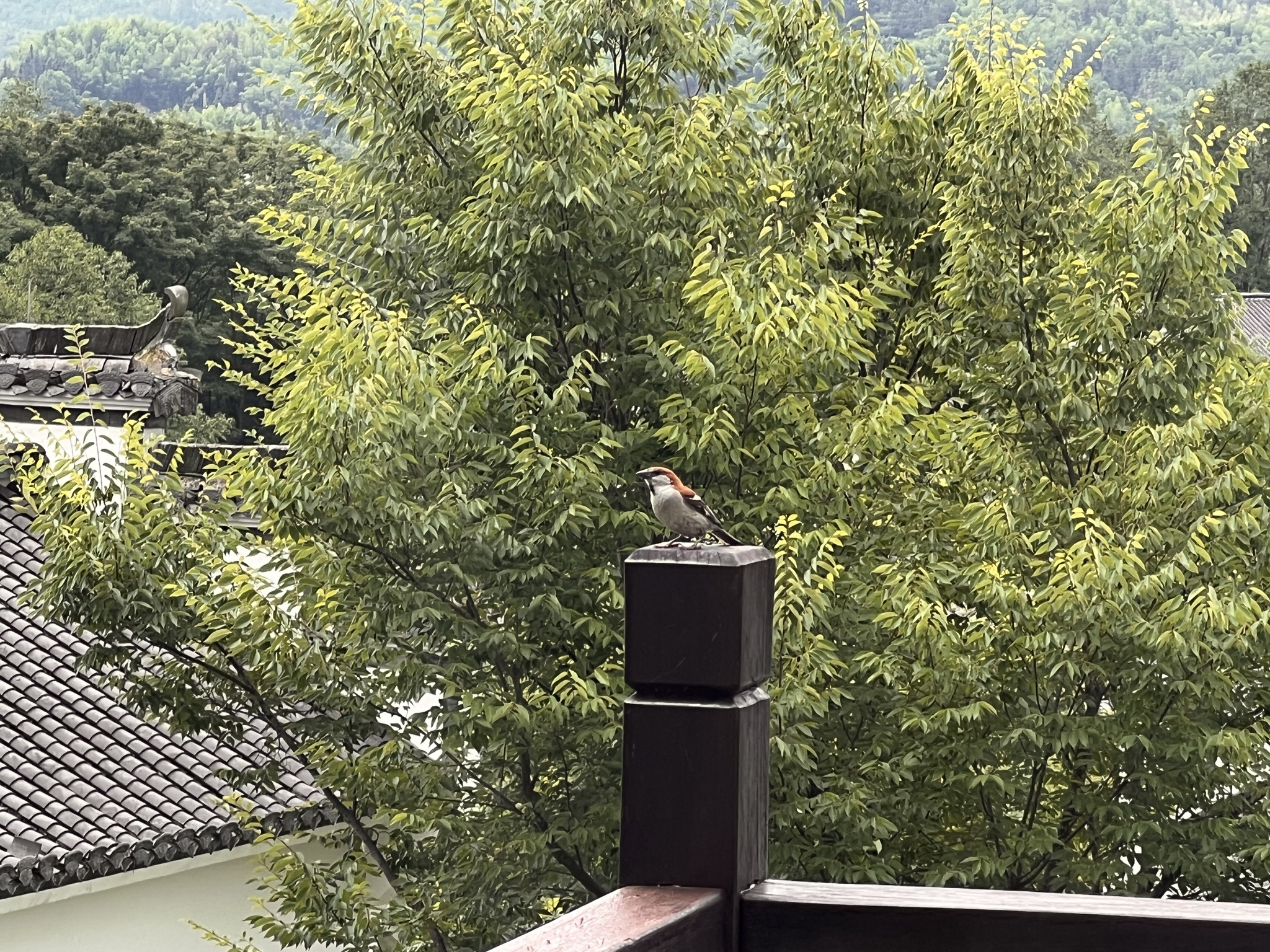
Passeriformes / Passeridae / Passer
Russet Sparrow
Passer cinnamomeus · 山麻雀
Introduction
A passerine bird of the sparrow family Passeridae, this species is a chunky seed-eater with a thick bill. It exhibits sexual dimorphism and has plumage mainly warm rufous above and grey below. The bird breeds in eastern Asia and the Himalayas, inhabiting light woodland, terrace cultivation, and human habitations where other sparrows are absent. It is assessed as Least Concern on the IUCN Red List.
Description
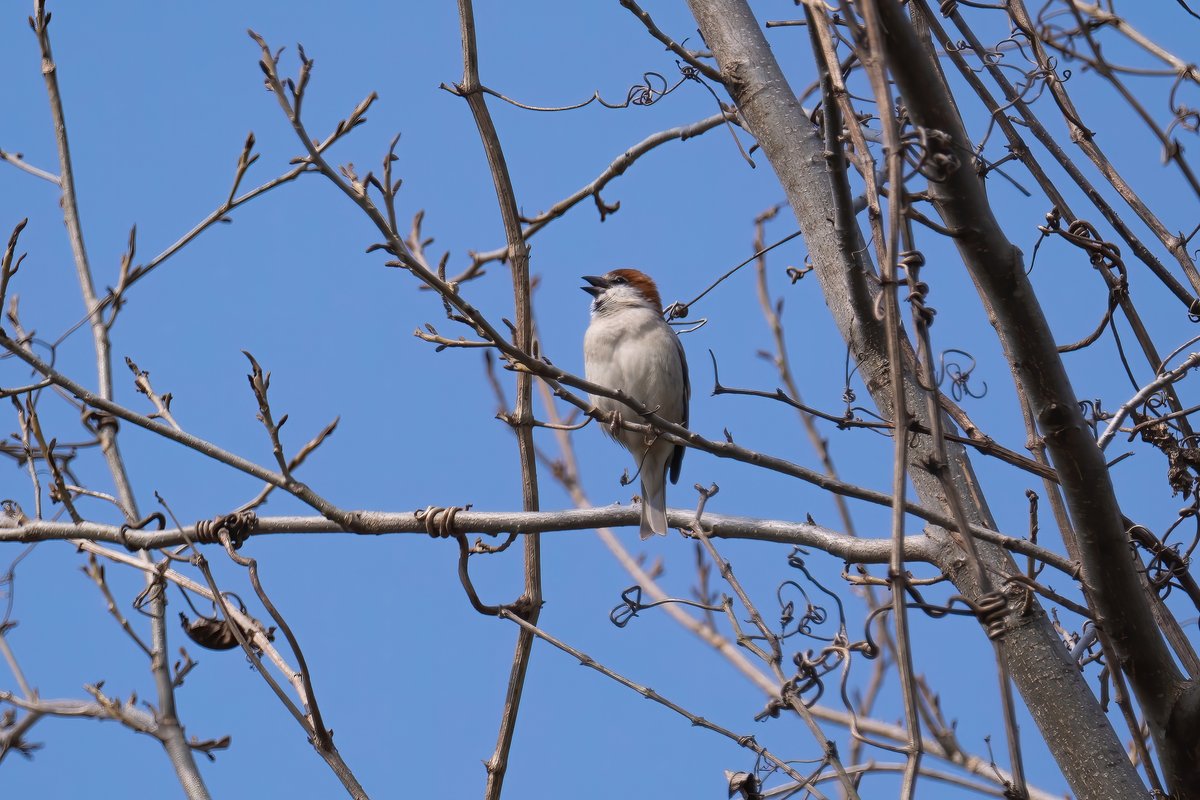
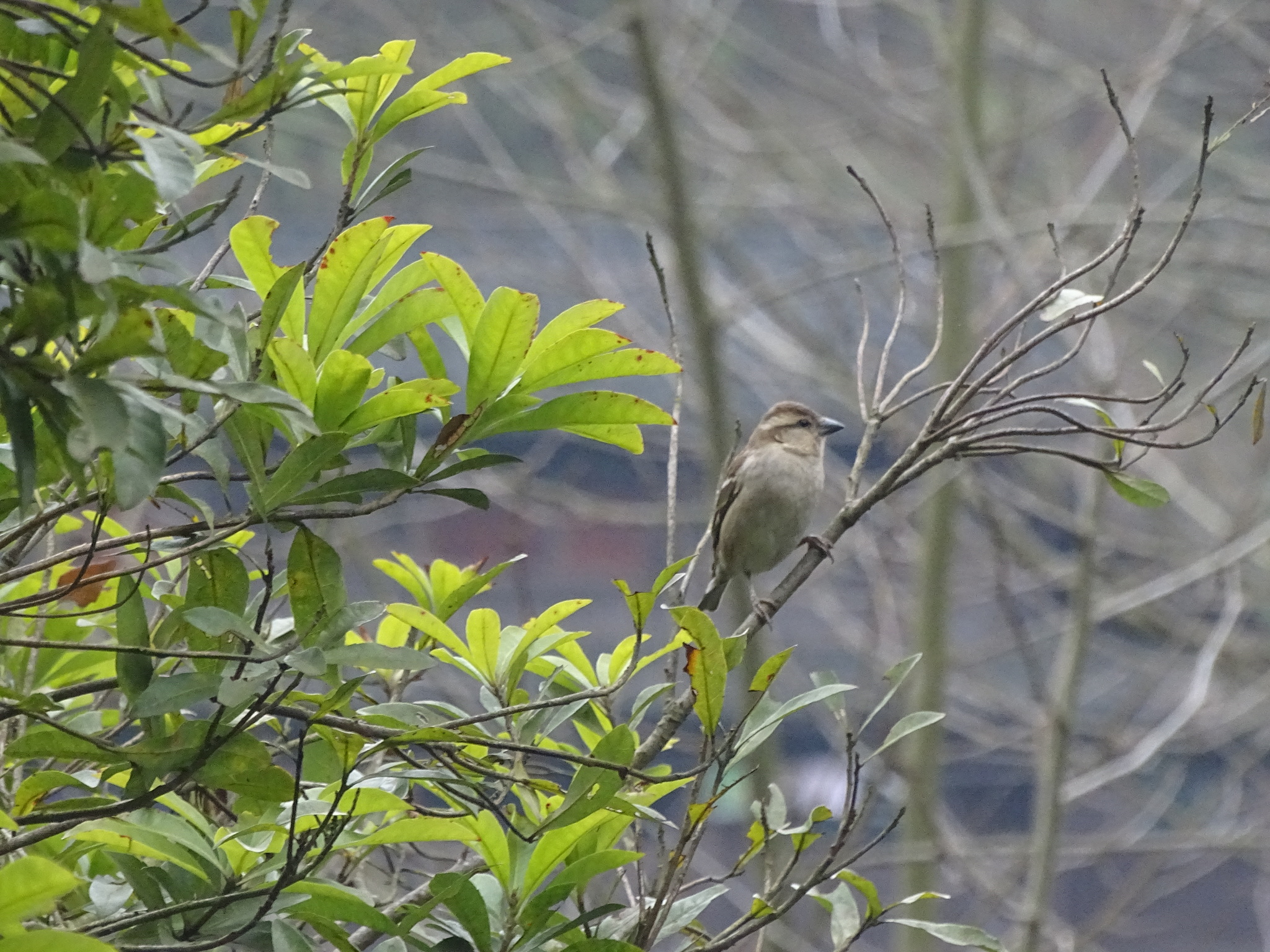
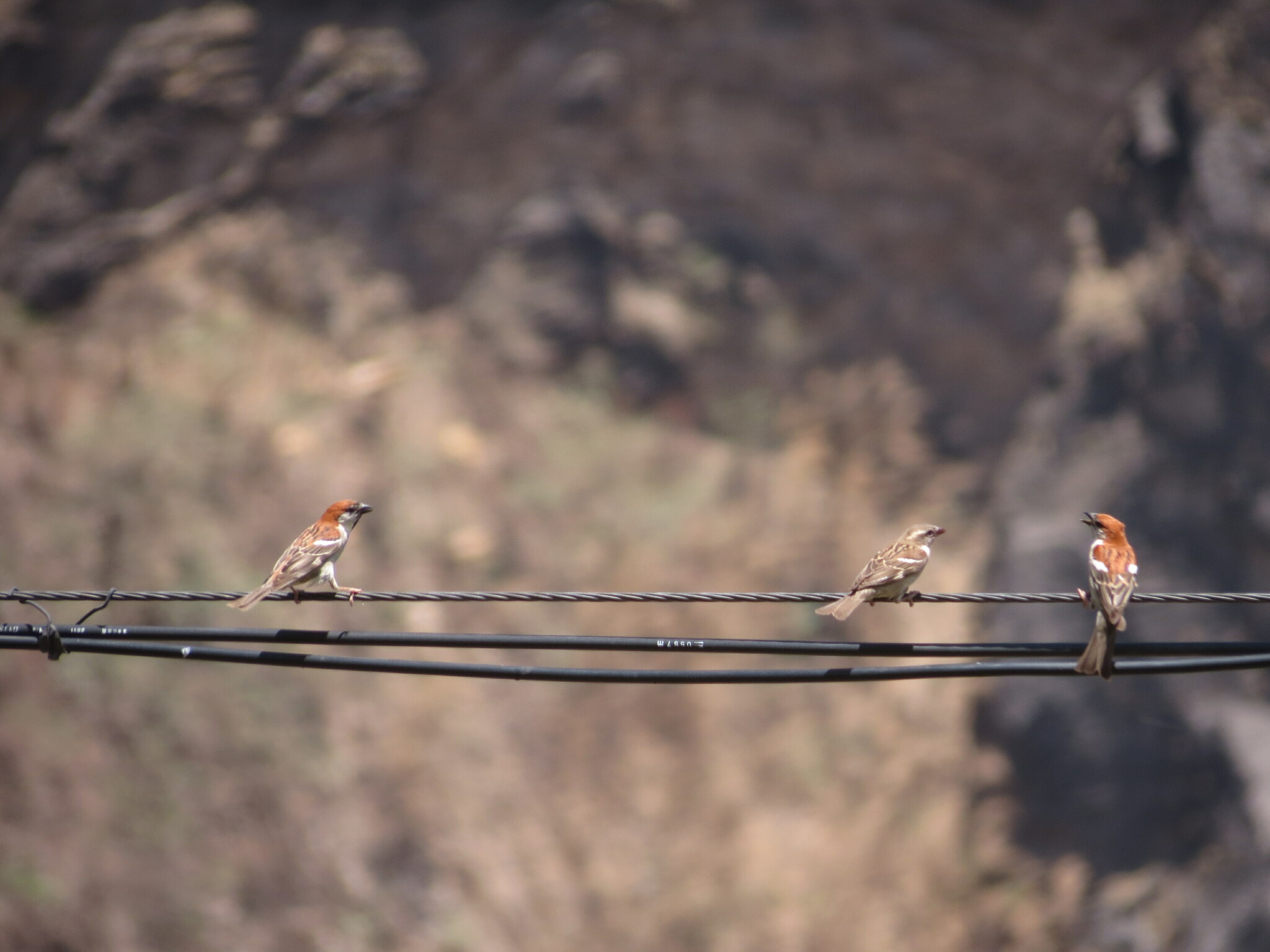
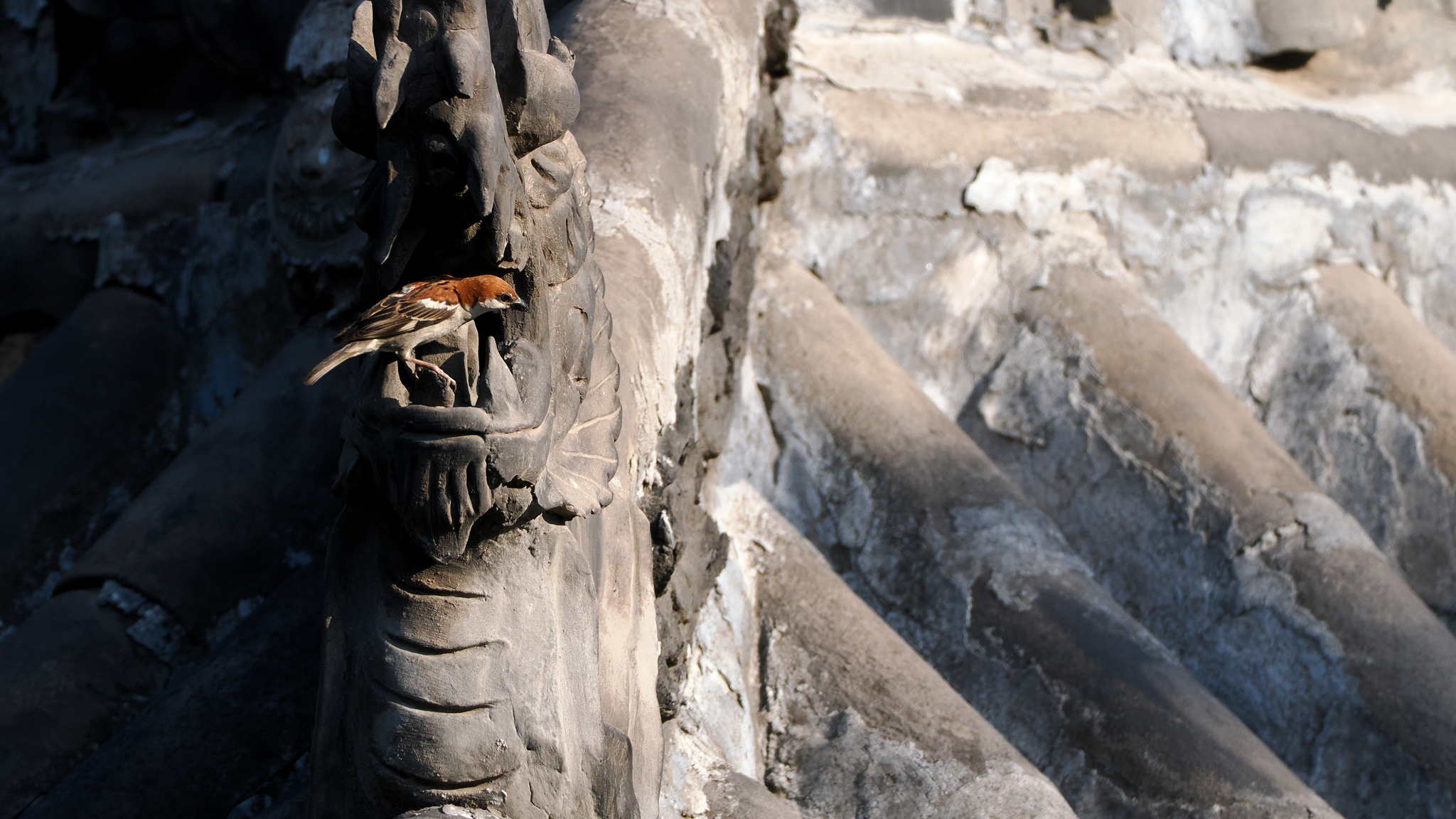
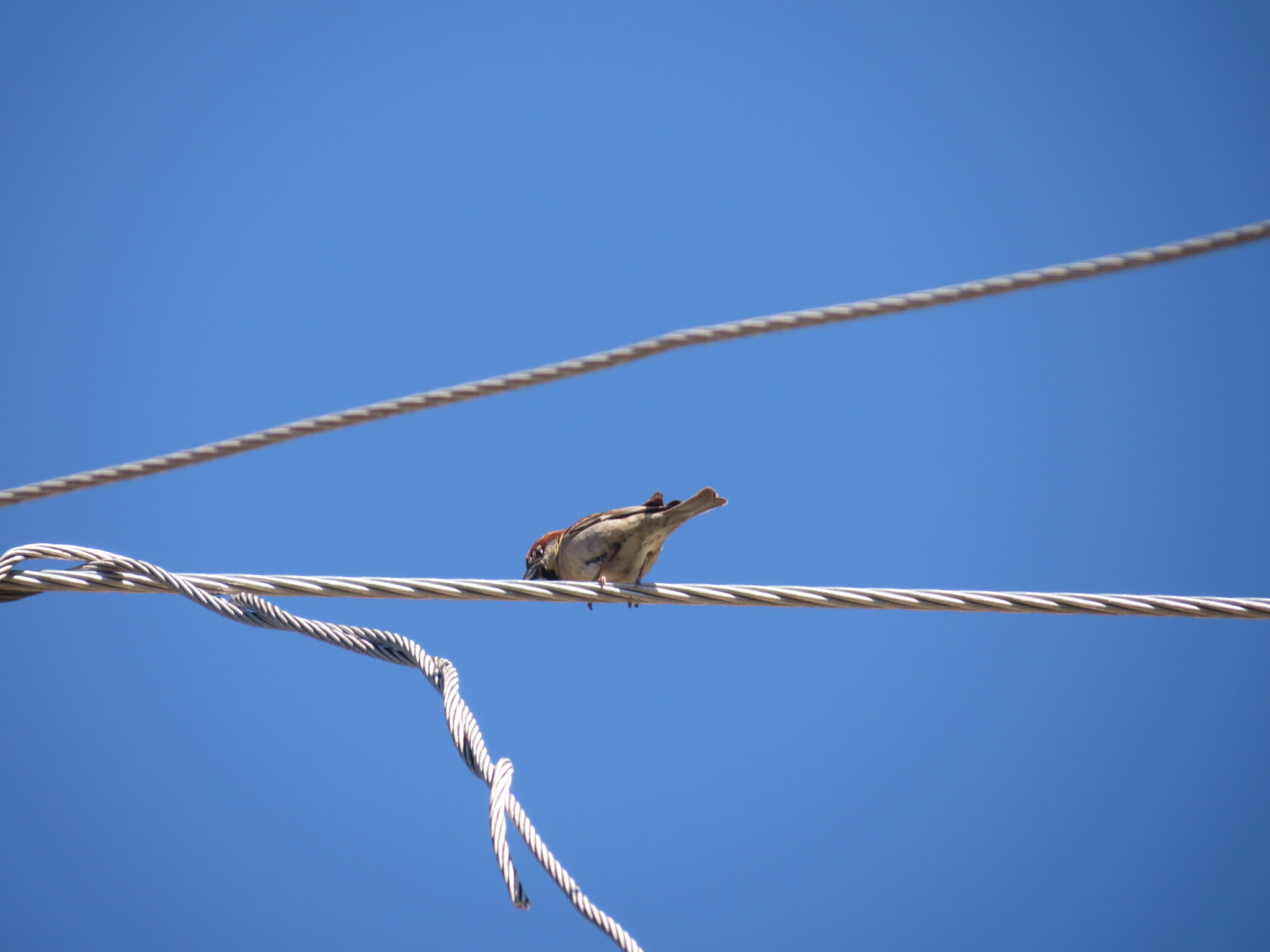
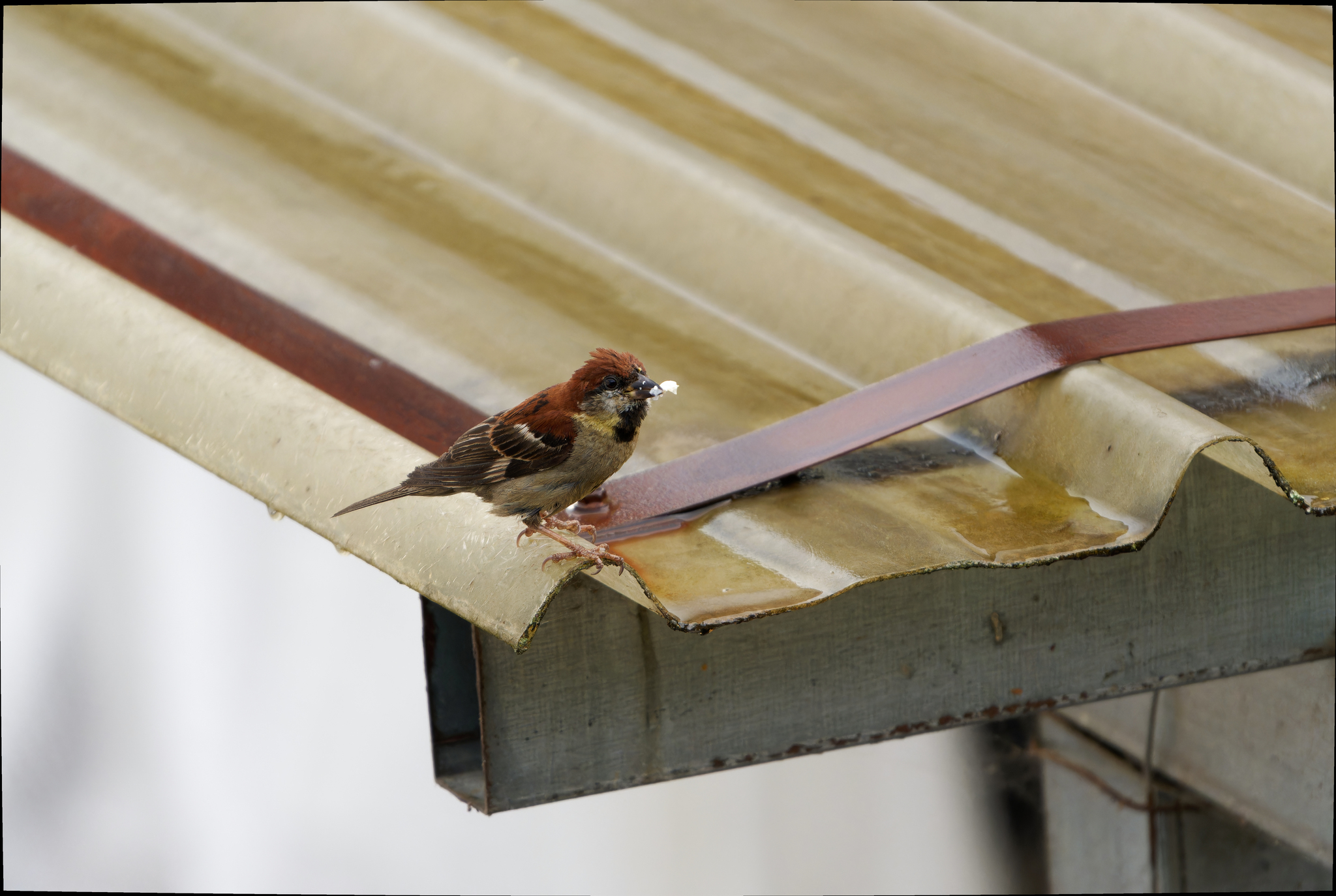
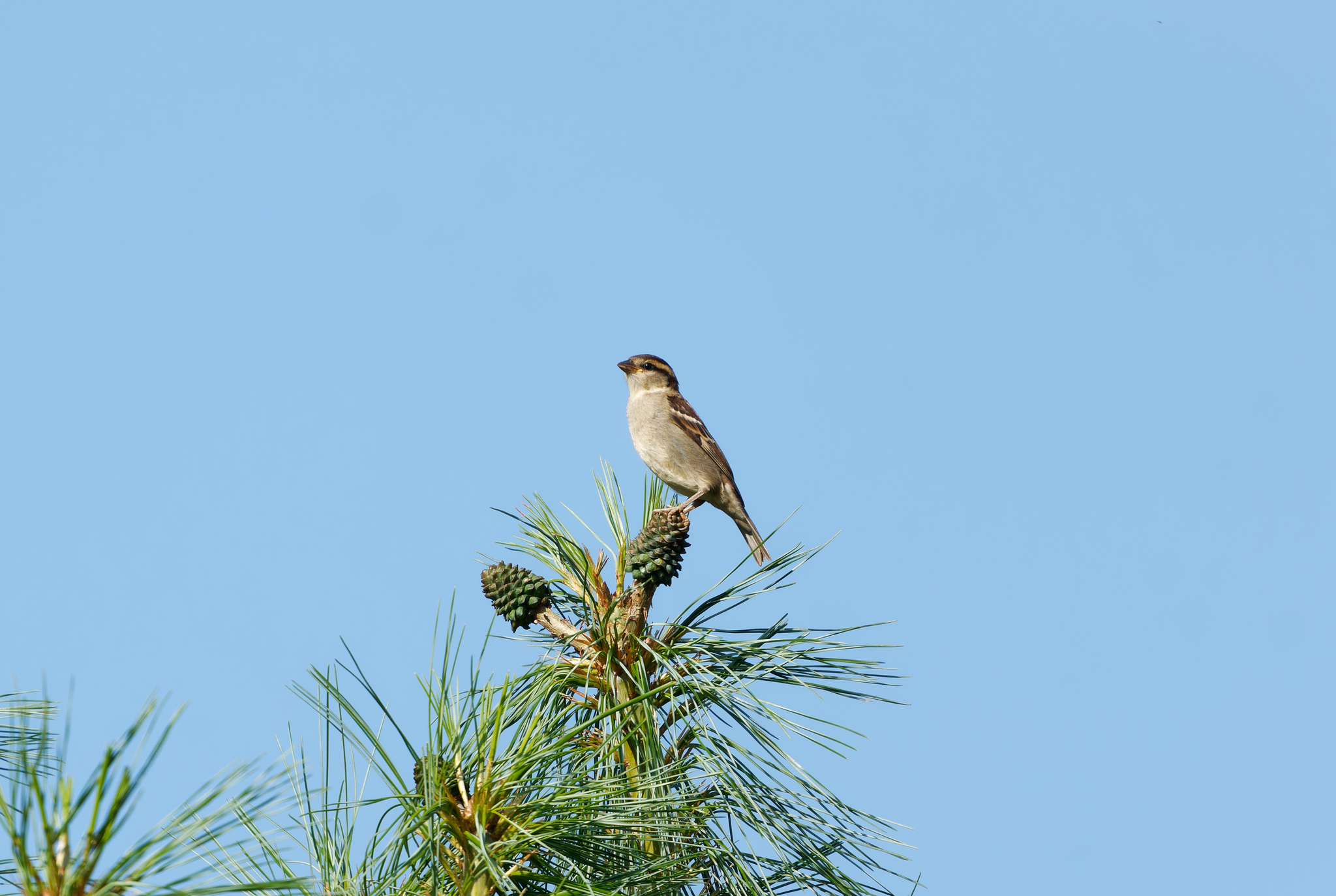
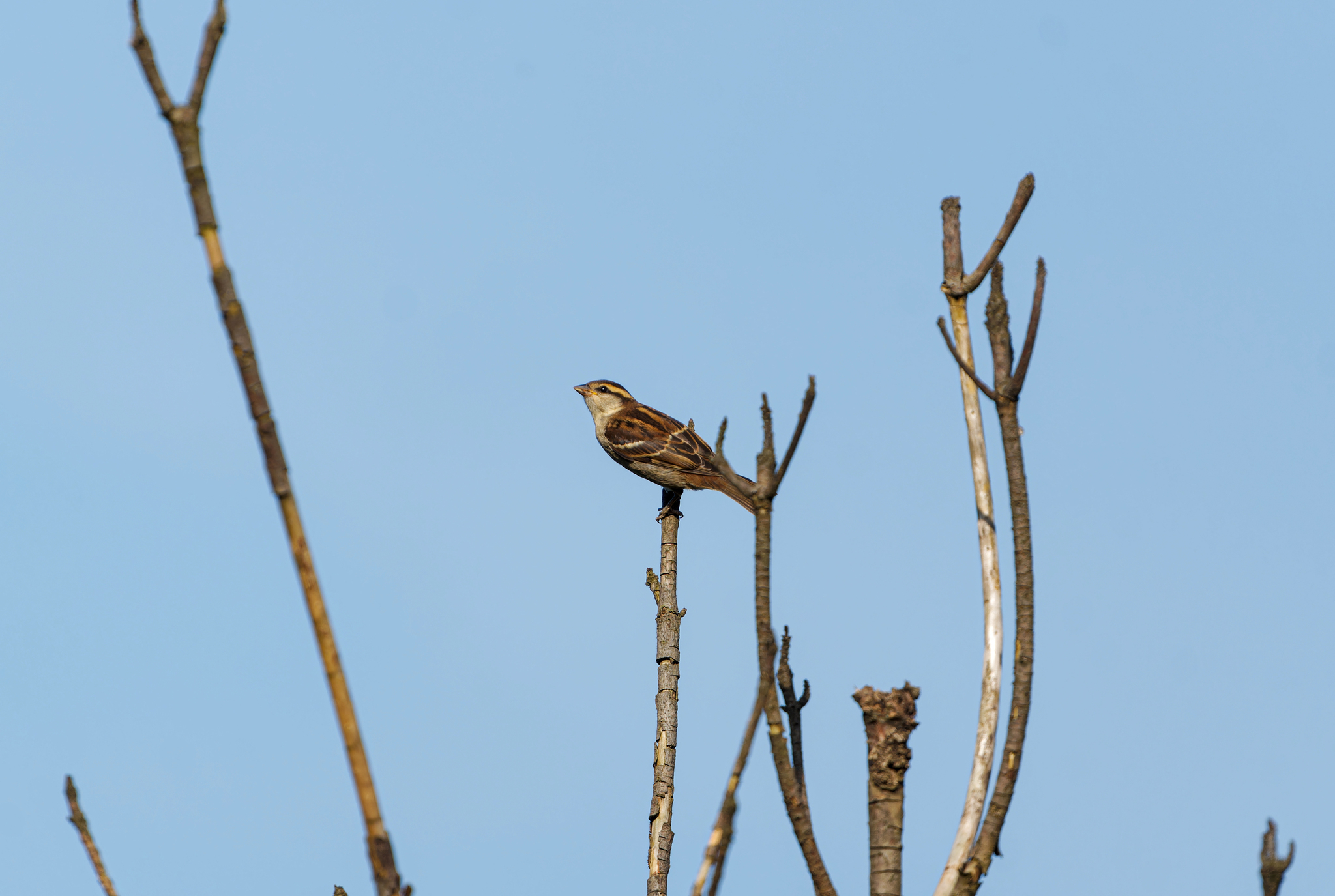
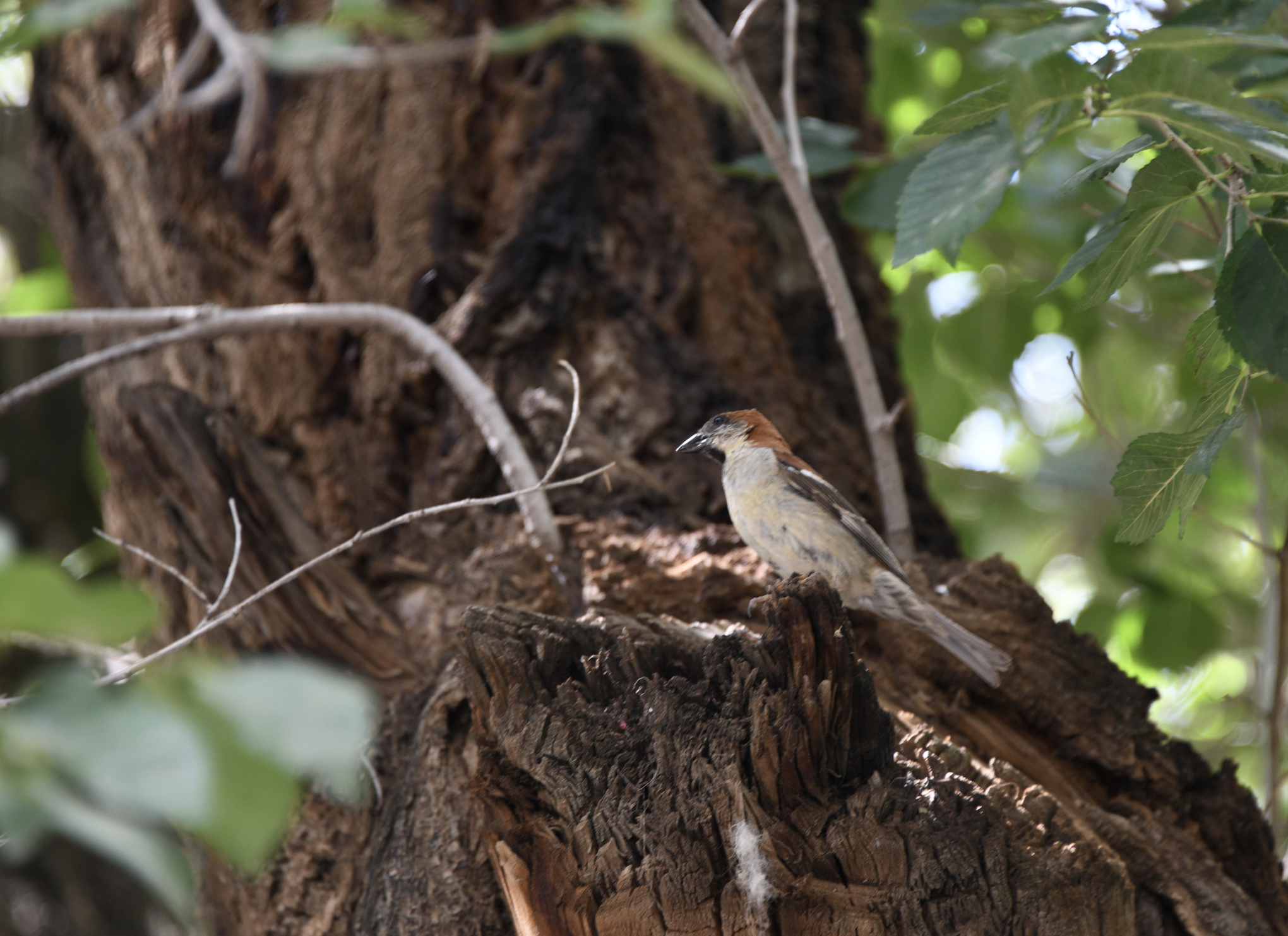
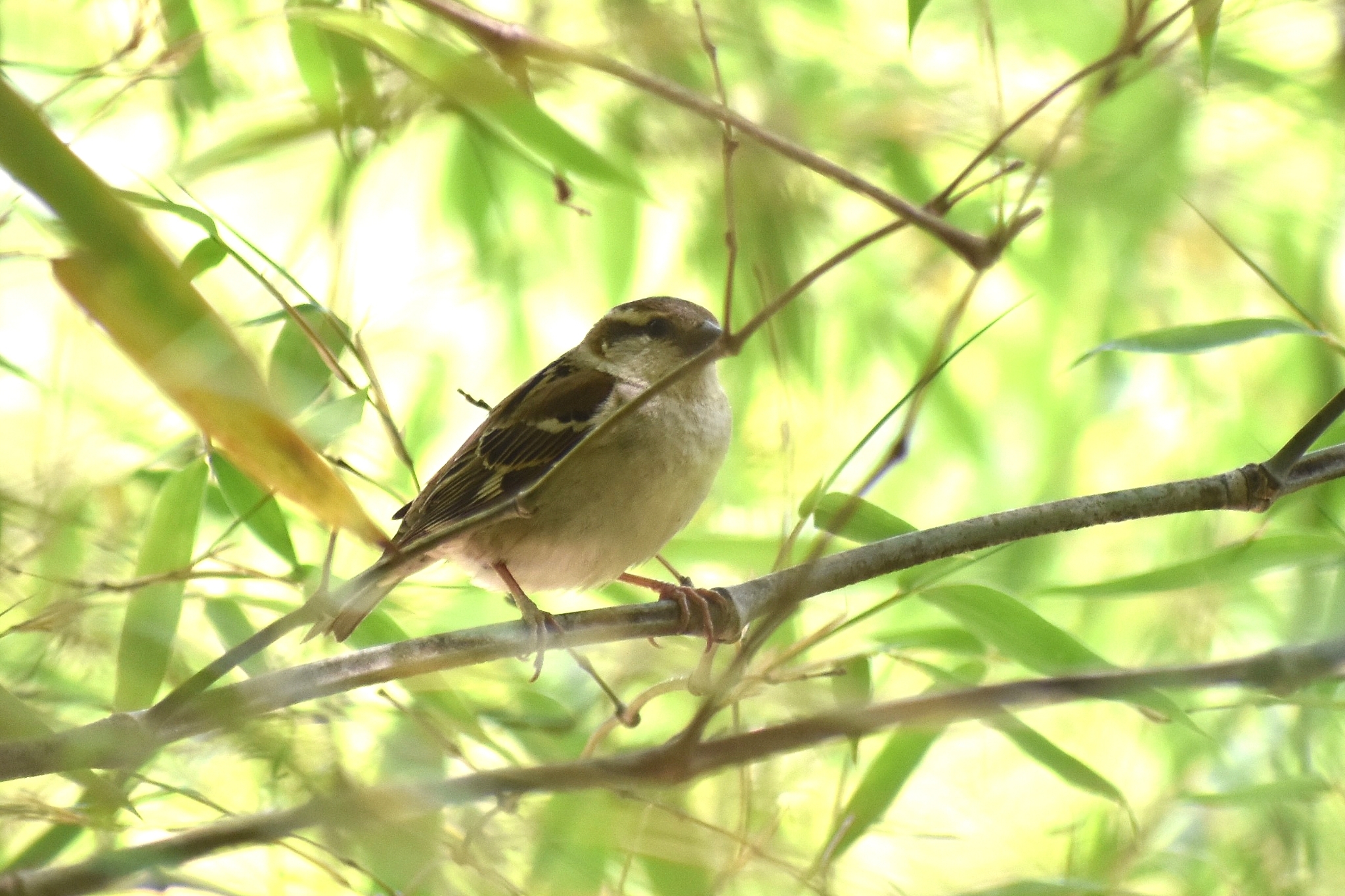
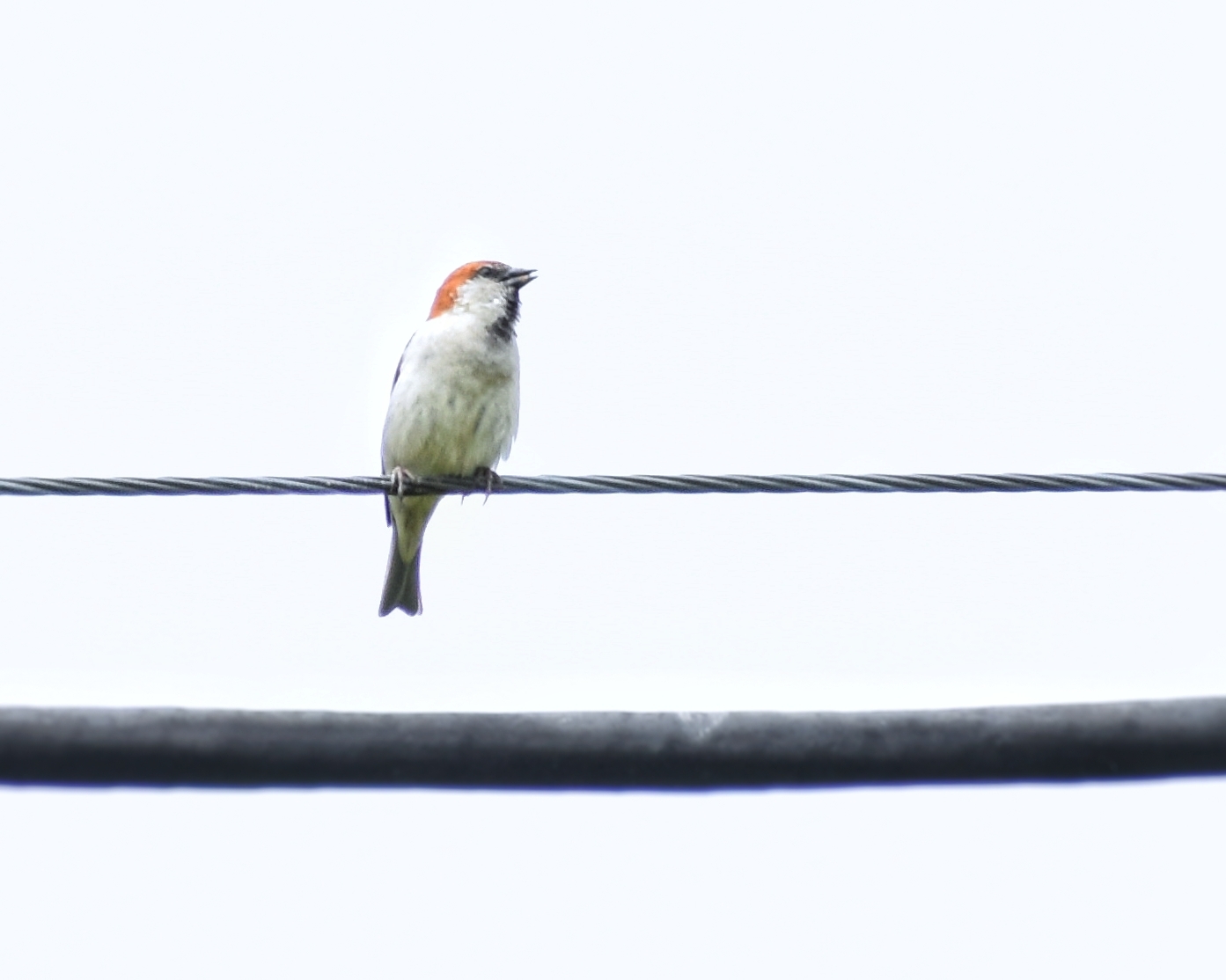
Body length is 14 to 15 cm (5.5–5.9 in) and weight is 18 to 22.5 grams (0.63–0.79 oz). Wingspans range from 6.8 to 8.2 cm (2.7–3.2 in) for males and 6.7 to 7.7 cm (2.6–3.0 in) for females. The bill is black on breeding males, horn-coloured on non-breeding males, and yellowish with a dark tip on females. The iris is chestnut, and legs are pale brown to pinkish-brown. Breeding males have bright russet upperparts with black streaking on the mantle, a small black bib, and black around the eye separated by a thin white supercilium. Underparts are pale grey or washed with yellow. Females have pale brown upperparts, pale grey underparts, a conspicuous cream supercilium, and a bold dark brown eye stripe. Juveniles resemble females but are paler and sandy.
Identification
Males are distinguished from the Eurasian tree sparrow by the lack of a black cheek spot and the presence of a russet back rather than brown. Flight is swifter and more direct than that of the Eurasian tree sparrow. Females differ from female house sparrows by slightly darker, russet-tinged plumage, a conspicuous cream supercilium, and a bold dark brown eye stripe. Vocalisations include sweet, musical chirps; the basic call is a monosyllabic 'cheep' or 'chilp', softer than other sparrows. Songs consist of strident strings of calls like 'cheep chirrup cheeweep', interspersed with sibilant 'chu-swik' notes.
Distribution & Habitat
Found in eastern Asia and the Himalayas. In the Himalayas, it breeds from northeastern India through Tibet, Bhutan, Nepal, Uttarakhand, Himachal Pradesh, Kashmir, and Nuristan in Afghanistan. In eastern Asia, it occurs in Sakhalin, the Kuril Islands, mainland Russia, Japan, southern Korea, northern China, southern China, Taiwan, Burma, Laos, and Vietnam. It migrates to lower altitudes in winter in the Himalayas and is mostly migratory in eastern Asia, wintering in southern Japan, southern China, and northern Thailand. Habitat includes light woodland, riparian forest, terrace cultivation, and towns. In the south, it breeds above 2,500 metres, while in the north it breeds by the sea.
Behavior & Ecology
Feeds on seeds of herbs, grains, rice, and barley, as well as berries and insects, particularly caterpillars and larval beetles during the breeding season. Forages on the ground using 'roller feeding' in flocks outside the breeding season. Gregarious in winter, forming large communal roosts in trees and bushes, but dispersed and non-social during breeding. Nests are built in tree cavities, woodpecker holes, eaves, stone walls, electric junction boxes, and sometimes free-standing in bushes. The male chooses the nest site and performs courtship displays involving head raising, wing drooping, and bowing. Both sexes build the nest, incubate, and feed young. Clutches contain four to six whitish eggs with brown spots. Nestlings fledge after 14 or 15 days.
Conservation
Assessed as Least Concern on the IUCN Red List. Although its global population has not been quantified, it appears abundant across most of its range. In Southeast Asia, its range has contracted at lower elevations due to global warming, but it has moved higher at high elevations and remains common.
Culture
Depicted in Japanese art, notably by Hokusai, and featured on postage stamps in Japan, The Gambia, and Guyana. In the Himalayas, it has distinct vernacular names such as 'lal gouriya' in Hindi and 'kang-che-go-ma' in Tibetan. Historically eaten in Japan in the 1870s and sold in Yokohama markets. Considered a minor agricultural pest due to crop damage, but also valued for consuming insect pests.
Source: Wikipedia · CC BY-SA 3.0
Taxonomy
- Order
- Passeriformes
- Family
- Passeridae
- Genus
- Passer
Taxonomy Changes
Passer rutilans → Passer cinnamomeus
Species rename — GBIF Backbone Taxonomy uses the former name; AviList 2025 uses the current name.
Subspecies (3)
-
Passer cinnamomeus cinnamomeus
Himalayas of northeastern Afghanistan to northeastern India and southeastern Tibet
Data Sources
Species description from Wikipedia, licensed under CC BY-SA 3.0.
Bird images and sounds sourced from GBIF, contributed by citizen scientists worldwide under Creative Commons licenses.
Taxonomy data from AviList 2025.