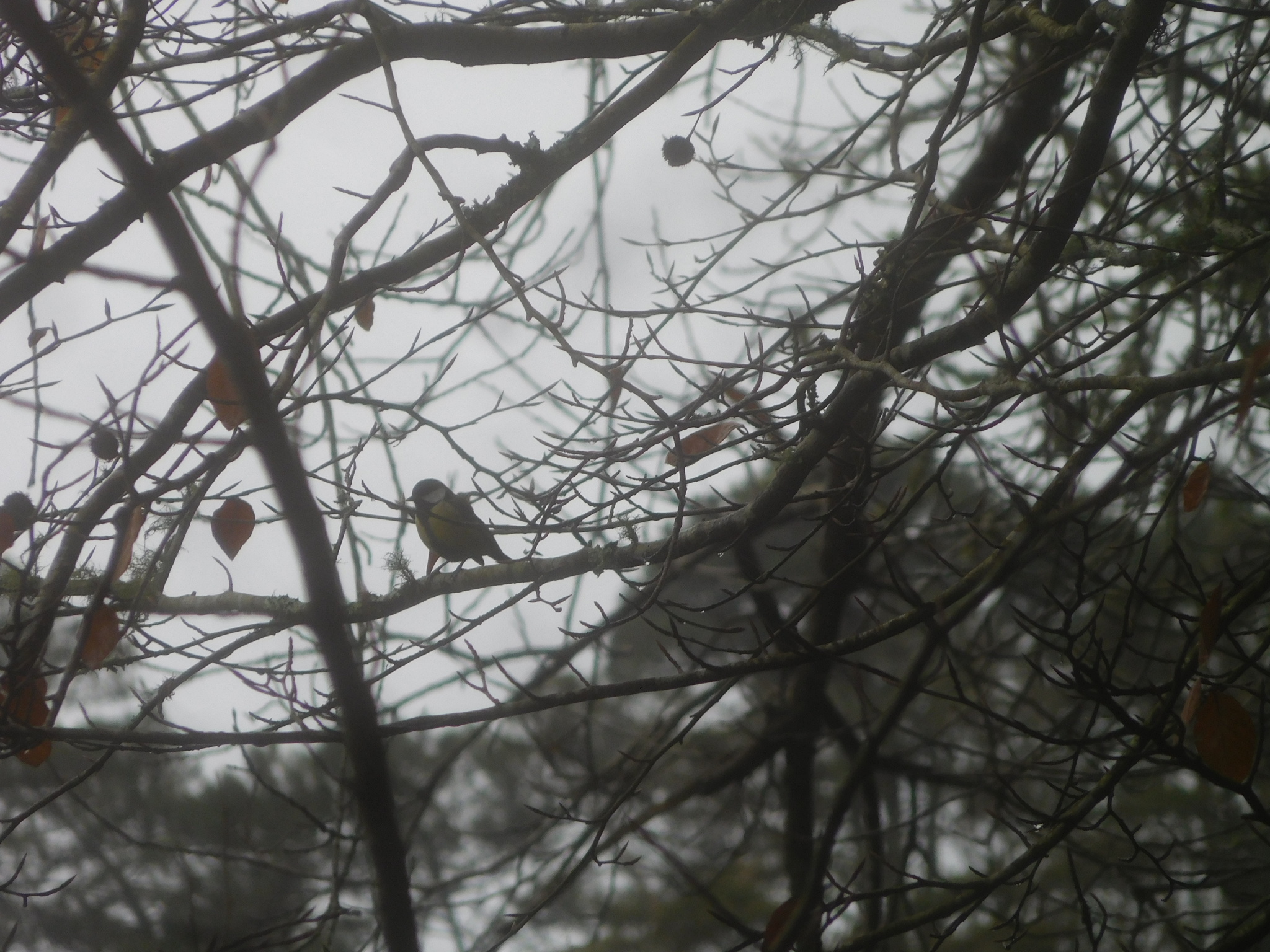
Great Tit
Parus major
欧亚大山雀
Introduction
A small passerine bird in the tit family Paridae. It is widespread and common throughout Europe, the Middle East, Central Asia, and as far east as the Amur River. It also occurs in parts of North Africa where it is generally resident in woodland. Most individuals do not migrate, except in extremely harsh winters. The species has adapted well to human-induced environmental changes and is a common and familiar bird in urban parks and gardens. It is an important study species in ornithology. The total population is estimated at 300-1100 million birds across a range of 32.4 million km². Not considered threatened, it is classed as least concern on the IUCN Red List.
Description
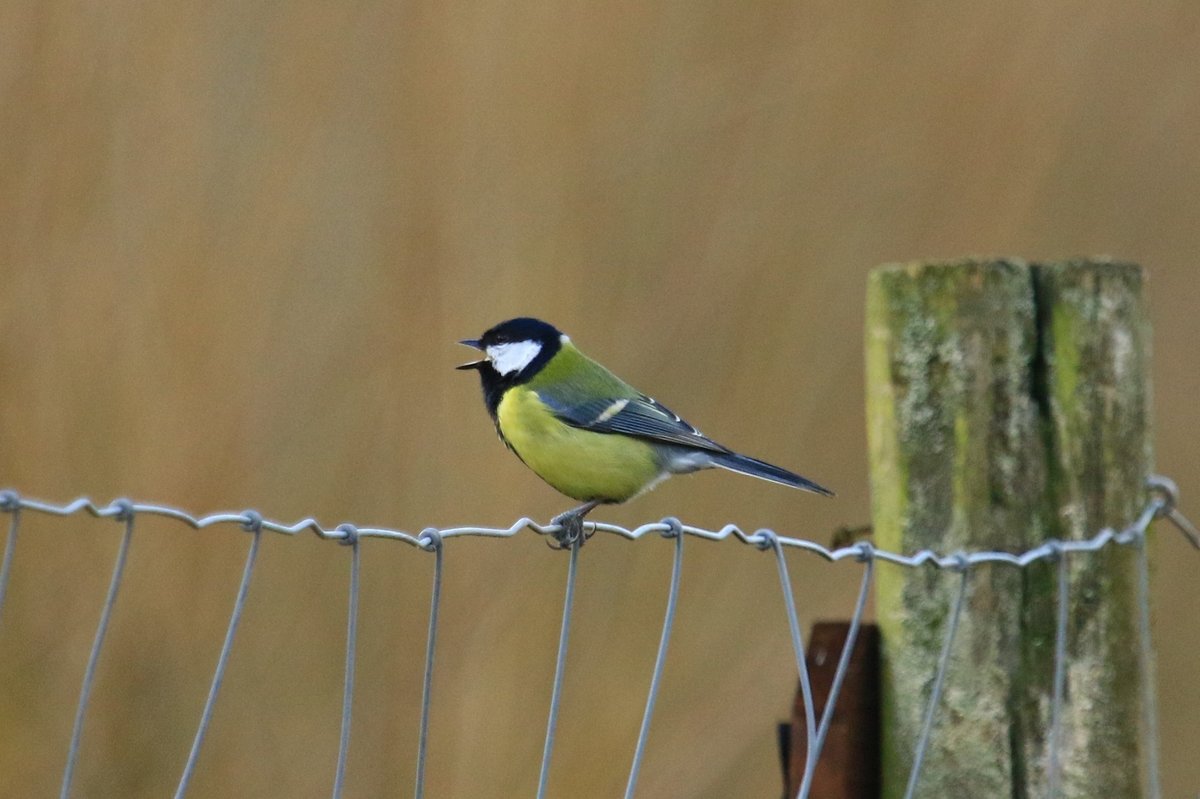
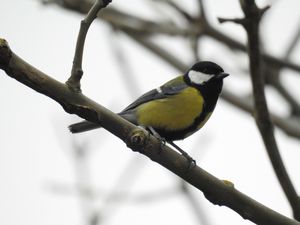
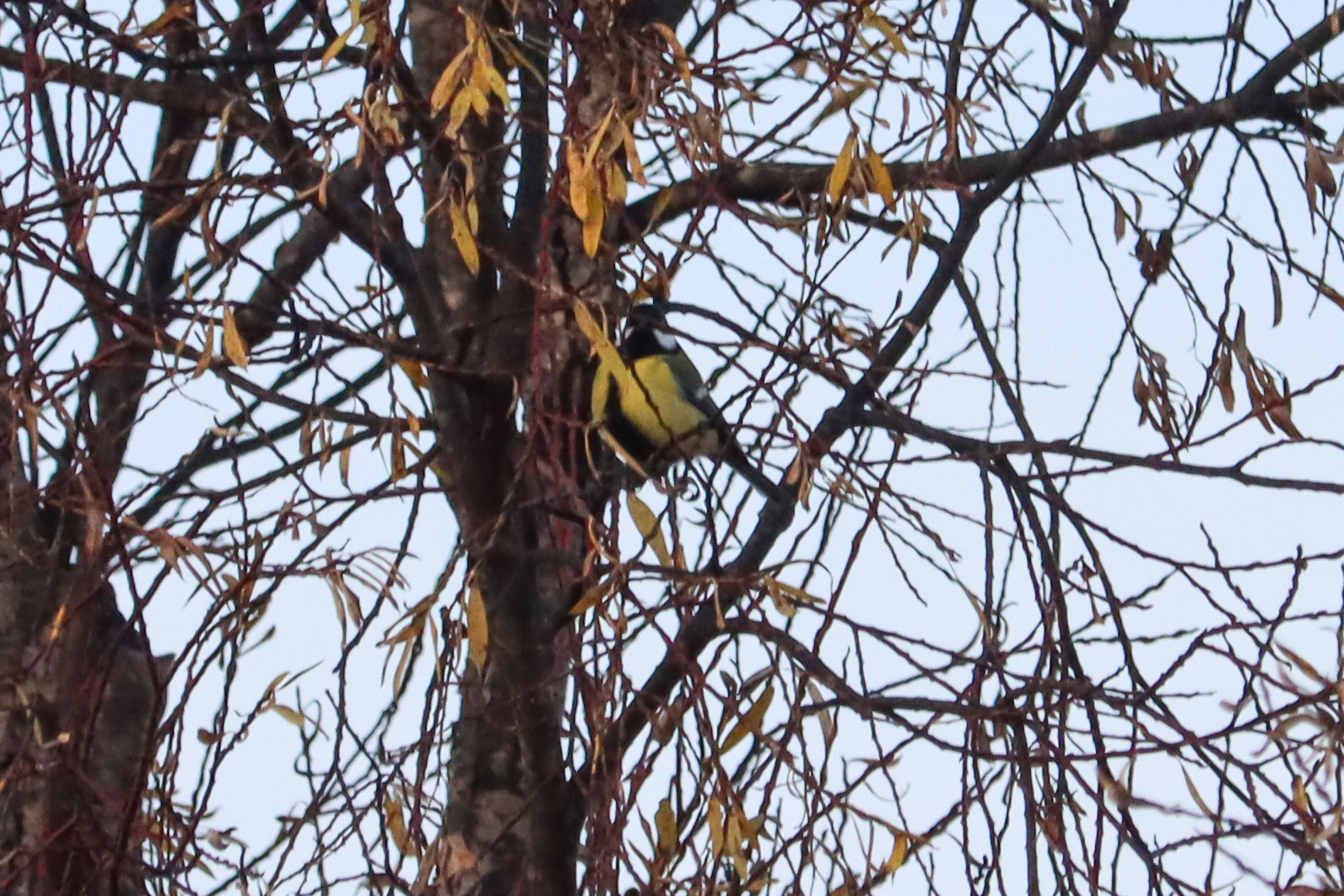
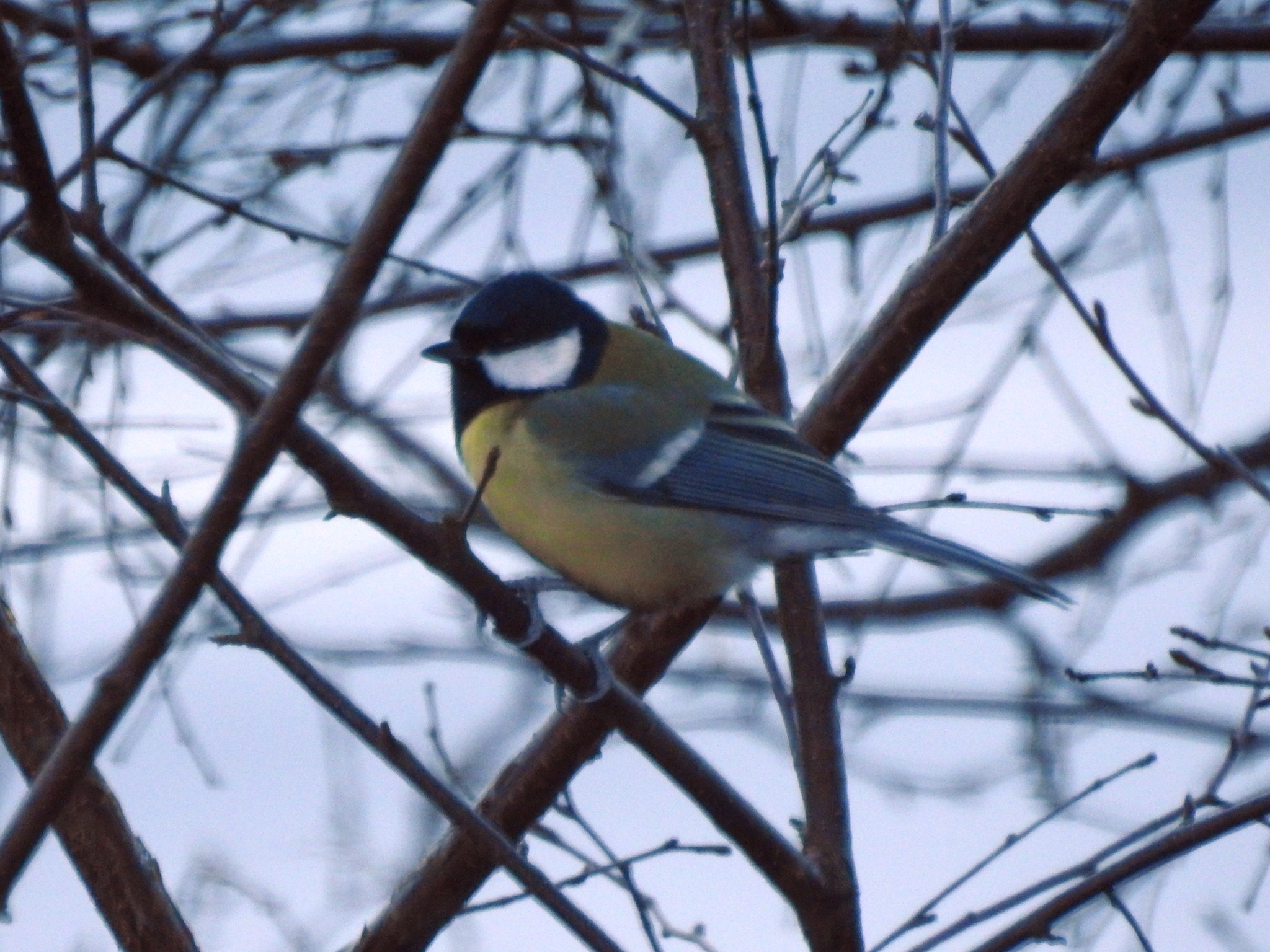
Large for a tit at 12.5-14 cm in length. The nominate race has a bluish-black crown, black neck, throat, bib and head, with white cheeks and ear coverts. The breast is bright lemon-yellow with a broad black mid-line stripe running from the bib to vent. The nape and back are green tinged with olive. Wing-coverts are green with a white wing-bar; the tail is bluish grey with white outer tips. Females are duller overall with a less intensely black bib and a narrower belly stripe. Young birds resemble females but have dull olive-brown napes and greyish rumps. Subspecies vary in plumage brightness, tail white markings, and underpart coloration.
Identification
A distinctive and easily recognized tit with its black head and neck contrasting with prominent white cheeks, olive upperparts, and bright yellow underparts. Larger than similar species, it shows a clear black ventral stripe running down the yellow breast. The white cheek patch is distinctive. Other cavity-nesting tits lack this combination of black hood, white cheeks, and bright yellow underparts. Subspecies show minor variations in plumage tones and intensity.
Distribution & Habitat
Widespread across much of Eurasia, occurring throughout most of Europe except Iceland and northern Scandinavia, across North Africa (Morocco, Algeria, Tunisia), through the Middle East, and across Central Asia from northern Iran and Afghanistan to Mongolia, northern Asia from the Urals to northern China and the Amur Valley. Inhabits open deciduous woodland, mixed forests, forest edges, gardens, and clearings in conifer forests. In North Africa it frequents oak forests and Atlas cedar stands. In Siberia it inhabits boreal taiga and riverine willow and birch forest. Generally non-migratory but may become irruptive in harsh winters, with groups moving unpredictably northwards.
Behavior & Ecology
Primarily insectivorous in summer, feeding on insects and spiders through foliage gleaning. Large invertebrate prey includes cockroaches, grasshoppers, beetles, and bees. In autumn and winter it adds berries, seeds, and occasionally small hibernating bats to its diet. Uses hold-hammering to open large seeds and prey. Highly intelligent, known for problem-solving and tool use, and for learning to pierce milk bottle caps. Vocal with up to 40 call types; familiar calls include squeaky 'teacher-teacher' sounds. Cavity nester using tree holes or nest boxes. Females build nests from plant fibres, moss, hair, and feathers, laying 5-12 eggs (up to 18). Female incubates alone; both parents feed chicks. Raises two broods most years. Monogamous but with frequent extra-pair copulations.
Conservation
Classified as least concern on the IUCN Red List. Total population estimated at 300-1100 million individuals across 32.4 million km². While some localized declines have occurred in areas with poorer quality habitats, the species' large range and high numbers mean it is not considered threatened. It has adapted well to human-modified environments and is common in urban areas.
Culture
In former times, English folk considered the 'saw-sharpening' call of this species to be a foretelling of rain. Its willingness to feed on milk bottles delivered at doorsteps made it a familiar garden bird in England after this behavior was first noted in 1921 and spread rapidly.
Source: Wikipedia · CC BY-SA 3.0
Taxonomy
- Order
- Passeriformes
- Family
- Paridae
- Genus
- Parus
- eBird Code
- gretit1
Subspecies (16)
-
Parus major aphrodite
southern Italy, Sicily, southern Greece, and Mediterranean islands including Cyprus
-
Parus major blanfordi
northern Iraq to north-central and southwestern Iran
-
Parus major bokharensis
Russia to Tien Shan and Karatau mountains and northwestern Afghanistan
-
Parus major corsus
Iberian Peninsula and Corsica
-
Parus major ecki
Sardinia
-
Parus major excelsus
northwestern Africa (Morocco to Tunisia)
-
Parus major ferghanensis
mountains in Tajikistan (Pamir and Alai) and Kyrgyzstan eastward to western Tien Shan
-
Parus major intermedius
northeastern Iran and adjacent southwestern Turkmenistan
-
Parus major kapustini
northwestern China (northwestern Xinjiang) to Mongolia and eastern Siberia
-
Parus major karelini
southeastern Azerbaijan and northwestern Iran
-
Parus major major
Europe to northwestern Iran, Siberia, Lake Baikal, and Altai and Sayan mountains
-
Parus major mallorcae
Balearic Islands
-
Parus major newtoni
British Isles
-
Parus major niethammeri
Crete
-
Parus major terraesanctae
northwestern Syria, Lebanon, Israel, and Jordan
-
Parus major turkestanicus
Lake Balkhash to western China (Xinjiang) and southwestern Mongolia
Data Sources
CBR Notes: 中文名由大山雀改为欧亚大山雀
Species description from Wikipedia, licensed under CC BY-SA 3.0.
Bird images and sounds sourced from GBIF, contributed by citizen scientists worldwide under Creative Commons licenses.
Taxonomy data from AviList 2025.